Category: Luxury

An inside look at the world of luxury — fashion houses, jewellery, craftsmanship, hospitality, interiors, experiences and the evolving meaning of luxury in India.

  • THE WORLD’S MOST EXPENSIVE HOBBIES

    THE WORLD’S MOST EXPENSIVE HOBBIES

    When passion stops being a pastime — and becomes a private universe.

    By INSYDE | LUXURY

    For most people, a hobby begins when the working day ends.

    A few hours on the golf course. A weekend drive. A bottle opened for a special occasion. A watch admired through a glass counter.

    Then there is another kind of hobby.

    The kind that requires a captain.

    Or a stable.

    Or a climate-controlled cellar.

    Or a specialist who has spent decades learning how to restore an engine that hasn’t been produced in years.

    At the highest levels of wealth, hobbies can become something much larger than leisure. They become collections, communities, rituals, businesses — sometimes entire worlds.

    A yacht becomes a racing programme.

    A love of horses becomes a bloodline.

    A car becomes a piece of history.

    A painting becomes part of a cultural archive.

    A vineyard becomes a legacy.

    The interesting question isn’t simply how much these pursuits cost.

    It is why people become obsessed with them in the first place.

    Because when money stops being the primary limitation, something else becomes valuable:

    passion.

    01 — YACHTING

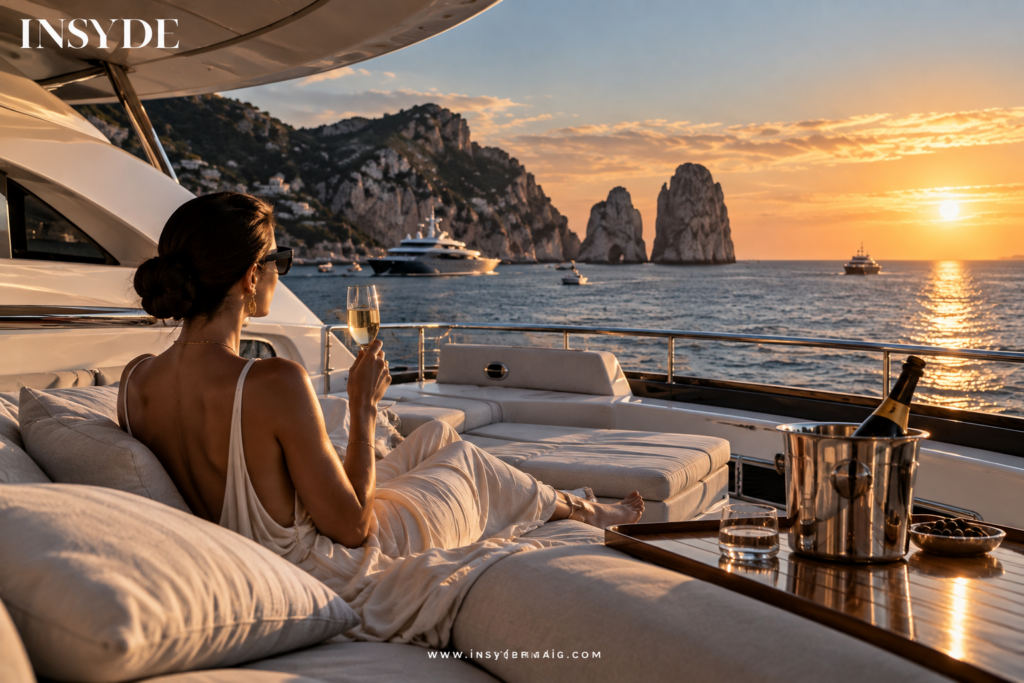
    WHEN A BOAT BECOMES A WORLD

    There are boats.

    And then there are yachts that require a captain, a crew, engineers, designers, shipyards and an itinerary that can stretch months ahead.

    The distinction isn’t simply size.

    It’s what happens around the object.

    At the top end, a yacht can become an ecosystem of its own — bespoke interiors, tenders, watercraft, hospitality, navigation and a permanent team keeping the entire experience moving.

    And then there is the ocean.

    The Mediterranean in summer.

    The Caribbean in winter.

    A secluded cove that never appears on a conventional holiday itinerary.

    A dinner served somewhere accessible only by water.

    In 2025, the superyacht market rebounded strongly. Knight Frank reported a 70% year-on-year increase in total sales value, while sales of yachts over 70 metres rose 60%. The average asking price of a yacht sold during the year reached approximately US$16.6 million. (Global)

    But the most interesting part of yachting isn’t necessarily ownership.

    It’s what ownership enables.

    Racing.

    Exploration.

    Entertaining.

    Privacy.

    Time away from the itinerary of everyone else.

    For those who race, the romance becomes competition. Engineering matters. Crew matters. Strategy matters. Small decisions can determine what happens once the sails go up.

    Suddenly, the ultimate luxury isn’t simply sitting on the deck.

    It’s having something to race.

    02 — HORSES & POLO

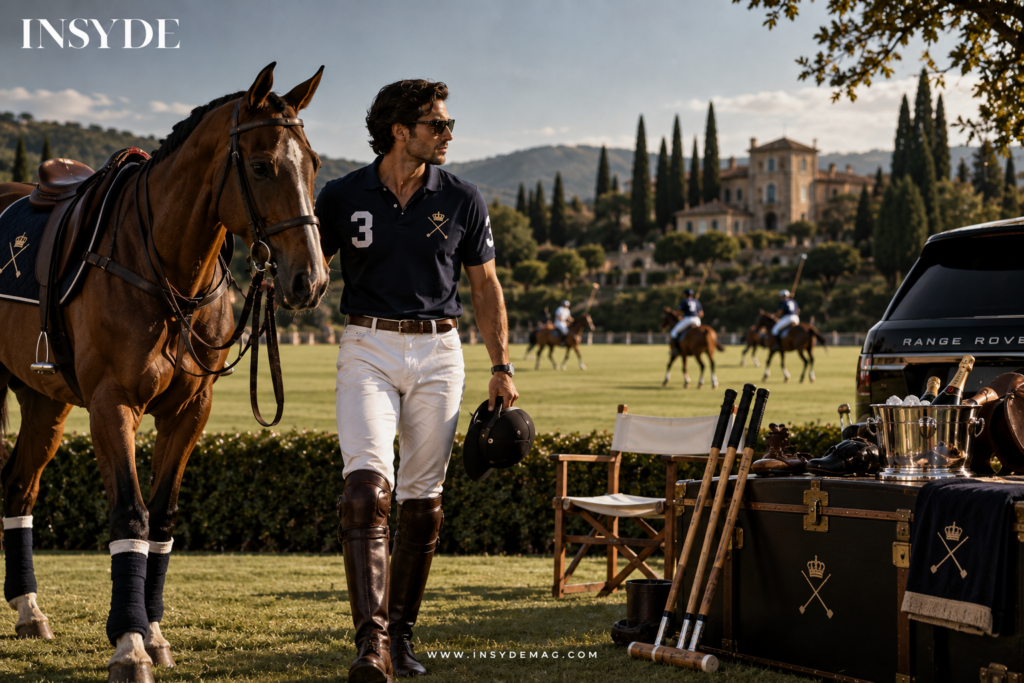
    THE LUXURY OF BLOODLINES

    Few luxury pursuits have a more complicated relationship with time than horses.

    You can order a watch.

    Commission a car.

    Build a yacht.

    But a bloodline cannot be rushed.

    At the highest levels of equestrian culture, horses exist within a world of breeding, training, competition, land and expertise.

    Polo adds another dimension.

    The sport becomes a social environment as much as an athletic one — clubs, tournaments, travelling teams, private estates and a network of people who understand the culture from inside.

    The aesthetic is undeniably seductive.

    Leather.

    Boots.

    Grass.

    Horsehair.

    But beneath the imagery is something far more enduring:

    patience.

    A great horse cannot simply be manufactured.

    Neither can its lineage.

    And that makes equestrian luxury fundamentally different from buying something off a shelf.

    The object is alive.

    It requires care.

    It requires knowledge.

    It demands time.

    Perhaps that is why horses occupy such a distinctive place in the world of serious wealth: they offer something increasingly difficult to purchase in an instant.

    Continuity.
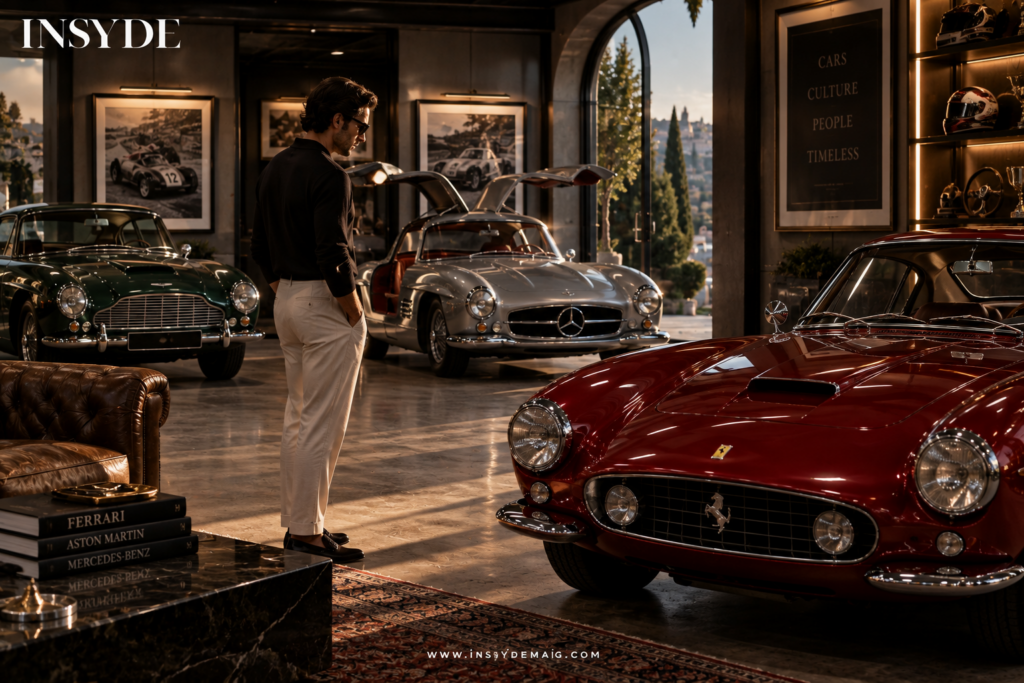

    03 — CLASSIC CARS

    WHEN COLLECTING BECOMES OBSESSION

    The obvious luxury-car purchase is the newest supercar.

    The more interesting one may be a Ferrari built decades ago.

    Because serious car collecting isn’t necessarily about horsepower.

    It’s about provenance.

    The right chassis.

    The right specification.

    The right history.

    The right previous owner.

    The right story.

    Knight Frank’s 2026 Luxury Investment Index notes that classic cars remain an important collecting category, with renewed interest in vehicles from the late 1980s through the early 2000s. A 1995 Ferrari F50 sold for US$9.2 million at Monterey Car Week, while a 1956 Mercedes-Benz 300 SL Gullwing reached US$5 million in Paris. (Global)

    But the numbers are almost secondary.

    Imagine finding a car that has spent decades in the hands of collectors.

    Then finding the specialist capable of restoring it correctly.

    Then discovering that one original component — something almost invisible — is worth more than an entire modern car.

    That is when collecting becomes obsession.

    The collector isn’t simply buying transportation.

    They’re preserving a moment that cannot be recreated.

    The newest car represents the future.

    The right classic represents a past that will never happen again.

    And increasingly, rarity is becoming part of the attraction. Knight Frank reports that buyers in the luxury collectibles market are becoming more disciplined, favouring rarity and value as the market becomes more selective. (Global)

    04 — ART & RARE COLLECTING

    WHEN YOUR HOBBY BECOMES A CULTURAL LEGACY

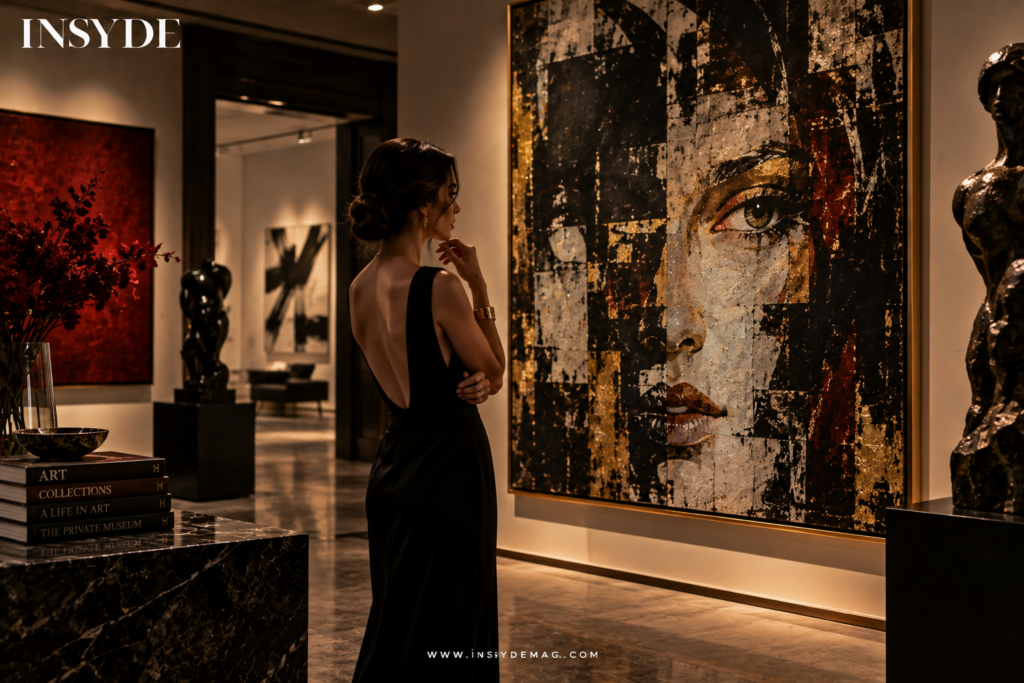
    Perhaps nothing reveals a collector’s personality quite like art.

    Because unlike a car or a watch, art has no practical purpose.

    You don’t need it.

    You choose it.

    And that makes the choice strangely intimate.

    What do you hang on your wall?

    Which artist do you believe in?

    Which period matters to you?

    What do you want future generations to see?

    The serious collector increasingly looks beyond the obvious trophy.

    Knight Frank’s 2026 research describes a broader evolution in luxury collecting, with greater emphasis on personal meaning, knowledge, rarity and taste. Its research frames collecting as something increasingly connected to personal growth and identity rather than simply conspicuous consumption. (Global)

    The market itself remains selective.

    Major auction-house fine-art sales rose 11% in 2025, according to Knight Frank, while Impressionist sales increased 80.4%. The US$10 million-plus segment also grew 19.4%. Gustav Klimt’s Portrait of Elisabeth Lederer sold for US$236.4 million. (Global)

    But serious collecting isn’t simply about spending more.

    It’s about knowing why something matters.

    That’s the difference between accumulating and collecting.

    One fills a room.

    The other builds a point of view.

    And perhaps the ultimate collector isn’t the person with the most objects.

    It’s the person with the most interesting reasons for owning them.

    05 — WINE & VINEYARDS

    THE LUXURY OF OWNING TIME

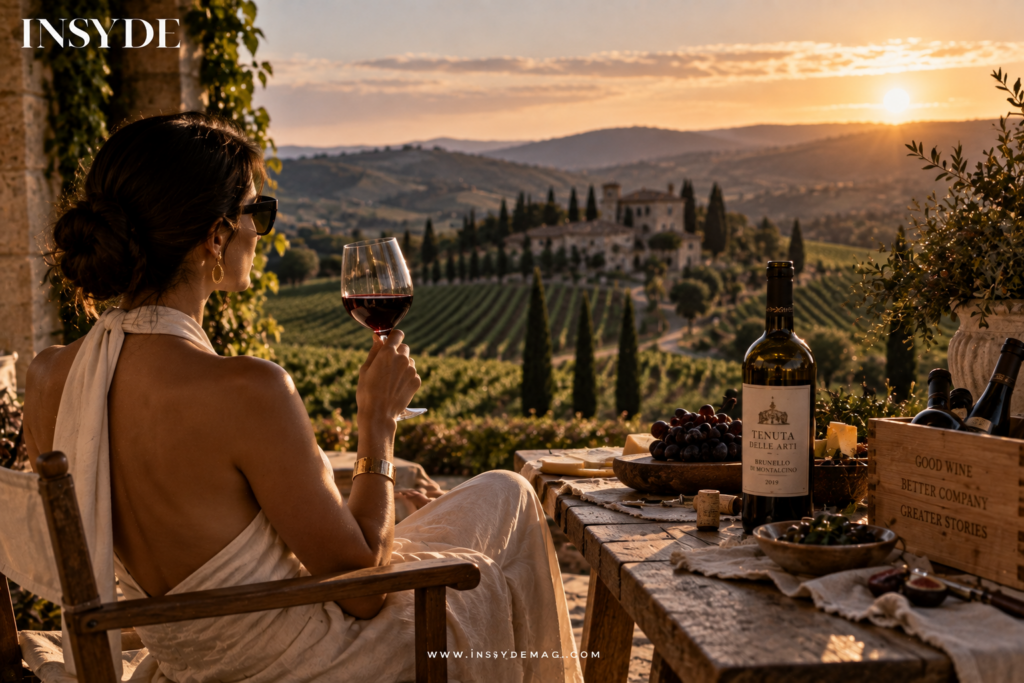
    There are few luxury pursuits more romantic than wine.

    A cellar beneath an old house.

    Rows of bottles resting in darkness.

    Labels that have survived decades.

    A vineyard stretching across a landscape.

    A harvest that happens once a year.

    And perhaps that’s what makes wine different.

    It refuses to be rushed.

    You can buy the vineyard.

    You can buy the cellar.

    You can buy the bottle.

    But you cannot buy the years that created it.

    The financial reality, however, is considerably less romantic than the fantasy.

    Knight Frank’s 2026 Luxury Investment Index reports that the Liv-ex Fine Wine 100 declined 2.5% during 2025, with total losses of almost 25% from its 2022 peak. The research also notes that quality and value are increasingly shaping demand. (Global)

    Which is precisely why wine is more interesting as a luxury pursuit than as a simplistic investment story.

    The attraction can be somewhere else.

    Terroir.

    History.

    Craft.

    Hospitality.

    The pleasure of opening something that has been waiting years for that particular evening.

    A great wine doesn’t simply tell you what it costs.

    It tells you how long you’ve been willing to wait.


    WHEN A HOBBY BECOMES A WORLD

    A yacht.

    A stable.

    A Ferrari.

    A painting.

    A vineyard.

    From the outside, they can look like extravagant possessions.

    Look closer, however, and something else appears.

    Time.

    Knowledge.

    Craftsmanship.

    Patience.

    Obsession.

    That is what separates a luxury hobby from an expensive purchase.

    The object is only the entrance.

    Behind it is an entire ecosystem of people, expertise, history and culture.

    A serious collector doesn’t simply own a car.

    They learn its history.

    They find its specialists.

    They understand its provenance.

    A serious wine enthusiast doesn’t simply own bottles.

    They learn the regions, producers and vintages.

    A serious art collector doesn’t simply buy paintings.

    They develop a point of view.

    And perhaps that is why collecting remains so powerful in an increasingly digital world.

    Some things cannot be endlessly replicated.

    A historic Ferrari cannot be produced again.

    A vineyard cannot be moved.

    An original painting cannot become an edition of one hundred million.

    A bloodline cannot be accelerated.

    Scarcity still has a pulse.


    THE REAL LUXURY

    There is an interesting contradiction at the heart of extreme wealth.

    The more money someone has, the less interesting money itself can become.

    What becomes interesting is what money allows them to pursue.

    Not necessarily more.

    Something deeper.

    A craft.

    A collection.

    A competition.

    A landscape.

    A piece of history.

    A world that requires years to understand.

    Knight Frank’s 2026 research describes luxury consumption as evolving beyond conspicuous consumption toward more personal forms of indulgence, with experience, personal growth and taste playing a greater role. (Global)

    That changes the meaning of an expensive hobby.

    The luxury isn’t simply that you can afford it.

    It’s that you can devote yourself to it.


    THE INSYDE TAKE

    Perhaps the ultimate luxury isn’t owning something everyone else wants.

    It’s discovering something you genuinely care about — and having the freedom to pursue it without practical limits.

    The yacht becomes a passion.

    The horse becomes a bloodline.

    The car becomes history.

    The painting becomes a cultural legacy.

    The vineyard becomes time itself.

    At that level, the price tag is almost beside the point.

    Because the real indulgence isn’t simply being able to afford the hobby.

    It’s having the freedom to turn a fascination into a world.

    And perhaps that is what the world’s most expensive hobbies ultimately reveal.

    When money removes the obvious limits, the rarest luxury isn’t necessarily another possession.

    It is having something worth becoming obsessed with.


    THE WORLD’S MOST EXPENSIVE HOBBIES

    When passion stops being a pastime — and becomes a private universe.

    INSYDE | LUXURY

    SOURCES

  • The New Indian Wedding: When Luxury Becomes Personal

    The New Indian Wedding: When Luxury Becomes Personal

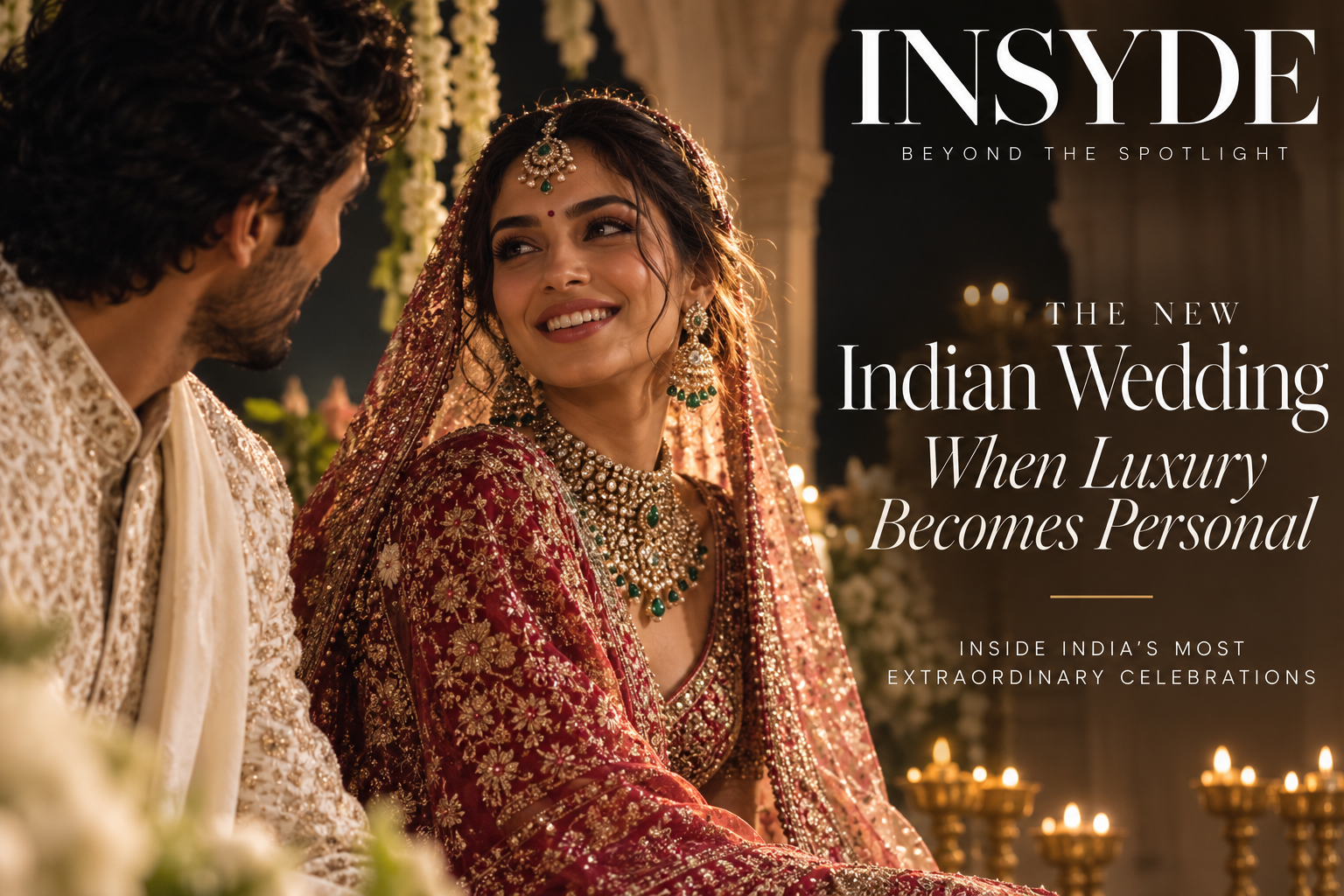
    India has never been short of spectacular weddings. But a new generation is changing what makes a celebration truly luxurious — moving beyond scale and spectacle towards personalisation, experience, craftsmanship and the art of making people feel part of something extraordinary.

    A luxury Indian wedding is no longer simply a celebration.

    For a few days, it can become an entire world.

    A palace becomes a private residence. A garden becomes a dining room. A designer creates clothing that exists for one person. A chef builds a menu around a family’s memories. An artist transforms a space overnight. Guests arrive not simply for a ceremony, but for an experience designed to stay with them long after the final event.

    India has always known how to celebrate.

    What is changing is what the celebration is trying to say.

    For generations, wedding luxury was often measured through scale: larger venues, longer guest lists, bigger décor and increasingly elaborate entertainment.

    Those things still have their place.

    But the most interesting luxury weddings are beginning to ask a different question:

    Does this wedding feel like us?

    That question is changing the Indian wedding — and turning it into one of the country’s most fascinating expressions of modern luxury.

    From Grand to Personal

    The idea that luxury has to mean more is beginning to feel outdated.

    More flowers.

    More guests.

    More entertainment.

    More spectacle.

    More everything.

    But a wedding can be extraordinarily expensive and still feel strangely impersonal.

    The new luxury is increasingly found in the details that could not have been copied from another celebration.

    A menu built around a couple’s favourite dishes.

    A wedding wardrobe designed around a personal story.

    A handwritten note waiting in every guest’s room.

    A piece of jewellery incorporating a family heirloom.

    A song that means something to the couple rather than simply being popular.

    A ceremony designed around heritage without becoming theatrical.

    Recent industry reporting reflects this shift, with Indian wedding professionals describing personalisation, experience and emotional relevance as increasingly important to younger couples. (Eventfaqs)

    The difference is subtle, but important.

    Luxury is becoming less about how much is added and more about how much thought goes into what is chosen.

    The Destination Becomes Part of the Story

    The venue used to be the backdrop.

    Now, increasingly, it is part of the experience.

    A destination wedding can turn a single ceremony into several days of shared life.

    Guests arrive early.

    They stay together.

    They eat together.

    They explore the destination.

    They attend smaller celebrations.

    They have time to actually talk.

    That helps explain the continuing appeal of India’s palaces, heritage properties, resorts and quieter destinations. Recent reporting suggests that couples are increasingly looking beyond conventional wedding destinations for locations that offer privacy, atmosphere and a more distinctive experience. (The Economic Times)

    The venue is no longer simply where the wedding happens.

    The venue becomes part of the story.

    A palace communicates history.

    A coastal property creates a different rhythm.

    A private villa creates intimacy.

    A heritage estate creates a connection to place.

    A quieter destination can give a celebration something increasingly valuable: space.

    And the location can influence everything that follows — from the wardrobe and flowers to the food, photography and guest experience.

    The Wedding Becomes a Multi-Day World

    The modern luxury wedding is increasingly less like a single event and more like an editorial unfolding over several days.

    Welcome dinner.

    Mehendi.

    Haldi.

    Sangeet.

    Cocktail evening.

    Wedding ceremony.

    Reception.

    After-party.

    But the interesting change isn’t simply the number of events.

    It is how differently each event can feel.

    A daytime ceremony might be quiet and architectural.

    An evening celebration might become theatrical.

    A private dinner might feel intimate and almost residential.

    A final brunch might be deliberately relaxed.

    Each moment becomes its own chapter.

    The result is less of a wedding programme and more of a curated journey.

    That distinction matters.

    Luxury is increasingly being measured by the quality of the experience between the major moments, not simply by what happens on the main stage. Business Standard recently reported that Indian couples are increasingly trimming guest lists while investing more in destinations and multi-day experiences that allow families and friends to stay, explore and create memories together. (Business Standard)

    When Fashion Shapes the Entire Wedding

    Few things reveal the changing Indian wedding better than fashion.

    The wedding wardrobe has always been important.

    But today, couture can influence the entire visual language of the celebration.

    A bridal lehenga can inspire the colour palette.

    A groom’s sherwani can influence the décor.

    Jewellery can influence the lighting.

    Textiles can influence table settings.

    The invitation can become an extension of the couture.

    Fashion moves beyond the wardrobe.

    It becomes architecture.

    This is particularly interesting in India because the country already possesses an extraordinary vocabulary of textile and craft traditions.

    Embroidery.

    Weaving.

    Zardozi.

    Hand-painted textiles.

    Metalwork.

    Jewellery.

    Regional techniques passed between generations.

    The modern luxury wedding can give those traditions a new stage.

    The objective doesn’t have to be recreating the past.

    It can be reinterpretation.

    A traditional technique can become contemporary.

    A historic motif can become graphic.

    An old textile can be paired with modern tailoring.

    Heritage can become something that moves forward rather than something preserved behind glass.

    Craftsmanship Becomes Part of the Celebration

    The most memorable luxury is often the kind that takes time.

    A hand-embroidered garment.

    A custom piece of jewellery.

    A hand-painted invitation.

    A specially commissioned installation.

    A table setting created by craftspeople.

    A menu developed around regional ingredients.

    These things have something in common.

    They cannot be produced instantly.

    And that makes them valuable in a culture increasingly dominated by speed.

    The Indian wedding has always been a major platform for craftsmanship.

    But the opportunity now is to move beyond simply using craft as decoration.

    Craft can become the story itself.

    Imagine a wedding where guests are introduced to the artisans who created the textiles.

    Where the menu explains the origins of ingredients.

    Where the jewellery tells the story of a family.

    Where the architecture of the venue becomes part of the celebration.

    Suddenly, luxury becomes educational as well as beautiful.

    The Guest Is No Longer Just a Guest

    This may be one of the biggest changes in modern luxury weddings.

    The guest experience has become part of the design.

    A wedding can have the most beautiful stage in the country and still fail if the people attending it feel forgotten.

    Luxury hospitality works differently.

    Guests know where they are staying.

    They know what is happening.

    They have thoughtful welcome experiences.

    They receive things that feel selected rather than generic.

    They are given time to enjoy the destination.

    They are introduced to the culture of the place.

    They are not simply spectators.

    They become participants.

    That is why hospitality is becoming one of the most important dimensions of luxury weddings.

    The question isn’t only:

    How impressive can the wedding look?

    It is:

    How does everyone feel while they are there?

    That is a much harder question to answer.

    And perhaps a much more meaningful one.

    Food Becomes Storytelling

    Indian weddings have always taken food seriously.

    The modern luxury wedding is taking it further.

    Private dining.

    Regional menus.

    Chef collaborations.

    Curated tasting experiences.

    Family recipes.

    Local ingredients.

    Fine-dining techniques.

    Food can become another way of telling the couple’s story.

    A dish from the bride’s childhood.

    A recipe from the groom’s family.

    A regional ingredient from a place that matters to them.

    A menu inspired by their first trip together.

    The most luxurious meal may not be the one with the greatest number of dishes.

    It may be the one where every dish has a reason for being there.

    From Spectacle to Storytelling

    This doesn’t mean Indian weddings are becoming minimal.

    That would be too simple.

    Grand celebrations are not disappearing.

    Instead, grandeur is becoming more intentional.

    A spectacular performance can still be extraordinary.

    A dramatic floral installation can still be beautiful.

    Fireworks can still create a moment.

    A palace can still be magnificent.

    The difference is that spectacle increasingly works best when it belongs to a larger story.

    The question becomes:

    Why this?

    Why this location?

    Why this music?

    Why this designer?

    Why this colour?

    Why this performance?

    Why this particular piece of jewellery?

    When every element has an answer, extravagance begins to feel like curation rather than excess.

    India’s Heritage Meets a Global Outlook

    Indian weddings have always been deeply rooted in tradition.

    But today’s couples are also growing up in a global cultural environment.

    They travel.

    They study abroad.

    They consume international fashion.

    They follow global design.

    They discover restaurants, hotels and artists from around the world.

    That creates an interesting tension.

    The modern Indian wedding doesn’t necessarily have to choose between Indian and international.

    It can be both.

    A traditional ceremony can take place inside contemporary architecture.

    Indian textiles can be styled with modern silhouettes.

    A regional menu can be presented with contemporary fine-dining techniques.

    A palace wedding can have a distinctly modern visual identity.

    A destination wedding abroad can still remain deeply Indian.

    The future of Indian wedding luxury may therefore be less about choosing between heritage and modernity.

    It may be about making the two belong together.

    The Ultimate Luxury May Be Privacy

    There is another shift worth watching.

    For years, luxury weddings were designed to be seen.

    The bigger the spectacle, the more photographs.

    The more famous the guests, the more attention.

    The more elaborate the production, the more social media content.

    But for some of today’s most high-profile celebrations, the direction is changing.

    Privacy itself is becoming desirable.

    Smaller guest lists.

    Private properties.

    Controlled access.

    Discreet photography.

    Personalised hospitality.

    Carefully managed guest information.

    In July 2026, industry coverage of several high-profile Indian weddings highlighted privacy, intimate guest lists and personalised hospitality as increasingly important markers of luxury. (Eventfaqs)

    This doesn’t necessarily mean spending less.

    In fact, a smaller celebration can allow couples to spend considerably more on the people and details that matter.

    The wedding stops being a performance for everyone.

    It becomes an experience for the people who are actually there.

    And perhaps that is a more sophisticated form of luxury.

    The ability to decide who gets to see it.

    Technology Has a Place — But It Isn’t the Luxury

    Technology is now woven into almost every part of wedding planning and production.

    Digital invitations.

    Online RSVPs.

    Virtual venue tours.

    AI-assisted planning.

    Drone photography.

    Live streaming.

    Immersive installations.

    Technology can make a wedding more efficient and, sometimes, more spectacular.

    But technology itself isn’t necessarily what makes the experience luxurious.

    The best use of technology is often the use you barely notice.

    It removes friction.

    It makes the experience smoother.

    It helps personalise the celebration.

    The luxury remains human.

    A thoughtful welcome.

    A beautifully prepared room.

    A meal that arrives at exactly the right moment.

    A piece of clothing made specifically for you.

    A conversation that lasts longer than expected.

    Technology can support those moments.

    It cannot replace them.

    The Wedding as a Luxury Ecosystem

    Perhaps this is why weddings are becoming so important to the wider luxury industry.

    A single celebration can bring together fashion, jewellery, hospitality, travel, automobiles, beauty, food, art, architecture and entertainment.

    A wedding doesn’t exist inside one luxury category.

    It connects them all.

    A bride may work with a couture house, a jewellery designer, a beauty team and a photographer.

    The family may book a heritage property, private transport, a chef and a production company.

    Guests may travel internationally, stay at luxury hotels and shop for new wardrobes.

    The wedding becomes an ecosystem of luxury.

    But the commercial value is only one part of the story.

    The more interesting question is cultural:

    Why has the Indian wedding become such a powerful expression of aspiration?

    Because it combines almost everything India values about celebration — family, identity, tradition, craftsmanship, food, fashion, hospitality and storytelling — into one extraordinary moment.

    What Will the Next Indian Luxury Wedding Look Like?

    It may still be enormous.

    Or it may have 80 guests.

    It may take place in a palace.

    Or on a private beach.

    It may involve couture from Paris.

    Or a young Indian designer nobody outside the fashion world has discovered yet.

    It may feature a famous performer.

    Or simply a musician who means something to the family.

    There is no single formula.

    And that is precisely the point.

    The future of luxury weddings is not one aesthetic.

    It is personalisation at scale.

    The ability to create an experience that feels extraordinarily considered, even when the production itself is enormous.

    That requires more than money.

    It requires taste.

    It requires restraint.

    It requires storytelling.

    And above all, it requires knowing what matters.

    The Most Luxurious Wedding May Be the Most Personal One

    India doesn’t need to make its weddings less spectacular.

    It simply has the opportunity to make them more meaningful.

    The most memorable celebration may not be the one with the largest guest list or the tallest floral installation.

    It may be the one where every detail feels connected.

    The clothes.

    The jewellery.

    The food.

    The architecture.

    The music.

    The destination.

    The people.

    The memories.

    The things that could only have belonged to that particular couple.

    Because the ultimate luxury may not be having the wedding everyone remembers.

    It may be creating the wedding that could belong to no one else.

    And perhaps that is where the new Indian wedding begins.

    INSYDE — Inside modern luxury.

  • DOES LUXURY WHISKY STILL NEED SCOTLAND?

    DOES LUXURY WHISKY STILL NEED SCOTLAND?

    Scotland built the world’s most powerful whisky identity. But as India, Japan, England and other emerging whisky regions redefine what premium can mean, the luxury category is becoming harder to place on a map.

    By INSYDE

    For generations, the geography of luxury whisky seemed almost predetermined.

    Scotland.

    Its distilleries. Its warehouses. Its peat. Its oak. Its single malts. Its centuries of accumulated knowledge.

    Scotland did more than make whisky. It turned whisky into a language of heritage, craftsmanship and prestige.

    Then the rest of the world started speaking it.

    Japan developed a whisky culture built around precision and restraint. India began producing single malts with increasingly global ambition. Taiwan proved that a relatively young whisky industry could attract serious international attention. England is now establishing a protected identity of its own.

    The result is not the disappearance of Scotch.

    It is something more interesting.

    The luxury whisky world is becoming less geographically exclusive.

    So the question is no longer whether Scotland makes the world’s most recognisable whisky.

    It does.

    The question is:

    Does luxury whisky still need Scotland?


    01 — SCOTLAND BUILT THE BLUEPRINT

    Scotland’s relationship with whisky is not simply historical. It is structural.

    Scotch is a legally protected category, defined by where and how it is produced. The whisky must be produced and matured in Scotland under specific requirements, with a minimum maturation period of three years.

    That geographical connection is fundamental to what Scotch is.

    And the industry’s scale remains enormous.

    In 2025, Scotch whisky exports were worth approximately £5.3 billion, with the equivalent of 1.34 billion 70cl bottles exported to more than 160 markets worldwide—roughly 43 bottles every second.

    Scotland has therefore achieved something few luxury categories ever manage.

    It transformed a regional product into a global cultural symbol.

    The bottle became inseparable from the place.

    A whisky could carry the name of a distillery, a region, a cask, a vintage, a warehouse—and eventually an entire mythology.

    That mythology became part of the luxury.


    02 — THEN THE WORLD LEARNED THE FORMULA

    For a long time, the prestige conversation was relatively straightforward.

    Scotland was at its centre.

    But whisky became increasingly global as consumers became more knowledgeable, collectors became more adventurous and premium spirits began competing not only on taste, but on provenance, scarcity, design and cultural relevance.

    The category began behaving more like other luxury industries.

    Consider watches.

    Swiss watchmaking remains deeply influential, but luxury horology is no longer understood solely through geography. Independent makers and alternative traditions have expanded the conversation around craftsmanship.

    Whisky is experiencing a similar shift.

    The modern luxury consumer is not only asking:

    Where is it from?

    They are also asking:

    Who made it?

    How was it made?

    Why is it rare?

    What makes this release different?

    And perhaps most importantly:

    Why is it worth my attention?

    That is a much more sophisticated definition of luxury than simply putting a high price on a bottle.


    03 — INDIA IS CHANGING THE CONVERSATION

    Few markets illustrate this transformation more clearly than India.

    India has long been one of the world’s most important whisky markets. Its relationship with Scotch is particularly significant: in 2025, India was Scotch’s largest export market by volume, receiving the equivalent of 220 million 70cl bottles, while Scotch exports to the country have grown by more than 200% over the past decade.

    But there is another number worth paying attention to.

    According to the Scotch Whisky Association, Scotch accounts for only around 3% of India’s whisky market.

    That tells us something important.

    India is not simply a market waiting to be introduced to whisky.

    It already has one of the world’s largest whisky cultures.

    And now, increasingly, it is creating premium whisky of its own.

    IWSR’s 2026 analysis reports that Indian single malt has overtaken Scotch single malt in India in both volume and value.

    That does not mean Scotch is becoming irrelevant.

    It means something more consequential is happening.

    Indian consumers are becoming comfortable holding multiple definitions of luxury at the same time.

    A Scotch can represent heritage.

    An Indian single malt can represent discovery.

    And for a new generation of luxury consumers, discovery can be every bit as compelling as heritage.


    04 — WHEN LOCAL BECOMES LUXURY

    There is a larger cultural shift underneath India’s whisky story.

    Luxury is becoming more local.

    For decades, consumers in emerging luxury markets often looked outward for the strongest symbols of prestige.

    Swiss watches.

    French fashion.

    Italian leather.

    Scottish whisky.

    But today’s luxury consumer increasingly wants something more nuanced:

    global standards with local identity.

    That distinction matters.

    An Indian single malt does not have to imitate Scotch to be taken seriously.

    Its strongest proposition may be precisely that it is Indian.

    Its climate.

    Its maturation environment.

    Its production philosophy.

    Its design.

    Its sense of place.

    Its cultural context.

    These are not limitations.

    They can be assets.

    The question is therefore changing from:

    “Can India make whisky like Scotland?”

    to:

    “What can India make whisky mean?”

    That is a much more interesting question.


    05 — JAPAN CHANGED THE RULES

    India is not the first market to challenge the assumption that exceptional whisky must come from Scotland.

    Japan has already demonstrated what happens when a country builds its own whisky language.

    Japanese whisky became globally desirable not simply because of production quality, but because it became part of a broader cultural aesthetic.

    Precision.

    Restraint.

    Detail.

    Patience.

    Presentation.

    The whisky began to communicate something about Japan itself.

    And consumers responded.

    According to IWSR’s latest global travel-retail analysis, Japanese whisky recorded 37% volume growth and 44% value growth in 2025, making it the standout whisky category in the channel.

    That is significant.

    The consumer did not need Scotland to understand the idea of luxury whisky.

    Japan created its own version of it.


    06 — ENGLAND IS WRITING A NEW CHAPTER

    The whisky map is becoming even more interesting.

    In September 2026, English Whisky received protected Geographical Indication status, with the name scheduled to enter the UK’s register on 1 October following the required notice period. The designation formally recognises English Whisky as a distinct protected category.

    It is more than a regulatory footnote.

    Geography is one of luxury’s most powerful currencies.

    Champagne.

    Cognac.

    Scotch.

    Burgundy.

    These names communicate more than what is inside a bottle.

    They communicate place.

    English whisky is now building that same architecture of place around its own emerging category.

    And importantly, it does not need to become Scotch.

    Its opportunity lies in becoming English.

    That distinction may ultimately be the more valuable one.

    Because the future of luxury is rarely about copying an established tradition.

    It is about creating a tradition of your own.


    07 — AGE IS NO LONGER THE WHOLE STORY

    For generations, age was one of whisky’s clearest luxury signals.

    Twelve years.

    Eighteen years.

    Twenty-five.

    Thirty.

    The number became shorthand for time, scarcity and prestige.

    Age still matters.

    But it is no longer the entire story.

    The modern collector market demonstrates how much broader whisky’s definition of value has become.

    Auction houses such as Sotheby’s regularly bring together rare whisky from Scotland, Japan, the United States and other origins, with value shaped by factors including rarity, provenance, distillery history, scarcity and collector interest.

    The important point is not simply that some bottles command extraordinary prices.

    It is why they do.

    Luxury whisky can derive value from:

    Provenance.

    Craftsmanship.

    Rarity.

    Cask history.

    Limited production.

    Distillery heritage.

    Packaging and design.

    Cultural significance.

    Collector demand.

    Age is one variable.

    It is not the entire equation.


    08 — THE NEW LUXURY BOTTLE IS A STORY

    This may be the most important transformation taking place.

    Luxury has always been about storytelling.

    A watch is mechanics wrapped in heritage.

    A handbag is craftsmanship wrapped in cultural meaning.

    A car is engineering wrapped in identity.

    Whisky is liquid.

    But luxury whisky increasingly sells something beyond the liquid.

    It sells context.

    Where was it made?

    What shaped its character?

    What kind of cask was used?

    Why was that cask selected?

    How many bottles exist?

    Who created the release?

    What makes this particular expression worth remembering?

    The more sophisticated the consumer becomes, the less powerful generic claims of “premium” become.

    Specificity is the new currency.

    A bottle cannot simply look rare.

    It needs genuine scarcity.

    It cannot simply look handcrafted.

    There needs to be craftsmanship behind it.

    And it cannot simply have a beautiful story.

    The story has to mean something.


    09 — SCOTLAND’S GREATEST STRENGTH IS ITS HERITAGE

    There is an interesting tension at the centre of Scotland’s position.

    Its greatest competitive advantage is also something it cannot manufacture overnight:

    heritage.

    Scotland has centuries of accumulated knowledge, established distilleries, global recognition and an enormous international distribution network.

    But the wider whisky market is changing.

    Scotch exports fell 1.8% in value and 4.3% in volume in 2025, according to the Scotch Whisky Association. Single malt exports declined 6% in value, while bottled blends remained the largest Scotch export category by value.

    Those numbers should not be mistaken for the collapse of Scotch.

    A £5.3 billion export industry remains one of the world’s most significant spirits businesses.

    Instead, the figures illustrate a broader reality:

    Luxury consumers are becoming more selective.

    They may still want expensive whisky.

    But price alone is increasingly insufficient.

    The bottle needs a reason to exist.


    10 — INDIA AND SCOTLAND: A NEW KIND OF RELATIONSHIP

    The relationship between India and Scotch is entering another important phase.

    The UK-India trade agreement has reduced the tariff on UK whisky entering India from 150% to 75%, with the rate scheduled to fall progressively to 40% by the tenth year of the agreement.

    That could reshape the economics of imported Scotch in one of the world’s most important whisky markets.

    But there is a fascinating paradox.

    The same market becoming more accessible to Scotch is simultaneously becoming more confident in Indian whisky.

    That creates an ecosystem rather than a simple contest.

    Scotland brings centuries of accumulated whisky expertise and global recognition.

    India brings enormous market scale, a rapidly evolving premium consumer, distinctive production environments and a growing domestic luxury whisky culture.

    The future does not necessarily require one to replace the other.

    It may be more interesting if they influence each other.


    11 — THE LUXURY WHISKY WORLD IS BECOMING MULTIPOLAR

    And this brings us back to the original question.

    Does luxury whisky still need Scotland?

    If the question is:

    Does Scotch need Scotland?

    Of course.

    Scotch is defined by Scotland.

    But if the question is:

    Does luxury whisky need Scotland?

    The answer becomes considerably more complicated.

    Luxury whisky can now emerge from multiple cultural centres.

    Scotland.

    Japan.

    India.

    Taiwan.

    The United States.

    England.

    What connects these places is not geography.

    It is ambition.

    Each is attempting to turn its own combination of ingredients, climate, craftsmanship, technology, tradition and cultural identity into something the world considers exceptional.

    That is what luxury ultimately demands.

    Not simply a prestigious address.

    A point of view.


    12 — THE NEW WHISKY CONSUMER IS BUYING MEANING

    The next generation of luxury consumers has grown up with access to more information than any previous generation.

    They can research a distillery in minutes.

    Compare bottles across markets.

    Follow master distillers.

    Watch production processes.

    Discover emerging brands through social media.

    And encounter a Japanese whisky, an Indian single malt and a Scottish classic within the same evening.

    The old barriers of discovery have largely disappeared.

    That makes authenticity more important.

    A bottle cannot simply look rare.

    It needs genuine scarcity.

    It cannot simply look handcrafted.

    There needs to be craft behind it.

    And it cannot simply borrow the language of luxury.

    There needs to be substance beneath it.

    The consumer is moving from one question to another.

    From:

    “How expensive is it?”

    to:

    “Why is it worth it?”

    That is a far more difficult question for the industry.

    And a far more interesting one.


    13 — SO, DOES LUXURY WHISKY STILL NEED SCOTLAND?

    Scotland does not need to lose for the rest of the world to matter.

    That is the distinction.

    Scotland remains the defining home of Scotch whisky.

    Its heritage is real.

    Its expertise is real.

    Its cultural influence is enormous.

    But luxury has never been static.

    The very qualities that made Scottish whisky extraordinary—time, craftsmanship, provenance and storytelling—are now being interpreted through different cultures around the world.

    Japan has developed its own language.

    India is developing its own.

    England is establishing one.

    Taiwan has demonstrated what a younger whisky industry can accomplish.

    The United States continues to expand the possibilities of American whiskey.

    The category is becoming more interesting precisely because excellence no longer has a single accent.

    The future is not necessarily:

    SCOTLAND VS. THE WORLD.

    It is:

    SCOTLAND AND THE WORLD.


    THE NEW WHISKY EQUATION

    The old luxury equation was relatively simple:

    HERITAGE + AGE + SCOTLAND = PRESTIGE

    The emerging equation is more complicated:

    PROVENANCE + CRAFT + RARITY + CULTURAL RELEVANCE + STORY = LUXURY

    Scotland can still deliver every part of it.

    It simply no longer has exclusive ownership of the formula.

    And that changes the category.


    THE INSYDE TAKE

    For centuries, Scotland taught the world what whisky could mean.

    Now the world is expanding the definition.

    A bottle from Scotland can carry centuries of memory.

    A bottle from Japan can embody precision and restraint.

    A bottle from India can represent a new expression of place, ambition and modern luxury.

    A bottle from England can represent a tradition still being written.

    And somewhere between all of them lies the next chapter of premium whisky.

    The question is no longer simply:

    “Is it Scotch?”

    It is:

    “What makes it exceptional?”

    Perhaps that is the real evolution of luxury whisky.

    It is no longer defined only by where it comes from.

    It is increasingly defined by why the world wants it.


    INSYDE | LUXURY

    SCOTLAND STILL OWNS SCOTCH.
    IT JUST DOESN’T OWN LUXURY WHISKY ANYMORE.

  • THE £20,000 POUR

    THE £20,000 POUR

    Inside the rare bottles, private collections and new drinking culture redefining luxury in 2026.

    A drink can cost more than a luxury watch.

    A bottle can be rarer than a piece of jewellery.

    A whisky can be made for one person.

    And a cognac can arrive with its own temperature-controlled cellar.

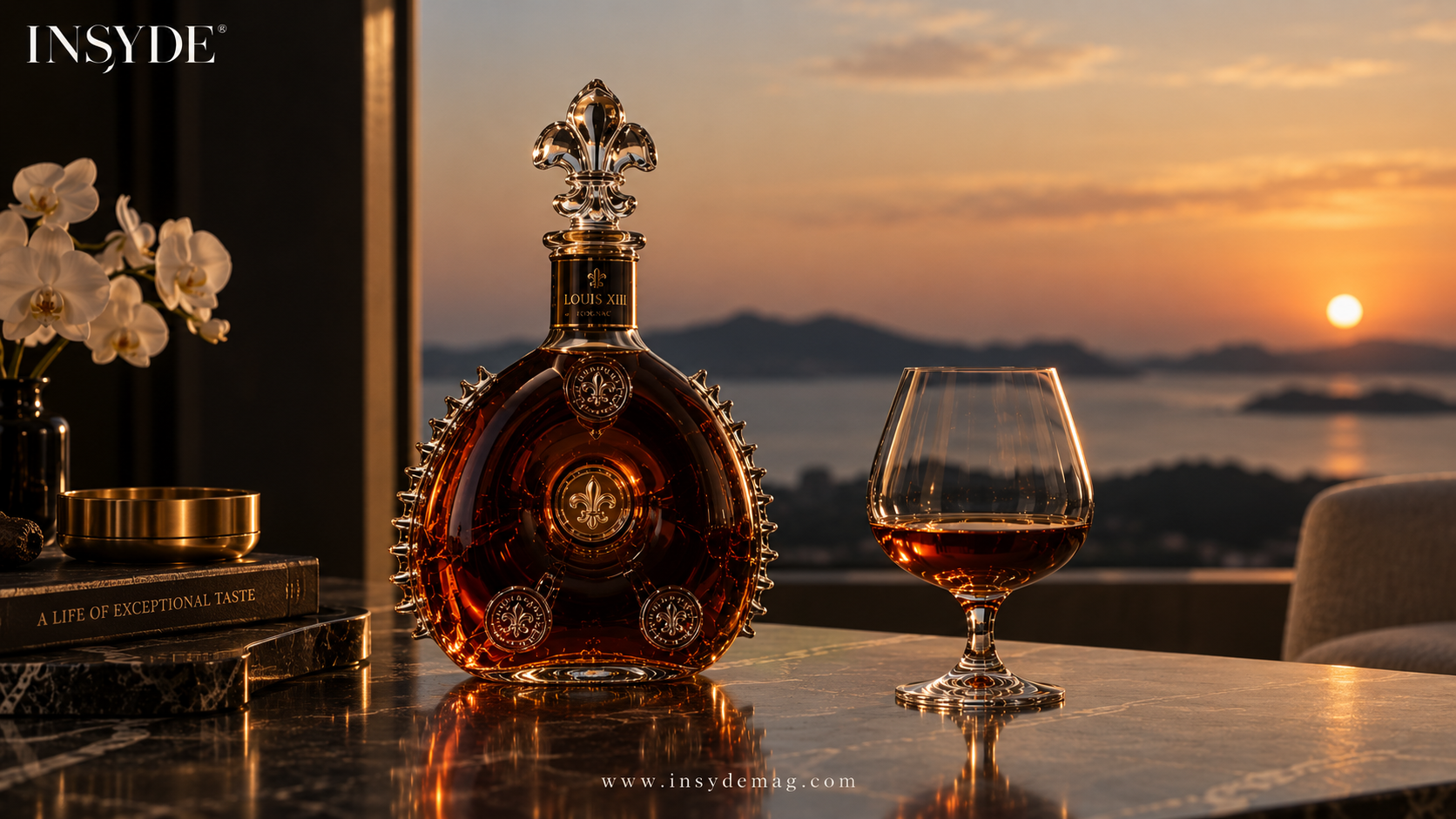
    In September 2026, LOUIS XIII unveiled Black Pearl: Tribute to Le Grollet, a new expression limited to just 398 decanters worldwide. The reported price is £21,000 per decanter, with the experience built around a temperature-controlled ritual inspired by the historic Le Grollet cellar in Cognac.

    At first glance, the obvious question is:

    Why?

    Why spend £21,000 on something that eventually disappears?

    But that question misses what luxury alcohol has become.

    Because at the highest end, the wealthy consumer isn’t simply buying what’s inside the bottle anymore.

    They’re buying rarity.

    Provenance.

    Craftsmanship.

    Access.

    Knowledge.

    And increasingly, the story surrounding the pour.

    At the same time, a younger generation is entering the category with an entirely different set of expectations. Gen Z isn’t simply abandoning alcohol. The latest IWSR research shows participation among legal-drinking-age Gen Z consumers has stabilised at 74% across 15 key markets, while drinking occasions and quantities are becoming more selective. In India’s high-income urban population, participation among Gen Z adults over 21 reached 80% in 2026, up from 60% three years earlier.

    The result is a strange contradiction.

    The luxury consumer is going deeper.

    The younger consumer is becoming more selective.

    And somewhere between the private cellar and the late-night cocktail bar, the definition of luxury is changing.

    Welcome to the new luxury pour.


    THE EXPENSIVE BOTTLE ISN’T ENOUGH ANYMORE

    For decades, luxury alcohol had a relatively simple formula.

    Make it old.

    Make it rare.

    Put a famous name on it.

    Put it inside an extraordinary bottle.

    Charge more.

    The higher the price, the stronger the signal.

    But 2026 is making that formula increasingly complicated.

    IWSR’s latest research argues that premiumisation is undergoing a reset. Since 2022, global beverage-alcohol price-per-litre growth has consistently lagged overall inflation, while consumers have become more selective about trading up. The question is increasingly whether an expensive product delivers something meaningful in return.

    That distinction matters.

    Because there is a difference between:

    expensive

    and

    luxurious.

    A bottle can be expensive because it carries a high price.

    Luxury needs a reason.

    Maybe the spirit comes from an unusually rare cask.

    Maybe only a few hundred bottles exist.

    Maybe the liquid took decades to mature.

    Maybe the bottle itself is an extraordinary piece of craftsmanship.

    Maybe the buyer gets access to something most consumers will never see.

    Or perhaps the bottle tells a story that cannot simply be reproduced.

    The price becomes a consequence of the story.

    Not the story itself.


    WHEN A BOTTLE BECOMES A COLLECTION

    There is a moment when alcohol stops behaving like a consumable and starts behaving like an object.

    Collectors understand this instinctively.

    A rare bottle can become an object of design, a piece of history, a conversation piece, a gift, a family possession — or simply something kept because finding another one would be almost impossible.

    The most interesting examples aren’t necessarily the bottles with the biggest numbers printed on their price tags.

    They are the ones where scarcity has meaning.

    LOUIS XIII’s Black Pearl is a particularly striking example.

    Its 398-decanter production is only part of the proposition. The expression draws on an exceptional eau-de-vie selected from the house’s historic collection and connected to Le Grollet, while the tasting ritual is designed to evolve as the cognac warms from cellar temperature toward ambient temperature.

    The bottle is therefore only one part of the object.

    The cellar.

    The temperature.

    The ritual.

    The provenance.

    The liquid.

    The story.

    All become part of the experience.

    And that is the point.

    Luxury alcohol is increasingly being designed as an experience rather than simply packaged as a product.


    THE RICHEST BOTTLE MAY BE THE ONE THAT IS YOURS

    Perhaps the most fascinating development in luxury spirits isn’t the rare bottle.

    It’s the personal bottle.

    India is already experimenting with this idea.

    Diageo India’s India Rare Spirits programme offers a personalised cask experience in which consumers can explore a library of aged malts, select a cask and create an expression tailored to individual tastes and occasions. The resulting bottles can carry personalised labels and commissioned artwork for milestones including weddings, corporate celebrations and anniversaries.

    The distinction is subtle but important.

    A limited edition says:

    Only a few people can own this.

    A bespoke expression says:

    This was made for you.

    Luxury has always understood the power of personalisation.

    Fashion does it.

    Cars do it.

    Jewellery does it.

    Watches do it.

    Now spirits are moving deeper into the same territory.

    The bottle becomes less like a product and more like a portrait of its owner.


    INDIA IS TRADING UP

    India is becoming one of the world’s most interesting growth stories in beverage alcohol.

    IWSR says India’s total beverage-alcohol volumes grew at a 3% CAGR between 2019 and 2024, including a 6% increase in 2024, with another 4% increase projected for 2025. Over 2024–2034, IWSR forecasts approximately 3% annual volume growth. Imported spirits have been gaining particularly quickly, growing at a 16% CAGR between 2019 and 2024.

    But the more interesting story isn’t simply that Indians are buying more alcohol.

    It is what they expect from it.

    The country’s premium alcohol landscape is expanding across single malts, Scotch, tequila, wine, craft spirits and increasingly personalised experiences. Indian producers and international houses are competing for consumers who have more choice, more information and greater exposure to global drinking culture.

    This is the beginning of a broader cultural shift.

    The Indian luxury consumer is no longer necessarily asking:

    “Is this imported?”

    Increasingly, the more interesting question is:

    “Is this interesting?”

    That is a significant change.


    THE INDIAN LUXURY CONSUMER IS GETTING MORE SELECTIVE

    India’s opportunity isn’t simply about having more wealthy consumers.

    It is about having consumers with more choices.

    More brands.

    More categories.

    More international exposure.

    More travel.

    More sophisticated bars.

    More information.

    More ways to discover something new.

    And more reasons to question whether a premium price actually means premium value.

    IWSR describes India as a major growth engine for beverage alcohol, but also emphasises the country’s complexity: state-level regulation, taxation, distribution structures and a consumer base that remains highly value-conscious.

    That creates an unusual environment for luxury.

    A global brand cannot simply arrive with a beautiful bottle and assume the story is finished.

    It has to earn its place.

    Through the liquid.

    Through the experience.

    Through the culture surrounding it.


    THE BAR IS NO LONGER JUST A BAR

    There was a time when a bar’s job was simple.

    Serve the drink.

    Today, some of the most interesting luxury drinking experiences are built around everything before the drink reaches the glass.

    The room.

    The bartender.

    The music.

    The food.

    The glassware.

    The story.

    The people.

    The location.

    The ritual.

    India’s on-premise market is becoming increasingly important to this equation.

    NIQ’s 2026 India research found that nearly seven in ten Indian consumers visit restaurants, cafés or bars at least once a quarter, while its research highlights the role of the on-premise environment in creating occasions, justifying premium choices and building brand preference. Bartenders and venue staff can also exert an outsized influence over consumer choice.

    The bar becomes a showroom.

    But not a showroom for bottles.

    A showroom for taste.

    The bartender becomes a curator.

    The menu becomes an editorial.

    The experience becomes part of the product.

    And suddenly, ordering a drink isn’t simply consumption.

    It becomes participation.


    THE NEW LUXURY CLUB

    At the highest end, this becomes even more exclusive.

    Luxury alcohol increasingly intersects with:

    private clubs

    members’ spaces

    collector communities

    private tastings

    hotel experiences

    chef collaborations

    distillery visits

    invitation-only events

    This shift can already be seen in the way spirits companies are building destinations around their brands.

    Diageo India’s The Good Craft Co. Flavour Market in Ponda, Goa, for example, is being developed as an ecosystem combining an experience centre, distillery tour, rare-spirits vault, craft bar, tasting room, chef and mixologist collaborations, workshops and a bespoke craft-spirit retail destination.

    The luxury alcohol ecosystem is therefore moving from:

    Bottle → Consumer

    towards:

    Brand → Experience → Community → Consumer

    Luxury is becoming social again.

    But selectively social.


    THEN GEN Z WALKED IN

    And just when the luxury industry thought it understood the next drinker, Gen Z complicated everything.

    The old narrative suggested Gen Z was simply going to abandon alcohol.

    The data is more nuanced.

    IWSR’s July 2026 research found that 74% of legal-drinking-age Gen Z consumers across 15 key markets participated in beverage alcohol, up from 66% three years earlier. In India’s high-income urban population, participation among Gen Z adults over 21 reached 80% in 2026, compared with 60% three years earlier.

    But participation doesn’t mean indiscriminate consumption.

    IWSR’s research also shows that younger drinkers are becoming more selective. Across its 15-market study, the average number of beverage-alcohol categories consumed per occasion by Gen Z fell from 2.8 to 1.8 over two years. The change was particularly visible among Gen Z consumers in India and several other markets.

    That’s where the story gets interesting.

    Gen Z isn’t necessarily saying:

    “I don’t want alcohol.”

    It is increasingly asking:

    “Why this drink?”

    “Why this place?”

    “Why this occasion?”

    And perhaps most importantly:

    “Is it worth it?”


    GEN Z DOESN’T WANT YOUR FATHER’S WHISKY

    Previous generations often understood premium alcohol through a familiar vocabulary:

    Age statement.

    Heritage.

    Status.

    Prestige.

    Scarcity.

    Gen Z is adding another word:

    Discovery.

    IWSR’s research shows younger legal-drinking-age consumers remain engaged with alcohol while becoming more selective about category choice and occasion.

    That changes how luxury works.

    A younger consumer may not automatically care that a brand has existed for centuries.

    But they may care that:

    a bartender recommended it,

    a chef built a menu around it,

    a designer collaborated on it,

    the distillery has an unusual story,

    the ingredients come from somewhere unexpected,

    or only a small community knows about it.

    The new luxury consumer doesn’t necessarily want to inherit taste.

    They want to discover it.


    THE COCKTAIL GENERATION

    There is another clue hiding in the changing drinking culture.

    Cocktails transform alcohol into something more than a bottle.

    A cocktail can be:

    a flavour experience,

    a piece of design,

    a performance,

    a social object,

    a signature of a particular venue,

    or the centre of an entire evening.

    The bottle becomes the raw material.

    The experience becomes the luxury.

    And this helps explain why sophisticated bars matter so much to younger consumers.

    They aren’t simply places to drink.

    They are places to discover culture.


    DRINK LESS. CHOOSE BETTER.

    There is another paradox here.

    The future of luxury alcohol may not involve drinking more.

    It may involve drinking less, but with greater intention.

    IWSR’s 2026 research found that the average number of drinks consumed per occasion across its key markets fell to 3.9, from 4.4 in 2024 and 2025. The organisation describes moderation as increasingly structural rather than simply cyclical, with lifestyle and health becoming more important influences.

    This does not mean premium alcohol disappears.

    Quite the opposite.

    IWSR’s latest premiumisation research suggests that consumers in developing markets such as India continue to trade up, but increasingly want genuine justification for the higher price. Across 16 major developing markets, IWSR forecasts premium-plus servings to expand by 13% between 2025 and 2035.

    That creates an unusual luxury equation.

    The consumer may have access to hundreds of bottles.

    But chooses one.

    One exceptional whisky.

    One extraordinary cognac.

    One beautifully made cocktail.

    One bottle opened for an important evening.

    Luxury becomes less about abundance.

    And more about selection.


    THE EXPERIENCE IS THE LUXURY

    This may be the biggest transformation taking place.

    The liquid still matters.

    But what happens around it increasingly matters too.

    The right restaurant.

    The right table.

    The right glass.

    The right bartender.

    The right person sitting across from you.

    The right story.

    The right moment.

    IWSR’s research into the on-trade describes a shift toward more “edited” occasions, with consumers drinking fewer serves and fewer categories while seeking meaningful experiences and better justification for what they spend.

    This is a profound shift.

    Because luxury has always been about controlling the experience.

    A luxury hotel doesn’t sell a bed.

    A private jet doesn’t sell a seat.

    A luxury watch doesn’t simply sell time.

    And a £20,000 cognac isn’t simply selling liquid.

    It is selling a moment that very few people can reproduce.


    THE NEW STATUS SYMBOL IS TASTE

    Perhaps this is where luxury alcohol becomes most interesting.

    For a long time, status was largely about ownership.

    The car.

    The watch.

    The bottle.

    The address.

    But as luxury becomes increasingly visible through social media, simply recognising a logo becomes less impressive.

    Knowing why something matters becomes more valuable.

    Knowing the producer.

    Knowing the vintage.

    Knowing the cask.

    Knowing the difference between two expressions.

    Knowing which bar has the rare bottle.

    Knowing which release is genuinely scarce.

    Knowing when a “limited edition” is actually meaningful.

    Knowing when to order something — and when not to.

    That is taste as cultural capital.

    And cultural capital is difficult to counterfeit.


    INDIA’S NEW DRINKING ELITE

    This is where the Indian story becomes especially compelling.

    India is developing not simply a larger alcohol market, but a more diverse luxury ecosystem around it.

    International spirits houses are expanding premium portfolios.

    Indian producers are moving into higher-value categories.

    Bars are becoming more sophisticated.

    Collectors are becoming more informed.

    And younger affluent consumers are increasingly participating in the category.

    IWSR’s 2026 data found beverage-alcohol participation among high-income urban Indians at 77%, while participation among Gen Z adults over 21 in the same demographic reached 80%, up from 60% three years earlier.

    And Indian brands are increasingly using scarcity, craftsmanship and storytelling to position themselves at the luxury end.

    Take Godawan 173.

    Released in 2025 as a collector’s edition, the expression was limited to 173 bottles, each priced at ₹5 lakh. Its name referenced the reported recovery of the Great Indian Bustard population from 100 to 173, while the whisky used a three-stage maturation journey involving ex-bourbon, Oloroso and PX sherry, and Asha liqueur casks. Each bottle was inspired by Jaipur Blue Pottery.

    The point isn’t that every affluent drinker will buy a ₹5 lakh bottle.

    They won’t.

    The point is that Indian spirits are increasingly learning how to construct luxury narratives of their own.

    And that changes the conversation.


    THE BATTLE FOR THE TOP SHELF

    This is why India’s luxury alcohol landscape is becoming increasingly interesting.

    International houses bring:

    heritage

    global recognition

    distribution

    iconic names

    deep reserves

    Indian producers bring:

    local knowledge

    climate

    experimentation

    craft

    cultural identity

    speed

    And consumers are standing in the middle with more choices than ever.

    The question is no longer simply whether Indian consumers will buy luxury alcohol.

    They already are.

    The bigger question is:

    Who will define what luxury drinking in India looks like next?

    Will European heritage continue to dominate?

    Will Indian spirits become global luxury objects?

    Will tequila and agave reshape the premium conversation?

    Will private clubs become more important to affluent nightlife?

    Will the cocktail become more important than the bottle?

    Will moderation redefine indulgence?

    Or will the next great luxury-drinks brand come from somewhere nobody is looking yet?


    WHAT ACTUALLY MAKES A DRINK LUXURIOUS?

    Perhaps the answer isn’t age.

    It isn’t price.

    It isn’t even rarity.

    Not by itself.

    Luxury emerges when several things collide:

    Scarcity.

    Craftsmanship.

    Provenance.

    Authenticity.

    Personalisation.

    Experience.

    Access.

    Knowledge.

    And increasingly:

    meaning.

    That’s why a £21,000 cognac can exist alongside a personalised Indian cask, a ₹5 lakh collector’s whisky, a perfectly executed cocktail and even a sophisticated alcohol-free serve.

    They occupy completely different price points.

    But they can participate in the same cultural conversation.

    Because luxury is no longer simply about what something costs.

    It’s about why someone cares.


    THE £20,000 POUR

    The £20,000 bottle is therefore not really the story.

    It’s the doorway.

    Behind it is a much larger transformation.

    The wealthy are becoming more selective.

    Collectors are becoming more sophisticated.

    Brands are moving from bottles to experiences.

    Indian spirits are building narratives of their own.

    Bars are becoming cultural spaces.

    And Gen Z is entering the conversation with a completely different understanding of indulgence.

    The future of luxury alcohol may not belong to the brand with the oldest distillery.

    Or the highest price.

    Or the biggest bottle.

    It may belong to whoever can create something people genuinely want to remember.

    Because when money stops being the obstacle, meaning becomes the luxury.

    And perhaps the most luxurious drink isn’t the one that costs £20,000.

    It’s the one you know exactly why you wanted.


    INSYDE TAKE

    Luxury alcohol is entering a strange new era.

    The bottle still matters.

    The heritage still matters.

    The craftsmanship absolutely matters.

    But the hierarchy is changing.

    Price gets attention.

    Scarcity creates desire.

    Craft earns respect.

    Experience creates memory.

    And taste creates status.

    For the wealthy, the next great luxury may not be another trophy bottle.

    For Gen Z, it may not always be alcohol at all.

    And for India, the most interesting possibility is that the next definition of luxury drinking won’t simply be imported.

    It could be made here.

    INSYDE

    Luxury, Through a Different Lens.

    Beyond the Spotlight.

  • THE DEATH OF THE LOUD LUXURY CAR

    THE DEATH OF THE LOUD LUXURY CAR

    The world’s most desirable cars are entering a quieter, stranger and more personal era. But the roar isn’t disappearing. It is becoming a choice.

    Luxury cars used to announce themselves.

    You heard them before you saw them.

    The engine. The exhaust. The tyres. The arrival.

    For decades, automotive luxury was built around a very visible equation: more was more.

    More cylinders. More horsepower. More leather. More chrome. More presence.

    A luxury car was not simply a machine for moving through the world. It was a machine for making the world notice that you had arrived.

    But 2026 has produced a strange contradiction.

    Some of the world’s most desirable cars are becoming quieter.

    Others are becoming impossibly faster.

    Some are turning the cabin into a private sanctuary.

    Others are recreating the emotional theatre of the combustion engine even after removing the engine itself.

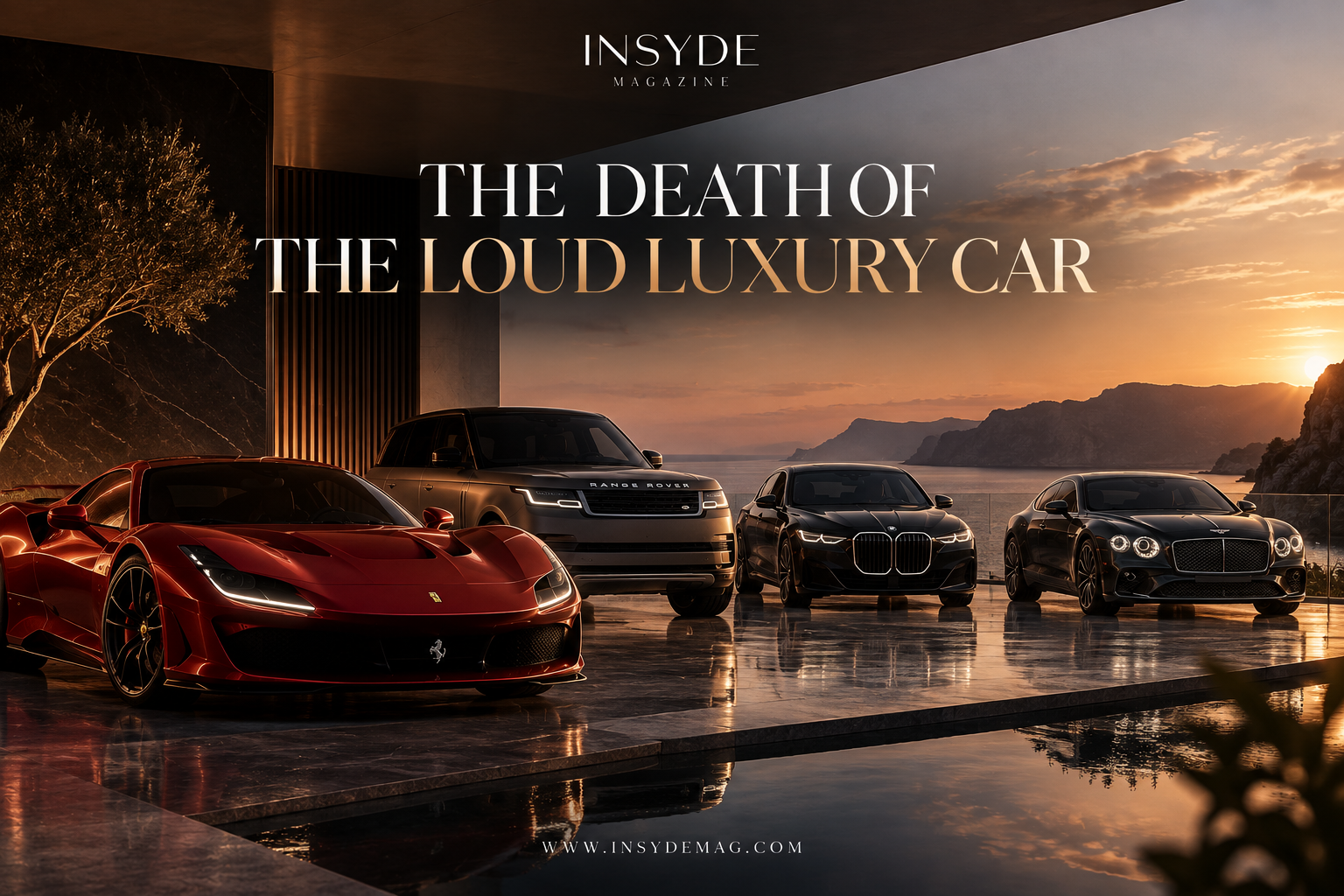
    The new Range Rover Electric calls itself the quietest Range Rover yet. Ferrari has created a 1,050-cv plug-in hybrid in the 849 Testarossa. BMW has brought a new 7 Series and i7 to India, with the electric flagship now locally produced in Chennai. Bentley is designing an entirely new sound for its electric Torcal using real musical instruments.

    So what exactly is happening to the luxury car?

    The answer is not that cars are becoming quieter.

    Luxury is becoming more intentional about what it makes you feel.


    WHEN MORE STOPPED BEING ENOUGH

    For years, horsepower was one of the simplest ways to communicate automotive status.

    600 horsepower was extraordinary.

    Then 700 became extraordinary.

    Then 800.

    Then 1,000.

    Now four-digit horsepower is entering the territory of production luxury cars.

    Ferrari’s 849 Testarossa combines a twin-turbo V8 with three electric motors to produce a total 1,050 cv. Its V8 alone produces 830 cv, while the hybrid system contributes another 220 cv. Ferrari quotes a 0–100 km/h time of less than 2.3 seconds and a top speed above 330 km/h.

    It is an extraordinary engineering achievement.

    But it also raises an uncomfortable question.

    How much performance can a person actually use?

    You don’t need 1,050 horsepower to cross a city.

    You don’t need 330 km/h to drive to dinner.

    You don’t even need 500.

    And that is where the luxury conversation begins to change.

    When performance becomes almost absurdly abundant, the specification sheet stops being enough.

    The question moves from:

    What can the car do?

    to:

    What does the car make you feel?

    That is a much more interesting question.

    And considerably harder to engineer.


    RANGE ROVER IS SELLING SILENCE

    Few brands illustrate this transformation better than Range Rover.

    The first fully electric Range Rover does not try to abandon the visual language that made the name a luxury icon.

    It still looks unmistakably like a Range Rover.

    But underneath that familiar silhouette is a very different interpretation of power.

    Range Rover describes it as its “quietest Range Rover yet”, with near-silent propulsion, advanced drivetrain isolation, acoustic laminated glass and active noise cancellation designed to create individual quiet zones for occupants. The cabin also incorporates air purification, CO₂ management and an ambient fragrance diffuser.

    The numbers are impressive too.

    Up to 600 km of claimed range.

    Up to 550PS and 850Nm from its electric powertrain.

    And charging from 10 to 80 percent in approximately 22 minutes using a suitable 350kW DC charger.

    But the most interesting specification may be the one that doesn’t appear on the performance sheet.

    Silence.

    Imagine sitting inside a Range Rover in Mumbai.

    The horns are still outside.

    The motorcycles are still outside.

    The construction is still outside.

    The city has not become quieter.

    Your experience of it has.

    That is a distinctly modern interpretation of luxury.

    Not necessarily showing the world what you have.

    Controlling how much of the world reaches you.


    THE CAR IS BECOMING A PRIVATE WORLD

    This may be the biggest transformation happening in luxury automobiles.

    And it isn’t happening underneath the bonnet.

    It is happening after the door closes.

    For decades, automotive luxury was heavily exterior-facing.

    The grille.

    The wheels.

    The badge.

    The exhaust.

    The engine.

    The car was designed to be seen.

    But increasingly, the most sophisticated luxury happens inside.

    Materials become tactile.

    Seats become architecture.

    Lighting becomes atmosphere.

    Sound becomes design.

    Climate becomes personal.

    Technology becomes invisible.

    And silence becomes a feature.

    The luxury car is slowly becoming less like a machine you sit inside and more like a private environment that happens to move.

    That changes the meaning of performance.

    A car can now be incredibly powerful without feeling aggressive.

    It can be technologically complex without making the cabin feel complicated.

    It can accelerate violently while making the passenger experience feel completely calm.

    The real achievement is no longer simply making the machine work harder.

    It is making the machine feel like it isn’t working at all.

    That is what effortless luxury has always promised.

    The automobile is simply discovering how to deliver it at a much higher level.


    THEN FERRARI MADE THE FUTURE LOUD AGAIN

    And just when the future starts looking peaceful, Ferrari arrives with a completely different answer.

    The 849 Testarossa is almost a rebuttal to the idea that luxury performance must become subdued.

    It is outrageous by design.

    Its twin-turbo V8 produces 830 cv.

    Three electric motors bring total output to 1,050 cv.

    An electric motor sits at the rear, while two more sit on the front axle, creating an all-wheel-drive system with torque vectoring.

    Ferrari has also introduced new electronic controls and an active aerodynamic package derived from its racing experience.

    It is excessive.

    And that is precisely why it matters.

    Ferrari understands that some customers do not want serenity.

    They want theatre.

    They want acceleration.

    They want mechanical drama.

    They want the sensation of a machine doing something extraordinary underneath them.

    But Ferrari’s response to electrification is not to reject it.

    It is to use electrification to make the combustion engine more extreme.

    That distinction is important.

    The future of luxury is not simply:

    electric versus petrol.

    It is:

    What can each technology make you feel?


    THE STRANGE THING ABOUT ELECTRIC LUXURY

    Electric power has created an interesting problem for luxury-car designers.

    It can make a car incredibly fast.

    But speed alone isn’t new anymore.

    It can make a car incredibly quiet.

    But silence alone isn’t enough either.

    So brands are being forced to think about something they have always understood but rarely had to articulate:

    emotion.

    What should acceleration feel like?

    What should silence feel like?

    What should the cabin sound like?

    How should the car communicate power when the engine no longer needs to announce itself?

    What should replace the rituals we’ve associated with performance for generations?

    These aren’t engineering questions alone.

    They are questions about culture.

    And that is why the most interesting developments in luxury cars right now aren’t necessarily happening in the horsepower tables.

    They are happening in the spaces between technology and emotion.


    BMW IS TURNING THE CABIN INTO THE DESTINATION

    BMW’s new 7 Series and i7, launched in India on September 11, offer another version of the future.

    And it is a particularly important one for India.

    The new range arrives with petrol and all-electric powertrains, including the i7 M70 — described by BMW as the most powerful 7 Series ever.

    The electric range now reaches up to 728 km WLTP, while the flagship i7 M70 brings BMW’s performance philosophy into the electric era. The cabin introduces BMW Panoramic Head-Up Display, BMW Operating System X, a passenger screen and an enhanced Theatre Screen, alongside Executive Lounge seating and increased ambient lighting.

    But the bigger story is happening behind the scenes.

    The i7 is now being locally produced at BMW Group Plant Chennai, making India the only country outside Germany where BMW produces this electric flagship.

    That is not simply a manufacturing footnote.

    It tells us something about where India sits in the luxury-car industry now.

    India is not merely waiting for global luxury brands to arrive.

    India is becoming part of the next chapter of their product strategy.


    INDIA ISN’T WAITING FOR THE FUTURE

    The timing is important.

    During the first six months of 2026, India’s luxury passenger-vehicle market grew 4 percent year-on-year. BMW delivered 9,075 cars in the period, up 17 percent, while its EV sales reached 2,359 units — a 78 percent increase over the same period a year earlier.

    But one number tells an even more interesting story.

    Long-wheelbase BMW models accounted for 52 percent of its H1 sales.

    SUVs accounted for 65 percent.

    This is important because it tells us that India’s luxury consumer is not abandoning traditional ideas of luxury.

    Quite the opposite.

    They still want space.

    They still want presence.

    They still want the elevated driving position.

    They still want to be driven.

    They simply increasingly want those things wrapped in newer technology.

    The same market is also seeing a rapid expansion in luxury electric vehicles.

    Luxury EV sales in India reached 5,404 units in FY2026, a 61 percent year-on-year increase and more than five times the FY2023 level. BMW alone accounted for 3,537 of those vehicles.

    The shift is no longer theoretical.

    It is happening in showrooms.

    It is happening on Indian roads.

    And increasingly, it is happening at the very top of the market.


    THE NEW LUXURY ISN’T SMALLER. IT’S SMARTER.

    There is a lazy assumption that electrification will make luxury cars less extravagant.

    The opposite may be happening.

    Electric power gives designers different freedoms.

    Instant torque.

    Different packaging possibilities.

    Near-silent propulsion.

    Software-defined features.

    New cabin architectures.

    New approaches to sound.

    New approaches to personalisation.

    The luxury car doesn’t necessarily need to become smaller or more austere.

    It can become more immersive.

    BMW’s new 7 Series makes that obvious.

    The car can be a performance machine.

    A chauffeur-driven lounge.

    A cinema.

    A connected digital environment.

    A quiet office.

    A private space.

    The point isn’t that one function replaces another.

    The point is that the car is becoming capable of being whatever the occupant needs it to be.

    That is a different form of luxury.


    THEN BENTLEY ASKED: WHAT HAPPENS TO THE SOUND?

    Perhaps no brand has framed the emotional problem of electrification more beautifully than Bentley.

    Its upcoming electric Torcal has a soundtrack created using real instruments — including drums, viola and bass guitar.

    Bentley’s designers studied the character of its V8 and discovered that the emotional quality wasn’t simply the sound of combustion.

    It was rhythm.

    So instead of attempting to reproduce an engine literally, the team worked with musicians to create a new sonic identity for the electric car. Bentley describes the result as something designed not to imitate an engine, but to evoke the same emotional response.

    That is fascinating.

    Because it reveals a truth about luxury that specifications can’t explain.

    People don’t necessarily become attached to objects because of what they do.

    They become attached to how those objects make them feel.

    The sound of a V8 can become memory.

    A steering wheel can become ritual.

    The sensation of a particular engine can become identity.

    A brand can spend decades creating an emotional language — and electrification suddenly forces it to translate that language into another medium.

    Bentley isn’t trying to preserve the past exactly.

    It is trying to translate it.

    That may be the most important creative challenge facing luxury automotive design.


    THE V12 MAY BECOME THE MECHANICAL WATCH OF THE AUTOMOBILE

    There is another possibility.

    Perhaps combustion engines won’t disappear from luxury.

    Perhaps they will become rarer — and therefore more meaningful.

    Think about mechanical watches.

    Quartz made accurate time cheap, precise and almost invisible.

    It didn’t kill mechanical watchmaking.

    It changed its purpose.

    Once technology made accuracy effortless, mechanical watches became increasingly about craftsmanship, complexity, heritage and human intervention.

    Something similar could happen to the combustion engine.

    Electric power can make speed effortless.

    It can make torque immediate.

    It can make silence possible.

    And that could leave the combustion engine with something different to offer:

    character.

    The mechanical theatre.

    The imperfections.

    The vibration.

    The sound.

    The ritual.

    The knowledge that hundreds of moving parts are physically working together to create something that no longer needs to exist in quite the same way.

    In that world, a V12 isn’t merely an engine.

    It becomes heritage in motion.


    THE DEATH OF THE LOUD LUXURY CAR

    So is the loud luxury car actually dying?

    Not quite.

    Ferrari is still making extraordinary noise.

    Performance cars are still chasing impossible numbers.

    Brands still understand the power of visual presence.

    The V8 is not suddenly irrelevant.

    The V12 hasn’t become culturally meaningless.

    And there will always be customers who want their arrival heard from half a street away.

    That isn’t the point.

    The real change is subtler.

    Loudness is losing its monopoly on luxury.

    For decades, the expensive car had to prove itself.

    The engine announced it.

    The exhaust announced it.

    The grille announced it.

    The badge announced it.

    Now some of the most sophisticated forms of automotive luxury are almost invisible.

    The quality of the silence.

    The precision of the ride.

    The temperature of the cabin.

    The feel of the leather.

    The privacy of the rear seat.

    The absence of vibration.

    The intelligence of the software.

    The way the car anticipates what you want before you ask.

    These aren’t always things you can photograph.

    They aren’t always things you can post.

    But they may be much closer to what luxury has always promised:

    control over your experience.


    THE NEW STATUS SYMBOL IS CONTROL

    This may be where the luxury car is heading.

    Not simply more.

    More control.

    Control over speed.

    Control over sound.

    Control over privacy.

    Control over comfort.

    Control over technology.

    Control over personalisation.

    Control over how much of the outside world reaches you.

    The traditional luxury car said:

    Look at me.

    The new luxury car can say:

    Leave me alone.

    That difference is enormous.

    Because as luxury becomes more accessible visually — as almost every new car can have enormous screens, ambient lighting, premium materials and impressive performance — true differentiation becomes harder to see.

    So the next luxury frontier becomes less about what is visible from the street.

    It becomes about what happens when you close the door.


    THE FUTURE ISN’T QUIET. IT’S PERSONAL.

    That is why 2026 is such an interesting moment.

    The industry isn’t moving in one direction.

    It is splitting into different interpretations of desire.

    Range Rover is exploring serenity.

    Ferrari is pushing performance into almost absurd territory.

    BMW is turning electric technology into flagship luxury.

    Bentley is translating mechanical emotion into a new electric language.

    And India is becoming one of the markets where these competing ideas of luxury are increasingly visible at the same time.

    None of these approaches cancels the others.

    They coexist.

    And perhaps that is the real evolution.

    The future of luxury isn’t about choosing between loud and quiet.

    Petrol and electric.

    Old and new.

    Technology and emotion.

    It is about giving the customer the ability to choose exactly how luxury should feel.


    INSYDE TAKE

    For decades, the luxury automobile taught us to measure desire.

    Horsepower.

    Top speed.

    Acceleration.

    Engine size.

    Cylinder count.

    But the next era of automotive luxury may be much harder to quantify.

    Silence.

    Space.

    Privacy.

    Craftsmanship.

    Emotion.

    Effortlessness.

    The most desirable car of the future may not be the one that makes the most noise.

    It may be the one that understands exactly when you want to hear nothing at all.

    And perhaps that is the real death of the loud luxury car.

    Not that the roar disappears.

    Not that the engine becomes irrelevant.

    Not that performance stops mattering.

    But that, finally,

    the roar becomes optional.


    INSYDE

    Luxury, Through a Different Lens.

    Beyond the Spotlight.

  • Why the New Billionaire Wants His Own Jet

    Why the New Billionaire Wants His Own Jet

    As AI, technology and new fortunes create a younger class of ultra-wealthy travellers, the private jet is evolving from a symbol of status into something more useful: a private office, sanctuary and shortcut through time.

    There was a time when the private jet was the ultimate symbol of arrival.

    The aircraft itself was the statement.

    The size.

    The speed.

    The name painted on the tail.

    The ability to leave the car and step directly onto an aircraft while everyone else waited inside the terminal.

    But private aviation is becoming more interesting than that.

    A new generation of wealthy travellers is changing what the private jet is actually for.

    The question is no longer simply:

    Can you afford to fly privately?

    It is becoming:

    What could you do with the time you get back?

    That distinction matters.

    Because for a billionaire, founder or entrepreneur whose life moves between continents, time isn’t simply something that passes.

    It is something that can be controlled.

    And increasingly, the private jet is becoming one of the ultimate tools for doing exactly that.

    A Different Kind of Jet Set

    The image of the private-jet owner has traditionally been associated with established wealth.

    Oil.

    Finance.

    Entertainment.

    Real estate.

    Old industrial fortunes.

    The aircraft was often the physical expression of a fortune that had already been built.

    But a different kind of wealth is now entering private aviation.

    AI founders.

    Technology entrepreneurs.

    Investors.

    Executives.

    People whose fortunes have been created remarkably quickly.

    Reuters reported in July 2026 that wealth generated by AI startups and SpaceX was helping drive a new wave of private-jet demand, with private-jet owner flights rising 13.4% in early 2026 and shared-ownership flights increasing 11.8%. The report also noted a growing number of younger, newly wealthy customers entering the market.

    The Financial Times has reported a similar shift, with private-aviation companies seeing younger customers arrive as wealth from AI and cryptocurrency expands. Some operators have reported their average customer age falling significantly as newly wealthy technology entrepreneurs enter the market.

    The significance isn’t simply that younger people are buying jets.

    It is that they are bringing a different idea of luxury with them.

    The Most Valuable Luxury Is Time

    Imagine two people travelling from San Francisco to London.

    One spends hours getting to the airport.

    Then comes security.

    Then the terminal.

    Then boarding.

    Then the flight.

    Then immigration.

    Then baggage.

    Then another journey into the city.

    The other arrives at a private terminal, boards an aircraft designed around their schedule and lands closer to the moment their actual journey begins.

    The difference isn’t simply comfort.

    It is time.

    And time becomes increasingly valuable as the rest of life becomes more complicated.

    For an entrepreneur, those hours might become a meeting.

    For an executive, they might become uninterrupted work.

    For a founder, they might become sleep.

    For a family, they might simply become time together.

    The private jet doesn’t create more hours in the day.

    It removes some of the friction between them.

    That may be the most powerful luxury it offers.

    The Jet as a Private Office

    The traditional office has already changed.

    People work from homes.

    Hotels.

    Cafés.

    Cars.

    Lounges.

    And now, increasingly, aircraft.

    Modern business jets are designed around this reality.

    Gulfstream’s G700, for example, can be configured with up to five living areas and accommodate up to 19 passengers, with sleeping arrangements for as many as 13. Its cabin is designed around different modes of work, rest and living rather than a conventional seating arrangement.

    A private jet can contain a dining area.

    A meeting table.

    A lounge.

    A bedroom.

    A shower.

    A workspace.

    A place to disconnect.

    The aircraft becomes less like a vehicle and more like a private interior in motion.

    That is a very different proposition from simply flying first class.

    When the Cabin Becomes Architecture

    Luxury has always been connected to architecture.

    The house.

    The hotel.

    The restaurant.

    The yacht.

    The private club.

    But the private jet introduces a peculiar challenge.

    How do you create a beautiful interior inside something travelling hundreds of kilometres per hour through the atmosphere?

    Every decision matters.

    The weight of the materials.

    The lighting.

    The proportions.

    The storage.

    The acoustics.

    The seating.

    The movement between spaces.

    The relationship between the windows and the interior.

    It is architecture under pressure.

    And the best private-jet interiors don’t necessarily look extravagant.

    They look considered.

    That is an important distinction.

    The End of the Loud Billionaire Jet

    For decades, the visual language of extreme wealth was obvious.

    Glossy wood.

    Gold.

    Oversized seats.

    Crystal.

    Champagne.

    Anything that made the price visible.

    That world still exists.

    But another aesthetic is emerging.

    Quieter.

    More restrained.

    More personal.

    The Financial Times has reported that newer technology-driven luxury consumers are increasingly interested in efficiency, health, exclusivity and personalisation rather than traditional displays of wealth. In private aviation, that shift is appearing through more functional cabins, wellness-oriented services and less ostentatious design.

    This is the same cultural shift being seen across luxury more broadly.

    The buyer who has spent enough time around expensive things doesn’t necessarily want the object to look expensive.

    They want it to feel right.

    That could mean natural materials.

    Soft lighting.

    A quieter cabin.

    A better bed.

    Faster connectivity.

    A healthier meal.

    Or simply a space where nobody else can interrupt them.

    Luxury is becoming less about showing the price.

    It is becoming more about controlling the experience.

    The Aircraft Becomes Personal

    A private jet doesn’t have to look like anyone else’s.

    That is one of its greatest luxuries.

    A business founder might want a serious meeting environment.

    A family might want a cabin designed around children.

    A frequent long-haul traveller might prioritise a bedroom.

    Another owner might want a wellness-focused environment.

    Someone else might want a dining room capable of hosting guests.

    The aircraft can become an extension of its owner.

    And that is where private aviation begins to resemble other forms of bespoke luxury.

    A bespoke suit is made around one person.

    A custom home is designed around one family.

    A commissioned automobile is built around one collector.

    A private jet can be designed around one life.

    Ownership Is No Longer the Only Luxury

    There is another change happening beneath the surface.

    Not everyone who wants private aviation necessarily wants to own an entire aircraft.

    The market has expanded into different forms of access.

    Charter.

    Jet cards.

    Fractional ownership.

    Shared aircraft.

    Full ownership.

    Each model answers a different question.

    How often do you fly?

    Where do you travel?

    How much control do you need?

    How much responsibility do you want?

    That matters because modern luxury is increasingly moving away from a simple equation:

    ownership = status

    Instead, it is becoming:

    access = freedom

    You don’t necessarily need to own every luxury you use.

    You need the ability to access it when it matters.

    That is a much more contemporary idea of wealth.

    India’s Private Aviation Moment

    This transformation is not limited to Silicon Valley, London or the Gulf.

    India is entering its own private-aviation moment.

    A 2025 industry prospectus filed with SEBI estimated India’s private-jet market at approximately $274 million in FY2024, up from $187 million in FY2019. The report attributed the growth to rising numbers of high-net-worth individuals, expanding business activity, demand for faster travel and growing interest in personalised transportation.

    The significance goes beyond the number.

    India is producing a new generation of founders, entrepreneurs, investors and business families whose professional lives are increasingly international.

    Mumbai to Dubai.

    Bengaluru to Singapore.

    Delhi to London.

    Hyderabad to New York.

    When business becomes global, time spent travelling becomes a business consideration.

    And that makes private aviation more than an indulgence.

    It becomes infrastructure for a certain kind of life.

    The Private Jet as a Second Home

    The yacht has already shown us what happens when luxury transportation becomes architecture.

    A superyacht can be a home.

    An office.

    A hotel.

    A restaurant.

    A private club.

    The private jet is beginning to move in a similar direction.

    The difference is speed.

    The yacht gives you a place that moves slowly.

    The jet gives you a place that moves quickly.

    But both are ultimately selling the same idea:

    control over your environment.

    The cabin becomes your room.

    The route becomes your decision.

    The schedule becomes yours.

    And for a few hours, the world outside becomes irrelevant.

    The Architecture of Privacy

    Privacy has become one of the most valuable commodities in modern luxury.

    Not because people necessarily want to disappear forever.

    Because they increasingly want the ability to decide when they are visible.

    The private jet creates an unusually controlled environment.

    No crowded terminal.

    No shared cabin.

    No stranger sitting beside you.

    No public conversation.

    No need to perform for anyone.

    The door closes.

    The cabin becomes private.

    The world continues outside.

    That makes the aircraft more than a transportation device.

    It becomes a private room that happens to be moving through the sky.

    And that is an extraordinarily powerful form of luxury.

    The New Billionaire Doesn’t Necessarily Want More

    This may be the most interesting part of the story.

    The new billionaire isn’t necessarily looking for more objects.

    They may already have the house.

    The car.

    The watch.

    The yacht.

    The investments.

    The art.

    The businesses.

    What becomes valuable after accumulation is something harder to buy.

    Freedom.

    Freedom to leave when you want.

    Freedom to work where you want.

    Freedom to sleep during a journey.

    Freedom to change plans.

    Freedom to choose who enters your environment.

    Freedom to protect your time.

    The private jet becomes a physical expression of that freedom.

    Luxury Without the Logo

    Perhaps the future of private aviation will look less like a billionaire’s showroom and more like a beautifully designed home.

    There may be fewer obvious symbols.

    More natural materials.

    Better technology.

    More thoughtful spaces.

    Greater emphasis on health and comfort.

    More personalised interiors.

    Less interest in proving how much something cost.

    That is not the disappearance of luxury.

    It is its evolution.

    Because once you can afford almost anything, the difficult question becomes:

    What is actually worth having?

    And the answer is rarely “more.”

    It is usually something more specific.

    Better.

    Quieter.

    More personal.

    More useful.

    More meaningful.

    What the Private Jet Is Really Selling

    A private jet sells many things.

    Speed.

    Comfort.

    Privacy.

    Convenience.

    Exclusivity.

    But beneath all of them is something much simpler.

    Control.

    Control over where you leave from.

    Control over when you leave.

    Control over who travels with you.

    Control over the environment.

    Control over the hours between one destination and another.

    And that is why the private jet has survived as one of the ultimate symbols of luxury.

    Not because flying privately is inherently glamorous.

    But because time, once you have enough money, becomes one of the few things you still cannot buy more of.

    You can only waste less of it.

    The New Altitude of Luxury

    The luxury industry has spent decades teaching us to look at objects.

    The watch.

    The car.

    The house.

    The yacht.

    But the next generation of luxury is increasingly about something less tangible.

    Time.

    Privacy.

    Freedom.

    Access.

    Experience.

    The private jet brings all five together.

    It doesn’t simply take you somewhere faster.

    It changes your relationship with the journey itself.

    And perhaps that is the real reason the new billionaire wants a private jet.

    Not to fly above everyone else.

    But to reclaim something far more valuable.

    The ability to decide what happens with their time.

    At 40,000 feet, that may be the most luxurious thing of all.

    INSYDE — Inside modern luxury.

  • THE SEDUCTION OF FORMULA 1

    THE SEDUCTION OF FORMULA 1

    Why the world’s fastest sport has become impossible for luxury to resist.

    There is something almost intoxicating about Formula 1.

    It begins with the lights.

    Five red circles suspended above a grid. Twenty cars waiting in silence. Drivers sealed inside machines engineered to operate at the edge of possibility. Hundreds of thousands of people watching. Millions more waiting around the world.

    Then the lights disappear.

    Everything becomes noise, movement and instinct.

    But the seduction of Formula 1 begins long before the race.

    It begins in the paddock.

    A watch catches the light beneath a tailored sleeve. A driver steps out of a hospitality suite dressed like he has somewhere more important to be. A Louis Vuitton trophy trunk waits for a moment of victory. A yacht sits beyond the harbour in Monaco. Champagne is poured. Cameras turn toward celebrities. Private jets arrive. Fashion houses take over conversations that once belonged exclusively to engineers and racing teams.

    And somewhere beneath all of it, a Formula 1 car is preparing to go faster than almost anything else on four wheels.

    This is no longer simply a sport.

    It is a world.

    And luxury wants a place inside it.

    THE SPORT BECAME THE SPECTACLE

    Formula 1 has always been glamorous.

    Monaco has always had its yachts. Ferrari has always had its mythology. Drivers have always attracted beautiful people, expensive watches and fast cars.

    But something has changed.

    Formula 1 is no longer merely borrowing from luxury culture.

    Luxury culture is actively moving toward Formula 1.

    The clearest evidence is difficult to ignore.

    In 2025, LVMH became Formula 1’s Global Luxury Partner under a ten-year agreement involving Louis Vuitton, TAG Heuer and Moët Hennessy. The partnership brings together luxury craftsmanship, watchmaking, hospitality, celebration and the world’s highest-profile motorsport championship.

    Louis Vuitton creates bespoke trophy trunks for major Grand Prix events.

    TAG Heuer serves as Official Timekeeper.

    Moët Hennessy brings celebration and hospitality into the paddock.

    And in 2027, Gucci will become title partner of Alpine, creating the Gucci Racing Alpine Formula One Team and positioning Gucci Racing as a broader platform at the intersection of luxury and sport.

    That is more than sponsorship.

    It is a cultural takeover of sorts.

    Because Formula 1 has something luxury brands spend enormous amounts of money trying to create:

    desire.

    THE NEW LUXURY IS ABOUT ACCESS

    For decades, luxury was easy to understand.

    A watch.

    A handbag.

    A car.

    A piece of jewellery.

    A private jet.

    A yacht.

    The object was the prize.

    But luxury has changed.

    The new luxury consumer is increasingly interested in what surrounds the object.

    Who made it.

    Where it takes you.

    Who you meet there.

    What you experience.

    Whether you can enter somewhere others cannot.

    Whether the story is worth telling.

    Formula 1 understands this instinctively.

    You can watch the Monaco Grand Prix from a screen.

    Or you can watch it from the harbour.

    You can buy a watch inspired by racing.

    Or you can wear one while standing inside the paddock.

    You can look at photographs of the drivers.

    Or you can find yourself standing metres away from them.

    The difference is not simply money.

    It is proximity.

    And proximity has become one of the most valuable currencies in modern luxury.

    THE PADDOCK IS NO LONGER JUST A PADDOCK

    There was a time when the paddock belonged primarily to teams, engineers, mechanics and journalists.

    Now it has become one of the most fascinating social environments in global sport.

    It is part workshop.

    Part newsroom.

    Part fashion week.

    Part private club.

    Part celebrity ecosystem.

    That ambiguity is precisely what makes it seductive.

    A driver can walk into a garage wearing a race suit and leave wearing a fashion label.

    A watchmaker can talk about precision to people who understand exactly why a tenth of a second matters.

    A luxury house can associate itself with performance without ever manufacturing a racing car.

    And a young audience can discover Formula 1 through fashion, music, film or social media before ever learning the finer details of tyre strategy.

    The boundaries have blurred.

    And luxury thrives in blurred boundaries.

    WHEN THE DRIVER BECAME THE BRAND

    The modern Formula 1 driver is no longer simply an athlete.

    He is a personality.

    A visual identity.

    A cultural figure.

    Sometimes, an entire media property.

    Lewis Hamilton understood this transformation perhaps more visibly than anyone else.

    His career has expanded beyond the racetrack into fashion, music, film, philanthropy and global culture. He demonstrated that a Formula 1 driver could exist simultaneously inside motorsport and outside it.

    Charles Leclerc represents another version of the phenomenon.

    Ferrari.

    Monaco.

    Fashion.

    Music.

    Youth.

    A highly recognisable image.

    And now a new generation is arriving.

    Kimi Antonelli is only 20, yet the 2026 season has already turned him into one of the defining personalities of the championship. By the Spanish Grand Prix in September, Antonelli had won eight of the season’s first 14 races and held a substantial championship lead over his Mercedes teammate George Russell.

    The significance isn’t simply that he is winning.

    It is that he is becoming an icon while the story is still being written.

    And icons are precisely what luxury understands.

    A product can be manufactured.

    A legend cannot.

    LUXURY DOESN’T SELL OBJECTS. IT SELLS MYTHOLOGY.

    This is where Formula 1 becomes particularly interesting.

    Consider the trophy.

    A trophy is already a symbol of victory.

    But Louis Vuitton has transformed the object carrying that victory into something with its own visual language.

    For the 2026 season, Louis Vuitton is creating bespoke trophy trunks for Grand Prix circuits, handcrafted in its historic Asnières workshops. At Monaco, the sixth consecutive Monaco Grand Prix Trophy Trunk was reimagined in red, drawing on the colours of the Principality and the House’s visual codes.

    The trunk doesn’t make the driver faster.

    It doesn’t improve the car.

    It doesn’t decide the race.

    And yet it matters.

    Because luxury understands something important:

    The way a moment is presented can become part of the moment itself.

    The trophy becomes an object.

    The object becomes an image.

    The image becomes memory.

    And memory becomes mythology.

    That is luxury’s territory.

    TIME WAS ALWAYS GOING TO MATTER

    Formula 1 and watchmaking have an almost perfect philosophical relationship.

    Both are obsessed with precision.

    Both celebrate engineering.

    Both transform fractions of time into something meaningful.

    In Formula 1, a thousandth of a second can separate victory from defeat.

    In mechanical watchmaking, a movement can contain hundreds of components assembled and finished with obsessive attention to detail.

    TAG Heuer’s position as Formula 1’s Official Timekeeper therefore feels less like an advertising arrangement and more like a meeting of two worlds that were always going to find each other.

    But the watch has evolved beyond measurement.

    It has become identity.

    A driver’s watch is no longer merely an instrument.

    It is part of the mythology surrounding him.

    And that distinction matters.

    Because luxury is rarely about what an object does.

    It is about what the object means.

    MONACO IS THE DREAM

    If Formula 1 has a fantasy, it is Monaco.

    The circuit runs through one of the world’s most recognisable luxury destinations.

    The Mediterranean sits beside the track.

    Yachts fill the harbour.

    Hotels become temporary headquarters.

    Terraces become viewing platforms.

    Supercars occupy the streets.

    And the boundary between sport and lifestyle almost disappears.

    Monaco does something fascinating to Formula 1.

    It turns the race into a destination.

    You are not simply watching cars compete.

    You are entering a world.

    And that is one of the fundamental shifts happening in luxury.

    The object is no longer enough.

    The world around the object matters.

    A Ferrari is desirable.

    But Ferrari at Monaco is mythology.

    A watch is desirable.

    A watch on a driver inside the Monaco paddock becomes a story.

    Champagne is a product.

    Champagne on the podium becomes ritual.

    Formula 1 understands the power of context.

    Luxury understands it even better.

    THE F1 FAN DOESN’T HAVE TO LOOK LIKE AN F1 FAN

    Perhaps the most interesting development is the audience.

    The new Formula 1 consumer is not necessarily the traditional motorsport enthusiast.

    They may have discovered the sport through a driver.

    A fashion campaign.

    A streaming series.

    A celebrity.

    A meme.

    A watch.

    A Grand Prix weekend in Miami.

    A photograph from Monaco.

    Or simply the fascination of watching beautiful machines move impossibly fast.

    That matters.

    Because culture is increasingly built through intersections.

    Fashion enters music.

    Music enters film.

    Film enters luxury.

    Luxury enters sport.

    Sport enters social media.

    And Formula 1 sits almost perfectly in the middle of all of it.

    It has become a meeting point for several different forms of aspiration.

    That makes its audience unusually valuable.

    Not necessarily because every fan can afford luxury.

    But because luxury is built on aspiration long before it is built on ownership.

    THEN GUCCI WANTED IN

    If LVMH’s partnership represented the arrival of luxury at the highest level, Gucci’s next move represents something even more revealing.

    From 2027, Gucci will become title partner of Alpine, with the team competing as the Gucci Racing Alpine Formula One Team. Gucci has described Gucci Racing as a new business and experiential platform built around performance, precision, discipline and excellence at the intersection of luxury and sport.

    Look closely at that language.

    Not advertising.

    Not merely sponsorship.

    Platform.

    That word tells us where the relationship is heading.

    Luxury brands increasingly want to build worlds rather than place logos inside them.

    Gucci doesn’t simply want its name near Formula 1.

    It wants Formula 1 to become part of Gucci’s cultural universe.

    That is a much more ambitious proposition.

    The team becomes a stage.

    The car becomes a moving expression of the brand.

    The drivers become cultural figures.

    The paddock becomes an experiential environment.

    And the Grand Prix becomes a global moment around which an entire luxury narrative can be built.

    This is how modern luxury behaves.

    It doesn’t ask:

    Where can we put our logo?

    It asks:

    Where can we create desire?

    WHY DOES LUXURY WANT SPEED?

    There is an apparent contradiction here.

    Luxury is traditionally associated with slowness.

    Hand-finishing.

    Craftsmanship.

    Patience.

    Haute couture.

    Mechanical watchmaking.

    Objects that take months or years to perfect.

    Formula 1 is the opposite.

    Everything happens at extraordinary speed.

    Cars are designed around fractions of a second.

    Pit stops happen in moments.

    Drivers operate at the edge of human reaction.

    Engineers make decisions in real time.

    And yet the two worlds share a deeper obsession.

    Precision.

    A watchmaker might spend years perfecting a movement because one fraction of a millimetre matters.

    A Formula 1 team might spend millions pursuing a fraction of a second.

    Different industries.

    Same mentality.

    Make it lighter.

    Make it faster.

    Make it more precise.

    Make it better than it needs to be.

    That is the language of excellence.

    And luxury speaks it fluently.

    THE MOST EXPENSIVE THING IN F1 MAY BE ACCESS

    There is a particular reason the paddock has become so seductive.

    You cannot simply walk into it.

    That matters.

    Luxury has always been fascinated by controlled access.

    Private clubs.

    Private rooms.

    Private aviation.

    Private islands.

    Private shopping appointments.

    The fewer people who can enter, the more valuable the experience becomes.

    Formula 1 has created an extraordinarily powerful version of the same idea.

    Millions can watch.

    Thousands can attend.

    Far fewer can experience the sport from its most intimate spaces.

    That hierarchy creates desire.

    And desire creates value.

    The paddock isn’t merely somewhere you go to watch racing.

    It is somewhere you go to be close to the thing everyone else is watching.

    In an age of unlimited digital access, physical proximity has become a luxury.

    Formula 1 is selling it beautifully.

    THE SPORT BECAME SOCIAL CURRENCY

    There is another transformation taking place.

    Formula 1 has become something people use to communicate who they are.

    Supporting Ferrari says something.

    Following a particular driver says something.

    Wearing a team cap says something.

    Knowing the best place to watch Monaco says something.

    Being photographed inside the paddock says something.

    Even understanding the language of the sport can become a form of cultural capital.

    This is why F1 increasingly behaves like fashion.

    Fashion isn’t simply about clothes.

    It is about identity.

    Formula 1 isn’t simply about racing.

    It is increasingly about belonging to a particular world.

    That is an extraordinarily powerful position for a luxury brand.

    BUT THE MACHINES STILL HAVE TO DELIVER

    There is one thing Formula 1 cannot afford to lose.

    The racing.

    Because without the performance, the fantasy collapses.

    The luxury around Formula 1 works because the underlying machinery is extraordinary.

    The cars are real.

    The danger is real.

    The engineering is real.

    The competition is real.

    The pressure is real.

    A fashion house can borrow the language of speed.

    Formula 1 actually lives it.

    A watch can talk about precision.

    Formula 1 is governed by it.

    A luxury brand can sell exclusivity.

    Formula 1 can create a physical line between those who are inside and those who are watching from outside.

    That authenticity is everything.

    The fantasy works because the machine is real.

    THE REAL PRODUCT IS DESIRE

    Perhaps that is the secret behind the entire phenomenon.

    Formula 1 is not simply selling racing.

    It is selling a feeling.

    The feeling of speed.

    The feeling of danger.

    The feeling of being close to something extraordinary.

    The feeling of entering a world most people can only see through a screen.

    Luxury understands that feeling intimately.

    A luxury object is rarely valuable simply because of its materials.

    Its value comes from the story surrounding it.

    The craftsmanship.

    The heritage.

    The scarcity.

    The people associated with it.

    The places it takes you.

    The version of yourself you imagine becoming when you possess it.

    Formula 1 now operates in exactly the same emotional territory.

    It doesn’t simply ask you to watch.

    It asks you to want.

    THE NEW LUXURY ISN’T OWNERSHIP

    For years, the luxury conversation was dominated by ownership.

    Who owns the Ferrari?

    Who owns the yacht?

    Who owns the watch?

    Who owns the house?

    But the next generation of luxury is becoming increasingly experiential.

    Who gets access?

    Who gets invited?

    Who gets there first?

    Who gets to see behind the curtain?

    Who gets to stand close enough to feel the vibration?

    Who gets to say:

    I was there.

    Formula 1 is extraordinarily good at producing those moments.

    And that may be why its relationship with luxury feels so natural.

    The sport gives luxury something that a product launch cannot:

    a living spectacle.

    Luxury gives the sport something equally valuable:

    a language of aspiration.

    Together, they create an ecosystem much larger than either.

    FORMULA 1 IS BECOMING A LUXURY LANGUAGE

    This is ultimately why the relationship matters.

    It isn’t really about logos.

    It isn’t even really about sponsorship.

    It is about language.

    Formula 1 speaks in the language of:

    Performance.

    Precision.

    Risk.

    Craftsmanship.

    Exclusivity.

    Speed.

    Competition.

    Emotion.

    Luxury speaks in remarkably similar terms.

    The difference is that Formula 1 makes those ideas move.

    It puts them on a circuit.

    It gives them sound.

    It gives them faces.

    It gives them consequences.

    And then luxury arrives to frame the experience.

    A watch measures the moment.

    A trophy preserves it.

    A fashion house dresses it.

    A hospitality suite packages it.

    A camera turns it into an image.

    A driver turns it into mythology.

    And millions of people watch.

    THE SEDUCTION OF FORMULA 1

    Formula 1 didn’t become desirable because luxury brands decided to make it desirable.

    They came because it was already desirable.

    The sport had built something money cannot easily manufacture:

    authentic obsession.

    People care about these cars.

    They care about the drivers.

    They care about the teams.

    They care about victory.

    They care about defeat.

    They care about the smallest details.

    And when something has that kind of emotional gravity, luxury knows what to do with it.

    It creates worlds around it.

    That is why Louis Vuitton is building trunks around trophies.

    Why TAG Heuer is measuring the sport.

    Why LVMH is building experiences inside the paddock.

    Why Gucci is preparing to put its name on an F1 team.

    Why drivers are becoming fashion figures.

    Why Monaco continues to feel less like a race weekend and more like a dream.

    The seduction isn’t simply speed.

    It is proximity to speed.

    It is the watch on the wrist.

    The champagne after the victory.

    The sound of the engine disappearing down the straight.

    The flash of a camera in the paddock.

    The yacht beyond the circuit.

    The person beside you.

    The feeling that, for one weekend, you have entered a world that usually exists behind glass.

    And perhaps that is what modern luxury increasingly means.

    Not simply owning something extraordinary.

    But getting close enough to feel it.

    Formula 1 has become one of the world’s most powerful machines for creating that feeling.

    The cars may be built to win.

    The drivers may race for championships.

    The brands may come for relevance.

    But the audience?

    We come for the fantasy.

    And the fantasy is getting harder to resist.

    That is the seduction of Formula 1.


    INSYDE TAKE

    Formula 1 is no longer simply where the world’s fastest drivers compete.

    It is where performance meets culture.

    Where engineering meets fashion.

    Where precision meets desire.

    Where sport meets luxury.

    And where access itself becomes part of the experience.

    The race remains the heartbeat.

    Everything around it has become the world.

    Luxury, Through a Different Lens.

    Beyond the Spotlight.

    INSYDE – No.1 Luxury Magazine In Bengalore

  • ASIA’S RICHEST MAN

    ASIA’S RICHEST MAN

    Zhang Yiming built TikTok. Now the quiet architect behind ByteDance sits at the top of Asia’s wealth hierarchy — as artificial intelligence begins writing the next chapter.

    By INSYDE

    There are billionaires who want you to know their name.

    And then there is Zhang Yiming.

    The 43-year-old co-founder of ByteDance has spent much of his career away from the spotlight, even as the company he helped create became one of the most influential forces in global digital culture.

    Now, the world is looking at him.

    According to the Bloomberg Billionaires Index, Zhang has overtaken Indian industrialist Gautam Adani to become Asia’s richest person, with an estimated fortune of approximately $105.5 billion. Adani was placed at around $104.8 billion in the same ranking. It is the first time Zhang has held the No. 1 position in Asia.

    The numbers are extraordinary.

    But the real story isn’t simply that Zhang has become richer than Adani.

    It is what his fortune represents.

    For generations, Asia’s great fortunes were built around ports, energy, steel, property, manufacturing and retail.

    Zhang built his around attention.

    And now, increasingly, artificial intelligence.


    FROM A BEIJING APARTMENT TO THE TOP OF ASIA

    In 2012, Zhang and his team started ByteDance from a four-bedroom apartment in Beijing.

    The idea was deceptively simple: use algorithms to understand what people wanted to see and deliver it to them.

    That thinking would eventually produce an empire of digital platforms, with TikTok becoming its most recognisable global phenomenon.

    The genius wasn’t simply creating another social network.

    It was changing the relationship between people and content.

    You didn’t have to search.

    You didn’t even have to know what you wanted.

    The algorithm learned.

    Every swipe became a signal. Every pause, replay and interaction became another piece of information.

    The feed became personal.

    And the personal became incredibly valuable.

    Zhang’s fortune followed the rise of that system.

    Bloomberg’s wealth tracking shows that his estimated fortune was around $13 billion in March 2019. It has since increased more than eightfold, with more than $12 billion added to the latest estimate this month after updated valuations of ByteDance holdings by investment firms including BlackRock, Fidelity Investments and T. Rowe Price.

    $13 BILLION.

    Then:

    $105.5 BILLION.

    The number alone tells you how violently the economics of technology can move.


    THE BILLIONAIRE BEHIND THE SCREEN

    What’s striking about Zhang isn’t only his wealth.

    It’s his relative absence from the spectacle surrounding it.

    He isn’t known for the constant public appearances, celebrity friendships or larger-than-life persona associated with some of the world’s most famous billionaires.

    His greatest creation does the talking for him.

    In 2021, Zhang stepped down as ByteDance’s CEO and later relinquished his chairman role, moving away from the company’s day-to-day leadership. At the time, he described himself as someone more interested in analysing markets, organisational principles and long-term possibilities than in being a conventional corporate operator.

    There is an almost perfect irony to it.

    The man behind one of the world’s most addictive attention machines has rarely seemed interested in becoming the centre of attention himself.

    Zhang built the stage.

    He didn’t need to stand on it.


    TIKTOK CHANGED THE GAME

    It is impossible to tell Zhang’s story without talking about TikTok.

    The platform transformed short-form video from an internet format into a defining language of modern culture.

    Music. Fashion. Beauty. Food. Comedy. Politics. Sport. Shopping.

    Everything could become content.

    And everything could travel.

    TikTok didn’t simply distribute culture.

    It accelerated it.

    A song could become a global hit overnight. A fashion aesthetic could move from a niche community to millions of screens in hours. A creator sitting in a bedroom could suddenly reach an audience larger than a traditional television network.

    Behind that cultural machine was an algorithmic infrastructure capable of processing enormous amounts of behavioural data.

    That infrastructure helped make ByteDance one of the world’s most valuable private technology companies.

    And it helped make Zhang one of the world’s wealthiest people.

    But TikTok may ultimately turn out to have been only the beginning.


    THE AI ERA

    The next chapter of the ByteDance story is increasingly being written in artificial intelligence.

    The company has expanded its AI ambitions through products including Doubao, its AI assistant, and Seedance, its AI video-generation technology. Its Seed research team also launched the Seed 2.0 model family in February 2026, positioning the technology for increasingly complex tasks including software development and scientific research.

    Forbes reports that Doubao reached 345 million monthly active users in the first quarter of 2026, making it China’s most-used AI-powered app during that period according to QuestMobile data cited by Forbes.

    Think about the evolution.

    First, ByteDance built technology that understood what people wanted to watch.

    Now it is building technology that can increasingly create what people want to watch.

    That distinction could be enormous.

    The company that mastered the recommendation engine is now competing in the race to build the creative engine.


    FROM SOCIAL MEDIA TO SCIENCE

    And ByteDance’s ambitions are moving beyond screens.

    On September 16, Reuters reported that Anew Labs, ByteDance’s AI-driven drug-discovery business, raised $290 million in its first external funding round, giving the company a valuation of approximately $1.5 billion.

    ByteDance retained a 56% stake following the funding. Anew Labs uses AI for areas including biomolecular structure prediction, antibody design and drug discovery.

    It is a fascinating evolution.

    The company associated globally with teenagers, creators, music and viral videos is now building businesses around some of the world’s most technically demanding fields.

    Entertainment was the entry point.

    AI is the expansion.


    THE NEW ASIAN FORTUNE

    Zhang’s rise also tells us something about the changing shape of wealth in Asia.

    For decades, some of the continent’s most powerful fortunes were closely connected to physical assets.

    Factories.

    Ports.

    Oil.

    Steel.

    Real estate.

    Retail.

    Infrastructure.

    Those industries aren’t disappearing. In fact, many remain enormously powerful.

    But technology has introduced another route to extraordinary wealth — one where the underlying asset can be an algorithm, a platform, a model, a network or millions of daily interactions.

    Zhang’s rise above Adani therefore represents more than a change in a billionaire ranking.

    It is a snapshot of a larger transition.

    From physical infrastructure to digital infrastructure.

    From owning things to owning platforms.

    From selling products to controlling attention.

    And now:

    From algorithms that predict behaviour to AI that can generate new content, ideas and solutions.


    THE NUMBER HAS A FOOTNOTE

    There is, however, something important to remember when reading any billionaire ranking.

    $105.5 billion isn’t money sitting in Zhang Yiming’s bank account.

    It is an estimated net worth.

    And because ByteDance is privately held, determining the value of Zhang’s stake is considerably more complicated than simply looking at a publicly traded company’s share price.

    Bloomberg’s Billionaires Index currently estimates Zhang’s fortune at around $105.5 billion, using its methodology and a valuation of his ByteDance holdings. Forbes’ real-time tracker, however, currently places Zhang substantially lower, at approximately $84 billion.

    The difference is largely a matter of methodology and how the value of a private company is assessed.

    So the exact number should be treated as an estimate, not a bank balance.

    But the larger trend is difficult to miss.

    Zhang’s estimated fortune has risen dramatically.

    ByteDance continues to command enormous investor interest.

    And artificial intelligence is becoming an increasingly important part of the company’s future.


    WHAT COMES NEXT?

    The fascinating question isn’t whether Zhang will remain number one.

    Billionaire rankings move.

    Markets move.

    Private valuations move.

    Fortunes rise and fall.

    The more interesting question is what happens to the empire behind the number.

    Can ByteDance turn its enormous consumer reach into a lasting AI advantage?

    Can its models compete in an increasingly crowded global AI market?

    Can the company transform its expertise in recommendation algorithms and digital content into a new generation of AI products?

    And perhaps most importantly:

    Can the company that taught the internet what to watch teach AI what to create?

    Nobody knows yet.

    But the scale of the bet is becoming impossible to ignore.


    THE QUIET BILLIONAIRE

    Zhang Yiming’s rise is, in some ways, the perfect story for the internet age.

    A man starts with an idea inside a Beijing apartment.

    The idea becomes an algorithm.

    The algorithm becomes an app.

    The app becomes a global cultural phenomenon.

    The company becomes a technology empire.

    And the founder quietly becomes Asia’s richest man.

    There is no grand industrial dynasty at the centre of this story.

    No inherited fortune.

    No centuries-old family name.

    Just technology, scale, data, timing — and an extraordinary understanding of how people behave online.

    TikTok made Zhang Yiming famous without making him a celebrity.

    Now artificial intelligence may determine how far his empire can go.

    For the moment, the title belongs to him.

    Asia’s richest man.

    Zhang Yiming.

    And perhaps the most interesting part of his story is that the biggest chapter may still be unwritten.

  • EVERYTHING YOU NEED TO KNOW ABOUT THE ROLEX PERPETUAL PADELLONE

    EVERYTHING YOU NEED TO KNOW ABOUT THE ROLEX PERPETUAL PADELLONE

    A historic Rolex name returns in a 39mm creation that brings together an instantaneous complete annual calendar, a meteorite moonphase and a new movement built around some of the brand’s latest technical developments.

    A smartphone knows the date.

    It knows the day, the month and, with a quick glance, the phase of the moon.

    So why would anyone still build a mechanical watch that does all of this through gears, levers, springs and a movement beating five times every second?

    Because mechanical watchmaking has never really been about necessity.

    It is about turning something as ordinary as the passage of time into an object worth looking at.

    That idea sits at the heart of the Rolex Perpetual Padellone, the latest addition to Rolex’s Perpetual collection. Introduced in September 2026, the watch brings together an instantaneous complete annual calendar, a moonphase display and a new self-winding movement, combining traditional watchmaking ideas with contemporary Rolex engineering.

    Its name, however, comes from much further back.

    The Padellone takes its identity from Rolex reference 8171, an earlier Rolex timepiece with a complete calendar that became known to collectors as the “Padellone.” Rolex describes the new watch as a natural continuation of that heritage.

    But this is not simply an exercise in recreating the past.

    The historical name provides the starting point.

    The engineering is entirely of its time.

    Perpetual Padellone, 18 ct Everose gold

    THE RETURN OF THE PADELLONE

    There is something fascinating about the way Rolex uses its history.

    Reference 8171 established the Padellone name within the brand’s story of complete-calendar watches. Decades later, Rolex has taken that name and attached it to a watch built around an entirely new movement and a considerably more sophisticated calendar mechanism.

    The connection is therefore not about reproducing an old design piece by piece.

    It is about continuing an idea.

    The calendar remains central.

    But now it sits alongside a moonphase display, an instantaneous calendar change and calibre 7190, a movement developed specifically for the new watch.

    The result is a conversation between two eras of Rolex watchmaking.

    One provides the name.

    The other provides the mechanics.


    WHAT EXACTLY IS THE PERPETUAL PADELLONE?

    At its most basic, the Perpetual Padellone displays:

    Hours. Minutes. Seconds. Date. Day. Month. Moonphase.

    But the way it handles the calendar is what makes the watch particularly interesting.

    Rolex calls it an instantaneous complete annual calendar.

    The first important word is annual.

    Through Rolex’s patented Haplos system, the mechanism differentiates between months containing 30 days and those containing 31 days.

    That means the wearer only needs to make one calendar adjustment each year: when February turns to March.

    Then comes instantaneous.

    At midnight, the day, date and month change simultaneously in a fraction of a second.

    Rather than having the three indications transition independently, Rolex has engineered them to jump together, maintaining their alignment. A patent application has also been filed for this mechanism.

    On the dial, the day and month appear in two apertures at 12 o’clock, while a blue central hand with a crescent moon at its tip points towards the date around the circumference.

    It is an impressive amount of information presented with remarkably little visual noise.


    Perpetual Padellone, 950 platinum

    THE HAPLOS SYSTEM

    The mechanism behind the annual calendar is called Haplos.

    Rolex says the system consists of only two components coupled to the date mechanism: an additional carrier finger and an annual lever.

    The programming of the annual calendar is incorporated into the reverse side of the month disc.

    That information tells the annual lever which month is currently being displayed, allowing the mechanism to distinguish between 30-day and 31-day months.

    The result is remarkably simple from the wearer’s perspective.

    The watch understands the difference between the months.

    The wearer doesn’t have to.

    Only February requires intervention.

    And when the calendar reaches midnight, the three indications change together.

    The sophistication is hidden exactly where it should be: inside the movement.


    THEN THERE IS THE MOON

    At six o’clock, the Padellone introduces another rhythm entirely.

    A blue enamelled moonphase disc completes one rotation every 29.53 days, corresponding to the lunar month.

    But the moonphase isn’t simply a decorative complication.

    The full moon and new moon displayed on the disc are made from meteorite.

    The new moon is treated with a dark-blue PVD coating, while the silver stars are pad printed onto the disc.

    It gives the watch an unusual relationship with the natural world.

    The calendar follows the structure of the year.

    The moonphase follows the lunar cycle.

    And both are being translated into mechanical motion on the wrist.

    Rolex itself describes the moonphase as a link between the rhythm of the Moon and that of the Earth—a small window onto the night sky.


    A DIAL BUILT AROUND RESTRAINT

    The dial of the Perpetual Padellone is finished with a grained texture across most of its surface, while the outer edge receives a fine satin finish.

    The date scale is inscribed in black around the periphery.

    A blue central hand, finished with its crescent-moon tip, indicates the date.

    At 12 o’clock, the day and month appear through two apertures, both displayed in English.

    At six, the blue moonphase disc provides the visual counterpoint.

    There is a lot happening here.

    But the dial doesn’t look crowded.

    That is perhaps one of the watch’s more understated achievements.

    The complication is visible without becoming the aesthetic.


    Calibre 7190, Perpetual Padellone, 18 ct Everose gold

    THE 39MM CASE

    The Perpetual Padellone measures 39mm in diameter.

    Its case combines graceful lines with a bezel that is both domed and subtly fluted. The middle case incorporates correctors on its sides for the calendar functions, while the upper edges of the lugs receive gentle chamfering.

    The domed sapphire crystal and transparent sapphire caseback both receive anti-reflective coating.

    The watch is waterproof to 50 metres / 165 feet.

    The case is offered in 18 ct Everose gold or 950 platinum.

    The transparent caseback is particularly important to the character of the watch.

    It allows the movement to become part of the visual experience rather than remaining entirely hidden.

    Through it, Rolex’s finishing can be seen, including bridges decorated with Rolex Côtes de Genève and a cut-out oscillating weight in yellow gold.


    THREE EXPRESSIONS OF THE PADELLONE

    Rolex presents the Perpetual Padellone in three configurations.

    EVEROSE GOLD WITH SETTIMO BRACELET

    The first combines an 18 ct Everose gold case with a grained-finish intense white dial and a Settimo bracelet fitted with a concealed Crownclasp.

    PLATINUM WITH ICE-BLUE DIAL

    The second features a 950 platinum case, a grained-finish ice-blue dial and a matt black alligator leather strap with a Dualclasp.

    EVEROSE GOLD WITH BROWN ALLIGATOR

    The third returns to 18 ct Everose gold and an intense white grained-finish dial, this time paired with a matt brown alligator leather strap and Dualclasp.

    The mechanical foundation remains the same.

    The material and strap combinations simply give the watch different expressions.


    THE SETTIMO BRACELET

    The Everose gold version with the bracelet introduces Rolex’s Settimo bracelet.

    Its links are made from seven very small, slightly contoured elements, polished on every surface. Rolex says this construction allows the bracelet to follow the shape of the wrist while remaining particularly lightweight.

    The bracelet uses a special attachment system to the middle case for which a patent application has been filed.

    A concealed folding Crownclasp completes the design, maintaining the visual continuity of the bracelet.

    The leather versions take a different approach.

    The matt brown and matt black alligator straps feature green calfskin lining, tone-on-tone stitching and a Dualclasp, a double folding clasp designed to sit centred on the wrist.

    The details are subtle.

    That is exactly the point.


    CALIBRE 7190: THE ENGINE INSIDE

    If the dial is where the Padellone tells its story, calibre 7190 is where that story becomes mechanical.

    The movement is entirely developed and manufactured by Rolex and is exclusive to the Perpetual Padellone.

    It is a self-winding mechanical movement operating at 5 hertz and delivering an approximately 66-hour power reserve. Rolex places it within the 71XX family and notes that it is thinner than the majority of its movements.

    The movement is protected by 30 patent applications, two of which are exclusive to the watch.

    Calibre 7190 is based on the design of calibre 7135, unveiled with the Land-Dweller in 2025, and incorporates the same regulating system built around the Dynapulse escapement and advanced oscillator.

    But the movement has been developed around the Padellone’s annual-calendar architecture.

    This is where the watch’s various ideas converge.

    Calendar.

    Moonphase.

    Precision.

    Energy.

    All of them have to work together inside a single movement.


    DYNAPULSE

    The Dynapulse escapement is a sequential-distribution escapement made from silicon.

    Rolex says it combines excellent energy efficiency with dependability and resistance to strong magnetic fields.

    The technology is the subject of seven patent applications. It was inaugurated with calibre 7135 in the Land-Dweller in 2025.

    For calibre 7190, Dynapulse becomes part of a movement that has to manage the additional demands of an instantaneous annual calendar.

    It is another example of how the Padellone combines a traditional complication with more recent Rolex movement technology.


    THE SYLOXI HAIRSPRING

    Calibre 7190 also uses a Syloxi hairspring made from silicon.

    Rolex highlights its resistance to strong magnetic fields, thermal stability and high shock resistance.

    The geometry of the hairspring is patented and designed to help maintain the calibre’s regularity in different positions.

    For calibre 7190, the Syloxi coils are particularly thick, providing greater rigidity. Rolex identifies this as an essential factor in allowing the movement to beat at 5 hertz.

    The specification therefore isn’t just a number on a technical sheet.

    The movement has been engineered around it.


    THE OSCILLATOR

    The oscillator of calibre 7190 contains a balance staff made from high-technology ceramic, a material Rolex describes as patented and exclusive to the brand.

    It is paired with a balance wheel made from optimized brass.

    The oscillator is mounted on Paraflex shock absorbers, which further enhance the movement’s resistance to shocks and help reposition the balance staff after impact. Rolex also says the system allows the balance to pivot smoothly and regularly in different positions.

    Once again, the philosophy is cumulative.

    Precision is not one component.

    It is the result of many components behaving correctly together.


    APPROXIMATELY 66 HOURS OF POWER

    The movement uses a self-winding system through a Perpetual rotor.

    Rolex attributes the approximately 66-hour power reserve to the architecture of the barrel and the efficiency of the escapement.

    For the wearer, that means the watch can continue running for almost three days when fully wound and left off the wrist.

    For Rolex, the more interesting story is how that autonomy is achieved while maintaining the performance expected from a movement operating at 5 hertz and carrying a sophisticated calendar mechanism.


    THE SUPERLATIVE CHRONOMETER

    The Perpetual Padellone carries Rolex’s Superlative Chronometer certification.

    Since 2026, the certification includes three additional testing criteria:

    Resistance to magnetism.

    Reliability.

    Sustainability.

    These supplement the existing criteria governing precision, waterproofness, self-winding and autonomy.

    Rolex’s precision requirement for the finished watch is particularly stringent.

    After the movement has been cased, the watch must achieve an accuracy of between −2 and +2 seconds per day.

    The distinction matters.

    Rolex is not talking only about the movement before it becomes a watch.

    The test applies to the finished object.

    The certification is represented by the Rolex green seal and is accompanied by an international five-year guarantee.


    HERITAGE WITHOUT REPRODUCTION

    This may be the most interesting thing about the Padellone.

    Rolex could have simply recreated the visual identity of reference 8171.

    Instead, the brand has taken the historical idea behind the Padellone and placed it inside an entirely contemporary technical framework.

    The name comes from the past.

    The annual-calendar concept connects it to traditional watchmaking.

    The moonphase gives the watch an astronomical dimension.

    Calibre 7190 brings in the latest generation of Rolex movement technology used in the watch.

    And Haplos introduces a new approach to the annual-calendar mechanism itself.

    The result is not a vintage watch wearing modern clothes.

    It is a modern watch carrying a historical name.

    That is a very different proposition.


    WHY DOES A MECHANICAL WATCH NEED TO KNOW THE MOON?

    This is perhaps the question that sits underneath the entire Padellone.

    We no longer need a mechanical watch to tell us what day it is.

    Our phones do it.

    Our computers do it.

    Our cars do it.

    Our calendars correct themselves.

    The moonphase is available with a search.

    Information has become almost frictionless.

    Mechanical watchmaking moves in the opposite direction.

    It takes something simple and makes it physical.

    A date becomes a system of wheels and levers.

    A change of month becomes an instantaneous mechanical event.

    The moon becomes a disc completing one revolution every 29.53 days.

    A movement becomes something that can be seen through sapphire.

    That is the paradox at the heart of modern mechanical luxury.

    Technology has made time easier to access.

    Watchmaking makes time more tangible.

    And perhaps that is why complications still matter.

    Not because we need them.

    Because we want to understand them.


    THE PADELLONE, RECONSIDERED

    The Perpetual Padellone is ultimately less about adding more information to a watch than about making information meaningful again.

    The calendar tells us where we are in the year.

    The moonphase reminds us that time does not move according to a single rhythm.

    The movement turns those rhythms into something physical.

    And the case brings the entire system into an object designed to be worn, handled and looked at.

    That is where the Padellone becomes particularly interesting within Rolex’s broader approach to watchmaking.

    It does not abandon tradition in favour of technology.

    Nor does it rely on tradition alone.

    Instead, the two are made to work together.

    The historical Padellone provides the name.

    Haplos provides a new approach to the calendar.

    Calibre 7190 provides the mechanical architecture.

    The moonphase gives the watch its poetry.

    And the transparent caseback lets the wearer see some of the work behind the result.


    WHEN TIMES ALIGN

    The Perpetual Padellone is an unusual kind of Rolex.

    It is not trying to make time louder.

    It is making time more interesting.

    At 39mm, it remains relatively restrained in proportion. Its dial is carefully balanced. Its calendar information is integrated rather than shouted. Its moonphase introduces a quiet sense of astronomy.

    And underneath it all is a movement designed specifically for the watch, operating at 5 hertz, with approximately 66 hours of power reserve and protected by 30 patent applications.

    The name may belong to Rolex’s past.

    The engineering does not.

    That is ultimately what makes the Perpetual Padellone worth paying attention to.

    It is not simply a return.

    It is a continuation.

    A historical idea has been taken apart, reconsidered and rebuilt with the tools of contemporary watchmaking.

    And perhaps the most beautiful irony is that Rolex has created such a complicated way to remind us of something incredibly simple:

    Time passes.

    We can measure it.

    We can display it.

    We can engineer it.

    But we can also make something beautiful enough to make us stop and look at it.

    That is the Perpetual Padellone.

    And that is when times align.

    INSYDE MAGAZINE
    Luxury, Through a Different Lens.

  • MADE TO BE DESIRED

    MADE TO BE DESIRED

    Where craftsmanship, identity and ambition come together to redefine the modern luxury object.

    Luxury has always been good at creating desire. It gives us objects to recognise, names to remember and symbols that can carry meaning long after their practical purpose has disappeared.

    But the geography of that desire is changing.

    For decades, the global luxury conversation has revolved around a familiar set of cities—Paris, Milan, London and New York. Their influence remains undeniable, but the creative landscape surrounding luxury has become far more expansive. New houses are emerging from different cultural and creative centres, bringing new approaches to design, craftsmanship and the meaning of value.

    Maison Motema is building within that shift.

    Working between New York and Dakar, the independent leather-goods house founded by Verlaine-Diane Soobroydoo is developing a design language around craftsmanship, technical knowledge and a belief that the object itself must earn its place in the luxury conversation.

    That distinction matters.

    In an industry increasingly fluent in storytelling, Maison Motema is interested in something harder to manufacture: desire created through design, material, proportion and making.

    THE OBJECT COMES FIRST

    For many years, Soobroydoo worked in spaces where economic empowerment was discussed through policy, systems, frameworks and development goals.

    Building Maison Motema brought those conversations into the physical world.

    An object has to be conceived. Its form has to be understood. A pattern has to work. A handle has to sit at precisely the right point. Leather has to be cut, shaped, assembled and finished. And eventually, someone has to desire the object enough to own it.

    That process creates economic value, but it also creates something less visible: knowledge.

    At Maison Motema, that knowledge is being developed within the atelier itself, where design and making exist in conversation rather than as separate stages.

    “The product has to deserve to exist first,” Soobroydoo says.

    It is a deceptively simple statement, but an important one.

    Maison Motema is not positioning itself as a development project disguised as a fashion company. The wider economic and cultural implications of its work matter, but they cannot substitute for the product.

    Beauty matters.

    Desire matters.

    The object has to stand on its own.

    ONE HOUSE, TWO RHYTHMS

    Maison Motema exists between New York and Dakar, but neither city is simply a backdrop.

    New York has shaped Soobroydoo’s eye. Its architecture, energy and pragmatism have influenced the way she thinks about objects that need to live within contemporary life—a bag that has to move with a woman through her day.

    Dakar offers something different: proximity to the making.

    An idea can move quickly from a drawing or conversation into leather. A proportion can be changed by a few millimetres. A handle can be repositioned. Construction can be reconsidered. Something can be made, examined and tried again.

    That immediacy changes the relationship between design and craftsmanship.

    “The atelier isn’t at the end of our creative process. It is inside it.”

    For Maison Motema, the atelier is therefore not simply where a finished design is produced. It is part of the process through which the design becomes what it ultimately is.

    Soobroydoo describes the relationship simply:

    “One house, two rhythms.”

    New York provides one rhythm. Dakar provides another. Maison Motema is being shaped in the space between them.

    A contemporary expression of Maison Motema’s design language

    A DIFFERENT MAP OF LUXURY

    Luxury has historically been concentrated around a relatively narrow geography.

    Paris. Milan. London. New York.

    These cities remain important, but creativity has never belonged exclusively to them.

    What is changing is the willingness to recognise sophisticated design ecosystems elsewhere—and to judge them by the same standards applied to established luxury centres.

    For Soobroydoo, this distinction is particularly important.

    She is proud that Maison Motema is anchored in Africa, but she does not want the house reduced to a category called “African luxury.”

    “Africa is not a design language.”

    The statement is direct because the reality is complex. Across the continent are enormous differences in aesthetic traditions, materials, technical knowledge, histories and contemporary cultures.

    There is also a danger in allowing origin to become the first thing discussed about the object.

    A designer working in Dakar can become “an African designer” before anyone has considered proportion, silhouette, material, construction or hardware.

    For Maison Motema, the ambition is different.

    “A beautiful bag made in Dakar shouldn’t require an explanation before it can participate in the global luxury conversation.”

    Geography can enrich the story.

    It should not have to justify the object.

    WHEN CRAFT BECOMES DESIGN

    There is a familiar assumption within fashion that design happens first and craftsmanship follows.

    A designer creates the drawing. Production begins. The artisan executes the idea.

    Maison Motema’s process is more fluid.

    Leather behaves differently once it is cut. A proportion that looks right on paper may feel wrong in the hand. Reinforcement changes structure. Thickness changes the way a fold behaves. Moving a handle slightly can change the balance of an entire bag.

    These are not merely production considerations.

    They are design decisions.

    That is why the atelier becomes part of Maison Motema’s creative language.

    Its chef d’atelier is not simply receiving instructions about what to manufacture. His knowledge of leather and construction influences what the object ultimately becomes.

    The exchange between idea and technical knowledge is continuous.

    For Soobroydoo, that is the essence of savoir-faire:

    “Knowledge accumulated through making.”

    It is knowledge developed through experience, repetition and attention to material.

    And it cannot be separated from the object itself.

    Luxury becomes personal when an object begins to carry a sense of identity.

    THE VALUE OF TAKING TIME

    The luxury industry increasingly speaks about slowing down.

    But slowness, by itself, is not a virtue.

    For Maison Motema, the value of limited production lies in the freedom it creates to understand an object more deeply.

    The house can adjust a proportion, improve a construction detail, change the way a bag sits against the body and observe how clients actually use it.

    “‘Slow’ shouldn’t mean inefficient. It should mean considered.”

    That distinction is important.

    In a world where almost anything can be reproduced immediately and at scale, time can become valuable when it creates space for knowledge and refinement.

    The objective is not to make fewer objects simply to create scarcity.

    It is to understand the objects being made deeply enough that their identity survives as the house develops.

    For an emerging luxury house, that patience can become a competitive advantage.

    FROM SYSTEMS TO SOMETHING TANGIBLE

    Soobroydoo’s previous career also shapes the way she thinks about Maison Motema.

    Her work in international institutions involved conversations around women’s economic empowerment, sustainable development and the structures that determine who participates in an economy and where value accumulates.

    Maison Motema has made those questions practical.

    How do you price an object?

    How do you invest in technical knowledge?

    How do you create continuity of work?

    How do you build a company capable of competing internationally while retaining the intelligence of its production?

    Those questions now exist inside the making of the house itself.

    But fashion has also given Soobroydoo another lesson.

    “Good intentions do not make a great product.”

    It is perhaps one of the most important distinctions in the Maison Motema story.

    Purpose can create context.

    Craftsmanship can create depth.

    Geography can create provenance.

    But none of them can replace exceptional design.

    The object still has to make someone want it.

    BEYOND THE LABEL

    The modern luxury consumer is increasingly sophisticated about narratives.

    They recognise purpose-driven campaigns. They question provenance. They understand the language of heritage, sustainability and craftsmanship.

    That makes genuine desire harder to manufacture.

    For Maison Motema, the answer is not to make its story louder.

    It is to make the object stronger.

    Soobroydoo wants someone to encounter a Maison Motema bag and first ask:

    “What is that?”

    Then look closer.

    Notice the shape.

    The leather.

    The balance.

    The construction.

    And only afterwards discover where it was made and the people and places behind it.

    That sequence matters.

    The object creates the curiosity.

    The story deepens it.

    Craftsmanship, translated into a modern silhouette.

    WHEN A HOUSE BECOMES RECOGNISABLE

    Soobroydoo’s ambition is not to spend the next decade arguing that exceptional leather goods can be made in Dakar.

    She would rather make exceptional leather goods in Dakar.

    Again and again.

    Until the existence of the house becomes the argument.

    The goal is for someone to see an object without seeing the logo and still recognise its identity.

    “That’s a Motema.”

    That is the moment a label begins to become a house.

    Not simply when its name becomes known, but when its visual and technical language becomes distinctive enough to be recognised independently of it.

    A particular proportion.

    A relationship between material and form.

    A distinctive construction.

    A consistent point of view.

    A sensibility that belongs unmistakably to the house.

    That kind of recognition cannot be created overnight.

    It has to be built through product development, technical excellence, discipline and consistency.

    THE FUTURE DOESN’T NEED PERMISSION

    Maison Motema is still building.

    And perhaps that is what makes its proposition so compelling.

    It is not asking the world to redefine luxury simply because the house is working between New York and Dakar.

    It is not asking for recognition because of geography.

    It is building objects that it believes can earn recognition on their own terms.

    That requires time.

    It requires technical excellence.

    It requires discipline.

    And it requires the confidence to let the product speak.

    Between New York and Dakar, design and craftsmanship are becoming part of one creative system.

    The atelier is part of the design.

    The geography is part of the story, but not the entire story.

    Purpose informs the business, but does not replace the product.

    Craftsmanship is not simply what happens after the creative work is finished.

    It is part of the creative work itself.

    That may ultimately be Maison Motema’s most compelling proposition.

    The future of luxury does not necessarily require a new definition of what luxury is.

    It may simply require a broader understanding of where exceptional objects can come from—and a willingness to judge them by what has actually been made.

    Because luxury can be explained.

    Heritage can be explained.

    Provenance can be explained.

    Desire cannot.

    It has to be earned.

    And Maison Motema is building for that moment—when the object speaks first, the story follows, and recognition comes without permission.

    Made to be desired.