Category: People

The people shaping fashion, luxury, culture and contemporary India. Profiles, journeys and conversations with designers, artists, entrepreneurs, creators and other influential voices.

  • SPEED IS SEXY, WEALTH IS SEXIER

    SPEED IS SEXY, WEALTH IS SEXIER

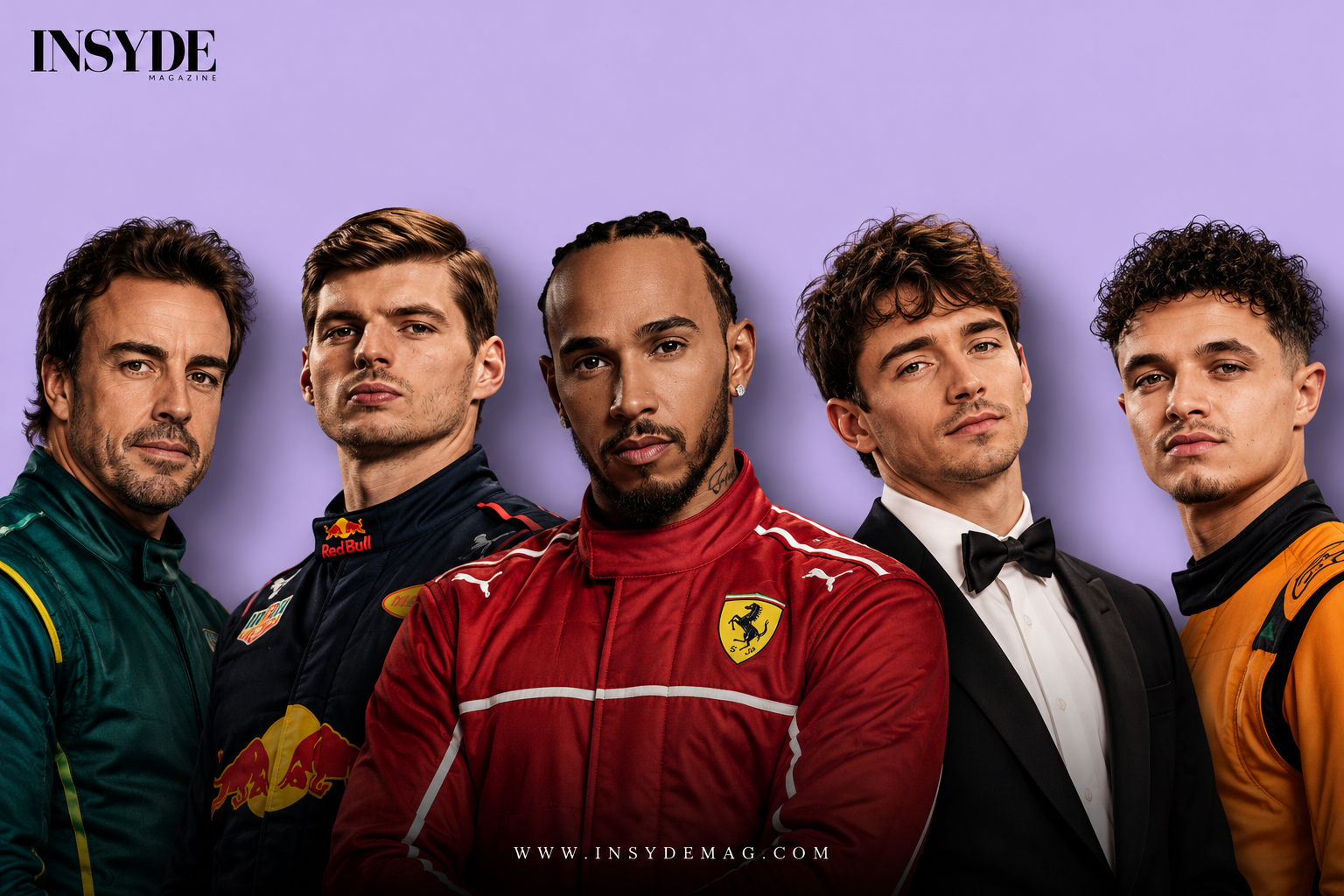
    The 5 Richest Formula 1 Drivers in the World in 2026

    Inside the fortunes, contracts and commercial power of Formula 1’s wealthiest active drivers.

    By INSYDE Magazine | Luxury, Culture & People

    In Formula 1, speed earns the headlines. Wealth tells a longer story.

    Behind the carbon fibre, champagne celebrations and immaculate paddock appearances lies a business built on extraordinary contracts, performance bonuses, global sponsorships and the commercial value of sporting fame. For the drivers at the top, success is no longer measured exclusively in championship points. It is also reflected in the fortunes they accumulate throughout their careers.

    Formula 1 has become a global entertainment powerhouse, attracting luxury houses, technology companies, financial institutions and international consumer brands. According to Liberty Media’s 2025 annual financial results, Formula 1 generated US$3.873 billion in revenue in 2025, up from US$3.411 billion in 2024. Operating income increased from US$492 million to US$632 million over the same period.

    Those figures describe the sport’s commercial business, not the personal income of its drivers. But they help explain why the people competing at its highest level have become valuable sporting and commercial assets in their own right.

    A driver’s financial position can be shaped by years of team contracts, championship bonuses, sponsorship agreements, business interests and investments. Yet one distinction matters: the highest-paid driver in a season is not necessarily the wealthiest driver overall. Annual earnings measure income over a period; net worth estimates the value of a person’s assets minus liabilities.

    So, who sits at the top of Formula 1’s financial grid in 2026?

    Using a single published set of 2026 net-worth estimates for consistency, INSYDE examines five of the sport’s wealthiest active drivers — and the different paths behind their fortunes.

    A note on the ranking: There is no public, audited register of Formula 1 drivers’ personal wealth. The figures in this feature are third-party estimates, not confirmed personal balance sheets. Other publishers use different assumptions and report different valuations. The ranking below should therefore be read as an estimate-based snapshot, not a definitive statement of each driver’s actual wealth.

    01. LEWIS HAMILTON

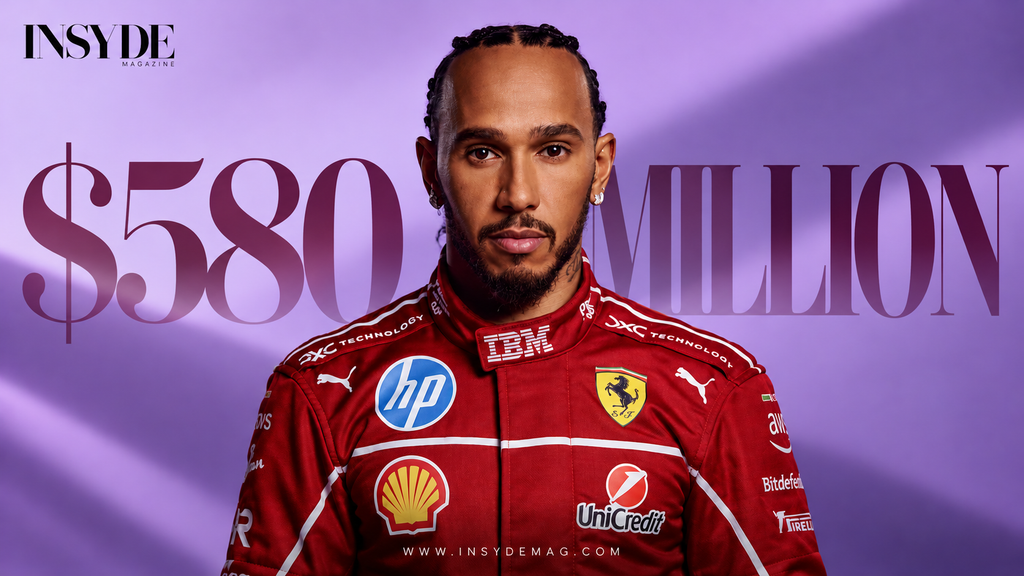
    Estimated net worth: US$580 million

    The champion who turned sporting excellence into global influence.

    Few Formula 1 careers have combined longevity, achievement and cultural visibility quite like Lewis Hamilton’s. A seven-time world champion, Hamilton has spent nearly two decades at the centre of the sport, building a reputation that reaches beyond the circuit into fashion, entertainment and global brand culture.

    According to F1 Salaries’ 2026 driver net-worth estimates, Hamilton’s estimated net worth is US$580 million, placing him first among active drivers in that publication’s ranking. The same source estimates his cumulative Formula 1 career earnings at approximately US$720.94 million. These are separate measurements: career earnings represent estimated pay accumulated over time, while net worth attempts to estimate the value of what an individual owns after financial obligations and spending.

    His annual compensation provides another perspective. In Forbes’ ranking of the highest-paid Formula 1 drivers for 2025, Hamilton’s on-track earnings were estimated at US$70.5 million, comprising approximately US$70 million in salary and US$500,000 in bonuses. This is a 2025 estimate, not a verified statement of his 2026 salary.

    Hamilton’s commercial appeal extends beyond race results. His involvement in fashion and wider cultural conversations has helped make him recognisable to audiences who may not follow every Grand Prix. That reach can be valuable to brands seeking an association with performance, individuality and international influence.

    However, visibility alone does not establish the value of a private investment or endorsement contract. The complete details of Hamilton’s assets, liabilities and business holdings are not publicly available in an audited personal financial statement.

    His position at the top of this estimate-based ranking reflects the cumulative earning potential of a long, successful career combined with a public profile that reaches well beyond motorsport.

    INSYDE perspective: Hamilton represents the modern sporting icon as a global personal brand — an athlete whose influence crosses the boundaries between racing, luxury and culture.

    02. MAX VERSTAPPEN

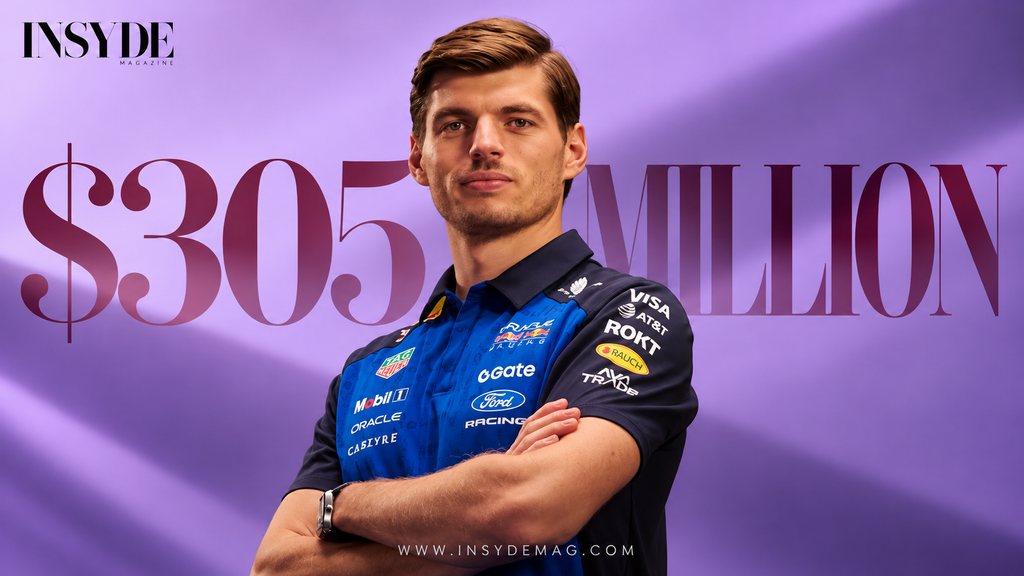
    Estimated net worth: US$305 million

    Precision, dominance and the economics of winning.

    Max Verstappen has built his reputation on uncompromising racecraft and sustained competitiveness. His success has also strengthened his position in Formula 1’s financial landscape, where elite performance can translate into larger contracts, bonuses and commercial opportunities.

    F1 Salaries’ 2026 estimates place Verstappen’s estimated net worth at US$305 million, with cumulative Formula 1 career earnings of approximately US$471.61 million. These figures are the publication’s estimates rather than independently audited disclosures.

    Verstappen’s annual earnings illustrate why the distinction between income and wealth matters. Forbes’ 2025 driver earnings ranking placed him first for on-track compensation, estimating US$76 million in salary and bonuses: approximately US$65 million in salary and US$11 million in bonuses.

    That figure describes estimated compensation for one year, not his total personal fortune. Nor should it be presented as his confirmed 2026 income.

    In Formula 1, a driver capable of consistently competing at the front occupies a scarce position. Teams invest in performance, experience and the possibility of championship success. A driver’s negotiating power can reflect that scarcity, although contract terms and bonus arrangements are not always fully disclosed.

    Verstappen’s financial story is therefore closely linked to his competitive standing. His results have helped establish him as one of the sport’s defining figures, while his earning potential illustrates how success at the highest level can command extraordinary annual compensation.

    The exact value of his private investments, property and individual commercial agreements remains uncertain. Those unknowns are one reason net-worth estimates should never be mistaken for a complete financial audit.

    INSYDE perspective: Verstappen embodies the direct relationship between elite performance and financial leverage — a reminder that in Formula 1, a driver’s competitive value can be worth tens of millions in a single season.
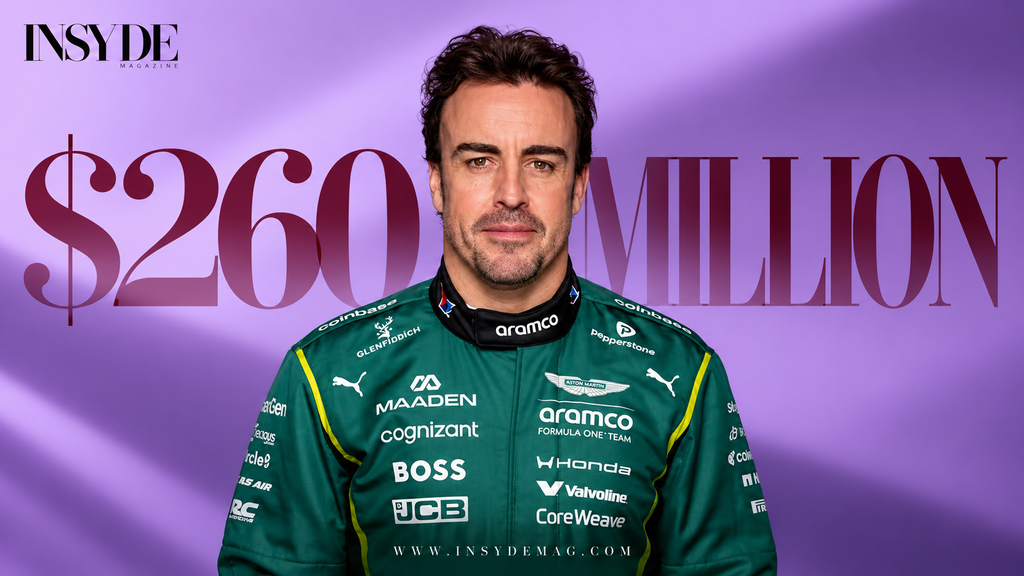

    03. FERNANDO ALONSO

    Estimated net worth: US$260 million

    The long game can be worth a fortune.

    Fernando Alonso’s career has spanned multiple generations of Formula 1. His longevity offers a different perspective on wealth in elite sport: a fortune can be built not only through championship-winning seasons, but also through sustained earning power over many years.

    According to F1 Salaries’ 2026 estimates, Alonso’s estimated net worth stands at US$260 million. The same source places his cumulative Formula 1 career earnings at approximately US$594.79 million.

    The contrast between those two figures is particularly revealing. Estimated career earnings measure income received over a professional career; estimated net worth attempts to measure current wealth. Taxes, fees, expenditure, investment outcomes and other financial obligations affect how much of that income translates into assets.

    Alonso’s long tenure in the sport has given him opportunities to negotiate contracts across different competitive eras and maintain a high international profile. His experience also has value within a racing team, where technical feedback, racecraft and knowledge accumulated over thousands of competitive laps can be important assets.

    Yet the public record does not reveal a complete picture of Alonso’s private investments, liabilities or property portfolio. His estimated net worth is consequently a useful indicator of his financial standing, not a definitive calculation of everything he owns.

    His place on this list also illustrates why a single-season earnings table cannot tell the whole story. A driver may earn less than a younger rival in one year while having accumulated greater wealth across a longer career.

    INSYDE perspective: Alonso is a case study in financial longevity — a career in which experience, sustained relevance and years of professional earning power have helped build a substantial estimated fortune.
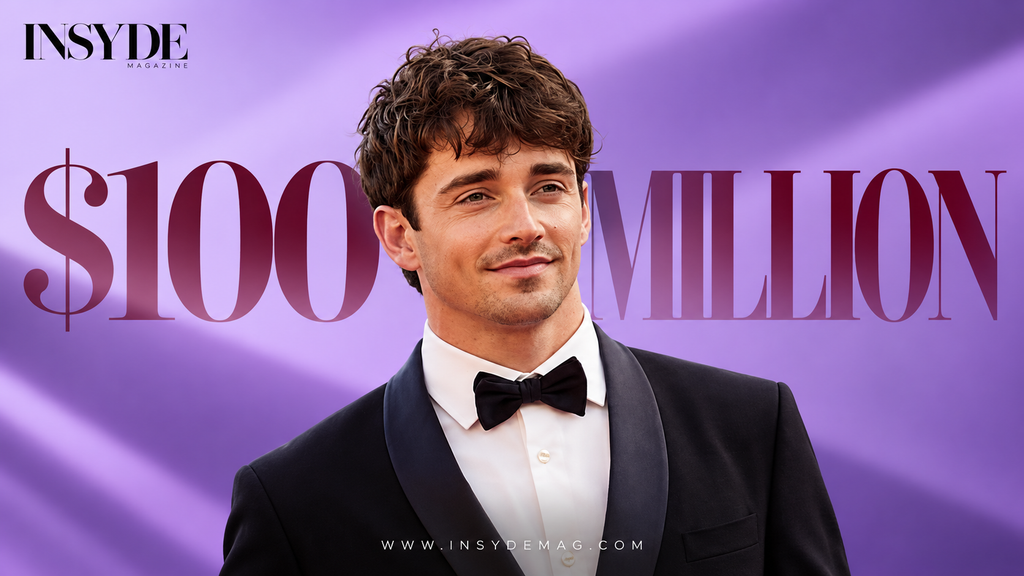

    04. CHARLES LECLERC

    Estimated net worth: US$100 million

    The Ferrari factor — and the value of a global stage.

    Charles Leclerc competes for Ferrari, one of the most recognisable names in automotive and motorsport culture. That association places him within a brand environment where racing, engineering, design and luxury meet on a global stage.

    F1 Salaries’ 2026 net-worth estimates place Leclerc’s estimated fortune at US$100 million, with cumulative Formula 1 career earnings of approximately US$171.15 million. Both numbers are third-party estimates and should be treated accordingly.

    Leclerc’s financial position demonstrates that substantial wealth in Formula 1 is not restricted to the sport’s most decorated champions. Drivers can accumulate significant earnings through team contracts, performance incentives and commercial opportunities during their careers.

    His Ferrari association also gives him international visibility beyond race weekends. For brands, a driver can represent speed, precision, ambition and a recognisable sporting identity. Those qualities can make a partnership commercially attractive, although the precise value of individual endorsement agreements is not always public.

    It is important not to confuse the value of Ferrari as a brand with Leclerc’s personal wealth. The company’s commercial value belongs to the business and its shareholders; it is not a measure of the fortune of an individual driver.

    Leclerc’s estimated net worth is also a snapshot rather than a projection. Future contracts, sporting results and investment decisions may change his financial position, but those outcomes cannot be reliably quantified in advance.

    INSYDE perspective: Leclerc represents a newer generation of motorsport wealth — one built through elite competition and amplified by the visibility of one of the most powerful names in automotive culture.
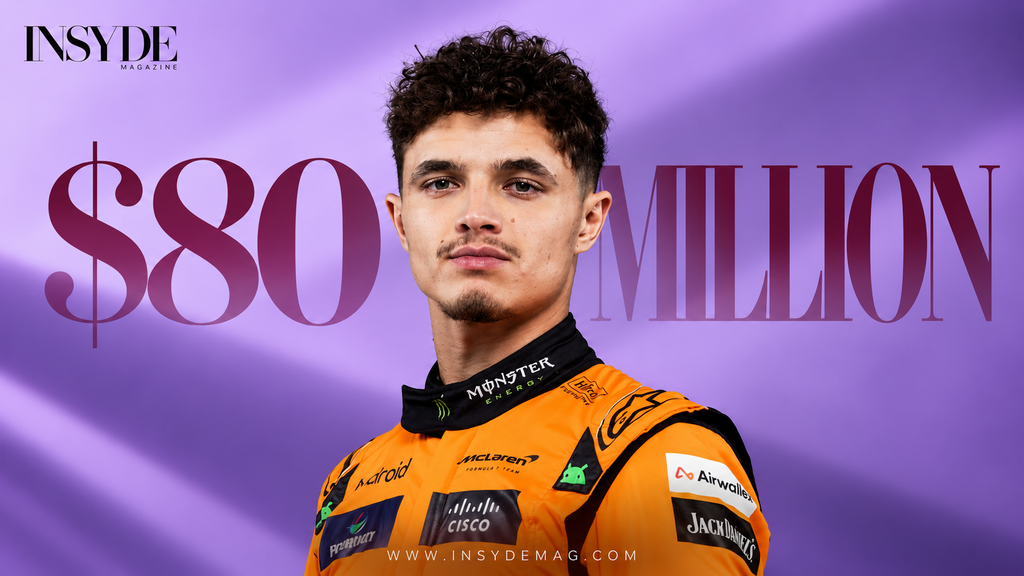

    05. LANDO NORRIS

    Estimated net worth: US$80 million

    When performance bonuses change the numbers.

    Lando Norris’s rise with McLaren has made him one of Formula 1’s most recognisable contemporary drivers. His first world championship, won in 2025, marked a defining moment in his sporting career and highlighted the financial importance that performance can carry in modern motorsport.

    According to F1 Salaries’ 2026 estimates, Norris’s estimated net worth is US$80 million, while his cumulative Formula 1 career earnings are estimated at approximately US$200 million. These figures are not audited personal financial disclosures.

    The difference between his estimated net worth and annual compensation is especially striking. Forbes’ 2025 highest-paid driver ranking estimated Norris’s on-track earnings at US$57.5 million for that year, comprising US$18 million in salary and US$39.5 million in performance bonuses.

    Those estimates show how significantly bonuses can influence annual income. They do not mean that Norris added US$57.5 million to his personal wealth: taxes, expenses and other financial commitments affect how income translates into net worth.

    Norris also belongs to a generation of drivers whose public identities are shaped by digital media, direct fan engagement and personality-led content as well as traditional sporting coverage. That visibility can increase commercial appeal, but the revenue generated by specific digital channels or endorsements should not be assumed without reliable evidence.

    His financial position remains a developing story. A championship can strengthen negotiating power and create commercial opportunities, but future salaries, sponsorship income and investment returns cannot be treated as guaranteed.

    INSYDE perspective: Norris illustrates how sporting success and performance-linked compensation can accelerate a driver’s earning power — even when accumulated wealth remains below that of more established veterans.


    BEYOND THE PODIUM: THE BUSINESS OF BEING AN F1 DRIVER

    The fortunes behind Formula 1’s biggest names reveal several different routes to wealth. Hamilton’s estimated fortune reflects an unusually long career and global cultural profile. Verstappen’s annual compensation demonstrates the financial value attached to elite performance. Alonso illustrates the power of longevity, while Leclerc and Norris show how fortunes can grow as newer generations establish themselves at the front of the sport.

    The distinction between personal wealth and annual earnings is not a technicality. It changes the story.

    In its 2025 highest-paid driver ranking, Forbes estimated Verstappen’s on-track compensation at US$76 million, ahead of Hamilton at US$70.5 million and Norris at US$57.5 million. Yet the 2026 net-worth estimates from F1 Salaries place Hamilton first, followed by Verstappen and Alonso.

    There is no contradiction. The first list estimates compensation over one year; the second estimates accumulated wealth. Each answers a different question.

    The broader commercial environment is also important. Liberty Media’s 2025 financial filing records Formula 1 revenue of US$3.873 billion. That scale helps explain the sport’s ability to attract major commercial partners and sustain a global audience, but it should not be confused with the amount paid to drivers.

    Nor does a driver’s wealth represent the value of the team they race for. Team valuations, sponsor commitments and the commercial worth of Formula 1 are separate measures from an athlete’s private net worth.

    Ultimately, a driver’s fortune reflects a combination of income and financial decisions made over time. Public estimates can indicate the broad scale of that wealth, but they cannot reveal every private asset, liability or investment. The most responsible ranking is therefore one that makes its assumptions visible rather than presenting estimates as unquestionable fact.

    SPEED IS SEXY. WEALTH IS SEXIER.

    In Formula 1, the stopwatch measures speed. The championship table measures performance. Neither tells the whole story of a driver’s financial life.

    Fortunes accumulate through years of contracts, bonuses, sponsorships, business opportunities and decisions made far from the circuit. For some drivers, sporting success becomes a global personal brand. For others, longevity and consistency provide the foundation of their wealth. For all of them, the relationship between fame and money is more complex than a single headline figure.

    The numbers in this ranking are estimates, but the wider lesson is clear: Formula 1 is a sport where extraordinary performance can create extraordinary commercial value.

    Speed may earn the applause.

    Wealth tells a longer story.


    SOURCES & METHODOLOGY

    Net-worth estimates: F1 Salaries — F1 Driver Net Worth 2026, updated 22 October 2026. The five net-worth figures and cumulative career-earnings estimates in this ranking come from this source for consistency.

    Annual earnings: Forbes — Formula 1’s Highest-Paid Drivers 2025, published 9 December 2025 and updated 8 January 2026. The earnings figures cited in this article are Forbes estimates of 2025 salary and bonuses.

    Formula 1’s official 2026 driver lineup: Formula1.com — 2026 Drivers.

    Formula 1 financial results: Liberty Media Corporation — 2025 Annual Financial Filing.

    Ranking methodology: This feature ranks active 2026 Formula 1 drivers using one published set of third-party net-worth estimates. Net worth and career earnings are distinct measures. All figures are in US dollars. Personal net worth is not publicly audited on a standardised basis, and other publishers may report materially different estimates. These figures should not be interpreted as verified personal financial statements.

    Research cut-off: 24 October 2026. Net-worth figures reflect the cited provider’s latest available 2026 estimates at the research cut-off. Annual earnings figures refer specifically to 2025 and are not presented as confirmed 2026 salaries.

    INSYDE MAGAZINE – The Number one Luxury Magazine in Bengaluru.

    Luxury. Culture. People. What comes next.
    WWW.INSYDEMAG.COM

  • CHARLES LECLERC: FIVE CARS, ONE OBSESSION

    CHARLES LECLERC: FIVE CARS, ONE OBSESSION

    From a road-legal machine inspired by Ferrari’s experimental racing programme to a classic V12 grand tourer, Charles Leclerc’s reported collection offers a closer look at the engineering, heritage and exclusivity behind the Prancing Horse.

    INSYDE | PEOPLE · AUTOMOBILES · LUXURY


    For Charles Leclerc, Ferrari is more than the name stitched across a racing suit. It is the marque at the centre of his professional life—and, judging by the cars he has been reported to own, a significant part of his personal automotive world.

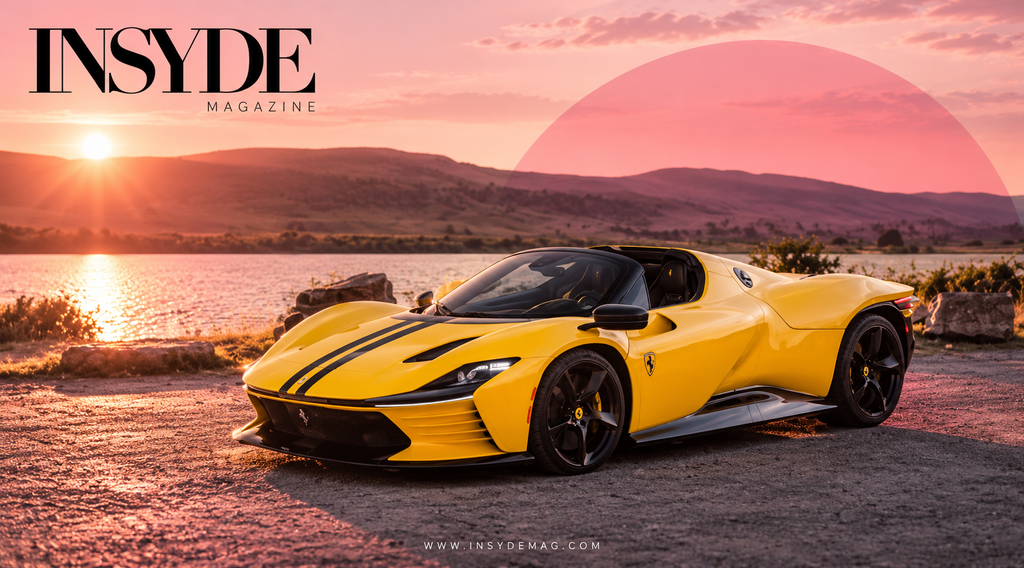
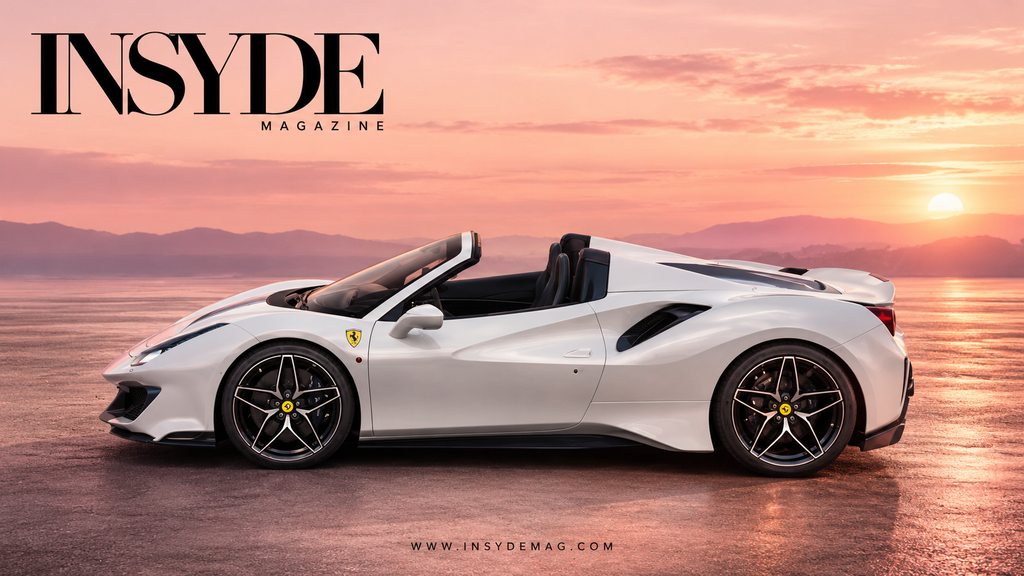
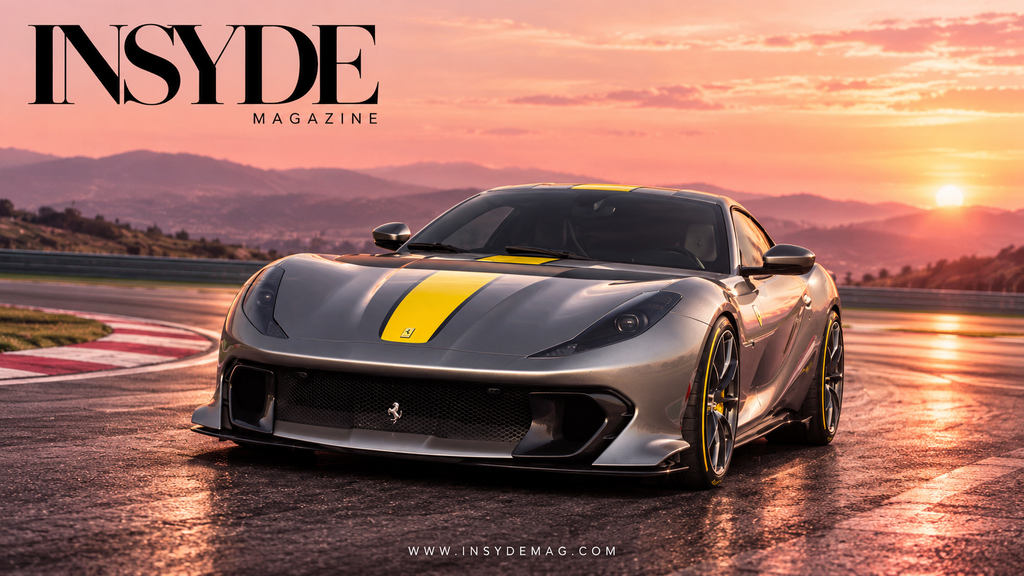
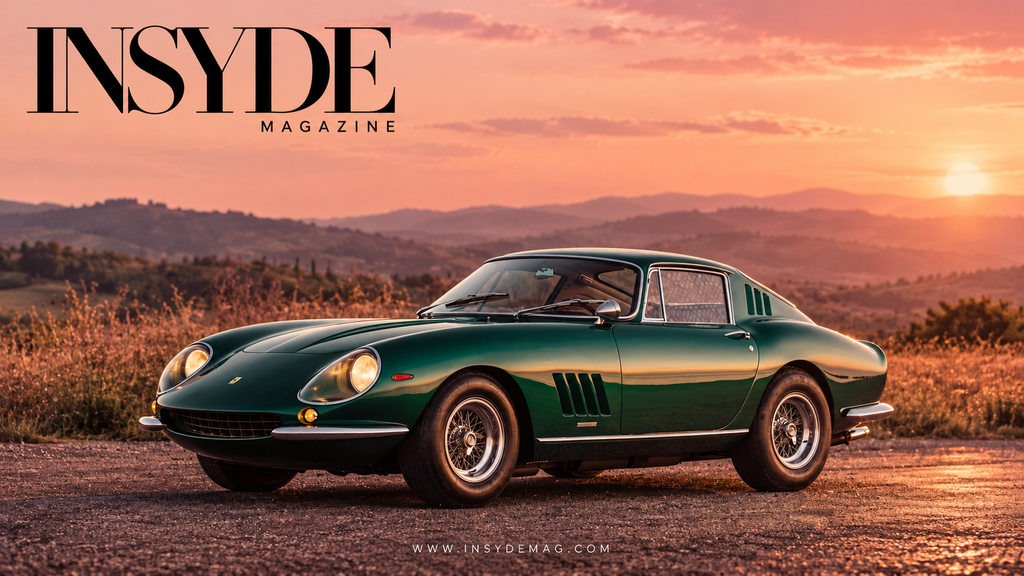
    The Monégasque driver has been associated with some of Maranello’s most compelling road cars: the SF90 XX Stradale, the Daytona SP3, the 488 Pista Spider, the 812 Competizione A and a classic Ferrari 275 GTB. They span different generations of engineering and represent very different ideas of what makes a car extraordinary.

    Some are defined by advanced aerodynamics and hybrid power. Others celebrate naturally aspirated engines, sculptural design or a connection to Ferrari’s racing past. Their common thread is not simply speed or scarcity, but the way each car expresses a particular side of the Ferrari identity.

    That makes Leclerc’s collection worth examining beyond the usual supercar spectacle. These are not interchangeable symbols of wealth. Each represents a distinct chapter in the evolution of one of the world’s most recognisable automotive names.

    01. Ferrari SF90 XX Stradale — The Road Car That Thinks Like a Race Car

    Few modern Ferraris illustrate the company’s pursuit of performance as clearly as the SF90 XX Stradale.

    Unveiled in 2023, the model brought Ferrari’s XX philosophy into a road-legal production car for the first time. The XX programme had traditionally been associated with highly specialised machines developed for selected clients to explore extreme performance on the circuit. The SF90 XX Stradale translates that thinking into a car that can also be driven on public roads.

    Its powertrain combines a 4.0-litre twin-turbocharged V8 with three electric motors. Ferrari quotes a combined output of 1,030 cv, a claimed 0–100 km/h time of 2.3 seconds and a top speed of 320 km/h.

    The engineering story, however, extends beyond the power figure. A fixed rear wing—an unusual feature for a modern road-going Ferrari—works with the car’s wider aerodynamic package to generate up to 530 kg of downforce at 250 km/h. The result is a machine designed to produce substantial aerodynamic grip while retaining the systems required for road use.

    Production is limited to 799 coupés, alongside 599 examples of the open-top SF90 XX Spider. That scarcity places the car within Ferrari’s most exclusive contemporary offerings, although limited production should not automatically be interpreted as a guarantee of future investment returns.

    Leclerc’s personalised example has been widely reported in a satin-black finish with red details, accents inspired by Monaco’s flag and his racing number, 16. The specification gives the car an individual identity while retaining the unmistakable visual language of Ferrari.

    What makes the SF90 XX Stradale especially compelling is the contrast between its technological complexity and its underlying purpose. Electrification is not simply an efficiency measure here; it forms part of a performance system designed to make the car faster and more capable.

    For a driver whose professional life is spent extracting performance from a Formula 1 car, the SF90 XX offers a road-going interpretation of the same pursuit: precision, control and speed shaped by engineering.

    02. Ferrari Daytona SP3 — A Modern Tribute to Racing History

    The Daytona SP3 approaches performance from a different direction.

    Part of Ferrari’s Icona series, it takes inspiration from the company’s endurance-racing heritage and reinterprets that history through a contemporary design. Its sculpted surfaces, low profile and dramatic proportions give it a presence that feels closer to a moving piece of automotive design than a conventional modern supercar.

    Beneath the bodywork sits a naturally aspirated 6.5-litre V12. Ferrari quotes 840 cv at 9,250 rpm, a maximum engine speed of 9,500 rpm and a claimed 0–100 km/h time of 2.85 seconds. The company lists a top speed exceeding 340 km/h.

    Those numbers are impressive, but the Daytona SP3’s character is about more than acceleration. Its V12 delivers a different kind of experience from the hybrid-assisted powertrain of the SF90 XX Stradale. Rather than combining combustion and electric power, it places the sound, response and high-revving character of a naturally aspirated engine at the centre of the experience.

    The Daytona SP3 is limited to 599 examples. Its place in Ferrari’s Icona family also gives it a distinct role: these cars draw from the marque’s history without simply reproducing an old design.

    Leclerc has been reported with a personalised Daytona SP3 finished in matte black, with red and white details associated with Monaco and his racing number. The car’s specification echoes the individual identity of his SF90 XX, despite the two models having very different engineering philosophies.

    The Daytona SP3 represents Ferrari looking backwards to move forwards. Its design recalls the company’s racing past, while its powertrain and construction belong firmly to the modern era.

    For collectors, that combination of heritage, rarity and contemporary engineering is central to its appeal. For Leclerc, it provides another expression of the marque that defines his professional career.

    03. Ferrari 488 Pista Spider — Performance Without a Roof

    Not every exceptional Ferrari needs hybrid technology or a limited-edition design programme to make its case.

    The 488 Pista Spider is a more direct expression of performance, built around the 488 platform and developed with a sharper focus on weight, aerodynamics and driver involvement.

    Its 3.9-litre twin-turbocharged V8 produces 720 cv at 8,000 rpm, according to Ferrari’s published specifications. The company quotes a 0–100 km/h time of 2.85 seconds and a top speed of 340 km/h.

    The Pista’s development drew on Ferrari’s experience in motorsport, including the aerodynamic and engine work associated with its Challenge racing programme. Changes to the intake layout, lightweight components and other technical details were intended to improve the car’s performance beyond that of the standard 488 Spider.

    The Spider configuration adds another dimension. With the roof removed, the relationship between the driver and the engine becomes more immediate. Sound, airflow and the surrounding environment become part of the experience, giving the car a character distinct from that of a closed-cockpit track-focused machine.

    Leclerc’s personalised Pista Spider has been reported in a dark finish with red accents, consistent with the visual theme seen on several of his other Ferraris.

    Within the collection, it occupies an interesting middle ground. It is less technologically complex than the SF90 XX Stradale and less explicitly heritage-focused than the Daytona SP3. Its appeal lies in the connection between a powerful combustion engine, an open roof and a chassis developed around performance.

    It is a reminder that the appeal of a sports car cannot always be reduced to a headline power figure. The way a car communicates with its driver is part of what makes it memorable.

    04. Ferrari 812 Competizione A — The V12 at the Centre of the Experience

    The Ferrari 812 Competizione A represents one of the most distinctive traditions in Maranello’s road-car history: the high-performance, front-engined V12.

    Developed from the 812 Superfast, the Competizione is a more focused interpretation of Ferrari’s large-engined grand touring formula. The Competizione A is its open-top targa counterpart, combining the same performance-led character with the option of open-air driving.

    Its naturally aspirated 6.5-litre V12 produces 830 cv at 9,250 rpm and can reach 9,500 rpm. Ferrari quotes a 0–100 km/h time of 2.85 seconds and a maximum speed exceeding 340 km/h for the Competizione family.

    The engine is central to the car’s identity. Rather than using turbocharging or hybrid assistance, Ferrari developed the V12 through revisions to components including the con-rods, pistons, crankshaft and intake system. The objective was to improve performance and responsiveness across the rev range while preserving the character of a high-revving naturally aspirated engine.

    The Competizione A is limited to 599 examples. Leclerc has been reported with a personalised example in matte white, with exposed carbon-fibre details and his number, 16.

    That specification gives the car a more understated appearance than some of the darker machines in his collection, while still connecting it to his personal visual identity.

    The Competizione A also captures a particular moment in performance-car development. As electrification becomes increasingly important to the industry, naturally aspirated V12 models remain significant expressions of an engineering philosophy built around engine response, sound and mechanical character.

    Its appeal is not simply that it is powerful or rare. It represents an increasingly specialised interpretation of the grand touring Ferrari: a car in which the engine itself remains the main event.

    05. Ferrari 275 GTB — When History Becomes Part of the Drive

    The classic Ferrari 275 GTB brings the collection into a different era.

    Introduced in the 1960s, the 275 GTB belongs to a period when Ferrari was developing increasingly sophisticated road cars while maintaining a close relationship with competition engineering. Its long bonnet, sculptural bodywork and restrained proportions stand in sharp contrast to the complex aerodynamic surfaces of a modern supercar.

    The model was powered by a 3.3-litre Colombo V12. Its engineering included a rear transaxle layout, helping with weight distribution, and independent suspension on all four wheels—features that contributed to the evolution of Ferrari’s road cars.

    The 275 GTB was produced in multiple configurations, so production numbers and market values depend on the exact version. Certain examples, particularly those with desirable specifications, documented provenance and original components, have achieved multimillion-dollar prices at specialist auctions.

    Leclerc’s connection with the model has attracted attention because of his own comments about driving a restored 275 GTB at Ferrari’s Fiorano test circuit. In comments reported by Motorsport.com, he described the experience as pure driving pleasure and reflected on how much automotive engineering has changed since the car’s era.

    That observation is particularly revealing coming from a modern Formula 1 driver.

    Today’s performance cars rely on sophisticated electronic controls, advanced materials and complex powertrains. A classic Ferrari communicates differently. The engine, steering, brakes and mechanical responses create a more direct relationship between the driver and the machine.

    The 275 GTB therefore offers something that a modern performance figure cannot fully capture: the experience of encountering a different period of automotive history from behind the wheel.

    Its desirability also illustrates why collector-car values are shaped by more than age or rarity. Originality, condition, provenance, specification and the quality of restoration can all influence a car’s position in the market.

    For Leclerc, the appeal of a classic Ferrari sits alongside the technology of his modern machines. It suggests an interest in the evolution of the automobile, not simply its latest performance benchmark.

    The Ferrari Connection: Five Cars, Different Philosophies

    Viewed together, these five Ferraris reveal the breadth of the marque’s appeal.

    The SF90 XX Stradale represents the convergence of hybrid technology, aerodynamics and track-focused engineering. The Daytona SP3 reinterprets racing heritage through a limited-production modern design. The 488 Pista Spider focuses on performance and open-air engagement. The 812 Competizione A celebrates the naturally aspirated V12, while the 275 GTB offers a connection to an earlier generation of automotive engineering.

    Their differences are as important as their shared badge.

    Ferrari’s identity has been built across decades of racing, road-car development, design and brand storytelling. Its most exclusive cars do not all pursue the same goal. Some are technical showcases; others are celebrations of heritage, engine character or a particular design philosophy.

    Leclerc’s reported collection brings those ideas into a single personal context. His relationship with Ferrari begins on the Formula 1 circuit, but the road cars associated with him reveal the many ways the company translates its identity into machines designed for private ownership.

    That is what makes the collection interesting beyond its price tags. It provides a way to understand Ferrari not as a single idea of speed or luxury, but as a family of distinct automotive experiences.

    Beyond the Price Tag

    The luxury-car market often reduces extraordinary vehicles to three numbers: horsepower, production volume and price. Those figures matter, but they do not tell the whole story.

    A limited production run does not guarantee appreciation. Auction estimates are not the same as completed transactions, and a car’s eventual value can depend heavily on condition, provenance, originality, maintenance history and wider market demand. Ownership also brings substantial costs that extend beyond the purchase price.

    The more meaningful question is what makes a particular machine desirable in the first place.

    In Leclerc’s case, the answer appears to lie in the variety of Ferrari’s engineering and design philosophies. These cars offer different ways to experience performance, from the digital precision of a hybrid supercar to the analogue character of a classic V12.

    They also illustrate why automotive collecting is not simply about acquiring the most expensive object available. For many enthusiasts, the connection to engineering, history and the experience of driving is what gives a car its lasting significance.

    The Final Word

    Charles Leclerc’s reported Ferrari collection offers a portrait of a driver whose professional world and personal automotive interests meet under the same emblem.

    The SF90 XX Stradale looks towards the future of performance engineering. The Daytona SP3 brings Ferrari’s racing history into a modern form. The 488 Pista Spider and 812 Competizione A explore two different expressions of high-performance combustion power, while the 275 GTB reminds us that the emotional appeal of a car can endure long after its technology has been surpassed.

    Together, they show why Ferrari’s position in the luxury world cannot be explained by speed alone. Its appeal rests on the relationship between engineering, design, heritage and the individual character of each machine.

    For Leclerc, the Prancing Horse is the symbol on his racing suit. In the cars associated with his private collection, it becomes something more personal: a continuing connection to the machines and ideas that make Ferrari what it is.

    INSYDE explores the people, machines and ideas shaping contemporary luxury.
    INSYDE – the number one luxury magazine in Bangalore


    Editorial sourcing note: Technical specifications in this article are based on Ferrari’s published materials. Details about Leclerc’s personal vehicles are based on public automotive reporting and should be understood as reported ownership, not an independently audited inventory. No total collection valuation is asserted.

  • BEAUTY. BILLIONS. & INFLUENCE.

    BEAUTY. BILLIONS. & INFLUENCE.

    How celebrity founders turned beauty, fame and influence into commercial power.

    BY INSYDE | BEAUTY & BUSINESS

    There was a time when a celebrity’s relationship with beauty was simple. A famous face appeared in a campaign, a name went on a bottle, and a brand paid for the privilege of borrowing a little of that person’s desirability.

    Today, some celebrities are doing something considerably more ambitious.

    They are building the brands themselves.

    Rihanna helped turn Fenty Beauty into a global cosmetics business. Selena Gomez built Rare Beauty around a distinctive philosophy of self-expression. Kylie Jenner transformed social-media attention into a cosmetics company. Hailey Bieber developed Rhode into an acquisition target for one of the beauty industry’s major players. Huda Kattan turned beauty expertise and an online audience into an international brand.

    These are not simply celebrity endorsements. They are businesses with products, distribution networks, commercial strategies and, in some cases, billion-dollar valuations or acquisition deals.

    The distinction matters.

    In October 2026, Fortune, reporting on Traackr’s Creator Advantage 2026 research, highlighted how celebrity-founded companies had become powerful participants in the beauty economy. Five of the ten leading US beauty brands ranked by creator-marketing performance in 2025 were celebrity-founded, including Kylie Cosmetics, Rare Beauty, Rhode, R.E.M. Beauty and Huda Beauty.

    That is a measure of marketing performance, not a ranking of revenue or profitability. But it reveals something important about the modern consumer market: influence is no longer merely an advertising tool. In the right hands, it can become a competitive advantage.

    The financial results make the story even more interesting.

    According to Reuters’ reporting on Fenty Beauty, the brand generated approximately $450 million in net sales in 2024. Rhode recorded $212 million in net sales during the twelve months ended March 31, 2025, before its acquisition by e.l.f. Beauty. Rare Beauty has also been associated with a reported valuation estimate of approximately $2.7 billion in 2026.

    These figures measure different things. Sales are not valuations, acquisition prices are not guaranteed cash payouts, and the value of a company is not the same as its founder’s personal fortune.

    But together, they point towards a larger shift.

    Celebrity beauty is no longer simply about putting a famous face on a product. It is about turning identity, cultural relevance, product development and direct access to consumers into businesses with lasting value.

    The question is no longer whether a celebrity can sell a lipstick.

    It is whether that celebrity can build a beauty company that people continue to buy from long after the initial fascination fades.

    01 — FENTY BEAUTY: WHEN INCLUSIVITY BECAME A BUSINESS STRATEGY

    When Rihanna launched Fenty Beauty in September 2017, its initial foundation range of 40 shades made inclusivity a defining part of its identity.

    The significance was not that no beauty brand had previously offered a wide shade range. It was that Fenty brought the conversation into the centre of a highly visible global launch, making the experiences of consumers who struggled to find suitable foundation difficult for the wider industry to ignore.

    Its proposition was clear: more consumers should be able to find products that work for them.

    Rihanna’s cultural reach gave the launch extraordinary visibility, while the brand’s partnership with LVMH’s Kendo division provided the infrastructure of an established beauty business.

    The financial figures demonstrate the scale that followed.

    Reuters reported in October 2025 that Fenty Beauty generated approximately $450 million in net sales in 2024. Sources cited in the same report estimated its valuation at between $1 billion and $2 billion. That valuation was an estimate, not a publicly disclosed transaction price.

    The distinction matters. Sales describe the revenue generated by a business over a period; valuation estimates what that business might be worth.

    Fenty’s wider influence is perhaps more revealing than either number. Its positioning helped make inclusive shade ranges a much more prominent part of the beauty industry’s commercial conversation.

    The business lesson is straightforward. Rihanna’s fame helped Fenty attract attention, but the company needed a product proposition that consumers could understand and purchase.

    THE INSYDE OBSERVATION: Influence becomes more powerful when it is attached to a proposition the market has a reason to believe in.

    02 — RARE BEAUTY: THE POWER OF A POINT OF VIEW

    Selena Gomez launched Rare Beauty in 2020 with an identity that extended beyond the products themselves.

    The brand’s messaging around self-expression and a less perfection-driven understanding of beauty gave it a recognisable position in a crowded market. Its products, communications and social-impact commitments helped establish an identity that consumers could connect with beyond the founder’s celebrity.

    That distinction matters in beauty, where packaging, product formats and trends can be replicated quickly.

    A clear point of view gives a brand something more durable to build around.

    Rare Beauty has become a significant participant in creator-led beauty. Its position among the leading brands in Traackr’s 2026 creator-marketing analysis demonstrates the scale of its digital and cultural relevance.

    Financially, the company has also attracted substantial private-market estimates. Fortune’s October 2026 analysis reported an estimated valuation of approximately $2.7 billion. This should be understood as a reported estimate, not a confirmed transaction price or an independently disclosed current valuation.

    It would be misleading to equate that figure with Gomez’s personal wealth. A company’s value belongs to the business and its shareholders; the founder’s financial position depends on ownership and other assets.

    Rare Beauty’s challenge is to maintain its identity while growing distribution, introducing new products and sustaining customer loyalty.

    The brand’s success suggests that a celebrity-led company can offer more than a famous face. It can create a coherent perspective on beauty that helps consumers understand what makes it different.

    THE INSYDE OBSERVATION: A recognisable philosophy can become a commercial asset when it is supported by products consumers want to use.

    03 — KYLIE COSMETICS: FROM SOCIAL-MEDIA ATTENTION TO CORPORATE SCALE

    Kylie Jenner’s cosmetics business began with one of the most recognisable categories in beauty: lip products.

    Kylie Lip Kits launched in 2015, drawing on Jenner’s public image and the attention surrounding her makeup looks. The products gave an existing audience something tangible to purchase.

    The model was powerful because the launch did not have to build awareness from zero. Jenner already had an audience, a recognisable aesthetic and a direct channel through which to communicate with potential customers.

    The business subsequently expanded beyond lip kits. In 2019, Coty acquired a 51% stake in the company for $600 million, implying an approximate $1.2 billion valuation at the time. This was a historical transaction, not a verified current valuation.

    Coty’s subsequent reporting offers a more recent view of the brand. In March 2025, the company said Kylie Cosmetics had grown 1.5 times over the preceding two years. The brand has continued to operate within Coty’s prestige beauty portfolio.

    Coty does not disclose a comparable standalone current valuation for Kylie Cosmetics in the reporting used for this article. Nor can the company’s valuation or sales be used as a direct measure of Jenner’s personal wealth.

    The corporate partnership changed the nature of the business. Kylie Cosmetics became part of a larger beauty portfolio with access to established distribution, marketing and operational capabilities.

    That brings advantages, but it also means the founder’s role and ownership must be distinguished from the company’s overall performance.

    Kylie Cosmetics demonstrates how a celebrity’s audience can accelerate a product launch. Its longer-term commercial value depends on whether the brand can keep its products relevant after the initial excitement.

    THE INSYDE OBSERVATION: An audience can give a business its first customers. It cannot guarantee its next decade of growth.

    04 — RHODE: THE VALUE OF A CLEAR AESTHETIC

    Hailey Bieber’s Rhode entered the beauty market with a focused skincare proposition, restrained packaging and an immediately recognisable visual identity.

    Rather than launching with an enormous assortment, Rhode concentrated on skin-focused products and an aesthetic that translated naturally into social content. Its presentation made products recognisable in photographs and routines easy to communicate.

    The brand’s commercial trajectory culminated in a major transaction.

    In May 2025, e.l.f. Beauty announced an agreement to acquire Rhode for $800 million at closing, plus up to $200 million in potential earn-out payments. The acquisition closed on August 5, 2025.

    Rhode had generated $212 million in net sales in the twelve months ended March 31, 2025, according to e.l.f. Beauty’s acquisition announcement.

    The maximum announced deal value was therefore $1 billion, not a guaranteed $1 billion cash payment to Bieber. The transaction involved cash, shares and potential performance-linked consideration.

    In its fiscal 2026 annual filing, e.l.f. Beauty recorded total acquisition consideration of approximately $897.5 million, including the estimated value of potential earn-out consideration at that time. The filing also reported that Rhode contributed $293.5 million in net sales to e.l.f.’s consolidated results between the acquisition date and March 31, 2026. This latter figure covers a different reporting period and should not be confused with Rhode’s standalone sales before the acquisition.

    The details can be verified in e.l.f. Beauty’s fiscal 2026 SEC filing.

    The transaction demonstrates why established beauty companies pay attention to fast-growing independent brands. An acquirer can bring distribution, retail relationships and international scale to a company that has already demonstrated consumer demand.

    After an acquisition, the challenge changes. A brand must preserve the qualities that made it distinctive while expanding its reach and operating within a larger corporate structure.

    Rhode’s story is not simply about a celebrity creating a successful skincare line. It is about a relatively young company developing enough commercial value to attract a major strategic buyer.

    THE INSYDE OBSERVATION: A focused product range and coherent aesthetic can be commercially powerful when they are supported by genuine demand and operational execution.

    05 — HUDA BEAUTY: WHEN BEAUTY EXPERTISE BECOMES AN EMPIRE

    Huda Kattan’s path into beauty began with expertise and content rather than a traditional entertainment career.

    Through beauty tutorials and product knowledge, she built an audience interested in makeup itself. Huda Beauty emerged from that relationship, launching with false eyelashes in 2013 before expanding into a wider cosmetics business.

    The distinction is important. Kattan was not simply placing her name on a product. Her existing connection with beauty consumers helped establish the company’s initial credibility.

    But turning an audience into a global brand required more than content. It required product development, manufacturing, distribution, inventory management and the ability to sell consistently across markets.

    Huda Beauty became a significant name in the international cosmetics market. It also appeared among the leading brands in Traackr’s creator-marketing analysis reported by Fortune in October 2026.

    Its financial history, however, requires careful treatment. Historical reports have associated the company with a valuation of around $1 billion in 2017, but that figure should not be presented as a verified current valuation. A sufficiently reliable, comparable standalone 2026 revenue or valuation figure has not been established for this article.

    That limitation should not be filled with an unsupported estimate.

    Huda Beauty remains an important case study because it shows how a founder can move from content creation into a product business with an identity that extends beyond the content that first attracted consumers.

    It also highlights a broader feature of celebrity beauty: not every successful founder begins as a film star or musician. In some cases, beauty expertise and an audience built around a specific category can be the starting point.

    THE INSYDE OBSERVATION: Fame is one route into beauty. Credibility built around the category itself can be another.

    06 — THE NUMBERS BEHIND THE GLOW

    The financial evidence behind these five brands is significant, but the figures describe different things.

    Fenty Beauty — Rihanna

    Approximately $450 million in reported net sales in 2024, alongside a $1–2 billion valuation estimate reported in 2025.

    Rare Beauty — Selena Gomez

    An estimated valuation of approximately $2.7 billion reported in October 2026.

    Kylie Cosmetics — Kylie Jenner

    An implied valuation of approximately $1.2 billion when Coty acquired its 51% stake in 2019.

    Rhode — Hailey Bieber

    $212 million in net sales for the twelve months ended March 31, 2025, followed by acquisition consideration recorded at approximately $897.5 million in e.l.f. Beauty’s fiscal 2026 filing.

    Huda Beauty — Huda Kattan

    Historical valuation reports around $1 billion in 2017, with no comparable verified current standalone valuation established for this article.

    The sources for these figures include Reuters’ Fenty Beauty reporting, Fortune’s 2026 creator-economy analysis, Coty’s corporate reporting and e.l.f. Beauty’s SEC filing.

    These figures come from different dates and sources. They are not a definitive ranking of the five largest celebrity beauty companies. Fenty’s figure is annual sales; Rare Beauty’s is an estimate; Kylie Cosmetics’ figure is historical; Rhode’s is an acquisition consideration figure; and Huda Beauty’s is historical.

    A company’s valuation is not the same as its revenue. Revenue is not profit. And neither is equivalent to the founder’s personal fortune.

    Those distinctions are essential to understanding how celebrity beauty businesses create and retain wealth.

    07 — FAME IS AN ADVANTAGE. IT IS NOT A BUSINESS MODEL.

    Celebrity-founded beauty companies begin with something many new businesses spend years trying to build: attention.

    A famous founder can introduce a product to an established audience. Their personal style can help establish a visual identity, while social platforms provide channels through which customers can discover, discuss and recommend products.

    But the competitive advantage has limits.

    Products can be copied. Trends can move on. Social-media algorithms change. Consumers can lose interest. And a successful launch does not guarantee that customers will purchase again.

    The October 2026 creator-marketing analysis offers a useful perspective. Five celebrity-founded brands appeared in the top ten US beauty brands ranked by creator-marketing performance for 2025. Yet the same market contains companies that have struggled despite high-profile founders.

    Fortune reported that Gwen Stefani’s GXVE Beauty shut down in early 2026, while Drew Barrymore’s Flower Beauty ceased operations in September 2025.

    These cases demonstrate why fame and commercial durability should not be confused. A celebrity can attract attention, but a company still needs products that consumers want, an effective route to market and a reason for customers to return.

    The strongest model combines the founder’s visibility with a recognisable proposition and an organisation capable of operating beyond constant personal promotion.

    Celebrity may open the door. The business must still earn its place.

    08 — WHO REALLY OWNS THE BILLIONS?

    The phrase celebrity beauty billionaire can blur several different ideas.

    A founder may own a majority stake in a private company, a minority stake in a brand operated by a larger group, or an ownership interest that has changed through investment and acquisition. A transaction can involve cash, shares and future payments rather than a single guaranteed payout.

    Rihanna’s personal wealth, for example, cannot be calculated by treating Fenty Beauty’s reported sales as money she personally receives. Coty’s stake in Kylie Cosmetics means the brand’s historical valuation cannot simply be assigned to Jenner. Rhode’s transaction similarly included closing consideration and potential earn-outs.

    The distinction does not diminish what these founders have built. It makes the business story more meaningful.

    The important questions are how much economic value a company creates, how its ownership is structured, how much of that value the founder retains and whether the business can continue to grow.

    For a serious business editorial, those questions matter far more than a celebrity net-worth headline.

    THE INSYDE TAKE

    Beauty has always sold more than cosmetics. It sells identity, aspiration, ritual and the possibility of becoming a slightly different version of oneself.

    Celebrity-founded brands have learned to turn those ideas into businesses.

    Fenty Beauty helped bring inclusivity into the centre of the beauty conversation. Rare Beauty built a recognisable identity around self-expression. Kylie Cosmetics turned social-media attention into a business that entered a major corporate partnership. Rhode attracted an acquisition with consideration approaching the billion-dollar mark. Huda Beauty demonstrated how beauty expertise and an audience could develop into an international product company.

    Their financial stories are different. Some figures are disclosed sales; others are historical valuations, estimates or acquisition values. None should be mistaken for the founder’s personal fortune.

    But the larger lesson is consistent.

    Fame creates visibility. Influence can create demand. A recognisable identity can help a brand stand apart.

    What turns those advantages into a business is the harder work: product development, distribution, customer loyalty, operational execution and the ability to remain relevant after the first wave of attention fades.

    The next generation of celebrity beauty brands will not succeed simply because their founders are famous.

    They will succeed if consumers keep coming back.

    Because in the beauty business, the first sale may come from influence.

    The next one has to be earned.

    BEAUTY. BILLIONS. & INFLUENCE.

    INSYDE — BEAUTY, BUSINESS & CULTURE

    NO.1 LUXURY MAGAZINE IN BENGALURU

  • MESSI’S $10 MILLION YACHT: THE ART OF EXTREME LUXURY

    MESSI’S $10 MILLION YACHT: THE ART OF EXTREME LUXURY

    Beyond football’s greatest stages, Lionel Messi is entering another world of performance, privacy and privilege. His new Sunreef ULTIMA 88 reveals how the business of luxury is evolving — from owning extraordinary objects to creating extraordinary experiences.

    INSYDE | Luxury | People | The Business of Luxury

    There is a particular kind of luxury that does not need an audience.

    It exists in the quiet of an open sea, in the freedom to change destinations without changing rooms, and in the knowledge that the world can continue moving while, for a moment, you are somewhere beyond its reach. No reservations to coordinate. No public spaces to navigate. No fixed view beyond the windows. Just the horizon, the water and the freedom to decide what comes next.

    For Lionel Messi, that world is taking a new shape.

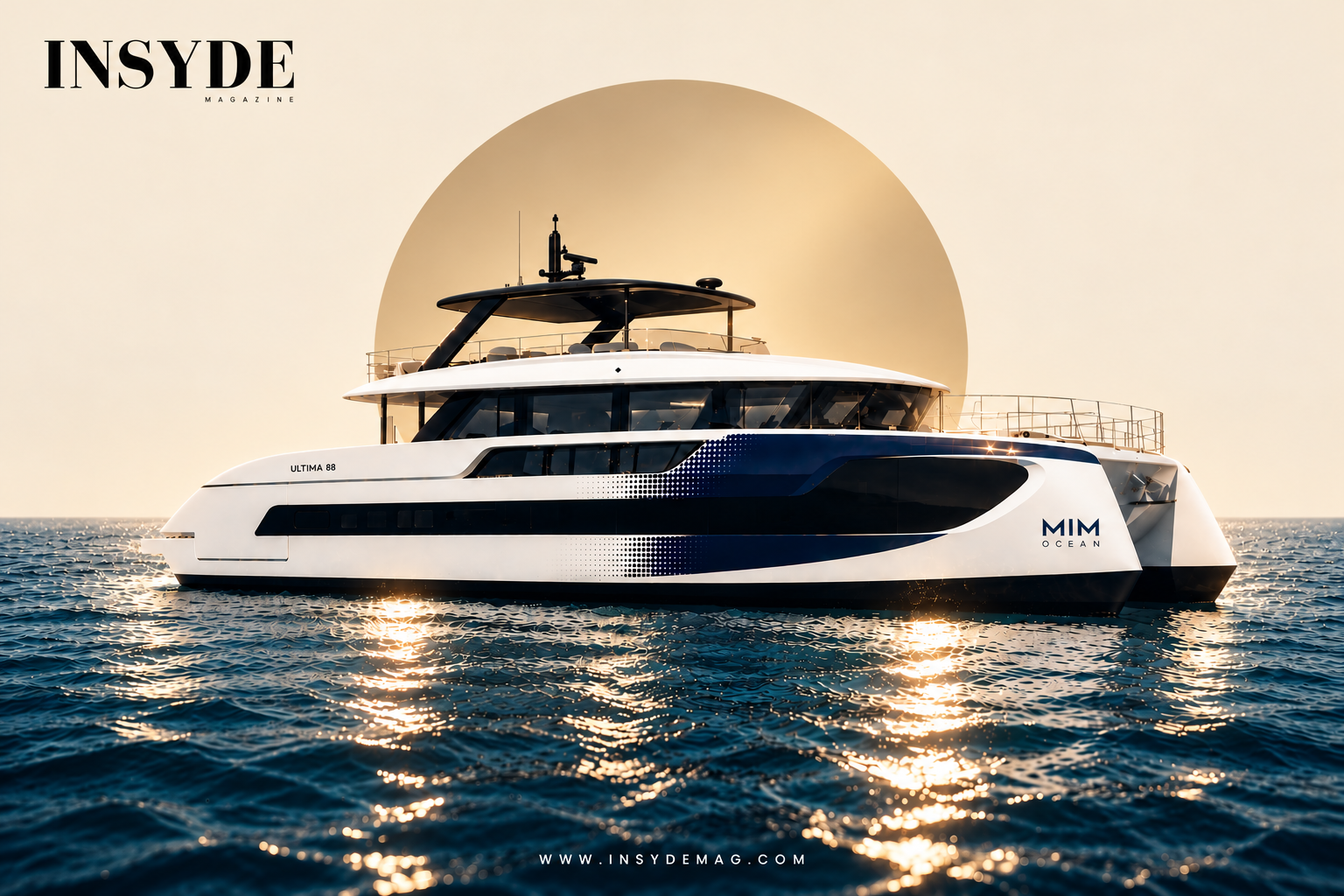
    On 13 October 2026, Polish yacht builder Sunreef Yachts announced that the Argentine football icon had ordered a Sunreef ULTIMA 88, a 28.4-metre luxury power catamaran being built at the company’s shipyard in Ras Al Khaimah, United Arab Emirates. The yacht is intended to join MIM Ocean, the charter venture Messi operates in partnership with Med Cat Yachts.

    The headline figure circulating around the order is approximately €8–9 million, or roughly US$9–10 million depending on exchange rates. The actual contract price has not been publicly disclosed by the builder or Messi, so the valuation remains an estimate rather than a confirmed purchase figure.

    But the money is only the opening chapter.

    The more revealing story is about the architecture of modern luxury: how performance engineering meets private hospitality, how a sporting icon’s commercial interests extend beyond the pitch, and why the most desirable possessions are increasingly judged by the experiences they make possible.

    Messi’s new yacht is not simply another expensive addition to a celebrity’s lifestyle. It offers a compelling case study in the business, psychology and evolving design of extreme luxury.

    THE PRICE OF A PRIVATE HORIZON

    In the public imagination, wealth is often measured through objects. The supercar in the driveway. The watch beneath a tailored cuff. The residence overlooking a coastline that most people experience only on holiday.

    A yacht occupies a different category.

    It is a residence that moves, a transport system that doubles as a social environment, and a private setting that can travel between destinations. Its value is not restricted to the materials from which it is built. It also lies in the control it offers over time, space and access.

    That distinction helps explain why the superyacht remains one of the most powerful symbols of extreme wealth.

    A luxury hotel can provide exceptional service, but its spaces are shared with other guests. A private villa offers seclusion, but it remains tied to one location. A yacht combines elements of both while adding mobility. The owner can move between coastlines, anchor away from crowded marinas and create a highly personalised environment for family, friends or guests.

    For a person whose professional life involves global attention, that degree of control has an obvious appeal. Nevertheless, Messi’s personal motivations for ordering this particular yacht have not been fully disclosed, and the significance of the purchase should not be reduced to speculation about his private life.

    What is clear is the scale of the asset and the wider business context in which it sits.

    At an estimated price approaching US$10 million, the ULTIMA 88 belongs to a world where the initial transaction is only one component of the commitment. Crew, maintenance, insurance, fuel, berthing, technical servicing and eventual refits can all contribute substantially to the cost of ownership.

    Extreme luxury is not simply the ability to acquire an extraordinary object. It is the ability to operate, maintain and personalise it over time.

    That is where the real economics of the superyacht begin.

    INSIDE THE SUNREEF ULTIMA 88

    The Sunreef ULTIMA 88 occupies an interesting position within contemporary yacht design. It seeks to combine the dynamic character of a performance-oriented power yacht with the width, stability and living space associated with a multihull.

    According to Sunreef’s published specifications, the model measures approximately 28.4 metres in length and 9.3 metres across the beam. The shipyard lists approximately 387 square metres of living space, an unusually expansive figure that illustrates the design priorities of the platform.

    The distinction matters because yacht design is not only about how a vessel looks from the water. It is also about how people inhabit it.

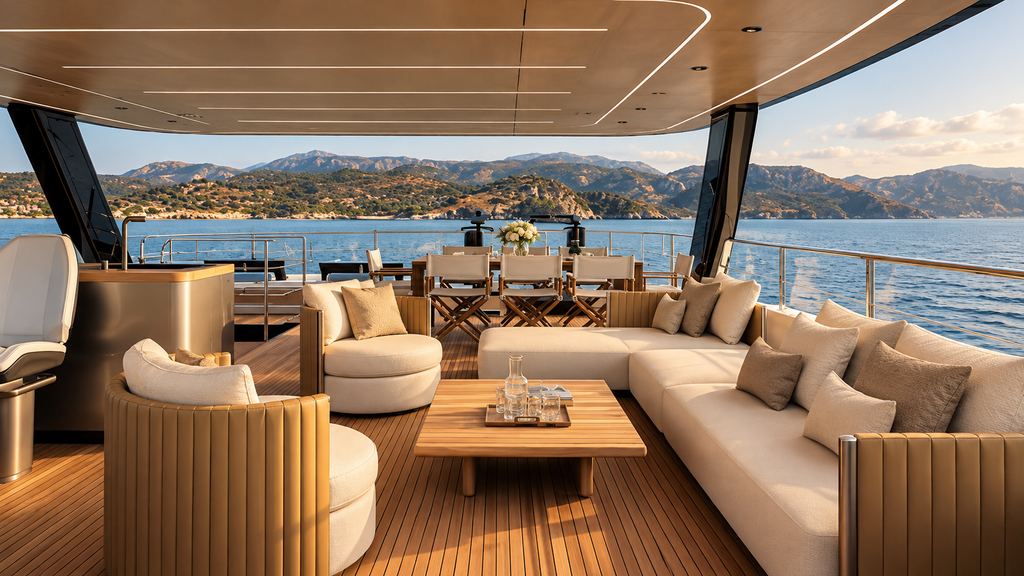
    The ULTIMA 88’s defining feature is its relationship with the sea. Opening side platforms and an aft garage create what Sunreef calls an Ocean Lounge, extending the usable space towards the water when the yacht is at anchor. The layout is intended to make the transition between interior living areas and the surrounding marine environment feel more immediate.

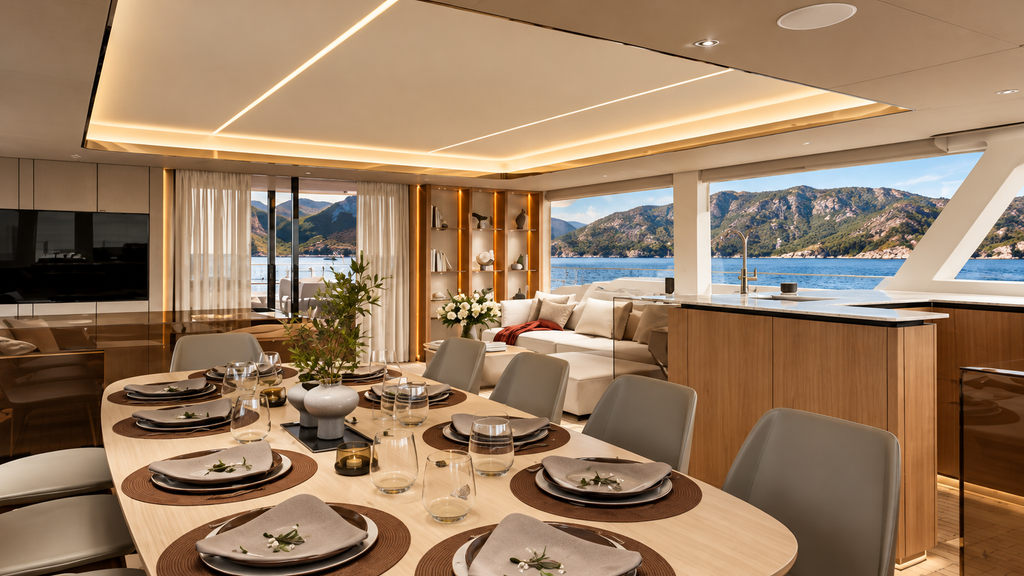
    A full-beam owner’s suite, guest accommodation and open social areas complete the experience.

    Instead of treating the sea as a view beyond the deck, the design brings it into the living environment. The aft area can become a place to relax beside the water, while the interior provides a more sheltered setting for dining, resting and socialising.

    This is an important distinction in the contemporary luxury market. Increasingly, the product is not just the object itself; it is the quality of the interaction between the object, its surroundings and the person using it.

    In a yacht, that interaction is shaped by everything from the arrangement of the decks to the ease with which guests can move between spaces. A spectacular exterior may attract attention, but a successful vessel must work just as well during the ordinary hours spent aboard.

    Sunreef’s published model specifications also include different propulsion configurations. The exact technical specification selected for Messi’s commissioned yacht has not been publicly confirmed, so the model’s advertised features should not automatically be treated as the final specification of his individual vessel.

    That distinction is important. A bespoke yacht is not always identical to a standard model description. Its final configuration can depend on the owner’s requirements and the contract agreed with the shipyard.

    The ULTIMA 88’s appeal lies in its attempt to reconcile performance, generous space and contemporary onboard living within a single design.

    For the modern luxury buyer, that balance may be more persuasive than sheer size alone.

    WHY THE CATAMARAN MATTERS

    For much of the superyacht market’s history, the conventional monohull has defined the familiar image of luxury at sea: a long hull, a prominent profile and a sequence of decks rising above the water.

    A catamaran takes a different approach.

    Its two-hull configuration creates a broad platform that can accommodate substantial interior and exterior space. Depending on the design, it can also offer stability and access to certain shallower anchorages compared with some monohull alternatives.

    The trade-offs matter. A wider vessel can face different marina constraints, and performance, fuel consumption, handling and range depend on the engineering, propulsion system and operating conditions. No single hull configuration is automatically superior in every situation.

    What the catamaran format offers is a different way of organising life aboard.

    On the ULTIMA 88, that additional width supports the emphasis on open living spaces and the Ocean Lounge. The vessel is conceived not merely as a machine for travelling between destinations, but as a place in which people can spend meaningful time once they arrive.

    This becomes especially relevant when considering the yacht’s intended role within a charter operation. Guests are not paying only for the journey from one port to another. They are paying for the environment, the accommodation, the service and the activities that take place during their time aboard.

    The design therefore has implications beyond aesthetics. It influences how the yacht can be used, the type of experience it can deliver and the way it can be positioned within the luxury-hospitality market.

    The ULTIMA 88 is an example of how yacht builders are attempting to compete through the intelligent use of space and the integration of leisure into the vessel’s architecture.

    In this segment, engineering and experience are increasingly inseparable.

    FROM FOOTBALL ICON TO LUXURY HOSPITALITY

    The most commercially interesting aspect of Messi’s new yacht may not be its estimated price. It may be the business it is intended to join.

    MIM Ocean’s official website describes a venture combining Messi’s MIM Hotels experience with the charter expertise of Med Cat Yachts. Its existing offering centres on professionally crewed Bali catamarans, with summer operations in the Balearic Islands and winter-season availability in the Caribbean and Bahamas.

    The proposition is built around private sailing holidays, with accommodation, crew, food and water-based activities forming part of the guest experience.

    The Sunreef order is intended to expand that wider offering.

    This places the yacht within a business model that connects celebrity recognition with hospitality and premium leisure. The association with Messi can attract attention, but the long-term success of a charter operation depends on more practical considerations: service quality, operating costs, pricing, availability, customer satisfaction and the ability to deliver a consistent experience.

    That distinction is essential when discussing celebrity wealth.

    A high-value asset can be used for personal enjoyment, commercial activity or a combination of both. Its financial performance cannot be established simply by knowing who owns it or how much it may cost.

    In Messi’s case, the yacht’s announced destination within MIM Ocean creates a clear connection to an existing commercial venture. It does not, however, establish the vessel’s future revenue, profitability or investment return.

    Those outcomes would depend on information that has not been made public, including the final acquisition price, annual operating expenditure, charter rates, utilisation and the division of costs between private and commercial use.

    The commercially relevant question is therefore not whether the yacht will make money. It is how the vessel will be integrated into a broader hospitality offering and what kind of experience it will enable the business to sell.

    That is a more revealing way to understand the order than treating it solely as a display of celebrity spending.

    Messi’s global profile and the yacht’s design may help differentiate the offering. But the business must ultimately be judged by its operations.

    THE BUSINESS OF EXTREME LUXURY: WHAT THE 2026 MARKET REVEALS

    The timing of the order is particularly interesting because the wider yacht market presents a more complicated picture than the familiar narrative of ever-rising luxury spending.

    According to Northrop & Johnson’s Q3 2026 Superyacht Market Report, 472 pre-owned yachts measuring at least 24 metres were sold globally during the first nine months of 2026, compared with 477 over the same period in 2025.

    That represents a year-on-year decline of approximately 1%.

    The combined value of those transactions fell from US$5.46 billion to US$5.20 billion, a reduction of approximately 4.7%.

    At first glance, those figures suggest a market that remains active but is not expanding uniformly in value. The number of transactions has remained relatively stable, while the aggregate value of completed sales has declined.

    The supply side tells a complementary story. The report records 1,400 new central-agency listings during the first nine months of 2026, up 5.5% from 1,327 in the corresponding period of 2025. Price reductions also increased, rising 7.2% to 1,949.

    For buyers in the brokerage market, that combination can mean greater choice and more scope to negotiate. For sellers, it reinforces the importance of pricing a vessel realistically in relation to competing inventory.

    However, these numbers require careful interpretation. They concern the pre-owned brokerage market for yachts of at least 24 metres, not every segment of marine leisure, and they do not measure demand for Messi’s specific new-build order.

    The report also shows why the market should not be reduced to a single growth or decline narrative.

    During the first nine months of 2026, sales in the 40–50-metre pre-owned segment rose from 49 to 63, an increase of approximately 29%. Elsewhere, demand was more uneven.

    New-build activity was more subdued overall. The same report recorded 216 reported new-build sales of yachts measuring at least 24 metres during the first nine months of 2026, compared with 266 in the corresponding period of 2025. The figures remain provisional because transactions can be reported retrospectively.

    Charter activity, meanwhile, presented a more positive picture. Northrop & Johnson reported an 18.5% increase in charter bookings during the first nine months of 2026, alongside a 17.4% increase in booked days. The number of individual yachts receiving bookings rose by 1.8%, from 1,641 to 1,670.

    These figures suggest that charter activity increased across a broadly similar number of vessels. They do not prove that every yacht or destination performed equally well, but they offer evidence of stronger activity in the reported charter market.

    Taken together, the data illustrates a market with different dynamics across brokerage, new construction and charter operations.

    That distinction is crucial to understanding Messi’s order.

    The new yacht belongs to the new-build market, while its intended place in MIM Ocean connects it to the charter sector. The pre-owned sales figures offer useful context about the broader industry, but they cannot be used as a direct valuation benchmark for the ULTIMA 88.

    The lesson is that extreme luxury is not one unified market. It is a collection of connected businesses, each with its own economics.

    WHY EXPERIENCE HAS BECOME THE REAL LUXURY

    A yacht can be evaluated through its dimensions, propulsion, finish and price. Yet these specifications explain only part of its appeal.

    The rest lies in what ownership makes possible.

    A yacht can turn a holiday into a private itinerary. It can bring accommodation, dining, transport and leisure together in one environment. It can provide a setting in which time is organised around the people aboard rather than around the operating hours of a hotel, resort or public attraction.

    This is where the economics of extreme luxury intersect with its psychology.

    For many affluent consumers, luxury is not simply a question of buying a more expensive version of an ordinary product. It is about reducing friction, increasing choice and gaining control over how time is spent.

    That does not mean privacy and experience have replaced visible status. Both remain important, and their relative significance varies from one buyer to another.

    But the ULTIMA 88 illustrates how a single asset can serve several dimensions of luxury at once. It can be a design object, a private retreat, a means of travel and a platform for hospitality.

    The value lies in the combination.

    For someone whose professional identity is constantly visible, a private environment may offer a different kind of appeal from another highly visible possession. Yet this remains an interpretation of the wider luxury market, not a claim about Messi’s undisclosed personal motivations.

    What can be observed is the design and business proposition itself: a vessel built around performance and living space, intended for a venture that sells private sailing experiences.

    The modern luxury proposition is increasingly about the complete experience rather than the isolated product.

    THE COST OF OWNING A DREAM

    An estimated US$10 million acquisition price may dominate the headlines, but it is not a complete measure of the yacht’s financial commitment.

    Large yachts require ongoing expenditure on crew, servicing, insurance, fuel, berthing, technical support and provisions. The scale of these costs varies with the vessel’s systems, operating schedule, cruising distances and intended use.

    A yacht that spends much of the year in private use may have a different financial profile from one operated commercially. A charter vessel also faces the challenge of balancing customer demand against maintenance periods, seasonal availability and the cost of delivering a premium service.

    There is no reliable basis for assigning Messi’s yacht a specific annual running cost or projected charter income without its final specification and operating arrangements.

    The same caution applies to resale value. A yacht’s future market price will depend on its condition, build quality, specification, maintenance history, market conditions and the availability of comparable vessels.

    Nor should a commissioned yacht automatically be described as an investment. It may be a lifestyle asset, a business asset or a combination of the two. Whether it generates a financial return is a separate question that requires evidence.

    These distinctions are important because luxury reporting often concentrates on the acquisition while overlooking the economics of ownership.

    The price of entry is only one part of the story. Sustaining the experience is another.

    For MIM Ocean, the commercial calculation will ultimately depend on how the vessel is operated and how effectively its offering matches customer demand. For Messi personally, the full balance between private use and commercial use has not been disclosed.

    The responsible conclusion is not to assume profitability or extravagance beyond the evidence. It is to recognise the complexity behind an asset of this scale.

    PERFORMANCE, DESIGN AND THE QUESTION OF SUSTAINABILITY

    Luxury yachting also faces a question that extends beyond comfort and prestige: how can high-performance marine engineering become more efficient?

    Sunreef’s wider ULTIMA and Eco product portfolio highlights areas such as hybrid propulsion, battery systems and solar technology. These are relevant developments in an industry exploring different ways to reduce energy consumption and improve the onboard experience.

    However, a distinction must be made between technology available within a manufacturer’s wider range and the equipment installed on a particular vessel.

    The exact propulsion and energy systems commissioned for Messi’s ULTIMA 88 have not been fully disclosed. It would therefore be inaccurate to describe his yacht as a specific hybrid or solar-powered configuration without confirmation.

    More broadly, hybrid systems and solar generation do not automatically make a yacht emissions-free. Environmental performance depends on factors such as propulsion, energy demand, cruising speed, operating profile and the source of the energy used.

    For the industry, the opportunity is to make efficiency part of the engineering brief rather than treating it as an afterthought. Improvements in energy management, hull design and onboard systems can matter, although their actual benefits must be assessed against the vessel’s full operating requirements.

    For a luxury buyer, sustainability is increasingly a question of engineering and evidence, not merely a marketing label.

    The future of premium yachting will depend partly on how successfully builders combine the expectations of performance and comfort with more responsible use of energy and resources.

    MESSI’S NEW YACHT AND THE FUTURE OF CELEBRITY LUXURY

    The relationship between celebrity and luxury has always been commercially powerful. A recognisable name can bring attention to a product, create cultural relevance and give a business a distinctive public identity.

    But attention alone does not create a successful enterprise.

    Messi’s yacht order brings these elements together. His global sporting profile gives the announcement immediate visibility. Sunreef contributes specialist design and engineering. MIM Ocean provides an existing hospitality context in which the vessel is intended to operate.

    The combination is more interesting than any one element in isolation.

    It shows how a global sporting identity can connect with a premium leisure business, while also demonstrating the importance of execution. The vessel must be built, delivered, operated and maintained. A charter business must attract customers and provide a consistently high-quality experience. The public profile can open the door, but the product and service must justify the proposition.

    This is a useful lesson for the broader luxury sector.

    The strongest luxury businesses do not sell only an object or a name. They build a coherent experience around design, service, access and trust.

    In that sense, the ULTIMA 88 is more than a headline about an expensive yacht. It sits at the intersection of marine engineering, celebrity culture and experience-led hospitality.

    Its commercial significance will become clearer as more information emerges about the final vessel and its operation.

    For now, the order provides a tangible example of how luxury assets can connect private enjoyment with wider commercial ambitions.

    THE ART OF EXTREME LUXURY

    Extreme luxury is often presented through numbers: metres of hull, horsepower, cabin counts and estimated prices.

    Those details are part of the story. They communicate the engineering involved, the space available and the scale of the financial commitment.

    But they do not fully explain the attraction.

    The deeper appeal is the freedom to shape an experience around personal preferences. It is the ability to travel without relying on a fixed location, to spend time in a carefully designed environment and to make decisions about how a day unfolds.

    Messi’s Sunreef ULTIMA 88 captures that idea in a distinctly contemporary form. Its multihull architecture emphasises space and the relationship between the interior and the water. Its intended place in MIM Ocean links the yacht to a commercial hospitality venture. And its arrival comes at a time when the wider yacht industry is navigating uneven brokerage demand alongside stronger reported charter activity.

    The estimated price may be the detail that attracts immediate attention, but it is not the most revealing one.

    The more meaningful story is the convergence of design, privacy, engineering and experience — and the way those elements are being packaged into a modern expression of wealth.

    The yacht is still under construction, its final contract price remains undisclosed, and its eventual commercial performance is yet to be established.

    What is already clear is that luxury at this level is about more than possession.

    It is about the ability to create a world of your own, even if only for a few days at a time.

    At sea, the ultimate symbol of privilege may not be the vessel itself.

    It may be the freedom to decide where the horizon leads next.


    Price note: The approximately US$9–10 million valuation is an estimate reported by media outlets, not a confirmed contract price. The vessel’s final specification, delivery date and operating economics have not been fully disclosed.

    INSYDE MAGAZINE

    Luxury. Culture. People. What comes next.
    BENGALURU’S NO. 1 LUXURY MAGAZINE

  • THE BLOODLINES OF BENGALURU

    THE BLOODLINES OF BENGALURU

    Five Families. Generational Wealth. The Empires Shaping a City.

    From technology fortunes and real-estate empires to a jewellery house spanning six generations, INSYDE explores the family legacies behind Bengaluru’s changing relationship with wealth, ambition and influence.

    Bengaluru has become a city of extraordinary contrasts. Glass towers rise beside century-old neighbourhoods. Technology entrepreneurs build global businesses while property developers reshape the skyline. Luxury residences, commercial districts and established family enterprises coexist with a new generation determined to create fortunes of its own.

    Yet behind the city’s familiar corporate names lies another story: the families whose decisions, businesses and legacies have helped shape its economic identity.

    Some built their fortunes by transforming traditional enterprises into global businesses. Others recognised the value of land, commercial infrastructure or the growing appetite for luxury. A few created something more enduring than a company: an institution that continued to evolve long after its founders established it.

    But family wealth is rarely as straightforward as it appears. A founder’s fortune is not necessarily the same as a family’s collective wealth. A prominent surname does not automatically confer control over a publicly listed company. And a business that has survived for generations must continually prove its relevance to a changing market.

    To understand Bengaluru’s business dynasties, then, we must look beyond net-worth lists. We must examine what these families built, how their businesses operate today and what their stories reveal about the future of wealth in one of India’s most ambitious cities.

    This is not a ranking of Bengaluru’s richest families, nor a claim that five families own the city. It is a closer look at five distinct legacies: technology, real estate, commercial infrastructure, industrial enterprise and luxury craftsmanship.

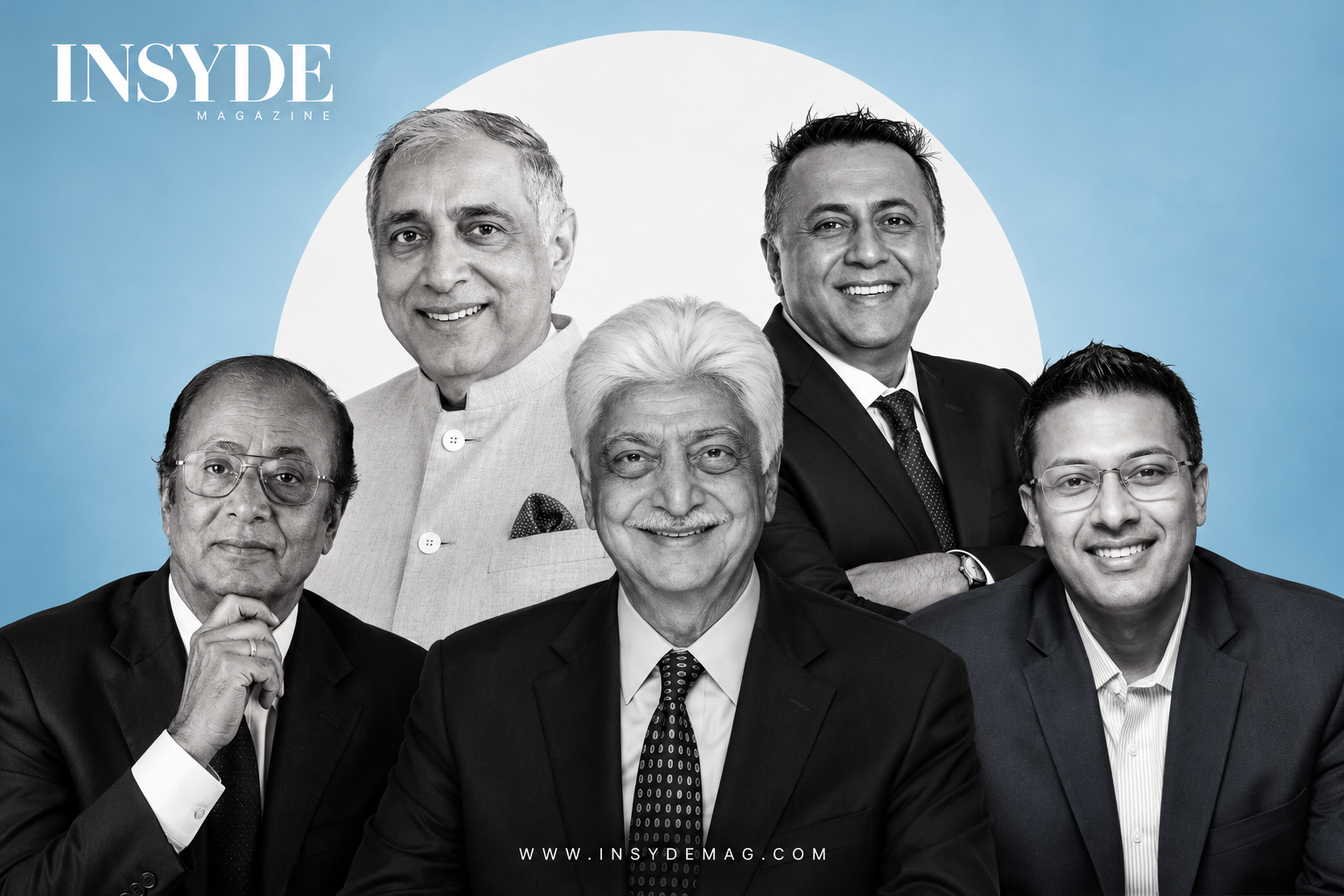
    01. THE PREMJI FAMILY

    From an established enterprise to a global technology fortune

    Few business legacies illustrate the transformation of Indian industry as clearly as that of Azim Premji and Wipro.

    The company began in 1945 as Western India Vegetable Products, operating in the vegetable-oil business. Under Premji’s leadership, it diversified and eventually developed into one of India’s most recognisable information technology services companies.

    The transformation was significant. Wipro became part of a wider shift that positioned Indian technology professionals as essential participants in the global digital economy. Bengaluru, with its growing concentration of engineering talent and technology businesses, became central to that story.

    But the Premji legacy is not simply a story of an entrepreneur recognising an opportunity. It is also a story of ownership, succession and the distinction between family influence and professional management.

    Wipro’s FY2025–26 corporate disclosures identify Azim Premji as a non-executive director and Rishad Premji as executive chairman. The company’s annual reporting also documents the substantial shareholding associated with Azim Premji and the structures through which some of those shares are held.

    The figures illustrate the scale of the family’s connection to the business. They should not, however, be confused with a complete estimate of the family’s net worth: company shares, private businesses, philanthropic trusts and other assets are different categories of wealth.

    The next chapter is equally important. Rishad Premji joined Wipro in 2007, worked across several roles and became executive chairman in 2019. His progression reflects a model of succession in which a family member develops experience within a large organisation before assuming its most senior leadership responsibilities.

    Beyond business, Azim Premji has become one of India’s most prominent philanthropists through his work in education and social development, including the Azim Premji Foundation.

    That philanthropic dimension complicates the usual image of a business dynasty. Wealth can preserve influence, but it can also be directed towards institutions and causes that extend beyond the original enterprise.

    The legacy: The Premji story is about transforming a traditional business into a global technology enterprise — and about the responsibilities that accompany wealth at that scale.

    Sources: Wipro Integrated Annual Report 2025–26; Wipro’s FY2025–26 filing with the US Securities and Exchange Commission.

    02. THE RAZACK FAMILY

    The business of building aspiration

    In Bengaluru, real estate is more than a market for apartments and office buildings. It is one of the most visible ways in which economic growth becomes physical: a new address, a commercial district, a residential community or a skyline that changes the character of an entire neighbourhood.

    The Razack family, associated with Prestige Group, has played a prominent role in this transformation.

    The company’s growth under Irfan Razack and his brothers, Noaman and Rezwan, reflects the expansion of Indian real estate from a largely residential business into a broader industry encompassing commercial offices, retail, hospitality and other property assets.

    As Bengaluru attracted technology companies and a growing professional workforce, demand for housing and commercial space changed. Developers responded to new expectations around location, design, amenities and lifestyle. Prestige became one of the major businesses operating within that evolution.

    Its continuing family connection is visible in its shareholding structure. The Razack Family Trust held 52.24% of Prestige Estates Projects in the June 2026 shareholding data reported by Value Research. The three brothers were also individually listed among the company’s promoter shareholders.

    That is a more meaningful indicator of family influence than simply attaching a speculative fortune to the family name. It establishes a documented ownership relationship with a publicly listed business.

    The group is also looking beyond the traditional economics of property sales.

    In an interview published by Financial Express in October 2026, Irfan Razack said Prestige was targeting annual rental income of more than ₹4,000 crore by FY2030, compared with approximately ₹860 crore at the time of the interview. He also cited 35 million square feet of commercial space under development.

    These are forward-looking company targets and pipeline figures, not achieved results. Nevertheless, they reveal an important strategic ambition: building a business in which recurring rental income becomes increasingly significant alongside residential sales.

    The distinction matters. Selling an apartment generates revenue from a transaction. Owning and leasing commercial property can create recurring income over a much longer period. The two models involve different capital requirements, risks and measures of success.

    For Bengaluru, this is part of the larger story of how property businesses evolve alongside the city itself.

    The legacy: The Razack family represents the relationship between private enterprise and urban transformation — and the ambition to turn property development into a more enduring portfolio of assets.

    Sources: Prestige Estates Projects shareholding data; Financial Express, October 2026.

    03. THE VIRWANI FAMILY

    The infrastructure behind business power

    The most visible part of Bengaluru’s business economy is often the company occupying a glass office tower. Less visible, but equally important, is the infrastructure that allows the company to operate.

    Commercial real estate sits at that intersection. It connects businesses with physical space, creates long-term property assets and provides the workplaces around which employment districts develop.

    The Virwani family, associated with Embassy Group, offers a perspective on this side of Bengaluru’s growth.

    Under Jitu Virwani’s leadership, Embassy developed a substantial presence in commercial real estate and expanded into other property-related businesses. The group became closely associated with the development of large office campuses and business parks, reflecting the growing demand for organised commercial space as Bengaluru attracted domestic and international companies.

    The family’s next-generation story is also relevant. Embassy’s published leadership information identifies Jitu Virwani as chairman and Aditya Virwani as managing director. Aditya’s executive role demonstrates how leadership responsibilities can pass to a new generation within an established business.

    But the larger story is not simply one of inheritance.

    Commercial property is a capital-intensive business. Its performance depends on factors such as location, construction costs, financing, occupancy, rental agreements, tenant demand and the wider economic cycle. A large office portfolio may generate recurring income, but it is also exposed to changes in how companies use workplaces and how investors value property.

    The rise of real-estate investment trusts has added another dimension to the sector. These structures can allow investors to participate in income-producing property assets through a listed investment vehicle, bringing institutional capital and public-market scrutiny into a business that was historically associated with private ownership.

    That evolution helps explain why commercial real estate has become more than a story about who builds the tallest tower. It is also about who owns the assets, how they are financed and how they generate returns over time.

    For Bengaluru, a city whose growth has been closely linked to technology and professional services, commercial infrastructure remains a crucial part of the economic landscape.

    The legacy: The Virwani family illustrates a less visible form of business influence — creating and managing the physical environments in which other businesses grow.

    Source: Embassy Group — official website and leadership information.

    04. THE KHODAY FAMILY

    An industrial legacy in a changing city

    Bengaluru’s reputation as a technology capital can sometimes overshadow its older business history.

    Long before software companies became central to the city’s identity, Bengaluru had established commercial and industrial enterprises in areas such as textiles, manufacturing and trade. These businesses contributed to the economic foundations on which later generations built.

    The Khoday name is associated with that earlier industrial landscape.

    The group’s history has been linked to silk and other traditional businesses, followed by expansion into distilling and related activities. Khoday India Limited’s own corporate documentation records its incorporation as Khoday Distilleries Private Limited in 1965, its conversion to a public limited company in 1986 and its subsequent renaming in 1992.

    The distinction between the family’s broader history and the legal history of an individual company is important. A business group may contain multiple entities, and its ownership, operations and financial position can change over time. Historical prominence alone cannot establish the current value of a family’s holdings or the extent of its present-day influence.

    That is why the Khoday story is most useful as an exploration of industrial continuity rather than a claim about current wealth.

    Traditional enterprises face a particular challenge when the economy changes around them. They must preserve the strengths that made them successful while adapting to new competition, changing consumer preferences, regulation and evolving business models.

    For a family business, those pressures are compounded by succession. The next generation may inherit a recognised name and established assets, but it must still decide what the enterprise should become.

    In that sense, the Khoday history represents an essential part of Bengaluru’s economic story: the businesses that existed before the city’s technology boom and the continuing question of what it takes for an industrial legacy to survive.

    The legacy: The Khoday story reminds us that a city’s economic identity is built in layers. The newest industries may dominate the headlines, but older enterprises remain part of the history that made the city what it is.

    Source: Khoday India Limited — corporate documentation.

    05. THE C. KRISHNIAH CHETTY FAMILY

    Six generations of luxury craftsmanship

    Not every business dynasty builds its legacy through technology, property or industrial scale. Some build it through something more intimate: trust, craftsmanship and a reputation carried from one generation to the next.

    The C. Krishniah Chetty Group offers a distinctly Bengaluru example.

    The jewellery business traces its origins to 1869, when Cotha Krishniah Chetty began selling coloured beads in Bengaluru. More than 150 years later, the business has passed through six generations, according to a Moneycontrol profile published on 4 October 2026.

    Its longevity places it in a different category from the city’s technology and real-estate businesses. Jewellery is a product, but a luxury jewellery house sells more than materials and design. It also sells workmanship, service, trust and the accumulated reputation of its name.

    Those qualities are especially significant in a category where purchases can carry emotional, cultural and financial importance. A piece of jewellery may mark a wedding, an anniversary, a family milestone or an inheritance. The relationship between the customer and the house can therefore extend well beyond a single transaction.

    Yet heritage alone is not enough to guarantee survival.

    A business that has operated across six generations has had to navigate changes in customers, purchasing behaviour, technology and retail. The challenge is to modernise the experience without losing the qualities that made the business worth returning to in the first place.

    That tension is familiar across luxury. Established houses must remain relevant to younger consumers while preserving the craftsmanship, service and identity that distinguish them from mass-market competitors.

    For INSYDE, the Chetty family adds an important dimension to the idea of wealth. Its story is not primarily about corporate scale or a published billionaire ranking. It is about the endurance of a local luxury business and the work required to keep a family name commercially relevant over generations.

    The legacy: The C. Krishniah Chetty story demonstrates that generational wealth can be built not only by scaling an empire, but also by preserving a specialised craft and a relationship with customers over time.

    Source: Moneycontrol, 4 October 2026 — “From selling coloured beads on a bicycle to serving 21 royal families: How C. Krishniah Chetty survived 155 years”.

    WHAT THESE BLOODLINES REVEAL ABOUT BENGALURU

    Look across these five stories and a broader pattern emerges.

    The Premji family represents the transformation of a traditional enterprise into a global technology business. The Razacks illustrate how real estate can capture and respond to the ambitions of a growing city. The Virwanis show how commercial infrastructure supports the businesses that drive economic activity. The Khoday history connects Bengaluru’s present to its older industrial roots. And the C. Krishniah Chetty family demonstrates how a local luxury house can preserve its identity across generations.

    These are different forms of legacy, built under different circumstances. They should not be treated as interchangeable fortunes or placed on a single scale of wealth.

    A company’s market capitalisation is not the same as a family’s net worth. Promoter shareholding is not the same as complete ownership. A property pipeline is not the same as completed assets, and a revenue target is not an achieved financial result.

    Those distinctions matter because the public image of family wealth often compresses complicated business realities into a single surname and a headline figure.

    The more revealing question is how these enterprises continue to operate.

    Family ownership can offer continuity, long-term thinking and a strong sense of identity. It can also introduce challenges around succession, governance and the separation of family interests from corporate responsibilities. Publicly listed companies must answer to shareholders and regulators; private businesses face their own pressures to professionalise and adapt.

    Nor does inheritance guarantee success. A family may inherit capital, relationships and a recognised name, but maintaining a business requires decisions that respond to changing markets.

    Bengaluru’s next generation of wealth may emerge from industries that look very different from those that built the fortunes of the past. Artificial intelligence, healthcare, advanced manufacturing, climate technology and consumer businesses could all produce new entrepreneurial legacies.

    The city’s business story is therefore unfinished.

    Its established families operate alongside first-generation founders, venture-backed companies, global corporations and independent entrepreneurs. The next influential business name may come from a family with a century of history — or from a founder who has only just begun.

    INSYDE TAKE

    The real luxury is legacy

    Wealth attracts attention. Legacy demands something more.

    A company valuation can rise and fall. A building can change hands. A founder can step away. What remains is the question of whether the enterprise created something that continues to matter: a global business, lasting infrastructure, a durable institution or a craft that survives the generation that established it.

    That is the more compelling story behind Bengaluru’s business families.

    Not a claim that five surnames own a city. Not a list of fortunes stripped of context. But an exploration of the businesses, decisions and relationships that have helped shape Bengaluru’s economic identity.

    In a city that continues to reinvent itself, the meaning of wealth is changing too. The old measures of inheritance and ownership now sit alongside innovation, institutional strength, cultural relevance and the ability to adapt.

    The most successful business families will not necessarily be those that preserve everything exactly as it was. They will be the ones that understand what must endure — and what must change.

    Because the ultimate measure of a dynasty is not simply what one generation accumulates.

    It is what the next generation can build from it.

    And in Bengaluru, the next chapter of wealth is already being written.

    INSYDE MAGAZINE
    The definitive voice of modern luxury.

    Bengaluru’s No. 1 Luxury Magazine.

    www.insydemag.com

  • DECODING THE ANTHONY VACCARELLO EXIT

    DECODING THE ANTHONY VACCARELLO EXIT

    Inside the end of his decade at Saint Laurent, the financial pressures reshaping luxury fashion, and the unanswered questions surrounding one of the industry’s most consequential creative departures.

    By INSYDE Magazine | Luxury & Fashion

    There is something almost cinematic about leaving Saint Laurent in gold.

    For Anthony Vaccarello, the final chapter at the French fashion house arrived in a blaze of metallic glamour. Gold dresses, sculptural trench coats and shimmering stilettos transformed the runway into a vision of opulence, staged beneath the Eiffel Tower and recalling the grandeur of Saint Laurent’s own history.

    It was a fitting image for a designer whose decade at the house had been defined by controlled sensuality, sharp silhouettes and a distinctly nocturnal vision of luxury.

    Then came the announcement.

    On 9 October 2026, Kering officially confirmed that Vaccarello was leaving Saint Laurent after ten years as creative director. The group praised his contribution to strengthening the house’s identity and cultural influence, while confirming that new creative leadership would be announced soon. The statement did not disclose a specific reason for his departure.

    Read Kering’s official announcement.

    The timing is significant. Vaccarello is not leaving an obscure label struggling to establish an identity. He is departing one of fashion’s most recognisable houses after helping take its annual sales beyond €3 billion in 2023.

    Yet the years that followed brought a commercial slowdown, against the backdrop of a wider luxury-market correction and a restructuring at Saint Laurent’s parent company.

    So what does his exit actually tell us?

    Is this the natural conclusion of a decade-long creative partnership? A response to the changing economics of luxury? Or a sign that even a successful creative vision must eventually adapt to a new set of commercial expectations?

    The public record does not establish one definitive explanation. But Vaccarello’s legacy, Saint Laurent’s financial trajectory and Kering’s broader strategic reset offer a revealing picture of the pressures facing luxury fashion today.

    A DECADE OF DESIRE

    When Vaccarello took over Saint Laurent in 2016, succeeding Hedi Slimane, he inherited a house whose recent identity had been shaped by a powerful, highly distinctive creative vision. His challenge was to establish his own language without diluting the attitude that made Saint Laurent instantly recognisable.

    He approached the task through consistency rather than reinvention for its own sake.

    Black became a near-constant. Shoulders were sharpened. Legs were elongated. Leather, sheer fabrics, short hemlines and precise tailoring created a wardrobe that moved between eroticism and authority. The result was sensual without being soft, glamorous without being traditionally romantic.

    His Saint Laurent woman did not need to announce her presence. The clothes did it for her.

    But reducing Vaccarello’s tenure to provocative dresses would overlook the scale of his achievement. He built a coherent visual world across runway collections, campaigns, celebrity dressing and monumental Parisian shows. The Eiffel Tower became a recurring backdrop, transforming the city itself into part of the brand’s imagery.

    Saint Laurent was selling more than clothing. It was selling an atmosphere: Paris after dark, unapologetic sexuality, rock-and-roll attitude and a particular form of modern power.

    He also helped extend the house’s cultural reach beyond fashion through Saint Laurent Productions, launched in 2023. Its involvement in cinema, including Emilia Pérez, brought the brand into a broader cultural conversation and demonstrated how a fashion house could use film as an extension of its identity.

    Explore Vogue’s coverage of Vaccarello’s departure and creative legacy.

    Commercially, the results were substantial. According to Reuters, Saint Laurent generated well over €3 billion in annual sales in 2023. Vaccarello had helped establish a strong identity at a scale that few creative directors achieve.

    That is what makes his departure consequential. He was not simply designing the next collection. He had become central to how the house presented itself to the world.

    THE NUMBERS BEHIND THE EXIT

    Luxury is built on desire. But desire must eventually translate into sales.

    Saint Laurent’s financial trajectory provides essential context for understanding why this transition matters. The brand reached more than €3 billion in annual sales in 2023 before losing momentum as the luxury sector faced weaker demand and brands reassessed their growth strategies.

    Reuters reported that Saint Laurent’s gross revenue declined by 9% in 2024 and a further 6% in 2025. Performance had largely stabilised during 2026, according to the same report, although full-year 2026 results were not yet available as of 11 October.

    Saint Laurent: the recent financial picture

    PeriodReported performance
    2023Annual sales exceeded €3 billion
    2024Gross revenue declined 9%
    2025Gross revenue declined a further 6%
    2026Performance described as largely stabilised; full-year results pending

    Source: Reuters, 9 October 2026. Figures refer to reported annual sales and gross-revenue movements; the 2026 assessment is qualitative, not a full-year result.

    The numbers matter, but they require careful interpretation.

    The decline does not prove that Vaccarello’s designs caused the slowdown, nor does it establish that falling sales triggered his departure. Luxury brands have faced a more challenging environment as consumers have become selective, price increases have tested perceptions of value, and demand has weakened across parts of the market.

    Saint Laurent’s parent company, Kering, has also been under pressure. The group reported 2025 revenue of approximately €14.7 billion, reflecting the wider challenges facing its portfolio of luxury houses.

    Read Kering’s official announcement and corporate information and Reuters’ reporting on the departure and financial context.

    This is the broader context in which Vaccarello’s exit should be understood. Kering is working to restore growth and improve performance across a portfolio that includes Saint Laurent, Gucci, Bottega Veneta and Balenciaga.

    The strategic question is no longer simply whether a collection generates attention. It is whether a house can translate creative distinction into sustainable demand, profitable growth and stronger customer relationships.

    That is a much harder equation to solve.

    WHEN THE RUNWAY MEETS THE BALANCE SHEET

    A spectacular runway show can dominate fashion coverage. A celebrity appearance can put a collection in front of millions. A campaign can make a handbag instantly desirable.

    But none of those moments, on its own, guarantees sustained growth.

    Luxury houses also depend on products that customers return to: daywear that works beyond special occasions, leather goods that justify their prices, menswear with a clear identity, and collections that encourage repeat purchases without making the brand feel overexposed.

    Reuters, citing Barclays analysts, identified women’s daywear, menswear and high-end leather goods, alongside less-penetrated markets in China and Asia, as potential areas of focus for Saint Laurent’s next creative chapter.

    These are potential growth opportunities identified by analysts, not a confirmed brief issued by Kering.

    Read Reuters’ full report on Saint Laurent’s leadership change.

    This points to a strategic challenge rather than a simple aesthetic verdict.

    Vaccarello’s vision was disciplined and commercially powerful. Yet the next phase of growth may require Saint Laurent to broaden the ways customers engage with the brand while protecting the desirability that made it successful.

    Expand too aggressively and the house risks diluting the sense of scarcity and attitude that gives its products their appeal. Rely too heavily on a narrow visual signature and it may struggle to create enough new reasons for customers to return.

    The strongest luxury houses make commercial expansion feel like a natural extension of their creative identity. For Saint Laurent, that is the challenge ahead.

    WAS IT A CONTROVERSIAL EXIT?

    The word controversy travels quickly in fashion. A departure becomes a rumour. A rumour becomes a supposed falling-out. A final collection is reinterpreted as a coded message.

    But the evidence available publicly is more limited than the speculation might suggest.

    Kering confirmed Vaccarello’s departure and praised his contribution to the house. It did not publicly identify a dispute, misconduct allegation or specific personal conflict as the reason. Reuters reported that a successor would be announced soon, but did not establish a definitive explanation for the decision.

    There is, therefore, no verified basis for presenting this as a personal scandal or claiming that Vaccarello was fired over a particular disagreement.

    That does not make the departure unimportant. A creative-director transition after ten years can be significant without being scandalous. It can reflect strategic priorities, changing commercial expectations, personal decisions or the natural conclusion of a long creative partnership. Without evidence, assigning one of these explanations to Vaccarello would be speculation.

    The more substantive story is the environment in which the exit occurred.

    Kering has been reshaping creative leadership across its portfolio as it attempts to reverse a prolonged downturn. Saint Laurent’s transition belongs to a larger conversation about how luxury groups balance creative autonomy with commercial accountability.

    The question is not whether a designer can create a memorable collection. It is how long a creative leader remains the right person for a house as its business enters a different phase.

    In an industry where creative directors increasingly become the public face of a brand, the distinction between the designer’s identity and the house’s identity can become complicated. When the designer leaves, the business must prove that the desirability they helped create belongs to the brand itself—not exclusively to the person behind it.

    THE GOLDEN FINALE

    Vaccarello’s final runway provided an arresting image for the end of his tenure.

    Gold dresses, gold outerwear and gold stilettos appeared beneath monumental chandeliers in a presentation that referenced the Salon Impérial at Paris’s Hôtel Inter-Continental, associated with Yves Saint Laurent’s historic couture presentations.

    It was a visual return to the house’s mythology: grandeur, theatricality and the idea of fashion as a carefully controlled spectacle.

    The collection has inevitably invited interpretation. Was the gold a farewell? A statement of triumph? A deliberate message about the designer’s relationship with the house?

    There is no confirmed evidence that it was intended as a coded message about his departure. Treating the collection as proof of a hidden conflict would confuse fashion criticism with reporting.

    Its significance is more compelling when considered on its own terms. Vaccarello spent a decade making Saint Laurent’s codes feel contemporary without making them unrecognisable. His final collection concentrated those codes—sensuality, Parisian grandeur, sharp tailoring and theatrical glamour—into a single visual statement.

    Gold was more than decoration. It was a fitting language for a house that has long sold aspiration through clothing and imagery.

    But a spectacular finale cannot answer the question that follows every creative-director departure: what happens when the person who defined the look is no longer there?

    WHO COMES NEXT?

    At the time of writing, Kering has confirmed that new creative leadership will be announced, but no successor has been officially named.

    Industry speculation has included Chemena Kamali, currently creative director at Chloé and previously associated with Saint Laurent’s design team. That possibility remains unconfirmed and should not be mistaken for an appointment.

    Reuters’ report on the departure and successor speculation.

    Whoever takes the role will inherit a house with considerable advantages: a recognisable identity, global visibility, a strong cultural presence and a decade of consistent creative direction. They will also inherit a commercial challenge.

    The next chapter must preserve what makes Saint Laurent distinctive while giving the business fresh momentum. Developing daywear and menswear, strengthening leather goods and pursuing opportunities in Asian markets are among the areas analysts have identified as potential avenues for growth.

    The creative challenge will be delicate. Too much continuity could make the next era feel derivative. Too sharp a break could alienate customers who associate Saint Laurent with Vaccarello’s particular combination of sensuality and control.

    The successor will not simply be asked to design a successful collection. They will be asked to define what Saint Laurent looks and feels like next—and to make that vision commercially compelling.

    THE NEXT CHAPTER OF LUXURY

    Vaccarello’s departure arrives at a moment when luxury fashion is reconsidering the relationship between creative identity and financial performance.

    For years, the industry benefited from powerful brand equity, global expansion and customers willing to pay increasingly high prices for desirable products. The current environment demands more. Brands must give customers compelling reasons to buy, justify their prices and build identities that can withstand changes in consumer behaviour.

    Saint Laurent’s recent revenue decline is part of that context, but it should not be mistaken for a verdict on one designer. Vaccarello helped take the house beyond €3 billion in annual sales and established a visual language that reached well beyond the runway. The subsequent slowdown occurred amid broader industry pressure, while the precise reason for his departure remains undisclosed.

    The next phase will reveal whether Saint Laurent can turn that legacy into renewed growth without diluting the qualities that made it desirable.

    That is the real story behind the exit: not a proven scandal or a confirmed boardroom battle, but a consequential change at the intersection of fashion, business and cultural influence.

    Anthony Vaccarello leaves behind a decade of sharp silhouettes, exposed skin, precise tailoring and cinematic spectacle. Saint Laurent now faces a different kind of design challenge—one that cannot be solved on a runway alone.

    It must decide what comes after desire.

    And in luxury, the answer is rarely as simple as changing the name on the invitation.

    INSYDE Magazine — Where luxury, culture and influence meet.


    SOURCES & FURTHER READING

    1. Kering — Official announcement of Anthony Vaccarello’s departure, 9 October 2026
    2. Reuters — Saint Laurent ends Vaccarello’s decade-long tenure amid wider Kering revamp, 9 October 2026
    3. Reuters via Investing.com — Financial performance, industry context and successor speculation, 9 October 2026
    4. Vogue — Anthony Vaccarello Bows Out at Saint Laurent, 9 October 2026

    Editorial note: This article reflects publicly available information as of 11 October 2026. Saint Laurent had not publicly disclosed a specific reason for Vaccarello’s departure, and no successor had been officially announced at the time of writing.

  • THE COMEBACK OF ADANI

    THE COMEBACK OF ADANI

    How Gautam Adani returned to the top of India’s wealth rankings — and why the bigger story is the infrastructure empire being built for what comes next.
    BY INSYDE | BUSINESS & POWER


    There are different ways to become extraordinarily wealthy.

    You can build something people desperately want.

    You can create a brand people dream about owning.

    Or you can build the infrastructure that an entire economy depends on.

    Gautam Adani belongs largely to the third category.

    In September 2026, Forbes’ latest India’s 100 Richest list placed Adani at No. 1 with an estimated $112.7 billion fortune, marking his return to the top after three years at No. 2. Forbes said his wealth had increased by $20.7 billion over the previous year.

    The M3M Hurun India Rich List 2026 also placed Adani and his family first, valuing their wealth at approximately ₹9.23 lakh crore. Hurun’s wealth calculations, however, were a snapshot as of August 24, 2026, illustrating why billionaire rankings can produce different numbers at different points in time.

    That distinction matters.

    Because the most interesting part of the Adani story isn’t simply who occupies the first line of a rich list.

    It is what kind of empire can create wealth on this scale.

    Ports.

    Airports.

    Power.

    Renewables.

    Logistics.

    Infrastructure.

    And increasingly:

    Artificial intelligence.

    The Adani comeback is therefore about more than a number.

    It is about the changing architecture of Indian wealth.


    01 — THE RETURN

    The headline is irresistible:

    Adani is back on top.

    Forbes’ 2026 India rich list estimates Gautam Adani’s fortune at $112.7 billion, making him India’s richest person on that ranking. The publication says he has reclaimed the position after three years at No. 2.

    Hurun tells a similar story. Its 2026 list puts Adani and his family at approximately ₹9.23 lakh crore, ahead of Mukesh Ambani and family at ₹8.63 lakh crore.

    But billionaire rankings are snapshots, not permanent titles.

    Their numbers change with listed-company valuations, exchange rates, ownership stakes and the date on which wealth is measured. Forbes and Hurun themselves use different methodologies and valuation dates, which explains why their figures are not identical.

    The ranking is therefore the hook.

    The empire is the story.


    02 — BEFORE THE BILLIONS, THERE WAS TRADE

    The Adani Group did not begin as an airport empire.

    It began in 1988 as a commodities trading business.

    Over the following decades, Gautam Adani expanded into ports, logistics, energy, transmission, airports, renewables and other infrastructure businesses.

    That history explains something fundamental about the Adani model.

    The group has generally built around large physical systems rather than a single consumer-facing product.

    A luxury brand might sell a handbag.

    A technology company might sell software.

    Adani’s businesses operate closer to the foundations underneath those economies.

    They move goods.

    They move people.

    They generate electricity.

    They transmit power.

    They connect supply chains.

    And increasingly, they are positioning themselves around the infrastructure required for computing.

    The result is a very different kind of business empire.

    Less visible.

    More physical.

    And built around assets designed to operate at enormous scale.

    Container port and logistics infrastructure representing Adani's ports and infrastructure empire

    03 — THE EMPIRE BENEATH INDIA

    Look at the port business and the scale becomes clearer.

    Adani Ports and Special Economic Zone, or APSEZ, reported 500.8 million tonnes of cargo handled in FY26, an 11% increase from the previous year. The company reported a 27.1% share of India’s total port cargo and a 45.5% share of India’s container market.

    Mundra is particularly significant.

    The port handles nearly 35% of India’s container trade, according to APSEZ.

    This isn’t simply a story about owning a port.

    It is about occupying a critical position inside India’s relationship with global trade.

    Then there is aviation.

    Adani Airport Holdings reported 94.44 million passengers across its seven operational airports in FY2024–25, according to the company’s reporting.

    The network now stretches across major Indian aviation markets, while Navi Mumbai International Airport began international operations in July 2026, adding another significant asset to the group’s aviation portfolio.

    These aren’t abstract assets.

    They are places through which millions of people and enormous volumes of goods physically move.

    And that is the defining characteristic of the Adani empire:

    scale becomes tangible.


    04 — THE ₹1.53-LAKH-CRORE STATEMENT

    Perhaps the clearest indication of where the group is heading isn’t Adani’s personal net worth.

    It is how aggressively the businesses are investing.

    The Adani portfolio reported ₹1,52,967 crore in capital expenditure during FY26, describing it as the highest annual capex in its history. Its gross asset base reached ₹7,85,098 crore, while EBITDA reached an all-time high of ₹94,834 crore, up 5.6% year on year. The group said core infrastructure contributed 87% of EBITDA.

    The numbers reveal something important.

    Adani’s wealth story isn’t simply about assets becoming more valuable.

    It is also about continually building more assets.

    During FY26, the group reported commissioning major projects including 5.1 GW of renewable capacity, 3.37 GWh of battery-energy storage, the Ganga Expressway and Navi Mumbai International Airport.

    Infrastructure requires enormous amounts of capital.

    But it also requires something else:

    time.

    A port is not a five-year trend.

    An airport is not a seasonal fashion cycle.

    A transmission network is not a consumer fad.

    These are assets designed to operate for decades.

    Futuristic data centre infrastructure representing the growing role of AI in India's infrastructure economy

    05 — THEN CAME AI

    This is where the Adani story becomes considerably more interesting.

    In February 2026, the Adani Group announced a proposed $100 billion direct investment through 2035 to develop renewable-energy-powered, hyperscale, AI-ready data centres.

    The plan targets 5 GW of integrated data-centre capacity and is expected by the group to catalyse an additional $150 billion across areas including server manufacturing, advanced electrical infrastructure and sovereign cloud services — creating what Adani describes as a potential $250 billion AI infrastructure ecosystem in India.

    The significance isn’t simply the size of the headline number.

    It is the logic behind it.

    AI may look like a software revolution.

    But software needs hardware.

    Hardware needs data centres.

    Data centres need electricity.

    Electricity requires generation and transmission.

    And all of that requires land, construction, cooling, logistics, networks and capital.

    Suddenly, the traditional Adani portfolio — energy, infrastructure, logistics and utilities — has a direct relationship with one of the defining technological shifts of the decade.

    The group isn’t simply betting on AI applications.

    It is betting on the physical infrastructure underneath AI.


    06 — FROM PORTS TO COMPUTE

    This may ultimately be one of the most interesting evolutions in the Adani story.

    The first version of the empire was built around commodities.

    The next expanded into infrastructure and energy.

    The emerging version is positioning itself around the infrastructure required by a more digital economy.

    It is an evolution from moving physical goods to supporting the systems that move information and computation.

    In April 2026, Google broke ground on a gigawatt-scale AI hub in Visakhapatnam in partnership with AdaniConneX and Nxtra by Airtel, adding another major development to India’s emerging AI infrastructure ecosystem.

    Then, in June, Adani Enterprises and Jabil announced plans for a strategic alliance aimed at building a vertically integrated AI and data-centre infrastructure manufacturing platform in India, including high-density AI racks, servers, storage, networking systems, power-distribution equipment and thermal-management infrastructure.

    The glamour of AI tends to belong to the companies building models, applications and consumer products.

    But underneath the interface is an industrial ecosystem:

    Power.
    Cooling.
    Data centres.
    Servers.
    Transmission.
    Connectivity.
    Land.
    Construction.
    Logistics.

    That is the infrastructure opportunity Adani is pursuing.


    07 — TWO MODELS OF INDIAN SCALE

    For years, India’s billionaire story has been framed around a single question:

    Ambani or Adani?

    But the more revealing comparison isn’t personal.

    It is structural.

    Reliance under Mukesh Ambani has evolved from its traditional energy and petrochemicals base into a broader ecosystem spanning telecommunications, digital services, retail, financial services and energy.

    Adani’s centre of gravity is different.

    Its portfolio remains heavily concentrated around infrastructure, transport, logistics, energy, utilities and industrial development, while newer ambitions extend into areas such as AI infrastructure and advanced manufacturing.

    The distinction tells us something about India’s economic transformation.

    The country’s largest business empires are increasingly not built around one product.

    They are built around ecosystems.

    One can be closer to the consumer.

    Another can be closer to the infrastructure underneath the consumer economy.

    Both reflect the increasing scale and complexity of Indian capital.


    08 — THE COMEBACK HAS A HISTORY

    No serious account of Adani’s rise can ignore the scrutiny surrounding the group in recent years.

    In January 2023, Hindenburg Research published allegations concerning the Adani Group, including claims involving stock manipulation and financial wrongdoing. The Adani Group denied the allegations. The episode was followed by substantial market scrutiny and a sharp decline in the group’s listed-company valuations.

    The story has since moved through multiple regulatory and legal developments.

    Most recently, on September 28, 2026, India’s market regulator SEBI allowed Gautam Adani and four Adani Group companies to settle proceedings concerning alleged minimum-public-shareholding violations.

    Reuters reported that the settlement involved a payment of ₹1.482 crore ($154,403) without admission or denial of SEBI’s findings. Proceedings against the Adani entities were disposed of without penalties, while two individuals were separately fined ₹20 lakh each for incomplete or incorrect disclosures.

    For INSYDE, this isn’t a footnote.

    It is part of understanding what happens when a private business empire becomes large enough to attract sustained regulatory, market and public scrutiny.

    Scale creates opportunity.
    Scale also creates scrutiny.


    Indian city, airport, port and infrastructure landscape representing the new scale of Indian wealth

    09 — THE NEW INDIAN BILLIONAIRE

    There was a time when India’s wealth hierarchy was dominated by industrial categories that were relatively easy to define.

    Steel.

    Cement.

    Textiles.

    Pharmaceuticals.

    Petrochemicals.

    Today’s landscape is more complicated.

    Technology.

    Telecom.

    Digital platforms.

    Renewable energy.

    Infrastructure.

    Healthcare.

    Financial services.

    Data centres.

    AI.

    Logistics.

    The latest Hurun list puts that transformation into perspective: 1,810 individuals with wealth of at least ₹1,000 crore made its 2026 list, with their combined wealth reaching approximately ₹187.5 lakh crore, or $1.96 trillion. Hurun also counted a record 391 dollar billionaires.

    The modern billionaire is increasingly not simply a person with an enormous collection of assets.

    It is an individual whose ownership can span networks of businesses that interact with one another.

    A port connects to logistics.

    Logistics connects to manufacturing.

    Energy connects to data centres.

    Data centres connect to AI.

    Airports connect to retail, hospitality and urban development.

    The empire becomes the ecosystem.


    10 — THE LUXURY OF SCALE

    Luxury is usually presented through objects.

    A watch.

    A car.

    A yacht.

    A private jet.

    A penthouse.

    But there is another form of luxury that rarely appears in glossy advertising:

    scale.

    The ability to commit billions of dollars to an industry before its full potential becomes obvious.

    The ability to build assets that may take years to mature.

    The ability to think in decades rather than seasons.

    Infrastructure requires exactly that kind of patience.

    It is capital-intensive, operationally complex and dependent on long-term demand.

    That makes the Adani story relevant to INSYDE for a different reason.

    It expands the definition of what extreme wealth looks like.

    Sometimes luxury is owning the object everyone recognizes.

    Sometimes it is having the resources to build the system nobody notices until it stops working.


    11 — WHAT INDIA NEEDS NEXT

    The real test of an infrastructure empire is not how impressive its balance sheet looks today.

    It is whether the assets being built remain relevant tomorrow.

    India’s next phase of growth will require enormous amounts of:

    Energy.
    Transportation.
    Logistics.
    Urban infrastructure.
    Digital connectivity.
    Computing capacity.
    Manufacturing.

    Adani’s recent capital deployment reflects that ambition.

    During FY26, the group reported commissioning major assets across renewable energy, battery storage, airports, roads and other infrastructure platforms. Adani Green Energy separately reported adding more than 5 GW of renewable capacity in FY26, taking its operational renewable portfolio to 19.3 GW.

    The strategy is therefore not simply about becoming larger.

    It is about positioning the portfolio around the physical requirements of India’s next economic phase.

    Whether every investment ultimately delivers the returns projected is a question that only time and markets can answer.

    But the direction of capital is clear.


    12 — THE SECOND ACT

    The easiest way to describe this moment is as a comeback.

    And there is truth in that.

    Adani has returned to the top of Forbes’ 2026 Indian wealth ranking after three years at No. 2.

    But the second act is more interesting than the first.

    Because this isn’t simply about rebuilding what existed before.

    The group is simultaneously expanding its infrastructure portfolio while placing major new bets on renewable energy, energy storage, data centres and AI infrastructure.

    That makes the current moment less about reclaiming a title and more about what happens after the title is reclaimed.

    The next decade will determine whether the group’s enormous capital cycle translates into equally significant long-term value.

    For now, the direction is unmistakable.

    The empire is building.


    THE INSYDE TAKE

    The most interesting thing about Gautam Adani’s return to the top isn’t the number beside his name.

    It is what that number represents.

    A fortune built largely around the physical architecture of a rapidly changing economy.

    Ports.

    Airports.

    Power.

    Energy.

    Logistics.

    Renewables.

    And now, increasingly, artificial intelligence.

    Forbes and Hurun currently place Adani at the top of their respective 2026 Indian wealth rankings, while their figures differ because their methodologies and valuation dates differ.

    But beyond the ranking, the larger story is difficult to miss.

    India is building.

    It is building airports.

    Ports.

    Energy systems.

    Digital infrastructure.

    Manufacturing capacity.

    And increasingly, the physical foundations of artificial intelligence.

    The fortunes being created at the highest levels of Indian wealth are therefore becoming increasingly connected not simply to what India buys, but to what India will need next.

    That may be the real Adani comeback.

    Not simply returning to No. 1.

    But building for what comes after it.


    THE ADANI COMEBACK

    The billionaire is back at the top.
    The empire is building for what comes next.
    Ports. Power. Airports. AI.

    The new Indian wealth story may be less about what you own — and more about what you build.

    INSYDE

  • THE BUILDERS

    THE BUILDERS

    5 Entrepreneurs Who Helped Build Modern India

    India was not built by one industry. It was built by people willing to imagine a different one.

    Long before India became one of the world’s largest startup ecosystems, before Bengaluru became synonymous with technology, before smartphones became essential infrastructure and before biotechnology became one of the country’s most promising frontiers, there were entrepreneurs building companies in a very different India.

    They operated in an economy defined by scarcity, regulation and limited access to capital.

    Yet they built.

    They built factories, software companies, computers, telecommunications networks and biotechnology laboratories. More importantly, they built institutions that changed what Indian businesses could aspire to become.

    Today, India has more than 200,000 startups recognised by the government, millions of jobs created by the startup ecosystem and a technology sector projected to cross $315 billion in FY2026.

    The country is no longer simply asking whether something can be built in India.

    It is asking whether it can be built in India and for the world.

    That shift did not happen overnight.

    It was shaped by generations of entrepreneurs who expanded the boundaries of Indian business — sometimes through industrial scale, sometimes through technology, sometimes through connectivity, and sometimes through scientific ambition.

    There is no definitive list of the people who “built India.” The country is far too large, and its economic transformation far too complex, for that.

    But these five entrepreneurs offer five compelling lenses through which to understand the making of modern Indian enterprise.

    Dhirubhai Ambani.
    N. R. Narayana Murthy.
    Sunil Bharti Mittal.
    Kiran Mazumdar-Shaw.
    Shiv Nadar.

    Five entrepreneurs.

    Five industries.

    Five different ideas of what India could become.


    01

    THE BUILDER OF SCALE

    Dhirubhai Ambani

    Reliance Industries

    There is a particular word that follows Dhirubhai Ambani through the history of Indian business:

    Scale.

    In 1957, after returning to India, Dhirubhai began a yarn-trading business in Mumbai. Two decades later, Reliance Textile Industries went public.

    The 1977 IPO became a defining moment. The issue was oversubscribed seven times, and Reliance credits it with helping usher in what became known as the “equity cult” in India.

    But the significance of Dhirubhai’s story goes beyond the size of Reliance.

    He understood something that would become central to modern Indian capitalism: scale could itself be a competitive advantage.

    Reliance moved from textiles into petrochemicals and progressively deeper into the industrial value chain. The objective was not simply to operate a successful business in one category, but to build an integrated industrial enterprise capable of competing at a much larger level.

    That ambition eventually became part of the foundation on which Reliance expanded into energy, retail, telecommunications and digital services.

    The transformation is striking when viewed against the India in which Dhirubhai began.

    Capital was scarce.

    Markets were less developed.

    Indian companies were rarely discussed in the same global terms as their Western counterparts.

    Dhirubhai’s answer was not to think smaller because the environment was difficult.

    It was to think bigger.

    His public-market strategy also brought a new generation of individual investors into the story of corporate growth. Reliance’s 1977 public issue became an important moment in the widening participation of ordinary Indian investors in equity markets.

    That legacy is complicated, as the history of any enormous business empire inevitably is.

    But there is little ambiguity about the ambition.

    Dhirubhai helped establish a model of Indian entrepreneurship built around scale, vertical integration, capital and mass participation.

    The company that emerged from that philosophy would eventually become one of the world’s largest diversified business groups.

    THE IDEA

    India could build companies at industrial scale — and Indian capital could participate in that growth.


    02

    THE EXPORTER OF INDIAN TALENT

    N. R. Narayana Murthy

    Infosys

    In 1981, seven engineers founded Infosys in Pune with initial capital of just US$250.

    Four decades later, the company reported FY2026 revenue of roughly US$20.3 billion on a trailing basis, with more than 328,000 employees.

    The distance between those two numbers tells part of the story.

    The more important story is what happened in between.

    Infosys emerged during a period when India’s greatest economic asset was increasingly recognised not as raw material or manufacturing capacity, but as human capital.

    Engineers.

    Programmers.

    Mathematicians.

    Problem-solvers.

    Infosys helped turn that talent into a global business model.

    The company pioneered the Global Delivery Model, allowing technology work to be delivered across borders and time zones. In 1999, Infosys became the first Indian IT company to be listed on NASDAQ.

    Suddenly, the world was not simply outsourcing work to India.

    It was increasingly recognising India as a source of sophisticated technology talent.

    That distinction matters.

    The growth of India’s IT services industry would go on to create an enormous ecosystem of engineers, entrepreneurs, technology professionals and new companies.

    Bengaluru became one of the most important centres of that transformation.

    Infosys was not responsible for India’s entire technology revolution. No single company was.

    But it became one of the institutions through which the world began to see Indian technology capability differently.

    Its employee stock-option programme also became an important part of the early Indian technology story, creating a pathway through which professional employees could participate directly in the value created by a rapidly growing company.

    The broader result was a change in perception.

    Indian talent was no longer simply a cost advantage.

    It could become a global competitive advantage.

    THE IDEA

    India’s most valuable export did not always need to be a physical product. Sometimes it was knowledge.


    03

    THE CONNECTOR

    Sunil Bharti Mittal

    Bharti Airtel

    There was a time when a mobile phone in India was a luxury.

    Today, telecommunications is infrastructure.

    As of March 2026, India had more than 1.26 billion wireless subscribers, more than 1.06 billion broadband subscribers and more than 1.09 billion internet subscribers.

    That transformation was not created by one company.

    But Sunil Bharti Mittal and Bharti Airtel became major participants in it.

    Mittal began Bharti Enterprises in 1976, initially building businesses including bicycle components. Telecommunications became the defining chapter.

    Airtel launched its Delhi mobile service in 1995.

    The idea was deceptively simple:

    Make telecommunications a mass-market business.

    The implications were enormous.

    As mobile connectivity spread, the telephone evolved into something much larger.

    It became a gateway to banking, commerce, entertainment, education, navigation, work and social life.

    By 2026, Bharti Airtel had crossed the 650 million customer milestone globally, making it the world’s second-largest telecom operator by customer base, according to Bharti.

    The number is almost difficult to visualise.

    But the real significance is not the number itself.

    It is what that number represents.

    Connectivity became democratised at extraordinary scale.

    The Indian consumer moved from waiting for access to a fixed telephone line to carrying a connected computer in their pocket.

    And that infrastructure became one of the foundations of India’s digital economy.

    Mittal’s story therefore belongs in this conversation not simply because he built a large telecommunications company.

    It belongs here because he helped participate in a transformation in which connectivity stopped being a privilege and became part of everyday life.

    THE IDEA

    Sometimes the most powerful businesses don’t sell a product. They build the infrastructure through which an entire economy operates.


    04

    THE SCIENTIST

    Kiran Mazumdar-Shaw

    Biocon

    In 1978, Kiran Mazumdar-Shaw began Biocon in Bengaluru with three employees in a rented shed.

    The company started by manufacturing and exporting enzymes.

    It was an unlikely beginning for what would become one of India’s best-known biotechnology enterprises.

    But the importance of Biocon lies precisely in that leap.

    India’s economic transformation is often told through the stories of manufacturing, information technology and telecommunications.

    Biotechnology offers another chapter.

    It is the story of a country attempting to turn scientific capability into globally relevant businesses.

    Biocon’s early history was built around enzymes. Its ambitions expanded into research, biopharmaceuticals, biosimilars and healthcare.

    In FY2026, Biocon reported consolidated total income of approximately ₹17,270 crore, with operating revenue of around ₹16,927 crore, demonstrating the scale of the institution that grew from that original Bengaluru operation.

    But financial scale only tells part of the story.

    Mazumdar-Shaw was building in a field where the barriers were fundamentally different from those faced by consumer or software businesses.

    Biotechnology demands scientific infrastructure.

    Research.

    Regulatory expertise.

    Patient capital.

    Global partnerships.

    And an ability to remain committed to a problem for years rather than quarters.

    That makes Biocon an important part of India’s larger entrepreneurial story.

    The company did not simply demonstrate that an Indian company could manufacture biological products.

    It demonstrated that Indian scientific capability could become the foundation of a global business.

    And the sector is becoming increasingly important.

    India’s bioeconomy reached approximately $195.3 billion in 2025, according to the India BioEconomy Report 2026.

    The industry Mazumdar-Shaw entered in 1978 is no longer a niche experiment.

    It is becoming a major part of India’s future economic architecture.

    THE IDEA

    India’s next great industries can be built in laboratories as well as factories.


    05

    THE TECHNOLOGY PIONEER

    Shiv Nadar

    HCL

    Before India became known as the world’s technology-services powerhouse, it was already trying to build computers.

    In 1976, Shiv Nadar and his co-founders established HCL.

    The company began as one of India’s early technology ventures and moved into computer hardware at a time when the country’s computing ecosystem was still in its infancy.

    HCL’s history includes a series of technological firsts, including the development of indigenous computing systems and early work in areas such as Unix-based computing and relational database technology.

    The larger significance is easy to miss from today’s perspective.

    India now has hundreds of millions of people working and studying around digital technologies.

    In the 1970s, the country was still building much of the technological capability needed to participate in the coming information age.

    Nadar’s bet was that India should not simply consume technology.

    India should build it.

    HCL began with hardware and eventually evolved into a global technology enterprise spanning engineering, software and services.

    That evolution mirrors India’s own technological journey.

    Hardware.

    Computing.

    Software.

    IT services.

    Engineering.

    Digital transformation.

    Artificial intelligence.

    The industry kept changing.

    HCL kept changing with it.

    Nadar’s story also illustrates an important characteristic of India’s technology sector: it was not created entirely by the companies that later became household names.

    It was built by an earlier generation that took risks when the market was smaller, the technology was expensive and the outcome was far from certain.

    Today, HCLTech describes itself as a global technology company with more than 220,000 professionals operating across 60 countries.

    But its origins were much smaller.

    A handful of entrepreneurs.

    A Delhi startup.

    A belief in the microprocessor.

    And a conviction that India could participate in the information age on its own terms.

    THE IDEA

    Before India could become a technology superpower, someone had to believe India could build technology.


    THE FIVE BUILDERS

    Dhirubhai Ambani built around scale.

    Narayana Murthy helped turn Indian talent into a global technology export.

    Sunil Bharti Mittal helped make connectivity mass infrastructure.

    Kiran Mazumdar-Shaw demonstrated the potential of Indian biotechnology and scientific entrepreneurship.

    Shiv Nadar helped establish an early foundation for Indian computing and technology.

    Their businesses were different.

    Their generations were different.

    Their strategies were different.

    But each expanded the boundaries of what Indian enterprise could attempt.

    And that may be the most interesting way to understand their legacy.

    Not through their net worth.

    Not through a ranking.

    Not through the size of their personal fortunes.

    But through the possibilities their companies created for the people who came after them.


    FROM BUILDING COMPANIES TO BUILDING POSSIBILITIES

    The India these entrepreneurs entered was not the India we know today.

    The economy was smaller.

    Capital was harder to access.

    Technology was expensive.

    Global markets were further away.

    The infrastructure required to build a world-class company was often missing.

    Yet businesses were built anyway.

    Then those businesses created talent.

    Talent created new businesses.

    Those businesses created capital.

    Capital created more ambition.

    And ambition created an ecosystem.

    That compounding effect is perhaps the most important part of the story.

    Today’s India has more than 2.07 lakh startups recognised by DPIIT, with nearly 2.8 million jobs attributed to the startup ecosystem.

    The country’s technology industry is projected to cross $315 billion in FY2026.

    Its telecommunications infrastructure now reaches more than a billion internet subscribers.

    Its bioeconomy has crossed $195 billion.

    These numbers belong to today’s India.

    But the foundations were laid over decades.


    THE NEXT BUILDERS

    The question facing the next generation is therefore different.

    The first generation had to ask:

    Can India build?

    The next generation asks:

    Can India lead?

    That distinction is already visible.

    Artificial intelligence.

    Semiconductors.

    Space technology.

    Electric mobility.

    Biotechnology.

    Defence technology.

    Climate technology.

    Consumer brands.

    Financial technology.

    Deep-tech.

    India’s entrepreneurial story is moving into industries where the opportunity is not simply to build large companies, but to build globally consequential ones.

    The builders of the previous era created institutions.

    The builders of the next era will inherit those institutions — along with a vastly larger market, deeper pools of talent, greater access to capital and a generation of consumers who are increasingly connected to the world.

    That does not make the next chapter inevitable.

    Building anything consequential remains difficult.

    Markets change.

    Technology changes.

    Capital disappears.

    Competition intensifies.

    And institutions must continually reinvent themselves.

    But the ambition has changed.

    India is no longer only a market waiting to be served.

    It is increasingly a place from which products, technologies, companies and ideas can emerge for the rest of the world.


    THE REAL LEGACY

    Perhaps the phrase “builders of India” is too large for any five names.

    It is.

    A country of 1.4 billion people cannot be reduced to five entrepreneurs.

    India was built by farmers and engineers, workers and scientists, entrepreneurs and educators, designers and factory workers, investors and consumers, public institutions and private enterprise.

    The five people in this story represent only a handful of those forces.

    But their stories reveal something important.

    Countries change when their citizens begin to believe that the future can be built rather than simply inherited.

    Dhirubhai Ambani showed what scale could look like.

    Narayana Murthy showed what Indian talent could export.

    Sunil Bharti Mittal showed what connectivity could unlock.

    Kiran Mazumdar-Shaw showed what science could become.

    Shiv Nadar showed that India could build technology rather than merely consume it.

    Their greatest legacy may therefore not be the companies they left behind.

    It may be the entrepreneurs who looked at those companies and thought:

    Why not us?


    THE BUILDERS

    Five entrepreneurs.

    Five industries.

    One evolving India.

    And the story is nowhere near finished.

  • INDIA’S MOST EXCLUSIVE SCHOOLS

    INDIA’S MOST EXCLUSIVE SCHOOLS

    Where education, privilege and access come with a very serious price tag.

    There is a version of luxury that never makes it onto a showroom floor.

    It begins much earlier.

    Before the watch. Before the supercar. Before the penthouse. Before the private jet.

    For some of India’s wealthiest families, one of the most consequential luxury purchases is an education — and at the very top of the market, the numbers can be extraordinary.

    For the 2026–27 academic year, the American Embassy School in New Delhi lists tuition of US$39,490 for Grades 9–12. At the school’s September 2026 exchange rate of ₹95.50 to the US dollar, that is approximately ₹37.7 lakh a year, before certain additional charges. Woodstock School’s highest published 2026–27 boarding fee is around ₹30.86 lakh, while UWC Mahindra College lists annual fees of approximately ₹28.75 lakh for Indian students.

    But the most interesting part isn’t the number.

    Because these schools aren’t simply selling classrooms.

    They are selling an environment.

    A particular kind of education. A particular peer group. A particular relationship with the world.

    And sometimes, access to a community that can stretch far beyond the school gates.

    That raises a more interesting question than how expensive is school?

    What, exactly, are families paying for?

    THE NEW LUXURY IS EDUCATION

    Luxury has traditionally been easy to recognise.

    A rare watch.

    A couture gown.

    A Ferrari.

    A house overlooking the sea.

    But some of the most valuable forms of luxury are becoming less visible.

    Time. Privacy. Access. Experience. Community.

    Education sits quietly inside that shift.

    At the upper end of India’s school market, the premium isn’t necessarily about extravagant architecture or spectacular classrooms. It can come from international curricula, residential life, specialised facilities, global university preparation, extensive extracurricular programmes and carefully built communities.

    In other words, the product isn’t only the education.

    It’s the ecosystem around it.

    That distinction matters.

    Because comparing a ₹30-lakh residential school with a ₹37-lakh international day school as though they sell the same thing would be like comparing a private jet with a first-class airline ticket simply because both cross the same distance.

    The price tells you something.

    The structure tells you much more

    01 — AMERICAN EMBASSY SCHOOL, NEW DELHI

    THE INTERNATIONAL ENCLAVE

    In the heart of New Delhi’s diplomatic district, the American Embassy School operates within an unusually international ecosystem.

    The non-profit school serves students from Pre-K through Grade 12 and describes its community as representing more than 70 countries.

    Then there is the price.

    For 2026–27:

    US$39,490

    Grades 9–12

    Using AES’s own September 2026 exchange rate of ₹95.50 per US dollar, that translates to approximately:

    ₹37.7 LAKH A YEAR

    The school also lists an US$800 application fee and a US$16,500 one-time registration fee for students entering PK4 through Grade 12. Lunch, transportation and certain support services are additional.

    That makes the headline tuition figure only part of the financial picture.

    But there is another detail that makes AES particularly interesting.

    Money isn’t the only gate.

    The school’s admissions framework is built around its international community and eligibility requirements. That means simply being able to afford the tuition does not automatically make a family eligible for admission.

    The distinction is important.

    This is not merely an expensive Indian private school.

    It is an international educational ecosystem operating inside India.

    And that is a different kind of exclusivity.

    02 — WOODSTOCK SCHOOL, MUSSOORIE

    THE HIMALAYAN CLASSIC

    If AES represents international education inside a diplomatic capital, Woodstock offers something altogether different.

    Altitude.

    History.

    Boarding.

    The Himalayas.

    Woodstock’s 2026–27 boarding fees rise to approximately ₹30.86 lakh for Classes 11–12. The school’s own fee structure confirms that its annual school fee covers tuition, textbooks, boarding and lodging, basic laundry, internet and email facilities, class field trips and most social activities. Separate establishment and refundable security charges apply.

    And that changes the meaning of the number.

    A residential school isn’t simply a place where a student attends classes.

    The campus becomes home.

    Meals happen there.

    Friendships happen there.

    Sport happens there.

    Performances happen there.

    Weekends happen there.

    The education continues long after the last bell.

    That makes Woodstock’s proposition less about buying premium tuition and more about buying an entire way of living and learning.

    And there is another important nuance.

    Woodstock provides financial aid, meaning its published fee cannot be treated as the amount every student necessarily pays.

    The price of the institution and the price paid by an individual family are not always the same thing.

    03 — UWC MAHINDRA COLLEGE, PUNE

    THE ₹28.75-LAKH GLOBAL EXPERIMENT

    UWC Mahindra College is perhaps the most revealing example of why the phrase “rich kids’ school” doesn’t quite work.

    The college offers a two-year IB Diploma programme for students aged 16–18. Its current published annual fee is approximately:

    ₹28.75 LAKH FOR INDIAN STUDENTS

    That covers tuition, boarding and meals.

    On paper, that places it firmly inside India’s ultra-premium education market.

    But then comes the contradiction.

    UWC Mahindra says a majority of its students attend on full or partial scholarship and explicitly states that financial need should not be a barrier to admission. Its scholarships are need-based rather than simply rewards for academic performance.

    That makes the institution particularly interesting from a luxury perspective.

    Because it demonstrates that:

    A high price does not necessarily mean a high-income student body.

    The published price describes the value of the programme.

    It does not describe the financial circumstances of every person inside it.

    And UWC’s model makes the community itself part of the proposition: students arrive not simply to study for the IB Diploma, but to live within an international network.

    The luxury here is less about the invoice.

    It’s about the world the student enters.

    04 — GOOD SHEPHERD INTERNATIONAL SCHOOL, OOTY

    WHEN SCHOOL BECOMES A WORLD

    In the Nilgiris, Good Shepherd International School takes the residential model seriously.

    The school describes itself as 100% residential, with its term fee covering academics, boarding, meals, co-curricular programmes and round-the-clock care.

    For 2026–27, the school lists:

    ₹18.20 lakh for Grades 9–10 IGCSE/MYP

    ₹16.65 lakh for Grades 9–10 ICSE

    and, at the upper end,

    ₹20.30 LAKH A YEAR

    for Grades 11–12 IBDP and IBCP.

    There are additional costs.

    For certain new entrants, GSIS lists a ₹3 lakh establishment fee, a ₹3 lakh refundable caution deposit, a ₹30,000 registration fee and an advance payment toward miscellaneous expenses.

    For IBCP students, the school also has career-related study partnerships, including programmes connected with Savannah College of Art and Design and Arizona State University.

    Again, the important point isn’t simply that the school is expensive.

    It’s what the fee is trying to encompass.

    Academic education.

    Residential life.

    Sport.

    Arts.

    Technology.

    University preparation.

    And an environment designed to make the campus itself part of the student’s everyday world.

    05 — KODAIKANAL INTERNATIONAL SCHOOL

    THE OTHER HILL-STATION ICON

    Kodaikanal International School has a different kind of luxury proposition.

    It is not trying to imitate a metropolitan international school.

    Its appeal is tied to place, history, residential education and an international outlook.

    KIS currently publishes a dedicated 2026–27 fee schedule and reviews its fee structure annually. The school also offers financial aid to qualified students and says its maximum award can reach 95% of the annual fee, subject to its criteria and available resources.

    That is worth emphasising because it complicates the popular image of an “elite school”.

    A school can sit at the premium end of the market while still deliberately allocating financial support to students who could not otherwise afford it.

    And that is one of the recurring themes across this world:

    Exclusivity isn’t always the same thing as wealth.

    Sometimes it is the curriculum.

    Sometimes it is geography.

    Sometimes it is the admissions process.

    Sometimes it is scarcity.

    And sometimes it is simply the ability to enter an environment that very few people experience.

    THE SCHOOL EVERYONE EXPECTS TO SEE

    DHIRUBHAI AMBANI INTERNATIONAL SCHOOL

    No serious conversation about elite education in India can ignore Dhirubhai Ambani International School.

    But it is important not to force it into a ranking it doesn’t support.

    DAIS is not among the highest-fee schools in this comparison based simply on published annual tuition.

    Its significance lies elsewhere.

    Selectivity.

    DAIS currently admits students into Class VIII for IGCSE and Class XI for the IB Diploma. For the 2027–28 admissions cycle, applicants must satisfy the school’s eligibility requirements and go through an aptitude-testing and selection process. The school requires academic records and a personal statement, while applicants may also submit academic, co-curricular and sporting achievements.

    The lesson is bigger than DAIS.

    The most exclusive schools aren’t necessarily the ones with the highest fees.

    Exclusivity can be created by scarcity of seats.

    By admissions standards.

    By the kind of student community a school builds.

    By reputation.

    By history.

    And, sometimes, by the sheer number of families who want access to the same institution.

    THE PRICE OF GETTING IN

    This is where the headline numbers start to become misleading.

    A school’s annual fee is not necessarily its first-year cost.

    At AES, the 2026–27 high-school tuition is US$39,490, while the school separately lists its one-time registration fee of US$16,500 for PK4–12.

    At The Doon School, for example, the 2026–27 IB fee for Indian residents is ₹16.54 lakh a year, alongside a ₹5 lakh non-refundable admission fee and ₹7 lakh refundable security deposit.

    Doon is therefore an important reminder that annual tuition and the financial commitment required to enter a school are two different numbers.

    The school also admits boys into Class VII and VIII only, and says it looks for strong academic ability alongside character and talent in areas including sport, music, culture and leadership.

    That is the recurring pattern across elite education.

    The cheque gets you into the financial conversation.

    It doesn’t necessarily get you through the door.

    SO WHAT ARE FAMILIES REALLY BUYING?

    The obvious answer is:

    Education.

    But that doesn’t tell the whole story.

    At a school like UWC Mahindra, the proposition includes a two-year residential IB experience and an international student community.

    At Woodstock, it includes boarding and an entire campus life in the Himalayas.

    At AES, it includes an international school environment inside New Delhi’s diplomatic district.

    At GSIS, residential life, academics and extensive co-curricular programming are bundled into the school experience.

    And at selective institutions such as DAIS and Doon, admissions themselves create a degree of scarcity.

    So perhaps the better question is not:

    “Is this school better?”

    There is no honest universal answer to that.

    The more revealing question is:

    “What kind of world does this school create?”

    THE REAL LUXURY MAY BE THE PEOPLE

    This is where education begins to resemble the wider luxury industry.

    A private members’ club isn’t really selling a room.

    A luxury hotel isn’t simply selling a bed.

    A private jet isn’t merely selling transportation.

    And an elite school isn’t simply selling lessons.

    It is creating a community.

    Students live together.

    Eat together.

    Compete together.

    Create together.

    Travel together.

    And eventually leave with a network of people who have shared formative years.

    That does not guarantee success.

    It does not guarantee admission to a top university.

    And it certainly does not mean an expensive education automatically produces a better human being.

    But it does mean that the social environment is part of the product.

    For affluent families, that can be one of the most consequential parts of the purchase.

    THE NEW STATUS SYMBOL ISN’T ALWAYS SOMETHING YOU CAN WEAR

    Luxury has spent decades teaching us to recognise status through objects.

    A logo.

    A watch.

    A car.

    A handbag.

    But the next generation of luxury is increasingly about things that don’t photograph quite as easily.

    Access.

    Privacy.

    Time.

    Experience.

    Belonging.

    Elite education sits directly inside that evolution.

    The most expensive thing about a school may not be its architecture.

    It may be who gets to spend their formative years there.

    BUT DOES EXPENSIVE MEAN EXCLUSIVE?

    Not automatically.

    This is where the conversation needs some nuance.

    UWC Mahindra says a majority of its students receive full or partial scholarships.

    Kodaikanal International School says financial aid can cover up to 95% of annual fees for qualifying students, subject to its criteria.

    Woodstock also operates financial aid.

    So calling these simply “schools for rich children” would be lazy journalism.

    The better description is:

    They operate at the premium end of India’s education market, but their models of access differ dramatically.

    Some are highly international.

    Some are residential.

    Some are selective.

    Some combine several of those characteristics.

    And some actively use financial aid to broaden access.

    That complexity is precisely what makes the luxury-school economy interesting.

    INDIA’S EDUCATION LUXURY MARKET

    India’s wealthy families have never had a shortage of expensive schools.

    What is changing is the kind of world they expect those schools to provide.

    The globalisation of Indian wealth has changed the reference point.

    International curricula matter.

    Global university pathways matter.

    Residential experiences matter.

    Wellness, sport, technology, arts and cultural exposure matter.

    And increasingly, so does the quality of the community around the child.

    The school is no longer simply where a student spends six hours a day.

    For a residential institution, it can become the student’s entire world for months at a time.

    That is a very different definition of education.

    THE BILLION-RUPEE QUESTION

    Perhaps the strangest thing about India’s most expensive schools is that the fee itself isn’t the most interesting number.

    The more interesting numbers are:

    How many students are admitted?

    How many applicants compete for those places?

    How many receive aid?

    How international is the community?

    How much of the fee is tuition versus boarding and other services?

    And what happens to the student after they leave?

    Because if luxury is ultimately about access, then the value of an elite school may not be contained inside the classroom at all.

    It may live in the people.

    The places.

    The experiences.

    The confidence.

    The worldview.

    The relationships.

    The doors that open later.

    THE MOST EXPENSIVE THING MAY BE THE WORLD AROUND THE CHILD

    The luxury industry has spent decades selling objects that tell people where you have arrived.

    Elite education sells something different.

    It begins by asking where you want to go.

    A school in the Himalayas.

    A global campus in Pune.

    An international community in New Delhi.

    A residential world in Ooty.

    A highly selective institution in Mumbai.

    Different models.

    Different philosophies.

    Different price tags.

    But one common idea:

    education can be more than a qualification.

    It can be an environment designed to shape how a young person sees the world.

    And that may be the most sophisticated luxury of all.

    INSYDE TAKE

    The most expensive schools in India are not simply expensive because their fees are high.

    They are fascinating because they reveal how the meaning of luxury is changing.

    Luxury used to be about ownership.

    Now it is increasingly about access.

    The right campus.

    The right community.

    The right education.

    The right experiences.

    The right people.

    But there is an important line between privilege and promise.

    A ₹30-lakh education cannot guarantee a brilliant future.

    A prestigious school cannot manufacture talent.

    And money cannot purchase every form of opportunity.

    What it can sometimes buy is something subtler:

    an environment in which opportunity is unusually concentrated.

    And perhaps that is why India’s elite schools have become such an interesting part of the country’s luxury story.

    Because the ultimate luxury may no longer be the thing sitting in the driveway.

    It may be the world a child grows up inside.

    INSYDE
    Luxury, Through a Different Lens.
    Beyond the Spotlight.

  • The New Indian Wedding: When Luxury Becomes Personal

    The New Indian Wedding: When Luxury Becomes Personal

    India has never been short of spectacular weddings. But a new generation is changing what makes a celebration truly luxurious — moving beyond scale and spectacle towards personalisation, experience, craftsmanship and the art of making people feel part of something extraordinary.

    A luxury Indian wedding is no longer simply a celebration.

    For a few days, it can become an entire world.

    A palace becomes a private residence. A garden becomes a dining room. A designer creates clothing that exists for one person. A chef builds a menu around a family’s memories. An artist transforms a space overnight. Guests arrive not simply for a ceremony, but for an experience designed to stay with them long after the final event.

    India has always known how to celebrate.

    What is changing is what the celebration is trying to say.

    For generations, wedding luxury was often measured through scale: larger venues, longer guest lists, bigger décor and increasingly elaborate entertainment.

    Those things still have their place.

    But the most interesting luxury weddings are beginning to ask a different question:

    Does this wedding feel like us?

    That question is changing the Indian wedding — and turning it into one of the country’s most fascinating expressions of modern luxury.

    From Grand to Personal

    The idea that luxury has to mean more is beginning to feel outdated.

    More flowers.

    More guests.

    More entertainment.

    More spectacle.

    More everything.

    But a wedding can be extraordinarily expensive and still feel strangely impersonal.

    The new luxury is increasingly found in the details that could not have been copied from another celebration.

    A menu built around a couple’s favourite dishes.

    A wedding wardrobe designed around a personal story.

    A handwritten note waiting in every guest’s room.

    A piece of jewellery incorporating a family heirloom.

    A song that means something to the couple rather than simply being popular.

    A ceremony designed around heritage without becoming theatrical.

    Recent industry reporting reflects this shift, with Indian wedding professionals describing personalisation, experience and emotional relevance as increasingly important to younger couples. (Eventfaqs)

    The difference is subtle, but important.

    Luxury is becoming less about how much is added and more about how much thought goes into what is chosen.

    The Destination Becomes Part of the Story

    The venue used to be the backdrop.

    Now, increasingly, it is part of the experience.

    A destination wedding can turn a single ceremony into several days of shared life.

    Guests arrive early.

    They stay together.

    They eat together.

    They explore the destination.

    They attend smaller celebrations.

    They have time to actually talk.

    That helps explain the continuing appeal of India’s palaces, heritage properties, resorts and quieter destinations. Recent reporting suggests that couples are increasingly looking beyond conventional wedding destinations for locations that offer privacy, atmosphere and a more distinctive experience. (The Economic Times)

    The venue is no longer simply where the wedding happens.

    The venue becomes part of the story.

    A palace communicates history.

    A coastal property creates a different rhythm.

    A private villa creates intimacy.

    A heritage estate creates a connection to place.

    A quieter destination can give a celebration something increasingly valuable: space.

    And the location can influence everything that follows — from the wardrobe and flowers to the food, photography and guest experience.

    The Wedding Becomes a Multi-Day World

    The modern luxury wedding is increasingly less like a single event and more like an editorial unfolding over several days.

    Welcome dinner.

    Mehendi.

    Haldi.

    Sangeet.

    Cocktail evening.

    Wedding ceremony.

    Reception.

    After-party.

    But the interesting change isn’t simply the number of events.

    It is how differently each event can feel.

    A daytime ceremony might be quiet and architectural.

    An evening celebration might become theatrical.

    A private dinner might feel intimate and almost residential.

    A final brunch might be deliberately relaxed.

    Each moment becomes its own chapter.

    The result is less of a wedding programme and more of a curated journey.

    That distinction matters.

    Luxury is increasingly being measured by the quality of the experience between the major moments, not simply by what happens on the main stage. Business Standard recently reported that Indian couples are increasingly trimming guest lists while investing more in destinations and multi-day experiences that allow families and friends to stay, explore and create memories together. (Business Standard)

    When Fashion Shapes the Entire Wedding

    Few things reveal the changing Indian wedding better than fashion.

    The wedding wardrobe has always been important.

    But today, couture can influence the entire visual language of the celebration.

    A bridal lehenga can inspire the colour palette.

    A groom’s sherwani can influence the décor.

    Jewellery can influence the lighting.

    Textiles can influence table settings.

    The invitation can become an extension of the couture.

    Fashion moves beyond the wardrobe.

    It becomes architecture.

    This is particularly interesting in India because the country already possesses an extraordinary vocabulary of textile and craft traditions.

    Embroidery.

    Weaving.

    Zardozi.

    Hand-painted textiles.

    Metalwork.

    Jewellery.

    Regional techniques passed between generations.

    The modern luxury wedding can give those traditions a new stage.

    The objective doesn’t have to be recreating the past.

    It can be reinterpretation.

    A traditional technique can become contemporary.

    A historic motif can become graphic.

    An old textile can be paired with modern tailoring.

    Heritage can become something that moves forward rather than something preserved behind glass.

    Craftsmanship Becomes Part of the Celebration

    The most memorable luxury is often the kind that takes time.

    A hand-embroidered garment.

    A custom piece of jewellery.

    A hand-painted invitation.

    A specially commissioned installation.

    A table setting created by craftspeople.

    A menu developed around regional ingredients.

    These things have something in common.

    They cannot be produced instantly.

    And that makes them valuable in a culture increasingly dominated by speed.

    The Indian wedding has always been a major platform for craftsmanship.

    But the opportunity now is to move beyond simply using craft as decoration.

    Craft can become the story itself.

    Imagine a wedding where guests are introduced to the artisans who created the textiles.

    Where the menu explains the origins of ingredients.

    Where the jewellery tells the story of a family.

    Where the architecture of the venue becomes part of the celebration.

    Suddenly, luxury becomes educational as well as beautiful.

    The Guest Is No Longer Just a Guest

    This may be one of the biggest changes in modern luxury weddings.

    The guest experience has become part of the design.

    A wedding can have the most beautiful stage in the country and still fail if the people attending it feel forgotten.

    Luxury hospitality works differently.

    Guests know where they are staying.

    They know what is happening.

    They have thoughtful welcome experiences.

    They receive things that feel selected rather than generic.

    They are given time to enjoy the destination.

    They are introduced to the culture of the place.

    They are not simply spectators.

    They become participants.

    That is why hospitality is becoming one of the most important dimensions of luxury weddings.

    The question isn’t only:

    How impressive can the wedding look?

    It is:

    How does everyone feel while they are there?

    That is a much harder question to answer.

    And perhaps a much more meaningful one.

    Food Becomes Storytelling

    Indian weddings have always taken food seriously.

    The modern luxury wedding is taking it further.

    Private dining.

    Regional menus.

    Chef collaborations.

    Curated tasting experiences.

    Family recipes.

    Local ingredients.

    Fine-dining techniques.

    Food can become another way of telling the couple’s story.

    A dish from the bride’s childhood.

    A recipe from the groom’s family.

    A regional ingredient from a place that matters to them.

    A menu inspired by their first trip together.

    The most luxurious meal may not be the one with the greatest number of dishes.

    It may be the one where every dish has a reason for being there.

    From Spectacle to Storytelling

    This doesn’t mean Indian weddings are becoming minimal.

    That would be too simple.

    Grand celebrations are not disappearing.

    Instead, grandeur is becoming more intentional.

    A spectacular performance can still be extraordinary.

    A dramatic floral installation can still be beautiful.

    Fireworks can still create a moment.

    A palace can still be magnificent.

    The difference is that spectacle increasingly works best when it belongs to a larger story.

    The question becomes:

    Why this?

    Why this location?

    Why this music?

    Why this designer?

    Why this colour?

    Why this performance?

    Why this particular piece of jewellery?

    When every element has an answer, extravagance begins to feel like curation rather than excess.

    India’s Heritage Meets a Global Outlook

    Indian weddings have always been deeply rooted in tradition.

    But today’s couples are also growing up in a global cultural environment.

    They travel.

    They study abroad.

    They consume international fashion.

    They follow global design.

    They discover restaurants, hotels and artists from around the world.

    That creates an interesting tension.

    The modern Indian wedding doesn’t necessarily have to choose between Indian and international.

    It can be both.

    A traditional ceremony can take place inside contemporary architecture.

    Indian textiles can be styled with modern silhouettes.

    A regional menu can be presented with contemporary fine-dining techniques.

    A palace wedding can have a distinctly modern visual identity.

    A destination wedding abroad can still remain deeply Indian.

    The future of Indian wedding luxury may therefore be less about choosing between heritage and modernity.

    It may be about making the two belong together.

    The Ultimate Luxury May Be Privacy

    There is another shift worth watching.

    For years, luxury weddings were designed to be seen.

    The bigger the spectacle, the more photographs.

    The more famous the guests, the more attention.

    The more elaborate the production, the more social media content.

    But for some of today’s most high-profile celebrations, the direction is changing.

    Privacy itself is becoming desirable.

    Smaller guest lists.

    Private properties.

    Controlled access.

    Discreet photography.

    Personalised hospitality.

    Carefully managed guest information.

    In July 2026, industry coverage of several high-profile Indian weddings highlighted privacy, intimate guest lists and personalised hospitality as increasingly important markers of luxury. (Eventfaqs)

    This doesn’t necessarily mean spending less.

    In fact, a smaller celebration can allow couples to spend considerably more on the people and details that matter.

    The wedding stops being a performance for everyone.

    It becomes an experience for the people who are actually there.

    And perhaps that is a more sophisticated form of luxury.

    The ability to decide who gets to see it.

    Technology Has a Place — But It Isn’t the Luxury

    Technology is now woven into almost every part of wedding planning and production.

    Digital invitations.

    Online RSVPs.

    Virtual venue tours.

    AI-assisted planning.

    Drone photography.

    Live streaming.

    Immersive installations.

    Technology can make a wedding more efficient and, sometimes, more spectacular.

    But technology itself isn’t necessarily what makes the experience luxurious.

    The best use of technology is often the use you barely notice.

    It removes friction.

    It makes the experience smoother.

    It helps personalise the celebration.

    The luxury remains human.

    A thoughtful welcome.

    A beautifully prepared room.

    A meal that arrives at exactly the right moment.

    A piece of clothing made specifically for you.

    A conversation that lasts longer than expected.

    Technology can support those moments.

    It cannot replace them.

    The Wedding as a Luxury Ecosystem

    Perhaps this is why weddings are becoming so important to the wider luxury industry.

    A single celebration can bring together fashion, jewellery, hospitality, travel, automobiles, beauty, food, art, architecture and entertainment.

    A wedding doesn’t exist inside one luxury category.

    It connects them all.

    A bride may work with a couture house, a jewellery designer, a beauty team and a photographer.

    The family may book a heritage property, private transport, a chef and a production company.

    Guests may travel internationally, stay at luxury hotels and shop for new wardrobes.

    The wedding becomes an ecosystem of luxury.

    But the commercial value is only one part of the story.

    The more interesting question is cultural:

    Why has the Indian wedding become such a powerful expression of aspiration?

    Because it combines almost everything India values about celebration — family, identity, tradition, craftsmanship, food, fashion, hospitality and storytelling — into one extraordinary moment.

    What Will the Next Indian Luxury Wedding Look Like?

    It may still be enormous.

    Or it may have 80 guests.

    It may take place in a palace.

    Or on a private beach.

    It may involve couture from Paris.

    Or a young Indian designer nobody outside the fashion world has discovered yet.

    It may feature a famous performer.

    Or simply a musician who means something to the family.

    There is no single formula.

    And that is precisely the point.

    The future of luxury weddings is not one aesthetic.

    It is personalisation at scale.

    The ability to create an experience that feels extraordinarily considered, even when the production itself is enormous.

    That requires more than money.

    It requires taste.

    It requires restraint.

    It requires storytelling.

    And above all, it requires knowing what matters.

    The Most Luxurious Wedding May Be the Most Personal One

    India doesn’t need to make its weddings less spectacular.

    It simply has the opportunity to make them more meaningful.

    The most memorable celebration may not be the one with the largest guest list or the tallest floral installation.

    It may be the one where every detail feels connected.

    The clothes.

    The jewellery.

    The food.

    The architecture.

    The music.

    The destination.

    The people.

    The memories.

    The things that could only have belonged to that particular couple.

    Because the ultimate luxury may not be having the wedding everyone remembers.

    It may be creating the wedding that could belong to no one else.

    And perhaps that is where the new Indian wedding begins.

    INSYDE — Inside modern luxury.