

The 5 Richest Formula 1 Drivers in the World in 2026
Inside the fortunes, contracts and commercial power of Formula 1’s wealthiest active drivers.
By INSYDE Magazine | Luxury, Culture & People
In Formula 1, speed earns the headlines. Wealth tells a longer story.
Behind the carbon fibre, champagne celebrations and immaculate paddock appearances lies a business built on extraordinary contracts, performance bonuses, global sponsorships and the commercial value of sporting fame. For the drivers at the top, success is no longer measured exclusively in championship points. It is also reflected in the fortunes they accumulate throughout their careers.
Formula 1 has become a global entertainment powerhouse, attracting luxury houses, technology companies, financial institutions and international consumer brands. According to Liberty Media’s 2025 annual financial results, Formula 1 generated US$3.873 billion in revenue in 2025, up from US$3.411 billion in 2024. Operating income increased from US$492 million to US$632 million over the same period.
Those figures describe the sport’s commercial business, not the personal income of its drivers. But they help explain why the people competing at its highest level have become valuable sporting and commercial assets in their own right.
A driver’s financial position can be shaped by years of team contracts, championship bonuses, sponsorship agreements, business interests and investments. Yet one distinction matters: the highest-paid driver in a season is not necessarily the wealthiest driver overall. Annual earnings measure income over a period; net worth estimates the value of a person’s assets minus liabilities.
So, who sits at the top of Formula 1’s financial grid in 2026?
Using a single published set of 2026 net-worth estimates for consistency, INSYDE examines five of the sport’s wealthiest active drivers — and the different paths behind their fortunes.
A note on the ranking: There is no public, audited register of Formula 1 drivers’ personal wealth. The figures in this feature are third-party estimates, not confirmed personal balance sheets. Other publishers use different assumptions and report different valuations. The ranking below should therefore be read as an estimate-based snapshot, not a definitive statement of each driver’s actual wealth.
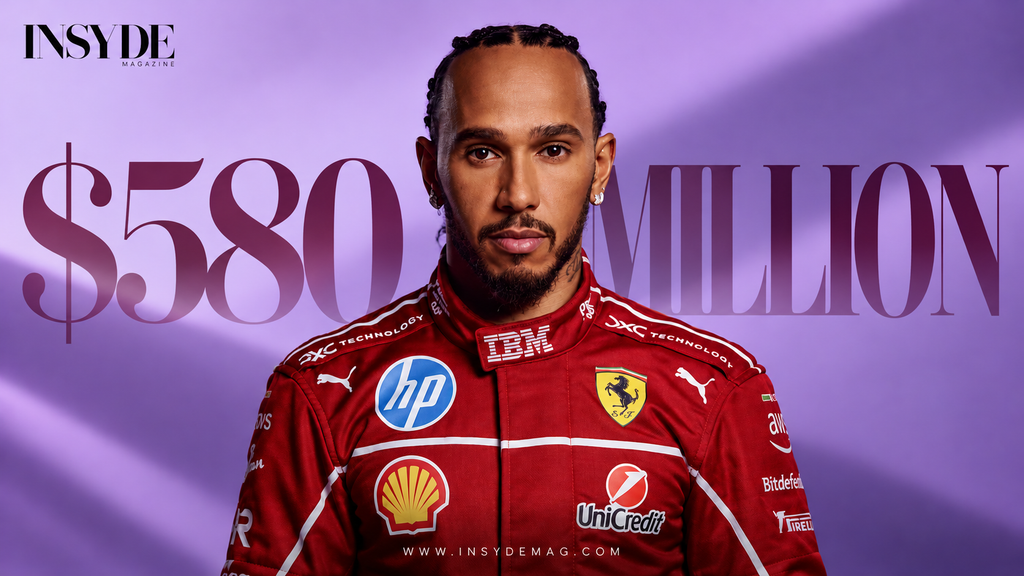
01. LEWIS HAMILTON
Estimated net worth: US$580 million
The champion who turned sporting excellence into global influence.
Few Formula 1 careers have combined longevity, achievement and cultural visibility quite like Lewis Hamilton’s. A seven-time world champion, Hamilton has spent nearly two decades at the centre of the sport, building a reputation that reaches beyond the circuit into fashion, entertainment and global brand culture.
According to F1 Salaries’ 2026 driver net-worth estimates, Hamilton’s estimated net worth is US$580 million, placing him first among active drivers in that publication’s ranking. The same source estimates his cumulative Formula 1 career earnings at approximately US$720.94 million. These are separate measurements: career earnings represent estimated pay accumulated over time, while net worth attempts to estimate the value of what an individual owns after financial obligations and spending.
His annual compensation provides another perspective. In Forbes’ ranking of the highest-paid Formula 1 drivers for 2025, Hamilton’s on-track earnings were estimated at US$70.5 million, comprising approximately US$70 million in salary and US$500,000 in bonuses. This is a 2025 estimate, not a verified statement of his 2026 salary.
Hamilton’s commercial appeal extends beyond race results. His involvement in fashion and wider cultural conversations has helped make him recognisable to audiences who may not follow every Grand Prix. That reach can be valuable to brands seeking an association with performance, individuality and international influence.
However, visibility alone does not establish the value of a private investment or endorsement contract. The complete details of Hamilton’s assets, liabilities and business holdings are not publicly available in an audited personal financial statement.
His position at the top of this estimate-based ranking reflects the cumulative earning potential of a long, successful career combined with a public profile that reaches well beyond motorsport.
INSYDE perspective: Hamilton represents the modern sporting icon as a global personal brand — an athlete whose influence crosses the boundaries between racing, luxury and culture.
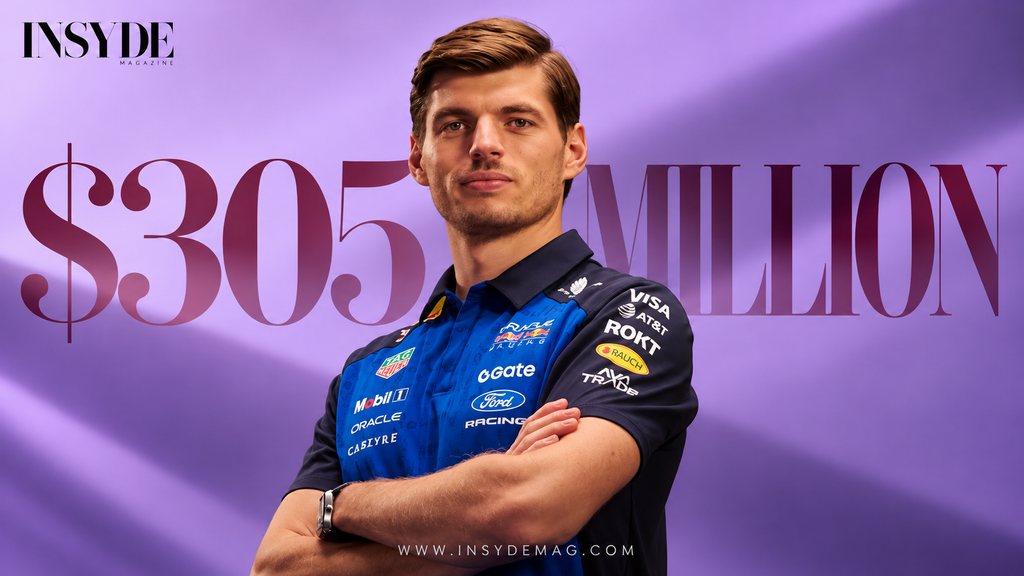
02. MAX VERSTAPPEN
Estimated net worth: US$305 million
Precision, dominance and the economics of winning.
Max Verstappen has built his reputation on uncompromising racecraft and sustained competitiveness. His success has also strengthened his position in Formula 1’s financial landscape, where elite performance can translate into larger contracts, bonuses and commercial opportunities.
F1 Salaries’ 2026 estimates place Verstappen’s estimated net worth at US$305 million, with cumulative Formula 1 career earnings of approximately US$471.61 million. These figures are the publication’s estimates rather than independently audited disclosures.
Verstappen’s annual earnings illustrate why the distinction between income and wealth matters. Forbes’ 2025 driver earnings ranking placed him first for on-track compensation, estimating US$76 million in salary and bonuses: approximately US$65 million in salary and US$11 million in bonuses.
That figure describes estimated compensation for one year, not his total personal fortune. Nor should it be presented as his confirmed 2026 income.
In Formula 1, a driver capable of consistently competing at the front occupies a scarce position. Teams invest in performance, experience and the possibility of championship success. A driver’s negotiating power can reflect that scarcity, although contract terms and bonus arrangements are not always fully disclosed.
Verstappen’s financial story is therefore closely linked to his competitive standing. His results have helped establish him as one of the sport’s defining figures, while his earning potential illustrates how success at the highest level can command extraordinary annual compensation.
The exact value of his private investments, property and individual commercial agreements remains uncertain. Those unknowns are one reason net-worth estimates should never be mistaken for a complete financial audit.
INSYDE perspective: Verstappen embodies the direct relationship between elite performance and financial leverage — a reminder that in Formula 1, a driver’s competitive value can be worth tens of millions in a single season.
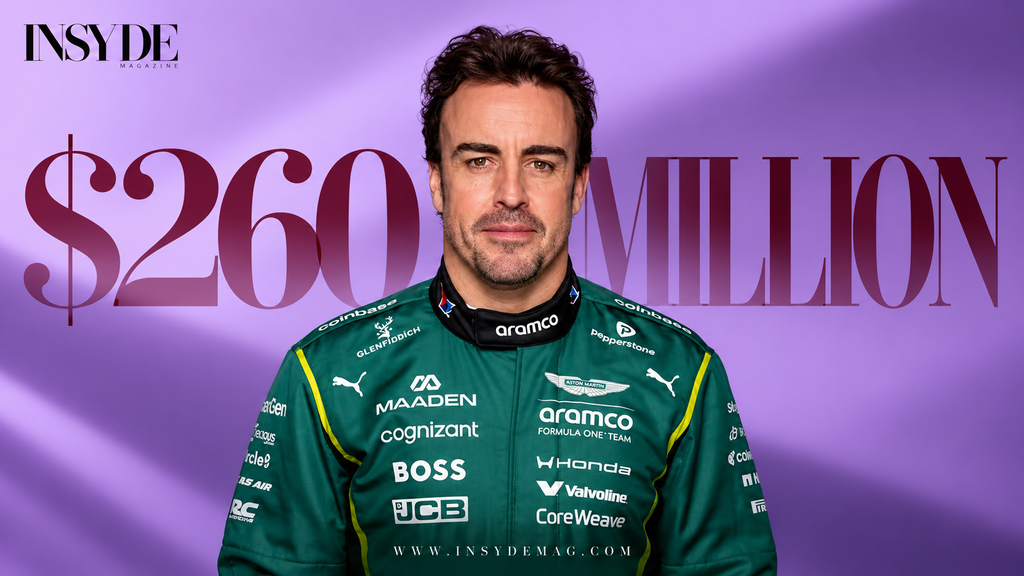
03. FERNANDO ALONSO
Estimated net worth: US$260 million
The long game can be worth a fortune.
Fernando Alonso’s career has spanned multiple generations of Formula 1. His longevity offers a different perspective on wealth in elite sport: a fortune can be built not only through championship-winning seasons, but also through sustained earning power over many years.
According to F1 Salaries’ 2026 estimates, Alonso’s estimated net worth stands at US$260 million. The same source places his cumulative Formula 1 career earnings at approximately US$594.79 million.
The contrast between those two figures is particularly revealing. Estimated career earnings measure income received over a professional career; estimated net worth attempts to measure current wealth. Taxes, fees, expenditure, investment outcomes and other financial obligations affect how much of that income translates into assets.
Alonso’s long tenure in the sport has given him opportunities to negotiate contracts across different competitive eras and maintain a high international profile. His experience also has value within a racing team, where technical feedback, racecraft and knowledge accumulated over thousands of competitive laps can be important assets.
Yet the public record does not reveal a complete picture of Alonso’s private investments, liabilities or property portfolio. His estimated net worth is consequently a useful indicator of his financial standing, not a definitive calculation of everything he owns.
His place on this list also illustrates why a single-season earnings table cannot tell the whole story. A driver may earn less than a younger rival in one year while having accumulated greater wealth across a longer career.
INSYDE perspective: Alonso is a case study in financial longevity — a career in which experience, sustained relevance and years of professional earning power have helped build a substantial estimated fortune.

04. CHARLES LECLERC
Estimated net worth: US$100 million
The Ferrari factor — and the value of a global stage.
Charles Leclerc competes for Ferrari, one of the most recognisable names in automotive and motorsport culture. That association places him within a brand environment where racing, engineering, design and luxury meet on a global stage.
F1 Salaries’ 2026 net-worth estimates place Leclerc’s estimated fortune at US$100 million, with cumulative Formula 1 career earnings of approximately US$171.15 million. Both numbers are third-party estimates and should be treated accordingly.
Leclerc’s financial position demonstrates that substantial wealth in Formula 1 is not restricted to the sport’s most decorated champions. Drivers can accumulate significant earnings through team contracts, performance incentives and commercial opportunities during their careers.
His Ferrari association also gives him international visibility beyond race weekends. For brands, a driver can represent speed, precision, ambition and a recognisable sporting identity. Those qualities can make a partnership commercially attractive, although the precise value of individual endorsement agreements is not always public.
It is important not to confuse the value of Ferrari as a brand with Leclerc’s personal wealth. The company’s commercial value belongs to the business and its shareholders; it is not a measure of the fortune of an individual driver.
Leclerc’s estimated net worth is also a snapshot rather than a projection. Future contracts, sporting results and investment decisions may change his financial position, but those outcomes cannot be reliably quantified in advance.
INSYDE perspective: Leclerc represents a newer generation of motorsport wealth — one built through elite competition and amplified by the visibility of one of the most powerful names in automotive culture.
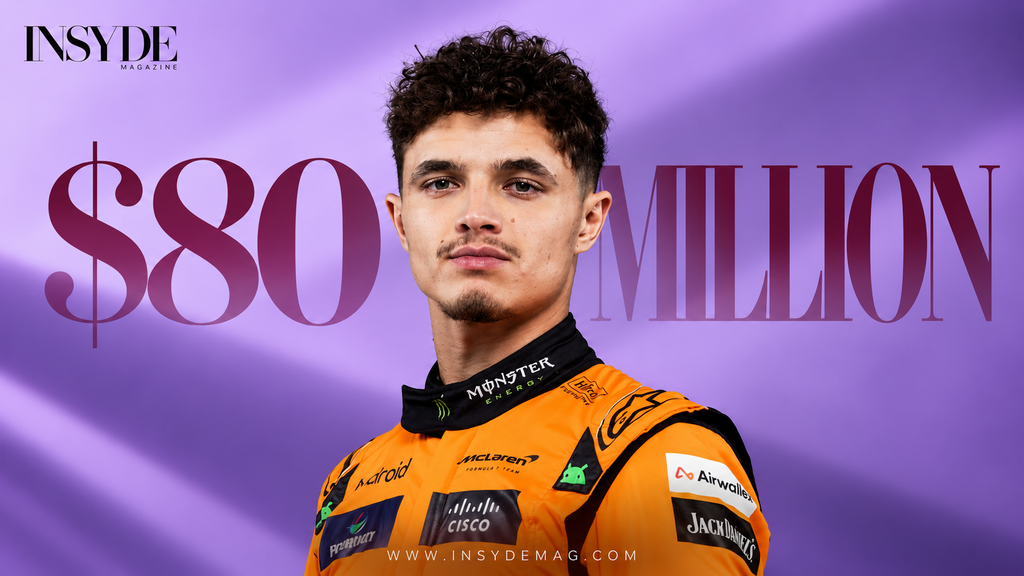
05. LANDO NORRIS
Estimated net worth: US$80 million
When performance bonuses change the numbers.
Lando Norris’s rise with McLaren has made him one of Formula 1’s most recognisable contemporary drivers. His first world championship, won in 2025, marked a defining moment in his sporting career and highlighted the financial importance that performance can carry in modern motorsport.
According to F1 Salaries’ 2026 estimates, Norris’s estimated net worth is US$80 million, while his cumulative Formula 1 career earnings are estimated at approximately US$200 million. These figures are not audited personal financial disclosures.
The difference between his estimated net worth and annual compensation is especially striking. Forbes’ 2025 highest-paid driver ranking estimated Norris’s on-track earnings at US$57.5 million for that year, comprising US$18 million in salary and US$39.5 million in performance bonuses.
Those estimates show how significantly bonuses can influence annual income. They do not mean that Norris added US$57.5 million to his personal wealth: taxes, expenses and other financial commitments affect how income translates into net worth.
Norris also belongs to a generation of drivers whose public identities are shaped by digital media, direct fan engagement and personality-led content as well as traditional sporting coverage. That visibility can increase commercial appeal, but the revenue generated by specific digital channels or endorsements should not be assumed without reliable evidence.
His financial position remains a developing story. A championship can strengthen negotiating power and create commercial opportunities, but future salaries, sponsorship income and investment returns cannot be treated as guaranteed.
INSYDE perspective: Norris illustrates how sporting success and performance-linked compensation can accelerate a driver’s earning power — even when accumulated wealth remains below that of more established veterans.
BEYOND THE PODIUM: THE BUSINESS OF BEING AN F1 DRIVER
The fortunes behind Formula 1’s biggest names reveal several different routes to wealth. Hamilton’s estimated fortune reflects an unusually long career and global cultural profile. Verstappen’s annual compensation demonstrates the financial value attached to elite performance. Alonso illustrates the power of longevity, while Leclerc and Norris show how fortunes can grow as newer generations establish themselves at the front of the sport.
The distinction between personal wealth and annual earnings is not a technicality. It changes the story.
In its 2025 highest-paid driver ranking, Forbes estimated Verstappen’s on-track compensation at US$76 million, ahead of Hamilton at US$70.5 million and Norris at US$57.5 million. Yet the 2026 net-worth estimates from F1 Salaries place Hamilton first, followed by Verstappen and Alonso.
There is no contradiction. The first list estimates compensation over one year; the second estimates accumulated wealth. Each answers a different question.
The broader commercial environment is also important. Liberty Media’s 2025 financial filing records Formula 1 revenue of US$3.873 billion. That scale helps explain the sport’s ability to attract major commercial partners and sustain a global audience, but it should not be confused with the amount paid to drivers.
Nor does a driver’s wealth represent the value of the team they race for. Team valuations, sponsor commitments and the commercial worth of Formula 1 are separate measures from an athlete’s private net worth.
Ultimately, a driver’s fortune reflects a combination of income and financial decisions made over time. Public estimates can indicate the broad scale of that wealth, but they cannot reveal every private asset, liability or investment. The most responsible ranking is therefore one that makes its assumptions visible rather than presenting estimates as unquestionable fact.
SPEED IS SEXY. WEALTH IS SEXIER.
In Formula 1, the stopwatch measures speed. The championship table measures performance. Neither tells the whole story of a driver’s financial life.
Fortunes accumulate through years of contracts, bonuses, sponsorships, business opportunities and decisions made far from the circuit. For some drivers, sporting success becomes a global personal brand. For others, longevity and consistency provide the foundation of their wealth. For all of them, the relationship between fame and money is more complex than a single headline figure.
The numbers in this ranking are estimates, but the wider lesson is clear: Formula 1 is a sport where extraordinary performance can create extraordinary commercial value.
Speed may earn the applause.
Wealth tells a longer story.
SOURCES & METHODOLOGY
Net-worth estimates: F1 Salaries — F1 Driver Net Worth 2026, updated 22 October 2026. The five net-worth figures and cumulative career-earnings estimates in this ranking come from this source for consistency.
Annual earnings: Forbes — Formula 1’s Highest-Paid Drivers 2025, published 9 December 2025 and updated 8 January 2026. The earnings figures cited in this article are Forbes estimates of 2025 salary and bonuses.
Formula 1’s official 2026 driver lineup: Formula1.com — 2026 Drivers.
Formula 1 financial results: Liberty Media Corporation — 2025 Annual Financial Filing.
Ranking methodology: This feature ranks active 2026 Formula 1 drivers using one published set of third-party net-worth estimates. Net worth and career earnings are distinct measures. All figures are in US dollars. Personal net worth is not publicly audited on a standardised basis, and other publishers may report materially different estimates. These figures should not be interpreted as verified personal financial statements.
Research cut-off: 24 October 2026. Net-worth figures reflect the cited provider’s latest available 2026 estimates at the research cut-off. Annual earnings figures refer specifically to 2025 and are not presented as confirmed 2026 salaries.
INSYDE MAGAZINE – The Number one Luxury Magazine in Bengaluru.
Luxury. Culture. People. What comes next.