Category: luxury automobiles.

  • DULQUER SALMAAN’S LOVE AFFAIR WITH CARS

    DULQUER SALMAAN’S LOVE AFFAIR WITH CARS

    From a childhood fascination with automobiles to an enviable collection of performance machines and modern classics, Dulquer Salmaan’s relationship with cars goes far beyond luxury. For the actor, it is a world of engineering, nostalgia, restoration and the enduring pleasure of driving.


    There is a difference between owning an extraordinary automobile and understanding what makes it extraordinary. For some, a luxury car is an expression of status. For others, it is an object of design, engineering and emotion — a machine whose character cannot be measured by its price tag alone.

    Dulquer Salmaan belongs to the latter category.

    One of Indian cinema’s most recognisable contemporary actors, Dulquer has built a reputation across Malayalam, Tamil, Telugu and Hindi films. Away from the screen, however, he has cultivated another identity: that of a passionate automobile enthusiast. His interest extends across generations of automotive engineering, from sought-after performance classics to contemporary supercars, with a particular appreciation for originality, mechanical character and the experience behind the wheel.

    His collection has attracted considerable attention over the years, with vehicles such as the BMW M3 E46, Mercedes-Benz SLS AMG, Porsche 911 GT3, Ferrari 296 GTB and Toyota Supra MK4 frequently appearing in media coverage. Yet, the more interesting story is not simply what occupies his garage. It is the relationship he has developed with these machines — one shaped by childhood memories, the thrill of driving and an instinct for collecting cars with character.

    In a 2023 conversation with Top Gear India, Dulquer offered an unusually personal look into that world. The interview revealed an enthusiast whose fascination with automobiles began long before his acting career, and whose appreciation for cars has little to do with simply acquiring the newest or most expensive model.

    A PASSION THAT STARTED IN CHILDHOOD

    For Dulquer, the attraction to automobiles was present from an early age. Growing up around cars and influenced by his father, Mammootty, and his maternal uncle, he developed an interest that gradually became an enduring passion.

    Speaking to Top Gear India in April 2023, he recalled the influence of his family and his uncle’s artistic interests, which included sketching cars and aircraft.

    “I think from the time I was born, my dad and my mama (my mom’s brother) were both strong influences upon me.”

    He also remembered how naturally he gravitated towards automobiles as a child. His mother would place him inside a car when he was unsettled, knowing that the experience would make him happy.

    His earliest driving memories are considerably more modest than the performance machines associated with him today. The first car he remembers driving was a Maruti 800. He recalled wanting to learn at around eight or nine years old, initially steering while sitting on his father’s lap before gradually learning how the gears and pedals worked.

    “The first car I probably drove was a Maruti 800.”

    The memory offers an interesting contrast to the exotic vehicles that would eventually become part of his automotive world. His fascination did not begin with a supercar or a luxury badge. It began with curiosity about the machine itself.

    Read the full conversation: Top Gear India — In Conversation with Dulquer Salmaan.

    THE MACHINES THAT DEFINE HIS AUTOMOTIVE WORLD

    Dulquer has never publicly confirmed a complete, up-to-date inventory of his collection. However, his own social-media posts and interviews, alongside reporting from publications including The Economic Times, NDTV and The Indian Express, have offered glimpses of several vehicles associated with him.

    Among the most recognisable are a 2002 BMW M3 E46, a 2011 Mercedes-Benz SLS AMG, a Porsche 911 GT3, a Ferrari 296 GTB and a Toyota Supra MK4.

    Each represents a different chapter in automotive design and engineering. Together, they offer a glimpse into the breadth of his interests.

    A DRIVING MACHINE FOR AGES.
    Image By BMW official

    BMW M3 E46: THE CROWN JEWEL

    Few cars are as closely associated with Dulquer’s public automotive identity as the 2002 BMW M3 E46.

    When introducing the car through a video shared with fellow enthusiasts, Dulquer described the E46 as his idea of peak BMW design. The model has become one of the most admired modern performance classics, celebrated for its naturally aspirated 3.2-litre inline-six engine, balanced chassis and engaging driving character.

    The E46 belongs to an era when performance engineering placed a particular emphasis on the relationship between the driver and the machine. Its proportions, mechanical character and understated aggression have helped it retain a devoted following among enthusiasts.

    For Dulquer, however, its importance is deeply personal.

    Speaking about his attachment to the car, he admitted:

    “I am really protective of this car. I am afraid to scratch it.”

    He went on to reveal that he had experienced genuine nightmares about the vehicle being stolen or vandalised. It is a striking admission from someone associated with a collection of highly desirable automobiles. The value of the E46, in this case, appears to extend well beyond its market price.

    In his original social-media post, he described it as one of the special cars he had managed to collect over the years, calling the E46 the peak of BMW.

    For collectors, certain automobiles become more than possessions. They represent a particular era, a personal memory or an experience that cannot easily be replicated. The M3 E46 appears to occupy precisely that position for Dulquer.

    Read The Indian Express report on Dulquer introducing his BMW M3 E46.

    The principle point of reference for this new two-seater was the original 300SL, the iconic Gullwing of the 1950s, and those signature doors are present and correct

    MERCEDES-BENZ SLS AMG: THE ART OF THE GULLWING

    Few modern Mercedes-Benz models make an entrance quite like the SLS AMG.

    With its dramatic gullwing doors, long bonnet and naturally aspirated 6.2-litre V8, the SLS AMG is a modern interpretation of the marque’s celebrated grand touring heritage. Its design draws inspiration from the legendary Mercedes-Benz 300 SL, while its AMG-developed engine gives it a distinctive identity of its own.

    Dulquer introduced his 2011 SLS AMG to enthusiasts through another of his social-media videos. Reflecting on the significance of the car, he described it as something he had once never imagined owning.

    He wrote:

    “This was something I never even dreamed of owning someday.”

    He also referred to the car as a future classic and described owning it as a privilege.

    “What an absolute privilege it is to be custodian of a Gullwing irrespective of which generation.”

    The word custodian is particularly revealing. It suggests an appreciation that goes beyond ownership — an understanding that certain automobiles carry a design and engineering legacy worth preserving.

    Read The News Minute’s report on Dulquer’s car collection and SLS AMG.

    Front and side view of a Porsche 911 GT3 in White.
    Image By Porsche official

    PORSCHE 911 GT3: BUILT FOR THE DRIVER

    If the BMW M3 E46 represents his appreciation for modern classics, the Porsche 911 GT3 reveals his interest in performance engineering at its most focused.

    The GT3 occupies a special position within the Porsche 911 family. Developed with a strong connection to motorsport engineering, it is designed around precision, driver feedback and performance rather than luxury alone.

    In his Top Gear India interview, Dulquer spoke particularly enthusiastically about the experience of driving his GT3, highlighting its manual transmission and naturally aspirated flat-six engine.

    “I love driving my GT3, because I mean I feel like it’s manual and it’s a high revving naturally aspirated flat six, it just feels like nothing else.”

    It is one of the most revealing comments in the conversation. Rather than focusing on acceleration figures or top speed, Dulquer describes the qualities that make a performance car engaging: the gearbox, the engine’s character and the connection between driver and machine.

    The naturally aspirated flat-six has become one of the defining characteristics of the GT3 experience. Its high-revving nature and distinctive sound offer something increasingly uncommon in an automotive landscape moving towards turbocharging and electrification.

    For an enthusiast who appreciates mechanical character, it is easy to understand the appeal.

    Ferrari 296 GTB - Dynamics
    Image By Ferrari Official

    FERRARI 296 GTB: A NEW GENERATION OF PERFORMANCE

    The Ferrari 296 GTB represents a different direction in the evolution of high-performance automobiles.

    Reported as one of the cars associated with Dulquer’s collection, the 296 GTB combines a 3.0-litre twin-turbocharged V6 engine with an electric motor, producing a combined output of approximately 830 cv.

    The model represents an important moment in Ferrari’s transition towards electrified performance. Rather than abandoning the performance philosophy for which the marque is known, the 296 GTB uses hybrid technology to enhance responsiveness, power delivery and overall performance.

    Its mid-engined configuration, sculpted proportions and advanced powertrain place it among the defining contemporary sports cars from Maranello.

    In the context of Dulquer’s reported automotive interests, the 296 GTB introduces an interesting contrast: a modern hybrid performance machine alongside older cars whose appeal lies in naturally aspirated engines and traditional mechanical engagement.

    Supra
    Image By Toyota Supra Official

    TOYOTA SUPRA MK4: THE JAPANESE PERFORMANCE ICON

    The Toyota Supra MK4 occupies an entirely different place in automotive culture.

    Produced during the 1990s, the fourth-generation Supra became internationally recognised for its design and engineering, particularly the legendary 2JZ engine family. The twin-turbocharged 2JZ-GTE variant developed an extraordinary reputation for strength, reliability and tuning potential.

    Its influence grew through motorsport, performance modifications and popular entertainment, turning the Supra into one of the most recognisable Japanese performance cars of its generation.

    Today, well-preserved examples are highly sought after by collectors, with originality and documented history playing an important role in their desirability.

    Its reported association with Dulquer’s collection is another indication that his automotive interests extend beyond European luxury marques. The Supra’s appeal is rooted in a different kind of enthusiast culture — one built around engineering potential, Japanese performance heritage and the legacy of an era.

    Vehicle selection and collection references are based on Dulquer’s public posts and published media reports. This is not a verified inventory of his current ownership.

    MORE THAN AN EXOTIC COLLECTION

    Perhaps the most revealing part of Dulquer’s automotive philosophy is his approach to collecting.

    In his Top Gear India conversation, he made it clear that his garage is not simply a collection of exotic automobiles. He explained that he enjoys finding used cars and restoring them, suggesting an interest in vehicles that might otherwise be overlooked.

    “It’s not only an exotic collection. I have a lot of used cars, I also restore cars.”

    The statement offers a more nuanced understanding of his passion. Collecting, for him, appears to involve the process of finding a particular automobile, understanding its history and bringing it back to a condition worth preserving.

    He also spoke about why he finds it difficult to sell cars. Finding a rare vehicle can take considerable effort, and there is no guarantee that the opportunity to acquire another example will come along.

    This is a familiar instinct among serious collectors. The value of a car is not always determined by its original price or current market valuation. Sometimes, its significance lies in the story of how it was found and the experience of owning it.

    His preference for retaining cars close to their original specifications further reinforces this philosophy.

    “I don’t like to tune my cars so much because my thinking is so long term that I keep them as close to stock as they age better.”

    It is a perspective that places preservation above excessive modification. In a culture where personalisation can often become an exercise in visual excess, maintaining a car’s original character is itself a statement of appreciation.

    For classic and performance-car enthusiasts, originality can contribute to historical significance, collectability and long-term desirability. More importantly, it preserves the engineering vision of the people who designed the automobile in the first place.

    THE THRILL OF THE DRIVE

    A collection can reveal what someone owns. The way they speak about driving reveals why they own it.

    In the same Top Gear India conversation, Dulquer discussed his preference for controlled drifting and the experience of taking a car sideways.

    “I love going sideways, I can drift, I find that more exciting than going at very high speeds.”

    He described the experience as an art, recalling how an early exposure to a handbrake turn had stayed with him.

    It is an interesting distinction. While the performance-car industry often celebrates top speed and acceleration figures, enthusiasts frequently find greater satisfaction in the balance and responsiveness of a vehicle.

    Dulquer also spoke about his appreciation for engine character, singling out the sound of a V10 as particularly memorable.

    “V10 I think! That’s the most amazing sounding engine.”

    The comment reflects a wider appreciation for the mechanical qualities that distinguish one automobile from another. An engine is not simply a source of power; its sound, response and character can become central to the driving experience.

    His enthusiasm for the Porsche GT3’s naturally aspirated flat-six reinforces that idea. For him, the appeal of a performance car is not restricted to what it can achieve on paper. It is about how it feels from behind the wheel.

    THE ROAD LESS TRAVELLED

    For an automobile enthusiast, the experience is not always about driving at the limit. Sometimes, the road itself becomes the destination.

    During his interview, Dulquer spoke about the Pacific Coast Highway in California, describing it as one of his favourite driving experiences. The coastal route, particularly the stretch between San Francisco and Los Angeles, offers a combination of dramatic landscapes, winding roads and the kind of scenery that makes a long drive memorable.

    He also recalled the sight of car clubs gathering along the route, adding another dimension to the experience.

    It is a reminder that automotive culture is as much about community and shared enthusiasm as it is about the machines themselves.

    From organised drives and classic-car gatherings to restoration communities and motorsport events, the world of automobiles brings together people who appreciate the same details: design, engineering, sound and the pleasure of driving.

    For someone whose interest began in childhood, those experiences are perhaps as important as the cars themselves.

    A COLLECTION WITHOUT A NUMBER

    How many cars does Dulquer Salmaan own?

    It is a question that has repeatedly followed the actor, partly because of the size and variety of the collection associated with him.

    In 2025, The Indian Express reported that actor Prithviraj Sukumaran had previously estimated Dulquer’s collection at around 50 to 60 cars. The estimate was attributed to Prithviraj and should not be treated as a verified inventory or a number confirmed by Dulquer himself.

    In his 2023 conversation with Top Gear India, Dulquer declined to reveal an exact figure.

    When asked about the size of his collection, he explained that it was not limited to exotic cars and spoke about the used vehicles he owns and restores. He eventually joked that revealing the number might get him into trouble.

    “This might get me into trouble.”

    The remark has since become one of the more memorable lines associated with his automotive collection.

    But perhaps an exact number would tell us very little. A collection built around rare finds, older vehicles and restoration projects is not necessarily static. Cars can be acquired, sold, rebuilt or kept away from public view.

    For Dulquer, the more meaningful part appears to be the experience of collecting rather than the number of vehicles that can be counted.

    Read The Indian Express report on Prithviraj’s estimate of Dulquer’s collection.

    THE VALUE OF A CAR’S HISTORY

    In the world of automobile collecting, rarity and performance are only part of the equation. Every exceptional machine carries a history, and understanding that history is just as important as appreciating what lies beneath its bonnet.

    For collectors entering the world of luxury automobiles, provenance deserves particular attention. Ownership records, registration documents, import clearances, service histories and verified transaction records form an essential part of a vehicle’s identity. They offer clarity about where a car has been, how it has been maintained and whether its ownership history stands up to scrutiny.

    As desirable automobiles increasingly move across international markets and private collections, the importance of careful verification has only grown. A rare model may capture attention through its design or engineering, but its documentation ultimately establishes confidence in its ownership.

    For those building a collection, the advice is straightforward: look beyond the badge, the specification and the asking price. Understand the car’s journey before making it part of your own.

    After all, collecting exceptional automobiles is not simply about acquiring something rare. It is about becoming a responsible custodian of its history.THE ROAD AHEAD

    Dulquer Salmaan’s relationship with automobiles offers a different perspective on celebrity luxury.

    His interest spans generations of automotive engineering, from the analogue character of a BMW M3 E46 to the modern hybrid performance of a Ferrari 296 GTB. He has spoken about restoring used vehicles, preserving original specifications, enjoying manual gearboxes and appreciating the sound and character of an engine.

    These details reveal an enthusiast whose interest is not limited to acquiring the newest or most expensive models. It is rooted in the experience of discovering a car, understanding what makes it special and enjoying the process of owning it.

    There is a certain romance in that approach. In an age increasingly defined by digital interfaces, electrification and automated driving technologies, the emotional connection between a driver and a machine remains an important part of automotive culture.

    For Dulquer, the appeal seems to lie in that connection — the feel of a manual gearbox, the sound of a naturally aspirated engine, the shape of a classic coupe and the satisfaction of preserving something worth keeping.

    The cars may be extraordinary, but the passion behind them is remarkably familiar to enthusiasts everywhere.

    Because, ultimately, a love affair with automobiles is rarely about how much a car costs. It is about how it makes you feel when you turn the key, engage the gears and find an open road.

    And for Dulquer Salmaan, that love affair appears to have started long before the spotlight — with no intention of slowing down.


    EDITORIAL SOURCES & FURTHER READING

    Editorial note: Vehicle ownership references reflect Dulquer Salmaan’s public statements, social-media posts and published reporting. They do not constitute a verified, complete or current inventory. Direct quotations are attributed to their original interviews or public statements.
  • SPEED IS SEXY, WEALTH IS SEXIER

    SPEED IS SEXY, WEALTH IS SEXIER

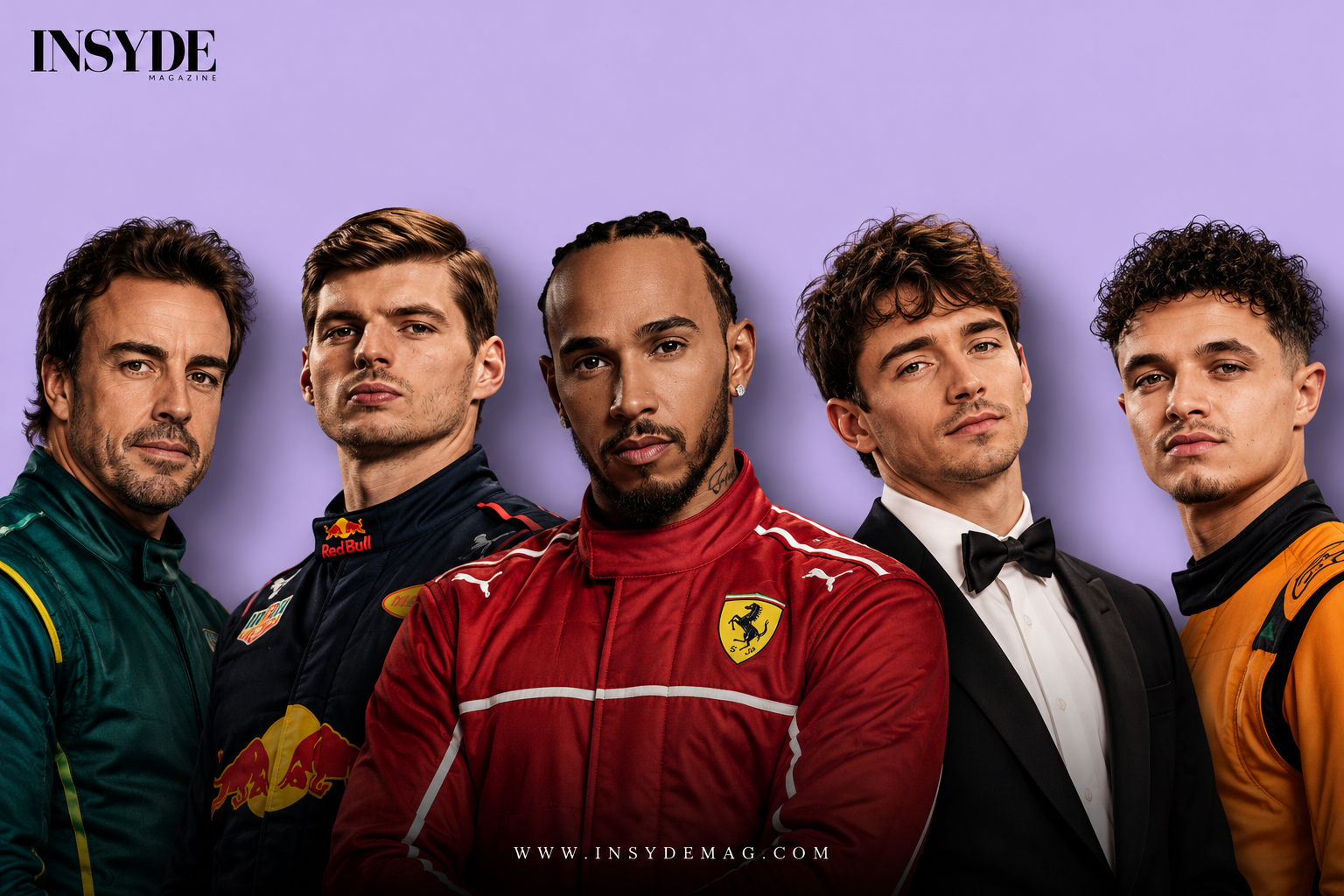
    The 5 Richest Formula 1 Drivers in the World in 2026

    Inside the fortunes, contracts and commercial power of Formula 1’s wealthiest active drivers.

    By INSYDE Magazine | Luxury, Culture & People

    In Formula 1, speed earns the headlines. Wealth tells a longer story.

    Behind the carbon fibre, champagne celebrations and immaculate paddock appearances lies a business built on extraordinary contracts, performance bonuses, global sponsorships and the commercial value of sporting fame. For the drivers at the top, success is no longer measured exclusively in championship points. It is also reflected in the fortunes they accumulate throughout their careers.

    Formula 1 has become a global entertainment powerhouse, attracting luxury houses, technology companies, financial institutions and international consumer brands. According to Liberty Media’s 2025 annual financial results, Formula 1 generated US$3.873 billion in revenue in 2025, up from US$3.411 billion in 2024. Operating income increased from US$492 million to US$632 million over the same period.

    Those figures describe the sport’s commercial business, not the personal income of its drivers. But they help explain why the people competing at its highest level have become valuable sporting and commercial assets in their own right.

    A driver’s financial position can be shaped by years of team contracts, championship bonuses, sponsorship agreements, business interests and investments. Yet one distinction matters: the highest-paid driver in a season is not necessarily the wealthiest driver overall. Annual earnings measure income over a period; net worth estimates the value of a person’s assets minus liabilities.

    So, who sits at the top of Formula 1’s financial grid in 2026?

    Using a single published set of 2026 net-worth estimates for consistency, INSYDE examines five of the sport’s wealthiest active drivers — and the different paths behind their fortunes.

    A note on the ranking: There is no public, audited register of Formula 1 drivers’ personal wealth. The figures in this feature are third-party estimates, not confirmed personal balance sheets. Other publishers use different assumptions and report different valuations. The ranking below should therefore be read as an estimate-based snapshot, not a definitive statement of each driver’s actual wealth.


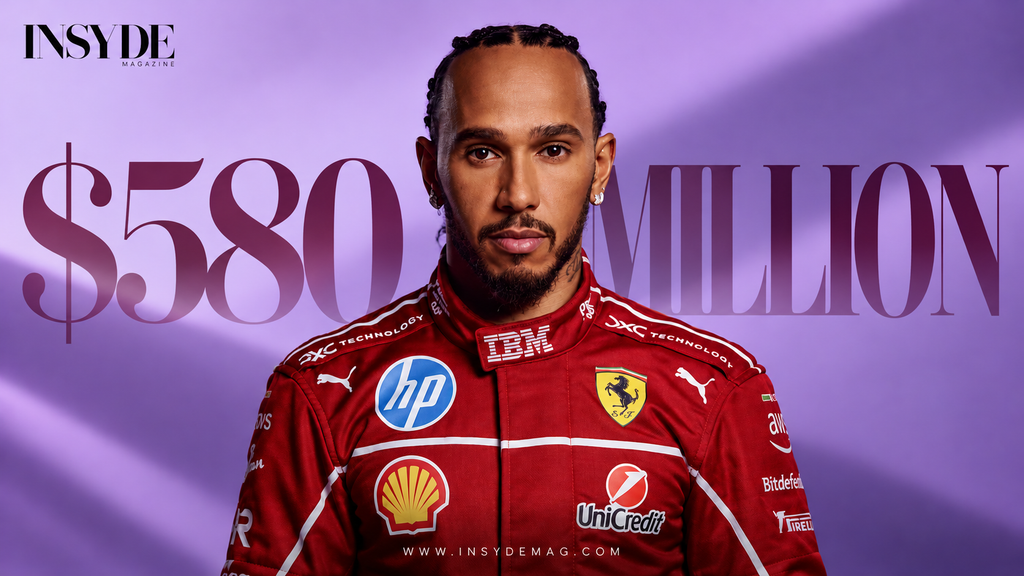
    01. LEWIS HAMILTON

    Estimated net worth: US$580 million

    The champion who turned sporting excellence into global influence.

    Few Formula 1 careers have combined longevity, achievement and cultural visibility quite like Lewis Hamilton’s. A seven-time world champion, Hamilton has spent nearly two decades at the centre of the sport, building a reputation that reaches beyond the circuit into fashion, entertainment and global brand culture.

    According to F1 Salaries’ 2026 driver net-worth estimates, Hamilton’s estimated net worth is US$580 million, placing him first among active drivers in that publication’s ranking. The same source estimates his cumulative Formula 1 career earnings at approximately US$720.94 million. These are separate measurements: career earnings represent estimated pay accumulated over time, while net worth attempts to estimate the value of what an individual owns after financial obligations and spending.

    His annual compensation provides another perspective. In Forbes’ ranking of the highest-paid Formula 1 drivers for 2025, Hamilton’s on-track earnings were estimated at US$70.5 million, comprising approximately US$70 million in salary and US$500,000 in bonuses. This is a 2025 estimate, not a verified statement of his 2026 salary.

    Hamilton’s commercial appeal extends beyond race results. His involvement in fashion and wider cultural conversations has helped make him recognisable to audiences who may not follow every Grand Prix. That reach can be valuable to brands seeking an association with performance, individuality and international influence.

    However, visibility alone does not establish the value of a private investment or endorsement contract. The complete details of Hamilton’s assets, liabilities and business holdings are not publicly available in an audited personal financial statement.

    His position at the top of this estimate-based ranking reflects the cumulative earning potential of a long, successful career combined with a public profile that reaches well beyond motorsport.

    INSYDE perspective: Hamilton represents the modern sporting icon as a global personal brand — an athlete whose influence crosses the boundaries between racing, luxury and culture.


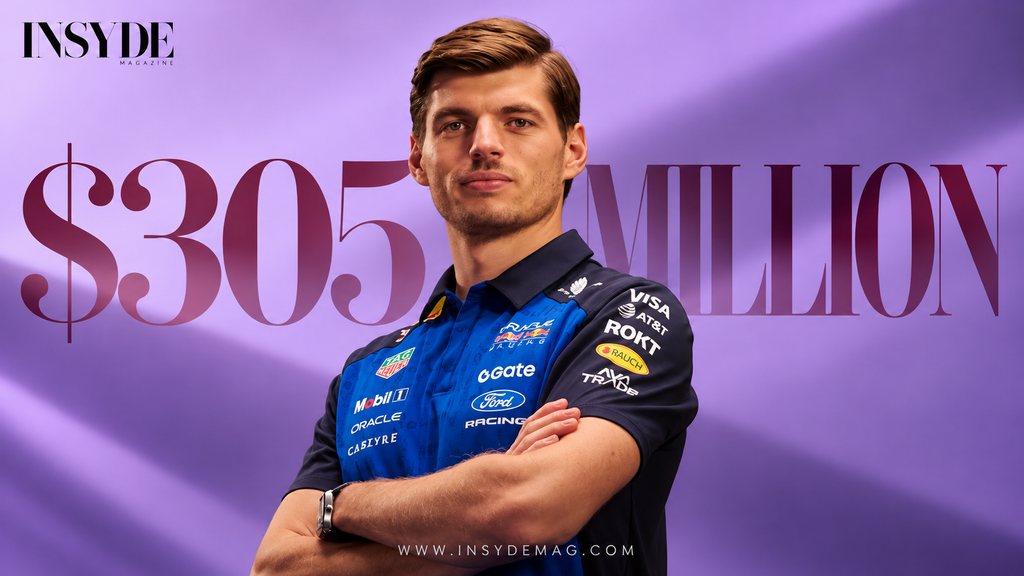
    02. MAX VERSTAPPEN

    Estimated net worth: US$305 million

    Precision, dominance and the economics of winning.

    Max Verstappen has built his reputation on uncompromising racecraft and sustained competitiveness. His success has also strengthened his position in Formula 1’s financial landscape, where elite performance can translate into larger contracts, bonuses and commercial opportunities.

    F1 Salaries’ 2026 estimates place Verstappen’s estimated net worth at US$305 million, with cumulative Formula 1 career earnings of approximately US$471.61 million. These figures are the publication’s estimates rather than independently audited disclosures.

    Verstappen’s annual earnings illustrate why the distinction between income and wealth matters. Forbes’ 2025 driver earnings ranking placed him first for on-track compensation, estimating US$76 million in salary and bonuses: approximately US$65 million in salary and US$11 million in bonuses.

    That figure describes estimated compensation for one year, not his total personal fortune. Nor should it be presented as his confirmed 2026 income.

    In Formula 1, a driver capable of consistently competing at the front occupies a scarce position. Teams invest in performance, experience and the possibility of championship success. A driver’s negotiating power can reflect that scarcity, although contract terms and bonus arrangements are not always fully disclosed.

    Verstappen’s financial story is therefore closely linked to his competitive standing. His results have helped establish him as one of the sport’s defining figures, while his earning potential illustrates how success at the highest level can command extraordinary annual compensation.

    The exact value of his private investments, property and individual commercial agreements remains uncertain. Those unknowns are one reason net-worth estimates should never be mistaken for a complete financial audit.

    INSYDE perspective: Verstappen embodies the direct relationship between elite performance and financial leverage — a reminder that in Formula 1, a driver’s competitive value can be worth tens of millions in a single season.


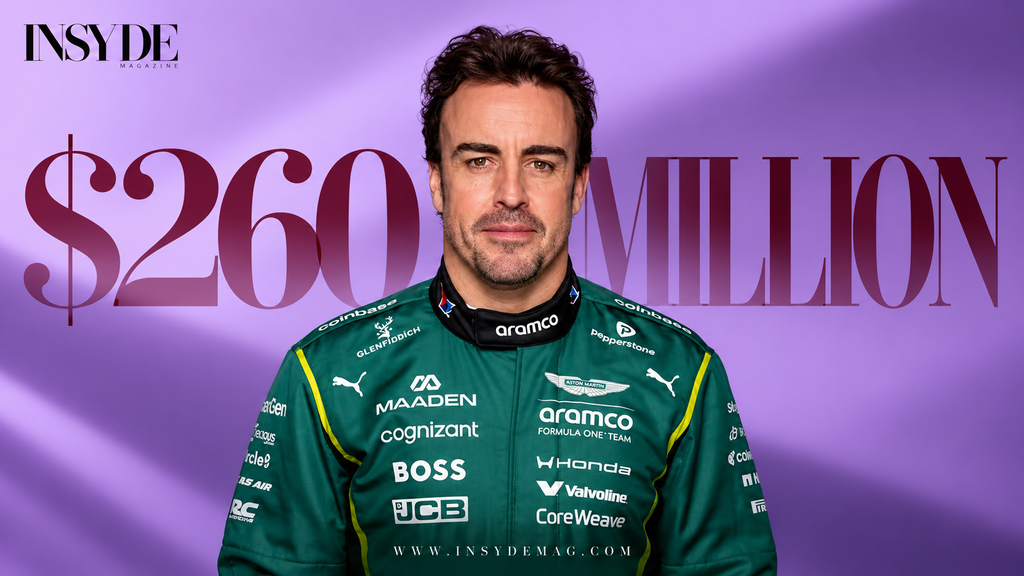
    03. FERNANDO ALONSO

    Estimated net worth: US$260 million

    The long game can be worth a fortune.

    Fernando Alonso’s career has spanned multiple generations of Formula 1. His longevity offers a different perspective on wealth in elite sport: a fortune can be built not only through championship-winning seasons, but also through sustained earning power over many years.

    According to F1 Salaries’ 2026 estimates, Alonso’s estimated net worth stands at US$260 million. The same source places his cumulative Formula 1 career earnings at approximately US$594.79 million.

    The contrast between those two figures is particularly revealing. Estimated career earnings measure income received over a professional career; estimated net worth attempts to measure current wealth. Taxes, fees, expenditure, investment outcomes and other financial obligations affect how much of that income translates into assets.

    Alonso’s long tenure in the sport has given him opportunities to negotiate contracts across different competitive eras and maintain a high international profile. His experience also has value within a racing team, where technical feedback, racecraft and knowledge accumulated over thousands of competitive laps can be important assets.

    Yet the public record does not reveal a complete picture of Alonso’s private investments, liabilities or property portfolio. His estimated net worth is consequently a useful indicator of his financial standing, not a definitive calculation of everything he owns.

    His place on this list also illustrates why a single-season earnings table cannot tell the whole story. A driver may earn less than a younger rival in one year while having accumulated greater wealth across a longer career.

    INSYDE perspective: Alonso is a case study in financial longevity — a career in which experience, sustained relevance and years of professional earning power have helped build a substantial estimated fortune.


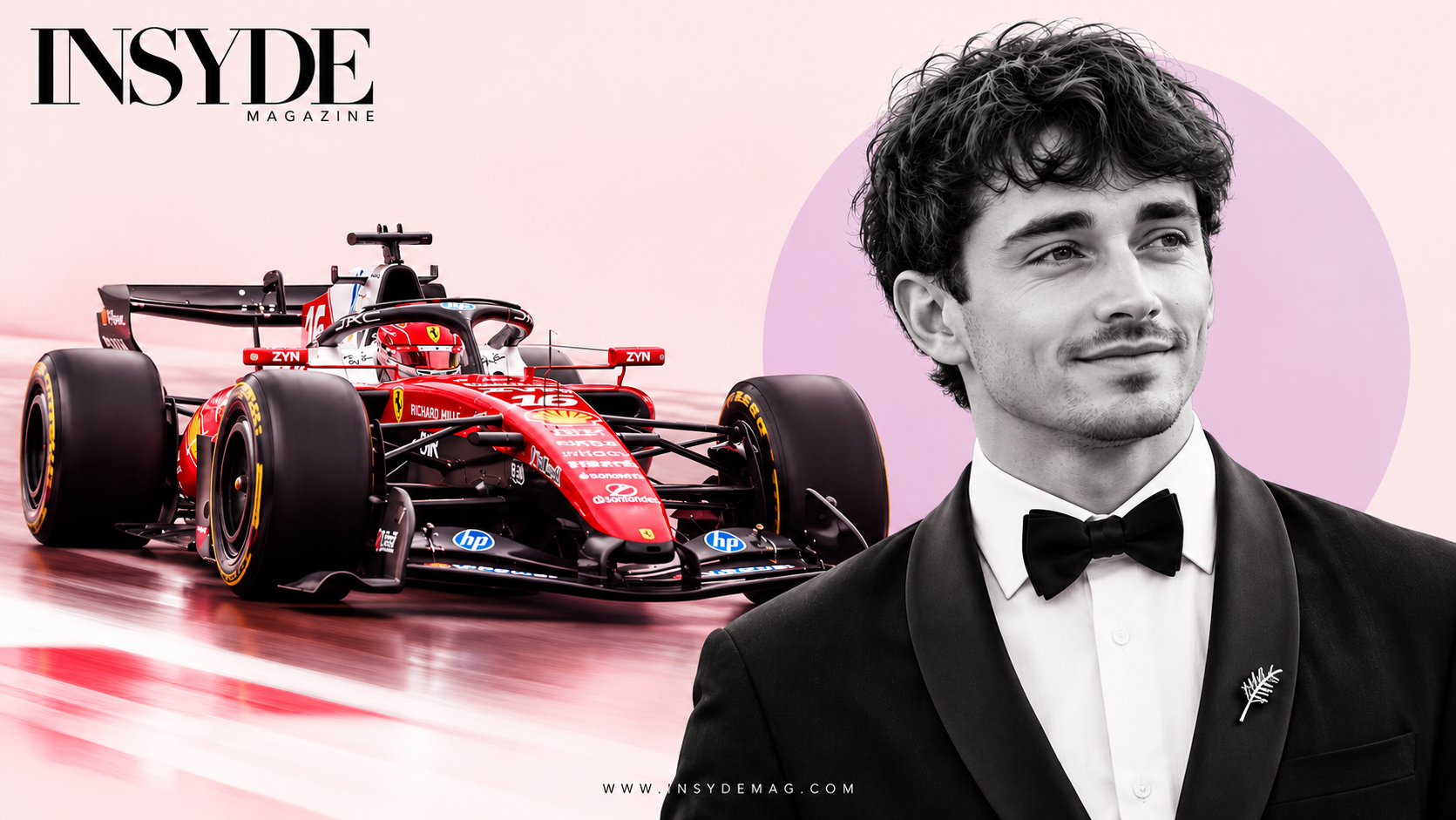
    04. CHARLES LECLERC

    Estimated net worth: US$100 million

    The Ferrari factor — and the value of a global stage.

    Charles Leclerc competes for Ferrari, one of the most recognisable names in automotive and motorsport culture. That association places him within a brand environment where racing, engineering, design and luxury meet on a global stage.

    F1 Salaries’ 2026 net-worth estimates place Leclerc’s estimated fortune at US$100 million, with cumulative Formula 1 career earnings of approximately US$171.15 million. Both numbers are third-party estimates and should be treated accordingly.

    Leclerc’s financial position demonstrates that substantial wealth in Formula 1 is not restricted to the sport’s most decorated champions. Drivers can accumulate significant earnings through team contracts, performance incentives and commercial opportunities during their careers.

    His Ferrari association also gives him international visibility beyond race weekends. For brands, a driver can represent speed, precision, ambition and a recognisable sporting identity. Those qualities can make a partnership commercially attractive, although the precise value of individual endorsement agreements is not always public.

    It is important not to confuse the value of Ferrari as a brand with Leclerc’s personal wealth. The company’s commercial value belongs to the business and its shareholders; it is not a measure of the fortune of an individual driver.

    Leclerc’s estimated net worth is also a snapshot rather than a projection. Future contracts, sporting results and investment decisions may change his financial position, but those outcomes cannot be reliably quantified in advance.

    INSYDE perspective: Leclerc represents a newer generation of motorsport wealth — one built through elite competition and amplified by the visibility of one of the most powerful names in automotive culture.


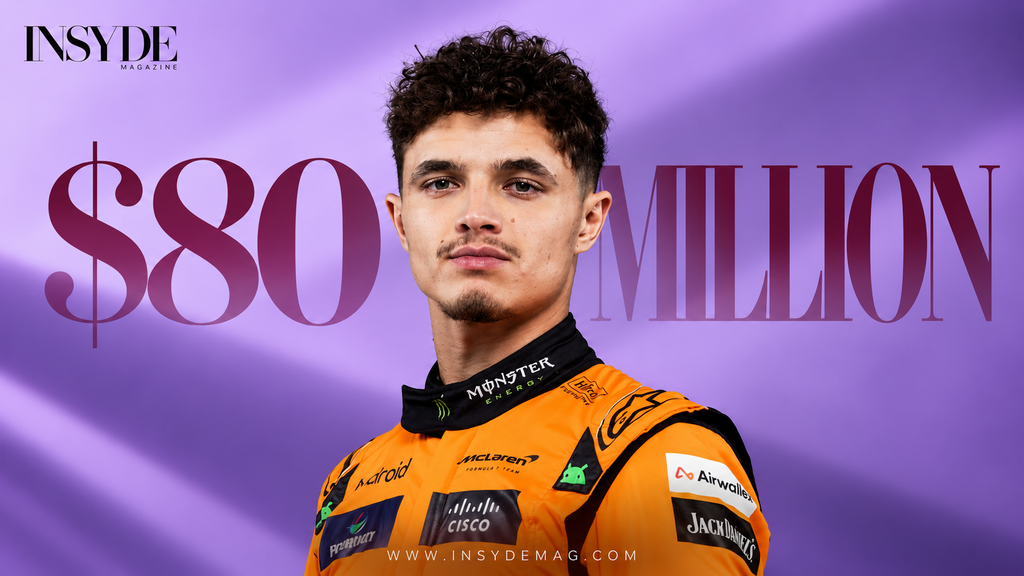
    05. LANDO NORRIS

    Estimated net worth: US$80 million

    When performance bonuses change the numbers.

    Lando Norris’s rise with McLaren has made him one of Formula 1’s most recognisable contemporary drivers. His first world championship, won in 2025, marked a defining moment in his sporting career and highlighted the financial importance that performance can carry in modern motorsport.

    According to F1 Salaries’ 2026 estimates, Norris’s estimated net worth is US$80 million, while his cumulative Formula 1 career earnings are estimated at approximately US$200 million. These figures are not audited personal financial disclosures.

    The difference between his estimated net worth and annual compensation is especially striking. Forbes’ 2025 highest-paid driver ranking estimated Norris’s on-track earnings at US$57.5 million for that year, comprising US$18 million in salary and US$39.5 million in performance bonuses.

    Those estimates show how significantly bonuses can influence annual income. They do not mean that Norris added US$57.5 million to his personal wealth: taxes, expenses and other financial commitments affect how income translates into net worth.

    Norris also belongs to a generation of drivers whose public identities are shaped by digital media, direct fan engagement and personality-led content as well as traditional sporting coverage. That visibility can increase commercial appeal, but the revenue generated by specific digital channels or endorsements should not be assumed without reliable evidence.

    His financial position remains a developing story. A championship can strengthen negotiating power and create commercial opportunities, but future salaries, sponsorship income and investment returns cannot be treated as guaranteed.

    INSYDE perspective: Norris illustrates how sporting success and performance-linked compensation can accelerate a driver’s earning power — even when accumulated wealth remains below that of more established veterans.


    BEYOND THE PODIUM: THE BUSINESS OF BEING AN F1 DRIVER

    The fortunes behind Formula 1’s biggest names reveal several different routes to wealth. Hamilton’s estimated fortune reflects an unusually long career and global cultural profile. Verstappen’s annual compensation demonstrates the financial value attached to elite performance. Alonso illustrates the power of longevity, while Leclerc and Norris show how fortunes can grow as newer generations establish themselves at the front of the sport.

    The distinction between personal wealth and annual earnings is not a technicality. It changes the story.

    In its 2025 highest-paid driver ranking, Forbes estimated Verstappen’s on-track compensation at US$76 million, ahead of Hamilton at US$70.5 million and Norris at US$57.5 million. Yet the 2026 net-worth estimates from F1 Salaries place Hamilton first, followed by Verstappen and Alonso.

    There is no contradiction. The first list estimates compensation over one year; the second estimates accumulated wealth. Each answers a different question.

    The broader commercial environment is also important. Liberty Media’s 2025 financial filing records Formula 1 revenue of US$3.873 billion. That scale helps explain the sport’s ability to attract major commercial partners and sustain a global audience, but it should not be confused with the amount paid to drivers.

    Nor does a driver’s wealth represent the value of the team they race for. Team valuations, sponsor commitments and the commercial worth of Formula 1 are separate measures from an athlete’s private net worth.

    Ultimately, a driver’s fortune reflects a combination of income and financial decisions made over time. Public estimates can indicate the broad scale of that wealth, but they cannot reveal every private asset, liability or investment. The most responsible ranking is therefore one that makes its assumptions visible rather than presenting estimates as unquestionable fact.

    SPEED IS SEXY. WEALTH IS SEXIER.

    In Formula 1, the stopwatch measures speed. The championship table measures performance. Neither tells the whole story of a driver’s financial life.

    Fortunes accumulate through years of contracts, bonuses, sponsorships, business opportunities and decisions made far from the circuit. For some drivers, sporting success becomes a global personal brand. For others, longevity and consistency provide the foundation of their wealth. For all of them, the relationship between fame and money is more complex than a single headline figure.

    The numbers in this ranking are estimates, but the wider lesson is clear: Formula 1 is a sport where extraordinary performance can create extraordinary commercial value.

    Speed may earn the applause.

    Wealth tells a longer story.


    SOURCES & METHODOLOGY

    Net-worth estimates: F1 Salaries — F1 Driver Net Worth 2026, updated 22 October 2026. The five net-worth figures and cumulative career-earnings estimates in this ranking come from this source for consistency.

    Annual earnings: Forbes — Formula 1’s Highest-Paid Drivers 2025, published 9 December 2025 and updated 8 January 2026. The earnings figures cited in this article are Forbes estimates of 2025 salary and bonuses.

    Formula 1’s official 2026 driver lineup: Formula1.com — 2026 Drivers.

    Formula 1 financial results: Liberty Media Corporation — 2025 Annual Financial Filing.

    Ranking methodology: This feature ranks active 2026 Formula 1 drivers using one published set of third-party net-worth estimates. Net worth and career earnings are distinct measures. All figures are in US dollars. Personal net worth is not publicly audited on a standardised basis, and other publishers may report materially different estimates. These figures should not be interpreted as verified personal financial statements.
    Research cut-off: 24 October 2026. Net-worth figures reflect the cited provider’s latest available 2026 estimates at the research cut-off. Annual earnings figures refer specifically to 2025 and are not presented as confirmed 2026 salaries.

    INSYDE MAGAZINE – The Number one Luxury Magazine in Bengaluru.

    Luxury. Culture. People. What comes next.

    WWW.INSYDEMAG.COM

  • CHARLES LECLERC: FIVE CARS, ONE OBSESSION

    CHARLES LECLERC: FIVE CARS, ONE OBSESSION

    From a road-legal machine inspired by Ferrari’s experimental racing programme to a classic V12 grand tourer, Charles Leclerc’s reported collection offers a closer look at the engineering, heritage and exclusivity behind the Prancing Horse.

    INSYDE | PEOPLE · AUTOMOBILES · LUXURY


    For Charles Leclerc, Ferrari is more than the name stitched across a racing suit. It is the marque at the centre of his professional life—and, judging by the cars he has been reported to own, a significant part of his personal automotive world.

    The Monégasque driver has been associated with some of Maranello’s most compelling road cars: the SF90 XX Stradale, the Daytona SP3, the 488 Pista Spider, the 812 Competizione A and a classic Ferrari 275 GTB. They span different generations of engineering and represent very different ideas of what makes a car extraordinary.

    Some are defined by advanced aerodynamics and hybrid power. Others celebrate naturally aspirated engines, sculptural design or a connection to Ferrari’s racing past. Their common thread is not simply speed or scarcity, but the way each car expresses a particular side of the Ferrari identity.

    That makes Leclerc’s collection worth examining beyond the usual supercar spectacle. These are not interchangeable symbols of wealth. Each represents a distinct chapter in the evolution of one of the world’s most recognisable automotive names.

    01. Ferrari SF90 XX Stradale — The Road Car That Thinks Like a Race Car

    Few modern Ferraris illustrate the company’s pursuit of performance as clearly as the SF90 XX Stradale.

    Unveiled in 2023, the model brought Ferrari’s XX philosophy into a road-legal production car for the first time. The XX programme had traditionally been associated with highly specialised machines developed for selected clients to explore extreme performance on the circuit. The SF90 XX Stradale translates that thinking into a car that can also be driven on public roads.

    Its powertrain combines a 4.0-litre twin-turbocharged V8 with three electric motors. Ferrari quotes a combined output of 1,030 cv, a claimed 0–100 km/h time of 2.3 seconds and a top speed of 320 km/h.

    The engineering story, however, extends beyond the power figure. A fixed rear wing—an unusual feature for a modern road-going Ferrari—works with the car’s wider aerodynamic package to generate up to 530 kg of downforce at 250 km/h. The result is a machine designed to produce substantial aerodynamic grip while retaining the systems required for road use.

    Production is limited to 799 coupés, alongside 599 examples of the open-top SF90 XX Spider. That scarcity places the car within Ferrari’s most exclusive contemporary offerings, although limited production should not automatically be interpreted as a guarantee of future investment returns.

    Leclerc’s personalised example has been widely reported in a satin-black finish with red details, accents inspired by Monaco’s flag and his racing number, 16. The specification gives the car an individual identity while retaining the unmistakable visual language of Ferrari.

    What makes the SF90 XX Stradale especially compelling is the contrast between its technological complexity and its underlying purpose. Electrification is not simply an efficiency measure here; it forms part of a performance system designed to make the car faster and more capable.

    For a driver whose professional life is spent extracting performance from a Formula 1 car, the SF90 XX offers a road-going interpretation of the same pursuit: precision, control and speed shaped by engineering.

    02. Ferrari Daytona SP3 — A Modern Tribute to Racing History

    The Daytona SP3 approaches performance from a different direction.

    Part of Ferrari’s Icona series, it takes inspiration from the company’s endurance-racing heritage and reinterprets that history through a contemporary design. Its sculpted surfaces, low profile and dramatic proportions give it a presence that feels closer to a moving piece of automotive design than a conventional modern supercar.

    Beneath the bodywork sits a naturally aspirated 6.5-litre V12. Ferrari quotes 840 cv at 9,250 rpm, a maximum engine speed of 9,500 rpm and a claimed 0–100 km/h time of 2.85 seconds. The company lists a top speed exceeding 340 km/h.

    Those numbers are impressive, but the Daytona SP3’s character is about more than acceleration. Its V12 delivers a different kind of experience from the hybrid-assisted powertrain of the SF90 XX Stradale. Rather than combining combustion and electric power, it places the sound, response and high-revving character of a naturally aspirated engine at the centre of the experience.

    The Daytona SP3 is limited to 599 examples. Its place in Ferrari’s Icona family also gives it a distinct role: these cars draw from the marque’s history without simply reproducing an old design.

    Leclerc has been reported with a personalised Daytona SP3 finished in matte black, with red and white details associated with Monaco and his racing number. The car’s specification echoes the individual identity of his SF90 XX, despite the two models having very different engineering philosophies.

    The Daytona SP3 represents Ferrari looking backwards to move forwards. Its design recalls the company’s racing past, while its powertrain and construction belong firmly to the modern era.

    For collectors, that combination of heritage, rarity and contemporary engineering is central to its appeal. For Leclerc, it provides another expression of the marque that defines his professional career.

    03. Ferrari 488 Pista Spider — Performance Without a Roof

    Not every exceptional Ferrari needs hybrid technology or a limited-edition design programme to make its case.

    The 488 Pista Spider is a more direct expression of performance, built around the 488 platform and developed with a sharper focus on weight, aerodynamics and driver involvement.

    Its 3.9-litre twin-turbocharged V8 produces 720 cv at 8,000 rpm, according to Ferrari’s published specifications. The company quotes a 0–100 km/h time of 2.85 seconds and a top speed of 340 km/h.

    The Pista’s development drew on Ferrari’s experience in motorsport, including the aerodynamic and engine work associated with its Challenge racing programme. Changes to the intake layout, lightweight components and other technical details were intended to improve the car’s performance beyond that of the standard 488 Spider.

    The Spider configuration adds another dimension. With the roof removed, the relationship between the driver and the engine becomes more immediate. Sound, airflow and the surrounding environment become part of the experience, giving the car a character distinct from that of a closed-cockpit track-focused machine.

    Leclerc’s personalised Pista Spider has been reported in a dark finish with red accents, consistent with the visual theme seen on several of his other Ferraris.

    Within the collection, it occupies an interesting middle ground. It is less technologically complex than the SF90 XX Stradale and less explicitly heritage-focused than the Daytona SP3. Its appeal lies in the connection between a powerful combustion engine, an open roof and a chassis developed around performance.

    It is a reminder that the appeal of a sports car cannot always be reduced to a headline power figure. The way a car communicates with its driver is part of what makes it memorable.

    04. Ferrari 812 Competizione A — The V12 at the Centre of the Experience

    The Ferrari 812 Competizione A represents one of the most distinctive traditions in Maranello’s road-car history: the high-performance, front-engined V12.

    Developed from the 812 Superfast, the Competizione is a more focused interpretation of Ferrari’s large-engined grand touring formula. The Competizione A is its open-top targa counterpart, combining the same performance-led character with the option of open-air driving.

    Its naturally aspirated 6.5-litre V12 produces 830 cv at 9,250 rpm and can reach 9,500 rpm. Ferrari quotes a 0–100 km/h time of 2.85 seconds and a maximum speed exceeding 340 km/h for the Competizione family.

    The engine is central to the car’s identity. Rather than using turbocharging or hybrid assistance, Ferrari developed the V12 through revisions to components including the con-rods, pistons, crankshaft and intake system. The objective was to improve performance and responsiveness across the rev range while preserving the character of a high-revving naturally aspirated engine.

    The Competizione A is limited to 599 examples. Leclerc has been reported with a personalised example in matte white, with exposed carbon-fibre details and his number, 16.

    That specification gives the car a more understated appearance than some of the darker machines in his collection, while still connecting it to his personal visual identity.

    The Competizione A also captures a particular moment in performance-car development. As electrification becomes increasingly important to the industry, naturally aspirated V12 models remain significant expressions of an engineering philosophy built around engine response, sound and mechanical character.

    Its appeal is not simply that it is powerful or rare. It represents an increasingly specialised interpretation of the grand touring Ferrari: a car in which the engine itself remains the main event.

    05. Ferrari 275 GTB — When History Becomes Part of the Drive

    The classic Ferrari 275 GTB brings the collection into a different era.

    Introduced in the 1960s, the 275 GTB belongs to a period when Ferrari was developing increasingly sophisticated road cars while maintaining a close relationship with competition engineering. Its long bonnet, sculptural bodywork and restrained proportions stand in sharp contrast to the complex aerodynamic surfaces of a modern supercar.

    The model was powered by a 3.3-litre Colombo V12. Its engineering included a rear transaxle layout, helping with weight distribution, and independent suspension on all four wheels—features that contributed to the evolution of Ferrari’s road cars.

    The 275 GTB was produced in multiple configurations, so production numbers and market values depend on the exact version. Certain examples, particularly those with desirable specifications, documented provenance and original components, have achieved multimillion-dollar prices at specialist auctions.

    Leclerc’s connection with the model has attracted attention because of his own comments about driving a restored 275 GTB at Ferrari’s Fiorano test circuit. In comments reported by Motorsport.com, he described the experience as pure driving pleasure and reflected on how much automotive engineering has changed since the car’s era.

    That observation is particularly revealing coming from a modern Formula 1 driver.

    Today’s performance cars rely on sophisticated electronic controls, advanced materials and complex powertrains. A classic Ferrari communicates differently. The engine, steering, brakes and mechanical responses create a more direct relationship between the driver and the machine.

    The 275 GTB therefore offers something that a modern performance figure cannot fully capture: the experience of encountering a different period of automotive history from behind the wheel.

    Its desirability also illustrates why collector-car values are shaped by more than age or rarity. Originality, condition, provenance, specification and the quality of restoration can all influence a car’s position in the market.

    For Leclerc, the appeal of a classic Ferrari sits alongside the technology of his modern machines. It suggests an interest in the evolution of the automobile, not simply its latest performance benchmark.

    The Ferrari Connection: Five Cars, Different Philosophies

    Viewed together, these five Ferraris reveal the breadth of the marque’s appeal.

    The SF90 XX Stradale represents the convergence of hybrid technology, aerodynamics and track-focused engineering. The Daytona SP3 reinterprets racing heritage through a limited-production modern design. The 488 Pista Spider focuses on performance and open-air engagement. The 812 Competizione A celebrates the naturally aspirated V12, while the 275 GTB offers a connection to an earlier generation of automotive engineering.

    Their differences are as important as their shared badge.

    Ferrari’s identity has been built across decades of racing, road-car development, design and brand storytelling. Its most exclusive cars do not all pursue the same goal. Some are technical showcases; others are celebrations of heritage, engine character or a particular design philosophy.

    Leclerc’s reported collection brings those ideas into a single personal context. His relationship with Ferrari begins on the Formula 1 circuit, but the road cars associated with him reveal the many ways the company translates its identity into machines designed for private ownership.

    That is what makes the collection interesting beyond its price tags. It provides a way to understand Ferrari not as a single idea of speed or luxury, but as a family of distinct automotive experiences.

    Beyond the Price Tag

    The luxury-car market often reduces extraordinary vehicles to three numbers: horsepower, production volume and price. Those figures matter, but they do not tell the whole story.

    A limited production run does not guarantee appreciation. Auction estimates are not the same as completed transactions, and a car’s eventual value can depend heavily on condition, provenance, originality, maintenance history and wider market demand. Ownership also brings substantial costs that extend beyond the purchase price.

    The more meaningful question is what makes a particular machine desirable in the first place.

    In Leclerc’s case, the answer appears to lie in the variety of Ferrari’s engineering and design philosophies. These cars offer different ways to experience performance, from the digital precision of a hybrid supercar to the analogue character of a classic V12.

    They also illustrate why automotive collecting is not simply about acquiring the most expensive object available. For many enthusiasts, the connection to engineering, history and the experience of driving is what gives a car its lasting significance.

    The Final Word

    Charles Leclerc’s reported Ferrari collection offers a portrait of a driver whose professional world and personal automotive interests meet under the same emblem.

    The SF90 XX Stradale looks towards the future of performance engineering. The Daytona SP3 brings Ferrari’s racing history into a modern form. The 488 Pista Spider and 812 Competizione A explore two different expressions of high-performance combustion power, while the 275 GTB reminds us that the emotional appeal of a car can endure long after its technology has been surpassed.

    Together, they show why Ferrari’s position in the luxury world cannot be explained by speed alone. Its appeal rests on the relationship between engineering, design, heritage and the individual character of each machine.

    For Leclerc, the Prancing Horse is the symbol on his racing suit. In the cars associated with his private collection, it becomes something more personal: a continuing connection to the machines and ideas that make Ferrari what it is.

    INSYDE explores the people, machines and ideas shaping contemporary luxury.
    INSYDE – the number one luxury magazine in Bangalore


    Editorial sourcing note: Technical specifications in this article are based on Ferrari’s published materials. Details about Leclerc’s personal vehicles are based on public automotive reporting and should be understood as reported ownership, not an independently audited inventory. No total collection valuation is asserted.

  • PORSCHE MISSION S: DESIRE, REDEFINED

    PORSCHE MISSION S: DESIRE, REDEFINED

    The future of performance, prestige and exclusivity.

    INSYDE | AUTOMOTIVE | LUXURY

    There is a particular kind of desire that cannot be manufactured through numbers alone. It emerges from the curve of a body, the precision of a detail and the feeling that a machine has been created for something more than transportation.

    For Porsche, that feeling has long been embodied by the 911. Its unmistakable silhouette has endured for more than six decades, evolving through successive generations without abandoning the identity that made it an icon.

    But even an icon must make room for the future.

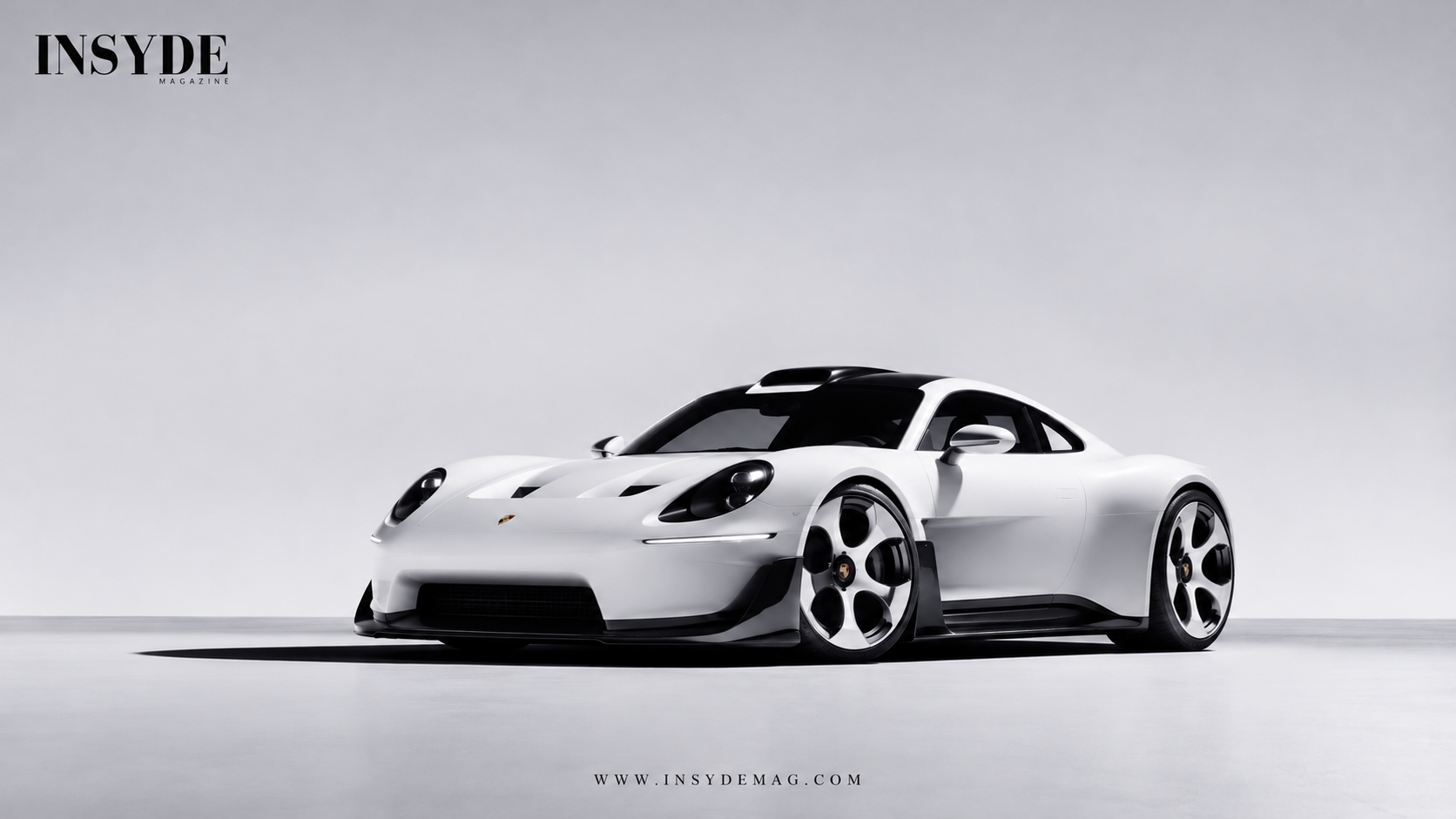
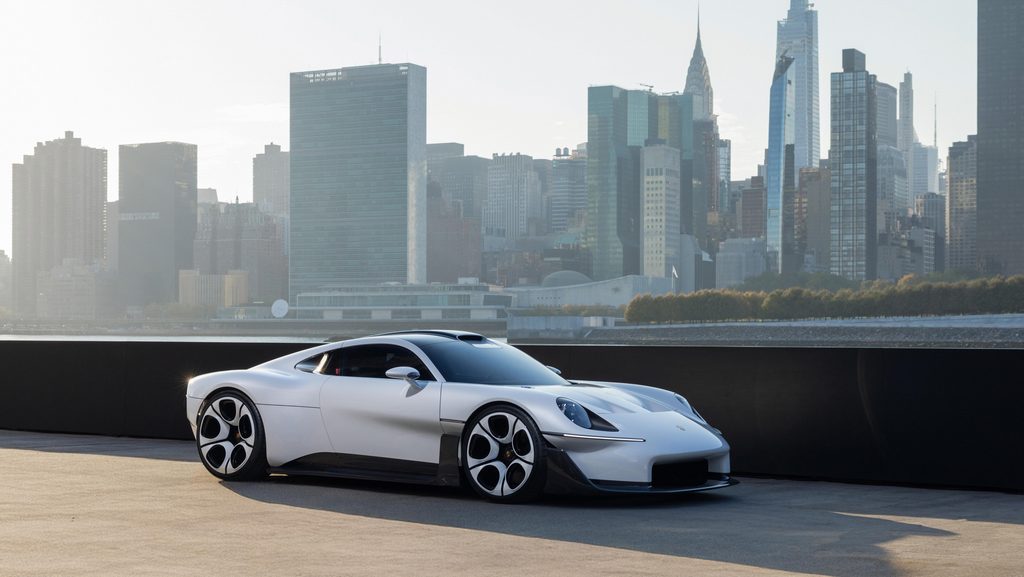
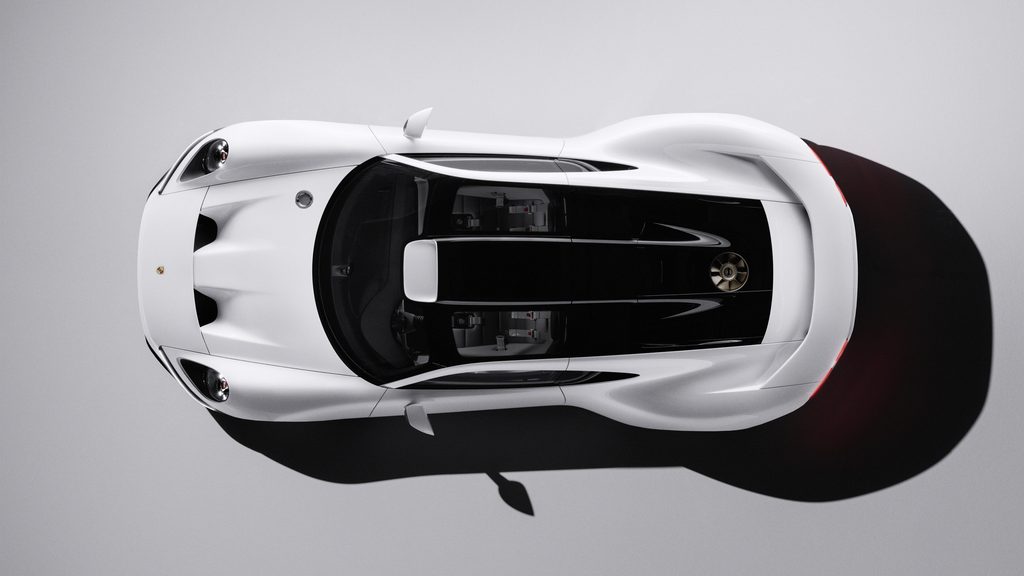
    On 15 October 2026, Porsche unveiled the Mission S, a vision model offering a first look at the next evolution of its design philosophy. With a mid-engined architecture, sculptural proportions and an interior that deliberately balances analogue character with digital functionality, the Mission S presents a different expression of the Porsche sports car.

    It is not simply a styling exercise. Porsche has announced the development of a new mid-engined super-sports-car platform positioned above the 911, intended as a permanent and versatile addition to its customer offering rather than a one-off hypercar.

    The announcement arrives as the company pursues a broader strategic shift towards higher-value products, greater exclusivity and stronger profitability.

    For INSYDE, the Mission S offers two stories in one: the design of a compelling new sports-car vision and the changing business of luxury itself.

    Because the question surrounding Porsche is no longer simply how fast a sports car can go.

    It is how a brand with such an established identity creates something new that people genuinely want.

    01. THE ART OF FIRST IMPRESSIONS

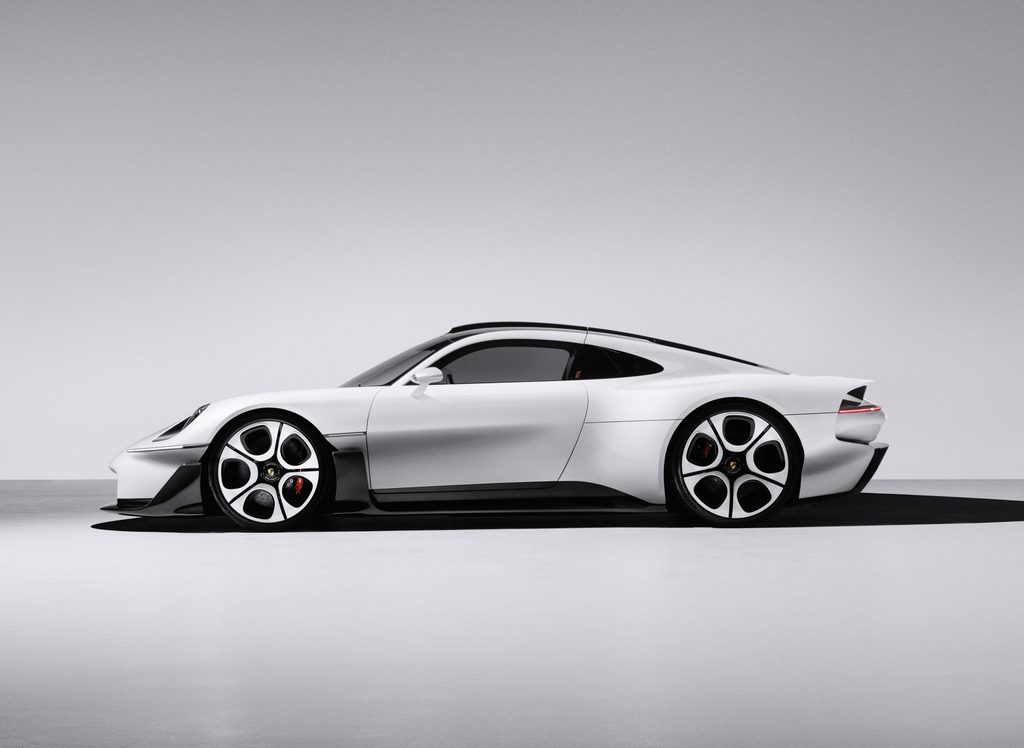
    A Porsche should be recognisable before its badge is visible. That principle sits at the heart of the Mission S, whose exterior reinterprets familiar elements of the brand’s design language through a more dramatic, mid-engined silhouette.

    The front is defined by round headlights and characteristic torpedo-shaped fenders that give the car a powerful, planted appearance. A low nose, pronounced proportions and a distinctive roofline create a visual relationship between the front and rear that feels unmistakably sports-oriented.

    One of the defining elements is the continuous wraparound line connecting the front and rear lighting signatures. Rather than treating each component as an isolated feature, the design brings the car together as a unified form.

    Porsche describes the resulting surfaces as “floating volumes”: flowing sculptural forms that emphasise the relationship between light, shadow and the car’s underlying architecture.

    The details are rooted in the company’s history. The flat front draws inspiration from the Porsche 911 GT1, while the roofline references the 959. The round headlights and front fenders recall the 911, and the rear incorporates a car-in-car design concept derived from the GT1.

    These are not simply nostalgic references. They demonstrate how Porsche is using its heritage as a design vocabulary for a new generation of sports cars.

    The Mission S also introduces a distinctive interpretation of the brand’s familiar Flyline — the flowing profile that has become a defining characteristic of Porsche design. Its mid-engined architecture gives this silhouette a different set of proportions while retaining a strong visual connection to the marque.

    At the rear, the roofline extends towards the wing, creating a more dramatic relationship between the bodywork and aerodynamic elements.

    The result is a car that looks forward without entirely turning away from the past.

    For a brand whose identity depends on continuity, that balance is essential. The Mission S suggests that Porsche’s next design chapter will be less about abandoning its visual heritage and more about discovering how far that heritage can evolve.

    02. FORM FOLLOWS FUNCTION

    The Mission S is not designed around appearance alone. Porsche’s official presentation places engineering and function at the centre of its visual language.

    Its centrally positioned engine defines the architecture of the vision model, allowing Porsche to explore a distinctive body shape and a pronounced relationship between width and height.

    The car’s proportions communicate performance before any technical specification is considered. The low front, sculpted fenders and tightly integrated rear create the impression of a machine organised around its mechanical purpose.

    At the rear, Porsche has incorporated a fully integrated active wing. Its design brings the aerodynamic element into the overall form rather than treating it as an independent addition.

    The cooling solution also references the brand’s motorsport heritage. Porsche identifies the cooling design as reminiscent of the radiator fan of the historic 917, translating a functional engineering element into a contemporary visual feature.

    The wheels offer another connection to the past. Their design takes inspiration from the distinctive dial-style wheels of the Porsche 928, reinterpreted with an emphasis on lightweight construction.

    These details reveal an important part of the Mission S philosophy: function should not be hidden simply because a car is intended to be beautiful.

    Instead, the engineering becomes part of the visual experience.

    It is a familiar principle in performance-car design, but Porsche’s interpretation is particularly relevant to the Mission S. The car is intended to preview the direction of the brand’s future products, so the relationship between mechanical purpose and visual identity is as significant as the individual styling features.

    Porsche has not published a complete technical specification for the Mission S vision model. Its official announcement does not establish horsepower, torque, acceleration, top speed or a production powertrain configuration.

    For now, the strongest conclusion comes from the design itself: the Mission S has been conceived around a mid-engined super-sports-car architecture, with engineering and form developed as parts of the same idea.

    03. INSIDE THE DRIVER’S WORLD

    Step inside the Mission S and the philosophy becomes even more apparent.

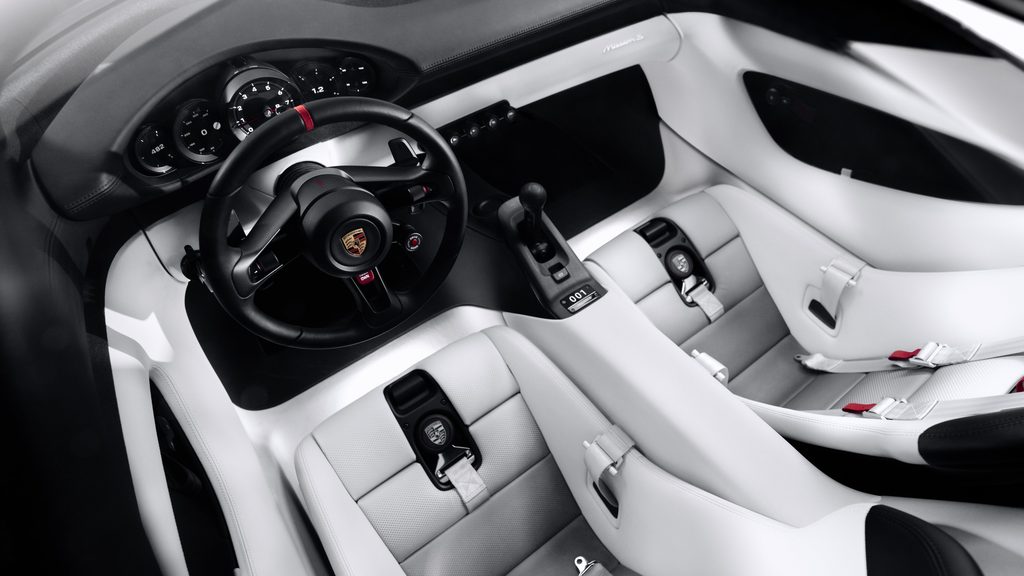
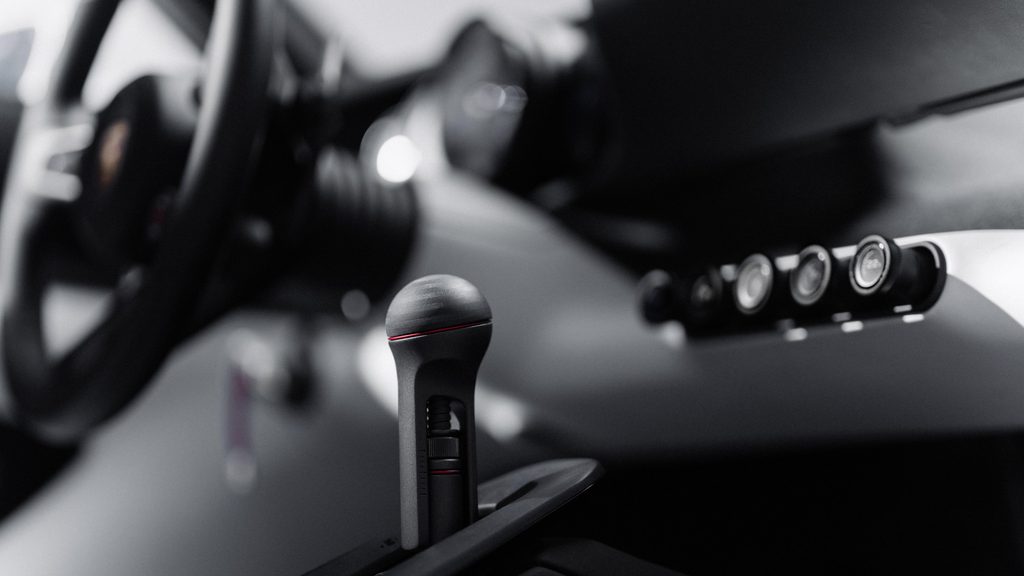
    Porsche has deliberately avoided an interior dominated by permanently integrated screens. Instead, the cockpit combines analogue controls, physical switches and digital displays in a layout designed to keep the driver at the centre of the experience.

    The dashboard and doors are connected by two defining lines that create a feeling of sitting deep within the car. Porsche says this interior architecture draws inspiration from historic sports cars such as the 550 Spyder and the 356.

    The seats continue that approach, combining comfort and functionality with motorsport-inspired details. Among the features highlighted by Porsche are an integrated seatbelt buckle in the centre panel and repositioned electric adjustment controls.

    The result is an interior that looks forward without losing the tactile character traditionally associated with a driver’s car.

    FIVE DIALS, ONE PHILOSOPHY

    The instrument layout is one of the Mission S’s most distinctive features.

    Porsche has reimagined its circular instruments through a combination of analogue character and digital precision. The Sport Chrono element also receives a new interpretation, retaining a recognisable mechanical character while incorporating digital functionality.

    The choice is significant in an era when large touchscreens increasingly dominate automotive interiors.

    Rather than treating digital technology as the visual centrepiece, the Mission S uses it to support a more focused driving environment. Physical controls remain part of the experience, allowing important functions to be accessed directly.

    Porsche has also designed a dedicated holder for its key, positioned to the left of the steering wheel in keeping with the brand’s traditional layout.

    THE SMARTPHONE TAKES A DIFFERENT ROLE

    One of the most unusual decisions concerns the central display.

    The Mission S does not feature a permanently integrated central screen or a fixed passenger display. Instead, Porsche has developed a retractable smartphone system compatible with MagSafe technology.

    When required, the driver’s personal smartphone can serve as a navigation or information display. The My Porsche app provides access to functions and allows users to select digitally rendered, historically inspired designs for the circular instruments.

    This approach gives the cockpit a different relationship with technology. The screen is available when needed, but it does not permanently dominate the dashboard.

    It is a design decision that reflects the wider philosophy of the Mission S: digital convenience should complement the driving experience rather than define the entire environment.

    The interior’s colour palette reinforces the connection to Porsche’s sporting identity. Firn White Metallic, Light Red Metallic, Black Chrome and Special Black reinterpret the company’s familiar motorsport colours through a more contemporary treatment.

    Together, the materials, controls and instruments create an interior that places the driver — rather than the display — at the centre of the experience.

    04. A NEW CHAPTER ABOVE THE 911

    The Mission S is important not only because of its design, but because of the position Porsche intends it to occupy.

    The company has announced a new mid-engined super-sports-car platform positioned above the 911. According to Porsche, the intention is to create a permanent and versatile addition to its customer offering, rather than a limited-run hypercar.

    This is a significant distinction.

    The 911 is one of the defining models in the company’s history. Its rear-engined architecture, familiar proportions and long development history have established a remarkably clear identity. A new flagship must therefore offer something genuinely different without undermining the model that remains central to Porsche’s sports-car heritage.

    The Mission S offers an indication of how that could be achieved.

    Its mid-engined architecture creates a different foundation for the car’s proportions and engineering. Its styling draws on Porsche’s historic racing and road-car designs while exploring a new visual direction. Its interior places renewed emphasis on physical interaction and the driver’s relationship with the machine.

    Porsche has not yet disclosed a complete production specification, final price or customer-delivery schedule for the Mission S. It is therefore too early to assess its eventual performance or commercial positioning in detail.

    What is clear is the company’s intention to establish a more permanent super-sports-car offering above the 911.

    That ambition gives the Mission S significance beyond a conventional concept reveal. It signals an effort to extend Porsche’s identity into a new product category while preserving the qualities that distinguish the brand.

    The challenge will be to create a car that earns its place through substance, not merely through a higher position in the range.

    05. THE MARKET BEHIND THE MACHINE

    The Mission S arrives at a moment when Porsche is reassessing how it creates value.

    On 7 October 2026, the company presented its Sportwagenschmiede ’35 strategy, setting out its medium- and long-term ambitions for the business.

    Its guiding principle is value over volume.

    Porsche intends to sharpen its positioning in sporty luxury and high-end premium segments, expand personalisation and develop more exclusive products. Its strategy also includes streamlining the model range, improving operational efficiency and strengthening profitability.

    The company has set a medium-term target of reducing model variants by approximately 20 per cent and increasing sales volume per model variant by around 30 per cent. These are strategic ambitions, not achieved results.

    The distinction matters because value over volume is not simply a decision to make fewer cars. It is an attempt to create a more focused product portfolio, improve the value generated by each vehicle and direct resources towards products that strengthen the brand.

    For Porsche, the Mission S fits into that ambition as a potential new flagship.

    A sports car positioned above the 911 could broaden the company’s offering at the upper end of the market, while giving established customers another expression of the brand’s engineering and design philosophy.

    But a higher position does not automatically create higher desirability.

    A luxury product must justify its premium through its design, engineering, experience and identity. Restricting availability without offering a compelling reason to want the product can weaken demand rather than strengthen it.

    The Mission S is therefore best understood as part of Porsche’s strategic direction, not proof that its value-over-volume approach will succeed.

    The opportunity lies in creating a product that feels genuinely distinctive — and in building a business model capable of supporting that distinction over time.

    06. WHEN EXCLUSIVITY BECOMES A BUSINESS STRATEGY

    The pursuit of exclusivity is not limited to Porsche. Across the luxury market, established brands are looking for ways to make products more distinctive, strengthen customer relationships and justify premium positioning.

    In automotive luxury, personalisation offers one route.

    A customer who can select distinctive materials, finishes and details is participating in a more individual ownership experience. At the highest end of the market, bespoke commissions can take that idea further, making the process of creating a vehicle part of its appeal.

    Porsche has identified expanded individualisation as a central part of its future strategy. Its official strategic priorities place greater emphasis on elevated positioning, exclusivity and the uniqueness of its cars.

    The Mission S belongs to this wider conversation because it represents an attempt to extend Porsche’s sports-car offering into a new category.

    However, exclusivity should not be confused with artificial scarcity. Porsche has not announced a production limit for the Mission S, and the vision model should not be described as a limited-edition collector car.

    Its relevance lies in the possibility of a more elevated, permanent product within the Porsche range.

    That is a different proposition from manufacturing rarity through restricted numbers. It seeks to establish distinction through the product itself.

    For luxury brands, that distinction is increasingly important. Customers can compare specifications, prices and technology across a global market. What becomes harder to replicate is a coherent identity — the combination of design, engineering, heritage and ownership experience that makes a product feel different from its competitors.

    The Mission S gives Porsche an opportunity to express that identity in a new form.

    Whether customers ultimately respond will depend on the finished product and the value they perceive in it. The strategy can create the conditions for desirability, but the car must still earn it.

    07. PORSCHE’S COMMERCIAL REALITY

    Porsche’s ambitions also need to be understood against its current business performance.

    According to the company’s official nine-month delivery report published on 9 October 2026, Porsche delivered 178,532 vehicles worldwide between January and September 2026, compared with 212,509 during the same period in 2025.

    That represents a decline of approximately 16 per cent year on year.

    Yet the performance of individual models tells a more nuanced story. The 911 remained highly sought after, with deliveries increasing by 12 per cent. The Cayenne was Porsche’s largest model line during the period, with 59,586 deliveries.

    These figures show why the Mission S matters strategically, but they do not guarantee its future success.

    Porsche is trying to strengthen its positioning while navigating a difficult commercial environment. Its plans for more exclusive products and greater individualisation must translate into real customer demand and stronger financial performance.

    There are risks. Higher-value products can address a narrower customer base. Greater personalisation can introduce additional complexity. A new flagship can strengthen a brand’s identity, but it must also justify the resources required to develop and support it.

    The Mission S is one element of Porsche’s response to those challenges. It offers a vision of where the product portfolio could go, while the company’s wider strategy addresses the operational and financial changes required to support that direction.

    The distinction between ambition and outcome is essential. The concept demonstrates intent; only a production programme and its eventual market performance could demonstrate commercial success.

    08. THE FUTURE OF SPORTS-CAR LUXURY

    The Mission S raises a broader question about what the next generation of luxury performance will value.

    For years, automotive competition has been measured through increasingly impressive specifications, new technology and greater performance. Those elements remain important, but they do not fully explain why certain cars become objects of lasting desire.

    Design matters. Engineering matters. Heritage matters. So does the feeling that a product has been developed with a clear purpose rather than assembled around a collection of features.

    The Mission S brings those ideas together through its exterior proportions, driver-focused interior and connection to Porsche’s historic sports cars. It also points towards a new chapter in the company’s product strategy, with a proposed mid-engined platform above the 911.

    Its significance should not be overstated. The Mission S remains a vision model, and Porsche has not disclosed all the details required to judge a future production vehicle.

    But the direction is revealing.

    Porsche wants to strengthen its identity as a sports-car manufacturer, develop a more elevated product offering and increase the value generated by its portfolio. The Mission S provides a visual expression of that ambition.

    If the vision translates successfully into a production car, it could give Porsche a new way to engage customers who want something beyond the 911 while remaining within the brand’s world.

    The opportunity is not simply to create another expensive sports car. It is to create one with a convincing reason to exist.

    DESIRE, REDEFINED

    The Porsche Mission S is not yet a complete production promise. It is something more preliminary, but still significant: a glimpse of the direction in which one of the world’s most recognisable sports-car brands intends to move.

    Its design draws on the past without reproducing it. Its interior places the driver at the centre while incorporating modern digital functionality. Its mid-engined architecture signals a new product category above the 911, and its strategic context reflects Porsche’s pursuit of higher value, greater exclusivity and stronger profitability.

    The questions that remain are just as important as the details already revealed. How will the production vehicle be specified? What will it cost? When might customers be able to buy it? Porsche has not yet answered those questions in its official Mission S announcement.

    For now, the car is best understood as a statement of intent — one that connects design, engineering and business strategy.

    Because the most compelling luxury products do more than perform exceptionally. They create an emotional connection that specifications alone cannot explain.

    The Mission S offers Porsche an opportunity to build on that principle, extending the brand’s sports-car identity while exploring what its next chapter could look like.

    And perhaps that is the most interesting thing about desire: it does not simply ask for more.

    It asks for something different. Something meaningful. Something worth wanting.

    PORSCHE MISSION S: DESIRE, REDEFINED.

    An INSYDE editorial on the machine, the market and the future of automotive luxury.


    INSYDE MAGAZINE

    Luxury. Culture. People. What comes next.

    No. 1 Luxury Magazine in Bengaluru

    WWW.INSYDEMAG.COM

  • TOO RARE TO OWN

    TOO RARE TO OWN

    The world’s rarest automobiles — and the fortunes, histories and secrets behind them.

    There is expensive.

    And then there is unattainable.

    At the highest level of the automotive world, price is no longer the only measure of luxury. The truly exceptional automobile is valued for something much harder to acquire: provenance, scarcity, originality, craftsmanship and history.

    A car can be worth millions because it is fast.

    A very different kind of car can be worth tens of millions because it is irreplaceable.

    That distinction is becoming increasingly important as the collector-car market enters a new era.

    In 2025, RM Sotheby’s generated more than $1 billion in sales, with 135 automobiles selling for more than $1 million and 75 auction records set across marques and models. Nearly half of its buyers were participating for the first time.

    The momentum has continued into 2026, with major European sales producing extraordinary results.

    Yet the most valuable cars in the world cannot always be ranked neatly on a spreadsheet.

    Some have sold at public auction for documented sums.

    Others have changed hands privately, where the transaction price is reported rather than publicly verified.

    And then there are modern coachbuilt automobiles whose prices are widely estimated by the market but never officially disclosed by the manufacturer or client.

    So this isn’t simply a list of the five cars with the biggest numbers attached to them.

    It is a look at five automobiles that represent the different forms of wealth at the top of the collector-car world:

    scarcity, provenance, mythology, craftsmanship and exclusivity.

    Because when a car becomes rare enough, the question changes.

    It is no longer:

    “What does it cost?”

    It becomes:

    “Can anyone else ever own one?”


    When history exists in only two examples, scarcity becomes part of the car itself.  
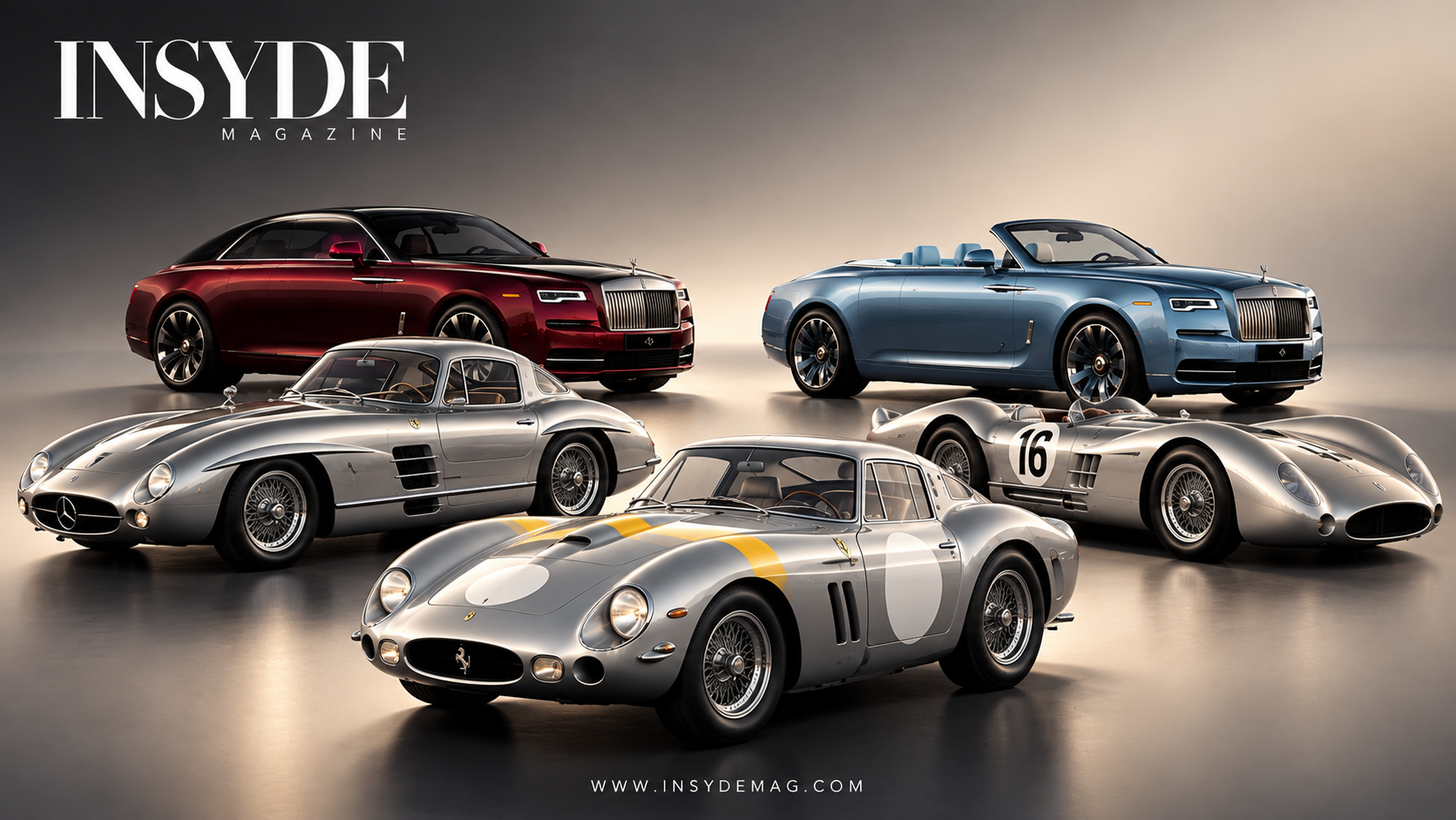
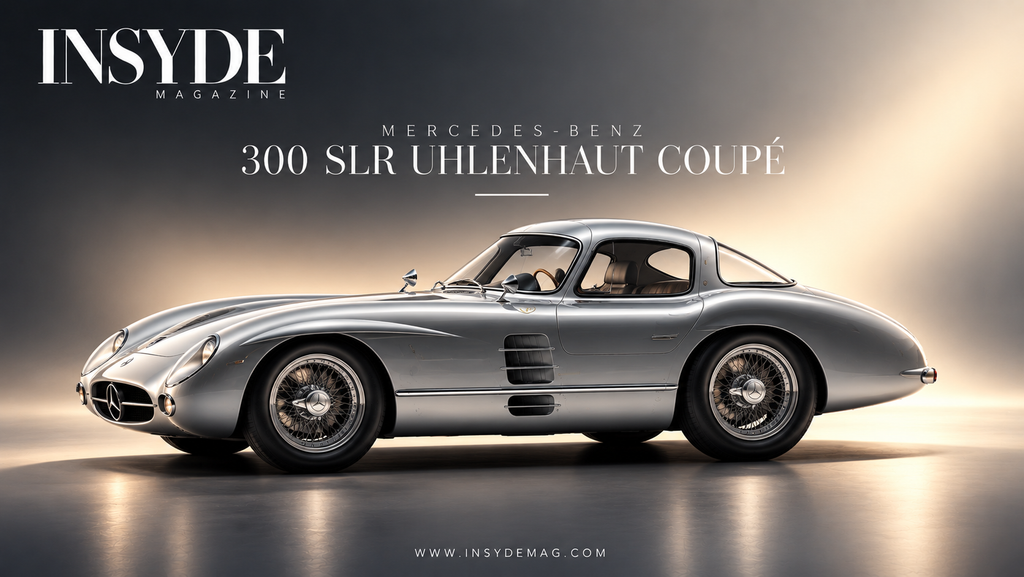
Mercedes-Benz confirms that only two 300 SLR Uhlenhaut Coupés were built, with one sold for €135 million in 2022.

    01

    MERCEDES-BENZ 300 SLR UHLENHAUT COUPÉ

    €135 MILLION

    THE CAR THAT REDEFINED EXPENSIVE

    There are very few automobiles that can genuinely be called irreplaceable.

    The Mercedes-Benz 300 SLR Uhlenhaut Coupé is one of them.

    On 5 May 2022, Mercedes-Benz sold one of the two Uhlenhaut Coupés ever built for €135 million at an exclusive auction at the Mercedes-Benz Museum in Stuttgart.

    It remains the defining transaction in the modern collector-car market.

    The car is named after Rudolf Uhlenhaut, the legendary Mercedes-Benz engineer responsible for its design. Developed from the engineering of Mercedes-Benz’s extraordinary 300 SLR racing programme, the Coupé represents one of the most ambitious expressions of post-war automotive engineering.

    Only two were built.

    One remains with Mercedes-Benz.

    The other passed into private ownership.

    And that private collector has never been publicly identified.

    That anonymity feels strangely appropriate.

    The Uhlenhaut Coupé isn’t simply an expensive Mercedes-Benz.

    It is an artifact from a very specific moment in automotive history — one that cannot be reproduced.

    WHY IT COMMANDS THE MONEY

    The formula is almost impossible to recreate:

    Two examples.

    Factory provenance.

    Historic engineering.

    Motorsport DNA.

    Exceptional originality.

    A legendary engineer.

    There are faster cars.

    There are newer cars.

    There are more technologically advanced cars.

    But there will never be another original Uhlenhaut Coupé.

    That is the difference between a very expensive automobile and an irreplaceable one.

    WHO OWNS IT?

    A private collector.

    Mercedes-Benz has not publicly identified the buyer.

    THE INSYDE TAKE

    The ultimate collector car isn’t necessarily the fastest. It is the one history refuses to repeat.


    Born for Grand Prix racing. Decades later, it became one of the most valuable racing cars ever sold.
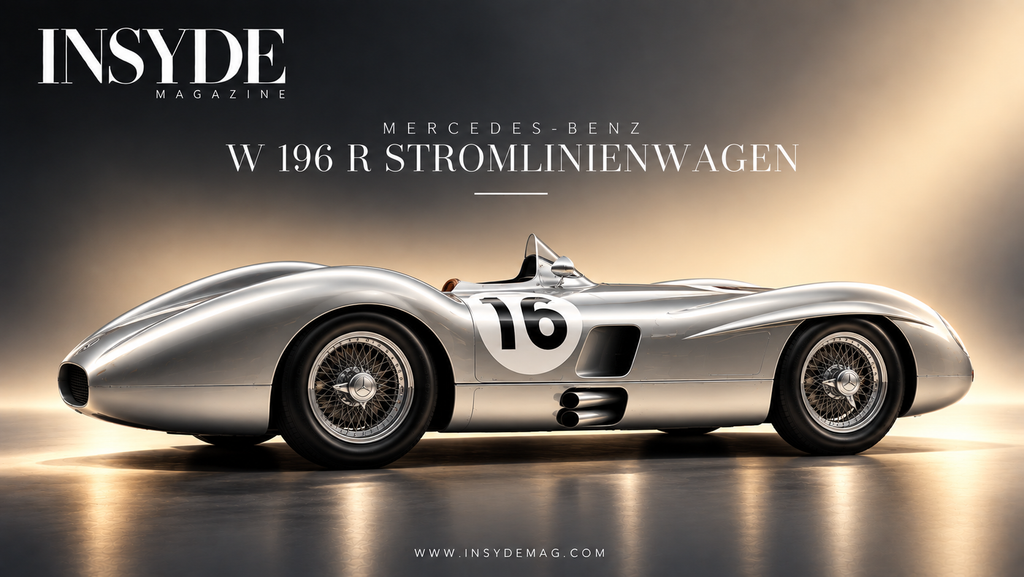
The W 196 R Stromlinienwagen sold for €51.155 million at RM Sotheby's in 2025, making it the second-highest public auction result for a car at that time. RM Sotheby's

    02

    MERCEDES-BENZ W 196 R STROMLINIENWAGEN

    €51.155 MILLION

    THE SILVER ARROW WITH TWO LEGENDS IN ITS HISTORY

    If the Uhlenhaut Coupé represents engineering mythology, the W 196 R represents something even more romantic:

    motorsport history.

    In February 2025, RM Sotheby’s sold a 1954 Mercedes-Benz W 196 R Stromlinienwagen for €51.155 million.

    The transaction became the second-highest public auction result ever recorded for an automobile at that time and the most valuable Grand Prix car ever sold at auction.

    But the number is only half the story.

    The particular chassis — 00009/54 — was driven by two of the greatest names in racing history.

    Juan Manuel Fangio drove the car to victory at the 1955 Buenos Aires Grand Prix.

    Later that year, Stirling Moss drove the same chassis at Monza, where it recorded the fastest lap.

    This is what makes provenance so powerful.

    The car isn’t valuable merely because Mercedes-Benz built it.

    It is valuable because history happened inside it.

    Only four complete examples of the W 196 R with the factory Streamliner bodywork are known.

    The car was donated by Mercedes-Benz to the Indianapolis Motor Speedway Museum in 1965 and remained under the museum’s care for decades before being offered at auction.

    WHO OWNS IT?

    The new owner’s identity has not been publicly disclosed.

    And that matters.

    At this level, some collectors are buying history without any desire to become part of the public story themselves.

    WHY IT MATTERS

    A specialist can rebuild an engine.

    A craftsman can recreate bodywork.

    A manufacturer can reproduce a design.

    But nobody can recreate Fangio winning Buenos Aires in 1955.

    That moment belongs exclusively to this chassis.

    THE INSYDE TAKE

    The rarest luxury isn’t what can be made. It’s what can never happen again.


    Some cars become valuable because of what they are. Others because of what they survived.
Chassis 4153 GT was reported to have changed hands privately for around $70 million in 2018. Its racing history included fourth overall at the 1963 Le Mans 24 Hours and victory in the 1964 Tour de France Automobile.

    03

    FERRARI 250 GTO — CHASSIS 4153 GT

    REPORTED AT APPROXIMATELY $70 MILLION

    THE FERRARI THAT BECAME A FINANCIAL PHENOMENON

    Few names in the collector-car world carry the same gravitational pull as 250 GTO.

    Ferrari produced only 36 examples between 1962 and 1964.

    The car was created for competition, and its racing record became an essential part of the mythology surrounding the model.

    One particular example, chassis 4153 GT, became one of the most valuable automobiles ever reported to have changed hands privately.

    In 2018, the 1963 Ferrari 250 GTO was reported to have been sold for approximately $70 million to American businessman and collector David MacNeil, founder and CEO of WeatherTech.

    There is, however, a crucial distinction.

    This was a private transaction, not a public auction.

    The reported $70 million figure therefore does not have the same level of public verification as the €135 million Uhlenhaut auction result.

    For a professional publication, that distinction should remain explicit.

    WHO OWNS IT?

    David MacNeil.

    The WeatherTech founder is a prominent automotive collector, and chassis 4153 GT remains associated with his collection.

    WHY THIS GTO?

    Because its provenance is exceptional.

    Chassis 4153 GT competed at the 1963 24 Hours of Le Mans, where it finished fourth overall.

    In 1964, it won the Tour de France Automobile with Lucien Bianchi and Georges Berger.

    It is also known for retaining significant original components and for its unusually strong competition history.

    This is why the 250 GTO is so difficult to value using ordinary automotive logic.

    A modern hypercar can be faster.

    It can produce more power.

    It can use technologies that Ferrari engineers in the 1960s could never have imagined.

    But it cannot become 4153 GT.

    The identity is fixed.

    The history is fixed.

    The number is fixed.

    THE 250 GTO EFFECT

    The model demonstrates one of the collector market’s most important principles:

    historical significance can become more valuable than performance.

    The 250 GTO is no longer competing with other Ferraris.

    At its highest level, it is competing with fine art, rare watches and other irreplaceable cultural objects.

    THE INSYDE TAKE

    The ultimate Ferrari isn’t the one with the biggest numbers. It’s the one whose story can never be replicated.


    When a car becomes a commission, the boundary between automobile and artwork begins to disappear.
Rolls-Royce says La Rose Noire was the first of four unique Droptail commissions. Its parquetry uses 1,603 individual pieces of Black Sycamore veneer, while the exterior paint process required 150 iterations.

    04

    ROLLS-ROYCE LA ROSE NOIRE DROPTAIL

    WIDELY REPORTED AROUND $30 MILLION

    WHEN A CAR BECOMES ART

    At this point, the definition of a luxury automobile begins to blur.

    The Rolls-Royce La Rose Noire Droptail isn’t merely a highly exclusive Rolls-Royce.

    It is a commissioned work of automotive art.

    La Rose Noire was the first of four unique Droptail commissions.

    Its inspiration was the Black Baccara rose — a flower that held particular meaning for the commissioning family.

    The result is one of the most elaborate modern expressions of coachbuilding ever produced by Rolls-Royce.

    Inside the car are 1,603 individual pieces of black sycamore veneer, each hand-finished and positioned to create an abstract interpretation of falling rose petals.

    The development of the intricate parquetry took almost two years.

    The exterior paint process went through 150 iterations before the final finish was approved.

    There is even a removable Audemars Piguet timepiece integrated into the dashboard.

    This is not simply bespoke automotive manufacturing.

    It is closer to commissioning a piece of contemporary art.

    WHO OWNS IT?

    The commissioning family.

    Rolls-Royce has not publicly identified the clients by name.

    WHAT IS IT WORTH?

    The figure most frequently associated with La Rose Noire is approximately $30 million.

    But INSYDE would not describe that as a confirmed sale price.

    Rolls-Royce has not publicly disclosed the transaction value.

    The figure should therefore be treated as a reported or estimated market value.

    That distinction matters.

    THE NEW BESPOKE

    Traditional luxury says:

    “Choose something few people can afford.”

    Modern coachbuilding says:

    “Create something nobody else can own.”

    That is a fundamentally different proposition.

    La Rose Noire was not designed for a demographic.

    It was designed around a client.

    And that is where ultra-luxury is heading.

    THE INSYDE TAKE

    The ultimate luxury is not owning something expensive. It’s knowing nobody else can order the same thing.


    Three cars. Three patrons. Three entirely different expressions of the same idea of luxury.
Rolls-Royce confirms that three Boat Tails were completed, each unique to its commissioning client. The third was never publicly exhibited at its owner's request.

    05

    ROLLS-ROYCE BOAT TAIL

    WIDELY REPORTED AROUND $28 MILLION

    THE CAR THAT TURNED COACHBUILDING INTO A LIFESTYLE

    Before Droptail, there was Boat Tail.

    Only three examples were completed — and Rolls-Royce says there will only ever be three.

    Each was created for a different commissioning client.

    Each is unique.

    And each tells a different story.

    The design draws inspiration from the sweeping forms of classic racing yachts and historic Rolls-Royce Boat Tail automobiles.

    Its rear deck opens to reveal an elaborate Hosting Suite, turning the automobile into an environment for entertaining as much as driving.

    One Boat Tail was commissioned by a patron whose family business grew from the pearling industry.

    Another was created around a different client’s personal history.

    The third was never publicly exhibited at the owner’s request.

    That detail says something profound about the modern definition of luxury.

    For some people, exclusivity isn’t about being photographed with an object.

    It is about making sure very few people ever see it.

    WHO OWNS THEM?

    Three separate private commissioning clients.

    Rolls-Royce has not officially disclosed their identities.

    There have been numerous celebrity ownership claims surrounding Boat Tail online.

    Those claims should not be presented as fact unless independently confirmed by Rolls-Royce or the owners themselves.

    For INSYDE, privacy is part of the story.

    WHAT IS IT WORTH?

    Boat Tail is widely reported at approximately $28 million.

    Again, this should be treated as an estimated/reported value, rather than a publicly confirmed transaction price.

    WHY BOAT TAIL MATTERS

    Boat Tail demonstrates the transformation of the automobile from product into personal expression.

    It isn’t about selecting options.

    It is about creating an object around a client’s identity, heritage and taste.

    In that sense, Rolls-Royce Coachbuild is increasingly operating closer to haute couture than conventional automotive manufacturing.

    THE INSYDE TAKE

    The new status symbol isn’t the car everyone wants. It’s the car nobody else can commission.


    THE FIVE DIFFERENT TYPES OF RARITY

    These five automobiles are valuable for different reasons.

    And that distinction is important.

    THE UHLENHAUT COUPÉ

    Rarity through absolute scarcity.

    Two examples.

    THE W 196 R

    Rarity through provenance.

    Fangio. Moss. Grand Prix history.

    THE 250 GTO

    Rarity through mythology.

    A fixed production run of 36 cars combined with an extraordinary racing legacy.

    LA ROSE NOIRE

    Rarity through craftsmanship.

    A bespoke object designed around one client.

    BOAT TAIL

    Rarity through exclusivity.

    Three cars. Three clients. Three completely individual creations.

    This is why the phrase “most expensive car” can be misleading.

    Price is only one part of the equation.


    THE NEW CURRENCY OF AUTOMOTIVE LUXURY

    The collector-car market is increasingly behaving like the market for fine art, watches and jewellery.

    The object itself matters.

    But the story surrounding the object can matter even more.

    01 — SCARCITY

    At the top of the market, production numbers become part of the product.

    Two Uhlenhaut Coupés.

    Four complete W 196 R Streamliners.

    Thirty-six 250 GTOs.

    Four Droptail commissions.

    Three Boat Tails.

    Every additional example could dilute the mythology.

    Scarcity therefore isn’t simply a consequence of production.

    It becomes a form of value.


    02 — PROVENANCE

    A car’s history can become more valuable than its machinery.

    Fangio’s name isn’t attached to the W 196 R because Mercedes-Benz created a special edition bearing his name.

    He actually drove it.

    That difference is everything.

    The collector is not buying a specification.

    They are buying a connection to a moment that already happened.


    03 — CRAFTSMANSHIP

    Rolls-Royce has taken bespoke production into territory traditionally associated with haute couture, jewellery and fine art.

    1,603 individually positioned pieces of veneer.

    150 paint iterations.

    A bespoke timepiece.

    A handcrafted Hosting Suite.

    The value isn’t simply in the materials.

    It is in the human time required to create them.


    04 — PRIVACY

    Perhaps the most fascinating luxury of all.

    The higher the value becomes, the less transparent ownership can be.

    The Uhlenhaut buyer is anonymous.

    The W 196 R buyer is undisclosed.

    Rolls-Royce’s coachbuilt patrons remain private.

    The Ferrari 250 GTO transaction happened away from a public auction.

    In a culture increasingly obsessed with displaying wealth, the ultra-high-end collector market often moves in the opposite direction.

    The ultimate flex may be not showing the object at all.


    WHAT THE 2026 COLLECTOR-CAR MARKET IS TELLING US

    The collector-car market is not simply surviving.

    It is becoming more sophisticated.

    RM Sotheby’s reported more than $1 billion in sales during 2025, its strongest year to date.

    The company sold 135 cars for more than $1 million, achieved a 92% sell-through rate across its live auctions and attracted buyers from 54 countries.

    Perhaps most revealingly, 47% of buyers were participating for the first time.

    That suggests the collector-car world is attracting a new generation of wealth.

    And those buyers are not necessarily looking for the same things their predecessors wanted.

    The market is becoming increasingly segmented.

    At one end are historically significant automobiles whose value is driven by provenance, competition history and originality.

    At the other are modern hypercars and coachbuilt commissions, where exclusivity, craftsmanship and personalisation dominate.

    The two categories may look completely different.

    But economically, they share the same fundamental principle:

    limited supply + exceptional desirability + wealthy demand.

    The 2026 auction calendar has reinforced that appetite.

    RM Sotheby’s Monaco sale in April 2026 generated approximately €87.97 million, becoming the auction house’s highest-grossing multi-car auction ever held in Europe.

    A 1961 Ferrari 250 GT SWB California Spider alone achieved €16.655 million, setting a new auction record for the model.

    The significance isn’t simply the size of the numbers.

    It is what buyers are rewarding.

    History.

    Condition.

    Provenance.

    Rarity.

    And increasingly, exceptional specification.


    THE CLASSIC CAR IS BECOMING A CULTURAL ASSET

    The collector-car market has moved far beyond the idea of wealthy people buying old cars.

    The very best automobiles are increasingly being treated as cultural assets.

    They appear at concours events.

    They are displayed in private museums.

    They are loaned to exhibitions.

    They become part of family collections.

    Some are driven in historic competition.

    Others spend years hidden inside climate-controlled garages.

    And a handful become almost mythical objects that rarely appear in public.

    This creates a fascinating paradox.

    The more valuable the car becomes, the less likely it may be to function like a conventional car.

    It becomes an asset.

    A historical document.

    A work of design.

    A piece of mechanical art.

    Sometimes, all four.


    WHY MONEY ALONE ISN’T ENOUGH

    There is a misconception that the world’s wealthiest collectors simply buy whatever they want.

    At this level, that isn’t necessarily true.

    Money can open the door.

    It cannot manufacture provenance.

    It cannot create an original racing history.

    It cannot make Ferrari build another 250 GTO.

    It cannot make Mercedes-Benz produce another original Uhlenhaut Coupé.

    And it cannot persuade Rolls-Royce to make a second La Rose Noire for someone else.

    This is the paradox of ultra-luxury.

    The more money enters the market, the more valuable genuine scarcity becomes.

    If everyone can buy it, it stops being extraordinary.

    If only one person can own it, desire becomes almost limitless.


    THE INSYDE FIVE

    01 — MERCEDES-BENZ 300 SLR UHLENHAUT COUPÉ

    €135 million
    Confirmed 2022 auction result
    Two built
    Private collector — identity undisclosed

    02 — MERCEDES-BENZ W 196 R STROMLINIENWAGEN

    €51.155 million
    Confirmed 2025 auction result
    One of four complete Streamliner examples
    Buyer undisclosed

    03 — FERRARI 250 GTO — 4153 GT

    Approximately $70 million
    Reported 2018 private transaction
    One of 36 Ferrari 250 GTOs
    David MacNeil

    04 — ROLLS-ROYCE LA ROSE NOIRE DROPTAIL

    Approximately $30 million — reported/estimated
    One of four Droptail commissions
    Private commissioning family

    05 — ROLLS-ROYCE BOAT TAIL

    Approximately $28 million — reported/estimated
    Three ever made
    Private commissioning clients


    FINAL WORD

    The world’s rarest cars don’t ask:

    “How much can you afford?”

    They ask:

    “How badly do you want something nobody else can have?”

    At the highest level of luxury, price is merely the beginning.

    The real value lies somewhere deeper:

    In the story.

    In the craftsmanship.

    In the provenance.

    In the scarcity.

    And in the knowledge that, somewhere in the world, there is an automobile that cannot simply be ordered, reproduced or replaced.

    Because the rarest luxury isn’t necessarily the most expensive thing.

    It is the thing that money cannot make again.

    INSYDE

    The leading voice of luxury.

  • Inside Bengaluru’s Luxury Car Culture: Where Performance Meets the New Indian Lifestyle

    Inside Bengaluru’s Luxury Car Culture: Where Performance Meets the New Indian Lifestyle

    In a city built on technology, ambition and reinvention, the luxury car is becoming more than a symbol of success. It is becoming an expression of taste, identity, performance and the way a new generation chooses to live.

    There is a particular kind of luxury that belongs to Bengaluru.

    It doesn’t always arrive with a convoy.

    It doesn’t necessarily need a chauffeur.

    And it isn’t always the loudest thing on the road.

    Sometimes it is a meticulously specified sedan moving quietly through the city before sunrise. Sometimes it is a performance SUV leaving the city for a weekend drive. Sometimes it is a low-slung sports car appearing between Bengaluru’s traffic, its presence lasting only a few seconds before it disappears around the next corner.

    The city has a complicated relationship with luxury.

    Bengaluru is one of India’s great centres of technology, entrepreneurship and new wealth. Its affluent consumer is often younger, globally exposed and accustomed to thinking about technology, design and experience as parts of the same conversation.

    That makes its relationship with the luxury automobile particularly fascinating.

    Because here, the car is increasingly becoming more than a status symbol.

    It is becoming an extension of identity.

    A Different Kind of Luxury City

    Mumbai has its glamour.

    Delhi has its established traditions of wealth.

    Bengaluru has something different.

    It has a culture built around ambition.

    Technology companies, entrepreneurs, professionals, established businesses and a growing affluent population have created an environment where luxury is increasingly part of everyday aspiration.

    But Bengaluru’s relationship with luxury does not always follow the traditional script.

    The city is less interested in simply demonstrating that something is expensive and more interested in what makes it desirable.

    Engineering.

    Design.

    Technology.

    Performance.

    Experience.

    That doesn’t mean status has disappeared. Far from it.

    It means status can now be expressed more quietly.

    A luxury car can communicate success without having to announce its price.

    And in Bengaluru, that distinction matters.

    The New Bengaluru Buyer

    The stereotype is easy to imagine: a young technology entrepreneur makes their fortune and immediately buys the most extravagant car available.

    Reality is more nuanced.

    Recent reporting from Fortune India suggests that Bengaluru’s younger startup millionaires are not necessarily rushing towards exotic supercars. Established luxury marques such as Mercedes-Benz and BMW continue to attract buyers, while sports cars tend to appeal more strongly to entrepreneurs and business owners further along in their careers. (fortuneindia.com)

    That distinction tells us something important.

    The new luxury buyer isn’t necessarily asking:

    “What is the most expensive car I can buy?”

    The question is increasingly:

    “What car actually belongs in my life?”

    For one person, that might mean a discreet executive sedan.

    For another, a high-performance SUV.

    For someone else, an electric luxury car.

    And for the enthusiast, it might still be a sports car purchased for one simple reason:

    because driving it is the point.

    Luxury becomes personal.

    When the Car Becomes a Signature

    There is a reason people spend so much time configuring their cars.

    The paint.

    The wheels.

    The interior.

    The stitching.

    The trim.

    The sound system.

    The performance package.

    To someone standing outside the car, these details may appear insignificant.

    To the owner, they can completely change the character of the vehicle.

    A dark executive sedan communicates something different from a brightly coloured sports car.

    A restrained SUV says something different from an aggressively styled performance model.

    An electric luxury vehicle communicates something different from a large-displacement petrol car.

    The automobile becomes part of the owner’s visual language.

    Just as clothing communicates taste, cars can communicate personality.

    And Bengaluru has developed an audience sophisticated enough to understand that distinction.

    Bengaluru Has a Performance Side

    For all the talk about quiet luxury, Bengaluru has no shortage of people who simply love cars.

    Not luxury cars.

    Cars.

    The engineering.

    The sound.

    The acceleration.

    The design.

    The mechanical details.

    The endless conversations about specifications.

    The obsession with what makes one car different from another.

    This is where Bengaluru’s luxury-car culture becomes more than a consumption story.

    It becomes a community.

    Local reporting has documented enthusiast groups and automotive gatherings where owners meet, exchange knowledge and build relationships around their shared fascination with performance cars. (timesofindia.indiatimes.com)

    For genuine enthusiasts, the car is not simply something sitting in a garage.

    It becomes a hobby.

    A language.

    A social world.

    Sometimes, even a form of identity.

    The Bengaluru Contradiction

    There is a wonderfully strange problem with owning a supercar in Bengaluru.

    The city has the buyers.

    It has the enthusiasts.

    It has beautiful routes leading towards the outskirts.

    But it also has traffic.

    Potholes.

    Speed breakers.

    Congested roads.

    Monsoon waterlogging.

    And the occasional road designed as if low ground clearance was a personal insult.

    Owners interviewed by The Times of India have described the challenges of using low-slung performance cars on Bengaluru’s roads, with some choosing early-morning or late-night drives when traffic is lighter. (timesofindia.indiatimes.com)

    It creates an almost absurd contrast.

    A car engineered for extraordinary performance can spend much of its life moving at Bengaluru traffic speed.

    But perhaps that is part of the city’s automotive character.

    The car doesn’t have to reach its theoretical limits to be appreciated.

    Sometimes knowing what it could do is enough.

    The Luxury SUV and the Bengaluru Lifestyle

    If one vehicle category captures the evolution of Indian luxury particularly well, it is the SUV.

    It combines presence with practicality.

    And that combination makes sense in Bengaluru.

    The city requires a certain flexibility from its luxury consumer.

    A car might need to work for a business meeting in the morning, dinner in the evening and a weekend escape outside the city.

    It needs space.

    Comfort.

    Ground clearance.

    Technology.

    And enough personality to still feel special.

    That helps explain the continuing strength of luxury SUVs in India’s premium automobile market. SUVs have become a major driver of luxury-car demand, alongside established executive sedans and performance vehicles. (autocarindia.com)

    The SUV isn’t necessarily less luxurious because it is practical.

    In modern luxury, practicality can itself become a luxury.

    The ability to use one exceptional object for several parts of your life is valuable.

    The Sedan Still Knows How to Whisper

    The luxury sedan hasn’t disappeared.

    It has simply developed a quieter role.

    A great sedan doesn’t need aggressive styling.

    Its appeal can be found in proportion.

    Silence.

    Ride quality.

    Materials.

    Space.

    Technology.

    The experience can feel almost architectural.

    The continued popularity of models such as the Mercedes-Benz E-Class in India’s luxury market shows that traditional executive luxury still has a powerful place, even as SUVs dominate much of the broader conversation. (autocarindia.com)

    There is something reassuring about that.

    Luxury doesn’t always need to reinvent itself.

    Sometimes it simply becomes more refined.

    Technology Changes the Meaning of Luxury

    This is where Bengaluru becomes especially interesting.

    The city understands technology almost instinctively.

    For its luxury consumer, technology isn’t necessarily an added feature.

    It is expected.

    Modern luxury cars increasingly combine advanced driver assistance, connected systems, sophisticated infotainment, intelligent lighting, premium audio and increasingly capable electric powertrains.

    The automobile is becoming part machine and part digital environment.

    And Bengaluru is perhaps uniquely positioned to appreciate that transformation.

    The city that helped build India’s technology economy is also becoming a major market for vehicles where software, connectivity and digital experiences are central to the ownership experience.

    The definition of luxury is changing.

    It is no longer only about leather, wood and chrome.

    It is also about what the machine can do for you.

    The Electric Luxury Question

    Electric vehicles introduce another fascinating layer.

    Luxury has traditionally been associated with powerful engines, mechanical complexity and the sound of performance.

    Electric vehicles challenge that definition.

    Instant torque.

    Near-silent acceleration.

    Software-driven features.

    New interior possibilities.

    Different approaches to performance.

    The experience can be fast without being theatrical.

    Mercedes-Benz, for example, reported strong growth in its top-end portfolio in FY2026, with battery-electric vehicles representing a significant share of its high-end sales in India. (indiatoday.in)

    For Bengaluru, where technology and sustainability are already deeply embedded in the city’s identity, electric luxury has a particularly natural place in the conversation.

    The interesting question is no longer whether an electric car can be luxurious.

    It is:

    What will luxury feel like when the traditional symbols of automotive performance begin to change?

    The Car as a Social Object

    A luxury car can take you somewhere.

    But it can also bring people together.

    Car meets.

    Weekend drives.

    Collectors.

    Photographers.

    Detailers.

    Restorers.

    Dealers.

    Modification specialists.

    Enthusiasts.

    The ecosystem around the automobile can become as fascinating as the vehicle itself.

    Bengaluru’s automotive communities demonstrate this particularly well.

    The shared obsession isn’t necessarily the price of the cars.

    It is the knowledge surrounding them.

    The sound of a particular engine.

    The history of a particular model.

    The engineering behind a transmission.

    The proportions of a body.

    The difference between one generation and another.

    That is where luxury turns into culture.

    Beyond the Badge

    The easiest way to understand a city’s luxury-car culture is to count the expensive cars.

    But that tells you very little.

    The more interesting question is:

    Why did someone choose that particular car?

    Why that colour?

    Why that engine?

    Why that model?

    Why a sedan instead of an SUV?

    Why petrol instead of electric?

    Why something immediately recognisable instead of something only another enthusiast would notice?

    Those decisions reveal far more about a person than the badge alone.

    And that is why Bengaluru’s luxury-car culture deserves to be looked at as a cultural phenomenon rather than simply a market.

    The cars are the visible part.

    The preferences are the story.

    A City Between the Future and the Past

    There is a strange contradiction at the heart of Bengaluru’s relationship with luxury automobiles.

    The city is obsessed with the future.

    Yet some of its enthusiasts are fascinated by machines whose appeal comes from mechanical engineering.

    The city is famous for software.

    Yet people still gather to discuss engines.

    It is one of India’s strongest technology centres.

    Yet the romance of driving remains deeply physical.

    And that contradiction is exactly what makes Bengaluru interesting.

    A mechanical watch can fascinate someone who spends their day building artificial intelligence.

    A vintage sports car can appeal to someone working in software.

    A cutting-edge electric vehicle can attract someone who grew up loving combustion engines.

    Technology doesn’t necessarily destroy old forms of luxury.

    Sometimes it makes people appreciate them more.

    What Comes Next?

    The next chapter of Bengaluru’s luxury-car culture probably won’t be defined simply by more expensive cars.

    It will be defined by more sophisticated choices.

    A buyer might choose a performance car because they genuinely care about driving.

    Another might choose an electric vehicle because technology matters more than engine noise.

    Someone else might choose a luxury SUV because it fits the way they actually live.

    A collector might search for a rare older model rather than the newest release.

    Another buyer may prefer a discreet sedan that only another enthusiast recognises.

    The badge will still matter.

    But it won’t tell the whole story.

    The New Luxury Is Choice

    Bengaluru’s luxury-car culture ultimately reflects something larger happening across India.

    Luxury is becoming less about proving that you can afford something.

    It is becoming more about choosing what is right for you.

    The most interesting car in Bengaluru may not be the loudest.

    It may not be the fastest.

    It may not even be the most expensive.

    It could be the car whose owner knows exactly why they chose it.

    Because modern luxury is increasingly personal.

    And in Bengaluru — a city built on ambition, technology and reinvention — the automobile has become one of the most visible ways that new definition of luxury is taking shape.

    The city may never become the easiest place in India to drive a supercar.

    But perhaps that isn’t the point.

    Because Bengaluru’s luxury-car culture was never really about the road alone.

    It is about the people behind the wheel.

    Their ambition.

    Their curiosity.

    Their taste.

    Their obsession with engineering.

    And their desire to own something that says a little more about them than a price tag ever could.

    The car is no longer simply a symbol of where you’ve arrived.

    It is becoming a reflection of where you’re going.

    INSYDE — Beyond the Spotlight.

  • THE DEATH OF THE LOUD LUXURY CAR

    THE DEATH OF THE LOUD LUXURY CAR

    The world’s most desirable cars are entering a quieter, stranger and more personal era. But the roar isn’t disappearing. It is becoming a choice.

    Luxury cars used to announce themselves.

    You heard them before you saw them.

    The engine. The exhaust. The tyres. The arrival.

    For decades, automotive luxury was built around a very visible equation: more was more.

    More cylinders. More horsepower. More leather. More chrome. More presence.

    A luxury car was not simply a machine for moving through the world. It was a machine for making the world notice that you had arrived.

    But 2026 has produced a strange contradiction.

    Some of the world’s most desirable cars are becoming quieter.

    Others are becoming impossibly faster.

    Some are turning the cabin into a private sanctuary.

    Others are recreating the emotional theatre of the combustion engine even after removing the engine itself.

    The new Range Rover Electric calls itself the quietest Range Rover yet. Ferrari has created a 1,050-cv plug-in hybrid in the 849 Testarossa. BMW has brought a new 7 Series and i7 to India, with the electric flagship now locally produced in Chennai. Bentley is designing an entirely new sound for its electric Torcal using real musical instruments.

    So what exactly is happening to the luxury car?

    The answer is not that cars are becoming quieter.

    Luxury is becoming more intentional about what it makes you feel.


    WHEN MORE STOPPED BEING ENOUGH

    For years, horsepower was one of the simplest ways to communicate automotive status.

    600 horsepower was extraordinary.

    Then 700 became extraordinary.

    Then 800.

    Then 1,000.

    Now four-digit horsepower is entering the territory of production luxury cars.

    Ferrari’s 849 Testarossa combines a twin-turbo V8 with three electric motors to produce a total 1,050 cv. Its V8 alone produces 830 cv, while the hybrid system contributes another 220 cv. Ferrari quotes a 0–100 km/h time of less than 2.3 seconds and a top speed above 330 km/h.

    It is an extraordinary engineering achievement.

    But it also raises an uncomfortable question.

    How much performance can a person actually use?

    You don’t need 1,050 horsepower to cross a city.

    You don’t need 330 km/h to drive to dinner.

    You don’t even need 500.

    And that is where the luxury conversation begins to change.

    When performance becomes almost absurdly abundant, the specification sheet stops being enough.

    The question moves from:

    What can the car do?

    to:

    What does the car make you feel?

    That is a much more interesting question.

    And considerably harder to engineer.


    RANGE ROVER IS SELLING SILENCE

    Few brands illustrate this transformation better than Range Rover.

    The first fully electric Range Rover does not try to abandon the visual language that made the name a luxury icon.

    It still looks unmistakably like a Range Rover.

    But underneath that familiar silhouette is a very different interpretation of power.

    Range Rover describes it as its “quietest Range Rover yet”, with near-silent propulsion, advanced drivetrain isolation, acoustic laminated glass and active noise cancellation designed to create individual quiet zones for occupants. The cabin also incorporates air purification, CO₂ management and an ambient fragrance diffuser.

    The numbers are impressive too.

    Up to 600 km of claimed range.

    Up to 550PS and 850Nm from its electric powertrain.

    And charging from 10 to 80 percent in approximately 22 minutes using a suitable 350kW DC charger.

    But the most interesting specification may be the one that doesn’t appear on the performance sheet.

    Silence.

    Imagine sitting inside a Range Rover in Mumbai.

    The horns are still outside.

    The motorcycles are still outside.

    The construction is still outside.

    The city has not become quieter.

    Your experience of it has.

    That is a distinctly modern interpretation of luxury.

    Not necessarily showing the world what you have.

    Controlling how much of the world reaches you.


    THE CAR IS BECOMING A PRIVATE WORLD

    This may be the biggest transformation happening in luxury automobiles.

    And it isn’t happening underneath the bonnet.

    It is happening after the door closes.

    For decades, automotive luxury was heavily exterior-facing.

    The grille.

    The wheels.

    The badge.

    The exhaust.

    The engine.

    The car was designed to be seen.

    But increasingly, the most sophisticated luxury happens inside.

    Materials become tactile.

    Seats become architecture.

    Lighting becomes atmosphere.

    Sound becomes design.

    Climate becomes personal.

    Technology becomes invisible.

    And silence becomes a feature.

    The luxury car is slowly becoming less like a machine you sit inside and more like a private environment that happens to move.

    That changes the meaning of performance.

    A car can now be incredibly powerful without feeling aggressive.

    It can be technologically complex without making the cabin feel complicated.

    It can accelerate violently while making the passenger experience feel completely calm.

    The real achievement is no longer simply making the machine work harder.

    It is making the machine feel like it isn’t working at all.

    That is what effortless luxury has always promised.

    The automobile is simply discovering how to deliver it at a much higher level.


    THEN FERRARI MADE THE FUTURE LOUD AGAIN

    And just when the future starts looking peaceful, Ferrari arrives with a completely different answer.

    The 849 Testarossa is almost a rebuttal to the idea that luxury performance must become subdued.

    It is outrageous by design.

    Its twin-turbo V8 produces 830 cv.

    Three electric motors bring total output to 1,050 cv.

    An electric motor sits at the rear, while two more sit on the front axle, creating an all-wheel-drive system with torque vectoring.

    Ferrari has also introduced new electronic controls and an active aerodynamic package derived from its racing experience.

    It is excessive.

    And that is precisely why it matters.

    Ferrari understands that some customers do not want serenity.

    They want theatre.

    They want acceleration.

    They want mechanical drama.

    They want the sensation of a machine doing something extraordinary underneath them.

    But Ferrari’s response to electrification is not to reject it.

    It is to use electrification to make the combustion engine more extreme.

    That distinction is important.

    The future of luxury is not simply:

    electric versus petrol.

    It is:

    What can each technology make you feel?


    THE STRANGE THING ABOUT ELECTRIC LUXURY

    Electric power has created an interesting problem for luxury-car designers.

    It can make a car incredibly fast.

    But speed alone isn’t new anymore.

    It can make a car incredibly quiet.

    But silence alone isn’t enough either.

    So brands are being forced to think about something they have always understood but rarely had to articulate:

    emotion.

    What should acceleration feel like?

    What should silence feel like?

    What should the cabin sound like?

    How should the car communicate power when the engine no longer needs to announce itself?

    What should replace the rituals we’ve associated with performance for generations?

    These aren’t engineering questions alone.

    They are questions about culture.

    And that is why the most interesting developments in luxury cars right now aren’t necessarily happening in the horsepower tables.

    They are happening in the spaces between technology and emotion.


    BMW IS TURNING THE CABIN INTO THE DESTINATION

    BMW’s new 7 Series and i7, launched in India on September 11, offer another version of the future.

    And it is a particularly important one for India.

    The new range arrives with petrol and all-electric powertrains, including the i7 M70 — described by BMW as the most powerful 7 Series ever.

    The electric range now reaches up to 728 km WLTP, while the flagship i7 M70 brings BMW’s performance philosophy into the electric era. The cabin introduces BMW Panoramic Head-Up Display, BMW Operating System X, a passenger screen and an enhanced Theatre Screen, alongside Executive Lounge seating and increased ambient lighting.

    But the bigger story is happening behind the scenes.

    The i7 is now being locally produced at BMW Group Plant Chennai, making India the only country outside Germany where BMW produces this electric flagship.

    That is not simply a manufacturing footnote.

    It tells us something about where India sits in the luxury-car industry now.

    India is not merely waiting for global luxury brands to arrive.

    India is becoming part of the next chapter of their product strategy.


    INDIA ISN’T WAITING FOR THE FUTURE

    The timing is important.

    During the first six months of 2026, India’s luxury passenger-vehicle market grew 4 percent year-on-year. BMW delivered 9,075 cars in the period, up 17 percent, while its EV sales reached 2,359 units — a 78 percent increase over the same period a year earlier.

    But one number tells an even more interesting story.

    Long-wheelbase BMW models accounted for 52 percent of its H1 sales.

    SUVs accounted for 65 percent.

    This is important because it tells us that India’s luxury consumer is not abandoning traditional ideas of luxury.

    Quite the opposite.

    They still want space.

    They still want presence.

    They still want the elevated driving position.

    They still want to be driven.

    They simply increasingly want those things wrapped in newer technology.

    The same market is also seeing a rapid expansion in luxury electric vehicles.

    Luxury EV sales in India reached 5,404 units in FY2026, a 61 percent year-on-year increase and more than five times the FY2023 level. BMW alone accounted for 3,537 of those vehicles.

    The shift is no longer theoretical.

    It is happening in showrooms.

    It is happening on Indian roads.

    And increasingly, it is happening at the very top of the market.


    THE NEW LUXURY ISN’T SMALLER. IT’S SMARTER.

    There is a lazy assumption that electrification will make luxury cars less extravagant.

    The opposite may be happening.

    Electric power gives designers different freedoms.

    Instant torque.

    Different packaging possibilities.

    Near-silent propulsion.

    Software-defined features.

    New cabin architectures.

    New approaches to sound.

    New approaches to personalisation.

    The luxury car doesn’t necessarily need to become smaller or more austere.

    It can become more immersive.

    BMW’s new 7 Series makes that obvious.

    The car can be a performance machine.

    A chauffeur-driven lounge.

    A cinema.

    A connected digital environment.

    A quiet office.

    A private space.

    The point isn’t that one function replaces another.

    The point is that the car is becoming capable of being whatever the occupant needs it to be.

    That is a different form of luxury.


    THEN BENTLEY ASKED: WHAT HAPPENS TO THE SOUND?

    Perhaps no brand has framed the emotional problem of electrification more beautifully than Bentley.

    Its upcoming electric Torcal has a soundtrack created using real instruments — including drums, viola and bass guitar.

    Bentley’s designers studied the character of its V8 and discovered that the emotional quality wasn’t simply the sound of combustion.

    It was rhythm.

    So instead of attempting to reproduce an engine literally, the team worked with musicians to create a new sonic identity for the electric car. Bentley describes the result as something designed not to imitate an engine, but to evoke the same emotional response.

    That is fascinating.

    Because it reveals a truth about luxury that specifications can’t explain.

    People don’t necessarily become attached to objects because of what they do.

    They become attached to how those objects make them feel.

    The sound of a V8 can become memory.

    A steering wheel can become ritual.

    The sensation of a particular engine can become identity.

    A brand can spend decades creating an emotional language — and electrification suddenly forces it to translate that language into another medium.

    Bentley isn’t trying to preserve the past exactly.

    It is trying to translate it.

    That may be the most important creative challenge facing luxury automotive design.


    THE V12 MAY BECOME THE MECHANICAL WATCH OF THE AUTOMOBILE

    There is another possibility.

    Perhaps combustion engines won’t disappear from luxury.

    Perhaps they will become rarer — and therefore more meaningful.

    Think about mechanical watches.

    Quartz made accurate time cheap, precise and almost invisible.

    It didn’t kill mechanical watchmaking.

    It changed its purpose.

    Once technology made accuracy effortless, mechanical watches became increasingly about craftsmanship, complexity, heritage and human intervention.

    Something similar could happen to the combustion engine.

    Electric power can make speed effortless.

    It can make torque immediate.

    It can make silence possible.

    And that could leave the combustion engine with something different to offer:

    character.

    The mechanical theatre.

    The imperfections.

    The vibration.

    The sound.

    The ritual.

    The knowledge that hundreds of moving parts are physically working together to create something that no longer needs to exist in quite the same way.

    In that world, a V12 isn’t merely an engine.

    It becomes heritage in motion.


    THE DEATH OF THE LOUD LUXURY CAR

    So is the loud luxury car actually dying?

    Not quite.

    Ferrari is still making extraordinary noise.

    Performance cars are still chasing impossible numbers.

    Brands still understand the power of visual presence.

    The V8 is not suddenly irrelevant.

    The V12 hasn’t become culturally meaningless.

    And there will always be customers who want their arrival heard from half a street away.

    That isn’t the point.

    The real change is subtler.

    Loudness is losing its monopoly on luxury.

    For decades, the expensive car had to prove itself.

    The engine announced it.

    The exhaust announced it.

    The grille announced it.

    The badge announced it.

    Now some of the most sophisticated forms of automotive luxury are almost invisible.

    The quality of the silence.

    The precision of the ride.

    The temperature of the cabin.

    The feel of the leather.

    The privacy of the rear seat.

    The absence of vibration.

    The intelligence of the software.

    The way the car anticipates what you want before you ask.

    These aren’t always things you can photograph.

    They aren’t always things you can post.

    But they may be much closer to what luxury has always promised:

    control over your experience.


    THE NEW STATUS SYMBOL IS CONTROL

    This may be where the luxury car is heading.

    Not simply more.

    More control.

    Control over speed.

    Control over sound.

    Control over privacy.

    Control over comfort.

    Control over technology.

    Control over personalisation.

    Control over how much of the outside world reaches you.

    The traditional luxury car said:

    Look at me.

    The new luxury car can say:

    Leave me alone.

    That difference is enormous.

    Because as luxury becomes more accessible visually — as almost every new car can have enormous screens, ambient lighting, premium materials and impressive performance — true differentiation becomes harder to see.

    So the next luxury frontier becomes less about what is visible from the street.

    It becomes about what happens when you close the door.


    THE FUTURE ISN’T QUIET. IT’S PERSONAL.

    That is why 2026 is such an interesting moment.

    The industry isn’t moving in one direction.

    It is splitting into different interpretations of desire.

    Range Rover is exploring serenity.

    Ferrari is pushing performance into almost absurd territory.

    BMW is turning electric technology into flagship luxury.

    Bentley is translating mechanical emotion into a new electric language.

    And India is becoming one of the markets where these competing ideas of luxury are increasingly visible at the same time.

    None of these approaches cancels the others.

    They coexist.

    And perhaps that is the real evolution.

    The future of luxury isn’t about choosing between loud and quiet.

    Petrol and electric.

    Old and new.

    Technology and emotion.

    It is about giving the customer the ability to choose exactly how luxury should feel.


    INSYDE TAKE

    For decades, the luxury automobile taught us to measure desire.

    Horsepower.

    Top speed.

    Acceleration.

    Engine size.

    Cylinder count.

    But the next era of automotive luxury may be much harder to quantify.

    Silence.

    Space.

    Privacy.

    Craftsmanship.

    Emotion.

    Effortlessness.

    The most desirable car of the future may not be the one that makes the most noise.

    It may be the one that understands exactly when you want to hear nothing at all.

    And perhaps that is the real death of the loud luxury car.

    Not that the roar disappears.

    Not that the engine becomes irrelevant.

    Not that performance stops mattering.

    But that, finally,

    the roar becomes optional.


    INSYDE

    Luxury, Through a Different Lens.

    Beyond the Spotlight.

  • ROLLS-ROYCE OR NOTHING ?

    ROLLS-ROYCE OR NOTHING ?

    How one name turned the automobile into the ultimate expression of luxury.

    There are expensive cars.

    There are performance cars.

    There are luxury cars.

    And then there is Rolls-Royce.

    For more than a century, the name has occupied a peculiar position at the very top of the automotive world. Not because it makes the fastest cars. Not because it produces the most cars. And certainly not because everyone needs one.

    Rolls-Royce represents something far more difficult to manufacture:

    the feeling that nothing else will do.

    A Ferrari is about the thrill of driving.

    A Bentley is about grand touring and craftsmanship.

    A Mercedes-Benz can deliver extraordinary technology and comfort.

    Rolls-Royce plays a different game.

    It asks a much more luxurious question:

    What if the journey itself became the destination?

    That question sits at the heart of the marque.

    Because the closer you look at Rolls-Royce, the less it resembles a conventional car company.

    It begins to look like something else entirely:

    a luxury house that happens to build automobiles.


    THE IDEA THAT STARTED IT ALL

    The story began in 1904.

    Charles Rolls and Henry Royce met in Manchester and discovered a partnership built on two very different strengths: Rolls brought entrepreneurial ambition and a passion for motoring, while Royce brought an obsessive engineering mind and an uncompromising pursuit of quality.

    Their ambition was audacious:

    to build the best car they could.

    The result would eventually become one of the most powerful names in luxury.

    But the important part wasn’t simply engineering excellence.

    It was the philosophy behind it.

    Rolls-Royce was never interested in making an ordinary automobile and decorating it with expensive materials.

    The ambition was to make the entire experience feel exceptional.

    That distinction has survived for more than 120 years.

    Technology changed.

    Design changed.

    Customers changed.

    The world changed.

    But the central idea remained:

    nothing ordinary.


    WHEN A CAR STOPPED BEING JUST A CAR

    The earliest Rolls-Royce automobiles reveal something important about the company’s DNA.

    Until 1949, Rolls-Royce supplied its cars as rolling chassis, with specialist coachbuilders creating the bodywork according to the customer’s wishes. In other words, the customer’s vision was part of the product from the beginning.

    That tradition matters enormously when understanding modern Rolls-Royce.

    Because today’s obsession with Bespoke isn’t some fashionable marketing invention.

    It is a continuation of the brand’s original philosophy.

    The idea was never simply:

    “Here is our car.”

    It was closer to:

    “Here is the foundation. What would you like us to create?”

    That is a very different relationship between manufacturer and customer.

    And it is one of the reasons Rolls-Royce has always occupied such unusual territory.


    LUXURY ISN’T THE PRICE

    Anyone can make something expensive.

    Luxury is harder.

    A car can have beautiful leather, exotic wood, a powerful engine and an enormous price tag and still feel like an expensive product.

    True luxury requires something more elusive:

    intentionality.

    Every surface needs to feel considered.

    Every movement needs to feel effortless.

    Every detail needs to feel like it belongs.

    And most importantly, the experience needs to feel different from what came before.

    That is where Rolls-Royce has built its reputation.

    At Goodwood, where Rolls-Royce Motor Cars has made its home since the beginning of the modern era, craftsmanship and personalisation sit at the centre of the production philosophy. The company describes its motor cars as meticulously crafted and its Bespoke operation as a way for clients to realise highly individual visions.

    The result is not simply a luxury specification.

    It is a personal object.


    THE ART OF BESPOKE

    There is a moment when customisation becomes something more.

    You choose a colour.

    Then a material.

    Then a finish.

    Then an interior.

    Then a detail nobody else has.

    Eventually, you stop selecting options from a catalogue.

    You start commissioning an idea.

    That is the world Rolls-Royce has built around Bespoke.

    Clients can work with designers, engineers and craftspeople to develop cars around highly personal ideas, from materials and colours to intricate artistic details.

    And at the very top sits Coachbuild.

    Rolls-Royce describes Coachbuild as the pinnacle of its Bespoke offering and the automotive equivalent of haute couture. It is an invitation-only process in which clients collaborate with designers, engineers and craftspeople to create entirely original motor cars.

    The process can take years.

    That is the point.

    Luxury isn’t always about getting something quickly.

    Sometimes luxury is having the freedom to say:

    “Take your time. Make it mine.”


    WHEN THE CUSTOMER BECOMES THE DESIGNER

    This is where Rolls-Royce separates itself from the traditional idea of a luxury car.

    Most manufacturers sell you a finished product.

    Rolls-Royce increasingly sells you the opportunity to participate in its creation.

    The client can bring a memory.

    A place.

    A piece of art.

    A passion.

    A family story.

    An obsession.

    The designers translate it.

    The craftspeople execute it.

    And eventually, something exists that did not exist before.

    That changes the psychology of ownership.

    You are no longer simply buying something rare.

    You are helping create something rare.

    And there is a profound difference.

    Anyone can own an expensive object.

    Far fewer people can say:

    “This was made because I imagined it.”


    THE SPIRIT OF ECSTASY

    Then there is the figure above the grille.

    The Spirit of Ecstasy.

    Since 1911, Charles Sykes’ creation has served as one of the world’s most recognisable automotive emblems. Rolls-Royce describes the figure as a continuing symbol of ambition, achievement, excellence and freedom from conformity.

    But her importance goes beyond recognition.

    She gives the marque a visual philosophy.

    She leans forward.

    She moves into the wind.

    She isn’t looking backward.

    And for more than a century, she has become the tiny figure that tells the world exactly what is approaching.

    There is something almost theatrical about that.

    A Rolls-Royce doesn’t need to shout.

    The emblem already speaks.


    THE PHANTOM EFFECT

    Few names in luxury carry the weight of Phantom.

    The first Phantom arrived in 1925.

    A century later, the name remains the pinnacle of the Rolls-Royce range. The company marked Phantom’s centenary in 2025 by reflecting on how generations of owners used Bespoke details to make their cars expressions of their own tastes, values and eras.

    That history reveals something fascinating.

    Phantom wasn’t merely a luxury car that survived for 100 years.

    It became a canvas.

    Different generations changed the way they wanted luxury to look.

    Phantom changed with them.

    But the underlying promise remained remarkably stable:

    make it extraordinary, then make it personal.


    SILENCE IS A LUXURY

    There is another quality that defines the Rolls-Royce experience.

    Silence.

    Not the silence of emptiness.

    The silence of distance from the outside world.

    Traffic is still there.

    The city is still moving.

    People are still rushing.

    But inside the cabin, the urgency feels further away.

    And that represents something increasingly valuable in modern luxury.

    For centuries, wealth was often expressed through accumulation:

    More land.

    More houses.

    More possessions.

    More staff.

    More visibility.

    Modern luxury can mean something very different.

    More control.

    Control over your surroundings.

    Control over your time.

    Control over your privacy.

    Control over the experience.

    A Rolls-Royce turns the cabin into something approaching a private room that happens to move.

    And that may be more luxurious than another 100 horsepower ever could be.


    THE CAR YOU DON’T HAVE TO DRIVE

    There is a beautiful contradiction at the heart of Rolls-Royce.

    The automobile was born from the desire for personal mobility.

    Rolls-Royce perfected a version of luxury where the owner doesn’t necessarily need to care about driving at all.

    The rear cabin becomes the destination.

    The road becomes background.

    The driver handles the journey.

    The passenger gets the experience.

    That is not an accident.

    It is a different interpretation of automotive luxury.

    Sports cars celebrate the person behind the wheel.

    Rolls-Royce celebrates the person who has somewhere to be — and doesn’t need to concern themselves with how they get there.

    Power isn’t always about controlling everything yourself.

    Sometimes it is about having the freedom not to.


    WHEN HERITAGE LEARNED TO BECOME REBELLIOUS

    For decades, Rolls-Royce carried a very traditional image of wealth.

    Formal.

    Elegant.

    Aristocratic.

    Almost untouchable.

    But the modern luxury customer changed.

    A new generation wanted individuality.

    More attitude.

    More performance.

    Less ceremony.

    Rolls-Royce responded with Black Badge.

    Introduced in 2016, Black Badge became a darker, more assertive expression of the marque’s character. Rolls-Royce itself describes it as a more rebellious and uncompromising interpretation of its products.

    This was strategically important.

    Because heritage is only valuable if you can make it feel relevant.

    Rolls-Royce didn’t abandon its past.

    It found another way to express it.


    THE MOST EXCLUSIVE ROLLS-ROYCE MAY NOT EXIST YET

    This is the idea that makes Coachbuild so fascinating.

    The most extraordinary Rolls-Royce isn’t necessarily the one with the longest list of options.

    It could be the one that didn’t exist until its owner imagined it.

    Rolls-Royce’s modern Coachbuild commissions — including creations such as Boat Tail and Droptail — demonstrate just how far the brand can move beyond conventional automotive design when a client commissions something truly individual.

    At that point, calling it a “car” begins to feel almost inadequate.

    It becomes closer to a commissioned work of art.

    And the customer becomes something closer to a patron.

    That is an old idea.

    But Rolls-Royce has managed to make it feel remarkably modern.


    ROLLS-ROYCE DOESN’T PLAY THE SAME GAME

    This may be the most important thing to understand about the brand.

    Rolls-Royce isn’t simply trying to build a better luxury car than its competitors.

    It isn’t defined by being faster than a Ferrari.

    It isn’t defined by being sportier than a Bentley.

    It isn’t defined by having more technology than a Mercedes-Benz.

    Its competition is different.

    Its competition is the customer’s imagination.

    Once a buyer can ask for something that has never existed before, a specification sheet becomes almost irrelevant.

    The question changes from:

    “Which car has more?”

    to:

    “How far can we take this?”

    That is where Rolls-Royce has created one of the strongest positions in luxury.

    It doesn’t simply sell exclusivity.

    It sells individuality at scale.

    And that is an extraordinarily difficult thing to replicate.


    THE NEW DEFINITION OF WEALTH

    There was a time when luxury was easy to recognise.

    The bigger house.

    The faster car.

    The larger yacht.

    The more obvious diamond.

    More expensive meant more luxurious.

    But today’s most sophisticated luxury is increasingly about something else:

    choice.

    Choice over your time.

    Choice over your environment.

    Choice over your privacy.

    Choice over your possessions.

    And ultimately, choice over how those possessions are created.

    That is the deeper appeal of Rolls-Royce.

    Its greatest luxury isn’t the leather.

    It isn’t the wood.

    It isn’t the engine.

    It isn’t even the badge.

    It is the ability to make the object feel like yours.


    ROLLS-ROYCE OR NOTHING.

    So why does someone who can afford almost any car choose a Rolls-Royce?

    Because eventually, the question stops being:

    “What is the best car?”

    It becomes:

    “What represents me?”

    A Rolls-Royce answers with craftsmanship.

    With history.

    With presence.

    With privacy.

    With individuality.

    And with the extraordinary possibility of creating something that nobody else owns in quite the same way.

    That is why the marque has survived changing technologies, generations and definitions of wealth.

    It never needed to become the car for everyone.

    It needed to remain the car for someone who had decided that ordinary was no longer enough.


    THE ULTIMATE LUXURY ISN’T ATTENTION

    Perhaps this is the most important lesson hidden inside the Rolls-Royce story.

    Luxury can begin with attention.

    Then it becomes recognition.

    But at its highest level, luxury can become something much quieter:

    indifference to recognition.

    The colour nobody else has.

    The material chosen for a reason only you understand.

    The detail inspired by a private memory.

    The rear seat where the outside world disappears.

    The silence.

    The time.

    The privacy.

    The freedom.

    And suddenly, the most luxurious thing about a Rolls-Royce isn’t that everyone knows what it is.

    It is that you don’t need everyone to understand why you chose it.


    ROLLS-ROYCE OR NOTHING.

    Rolls-Royce began with two men who wanted to build something exceptional.

    More than a century later, the company has turned that ambition into something far larger than an automobile.

    It has built a philosophy of luxury around a deceptively simple idea:

    the world should not dictate what luxury means to you.

    You decide.

    The designers interpret it.

    The craftspeople build it.

    And the finished object becomes something personal enough to outlive the moment in which it was created.

    That is why Rolls-Royce remains different.

    Not because it is simply expensive.

    Not because it is simply prestigious.

    But because, at its most extraordinary, it refuses to feel mass-produced in a world built around mass production.

    And perhaps that is the real meaning behind:

    Rolls-Royce or nothing.

    Not nothing else is expensive enough.

    Not nothing else is impressive enough.

    Something more interesting:

    Nothing else feels quite like mine.

    INSYDE — Beyond the Spotlight.

  • Beyond the Supercar

    Beyond the Supercar

    The new language of automotive luxury — where performance gives way to design, rarity, craftsmanship and identity.

    There was a time when the most desirable car was simply the fastest one in the room.

    More horsepower.
    More cylinders.
    A lower 0–100 time.
    A higher top speed.

    The numbers were easy to understand and even easier to compare.

    But automotive luxury has become more sophisticated.

    At the highest end of the market, speed is no longer the entire conversation. When extraordinary performance has become almost expected, the question changes.

    What makes one extraordinary machine more desirable than another?

    The answer increasingly lies beyond the stopwatch.

    Design.

    Provenance.

    Craftsmanship.

    Rarity.

    Engineering.

    Personalisation.

    And, perhaps most importantly, the feeling that the car could not have been made for anyone else.

    This is the territory beyond the supercar.

    When Speed Stops Being Enough

    The supercar was built around a beautifully simple proposition:

    Go faster.

    For decades, that proposition defined automotive desire.

    Ferrari, Lamborghini, Porsche, McLaren, Aston Martin and others built their reputations around increasingly sophisticated interpretations of performance. Horsepower became mythology. Acceleration became conversation. Top speed became status.

    But performance eventually reaches a curious point.

    When a road car already produces astonishing power and acceleration, another fraction of a second becomes less meaningful to the person who actually owns it.

    The conversation begins to move elsewhere.

    Who designed it?

    How was it engineered?

    How rare is it?

    What is its history?

    What makes this particular example different?

    Can it be made personal?

    Those are collector’s questions.

    And collector’s questions lead somewhere beyond performance.

    The Automobile as a Cultural Object

    The most desirable cars have never been valuable simply because they move quickly.

    They represent something.

    An era.

    A designer.

    A technological breakthrough.

    A racing legacy.

    A particular interpretation of beauty.

    The cars that remain culturally important decades after their introduction are rarely remembered for horsepower alone.

    They are remembered for proportion, engineering, character and story.

    A great automobile can become a cultural object in the same way a great watch, piece of furniture or work of art can.

    It becomes something to preserve.

    To study.

    To discuss.

    To pass down.

    Eventually, perhaps, to inherit.

    That is when a car stops being merely a vehicle.

    It becomes part of a collection of ideas.

    The Collector’s Eye

    The serious collector sees an automobile differently from the casual buyer.

    The casual buyer asks whether a car is impressive.

    The collector asks why it matters.

    How many were made?

    Who designed it?

    What engine does it carry?

    Where was it built?

    Who owned it?

    What competition history does it have?

    Has it been preserved?

    Has it been altered?

    What makes this example different from the next?

    These questions turn an automobile into an object of provenance.

    And provenance is one of the most sophisticated currencies in luxury collecting.

    A car with a meaningful history can become more desirable than a newer machine with superior technical specifications.

    Because technology changes.

    Story endures.

    Bespoke Is the New Luxury

    Perhaps the clearest sign of where automotive luxury is heading is the rise of personalisation.

    At the ordinary end of the market, choosing a car means selecting from a catalogue.

    At the highest end, the catalogue becomes a starting point.

    Paint can be developed.

    Materials can be selected.

    Interiors can be commissioned.

    Details can be altered.

    The owner can become part of the design process itself.

    This is automotive luxury approaching the philosophy of haute couture.

    The objective is no longer simply to own something expensive.

    It is to own something specific.

    Something that reflects an individual taste rather than a market consensus.

    That distinction is important.

    A beautifully configured luxury car is impressive.

    A bespoke automobile carries something more intimate:

    authorship.

    When the Garage Becomes a Gallery

    As collections become more sophisticated, the garage itself changes.

    It stops being somewhere cars are parked.

    It becomes part of the architecture.

    Private garages can be designed around lighting, proportions, materials, display and even the relationship between individual cars.

    The automobile becomes an object within the room.

    The room becomes part of the collection.

    For a serious collector, this is not excessive.

    It is logical.

    If a car is appreciated as an object of design, why shouldn’t the space around it be designed with the same level of consideration?

    The private garage becomes a gallery where the exhibits happen to have engines.

    The New Obsession With Rarity

    Scarcity has always been central to luxury.

    But the most sophisticated form of rarity is not simply producing fewer examples.

    It is creating something with a reason to be rare.

    A limited production run means one thing.

    A historically significant automobile means another.

    A coachbuilt commission created around an individual owner means something else entirely.

    The difference is between numerical scarcity and cultural significance.

    The first can be manufactured.

    The second has to be earned.

    And that is why serious collectors often become less interested in price as their knowledge increases.

    The more they understand, the more they look beyond the badge.

    The Hypercar Changes the Conversation

    The hypercar pushed the automobile into another territory.

    These machines are not simply faster versions of supercars.

    They bring together advanced materials, aerodynamics, computational engineering, motorsport technology and extraordinary design.

    At their most ambitious, they begin to resemble engineering laboratories that happen to be road legal.

    But even here, speed is only part of the fascination.

    The engineering itself becomes desirable.

    Carbon fibre.

    Aerodynamic surfaces.

    Powertrain architecture.

    Weight reduction.

    Thermal management.

    The relationship between form and function.

    For the sophisticated observer, understanding how a machine achieves what it does can be as fascinating as its performance.

    The car becomes an engineering object.

    The Beauty of the Machine

    There is also something deeply emotional about automotive design.

    A great car can communicate before its engine is started.

    A silhouette.

    A stance.

    A proportion.

    The relationship between its wheels and body.

    A particular curve across a fender.

    A cabin that feels more like a private room than a cockpit.

    Design speaks first.

    This is why certain cars remain desirable long after their performance figures become obsolete.

    Technology has a release date.

    Good design doesn’t.

    A beautifully resolved automobile can outlive the technology that created it.

    That is why some classics remain objects of fascination decades after their production ended.

    The Electric Question

    The automobile is now entering another defining transition.

    Electrification is changing the relationship between driver and machine.

    Instant torque can make acceleration effortless.

    Power delivery can become almost silent.

    Mechanical complexity can change dramatically.

    But another question emerges.

    What happens to the emotional theatre of the automobile?

    For generations, part of driving’s appeal has been mechanical sensation.

    Engine noise.

    Gear changes.

    Vibration.

    Heat.

    The feeling of machinery working beneath you.

    As technology evolves, manufacturers face a difficult challenge:

    How do you preserve emotion when the machine itself is changing?

    The answer may increasingly come through design, materials, interaction and personalisation.

    If the powertrain becomes quieter, the cabin can become more immersive.

    If performance becomes easier to access, character becomes more important.

    If mechanical theatre diminishes, craftsmanship and design may have to carry more of the emotional weight.

    The future of automotive luxury may therefore depend less on making cars louder or faster and more on making them meaningful.

    The Return of the Coachbuilder

    One of the most fascinating developments at the highest end of automotive culture is the renewed appreciation for coachbuilding and ultra-low-volume commissions.

    The concept is wonderfully old-fashioned.

    Instead of choosing an automobile from a catalogue, an owner works with designers and craftsmen to create something highly individual.

    It is the automotive equivalent of commissioning a bespoke suit, a piece of jewellery or a work of art.

    And it represents something modern luxury increasingly values:

    time.

    A bespoke automobile requires consultation.

    Design.

    Materials.

    Engineering.

    Craftsmanship.

    Iteration.

    The process becomes part of the value.

    The waiting becomes part of the experience.

    And when the finished automobile finally arrives, it carries a story that belongs to its owner.

    Beyond the Badge

    Luxury cars have always carried powerful badges.

    The horse.

    The bull.

    The shield.

    The wing.

    The names alone can communicate status.

    But sophisticated automotive culture increasingly goes beyond the emblem.

    Two cars from the same manufacturer can have completely different cultural significance.

    One may simply be expensive.

    Another may be historically important.

    One may be fashionable.

    Another may be genuinely rare.

    One may be extremely fast.

    Another may represent a defining moment in automotive design.

    This is why serious collectors become more knowledgeable over time.

    The more they learn, the less impressed they become by price alone.

    Value becomes more interesting than cost.

    The Car as Personal Language

    At a certain point, an automobile becomes a form of personal language.

    A restrained grand tourer communicates something different from an aggressive track-focused machine.

    A collector of historic European sports cars communicates something different from someone commissioning a futuristic hypercar.

    Neither is inherently superior.

    The choice simply reveals something.

    That is one of the oldest relationships between luxury and identity.

    The object becomes a reflection of its owner.

    Not because it is expensive.

    Because it is chosen.

    The New Definition of Automotive Luxury

    Perhaps the biggest change is that automotive luxury is becoming less about what the car can do and more about what the car means.

    Performance still matters.

    Engineering still matters.

    Speed still matters.

    But they are no longer sufficient.

    The modern luxury automobile increasingly needs something harder to quantify.

    Character.

    Rarity.

    Craftsmanship.

    History.

    Beauty.

    Personal meaning.

    A sense of occasion.

    And ideally, a story.

    Because at the highest level, the question is no longer:

    “How much does it cost?”

    It becomes:

    “Why does this particular car matter?”

    That is a much harder question.

    And a much more interesting one.

    The Future Is Personal

    The future of automotive luxury may not belong exclusively to the fastest machines.

    It may belong to the most personal ones.

    Cars commissioned around individual owners.

    Collections built around particular eras.

    Restorations that preserve history while introducing modern engineering.

    Electric automobiles redefining what performance feels like.

    Coachbuilt machines created almost as works of art.

    Vehicles designed not simply to transport their owners, but to express them.

    The industry will continue to chase numbers.

    It will continue to pursue performance.

    It will continue to find new ways to make cars faster, lighter and more technologically sophisticated.

    But beyond those numbers lies another pursuit.

    Meaning.

    Beyond the Supercar

    The supercar changed the automobile by making extraordinary performance desirable.

    The hypercar pushed engineering further.

    But what comes next may be less about going faster and more about going deeper.

    Deeper into design.

    Deeper into craftsmanship.

    Deeper into history.

    Deeper into personalisation.

    Deeper into the relationship between an owner and a machine.

    Because when speed becomes increasingly accessible, technology increasingly sophisticated and performance increasingly difficult to distinguish, the things that remain genuinely difficult to reproduce become more valuable.

    A story.

    A feeling.

    A design.

    A relationship with the machine.

    A car made for one person rather than thousands.

    That is the territory beyond the supercar.

    Not simply the pursuit of more performance — but the pursuit of something worth remembering.

    And perhaps that is where the automobile becomes something more than a machine.

    It becomes a statement of taste.

    INSYDE — Beyond the Spotlight.

  • THE BMW THAT REFUSED TO DISAPPEAR

    THE BMW THAT REFUSED TO DISAPPEAR

    How a company that nearly fell into Daimler-Benz’s hands reinvented itself — and became one of the world’s defining premium automotive brands.

    Today, the BMW badge carries a certain expectation.

    Performance.
    Precision.
    Design.
    Status.

    For millions of drivers, it represents something more specific than simply owning an expensive car: the idea that luxury should still be felt from behind the wheel.

    But in 1959, BMW was fighting for something much more basic.

    Survival.

    The company was in serious financial difficulty. Its automobile and motorcycle businesses were struggling, and its future independence was in question. Daimler-Benz — the company behind Mercedes-Benz — submitted a time-limited restructuring offer that could have brought BMW under its control.

    At BMW’s Annual General Meeting on 9 December 1959, the proposed takeover was rejected after determined opposition from small shareholders and employees. The offer subsequently expired. BMW remained independent, but its financial crisis was far from over. (BMW Group)

    What happened next would become one of the most remarkable transformations in automotive history.

    BMW didn’t simply survive the crisis.

    It discovered what it could become.


    THE BMW THAT ALMOST BECAME MERCEDES

    The BMW of the late 1950s was a very different company from the one the world knows today.

    It had built beautiful and technically ambitious automobiles, including the 503 and 507, but its larger cars were expensive to produce and difficult to sell profitably. The company was caught between expensive luxury automobiles at one end and smaller, lower-margin products at the other.

    The result was a dangerous financial position.

    By the end of the decade, the possibility of BMW losing its independence was no longer theoretical.

    Daimler-Benz had presented a restructuring proposal.

    The situation reached a dramatic point at the December 1959 shareholders’ meeting. Small shareholders challenged the proposed restructuring, including the valuation assigned to BMW’s brand and workforce. The meeting was adjourned, and the time-limited Daimler-Benz offer expired. (BMW Group Press)

    BMW had escaped.

    But escaping Mercedes was not the same as saving BMW.

    The company still needed a future.


    THEN CAME HERBERT QUANDT

    That future was closely tied to industrialist Herbert Quandt.

    Impressed by the determination of BMW’s shareholders and employees, Quandt increased his investment in the company and backed a restructuring built around keeping BMW independent. Temporary government assistance also helped give the company room to reorganise. (BMW Group)

    The strategy was simple in principle and enormous in consequence:

    BMW would not survive by standing still.

    It needed new products.

    The BMW 700 helped put the company back on a path toward recovery.

    But the decisive breakthrough was still ahead.

    It would arrive in 1961.

    And it would wear a name that would eventually become one of the most important phrases in BMW’s history:

    Neue Klasse.


    THE CAR THAT CHANGED EVERYTHING

    At the 1961 Frankfurt Motor Show, BMW unveiled the BMW 1500.

    It was compact by the standards of the time. Sporty. Modern. Four-door. Engineered around a new approach to performance and everyday usability.

    And people noticed.

    BMW says the car filled a gap in the market and became the breakthrough that established the company as a successful, contemporary automaker. Demand was so strong that initial orders exceeded production capacity. (BMW Group)

    The 1500 was more than a successful model.

    It gave BMW a direction.

    It showed that the company didn’t need to compete by simply building larger, softer or more traditionally prestigious cars.

    It could build something different.

    A premium automobile designed around the person driving it.

    The philosophy was beginning to take shape.


    BMW DIDN’T TRY TO BECOME MERCEDES

    This is where the story becomes more interesting.

    BMW’s great strategic victory wasn’t beating Mercedes at Mercedes’ own game.

    It was refusing to play the same game.

    Mercedes-Benz already had extraordinary heritage, engineering credibility and a powerful association with prestige.

    BMW needed its own territory.

    The Neue Klasse gave it one.

    The company increasingly built its identity around agility, performance, design and the relationship between driver and machine.

    Mercedes could represent arrival.

    BMW could represent the journey.

    That distinction would become incredibly valuable.

    Because BMW wasn’t simply selling another interpretation of luxury.

    It was creating a different one.


    WHEN PERFORMANCE BECAME LUXURY

    Traditional luxury had always been associated with refinement.

    Leather.

    Wood.

    Comfort.

    Silence.

    Status.

    BMW added something else.

    Emotion.

    The driving experience itself became part of the luxury proposition.

    The steering.

    The balance.

    The response of the engine.

    The position of the driver.

    The way the car behaved through a corner.

    These weren’t merely engineering specifications.

    They became part of the emotional value of owning a BMW.

    The brand’s promise of “Sheer Driving Pleasure” eventually gave that philosophy a simple expression — and the roots of that promise can be traced directly back to the Neue Klasse era. (BMW Group)

    BMW had discovered a powerful idea:

    Luxury doesn’t have to separate you from the machine. It can bring you closer to it.


    THE 02 SERIES MADE THE IDEA SCALABLE

    The Neue Klasse created the foundation.

    The 02 Series helped turn that foundation into a brand identity.

    Introduced in the 1960s, the compact two-door models brought BMW’s sporting character to a wider audience. BMW describes the 02 Series as a benchmark for the brand’s approach to combining everyday usability with driving pleasure. (BMW Group)

    This mattered enormously.

    BMW wasn’t creating one successful car.

    It was developing a repeatable philosophy.

    Compact could still be premium.

    Practical could still be exciting.

    Everyday transportation could still have character.

    And that gave BMW something luxury brands desperately want:

    a recognisable point of view.


    THE 3 SERIES CHANGED THE GAME AGAIN

    Then came the car that would turn BMW’s philosophy into a global phenomenon.

    The BMW 3 Series arrived in 1975.

    Compact dimensions.

    Rear-wheel drive.

    Driver-focused ergonomics.

    Sporty proportions.

    Premium quality.

    Everyday practicality.

    BMW describes the 3 Series as the world’s bestselling premium car and says the model has attracted more than 20 million customers worldwide across seven generations. (BMW Group)

    Its importance goes beyond sales.

    The 3 Series made the BMW formula understandable.

    You didn’t have to be a racing driver.

    You didn’t have to own a chauffeur-driven limousine.

    You simply had to enjoy driving.

    That was the genius.

    BMW had taken something traditionally associated with sports cars and integrated it into a practical premium sedan.

    Luxury became something you could experience every morning on the way to work.


    THE MERCEDES RIVALRY BECAME A CULTURAL ONE

    By this point, the relationship between BMW and Mercedes had changed.

    BMW was no longer the company that had nearly been absorbed.

    It was becoming one of Mercedes-Benz’s defining competitors.

    But the rivalry wasn’t simply about price or horsepower.

    It was about identity.

    Mercedes could represent authority, heritage and formal prestige.

    BMW increasingly represented performance, independence and the pleasure of driving.

    Neither interpretation needed to destroy the other.

    In fact, their differences made both brands stronger.

    The competition created a question that would shape the premium automotive market for decades:

    What should a luxury car make you feel?

    BMW had its answer.


    THEN BMW TURNED PERFORMANCE INTO MYTH

    BMW’s relationship with motorsport added another layer to the brand.

    Performance was no longer merely something engineers claimed.

    It could be demonstrated on a track.

    That credibility eventually became central to BMW M.

    Motorsport technology, performance engineering and road-car development began reinforcing one another.

    The M badge became more than a specification.

    It became a symbol.

    That matters in luxury.

    Because luxury consumers don’t only buy features.

    They buy provenance.

    A reason to believe.

    A story that existed before the product arrived.

    BMW had one.


    THE BRAND BECAME PART OF THE PRODUCT

    Eventually, BMW reached a point that every luxury company dreams of reaching.

    The product no longer had to explain the brand.

    The brand explained the product.

    You could recognise a BMW from its proportions.

    Its design language.

    Its cockpit.

    Its grille.

    Its stance.

    And, increasingly, the way it behaved on the road.

    The badge itself had accumulated meaning.

    This is when a manufacturer becomes more than a manufacturer.

    It becomes a brand with a worldview.

    BMW wasn’t simply selling cars anymore.

    It was selling a particular relationship between the driver and the machine.


    BMW DIDN’T BEAT MERCEDES BY COPYING IT

    This is the part of the story that matters most.

    BMW’s eventual success was not built on becoming a cheaper Mercedes.

    It wasn’t built on becoming a louder Mercedes.

    And it wasn’t built on simply offering more luxury features.

    BMW found a different route to desirability.

    It made performance aspirational.

    It made driving part of luxury.

    It turned engineering into emotion.

    And it created a customer who didn’t simply want to be transported.

    They wanted to be involved.

    That distinction became BMW’s competitive advantage.


    FROM SURVIVAL TO GLOBAL POWER

    The transformation took decades.

    The Neue Klasse established the direction.

    The 02 Series broadened the philosophy.

    The 3 Series turned it into a global formula.

    BMW M gave performance a halo.

    The 5 Series and 7 Series expanded the brand into higher segments.

    The X family opened another enormous market.

    And BMW continued evolving as luxury itself changed.

    Today, BMW operates at enormous global scale. In financial year 2025, BMW Group delivered 2.46 million premium vehicles, while BMW M reached a record 213,449 deliveries. (BMW Group Press)

    That doesn’t mean BMW literally “defeated” Mercedes-Benz.

    Mercedes remains one of the world’s most important luxury automotive brands.

    The more significant achievement is that BMW became powerful enough to challenge Mercedes from a completely different position.

    It didn’t need to become Mercedes.

    It built an identity Mercedes couldn’t own.


    THE REAL BMW LUXURY

    That is why BMW’s story is ultimately not about cars.

    It is about positioning.

    A company that was nearly absorbed had to decide what made it worth saving.

    The answer wasn’t simply its factory.

    It wasn’t simply its engineering.

    It wasn’t simply its history.

    It was the possibility of creating something distinctive.

    BMW realised that it could make luxury emotional.

    That it could make engineering desirable.

    That it could make performance aspirational.

    And, most importantly, that independence could itself become part of the brand.


    THE BMW THAT REFUSED TO DISAPPEAR

    In 1959, BMW was fighting to remain independent.

    One year later, Herbert Quandt backed a restructuring that kept the company on its own path.

    In 1961, the BMW 1500 gave that path a product.

    The Neue Klasse gave it a philosophy.

    The 02 Series gave it momentum.

    The 3 Series gave it scale.

    BMW M gave it mythology.

    And the decades that followed turned that philosophy into one of the world’s most recognisable premium automotive brands. (BMW Group)

    That is the extraordinary part of the story.

    BMW didn’t inherit its position at the top.

    It engineered its way there.

    And perhaps the most important lesson is not about automobiles at all.

    When a company is pushed to the edge, the instinct is often to become more like the competitor that appears to be winning.

    BMW did something more difficult.

    It discovered what it could become that its competitor couldn’t.

    It didn’t survive by becoming Mercedes.

    It survived by becoming BMW.

    And that may be the most valuable luxury of all:

    having an identity nobody else can own.

    INSYDE — Beyond the Spotlight.