
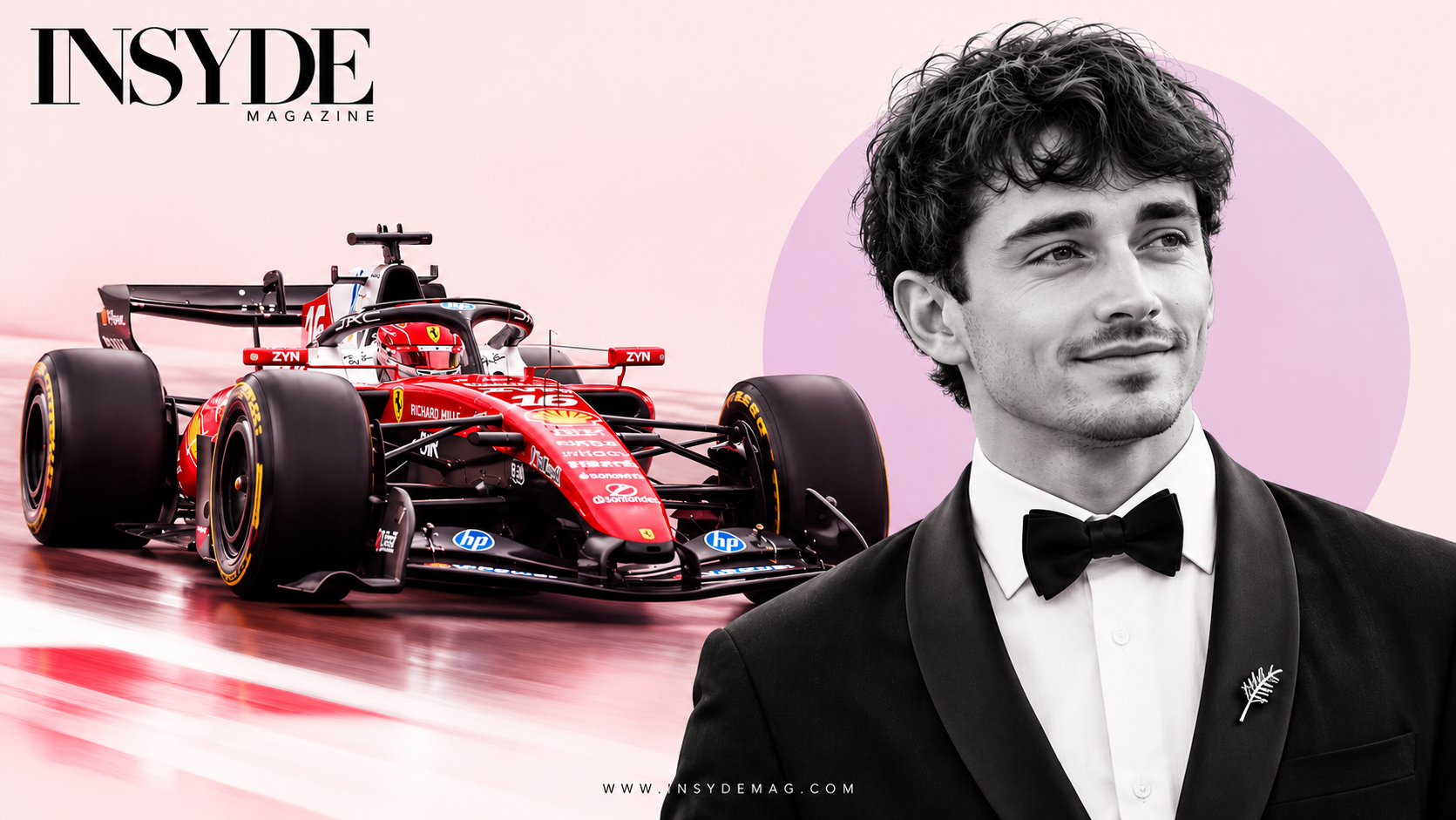
From a road-legal machine inspired by Ferrari’s experimental racing programme to a classic V12 grand tourer, Charles Leclerc’s reported collection offers a closer look at the engineering, heritage and exclusivity behind the Prancing Horse.
INSYDE | PEOPLE · AUTOMOBILES · LUXURY
For Charles Leclerc, Ferrari is more than the name stitched across a racing suit. It is the marque at the centre of his professional life—and, judging by the cars he has been reported to own, a significant part of his personal automotive world.
The Monégasque driver has been associated with some of Maranello’s most compelling road cars: the SF90 XX Stradale, the Daytona SP3, the 488 Pista Spider, the 812 Competizione A and a classic Ferrari 275 GTB. They span different generations of engineering and represent very different ideas of what makes a car extraordinary.
Some are defined by advanced aerodynamics and hybrid power. Others celebrate naturally aspirated engines, sculptural design or a connection to Ferrari’s racing past. Their common thread is not simply speed or scarcity, but the way each car expresses a particular side of the Ferrari identity.
That makes Leclerc’s collection worth examining beyond the usual supercar spectacle. These are not interchangeable symbols of wealth. Each represents a distinct chapter in the evolution of one of the world’s most recognisable automotive names.
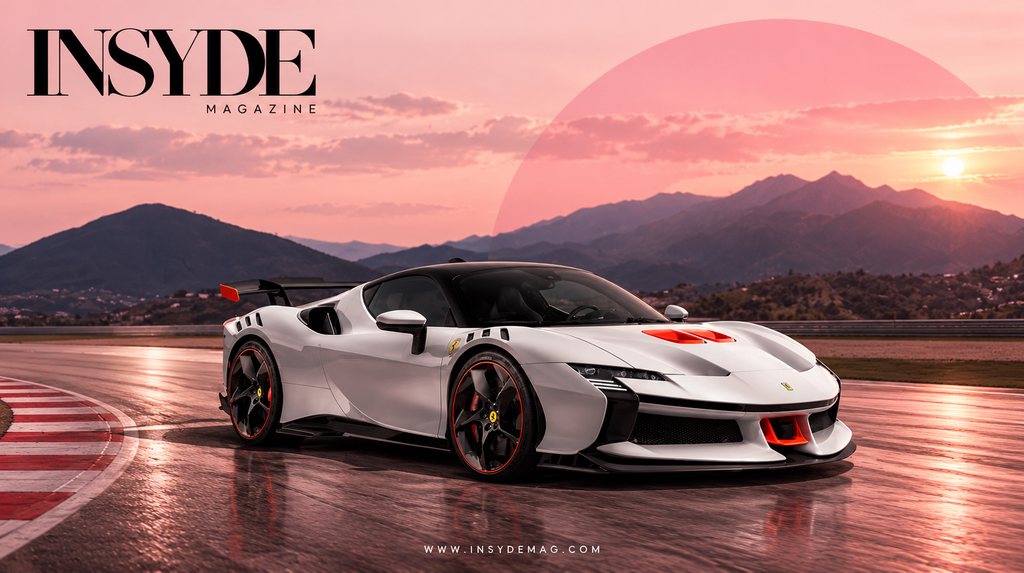
01. Ferrari SF90 XX Stradale — The Road Car That Thinks Like a Race Car
Few modern Ferraris illustrate the company’s pursuit of performance as clearly as the SF90 XX Stradale.
Unveiled in 2023, the model brought Ferrari’s XX philosophy into a road-legal production car for the first time. The XX programme had traditionally been associated with highly specialised machines developed for selected clients to explore extreme performance on the circuit. The SF90 XX Stradale translates that thinking into a car that can also be driven on public roads.
Its powertrain combines a 4.0-litre twin-turbocharged V8 with three electric motors. Ferrari quotes a combined output of 1,030 cv, a claimed 0–100 km/h time of 2.3 seconds and a top speed of 320 km/h.
The engineering story, however, extends beyond the power figure. A fixed rear wing—an unusual feature for a modern road-going Ferrari—works with the car’s wider aerodynamic package to generate up to 530 kg of downforce at 250 km/h. The result is a machine designed to produce substantial aerodynamic grip while retaining the systems required for road use.
Production is limited to 799 coupés, alongside 599 examples of the open-top SF90 XX Spider. That scarcity places the car within Ferrari’s most exclusive contemporary offerings, although limited production should not automatically be interpreted as a guarantee of future investment returns.
Leclerc’s personalised example has been widely reported in a satin-black finish with red details, accents inspired by Monaco’s flag and his racing number, 16. The specification gives the car an individual identity while retaining the unmistakable visual language of Ferrari.
What makes the SF90 XX Stradale especially compelling is the contrast between its technological complexity and its underlying purpose. Electrification is not simply an efficiency measure here; it forms part of a performance system designed to make the car faster and more capable.
For a driver whose professional life is spent extracting performance from a Formula 1 car, the SF90 XX offers a road-going interpretation of the same pursuit: precision, control and speed shaped by engineering.
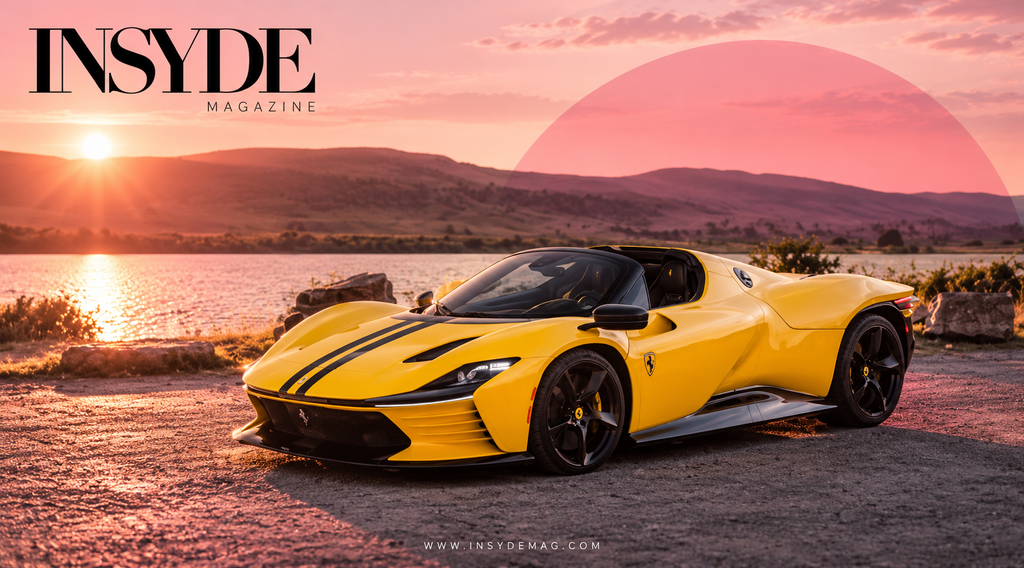
02. Ferrari Daytona SP3 — A Modern Tribute to Racing History
The Daytona SP3 approaches performance from a different direction.
Part of Ferrari’s Icona series, it takes inspiration from the company’s endurance-racing heritage and reinterprets that history through a contemporary design. Its sculpted surfaces, low profile and dramatic proportions give it a presence that feels closer to a moving piece of automotive design than a conventional modern supercar.
Beneath the bodywork sits a naturally aspirated 6.5-litre V12. Ferrari quotes 840 cv at 9,250 rpm, a maximum engine speed of 9,500 rpm and a claimed 0–100 km/h time of 2.85 seconds. The company lists a top speed exceeding 340 km/h.
Those numbers are impressive, but the Daytona SP3’s character is about more than acceleration. Its V12 delivers a different kind of experience from the hybrid-assisted powertrain of the SF90 XX Stradale. Rather than combining combustion and electric power, it places the sound, response and high-revving character of a naturally aspirated engine at the centre of the experience.
The Daytona SP3 is limited to 599 examples. Its place in Ferrari’s Icona family also gives it a distinct role: these cars draw from the marque’s history without simply reproducing an old design.
Leclerc has been reported with a personalised Daytona SP3 finished in matte black, with red and white details associated with Monaco and his racing number. The car’s specification echoes the individual identity of his SF90 XX, despite the two models having very different engineering philosophies.
The Daytona SP3 represents Ferrari looking backwards to move forwards. Its design recalls the company’s racing past, while its powertrain and construction belong firmly to the modern era.
For collectors, that combination of heritage, rarity and contemporary engineering is central to its appeal. For Leclerc, it provides another expression of the marque that defines his professional career.
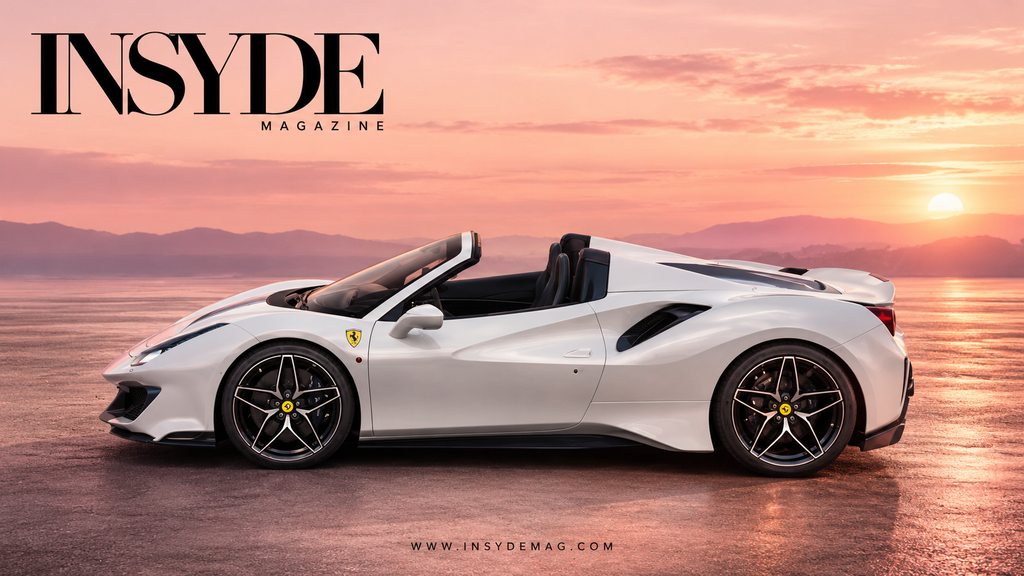
03. Ferrari 488 Pista Spider — Performance Without a Roof
Not every exceptional Ferrari needs hybrid technology or a limited-edition design programme to make its case.
The 488 Pista Spider is a more direct expression of performance, built around the 488 platform and developed with a sharper focus on weight, aerodynamics and driver involvement.
Its 3.9-litre twin-turbocharged V8 produces 720 cv at 8,000 rpm, according to Ferrari’s published specifications. The company quotes a 0–100 km/h time of 2.85 seconds and a top speed of 340 km/h.
The Pista’s development drew on Ferrari’s experience in motorsport, including the aerodynamic and engine work associated with its Challenge racing programme. Changes to the intake layout, lightweight components and other technical details were intended to improve the car’s performance beyond that of the standard 488 Spider.
The Spider configuration adds another dimension. With the roof removed, the relationship between the driver and the engine becomes more immediate. Sound, airflow and the surrounding environment become part of the experience, giving the car a character distinct from that of a closed-cockpit track-focused machine.
Leclerc’s personalised Pista Spider has been reported in a dark finish with red accents, consistent with the visual theme seen on several of his other Ferraris.
Within the collection, it occupies an interesting middle ground. It is less technologically complex than the SF90 XX Stradale and less explicitly heritage-focused than the Daytona SP3. Its appeal lies in the connection between a powerful combustion engine, an open roof and a chassis developed around performance.
It is a reminder that the appeal of a sports car cannot always be reduced to a headline power figure. The way a car communicates with its driver is part of what makes it memorable.
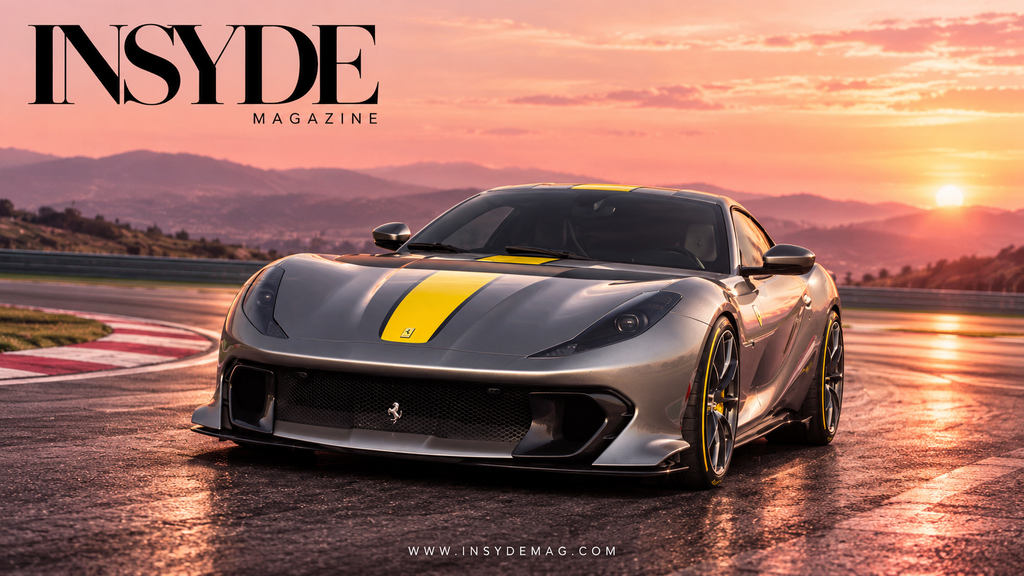
04. Ferrari 812 Competizione A — The V12 at the Centre of the Experience
The Ferrari 812 Competizione A represents one of the most distinctive traditions in Maranello’s road-car history: the high-performance, front-engined V12.
Developed from the 812 Superfast, the Competizione is a more focused interpretation of Ferrari’s large-engined grand touring formula. The Competizione A is its open-top targa counterpart, combining the same performance-led character with the option of open-air driving.
Its naturally aspirated 6.5-litre V12 produces 830 cv at 9,250 rpm and can reach 9,500 rpm. Ferrari quotes a 0–100 km/h time of 2.85 seconds and a maximum speed exceeding 340 km/h for the Competizione family.
The engine is central to the car’s identity. Rather than using turbocharging or hybrid assistance, Ferrari developed the V12 through revisions to components including the con-rods, pistons, crankshaft and intake system. The objective was to improve performance and responsiveness across the rev range while preserving the character of a high-revving naturally aspirated engine.
The Competizione A is limited to 599 examples. Leclerc has been reported with a personalised example in matte white, with exposed carbon-fibre details and his number, 16.
That specification gives the car a more understated appearance than some of the darker machines in his collection, while still connecting it to his personal visual identity.
The Competizione A also captures a particular moment in performance-car development. As electrification becomes increasingly important to the industry, naturally aspirated V12 models remain significant expressions of an engineering philosophy built around engine response, sound and mechanical character.
Its appeal is not simply that it is powerful or rare. It represents an increasingly specialised interpretation of the grand touring Ferrari: a car in which the engine itself remains the main event.
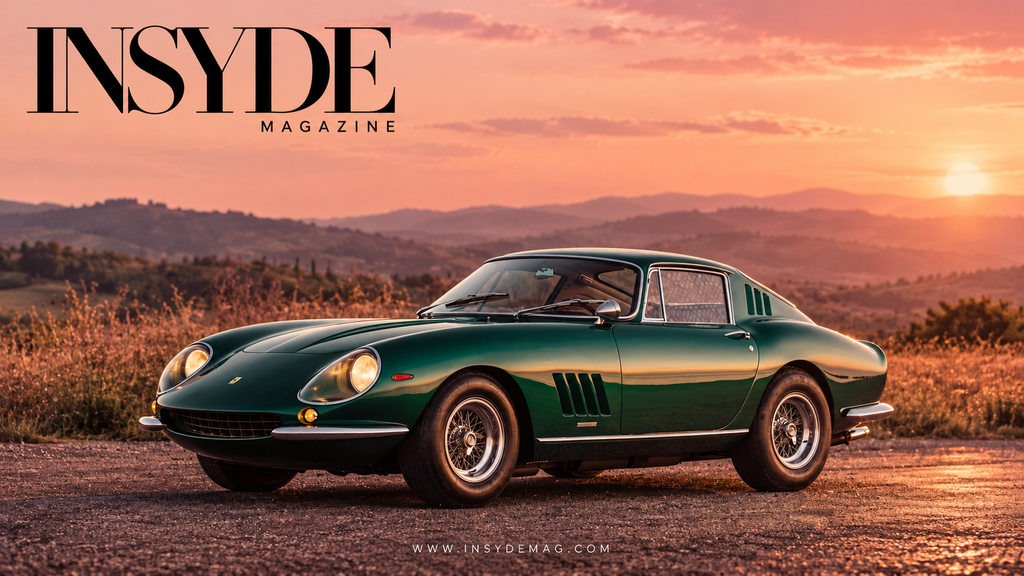
05. Ferrari 275 GTB — When History Becomes Part of the Drive
The classic Ferrari 275 GTB brings the collection into a different era.
Introduced in the 1960s, the 275 GTB belongs to a period when Ferrari was developing increasingly sophisticated road cars while maintaining a close relationship with competition engineering. Its long bonnet, sculptural bodywork and restrained proportions stand in sharp contrast to the complex aerodynamic surfaces of a modern supercar.
The model was powered by a 3.3-litre Colombo V12. Its engineering included a rear transaxle layout, helping with weight distribution, and independent suspension on all four wheels—features that contributed to the evolution of Ferrari’s road cars.
The 275 GTB was produced in multiple configurations, so production numbers and market values depend on the exact version. Certain examples, particularly those with desirable specifications, documented provenance and original components, have achieved multimillion-dollar prices at specialist auctions.
Leclerc’s connection with the model has attracted attention because of his own comments about driving a restored 275 GTB at Ferrari’s Fiorano test circuit. In comments reported by Motorsport.com, he described the experience as pure driving pleasure and reflected on how much automotive engineering has changed since the car’s era.
That observation is particularly revealing coming from a modern Formula 1 driver.
Today’s performance cars rely on sophisticated electronic controls, advanced materials and complex powertrains. A classic Ferrari communicates differently. The engine, steering, brakes and mechanical responses create a more direct relationship between the driver and the machine.
The 275 GTB therefore offers something that a modern performance figure cannot fully capture: the experience of encountering a different period of automotive history from behind the wheel.
Its desirability also illustrates why collector-car values are shaped by more than age or rarity. Originality, condition, provenance, specification and the quality of restoration can all influence a car’s position in the market.
For Leclerc, the appeal of a classic Ferrari sits alongside the technology of his modern machines. It suggests an interest in the evolution of the automobile, not simply its latest performance benchmark.
The Ferrari Connection: Five Cars, Different Philosophies
Viewed together, these five Ferraris reveal the breadth of the marque’s appeal.
The SF90 XX Stradale represents the convergence of hybrid technology, aerodynamics and track-focused engineering. The Daytona SP3 reinterprets racing heritage through a limited-production modern design. The 488 Pista Spider focuses on performance and open-air engagement. The 812 Competizione A celebrates the naturally aspirated V12, while the 275 GTB offers a connection to an earlier generation of automotive engineering.
Their differences are as important as their shared badge.
Ferrari’s identity has been built across decades of racing, road-car development, design and brand storytelling. Its most exclusive cars do not all pursue the same goal. Some are technical showcases; others are celebrations of heritage, engine character or a particular design philosophy.
Leclerc’s reported collection brings those ideas into a single personal context. His relationship with Ferrari begins on the Formula 1 circuit, but the road cars associated with him reveal the many ways the company translates its identity into machines designed for private ownership.
That is what makes the collection interesting beyond its price tags. It provides a way to understand Ferrari not as a single idea of speed or luxury, but as a family of distinct automotive experiences.
Beyond the Price Tag
The luxury-car market often reduces extraordinary vehicles to three numbers: horsepower, production volume and price. Those figures matter, but they do not tell the whole story.
A limited production run does not guarantee appreciation. Auction estimates are not the same as completed transactions, and a car’s eventual value can depend heavily on condition, provenance, originality, maintenance history and wider market demand. Ownership also brings substantial costs that extend beyond the purchase price.
The more meaningful question is what makes a particular machine desirable in the first place.
In Leclerc’s case, the answer appears to lie in the variety of Ferrari’s engineering and design philosophies. These cars offer different ways to experience performance, from the digital precision of a hybrid supercar to the analogue character of a classic V12.
They also illustrate why automotive collecting is not simply about acquiring the most expensive object available. For many enthusiasts, the connection to engineering, history and the experience of driving is what gives a car its lasting significance.
The Final Word
Charles Leclerc’s reported Ferrari collection offers a portrait of a driver whose professional world and personal automotive interests meet under the same emblem.
The SF90 XX Stradale looks towards the future of performance engineering. The Daytona SP3 brings Ferrari’s racing history into a modern form. The 488 Pista Spider and 812 Competizione A explore two different expressions of high-performance combustion power, while the 275 GTB reminds us that the emotional appeal of a car can endure long after its technology has been surpassed.
Together, they show why Ferrari’s position in the luxury world cannot be explained by speed alone. Its appeal rests on the relationship between engineering, design, heritage and the individual character of each machine.
For Leclerc, the Prancing Horse is the symbol on his racing suit. In the cars associated with his private collection, it becomes something more personal: a continuing connection to the machines and ideas that make Ferrari what it is.
INSYDE explores the people, machines and ideas shaping contemporary luxury.
INSYDE – the number one luxury magazine in Bangalore
Editorial sourcing note: Technical specifications in this article are based on Ferrari’s published materials. Details about Leclerc’s personal vehicles are based on public automotive reporting and should be understood as reported ownership, not an independently audited inventory. No total collection valuation is asserted.