
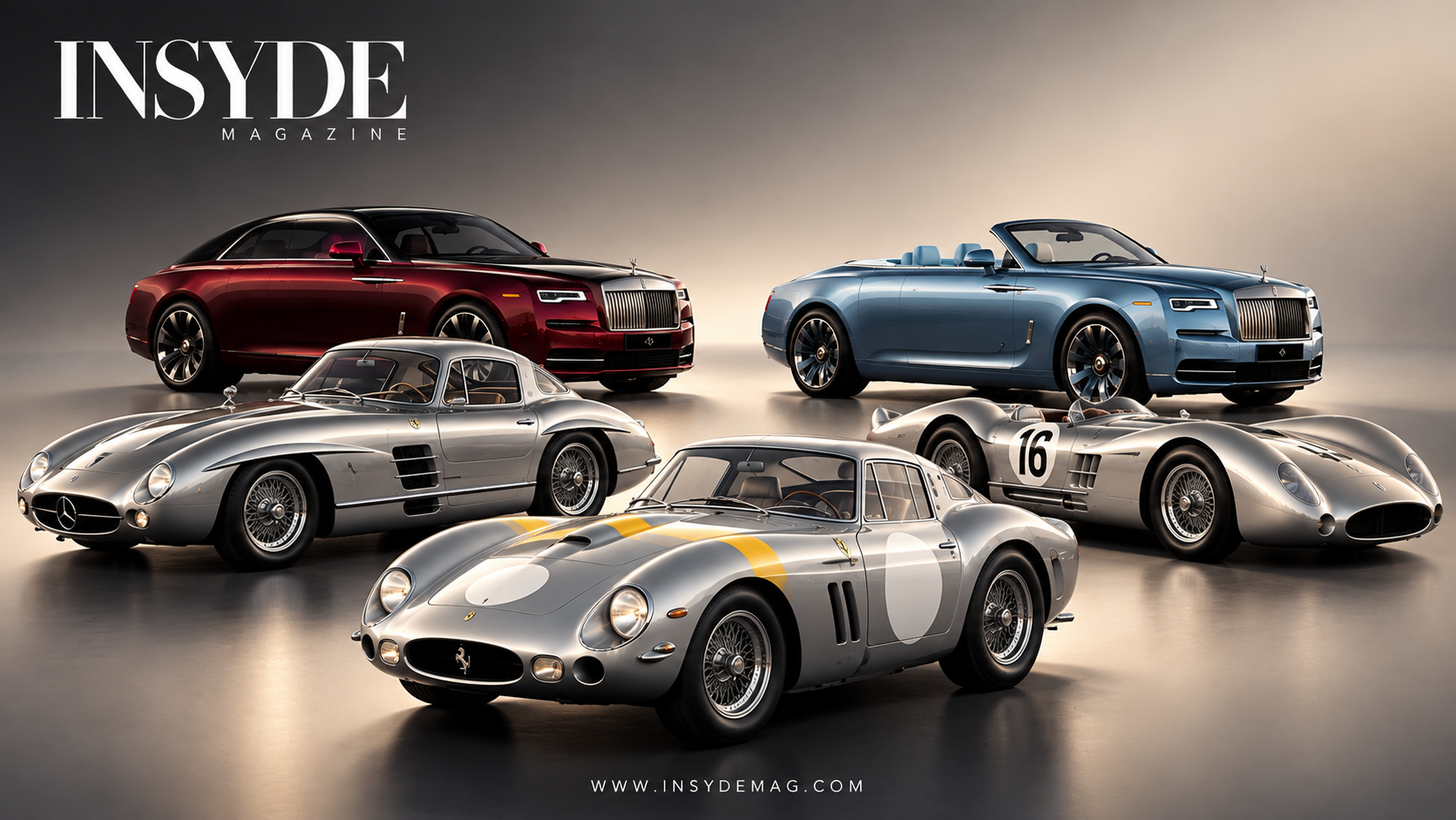
The world’s rarest automobiles — and the fortunes, histories and secrets behind them.
There is expensive.
And then there is unattainable.
At the highest level of the automotive world, price is no longer the only measure of luxury. The truly exceptional automobile is valued for something much harder to acquire: provenance, scarcity, originality, craftsmanship and history.
A car can be worth millions because it is fast.
A very different kind of car can be worth tens of millions because it is irreplaceable.
That distinction is becoming increasingly important as the collector-car market enters a new era.
In 2025, RM Sotheby’s generated more than $1 billion in sales, with 135 automobiles selling for more than $1 million and 75 auction records set across marques and models. Nearly half of its buyers were participating for the first time.
The momentum has continued into 2026, with major European sales producing extraordinary results.
Yet the most valuable cars in the world cannot always be ranked neatly on a spreadsheet.
Some have sold at public auction for documented sums.
Others have changed hands privately, where the transaction price is reported rather than publicly verified.
And then there are modern coachbuilt automobiles whose prices are widely estimated by the market but never officially disclosed by the manufacturer or client.
So this isn’t simply a list of the five cars with the biggest numbers attached to them.
It is a look at five automobiles that represent the different forms of wealth at the top of the collector-car world:
scarcity, provenance, mythology, craftsmanship and exclusivity.
Because when a car becomes rare enough, the question changes.
It is no longer:
“What does it cost?”
It becomes:
“Can anyone else ever own one?”
01
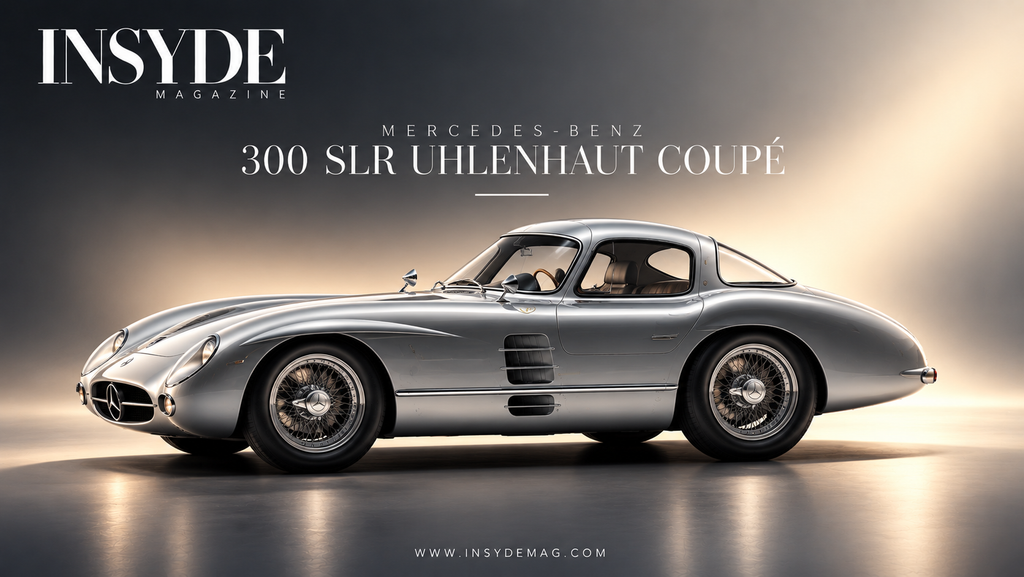
MERCEDES-BENZ 300 SLR UHLENHAUT COUPÉ
€135 MILLION
THE CAR THAT REDEFINED EXPENSIVE
There are very few automobiles that can genuinely be called irreplaceable.
The Mercedes-Benz 300 SLR Uhlenhaut Coupé is one of them.
On 5 May 2022, Mercedes-Benz sold one of the two Uhlenhaut Coupés ever built for €135 million at an exclusive auction at the Mercedes-Benz Museum in Stuttgart.
It remains the defining transaction in the modern collector-car market.
The car is named after Rudolf Uhlenhaut, the legendary Mercedes-Benz engineer responsible for its design. Developed from the engineering of Mercedes-Benz’s extraordinary 300 SLR racing programme, the Coupé represents one of the most ambitious expressions of post-war automotive engineering.
Only two were built.
One remains with Mercedes-Benz.
The other passed into private ownership.
And that private collector has never been publicly identified.
That anonymity feels strangely appropriate.
The Uhlenhaut Coupé isn’t simply an expensive Mercedes-Benz.
It is an artifact from a very specific moment in automotive history — one that cannot be reproduced.
WHY IT COMMANDS THE MONEY
The formula is almost impossible to recreate:
Two examples.
Factory provenance.
Historic engineering.
Motorsport DNA.
Exceptional originality.
A legendary engineer.
There are faster cars.
There are newer cars.
There are more technologically advanced cars.
But there will never be another original Uhlenhaut Coupé.
That is the difference between a very expensive automobile and an irreplaceable one.
WHO OWNS IT?
A private collector.
Mercedes-Benz has not publicly identified the buyer.
THE INSYDE TAKE
The ultimate collector car isn’t necessarily the fastest. It is the one history refuses to repeat.
02
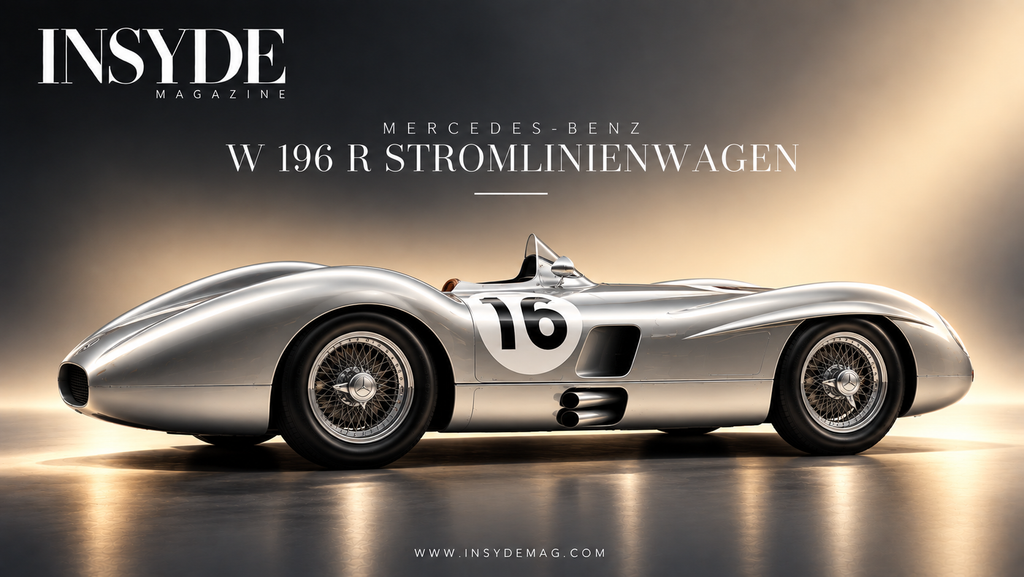
MERCEDES-BENZ W 196 R STROMLINIENWAGEN
€51.155 MILLION
THE SILVER ARROW WITH TWO LEGENDS IN ITS HISTORY
If the Uhlenhaut Coupé represents engineering mythology, the W 196 R represents something even more romantic:
motorsport history.
In February 2025, RM Sotheby’s sold a 1954 Mercedes-Benz W 196 R Stromlinienwagen for €51.155 million.
The transaction became the second-highest public auction result ever recorded for an automobile at that time and the most valuable Grand Prix car ever sold at auction.
But the number is only half the story.
The particular chassis — 00009/54 — was driven by two of the greatest names in racing history.
Juan Manuel Fangio drove the car to victory at the 1955 Buenos Aires Grand Prix.
Later that year, Stirling Moss drove the same chassis at Monza, where it recorded the fastest lap.
This is what makes provenance so powerful.
The car isn’t valuable merely because Mercedes-Benz built it.
It is valuable because history happened inside it.
Only four complete examples of the W 196 R with the factory Streamliner bodywork are known.
The car was donated by Mercedes-Benz to the Indianapolis Motor Speedway Museum in 1965 and remained under the museum’s care for decades before being offered at auction.
WHO OWNS IT?
The new owner’s identity has not been publicly disclosed.
And that matters.
At this level, some collectors are buying history without any desire to become part of the public story themselves.
WHY IT MATTERS
A specialist can rebuild an engine.
A craftsman can recreate bodywork.
A manufacturer can reproduce a design.
But nobody can recreate Fangio winning Buenos Aires in 1955.
That moment belongs exclusively to this chassis.
THE INSYDE TAKE
The rarest luxury isn’t what can be made. It’s what can never happen again.
03
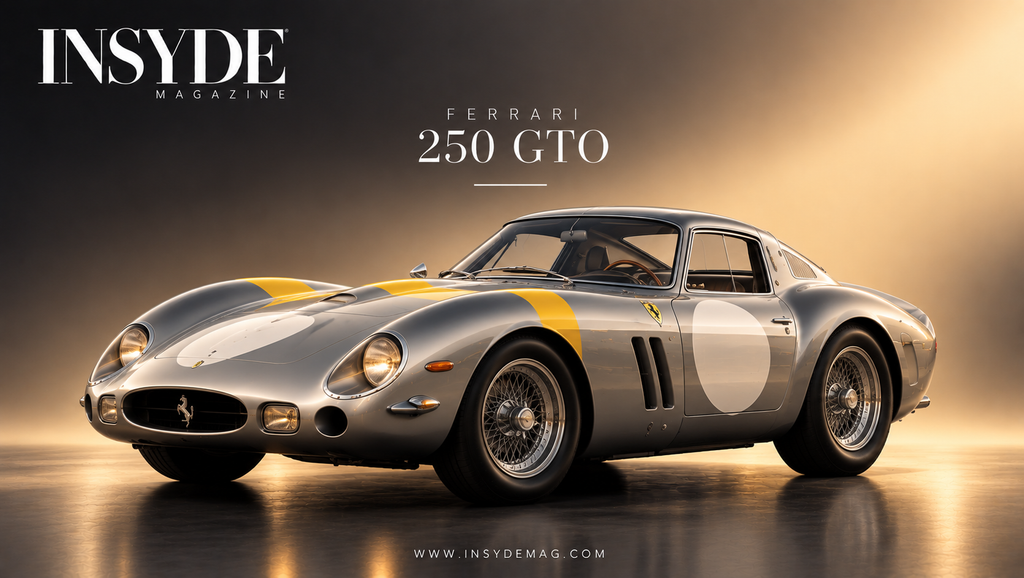
FERRARI 250 GTO — CHASSIS 4153 GT
REPORTED AT APPROXIMATELY $70 MILLION
THE FERRARI THAT BECAME A FINANCIAL PHENOMENON
Few names in the collector-car world carry the same gravitational pull as 250 GTO.
Ferrari produced only 36 examples between 1962 and 1964.
The car was created for competition, and its racing record became an essential part of the mythology surrounding the model.
One particular example, chassis 4153 GT, became one of the most valuable automobiles ever reported to have changed hands privately.
In 2018, the 1963 Ferrari 250 GTO was reported to have been sold for approximately $70 million to American businessman and collector David MacNeil, founder and CEO of WeatherTech.
There is, however, a crucial distinction.
This was a private transaction, not a public auction.
The reported $70 million figure therefore does not have the same level of public verification as the €135 million Uhlenhaut auction result.
For a professional publication, that distinction should remain explicit.
WHO OWNS IT?
David MacNeil.
The WeatherTech founder is a prominent automotive collector, and chassis 4153 GT remains associated with his collection.
WHY THIS GTO?
Because its provenance is exceptional.
Chassis 4153 GT competed at the 1963 24 Hours of Le Mans, where it finished fourth overall.
In 1964, it won the Tour de France Automobile with Lucien Bianchi and Georges Berger.
It is also known for retaining significant original components and for its unusually strong competition history.
This is why the 250 GTO is so difficult to value using ordinary automotive logic.
A modern hypercar can be faster.
It can produce more power.
It can use technologies that Ferrari engineers in the 1960s could never have imagined.
But it cannot become 4153 GT.
The identity is fixed.
The history is fixed.
The number is fixed.
THE 250 GTO EFFECT
The model demonstrates one of the collector market’s most important principles:
historical significance can become more valuable than performance.
The 250 GTO is no longer competing with other Ferraris.
At its highest level, it is competing with fine art, rare watches and other irreplaceable cultural objects.
THE INSYDE TAKE
The ultimate Ferrari isn’t the one with the biggest numbers. It’s the one whose story can never be replicated.
04
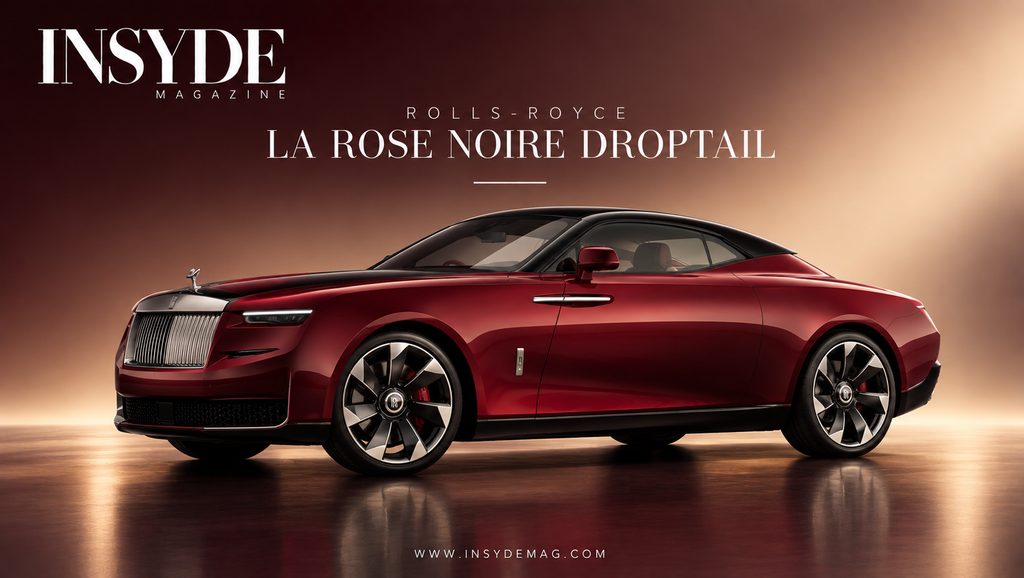
ROLLS-ROYCE LA ROSE NOIRE DROPTAIL
WIDELY REPORTED AROUND $30 MILLION
WHEN A CAR BECOMES ART
At this point, the definition of a luxury automobile begins to blur.
The Rolls-Royce La Rose Noire Droptail isn’t merely a highly exclusive Rolls-Royce.
It is a commissioned work of automotive art.
La Rose Noire was the first of four unique Droptail commissions.
Its inspiration was the Black Baccara rose — a flower that held particular meaning for the commissioning family.
The result is one of the most elaborate modern expressions of coachbuilding ever produced by Rolls-Royce.
Inside the car are 1,603 individual pieces of black sycamore veneer, each hand-finished and positioned to create an abstract interpretation of falling rose petals.
The development of the intricate parquetry took almost two years.
The exterior paint process went through 150 iterations before the final finish was approved.
There is even a removable Audemars Piguet timepiece integrated into the dashboard.
This is not simply bespoke automotive manufacturing.
It is closer to commissioning a piece of contemporary art.
WHO OWNS IT?
The commissioning family.
Rolls-Royce has not publicly identified the clients by name.
WHAT IS IT WORTH?
The figure most frequently associated with La Rose Noire is approximately $30 million.
But INSYDE would not describe that as a confirmed sale price.
Rolls-Royce has not publicly disclosed the transaction value.
The figure should therefore be treated as a reported or estimated market value.
That distinction matters.
THE NEW BESPOKE
Traditional luxury says:
“Choose something few people can afford.”
Modern coachbuilding says:
“Create something nobody else can own.”
That is a fundamentally different proposition.
La Rose Noire was not designed for a demographic.
It was designed around a client.
And that is where ultra-luxury is heading.
THE INSYDE TAKE
The ultimate luxury is not owning something expensive. It’s knowing nobody else can order the same thing.
05
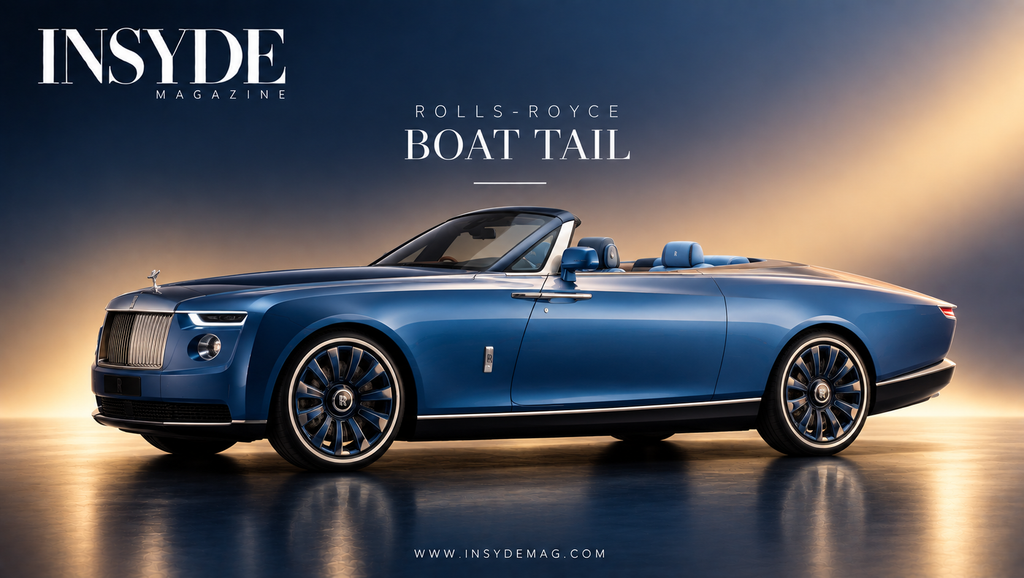
ROLLS-ROYCE BOAT TAIL
WIDELY REPORTED AROUND $28 MILLION
THE CAR THAT TURNED COACHBUILDING INTO A LIFESTYLE
Before Droptail, there was Boat Tail.
Only three examples were completed — and Rolls-Royce says there will only ever be three.
Each was created for a different commissioning client.
Each is unique.
And each tells a different story.
The design draws inspiration from the sweeping forms of classic racing yachts and historic Rolls-Royce Boat Tail automobiles.
Its rear deck opens to reveal an elaborate Hosting Suite, turning the automobile into an environment for entertaining as much as driving.
One Boat Tail was commissioned by a patron whose family business grew from the pearling industry.
Another was created around a different client’s personal history.
The third was never publicly exhibited at the owner’s request.
That detail says something profound about the modern definition of luxury.
For some people, exclusivity isn’t about being photographed with an object.
It is about making sure very few people ever see it.
WHO OWNS THEM?
Three separate private commissioning clients.
Rolls-Royce has not officially disclosed their identities.
There have been numerous celebrity ownership claims surrounding Boat Tail online.
Those claims should not be presented as fact unless independently confirmed by Rolls-Royce or the owners themselves.
For INSYDE, privacy is part of the story.
WHAT IS IT WORTH?
Boat Tail is widely reported at approximately $28 million.
Again, this should be treated as an estimated/reported value, rather than a publicly confirmed transaction price.
WHY BOAT TAIL MATTERS
Boat Tail demonstrates the transformation of the automobile from product into personal expression.
It isn’t about selecting options.
It is about creating an object around a client’s identity, heritage and taste.
In that sense, Rolls-Royce Coachbuild is increasingly operating closer to haute couture than conventional automotive manufacturing.
THE INSYDE TAKE
The new status symbol isn’t the car everyone wants. It’s the car nobody else can commission.
THE FIVE DIFFERENT TYPES OF RARITY
These five automobiles are valuable for different reasons.
And that distinction is important.
THE UHLENHAUT COUPÉ
Rarity through absolute scarcity.
Two examples.
THE W 196 R
Rarity through provenance.
Fangio. Moss. Grand Prix history.
THE 250 GTO
Rarity through mythology.
A fixed production run of 36 cars combined with an extraordinary racing legacy.
LA ROSE NOIRE
Rarity through craftsmanship.
A bespoke object designed around one client.
BOAT TAIL
Rarity through exclusivity.
Three cars. Three clients. Three completely individual creations.
This is why the phrase “most expensive car” can be misleading.
Price is only one part of the equation.
THE NEW CURRENCY OF AUTOMOTIVE LUXURY
The collector-car market is increasingly behaving like the market for fine art, watches and jewellery.
The object itself matters.
But the story surrounding the object can matter even more.
01 — SCARCITY
At the top of the market, production numbers become part of the product.
Two Uhlenhaut Coupés.
Four complete W 196 R Streamliners.
Thirty-six 250 GTOs.
Four Droptail commissions.
Three Boat Tails.
Every additional example could dilute the mythology.
Scarcity therefore isn’t simply a consequence of production.
It becomes a form of value.
02 — PROVENANCE
A car’s history can become more valuable than its machinery.
Fangio’s name isn’t attached to the W 196 R because Mercedes-Benz created a special edition bearing his name.
He actually drove it.
That difference is everything.
The collector is not buying a specification.
They are buying a connection to a moment that already happened.
03 — CRAFTSMANSHIP
Rolls-Royce has taken bespoke production into territory traditionally associated with haute couture, jewellery and fine art.
1,603 individually positioned pieces of veneer.
150 paint iterations.
A bespoke timepiece.
A handcrafted Hosting Suite.
The value isn’t simply in the materials.
It is in the human time required to create them.
04 — PRIVACY
Perhaps the most fascinating luxury of all.
The higher the value becomes, the less transparent ownership can be.
The Uhlenhaut buyer is anonymous.
The W 196 R buyer is undisclosed.
Rolls-Royce’s coachbuilt patrons remain private.
The Ferrari 250 GTO transaction happened away from a public auction.
In a culture increasingly obsessed with displaying wealth, the ultra-high-end collector market often moves in the opposite direction.
The ultimate flex may be not showing the object at all.
WHAT THE 2026 COLLECTOR-CAR MARKET IS TELLING US
The collector-car market is not simply surviving.
It is becoming more sophisticated.
RM Sotheby’s reported more than $1 billion in sales during 2025, its strongest year to date.
The company sold 135 cars for more than $1 million, achieved a 92% sell-through rate across its live auctions and attracted buyers from 54 countries.
Perhaps most revealingly, 47% of buyers were participating for the first time.
That suggests the collector-car world is attracting a new generation of wealth.
And those buyers are not necessarily looking for the same things their predecessors wanted.
The market is becoming increasingly segmented.
At one end are historically significant automobiles whose value is driven by provenance, competition history and originality.
At the other are modern hypercars and coachbuilt commissions, where exclusivity, craftsmanship and personalisation dominate.
The two categories may look completely different.
But economically, they share the same fundamental principle:
limited supply + exceptional desirability + wealthy demand.
The 2026 auction calendar has reinforced that appetite.
RM Sotheby’s Monaco sale in April 2026 generated approximately €87.97 million, becoming the auction house’s highest-grossing multi-car auction ever held in Europe.
A 1961 Ferrari 250 GT SWB California Spider alone achieved €16.655 million, setting a new auction record for the model.
The significance isn’t simply the size of the numbers.
It is what buyers are rewarding.
History.
Condition.
Provenance.
Rarity.
And increasingly, exceptional specification.
THE CLASSIC CAR IS BECOMING A CULTURAL ASSET
The collector-car market has moved far beyond the idea of wealthy people buying old cars.
The very best automobiles are increasingly being treated as cultural assets.
They appear at concours events.
They are displayed in private museums.
They are loaned to exhibitions.
They become part of family collections.
Some are driven in historic competition.
Others spend years hidden inside climate-controlled garages.
And a handful become almost mythical objects that rarely appear in public.
This creates a fascinating paradox.
The more valuable the car becomes, the less likely it may be to function like a conventional car.
It becomes an asset.
A historical document.
A work of design.
A piece of mechanical art.
Sometimes, all four.
WHY MONEY ALONE ISN’T ENOUGH
There is a misconception that the world’s wealthiest collectors simply buy whatever they want.
At this level, that isn’t necessarily true.
Money can open the door.
It cannot manufacture provenance.
It cannot create an original racing history.
It cannot make Ferrari build another 250 GTO.
It cannot make Mercedes-Benz produce another original Uhlenhaut Coupé.
And it cannot persuade Rolls-Royce to make a second La Rose Noire for someone else.
This is the paradox of ultra-luxury.
The more money enters the market, the more valuable genuine scarcity becomes.
If everyone can buy it, it stops being extraordinary.
If only one person can own it, desire becomes almost limitless.
THE INSYDE FIVE
01 — MERCEDES-BENZ 300 SLR UHLENHAUT COUPÉ
€135 million
Confirmed 2022 auction result
Two built
Private collector — identity undisclosed
02 — MERCEDES-BENZ W 196 R STROMLINIENWAGEN
€51.155 million
Confirmed 2025 auction result
One of four complete Streamliner examples
Buyer undisclosed
03 — FERRARI 250 GTO — 4153 GT
Approximately $70 million
Reported 2018 private transaction
One of 36 Ferrari 250 GTOs
David MacNeil
04 — ROLLS-ROYCE LA ROSE NOIRE DROPTAIL
Approximately $30 million — reported/estimated
One of four Droptail commissions
Private commissioning family
05 — ROLLS-ROYCE BOAT TAIL
Approximately $28 million — reported/estimated
Three ever made
Private commissioning clients
FINAL WORD
The world’s rarest cars don’t ask:
“How much can you afford?”
They ask:
“How badly do you want something nobody else can have?”
At the highest level of luxury, price is merely the beginning.
The real value lies somewhere deeper:
In the story.
In the craftsmanship.
In the provenance.
In the scarcity.
And in the knowledge that, somewhere in the world, there is an automobile that cannot simply be ordered, reproduced or replaced.
Because the rarest luxury isn’t necessarily the most expensive thing.
It is the thing that money cannot make again.
INSYDE
The leading voice of luxury.