Category: Uncategorized

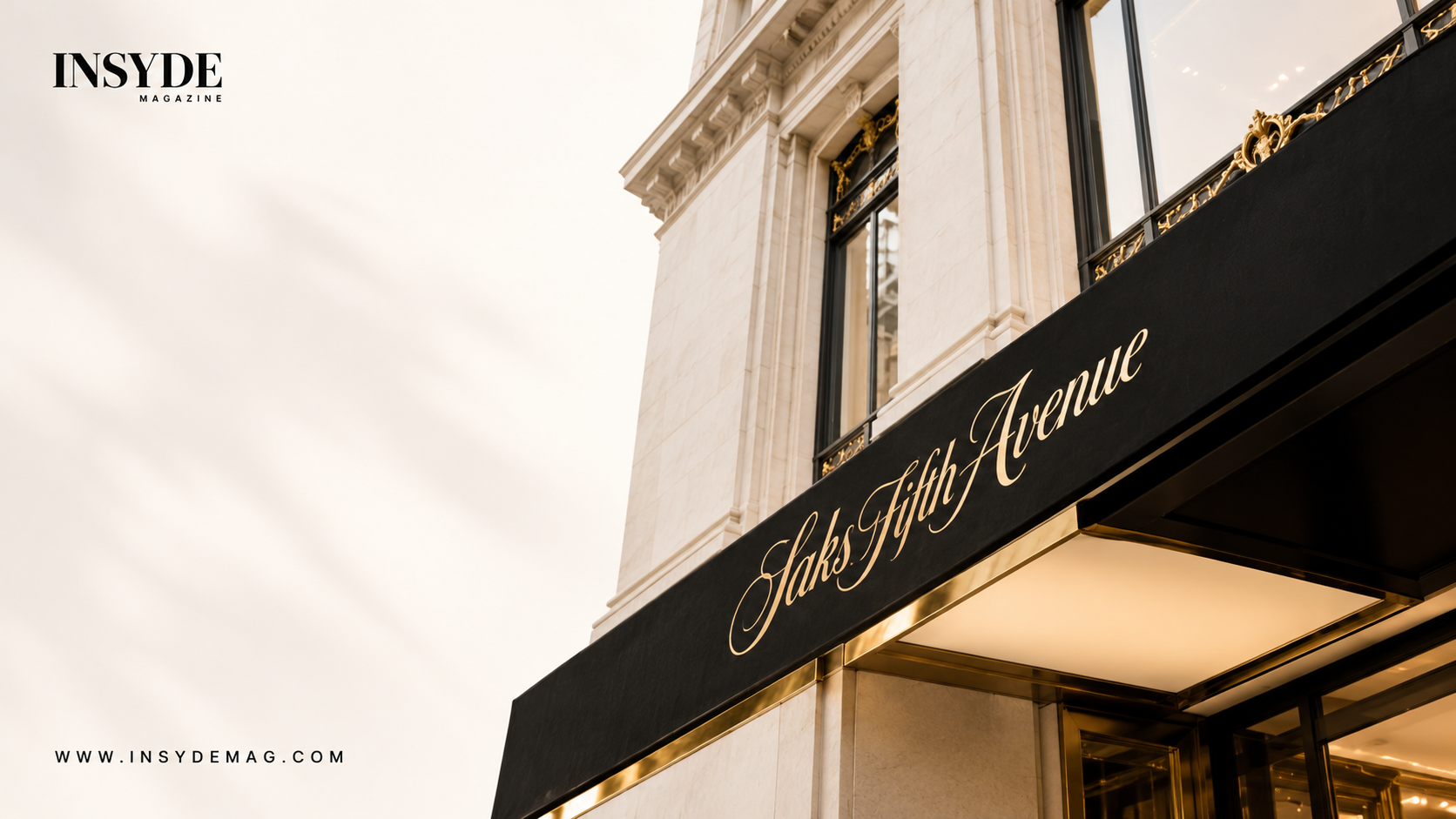
  • SAKS’ $2.7 BILLION GAMBLE

    SAKS’ $2.7 BILLION GAMBLE

    How a landmark acquisition, mounting debt and a breakdown in supplier confidence pushed an American luxury retail institution into bankruptcy — and what its restructuring reveals about the future of luxury shopping.

    Luxury has always sold more than a product. It sells access, identity and the feeling that something ordinary has been transformed into something exceptional.

    For generations, Saks Fifth Avenue understood that proposition. Its celebrated New York flagship became a symbol of American luxury shopping, connecting international fashion houses with customers who expected exceptional merchandise, personal service and an experience that extended beyond the transaction.

    Alongside Neiman Marcus and Bergdorf Goodman, Saks occupied a distinctive position in the American retail landscape. These were not simply stores selling expensive clothes. They were institutions built around the idea that how luxury is discovered and purchased matters almost as much as what is purchased.

    In 2024, the company behind Saks made a bet on that legacy.

    A $2.65 billion acquisition of Neiman Marcus Group, widely reported as a $2.7 billion deal, brought Neiman Marcus and Bergdorf Goodman under the same corporate umbrella as Saks Fifth Avenue. The ambition was to create a more powerful luxury retail group — one with greater purchasing scale, broader customer reach and the technology to compete in a rapidly changing market.

    Instead, barely thirteen months after completing the transaction, the enlarged group filed for Chapter 11 bankruptcy protection.

    The company entered bankruptcy on 13 January 2026 with approximately $3.4 billion in funded debt obligations. Supplier-payment problems and inventory shortages had become serious operational concerns. The crisis threatened the commercial relationships on which a luxury department store depends.

    Yet the story did not end with bankruptcy. On 26 June 2026, the restructured company emerged under a new corporate name: Exemplar Luxury Group, with debt reduced by nearly 75%, according to its announcement. Saks Fifth Avenue, Neiman Marcus and Bergdorf Goodman remained part of the portfolio.

    The brands survived. The financial structure that brought them together did not.

    This is the story of a luxury acquisition that promised scale but exposed financial fragility — and of an industry in which heritage, desirable merchandise and wealthy customers cannot compensate indefinitely for a business that struggles to pay its suppliers.

    THE AMBITION: BUILDING A LUXURY POWERHOUSE

    The logic behind the Neiman Marcus acquisition was easy to understand.

    Saks Fifth Avenue brought national recognition and a celebrated flagship. Neiman Marcus had a strong presence in affluent American markets, while Bergdorf Goodman occupied a particularly rarefied position in New York luxury retail. Each brand had its own identity, customer base and place in the market.

    Bringing them together promised a larger platform for selling luxury goods.

    The acquisition was announced at an enterprise value of approximately $2.65 billion in July 2024 and completed in December of that year. The resulting Saks Global combined Saks Fifth Avenue, Neiman Marcus, Bergdorf Goodman and the Saks OFF 5TH off-price business.

    The strategy centred on several potential advantages.

    A larger retailer could negotiate more effectively with suppliers, improve distribution, consolidate back-office operations and invest in technology across a broader customer base. It could also use customer data more effectively, connect online and in-store shopping, and create more opportunities for product discovery.

    The deal attracted high-profile technology partners. Amazon and Salesforce were expected to contribute expertise in areas including fulfilment, supply-chain operations and customer data.

    The ambition was not merely to own more stores. It was to create a more technologically capable luxury retailer.

    But there was a critical distinction between the strategic promise and the financial reality.

    A merger can create opportunities for efficiency. It does not guarantee that those efficiencies will arrive quickly enough, generate enough cash or outweigh the financial obligations incurred to complete the transaction.

    Luxury retail is particularly demanding in this respect. A department store must finance inventory, maintain expensive locations, employ specialist staff, invest in digital operations and settle supplier invoices. It must do all of this while keeping merchandise fresh and the customer experience compelling.

    The acquisition expanded the group’s reach. It also left the combined business needing to demonstrate that its new scale could support its financial commitments.

    That was the gamble at the heart of the deal.

    THE DEBT BEHIND THE DEAL

    The acquisition’s significance becomes clearer when viewed through the company’s balance sheet.

    Saks Global filed for bankruptcy protection in January 2026 with approximately $3.4 billion in funded debt obligations, according to reporting based on its bankruptcy filings.

    The figure matters because debt changes how a retailer can respond to pressure.

    Borrowing is not inherently a mistake. Companies use debt to acquire businesses, invest in infrastructure and finance growth. The risk arises when the cost of servicing that debt leaves insufficient flexibility to manage the operating business.

    For a department store, cash is constantly moving through a demanding cycle. Merchandise must be ordered and paid for; stores and employees must be funded; products must be sold; and the resulting cash must support both future inventory and other financial obligations.

    If too much cash is committed to debt service, the business has less room to absorb weak sales, delays in customer spending, unexpected expenses or slower-than-anticipated integration benefits.

    The problem can become self-reinforcing.

    A retailer under liquidity pressure may struggle to pay suppliers. Reduced supplier confidence can restrict merchandise availability. Less inventory can weaken sales, leaving the business with even less cash to stabilise operations.

    The result is a dangerous mismatch between the capital required to run the business and the cash available to support it.

    This is why the distinction between the acquisition price and the company’s subsequent debt burden matters. The $2.65 billion enterprise value was the reported value of the transaction; the approximately $3.4 billion in funded debt at the bankruptcy filing was a separate measure of the group’s financial obligations.

    They should not be treated as interchangeable figures.

    The broader lesson is that an acquisition’s success cannot be judged by the prestige of the assets acquired or the size of the combined organisation. It must be judged by whether the business can generate enough cash to support the structure created around it.

    In Saks’ case, that structure proved unsustainable in its existing form.

    WHEN A FINANCIAL CRISIS REACHED THE SHELVES

    A luxury department store has a problem when it cannot reliably secure the products that made it desirable in the first place.

    During the period leading up to bankruptcy, Saks Global struggled with supplier payments and merchandise availability. The consequences extended beyond its finance department. They threatened the retailer’s ability to offer customers the assortment they expected.

    For luxury houses, distribution is carefully managed. Brands choose where their products appear, how they are presented and which retail partners represent them. The relationship with a department store involves not only sales, but also positioning, service and the protection of a brand’s image.

    Payment reliability is part of that relationship.

    When a retailer falls behind on invoices, suppliers must decide how much commercial risk they are prepared to accept. They may seek stronger payment terms, limit exposure or pause shipments until outstanding concerns are resolved.

    That creates a particular problem for a multi-brand retailer.

    Its value depends on bringing desirable products together in one place. Customers may visit for a specific designer, collection or new-season item. If that merchandise is unavailable, the customer has alternatives: another department store, a competing retailer or the brand’s own boutique or website.

    The retailer loses more than a potential transaction. It risks losing the customer’s reason to return.

    Court filings reported by Reuters showed the scale of Saks Global’s exposure to luxury suppliers. Chanel was listed among its major unsecured creditors with a claim of approximately $136 million, while Kering, the owner of Gucci, was listed at around $60 million. The top 30 unsecured creditors collectively represented approximately $712 million in claims.

    These figures illustrate the scale of the commercial relationships involved. They do not establish that every listed supplier withdrew merchandise or stopped shipping.

    The broader problem was confidence.

    By March 2026, Reuters reported that more than 500 brands had resumed shipping products to Saks Global and that the company had released nearly $1.3 billion in retail receipts — a measure of merchandise value, not revenue earned. The development suggested that supplier relationships and inventory flows were beginning to recover during the bankruptcy process.

    It also revealed how far the crisis had reached.

    The retailer’s financial difficulties had become an inventory problem, and its inventory problem had become a customer-experience problem.

    For a business built around access to desirable goods, that is a fundamental threat.

    THE DEPARTMENT STORE’S CHANGING PLACE IN LUXURY

    Saks was not operating in the same retail environment that had shaped its historic success.

    Luxury brands have spent years investing in their own boutiques, websites, clienteling systems and direct relationships with customers. These channels allow brands to control presentation, service, customer data and the way their products reach the market.

    Department stores still offer something valuable: curation across multiple designers, the convenience of shopping several brands in one place and the possibility of discovering products a customer might not otherwise encounter.

    But the department-store proposition must justify its role.

    A luxury house may increasingly ask whether a wholesale partner provides enough incremental reach, sales and customer value to justify the commercial terms. A shopper may ask whether visiting a department store offers a better experience than purchasing directly from the brand.

    The department store sits between these two questions.

    It needs brands to provide desirable merchandise, and it needs customers to believe that shopping through the retailer is worthwhile. Its commercial value depends on delivering a strong experience to both sides.

    That model becomes more difficult when financial pressure compromises the very things that make the store attractive.

    A retailer cannot consistently promise exceptional curation without access to the right products. It cannot provide outstanding service indefinitely without investing in staff, technology and physical spaces. And it cannot rebuild its reputation if customers repeatedly encounter gaps in availability.

    The challenge is not that department stores have become irrelevant. It is that their relevance can no longer be assumed.

    They must offer a compelling reason to exist in a market where luxury brands have greater control over distribution and customers have more ways to shop.

    Saks’ difficulties exposed what happens when the financial capacity to deliver that proposition begins to weaken.

    THE WIDER LUXURY MARKET ADDED PRESSURE

    The luxury market has also become more challenging.

    On 6 October 2026, Reuters reported that US luxury spending had declined year over year for a third consecutive month, based on Citi credit-card data. Spending was down 6% in September, following declines of 4% in July and August.

    The data suggested that even affluent consumers were approaching some luxury purchases more cautiously amid economic uncertainty.

    A separate Reuters report on 9 October described additional pressure from China’s tax crackdown on wealthy individuals, alongside weaker US spending and wider market concerns. Chinese consumers have historically been important to global luxury demand, so developments affecting their spending can influence the industry’s outlook well beyond China.

    These figures provide relevant context for Saks’ restructuring. They do not prove that a luxury slowdown caused its bankruptcy.

    The company’s difficulties were rooted in a combination of financial obligations, liquidity pressure and supplier-payment problems. A weaker consumer environment made recovery more challenging, but it was not a sufficient explanation for the crisis on its own.

    This distinction matters.

    Luxury businesses do not all respond to market weakness in the same way. Their performance depends on customer mix, pricing, product categories, distribution strategy, operating costs and financial resilience.

    A retailer already struggling to pay suppliers has less flexibility when sales disappoint. It has fewer resources to replenish inventory, invest in its stores or absorb the cost of rebuilding confidence.

    The market slowdown therefore acted as an additional pressure on an already vulnerable business.

    The mistake would be to interpret Saks’ bankruptcy as evidence that luxury demand had simply disappeared. The more useful conclusion is that difficult market conditions can expose weaknesses that a stronger balance sheet might otherwise have helped a retailer withstand.

    WHY SCALE WAS NOT ENOUGH

    The promise of a merger is usually expressed in future benefits.

    A combined organisation may expect to reduce duplicated costs, improve purchasing power, streamline logistics and make better use of technology. But these benefits must be realised through execution.

    Integration takes time. Systems must be connected, supplier agreements managed, store portfolios reviewed and operating decisions coordinated. Management must also determine which parts of the business should be combined and which should remain distinct.

    Meanwhile, financial obligations continue.

    If debt and operating costs rise faster than the expected benefits of consolidation, a larger organisation can become more fragile rather than more resilient.

    The Saks transaction illustrates this risk.

    The group brought together three recognised luxury retail names and a substantial portfolio of stores. Yet the combined business still had to prove that its scale could translate into reliable cash generation.

    The bankruptcy filing showed that the original structure could not sustain its obligations and operating needs.

    It would be wrong to conclude that the acquisition alone explains every weakness in the business. Saks Global inherited an industry facing structural changes, and its individual retail brands had different histories and operating challenges.

    But the transaction intensified the importance of financial execution. Once the combined group struggled to maintain supplier payments and merchandise availability, the intended benefits of scale became harder to realise.

    The central lesson is not that consolidation never works. It is that consolidation cannot substitute for financial resilience.

    A larger business may have more opportunities. It also has more obligations to manage.

    JANUARY 2026: BANKRUPTCY AS A RESET

    On 13 January 2026, Saks Global filed for Chapter 11 bankruptcy protection in the United States.

    Chapter 11 allows an eligible company to reorganise its finances under court supervision while seeking to continue operating. It does not automatically mean that every store will close or that every brand will disappear.

    For Saks Global, the process created a route to restructure debt, secure new funding, close underperforming locations and work towards restoring supplier confidence.

    The restructuring plan involved significant sacrifices.

    Reuters reported in June that the court-approved plan would eliminate the company’s existing equity and transfer control to its senior lenders. The plan included $1 billion in new funding from senior lenders and a further $500 million commitment after the company emerged from bankruptcy.

    These were not cosmetic changes. They represented a substantial shift in ownership and financial structure.

    The group also reduced its store footprint. The plan approved in June called for a portfolio of 49 luxury retail locations: 33 Neiman Marcus stores, 15 Saks Fifth Avenue stores and the two-store Bergdorf Goodman operation in New York.

    The reduction in Saks Fifth Avenue’s footprint was especially significant, from approximately 33 stores before bankruptcy to 15 under the approved plan.

    A smaller network can reduce fixed costs and concentrate resources on locations with stronger commercial potential. But it also reduces geographic reach and changes the role of the retailer in markets where it no longer has a physical presence.

    The strategy is a trade-off: operate fewer stores, invest more selectively and attempt to improve the performance of the remaining business.

    Whether that strategy succeeds depends on execution, not simply on the number of stores closed.

    JUNE 2026: A NEW NAME, A DIFFERENT BALANCE SHEET

    On 26 June 2026, the company announced that it had completed its restructuring and emerged from Chapter 11 under the name Exemplar Luxury Group.

    The group said its debt had been reduced by nearly 75% and that it had sufficient liquidity to support its operations and invest in its future. It continued to include Saks Fifth Avenue, Neiman Marcus and Bergdorf Goodman.

    The debt reduction was substantial. It gave the restructured business a materially different financial starting point.

    But lower debt should not be confused with a completed recovery.

    A stronger balance sheet can reduce financial pressure and create room for investment. It does not automatically restore every supplier relationship, guarantee profitable trading or persuade customers to return.

    Nor does the completion of bankruptcy prove that the acquisition strategy has been vindicated. The restructuring involved a major reduction in debt, a transfer of control to senior lenders and a smaller store network. Those are significant changes to the original proposition.

    The new group now faces a different test.

    Can it operate the three retail brands with greater financial discipline? Can it maintain reliable merchandise flows? Can it deliver a distinctive experience while controlling costs? And can it generate sustainable profits without recreating the pressures that led to bankruptcy?

    Those questions will determine whether the restructuring becomes a genuine turnaround or simply a temporary reprieve.

    The corporate name has changed. The operating challenge has not disappeared.

    WHAT SAKS REVEALS ABOUT THE FUTURE OF LUXURY RETAIL

    The Saks story offers three important lessons for the wider luxury industry.

    First, prestige cannot replace liquidity.

    A recognised name, a celebrated flagship and access to desirable designers are valuable assets. But a retailer must still pay for inventory, fund its stores, meet its financial obligations and maintain supplier confidence. Brand equity cannot permanently compensate for a business that lacks the cash to operate.

    Second, supplier relationships are strategic assets.

    For a multi-brand retailer, merchandise availability is central to its appeal. A breakdown in supplier confidence can affect the assortment, weaken customer experience and undermine the retailer’s credibility. Restoring those relationships may be as important as reducing debt.

    Third, scale is valuable only when it produces better economics.

    A merger can create opportunities for efficiency and customer growth. It can also increase complexity and financial obligations. If the benefits arrive too slowly, the larger organisation may become less flexible precisely when it needs to be most resilient.

    There is a fourth lesson, too: the future of the department store depends on differentiation.

    A retailer must give customers a reason to choose its environment over a brand’s own boutique or website. That reason might be exceptional curation, personalised service, access to multiple designers, exclusive merchandise or a physical experience that feels genuinely distinctive.

    It must also give brands a reason to maintain the relationship.

    For luxury department stores, success depends on making both sides believe that the intermediary adds value. That is a demanding proposition, but it remains possible.

    The industry does not need fewer places to discover luxury simply because direct-to-consumer retail has grown. It needs multi-brand retailers that are financially disciplined, commercially reliable and relevant to the way customers shop today.

    Saks’ restructuring is a test of whether that model can be rebuilt on a more sustainable foundation.

    THE REAL PRICE OF THE GAMBLE

    The $2.65 billion Neiman Marcus acquisition was designed to create a more powerful force in American luxury retail. It brought together three established names and promised greater scale, technological capability and access to affluent customers.

    Instead, the combined group entered bankruptcy protection barely thirteen months after the deal closed, with approximately $3.4 billion in funded debt obligations and serious problems involving supplier payments and inventory availability.

    The acquisition was a central part of the story, but it was not the only factor. The broader retail environment was changing, luxury brands were strengthening their direct channels, and the business faced operational pressures that the merger’s promised benefits did not resolve quickly enough.

    By June 2026, the company had emerged with a new corporate identity, substantially reduced debt and a smaller store network. The retail names at the heart of the original ambition remained.

    What remains unproven is whether the new structure can deliver durable, profitable growth.

    That will depend on the fundamentals: cash generation, merchandise availability, supplier confidence, customer experience and disciplined investment. It will depend on whether the group can preserve the distinctiveness of its brands while operating them more efficiently.

    Saks’ story is not proof that luxury is finished, or that department stores no longer have a place in the market. It is a warning that prestige and scale cannot protect a retailer indefinitely when its financial structure undermines its ability to deliver what customers and suppliers expect.

    In luxury, a name can open the door.

    It cannot pay the bills.

    And no matter how desirable the merchandise, a retail empire cannot survive for long if it cannot reliably get that merchandise onto the shelves.

    INSYDE Magazine — Where luxury, culture and influence meet.
    NO.1 LUXURY MAGAZINE IN BENGALORE
  • TOO RARE TO OWN

    TOO RARE TO OWN

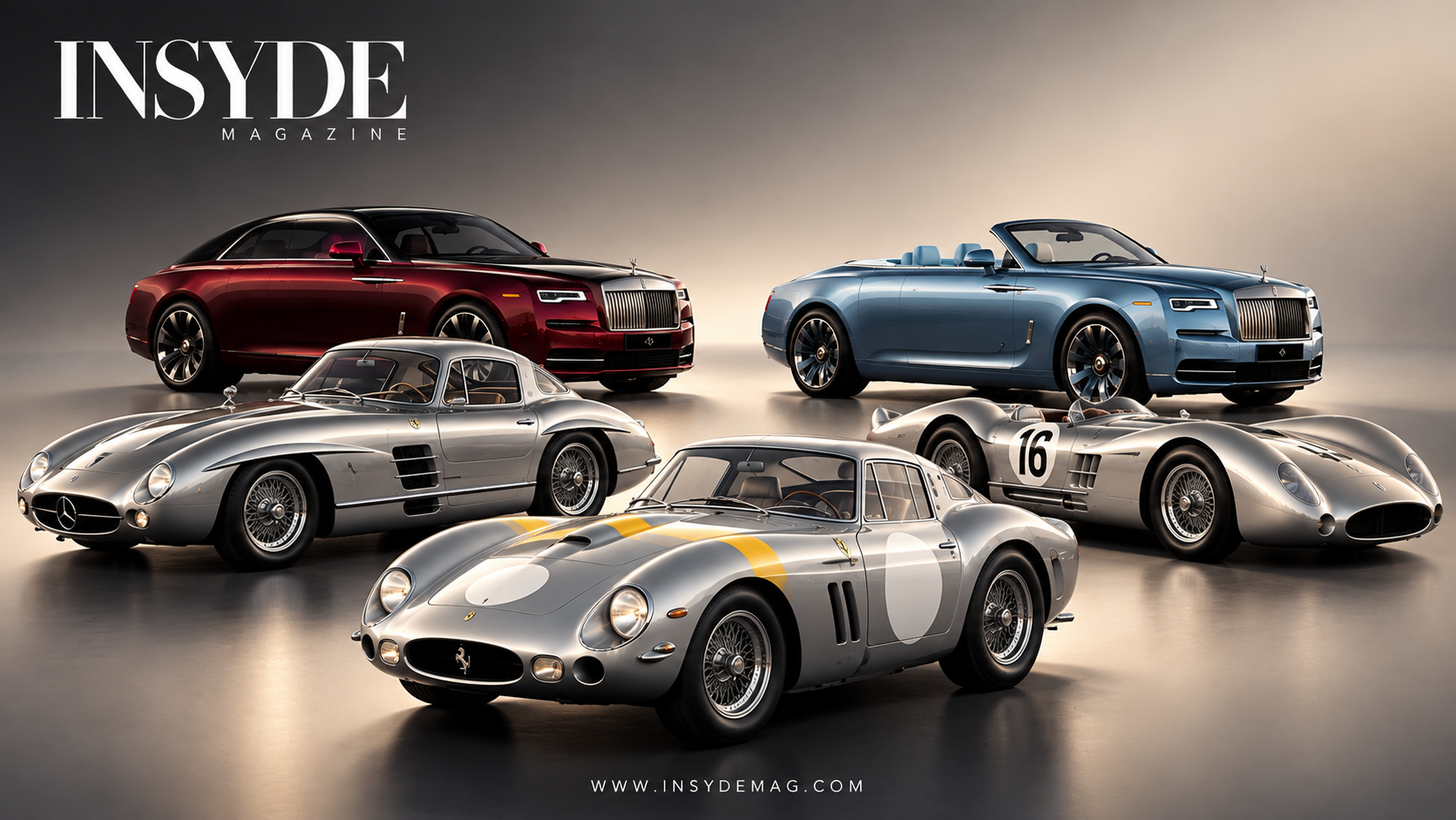
    The world’s rarest automobiles — and the fortunes, histories and secrets behind them.

    There is expensive.

    And then there is unattainable.

    At the highest level of the automotive world, price is no longer the only measure of luxury. The truly exceptional automobile is valued for something much harder to acquire: provenance, scarcity, originality, craftsmanship and history.

    A car can be worth millions because it is fast.

    A very different kind of car can be worth tens of millions because it is irreplaceable.

    That distinction is becoming increasingly important as the collector-car market enters a new era.

    In 2025, RM Sotheby’s generated more than $1 billion in sales, with 135 automobiles selling for more than $1 million and 75 auction records set across marques and models. Nearly half of its buyers were participating for the first time.

    The momentum has continued into 2026, with major European sales producing extraordinary results.

    Yet the most valuable cars in the world cannot always be ranked neatly on a spreadsheet.

    Some have sold at public auction for documented sums.

    Others have changed hands privately, where the transaction price is reported rather than publicly verified.

    And then there are modern coachbuilt automobiles whose prices are widely estimated by the market but never officially disclosed by the manufacturer or client.

    So this isn’t simply a list of the five cars with the biggest numbers attached to them.

    It is a look at five automobiles that represent the different forms of wealth at the top of the collector-car world:

    scarcity, provenance, mythology, craftsmanship and exclusivity.

    Because when a car becomes rare enough, the question changes.

    It is no longer:

    “What does it cost?”

    It becomes:

    “Can anyone else ever own one?”


    When history exists in only two examples, scarcity becomes part of the car itself.  
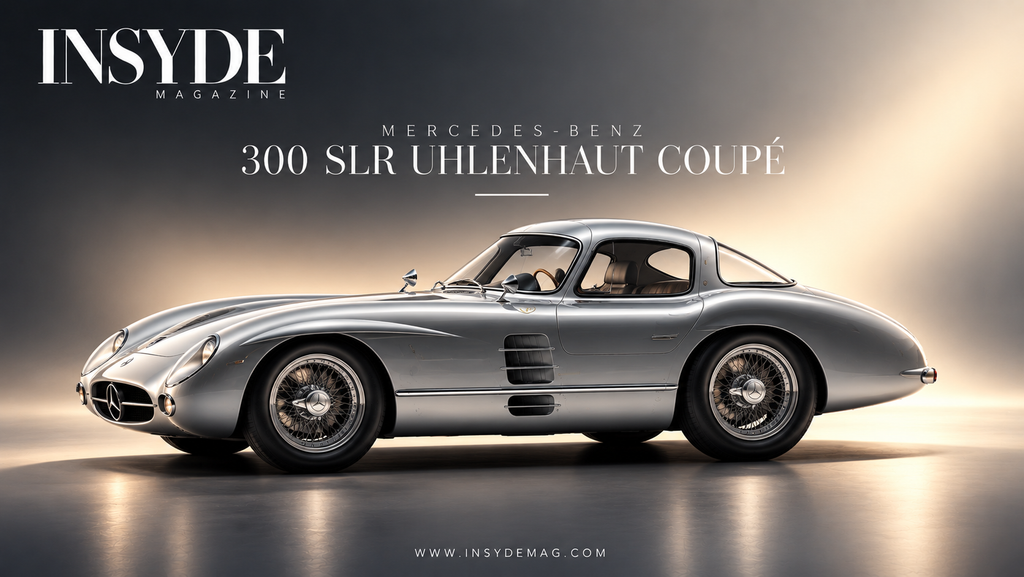
Mercedes-Benz confirms that only two 300 SLR Uhlenhaut Coupés were built, with one sold for €135 million in 2022.

    01

    MERCEDES-BENZ 300 SLR UHLENHAUT COUPÉ

    €135 MILLION

    THE CAR THAT REDEFINED EXPENSIVE

    There are very few automobiles that can genuinely be called irreplaceable.

    The Mercedes-Benz 300 SLR Uhlenhaut Coupé is one of them.

    On 5 May 2022, Mercedes-Benz sold one of the two Uhlenhaut Coupés ever built for €135 million at an exclusive auction at the Mercedes-Benz Museum in Stuttgart.

    It remains the defining transaction in the modern collector-car market.

    The car is named after Rudolf Uhlenhaut, the legendary Mercedes-Benz engineer responsible for its design. Developed from the engineering of Mercedes-Benz’s extraordinary 300 SLR racing programme, the Coupé represents one of the most ambitious expressions of post-war automotive engineering.

    Only two were built.

    One remains with Mercedes-Benz.

    The other passed into private ownership.

    And that private collector has never been publicly identified.

    That anonymity feels strangely appropriate.

    The Uhlenhaut Coupé isn’t simply an expensive Mercedes-Benz.

    It is an artifact from a very specific moment in automotive history — one that cannot be reproduced.

    WHY IT COMMANDS THE MONEY

    The formula is almost impossible to recreate:

    Two examples.

    Factory provenance.

    Historic engineering.

    Motorsport DNA.

    Exceptional originality.

    A legendary engineer.

    There are faster cars.

    There are newer cars.

    There are more technologically advanced cars.

    But there will never be another original Uhlenhaut Coupé.

    That is the difference between a very expensive automobile and an irreplaceable one.

    WHO OWNS IT?

    A private collector.

    Mercedes-Benz has not publicly identified the buyer.

    THE INSYDE TAKE

    The ultimate collector car isn’t necessarily the fastest. It is the one history refuses to repeat.


    Born for Grand Prix racing. Decades later, it became one of the most valuable racing cars ever sold.
The W 196 R Stromlinienwagen sold for €51.155 million at RM Sotheby's in 2025, making it the second-highest public auction result for a car at that time. RM Sotheby's

    02

    MERCEDES-BENZ W 196 R STROMLINIENWAGEN

    €51.155 MILLION

    THE SILVER ARROW WITH TWO LEGENDS IN ITS HISTORY

    If the Uhlenhaut Coupé represents engineering mythology, the W 196 R represents something even more romantic:

    motorsport history.

    In February 2025, RM Sotheby’s sold a 1954 Mercedes-Benz W 196 R Stromlinienwagen for €51.155 million.

    The transaction became the second-highest public auction result ever recorded for an automobile at that time and the most valuable Grand Prix car ever sold at auction.

    But the number is only half the story.

    The particular chassis — 00009/54 — was driven by two of the greatest names in racing history.

    Juan Manuel Fangio drove the car to victory at the 1955 Buenos Aires Grand Prix.

    Later that year, Stirling Moss drove the same chassis at Monza, where it recorded the fastest lap.

    This is what makes provenance so powerful.

    The car isn’t valuable merely because Mercedes-Benz built it.

    It is valuable because history happened inside it.

    Only four complete examples of the W 196 R with the factory Streamliner bodywork are known.

    The car was donated by Mercedes-Benz to the Indianapolis Motor Speedway Museum in 1965 and remained under the museum’s care for decades before being offered at auction.

    WHO OWNS IT?

    The new owner’s identity has not been publicly disclosed.

    And that matters.

    At this level, some collectors are buying history without any desire to become part of the public story themselves.

    WHY IT MATTERS

    A specialist can rebuild an engine.

    A craftsman can recreate bodywork.

    A manufacturer can reproduce a design.

    But nobody can recreate Fangio winning Buenos Aires in 1955.

    That moment belongs exclusively to this chassis.

    THE INSYDE TAKE

    The rarest luxury isn’t what can be made. It’s what can never happen again.


    Some cars become valuable because of what they are. Others because of what they survived.
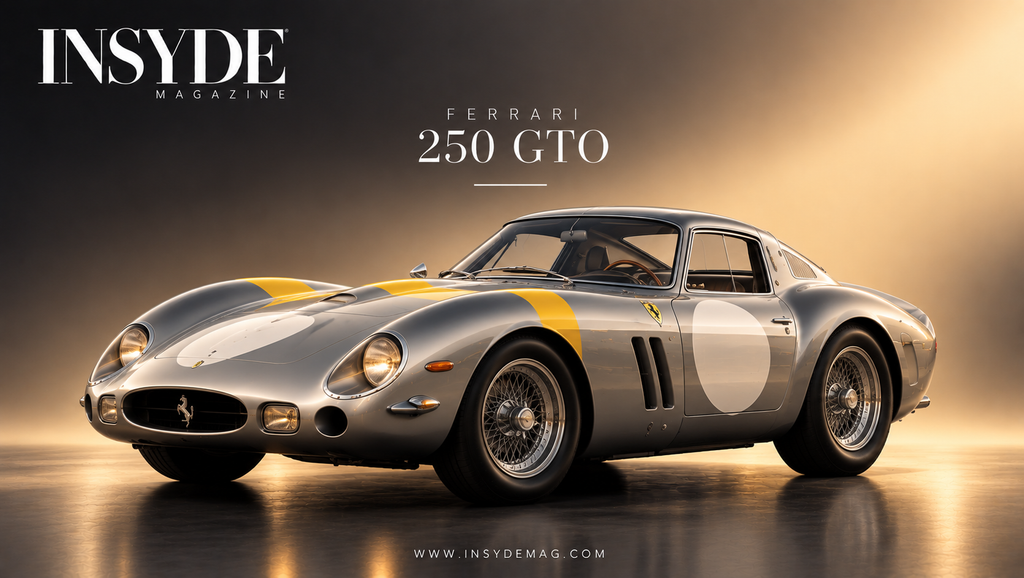
Chassis 4153 GT was reported to have changed hands privately for around $70 million in 2018. Its racing history included fourth overall at the 1963 Le Mans 24 Hours and victory in the 1964 Tour de France Automobile.

    03

    FERRARI 250 GTO — CHASSIS 4153 GT

    REPORTED AT APPROXIMATELY $70 MILLION

    THE FERRARI THAT BECAME A FINANCIAL PHENOMENON

    Few names in the collector-car world carry the same gravitational pull as 250 GTO.

    Ferrari produced only 36 examples between 1962 and 1964.

    The car was created for competition, and its racing record became an essential part of the mythology surrounding the model.

    One particular example, chassis 4153 GT, became one of the most valuable automobiles ever reported to have changed hands privately.

    In 2018, the 1963 Ferrari 250 GTO was reported to have been sold for approximately $70 million to American businessman and collector David MacNeil, founder and CEO of WeatherTech.

    There is, however, a crucial distinction.

    This was a private transaction, not a public auction.

    The reported $70 million figure therefore does not have the same level of public verification as the €135 million Uhlenhaut auction result.

    For a professional publication, that distinction should remain explicit.

    WHO OWNS IT?

    David MacNeil.

    The WeatherTech founder is a prominent automotive collector, and chassis 4153 GT remains associated with his collection.

    WHY THIS GTO?

    Because its provenance is exceptional.

    Chassis 4153 GT competed at the 1963 24 Hours of Le Mans, where it finished fourth overall.

    In 1964, it won the Tour de France Automobile with Lucien Bianchi and Georges Berger.

    It is also known for retaining significant original components and for its unusually strong competition history.

    This is why the 250 GTO is so difficult to value using ordinary automotive logic.

    A modern hypercar can be faster.

    It can produce more power.

    It can use technologies that Ferrari engineers in the 1960s could never have imagined.

    But it cannot become 4153 GT.

    The identity is fixed.

    The history is fixed.

    The number is fixed.

    THE 250 GTO EFFECT

    The model demonstrates one of the collector market’s most important principles:

    historical significance can become more valuable than performance.

    The 250 GTO is no longer competing with other Ferraris.

    At its highest level, it is competing with fine art, rare watches and other irreplaceable cultural objects.

    THE INSYDE TAKE

    The ultimate Ferrari isn’t the one with the biggest numbers. It’s the one whose story can never be replicated.


    When a car becomes a commission, the boundary between automobile and artwork begins to disappear.
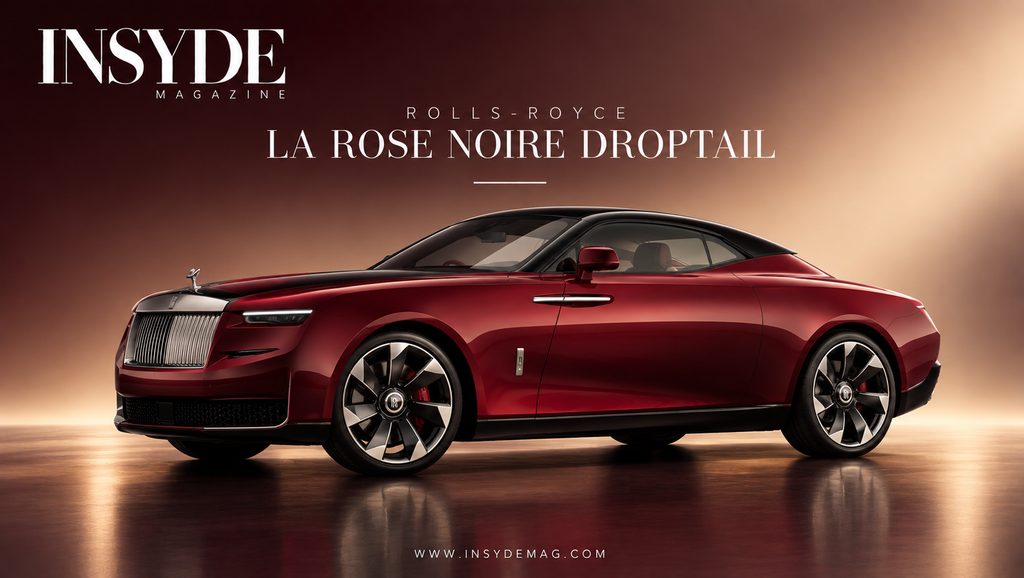
Rolls-Royce says La Rose Noire was the first of four unique Droptail commissions. Its parquetry uses 1,603 individual pieces of Black Sycamore veneer, while the exterior paint process required 150 iterations.

    04

    ROLLS-ROYCE LA ROSE NOIRE DROPTAIL

    WIDELY REPORTED AROUND $30 MILLION

    WHEN A CAR BECOMES ART

    At this point, the definition of a luxury automobile begins to blur.

    The Rolls-Royce La Rose Noire Droptail isn’t merely a highly exclusive Rolls-Royce.

    It is a commissioned work of automotive art.

    La Rose Noire was the first of four unique Droptail commissions.

    Its inspiration was the Black Baccara rose — a flower that held particular meaning for the commissioning family.

    The result is one of the most elaborate modern expressions of coachbuilding ever produced by Rolls-Royce.

    Inside the car are 1,603 individual pieces of black sycamore veneer, each hand-finished and positioned to create an abstract interpretation of falling rose petals.

    The development of the intricate parquetry took almost two years.

    The exterior paint process went through 150 iterations before the final finish was approved.

    There is even a removable Audemars Piguet timepiece integrated into the dashboard.

    This is not simply bespoke automotive manufacturing.

    It is closer to commissioning a piece of contemporary art.

    WHO OWNS IT?

    The commissioning family.

    Rolls-Royce has not publicly identified the clients by name.

    WHAT IS IT WORTH?

    The figure most frequently associated with La Rose Noire is approximately $30 million.

    But INSYDE would not describe that as a confirmed sale price.

    Rolls-Royce has not publicly disclosed the transaction value.

    The figure should therefore be treated as a reported or estimated market value.

    That distinction matters.

    THE NEW BESPOKE

    Traditional luxury says:

    “Choose something few people can afford.”

    Modern coachbuilding says:

    “Create something nobody else can own.”

    That is a fundamentally different proposition.

    La Rose Noire was not designed for a demographic.

    It was designed around a client.

    And that is where ultra-luxury is heading.

    THE INSYDE TAKE

    The ultimate luxury is not owning something expensive. It’s knowing nobody else can order the same thing.


    Three cars. Three patrons. Three entirely different expressions of the same idea of luxury.
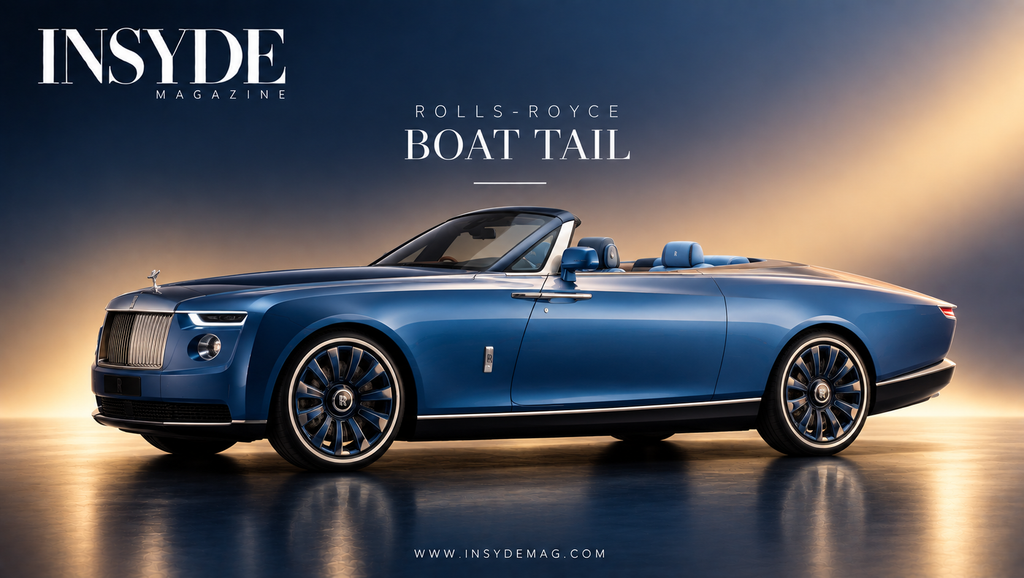
Rolls-Royce confirms that three Boat Tails were completed, each unique to its commissioning client. The third was never publicly exhibited at its owner's request.

    05

    ROLLS-ROYCE BOAT TAIL

    WIDELY REPORTED AROUND $28 MILLION

    THE CAR THAT TURNED COACHBUILDING INTO A LIFESTYLE

    Before Droptail, there was Boat Tail.

    Only three examples were completed — and Rolls-Royce says there will only ever be three.

    Each was created for a different commissioning client.

    Each is unique.

    And each tells a different story.

    The design draws inspiration from the sweeping forms of classic racing yachts and historic Rolls-Royce Boat Tail automobiles.

    Its rear deck opens to reveal an elaborate Hosting Suite, turning the automobile into an environment for entertaining as much as driving.

    One Boat Tail was commissioned by a patron whose family business grew from the pearling industry.

    Another was created around a different client’s personal history.

    The third was never publicly exhibited at the owner’s request.

    That detail says something profound about the modern definition of luxury.

    For some people, exclusivity isn’t about being photographed with an object.

    It is about making sure very few people ever see it.

    WHO OWNS THEM?

    Three separate private commissioning clients.

    Rolls-Royce has not officially disclosed their identities.

    There have been numerous celebrity ownership claims surrounding Boat Tail online.

    Those claims should not be presented as fact unless independently confirmed by Rolls-Royce or the owners themselves.

    For INSYDE, privacy is part of the story.

    WHAT IS IT WORTH?

    Boat Tail is widely reported at approximately $28 million.

    Again, this should be treated as an estimated/reported value, rather than a publicly confirmed transaction price.

    WHY BOAT TAIL MATTERS

    Boat Tail demonstrates the transformation of the automobile from product into personal expression.

    It isn’t about selecting options.

    It is about creating an object around a client’s identity, heritage and taste.

    In that sense, Rolls-Royce Coachbuild is increasingly operating closer to haute couture than conventional automotive manufacturing.

    THE INSYDE TAKE

    The new status symbol isn’t the car everyone wants. It’s the car nobody else can commission.


    THE FIVE DIFFERENT TYPES OF RARITY

    These five automobiles are valuable for different reasons.

    And that distinction is important.

    THE UHLENHAUT COUPÉ

    Rarity through absolute scarcity.

    Two examples.

    THE W 196 R

    Rarity through provenance.

    Fangio. Moss. Grand Prix history.

    THE 250 GTO

    Rarity through mythology.

    A fixed production run of 36 cars combined with an extraordinary racing legacy.

    LA ROSE NOIRE

    Rarity through craftsmanship.

    A bespoke object designed around one client.

    BOAT TAIL

    Rarity through exclusivity.

    Three cars. Three clients. Three completely individual creations.

    This is why the phrase “most expensive car” can be misleading.

    Price is only one part of the equation.


    THE NEW CURRENCY OF AUTOMOTIVE LUXURY

    The collector-car market is increasingly behaving like the market for fine art, watches and jewellery.

    The object itself matters.

    But the story surrounding the object can matter even more.

    01 — SCARCITY

    At the top of the market, production numbers become part of the product.

    Two Uhlenhaut Coupés.

    Four complete W 196 R Streamliners.

    Thirty-six 250 GTOs.

    Four Droptail commissions.

    Three Boat Tails.

    Every additional example could dilute the mythology.

    Scarcity therefore isn’t simply a consequence of production.

    It becomes a form of value.


    02 — PROVENANCE

    A car’s history can become more valuable than its machinery.

    Fangio’s name isn’t attached to the W 196 R because Mercedes-Benz created a special edition bearing his name.

    He actually drove it.

    That difference is everything.

    The collector is not buying a specification.

    They are buying a connection to a moment that already happened.


    03 — CRAFTSMANSHIP

    Rolls-Royce has taken bespoke production into territory traditionally associated with haute couture, jewellery and fine art.

    1,603 individually positioned pieces of veneer.

    150 paint iterations.

    A bespoke timepiece.

    A handcrafted Hosting Suite.

    The value isn’t simply in the materials.

    It is in the human time required to create them.


    04 — PRIVACY

    Perhaps the most fascinating luxury of all.

    The higher the value becomes, the less transparent ownership can be.

    The Uhlenhaut buyer is anonymous.

    The W 196 R buyer is undisclosed.

    Rolls-Royce’s coachbuilt patrons remain private.

    The Ferrari 250 GTO transaction happened away from a public auction.

    In a culture increasingly obsessed with displaying wealth, the ultra-high-end collector market often moves in the opposite direction.

    The ultimate flex may be not showing the object at all.


    WHAT THE 2026 COLLECTOR-CAR MARKET IS TELLING US

    The collector-car market is not simply surviving.

    It is becoming more sophisticated.

    RM Sotheby’s reported more than $1 billion in sales during 2025, its strongest year to date.

    The company sold 135 cars for more than $1 million, achieved a 92% sell-through rate across its live auctions and attracted buyers from 54 countries.

    Perhaps most revealingly, 47% of buyers were participating for the first time.

    That suggests the collector-car world is attracting a new generation of wealth.

    And those buyers are not necessarily looking for the same things their predecessors wanted.

    The market is becoming increasingly segmented.

    At one end are historically significant automobiles whose value is driven by provenance, competition history and originality.

    At the other are modern hypercars and coachbuilt commissions, where exclusivity, craftsmanship and personalisation dominate.

    The two categories may look completely different.

    But economically, they share the same fundamental principle:

    limited supply + exceptional desirability + wealthy demand.

    The 2026 auction calendar has reinforced that appetite.

    RM Sotheby’s Monaco sale in April 2026 generated approximately €87.97 million, becoming the auction house’s highest-grossing multi-car auction ever held in Europe.

    A 1961 Ferrari 250 GT SWB California Spider alone achieved €16.655 million, setting a new auction record for the model.

    The significance isn’t simply the size of the numbers.

    It is what buyers are rewarding.

    History.

    Condition.

    Provenance.

    Rarity.

    And increasingly, exceptional specification.


    THE CLASSIC CAR IS BECOMING A CULTURAL ASSET

    The collector-car market has moved far beyond the idea of wealthy people buying old cars.

    The very best automobiles are increasingly being treated as cultural assets.

    They appear at concours events.

    They are displayed in private museums.

    They are loaned to exhibitions.

    They become part of family collections.

    Some are driven in historic competition.

    Others spend years hidden inside climate-controlled garages.

    And a handful become almost mythical objects that rarely appear in public.

    This creates a fascinating paradox.

    The more valuable the car becomes, the less likely it may be to function like a conventional car.

    It becomes an asset.

    A historical document.

    A work of design.

    A piece of mechanical art.

    Sometimes, all four.


    WHY MONEY ALONE ISN’T ENOUGH

    There is a misconception that the world’s wealthiest collectors simply buy whatever they want.

    At this level, that isn’t necessarily true.

    Money can open the door.

    It cannot manufacture provenance.

    It cannot create an original racing history.

    It cannot make Ferrari build another 250 GTO.

    It cannot make Mercedes-Benz produce another original Uhlenhaut Coupé.

    And it cannot persuade Rolls-Royce to make a second La Rose Noire for someone else.

    This is the paradox of ultra-luxury.

    The more money enters the market, the more valuable genuine scarcity becomes.

    If everyone can buy it, it stops being extraordinary.

    If only one person can own it, desire becomes almost limitless.


    THE INSYDE FIVE

    01 — MERCEDES-BENZ 300 SLR UHLENHAUT COUPÉ

    €135 million
    Confirmed 2022 auction result
    Two built
    Private collector — identity undisclosed

    02 — MERCEDES-BENZ W 196 R STROMLINIENWAGEN

    €51.155 million
    Confirmed 2025 auction result
    One of four complete Streamliner examples
    Buyer undisclosed

    03 — FERRARI 250 GTO — 4153 GT

    Approximately $70 million
    Reported 2018 private transaction
    One of 36 Ferrari 250 GTOs
    David MacNeil

    04 — ROLLS-ROYCE LA ROSE NOIRE DROPTAIL

    Approximately $30 million — reported/estimated
    One of four Droptail commissions
    Private commissioning family

    05 — ROLLS-ROYCE BOAT TAIL

    Approximately $28 million — reported/estimated
    Three ever made
    Private commissioning clients


    FINAL WORD

    The world’s rarest cars don’t ask:

    “How much can you afford?”

    They ask:

    “How badly do you want something nobody else can have?”

    At the highest level of luxury, price is merely the beginning.

    The real value lies somewhere deeper:

    In the story.

    In the craftsmanship.

    In the provenance.

    In the scarcity.

    And in the knowledge that, somewhere in the world, there is an automobile that cannot simply be ordered, reproduced or replaced.

    Because the rarest luxury isn’t necessarily the most expensive thing.

    It is the thing that money cannot make again.

    INSYDE

    The leading voice of luxury.

  • The New Bengaluru: Where Creativity, Culture & Ambition Collide| INSYDE

    The New Bengaluru: Where Creativity, Culture & Ambition Collide| INSYDE

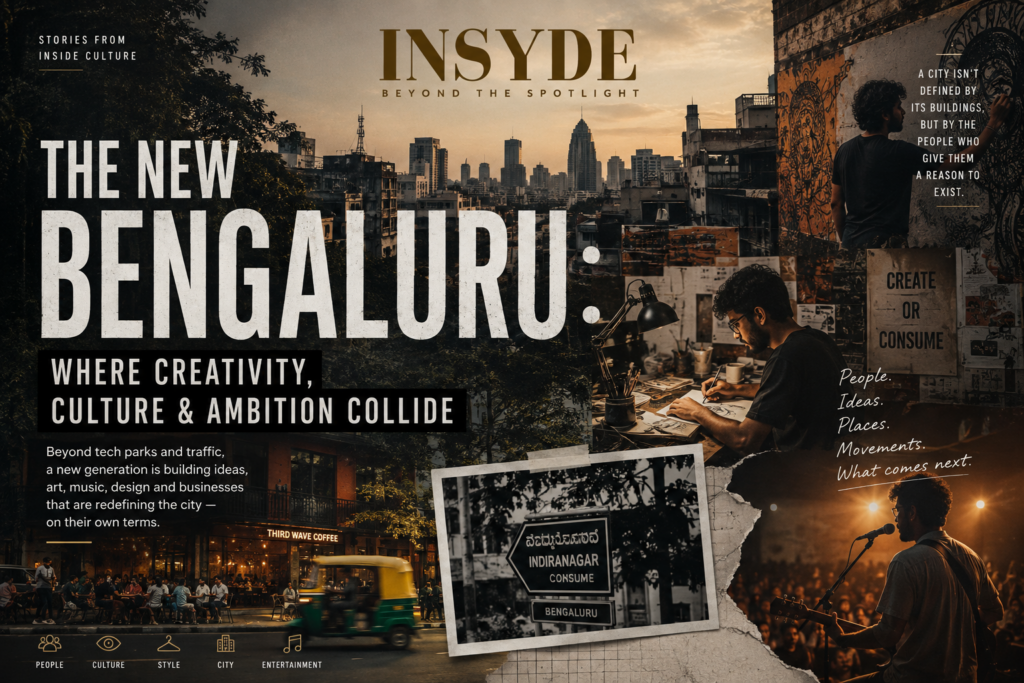
    Bengaluru has always been a city of ideas. But something is changing.

    For decades, the city has been defined by technology.

    Startups. Software. Engineers. Global companies. Venture capital. The familiar image of Bengaluru as India’s technology capital has become so powerful that it can sometimes feel like the entire city has been reduced to one identity.

    But spend enough time here and another Bengaluru begins to appear.

    It exists in small studios and independent cafés. In rehearsal rooms, galleries, design offices, music venues and photography collectives. It exists in the people building brands from their bedrooms, artists experimenting with new mediums, musicians creating without waiting for a record label, designers turning ideas into businesses and young people trying to build careers that don’t fit neatly into traditional job titles.

    This is the Bengaluru we want to look at.

    This is INSYDE.

    A city built on what comes next

    Bengaluru has a long relationship with experimentation.

    Its reputation as India’s technology and startup capital didn’t happen overnight. The city developed an ecosystem where engineers, entrepreneurs, researchers and investors could collide and create something new. More recently, that appetite for experimentation has extended well beyond technology.

    The city’s cultural ecosystem has grown alongside its economic one. Museums, independent cultural spaces, festivals, theatres, music communities and creative institutions have created more places for ideas to meet. The World Cities Culture Forum describes Bengaluru as a city with a varied cultural offering, a growing nightlife scene, a large reading community and a diverse population.

    Recent cultural initiatives have also attempted to position Bengaluru not only as a technology capital, but as a cultural force. UnboxingBLR, for example, has focused on understanding and strengthening the city’s cultural identity through data, events and citywide initiatives.

    And perhaps that’s the interesting part.

    Bengaluru doesn’t have to choose between technology and culture.

    It can be both.

    The people behind the city

    Cities aren’t really defined by their buildings.

    They’re defined by the people who give those buildings a reason to exist.

    The founder working from a tiny office.

    The illustrator taking commissions between two jobs.

    The designer launching a label with five pieces.

    The musician playing a small venue before anyone knows their name.

    The filmmaker making something with a handful of friends.

    The photographer documenting a neighbourhood before it becomes fashionable.

    The chef experimenting with what Indian food can become.

    The architect thinking about what an Indian city should look like.

    The creator turning a phone, an idea and an internet connection into a career.

    These people may not have millions of followers.

    They may not appear on magazine covers.

    They may not have investors, publicists or blue ticks.

    But they are often the people who make a city interesting.

    And that’s where we think the story begins.

    Beyond the startup narrative

    There is nothing wrong with Bengaluru being India’s technology capital.

    In fact, it’s an extraordinary part of the city’s story.

    But the technology narrative can sometimes overshadow everything else.

    Ask someone about Bengaluru and you’ll probably hear about startups, traffic, weather, cafés, IT parks and the tech industry.

    Ask someone who actually spends time inside the city’s creative communities, however, and you’ll hear a much longer story.

    You’ll hear about independent artists.

    About theatre.

    About fashion.

    About music.

    About food.

    About design.

    About photography.

    About architecture.

    About books.

    About communities.

    About people building things simply because they believe they should exist.

    That is a different version of Bengaluru.

    And perhaps it deserves more attention.

    The new ambition

    There is also something changing about ambition itself.

    For an earlier generation, success could be easier to define.

    Get a good degree.

    Get a good job.

    Build a career.

    Buy a house.

    Move up.

    Today, the definition is messier.

    A young person might work in technology during the day and make music at night.

    Someone might have a full-time job while building a fashion label.

    An artist might sell work through Instagram.

    A creator might build a business without ever having an office.

    A designer might become an entrepreneur.

    An entrepreneur might become a content creator.

    The boundaries between professions are disappearing.

    And Bengaluru is a particularly interesting place to watch this happen because technology, entrepreneurship and creative culture already exist side by side.

    The British Council’s research into arts and technology in India highlights Bengaluru as one of the places where practitioners are exploring how technology can become a creative medium, while artists use their work to question and reinterpret technology itself.

    The interesting question isn’t simply:

    “What job do you have?”

    It’s becoming:

    “What are you building?”

    A city that keeps reinventing itself

    Bengaluru has changed dramatically over the years.

    The city of today is not the city of twenty years ago.

    And the city that exists ten years from now probably won’t resemble today’s Bengaluru either.

    That’s what makes it worth documenting.

    Every generation leaves something behind.

    New businesses.

    New music.

    New aesthetics.

    New neighbourhoods.

    New communities.

    New ideas.

    New problems.

    New solutions.

    New definitions of what it means to belong to the city.

    Technology may have helped Bengaluru become globally important.

    But culture is what helps a city develop a personality.

    And Bengaluru has plenty of personality.

    So, what is INSYDE?

    INSYDE is an independent media platform starting in Bengaluru.

    We’re interested in the people, ideas, places and movements shaping what comes next.

    Not only the famous.

    Not only the successful.

    Not only the people who already have an audience.

    We’re interested in the ones building quietly.

    The ones experimenting.

    The ones taking risks.

    The ones creating something from nothing.

    The ones who might be unknown today and impossible to ignore tomorrow.

    We’ll talk to artists, designers, founders, musicians, filmmakers, architects, creators, chefs, photographers and anyone else who is pushing culture forward.

    We’ll look at the places where new ideas are emerging.

    We’ll explore the city’s changing relationship with fashion, technology, art, music, food and identity.

    And we’ll try to ask better questions along the way.

    Because we don’t want INSYDE to simply tell you who is already important.

    We want to help you discover who might become important next.

    Bengaluru is only the beginning

    We’re starting here because this city gives us something special.

    A collision of technology and tradition.

    Ambition and creativity.

    Local culture and global influence.

    Old neighbourhoods and new ideas.

    People from across India and around the world.

    Bengaluru is complicated.

    It’s exciting.

    It’s frustrating.

    It’s constantly changing.

    And sometimes it feels like five different cities occupying the same space.

    That’s exactly why we’re interested.

    Because somewhere between the traffic, the startups, the cafés, the apartments, the studios, the stages and the streets is a generation quietly creating a new version of the city.

    We want to meet them.

    We want to understand them.

    And we want to tell their stories.

    This is the beginning.

    Welcome to INSYDE.

  • Inside insyde: Where Luxury Fashion Meets Entertainment

    Inside insyde: Where Luxury Fashion Meets Entertainment

    Welcome to insyde

    insyde is a magazine built for readers who love the energy of entertainment and the elegance of luxury fashion. We spotlight the people, aesthetics, and cultural moments shaping what feels current, aspirational, and unforgettable.

    Our point of view is playful, polished, and always curious. From standout style cues to the mood behind a major moment, we look beyond the surface to capture the details that make modern glamour feel alive.

    What You’ll Find Here

    • Fashion features that decode luxury style, emerging trends, and statement looks.
    • Entertainment stories that explore the personalities, visuals, and moments driving conversation.
    • Curated inspiration for readers who want a sharper eye for taste, image, and cultural relevance.

    Our Editorial Perspective

    We believe great editorial content should do more than report what is happening. It should frame the mood, reveal the craft, and help readers understand why a look, launch, or performance resonates right now.

    Style is never just about what you wear. It is about the story you tell before you say a word.

    That is the spirit behind insyde. We bring together fashion, image, and entertainment in a way that feels elevated but approachable, giving our audience a front-row view of the ideas and influences shaping contemporary culture.

    Why insyde Matters

    In a fast-moving media landscape, taste matters. insyde offers a refined lens for readers who want more than noise: they want perspective, curation, and a sense of discovery. Whether you arrive for fashion, celebrity culture, or visual inspiration, our goal is to leave you with something worth remembering.

    We are just getting started, and we invite you to step insyde with us.