Category: Culture

Stories exploring the art, heritage, creativity and cultural movements shaping how modern India sees itself and the world.

  • THE BILLION-DOLLAR HOUSE

    THE BILLION-DOLLAR HOUSE

    How Casinos Turn Gambling, Luxury and Entertainment Into Billions

    Behind the glamour of private gaming rooms, extravagant resorts and million-dollar bets lies a sophisticated business built on mathematics, customer behaviour and the economics of entertainment. From Las Vegas to Macau, discover how the world’s largest casino operators generate billions — and why the business is far more complex than simply winning at the tables.

    A roulette wheel spins. A baccarat dealer turns over the cards. Across the room, a guest places another bet while a waiter delivers a drink to a private gaming salon. Beyond the casino floor, luxury suites are occupied, restaurants are serving dinner and a headline performance is drawing thousands of visitors.

    The spectacle is designed to feel effortless. The business behind it is anything but.

    Casinos have evolved into some of the world’s most sophisticated entertainment and hospitality operations. Their commercial model combines probability, customer acquisition, premium accommodation, dining, retail, nightlife, entertainment and carefully managed experiences for customers who may spend extraordinary sums in a single visit.

    The money is not generated by one roulette table or one lucky night. It comes from an interconnected system in which gaming creates demand, hospitality extends the customer experience and the scale of the operation allows companies to monetise multiple forms of spending.

    The numbers reveal the industry’s scale. According to the American Gaming Association’s State of the States 2026 report, the US commercial gaming industry generated US$78.62 billion in revenue during 2025, an increase of 9.1% over the previous year. The industry also generated approximately US$17.86 billion in direct gaming tax revenue for state and local governments.

    The US figure includes traditional casino gaming, sports betting and internet gaming. It is therefore a measure of the broader commercial gaming industry, not land-based casino revenue alone.

    The American Gaming Association’s 2026 State of the States report offers a detailed picture of an industry that has grown into a major economic force.

    Yet the latest figures also reveal a more complicated picture. Growth is uneven, operating costs remain substantial, and the largest casino companies do not automatically convert billions in revenue into equally impressive profits.

    To understand the business of casinos, it is necessary to look beyond the gaming floor.

    1. THE MATHEMATICS BEHIND THE HOUSE

    The most important advantage in a casino is not its architecture, service or ability to attract wealthy customers. It is mathematics.

    Most casino games are designed with a built-in statistical advantage for the operator, commonly known as the house edge.

    The house edge represents the casino’s theoretical long-term advantage over players, expressed as a percentage of the amount wagered. It does not mean the casino wins every individual bet, every session or every day. Players can win substantial amounts, and operators can experience periods when actual results fall below expectations.

    Over a sufficiently large volume of wagers, however, games with a mathematical house advantage are designed to generate a positive expected return for the operator.

    Consider roulette. A standard European roulette wheel contains 37 pockets: numbers 1 to 36 and a single zero. A straight-up bet on one number pays 35 to 1, although the probability of winning is 1 in 37. That difference creates a theoretical house edge of approximately 2.70%.

    American roulette includes an additional double-zero pocket, increasing the theoretical house edge on standard bets to approximately 5.26%.

    The difference may appear small, but the economics change considerably when thousands of wagers are placed over long operating hours.

    Baccarat, blackjack and other table games operate under different mathematical structures, rules and betting conditions. Their theoretical returns vary depending on the game and, in some cases, the player’s decisions.

    The critical distinction is between money wagered and gaming revenue.

    A casino may accept billions in total bets over a period, but that does not mean it earns billions. Much of the money is returned to players as winnings and can be wagered again. The more meaningful industry measure is generally gross gaming revenue (GGR): the amount retained from wagers after winnings paid to customers are deducted, before operating expenses and other costs.

    This is the foundation of the casino business. The operator does not need every customer to lose every time. It needs sufficient volume of play, managed across games and customers, for the statistical economics to work over time.

    The house edge is not a guarantee of short-term profit. It is a mathematical advantage that operates over a large number of wagers.

    2. THE CASINO IS NO LONGER JUST A CASINO

    The modern casino has expanded far beyond the gaming floor.

    The most successful operators increasingly resemble integrated resort companies. Their properties combine hotels, restaurants, shopping, nightlife, convention facilities, entertainment venues and gaming under one commercial ecosystem.

    The strategy is straightforward: attract visitors for multiple reasons, extend their stay and create more opportunities for spending.

    A guest may arrive for a concert, stay in a luxury suite, dine at a premium restaurant, visit designer boutiques and spend time at the gaming tables. Another may arrive for a business conference and never enter the casino at all.

    Both can contribute to the property’s revenue.

    This distinction matters because gaming revenue and total resort revenue are not the same thing. A company operating a major casino resort may generate substantial income from accommodation, food and beverage, entertainment and retail in addition to gambling.

    Las Vegas demonstrates this evolution particularly well. Its appeal is no longer limited to the casino floor. It is also a destination for major sporting events, international entertainment, conventions, luxury hospitality and nightlife.

    The casino has become the anchor of a much larger entertainment economy.

    For operators, this creates opportunities to diversify revenue and attract customers who may not be traditional gamblers. It also requires enormous investment in property development, staffing, maintenance, marketing and the constant renewal of the guest experience.

    The modern casino is therefore not simply selling a chance to win. It is selling an entire destination.

    The latest American Gaming Association figures illustrate the importance of understanding these different businesses separately. In 2025, traditional commercial casino gaming in the United States generated approximately US$51.06 billion, while commercial sports betting generated US$16.89 billion and internet gaming generated US$10.73 billion.

    These are distinct gaming categories within the wider commercial market, not interchangeable measures of land-based casino revenue.

    Explore the AGA’s commercial gaming revenue data.

    3. THE COMPANIES BEHIND THE BILLIONS

    A relatively small group of international operators controls some of the world’s most recognisable casino and integrated resort businesses. Their financial statements reveal how different strategies can generate enormous revenue — and why high sales do not automatically translate into equally high profits.

    Las Vegas Sands: The integrated resort empire

    Las Vegas Sands has built its business around large-scale integrated resorts, particularly in Macao and Singapore. Its portfolio includes Marina Bay Sands in Singapore and major properties in Macao.

    For the third quarter of 2026, ended 30 September, the company reported:

    • US$3.216 billion in net revenue.
    • US$352 million in net income.
    • US$1.12 billion in consolidated adjusted property EBITDA.

    Revenue declined by approximately 3.5% compared with the same quarter in 2025, when the company reported US$3.331 billion.

    The results demonstrate both the scale and complexity of the integrated resort model. Revenue is generated across gaming and non-gaming operations, while adjusted property EBITDA provides an indication of property-level operating performance before certain expenses.

    The company also reported US$950 million in share repurchases during the quarter.

    Read Las Vegas Sands’ third-quarter 2026 financial results.

    MGM Resorts: The business of entertainment and hospitality

    MGM Resorts International operates some of the most recognisable casino properties in Las Vegas and other markets, with businesses spanning gaming, hotels, entertainment and regional operations.

    For the third quarter of 2026, MGM reported consolidated revenue of approximately US$4.2 billion, a decrease of 1% compared with the previous year’s quarter.

    Its consolidated adjusted EBITDA was US$403 million. The company reported a net loss attributable to MGM Resorts of approximately US$17 million, substantially narrower than the US$285 million loss reported in the corresponding quarter of 2025.

    Its Las Vegas Strip resorts generated US$2 billion in revenue, while the company’s regional operations and international businesses contributed to the wider portfolio.

    The results are a reminder that a casino operator can generate billions in revenue without necessarily producing a profit in every reporting period.

    Operating costs, property expenses, depreciation, financing, taxes and changes in gaming performance all influence the final result.

    Read MGM Resorts’ third-quarter 2026 financial results.

    Wynn Resorts: The economics of premium gaming

    Wynn Resorts occupies a distinctive position in the market, with properties in Las Vegas, Macao and other locations. Its strategy places significant emphasis on premium hospitality, luxury accommodation, dining and high-end gaming.

    For the third quarter of 2026, Wynn reported operating revenue of US$1.69 billion, compared with US$1.83 billion in the same period a year earlier.

    Net income attributable to the company was US$17.3 million, down from US$88.3 million in the third quarter of 2025. Adjusted property EBITDAR was US$464.2 million, compared with US$570.1 million a year earlier.

    The company’s results also showed how casino revenue can fluctuate. Lower gaming volumes across its properties contributed to the decline in operating revenue.

    Read Wynn Resorts’ third-quarter 2026 financial results.

    Together, these businesses illustrate three important features of the industry: scale, diversification and volatility. A casino operator may generate substantial revenue, but its financial performance remains exposed to customer spending, gaming outcomes, operating costs and the economic conditions of the markets in which it operates.

    4. THE HIGH-ROLLER ECONOMY

    There is a particular category of customer closely associated with the luxury casino experience: the high roller.

    These are customers who wager significantly larger amounts than the average visitor. In the industry’s language, they are often referred to as VIP players or premium gaming customers.

    For casino operators, attracting these customers can be commercially valuable. A single high-value customer may generate considerable gaming turnover, while also spending on accommodation, dining, transport and other premium services.

    Casinos compete for this business through personalised hospitality and carefully managed VIP programmes. Depending on the operator and market, these can include private gaming salons, dedicated hosts, luxury suites, dining arrangements, transfers and tailored experiences.

    Some incentives may be complimentary, while others are conditional on a customer’s gaming activity and commercial value to the property.

    The objective is to make the experience seamless. A high-value guest may have a dedicated contact who coordinates accommodation, restaurant reservations, transport and gaming arrangements. The service is designed to reduce friction and make the property an attractive destination for repeat visits.

    But the high-roller economy is more complicated than the image of wealthy individuals casually placing million-dollar bets.

    Operators assess customers according to their expected value, wagering activity, profitability and risk. High betting volume does not necessarily mean high profitability. Actual gaming outcomes can vary, and generous incentives carry costs.

    The economics of VIP customers have also changed in important markets. In Macao, for example, the traditional junket-driven VIP model has faced tighter regulation and a structural shift towards mass-market gaming.

    The era in which casino growth could be explained primarily through a small number of wealthy international gamblers has given way to a more diversified customer base.

    5. MACAO AND THE CHANGING ECONOMICS OF GAMING

    Macao remains one of the most important casino markets in the world. Its gaming industry has undergone a significant transformation since the pandemic and subsequent regulatory reforms.

    The International Monetary Fund’s 2026 assessment of the Macao Special Administrative Region reported that gross gaming revenue increased by 9.1% in 2025, reaching approximately 85% of its 2019 level.

    More importantly, the composition of that revenue has changed.

    According to the IMF, mass-market gaming accounted for 73% of total gross gaming revenue in 2025. In the first half of 2026, overall GGR expanded by a further 6.9% year on year.

    The VIP segment showed some signs of recovery, but its share remained comparatively low following changes to the regulatory framework governing junket operators.

    Read the IMF’s 2026 assessment of Macao’s gaming-sector transformation.

    This is a significant development for the global casino business.

    Mass-market gaming refers broadly to customers outside the traditional VIP segment. Individually, their wagers may be smaller, but collectively they can represent a substantial and more diversified source of revenue.

    For operators, this can reduce dependence on a narrow group of high-value customers. It also changes how resorts approach marketing, hospitality, gaming capacity and customer experience.

    The shift is not simply about attracting more visitors. It is about building a more resilient revenue base across different types of customers.

    Macao’s evolution suggests that the future of casino economics may not be built exclusively around the biggest bets. It may increasingly depend on attracting a broader base of visitors who combine gaming with hotels, shopping, dining and entertainment.

    6. WHY CASINOS INVEST SO MUCH IN THE CUSTOMER EXPERIENCE

    The casino floor is only one part of the business. The experience surrounding it is an important commercial instrument.

    Luxury suites, premium restaurants, personalised service, live entertainment and exclusive access can all influence where customers choose to spend their time.

    In a highly competitive market, the quality of the resort can become a differentiator. Two casinos may offer similar games, but their hospitality, location, service standards and entertainment programmes can make their overall propositions very different.

    This is particularly relevant to customers who have the financial means to choose between destinations.

    A premium guest may value privacy, convenience, service and access as much as the gaming itself. For these customers, the resort is not simply a place to gamble. It is a destination where multiple aspects of leisure and luxury are brought together.

    The economics extend beyond the individual guest. A successful entertainment event can bring visitors into a city, increase hotel occupancy, generate restaurant demand and support wider tourism activity.

    The relationship between casinos and luxury hospitality is therefore mutually reinforcing. Gaming can attract visitors, while hospitality and entertainment can make a destination attractive to people who might otherwise have little interest in gambling.

    The latest operating figures from MGM provide a useful illustration of this interconnected model. In the third quarter of 2026, its Las Vegas Strip resorts generated US$2 billion in revenue, with casino revenue of US$488 million and room revenue of US$622 million. The property portfolio therefore earns money through several different parts of the visitor experience.

    See MGM’s published third-quarter operating figures.

    7. THE RISKS BEHIND THE GLAMOUR

    For all its commercial sophistication, the casino business is exposed to risks that are not always visible from the gaming floor.

    Gaming revenue is volatile. A casino’s actual winnings can differ from its theoretical expectations over a particular period. A run of unusually favourable results for customers can affect a property’s reported performance, even when the underlying volume of play remains healthy.

    The industry is also heavily regulated. Operators must comply with licensing requirements, customer identification procedures, anti-money-laundering rules, financial reporting obligations and responsible-gambling standards.

    These requirements are essential to maintaining the integrity of the sector. Casinos handle substantial financial flows and must manage risks involving fraud, financial crime and the misuse of gaming facilities.

    There is also a significant human cost that cannot be separated from the business.

    Gambling can be a form of entertainment for some customers, but it can also cause serious financial and psychological harm. Problem gambling can affect individuals, families and communities, particularly when customers lose control over their spending or attempt to recover losses through further betting.

    The industry therefore faces a difficult balance: it must attract customers and encourage engagement while operating within responsible-gambling safeguards and legal requirements.

    The glamour of the casino environment should not obscure the risks associated with the activity that takes place inside it.

    8. THE FUTURE OF THE BILLION-DOLLAR HOUSE

    The next phase of the casino industry is likely to be shaped by diversification, technology, regulation and the changing expectations of customers.

    Integrated resorts will continue to compete through hospitality, entertainment, retail and premium experiences. Gaming will remain central to the business, but the ability to attract a wider audience may become increasingly important.

    Technology is also changing how operators understand their customers. Digital loyalty systems, customer analytics, payment infrastructure and data-driven marketing can help companies personalise services and manage operations more efficiently, subject to applicable privacy and regulatory requirements.

    At the same time, operators must navigate changing rules around online gaming, financial transactions, customer protection and the movement of money across borders.

    The industry is also becoming more conscious of the risks associated with depending too heavily on a small number of VIP customers. Macao’s shift towards mass-market gaming offers an important example of how regulatory changes and market conditions can reshape the economics of an entire destination.

    The future casino may look increasingly like a luxury entertainment resort with gaming at its centre — rather than a traditional gambling hall with a hotel attached.

    But the underlying principle will remain the same: the operator must create an experience that attracts customers, manages risk and generates sustainable returns.

    THE HOUSE IS A BUSINESS, NOT A GAME

    The casino industry has built an extraordinary commercial model around one of the oldest human impulses: the willingness to take a risk for the possibility of a reward.

    Its success, however, cannot be explained by gambling alone.

    The largest operators combine mathematics with hospitality, customer data with personalised service, and gaming floors with some of the world’s most ambitious entertainment destinations. They understand that a visitor can generate value in more ways than one — through a hotel stay, a restaurant reservation, a retail purchase, an event or a wager.

    The financial results of Las Vegas Sands, MGM Resorts and Wynn demonstrate both the scale and complexity of the business. Their revenues run into billions, but profitability remains dependent on operating performance, market conditions and the unpredictable nature of gaming outcomes.

    Meanwhile, Macao’s shift towards mass-market gaming suggests that the industry’s future may be less dependent on a small circle of high rollers than its glamorous reputation would suggest.

    Casinos have mastered the art of turning probability into a business, but their most important asset may be something less obvious: the ability to create an experience that brings people through the doors and gives them reasons to return.

    Because the biggest business in a casino is not necessarily the game being played. It is the entire world built around the decision to play.

    INSYDE Magazine — No.1 Luxury Magazine In Bengaluru

    Luxury. Culture. The People Shaping What Comes Next.

  • SPEED IS SEXY, WEALTH IS SEXIER

    SPEED IS SEXY, WEALTH IS SEXIER

    The 5 Richest Formula 1 Drivers in the World in 2026

    Inside the fortunes, contracts and commercial power of Formula 1’s wealthiest active drivers.

    By INSYDE Magazine | Luxury, Culture & People

    In Formula 1, speed earns the headlines. Wealth tells a longer story.

    Behind the carbon fibre, champagne celebrations and immaculate paddock appearances lies a business built on extraordinary contracts, performance bonuses, global sponsorships and the commercial value of sporting fame. For the drivers at the top, success is no longer measured exclusively in championship points. It is also reflected in the fortunes they accumulate throughout their careers.

    Formula 1 has become a global entertainment powerhouse, attracting luxury houses, technology companies, financial institutions and international consumer brands. According to Liberty Media’s 2025 annual financial results, Formula 1 generated US$3.873 billion in revenue in 2025, up from US$3.411 billion in 2024. Operating income increased from US$492 million to US$632 million over the same period.

    Those figures describe the sport’s commercial business, not the personal income of its drivers. But they help explain why the people competing at its highest level have become valuable sporting and commercial assets in their own right.

    A driver’s financial position can be shaped by years of team contracts, championship bonuses, sponsorship agreements, business interests and investments. Yet one distinction matters: the highest-paid driver in a season is not necessarily the wealthiest driver overall. Annual earnings measure income over a period; net worth estimates the value of a person’s assets minus liabilities.

    So, who sits at the top of Formula 1’s financial grid in 2026?

    Using a single published set of 2026 net-worth estimates for consistency, INSYDE examines five of the sport’s wealthiest active drivers — and the different paths behind their fortunes.

    A note on the ranking: There is no public, audited register of Formula 1 drivers’ personal wealth. The figures in this feature are third-party estimates, not confirmed personal balance sheets. Other publishers use different assumptions and report different valuations. The ranking below should therefore be read as an estimate-based snapshot, not a definitive statement of each driver’s actual wealth.


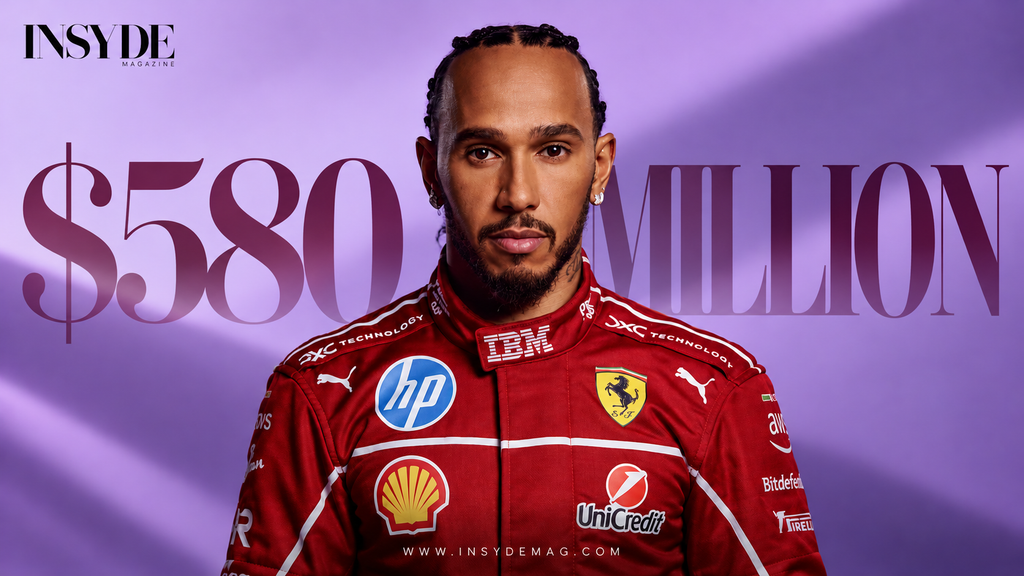
    01. LEWIS HAMILTON

    Estimated net worth: US$580 million

    The champion who turned sporting excellence into global influence.

    Few Formula 1 careers have combined longevity, achievement and cultural visibility quite like Lewis Hamilton’s. A seven-time world champion, Hamilton has spent nearly two decades at the centre of the sport, building a reputation that reaches beyond the circuit into fashion, entertainment and global brand culture.

    According to F1 Salaries’ 2026 driver net-worth estimates, Hamilton’s estimated net worth is US$580 million, placing him first among active drivers in that publication’s ranking. The same source estimates his cumulative Formula 1 career earnings at approximately US$720.94 million. These are separate measurements: career earnings represent estimated pay accumulated over time, while net worth attempts to estimate the value of what an individual owns after financial obligations and spending.

    His annual compensation provides another perspective. In Forbes’ ranking of the highest-paid Formula 1 drivers for 2025, Hamilton’s on-track earnings were estimated at US$70.5 million, comprising approximately US$70 million in salary and US$500,000 in bonuses. This is a 2025 estimate, not a verified statement of his 2026 salary.

    Hamilton’s commercial appeal extends beyond race results. His involvement in fashion and wider cultural conversations has helped make him recognisable to audiences who may not follow every Grand Prix. That reach can be valuable to brands seeking an association with performance, individuality and international influence.

    However, visibility alone does not establish the value of a private investment or endorsement contract. The complete details of Hamilton’s assets, liabilities and business holdings are not publicly available in an audited personal financial statement.

    His position at the top of this estimate-based ranking reflects the cumulative earning potential of a long, successful career combined with a public profile that reaches well beyond motorsport.

    INSYDE perspective: Hamilton represents the modern sporting icon as a global personal brand — an athlete whose influence crosses the boundaries between racing, luxury and culture.


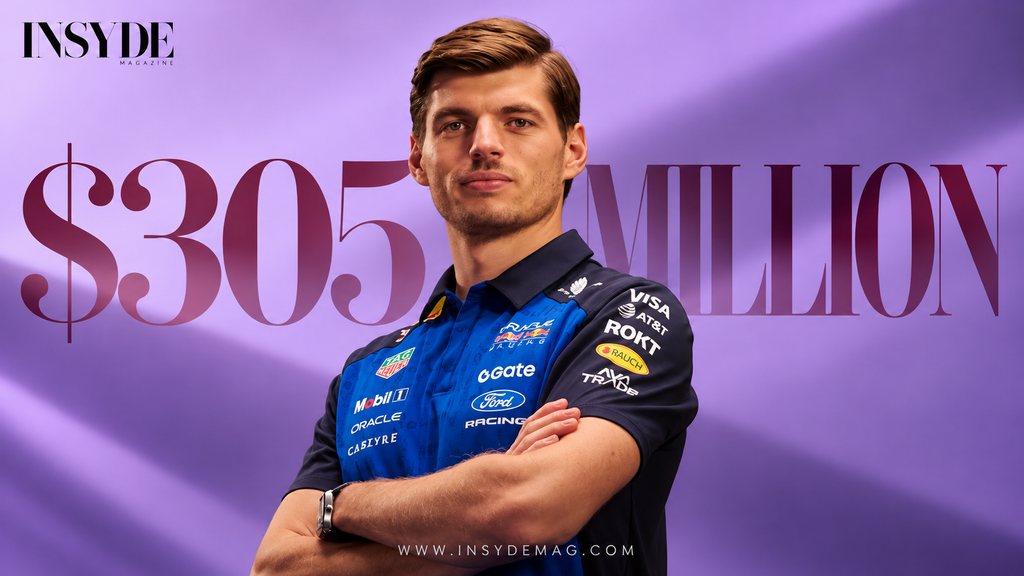
    02. MAX VERSTAPPEN

    Estimated net worth: US$305 million

    Precision, dominance and the economics of winning.

    Max Verstappen has built his reputation on uncompromising racecraft and sustained competitiveness. His success has also strengthened his position in Formula 1’s financial landscape, where elite performance can translate into larger contracts, bonuses and commercial opportunities.

    F1 Salaries’ 2026 estimates place Verstappen’s estimated net worth at US$305 million, with cumulative Formula 1 career earnings of approximately US$471.61 million. These figures are the publication’s estimates rather than independently audited disclosures.

    Verstappen’s annual earnings illustrate why the distinction between income and wealth matters. Forbes’ 2025 driver earnings ranking placed him first for on-track compensation, estimating US$76 million in salary and bonuses: approximately US$65 million in salary and US$11 million in bonuses.

    That figure describes estimated compensation for one year, not his total personal fortune. Nor should it be presented as his confirmed 2026 income.

    In Formula 1, a driver capable of consistently competing at the front occupies a scarce position. Teams invest in performance, experience and the possibility of championship success. A driver’s negotiating power can reflect that scarcity, although contract terms and bonus arrangements are not always fully disclosed.

    Verstappen’s financial story is therefore closely linked to his competitive standing. His results have helped establish him as one of the sport’s defining figures, while his earning potential illustrates how success at the highest level can command extraordinary annual compensation.

    The exact value of his private investments, property and individual commercial agreements remains uncertain. Those unknowns are one reason net-worth estimates should never be mistaken for a complete financial audit.

    INSYDE perspective: Verstappen embodies the direct relationship between elite performance and financial leverage — a reminder that in Formula 1, a driver’s competitive value can be worth tens of millions in a single season.


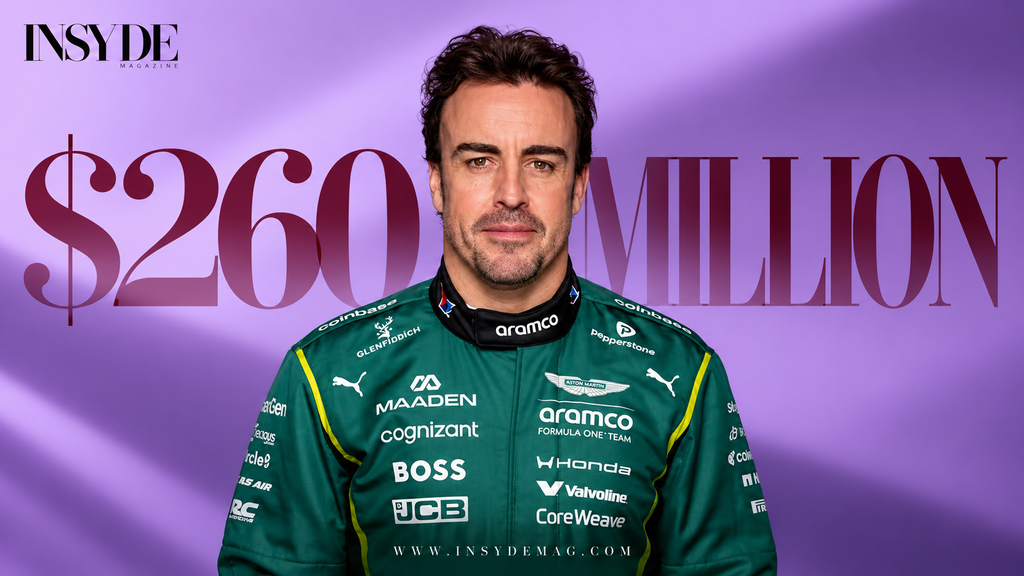
    03. FERNANDO ALONSO

    Estimated net worth: US$260 million

    The long game can be worth a fortune.

    Fernando Alonso’s career has spanned multiple generations of Formula 1. His longevity offers a different perspective on wealth in elite sport: a fortune can be built not only through championship-winning seasons, but also through sustained earning power over many years.

    According to F1 Salaries’ 2026 estimates, Alonso’s estimated net worth stands at US$260 million. The same source places his cumulative Formula 1 career earnings at approximately US$594.79 million.

    The contrast between those two figures is particularly revealing. Estimated career earnings measure income received over a professional career; estimated net worth attempts to measure current wealth. Taxes, fees, expenditure, investment outcomes and other financial obligations affect how much of that income translates into assets.

    Alonso’s long tenure in the sport has given him opportunities to negotiate contracts across different competitive eras and maintain a high international profile. His experience also has value within a racing team, where technical feedback, racecraft and knowledge accumulated over thousands of competitive laps can be important assets.

    Yet the public record does not reveal a complete picture of Alonso’s private investments, liabilities or property portfolio. His estimated net worth is consequently a useful indicator of his financial standing, not a definitive calculation of everything he owns.

    His place on this list also illustrates why a single-season earnings table cannot tell the whole story. A driver may earn less than a younger rival in one year while having accumulated greater wealth across a longer career.

    INSYDE perspective: Alonso is a case study in financial longevity — a career in which experience, sustained relevance and years of professional earning power have helped build a substantial estimated fortune.


    04. CHARLES LECLERC

    Estimated net worth: US$100 million

    The Ferrari factor — and the value of a global stage.

    Charles Leclerc competes for Ferrari, one of the most recognisable names in automotive and motorsport culture. That association places him within a brand environment where racing, engineering, design and luxury meet on a global stage.

    F1 Salaries’ 2026 net-worth estimates place Leclerc’s estimated fortune at US$100 million, with cumulative Formula 1 career earnings of approximately US$171.15 million. Both numbers are third-party estimates and should be treated accordingly.

    Leclerc’s financial position demonstrates that substantial wealth in Formula 1 is not restricted to the sport’s most decorated champions. Drivers can accumulate significant earnings through team contracts, performance incentives and commercial opportunities during their careers.

    His Ferrari association also gives him international visibility beyond race weekends. For brands, a driver can represent speed, precision, ambition and a recognisable sporting identity. Those qualities can make a partnership commercially attractive, although the precise value of individual endorsement agreements is not always public.

    It is important not to confuse the value of Ferrari as a brand with Leclerc’s personal wealth. The company’s commercial value belongs to the business and its shareholders; it is not a measure of the fortune of an individual driver.

    Leclerc’s estimated net worth is also a snapshot rather than a projection. Future contracts, sporting results and investment decisions may change his financial position, but those outcomes cannot be reliably quantified in advance.

    INSYDE perspective: Leclerc represents a newer generation of motorsport wealth — one built through elite competition and amplified by the visibility of one of the most powerful names in automotive culture.


    05. LANDO NORRIS

    Estimated net worth: US$80 million

    When performance bonuses change the numbers.

    Lando Norris’s rise with McLaren has made him one of Formula 1’s most recognisable contemporary drivers. His first world championship, won in 2025, marked a defining moment in his sporting career and highlighted the financial importance that performance can carry in modern motorsport.

    According to F1 Salaries’ 2026 estimates, Norris’s estimated net worth is US$80 million, while his cumulative Formula 1 career earnings are estimated at approximately US$200 million. These figures are not audited personal financial disclosures.

    The difference between his estimated net worth and annual compensation is especially striking. Forbes’ 2025 highest-paid driver ranking estimated Norris’s on-track earnings at US$57.5 million for that year, comprising US$18 million in salary and US$39.5 million in performance bonuses.

    Those estimates show how significantly bonuses can influence annual income. They do not mean that Norris added US$57.5 million to his personal wealth: taxes, expenses and other financial commitments affect how income translates into net worth.

    Norris also belongs to a generation of drivers whose public identities are shaped by digital media, direct fan engagement and personality-led content as well as traditional sporting coverage. That visibility can increase commercial appeal, but the revenue generated by specific digital channels or endorsements should not be assumed without reliable evidence.

    His financial position remains a developing story. A championship can strengthen negotiating power and create commercial opportunities, but future salaries, sponsorship income and investment returns cannot be treated as guaranteed.

    INSYDE perspective: Norris illustrates how sporting success and performance-linked compensation can accelerate a driver’s earning power — even when accumulated wealth remains below that of more established veterans.


    BEYOND THE PODIUM: THE BUSINESS OF BEING AN F1 DRIVER

    The fortunes behind Formula 1’s biggest names reveal several different routes to wealth. Hamilton’s estimated fortune reflects an unusually long career and global cultural profile. Verstappen’s annual compensation demonstrates the financial value attached to elite performance. Alonso illustrates the power of longevity, while Leclerc and Norris show how fortunes can grow as newer generations establish themselves at the front of the sport.

    The distinction between personal wealth and annual earnings is not a technicality. It changes the story.

    In its 2025 highest-paid driver ranking, Forbes estimated Verstappen’s on-track compensation at US$76 million, ahead of Hamilton at US$70.5 million and Norris at US$57.5 million. Yet the 2026 net-worth estimates from F1 Salaries place Hamilton first, followed by Verstappen and Alonso.

    There is no contradiction. The first list estimates compensation over one year; the second estimates accumulated wealth. Each answers a different question.

    The broader commercial environment is also important. Liberty Media’s 2025 financial filing records Formula 1 revenue of US$3.873 billion. That scale helps explain the sport’s ability to attract major commercial partners and sustain a global audience, but it should not be confused with the amount paid to drivers.

    Nor does a driver’s wealth represent the value of the team they race for. Team valuations, sponsor commitments and the commercial worth of Formula 1 are separate measures from an athlete’s private net worth.

    Ultimately, a driver’s fortune reflects a combination of income and financial decisions made over time. Public estimates can indicate the broad scale of that wealth, but they cannot reveal every private asset, liability or investment. The most responsible ranking is therefore one that makes its assumptions visible rather than presenting estimates as unquestionable fact.

    SPEED IS SEXY. WEALTH IS SEXIER.

    In Formula 1, the stopwatch measures speed. The championship table measures performance. Neither tells the whole story of a driver’s financial life.

    Fortunes accumulate through years of contracts, bonuses, sponsorships, business opportunities and decisions made far from the circuit. For some drivers, sporting success becomes a global personal brand. For others, longevity and consistency provide the foundation of their wealth. For all of them, the relationship between fame and money is more complex than a single headline figure.

    The numbers in this ranking are estimates, but the wider lesson is clear: Formula 1 is a sport where extraordinary performance can create extraordinary commercial value.

    Speed may earn the applause.

    Wealth tells a longer story.


    SOURCES & METHODOLOGY

    Net-worth estimates: F1 Salaries — F1 Driver Net Worth 2026, updated 22 October 2026. The five net-worth figures and cumulative career-earnings estimates in this ranking come from this source for consistency.

    Annual earnings: Forbes — Formula 1’s Highest-Paid Drivers 2025, published 9 December 2025 and updated 8 January 2026. The earnings figures cited in this article are Forbes estimates of 2025 salary and bonuses.

    Formula 1’s official 2026 driver lineup: Formula1.com — 2026 Drivers.

    Formula 1 financial results: Liberty Media Corporation — 2025 Annual Financial Filing.

    Ranking methodology: This feature ranks active 2026 Formula 1 drivers using one published set of third-party net-worth estimates. Net worth and career earnings are distinct measures. All figures are in US dollars. Personal net worth is not publicly audited on a standardised basis, and other publishers may report materially different estimates. These figures should not be interpreted as verified personal financial statements.

    Research cut-off: 24 October 2026. Net-worth figures reflect the cited provider’s latest available 2026 estimates at the research cut-off. Annual earnings figures refer specifically to 2025 and are not presented as confirmed 2026 salaries.

    INSYDE MAGAZINE – The Number one Luxury Magazine in Bengaluru.

    Luxury. Culture. People. What comes next.

    WWW.INSYDEMAG.COM

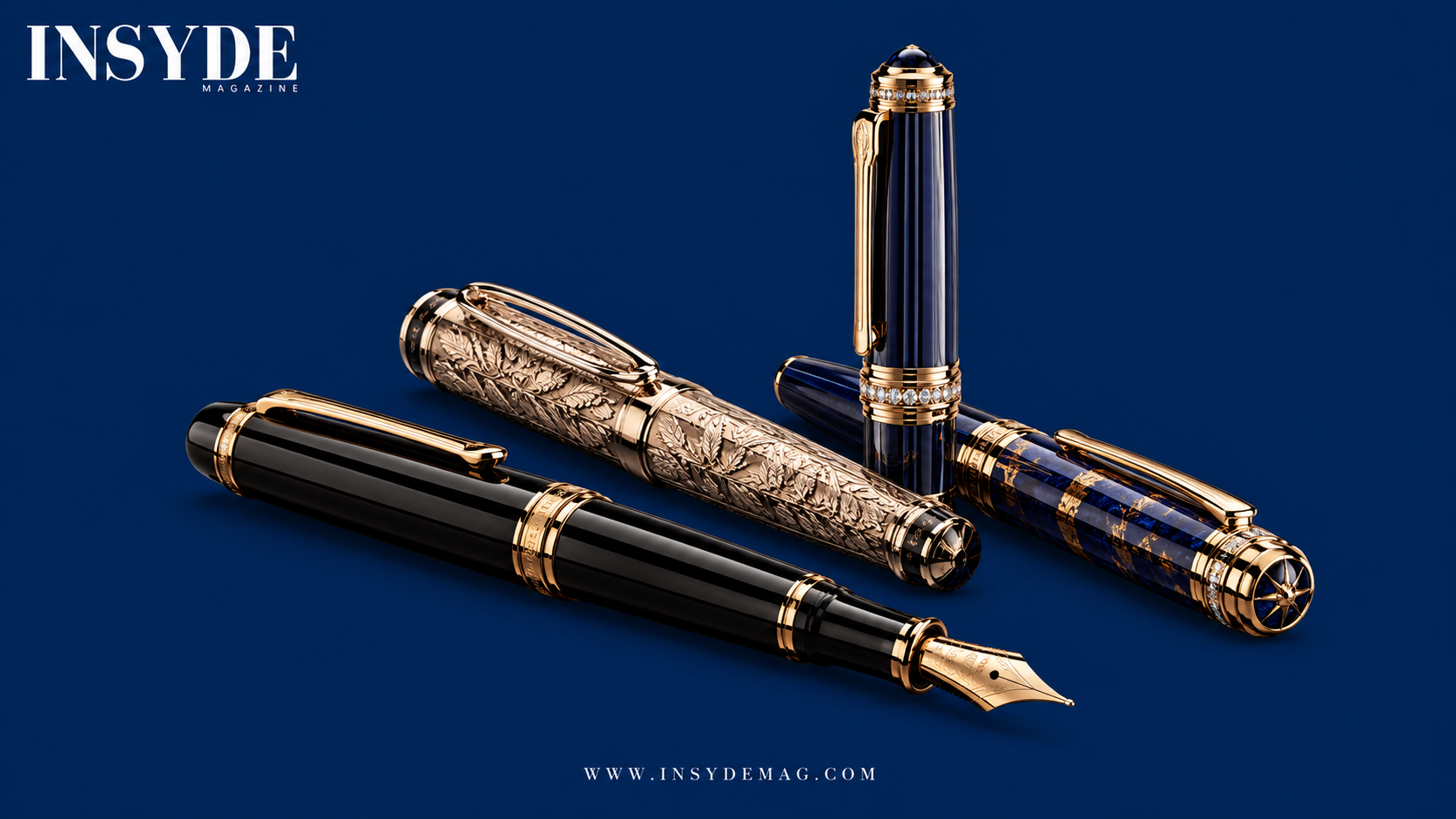
  • PEN BRANDS OF THE ULTRA-RICH

    PEN BRANDS OF THE ULTRA-RICH

    Five luxury pen houses where heritage, artistry and precision turn an everyday object into a statement of taste.

    A signature can close a billion-dollar deal. It can authenticate a masterpiece, formalize an acquisition or mark the beginning of a legacy. Yet the object behind that signature is often overlooked.

    In an age when messages disappear into screens and contracts are completed with a click, the luxury pen occupies a different kind of space. It is tactile, personal and deliberately old-fashioned. It asks you to slow down.

    For the discerning collector, a pen can be far more than a writing instrument. It can represent a century of craftsmanship, a rare artistic tradition or a fascination with the smallest details. And at the highest end of the market, the difference between an ordinary pen and an extraordinary one can be measured in hours of handwork, intricate finishing and the scarcity of a particular edition.

    The appeal is not simply about spending more. It is about knowing what you are paying for.

    A BILLION-DOLLAR MARKET, BUILT ON THE DETAILS

    The luxury pen industry is larger than its niche reputation might suggest. According to Grand View Research’s August 2026 market report, the global luxury-pen market was valued at an estimated US$3.6 billion in 2025. The firm projects it will reach US$3.7 billion in 2026 and US$5 billion by 2033, representing a forecast compound annual growth rate of 4.4% between 2026 and 2033.

    The report estimates that fountain pens accounted for 41.5% of market revenue in 2025, making them the largest product segment. The mid-luxury category represented 45.2%, while offline retail accounted for 72.4% of sales. Europe held the largest regional share, at 32.6%.

    These figures are commercial research estimates, not audited industry-wide sales disclosures. They nevertheless point to an important distinction: luxury writing instruments are not sustained by ultra-expensive collector pieces alone. The market also depends on everyday premium products, personalization, gifting and the experience of examining an instrument before buying it.

    The most interesting end of the market, however, is where a pen becomes something closer to an object of art.

    01. MONTBLANC — THE POWER OF AN ICON

    Few writing-instrument names have achieved the cultural recognition of Montblanc.

    The German luxury house introduced its Meisterstück in 1924. Over the following century, its distinctive silhouette and enduring design helped turn it into one of the most recognizable names in fine writing. The collection marked its centenary in 2024.

    Montblanc’s strength is the balance between familiarity and aspiration. Its writing instruments are associated with professional achievement, milestone gifting and the rituals of business, but the brand’s collectible editions offer a different proposition.

    The Great Characters collection draws inspiration from influential figures and cultural icons. Its Homage to The Great Gatsby Limited Edition 1925 fountain pen, for example, is listed at US$5,300 on Montblanc’s US website. The edition connects the writing instrument to the visual language of the Jazz Age and F. Scott Fitzgerald’s celebrated novel.

    That price is for a specific limited edition, not a representative price for all Montblanc pens. The brand’s wider collection spans considerably different price points.

    What makes Montblanc compelling is its ability to turn a recognisable design into a personal object. For one owner, it may be a daily writing companion. For another, a particular edition may represent a favourite author, an important achievement or a carefully chosen collectible.

    The luxury proposition: An enduring design icon with a bridge between professional life, cultural references and collecting.

    02. NAMIKI — THE ART OF JAPANESE LACQUER

    Some luxury objects announce their value immediately. Others reward a closer look.

    Namiki belongs firmly in the second category.

    The Japanese brand’s history of maki-e fountain pens dates to 1925. Maki-e is a traditional decorative technique that involves building intricate designs through layers of lacquer and the application of materials such as metallic powders. The process demands specialist knowledge, patience and careful execution.

    According to Namiki’s official history, the company explored lacquer as a durable and beautiful material for fountain-pen bodies before developing decorated designs that brought Japanese artistic traditions to writing instruments.

    The result is a different expression of luxury. Rather than relying solely on a familiar logo or precious-metal finish, Namiki places the decorative work at the centre of the object. Nature, mythology and traditional Japanese motifs can become elaborate compositions across a pen’s surface.

    The craftsmanship is not incidental decoration. It is the reason the object exists in that particular form.

    For collectors, this creates a more intimate relationship with ownership. The attraction may lie in the visual complexity of a design, the skill required to produce it or the connection to a tradition passed between generations of artisans.

    Namiki also challenges the assumption that luxury must always be loud. A pen can be extraordinary without relying on conspicuous branding. Its value can be found in the work that only becomes apparent when someone takes the time to look.

    The luxury proposition: Traditional Japanese artistry, intricate lacquerwork and craftsmanship that transforms a writing instrument into a miniature canvas.

    03. S.T. DUPONT — FRENCH REFINEMENT IN EVERY DETAIL

    S.T. Dupont approaches luxury through precision, finish and the relationship between an object and its owner.

    The French house’s Classique pen has an origin story that captures this philosophy. According to S.T. Dupont’s official account, Jacqueline Kennedy Onassis requested a writing instrument to match her S.T. Dupont lighter. The company, which had not previously manufactured pens, took on the challenge and adapted the lighter’s design language to create its first writing instrument.

    The resulting Classique design drew on the lighter’s metalwork and vertical guilloché detailing. It was an exercise in translating the character of one luxury object into another.

    That attention to detail remains central to the appeal of the house’s writing instruments. Surface patterns, lacquer, polished metal and the proportions of the body all contribute to the experience. The pen is not merely a vessel for ink; it is an object designed to feel considered in the hand and distinctive on a desk.

    There is a certain intimacy to this kind of luxury. A writing instrument is handled repeatedly, often during moments that matter: a personal letter, a formal agreement, a handwritten note or a significant gift. The quality of its design becomes part of the ritual.

    S.T. Dupont’s appeal is therefore less about size or spectacle than about refinement. The details are the point.

    The luxury proposition: French design heritage, refined metalwork and an understated approach to personal luxury.

    04. CARAN D’ACHE — SWISS PRECISION AT ITS MOST EXTRAVAGANT

    Caran d’Ache brings Switzerland’s tradition of precision and technical design into the world of writing instruments.

    Founded in Geneva in 1915, the company produces its writing and drawing instruments in Switzerland. Its range extends from accessible premium stationery to limited editions that explore elaborate materials, intricate finishing and ambitious design concepts.

    One example is the 1010 Timekeeper Fountain Pen Limited Edition. On its US website, Caran d’Ache lists the model at US$14,325.

    The design draws inspiration from the world of fine watchmaking, including the visual language of watch dials and crowns. The company highlights techniques including guilloché, engraving, manual polishing, lacquering and PVD treatment.

    This is where the relationship between watches and pens becomes particularly interesting. Both objects combine engineering with personal taste. Both can be judged on their practical performance, yet their most collectible versions are often appreciated for the design decisions and technical work that go into them.

    The price of the 1010 Timekeeper is a useful illustration of how far a luxury writing instrument can extend beyond everyday utility. It is not a typical Caran d’Ache price, nor should it be taken as representative of the brand’s broader collection. It is a specific limited edition at the upper end of its range.

    At this level, the appeal lies in the convergence of design, specialist finishing and scarcity.

    The luxury proposition: Swiss manufacturing and technical precision, expressed through highly elaborate limited editions.

    05. MONTEGRAPPA — ITALIAN CHARACTER, COLLECTOR APPEAL

    Montegrappa offers a more expressive interpretation of luxury writing.

    Its history began in 1912, when a group of industrialists established Italy’s first nib factory in Bassano Veneto, now Bassano del Grappa. The company subsequently developed its own fountain pens and built a reputation around Italian manufacturing and design.

    The house’s official history describes a tradition shaped by the artisanal culture of the Veneto region. That heritage continues to inform its identity, alongside an appetite for distinctive designs and themed collections.

    Montegrappa is particularly interesting for collectors who want an object to communicate something about their interests. Its writing instruments have explored subjects from cultural figures and literature to entertainment and history. This can make the choice of pen feel more personal than simply selecting a familiar luxury name.

    A collector might be drawn to a particular edition because of its visual language, the story behind it or the subject it commemorates. Another buyer may prefer a more restrained design from the brand’s wider range.

    That breadth is important. Luxury collecting is not a single aesthetic, and a high price does not automatically make an object desirable. For many enthusiasts, the strongest connection comes from finding a design that feels individual.

    Montegrappa’s character-driven approach gives it a distinct place among established writing houses: it treats the pen as a canvas for identity as well as a tool for writing.

    The luxury proposition: Italian heritage, expressive design and collectible instruments that appeal to personal interests.

    WHAT ACTUALLY MAKES A LUXURY PEN EXPENSIVE?

    The price of a luxury pen is rarely explained by a single material or manufacturing decision. Several factors can combine to create a substantial premium.

    Craftsmanship and finishing. Specialist nib work, engraving, lacquer application, polishing and assembly can require considerable skill. Techniques such as Namiki’s maki-e are particularly labour-intensive because the decorative surface is built through a series of carefully controlled processes.

    Materials and construction. Precious metals, specialist finishes and complex components can affect manufacturing costs. Their influence varies by model, and a premium material alone does not establish a pen’s overall quality.

    Design and heritage. Established houses carry histories, recognisable design languages and reputations built over decades. For some buyers, that continuity is part of the appeal.

    Limited production. A restricted edition can attract interest when it combines a distinctive concept, desirable execution and genuine collector demand. However, limited availability does not guarantee that a pen will appreciate in value.

    Personalisation and meaning. Engraving, bespoke details and the circumstances in which a pen is purchased can make it deeply personal. A writing instrument given to mark a career milestone may be valued for reasons that have little to do with its resale price.

    It is also worth separating luxury from investment. Some pens become sought-after collectibles, but future value is uncertain. Condition, authenticity, provenance, rarity and market demand all matter. A buyer should not assume that an expensive pen will generate a financial return.

    WHY THE PEN STILL MATTERS IN A DIGITAL WORLD

    The continued appeal of fine writing instruments is not simply a nostalgic rejection of technology. It is a reminder that convenience and experience are not always the same thing.

    Digital tools are faster for most routine communication. A luxury pen offers something different: the physical sensation of writing, the rhythm of forming words by hand and the pleasure of using an object made with care.

    That distinction is relevant to the wider luxury market. Consumers can buy functional objects at almost every price point. The products that inspire deeper attachment often offer something beyond basic utility: a story, a craft tradition, an individual aesthetic or a connection to a meaningful moment.

    Fine writing instruments sit comfortably within that world. They can be used every day, displayed as part of a collection or kept for occasions when the act of writing deserves attention.

    They also occupy an unusual position between personal luxury and gifting. A pen can be chosen for its design, presented to mark an achievement or retained as a reminder of a relationship. Unlike a digital signature, the physical object can remain long after the moment has passed.

    THE FINAL WORD

    Montblanc represents the power of an icon. Namiki turns traditional Japanese craftsmanship into a form of wearable-scale art. S.T. Dupont brings French refinement to the smallest details. Caran d’Ache explores the possibilities of Swiss precision, while Montegrappa gives collectors a more expressive design language.

    These five houses demonstrate that luxury writing is not defined by one price bracket or a single idea of status. Their collections span different budgets, and not every instrument is intended for the wealthiest buyer.

    What connects them is the belief that an everyday object can become something worth keeping.

    The finest luxury pens do more than put ink on paper. They bring together design, craft, heritage and personal meaning in a form that can be held in the hand.

    In a world that rarely asks us to slow down, perhaps that is the ultimate luxury: not simply owning something expensive, but owning something worth taking the time to appreciate.

    INSYDE MAGAZINE– NO.1 LUXURY MAGAZINE IN BENGALURU

  • ISHA DEB: THE ART OF JEWELLERY, THE INSTINCT OF AN ARTIST

    ISHA DEB: THE ART OF JEWELLERY, THE INSTINCT OF AN ARTIST

    INSYDE EXCLUSIVE | ISHA DEB

    From the first sketch to the finished piece, jewellery designer Isha Deb explores the intuition, imagination and technical precision behind jewellery that is as personal as it is beautiful.

    Artificial intelligence can generate intricate jewellery concepts in seconds. Digital tools can explore silhouettes, experiment with proportions and turn an abstract idea into a compelling visual long before a gemstone is set or a piece reaches the workbench. For an industry built around precision, aesthetics and material expertise, these capabilities present exciting possibilities.

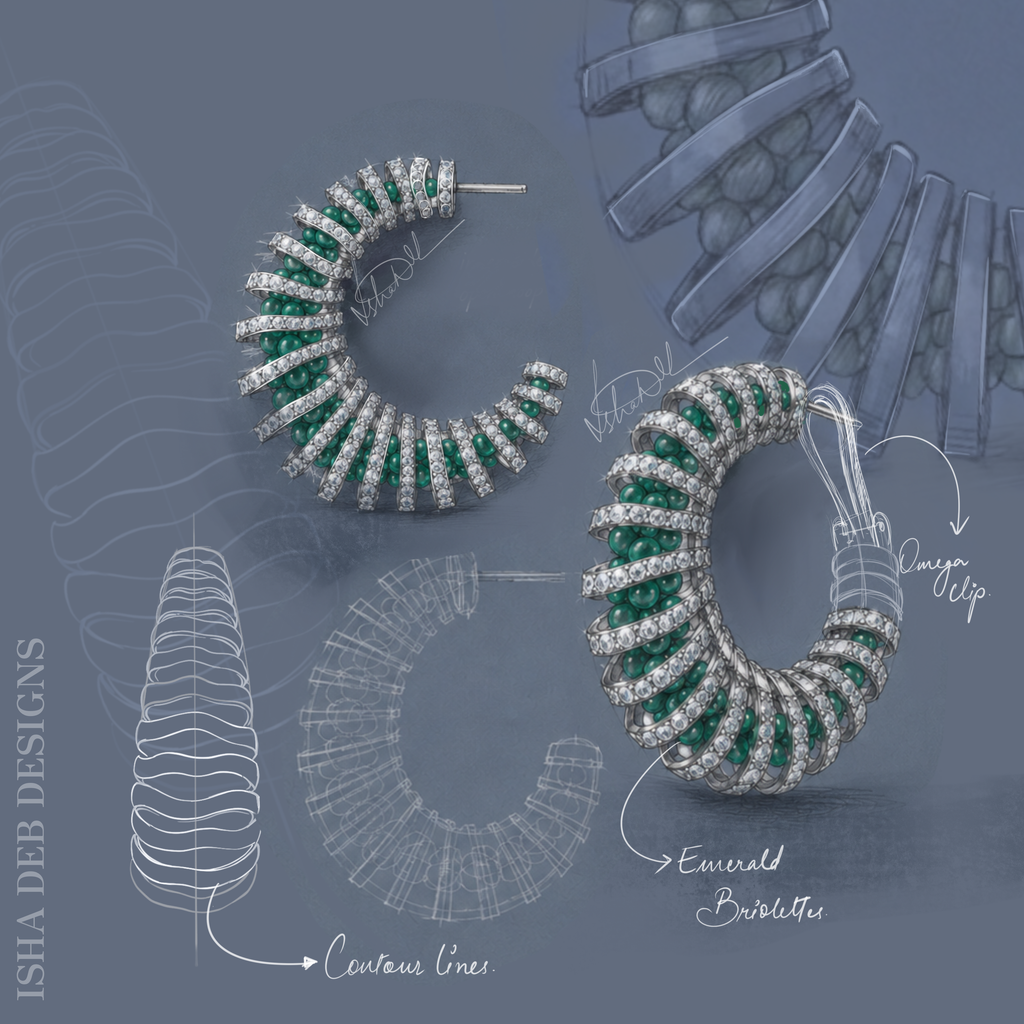
    But a convincing image is not the same as a finished piece of jewellery. Between the first idea and the object a person eventually wears lies a series of decisions that demand creative judgement, technical understanding and an awareness of how design meets the human body.

    It is within this space between possibility and execution that jewellery designer Isha Deb sees the continuing importance of the designer.

    “I use them myself, but for me, they remain a medium through which I express a design. My own thought process and judgement still guide the work,” she says of artificial intelligence and digital tools.

    For Deb, technology is neither something to resist nor a substitute for creative authorship. It is an extension of the design process, capable of making certain tasks faster and expanding the range of ideas a designer can explore. What it cannot automatically supply is the personal perspective that determines which ideas are worth pursuing.

    As AI becomes increasingly capable of producing sophisticated visual concepts, that distinction raises a question extending beyond jewellery: when the image becomes easier to generate, what gives the final object its identity?

    THE HUMAN ELEMENT BEHIND THE IMAGE

    A jewellery designer’s point of view develops over time. It is shaped by experiences, observations, travel, culture and the details that hold an individual’s attention. These influences may find their way into a design consciously or emerge through instinct, informing everything from the selection of a gemstone to the decision to pursue a sharp architectural line or a softer, more fluid form.

    For Deb, this accumulated experience is central to creative identity.

    “AI can produce a beautiful image, but I don’t believe a designer’s soul can be cloned, at least not yet.”

    Her distinction is between generating possibilities and giving those possibilities direction. AI can offer a starting point, but a designer must still assess the result, question its relevance and determine whether it reflects a considered creative intention.

    That judgement is particularly significant in jewellery, where visual appeal is only one part of the equation. A design must also account for materials, construction, proportion and wearability. A form that looks impressive on a screen may require substantial refinement before it becomes a viable object.

    The challenge, therefore, is not simply to use the most advanced tools available. It is to retain the ability to make independent creative decisions while using those tools.

    WHY SKETCHING STILL MATTERS

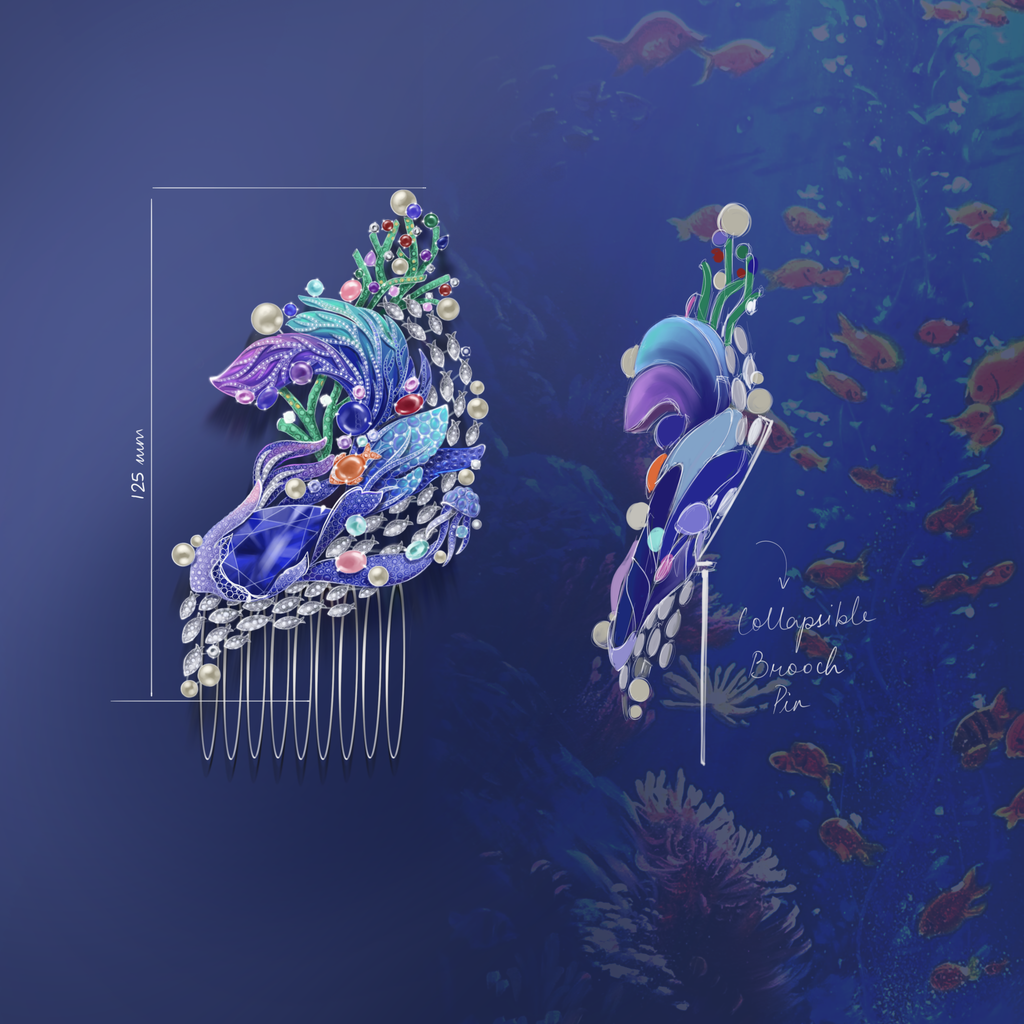
    For Deb, the creative process often begins with drawing. A sketch is not merely a record of an idea that has already been resolved; it can be the means through which the idea becomes clear in the first place.

    “Often, an idea only starts to become clear when you begin drawing it,” she explains.

    A rough line on paper, a quick doodle or an unfinished drawing can help a designer discover proportions, test a form and recognise possibilities that were not immediately apparent. The act of drawing becomes part of the thinking itself.

    Digital devices have made this process more flexible. Deb carries an iPad, allowing her to sketch when an idea occurs rather than waiting until she is at her workspace. The medium has evolved, but she sees the underlying relationship between thought and drawing as largely unchanged.

    “I still work through rough lines, make changes and let the idea evolve as I draw. For me, it is simply an upgraded tool.”

    This distinction matters in a conversation often framed as a choice between traditional methods and digital innovation. In practice, the two can coexist. A designer can begin with a spontaneous sketch, develop it digitally, refine it through three-dimensional modelling and ultimately translate it into a physical object.

    What matters is the continuity of thought throughout that process. The tools may change, but the designer remains responsible for deciding what the design should become.

    WHEN TECHNOLOGY BECOMES A CREATIVE RISK

    The risk of generic design does not begin and end with artificial intelligence. Jewellery designers have long navigated the tension between personal expression and commercial realities.

    Budgets, customer preferences, material costs and the need to build a sustainable business can influence the final form of a piece. A detail may need to be simplified, a design adjusted or the choice of diamonds and gemstones reconsidered to meet a particular price point.

    Deb acknowledges that these pressures are part of the profession. She believes the greater challenge is recognising which compromises are necessary without losing the qualities that distinguish a designer’s work.

    “I think technology works well as a creative tool as long as a designer’s own expression and style remain intact. It should help us develop an idea without making it feel more generic.”

    AI may make it easier to generate alternatives, but a greater number of options does not necessarily produce a more original outcome. If designers accept convenient results without questioning whether they reflect their own aesthetic, the process risks becoming an exercise in selecting images rather than developing ideas.

    For Deb, the responsibility lies in knowing when to adapt and when to preserve the character of a design. Commercial viability is essential, but it need not come at the expense of every distinctive detail.

    The question is not whether a designer should compromise. It is whether the compromise serves the design or gradually erodes its identity.

    FROM DIGITAL CONCEPT TO PHYSICAL REALITY

    The difference between an attractive visual and a workable piece becomes especially apparent during computer-aided design, or CAD.

    While a sketch establishes the initial direction, CAD translates the idea into a three-dimensional structure that can be manufactured and worn. This stage requires the designer to preserve the character of the original concept while resolving the technical demands of construction.

    For Deb, getting the CAD right is one of the most challenging parts of the process.

    Consider a necklace. Its links must provide sufficient flexibility to sit comfortably around the neck, while the height and angles of its elements influence how it rests against the body. An earring presents a different set of demands: its weight, balance and support must work together so that it sits correctly on the ear.

    These details may not be immediately apparent in a rendering, yet they can determine whether a piece succeeds in practice. The designer must understand how a form behaves in three dimensions, how its components interact and how its construction affects the wearer.

    “Getting the CAD right means preserving the character of the design while resolving all the practical details that make it work as jewellery.”

    The process also depends on technical knowledge and collaboration with manufacturers. A design must move beyond visual intention without losing what made it compelling in the first place.

    This is where the debate around AI becomes more nuanced. Digital tools already play an important role in jewellery development, and AI may help streamline aspects of the process further. But generating a concept and resolving the details required to manufacture it are different tasks.

    A finished jewel must function as an object, not merely as an image.

    DESIGNING FOR CONNECTION, NOT JUST APPEARANCE

    The value of jewellery has traditionally been associated with materials, rarity, craftsmanship and monetary worth. These remain important considerations, but Deb believes the contemporary luxury customer is also looking for a more personal relationship with what they buy.

    “I believe today’s luxury customer is looking for a more personal connection with what they buy.”

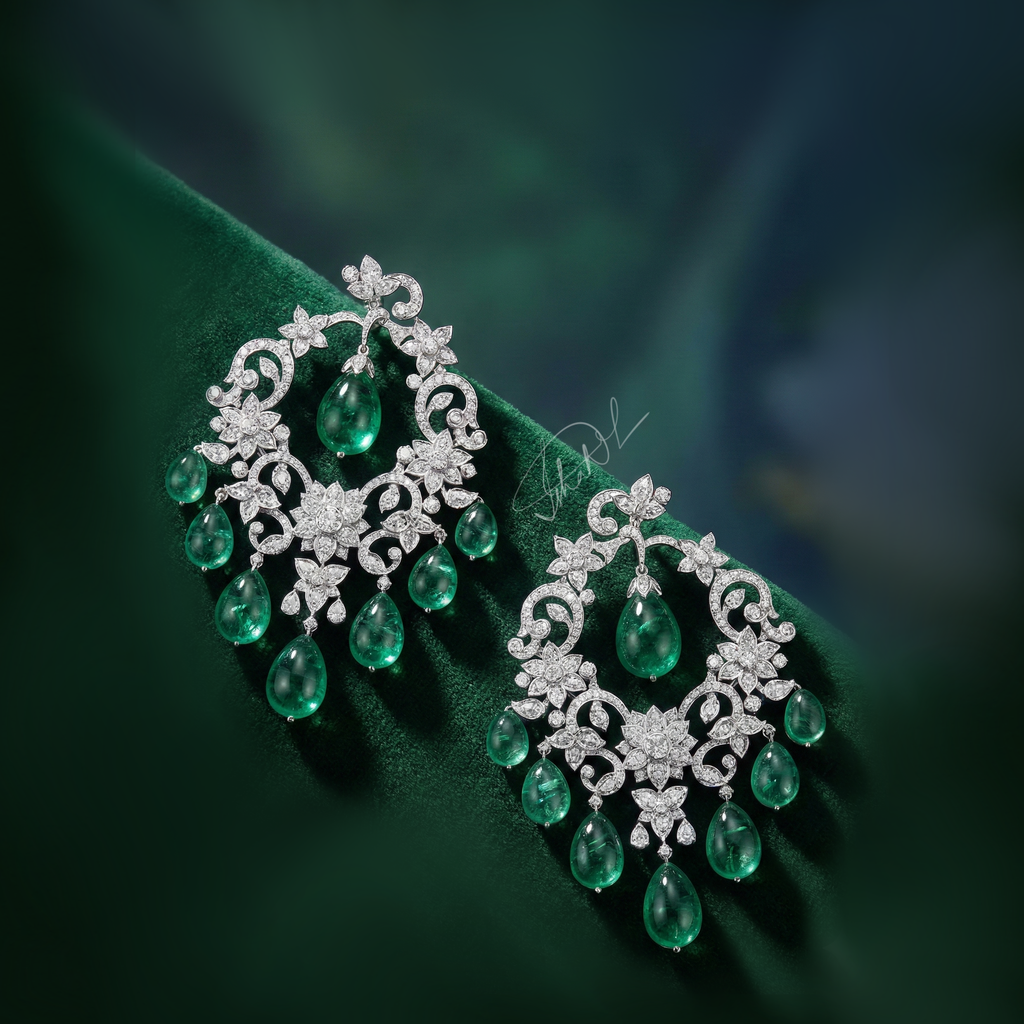
    For her, individuality can emerge from a distinctive design, an unusual gemstone colour, a rare diamond cut or a stone with a compelling history. The appeal extends beyond the material’s price to the character that makes a particular piece feel different.

    She also sees wearability as an increasingly important consideration. Customers may value exceptional jewellery that can be enjoyed across different occasions, rather than pieces that remain reserved for a single event. A distinctive design does not necessarily need to be elaborate to make a statement.

    This places a different emphasis on the relationship between design and ownership. Jewellery can be an expression of personal style, but it can also become part of everyday life—something selected because it feels relevant to the wearer rather than simply because it signals status.

    For a designer, creating that connection requires more than visual impact. It means considering how a piece will feel, how it will be worn and whether its character will continue to resonate beyond the moment of purchase.

    HERITAGE AS A STARTING POINT

    Indian jewellery offers a vast vocabulary of craftsmanship, ornamentation, architectural references and cultural forms. For contemporary designers, the challenge is to engage with this heritage without simply reproducing familiar aesthetics.

    Deb approaches inspiration by looking beyond the obvious form. She considers the structure, rhythm or detail that attracts her, then explores how it might be reinterpreted through changes in proportion, pattern, shape or the use of gemstones.

    The original reference remains part of the creative process, but it does not have to dictate the final result.

    “I feel working with heritage and cultural references is more about understanding it deeply enough to express it in a fresh and more personalised way.”

    This approach places interpretation at the centre of design. A historical or cultural reference can be a starting point for exploration rather than a template to reproduce. Through drawing, experimentation and the considered use of materials, a familiar form can develop a new identity.

    The same principle applies to technology. Whether an idea begins with a cultural reference, a hand-drawn sketch or a digital concept, its originality depends on the decisions that shape its development.

    Innovation does not necessarily require abandoning the past. It can emerge from understanding a reference deeply enough to discover what else it might become.

    WHAT THE NEXT GENERATION OF JEWELLERY MIGHT LOOK LIKE

    Deb expects jewellery design to continue responding to changing lifestyles, customer preferences and the practical realities of materials and pricing.

    She sees wearability and versatility as important considerations, alongside the enduring appeal of classic pieces and exceptional one-of-a-kind high jewellery. With gold becoming more expensive, she believes lighter designs are becoming more attractive to some customers. Layering necklaces and combining different pieces can also offer more personal ways of wearing jewellery.

    She points to lab-grown diamonds as making solitaire jewellery more accessible and identifies materials such as titanium as offering possibilities for colour, volume and playful designs that remain comfortable to wear.

    These observations reflect her perspective on the direction of the market rather than a universal shift in consumer behaviour. Jewellery continues to serve different preferences, from everyday fine jewellery to highly individualised and exceptional pieces.

    For designers, the challenge is to respond to these changes without allowing every new preference or technology to dictate the direction of their work.

    Deb sees considerable potential in AI and other digital tools to improve visualisation, streamline aspects of CAD development and support manufacturing processes. By allowing designers and customers to explore ideas earlier, such tools may also help identify changes before significant time and resources are committed to production.

    But she draws a clear distinction between technological capability and creative originality.

    “Having the ability to generate more options does not necessarily mean those options carry an original thought.”

    The designer’s role will continue to involve understanding the customer, exploring materials and deciding which ideas deserve to be developed. The tools may expand the possibilities, but the creative direction must still come from somewhere.

    WHEN A BEAUTIFUL OBJECT BECOMES GOOD DESIGN

    For Deb, a design’s success is not complete when the piece has been manufactured. Its meaning is ultimately tested through the experience of the person who chooses to wear it.

    “I will be honest- according to me, the success of a design is not complete when the piece is made. It is when someone chooses to buy it, wears it and loves it.”

    The statement brings the discussion back to the physical realities of jewellery. A piece must balance its creative idea with comfort, construction, price and value. It should move as required, sit properly on the body and allow its wearer to enjoy it without constant adjustment or discomfort.

    Commercial success also matters. A designer must understand the intended customer and work within practical limits without losing the character or quality of the design. When those elements come together, the result becomes more than a visually appealing object.

    It becomes a piece of jewellery that someone wants to make part of their life.

    Artificial intelligence will continue to change how designers imagine, visualise and develop their work. It may reduce the time required for certain tasks, open up new technical possibilities and make experimentation more accessible. Its influence on jewellery design is likely to grow as the tools evolve.

    But the central questions remain grounded in the object itself. Does the design work? Does the gemstone belong? Has the original idea survived the process of making? Does the finished piece offer something meaningful to the person who wears it?

    For Isha Deb, the future is not about choosing between human creativity and technological progress. It is about understanding what each can contribute—and ensuring that efficiency never becomes a substitute for judgement.

    A machine may help generate the image. The designer must still decide what is worth bringing into the world.


    INSYDE EXCLUSIVE
    Isha Deb on AI, creative authorship and the future of jewellery design.

    INSYDE Magazine | Luxury. Culture. Perspective.

    No.1 Luxury Magazine In Bengaluru

  • THE ART OF TEMPTATION

    THE ART OF TEMPTATION

    Inside the seductive world of luxury chocolate, where rare cacao, extraordinary craftsmanship and the pursuit of pleasure turn a familiar indulgence into something far more sophisticated.

    INSYDE MAGAZINE | LUXURY

    Chocolate has always understood the art of seduction. It melts slowly, lingers on the palate and transforms an ordinary moment into something worth savouring. But at the upper end of the market, chocolate is no longer simply a sweet indulgence. It is an expression of taste, craftsmanship, provenance and the increasingly sophisticated business of pleasure.

    Behind an elegant box of bonbons or a carefully wrapped bar of dark chocolate lies a world of cacao varieties, agricultural heritage, technical precision and creative experimentation. Some makers draw on generations of European confectionery tradition. Others look towards distinctive growing regions, unusual flavour profiles or entirely different ways of experiencing chocolate.

    Their products may differ in price, philosophy and presentation. What connects them is an ambition to make chocolate more than an everyday purchase: to turn it into an experience that invites attention, curiosity and desire.

    Yet luxury is not simply a matter of charging more. A beautiful package cannot compensate for an unremarkable product, and an expensive ingredient does not automatically guarantee an exceptional result. The more interesting story lies in the relationship between the cacao, the maker and the experience that ultimately reaches the consumer.

    This is where the art of temptation begins.

    WHEN CHOCOLATE BECOMES LUXURY

    For much of its commercial history, chocolate has been associated with comfort, celebration and accessible indulgence. Luxury chocolate operates through a more layered proposition.

    Here, the conversation extends beyond sweetness to the origin of the cacao, the balance of flavours, the texture of a ganache, the precision of a chocolate shell and the decisions made long before a finished product reaches its packaging.

    Presentation matters, but it is only one part of the equation. A beautifully designed box can create anticipation. It cannot, by itself, create exceptional chocolate.

    The most compelling makers establish a recognisable point of view. Some pursue restraint and purity. Others explore intricate flavour combinations, celebrate particular cacao varieties or develop collections that encourage consumers to taste chocolate with the attention usually reserved for fine wine or specialty coffee.

    This approach reflects a broader commercial opportunity. Grand View Research estimates that the global premium chocolate market was worth approximately US$32.9 billion in 2025 and projects it to reach US$34.1 billion in 2026, before growing to US$47.8 billion by 2033. These figures are market-research estimates rather than audited industry totals, but they indicate the scale of the premium segment and its projected growth.

    The opportunity is not simply to sell a more expensive chocolate bar. It is to offer a more distinctive product, a stronger story and an experience consumers consider worth paying for.

    In this market, luxury can mean rarity, technical expertise, heritage, sensory complexity or the pleasure of discovering something unfamiliar. The strongest brands understand that these qualities are most persuasive when they are supported by the product itself.

    FIVE CHOCOLATE HOUSES, FIVE EXPRESSIONS OF LUXURY

    There is no universally accepted ranking of the world’s most luxurious chocolate brands. The following five houses offer a more useful perspective: each illustrates a different way of building distinction in fine chocolate, from cacao provenance to French craftsmanship and Japanese product innovation.

    01. TO’AK CHOCOLATE

    Ecuador | The allure of rarity

    What if the most interesting thing about chocolate were not the recipe, but the cacao itself?

    Ecuadorian maker To’ak has built its identity around the heritage and distinctive character of cacao, particularly the Nacional variety. Its work draws attention to the relationship between the cacao tree, the growing environment, the people cultivating the crop and the final chocolate.

    The brand’s story centres on Ecuador’s Piedra de Plata valley and the preservation of Nacional cacao. Rather than treating cacao as an interchangeable commodity, To’ak presents its origin and characteristics as essential parts of the finished product.

    This philosophy extends into its approach to tasting. Its official catalogue includes a selection of 18 mini bars made from 100% cacao, weighing 54 grams in total and listed at US$60 on the brand’s website at the time of research. The seasonal selection allows consumers to explore differences in harvest and flavour without additional ingredients obscuring the cacao’s character.

    That is a distinctive proposition in a category where chocolate is often judged by sweetness, percentage or packaging alone.

    To’ak’s approach also raises a larger question about luxury: what happens when the ingredient becomes the main attraction? In this case, the answer lies in provenance, variation between harvests and the effort required to preserve particular cacao traditions.

    Rarity, however, should not be confused with quality by default. The value of a rare variety ultimately depends on its flavour, production and the integrity of the story behind it.

    INSYDE perspective: The most persuasive luxury is rarity with substance. When provenance connects to agricultural heritage and a genuinely distinctive tasting experience, the story becomes more than a marketing device.

    Explore: To’ak Chocolate.

    02. LA MAISON DU CHOCOLAT

    France | The Parisian art of indulgence

    Founded in Paris by Robert Linxe in 1977, La Maison du Chocolat helped establish a distinctive language for French luxury chocolate: refined, technically demanding and attentive to the character of each ingredient.

    Its philosophy rests on a deceptively simple idea. Chocolate deserves to be treated as an art form, with the same attention to balance and execution found in other expressions of fine craftsmanship.

    Consider the ganache. Its texture and flavour depend on the relationship between chocolate, cream and other ingredients, as well as the temperatures and techniques used during production. A subtle adjustment can change the result entirely. Achieving consistency while preserving the intended character of a recipe requires experience, precision and careful tasting.

    La Maison du Chocolat places this craft at the centre of its identity. Its history and production philosophy emphasise the expertise of its chocolatiers, from developing fillings to coating and finishing individual pieces.

    There is also a distinctly Parisian sensibility to its presentation. The visual language is elegant without requiring every creation to become an extravagant spectacle. The product remains central, while packaging and presentation frame the experience.

    This is an important distinction in luxury. When every brand competes to appear more exclusive, restraint can become a form of confidence.

    La Maison du Chocolat demonstrates that sophistication does not always require novelty. Sometimes it means taking a familiar pleasure and executing it with extraordinary care.

    INSYDE perspective: True refinement is not about adding more. It is about understanding exactly what each detail contributes to the final experience.

    Explore: La Maison du Chocolat.

    03. AMEDEI

    Italy | The beauty of the bean

    Amedei approaches chocolate through the character of cacao and the qualities that make a particular variety distinctive.

    One of its notable creations is Porcelana, a 70% dark chocolate made with Criollo cacao associated with Venezuela’s Zulia region, southwest of Lake Maracaibo. Amedei describes its Porcelana cacao as rare and highlights a flavour profile that includes notes of almond, toasted bread and bay leaf.

    The details matter because fine chocolate is not defined by cocoa percentage alone. Two bars containing the same proportion of cacao can taste remarkably different, depending on the beans used, fermentation, roasting, conching and other production choices.

    Amedei’s Porcelana offers an example of how a particular cacao variety can become central to a product’s identity. The origin, flavour profile and production philosophy give the chocolate a story that extends beyond its appearance.

    The product also illustrates an important distinction between luxury positioning and luxury pricing. At the time of research, Amedei listed its 50-gram Porcelana bar at €10.30 on its official website. That is a premium price for a small bar, but the more meaningful point is the product’s emphasis on a specific cacao and its sensory characteristics.

    Rarity deserves scrutiny, too. A rare ingredient is not automatically superior for every palate, and a prestigious origin cannot replace good processing. The ultimate test remains what the consumer experiences when the chocolate is tasted.

    That distinction separates informed appreciation from luxury branding alone.

    INSYDE perspective: Exceptional chocolate does not simply announce its quality. It gives the curious consumer something to discover.

    Explore: Amedei Porcelana.

    04. RICHART

    France | Chocolate as a language of flavour

    Not every luxury chocolate experience begins with a rare cacao variety or a centuries-old recipe. Sometimes, it begins with curiosity.

    French chocolate house RICHART takes an approach inspired by the aromatic language of perfumery. Its collections are organised around seven aromatic families: balsamic, roasted, fruity, citrus, herbal, floral and spicy.

    The concept changes the way chocolate is presented to the consumer. Rather than treating every piece as a variation on sweetness, the brand encourages exploration of aroma, flavour and the relationships between ingredients.

    A fruity chocolate creates a different impression from a roasted or herbal one. Citrus can introduce brightness, while spices can add warmth and complexity. These combinations are not merely decorative descriptions; they give the consumer a framework for comparing and understanding different sensory experiences.

    RICHART also pays attention to the form and presentation of its creations. Its Petits RICHART chocolates, introduced in 1988 according to the brand, are designed as small, carefully composed pieces in which appearance and aromatic character work together.

    The appeal is closer to discovering a collection than simply buying a sweet treat. Each piece becomes part of a broader experience, inviting comparison and encouraging the consumer to slow down.

    This approach reveals another dimension of luxury: not everything needs to be rare to be distinctive. A product can create value through the intelligence of its design and the way it encourages people to experience familiar ingredients differently.

    INSYDE perspective: Sometimes the most seductive luxury is the one that makes you curious enough to take another bite.

    Explore: RICHART.

    05. ROYCE’

    Japan | The art of texture

    Luxury chocolate does not belong exclusively to Europe’s established confectionery traditions.

    Founded in Sapporo, Hokkaido, in July 1983, ROYCE’ has developed a distinct identity through its attention to ingredient quality, originality, texture and presentation. Its Nama Chocolate, in particular, is associated with a soft, delicate texture that differs from the familiar snap of a conventional solid chocolate bar.

    That contrast is central to the experience. Chocolate is often discussed through its cocoa percentage or origin, but texture can be just as influential. The way a piece yields, melts and releases flavour can shape the entire tasting experience.

    ROYCE’ has built its philosophy around quality, originality and surprise, drawing on its Hokkaido roots while developing products for a wider international audience. Its approach demonstrates how a premium identity can emerge from a distinctive product experience rather than from European heritage or elaborate visual codes alone.

    There is a practical dimension to this, too. Products with a softer texture and specific storage requirements demand attention to handling, freshness and distribution. Those considerations form part of the product’s character, not merely the logistics behind it.

    ROYCE’ is also a relevant name for Indian readers. Its India website lists availability in cities including Bengaluru, Mumbai, New Delhi, Gurugram, Kolkata and Pune. Current stock and product ranges should still be checked with the retailer before planning a purchase.

    Its story is a reminder that luxury does not need to look the same everywhere. A recognisable experience, executed consistently, can become a brand’s strongest signature.

    INSYDE perspective: Luxury is not a single aesthetic. It is the ability to create something that feels unmistakably its own.

    Explore: ROYCE’ India.

    THE PRICE OF PLEASURE

    The luxury chocolate conversation becomes more complicated when price enters the picture.

    Rare cacao, specialist production, careful sourcing and labour-intensive finishing can all contribute to the cost of fine chocolate. But price is also influenced by brand positioning, packaging, distribution, taxes, retail location and the format in which a product is sold.

    A tasting collection and a single-origin bar are not necessarily competing on the same terms. Nor can a limited-edition creation be compared fairly with a widely available product simply by looking at the price on the label.

    The broader cacao market adds another layer to the conversation. Cocoa prices are influenced by supply and demand, weather, crop conditions, inventories and developments in producing countries. Those movements can affect manufacturers, but they do not translate directly into the retail price of every finished chocolate.

    The relationship between raw cacao and luxury chocolate is especially complex because specialist makers may prioritise particular varieties, regions or sourcing relationships rather than purchasing ingredients solely on commodity-market terms.

    For consumers, the more useful question is not simply whether a chocolate is expensive. It is what the price represents.

    Is it the quality and provenance of the cacao? The skill required to produce the chocolate? A distinctive flavour experience? A thoughtfully designed gift? Or primarily the prestige attached to the name?

    There is no single answer across the category. Amedei’s Porcelana and To’ak’s tasting selection, for instance, offer different experiences at different price points. Comparing them solely by cost would overlook what each product is designed to deliver.

    The strongest luxury brands make that distinction clear. They give consumers a reason to understand the product beyond its price tag.

    BEYOND THE BOX: WHAT MAKES LUXURY CHOCOLATE MATTER?

    Luxury chocolate sits at the intersection of food, design, gifting and culture. Its appeal comes from more than sweetness: it can communicate affection, mark an occasion, signal discernment or provide a private moment of pleasure.

    That is why presentation occupies such a prominent role. A carefully designed box can turn chocolate into a meaningful gift. A thoughtfully arranged collection can make opening the package part of the experience. But presentation is most convincing when it reflects the care invested in what is inside.

    The same principle applies to heritage and provenance. An origin story can deepen appreciation when it is supported by credible information about the cacao, its production and the people involved. Without that substance, storytelling risks becoming decoration.

    There is also a reason to ask harder questions about the supply chain. Cacao production is shaped by agricultural conditions, farmer livelihoods and environmental pressures. Claims about sustainability or ethical sourcing should therefore be judged on evidence rather than on elegant language alone.

    For luxury brands, responsibility and quality need not be separate conversations. Traceable sourcing, long-term relationships with producers and credible efforts to protect distinctive cacao can contribute to the long-term value of a product. The important distinction is between commitments that can be substantiated and claims that simply sound appealing.

    As the premium chocolate market evolves, its most interesting brands will be those that connect exceptional taste with meaningful provenance, skilled production and a credible account of how their products are made.

    Luxury becomes more convincing when the story survives scrutiny.

    THE INSYDE TAKE

    The most luxurious chocolate is not necessarily the one with the highest price tag, the most elaborate packaging or the rarest-sounding name.

    It is the one in which the details come together: the cacao has a reason to be celebrated, the maker understands the material, the flavour delivers on its promise and the experience feels considered from beginning to end.

    To’ak makes the case for provenance and rarity. La Maison du Chocolat demonstrates the power of refinement. Amedei invites a closer look at cacao character. RICHART turns tasting into exploration. ROYCE’ shows how texture and product identity can create a different kind of indulgence.

    Five distinct approaches, one shared idea: chocolate becomes more interesting when we look beyond the sweetness.

    Perhaps that is the real art of temptation. Not simply making us want another piece, but giving us a reason to pay closer attention to the one already in front of us.

    INSYDE MAGAZINE

    Luxury, Through a Different Lens.

    No.1 luxury Magazine in Bengaluru

  • INVITATION ONLY: WHERE MONEY ISN’T ENOUGH

    INVITATION ONLY: WHERE MONEY ISN’T ENOUGH

    Inside the private luxury stays where an invitation, a relationship or a membership can matter more than the room rate.

    Luxury has always had a price.

    A suite overlooking the Mediterranean.
    A private villa in the Caribbean.
    A penthouse above Manhattan.
    A room with a view that most people will only ever see on Instagram.

    For most luxury hotels, the equation is beautifully simple:

    You want the room. You can afford the room. You book the room.

    But there is another level of hospitality where that equation breaks down.

    There are properties where the room doesn’t have a public nightly rate.

    Places where you cannot simply open a booking platform, enter your dates and hand over a credit card.

    Places where the first question isn’t:

    “How much does it cost?”

    It is:

    “Who invited you?”

    Welcome to the world of invitation-only luxury hospitality.

    Here, money can certainly be useful.

    But it isn’t always enough.


    THE NEW LUXURY IS ACCESS

    Luxury is entering an interesting phase.

    After years of expansion, visibility and increasingly accessible luxury experiences, the industry is becoming more selective about what creates genuine desirability.

    Deloitte’s Global Powers of Luxury 2026 describes the sector as entering a period defined by “stabilization, selectivity and significance.” Its survey of 420 senior luxury executives across ten countries found that customer experience and loyalty were among the strongest growth opportunities, cited by 28.6% of respondents. The report also identified luxury travel as the category with the highest growth potential, cited by 36.2% of executives. Deloitte

    That matters because luxury hospitality is no longer competing purely on the size of the suite.

    It is competing on how difficult the experience is to replicate.

    Privacy.

    Personalisation.

    Cultural access.

    Relationships.

    Community.

    And increasingly, belonging.

    Knight Frank’s 2026 research captures the shift in another way: private members’ clubs are moving beyond cities into countryside and lifestyle destinations, combining hospitality, wellness and community. The firm’s research also found that access to sought-after clubs can influence residential demand, showing that membership itself can become an asset rather than merely an amenity. Global

    The hotel, in other words, is becoming more than a place to sleep.

    For the most exclusive properties, it can become a private world.


    01 — HÔTEL DU MARC

    THE HOUSE YOU CAN’T SIMPLY BOOK

    Reims, France

    There are luxury hotels where the question is how much you are willing to spend.

    Hôtel du Marc asks something more complicated:

    Are you invited?

    The six-room residence in Reims belongs to Veuve Clicquot and operates differently from a conventional luxury hotel. Rather than releasing rooms to the public through ordinary booking channels, it functions as a private hospitality space for guests invited by the Champagne house.

    Its invitation-only character remains relevant in 2026. Emirates Skywards’ 2026 exclusive Moët Hennessy experience, for example, included an overnight stay at Hôtel du Marc and described it as an invitation-only private residence. Eoghan Corry’s TRAVEL Extra

    That is an important distinction.

    Hôtel du Marc isn’t simply selling a luxurious night in Champagne.

    It gives selected guests access to the world behind one of the world’s most recognisable Champagne houses.

    The residence has six bedrooms, each individually conceived around Veuve Clicquot’s international history, making the property feel less like a conventional hotel and more like an extension of the maison itself. Robb Report India

    The guest therefore isn’t merely staying at a luxury property.

    They are being brought inside the brand.

    And that changes the value of the experience.

    The bottle on a restaurant table becomes a house.

    The house becomes a story.

    And the consumer becomes a guest.


    02 — CHÂTEAU DE SARAN

    WHEN THE GUEST LIST BECOMES PART OF THE LUXURY

    Champagne, France

    Some luxury properties sell rooms.

    Château de Saran sells something far harder to purchase:

    access to a world.

    The historic château is part of the Moët & Chandon estate and is presented by LVMH as one of the maison’s distinctive properties. LVMH

    It is not a conventional hotel competing for weekend bookings.

    It operates as a private hospitality setting for carefully selected guests and experiences.

    The evidence is not merely historical.

    In September 2025, LVMH documented a private event at Château de Saran in which ZENITH and Moët Hennessy Private hosted a select circle of clients for an evening centred on craftsmanship and savoir-faire. LVMH

    That tells us something important about the role of the château.

    The property is part of the luxury ecosystem.

    It isn’t simply accommodation.

    It is a stage on which several worlds meet:

    Champagne.

    Watchmaking.

    Craftsmanship.

    Heritage.

    Private clients.

    And access.

    The modern luxury consumer can buy a bottle of Moët & Chandon.

    They cannot simply buy their way onto every guest list surrounding the house.

    That distinction is precisely what makes Château de Saran interesting.

    Because when hospitality becomes invitation-led, the guest list itself becomes part of the experience.


    03 — LA CASONA AT HACIENDA PATRÓN

    THE HOTEL THAT DOESN’T SELL THE ROOM

    Jalisco, Mexico

    Deep inside the world of Patrón tequila is one of the strangest luxury hospitality concepts in the industry.

    La Casona at Hacienda Patrón.

    It looks like a beautiful Mexican hacienda.

    It has elegant guest rooms, dining spaces, a café and a bar.

    But it does not operate like an ordinary hotel.

    Travel + Leisure’s August 2026 review described La Casona as an exclusive, invite-only property, with stays complimentary and paid for by Patrón. Travel + Leisure

    That changes everything.

    There is no traditional transaction in which a traveller simply chooses a room, checks the rate and makes a reservation.

    Instead, the stay is part of a relationship with the brand.

    The people invited can include VIPs, business partners and hospitality professionals.

    The experience becomes a form of brand immersion.

    Guests don’t simply learn about Patrón from a bottle or a cocktail menu.

    They enter the environment behind it.

    They see the estate.

    They experience the hospitality.

    They encounter the craftsmanship and culture surrounding the brand.

    The stay becomes part of the story.

    And this may be one of the most interesting directions in luxury hospitality:

    the hotel is no longer the product.

    The experience around the product is.


    04 — THE CARNEGIE CLUB AT SKIBO CASTLE

    YOU DON’T JUST STAY. YOU BELONG.

    Dornoch, Scotland

    Then there is Skibo.

    A Scottish castle.

    An 8,000-acre estate.

    An 18-hole championship golf course.

    Castle bedrooms.

    Estate lodges.

    Spa and country pursuits.

    And a private members’ club at the centre of it all.

    The Carnegie Club describes Skibo Castle as one of the world’s prestigious private clubs, with membership giving members access to what it calls a residential club experience in the Highlands. Carnegie Club

    The accommodation includes 21 castle rooms and 13 estate lodges, according to the club. Carnegie Club

    But the defining feature isn’t the room inventory.

    It is the membership.

    As of October 2026, the Carnegie Club states that it is fully subscribed and is accepting new applications for its waiting list. Carnegie Club

    That single detail tells us almost everything about the model.

    Skibo isn’t trying to behave like a luxury resort with unlimited availability.

    Its value comes partly from continuity.

    Members return.

    Members bring guests.

    Relationships develop.

    The same people can encounter one another again and again.

    And the club itself says that its appeal isn’t simply the golf, food, facilities or landscape. It identifies the people — its membership and staff — as central to what makes Skibo special. Carnegie Club

    That is a profound shift in the meaning of hospitality.

    The luxury isn’t simply:

    “I stayed in a castle.”

    It becomes:

    “I belong to the world that stays there.”


    05 — SAN VICENTE BUNGALOWS

    HOLLYWOOD’S PRIVATE DOOR

    West Hollywood, California

    Los Angeles has no shortage of luxury hotels.

    But San Vicente Bungalows operates according to a different philosophy.

    It is a private members’ club with accommodation — and privacy is not an additional amenity.

    It is the foundation of the experience.

    Membership requires nomination by an existing member, and nomination does not guarantee acceptance. The club’s rules and membership structure are designed around controlled access and a private community. Time Out Worldwide

    The club is also famously strict about photography and privacy.

    That makes sense in a city where visibility is currency.

    At San Vicente, the appeal is almost the opposite.

    Not being seen.

    The club has expanded beyond its original West Hollywood location, but the underlying proposition remains the same: curated membership, controlled access and a social environment where privacy is part of the luxury. JK HOTEL GROUP

    And in September 2026, the access model became even tighter.

    Robb Report India reported that, from 1 September 2026, the West Hollywood club stopped accepting reservations from non-member guests, closing an avenue that had previously allowed outsiders to stay. Robb Report India

    That is a significant development.

    Because it turns the hotel room into something secondary.

    The real product is the club.

    The room simply lets members stay inside that world a little longer.


    THE ROOM ISN’T THE PRODUCT ANYMORE

    Look at these five properties and the pattern becomes difficult to ignore.

    They aren’t all hotels.

    They aren’t all invitation-only in exactly the same way.

    And they don’t all operate under the same commercial model.

    But they share one defining characteristic:

    ordinary hotel booking is not the route to the experience.

    At Hôtel du Marc, access comes through the Champagne house.

    At Château de Saran, the property functions as part of Moët & Chandon’s private hospitality ecosystem.

    At La Casona, the stay is invitation-led and complimentary.

    At Skibo, membership is the gateway.

    At San Vicente, membership and nomination govern access.

    The common currency is therefore not simply money.

    It is relationship.


    WHEN MONEY STOPS BEING ENOUGH

    Luxury has traditionally been very good at creating price barriers.

    Want the better suite?

    Pay more.

    Want the private villa?

    Pay more.

    Want the yacht?

    Pay more.

    Want the rare watch?

    Pay more.

    But invitation-only hospitality introduces a different kind of scarcity.

    You cannot simply pay more to guarantee entry.

    The scarcity is controlled access.

    That is a more complicated and, in some ways, more powerful form of luxury.

    Because the question changes from:

    “Can I afford it?”

    to:

    “Do I have access to it?”

    And access is harder to manufacture.


    THE VALUE OF A CLOSED DOOR

    There is a reason luxury has always been fascinated with closed doors.

    A closed door creates curiosity.

    Curiosity creates desire.

    And desire creates value.

    In an age when almost everything can be photographed, reviewed, geotagged and uploaded within seconds, privacy itself is becoming increasingly valuable.

    WATG’s 2026 hospitality research identifies the expansion of luxury towards ultra-high-net-worth travellers as one of the defining forces shaping the sector, while noting that today’s ultra-wealthy are increasingly deliberate about protecting privacy and that status is being measured through experience and purpose rather than simply scale and spectacle. WATG

    That is precisely where invitation-only hospitality fits.

    It doesn’t need to shout.

    It doesn’t need the biggest lobby.

    It doesn’t need hundreds of rooms.

    It needs something far more difficult:

    a reason to keep the door closed.


    THE NEW LUXURY EQUATION

    The old luxury equation was simple:

    PRICE + SCARCITY = DESIRE

    The new equation is more complicated:

    ACCESS + PRIVACY + PERSONALISATION + BELONGING = DESIRE

    Deloitte’s 2026 research supports this broader shift. Luxury executives increasingly identify customer experience, loyalty and relationship-driven value as critical growth areas, while the industry moves toward more curated experiences and deeper emotional connections with clients. Deloitte

    Deloitte’s separate 2026 luxury-marketing research describes this movement in terms of predictive intimacy, participatory scarcity, privacy and hospitality as a frontier for luxury brands. Deloitte

    That is exactly what these properties demonstrate in physical form.

    They don’t simply restrict access for the sake of being difficult.

    The restriction itself becomes part of the value proposition.


    THE RISE OF THE PRIVATE WORLD

    The hotel industry is also moving closer to the private-club model.

    Knight Frank’s 2026 research describes a new generation of private members’ clubs moving into countryside destinations, combining hospitality, wellness and community. It notes that private clubs are increasingly influencing demand for homes and lifestyle destinations around them. Global

    And Knight Frank has identified another emerging model: membership-led hospitality designed specifically for affluent travellers seeking small-scale properties that feel location-specific, difficult to access and intellectually engaging rather than interchangeable five-star resorts. Global

    This is important.

    Because the future of luxury hospitality may not be about building the world’s biggest hotel.

    It may be about building the world’s most compelling private environment.

    A place where the guest doesn’t feel like a customer.

    They feel like an insider.


    WHY THIS MATTERS TO LUXURY BRANDS

    The most fascinating thing about Hôtel du Marc, Château de Saran and La Casona isn’t the fact that they’re difficult to book.

    It’s why they exist.

    A luxury brand traditionally communicates through:

    campaigns,

    boutiques,

    products,

    runways,

    events,

    advertising.

    But hospitality offers something different.

    Time.

    Attention.

    Immersion.

    A guest can spend an entire day inside the brand’s world.

    They can meet its people.

    Understand its craftsmanship.

    Eat its food.

    See where its products come from.

    Experience its history.

    And leave with something advertising cannot easily create:

    a memory.

    That is why luxury brands are increasingly treating hospitality and service as strategic extensions of their brand universes rather than simply as amenities.

    The hotel becomes a physical expression of the brand.

    The guest becomes part of the story.


    THE LUXURY OF NOT BEING EVERYWHERE

    Luxury has spent decades expanding.

    More markets.

    More stores.

    More products.

    More collaborations.

    More consumers.

    More visibility.

    That expansion created extraordinary growth.

    But it created a paradox.

    When luxury becomes too visible, visibility itself becomes less luxurious.

    The answer isn’t necessarily to become inaccessible everywhere.

    It is to create certain experiences that remain genuinely difficult to access.

    A private residence.

    A members’ club.

    A guesthouse hidden inside a distillery.

    A castle with a waiting list.

    A hotel room behind a private social club.

    These places create something the internet cannot easily reproduce:

    a feeling that you have entered somewhere not everyone can enter.


    PRIVACY IS BECOMING A STATUS SYMBOL

    There was a time when luxury meant being seen.

    The car had to be recognisable.

    The hotel had to be spectacular.

    The restaurant had to be impossible to get into.

    The logo had to be visible.

    But today’s luxury environment is more complicated.

    For an increasingly connected and photographed generation of wealthy consumers, privacy itself can become a form of status.

    No photographs.

    No crowds.

    No public booking calendar.

    No anonymous tourists.

    No obligation to perform the experience online.

    Just a room.

    A table.

    A conversation.

    A landscape.

    And the knowledge that the people around you are there for the same reason:

    they were invited.


    THE STRANGEST THING ABOUT EXCLUSIVITY

    There is one beautiful contradiction at the centre of all this.

    The harder these places are to access, the more people want to know about them.

    That is why invitation-only hospitality is so powerful as a cultural idea.

    Most of us may never sleep at Hôtel du Marc.

    Most of us will never receive an invitation to Château de Saran.

    Most of us will never become Carnegie Club members.

    Most of us will never walk through San Vicente Bungalows as members.

    And yet we want to know what is behind the door.

    That curiosity is precisely what exclusivity is designed to create.

    Desire begins where access ends.


    THE FUTURE ISN’T BIGGER. IT’S MORE PRIVATE.

    The next era of luxury hospitality may be less interested in scale and more interested in intimacy.

    Smaller properties.

    Fewer rooms.

    More personalised service.

    Private memberships.

    Curated communities.

    Brand residences.

    Wellness.

    Culture.

    Craftsmanship.

    And experiences that cannot simply be purchased by anyone who happens to have enough money.

    The most interesting new luxury hospitality concepts are increasingly selling something beyond accommodation:

    belonging.

    And belonging is different from booking.

    A booking ends at checkout.

    A relationship can last for years.


    SO, WHAT IS THE MOST EXPENSIVE THING HERE?

    It isn’t the room.

    It isn’t the château.

    It isn’t the Scottish estate.

    It isn’t the private club.

    It isn’t even the service.

    It is the invitation.

    Because a room has a price.

    An invitation has a relationship behind it.

    You cannot add it to a shopping cart.

    You cannot guarantee it with a larger credit limit.

    You cannot simply pay for express delivery.

    Someone has to want you there.

    And that makes the invitation itself a luxury object.


    THE LUXURY OF BEING CHOSEN

    Perhaps this is where luxury hospitality is heading.

    Away from the simple idea of:

    “I can afford to stay here.”

    And toward something more elusive:

    “They wanted me here.”

    The distinction is subtle.

    But it changes everything.

    Because the ultimate privilege isn’t always having access to everything.

    Sometimes it is having access to something most people cannot buy.

    A private house in Champagne.

    A château behind a luxury maison.

    A guesthouse inside a tequila estate.

    A Scottish castle reserved for a private club.

    A Hollywood sanctuary where privacy is part of the price of belonging.

    These places aren’t necessarily the world’s most expensive hotels.

    They are something more interesting.

    They are controlled worlds.

    And in an age when almost everything is available to everyone, controlled access may be one of luxury’s most powerful remaining currencies.


    INSYDE TAKE

    Luxury used to ask:

    How much can you spend?

    Then it asked:

    How rare is what you own?

    Now, increasingly, it is asking something else:

    Who has access?

    The answer isn’t always money.

    Sometimes it’s a relationship.

    Sometimes it’s membership.

    Sometimes it’s an introduction.

    Sometimes it’s an invitation.

    And perhaps that is the most seductive evolution of luxury hospitality.

    Because anyone can build an expensive room.

    Anyone can create a spectacular view.

    Anyone can put a five-star rating beside a hotel name.

    But creating a world that not everyone can enter is something else entirely.

    The ultimate luxury may no longer be the suite with the highest price.

    It may be the room with no price at all.

    Because when the booking button disappears, one question remains:

    Who invited you?


    INSYDE MAGAZINE
    Luxury, Through a Different Lens.
    Leading Voice Of Luxury

  • THE INDIAN ROYAL WHO REWROTE BOUCHERON’S STORY

    THE INDIAN ROYAL WHO REWROTE BOUCHERON’S STORY

    How Maharaja Bhupinder Singh of Patiala brought a treasure of gemstones to Paris—and inspired one of French high jewellery’s most extraordinary chapters.

    By INSYDE

    There are jewels that announce wealth.

    And then there are jewels that become history.

    On 2 August 1928, an Indian Maharaja arrived at one of Paris’s most prestigious jewellery houses carrying a treasure of diamonds, emeralds, rubies and pearls. He had not come to browse a boutique or select a finished necklace. He had brought his own gemstones, and he wanted them transformed into something extraordinary.

    His name was Maharaja Bhupinder Singh of Patiala.

    The jeweller was Boucheron.

    What followed was an exceptional commission: 7,571 diamonds, 1,432 emeralds and 149 original jewellery designs, according to Boucheron’s historical account and contemporary coverage.

    It was a meeting between Indian royal patronage and French high jewellery, between a ruler with an extraordinary collection of gemstones and a maison with the craftsmanship to give them new form.

    Nearly a century later, those original designs would inspire a contemporary collection, bringing the story back into the spotlight.

    The Maharaja’s jewels had become more than an expression of royal extravagance. They had entered the creative history of one of France’s most enduring jewellery houses.

    And the most remarkable part?

    The story was still being written long after the original commission.

    BEFORE THE MAHARAJA, THERE WAS BOUCHERON

    Founded in Paris in 1858 by Frédéric Boucheron, the maison established its reputation through fine craftsmanship, precious gemstones and an approach to jewellery that challenged convention.

    In 1893, Frédéric Boucheron became the first of the great contemporary jewellers to open a boutique on Place Vendôme, the Parisian address that would become synonymous with high jewellery.

    The location was a statement in itself. Place Vendôme represented a world where exceptional materials, technical mastery and individual commissions came together to serve an international clientele.

    By the early twentieth century, Indian princely rulers were among the wealthy patrons commissioning jewellery from European maisons. Their collections contained gemstones inherited across generations, and their commissions could demand a level of customisation far beyond conventional retail.

    But the relationship was not simply about Indian wealth purchasing European craftsmanship.

    Indian royal jewellery had its own visual language and cultural significance. Precious stones, elaborate necklaces, ceremonial ornaments and turban jewels could communicate rank, authority and identity. Their forms were shaped by regional traditions, courtly customs and the preferences of individual rulers.

    For European jewellers, commissions of this kind presented an opportunity to work with extraordinary materials while interpreting them through their own design traditions.

    Boucheron’s encounter with Bhupinder Singh would become one of the most remarkable examples of that relationship.

    ENTER THE MAHARAJA OF PATIALA

    Bhupinder Singh was born in 1891 and became Maharaja of Patiala in 1900. The ruler of the princely state in present-day Punjab was known for his extravagant lifestyle, interest in sport and passion for luxury.

    His world encompassed grand travel, automobiles, fine clothing and exceptional jewellery. He understood the public language of royal presentation: the way a carefully chosen object could communicate authority, taste and status.

    Yet the significance of his relationship with Boucheron lies in something more specific than his reputation for extravagance.

    He brought the maison a commission built around his own gemstones.

    On 2 August 1928, the Maharaja arrived at Boucheron’s boutique at 26 Place Vendôme in Paris. Accounts of the visit describe an extensive royal entourage and guards carrying secure containers filled with precious stones.

    The jewellery house was led by the legacy of its founder, Frédéric Boucheron. The commission was handled by his son, Louis Boucheron, who received the Maharaja’s treasure and undertook the task of translating it into jewellery designs.

    The scene has all the ingredients of a cinematic encounter: a royal patron arriving in the heart of Paris with a private treasure, a historic jewellery house opening its doors, and gemstones whose potential would be realised through an extraordinary bespoke commission.

    Inside were diamonds, emeralds, rubies, pearls and other precious stones.

    The question was what Boucheron could make of them.

    7,571 DIAMONDS. 1,432 EMERALDS. 149 DESIGNS.

    The numbers remain extraordinary.

    According to Boucheron’s historical account, the 1928 commission involved 7,571 diamonds and 1,432 emeralds, alongside other gemstones, which were selected for an exceptional collection of jewellery.

    Louis Boucheron created 149 original designs for the commission.

    The proposed creations included elaborate diamond-and-emerald collars, multi-strand pearl necklaces, gemstone-set belts and other pieces intended for the Maharaja and his family.

    These were not ordinary retail purchases. The gemstones came from the Maharaja’s own collection, while Boucheron’s role was to interpret those materials through design and jewellery-making expertise.

    That distinction matters.

    In contemporary luxury, the value of a jewel is often communicated through its brand, rarity, materials or retail price. In this commission, the story began with a royal collection of gemstones and the decision to entrust them to a particular maison.

    Boucheron had to do more than produce expensive objects. It had to create jewellery capable of carrying the Maharaja’s identity and the visual grandeur expected of a royal commission.

    The designs brought together elements of Indian jewellery traditions and the design sensibilities of the period, including Art Deco influences. The resulting aesthetic was not simply a reproduction of European fashion or Indian court jewellery. It emerged from the meeting of the patron’s requirements, the gemstones themselves and Boucheron’s creative interpretation.

    The scale of the commission was exceptional. Boucheron describes it as the largest order ever placed at Place Vendôme.

    One royal commission had given the maison a remarkable chapter in its history.

    WHEN WEALTH BECOMES A CREATIVE BRIEF

    There is a difference between commissioning jewellery and giving a jeweller the freedom to create something extraordinary.

    Bhupinder Singh’s commission began with an exceptional resource: his own collection of precious stones. Rather than selecting finished pieces from a display, he brought the materials and entrusted Boucheron with the task of transforming them.

    The gemstones were not simply materials to be acquired. They were part of the creative brief.

    Their colours, sizes and individual characteristics helped determine what could be made. The jeweller’s challenge was to bring them into a coherent collection while respecting their qualities and the intended forms of the jewellery.

    The result was a collaboration between a royal patron and a jewellery house, each contributing something essential.

    The Maharaja brought the treasure and the commission.

    Boucheron brought the design expertise, craftsmanship and creative interpretation.

    This is an enduring principle of high jewellery: exceptional creations often emerge when rare materials meet a clear vision and the technical ability to realise it.

    In this case, the outcome was not simply one celebrated necklace, but a body of 149 original designs.

    It was a reminder that the most interesting luxury commissions are not always defined by the amount spent. They are defined by what a patron and a creative house can make possible together.

    THE ARCHIVE THAT KEPT THE STORY ALIVE

    Time is not always kind to extraordinary objects.

    Jewellery can be inherited, dismantled, reset, sold or dispersed across private collections. A piece that once defined a royal occasion may eventually become difficult to trace.

    The Boucheron commission illustrates an important distinction: the history of a jewel is not necessarily the same as the history of its design.

    Boucheron retained the original designs in its archives. These drawings recorded the creative response to the Maharaja’s commission and preserved a connection to the work undertaken in 1928.

    The subsequent whereabouts of the entire original collection are not clearly established in the public record. It would therefore be inaccurate to claim that all 149 finished pieces remain together, or that the entire collection was definitively lost.

    What survives is significant in its own right: the original designs and the documented history of the commission.

    Those records eventually became a bridge between the royal patron of 1928 and a new generation of designers.

    Nearly a century later, the archive would lead to another collection.

    NEW MAHARAJAHS: A ROYAL VISION REIMAGINED

    In January 2022, Boucheron unveiled Histoire de Style: New Maharajahs, a high-jewellery collection inspired by the historic Patiala commission.

    Conceived by the maison’s creative director, Claire Choisne, the collection revisited the original designs and explored how their spirit could be translated into contemporary jewellery.

    The objective was not to reproduce the past piece by piece.

    Instead, Choisne used the archive as a starting point for a new creative interpretation. The collection retained references to Indian royal adornment while exploring contemporary proportions, materials and ways of wearing jewellery.

    The resulting collection comprised 14 pieces across five sets.

    Diamonds, emeralds, pearls, rock crystal, mother-of-pearl, platinum and white gold contributed to its visual language. The designs also drew on references associated with Indian adornment, including the lotus flower and the traditional sarpech, a jewelled ornament worn on a turban.

    One of the collection’s defining creations was the New Maharajah necklace, featuring nine cushion-cut Colombian emeralds weighing nearly 40 carats in total. Its central motif could be detached and worn as a brooch, allowing the piece to be transformed rather than confined to a single form.

    That transformability reflected a broader approach within the collection: jewellery was not treated solely as ceremonial display, but as something that could adapt to the wearer.

    Choisne also made a striking aesthetic decision. Rather than recreating the original commission’s full visual intensity, the contemporary collection explored a palette of white and transparency, using materials such as rock crystal and diamonds to create a different sense of lightness.

    The result was a conversation between historical inspiration and modern design.

    The Maharaja’s commission supplied the creative foundation. Boucheron’s contemporary studio supplied a new interpretation.

    The past was not simply reproduced. It was reimagined.

    WHY BOUCHERON RETURNED TO THE MAHARAJA

    Luxury houses frequently speak of heritage. But heritage becomes meaningful when it can do more than decorate a campaign.

    It must give the present something to work with.

    The Patiala commission offered Boucheron several layers of meaning: an extraordinary historical client, a remarkable collection of gemstones, a documented body of designs and a connection between Indian royal culture and French high jewellery.

    The New Maharajahs collection brought these elements together again, demonstrating how an archive can inform contemporary creation.

    A historic design is not automatically relevant to a modern audience. Its relevance emerges when a creative house finds something in it that can be reconsidered, adapted or challenged.

    In Boucheron’s case, the original drawings offered more than a record of what had once been commissioned. They provided a foundation for new work.

    That is the difference between heritage as nostalgia and heritage as a creative resource.

    The 2022 collection did not need the original jewels to be presented as a complete surviving set. The designs themselves offered a way to reconnect with the commission and reinterpret its ideas for a new generation.

    The Maharaja’s legacy continued through the creative possibilities his commission had left behind.

    THE INDIAN CONNECTION TO FRENCH LUXURY

    There is a tendency to tell the history of European luxury houses as a story of European creativity expanding outwards into the world.

    The relationship between Boucheron and Bhupinder Singh offers another perspective.

    The Maharaja was not simply a consumer of French luxury. He was a patron whose gemstones and commission helped shape a significant body of work within the maison’s history.

    The original commission emerged from a specific encounter between Indian royal wealth, traditions of Indian adornment and the capabilities of a Parisian jewellery house.

    Its later revival made that encounter relevant to a contemporary audience.

    This does not mean that one commission alone transformed Boucheron into the maison it is today. Its history stretches back to 1858 and includes many clients, designers and creative chapters.

    But the Patiala commission demonstrates that the history of a luxury house is often shaped by the people who commission its work as much as by the people who create it.

    The relationship was not simply transactional. It became part of the maison’s cultural and creative heritage.

    For Indian readers, that connection is especially compelling. It places an Indian royal at the centre of a major chapter in the history of a French jewellery house—not as a passing reference, but as the patron behind an exceptional commission whose designs later inspired a contemporary collection.

    It is a reminder that the history of global luxury has never belonged to one country alone.

    THE OTHER PATIALA JEWELLERY STORY

    The Maharaja’s name is also associated with another celebrated creation: the Patiala Necklace by Cartier.

    The two stories are connected by the same royal patron, but they are separate commissions.

    Boucheron’s 1928 order involved 149 original jewellery designs using gemstones from Bhupinder Singh’s collection. Cartier’s Patiala Necklace was a different creation, renowned for its extraordinary diamonds and its central 234.65-carat yellow De Beers diamond.

    The Cartier necklace later became the subject of a separate story involving the disappearance of much of the original piece and the eventual recovery and restoration of some components by Cartier using replacement stones.

    That history should not be confused with the uncertain whereabouts of the complete Boucheron commission.

    Both stories reveal the scale of Indian royal patronage during the period and the relationships between princely wealth and the leading jewellery houses of Europe.

    But Boucheron’s story deserves to be understood on its own terms: a vast bespoke commission, 149 archival designs and a modern high-jewellery collection inspired by the original work.

    WHAT THE MAHARAJA’S LEGACY REVEALS ABOUT LUXURY

    Today, luxury is frequently discussed in terms of scarcity, status, price and brand recognition. These elements matter, but they do not fully explain why certain objects endure in cultural memory.

    The Boucheron–Patiala story offers another perspective.

    The original commission possessed scale and material extravagance. Yet its continuing significance comes from more than the number of gemstones involved.

    It has a protagonist, a documented creative relationship, an archive and a contemporary reinterpretation.

    It connects a specific historical moment to a modern collection, allowing the past to inform the present without requiring the original pieces to remain together.

    That is the power of meaningful luxury heritage.

    A jewel can be valuable because of its materials. It can be desirable because of its craftsmanship. But a documented story can give it another dimension: a place within a wider history of people, taste and creative exchange.

    For Boucheron, the Maharaja’s commission remains a striking example of that principle.

    The stones were extraordinary. The order was exceptional. But the legacy endured because the creative work was preserved—and because a later generation found something worth creating from it.

    THE VERDICT

    The Indian royal who rewrote Boucheron’s story did not build the maison, and he did not define its entire future.

    What he did was leave behind an extraordinary chapter.

    In 1928, Bhupinder Singh of Patiala brought his collection of precious stones to Paris and commissioned Boucheron to create 149 jewellery designs. The maison describes the order as the largest ever placed at Place Vendôme.

    The original designs remained in the archives. In 2022, Claire Choisne returned to them with Histoire de Style: New Maharajahs, translating a historic royal commission into a contemporary high-jewellery collection.

    The distance between those two moments is what makes the story remarkable.

    A treasure arrived in Paris. A jewellery house gave it form. An archive preserved the creative record. And a new generation found inspiration in the designs.

    Nearly a century later, the Maharaja’s story still has something to say about luxury—not simply as the possession of rare things, but as the meeting of material, imagination, patronage and memory.

    Because the most enduring luxury stories are rarely about the price of an object alone.

    They are about the people who make it possible, the ideas that shape it and the legacy it leaves behind.

    One Indian Maharaja. One extraordinary commission. And a French jewellery house whose archives ensured the story would not end in 1928.

    INSYDE — Culture, people and the stories shaping luxury.

  • hybe’s WEVERSE CON FESTIVAL IS COMING TO INDIA

    hybe’s WEVERSE CON FESTIVAL IS COMING TO INDIA

    HYBE is bringing its flagship global music festival to New Delhi for the first time outside Korea, bringing K-pop, Indian music, fandom and immersive experiences together.

    For the first time since its launch, Weverse Con Festival is leaving Korea.

    HYBE has announced that its flagship global music festival will take place in New Delhi on March 27–28, 2027, marking the festival’s first edition outside Korea. The two-day event will bring together Indian and global artists, live performances, special collaboration stages and a broader programme built around fan culture and immersive experiences. Press Release-Weverse Con Festi…

    But the arrival of Weverse Con Festival in India is about more than bringing another international music event to the country.

    The festival is being designed as a meeting point between artists and their communities, combining live music with interactive fan engagement, brand activations and cultural experiences. In other words, the stage is only one part of the experience. Press Release-Weverse Con Festi…

    A NEW HOME FOR WEVERSE CON

    Since its launch, Weverse Con Festival has been associated with HYBE’s global music ecosystem. Its move to New Delhi marks the first time the festival will be presented outside Korea.

    The India edition will run across two days, bringing together artists from India’s diverse music scene and influential K-pop artists. Special collaboration stages will also form part of the programme, creating opportunities for Indian and global artists to share the same platform. Press Release-Weverse Con Festi…

    For HYBE, the format is intended to extend beyond conventional live performance.

    The company describes the festival as an experience inspired by the fan communities fostered through Weverse, bringing music, interactive engagement, brand activations and cultural experiences together in a single physical setting. Press Release-Weverse Con Festi…

    That emphasis on the fan is central to what makes the India edition significant.

    WHEN FANDOM MOVES OFF THE SCREEN

    Weverse has grown as a platform built around the relationship between artists and fans, providing content, communication and services designed around fan activity. The festival takes that relationship into the physical world. Press Release-Weverse Con Festi…

    For the audience, that means the experience is not limited to watching an artist perform.

    HYBE says fans will be able to engage with artists and fellow fans throughout the festival, while the event itself will bring together performances, interactive experiences and cultural programming. Press Release-Weverse Con Festi…

    It reflects a broader philosophy within HYBE’s entertainment ecosystem, which combines artists, content, platforms and services around the fan experience. Press Release-Weverse Con Festi…

    The result is a festival conceived as an environment rather than simply a concert schedule.

    HYBE’S INDIA MOMENT

    The decision to bring Weverse Con Festival to India also sits within HYBE’s broader strategy for the country.

    HYBE CEO Jason Jaesang Lee described the India edition as a new chapter in the company’s “multi-home, multi-genre” strategy, while identifying India as a key market in HYBE’s global growth plans. The company says its aim is to combine its global capabilities with India’s creativity and develop experiences that resonate with local audiences. Press Release-Weverse Con Festi…

    That ambition extends beyond the festival.

    HYBE INDIA, the company’s strategic global office in India, has been conducting nationwide auditions to discover and develop local talent, produce content and expand intellectual property. The office is also focused on developing locally resonant and globally scalable content while fostering cultural exchange. Press Release-Weverse Con Festi…

    Seen in that context, Weverse Con Festival is part of a larger effort to connect HYBE’s global entertainment ecosystem with India’s creative landscape.

    INDIA MEETS THE GLOBAL STAGE

    The India edition will place Indian and global music cultures alongside one another.

    The festival will feature K-pop artists as well as artists from India’s diverse music scene, with collaboration stages intended to create new connections between artists and cultures. Press Release-Weverse Con Festi…

    That element gives the New Delhi edition its own identity.

    Rather than simply reproducing the Korean festival in another market, the announcement frames the India edition around the meeting of global and Indian music cultures. It is an approach that fits directly into HYBE’s stated ambition of combining global capabilities with local creativity. Press Release-Weverse Con Festi…

    THE EXPERIENCE AROUND THE MUSIC

    Weverse Con Festival India is being co-produced and promoted by BookMyShow Live, the live entertainment division of BookMyShow.

    BookMyShow Live will bring its production expertise and audience reach to the festival, with tickets set to be available exclusively through BookMyShow. Press Release-Weverse Con Festi…

    The event will also feature a group of commercial and brand partners. Kia India, Mastercard, Project B and Samsung are listed as presenting partners, while NONGSHIM joins as an Associate Partner. Mastercard will serve as the festival’s banking partner, with cardholders receiving exclusive access to pre-sale tickets. Press Release-Weverse Con Festi…

    Together, these elements contribute to the wider environment that HYBE is building around the festival — one where music, fandom, brands and cultural experiences meet.

    THE FIRST EDITION OUTSIDE KOREA

    For Weverse Con Festival, India represents a first.

    For HYBE, it represents another step in its stated expansion and cultural ambitions in the country.

    And for fans, it brings the Weverse Con experience into a new physical setting — one built around live music, artist interaction, fandom and cultural exchange.

    On March 27–28, 2027, New Delhi will host the first Weverse Con Festival outside Korea.

    It is not simply a festival arriving in a new country.

    It is Weverse Con entering a new chapter — in India.

  • WHY IS INDIA LOSING IN THE GLOBAL MUSIC RACE?

    WHY IS INDIA LOSING IN THE GLOBAL MUSIC RACE?

    India has one of the world’s largest music audiences, billions of streams and a rapidly growing generation of artists reaching listeners beyond its borders. Yet its recorded-music economy remains far behind the world’s leading markets. The question is no longer whether India can make music the world wants to hear. It is whether India can build the business to match it.

    Music has never been difficult to find in India.

    It is everywhere.

    It lives inside films, weddings, clubs, festivals, cars, headphones, Instagram Reels and late-night playlists. It crosses languages, generations and social classes. A song can travel from a bedroom studio in Chandigarh to a million phones in London, from Chennai to Toronto, or from Kerala to New York without ever needing a passport.

    India has no shortage of listeners.

    No shortage of artists.

    No shortage of songs.

    And increasingly, no shortage of global attention.

    Yet there is a strange contradiction at the centre of India’s music economy.

    India is one of the world’s great music-consuming nations. But it is not yet one of the world’s great music markets.

    The latest FICCI-EY data puts India’s music sector at approximately ₹59 billion in 2025, up 10% from the previous year. The sector is estimated at ₹64 billion for 2026 and projected to reach ₹75 billion by 2028. (EY)

    The global recorded-music industry, meanwhile, reached US$31.7 billion in 2025, growing 6.4% and marking its eleventh consecutive year of growth. Paid streaming alone generated more than half of global recorded-music revenue. (IFPI)

    India is growing.

    But the global race is moving too.

    And that raises the uncomfortable question:

    Why has India’s enormous cultural influence not yet translated into equivalent music-industry power?


    THE GREAT INDIAN MUSIC PARADOX

    The numbers are almost difficult to reconcile.

    According to the 2026 EY–Indian Music Industry study, 96% of Indian smartphone users listen to music, and 80% spend more than an hour a day doing so. Yet India had only around 14 million paid music subscriptions in 2025, compared with more than 200 million paid video subscriptions. (EY)

    That is the paradox.

    India has built a massive listening economy without yet building an equally large payment economy.

    And that distinction is crucial.

    Because music-market rankings are ultimately about revenue—not how many people love music, how many songs are played at weddings, or how many reels use an Indian track.

    The global recorded-music business rewards the markets that successfully turn listening into subscriptions, royalties, licensing, physical sales and other forms of monetisation.

    India has mastered the first half.

    The second is still being built.


    THE WORLD’S MUSIC BUSINESS HAS ALREADY MOVED ON

    The global music industry is no longer the business it was a decade ago.

    Streaming has transformed the economics of music.

    In 2025, global recorded-music revenue reached US$31.7 billion. Streaming revenue surpassed US$22 billion, while paid subscription streaming revenue grew 8.8% and accounted for 52.4% of global recorded-music revenue. There were approximately 837 million paid streaming subscription accounts worldwide. (IFPI)

    And the global market is becoming increasingly international.

    Language is no longer the barrier it once was.

    In 2025, Rosé and Bruno Mars’ “APT.” became the first song featuring non-English lyrics to top IFPI’s Global Single Chart. IFPI described the result as evidence of the increasingly global nature of recorded music and the growing ability of artists to cross language and market boundaries. (IFPI)

    That matters enormously for India.

    Because India possesses something few countries can match:

    dozens of musical cultures, hundreds of millions of potential listeners and a vast global diaspora.

    The question is why that advantage has not yet produced a music economy of comparable scale.

    A conceptual INSYDE Magazine visual representing the gap between India's vast music audience and the revenue generated by music consumption.

    1. INDIA HAS A MONETISATION PROBLEM

    This is perhaps the biggest weakness in the Indian music business.

    The EY–IMI study surveyed 15,373 smartphone users across India in March and April 2026.

    The findings are striking.

    While 86% of respondents had paid for video OTT services at some point, only 38% had ever paid for a music streaming service, including bundled services. (EY)

    The problem, therefore, isn’t that Indians refuse to pay for digital entertainment.

    They already do.

    They pay for films.

    They pay for sports.

    They pay for streaming television.

    They pay for premium experiences.

    But music has historically been treated differently.

    Why pay for a song when the song can be found somewhere else for free?

    That question has shaped the Indian music economy for years.

    EY identifies the availability of free alternatives and limited perceived differentiation between free and premium music services as major barriers to subscription growth. (EY)

    There is, however, an intriguing opportunity hidden inside the problem.

    61% of respondents said they would be willing to pay if free alternatives disappeared and the price was reasonable. (EY)

    So the issue may not be a lack of love for music.

    It may be a lack of perceived value.


    2. INDIA HAS BILLIONS OF STREAMS. BUT STREAMS ARE NOT THE SAME AS MONEY.

    This is where the conversation needs to move beyond vanity metrics.

    A billion streams sounds enormous.

    But a stream is not a universal unit of economic value.

    The revenue generated by listening depends on the market, the platform, subscription mix, advertising, rights arrangements and other commercial factors.

    That means a country can generate extraordinary volumes of listening while still producing a relatively modest music market by global revenue standards.

    India has essentially built a gigantic attention economy around music.

    The next challenge is building a much stronger value economy around it.

    The distinction is simple:

    Attention asks: How many people are listening?

    Value asks: How much economic activity does that listening create?

    India is exceptional at the first.

    It is still developing the second.


    3. INDIA’S FREE-MUSIC CULTURE IS BOTH ITS SUPERPOWER AND ITS PROBLEM

    The digital revolution made music incredibly accessible.

    YouTube.

    Short-form video.

    Ad-supported streaming.

    Social platforms.

    Film soundtracks.

    User-generated content.

    Music discovery has never been easier.

    But abundance changes consumer behaviour.

    When a listener can access an enormous amount of music without paying a conventional subscription, convincing that listener to upgrade becomes much harder.

    The industry therefore faces a delicate problem.

    Restrict free access too aggressively and platforms risk losing reach.

    Leave free access too generous and consumers may never develop the habit of paying.

    India’s streaming industry is still trying to find that balance.

    And this is why the next stage of growth will probably depend less on simply acquiring listeners and more on making premium music experiences feel worth paying for.

    Ad-free listening, offline access, better audio quality, personalisation, exclusive content, fan experiences and live-event integration are all becoming increasingly important to that proposition. (EY)


    4. INDIA DOESN’T HAVE ONE MUSIC INDUSTRY

    This may be one of India’s greatest cultural strengths.

    And one of its biggest commercial complications.

    India has:

    Hindi.

    Punjabi.

    Tamil.

    Telugu.

    Malayalam.

    Kannada.

    Bengali.

    Marathi.

    Haryanvi.

    Bhojpuri.

    And many more.

    For decades, Bollywood acted as the international shorthand for Indian popular music.

    But streaming is breaking that model apart.

    According to FICCI-EY analysis using IPRS data, Hindi accounted for 59% of music consumption in 2025, followed by Punjabi at 9%, Tamil at 7%, Telugu at 6%, Bhojpuri at 4%, Kannada at 3%, and several other regional languages. (EY)

    That fragmentation can look like a weakness when compared with countries exporting a more unified musical identity.

    But it may ultimately become India’s greatest competitive advantage.

    Because India doesn’t need to export one sound.

    It can export many.

    An INSYDE Magazine editorial visual representing the growing international reach of Indian artists and music across global audiences.

    5. THE MOST IMPORTANT CHANGE: INDIAN MUSIC IS LEAVING INDIA

    This is where the story becomes much more optimistic.

    Spotify’s 2026 India Loud & Clear report found that royalties generated by Indian artists on Spotify grew 29% in 2025.

    The number of artists generating more than ₹1 crore annually grew 21%, while the number generating more than ₹5 crore doubled compared with 2023. (Spotify)

    But the more interesting number is geographical.

    More than 40% of royalties earned by Indian artists on Spotify in 2025 came from listeners outside India. (Spotify)

    That changes the argument.

    Indian music isn’t simply popular at home.

    It is becoming an export.

    Spotify says listeners streamed Indian artists nearly 335 billion times in 2025, equivalent to more than 20 billion hours of music. Listeners also played an Indian artist they had never previously heard approximately 12.8 billion times during the year. (Spotify)

    The audience is crossing borders.

    And it isn’t happening only through Bollywood.


    FROM BOLLYWOOD MUSIC TO INDIAN MUSIC

    For generations, India’s global musical identity was heavily connected to cinema.

    A song became internationally recognised because a film became internationally recognised.

    But streaming has begun to separate the artist from the film.

    Spotify’s latest data shows that half of its Top 10 India tracks in 2025 came from I-Pop—music outside Bollywood film soundtracks. Eleven of the 15 most-exported Indian songs on Spotify’s 2025 Global Impact List came directly from artists rather than film soundtracks. (Spotify)

    That is a significant structural shift.

    The Indian music industry is slowly moving from:

    Bollywood music

    to:

    Indian music.

    The distinction matters.

    An independent artist can build an audience without waiting for a film.

    They can release internationally.

    They can collaborate across borders.

    They can tour.

    They can sell merchandise.

    They can work with brands.

    They can own and develop a catalogue.

    They can build a business around their identity.

    That is how a music market becomes bigger than the soundtrack business.

    Minimal INSYDE Magazine graphic exploring India's global musical talent and the infrastructure required to turn artists into sustainable international businesses.

    6. INDIA HAS TALENT. WHAT IT NEEDS IS INFRASTRUCTURE.

    India’s problem has never been a lack of talented musicians.

    The country produces extraordinary singers, rappers, composers, producers and songwriters.

    But a global music economy requires far more than artists.

    It requires:

    A&R.

    Artist management.

    Publishing.

    Music lawyers.

    International PR.

    Global distribution.

    Touring infrastructure.

    Sync licensing.

    Catalogue investment.

    Songwriting networks.

    Festival relationships.

    Merchandising.

    Data and rights management.

    India has many of these pieces.

    What it is still developing is the scale and integration of the system.

    A great song can come from Bengaluru, Mumbai, Chennai, Delhi or Chandigarh.

    But getting that song systematically into global markets requires an ecosystem around the artist.

    The world’s most powerful music industries have spent decades building that machinery.

    India is building it now.


    7. THE RIGHTS BUSINESS IS FINALLY BECOMING BIGGER

    There is another part of the music economy that rarely gets the attention it deserves.

    Rights.

    A song isn’t one asset.

    It can generate value through recordings, publishing, performance, synchronisation, digital platforms, broadcasts, live performances and licensing.

    Globally, music creator royalties collected through collective management organisations reached €12.59 billion in 2024, up 7.2%. Digital music collections reached more than €5 billion for the first time. (CISAC)

    India is moving rapidly toward a digital rights economy.

    CISAC’s 2025 Global Collections Report shows digital income accounted for 82.7% of creator-rights collections in India in 2024, while India’s digital collections grew dramatically over the previous decade from a low base. (CISAC)

    That is a sign of an industry becoming more sophisticated.

    The music business is no longer simply about releasing songs.

    It is about owning, managing, licensing and monetising intellectual property.

    And India is increasingly learning that language.


    8. THEN THERE IS THE LIVE MUSIC BOOM

    If streaming is one side of India’s music future, live entertainment could be the other.

    India’s organised live-events segment grew 44% in 2025, according to FICCI-EY. The growth was driven by ticketed concerts and other large-scale live experiences. (EY)

    This matters because the economics of a concert are fundamentally different from those of a stream.

    A concert creates revenue through:

    tickets.

    VIP experiences.

    sponsorships.

    merchandise.

    hospitality.

    brand partnerships.

    tourism.

    content.

    The artist therefore becomes more than a recording act.

    They become an experience brand.

    That shift is already visible in India’s growing concert economy and in the increasing ability of Indian artists to build audiences beyond their home cities.

    The next great Indian music company may therefore look less like a traditional record label and more like a combination of:

    label + management company + live-entertainment business + media company + brand studio.


    9. INDIA’S REGIONAL DIVERSITY COULD BECOME ITS GLOBAL ADVANTAGE

    For years, India’s linguistic fragmentation was often treated as a commercial obstacle.

    The global streaming era changes that calculation.

    Spotify’s 2026 data shows Indian music gaining traction across multiple languages and genres. Royalties for Indian artists rose across major language markets, while Spotify has expanded artist-development initiatives into regional-language ecosystems including Malayalam, following earlier programmes in Punjabi and Tamil. (Spotify)

    This matters because the world no longer needs to understand every lyric to discover a song.

    Algorithms can recommend it.

    Short-form video can amplify it.

    Fans can translate it.

    Diaspora communities can carry it.

    Collaborations can cross language barriers.

    And global audiences are increasingly comfortable consuming music they don’t completely understand.

    India doesn’t need to make its music less Indian to make it global.

    It may simply need to make it easier to discover.


    10. INDIA SHOULDN’T TRY TO BECOME THE NEXT AMERICA

    There is a temptation to compare India with the United States, South Korea or the UK and ask why India hasn’t replicated their music industries.

    But perhaps that is the wrong question.

    South Korea built a highly integrated cultural-export model around music, television, fashion, beauty and fandom.

    The United States benefited from the global reach of English and decades of music-industry infrastructure.

    India has a different starting point.

    It has something neither model possesses in quite the same combination:

    multiple languages, massive domestic scale, a global diaspora, a powerful film industry, enormous digital consumption and a deep regional music culture.

    India’s opportunity may therefore be to build the world’s most powerful multilingual music ecosystem rather than trying to create a second American or Korean model.

    Imagine the commercial possibilities:

    Punjabi music travelling through the diaspora.

    Tamil music reaching Southeast Asia.

    Hindi music expanding across the Middle East and beyond.

    Telugu and Malayalam music finding new international audiences.

    Independent Indian hip-hop crossing borders.

    Electronic producers collaborating globally.

    Classical and contemporary Indian sounds entering new markets.

    The future of Indian music may not have one sound.

    It may have thousands.


    THE NUMBERS SAY INDIA ISN’T DYING

    This is where the headline becomes deliberately provocative.

    India’s music market is not dying.

    In fact, the latest data says the opposite.

    The Indian music sector grew approximately 10% in 2025. Paid music subscriptions increased 37% to 14.4 million. Music labels also saw their other income streams grow, supported by events, branded content and talent management. (EY)

    Spotify reported a 29% increase in royalties generated by Indian artists in 2025. (Spotify)

    The global recorded-music industry itself grew 6.4% in 2025. (IFPI)

    So the more accurate diagnosis isn’t:

    India’s music industry is dying.

    It is:

    India’s music industry is under-monetised relative to the size of its audience and cultural influence.

    And that is a very different problem.


    THE REAL GAP IS BETWEEN ATTENTION AND VALUE

    This may ultimately be India’s biggest opportunity.

    The country has already solved the hardest part of entertainment:

    people care.

    They listen.

    They share.

    They discover.

    They dance.

    They sing.

    They attend concerts.

    They follow artists.

    They create trends around songs.

    They export culture through the diaspora.

    What remains is converting more of that attention into sustainable economic value.

    That means:

    more paid subscribers.

    stronger publishing.

    better rights management.

    larger international tours.

    more global collaborations.

    better artist development.

    stronger management companies.

    premium fan experiences.

    merchandise.

    sync licensing.

    catalogue ownership.

    international marketing.

    And, perhaps most importantly, a culture in which paying for music is understood as supporting the people who make it.


    THE RACE INDIA ACTUALLY NEEDS TO WIN

    The question isn’t whether India can produce another global hit.

    It already can.

    The question isn’t whether Indian artists can find international audiences.

    They already are.

    The question is whether India can build the infrastructure to make those successes repeatable, scalable and economically meaningful.

    That is the real global music race.

    Because a hit is not an industry.

    One artist is not an industry.

    One viral song is not an industry.

    A truly powerful music economy is the ecosystem that allows thousands of artists to build sustainable careers, while labels, publishers, platforms, promoters, managers and rights organisations capture and reinvest value throughout the system.

    India is moving in that direction.

    But it is still early.


    SO, WHY IS INDIA NOWHERE IN THE GLOBAL MUSIC RACE?

    Perhaps the premise needs one final adjustment.

    India isn’t nowhere.

    It is actually moving in several important directions at once.

    Its artists are travelling.

    Its regional languages are travelling.

    Its streaming economy is growing.

    Its concert economy is expanding.

    Its rights infrastructure is becoming more sophisticated.

    Its international audience is getting larger.

    Its independent music scene is becoming more important.

    And global platforms are increasingly investing in discovering Indian talent.

    The problem is that India’s cultural influence is still ahead of its commercial infrastructure.

    The country has built the audience before fully building the business.

    And now comes the difficult part.

    Turning:

    listeners into customers.

    songs into intellectual property.

    artists into global brands.

    fans into communities.

    concerts into experiences.

    regional sounds into international exports.

    And cultural influence into economic power.

    India doesn’t need another billion people to listen.

    It needs to make the people already listening worth more to the ecosystem—and make the ecosystem worth more to them.

    The next Indian music revolution may therefore not be about producing more music.

    It may be about finally learning how to build an industry around it.

    And when India figures that out, the global music map may have to be redrawn.

    Because the country with the audience has already arrived.

    Now it needs the music economy to match.


    SOURCES & METHODOLOGY

    This editorial uses the latest full-year market data available as of October 2026. Global recorded-music figures are from IFPI’s Global Music Report 2026, covering calendar year 2025. Indian music-industry figures are primarily from the 2026 FICCI-EY Stories, Scale and Impact: Unlocking India’s Media and Entertainment Economy report and the EY–Indian Music Industry How India Listens, Streams and Pays for Music study, which surveyed 15,373 smartphone users in March–April 2026. Spotify figures come from its India Loud & Clear report published in September 2026. Rights-market figures are from CISAC’s Global Collections Report 2025, covering 2024 collections. (Global Music Report)

    Important: “Music market” can mean different things. IFPI’s global ranking measures recorded-music revenue, while FICCI-EY measures India’s music-sector revenue and CISAC measures creator-rights collections. These datasets are complementary but are not directly interchangeable. This distinction is important when comparing India’s position with other countries.

  • The New Heirloom: The Luxury of Legacy

    The New Heirloom: The Luxury of Legacy

    Why exceptional jewellery is becoming one of luxury’s most personal forms of wealth.

    There is a difference between owning something valuable and owning something that matters.

    The distinction becomes clearer at the highest levels of luxury.

    When access is no longer the challenge, another question begins to matter: what is actually worth keeping?

    A remarkable piece of jewellery can answer that question rather elegantly.

    It does not need to occupy a room.

    It does not need a chauffeur.

    It does not need a marina or a private hangar.

    It can sit quietly in a private collection, emerge for one evening, and carry more meaning than an object ten times its size.

    That is the peculiar power of exceptional jewellery.

    It is wealth made intimate.

    Not necessarily wealth designed to be seen by everyone, but wealth expressed through rarity, provenance, craftsmanship and personal significance.

    And increasingly, that is where luxury is heading.

    When Price Stops Being the Point

    For a certain kind of buyer, price is an important consideration.

    For the truly affluent, it is often a secondary one.

    The question is no longer whether something is expensive enough to justify its place in a collection.

    It is whether it is exceptional enough to deserve one.

    That distinction changes the entire conversation.

    A rare Colombian emerald.

    An extraordinary Burmese ruby with compelling provenance.

    A historic diamond.

    A one-of-one commission.

    A piece created by an exceptional atelier.

    A jewel whose craftsmanship reveals itself only when examined closely.

    These are not interchangeable luxury goods.

    They are objects with characteristics that cannot simply be reproduced by increasing a budget.

    That is where jewellery becomes particularly interesting.

    Money can secure access. It cannot manufacture rarity.

    The Value of Knowing What You Are Looking At

    There is a sophistication to jewellery that rewards knowledge.

    Two stones can appear similar to an untrained eye and possess radically different histories, qualities and desirability.

    Two pieces can carry similar materials and have completely different levels of craftsmanship.

    The difference may be in the cut.

    The setting.

    The proportions.

    The origin.

    The stone selection.

    The construction.

    The hand behind it.

    Or simply the judgement of the person who commissioned it.

    This is why the most sophisticated jewellery culture is not necessarily loud.

    It is informed.

    A collector does not need a room to recognise a remarkable stone.

    Sometimes a glance across a dinner table is enough.

    That is a very different kind of status.

    Recognition becomes selective.

    Jewellery Is Wealth You Can Wear

    A residence remains at its address.

    A yacht remains at sea.

    A private aircraft moves according to a flight plan.

    Jewellery has a different kind of freedom.

    It travels with its owner.

    A necklace can move between continents.

    A ring can pass from a boardroom to a private dinner.

    A pair of earrings can become part of an evening’s entire visual language.

    The object is not simply stored wealth.

    It becomes portable identity.

    And because it is worn directly against the body, jewellery occupies an unusually intimate position within a luxury collection.

    You don’t simply own it.

    You live with it.

    The Quiet Power of Exceptional Craftsmanship

    At the top end of jewellery, craftsmanship is rarely there for spectacle.

    It is there for perfection.

    The setting has to hold the stone without overpowering it.

    The proportions have to feel inevitable.

    The metal has to respond to light correctly.

    The construction has to survive years of wear without losing its character.

    The smallest detail can determine whether a piece feels merely expensive or genuinely exceptional.

    This is where the great ateliers distinguish themselves.

    The finished piece may appear effortless.

    That is precisely the point.

    Exceptional craftsmanship hides its own difficulty.

    The more refined the object, the less it needs to explain itself.

    The Stone Is Only the Beginning

    A remarkable gemstone carries its own identity.

    Its colour.

    Its character.

    Its origin.

    Its rarity.

    Its history.

    Its imperfections can sometimes become part of what makes it desirable.

    The sophisticated collector therefore isn’t necessarily searching for the largest stone.

    They may be searching for the stone that cannot easily be replaced.

    That distinction matters.

    Size can be measured.

    Rarity has to be understood.

    And in the highest echelons of collecting, uniqueness tends to outlast spectacle.

    India’s Jewellery Legacy Is an Extraordinary Advantage

    India enters this conversation with something many emerging luxury markets would struggle to create from scratch:

    centuries of jewellery culture.

    Kundan.

    Jadau.

    Polki.

    Meenakari.

    Temple jewellery.

    Goldsmithing traditions.

    Gem-setting techniques.

    Regional craftsmanship passed between generations.

    These aren’t simply decorative traditions.

    They are sophisticated systems of making.

    The opportunity for contemporary Indian luxury is therefore not to reproduce the European model of jewellery.

    It is to take India’s enormous craft heritage and give it a new vocabulary.

    The most compelling future Indian jewellery may not look traditionally Indian at first glance.

    It may be architectural.

    Minimal.

    Sculptural.

    Unexpected.

    But the intelligence of the craft can remain underneath.

    That is where heritage becomes contemporary.

    The Indian Jewel of Tomorrow

    Imagine a contemporary necklace constructed using a centuries-old technique.

    A sculptural ring inspired by Indian architecture.

    A modern interpretation of Jadau without ceremonial excess.

    A rare gemstone framed with the restraint of contemporary design.

    A private commission that combines an inherited stone with a completely new setting.

    That is far more interesting than simply placing an Indian motif on a luxury product.

    The real opportunity is reinvention without losing provenance.

    If Indian jewellery houses can achieve that balance, the result could become globally significant.

    Not because it is Indian.

    But because it is exceptional.

    When Jewellery Becomes a Private Language

    There is a particular pleasure in owning something that does not need to announce itself.

    A necklace without a visible logo.

    A ring whose significance is understood only by a handful of collectors.

    A stone selected because of its provenance rather than its recognisability.

    A private commission that exists nowhere else.

    This is where jewellery enters the territory of discreet luxury.

    The object does not ask for attention.

    It rewards attention.

    And that distinction is increasingly important.

    The old luxury language often said:

    Look at what I own.

    The newer language can say:

    Look closely.

    The Heirloom Is Changing

    Historically, an heirloom was something that survived long enough to be inherited.

    Today, the most thoughtful collectors can design for inheritance from the beginning.

    A piece commissioned for a milestone.

    A gemstone selected with a future daughter or son in mind.

    An existing family jewel redesigned without losing its original stone.

    A new piece created specifically to become part of a family’s visual history.

    The object becomes more than an acquisition.

    It becomes a decision about the future.

    And that may be one of the most sophisticated reasons to buy exceptional jewellery.

    You are not necessarily buying for yourself alone.

    You are deciding what deserves to survive you.

    From Jewellery to Family Archive

    This is where jewellery becomes almost impossible to price.

    A necklace can carry the memory of a wedding.

    A ring can carry the history of a marriage.

    A stone can be reset across generations.

    A brooch can return decades later at another family celebration.

    The financial value may remain measurable.

    The emotional value does not.

    And over time, the two can become inseparable.

    A remarkable jewel is therefore capable of becoming something unusual:

    a physical archive of a family.

    That is a form of wealth no balance sheet can properly capture.

    The Collector’s Eye

    Serious collecting is rarely about accumulation for its own sake.

    The most interesting private collections tend to have a point of view.

    They may focus on exceptional stones.

    A particular period.

    A house.

    A designer.

    A technique.

    A geographical tradition.

    Or simply pieces that tell compelling stories.

    The collector begins to develop an eye.

    They notice things.

    The quality of a setting.

    The way a stone is cut.

    The originality of a design.

    The difference between an important piece and merely an expensive one.

    At that point, buying becomes less about consumption and more about curation.

    And curation is one of the defining characteristics of sophisticated luxury.

    When a Jewel Becomes Art

    There is a moment when jewellery stops functioning as an accessory.

    It becomes an artwork.

    A one-of-one commission.

    An extraordinary stone.

    An experimental setting.

    A collaboration between an artist and a master jeweller.

    A piece whose proportions are so deliberate that it could belong in a gallery as naturally as it belongs on the body.

    At that level, the question is no longer whether the piece matches an outfit.

    It is whether the object itself deserves to exist.

    That is a much higher standard.

    And it is where jewellery enters the world of collecting.

    The Investment Question Is Almost the Wrong Question

    Luxury jewellery is frequently discussed as an investment.

    That conversation has its place.

    Certain exceptional pieces can command significant prices in the secondary market, particularly when rarity, provenance, craftsmanship and collector demand converge.

    But reducing exceptional jewellery to financial performance misses its more enduring value.

    The serious collector isn’t necessarily asking whether a jewel will outperform an investment portfolio.

    They are asking whether it possesses lasting desirability.

    Will the stone still be remarkable?

    Will the craftsmanship still be respected?

    Will the design still feel relevant?

    Will the provenance still matter?

    Will someone want it decades from now?

    That is a different definition of value.

    Financial value can fluctuate. Cultural value can compound.

    The New Luxury Is Personal

    The next generation of high jewellery is unlikely to be defined simply by larger stones or heavier pieces.

    It will be defined by individuality.

    Private commissions.

    Unusual gemstones.

    Exceptional provenance.

    Artist collaborations.

    Heritage techniques.

    Contemporary Indian craftsmanship.

    One-of-one designs.

    And pieces that could never have been created for anyone else.

    This is where luxury becomes most interesting.

    The object is no longer simply selected.

    It is authored.

    The collector becomes part of the creative process.

    The final piece carries something of both sides: the skill of the maker and the identity of the person who commissioned it.

    That is difficult to mass-produce.

    And therefore, increasingly valuable.

    Beyond the Logo

    The future of jewellery may belong to pieces that do not immediately reveal their price, their house or even their significance.

    A rare stone.

    An exceptional setting.

    A technique recognised by a specialist.

    A piece with a story known only to the owner and a small circle of people who understand its importance.

    This is not the disappearance of the luxury brand.

    It is the evolution of luxury beyond the brand.

    The logo tells you who made something.

    The craftsmanship tells you why it matters.

    The provenance tells you where it has been.

    But the story tells you why it should be kept.

    The Things We Choose to Keep

    Perhaps that is why jewellery has survived every change in fashion.

    Trends disappear.

    Designers change.

    Houses rise and fall.

    But a remarkable jewel can remain.

    It can cross generations.

    It can carry a story long after its original owner is gone.

    It can be worn again decades later and somehow feel completely right.

    Because the most valuable thing about jewellery has never been simply what it is made from.

    It is what it remembers.

    And perhaps that is the ultimate luxury.

    Not owning the largest stone.

    Not wearing the most recognisable name.

    Not proving how much something cost.

    But possessing something rare enough, beautiful enough and meaningful enough to become part of someone else’s future.

    The finest jewellery doesn’t simply belong to a person.

    For a while, a person becomes part of its story.

    INSYDE — Beyond the Spotlight.