Category: Culture

Stories exploring the art, heritage, creativity and cultural movements shaping how modern India sees itself and the world.

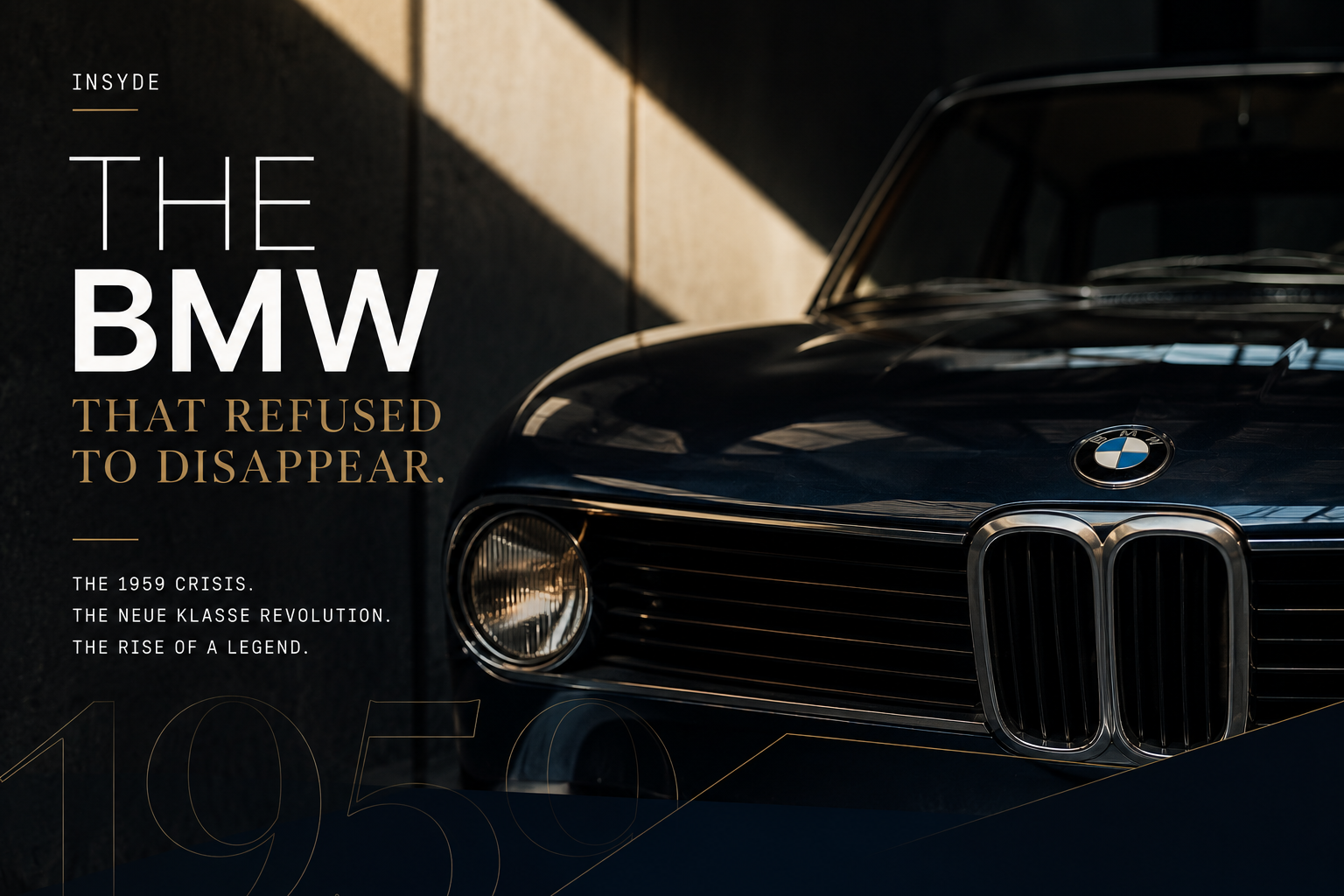
  • THE BMW THAT REFUSED TO DISAPPEAR

    THE BMW THAT REFUSED TO DISAPPEAR

    How a company that nearly fell into Daimler-Benz’s hands reinvented itself — and became one of the world’s defining premium automotive brands.

    Today, the BMW badge carries a certain expectation.

    Performance.
    Precision.
    Design.
    Status.

    For millions of drivers, it represents something more specific than simply owning an expensive car: the idea that luxury should still be felt from behind the wheel.

    But in 1959, BMW was fighting for something much more basic.

    Survival.

    The company was in serious financial difficulty. Its automobile and motorcycle businesses were struggling, and its future independence was in question. Daimler-Benz — the company behind Mercedes-Benz — submitted a time-limited restructuring offer that could have brought BMW under its control.

    At BMW’s Annual General Meeting on 9 December 1959, the proposed takeover was rejected after determined opposition from small shareholders and employees. The offer subsequently expired. BMW remained independent, but its financial crisis was far from over. (BMW Group)

    What happened next would become one of the most remarkable transformations in automotive history.

    BMW didn’t simply survive the crisis.

    It discovered what it could become.


    THE BMW THAT ALMOST BECAME MERCEDES

    The BMW of the late 1950s was a very different company from the one the world knows today.

    It had built beautiful and technically ambitious automobiles, including the 503 and 507, but its larger cars were expensive to produce and difficult to sell profitably. The company was caught between expensive luxury automobiles at one end and smaller, lower-margin products at the other.

    The result was a dangerous financial position.

    By the end of the decade, the possibility of BMW losing its independence was no longer theoretical.

    Daimler-Benz had presented a restructuring proposal.

    The situation reached a dramatic point at the December 1959 shareholders’ meeting. Small shareholders challenged the proposed restructuring, including the valuation assigned to BMW’s brand and workforce. The meeting was adjourned, and the time-limited Daimler-Benz offer expired. (BMW Group Press)

    BMW had escaped.

    But escaping Mercedes was not the same as saving BMW.

    The company still needed a future.


    THEN CAME HERBERT QUANDT

    That future was closely tied to industrialist Herbert Quandt.

    Impressed by the determination of BMW’s shareholders and employees, Quandt increased his investment in the company and backed a restructuring built around keeping BMW independent. Temporary government assistance also helped give the company room to reorganise. (BMW Group)

    The strategy was simple in principle and enormous in consequence:

    BMW would not survive by standing still.

    It needed new products.

    The BMW 700 helped put the company back on a path toward recovery.

    But the decisive breakthrough was still ahead.

    It would arrive in 1961.

    And it would wear a name that would eventually become one of the most important phrases in BMW’s history:

    Neue Klasse.


    THE CAR THAT CHANGED EVERYTHING

    At the 1961 Frankfurt Motor Show, BMW unveiled the BMW 1500.

    It was compact by the standards of the time. Sporty. Modern. Four-door. Engineered around a new approach to performance and everyday usability.

    And people noticed.

    BMW says the car filled a gap in the market and became the breakthrough that established the company as a successful, contemporary automaker. Demand was so strong that initial orders exceeded production capacity. (BMW Group)

    The 1500 was more than a successful model.

    It gave BMW a direction.

    It showed that the company didn’t need to compete by simply building larger, softer or more traditionally prestigious cars.

    It could build something different.

    A premium automobile designed around the person driving it.

    The philosophy was beginning to take shape.


    BMW DIDN’T TRY TO BECOME MERCEDES

    This is where the story becomes more interesting.

    BMW’s great strategic victory wasn’t beating Mercedes at Mercedes’ own game.

    It was refusing to play the same game.

    Mercedes-Benz already had extraordinary heritage, engineering credibility and a powerful association with prestige.

    BMW needed its own territory.

    The Neue Klasse gave it one.

    The company increasingly built its identity around agility, performance, design and the relationship between driver and machine.

    Mercedes could represent arrival.

    BMW could represent the journey.

    That distinction would become incredibly valuable.

    Because BMW wasn’t simply selling another interpretation of luxury.

    It was creating a different one.


    WHEN PERFORMANCE BECAME LUXURY

    Traditional luxury had always been associated with refinement.

    Leather.

    Wood.

    Comfort.

    Silence.

    Status.

    BMW added something else.

    Emotion.

    The driving experience itself became part of the luxury proposition.

    The steering.

    The balance.

    The response of the engine.

    The position of the driver.

    The way the car behaved through a corner.

    These weren’t merely engineering specifications.

    They became part of the emotional value of owning a BMW.

    The brand’s promise of “Sheer Driving Pleasure” eventually gave that philosophy a simple expression — and the roots of that promise can be traced directly back to the Neue Klasse era. (BMW Group)

    BMW had discovered a powerful idea:

    Luxury doesn’t have to separate you from the machine. It can bring you closer to it.


    THE 02 SERIES MADE THE IDEA SCALABLE

    The Neue Klasse created the foundation.

    The 02 Series helped turn that foundation into a brand identity.

    Introduced in the 1960s, the compact two-door models brought BMW’s sporting character to a wider audience. BMW describes the 02 Series as a benchmark for the brand’s approach to combining everyday usability with driving pleasure. (BMW Group)

    This mattered enormously.

    BMW wasn’t creating one successful car.

    It was developing a repeatable philosophy.

    Compact could still be premium.

    Practical could still be exciting.

    Everyday transportation could still have character.

    And that gave BMW something luxury brands desperately want:

    a recognisable point of view.


    THE 3 SERIES CHANGED THE GAME AGAIN

    Then came the car that would turn BMW’s philosophy into a global phenomenon.

    The BMW 3 Series arrived in 1975.

    Compact dimensions.

    Rear-wheel drive.

    Driver-focused ergonomics.

    Sporty proportions.

    Premium quality.

    Everyday practicality.

    BMW describes the 3 Series as the world’s bestselling premium car and says the model has attracted more than 20 million customers worldwide across seven generations. (BMW Group)

    Its importance goes beyond sales.

    The 3 Series made the BMW formula understandable.

    You didn’t have to be a racing driver.

    You didn’t have to own a chauffeur-driven limousine.

    You simply had to enjoy driving.

    That was the genius.

    BMW had taken something traditionally associated with sports cars and integrated it into a practical premium sedan.

    Luxury became something you could experience every morning on the way to work.


    THE MERCEDES RIVALRY BECAME A CULTURAL ONE

    By this point, the relationship between BMW and Mercedes had changed.

    BMW was no longer the company that had nearly been absorbed.

    It was becoming one of Mercedes-Benz’s defining competitors.

    But the rivalry wasn’t simply about price or horsepower.

    It was about identity.

    Mercedes could represent authority, heritage and formal prestige.

    BMW increasingly represented performance, independence and the pleasure of driving.

    Neither interpretation needed to destroy the other.

    In fact, their differences made both brands stronger.

    The competition created a question that would shape the premium automotive market for decades:

    What should a luxury car make you feel?

    BMW had its answer.


    THEN BMW TURNED PERFORMANCE INTO MYTH

    BMW’s relationship with motorsport added another layer to the brand.

    Performance was no longer merely something engineers claimed.

    It could be demonstrated on a track.

    That credibility eventually became central to BMW M.

    Motorsport technology, performance engineering and road-car development began reinforcing one another.

    The M badge became more than a specification.

    It became a symbol.

    That matters in luxury.

    Because luxury consumers don’t only buy features.

    They buy provenance.

    A reason to believe.

    A story that existed before the product arrived.

    BMW had one.


    THE BRAND BECAME PART OF THE PRODUCT

    Eventually, BMW reached a point that every luxury company dreams of reaching.

    The product no longer had to explain the brand.

    The brand explained the product.

    You could recognise a BMW from its proportions.

    Its design language.

    Its cockpit.

    Its grille.

    Its stance.

    And, increasingly, the way it behaved on the road.

    The badge itself had accumulated meaning.

    This is when a manufacturer becomes more than a manufacturer.

    It becomes a brand with a worldview.

    BMW wasn’t simply selling cars anymore.

    It was selling a particular relationship between the driver and the machine.


    BMW DIDN’T BEAT MERCEDES BY COPYING IT

    This is the part of the story that matters most.

    BMW’s eventual success was not built on becoming a cheaper Mercedes.

    It wasn’t built on becoming a louder Mercedes.

    And it wasn’t built on simply offering more luxury features.

    BMW found a different route to desirability.

    It made performance aspirational.

    It made driving part of luxury.

    It turned engineering into emotion.

    And it created a customer who didn’t simply want to be transported.

    They wanted to be involved.

    That distinction became BMW’s competitive advantage.


    FROM SURVIVAL TO GLOBAL POWER

    The transformation took decades.

    The Neue Klasse established the direction.

    The 02 Series broadened the philosophy.

    The 3 Series turned it into a global formula.

    BMW M gave performance a halo.

    The 5 Series and 7 Series expanded the brand into higher segments.

    The X family opened another enormous market.

    And BMW continued evolving as luxury itself changed.

    Today, BMW operates at enormous global scale. In financial year 2025, BMW Group delivered 2.46 million premium vehicles, while BMW M reached a record 213,449 deliveries. (BMW Group Press)

    That doesn’t mean BMW literally “defeated” Mercedes-Benz.

    Mercedes remains one of the world’s most important luxury automotive brands.

    The more significant achievement is that BMW became powerful enough to challenge Mercedes from a completely different position.

    It didn’t need to become Mercedes.

    It built an identity Mercedes couldn’t own.


    THE REAL BMW LUXURY

    That is why BMW’s story is ultimately not about cars.

    It is about positioning.

    A company that was nearly absorbed had to decide what made it worth saving.

    The answer wasn’t simply its factory.

    It wasn’t simply its engineering.

    It wasn’t simply its history.

    It was the possibility of creating something distinctive.

    BMW realised that it could make luxury emotional.

    That it could make engineering desirable.

    That it could make performance aspirational.

    And, most importantly, that independence could itself become part of the brand.


    THE BMW THAT REFUSED TO DISAPPEAR

    In 1959, BMW was fighting to remain independent.

    One year later, Herbert Quandt backed a restructuring that kept the company on its own path.

    In 1961, the BMW 1500 gave that path a product.

    The Neue Klasse gave it a philosophy.

    The 02 Series gave it momentum.

    The 3 Series gave it scale.

    BMW M gave it mythology.

    And the decades that followed turned that philosophy into one of the world’s most recognisable premium automotive brands. (BMW Group)

    That is the extraordinary part of the story.

    BMW didn’t inherit its position at the top.

    It engineered its way there.

    And perhaps the most important lesson is not about automobiles at all.

    When a company is pushed to the edge, the instinct is often to become more like the competitor that appears to be winning.

    BMW did something more difficult.

    It discovered what it could become that its competitor couldn’t.

    It didn’t survive by becoming Mercedes.

    It survived by becoming BMW.

    And that may be the most valuable luxury of all:

    having an identity nobody else can own.

    INSYDE — Beyond the Spotlight.
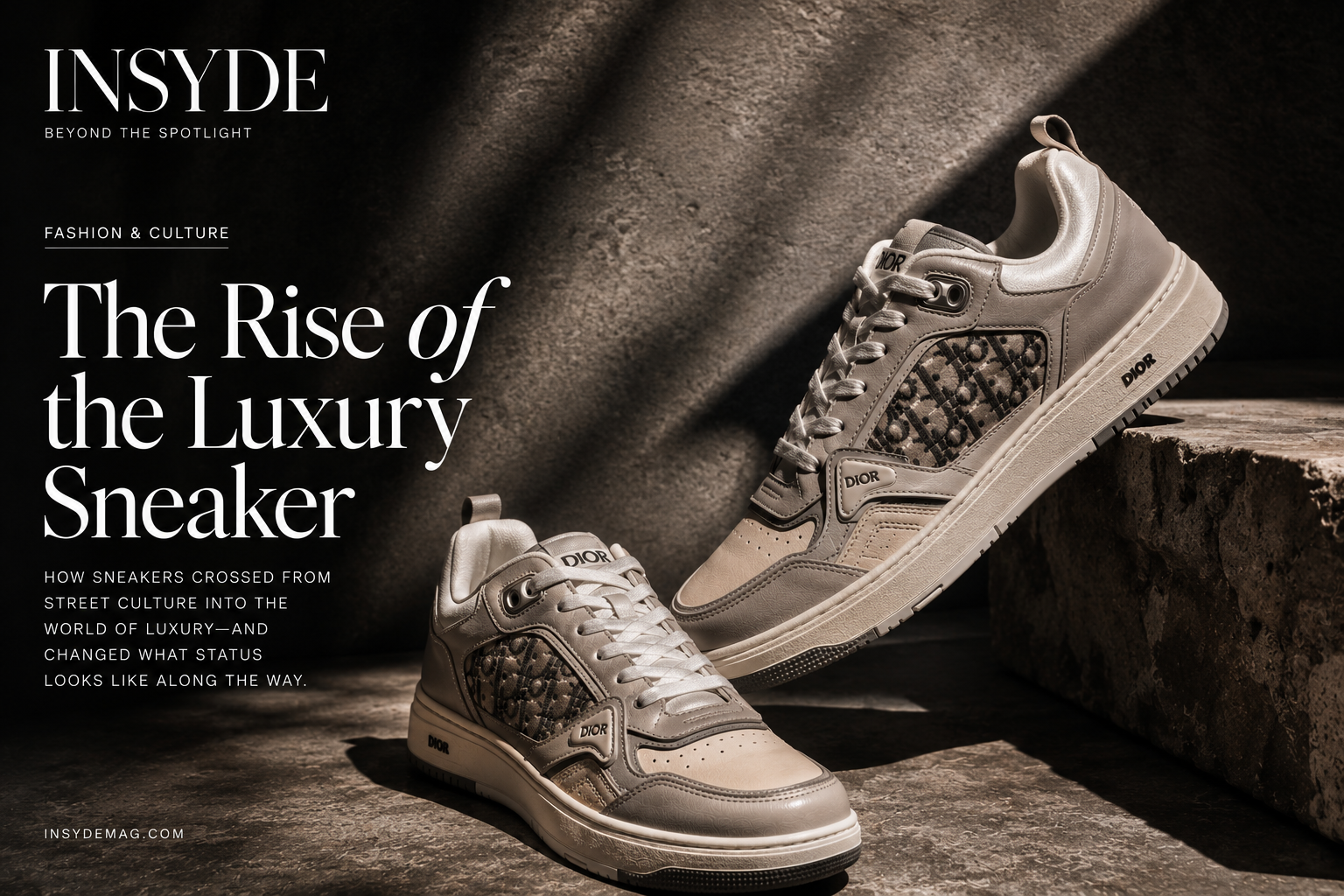
  • The Rise of the Luxury Sneaker

    The Rise of the Luxury Sneaker

    How sneakers crossed from street culture into the world of luxury — and changed what status looks like along the way.

    There was a time when luxury had a dress code.

    A tailored jacket. A fine watch. Polished leather. A recognisable handbag. Objects whose value was understood almost immediately.

    Then came the sneaker.

    Casual. Familiar. Democratic. Designed for movement rather than ceremony.

    And somehow, it became one of fashion’s most powerful expressions of status.

    That transformation is more interesting than the sneaker’s price tag.

    Because the luxury sneaker did not become important simply because fashion houses decided to make expensive shoes. It became important because culture changed what people wanted luxury to mean.

    The sneaker brought together sport, music, youth culture, fashion and design. Luxury gave it craftsmanship, scarcity and prestige.

    The result was something neither world could have created alone.

    A new language of luxury.


    The Object That Wasn’t Supposed to Be Luxury

    The sneaker was never designed to communicate wealth.

    Its original purpose was practical: movement, comfort and performance.

    But practicality gave it something luxury could not manufacture.

    Cultural credibility.

    Sneakers were worn on basketball courts, running tracks, city streets and stages. They became intertwined with music, particularly hip-hop, and with the rise of streetwear.

    The sneaker began appearing everywhere culture was being created.

    And that changed its meaning.

    It was no longer simply footwear.

    A particular pair could communicate what music you listened to, which athletes you admired, what subculture you belonged to or how closely you followed fashion.

    The sneaker became an identity marker.

    Luxury eventually noticed.


    When the Street Met the Maison

    For decades, high fashion and street culture occupied very different territories.

    One represented heritage, craftsmanship and exclusivity.

    The other represented youth, rebellion and cultural immediacy.

    Then the boundary began to disappear.

    Luxury houses started incorporating sneakers into their collections, while streetwear gained increasing influence over the wider fashion industry.

    The meeting was inevitable.

    But it wasn’t simply luxury moving downward.

    It was luxury learning from the street.

    The sneaker offered fashion something extremely valuable: relevance.

    It was already connected to communities, music, sport and youth culture.

    Luxury could provide materials and craftsmanship.

    The street provided cultural energy.

    Together, they created a new category.


    The Collaboration Changed the Rules

    Few developments accelerated the sneaker’s transformation more than the collaboration.

    When a sneaker became the meeting point between an athlete, musician, artist, designer or fashion house, it became more than a product.

    It became a cultural event.

    Suddenly, the story surrounding the shoe could matter as much as the shoe itself.

    Who designed it?

    Who wore it?

    Why was it created?

    How many were produced?

    When was it released?

    And, perhaps most importantly:

    Could everyone get one?

    Scarcity introduced a new kind of desire.

    The sneaker began behaving less like ordinary footwear and more like a collectible.

    That was a significant moment.

    Because luxury has always understood that desire grows when access becomes selective.


    Scarcity Became a Status Symbol

    Luxury has never been purely about price.

    It is about access.

    The rare watch.

    The difficult-to-book restaurant.

    The limited edition automobile.

    The handbag that isn’t simply waiting on a shelf.

    Sneakers adopted the same psychology.

    Limited releases created urgency.

    Exclusive collaborations created communities.

    Rare editions developed their own markets.

    But there is an important distinction.

    Scarcity alone does not create value.

    There must be a reason to care.

    The most desirable sneakers usually combine rarity with cultural significance.

    They represent an athlete.

    A designer.

    A collaboration.

    A particular era.

    A moment that mattered.

    The shoe becomes valuable because it carries a story.


    When the Sneaker Became Collectible

    This is where sneaker culture began moving closer to traditional luxury collecting.

    Collectors stopped looking only at whether a shoe looked good.

    They began considering provenance.

    Condition.

    Originality.

    Production history.

    Collaboration.

    Cultural relevance.

    A rare sneaker can become interesting in much the same way as a vintage watch or classic automobile.

    Not because it is necessary.

    Precisely because it isn’t.

    The object exists beyond function.

    It becomes something to preserve, study and appreciate.

    That is one of luxury’s oldest ideas.

    And sneakers have adopted it remarkably well.


    The Luxury of Craft

    There is another reason luxury sneakers command attention: craftsmanship.

    Once high fashion began taking the category seriously, the sneaker became a canvas for experimentation.

    Leather.

    Suede.

    Technical textiles.

    Metal hardware.

    Specialised construction.

    Unexpected proportions.

    Complex soles.

    Hand-finishing.

    Details that might once have been invisible became part of the conversation.

    The sneaker could now be examined rather than simply worn.

    And that changed the perception of the object.

    It didn’t have to stop being comfortable to become luxurious.

    It could be both.

    Function and craftsmanship could coexist.

    That combination is central to modern luxury.


    The End of the Formal Luxury Uniform

    Perhaps the sneaker’s greatest cultural victory is that it helped make luxury less formal.

    The modern luxury wardrobe doesn’t necessarily require a polished leather shoe.

    A tailored trouser can meet a minimalist sneaker.

    A fine watch can sit above a relaxed silhouette.

    A luxury jacket can be paired with something deliberately casual.

    The contrast isn’t accidental.

    It is part of the language.

    Today’s sophisticated consumer often has less interest in proving that something is expensive.

    They are more interested in demonstrating that they know what works.

    That is a profound change.

    Luxury becomes less about dressing according to a rulebook and more about knowing when to break one.


    The New Status Symbol Doesn’t Always Shout

    For decades, luxury was designed to be recognised.

    Logos were visible.

    Signatures were obvious.

    The product announced itself.

    The sneaker introduced another possibility.

    Recognition could become selective.

    Someone who doesn’t follow fashion might see an ordinary pair of shoes.

    Someone who does might immediately recognise the silhouette, collaboration or material.

    That creates a subtle form of status.

    Not:

    “Everyone should know what I’m wearing.”

    But:

    “The people who understand it will know.”

    That distinction has become increasingly important in contemporary luxury.

    The audience for the signal has become smaller.

    The meaning of the signal has become deeper.


    From Logo to Language

    The most interesting luxury sneakers aren’t necessarily the loudest.

    They can be minimal.

    Almost anonymous.

    Their luxury might exist in the leather, construction, proportion or silhouette rather than a giant logo.

    That reflects a broader evolution in fashion.

    The conversation is moving from visibility to discernment.

    The question isn’t simply whether something looks expensive.

    It is whether it looks considered.

    A sneaker can now communicate taste without demanding attention.

    And that may be one of the reasons the category has become so powerful.

    It fits the psychology of a consumer who already knows what luxury looks like.

    They don’t need to announce it.


    The New Luxury Consumer

    The rise of the luxury sneaker also reflects a generational change.

    Younger consumers have never experienced fashion as a series of isolated categories.

    Music influences fashion.

    Sport influences fashion.

    Streetwear influences luxury.

    Luxury influences streetwear.

    Film, gaming, art and social media all participate in the same cultural conversation.

    For this audience, a sneaker does not need permission to belong in a luxury wardrobe.

    It already belongs.

    The old hierarchy has weakened.

    A rare sneaker can sit beside a mechanical watch.

    A vintage piece can sit beside a new luxury garment.

    A streetwear collaboration can become as culturally significant as a traditional fashion collection.

    Luxury is no longer a closed room.

    It has become a conversation.


    What Makes a Sneaker Luxury?

    The obvious answer is price.

    But price is only one ingredient.

    True luxury requires something more difficult to manufacture.

    Desire.

    A sneaker becomes luxurious when people want it for reasons beyond its practical purpose.

    Craftsmanship can create desire.

    Scarcity can create desire.

    Design can create desire.

    History can create desire.

    Cultural relevance can create desire.

    And the strongest products combine several of them.

    That is why a very expensive sneaker can feel completely unremarkable, while a much simpler pair can become iconic.

    Luxury is not the number on the receipt.

    It is the meaning attached to the object.


    The Sneaker and the Collector’s Mind

    The luxury world has always been fascinated by objects that don’t need to exist.

    Collectors buy watches even when their phones tell time more accurately.

    They collect automobiles they cannot drive every day.

    They acquire art they may rarely display.

    The value lies somewhere beyond utility.

    Sneakers now occupy that same territory.

    A collector can own dozens of pairs without needing another pair of shoes.

    The purchase is no longer about necessity.

    It is about appreciation.

    Memory.

    Identity.

    Curation.

    The collection becomes a portrait of the collector.

    And perhaps that is the final transformation of the sneaker:

    from something you wear to something that represents what you value.


    The Luxury Sneaker Is Here to Stay

    The sneaker’s rise tells us something larger about luxury.

    The definition of status has changed.

    For one generation, luxury meant formality.

    For another, it meant recognisable logos.

    Today, luxury increasingly means choice.

    Knowing what to buy.

    Knowing what not to buy.

    Understanding craftsmanship.

    Recognising cultural significance.

    Being able to move between worlds without looking as though you’re trying too hard.

    The sneaker fits perfectly into that new definition.

    It can be casual without being careless.

    Expensive without being obvious.

    Rare without being theatrical.

    Cultural without losing craftsmanship.

    That is an extraordinary amount of territory for one object to occupy.


    The Rise of the Luxury Sneaker

    The sneaker didn’t become luxurious simply because luxury fashion decided to put its name on it.

    Its transformation happened much earlier.

    Culture made it desirable.

    Sport made it iconic.

    Music gave it attitude.

    Streetwear gave it identity.

    Fashion gave it craftsmanship.

    Scarcity gave it collectability.

    And consumers gave it something even more powerful:

    meaning.

    That is why the luxury sneaker represents more than another category for fashion houses.

    It represents the changing definition of status itself.

    The old luxury question was:

    “How much does it cost?”

    The newer question is:

    “Why does it matter?”

    And perhaps that is the most modern luxury of all.

    To own something not because everyone wants it—

    but because you understand why you do.

    INSYDE — Beyond the Spotlight.

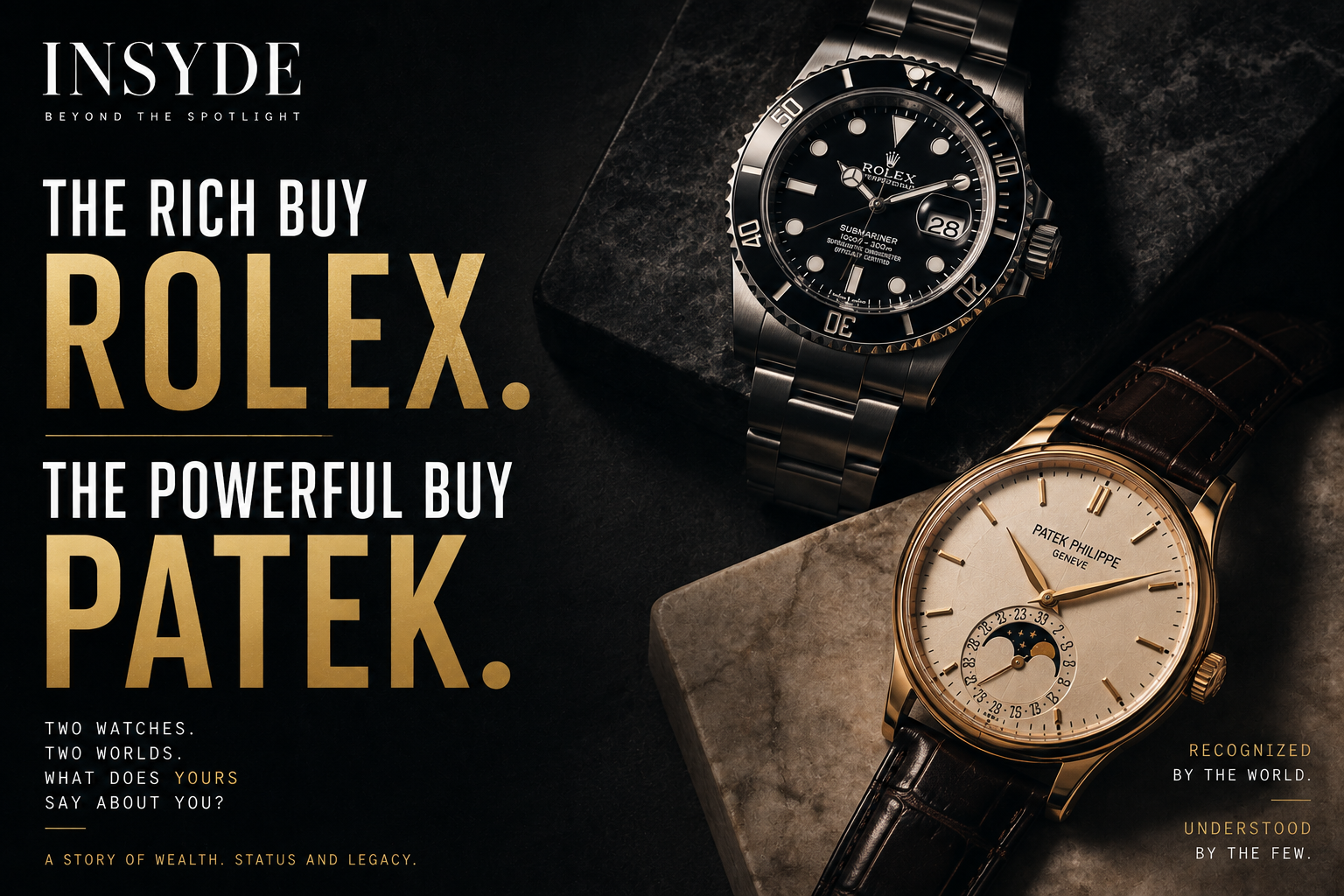
  • THE RICH BUY ROLEX. THE POWERFUL BUY PATEK.

    THE RICH BUY ROLEX. THE POWERFUL BUY PATEK.

    Two watches. Two worlds. And a question luxury has been asking for generations: what does the watch on your wrist say about you?

    There is a saying in the world of luxury watches:

    The rich buy Rolex. The powerful buy Patek.

    It is provocative. It is memorable. And, taken literally, it is wrong.

    There are billionaires who wear Rolex. Collectors who own both. Watch enthusiasts who choose neither. And a Patek Philippe on a wrist does not make its wearer powerful any more than a Rolex makes someone rich.

    But the saying survives because it captures something far more interesting than a simple comparison.

    It captures the psychology of luxury.

    Because at a certain level of wealth, a watch stops being about telling time.

    It becomes about what you want the world to know — and what you no longer need it to know.

    Rolex and Patek Philippe sit at the summit of Swiss watchmaking, yet they communicate remarkably different ideas of success.

    One mastered global recognition.

    The other mastered the power of discretion.

    One became a symbol of achievement.

    The other became a symbol of legacy.

    And somewhere between the two lies a fascinating question:

    When you can afford almost anything, why does the thing you choose to wear still matter so much?


    ROLEX: THE SYMBOL OF ARRIVAL

    Few luxury brands are as instantly recognisable as Rolex.

    You don’t have to be a watch collector to know the crown.

    You don’t need to understand mechanical movements.

    You don’t need to know the reference number.

    You simply see it.

    And you understand.

    That is one of the greatest achievements in luxury branding.

    Rolex began with Hans Wilsdorf, who believed the wristwatch could become both technically dependable and commercially desirable. The company’s history was built around precision, water resistance, reliability and performance in demanding environments.

    But Rolex eventually became much more than a technical watchmaker.

    It became a cultural symbol.

    Explorers wore it.

    Athletes wore it.

    Leaders wore it.

    Entrepreneurs wore it.

    Actors wore it.

    People who had achieved something wore it.

    Over generations, the association became almost automatic.

    Rolex became a shorthand for having made it.


    THE POWER OF BEING RECOGNISED

    This is where Rolex is extraordinary.

    Patek Philippe may be revered by serious collectors, but Rolex possesses something almost impossible to manufacture:

    mass cultural recognition without losing luxury status.

    A Rolex can be appreciated by a lifelong horologist and recognised by someone who has never opened a watch case.

    That duality is extraordinarily powerful.

    It means the watch can operate on two levels simultaneously.

    For the enthusiast, it can be about engineering, history and design.

    For the wider world, it can simply mean:

    success.

    That is not superficial.

    It is branding at its highest level.

    Rolex didn’t merely create watches people wanted.

    It created a symbol people wanted to be associated with.


    THEN THERE IS PATEK PHILIPPE

    If Rolex is the language of recognition, Patek Philippe is closer to the language of connoisseurship.

    Founded in Geneva in 1839, Patek Philippe has spent generations developing complicated mechanical watches and preserving an unusually independent identity. The Stern family acquired the company in 1932, and Patek Philippe remains family-owned today.

    That independence is significant.

    Patek Philippe does not need to become everything to everyone.

    Its appeal has always been rooted in high watchmaking, craftsmanship, technical expertise and continuity.

    Its watches can be extraordinarily complicated.

    Its production remains deliberately limited.

    And the company itself emphasises the rarity and time involved in creating its pieces.

    This creates a different kind of desirability.

    You don’t necessarily buy Patek Philippe so everyone notices.

    You buy it because you understand what you’re looking at.


    WHEN STATUS BECOMES A SECRET LANGUAGE

    Imagine two people entering the same room.

    One is wearing a Rolex.

    Almost everyone recognises it.

    Another is wearing a complicated Patek Philippe.

    Most people don’t notice.

    Then someone across the room looks at the wrist.

    They pause.

    They understand.

    That tiny moment captures one of the most fascinating changes in modern luxury.

    Status doesn’t always become more powerful by becoming more visible.

    Sometimes it becomes more powerful by becoming selective.

    The person wearing the watch isn’t necessarily asking:

    Do you know how much this costs?

    They may be asking something much quieter:

    Do you know what this is?

    And if the answer is yes, nothing else needs to be said.


    TWO BRANDS. TWO DEFINITIONS OF SUCCESS.

    This is where the famous saying begins to make sense.

    Not literally.

    Culturally.

    Rolex has become associated with achievement.

    Patek Philippe has become associated with legacy.

    Rolex can communicate:

    I made it.

    Patek Philippe can communicate:

    I understand why this matters.

    The difference is subtle.

    But in luxury, subtlety is often where the interesting stories begin.


    THE OWNERSHIP STORY IS EVEN MORE INTERESTING

    There is another reason these two brands deserve attention.

    Neither is simply another luxury label sitting inside a massive publicly traded conglomerate.

    Rolex is owned by the Hans Wilsdorf Foundation, established by its founder. The structure allows Rolex to remain independently controlled.

    Patek Philippe remains controlled by the Stern family, which has owned the company since 1932.

    Think about that.

    Two of the world’s most powerful names in luxury watchmaking have retained extraordinary independence while building global influence.

    In an industry where brands can become pieces of enormous luxury portfolios, that independence is part of the story.

    They aren’t simply selling products.

    They are protecting legacies.


    THE BUSINESS OF SAYING NO

    Luxury has always depended on an interesting contradiction.

    A brand needs people to want its products.

    But if everyone can have them immediately, desire changes.

    Too much availability weakens scarcity.

    Too much visibility can weaken mystery.

    Too much production can weaken exclusivity.

    Rolex and Patek Philippe approach this challenge differently, but both understand the fundamental principle:

    Desire needs distance.

    Rolex has achieved enormous global recognition while maintaining a powerful perception of exclusivity.

    Patek Philippe operates at a different scale, with a stronger emphasis on complicated watchmaking, limited production and craftsmanship.

    Neither needs to convince consumers that the product is luxurious.

    The reputation arrived long before the customer.


    PATEK AND THE IDEA OF TIME BEYOND YOURSELF

    Perhaps the most powerful distinction comes from Patek Philippe’s philosophy.

    The brand’s famous campaign tells the owner:

    “You never actually own a Patek Philippe. You merely look after it for the next generation.”

    It is one of the most effective ideas in luxury advertising because it changes the meaning of ownership.

    You are not the final owner.

    You are a temporary custodian.

    The watch existed before you.

    Someone may inherit it after you.

    Suddenly, the product isn’t simply about wealth.

    It is about continuity.

    That is an extraordinarily sophisticated proposition.


    BUT ROLEX HAS ITS OWN KIND OF POWER

    It would be easy — and wrong — to turn this into a story where Patek Philippe is the sophisticated choice and Rolex is simply the more recognisable one.

    Rolex’s achievement may actually be more difficult.

    How do you become one of the world’s most recognised luxury brands without becoming ordinary?

    How do you reach millions of people while preserving the perception of exclusivity?

    How do you become recognisable across continents, generations and cultures?

    Rolex answered those questions better than almost anyone.

    Its strength is not secrecy.

    Its strength is universal recognition.

    That is a different form of power.

    And it is enormous.


    THE WATCH IS NO LONGER ABOUT TIME

    This is where luxury becomes fascinating.

    A watch costing thousands, tens of thousands or hundreds of thousands of dollars does not provide proportionally more accurate time.

    That isn’t why people buy it.

    They buy craftsmanship.

    History.

    Design.

    Scarcity.

    Identity.

    Emotion.

    And sometimes, status.

    The watch becomes a piece of personal storytelling.

    A Rolex might tell the story of ambition.

    A Patek might tell the story of appreciation.

    A vintage piece might tell the story of heritage.

    A rare complication might tell the story of obsession.

    The object becomes a reflection of the person.

    Time is merely the mechanism.


    SO, WHICH ONE IS FOR THE POWERFUL?

    Perhaps the question itself is flawed.

    Power isn’t measured by the logo on someone’s wrist.

    And wealth certainly isn’t.

    The real distinction is what the wearer wants from the object.

    If recognition matters, Rolex possesses extraordinary power.

    If craftsmanship, rarity and horological depth matter, Patek Philippe occupies a remarkable position.

    If legacy matters, Patek’s philosophy becomes particularly compelling.

    If achievement matters, Rolex’s cultural history speaks loudly.

    And if none of those things matter?

    Then perhaps the most luxurious choice is simply wearing what you genuinely love.


    WHEN YOU NO LONGER NEED TO PROVE IT

    There is a point in the journey of luxury where the conversation changes.

    At first, luxury can be about being seen.

    Then it can become about being recognised.

    Eventually, it can become about being understood.

    That is where Patek Philippe’s world becomes especially fascinating.

    Not because Patek is inherently “better” than Rolex.

    But because it represents a different relationship with status.

    A Rolex can enter a room and announce achievement.

    A Patek can sit beneath a cuff and wait.

    Someone who understands will notice.

    Everyone else doesn’t need to.

    That is perhaps the purest form of discreet luxury.


    THE RICH BUY ROLEX. THE POWERFUL BUY PATEK.

    So, is the statement true?

    Not literally.

    It is far too simple for a world as complicated as luxury.

    But as a cultural observation, it reveals something important.

    Rolex mastered recognition.

    Patek Philippe mastered discretion.

    Rolex became one of the world’s most powerful symbols of achievement.

    Patek Philippe became one of the world’s most powerful symbols of horological legacy.

    One tells the world:

    I made it.

    The other can quietly suggest:

    I don’t need to explain it.

    And perhaps the difference between the two isn’t actually about wealth.

    It is about what you want your wealth to say.

    Because at the highest level of luxury, the most expensive thing you can own isn’t necessarily the object.

    It is the confidence to let the object speak for itself.

    INSYDE — Beyond the Spotlight.

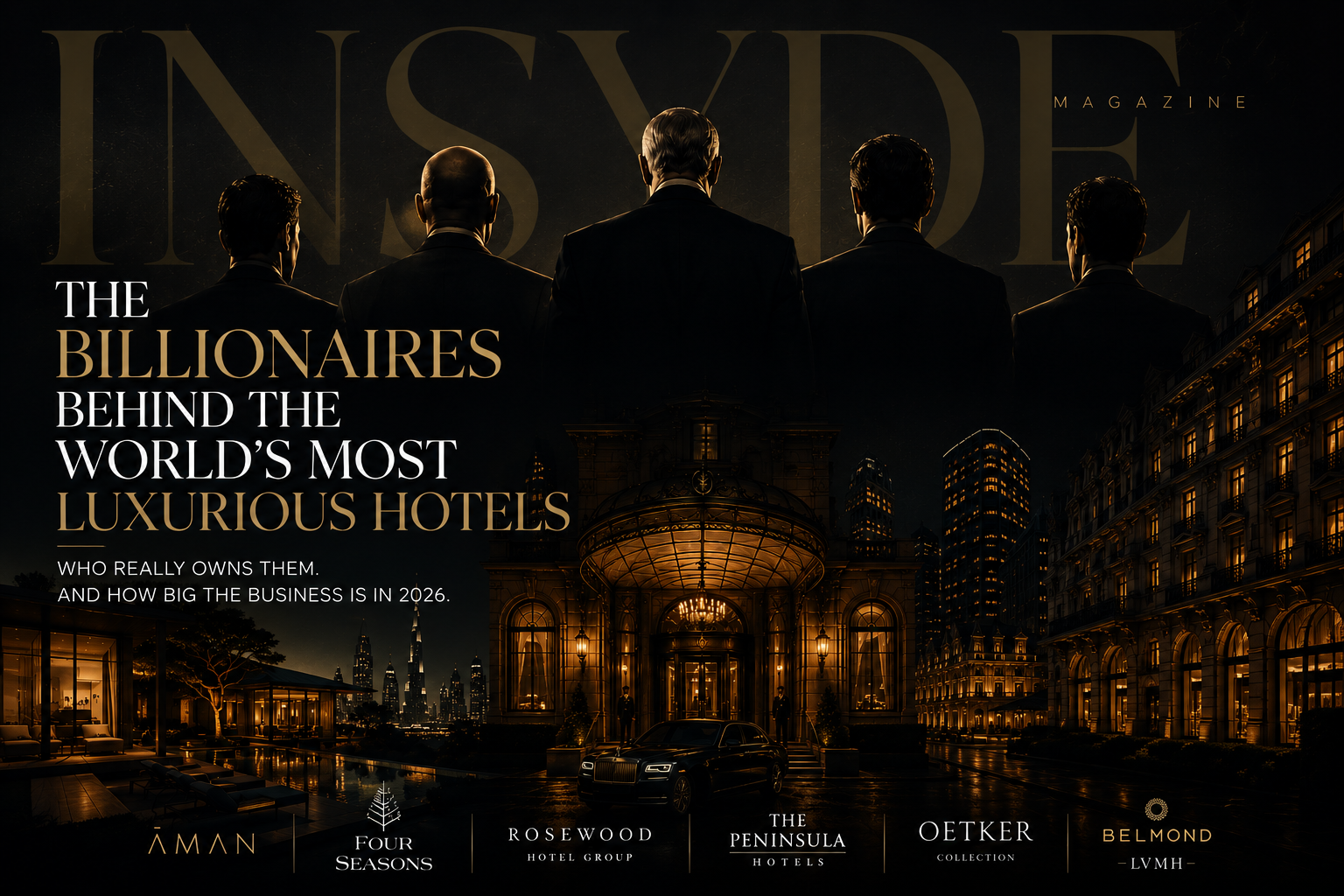
  • THE BILLIONAIRES BEHIND THE WORLD’S MOST LUXURIOUS HOTELS

    THE BILLIONAIRES BEHIND THE WORLD’S MOST LUXURIOUS HOTELS

    You know the hotel. You know the name. But do you know who actually owns the world behind it?

    Walk into one of the world’s great luxury hotels and you see the same things.

    Marble.

    Chandeliers.

    Immaculate suites.

    Private entrances.

    Restaurants where reservations can feel harder to secure than flights.

    Service so polished that almost everything appears effortless.

    But behind that effortless experience is a business most guests never think about.

    Who owns it?

    The answer is rarely as simple as the name above the entrance.

    A billionaire might own the hotel company.

    A family office might own the building.

    An investment fund might own the land.

    Another company might operate the property.

    And a global luxury group might own the brand and manage the experience.

    That complexity is not a technical footnote.

    It is the story.

    Because in 2026, some of the world’s most powerful fortunes are increasingly connected to the business of luxury hospitality.

    And the money involved is enormous.

    A $10 billion valuation for Four Seasons.

    A $3.2 billion enterprise-value acquisition of Belmond by LVMH.

    A $500 million new investment vehicle targeting Aman and Janu hotels, residences and mixed-use developments.

    A $230 million acquisition of Rosewood that helped turn it into a global luxury-hospitality group.

    These aren’t simply hotel deals.

    They are bets on the future of luxury itself.


    THE HOTEL YOU SEE IS ONLY THE FRONT END

    The first thing to understand about luxury hotels is that the brand and the building are not necessarily the same business.

    This is where the industry becomes fascinating.

    A hotel group can create the brand, design the service standards and manage the property without owning the real estate.

    A property company can own the building and hire a hotel company to operate it.

    An investment group can finance the development.

    And a billionaire can ultimately control the company sitting somewhere above all of them.

    So when someone says a billionaire “owns a hotel”, that can mean several different things.

    They may own:

    The hotel brand.

    The operating company.

    The property.

    The development company.

    Or simply a controlling stake in the company that controls the brand.

    At the top end of hospitality, understanding that distinction is essential.

    Because sometimes the most valuable thing in the building isn’t the building at all.

    It’s the name.


    AMAN: THE BILLIONAIRE WHO TURNED PRIVACY INTO AN EMPIRE

    Few names represent ultra-luxury quite like Aman.

    The brand began in 1988 with Amanpuri in Phuket and built its reputation around something that was almost the opposite of conventional luxury-hotel expansion:

    scarcity.

    Then came Vlad Doronin.

    The billionaire real-estate entrepreneur acquired Aman in 2014, after having been a long-time Aman guest himself. Since then, he has expanded the brand from secluded resorts into city hotels, residences, private clubs, interiors and new forms of travel.

    Aman has now grown into a global portfolio of hotels and resorts, while its ecosystem has expanded far beyond traditional hospitality.

    And then came the number that reveals where Aman is really heading.

    In July 2026, Doronin’s OKO Group announced a $500 million joint venture with Shinsegae Property to develop Aman and Janu hotels, branded residences and mixed-use properties.

    But the most striking part may be the residential business.

    Doronin told Bloomberg that Aman had sold close to $9 billion in branded residences over the previous four years, according to Forbes.

    Suddenly, Aman looks very different.

    It isn’t simply a company selling extraordinarily expensive hotel rooms.

    It is building a world where the same customer can stay at Aman, live at Aman, join Aman and eventually travel with Aman.

    The hotel becomes the entry point.

    The brand becomes the real asset.


    FOUR SEASONS: THE $10 BILLION BET

    If Aman represents scarcity, Four Seasons represents something else:

    global scale without abandoning luxury.

    Four Seasons is backed by Cascade Investment, associated with Bill Gates, alongside Kingdom Holding Company and founder Isadore Sharp.

    In 2021, Cascade agreed to acquire an additional 23.75% stake for $2.21 billion, taking its ownership to 71.25% and valuing Four Seasons at approximately $10 billion in enterprise value.

    That wasn’t a bet on one hotel.

    It was a bet on a global luxury machine.

    Four Seasons has continued expanding and says it has 135 hotels and resorts and 61 residential properties across 47 countries.

    And this is what makes the Four Seasons strategy so interesting.

    Aman tells the customer:

    You are entering a world very few people can access.

    Four Seasons tells the customer:

    You can expect an extraordinary standard wherever in the world you go.

    Two completely different interpretations of luxury.

    Both extraordinarily valuable.


    ROSEWOOD: THE $230 MILLION ACQUISITION

    Rosewood’s story demonstrates another way fortunes enter luxury.

    In 2011, Chow Tai Fook Enterprises, the Hong Kong company behind the Cheng family’s business empire, acquired Rosewood for roughly $230 million.

    The interesting part isn’t simply what they paid.

    It is what happened afterwards.

    Rosewood Hotel Group has expanded into a global hospitality platform, with 60 properties across 26 countries and territories and more than 30 additional properties in development.

    The group also operates other hospitality and lifestyle businesses.

    That makes Rosewood an important example of a larger trend:

    wealthy owners aren’t necessarily buying hotels to collect hotels.

    They’re buying brands that can be expanded across multiple categories.

    Hotels.

    Residences.

    Wellness.

    Private clubs.

    Experiences.

    And eventually, entire lifestyles.


    THE PENINSULA: WHEN LUXURY BECOMES A FAMILY LEGACY

    Then there is The Peninsula.

    Its story feels almost completely different.

    The Peninsula Hotels are part of Hongkong and Shanghai Hotels, a business with roots going back to 1866 and long associated with the Kadoorie family.

    Its chairman, Sir Michael Kadoorie, represents a very different model of luxury ownership: generational wealth.

    The Peninsula portfolio remains deliberately selective, with properties across major cities and destinations including Hong Kong, Shanghai, Tokyo, New York, London and Paris.

    This is not the story of a billionaire buying a trendy hospitality brand and rapidly multiplying its properties.

    It is something much older:

    generational ownership.

    That distinction matters.

    Because luxury isn’t always built through growth.

    Sometimes it is built through continuity.

    The Peninsula doesn’t need to be everywhere.

    Its power comes partly from the fact that it isn’t.


    OETKER: THE FAMILY BUSINESS BEHIND EUROPEAN HOTEL ROYALTY

    If there is one group that demonstrates the relationship between family wealth and luxury heritage, it is Oetker.

    Oetker Collection sits within the family-owned Oetker business, whose interests extend well beyond hotels.

    The group identifies Dr. Alfred Oetker and Ferdinand Oetker among its shareholders, while the wider family business spans multiple industries, including real estate and luxury hospitality.

    Its hotel portfolio includes names such as Le Bristol Paris and Hotel du Cap-Eden-Roc.

    And this is where luxury hospitality becomes different from almost every other industry.

    You can spend billions building a new hotel.

    But you cannot spend billions and instantly purchase a century of history.

    A historic address has something money alone cannot manufacture:

    memory.

    That is why heritage itself has become a luxury asset.

    You can construct a spectacular hotel in three years.

    You cannot manufacture decades of mythology.


    LVMH: WHEN THE LUXURY CONGLOMERATE ENTERS THE HOTEL BUSINESS

    Then there is the world’s ultimate luxury conglomerate.

    LVMH.

    The group already controlled brands across fashion, jewellery, watches, beauty and wine and spirits.

    Then it went deeper into hospitality.

    In 2018, LVMH agreed to acquire Belmond for $2.6 billion in equity value and $3.2 billion in enterprise value. The transaction was completed in 2019.

    Belmond brought with it hotels, restaurants, luxury trains and river cruises.

    That acquisition was important because it revealed a larger strategy.

    Luxury doesn’t have to mean selling a handbag.

    It can mean selling the entire journey surrounding the customer.

    A hotel.

    A train.

    A yacht.

    A destination.

    A restaurant.

    A fashion house.

    A piece of jewellery.

    Different products.

    One customer.

    One ecosystem.

    And in 2026, that strategy is becoming even more relevant as luxury groups push further into travel and experiential hospitality.


    THE BILLIONAIRE DOESN’T ALWAYS OWN THE HOTEL

    This is perhaps the most important part of the entire story.

    Imagine a luxury hotel carrying one of the world’s most famous names.

    The guest assumes the company behind that name owns everything.

    Not necessarily.

    The brand could belong to one company.

    The real estate could belong to another.

    The hotel operator could be a third.

    The financing could come from a fourth.

    And the ultimate investor could sit several layers above them.

    That structure is extremely common in modern hospitality.

    It allows hotel companies to expand without buying every building themselves.

    And it allows property investors to use powerful luxury brands to make their real estate more valuable.

    Which leads to perhaps the biggest transformation happening in luxury right now.


    THE REAL GOLDMINE: BRANDED RESIDENCES

    The hotel room is no longer necessarily the biggest prize.

    The residence might be.

    Luxury hotel brands are increasingly attaching their names to private residences.

    Why?

    Because selling a hotel room generates revenue from a stay.

    Selling a branded residence can create an enormous property transaction — while allowing the hotel company to earn branding, management and service fees without necessarily owning the entire building.

    Aman is one of the clearest examples.

    According to Forbes’ 2026 reporting, Aman has sold close to $9 billion in branded residences in four years, while Savills data cited in the same report indicated that buyers globally were willing to pay an average 33% premium for branded residences over comparable unbranded homes.

    That is a staggering proposition.

    Imagine buying an apartment.

    Now put a globally recognised luxury hotel brand on the front.

    Add hotel-level service.

    Concierge.

    Housekeeping.

    Wellness.

    Restaurants.

    Private clubs.

    Then charge a premium for the privilege.

    Suddenly the hotel brand is no longer just selling hospitality.

    It is selling real estate at a premium.


    WHY BILLIONAIRES WANT INTO HOSPITALITY

    So why would someone who already has billions want to own hotels?

    The obvious answer is money.

    But it isn’t the only answer.

    Luxury hospitality sits at an unusual intersection of industries.

    Real estate.

    Travel.

    Food.

    Fashion.

    Entertainment.

    Culture.

    Private wealth.

    A luxury hotel can become a meeting place for CEOs.

    A destination for celebrities.

    A home-away-from-home for billionaires.

    A platform for restaurants and chefs.

    A gateway into a city.

    A launchpad for branded residences.

    A private club.

    And a physical expression of a luxury brand.

    That makes the hotel much more powerful than a simple accommodation business.

    It becomes a social and commercial ecosystem.


    FROM ROOMS TO WORLDS

    This is where the luxury-hospitality business is ultimately heading.

    A hotel room was once the product.

    Then came the suite.

    Then the villa.

    Then the residence.

    Then the private club.

    Then the yacht.

    Then the private travel experience.

    The customer doesn’t necessarily want to buy one thing anymore.

    They want an entire world that feels consistent with their lifestyle.

    Aman understands this.

    Four Seasons understands this.

    LVMH understands this.

    Rosewood understands this.

    And the investors behind these companies understand something even more important:

    The luxury customer doesn’t stop being a luxury customer when they leave the hotel.

    So why should the brand stop selling to them?


    THE NEW LUXURY POWER PLAY

    This changes the economics of luxury.

    The most valuable hospitality brands aren’t necessarily the ones with the most rooms.

    They may be the ones that can convince customers to spend across the greatest number of categories.

    Stay at the hotel.

    Buy the residence.

    Join the club.

    Book the experience.

    Take the yacht.

    Return to another property.

    Bring the same brand into your lifestyle.

    That is a much bigger business than hotel occupancy.

    And it explains why billionaires, family fortunes and luxury conglomerates continue to look at hospitality as more than a place to park capital.

    They are buying access to a customer.


    SO, WHO REALLY OWNS LUXURY?

    There is no single answer.

    Vlad Doronin controls Aman.

    Cascade Investment is the controlling shareholder behind Four Seasons.

    The Cheng family’s Chow Tai Fook Enterprises controls Rosewood.

    The Kadoorie family sits behind The Peninsula’s long-running ownership structure.

    The Oetker family controls its luxury hospitality and wider family business.

    LVMH controls Belmond and has built a growing luxury-hospitality ecosystem around it.

    Different fortunes.

    Different generations.

    Different strategies.

    But they are all betting on the same fundamental idea:

    Luxury is becoming less about a product and more about an ecosystem.


    THE PEOPLE YOU NEVER SEE

    The guests are visible.

    The hotel is visible.

    The logo is visible.

    The billionaire behind the business usually isn’t.

    You won’t see them standing in the lobby.

    You probably won’t know which investment vehicle owns the building.

    You may never know which company controls the brand.

    And you certainly won’t see the spreadsheets behind the marble.

    But those decisions determine where the next hotel opens.

    Which neighbourhood becomes fashionable.

    Which destination receives billions in development.

    Which brands remain exclusive.

    Which become global.

    And which luxury experiences become available only to those who can afford them.

    That is the hidden side of hospitality.

    Not the room.

    Not the restaurant.

    Not the view.

    The ownership.

    Because the next time you walk into one of the world’s most luxurious hotels, look beyond the chandelier.

    Ask who owns the building.

    Who owns the brand.

    Who operates it.

    Who financed it.

    And who stands to benefit when the world’s wealthiest people decide they want to stay there.

    Because sometimes, the most interesting person in the hotel…

    is the one you never see.

    INSYDE — Beyond the Spotlight.

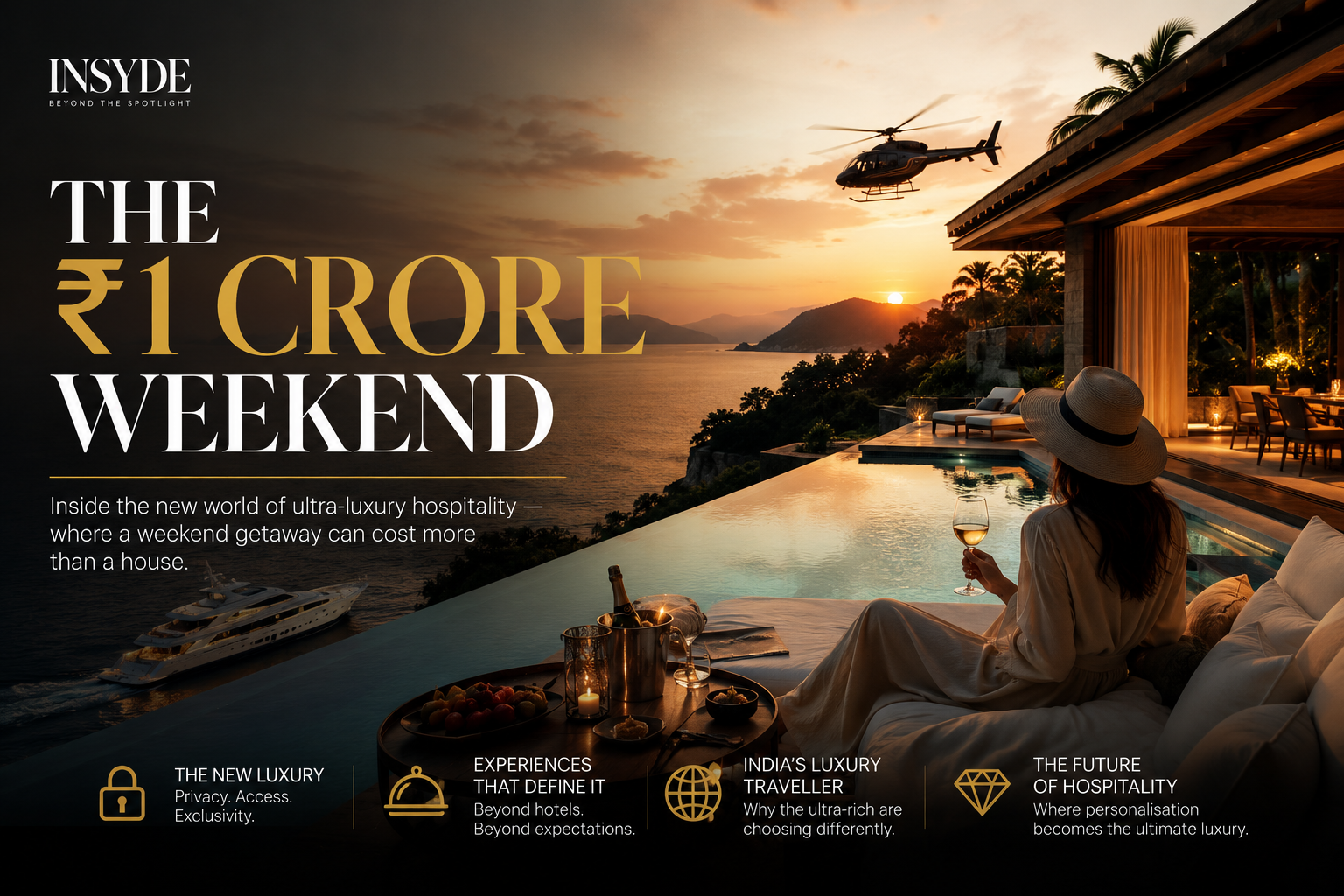
  • THE ₹1 CRORE WEEKEND

    THE ₹1 CRORE WEEKEND

    What happens when luxury stops being about where you stay — and becomes about having the entire world arranged around you.

    Imagine arriving at an airport where there is no queue, no waiting lounge and no schedule to follow.

    A private aircraft is waiting.

    You land somewhere remote. A villa has been prepared exclusively for you. A chef is cooking exactly what you want. A yacht is waiting offshore. A therapist arrives for a treatment in your suite. Your itinerary changes whenever you feel like it.

    There are no crowds.

    No strangers.

    No compromises.

    And by the time the weekend is over, the bill could reach ₹1 crore.

    Not because the room costs ₹1 crore.

    Because the room is only the beginning.

    This is where luxury hospitality is heading.

    WHEN THE HOTEL ROOM STOPPED BEING THE PRODUCT

    For decades, luxury hospitality was relatively easy to understand.

    The better the suite, the better the hotel.

    More space. Better views. Better restaurants. Better service. Better design.

    But at the very top of the market, the definition of luxury is changing.

    The wealthiest traveller may already have access to beautiful homes, private cars, first-class cabins, personal staff and extraordinary restaurants.

    So what can a hotel actually offer that money hasn’t already made available?

    Privacy.

    And increasingly, control.

    The ability to arrive without being noticed. Eat without sharing a restaurant. Move without following a timetable. Spend an entire day without encountering another guest.

    Luxury is becoming less about adding things to an experience and more about removing everything that gets in the way of it.

    THE RISE OF THE PRIVATE WORLD

    Across the luxury-travel industry, private villas and exclusive-use properties are becoming increasingly important.

    The shift is simple.

    Instead of booking the best room in a resort, some ultra-high-net-worth travellers are booking the resort itself.

    In 2026, Mint reported growing interest among wealthy Indian travellers in buying out entire resorts, highlighting a Mumbai business family’s private booking of all 13 villas at Soneva Secret in the Maldives.

    The experience went far beyond accommodation, incorporating private aviation, butlers, chefs, yachts and spa services.

    At that level, you are no longer really buying a hotel stay.

    You are buying a temporary private world.

    And that distinction matters.

    Because the next generation of luxury hospitality isn’t necessarily competing to build the biggest hotel.

    It is competing to create the most personalised version of one.

    ₹1 CRORE ISN’T REALLY ABOUT THE ROOM

    A ₹1 crore weekend sounds outrageous.

    And it should.

    But the number is useful because it illustrates how quickly luxury can compound when every element of a journey becomes bespoke.

    Consider what can sit behind a single weekend:

    A private aircraft.

    A secluded villa.

    Dedicated staff.

    A personal chef.

    A yacht or private boat.

    Wellness treatments.

    Exclusive dining.

    Helicopter transfers.

    Rare experiences arranged around the guest.

    Security and privacy.

    A completely customised itinerary.

    None of these things individually has to cost ₹1 crore.

    Together, at the extreme end of the market, they can create an experience where the accommodation becomes almost incidental.

    The luxury isn’t the villa.

    It’s everything that happens around it.

    INDIA’S LUXURY TRAVELLER IS CHANGING TOO

    India’s luxury market is becoming increasingly sophisticated.

    The country’s wealth creation has produced a larger population of travellers who are not discovering luxury for the first time.

    They are choosing between versions of it.

    That changes the conversation.

    A traveller who has stayed at the world’s most recognisable hotels may no longer be impressed simply because a property has five stars.

    They want something harder to replicate.

    Privacy.

    Space.

    Personalisation.

    Access.

    And increasingly, experiences that don’t feel mass-produced.

    This helps explain the growing appeal of private villas, destination celebrations, exclusive resorts and highly customised itineraries among India’s affluent travellers.

    For someone flying out of Bengaluru, Mumbai or Delhi, the question is no longer simply:

    “Where should we stay?”

    It can become:

    “What do we want the entire trip to feel like?”

    That is a very different luxury proposition.

    THE HOTEL IS BECOMING A LIFESTYLE

    Luxury hospitality is also moving beyond the traditional hotel.

    Branded residences are becoming a major part of the premium property market, combining private ownership with services traditionally associated with five-star hotels.

    Housekeeping.

    Concierge.

    Private dining.

    Wellness.

    Hospitality management.

    Personalised services.

    The boundary between home and hotel is becoming increasingly blurred.

    The same thing is happening with resort design.

    The emphasis is shifting toward villas, private pools, secluded landscapes, wellness spaces and low-density environments.

    The message is clear:

    Luxury doesn’t always need to look bigger.

    Sometimes it needs to feel more personal.

    THE NEW STATUS SYMBOL IS PRIVACY

    There was a time when luxury was designed to be seen.

    The enormous logo.

    The front-row seat.

    The most recognisable suite.

    The car everyone noticed.

    But luxury culture is changing.

    The most valuable experience may now be the one nobody else knows you had.

    A private dining room instead of a crowded restaurant.

    A villa instead of a hotel floor.

    A secluded beach instead of a famous beach club.

    A private jet instead of an airport lounge.

    This is the paradox of modern luxury:

    The more exclusive it becomes, the less it needs to announce itself.

    Quiet luxury was never just about neutral colours and understated clothing.

    In travel, it can mean something much more literal.

    Quiet.

    EXPERIENCE HAS BECOME THE REAL PRODUCT

    The wealthiest traveller isn’t necessarily buying a bed.

    They are buying time.

    They are buying convenience.

    They are buying access.

    They are buying the ability to say, “I want this,” and have someone figure out how to make it happen.

    That might mean arranging a dinner that isn’t normally available.

    Finding a particular ingredient.

    Opening an experience outside normal hours.

    Organising a yacht around a sunset.

    Bringing a specialist wellness practitioner to a remote property.

    Or simply changing tomorrow’s plans because the guest woke up and decided they wanted to go somewhere else.

    That is the real evolution of luxury hospitality.

    The itinerary is no longer fixed.

    The service adapts to the person.

    AND THEN THERE IS THE PSYCHOLOGY OF IT

    Luxury has always been about scarcity.

    But the most powerful scarcity isn’t necessarily a rare object.

    It is access.

    You can buy another handbag.

    Another watch.

    Another car.

    But you cannot always buy a private moment in a place where almost nobody else can go.

    That makes privacy one of the most powerful luxury currencies of the next decade.

    And it explains why the world’s most sophisticated hospitality brands are investing heavily in secluded villas, private residences, bespoke experiences and exclusive-use offerings.

    They aren’t simply selling accommodation.

    They are selling distance from the ordinary.

    THE ₹1 CRORE WEEKEND IS A PREVIEW, NOT THE POINT

    Most luxury travellers will never spend ₹1 crore on a weekend.

    They don’t need to.

    The significance of the number is what it reveals about the upper edge of the market.

    At a certain level of wealth, the question changes from:

    “How much does this cost?”

    to:

    “How completely can this be customised?”

    That is a very different definition of luxury.

    And it is one that hospitality companies are beginning to understand.

    The future may belong to properties that can give guests not simply beautiful surroundings, but the feeling that those surroundings have temporarily been designed around them.

    THE FUTURE OF LUXURY MAY BE SMALLER

    For years, luxury was associated with excess.

    Bigger suites.

    Bigger resorts.

    Bigger lobbies.

    Bigger experiences.

    But the next era could move in the opposite direction.

    Fewer rooms.

    More space.

    Fewer guests.

    More privacy.

    Less spectacle.

    More personalisation.

    The luxury traveller doesn’t necessarily want more of everything.

    They want more of what matters to them.

    And that is a much harder product to create.

    Because it requires hospitality to understand the individual rather than simply impress the customer.

    SO, WHAT IS THE ₹1 CRORE WEEKEND REALLY BUYING?

    Not a hotel room.

    Not a villa.

    Not a yacht.

    Not even a destination.

    It is buying something much more difficult to put a price on:

    Control over your own time.

    The ability to disappear.

    To change the plan.

    To have the world move around you instead of moving around the world.

    That may be the ultimate evolution of luxury hospitality.

    Because when money stops being the measure of what you can buy, privacy, access and personalisation become the new currency.

    The ₹1 crore weekend isn’t really about spending ₹1 crore.

    It’s about what happens when luxury stops asking,

    “How much can we give you?”

    and starts asking,

    “How much of the world can we arrange around you?”

    INSYDE — Beyond the Spotlight.

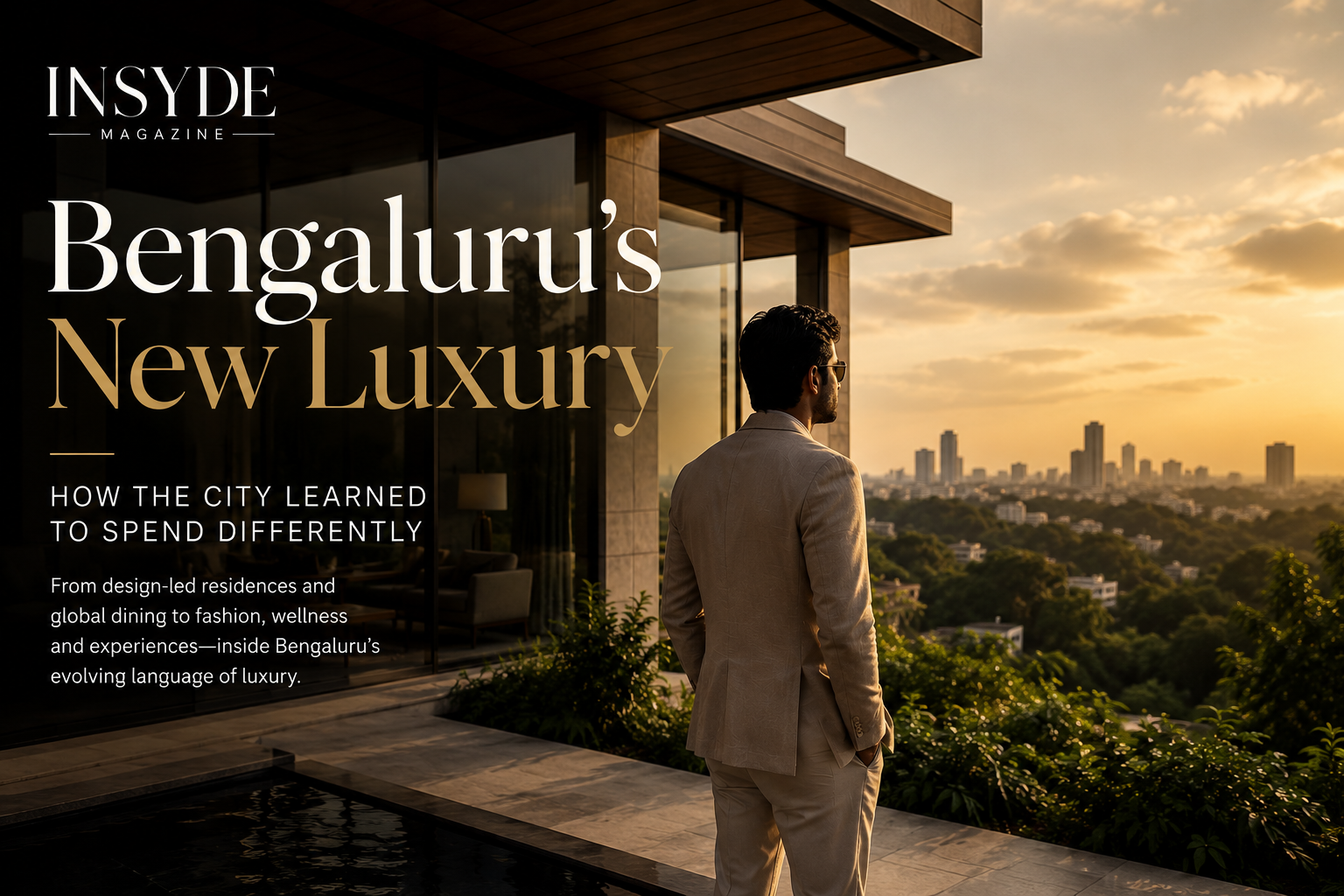
  • Bengaluru’s New Luxury: How the City Learned to Spend Differently

    Bengaluru’s New Luxury: How the City Learned to Spend Differently

    The city’s relationship with luxury is changing. Beyond logos and excess, Bengaluru is building a more considered culture of premium living—shaped by design, privacy, experience and a new generation of affluent consumers.

    There was a time when Bengaluru’s idea of success was relatively straightforward.

    A good career. A successful company. A home in a desirable neighbourhood. Perhaps a luxury car parked outside it.

    But the city has become wealthier, more global and considerably more sophisticated—and its relationship with luxury is evolving with it.

    Today, luxury in Bengaluru is increasingly less about simply owning something expensive and more about how one lives.

    A beautifully designed residence. A restaurant where the experience matters as much as the plate. A private club. A watch chosen for its craftsmanship rather than its recognisability. A fashion label that feels personal rather than obvious.

    It is a subtle shift, but an important one.

    Bengaluru is developing its own language of luxury.

    From Technology Wealth to Lifestyle Wealth

    For years, Bengaluru’s economic identity was dominated by technology.

    The city became synonymous with startups, software, multinational corporations and a generation of entrepreneurs who accumulated wealth differently from the traditional industrial and business families of older Indian metros.

    That wealth is now influencing the city’s consumption patterns.

    Bengaluru’s luxury market is no longer restricted to a small group of established families. Startup founders, CXOs, entrepreneurs, global Indians and high-net-worth professionals are becoming an increasingly visible part of the premium consumer landscape.

    The transformation is particularly clear in real estate.

    In FY2025, Bengaluru’s market for homes priced at ₹10 crore and above crossed ₹1,000 crore in annual sales for the first time. According to data from India Sotheby’s International Realty and CRE Matrix, 78 such homes were sold during the year, compared with 51 the previous year, while 42% of the city’s ₹10 crore-plus sales over the preceding four years occurred in FY2025 alone.

    The numbers are significant. But what matters more is what they reveal about the consumer behind them.

    The purchase of a luxury home is increasingly being framed around more than an address or an investment. Space, privacy, design, amenities and quality of life are becoming part of the proposition.

    Bengaluru is, in other words, becoming a city where wealth increasingly seeks quality of life.

    The New Luxury Is More Private

    Luxury has traditionally relied on visibility.

    The logo. The statement piece. The grand entrance.

    But contemporary luxury is moving in another direction.

    For an increasingly sophisticated consumer, exclusivity can mean something much quieter: an address with limited access, architecture that does not need to announce itself, personalised service, rare materials, thoughtful interiors or simply the freedom to enjoy something without an audience.

    This shift is particularly visible in Bengaluru’s premium residential market.

    The city’s high-end housing segment has seen strong price appreciation, while newer developments are increasingly competing through specifications, amenities, sustainability and future-ready design. In H1 2025, under-construction premium homes in Bengaluru recorded capital-value growth of roughly 32–35% year-on-year, according to Fortune India’s reporting on market data.

    The implication is clear.

    Luxury is becoming less about bigger and more about better.

    A City Learning to Buy Experiences

    The same shift extends beyond property.

    Luxury hospitality, fine dining, premium retail, wellness and entertainment are increasingly competing for the same consumer: someone willing to pay more when the experience feels distinctive.

    This matters because modern luxury is rarely confined to a product.

    A luxury restaurant is selling atmosphere, service, design and memory alongside food.

    A premium fashion boutique is selling curation and personal attention alongside clothing.

    A high-end residence is selling privacy, architecture, convenience and community alongside square footage.

    And a luxury hotel is selling a temporary version of a lifestyle.

    The wider Indian luxury market is moving in the same direction. Industry research has identified experiential categories—including fine dining, travel, hospitality and wellness—as increasingly important to affluent consumers, while luxury brands continue expanding their physical presence across India’s major cities.

    Bengaluru is particularly well placed for this evolution.

    It has the wealth, international exposure and young professional population to support it—and a consumer base increasingly comfortable moving between global and Indian ideas of luxury.

    The Bengaluru Consumer Doesn’t Need Everything to Look Expensive

    Perhaps the most interesting part of Bengaluru’s luxury story is that it does not necessarily resemble the traditional image of Indian affluence.

    Mumbai has its unmistakable glamour.

    Delhi has its grander, more visibly opulent side.

    Bengaluru has historically been more understated.

    The city’s relationship with fashion reflects this personality. A consumer might move between a technology office, a contemporary restaurant, an art space and a luxury retail environment in the same week.

    That creates a consumer who is not necessarily looking for one fixed definition of status.

    Instead, there is a growing appetite for curated luxury.

    A well-made garment.

    A beautifully designed home.

    A rare watch.

    A destination dinner.

    A thoughtfully planned weekend.

    A piece of art.

    A car that reflects taste rather than simply price.

    The common thread is discernment.

    And discernment is increasingly becoming one of luxury’s most valuable currencies.

    Bengaluru’s Luxury Map Is Expanding

    The geography of premium Bengaluru is changing too.

    Central Bengaluru remains synonymous with some of the city’s most established luxury addresses, while newer premium developments are expanding the map into emerging and well-connected micro-markets.

    That expansion is visible in the residential market. Bengaluru’s ₹10 crore-plus housing demand is no longer confined to a handful of traditional luxury neighbourhoods; the FY2025 data highlighted markets including Hebbal, Domlur, Sudhamnagar and Bommanahalli, with Hebbal accounting for 22% of luxury sales value among the high-end markets tracked in the report.

    This creates an interesting tension.

    Bengaluru’s old luxury is rooted in location, heritage and scarcity.

    Its new luxury is increasingly built around design, technology, convenience and experience.

    The future will likely be defined by the meeting point between the two.

    The Business of Becoming Luxury

    For brands, this shift matters.

    A growing luxury consumer base creates opportunities well beyond residential real estate. Fashion, jewellery, watches, automobiles, hospitality, restaurants, wellness, interiors and premium entertainment all compete for a consumer whose expectations are becoming more sophisticated.

    India’s luxury retail market is already expanding rapidly. Luxury and bridge-to-luxury brands accounted for a significant increase in retail leasing activity in 2025, reflecting an aggressive push by brands to capture India’s growing affluent consumer base.

    Bengaluru is part of that story—and increasingly, it is becoming an important market within it.

    The city’s retail environment is also evolving. In 2024, Bengaluru led retail space absorption among India’s top eight cities, while the wider retail landscape increasingly shifted towards destinations combining shopping, dining and entertainment.

    That convergence is important.

    The future of luxury may not be a store, a restaurant, a hotel or a residence in isolation.

    It may be the ecosystem around them.

    A neighbourhood where fashion, food, art, hospitality and design exist within the same cultural orbit.

    A place where consumers do not simply purchase products—they participate in a lifestyle.

    What Comes Next

    The most interesting question is no longer whether Bengaluru will become a luxury city.

    It already is.

    The more important question is what kind of luxury city it will become.

    Bengaluru has the economic foundation, entrepreneurial wealth and increasingly sophisticated consumer base to become one of India’s defining premium markets.

    But its opportunity lies in doing luxury differently.

    Not louder.

    Not necessarily bigger.

    Better.

    More personal. More experiential. More design-conscious. More connected to the way people actually want to live.

    For a city built on innovation, perhaps that is the most natural evolution of all.

    Bengaluru’s new luxury is not simply about having more.

    It is about having better—and knowing why it matters.

    — INSYDE Editorial

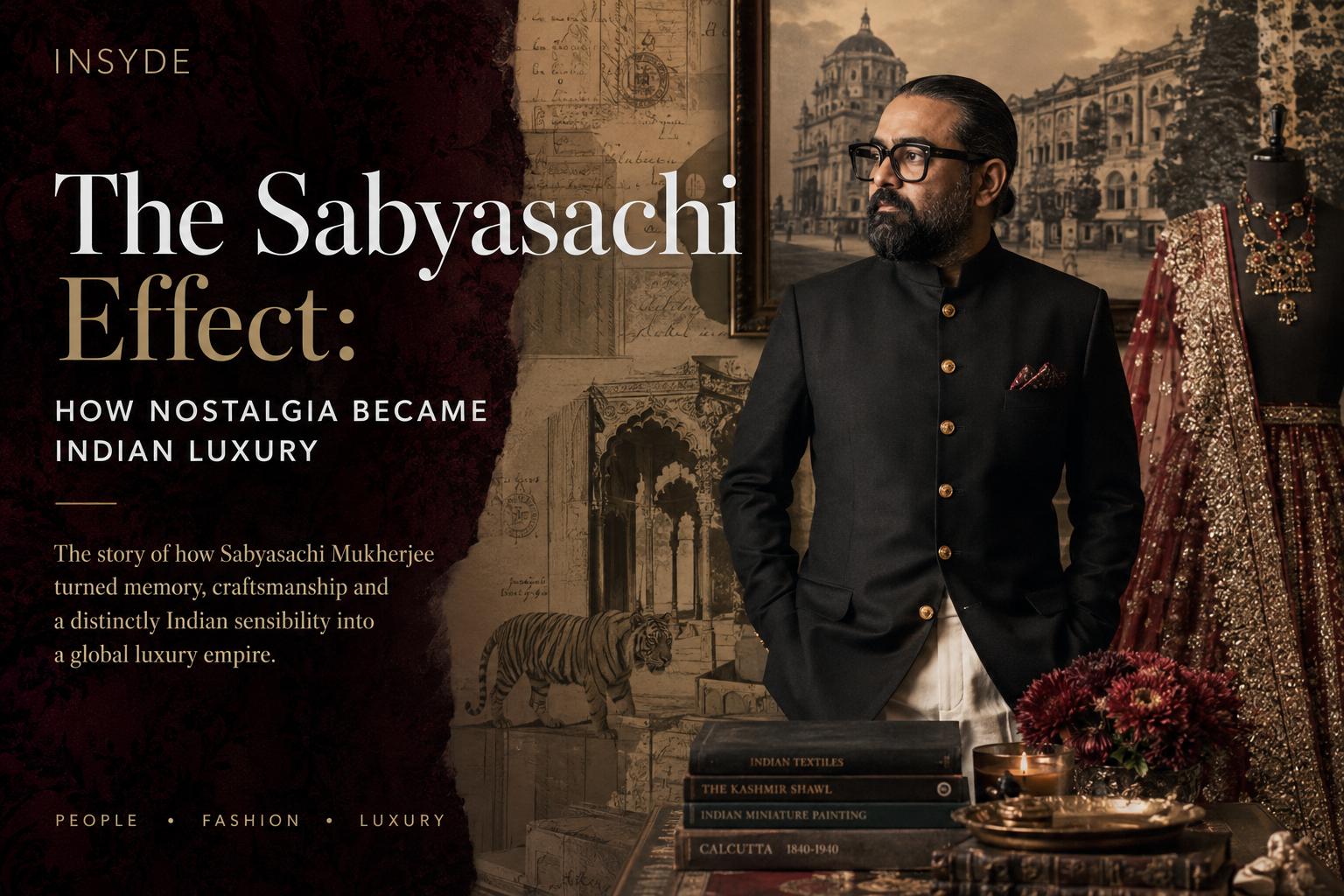
  • The Sabyasachi Effect: How Nostalgia Became Indian Luxury |INSYDE

    The Sabyasachi Effect: How Nostalgia Became Indian Luxury |INSYDE

    The story of Sabyasachi is not simply about a designer who made Indian fashion famous. It is about how memory, craft and a very particular idea of India became the foundation of a modern luxury business.

    Walk into a Sabyasachi store and the first thing you notice may not be the clothes.

    There are the clothes, of course. The jewellery. The handbags. The shoes. But around them is something else: old-world architecture, art, furniture, objects, colour, photographs and an atmosphere that feels deliberately removed from the speed of contemporary retail.

    It doesn’t quite feel like a shop.

    It feels like a memory.

    That may be the most useful way to understand Sabyasachi Mukherjee.

    Because the designer’s greatest achievement may not be that he made Indian fashion recognisable around the world. It may be that he made a particular version of India’s past feel desirable in the present.

    That distinction is important.

    Luxury has always sold more than products. It sells provenance, scarcity, craftsmanship, identity and belonging. Sabyasachi understood that early—and built a house around them.

    The business of remembering

    The Sabyasachi aesthetic is immediately recognisable.

    Deep colours. Old photographs. Heavy embroidery. Vintage references. Jewellery that looks inherited rather than newly bought. Bengal. Tigers. Colonial-era architecture. Textiles that carry the evidence of the hand.

    Even when the clothes are contemporary, they often seem to have arrived from somewhere else.

    That is not accidental.

    The brand’s own language repeatedly returns to heritage, indigenous craftsmanship and the idea of making the past relevant to the present. Its current collections continue to draw on Calcutta, Bengal, textiles, jewellery and archival references.

    Sabyasachi has effectively made nostalgia into a design system.

    And then he did something much harder:

    he made that nostalgia expensive.

    Before the empire, there were three tailors

    The numbers make the early story almost sound implausible.

    Sabyasachi graduated from NIFT in 1999 and launched his eponymous label soon afterwards. FDCI records that he won three major awards at graduation and, in early 2001, received the Femina British Council award that took him to London for an internship with Georgina von Etzdorf.

    The designer’s own history gives the more personal version: he borrowed ₹20,000 from his family and began with a team of three.

    The important part isn’t the ₹20,000.

    It is what he decided to do with the opportunity.

    At a time when Indian fashion was increasingly looking outward for validation, Sabyasachi’s instincts were unusually inward.

    His early work was interested in India not as a costume, but as a source of references.

    He wasn’t asking:

    How can Indian fashion look international?

    He was asking something closer to:

    What if India itself became the reference?

    The strange power of the hand

    FDCI describes Sabyasachi’s design philosophy through the phrase “personalized imperfection of the human hand.” It is a useful phrase because it gets to the heart of his business.

    In an industry obsessed with speed, scale and perfect replication, the hand offers the opposite.

    It takes time.

    It varies.

    It leaves evidence.

    And Sabyasachi built luxury around that evidence.

    The house says it currently employs, directly or indirectly, more than 3,900 artisans, including master weavers, dyers and printers, and works with textile clusters across numerous Indian states.

    That makes craftsmanship more than a decorative detail in the Sabyasachi story.

    It is infrastructure.

    A sari is not valuable simply because it is a sari. Its value can come from the material, the technique, the person who made it, the time it required and the story attached to it.

    This is where Sabyasachi’s version of luxury becomes particularly Indian.

    The house didn’t need to invent heritage.

    It needed to reframe its value.

    Then came the bride

    If the Sabyasachi aesthetic gave Indian fashion a visual language, the bride gave it a mass cultural stage.

    His bridal work became one of the defining parts of the house, and over time the “Sabyasachi bride” became a recognisable idea in itself: rich textiles, dramatic jewellery, detailed embroidery, saturated colour and a sense of ceremony that felt simultaneously contemporary and inherited.

    Sabyasachi himself later described the house as having created a significant shift in the way people dressed in India, particularly around bridalwear.

    That shift is worth looking at carefully.

    The designer didn’t make Indian weddings less traditional.

    In many ways, he made them more consciously traditional.

    The bride wasn’t trying to escape heritage.

    She was paying a premium to own it.

    And that is a very different proposition from selling fashion.

    Bollywood understood the picture

    Sabyasachi’s relationship with cinema helped the aesthetic travel beyond the runway.

    His work for Black earned him the National Award for Best Costume Design, and his later association with Bollywood and celebrity culture helped establish his clothes as part of a larger visual language.

    This matters because celebrity dressing can do something a runway cannot.

    It gives people a character to imagine themselves becoming.

    The Sabyasachi bride wasn’t simply a consumer wearing a designer lehenga.

    She could see herself in the same visual universe as actors, weddings, films and photographs that circulated far beyond fashion publications.

    The clothes became aspirational because the world around the clothes became aspirational.

    That distinction is one of the reasons the brand has travelled so well.

    The store became part of the product

    Sabyasachi eventually understood that the brand could not live only inside garments.

    The Mumbai flagship was conceived as a “living museum,” bringing together fashion, jewellery, objects, art and interiors. The New York flagship followed in 2022, giving the house a permanent presence in one of the world’s most important luxury markets.

    This is where Sabyasachi starts looking less like a designer and more like the founder of a luxury universe.

    The product is the sari.

    But the experience is the house.

    The furniture, the architecture, the tiger, the packaging, the jewellery, the books, the visual merchandising—all of it reinforces the same idea.

    You don’t just buy Sabyasachi.

    You enter Sabyasachi.

    That is a much more powerful business model.

    From clothes to a house

    The expansion has followed the logic of the universe.

    Jewellery.

    Accessories.

    Fine jewellery.

    Menswear.

    Beauty.

    Collaborations.

    The brand has partnered with names including Christian Louboutin, H&M, Pottery Barn, Starbucks and Estée Lauder.

    The Estée Lauder collaboration is particularly revealing.

    In 2024, the two houses created a global collection of 10 lipsticks. The collaboration translated Sabyasachi’s visual vocabulary—textiles, gemstones, colour and the tiger motif—into beauty packaging and product.

    That is what a mature luxury house does.

    It doesn’t simply put its logo on another product.

    It asks:

    What does our world look like when it enters another category?

    Sabyasachi had an answer.

    It still looked like Sabyasachi.

    The corporate reality behind the romance

    There is, however, a less romantic part of the story.

    Luxury houses need capital.

    In 2021, Aditya Birla Fashion and Retail completed its acquisition of a 51% stake in Sabyasachi Calcutta LLP. ABFRL’s announcement put the transaction into the context of building its position in the fashion and luxury market.

    This matters because the Sabyasachi story isn’t simply one of artistic success.

    It is also a story about what happens when a distinctive creative identity becomes valuable enough to support institutional investment.

    The challenge then changes.

    It is no longer:

    Can I build a brand?

    It becomes:

    Can this brand grow without losing the thing that made it desirable?

    So far, the strategy has been unusually disciplined.

    The house continues to build around a small number of recognisable codes rather than abandoning them every season.

    Twenty-five years of looking backwards

    The 25th-anniversary show in Mumbai in January 2025 made the philosophy almost impossible to miss.

    The runway was designed as an imagined Calcutta, complete with weathered houses, vintage carpets, verandas, clotheslines and a fountain inspired by the Victoria Memorial. The show featured more than 150 looks, with Deepika Padukone and Christy Turlington among those walking.

    It could have been a retrospective.

    Instead, it became something more interesting.

    A reminder that the past was still the brand’s most useful creative material.

    The clothes themselves mixed Japanese cotton, pashmina, zardozi, gotta-patti, velvet, sequins, tailoring and references ranging from Frida Kahlo to Madonna. Vogue described the show as a homecoming to an identity that had been present since the beginning.

    In other words, Sabyasachi wasn’t presenting heritage as a fixed museum exhibit.

    He was treating it as a working archive.

    That may be the secret.

    The world is watching now

    The international story has become increasingly visible.

    Alia Bhatt’s 2024 Met Gala appearance in Sabyasachi marked another major global fashion moment for the house, while Shah Rukh Khan wore Sabyasachi at the 2025 Met Gala in a look built around the theme of Black dandyism, Indian tailoring and jewellery.

    And now comes another significant step.

    The Council of Fashion Designers of America lists Sabyasachi by Sabyasachi Mukherjee on the official September 2026 New York Fashion Week schedule, with the season running from September 10 to 15.

    For a designer who began in Kolkata with three tailors, that return carries a certain irony.

    New York is no longer the destination.

    It is one of the places where the house now tells its story.

    So what did Sabyasachi actually build?

    Not just a fashion label.

    Not just a bridal business.

    Not even simply an Indian luxury brand.

    He built a point of view.

    And then he spent more than two decades convincing people that the point of view had value.

    That is harder than designing a beautiful collection.

    The genius of the Sabyasachi model is that the individual pieces rarely have to explain the entire brand. The house has already done that work.

    A tiger means something.

    A sari means something.

    A vintage photograph means something.

    A Bengal textile means something.

    A piece of jewellery that looks as though it belonged to someone’s grandmother means something.

    Together, they create a world.

    And in luxury, worlds are what people pay to enter.

    The Sabyasachi Effect

    There is a temptation to describe Sabyasachi’s success as the story of Indian heritage going global.

    That is true, but incomplete.

    The more interesting story is what happened before the global part.

    Heritage became aspiration.

    A craft technique became a luxury technique.

    The sari became a status object.

    The wedding became a fashion platform.

    The store became a cultural space.

    The designer became a house.

    And nostalgia became something that could be packaged, scaled and sold without entirely losing its emotional power.

    That is the Sabyasachi effect.

    He didn’t convince the world that India had a past.

    Everyone already knew that.

    He helped convince a new generation that India’s past could be the future of luxury.

    And as Sabyasachi returns to New York in 2026, that idea is about to be tested on one of fashion’s biggest stages.

    The question now isn’t whether the world will notice Sabyasachi.

    It already has.

    The more interesting question is:

    How much of India’s luxury future will look like the world he built?

    — INSYDE

  • The Director Effect

    The Director Effect

    How cinema’s most successful filmmakers turned their names into a reason to buy the ticket.

    There was a time when the name above a film’s title usually belonged to the star.

    The actor was the attraction. The face was the campaign. The opening weekend belonged to the celebrity whose name appeared largest on the poster.

    The director was often the person behind the curtain.

    That relationship has changed.

    Today, a select group of filmmakers have developed something remarkably powerful: a name that carries its own promise.

    A Nolan film suggests one kind of experience. A Spielberg film another. A Cameron film another. In India, Rajamouli, Bhansali and, increasingly, Aditya Dhar have begun building similarly recognisable creative identities.

    The audience may not know every detail of the story.

    They may not even need to.

    The filmmaker’s name already tells them something about what they are about to experience.

    Scale.

    Craftsmanship.

    Aesthetic.

    Ambition.

    Emotion.

    Spectacle.

    That is when a director stops being simply the person who made the film.

    The director becomes part of the reason to see it.


    When the Name Becomes the Attraction

    The interesting shift isn’t that directors have become famous.

    Great directors have always been famous.

    The shift is that their names increasingly influence the audience’s decision to watch the film itself.

    Christopher Nolan offers perhaps the clearest contemporary example.

    The Odyssey arrived in 2026 with an extraordinary cast including Matt Damon, Tom Holland, Anne Hathaway, Lupita Nyong’o and Zendaya. Yet the conversation surrounding the film was never simply about its cast.

    It was about a Christopher Nolan film.

    The film opened to $264.1 million worldwide and went on to cross $1.4 billion globally, demonstrating the extraordinary theatrical power that can now surround a filmmaker’s name.

    The significance goes beyond the numbers.

    Nolan has reached a point where audiences can recognise the experience before they know the story.

    That is brand recognition.


    Christopher Nolan — The Event Maker

    Nolan’s greatest achievement may not be any individual film.

    It may be that he has transformed the act of going to the cinema into part of his identity as a filmmaker.

    IMAX.

    Large-format film.

    Practical effects.

    Immersive sound.

    Complex narratives.

    Scale.

    Mystery.

    His films arrive with a sense of occasion.

    His relationship with IMAX has become particularly important to that identity. The Odyssey generated an extraordinary opening for the format, reinforcing the idea that Nolan’s films are designed not merely to be watched but to be experienced theatrically.

    Nolan therefore sells something more than a story.

    He sells the experience of cinema itself.

    That is why audiences can become interested in a Nolan film before they know exactly what happens in it.

    The name tells them enough.


    Steven Spielberg — The Pioneer

    Long before directors were discussed as personal brands, Steven Spielberg had already established the model.

    Jaws didn’t simply become a hit.

    It helped define the modern blockbuster.

    Spielberg’s name eventually came to represent something unusually broad:

    Adventure.

    Emotion.

    Spectacle.

    Humanity.

    Family.

    History.

    Science fiction.

    The remarkable part is the range.

    A Spielberg film doesn’t have to belong to one genre to feel like a Spielberg film.

    That is one of the defining characteristics of a mature creative brand.

    The identity survives the category.

    His name became associated with a particular standard of mainstream cinematic storytelling, helping establish the idea that the filmmaker could become part of the commercial identity of a movie.

    Decades later, the name still carries that accumulated trust.

    And that is perhaps the purest form of brand equity:

    recognition built over time.


    James Cameron — The Spectacle

    If Spielberg helped build the modern blockbuster, James Cameron pushed the idea of spectacle into technological territory.

    Titanic, Avatar and Avatar: The Way of Water place Cameron in an extraordinarily rare commercial category.

    But the more interesting part isn’t simply their box-office performance.

    It is the way Cameron approaches technology.

    He doesn’t merely use new tools.

    He frequently pushes the industry to develop them.

    For Avatar, his production team developed new approaches to performance capture, virtual environments and 3D filmmaking to realise the world he had imagined.

    The technology became part of the storytelling.

    That has become part of the Cameron promise.

    When a Cameron film arrives, audiences expect something that stretches the boundaries of what cinema can physically display.

    The technology becomes part of the spectacle.

    And the director becomes the guarantee.


    India’s Director-Brand Era

    The phenomenon isn’t uniquely American.

    In fact, some of the most interesting examples are emerging from India.

    Indian cinema has always had powerful stars, but a new generation of filmmakers has demonstrated that a director’s name can carry an increasingly independent form of commercial and cultural value.

    The difference is subtle.

    The audience isn’t simply asking who is acting in the film.

    It is beginning to ask:

    Who is creating this world?


    S. S. Rajamouli — The Global Phenomenon

    S. S. Rajamouli may be the clearest contemporary example of an Indian filmmaker whose name has become associated with a global theatrical proposition.

    Baahubali established the scale.

    RRR expanded the international audience.

    His cinema carries a recognisable promise:

    Mythology.

    Emotion.

    Heroism.

    Music.

    Large-scale action.

    World-building.

    Spectacle.

    But Rajamouli’s influence has increasingly travelled beyond the traditional boundaries of Indian cinema.

    His international reception and the global ambitions surrounding his upcoming projects demonstrate how far that directorial identity has travelled.

    The important shift is that Rajamouli is no longer simply exporting individual films.

    He is exporting a cinematic language.

    Audiences increasingly understand what a Rajamouli experience promises before the opening frame.

    That is a powerful form of authorship.


    Sanjay Leela Bhansali — The Aesthetic

    If Rajamouli’s name promises spectacle, Sanjay Leela Bhansali’s promises something more intimate:

    a world.

    Mention Bhansali and an audience can almost imagine the frame before seeing it.

    Architecture.

    Jewellery.

    Textiles.

    Music.

    Choreography.

    Romance.

    Colour.

    Light.

    Grandeur.

    His films have developed such a distinctive visual vocabulary that the director’s name itself functions almost like an aesthetic category.

    That is a particularly sophisticated form of brand recognition.

    A luxury house can communicate through a silhouette.

    An architect can communicate through proportion.

    A watchmaker can communicate through a movement.

    Bhansali communicates through the frame.

    His films feel authored down to the smallest detail.

    The sets, costumes, musical sequences and compositions all belong to the same universe.

    And that consistency creates expectation.

    The audience knows what kind of world it is entering.

    The question isn’t whether it will be beautiful.

    The question is how Bhansali will make beauty feel this time.


    Aditya Dhar — The New Force

    Aditya Dhar represents a different stage of director-brand power.

    His career is considerably younger than those of Spielberg, Cameron, Nolan, Rajamouli or Bhansali, but that is precisely what makes his rise interesting.

    Uri: The Surgical Strike established his directorial identity through political tension, action and a grounded sense of scale.

    The Dhurandhar films expanded that identity dramatically.

    The commercial response has demonstrated that Dhar is increasingly associated with a particular cinematic proposition: political narratives, high-stakes action, technical ambition and large-scale world-building.

    That matters because a director does not necessarily need decades to build a recognisable identity anymore.

    In an environment where audiences are exposed to more content than ever, a distinctive creative voice can become recognisable remarkably quickly.

    Dhar represents the newer model of the director as a commercial force.

    His story is still being written.

    But the audience is beginning to recognise the promise.


    The Director as a Luxury Brand

    This is where cinema begins to resemble luxury.

    A luxury house doesn’t simply sell an object.

    It sells an expectation.

    You don’t choose a watch only because it tells time.

    You choose its history, craftsmanship, design language and reputation.

    You don’t choose a fashion house merely because it produces clothing.

    You choose its interpretation of clothing.

    The same principle increasingly applies to filmmakers.

    A Nolan film promises one kind of experience.

    A Cameron film another.

    A Rajamouli film another.

    A Bhansali film another.

    The audience is not simply purchasing a ticket.

    It is purchasing an expectation of authorship.

    That is the real shift.


    From Star Power to Auteur Power

    For decades, cinema was built around the star system.

    The actor was the brand.

    The actor’s face sold the poster.

    The actor’s name drove the opening.

    That power hasn’t disappeared.

    But audiences now have another way of choosing.

    Franchises have multiplied.

    Streaming has expanded the amount of content available.

    The number of films competing for attention has become enormous.

    In that environment, a recognisable creative voice becomes valuable.

    A filmmaker with a distinct identity provides something a new concept otherwise lacks:

    trust.

    The audience may not know the entire story.

    But they know the person telling it.

    And sometimes that is enough.


    The New Currency Is Expectation

    Perhaps the most valuable thing a filmmaker can build is not fame.

    It is expectation.

    When a director reaches that level, a new project becomes news before the trailer arrives.

    A new Nolan project becomes an event.

    A new Cameron project becomes an event.

    A new Rajamouli project becomes an event.

    A new Bhansali project becomes an event.

    The filmmaker’s previous work has already performed part of the marketing.

    The reputation precedes the film.

    That is exactly how powerful luxury brands operate.

    The name creates anticipation before the object is experienced.


    The Risk of Becoming a Brand

    There is, however, a paradox.

    A brand creates expectations.

    And expectations can become a prison.

    The more recognisable a filmmaker becomes, the more audiences expect the next film to resemble the last.

    Nolan must remain Nolan.

    Bhansali must remain Bhansali.

    Rajamouli must remain Rajamouli.

    But if a signature becomes too predictable, it can become formula.

    The strongest creative brands therefore face the same challenge as the strongest luxury houses:

    How do you remain recognisable without becoming predictable?

    The answer is evolution.

    Preserve the philosophy.

    Change the expression.

    A signature should be a foundation, not a cage.


    The Future Belongs to the Signature

    The future of theatrical cinema will not belong entirely to actors.

    Nor will it belong exclusively to franchises.

    Both will remain powerful.

    But as audiences become more selective about which films deserve their time, money and attention, authorship becomes increasingly valuable.

    A filmmaker with a recognisable voice offers something a generic production cannot.

    A reason to anticipate.

    A reason to care.

    A reason to believe the experience will be different.

    That may explain why the modern director is becoming something more than the person who makes the film.

    The director is becoming part of the reason the film exists in the audience’s imagination before it arrives.


    The Director Is the Brand

    The most interesting evolution in cinema may therefore be happening above the title.

    Not in the cast list.

    Not in the franchise logo.

    But in the name of the person who imagined the world.

    Spielberg built the modern blockbuster.

    Cameron turned technology into spectacle.

    Nolan turned theatrical cinema into an event.

    Rajamouli transformed scale into a global Indian cinematic language.

    Bhansali turned visual beauty into authorship.

    Dhar is demonstrating how quickly a contemporary filmmaker can build a commercial identity around a distinct worldview.

    Six directors.

    Six different forms of influence.

    But one underlying shift.

    The audience isn’t always asking:

    “What is this film about?”

    Increasingly, it is asking:

    “Who made it?”

    And when the answer itself is enough to make someone buy a ticket, the filmmaker has crossed an important line.

    They are no longer simply making the brand.

    They have become the brand.

    INSYDE — Beyond the Spotlight.