Category: Luxury Business

The brands, founders and strategies shaping India’s growing luxury industry.

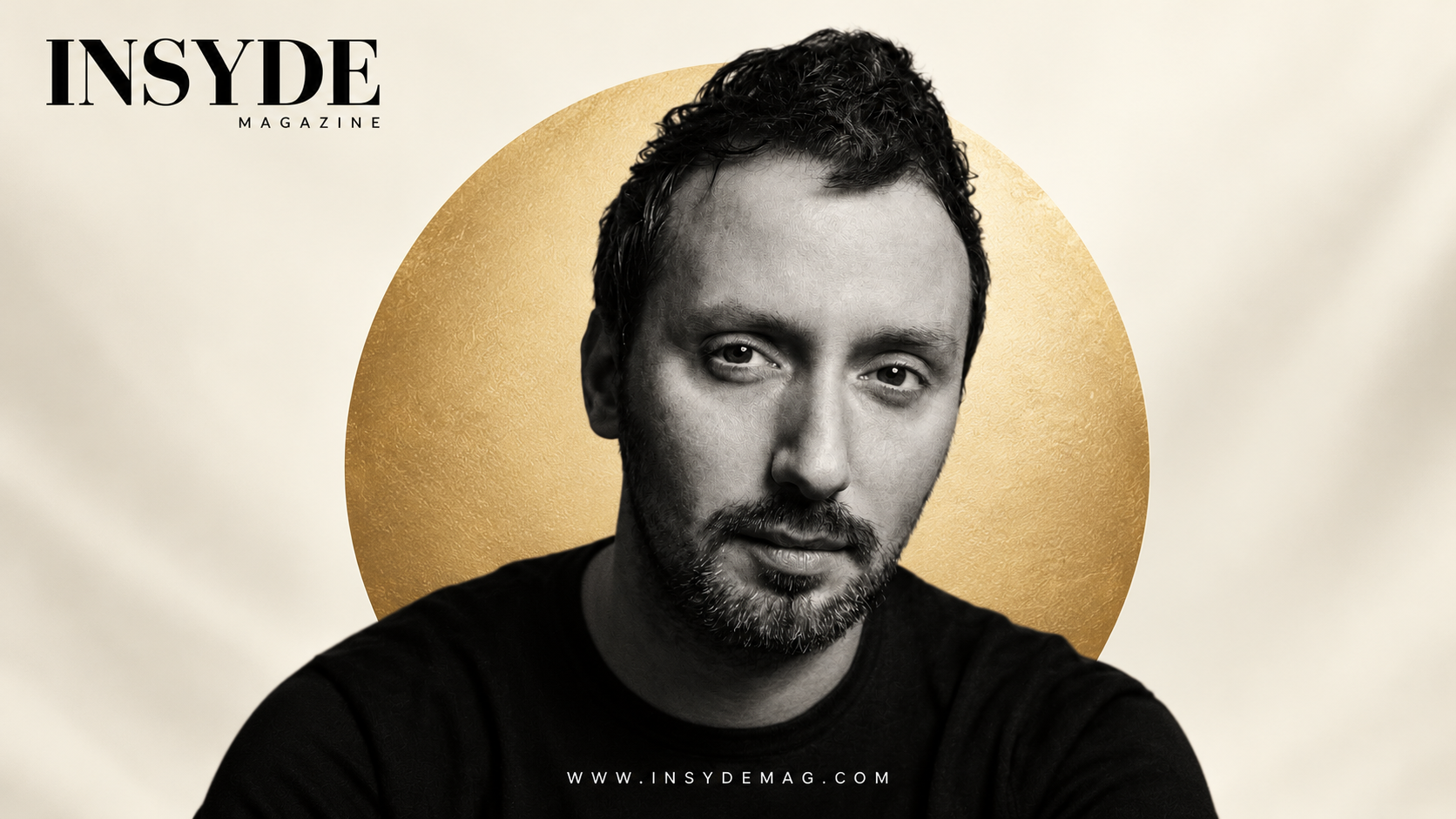
  • DECODING THE ANTHONY VACCARELLO EXIT

    DECODING THE ANTHONY VACCARELLO EXIT

    Inside the end of his decade at Saint Laurent, the financial pressures reshaping luxury fashion, and the unanswered questions surrounding one of the industry’s most consequential creative departures.

    By INSYDE Magazine | Luxury & Fashion

    There is something almost cinematic about leaving Saint Laurent in gold.

    For Anthony Vaccarello, the final chapter at the French fashion house arrived in a blaze of metallic glamour. Gold dresses, sculptural trench coats and shimmering stilettos transformed the runway into a vision of opulence, staged beneath the Eiffel Tower and recalling the grandeur of Saint Laurent’s own history.

    It was a fitting image for a designer whose decade at the house had been defined by controlled sensuality, sharp silhouettes and a distinctly nocturnal vision of luxury.

    Then came the announcement.

    On 9 October 2026, Kering officially confirmed that Vaccarello was leaving Saint Laurent after ten years as creative director. The group praised his contribution to strengthening the house’s identity and cultural influence, while confirming that new creative leadership would be announced soon. The statement did not disclose a specific reason for his departure.

    Read Kering’s official announcement.

    The timing is significant. Vaccarello is not leaving an obscure label struggling to establish an identity. He is departing one of fashion’s most recognisable houses after helping take its annual sales beyond €3 billion in 2023.

    Yet the years that followed brought a commercial slowdown, against the backdrop of a wider luxury-market correction and a restructuring at Saint Laurent’s parent company.

    So what does his exit actually tell us?

    Is this the natural conclusion of a decade-long creative partnership? A response to the changing economics of luxury? Or a sign that even a successful creative vision must eventually adapt to a new set of commercial expectations?

    The public record does not establish one definitive explanation. But Vaccarello’s legacy, Saint Laurent’s financial trajectory and Kering’s broader strategic reset offer a revealing picture of the pressures facing luxury fashion today.

    A DECADE OF DESIRE

    When Vaccarello took over Saint Laurent in 2016, succeeding Hedi Slimane, he inherited a house whose recent identity had been shaped by a powerful, highly distinctive creative vision. His challenge was to establish his own language without diluting the attitude that made Saint Laurent instantly recognisable.

    He approached the task through consistency rather than reinvention for its own sake.

    Black became a near-constant. Shoulders were sharpened. Legs were elongated. Leather, sheer fabrics, short hemlines and precise tailoring created a wardrobe that moved between eroticism and authority. The result was sensual without being soft, glamorous without being traditionally romantic.

    His Saint Laurent woman did not need to announce her presence. The clothes did it for her.

    But reducing Vaccarello’s tenure to provocative dresses would overlook the scale of his achievement. He built a coherent visual world across runway collections, campaigns, celebrity dressing and monumental Parisian shows. The Eiffel Tower became a recurring backdrop, transforming the city itself into part of the brand’s imagery.

    Saint Laurent was selling more than clothing. It was selling an atmosphere: Paris after dark, unapologetic sexuality, rock-and-roll attitude and a particular form of modern power.

    He also helped extend the house’s cultural reach beyond fashion through Saint Laurent Productions, launched in 2023. Its involvement in cinema, including Emilia Pérez, brought the brand into a broader cultural conversation and demonstrated how a fashion house could use film as an extension of its identity.

    Explore Vogue’s coverage of Vaccarello’s departure and creative legacy.

    Commercially, the results were substantial. According to Reuters, Saint Laurent generated well over €3 billion in annual sales in 2023. Vaccarello had helped establish a strong identity at a scale that few creative directors achieve.

    That is what makes his departure consequential. He was not simply designing the next collection. He had become central to how the house presented itself to the world.

    THE NUMBERS BEHIND THE EXIT

    Luxury is built on desire. But desire must eventually translate into sales.

    Saint Laurent’s financial trajectory provides essential context for understanding why this transition matters. The brand reached more than €3 billion in annual sales in 2023 before losing momentum as the luxury sector faced weaker demand and brands reassessed their growth strategies.

    Reuters reported that Saint Laurent’s gross revenue declined by 9% in 2024 and a further 6% in 2025. Performance had largely stabilised during 2026, according to the same report, although full-year 2026 results were not yet available as of 11 October.

    Saint Laurent: the recent financial picture

    PeriodReported performance
    2023Annual sales exceeded €3 billion
    2024Gross revenue declined 9%
    2025Gross revenue declined a further 6%
    2026Performance described as largely stabilised; full-year results pending

    Source: Reuters, 9 October 2026. Figures refer to reported annual sales and gross-revenue movements; the 2026 assessment is qualitative, not a full-year result.

    The numbers matter, but they require careful interpretation.

    The decline does not prove that Vaccarello’s designs caused the slowdown, nor does it establish that falling sales triggered his departure. Luxury brands have faced a more challenging environment as consumers have become selective, price increases have tested perceptions of value, and demand has weakened across parts of the market.

    Saint Laurent’s parent company, Kering, has also been under pressure. The group reported 2025 revenue of approximately €14.7 billion, reflecting the wider challenges facing its portfolio of luxury houses.

    Read Kering’s official announcement and corporate information and Reuters’ reporting on the departure and financial context.

    This is the broader context in which Vaccarello’s exit should be understood. Kering is working to restore growth and improve performance across a portfolio that includes Saint Laurent, Gucci, Bottega Veneta and Balenciaga.

    The strategic question is no longer simply whether a collection generates attention. It is whether a house can translate creative distinction into sustainable demand, profitable growth and stronger customer relationships.

    That is a much harder equation to solve.

    WHEN THE RUNWAY MEETS THE BALANCE SHEET

    A spectacular runway show can dominate fashion coverage. A celebrity appearance can put a collection in front of millions. A campaign can make a handbag instantly desirable.

    But none of those moments, on its own, guarantees sustained growth.

    Luxury houses also depend on products that customers return to: daywear that works beyond special occasions, leather goods that justify their prices, menswear with a clear identity, and collections that encourage repeat purchases without making the brand feel overexposed.

    Reuters, citing Barclays analysts, identified women’s daywear, menswear and high-end leather goods, alongside less-penetrated markets in China and Asia, as potential areas of focus for Saint Laurent’s next creative chapter.

    These are potential growth opportunities identified by analysts, not a confirmed brief issued by Kering.

    Read Reuters’ full report on Saint Laurent’s leadership change.

    This points to a strategic challenge rather than a simple aesthetic verdict.

    Vaccarello’s vision was disciplined and commercially powerful. Yet the next phase of growth may require Saint Laurent to broaden the ways customers engage with the brand while protecting the desirability that made it successful.

    Expand too aggressively and the house risks diluting the sense of scarcity and attitude that gives its products their appeal. Rely too heavily on a narrow visual signature and it may struggle to create enough new reasons for customers to return.

    The strongest luxury houses make commercial expansion feel like a natural extension of their creative identity. For Saint Laurent, that is the challenge ahead.

    WAS IT A CONTROVERSIAL EXIT?

    The word controversy travels quickly in fashion. A departure becomes a rumour. A rumour becomes a supposed falling-out. A final collection is reinterpreted as a coded message.

    But the evidence available publicly is more limited than the speculation might suggest.

    Kering confirmed Vaccarello’s departure and praised his contribution to the house. It did not publicly identify a dispute, misconduct allegation or specific personal conflict as the reason. Reuters reported that a successor would be announced soon, but did not establish a definitive explanation for the decision.

    There is, therefore, no verified basis for presenting this as a personal scandal or claiming that Vaccarello was fired over a particular disagreement.

    That does not make the departure unimportant. A creative-director transition after ten years can be significant without being scandalous. It can reflect strategic priorities, changing commercial expectations, personal decisions or the natural conclusion of a long creative partnership. Without evidence, assigning one of these explanations to Vaccarello would be speculation.

    The more substantive story is the environment in which the exit occurred.

    Kering has been reshaping creative leadership across its portfolio as it attempts to reverse a prolonged downturn. Saint Laurent’s transition belongs to a larger conversation about how luxury groups balance creative autonomy with commercial accountability.

    The question is not whether a designer can create a memorable collection. It is how long a creative leader remains the right person for a house as its business enters a different phase.

    In an industry where creative directors increasingly become the public face of a brand, the distinction between the designer’s identity and the house’s identity can become complicated. When the designer leaves, the business must prove that the desirability they helped create belongs to the brand itself—not exclusively to the person behind it.

    THE GOLDEN FINALE

    Vaccarello’s final runway provided an arresting image for the end of his tenure.

    Gold dresses, gold outerwear and gold stilettos appeared beneath monumental chandeliers in a presentation that referenced the Salon Impérial at Paris’s Hôtel Inter-Continental, associated with Yves Saint Laurent’s historic couture presentations.

    It was a visual return to the house’s mythology: grandeur, theatricality and the idea of fashion as a carefully controlled spectacle.

    The collection has inevitably invited interpretation. Was the gold a farewell? A statement of triumph? A deliberate message about the designer’s relationship with the house?

    There is no confirmed evidence that it was intended as a coded message about his departure. Treating the collection as proof of a hidden conflict would confuse fashion criticism with reporting.

    Its significance is more compelling when considered on its own terms. Vaccarello spent a decade making Saint Laurent’s codes feel contemporary without making them unrecognisable. His final collection concentrated those codes—sensuality, Parisian grandeur, sharp tailoring and theatrical glamour—into a single visual statement.

    Gold was more than decoration. It was a fitting language for a house that has long sold aspiration through clothing and imagery.

    But a spectacular finale cannot answer the question that follows every creative-director departure: what happens when the person who defined the look is no longer there?

    WHO COMES NEXT?

    At the time of writing, Kering has confirmed that new creative leadership will be announced, but no successor has been officially named.

    Industry speculation has included Chemena Kamali, currently creative director at Chloé and previously associated with Saint Laurent’s design team. That possibility remains unconfirmed and should not be mistaken for an appointment.

    Reuters’ report on the departure and successor speculation.

    Whoever takes the role will inherit a house with considerable advantages: a recognisable identity, global visibility, a strong cultural presence and a decade of consistent creative direction. They will also inherit a commercial challenge.

    The next chapter must preserve what makes Saint Laurent distinctive while giving the business fresh momentum. Developing daywear and menswear, strengthening leather goods and pursuing opportunities in Asian markets are among the areas analysts have identified as potential avenues for growth.

    The creative challenge will be delicate. Too much continuity could make the next era feel derivative. Too sharp a break could alienate customers who associate Saint Laurent with Vaccarello’s particular combination of sensuality and control.

    The successor will not simply be asked to design a successful collection. They will be asked to define what Saint Laurent looks and feels like next—and to make that vision commercially compelling.

    THE NEXT CHAPTER OF LUXURY

    Vaccarello’s departure arrives at a moment when luxury fashion is reconsidering the relationship between creative identity and financial performance.

    For years, the industry benefited from powerful brand equity, global expansion and customers willing to pay increasingly high prices for desirable products. The current environment demands more. Brands must give customers compelling reasons to buy, justify their prices and build identities that can withstand changes in consumer behaviour.

    Saint Laurent’s recent revenue decline is part of that context, but it should not be mistaken for a verdict on one designer. Vaccarello helped take the house beyond €3 billion in annual sales and established a visual language that reached well beyond the runway. The subsequent slowdown occurred amid broader industry pressure, while the precise reason for his departure remains undisclosed.

    The next phase will reveal whether Saint Laurent can turn that legacy into renewed growth without diluting the qualities that made it desirable.

    That is the real story behind the exit: not a proven scandal or a confirmed boardroom battle, but a consequential change at the intersection of fashion, business and cultural influence.

    Anthony Vaccarello leaves behind a decade of sharp silhouettes, exposed skin, precise tailoring and cinematic spectacle. Saint Laurent now faces a different kind of design challenge—one that cannot be solved on a runway alone.

    It must decide what comes after desire.

    And in luxury, the answer is rarely as simple as changing the name on the invitation.

    INSYDE Magazine — Where luxury, culture and influence meet.


    SOURCES & FURTHER READING

    1. Kering — Official announcement of Anthony Vaccarello’s departure, 9 October 2026
    2. Reuters — Saint Laurent ends Vaccarello’s decade-long tenure amid wider Kering revamp, 9 October 2026
    3. Reuters via Investing.com — Financial performance, industry context and successor speculation, 9 October 2026
    4. Vogue — Anthony Vaccarello Bows Out at Saint Laurent, 9 October 2026

    Editorial note: This article reflects publicly available information as of 11 October 2026. Saint Laurent had not publicly disclosed a specific reason for Vaccarello’s departure, and no successor had been officially announced at the time of writing.
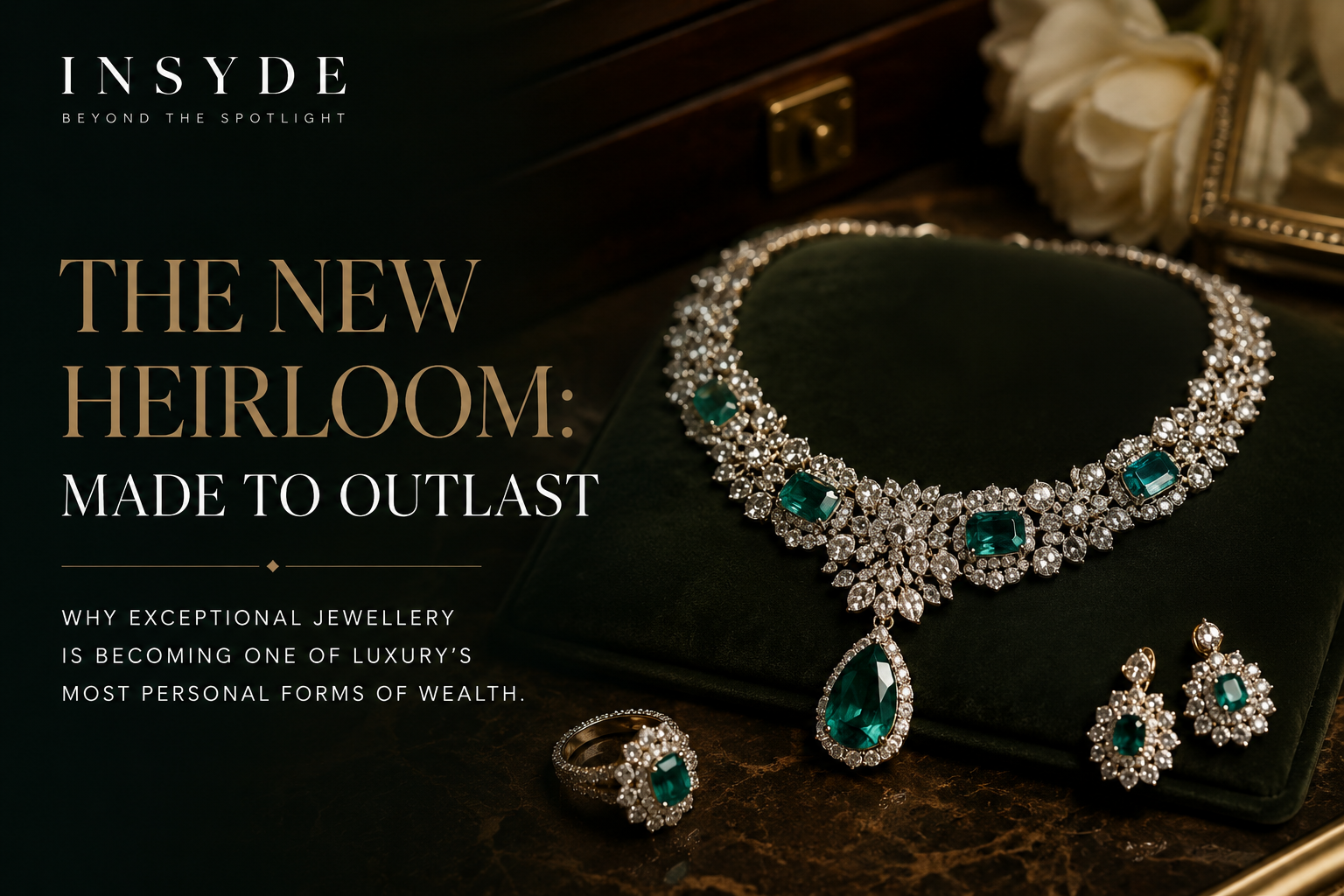
  • The New Heirloom: The Luxury of Legacy

    The New Heirloom: The Luxury of Legacy

    Why exceptional jewellery is becoming one of luxury’s most personal forms of wealth.

    There is a difference between owning something valuable and owning something that matters.

    The distinction becomes clearer at the highest levels of luxury.

    When access is no longer the challenge, another question begins to matter: what is actually worth keeping?

    A remarkable piece of jewellery can answer that question rather elegantly.

    It does not need to occupy a room.

    It does not need a chauffeur.

    It does not need a marina or a private hangar.

    It can sit quietly in a private collection, emerge for one evening, and carry more meaning than an object ten times its size.

    That is the peculiar power of exceptional jewellery.

    It is wealth made intimate.

    Not necessarily wealth designed to be seen by everyone, but wealth expressed through rarity, provenance, craftsmanship and personal significance.

    And increasingly, that is where luxury is heading.

    When Price Stops Being the Point

    For a certain kind of buyer, price is an important consideration.

    For the truly affluent, it is often a secondary one.

    The question is no longer whether something is expensive enough to justify its place in a collection.

    It is whether it is exceptional enough to deserve one.

    That distinction changes the entire conversation.

    A rare Colombian emerald.

    An extraordinary Burmese ruby with compelling provenance.

    A historic diamond.

    A one-of-one commission.

    A piece created by an exceptional atelier.

    A jewel whose craftsmanship reveals itself only when examined closely.

    These are not interchangeable luxury goods.

    They are objects with characteristics that cannot simply be reproduced by increasing a budget.

    That is where jewellery becomes particularly interesting.

    Money can secure access. It cannot manufacture rarity.

    The Value of Knowing What You Are Looking At

    There is a sophistication to jewellery that rewards knowledge.

    Two stones can appear similar to an untrained eye and possess radically different histories, qualities and desirability.

    Two pieces can carry similar materials and have completely different levels of craftsmanship.

    The difference may be in the cut.

    The setting.

    The proportions.

    The origin.

    The stone selection.

    The construction.

    The hand behind it.

    Or simply the judgement of the person who commissioned it.

    This is why the most sophisticated jewellery culture is not necessarily loud.

    It is informed.

    A collector does not need a room to recognise a remarkable stone.

    Sometimes a glance across a dinner table is enough.

    That is a very different kind of status.

    Recognition becomes selective.

    Jewellery Is Wealth You Can Wear

    A residence remains at its address.

    A yacht remains at sea.

    A private aircraft moves according to a flight plan.

    Jewellery has a different kind of freedom.

    It travels with its owner.

    A necklace can move between continents.

    A ring can pass from a boardroom to a private dinner.

    A pair of earrings can become part of an evening’s entire visual language.

    The object is not simply stored wealth.

    It becomes portable identity.

    And because it is worn directly against the body, jewellery occupies an unusually intimate position within a luxury collection.

    You don’t simply own it.

    You live with it.

    The Quiet Power of Exceptional Craftsmanship

    At the top end of jewellery, craftsmanship is rarely there for spectacle.

    It is there for perfection.

    The setting has to hold the stone without overpowering it.

    The proportions have to feel inevitable.

    The metal has to respond to light correctly.

    The construction has to survive years of wear without losing its character.

    The smallest detail can determine whether a piece feels merely expensive or genuinely exceptional.

    This is where the great ateliers distinguish themselves.

    The finished piece may appear effortless.

    That is precisely the point.

    Exceptional craftsmanship hides its own difficulty.

    The more refined the object, the less it needs to explain itself.

    The Stone Is Only the Beginning

    A remarkable gemstone carries its own identity.

    Its colour.

    Its character.

    Its origin.

    Its rarity.

    Its history.

    Its imperfections can sometimes become part of what makes it desirable.

    The sophisticated collector therefore isn’t necessarily searching for the largest stone.

    They may be searching for the stone that cannot easily be replaced.

    That distinction matters.

    Size can be measured.

    Rarity has to be understood.

    And in the highest echelons of collecting, uniqueness tends to outlast spectacle.

    India’s Jewellery Legacy Is an Extraordinary Advantage

    India enters this conversation with something many emerging luxury markets would struggle to create from scratch:

    centuries of jewellery culture.

    Kundan.

    Jadau.

    Polki.

    Meenakari.

    Temple jewellery.

    Goldsmithing traditions.

    Gem-setting techniques.

    Regional craftsmanship passed between generations.

    These aren’t simply decorative traditions.

    They are sophisticated systems of making.

    The opportunity for contemporary Indian luxury is therefore not to reproduce the European model of jewellery.

    It is to take India’s enormous craft heritage and give it a new vocabulary.

    The most compelling future Indian jewellery may not look traditionally Indian at first glance.

    It may be architectural.

    Minimal.

    Sculptural.

    Unexpected.

    But the intelligence of the craft can remain underneath.

    That is where heritage becomes contemporary.

    The Indian Jewel of Tomorrow

    Imagine a contemporary necklace constructed using a centuries-old technique.

    A sculptural ring inspired by Indian architecture.

    A modern interpretation of Jadau without ceremonial excess.

    A rare gemstone framed with the restraint of contemporary design.

    A private commission that combines an inherited stone with a completely new setting.

    That is far more interesting than simply placing an Indian motif on a luxury product.

    The real opportunity is reinvention without losing provenance.

    If Indian jewellery houses can achieve that balance, the result could become globally significant.

    Not because it is Indian.

    But because it is exceptional.

    When Jewellery Becomes a Private Language

    There is a particular pleasure in owning something that does not need to announce itself.

    A necklace without a visible logo.

    A ring whose significance is understood only by a handful of collectors.

    A stone selected because of its provenance rather than its recognisability.

    A private commission that exists nowhere else.

    This is where jewellery enters the territory of discreet luxury.

    The object does not ask for attention.

    It rewards attention.

    And that distinction is increasingly important.

    The old luxury language often said:

    Look at what I own.

    The newer language can say:

    Look closely.

    The Heirloom Is Changing

    Historically, an heirloom was something that survived long enough to be inherited.

    Today, the most thoughtful collectors can design for inheritance from the beginning.

    A piece commissioned for a milestone.

    A gemstone selected with a future daughter or son in mind.

    An existing family jewel redesigned without losing its original stone.

    A new piece created specifically to become part of a family’s visual history.

    The object becomes more than an acquisition.

    It becomes a decision about the future.

    And that may be one of the most sophisticated reasons to buy exceptional jewellery.

    You are not necessarily buying for yourself alone.

    You are deciding what deserves to survive you.

    From Jewellery to Family Archive

    This is where jewellery becomes almost impossible to price.

    A necklace can carry the memory of a wedding.

    A ring can carry the history of a marriage.

    A stone can be reset across generations.

    A brooch can return decades later at another family celebration.

    The financial value may remain measurable.

    The emotional value does not.

    And over time, the two can become inseparable.

    A remarkable jewel is therefore capable of becoming something unusual:

    a physical archive of a family.

    That is a form of wealth no balance sheet can properly capture.

    The Collector’s Eye

    Serious collecting is rarely about accumulation for its own sake.

    The most interesting private collections tend to have a point of view.

    They may focus on exceptional stones.

    A particular period.

    A house.

    A designer.

    A technique.

    A geographical tradition.

    Or simply pieces that tell compelling stories.

    The collector begins to develop an eye.

    They notice things.

    The quality of a setting.

    The way a stone is cut.

    The originality of a design.

    The difference between an important piece and merely an expensive one.

    At that point, buying becomes less about consumption and more about curation.

    And curation is one of the defining characteristics of sophisticated luxury.

    When a Jewel Becomes Art

    There is a moment when jewellery stops functioning as an accessory.

    It becomes an artwork.

    A one-of-one commission.

    An extraordinary stone.

    An experimental setting.

    A collaboration between an artist and a master jeweller.

    A piece whose proportions are so deliberate that it could belong in a gallery as naturally as it belongs on the body.

    At that level, the question is no longer whether the piece matches an outfit.

    It is whether the object itself deserves to exist.

    That is a much higher standard.

    And it is where jewellery enters the world of collecting.

    The Investment Question Is Almost the Wrong Question

    Luxury jewellery is frequently discussed as an investment.

    That conversation has its place.

    Certain exceptional pieces can command significant prices in the secondary market, particularly when rarity, provenance, craftsmanship and collector demand converge.

    But reducing exceptional jewellery to financial performance misses its more enduring value.

    The serious collector isn’t necessarily asking whether a jewel will outperform an investment portfolio.

    They are asking whether it possesses lasting desirability.

    Will the stone still be remarkable?

    Will the craftsmanship still be respected?

    Will the design still feel relevant?

    Will the provenance still matter?

    Will someone want it decades from now?

    That is a different definition of value.

    Financial value can fluctuate. Cultural value can compound.

    The New Luxury Is Personal

    The next generation of high jewellery is unlikely to be defined simply by larger stones or heavier pieces.

    It will be defined by individuality.

    Private commissions.

    Unusual gemstones.

    Exceptional provenance.

    Artist collaborations.

    Heritage techniques.

    Contemporary Indian craftsmanship.

    One-of-one designs.

    And pieces that could never have been created for anyone else.

    This is where luxury becomes most interesting.

    The object is no longer simply selected.

    It is authored.

    The collector becomes part of the creative process.

    The final piece carries something of both sides: the skill of the maker and the identity of the person who commissioned it.

    That is difficult to mass-produce.

    And therefore, increasingly valuable.

    Beyond the Logo

    The future of jewellery may belong to pieces that do not immediately reveal their price, their house or even their significance.

    A rare stone.

    An exceptional setting.

    A technique recognised by a specialist.

    A piece with a story known only to the owner and a small circle of people who understand its importance.

    This is not the disappearance of the luxury brand.

    It is the evolution of luxury beyond the brand.

    The logo tells you who made something.

    The craftsmanship tells you why it matters.

    The provenance tells you where it has been.

    But the story tells you why it should be kept.

    The Things We Choose to Keep

    Perhaps that is why jewellery has survived every change in fashion.

    Trends disappear.

    Designers change.

    Houses rise and fall.

    But a remarkable jewel can remain.

    It can cross generations.

    It can carry a story long after its original owner is gone.

    It can be worn again decades later and somehow feel completely right.

    Because the most valuable thing about jewellery has never been simply what it is made from.

    It is what it remembers.

    And perhaps that is the ultimate luxury.

    Not owning the largest stone.

    Not wearing the most recognisable name.

    Not proving how much something cost.

    But possessing something rare enough, beautiful enough and meaningful enough to become part of someone else’s future.

    The finest jewellery doesn’t simply belong to a person.

    For a while, a person becomes part of its story.

    INSYDE — Beyond the Spotlight.

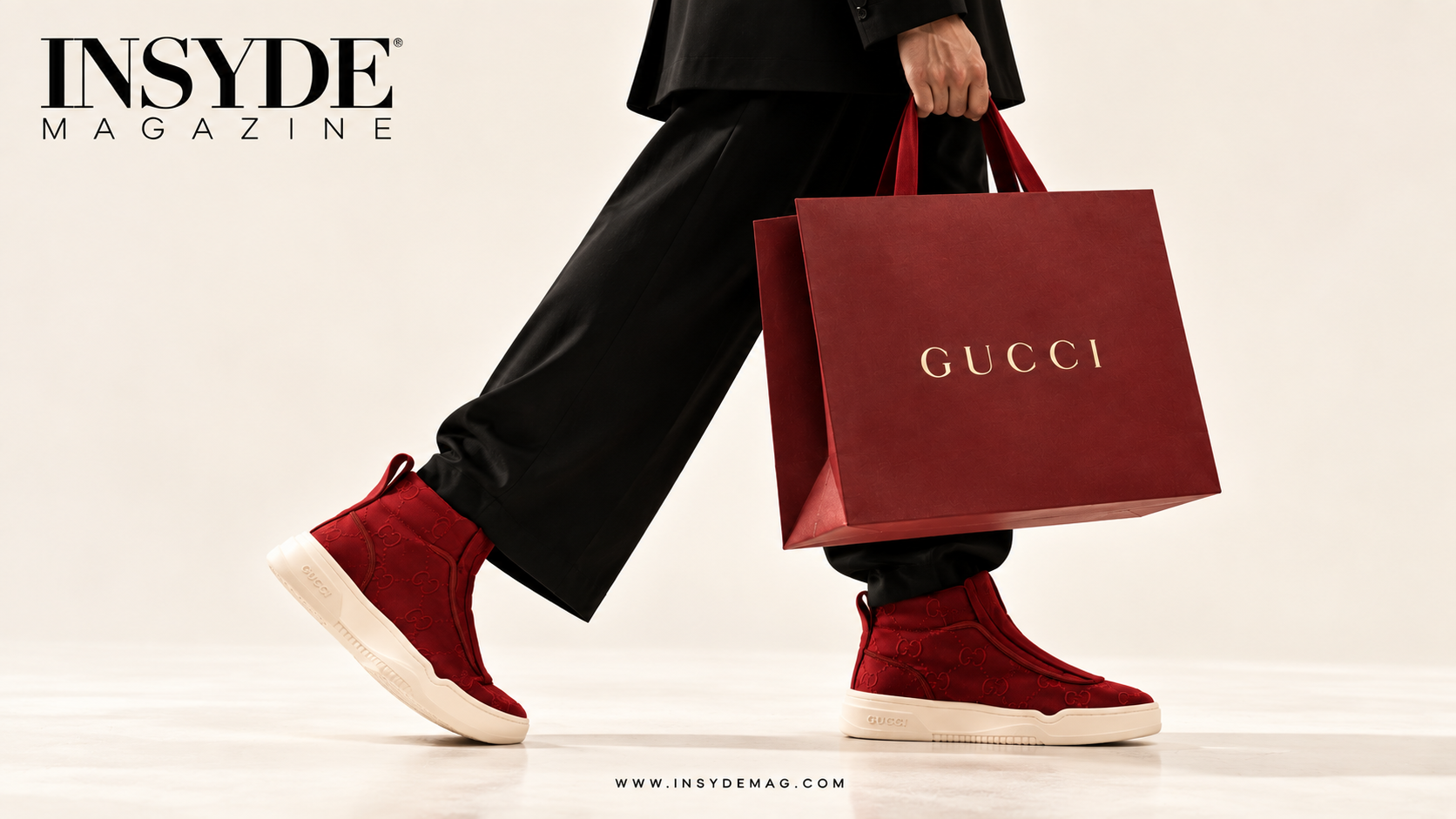
  • GUCCI goes MADE IN CHINA?

    GUCCI goes MADE IN CHINA?

    Inside the sneaker challenging what “Made in Italy” means in modern luxury.

    By INSYDE

    There are few phrases in fashion more powerful than Made in Italy.

    Two words can evoke Florence workshops, generations of artisans, hand-finished leather and the kind of craftsmanship luxury houses have spent decades turning into mythology.

    So when a Gucci sneaker arrives with “Made in China” printed on its product information, it creates an uncomfortable question.

    Not because China cannot manufacture luxury products.

    But because, for a brand like Gucci, where something is made has always been part of the story.

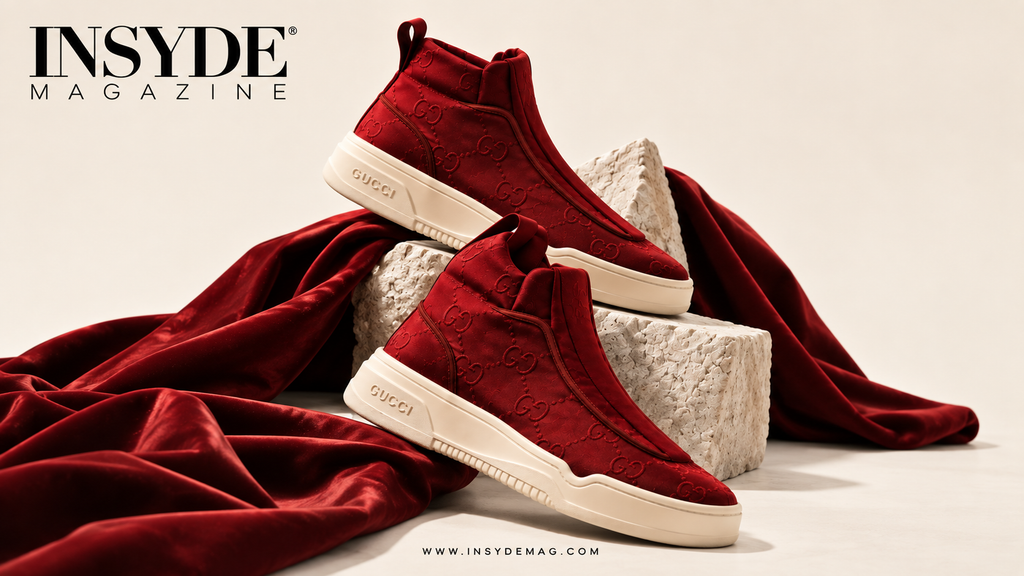
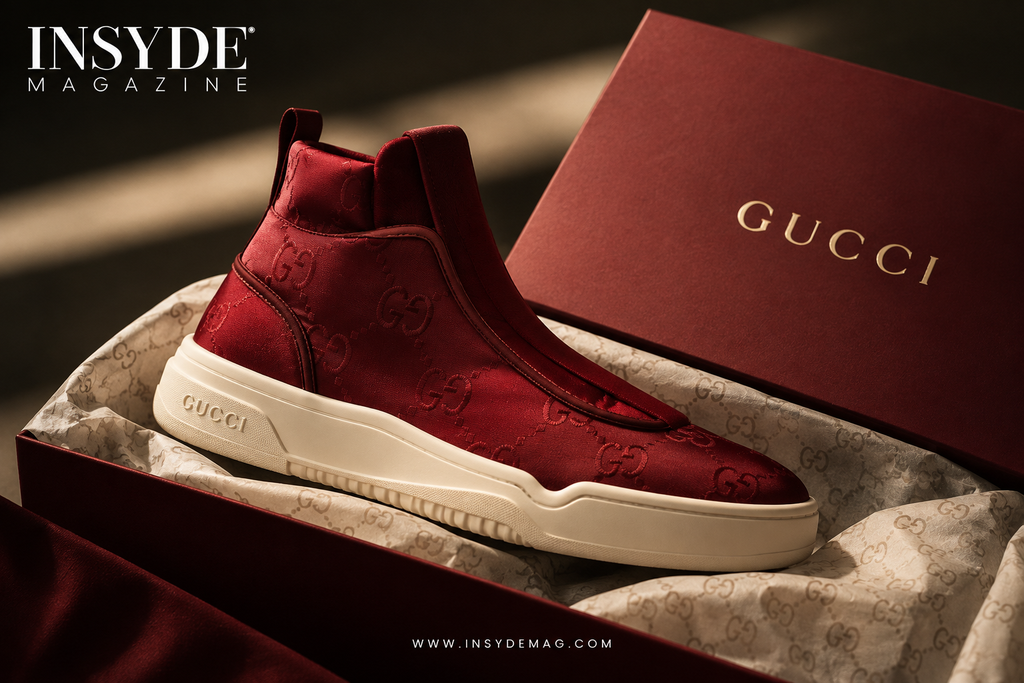
    Gucci has now introduced specific sneaker models manufactured in China, including the Drip, the first sneaker designed under Demna’s creative direction at Gucci. The product is officially listed by Gucci as “Made in China.” A second slip-on sneaker from the same Primavera collection also carries the designation.

    The internet can reduce that story to three words:

    Gucci. Made in China.

    The reality is considerably more interesting.

    Because this isn’t really a story about China replacing Italy.

    It is a story about what luxury means when the world that makes it becomes increasingly global.


    THE SNEAKER THAT STARTED THE CONVERSATION

    The Drip is not designed to look like a traditional Italian luxury sneaker.

    Gucci describes it as a streamlined silhouette that combines the visual language of a basketball shoe with the ease of a loafer. It is available across materials and colourways including nylon, suede and GG canvas. Gucci identifies it as Demna’s first sneaker for the house.

    Its positioning is also distinctly contemporary.

    This is not a product attempting to recreate the romance of an old Gucci atelier.

    It is a product designed for a fashion landscape where sneakers can carry the cultural weight once reserved for handbags, watches and couture.

    And then comes the detail that changes the conversation:

    Made in China.

    The sneaker is still sold through Gucci.

    It still carries the Gucci name.

    It still sits within Gucci’s luxury ecosystem.

    And depending on the market and version, it carries a price approaching the €800–$1,000 range.

    That is where the question becomes unavoidable.

    If the product is luxury, what exactly makes it luxury?


    NO, GUCCI ISN’T MOVING TO CHINA

    Before the headlines get ahead of the facts, there is an important distinction to make.

    Gucci has not announced a broad relocation of its manufacturing from Italy to China.

    According to Gucci’s statement reported by Reuters, Italy remains at the heart of its manufacturing model and identity, and the company has no broader plan to move production outside Italy. Gucci said the Chinese manufacturer was selected for the technical expertise and capabilities needed for the particular sneaker.

    Gucci’s wider manufacturing structure tells the same story.

    The house says that most Gucci products are made in Italy, while different categories are manufactured in other specialist markets. Gucci states that its watches are mainly produced in Switzerland, fragrances in France and the UK, cosmetics in the EU and some eyewear in Japan.

    Its responsible supply-chain documentation states that 95% of Gucci’s manufacturers are based in Italy.

    So the accurate story is not:

    Gucci is abandoning Italy.

    It is:

    Gucci has chosen China for the manufacturing of specific sneakers.

    That distinction matters.


    WHY CHINA?

    For years, “Made in China” was often used in luxury conversations as shorthand for mass production.

    That perception is increasingly outdated.

    China has become one of the world’s major manufacturing centres, including in footwear, technical materials and highly specialised production.

    And Gucci’s public explanation for the Drip is not that China was chosen simply because it is cheaper.

    The company has specifically pointed to the manufacturer’s technical know-how and capabilities as the reason for the decision.

    That doesn’t mean cost is irrelevant to the economics of global luxury.

    Gucci’s parent company Kering reported that Gucci’s first-half 2026 revenue declined 5% on a comparable basis to €2.757 billion, while the group also reported sequential improvement during the period. Mainland China remained a challenging market, although trends were improving.

    The broader luxury industry is navigating a more demanding consumer environment, with brands looking for new ways to create relevance, excitement and value.

    But there is not enough public evidence to say that Gucci selected China specifically to reduce manufacturing costs.

    And that is precisely why the story is more interesting without that assumption.


    THE MYTH OF “MADE IN ITALY”

    Luxury has always understood the power of geography.

    Paris.

    Milan.

    Florence.

    Geneva.

    Tokyo.

    Certain places have become synonymous with particular forms of expertise.

    For Gucci, Italy isn’t simply a manufacturing location.

    It is part of the brand’s cultural identity.

    But modern luxury supply chains are rarely as simple as a single country.

    A product can involve materials, components, specialist techniques and manufacturing processes spanning several countries before it reaches a customer.

    European Union rules on non-preferential origin recognise this complexity, generally determining origin for goods involving multiple countries through the concept of last substantial transformation, subject to the applicable rules.

    That doesn’t make “Made in Italy” meaningless.

    Quite the opposite.

    It demonstrates why provenance is a sophisticated concept rather than simply a postcode.

    The real question is no longer only:

    Where was it made?

    It is:

    What expertise was required to make it?


    FROM COUNTRY OF ORIGIN TO COUNTRY OF EXPERTISE

    This may be where luxury is heading.

    A watch can be Swiss.

    An eyewear collection can involve Japanese manufacturing.

    A fragrance can be produced in France.

    A sneaker can be manufactured in China.

    And the same global luxury house can still maintain a distinctly European identity.

    Gucci’s own manufacturing footprint already reflects this reality.

    The old luxury equation was relatively simple:

    Italy = craftsmanship.

    The new equation is considerably more complicated:

    Design + expertise + materials + technology + craftsmanship + scarcity + brand identity + cultural relevance.

    Geography remains part of that equation.

    But it is no longer necessarily the entire equation.


    THE PRICE OF THE NAME

    Then there is the uncomfortable part.

    What exactly is the customer paying for?

    A sneaker doesn’t cost hundreds of dollars because of the rubber sole alone.

    The price incorporates an entire ecosystem:

    Design.

    Creative direction.

    Materials.

    Manufacturing.

    Distribution.

    Brand heritage.

    Marketing.

    Retail experience.

    Cultural relevance.

    And, inevitably, the name printed on the box.

    That last element is enormous.

    Luxury has always sold objects, but it has also sold meaning.

    A Gucci handbag is not simply leather.

    A Rolex is not simply steel.

    A Ferrari is not simply an engine.

    The object becomes valuable partly because of the story surrounding it.

    Which brings us back to the label.

    If a Gucci sneaker is manufactured in China but designed under Demna, developed within Gucci’s creative and commercial system, sold through Gucci boutiques and presented as a Gucci product, does its country of manufacture change its luxury status?

    There is no universal answer.

    For some consumers, provenance will remain fundamental.

    For others, design and cultural relevance may matter more.

    And that tension is exactly what makes this moment worth watching.


    DEMNA AND THE NEW GUCCI

    The timing makes the story even more significant.

    The Drip isn’t simply another Gucci sneaker.

    It is part of the beginning of Demna’s Gucci era.

    The designer’s arrival represents a new creative chapter for one of fashion’s most recognisable houses, and the Drip is one of the first products through which that direction becomes visible. Gucci itself identifies it as Demna’s first sneaker for the brand.

    Its design feels deliberately contemporary.

    Less about preserving an image of luxury.

    More about asking what luxury can look like now.

    That distinction matters.

    The modern luxury consumer doesn’t necessarily want a product that looks expensive.

    They want something that means something.

    Something recognisable without being obvious.

    Something culturally relevant.

    Something that can move between fashion, street culture, social media and everyday life.

    The Drip belongs to that world.

    Its manufacturing origin simply adds another layer to the conversation.


    WHEN THE LABEL BECOMES THE STORY

    There is a strange irony here.

    Luxury brands spend enormous amounts of money creating narratives around their products.

    With the Drip, the manufacturing label has become part of the narrative itself.

    That can be complicated.

    Reuters reported that some luxury-industry analysts see potential tension between China-made products and Gucci’s long-standing association with Italian craftsmanship. Those are industry interpretations, however, rather than evidence that the product has already damaged Gucci’s positioning or consumer demand.

    The eventual answer will come from consumers.

    Not headlines.

    Not social-media arguments.

    Not assumptions about where a product should be made.

    But whether customers believe the object delivers enough design, quality, desirability and cultural value to justify its price.

    Because luxury has always been, at its core, an agreement between a brand and its customer.

    The brand says:

    This is special.

    The customer decides whether to believe it.


    THE NEW LUXURY MAP

    Perhaps the most important consequence of Gucci’s China-made sneaker isn’t what it says about China.

    It is what it says about Italy.

    And, more broadly, about the future of luxury.

    For decades, country of origin functioned almost like a guarantee.

    Made in Italy.

    Made in Switzerland.

    Made in France.

    The location itself communicated expertise.

    But as technology improves and manufacturing capabilities become increasingly distributed around the world, luxury houses have more choices than ever.

    The next generation of luxury may therefore be less interested in a single manufacturing postcode and more interested in why a particular place was chosen.

    Where is the best leather?

    Where is the strongest technical expertise?

    Where is the most appropriate craftsmanship?

    Where can a particular construction be executed at the required standard?

    Where does the product make the most sense?

    Those questions are far more complicated than simply asking whether something was made in Italy or China.

    And they may become increasingly important as luxury brands rethink how they manufacture, price and position products.


    SO, DOES “MADE IN CHINA” CHANGE GUCCI?

    It changes the conversation.

    It doesn’t erase Gucci’s Italian manufacturing heritage.

    It doesn’t mean Gucci has moved its entire production operation to China.

    It doesn’t make the sneaker counterfeit.

    And it doesn’t, by itself, tell us whether the product is better or worse.

    What it does do is challenge one of luxury’s oldest assumptions:

    that geography and value are inseparable.

    Gucci continues to have the overwhelming majority of its manufacturers in Italy, while also using specialist manufacturing capabilities across different countries and, now, China for specific sneaker models.

    That may be less dramatic than the internet’s version of the story.

    But it is far more revealing.

    Because the future of luxury may not be about choosing between Italy and China.

    It may be about understanding that modern luxury can be simultaneously local in identity and global in production.

    The atelier still matters.

    The designer still matters.

    The material still matters.

    The craftsmanship still matters.

    But so does technology. So does cultural relevance. So does the ability to manufacture something precisely for the way people want to live now.

    The Gucci Drip has simply made that evolution visible.

    And perhaps that is the real story behind the label.

    Luxury isn’t losing its borders.

    It’s learning how to exist beyond them.


    INSYDE

    The world of luxury is changing. We’re watching what comes next.

    Sources: Gucci product listings and FAQ; Gucci Responsible Supply Chain documentation; Kering H1 2026 results; Reuters reporting, September 2026; European Commission rules on non-preferential origin.

    Inside the sneaker challenging what “Made in Italy” means in modern luxury.

    By INSYDE

    There are few phrases in fashion more powerful than Made in Italy.

    Two words can evoke Florence workshops, generations of artisans, hand-finished leather and the kind of craftsmanship luxury houses have spent decades turning into mythology.

    So when a Gucci sneaker arrives with “Made in China” printed on its product information, it creates an uncomfortable question.

    Not because China cannot manufacture luxury products.

    But because, for a brand like Gucci, where something is made has always been part of the story.

    Gucci has now introduced specific sneaker models manufactured in China, including the Drip, the first sneaker designed under Demna’s creative direction at Gucci. The product is officially listed by Gucci as “Made in China.” A second slip-on sneaker from the same Primavera collection also carries the designation.

    The internet can reduce that story to three words:

    Gucci. Made in China.

    The reality is considerably more interesting.

    Because this isn’t really a story about China replacing Italy.

    It is a story about what luxury means when the world that makes it becomes increasingly global.


    THE SNEAKER THAT STARTED THE CONVERSATION

    The Drip is not designed to look like a traditional Italian luxury sneaker.

    Gucci describes it as a streamlined silhouette that combines the visual language of a basketball shoe with the ease of a loafer. It is available across materials and colourways including nylon, suede and GG canvas. Gucci identifies it as Demna’s first sneaker for the house.

    Its positioning is also distinctly contemporary.

    This is not a product attempting to recreate the romance of an old Gucci atelier.

    It is a product designed for a fashion landscape where sneakers can carry the cultural weight once reserved for handbags, watches and couture.

    And then comes the detail that changes the conversation:

    Made in China.

    The sneaker is still sold through Gucci.

    It still carries the Gucci name.

    It still sits within Gucci’s luxury ecosystem.

    And depending on the market and version, it carries a price approaching the €800–$1,000 range.

    That is where the question becomes unavoidable.

    If the product is luxury, what exactly makes it luxury?


    NO, GUCCI ISN’T MOVING TO CHINA

    Before the headlines get ahead of the facts, there is an important distinction to make.

    Gucci has not announced a broad relocation of its manufacturing from Italy to China.

    According to Gucci’s statement reported by Reuters, Italy remains at the heart of its manufacturing model and identity, and the company has no broader plan to move production outside Italy. Gucci said the Chinese manufacturer was selected for the technical expertise and capabilities needed for the particular sneaker.

    Gucci’s wider manufacturing structure tells the same story.

    The house says that most Gucci products are made in Italy, while different categories are manufactured in other specialist markets. Gucci states that its watches are mainly produced in Switzerland, fragrances in France and the UK, cosmetics in the EU and some eyewear in Japan.

    Its responsible supply-chain documentation states that 95% of Gucci’s manufacturers are based in Italy.

    So the accurate story is not:

    Gucci is abandoning Italy.

    It is:

    Gucci has chosen China for the manufacturing of specific sneakers.

    That distinction matters.


    WHY CHINA?

    For years, “Made in China” was often used in luxury conversations as shorthand for mass production.

    That perception is increasingly outdated.

    China has become one of the world’s major manufacturing centres, including in footwear, technical materials and highly specialised production.

    And Gucci’s public explanation for the Drip is not that China was chosen simply because it is cheaper.

    The company has specifically pointed to the manufacturer’s technical know-how and capabilities as the reason for the decision.

    That doesn’t mean cost is irrelevant to the economics of global luxury.

    Gucci’s parent company Kering reported that Gucci’s first-half 2026 revenue declined 5% on a comparable basis to €2.757 billion, while the group also reported sequential improvement during the period. Mainland China remained a challenging market, although trends were improving.

    The broader luxury industry is navigating a more demanding consumer environment, with brands looking for new ways to create relevance, excitement and value.

    But there is not enough public evidence to say that Gucci selected China specifically to reduce manufacturing costs.

    And that is precisely why the story is more interesting without that assumption.


    THE MYTH OF “MADE IN ITALY”

    Luxury has always understood the power of geography.

    Paris.

    Milan.

    Florence.

    Geneva.

    Tokyo.

    Certain places have become synonymous with particular forms of expertise.

    For Gucci, Italy isn’t simply a manufacturing location.

    It is part of the brand’s cultural identity.

    But modern luxury supply chains are rarely as simple as a single country.

    A product can involve materials, components, specialist techniques and manufacturing processes spanning several countries before it reaches a customer.

    European Union rules on non-preferential origin recognise this complexity, generally determining origin for goods involving multiple countries through the concept of last substantial transformation, subject to the applicable rules.

    That doesn’t make “Made in Italy” meaningless.

    Quite the opposite.

    It demonstrates why provenance is a sophisticated concept rather than simply a postcode.

    The real question is no longer only:

    Where was it made?

    It is:

    What expertise was required to make it?


    FROM COUNTRY OF ORIGIN TO COUNTRY OF EXPERTISE

    This may be where luxury is heading.

    A watch can be Swiss.

    An eyewear collection can involve Japanese manufacturing.

    A fragrance can be produced in France.

    A sneaker can be manufactured in China.

    And the same global luxury house can still maintain a distinctly European identity.

    Gucci’s own manufacturing footprint already reflects this reality.

    The old luxury equation was relatively simple:

    Italy = craftsmanship.

    The new equation is considerably more complicated:

    Design + expertise + materials + technology + craftsmanship + scarcity + brand identity + cultural relevance.

    Geography remains part of that equation.

    But it is no longer necessarily the entire equation.


    THE PRICE OF THE NAME

    Then there is the uncomfortable part.

    What exactly is the customer paying for?

    A sneaker doesn’t cost hundreds of dollars because of the rubber sole alone.

    The price incorporates an entire ecosystem:

    Design.

    Creative direction.

    Materials.

    Manufacturing.

    Distribution.

    Brand heritage.

    Marketing.

    Retail experience.

    Cultural relevance.

    And, inevitably, the name printed on the box.

    That last element is enormous.

    Luxury has always sold objects, but it has also sold meaning.

    A Gucci handbag is not simply leather.

    A Rolex is not simply steel.

    A Ferrari is not simply an engine.

    The object becomes valuable partly because of the story surrounding it.

    Which brings us back to the label.

    If a Gucci sneaker is manufactured in China but designed under Demna, developed within Gucci’s creative and commercial system, sold through Gucci boutiques and presented as a Gucci product, does its country of manufacture change its luxury status?

    There is no universal answer.

    For some consumers, provenance will remain fundamental.

    For others, design and cultural relevance may matter more.

    And that tension is exactly what makes this moment worth watching.


    DEMNA AND THE NEW GUCCI

    The timing makes the story even more significant.

    The Drip isn’t simply another Gucci sneaker.

    It is part of the beginning of Demna’s Gucci era.

    The designer’s arrival represents a new creative chapter for one of fashion’s most recognisable houses, and the Drip is one of the first products through which that direction becomes visible. Gucci itself identifies it as Demna’s first sneaker for the brand.

    Its design feels deliberately contemporary.

    Less about preserving an image of luxury.

    More about asking what luxury can look like now.

    That distinction matters.

    The modern luxury consumer doesn’t necessarily want a product that looks expensive.

    They want something that means something.

    Something recognisable without being obvious.

    Something culturally relevant.

    Something that can move between fashion, street culture, social media and everyday life.

    The Drip belongs to that world.

    Its manufacturing origin simply adds another layer to the conversation.


    WHEN THE LABEL BECOMES THE STORY

    There is a strange irony here.

    Luxury brands spend enormous amounts of money creating narratives around their products.

    With the Drip, the manufacturing label has become part of the narrative itself.

    That can be complicated.

    Reuters reported that some luxury-industry analysts see potential tension between China-made products and Gucci’s long-standing association with Italian craftsmanship. Those are industry interpretations, however, rather than evidence that the product has already damaged Gucci’s positioning or consumer demand.

    The eventual answer will come from consumers.

    Not headlines.

    Not social-media arguments.

    Not assumptions about where a product should be made.

    But whether customers believe the object delivers enough design, quality, desirability and cultural value to justify its price.

    Because luxury has always been, at its core, an agreement between a brand and its customer.

    The brand says:

    This is special.

    The customer decides whether to believe it.


    THE NEW LUXURY MAP

    Perhaps the most important consequence of Gucci’s China-made sneaker isn’t what it says about China.

    It is what it says about Italy.

    And, more broadly, about the future of luxury.

    For decades, country of origin functioned almost like a guarantee.

    Made in Italy.

    Made in Switzerland.

    Made in France.

    The location itself communicated expertise.

    But as technology improves and manufacturing capabilities become increasingly distributed around the world, luxury houses have more choices than ever.

    The next generation of luxury may therefore be less interested in a single manufacturing postcode and more interested in why a particular place was chosen.

    Where is the best leather?

    Where is the strongest technical expertise?

    Where is the most appropriate craftsmanship?

    Where can a particular construction be executed at the required standard?

    Where does the product make the most sense?

    Those questions are far more complicated than simply asking whether something was made in Italy or China.

    And they may become increasingly important as luxury brands rethink how they manufacture, price and position products.


    SO, DOES “MADE IN CHINA” CHANGE GUCCI?

    It changes the conversation.

    It doesn’t erase Gucci’s Italian manufacturing heritage.

    It doesn’t mean Gucci has moved its entire production operation to China.

    It doesn’t make the sneaker counterfeit.

    And it doesn’t, by itself, tell us whether the product is better or worse.

    What it does do is challenge one of luxury’s oldest assumptions:

    that geography and value are inseparable.

    Gucci continues to have the overwhelming majority of its manufacturers in Italy, while also using specialist manufacturing capabilities across different countries and, now, China for specific sneaker models.

    That may be less dramatic than the internet’s version of the story.

    But it is far more revealing.

    Because the future of luxury may not be about choosing between Italy and China.

    It may be about understanding that modern luxury can be simultaneously local in identity and global in production.

    The atelier still matters.

    The designer still matters.

    The material still matters.

    The craftsmanship still matters.

    But so does technology. So does cultural relevance. So does the ability to manufacture something precisely for the way people want to live now.

    The Gucci Drip has simply made that evolution visible.

    And perhaps that is the real story behind the label.

    Luxury isn’t losing its borders.

    It’s learning how to exist beyond them.


    INSYDE

    The world of luxury is changing. We’re watching what comes next.

    Sources

    European Commission — Non-Preferential Rules of Origin

    Gucci — Men’s Drip Sneaker

    Gucci — Where Gucci Products Are Made

    Gucci Responsible Supply Chain

    Reuters — Gucci’s New “Made in China” Sneaker Models

    Kering — 2026 First-Half Results

  • THE CREDIT CARDS ONLY THE RICH HAVE ACCESS TO

    THE CREDIT CARDS ONLY THE RICH HAVE ACCESS TO

    Inside the invitation-only cards, private-bank relationships and ultra-premium financial products where the real luxury isn’t spending power — it’s access.

    There are credit cards designed to earn cashback.

    There are cards designed to collect airline miles.

    And then there are cards that belong to an entirely different financial ecosystem.

    Some are invitation-only. Some are available exclusively to private-banking clients. Others require significant income or an established relationship with a financial institution. Their benefits can extend far beyond rewards: dedicated relationship managers, private concierge services, luxury travel, priority airport experiences, members-only facilities and access to experiences that aren’t available through an ordinary application.

    At this level, the card is no longer simply a way to pay.

    It becomes an extension of the relationship between a financial institution and its wealthiest clients.

    And that relationship is where the real luxury begins.


    THE CARD IS ONLY THE BEGINNING

    The premium-card market has spent decades competing on numbers.

    More points.

    More miles.

    More airport lounges.

    Higher limits.

    Bigger sign-up bonuses.

    But the very top end of the market operates differently.

    A wealthy client doesn’t necessarily need another 2% in rewards.

    What becomes valuable is time.

    Someone to arrange the difficult reservation.

    Someone to coordinate an itinerary.

    Someone to resolve a problem while travelling.

    Someone who already knows the client and understands what they need.

    This is why the world’s most exclusive cards increasingly resemble private lifestyle platforms attached to financial relationships.

    The card is simply the object you can see.

    The infrastructure behind it is the part you can’t.


    01 — AMERICAN EXPRESS CENTURION

    THE BLACK CARD

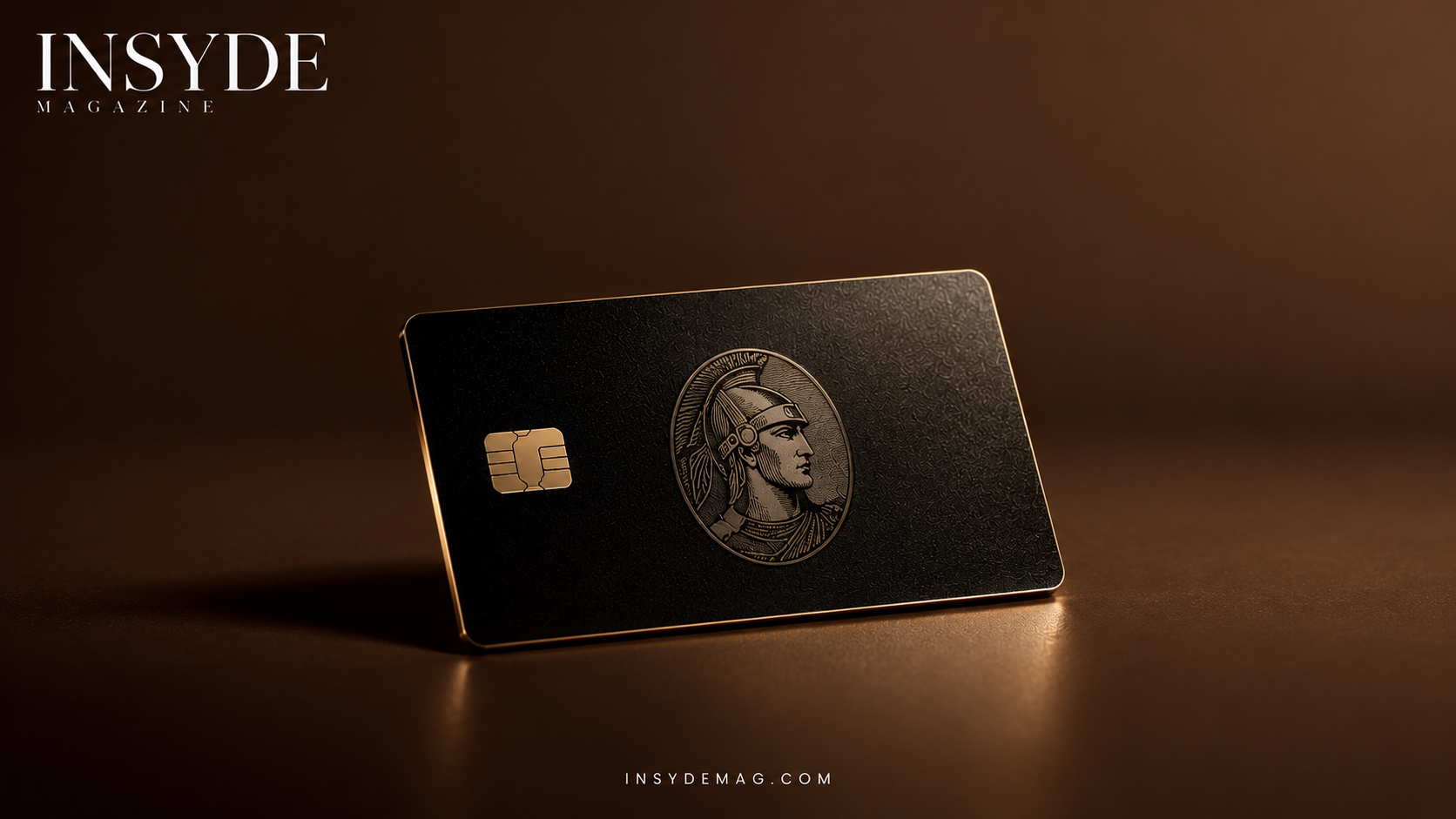
    Few payment cards have achieved the cultural recognition of the American Express Centurion.

    Better known as the Black Card, Centurion helped transform the payment card from a financial tool into a luxury symbol.

    But the mythology surrounding it can sometimes obscure the actual product.

    In India, American Express’s current publicly available Centurion terms list a ₹7 lakh joining fee and an annual membership fee of ₹2.75 lakh, before applicable GST and other taxes. The published terms were updated on 11 August 2025. (American Express)

    That is an extraordinary price for a card.

    But the fee isn’t really the interesting part.

    The Centurion sits inside American Express’s wider premium travel, dining and lifestyle ecosystem. In the United States, eligible Centurion members have access to Fine Hotels + Resorts, which currently covers more than 1,900 luxury properties worldwide, with benefits including daily breakfast for two, a property credit, potential room upgrades and guaranteed 4 p.m. checkout, subject to programme terms. (American Express)

    The larger idea is that the card is designed around experience rather than simply expenditure.

    And there is an important distinction for Indian readers.

    American Express’s Indian Centurion terms are current, but the company’s Indian charge-card application process has also been undergoing technology-related changes. The product should therefore not be presented as a conventional open-application card available to anyone willing to pay the fee.

    That ambiguity is part of what has always surrounded Centurion.

    The card became famous partly because access itself became part of the product.

    THE INSYDE VIEW

    The Centurion’s most valuable feature may not be what sits inside the wallet.

    It may be the world built around it.


    02 — DBS INSIGNIA VISA INFINITE

    THE CARD YOU DON’T SIMPLY APPLY FOR

    Singapore’s DBS Insignia takes exclusivity a step further.

    DBS states explicitly that the Insignia Visa Infinite is available by invitation only and directs interested clients to their DBS Private Banking or relationship manager. (DBS Bank)

    The published proposition is striking.

    DBS advertises up to S$1 million in credit, a dedicated 24/7 concierge team known as Insignia Service Ambassadors, VIP airport-lounge access, fast-track immigration at selected Asian airports and complimentary stays at selected luxury hotels and resorts. (DBS Bank)

    The card also offers dining privileges through The Culinaire’s List and a published annual reward of 100,000 bonus miles for each annual-fee-paying year, subject to the applicable terms. (DBS Bank)

    But the defining word is not million.

    It is invitation.

    The card is embedded within a private-banking relationship rather than positioned as a mass-market premium product.

    That distinction changes the psychology completely.

    A conventional card asks a prospective customer to prove eligibility.

    An invitation-only card begins from a different premise:

    the institution has already decided that you belong in the room.

    THE INSYDE VIEW

    At this level, the question isn’t only:

    How much can you spend?

    It becomes:

    What can your relationship unlock?


    03 — FAB ROYALE WORLD LEGEND EXCLUSIVE

    THE NEW LANGUAGE OF FINANCIAL LUXURY

    The ultra-premium card market is still evolving, particularly in the Middle East.

    On 10 September 2026, First Abu Dhabi Bank and Mastercard launched the FAB Royale World Legend Exclusive, described by Mastercard as the UAE’s first World Legend Exclusive Mastercard credit card.

    It is explicitly invitation-only and intended for a select circle of FAB clients. (Mastercard)

    The proposition is less about a single spectacular perk and more about an entire service architecture.

    Cardholders receive dedicated relationship management through Royale Lifestyle Concierge, access to Mastercard’s Premium Lifestyle Program and international meet-and-greet services across 60 destinations. The programme also includes access to selected global economic forums in partnership with Bloomberg. (Mastercard)

    Then there is the Mastercard Collection, which brings priority restaurant reservations, premium tickets and fast-track airport services into the proposition. (Mastercard)

    This is revealing.

    The traditional premium-card model was essentially:

    Spend → earn → redeem.

    The new ultra-premium model increasingly looks like:

    Relationship → access → experience.

    The card isn’t necessarily trying to make spending more rewarding.

    It is trying to make living more frictionless.

    THE INSYDE VIEW

    For today’s wealthy consumer, convenience can be its own form of luxury.


    04 — COUTTS SILK

    WHEN THE CARD COMES AFTER THE BANKER

    British private bank Coutts offers another interpretation of exclusivity.

    Its Silk Credit Card and Silk Charge Card are available to Coutts private clients aged 18 and over. Both currently carry no annual card fee, while the cards form part of the wider Coutts private-banking relationship. (Coutts)

    That detail is more important than it initially appears.

    Because it demonstrates that exclusivity doesn’t necessarily have to come with an enormous card fee.

    Sometimes, the exclusivity exists before the card is issued.

    Coutts says its Silk cards provide access to more than 1,100 executive airport lounges across more than 300 airports through LoungeKey, alongside rewards, experiences and event invitations. (Coutts)

    The card also offers no non-sterling transaction fees when spending in foreign currencies, according to Coutts. (Coutts)

    But the most revealing part is the relationship itself.

    Coutts describes its cards as bringing “the power of your private bank to your pocket.” (Coutts)

    That is perhaps the cleanest explanation of the entire ultra-premium-card category.

    The card isn’t the relationship.

    The card is the physical expression of it.

    THE INSYDE VIEW

    Sometimes the most exclusive thing in your wallet isn’t the card.

    It’s the banker behind it.


    05 — EMIRATES NBD DARNA VISA INFINITE PRIVILEGE

    WHEN A CREDIT CARD BECOMES A LIFESTYLE MEMBERSHIP

    Not every elite-facing card is invitation-only.

    The Emirates NBD Darna Visa Infinite Privilege demonstrates another model: high financial thresholds combined with a tightly integrated lifestyle ecosystem.

    Emirates NBD currently lists a minimum monthly salary requirement of AED 50,000 and an annual fee of AED 2,625 for the Darna Visa Infinite Privilege card. (Emirates NBD)

    That makes it fundamentally different from an invitation-only product such as DBS Insignia or FAB Royale.

    But its proposition is equally revealing.

    Cardholders receive Darna Invite Only membership, which connects the financial product to benefits across Aldar’s lifestyle ecosystem. The broader offering includes travel, dining, golf, hotel and entertainment privileges, alongside premium airport access. (Emirates NBD)

    The important shift is from card benefit to ecosystem.

    The consumer isn’t simply being rewarded for using the card.

    The card is connecting financial activity to an entire network of experiences.

    That is where banking begins to resemble luxury hospitality.

    THE INSYDE VIEW

    The next generation of premium cards may not simply reward wealth.

    They may increasingly organise the world around it.


    WHAT MAKES A CARD “ELITE”?

    There is no universal financial category called an elite credit card.

    That distinction matters.

    A product can be exclusive for very different reasons.

    Centurion is associated with extraordinary fees and a highly selective premium ecosystem.

    DBS Insignia is explicitly invitation-only.

    FAB Royale World Legend Exclusive is invitation-only and tied to a select client base.

    Coutts Silk is restricted to Coutts private clients.

    Darna Visa Infinite Privilege uses a substantial published income threshold and a premium lifestyle ecosystem.

    They are not interchangeable.

    They operate in different markets, have different eligibility structures and offer different benefits.

    What connects them is their position at the upper end of premium financial services.

    And, increasingly, their emphasis on what exists beyond the transaction.


    THE DEATH OF THE CREDIT-CARD FLEX

    For years, premium-card culture was about visible numbers.

    A higher limit.

    More miles.

    More points.

    More airport lounges.

    But luxury itself has been changing.

    The new luxury consumer increasingly values things that are difficult to quantify:

    Time.

    Privacy.

    Convenience.

    Personalisation.

    Access.

    That is why concierge services matter.

    A concierge doesn’t make a restaurant more expensive.

    It makes the reservation easier.

    A relationship manager doesn’t necessarily make an asset more valuable.

    They make the financial relationship more personal.

    An airport fast-track service doesn’t change the flight.

    It changes the experience of getting there.

    The underlying product is therefore not simply money.

    It is friction reduction.

    And for people who have already accumulated significant wealth, removing friction can be more meaningful than accumulating another reward.


    WHEN MONEY STOPS BEING THE STORY

    This is where luxury banking begins to intersect with the broader luxury industry.

    Traditional luxury has historically been built around objects.

    A watch.

    A car.

    A handbag.

    A piece of jewellery.

    But contemporary luxury increasingly includes things that cannot simply be placed in a shopping bag.

    A private table.

    A sold-out event.

    A last-minute suite.

    A trusted introduction.

    A relationship.

    An experience that isn’t available to everyone.

    The ultra-premium card sits directly inside that transition.

    It is a physical object representing something increasingly intangible.

    Access.


    THE PRIVILEGE YOU CAN’T SEE

    There is a peculiar irony to elite financial products.

    The most visible part is the card.

    The most valuable part may be invisible.

    Someone receives a call from a dedicated relationship manager.

    Someone’s travel problem is solved without navigating a customer-service queue.

    Someone gains access to a restaurant, event or experience through a private programme.

    Someone has a financial institution coordinating around their needs rather than simply processing their transactions.

    None of that necessarily looks extravagant from the outside.

    And perhaps that is the point.

    Luxury has always evolved as its most obvious symbols become more accessible.

    The next expression tends to become quieter.

    More personal.

    More difficult to replicate.


    THE NEW STATUS SYMBOL IS ACCESS

    The premium card of the future may therefore look very different from the premium card of the past.

    It doesn’t necessarily need to be heavier.

    It doesn’t necessarily need to be black.

    It doesn’t necessarily need a higher credit limit.

    What matters is the ecosystem surrounding it.

    A card can be reproduced.

    A points programme can be matched.

    A metal finish can be copied.

    But a deeply integrated relationship between a client, a private bank, concierge teams, luxury brands and global experiences is much harder to replicate.

    That is where the real value lies.

    Not in the object.

    But in the network behind the object.


    THE CARD YOU NEVER SEE

    Perhaps that is the most fascinating part of the ultra-premium card.

    You can see the card.

    You can’t see the relationship behind it.

    You can see the metal.

    You can’t see the concierge.

    You can see the payment.

    You can’t see the access.

    And increasingly, that is where the definition of luxury is moving.

    Away from what you own.

    Toward what becomes possible because of who you are and who you bank with.

    The black card was once the ultimate symbol.

    Today, the black card is simply the beginning of a much larger conversation about wealth, privacy, access and personalised service.


    INSYDE TAKE

    The world’s most exclusive cards are not necessarily the ones with the highest fees or the most extravagant designs.

    Their significance lies in what happens around the card.

    A private-banking relationship.

    A dedicated concierge.

    An invitation.

    A network.

    A level of service designed around an individual rather than a demographic.

    That is the real evolution of luxury finance.

    Because when purchasing power is already high, the next luxury isn’t necessarily being able to buy more.

    It is being able to move through the world with less friction.

    And perhaps the ultimate privilege isn’t a card that lets you spend without thinking.

    It’s a relationship that makes the extraordinary feel effortless.


    INSYDE
    Luxury, Through a Different Lens.
    Beyond the Spotlight.

  • THE BEAST YOU WEAR

    THE BEAST YOU WEAR

    Why the world’s most desirable luxury houses keep turning to the animal kingdom.

    By INSYDE

    You don’t always need to read the name.

    A crocodile can be enough.

    A panther can be enough.

    A horse and rider can be enough.

    Before the word Cartier, Lacoste or Burberry has fully registered, the symbol has already done its work. It has been recognised, interpreted and, in some cases, desired.

    That is the peculiar power of the luxury logo.

    And perhaps no category of symbol has proved more enduring than the animal.

    From Cartier’s panther to Lacoste’s crocodile, from Burberry’s equestrian knight to the many creatures that have appeared throughout fashion and jewellery, luxury has repeatedly looked to the animal kingdom to create some of its most recognisable identities.

    But why?

    Why does a crocodile become elegance? Why does a panther become jewellery? Why can a horse and rider suggest heritage, aspiration and privilege without a single word?

    The answer goes deeper than aesthetics.

    Luxury doesn’t simply sell objects. It sells associations.

    And animals come with those associations already built in.


    THE SYMBOL BEFORE THE BRAND

    Long before luxury houses turned animals into brand codes, humans were using them to communicate power, protection, status and identity.

    The animal is an unusually efficient symbol because it requires very little explanation.

    A lion can suggest strength.

    A panther can suggest mystery and power.

    A horse can suggest movement, nobility or freedom.

    These associations aren’t universal or fixed. They change across cultures and contexts. But that flexibility is precisely what makes animals so useful to luxury.

    A brand can take an existing cultural image and give it a new meaning.

    Over time, that meaning becomes attached not to the animal itself, but to the house.

    The symbol stops being merely a picture.

    It becomes part of the brand’s mythology.


    THE CROCODILE THAT WAS NEVER MEANT TO BE A LOGO

    Perhaps one of the most fascinating examples is Lacoste.

    The crocodile wasn’t originally conceived as a branding exercise.

    In 1923, tennis player René Lacoste became associated with the nickname “the crocodile” after an American journalist connected his tenacity on court to a bet involving a crocodile-skin suitcase. Lacoste embraced the nickname, and in 1927 his friend Robert George created the crocodile illustration that Lacoste had embroidered onto his jackets.

    A few years later, the crocodile appeared on Lacoste’s polo shirt.

    The result was remarkable for its time: a recognisable symbol placed visibly on the garment itself. Lacoste identifies itself as the first brand to feature a logo on clothing.

    But the important detail isn’t simply that the crocodile became famous.

    It’s why it worked.

    The animal was already connected to René Lacoste’s character: determination, tenacity and competitive spirit.

    The logo therefore wasn’t an arbitrary image attached to a company.

    It began as a story about a person.

    The brand simply made the story wearable.


    THEN CAME THE PANTHER

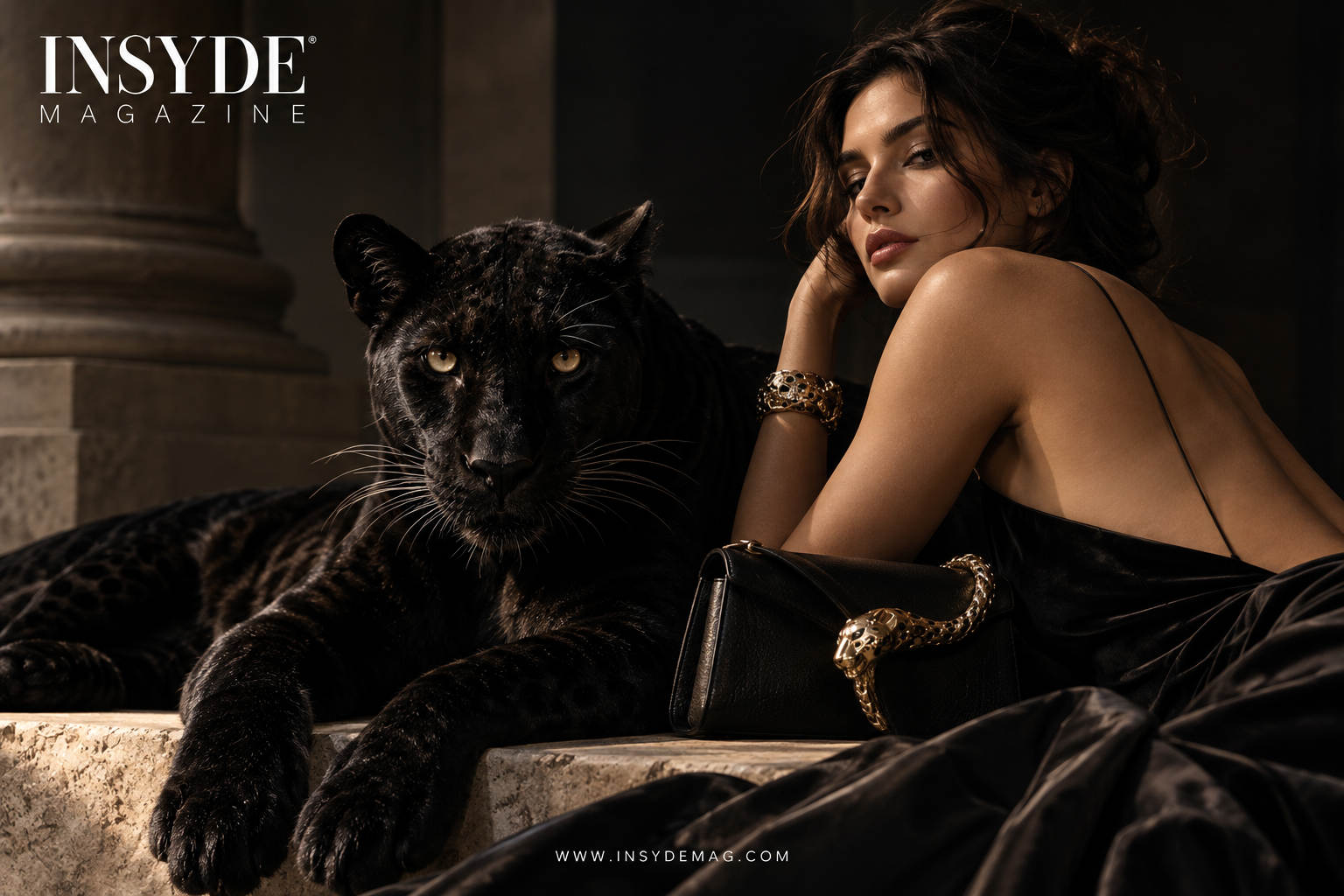
    If Lacoste’s crocodile was born from personality, Cartier’s panther became something closer to mythology.

    The panther first appeared in Cartier’s collections in 1914. Cartier identifies it as the Maison’s symbolic animal, with Louis Cartier introducing the motif and Jeanne Toussaint subsequently turning it into one of the house’s defining signatures.

    What makes the Cartier panther fascinating is that it was never confined to one interpretation.

    It could be fierce.

    It could be playful.

    It could be elegant.

    It could be almost abstract.

    Across jewellery and other creations, Cartier has repeatedly reimagined the creature while preserving its recognisable identity.

    That is where the relationship between animal and luxury becomes particularly interesting.

    Cartier didn’t simply reproduce a panther.

    It built a world around one.

    The animal became more than an emblem. It became a visual language — one capable of carrying the personality of an entire Maison.


    WHEN AN ANIMAL BECOMES A HOUSE CODE

    This is perhaps where luxury differs from ordinary branding.

    A logo identifies.

    A house code evokes.

    The distinction is subtle, but enormously important.

    Luxury houses spend decades building recognisable visual languages: colours, silhouettes, patterns, materials, motifs and symbols.

    Burberry’s Equestrian Knight Design is a revealing example.

    Created around 1901 following a public competition to develop a new logo, the emblem brought together a knight, shield, lance and the Latin word Prorsum, meaning “Forward.” Burberry associates the knight with honour, the shield with protection and the lance with reform.

    The horse is therefore not simply present because horses look aristocratic.

    It exists within a larger narrative.

    Movement. Protection. Progress.

    The symbol has since been transformed and reinterpreted, while remaining one of Burberry’s enduring brand codes.

    The animal survives because the story around it can evolve.


    WHY THE ANIMAL IS SO POWERFUL

    There is another reason these symbols endure.

    An animal gives a brand something a word often cannot:

    personality.

    Consider the difference between saying:

    “We are powerful.”

    and showing a panther.

    One is a claim.

    The other is an image.

    The best luxury branding often works through implication. It doesn’t need to announce exclusivity, confidence or sensuality every time. Instead, it allows the consumer to make the connection.

    That creates something more valuable than recognition.

    It creates interpretation.

    And interpretation is central to desire.


    THE PSYCHOLOGY OF THE CREATURE

    There is a reason the animal kingdom is so useful to fashion.

    Animals already carry archetypes.

    A horse is not simply a horse.

    A bird is not simply a bird.

    A snake is not simply a snake.

    Centuries of mythology, art, folklore and storytelling have accumulated around these creatures.

    Luxury brands can therefore tap into an enormous cultural vocabulary without explaining every reference.

    Research into animal motifs in fashion branding has similarly found relationships between animal archetypes, brand personality and the way consumers perceive fashion brands. A study examining 27 established fashion logos found that animal motifs could communicate distinct personality traits and symbolic associations.

    But the meaning isn’t fixed.

    And that is precisely the point.

    Luxury can select the interpretation it wants to amplify.


    FROM LOGO TO DESIRE

    Something else happens when these symbols become successful.

    The consumer begins to participate in the mythology.

    You don’t simply own a Cartier creation.

    You wear the panther.

    You don’t simply wear a Lacoste polo.

    You wear the crocodile.

    The object becomes a vehicle for the symbol, and the symbol becomes shorthand for belonging to a particular cultural world.

    This is one of luxury’s most sophisticated mechanisms.

    The brand gives the object a story.

    The consumer gives the story a life.


    BUT THERE IS A DANGER

    The animal symbol is powerful precisely because it is familiar.

    And familiarity can become overexposure.

    Once a symbol becomes too visible, it can lose some of the mystery that made it desirable in the first place.

    That tension sits at the heart of luxury today.

    The industry has spent decades making logos instantly recognisable. Yet increasingly, luxury also relies on things that require a closer look: craftsmanship, provenance, materials, construction, heritage and personal meaning.

    The question for luxury is therefore no longer simply:

    Can we make our symbol recognisable?

    It is:

    Can we make it meaningful?


    THE BEAST BECOMES THE BRAND

    Perhaps that is why the most successful animal symbols don’t remain logos for very long.

    They evolve.

    Lacoste’s crocodile began with a tennis player and became a global house code.

    Cartier’s panther moved from a motif in the Maison’s collections into a sculptural and highly recognisable language across its creations.

    Burberry’s Equestrian Knight has survived more than a century of changing aesthetics while continuing to be reinterpreted across products, stores and brand activations.

    The creatures remain recognisable.

    But their meanings keep moving.

    And perhaps that is the secret.

    A great luxury symbol doesn’t merely represent a brand.

    It becomes a character in the brand’s mythology.

    Something with a personality.

    Something with history.

    Something that can be inherited, reinvented and desired by people who may never know the original story behind it.


    SO, WHY DO LUXURY BRANDS LOVE ANIMALS?

    Because animals give luxury something money alone cannot manufacture:

    myth.

    They bring instinct to an industry built on craftsmanship.

    They bring emotion to objects.

    They transform identity into imagery.

    And, perhaps most importantly, they allow a brand to say something without saying anything at all.

    The next time you see a crocodile embroidered over a heart, a panther wrapped around a wrist or a knight charging across a label, look a little closer.

    You’re not just looking at a logo.

    You’re looking at a story that has been carefully turned into a symbol.

    And eventually, into something people want to wear.

    The beast isn’t beside the luxury.

    The beast is part of it.

  • THE £20,000 POUR

    THE £20,000 POUR

    Inside the rare bottles, private collections and new drinking culture redefining luxury in 2026.

    A drink can cost more than a luxury watch.

    A bottle can be rarer than a piece of jewellery.

    A whisky can be made for one person.

    And a cognac can arrive with its own temperature-controlled cellar.

    In September 2026, LOUIS XIII unveiled Black Pearl: Tribute to Le Grollet, a new expression limited to just 398 decanters worldwide. The reported price is £21,000 per decanter, with the experience built around a temperature-controlled ritual inspired by the historic Le Grollet cellar in Cognac.

    At first glance, the obvious question is:

    Why?

    Why spend £21,000 on something that eventually disappears?

    But that question misses what luxury alcohol has become.

    Because at the highest end, the wealthy consumer isn’t simply buying what’s inside the bottle anymore.

    They’re buying rarity.

    Provenance.

    Craftsmanship.

    Access.

    Knowledge.

    And increasingly, the story surrounding the pour.

    At the same time, a younger generation is entering the category with an entirely different set of expectations. Gen Z isn’t simply abandoning alcohol. The latest IWSR research shows participation among legal-drinking-age Gen Z consumers has stabilised at 74% across 15 key markets, while drinking occasions and quantities are becoming more selective. In India’s high-income urban population, participation among Gen Z adults over 21 reached 80% in 2026, up from 60% three years earlier.

    The result is a strange contradiction.

    The luxury consumer is going deeper.

    The younger consumer is becoming more selective.

    And somewhere between the private cellar and the late-night cocktail bar, the definition of luxury is changing.

    Welcome to the new luxury pour.


    THE EXPENSIVE BOTTLE ISN’T ENOUGH ANYMORE

    For decades, luxury alcohol had a relatively simple formula.

    Make it old.

    Make it rare.

    Put a famous name on it.

    Put it inside an extraordinary bottle.

    Charge more.

    The higher the price, the stronger the signal.

    But 2026 is making that formula increasingly complicated.

    IWSR’s latest research argues that premiumisation is undergoing a reset. Since 2022, global beverage-alcohol price-per-litre growth has consistently lagged overall inflation, while consumers have become more selective about trading up. The question is increasingly whether an expensive product delivers something meaningful in return.

    That distinction matters.

    Because there is a difference between:

    expensive

    and

    luxurious.

    A bottle can be expensive because it carries a high price.

    Luxury needs a reason.

    Maybe the spirit comes from an unusually rare cask.

    Maybe only a few hundred bottles exist.

    Maybe the liquid took decades to mature.

    Maybe the bottle itself is an extraordinary piece of craftsmanship.

    Maybe the buyer gets access to something most consumers will never see.

    Or perhaps the bottle tells a story that cannot simply be reproduced.

    The price becomes a consequence of the story.

    Not the story itself.


    WHEN A BOTTLE BECOMES A COLLECTION

    There is a moment when alcohol stops behaving like a consumable and starts behaving like an object.

    Collectors understand this instinctively.

    A rare bottle can become an object of design, a piece of history, a conversation piece, a gift, a family possession — or simply something kept because finding another one would be almost impossible.

    The most interesting examples aren’t necessarily the bottles with the biggest numbers printed on their price tags.

    They are the ones where scarcity has meaning.

    LOUIS XIII’s Black Pearl is a particularly striking example.

    Its 398-decanter production is only part of the proposition. The expression draws on an exceptional eau-de-vie selected from the house’s historic collection and connected to Le Grollet, while the tasting ritual is designed to evolve as the cognac warms from cellar temperature toward ambient temperature.

    The bottle is therefore only one part of the object.

    The cellar.

    The temperature.

    The ritual.

    The provenance.

    The liquid.

    The story.

    All become part of the experience.

    And that is the point.

    Luxury alcohol is increasingly being designed as an experience rather than simply packaged as a product.


    THE RICHEST BOTTLE MAY BE THE ONE THAT IS YOURS

    Perhaps the most fascinating development in luxury spirits isn’t the rare bottle.

    It’s the personal bottle.

    India is already experimenting with this idea.

    Diageo India’s India Rare Spirits programme offers a personalised cask experience in which consumers can explore a library of aged malts, select a cask and create an expression tailored to individual tastes and occasions. The resulting bottles can carry personalised labels and commissioned artwork for milestones including weddings, corporate celebrations and anniversaries.

    The distinction is subtle but important.

    A limited edition says:

    Only a few people can own this.

    A bespoke expression says:

    This was made for you.

    Luxury has always understood the power of personalisation.

    Fashion does it.

    Cars do it.

    Jewellery does it.

    Watches do it.

    Now spirits are moving deeper into the same territory.

    The bottle becomes less like a product and more like a portrait of its owner.


    INDIA IS TRADING UP

    India is becoming one of the world’s most interesting growth stories in beverage alcohol.

    IWSR says India’s total beverage-alcohol volumes grew at a 3% CAGR between 2019 and 2024, including a 6% increase in 2024, with another 4% increase projected for 2025. Over 2024–2034, IWSR forecasts approximately 3% annual volume growth. Imported spirits have been gaining particularly quickly, growing at a 16% CAGR between 2019 and 2024.

    But the more interesting story isn’t simply that Indians are buying more alcohol.

    It is what they expect from it.

    The country’s premium alcohol landscape is expanding across single malts, Scotch, tequila, wine, craft spirits and increasingly personalised experiences. Indian producers and international houses are competing for consumers who have more choice, more information and greater exposure to global drinking culture.

    This is the beginning of a broader cultural shift.

    The Indian luxury consumer is no longer necessarily asking:

    “Is this imported?”

    Increasingly, the more interesting question is:

    “Is this interesting?”

    That is a significant change.


    THE INDIAN LUXURY CONSUMER IS GETTING MORE SELECTIVE

    India’s opportunity isn’t simply about having more wealthy consumers.

    It is about having consumers with more choices.

    More brands.

    More categories.

    More international exposure.

    More travel.

    More sophisticated bars.

    More information.

    More ways to discover something new.

    And more reasons to question whether a premium price actually means premium value.

    IWSR describes India as a major growth engine for beverage alcohol, but also emphasises the country’s complexity: state-level regulation, taxation, distribution structures and a consumer base that remains highly value-conscious.

    That creates an unusual environment for luxury.

    A global brand cannot simply arrive with a beautiful bottle and assume the story is finished.

    It has to earn its place.

    Through the liquid.

    Through the experience.

    Through the culture surrounding it.


    THE BAR IS NO LONGER JUST A BAR

    There was a time when a bar’s job was simple.

    Serve the drink.

    Today, some of the most interesting luxury drinking experiences are built around everything before the drink reaches the glass.

    The room.

    The bartender.

    The music.

    The food.

    The glassware.

    The story.

    The people.

    The location.

    The ritual.

    India’s on-premise market is becoming increasingly important to this equation.

    NIQ’s 2026 India research found that nearly seven in ten Indian consumers visit restaurants, cafés or bars at least once a quarter, while its research highlights the role of the on-premise environment in creating occasions, justifying premium choices and building brand preference. Bartenders and venue staff can also exert an outsized influence over consumer choice.

    The bar becomes a showroom.

    But not a showroom for bottles.

    A showroom for taste.

    The bartender becomes a curator.

    The menu becomes an editorial.

    The experience becomes part of the product.

    And suddenly, ordering a drink isn’t simply consumption.

    It becomes participation.


    THE NEW LUXURY CLUB

    At the highest end, this becomes even more exclusive.

    Luxury alcohol increasingly intersects with:

    private clubs

    members’ spaces

    collector communities

    private tastings

    hotel experiences

    chef collaborations

    distillery visits

    invitation-only events

    This shift can already be seen in the way spirits companies are building destinations around their brands.

    Diageo India’s The Good Craft Co. Flavour Market in Ponda, Goa, for example, is being developed as an ecosystem combining an experience centre, distillery tour, rare-spirits vault, craft bar, tasting room, chef and mixologist collaborations, workshops and a bespoke craft-spirit retail destination.

    The luxury alcohol ecosystem is therefore moving from:

    Bottle → Consumer

    towards:

    Brand → Experience → Community → Consumer

    Luxury is becoming social again.

    But selectively social.


    THEN GEN Z WALKED IN

    And just when the luxury industry thought it understood the next drinker, Gen Z complicated everything.

    The old narrative suggested Gen Z was simply going to abandon alcohol.

    The data is more nuanced.

    IWSR’s July 2026 research found that 74% of legal-drinking-age Gen Z consumers across 15 key markets participated in beverage alcohol, up from 66% three years earlier. In India’s high-income urban population, participation among Gen Z adults over 21 reached 80% in 2026, compared with 60% three years earlier.

    But participation doesn’t mean indiscriminate consumption.

    IWSR’s research also shows that younger drinkers are becoming more selective. Across its 15-market study, the average number of beverage-alcohol categories consumed per occasion by Gen Z fell from 2.8 to 1.8 over two years. The change was particularly visible among Gen Z consumers in India and several other markets.

    That’s where the story gets interesting.

    Gen Z isn’t necessarily saying:

    “I don’t want alcohol.”

    It is increasingly asking:

    “Why this drink?”

    “Why this place?”

    “Why this occasion?”

    And perhaps most importantly:

    “Is it worth it?”


    GEN Z DOESN’T WANT YOUR FATHER’S WHISKY

    Previous generations often understood premium alcohol through a familiar vocabulary:

    Age statement.

    Heritage.

    Status.

    Prestige.

    Scarcity.

    Gen Z is adding another word:

    Discovery.

    IWSR’s research shows younger legal-drinking-age consumers remain engaged with alcohol while becoming more selective about category choice and occasion.

    That changes how luxury works.

    A younger consumer may not automatically care that a brand has existed for centuries.

    But they may care that:

    a bartender recommended it,

    a chef built a menu around it,

    a designer collaborated on it,

    the distillery has an unusual story,

    the ingredients come from somewhere unexpected,

    or only a small community knows about it.

    The new luxury consumer doesn’t necessarily want to inherit taste.

    They want to discover it.


    THE COCKTAIL GENERATION

    There is another clue hiding in the changing drinking culture.

    Cocktails transform alcohol into something more than a bottle.

    A cocktail can be:

    a flavour experience,

    a piece of design,

    a performance,

    a social object,

    a signature of a particular venue,

    or the centre of an entire evening.

    The bottle becomes the raw material.

    The experience becomes the luxury.

    And this helps explain why sophisticated bars matter so much to younger consumers.

    They aren’t simply places to drink.

    They are places to discover culture.


    DRINK LESS. CHOOSE BETTER.

    There is another paradox here.

    The future of luxury alcohol may not involve drinking more.

    It may involve drinking less, but with greater intention.

    IWSR’s 2026 research found that the average number of drinks consumed per occasion across its key markets fell to 3.9, from 4.4 in 2024 and 2025. The organisation describes moderation as increasingly structural rather than simply cyclical, with lifestyle and health becoming more important influences.

    This does not mean premium alcohol disappears.

    Quite the opposite.

    IWSR’s latest premiumisation research suggests that consumers in developing markets such as India continue to trade up, but increasingly want genuine justification for the higher price. Across 16 major developing markets, IWSR forecasts premium-plus servings to expand by 13% between 2025 and 2035.

    That creates an unusual luxury equation.

    The consumer may have access to hundreds of bottles.

    But chooses one.

    One exceptional whisky.

    One extraordinary cognac.

    One beautifully made cocktail.

    One bottle opened for an important evening.

    Luxury becomes less about abundance.

    And more about selection.


    THE EXPERIENCE IS THE LUXURY

    This may be the biggest transformation taking place.

    The liquid still matters.

    But what happens around it increasingly matters too.

    The right restaurant.

    The right table.

    The right glass.

    The right bartender.

    The right person sitting across from you.

    The right story.

    The right moment.

    IWSR’s research into the on-trade describes a shift toward more “edited” occasions, with consumers drinking fewer serves and fewer categories while seeking meaningful experiences and better justification for what they spend.

    This is a profound shift.

    Because luxury has always been about controlling the experience.

    A luxury hotel doesn’t sell a bed.

    A private jet doesn’t sell a seat.

    A luxury watch doesn’t simply sell time.

    And a £20,000 cognac isn’t simply selling liquid.

    It is selling a moment that very few people can reproduce.


    THE NEW STATUS SYMBOL IS TASTE

    Perhaps this is where luxury alcohol becomes most interesting.

    For a long time, status was largely about ownership.

    The car.

    The watch.

    The bottle.

    The address.

    But as luxury becomes increasingly visible through social media, simply recognising a logo becomes less impressive.

    Knowing why something matters becomes more valuable.

    Knowing the producer.

    Knowing the vintage.

    Knowing the cask.

    Knowing the difference between two expressions.

    Knowing which bar has the rare bottle.

    Knowing which release is genuinely scarce.

    Knowing when a “limited edition” is actually meaningful.

    Knowing when to order something — and when not to.

    That is taste as cultural capital.

    And cultural capital is difficult to counterfeit.


    INDIA’S NEW DRINKING ELITE

    This is where the Indian story becomes especially compelling.

    India is developing not simply a larger alcohol market, but a more diverse luxury ecosystem around it.

    International spirits houses are expanding premium portfolios.

    Indian producers are moving into higher-value categories.

    Bars are becoming more sophisticated.

    Collectors are becoming more informed.

    And younger affluent consumers are increasingly participating in the category.

    IWSR’s 2026 data found beverage-alcohol participation among high-income urban Indians at 77%, while participation among Gen Z adults over 21 in the same demographic reached 80%, up from 60% three years earlier.

    And Indian brands are increasingly using scarcity, craftsmanship and storytelling to position themselves at the luxury end.

    Take Godawan 173.

    Released in 2025 as a collector’s edition, the expression was limited to 173 bottles, each priced at ₹5 lakh. Its name referenced the reported recovery of the Great Indian Bustard population from 100 to 173, while the whisky used a three-stage maturation journey involving ex-bourbon, Oloroso and PX sherry, and Asha liqueur casks. Each bottle was inspired by Jaipur Blue Pottery.

    The point isn’t that every affluent drinker will buy a ₹5 lakh bottle.

    They won’t.

    The point is that Indian spirits are increasingly learning how to construct luxury narratives of their own.

    And that changes the conversation.


    THE BATTLE FOR THE TOP SHELF

    This is why India’s luxury alcohol landscape is becoming increasingly interesting.

    International houses bring:

    heritage

    global recognition

    distribution

    iconic names

    deep reserves

    Indian producers bring:

    local knowledge

    climate

    experimentation

    craft

    cultural identity

    speed

    And consumers are standing in the middle with more choices than ever.

    The question is no longer simply whether Indian consumers will buy luxury alcohol.

    They already are.

    The bigger question is:

    Who will define what luxury drinking in India looks like next?

    Will European heritage continue to dominate?

    Will Indian spirits become global luxury objects?

    Will tequila and agave reshape the premium conversation?

    Will private clubs become more important to affluent nightlife?

    Will the cocktail become more important than the bottle?

    Will moderation redefine indulgence?

    Or will the next great luxury-drinks brand come from somewhere nobody is looking yet?


    WHAT ACTUALLY MAKES A DRINK LUXURIOUS?

    Perhaps the answer isn’t age.

    It isn’t price.

    It isn’t even rarity.

    Not by itself.

    Luxury emerges when several things collide:

    Scarcity.

    Craftsmanship.

    Provenance.

    Authenticity.

    Personalisation.

    Experience.

    Access.

    Knowledge.

    And increasingly:

    meaning.

    That’s why a £21,000 cognac can exist alongside a personalised Indian cask, a ₹5 lakh collector’s whisky, a perfectly executed cocktail and even a sophisticated alcohol-free serve.

    They occupy completely different price points.

    But they can participate in the same cultural conversation.

    Because luxury is no longer simply about what something costs.

    It’s about why someone cares.


    THE £20,000 POUR

    The £20,000 bottle is therefore not really the story.

    It’s the doorway.

    Behind it is a much larger transformation.

    The wealthy are becoming more selective.

    Collectors are becoming more sophisticated.

    Brands are moving from bottles to experiences.

    Indian spirits are building narratives of their own.

    Bars are becoming cultural spaces.

    And Gen Z is entering the conversation with a completely different understanding of indulgence.

    The future of luxury alcohol may not belong to the brand with the oldest distillery.

    Or the highest price.

    Or the biggest bottle.

    It may belong to whoever can create something people genuinely want to remember.

    Because when money stops being the obstacle, meaning becomes the luxury.

    And perhaps the most luxurious drink isn’t the one that costs £20,000.

    It’s the one you know exactly why you wanted.


    INSYDE TAKE

    Luxury alcohol is entering a strange new era.

    The bottle still matters.

    The heritage still matters.

    The craftsmanship absolutely matters.

    But the hierarchy is changing.

    Price gets attention.

    Scarcity creates desire.

    Craft earns respect.

    Experience creates memory.

    And taste creates status.

    For the wealthy, the next great luxury may not be another trophy bottle.

    For Gen Z, it may not always be alcohol at all.

    And for India, the most interesting possibility is that the next definition of luxury drinking won’t simply be imported.

    It could be made here.

    INSYDE

    Luxury, Through a Different Lens.

    Beyond the Spotlight.

  • Why the New Billionaire Wants His Own Jet

    Why the New Billionaire Wants His Own Jet

    As AI, technology and new fortunes create a younger class of ultra-wealthy travellers, the private jet is evolving from a symbol of status into something more useful: a private office, sanctuary and shortcut through time.

    There was a time when the private jet was the ultimate symbol of arrival.

    The aircraft itself was the statement.

    The size.

    The speed.

    The name painted on the tail.

    The ability to leave the car and step directly onto an aircraft while everyone else waited inside the terminal.

    But private aviation is becoming more interesting than that.

    A new generation of wealthy travellers is changing what the private jet is actually for.

    The question is no longer simply:

    Can you afford to fly privately?

    It is becoming:

    What could you do with the time you get back?

    That distinction matters.

    Because for a billionaire, founder or entrepreneur whose life moves between continents, time isn’t simply something that passes.

    It is something that can be controlled.

    And increasingly, the private jet is becoming one of the ultimate tools for doing exactly that.

    A Different Kind of Jet Set

    The image of the private-jet owner has traditionally been associated with established wealth.

    Oil.

    Finance.

    Entertainment.

    Real estate.

    Old industrial fortunes.

    The aircraft was often the physical expression of a fortune that had already been built.

    But a different kind of wealth is now entering private aviation.

    AI founders.

    Technology entrepreneurs.

    Investors.

    Executives.

    People whose fortunes have been created remarkably quickly.

    Reuters reported in July 2026 that wealth generated by AI startups and SpaceX was helping drive a new wave of private-jet demand, with private-jet owner flights rising 13.4% in early 2026 and shared-ownership flights increasing 11.8%. The report also noted a growing number of younger, newly wealthy customers entering the market.

    The Financial Times has reported a similar shift, with private-aviation companies seeing younger customers arrive as wealth from AI and cryptocurrency expands. Some operators have reported their average customer age falling significantly as newly wealthy technology entrepreneurs enter the market.

    The significance isn’t simply that younger people are buying jets.

    It is that they are bringing a different idea of luxury with them.

    The Most Valuable Luxury Is Time

    Imagine two people travelling from San Francisco to London.

    One spends hours getting to the airport.

    Then comes security.

    Then the terminal.

    Then boarding.

    Then the flight.

    Then immigration.

    Then baggage.

    Then another journey into the city.

    The other arrives at a private terminal, boards an aircraft designed around their schedule and lands closer to the moment their actual journey begins.

    The difference isn’t simply comfort.

    It is time.

    And time becomes increasingly valuable as the rest of life becomes more complicated.

    For an entrepreneur, those hours might become a meeting.

    For an executive, they might become uninterrupted work.

    For a founder, they might become sleep.

    For a family, they might simply become time together.

    The private jet doesn’t create more hours in the day.

    It removes some of the friction between them.

    That may be the most powerful luxury it offers.

    The Jet as a Private Office

    The traditional office has already changed.

    People work from homes.

    Hotels.

    Cafés.

    Cars.

    Lounges.

    And now, increasingly, aircraft.

    Modern business jets are designed around this reality.

    Gulfstream’s G700, for example, can be configured with up to five living areas and accommodate up to 19 passengers, with sleeping arrangements for as many as 13. Its cabin is designed around different modes of work, rest and living rather than a conventional seating arrangement.

    A private jet can contain a dining area.

    A meeting table.

    A lounge.

    A bedroom.

    A shower.

    A workspace.

    A place to disconnect.

    The aircraft becomes less like a vehicle and more like a private interior in motion.

    That is a very different proposition from simply flying first class.

    When the Cabin Becomes Architecture

    Luxury has always been connected to architecture.

    The house.

    The hotel.

    The restaurant.

    The yacht.

    The private club.

    But the private jet introduces a peculiar challenge.

    How do you create a beautiful interior inside something travelling hundreds of kilometres per hour through the atmosphere?

    Every decision matters.

    The weight of the materials.

    The lighting.

    The proportions.

    The storage.

    The acoustics.

    The seating.

    The movement between spaces.

    The relationship between the windows and the interior.

    It is architecture under pressure.

    And the best private-jet interiors don’t necessarily look extravagant.

    They look considered.

    That is an important distinction.

    The End of the Loud Billionaire Jet

    For decades, the visual language of extreme wealth was obvious.

    Glossy wood.

    Gold.

    Oversized seats.

    Crystal.

    Champagne.

    Anything that made the price visible.

    That world still exists.

    But another aesthetic is emerging.

    Quieter.

    More restrained.

    More personal.

    The Financial Times has reported that newer technology-driven luxury consumers are increasingly interested in efficiency, health, exclusivity and personalisation rather than traditional displays of wealth. In private aviation, that shift is appearing through more functional cabins, wellness-oriented services and less ostentatious design.

    This is the same cultural shift being seen across luxury more broadly.

    The buyer who has spent enough time around expensive things doesn’t necessarily want the object to look expensive.

    They want it to feel right.

    That could mean natural materials.

    Soft lighting.

    A quieter cabin.

    A better bed.

    Faster connectivity.

    A healthier meal.

    Or simply a space where nobody else can interrupt them.

    Luxury is becoming less about showing the price.

    It is becoming more about controlling the experience.

    The Aircraft Becomes Personal

    A private jet doesn’t have to look like anyone else’s.

    That is one of its greatest luxuries.

    A business founder might want a serious meeting environment.

    A family might want a cabin designed around children.

    A frequent long-haul traveller might prioritise a bedroom.

    Another owner might want a wellness-focused environment.

    Someone else might want a dining room capable of hosting guests.

    The aircraft can become an extension of its owner.

    And that is where private aviation begins to resemble other forms of bespoke luxury.

    A bespoke suit is made around one person.

    A custom home is designed around one family.

    A commissioned automobile is built around one collector.

    A private jet can be designed around one life.

    Ownership Is No Longer the Only Luxury

    There is another change happening beneath the surface.

    Not everyone who wants private aviation necessarily wants to own an entire aircraft.

    The market has expanded into different forms of access.

    Charter.

    Jet cards.

    Fractional ownership.

    Shared aircraft.

    Full ownership.

    Each model answers a different question.

    How often do you fly?

    Where do you travel?

    How much control do you need?

    How much responsibility do you want?

    That matters because modern luxury is increasingly moving away from a simple equation:

    ownership = status

    Instead, it is becoming:

    access = freedom

    You don’t necessarily need to own every luxury you use.

    You need the ability to access it when it matters.

    That is a much more contemporary idea of wealth.

    India’s Private Aviation Moment

    This transformation is not limited to Silicon Valley, London or the Gulf.

    India is entering its own private-aviation moment.

    A 2025 industry prospectus filed with SEBI estimated India’s private-jet market at approximately $274 million in FY2024, up from $187 million in FY2019. The report attributed the growth to rising numbers of high-net-worth individuals, expanding business activity, demand for faster travel and growing interest in personalised transportation.

    The significance goes beyond the number.

    India is producing a new generation of founders, entrepreneurs, investors and business families whose professional lives are increasingly international.

    Mumbai to Dubai.

    Bengaluru to Singapore.

    Delhi to London.

    Hyderabad to New York.

    When business becomes global, time spent travelling becomes a business consideration.

    And that makes private aviation more than an indulgence.

    It becomes infrastructure for a certain kind of life.

    The Private Jet as a Second Home

    The yacht has already shown us what happens when luxury transportation becomes architecture.

    A superyacht can be a home.

    An office.

    A hotel.

    A restaurant.

    A private club.

    The private jet is beginning to move in a similar direction.

    The difference is speed.

    The yacht gives you a place that moves slowly.

    The jet gives you a place that moves quickly.

    But both are ultimately selling the same idea:

    control over your environment.

    The cabin becomes your room.

    The route becomes your decision.

    The schedule becomes yours.

    And for a few hours, the world outside becomes irrelevant.

    The Architecture of Privacy

    Privacy has become one of the most valuable commodities in modern luxury.

    Not because people necessarily want to disappear forever.

    Because they increasingly want the ability to decide when they are visible.

    The private jet creates an unusually controlled environment.

    No crowded terminal.

    No shared cabin.

    No stranger sitting beside you.

    No public conversation.

    No need to perform for anyone.

    The door closes.

    The cabin becomes private.

    The world continues outside.

    That makes the aircraft more than a transportation device.

    It becomes a private room that happens to be moving through the sky.

    And that is an extraordinarily powerful form of luxury.

    The New Billionaire Doesn’t Necessarily Want More

    This may be the most interesting part of the story.

    The new billionaire isn’t necessarily looking for more objects.

    They may already have the house.

    The car.

    The watch.

    The yacht.

    The investments.

    The art.

    The businesses.

    What becomes valuable after accumulation is something harder to buy.

    Freedom.

    Freedom to leave when you want.

    Freedom to work where you want.

    Freedom to sleep during a journey.

    Freedom to change plans.

    Freedom to choose who enters your environment.

    Freedom to protect your time.

    The private jet becomes a physical expression of that freedom.

    Luxury Without the Logo

    Perhaps the future of private aviation will look less like a billionaire’s showroom and more like a beautifully designed home.

    There may be fewer obvious symbols.

    More natural materials.

    Better technology.

    More thoughtful spaces.

    Greater emphasis on health and comfort.

    More personalised interiors.

    Less interest in proving how much something cost.

    That is not the disappearance of luxury.

    It is its evolution.

    Because once you can afford almost anything, the difficult question becomes:

    What is actually worth having?

    And the answer is rarely “more.”

    It is usually something more specific.

    Better.

    Quieter.

    More personal.

    More useful.

    More meaningful.

    What the Private Jet Is Really Selling

    A private jet sells many things.

    Speed.

    Comfort.

    Privacy.

    Convenience.

    Exclusivity.

    But beneath all of them is something much simpler.

    Control.

    Control over where you leave from.

    Control over when you leave.

    Control over who travels with you.

    Control over the environment.

    Control over the hours between one destination and another.

    And that is why the private jet has survived as one of the ultimate symbols of luxury.

    Not because flying privately is inherently glamorous.

    But because time, once you have enough money, becomes one of the few things you still cannot buy more of.

    You can only waste less of it.

    The New Altitude of Luxury

    The luxury industry has spent decades teaching us to look at objects.

    The watch.

    The car.

    The house.

    The yacht.

    But the next generation of luxury is increasingly about something less tangible.

    Time.

    Privacy.

    Freedom.

    Access.

    Experience.

    The private jet brings all five together.

    It doesn’t simply take you somewhere faster.

    It changes your relationship with the journey itself.

    And perhaps that is the real reason the new billionaire wants a private jet.

    Not to fly above everyone else.

    But to reclaim something far more valuable.

    The ability to decide what happens with their time.

    At 40,000 feet, that may be the most luxurious thing of all.

    INSYDE — Inside modern luxury.

  • THE SEDUCTION OF FORMULA 1

    THE SEDUCTION OF FORMULA 1

    Why the world’s fastest sport has become impossible for luxury to resist.

    There is something almost intoxicating about Formula 1.

    It begins with the lights.

    Five red circles suspended above a grid. Twenty cars waiting in silence. Drivers sealed inside machines engineered to operate at the edge of possibility. Hundreds of thousands of people watching. Millions more waiting around the world.

    Then the lights disappear.

    Everything becomes noise, movement and instinct.

    But the seduction of Formula 1 begins long before the race.

    It begins in the paddock.

    A watch catches the light beneath a tailored sleeve. A driver steps out of a hospitality suite dressed like he has somewhere more important to be. A Louis Vuitton trophy trunk waits for a moment of victory. A yacht sits beyond the harbour in Monaco. Champagne is poured. Cameras turn toward celebrities. Private jets arrive. Fashion houses take over conversations that once belonged exclusively to engineers and racing teams.

    And somewhere beneath all of it, a Formula 1 car is preparing to go faster than almost anything else on four wheels.

    This is no longer simply a sport.

    It is a world.

    And luxury wants a place inside it.

    THE SPORT BECAME THE SPECTACLE

    Formula 1 has always been glamorous.

    Monaco has always had its yachts. Ferrari has always had its mythology. Drivers have always attracted beautiful people, expensive watches and fast cars.

    But something has changed.

    Formula 1 is no longer merely borrowing from luxury culture.

    Luxury culture is actively moving toward Formula 1.

    The clearest evidence is difficult to ignore.

    In 2025, LVMH became Formula 1’s Global Luxury Partner under a ten-year agreement involving Louis Vuitton, TAG Heuer and Moët Hennessy. The partnership brings together luxury craftsmanship, watchmaking, hospitality, celebration and the world’s highest-profile motorsport championship.

    Louis Vuitton creates bespoke trophy trunks for major Grand Prix events.

    TAG Heuer serves as Official Timekeeper.

    Moët Hennessy brings celebration and hospitality into the paddock.

    And in 2027, Gucci will become title partner of Alpine, creating the Gucci Racing Alpine Formula One Team and positioning Gucci Racing as a broader platform at the intersection of luxury and sport.

    That is more than sponsorship.

    It is a cultural takeover of sorts.

    Because Formula 1 has something luxury brands spend enormous amounts of money trying to create:

    desire.

    THE NEW LUXURY IS ABOUT ACCESS

    For decades, luxury was easy to understand.

    A watch.

    A handbag.

    A car.

    A piece of jewellery.

    A private jet.

    A yacht.

    The object was the prize.

    But luxury has changed.

    The new luxury consumer is increasingly interested in what surrounds the object.

    Who made it.

    Where it takes you.

    Who you meet there.

    What you experience.

    Whether you can enter somewhere others cannot.

    Whether the story is worth telling.

    Formula 1 understands this instinctively.

    You can watch the Monaco Grand Prix from a screen.

    Or you can watch it from the harbour.

    You can buy a watch inspired by racing.

    Or you can wear one while standing inside the paddock.

    You can look at photographs of the drivers.

    Or you can find yourself standing metres away from them.

    The difference is not simply money.

    It is proximity.

    And proximity has become one of the most valuable currencies in modern luxury.

    THE PADDOCK IS NO LONGER JUST A PADDOCK

    There was a time when the paddock belonged primarily to teams, engineers, mechanics and journalists.

    Now it has become one of the most fascinating social environments in global sport.

    It is part workshop.

    Part newsroom.

    Part fashion week.

    Part private club.

    Part celebrity ecosystem.

    That ambiguity is precisely what makes it seductive.

    A driver can walk into a garage wearing a race suit and leave wearing a fashion label.

    A watchmaker can talk about precision to people who understand exactly why a tenth of a second matters.

    A luxury house can associate itself with performance without ever manufacturing a racing car.

    And a young audience can discover Formula 1 through fashion, music, film or social media before ever learning the finer details of tyre strategy.

    The boundaries have blurred.

    And luxury thrives in blurred boundaries.

    WHEN THE DRIVER BECAME THE BRAND

    The modern Formula 1 driver is no longer simply an athlete.

    He is a personality.

    A visual identity.

    A cultural figure.

    Sometimes, an entire media property.

    Lewis Hamilton understood this transformation perhaps more visibly than anyone else.

    His career has expanded beyond the racetrack into fashion, music, film, philanthropy and global culture. He demonstrated that a Formula 1 driver could exist simultaneously inside motorsport and outside it.

    Charles Leclerc represents another version of the phenomenon.

    Ferrari.

    Monaco.

    Fashion.

    Music.

    Youth.

    A highly recognisable image.

    And now a new generation is arriving.

    Kimi Antonelli is only 20, yet the 2026 season has already turned him into one of the defining personalities of the championship. By the Spanish Grand Prix in September, Antonelli had won eight of the season’s first 14 races and held a substantial championship lead over his Mercedes teammate George Russell.

    The significance isn’t simply that he is winning.

    It is that he is becoming an icon while the story is still being written.

    And icons are precisely what luxury understands.

    A product can be manufactured.

    A legend cannot.

    LUXURY DOESN’T SELL OBJECTS. IT SELLS MYTHOLOGY.

    This is where Formula 1 becomes particularly interesting.

    Consider the trophy.

    A trophy is already a symbol of victory.

    But Louis Vuitton has transformed the object carrying that victory into something with its own visual language.

    For the 2026 season, Louis Vuitton is creating bespoke trophy trunks for Grand Prix circuits, handcrafted in its historic Asnières workshops. At Monaco, the sixth consecutive Monaco Grand Prix Trophy Trunk was reimagined in red, drawing on the colours of the Principality and the House’s visual codes.

    The trunk doesn’t make the driver faster.

    It doesn’t improve the car.

    It doesn’t decide the race.

    And yet it matters.

    Because luxury understands something important:

    The way a moment is presented can become part of the moment itself.

    The trophy becomes an object.

    The object becomes an image.

    The image becomes memory.

    And memory becomes mythology.

    That is luxury’s territory.

    TIME WAS ALWAYS GOING TO MATTER

    Formula 1 and watchmaking have an almost perfect philosophical relationship.

    Both are obsessed with precision.

    Both celebrate engineering.

    Both transform fractions of time into something meaningful.

    In Formula 1, a thousandth of a second can separate victory from defeat.

    In mechanical watchmaking, a movement can contain hundreds of components assembled and finished with obsessive attention to detail.

    TAG Heuer’s position as Formula 1’s Official Timekeeper therefore feels less like an advertising arrangement and more like a meeting of two worlds that were always going to find each other.

    But the watch has evolved beyond measurement.

    It has become identity.

    A driver’s watch is no longer merely an instrument.

    It is part of the mythology surrounding him.

    And that distinction matters.

    Because luxury is rarely about what an object does.

    It is about what the object means.

    MONACO IS THE DREAM

    If Formula 1 has a fantasy, it is Monaco.

    The circuit runs through one of the world’s most recognisable luxury destinations.

    The Mediterranean sits beside the track.

    Yachts fill the harbour.

    Hotels become temporary headquarters.

    Terraces become viewing platforms.

    Supercars occupy the streets.

    And the boundary between sport and lifestyle almost disappears.

    Monaco does something fascinating to Formula 1.

    It turns the race into a destination.

    You are not simply watching cars compete.

    You are entering a world.

    And that is one of the fundamental shifts happening in luxury.

    The object is no longer enough.

    The world around the object matters.

    A Ferrari is desirable.

    But Ferrari at Monaco is mythology.

    A watch is desirable.

    A watch on a driver inside the Monaco paddock becomes a story.

    Champagne is a product.

    Champagne on the podium becomes ritual.

    Formula 1 understands the power of context.

    Luxury understands it even better.

    THE F1 FAN DOESN’T HAVE TO LOOK LIKE AN F1 FAN

    Perhaps the most interesting development is the audience.

    The new Formula 1 consumer is not necessarily the traditional motorsport enthusiast.

    They may have discovered the sport through a driver.

    A fashion campaign.

    A streaming series.

    A celebrity.

    A meme.

    A watch.

    A Grand Prix weekend in Miami.

    A photograph from Monaco.

    Or simply the fascination of watching beautiful machines move impossibly fast.

    That matters.

    Because culture is increasingly built through intersections.

    Fashion enters music.

    Music enters film.

    Film enters luxury.

    Luxury enters sport.

    Sport enters social media.

    And Formula 1 sits almost perfectly in the middle of all of it.

    It has become a meeting point for several different forms of aspiration.

    That makes its audience unusually valuable.

    Not necessarily because every fan can afford luxury.

    But because luxury is built on aspiration long before it is built on ownership.

    THEN GUCCI WANTED IN

    If LVMH’s partnership represented the arrival of luxury at the highest level, Gucci’s next move represents something even more revealing.

    From 2027, Gucci will become title partner of Alpine, with the team competing as the Gucci Racing Alpine Formula One Team. Gucci has described Gucci Racing as a new business and experiential platform built around performance, precision, discipline and excellence at the intersection of luxury and sport.

    Look closely at that language.

    Not advertising.

    Not merely sponsorship.

    Platform.

    That word tells us where the relationship is heading.

    Luxury brands increasingly want to build worlds rather than place logos inside them.

    Gucci doesn’t simply want its name near Formula 1.

    It wants Formula 1 to become part of Gucci’s cultural universe.

    That is a much more ambitious proposition.

    The team becomes a stage.

    The car becomes a moving expression of the brand.

    The drivers become cultural figures.

    The paddock becomes an experiential environment.

    And the Grand Prix becomes a global moment around which an entire luxury narrative can be built.

    This is how modern luxury behaves.

    It doesn’t ask:

    Where can we put our logo?

    It asks:

    Where can we create desire?

    WHY DOES LUXURY WANT SPEED?

    There is an apparent contradiction here.

    Luxury is traditionally associated with slowness.

    Hand-finishing.

    Craftsmanship.

    Patience.

    Haute couture.

    Mechanical watchmaking.

    Objects that take months or years to perfect.

    Formula 1 is the opposite.

    Everything happens at extraordinary speed.

    Cars are designed around fractions of a second.

    Pit stops happen in moments.

    Drivers operate at the edge of human reaction.

    Engineers make decisions in real time.

    And yet the two worlds share a deeper obsession.

    Precision.

    A watchmaker might spend years perfecting a movement because one fraction of a millimetre matters.

    A Formula 1 team might spend millions pursuing a fraction of a second.

    Different industries.

    Same mentality.

    Make it lighter.

    Make it faster.

    Make it more precise.

    Make it better than it needs to be.

    That is the language of excellence.

    And luxury speaks it fluently.

    THE MOST EXPENSIVE THING IN F1 MAY BE ACCESS

    There is a particular reason the paddock has become so seductive.

    You cannot simply walk into it.

    That matters.

    Luxury has always been fascinated by controlled access.

    Private clubs.

    Private rooms.

    Private aviation.

    Private islands.

    Private shopping appointments.

    The fewer people who can enter, the more valuable the experience becomes.

    Formula 1 has created an extraordinarily powerful version of the same idea.

    Millions can watch.

    Thousands can attend.

    Far fewer can experience the sport from its most intimate spaces.

    That hierarchy creates desire.

    And desire creates value.

    The paddock isn’t merely somewhere you go to watch racing.

    It is somewhere you go to be close to the thing everyone else is watching.

    In an age of unlimited digital access, physical proximity has become a luxury.

    Formula 1 is selling it beautifully.

    THE SPORT BECAME SOCIAL CURRENCY

    There is another transformation taking place.

    Formula 1 has become something people use to communicate who they are.

    Supporting Ferrari says something.

    Following a particular driver says something.

    Wearing a team cap says something.

    Knowing the best place to watch Monaco says something.

    Being photographed inside the paddock says something.

    Even understanding the language of the sport can become a form of cultural capital.

    This is why F1 increasingly behaves like fashion.

    Fashion isn’t simply about clothes.

    It is about identity.

    Formula 1 isn’t simply about racing.

    It is increasingly about belonging to a particular world.

    That is an extraordinarily powerful position for a luxury brand.

    BUT THE MACHINES STILL HAVE TO DELIVER

    There is one thing Formula 1 cannot afford to lose.

    The racing.

    Because without the performance, the fantasy collapses.

    The luxury around Formula 1 works because the underlying machinery is extraordinary.

    The cars are real.

    The danger is real.

    The engineering is real.

    The competition is real.

    The pressure is real.

    A fashion house can borrow the language of speed.

    Formula 1 actually lives it.

    A watch can talk about precision.

    Formula 1 is governed by it.

    A luxury brand can sell exclusivity.

    Formula 1 can create a physical line between those who are inside and those who are watching from outside.

    That authenticity is everything.

    The fantasy works because the machine is real.

    THE REAL PRODUCT IS DESIRE

    Perhaps that is the secret behind the entire phenomenon.

    Formula 1 is not simply selling racing.

    It is selling a feeling.

    The feeling of speed.

    The feeling of danger.

    The feeling of being close to something extraordinary.

    The feeling of entering a world most people can only see through a screen.

    Luxury understands that feeling intimately.

    A luxury object is rarely valuable simply because of its materials.

    Its value comes from the story surrounding it.

    The craftsmanship.

    The heritage.

    The scarcity.

    The people associated with it.

    The places it takes you.

    The version of yourself you imagine becoming when you possess it.

    Formula 1 now operates in exactly the same emotional territory.

    It doesn’t simply ask you to watch.

    It asks you to want.

    THE NEW LUXURY ISN’T OWNERSHIP

    For years, the luxury conversation was dominated by ownership.

    Who owns the Ferrari?

    Who owns the yacht?

    Who owns the watch?

    Who owns the house?

    But the next generation of luxury is becoming increasingly experiential.

    Who gets access?

    Who gets invited?

    Who gets there first?

    Who gets to see behind the curtain?

    Who gets to stand close enough to feel the vibration?

    Who gets to say:

    I was there.

    Formula 1 is extraordinarily good at producing those moments.

    And that may be why its relationship with luxury feels so natural.

    The sport gives luxury something that a product launch cannot:

    a living spectacle.

    Luxury gives the sport something equally valuable:

    a language of aspiration.

    Together, they create an ecosystem much larger than either.

    FORMULA 1 IS BECOMING A LUXURY LANGUAGE

    This is ultimately why the relationship matters.

    It isn’t really about logos.

    It isn’t even really about sponsorship.

    It is about language.

    Formula 1 speaks in the language of:

    Performance.

    Precision.

    Risk.

    Craftsmanship.

    Exclusivity.

    Speed.

    Competition.

    Emotion.

    Luxury speaks in remarkably similar terms.

    The difference is that Formula 1 makes those ideas move.

    It puts them on a circuit.

    It gives them sound.

    It gives them faces.

    It gives them consequences.

    And then luxury arrives to frame the experience.

    A watch measures the moment.

    A trophy preserves it.

    A fashion house dresses it.

    A hospitality suite packages it.

    A camera turns it into an image.

    A driver turns it into mythology.

    And millions of people watch.

    THE SEDUCTION OF FORMULA 1

    Formula 1 didn’t become desirable because luxury brands decided to make it desirable.

    They came because it was already desirable.

    The sport had built something money cannot easily manufacture:

    authentic obsession.

    People care about these cars.

    They care about the drivers.

    They care about the teams.

    They care about victory.

    They care about defeat.

    They care about the smallest details.

    And when something has that kind of emotional gravity, luxury knows what to do with it.

    It creates worlds around it.

    That is why Louis Vuitton is building trunks around trophies.

    Why TAG Heuer is measuring the sport.

    Why LVMH is building experiences inside the paddock.

    Why Gucci is preparing to put its name on an F1 team.

    Why drivers are becoming fashion figures.

    Why Monaco continues to feel less like a race weekend and more like a dream.

    The seduction isn’t simply speed.

    It is proximity to speed.

    It is the watch on the wrist.

    The champagne after the victory.

    The sound of the engine disappearing down the straight.

    The flash of a camera in the paddock.

    The yacht beyond the circuit.

    The person beside you.

    The feeling that, for one weekend, you have entered a world that usually exists behind glass.

    And perhaps that is what modern luxury increasingly means.

    Not simply owning something extraordinary.

    But getting close enough to feel it.

    Formula 1 has become one of the world’s most powerful machines for creating that feeling.

    The cars may be built to win.

    The drivers may race for championships.

    The brands may come for relevance.

    But the audience?

    We come for the fantasy.

    And the fantasy is getting harder to resist.

    That is the seduction of Formula 1.


    INSYDE TAKE

    Formula 1 is no longer simply where the world’s fastest drivers compete.

    It is where performance meets culture.

    Where engineering meets fashion.

    Where precision meets desire.

    Where sport meets luxury.

    And where access itself becomes part of the experience.

    The race remains the heartbeat.

    Everything around it has become the world.

    Luxury, Through a Different Lens.

    Beyond the Spotlight.

    INSYDE – No.1 Luxury Magazine In Bengalore

  • Beyond the Supercar

    Beyond the Supercar

    The new language of automotive luxury — where performance gives way to design, rarity, craftsmanship and identity.

    There was a time when the most desirable car was simply the fastest one in the room.

    More horsepower.
    More cylinders.
    A lower 0–100 time.
    A higher top speed.

    The numbers were easy to understand and even easier to compare.

    But automotive luxury has become more sophisticated.

    At the highest end of the market, speed is no longer the entire conversation. When extraordinary performance has become almost expected, the question changes.

    What makes one extraordinary machine more desirable than another?

    The answer increasingly lies beyond the stopwatch.

    Design.

    Provenance.

    Craftsmanship.

    Rarity.

    Engineering.

    Personalisation.

    And, perhaps most importantly, the feeling that the car could not have been made for anyone else.

    This is the territory beyond the supercar.

    When Speed Stops Being Enough

    The supercar was built around a beautifully simple proposition:

    Go faster.

    For decades, that proposition defined automotive desire.

    Ferrari, Lamborghini, Porsche, McLaren, Aston Martin and others built their reputations around increasingly sophisticated interpretations of performance. Horsepower became mythology. Acceleration became conversation. Top speed became status.

    But performance eventually reaches a curious point.

    When a road car already produces astonishing power and acceleration, another fraction of a second becomes less meaningful to the person who actually owns it.

    The conversation begins to move elsewhere.

    Who designed it?

    How was it engineered?

    How rare is it?

    What is its history?

    What makes this particular example different?

    Can it be made personal?

    Those are collector’s questions.

    And collector’s questions lead somewhere beyond performance.

    The Automobile as a Cultural Object

    The most desirable cars have never been valuable simply because they move quickly.

    They represent something.

    An era.

    A designer.

    A technological breakthrough.

    A racing legacy.

    A particular interpretation of beauty.

    The cars that remain culturally important decades after their introduction are rarely remembered for horsepower alone.

    They are remembered for proportion, engineering, character and story.

    A great automobile can become a cultural object in the same way a great watch, piece of furniture or work of art can.

    It becomes something to preserve.

    To study.

    To discuss.

    To pass down.

    Eventually, perhaps, to inherit.

    That is when a car stops being merely a vehicle.

    It becomes part of a collection of ideas.

    The Collector’s Eye

    The serious collector sees an automobile differently from the casual buyer.

    The casual buyer asks whether a car is impressive.

    The collector asks why it matters.

    How many were made?

    Who designed it?

    What engine does it carry?

    Where was it built?

    Who owned it?

    What competition history does it have?

    Has it been preserved?

    Has it been altered?

    What makes this example different from the next?

    These questions turn an automobile into an object of provenance.

    And provenance is one of the most sophisticated currencies in luxury collecting.

    A car with a meaningful history can become more desirable than a newer machine with superior technical specifications.

    Because technology changes.

    Story endures.

    Bespoke Is the New Luxury

    Perhaps the clearest sign of where automotive luxury is heading is the rise of personalisation.

    At the ordinary end of the market, choosing a car means selecting from a catalogue.

    At the highest end, the catalogue becomes a starting point.

    Paint can be developed.

    Materials can be selected.

    Interiors can be commissioned.

    Details can be altered.

    The owner can become part of the design process itself.

    This is automotive luxury approaching the philosophy of haute couture.

    The objective is no longer simply to own something expensive.

    It is to own something specific.

    Something that reflects an individual taste rather than a market consensus.

    That distinction is important.

    A beautifully configured luxury car is impressive.

    A bespoke automobile carries something more intimate:

    authorship.

    When the Garage Becomes a Gallery

    As collections become more sophisticated, the garage itself changes.

    It stops being somewhere cars are parked.

    It becomes part of the architecture.

    Private garages can be designed around lighting, proportions, materials, display and even the relationship between individual cars.

    The automobile becomes an object within the room.

    The room becomes part of the collection.

    For a serious collector, this is not excessive.

    It is logical.

    If a car is appreciated as an object of design, why shouldn’t the space around it be designed with the same level of consideration?

    The private garage becomes a gallery where the exhibits happen to have engines.

    The New Obsession With Rarity

    Scarcity has always been central to luxury.

    But the most sophisticated form of rarity is not simply producing fewer examples.

    It is creating something with a reason to be rare.

    A limited production run means one thing.

    A historically significant automobile means another.

    A coachbuilt commission created around an individual owner means something else entirely.

    The difference is between numerical scarcity and cultural significance.

    The first can be manufactured.

    The second has to be earned.

    And that is why serious collectors often become less interested in price as their knowledge increases.

    The more they understand, the more they look beyond the badge.

    The Hypercar Changes the Conversation

    The hypercar pushed the automobile into another territory.

    These machines are not simply faster versions of supercars.

    They bring together advanced materials, aerodynamics, computational engineering, motorsport technology and extraordinary design.

    At their most ambitious, they begin to resemble engineering laboratories that happen to be road legal.

    But even here, speed is only part of the fascination.

    The engineering itself becomes desirable.

    Carbon fibre.

    Aerodynamic surfaces.

    Powertrain architecture.

    Weight reduction.

    Thermal management.

    The relationship between form and function.

    For the sophisticated observer, understanding how a machine achieves what it does can be as fascinating as its performance.

    The car becomes an engineering object.

    The Beauty of the Machine

    There is also something deeply emotional about automotive design.

    A great car can communicate before its engine is started.

    A silhouette.

    A stance.

    A proportion.

    The relationship between its wheels and body.

    A particular curve across a fender.

    A cabin that feels more like a private room than a cockpit.

    Design speaks first.

    This is why certain cars remain desirable long after their performance figures become obsolete.

    Technology has a release date.

    Good design doesn’t.

    A beautifully resolved automobile can outlive the technology that created it.

    That is why some classics remain objects of fascination decades after their production ended.

    The Electric Question

    The automobile is now entering another defining transition.

    Electrification is changing the relationship between driver and machine.

    Instant torque can make acceleration effortless.

    Power delivery can become almost silent.

    Mechanical complexity can change dramatically.

    But another question emerges.

    What happens to the emotional theatre of the automobile?

    For generations, part of driving’s appeal has been mechanical sensation.

    Engine noise.

    Gear changes.

    Vibration.

    Heat.

    The feeling of machinery working beneath you.

    As technology evolves, manufacturers face a difficult challenge:

    How do you preserve emotion when the machine itself is changing?

    The answer may increasingly come through design, materials, interaction and personalisation.

    If the powertrain becomes quieter, the cabin can become more immersive.

    If performance becomes easier to access, character becomes more important.

    If mechanical theatre diminishes, craftsmanship and design may have to carry more of the emotional weight.

    The future of automotive luxury may therefore depend less on making cars louder or faster and more on making them meaningful.

    The Return of the Coachbuilder

    One of the most fascinating developments at the highest end of automotive culture is the renewed appreciation for coachbuilding and ultra-low-volume commissions.

    The concept is wonderfully old-fashioned.

    Instead of choosing an automobile from a catalogue, an owner works with designers and craftsmen to create something highly individual.

    It is the automotive equivalent of commissioning a bespoke suit, a piece of jewellery or a work of art.

    And it represents something modern luxury increasingly values:

    time.

    A bespoke automobile requires consultation.

    Design.

    Materials.

    Engineering.

    Craftsmanship.

    Iteration.

    The process becomes part of the value.

    The waiting becomes part of the experience.

    And when the finished automobile finally arrives, it carries a story that belongs to its owner.

    Beyond the Badge

    Luxury cars have always carried powerful badges.

    The horse.

    The bull.

    The shield.

    The wing.

    The names alone can communicate status.

    But sophisticated automotive culture increasingly goes beyond the emblem.

    Two cars from the same manufacturer can have completely different cultural significance.

    One may simply be expensive.

    Another may be historically important.

    One may be fashionable.

    Another may be genuinely rare.

    One may be extremely fast.

    Another may represent a defining moment in automotive design.

    This is why serious collectors become more knowledgeable over time.

    The more they learn, the less impressed they become by price alone.

    Value becomes more interesting than cost.

    The Car as Personal Language

    At a certain point, an automobile becomes a form of personal language.

    A restrained grand tourer communicates something different from an aggressive track-focused machine.

    A collector of historic European sports cars communicates something different from someone commissioning a futuristic hypercar.

    Neither is inherently superior.

    The choice simply reveals something.

    That is one of the oldest relationships between luxury and identity.

    The object becomes a reflection of its owner.

    Not because it is expensive.

    Because it is chosen.

    The New Definition of Automotive Luxury

    Perhaps the biggest change is that automotive luxury is becoming less about what the car can do and more about what the car means.

    Performance still matters.

    Engineering still matters.

    Speed still matters.

    But they are no longer sufficient.

    The modern luxury automobile increasingly needs something harder to quantify.

    Character.

    Rarity.

    Craftsmanship.

    History.

    Beauty.

    Personal meaning.

    A sense of occasion.

    And ideally, a story.

    Because at the highest level, the question is no longer:

    “How much does it cost?”

    It becomes:

    “Why does this particular car matter?”

    That is a much harder question.

    And a much more interesting one.

    The Future Is Personal

    The future of automotive luxury may not belong exclusively to the fastest machines.

    It may belong to the most personal ones.

    Cars commissioned around individual owners.

    Collections built around particular eras.

    Restorations that preserve history while introducing modern engineering.

    Electric automobiles redefining what performance feels like.

    Coachbuilt machines created almost as works of art.

    Vehicles designed not simply to transport their owners, but to express them.

    The industry will continue to chase numbers.

    It will continue to pursue performance.

    It will continue to find new ways to make cars faster, lighter and more technologically sophisticated.

    But beyond those numbers lies another pursuit.

    Meaning.

    Beyond the Supercar

    The supercar changed the automobile by making extraordinary performance desirable.

    The hypercar pushed engineering further.

    But what comes next may be less about going faster and more about going deeper.

    Deeper into design.

    Deeper into craftsmanship.

    Deeper into history.

    Deeper into personalisation.

    Deeper into the relationship between an owner and a machine.

    Because when speed becomes increasingly accessible, technology increasingly sophisticated and performance increasingly difficult to distinguish, the things that remain genuinely difficult to reproduce become more valuable.

    A story.

    A feeling.

    A design.

    A relationship with the machine.

    A car made for one person rather than thousands.

    That is the territory beyond the supercar.

    Not simply the pursuit of more performance — but the pursuit of something worth remembering.

    And perhaps that is where the automobile becomes something more than a machine.

    It becomes a statement of taste.

    INSYDE — Beyond the Spotlight.

  • Insyde the Manish Malhotra Empire: How Bollywood Glamour Became Indian Luxury

    Insyde the Manish Malhotra Empire: How Bollywood Glamour Became Indian Luxury

    What began with costumes for Bollywood became something much larger: a luxury house built around celebrity, craftsmanship, aspiration and the idea that Indian fashion can belong on the world’s biggest stages.

    Luxury has always been about more than what you wear.

    It is about what a name makes you feel.

    For some houses, that feeling has been built through centuries of European heritage. For others, it comes from a particular designer, a particular silhouette or a particular way of seeing the world.

    In India, few names have created that feeling as consistently as Manish Malhotra.

    For decades, his name has been attached to Bollywood glamour: sequins under studio lights, elaborate wedding lehengas, celebrities on red carpets and couture that seems designed for moments larger than everyday life.

    But there is another Manish Malhotra story hiding underneath the glamour.

    It is a business story.

    The story of how a costume designer became a fashion label, how a label became a luxury house, and how that house is now trying to move from being India’s most recognisable designer name to becoming a global Indian luxury brand.

    That distinction matters.

    Because designing beautiful clothes is one thing.

    Building a luxury house is something else entirely.

    The House Behind the Name

    The House of Manish Malhotra was founded in 2005, after the designer had already spent more than a decade transforming costume design in Indian cinema. Today, the House spans couture, bridal, menswear, ready-to-wear, high jewellery, beauty and film production.

    That expansion didn’t happen because fashion suddenly became a business opportunity.

    It happened because Malhotra had already built something extraordinarily valuable before the fashion house fully existed:

    recognition.

    People knew the name.

    They knew the aesthetic.

    They knew the celebrities.

    They knew the glamour.

    And they knew what it meant when a star stepped out in Manish Malhotra.

    That kind of cultural recognition cannot simply be bought.

    It has to be accumulated.

    Year after year.

    Film after film.

    Collection after collection.

    Wedding after wedding.

    The House was therefore not starting from zero.

    It was turning cultural influence into commercial architecture.

    Bollywood Was the Original Luxury Engine

    Before social media, before influencer marketing, before celebrity collaborations became standard fashion strategy, Bollywood was already doing something remarkably powerful.

    It was selling aspiration.

    Millions of people watched actors on screen and wanted pieces of that world: the clothes, the jewellery, the homes, the parties, the romance, the glamour.

    Malhotra understood this unusually well because he was working inside the machine creating those images.

    His costume designs didn’t simply dress characters.

    They helped define them.

    That gave him an advantage that a conventional fashion label could never easily replicate.

    He understood how clothes behave on camera.

    How colour works under lighting.

    How a silhouette changes the perception of a character.

    How one outfit can become associated with an entire film.

    And eventually, how a designer’s name can become part of the fantasy.

    That is one reason his move into fashion was so powerful.

    He wasn’t introducing a new name to Bollywood.

    He was taking a name Bollywood had already helped make famous and turning it into a brand.

    When Visibility Became Value

    Luxury traditionally depends on scarcity.

    But Malhotra built his brand through something that might appear contradictory:

    visibility.

    His clothes were everywhere.

    On movie stars.

    At weddings.

    At award ceremonies.

    In magazines.

    On runways.

    On social media.

    That visibility did not necessarily make the brand less luxurious.

    Instead, it created desire.

    The public could see the world.

    But only a small number of people could actually enter it.

    That is the basic psychology of aspiration.

    And Malhotra understood it long before the language of personal branding and influencer culture became part of fashion strategy.

    The celebrity was not simply wearing the product.

    The celebrity was helping create the product’s meaning.

    A Manish Malhotra lehenga became more than fabric and embroidery.

    It became a piece of the world associated with the people wearing it.

    The Power of the Indian Wedding

    There may be no better environment for luxury than an Indian wedding.

    Weddings are emotional.

    They are highly visual.

    They involve multiple generations.

    They bring together fashion, jewellery, beauty, photography, music and ceremony.

    And they often represent one of the largest discretionary fashion purchases a family will make.

    Malhotra’s aesthetic fits naturally into this world.

    His couture is dramatic enough for the occasion, detailed enough to reward close attention and recognisable enough to photograph beautifully.

    But there is something deeper happening here.

    A wedding outfit is not simply a fashion purchase.

    It becomes part of memory.

    The lehenga becomes the photograph.

    The photograph becomes the family archive.

    The garment becomes part of the story.

    For a luxury house, that emotional connection is enormously valuable.

    It means the brand isn’t simply selling clothing.

    It is participating in people’s most important moments.

    Craftsmanship as the Luxury Proposition

    There is another foundation underneath the glamour:

    craft.

    The House describes Indian craftsmanship as central to its identity, with embroidery, weaving and handcraft traditions continuously reinterpreted through a contemporary luxury vocabulary.

    This is important because Indian craftsmanship has historically occupied an unusual position in global fashion.

    The world has wanted the embroidery.

    It has wanted the textiles.

    It has wanted the handwork.

    But the names of the designers and houses presenting that craft have often mattered more than the names of the artisans producing it.

    The luxury conversation is beginning to change.

    Indian designers are increasingly presenting craftsmanship as part of an authored luxury proposition rather than simply as a source of decorative technique.

    Malhotra’s model is built around that idea.

    The embroidery isn’t background.

    It is part of the identity.

    The handwork isn’t simply an embellishment.

    It is part of the value.

    The Indian-ness isn’t something to hide.

    It is part of the luxury proposition.

    From Couture to an Ecosystem

    A fashion label can survive on clothing.

    A luxury house needs more.

    The Manish Malhotra universe has steadily expanded into categories that allow the customer to interact with the brand in different ways.

    Beauty arrived in 2018.

    High jewellery expanded from 2019 and formally launched as Manish Malhotra High Jewellery in 2023.

    Ready-to-wear launched in 2025.

    The House has also moved into film production through Stage5 Productions.

    This is not random diversification.

    It follows a familiar luxury-house logic.

    If the customer loves the aesthetic, give them more ways to live inside it.

    Couture creates the fantasy.

    Ready-to-wear makes it more accessible.

    Jewellery adds permanence.

    Beauty extends the identity to everyday life.

    Film creates another storytelling platform.

    The products change.

    The world remains recognisable.

    That is how a designer becomes a brand ecosystem.

    The Reliance Chapter

    Then came a significant change in the business story.

    In 2021, Reliance Brands acquired a 40% stake in Manish Malhotra’s brand company, MM Styles. The partnership was positioned around expanding the brand in India and internationally, including retail and digital growth.

    This matters because scale is one of the hardest problems facing Indian luxury.

    A designer can have extraordinary creative talent and enormous cultural influence.

    But global luxury requires infrastructure.

    Retail.

    Capital.

    Technology.

    Supply chains.

    International distribution.

    Marketing.

    And the ability to build a consistent customer experience across markets.

    Strategic corporate backing can provide some of that infrastructure.

    Malhotra himself has been open about the ambition.

    In a 2025 interview with The Week, he said he wanted the business to reach ₹1,000 crore, adding that he did not believe the company was very far from that goal. He also said the business had grown by 35% over the previous two years.

    That changes the way we should look at the House.

    This isn’t simply a designer protecting a creative legacy.

    It is a company trying to scale.

    The Global Customer

    The international opportunity is not theoretical.

    Malhotra opened his first international flagship in Dubai in 2004 — before opening his first Indian flagship in Mumbai in 2006. His relationship with Dubai has continued to deepen, including the opening of a large Dubai Mall boutique in 2023.

    And the potential customer isn’t necessarily Indian.

    In his 2025 interview with The Week, Malhotra described his Dubai clientele as including NRIs alongside Arab, Russian and Chinese customers.

    That is an important distinction.

    An Indian luxury brand becomes genuinely global when people who do not need to buy Indian fashion begin wanting it.

    The diaspora can be the bridge.

    But it cannot be the entire destination.

    The bigger ambition is to make Indian luxury desirable because it is Indian, not merely because Indians abroad want a connection to home.

    That is a much harder challenge.

    And a much bigger opportunity.

    Why Paris Matters

    In July 2026, the House reached one of the most important stages in its history.

    Manish Malhotra presented his Fall/Winter 2026 couture collection in Paris as a guest house on the official Haute Couture Week schedule, becoming the fourth Indian designer to appear on the official calendar.

    It would be easy to treat that as a glamorous milestone.

    But Paris means more than a runway.

    It is a signal.

    For years, Indian craftsmanship has quietly supported global luxury. Vogue noted in 2026 that Indian artisans have long produced embroidery, embellishment and handwoven textiles used by major international fashion houses. The growing presence of Indian designers on the Paris couture calendar represents a shift in who gets to tell that story.

    Malhotra’s arrival therefore carries a larger question:

    Can an Indian house move from supplying craftsmanship and inspiration to owning the global luxury narrative?

    That is the real significance of Paris.

    The House Has Something Europe Cannot Manufacture

    There is an interesting advantage to the Manish Malhotra proposition.

    European luxury houses have heritage.

    Malhotra has something different.

    He has cultural immediacy.

    He has Bollywood.

    He has Indian weddings.

    He has celebrity relationships.

    He has contemporary Indian glamour.

    He has access to an enormous cultural ecosystem that already understands the emotional language of his clothes.

    That is difficult for a new luxury brand to manufacture.

    You cannot launch a campaign and suddenly create thirty years of cultural memory.

    Malhotra already has it.

    The challenge is translating that memory for someone who didn’t grow up watching Bollywood.

    That is where the next stage of the brand becomes interesting.

    Can the glamour travel without losing its meaning?

    Can the craftsmanship feel contemporary rather than simply traditional?

    Can the name become aspirational in Paris, Dubai, London or New York for someone who has no personal connection to Hindi cinema?

    Those are the questions that will define the next chapter.

    The Risk of Being Too Much Manish Malhotra

    Every powerful designer brand eventually faces the same problem.

    The designer becomes the brand.

    That creates enormous recognition.

    But it can also create dependence.

    When people hear Manish Malhotra, they immediately know what kind of world they are entering.

    That is an asset.

    But a global luxury house has to become bigger than the person who created it.

    It needs institutional identity.

    It needs younger customers.

    It needs new categories.

    It needs designers, artisans and creative teams who can evolve the language without destroying it.

    The House’s expansion into ready-to-wear, beauty, jewellery and film suggests that this process is already underway.

    The question is whether the brand can evolve while remaining unmistakably Manish Malhotra.

    That is the difficult part of building a maison.

    You have to change without looking like you changed.

    The Indian Luxury Moment

    There is a broader story here too.

    India’s luxury market is entering a different phase.

    For a long time, Indian consumers who wanted global luxury looked outward.

    European fashion houses represented prestige.

    International logos represented status.

    Indian designers were often associated with weddings, occasionwear and celebrity culture.

    That hierarchy is becoming less simple.

    Indian designers are building stronger businesses.

    Indian craftsmanship is receiving greater attention.

    Indian consumers are becoming more confident in local luxury.

    And global audiences are increasingly interested in the culture and aesthetics emerging from India.

    Malhotra sits directly inside that transition.

    He represents an older India that discovered glamour through cinema.

    But he is also building for a newer India that wants to participate in global luxury on its own terms.

    That tension is part of what makes the House interesting.

    Beyond the Logo

    The most valuable thing Manish Malhotra has built may not be a logo.

    It is recognition.

    You can often identify the world before you identify the garment.

    The shimmer.

    The embroidery.

    The colour.

    The drama.

    The collision of contemporary silhouettes with Indian craft.

    That consistency is one of the foundations of luxury.

    A great house creates a visual language that customers recognise almost instinctively.

    Malhotra has been refining that language for decades.

    The business is simply giving it more places to exist.

    So, Can Manish Malhotra Become a Global Luxury House?

    The answer is more complicated than yes or no.

    The ingredients are already there.

    A recognisable creative identity.

    Decades of cultural relevance.

    A strong celebrity network.

    Deep relationships with Indian craftsmanship.

    A growing multi-category business.

    International retail.

    Corporate backing.

    And now, an official Paris couture presence.

    The harder part is what comes next.

    Global luxury cannot be built entirely on celebrity.

    It cannot depend only on Indian weddings.

    It cannot survive on nostalgia.

    And it cannot simply export the same product to every market.

    It has to evolve.

    It has to create desire beyond its original audience.

    It has to become culturally relevant without losing its origin.

    That is the real test.

    From Bollywood Glamour to Indian Luxury

    Manish Malhotra’s greatest achievement may not be that he became India’s most famous fashion designer.

    It may be that he understood how to turn attention into aspiration, aspiration into desire, and desire into a business.

    The movies gave him visibility.

    Celebrity gave him cultural power.

    Couture gave him authority.

    Craftsmanship gave him depth.

    Business partnerships gave him scale.

    And Paris has given the House a new stage.

    But the story isn’t finished.

    If the next decade goes the way Malhotra hopes, the question may eventually stop being:

    “Can an Indian designer build a global luxury house?”

    It may become:

    “Why did we ever assume Indian luxury had to look anywhere else for permission?”

    That is the opportunity sitting in front of Manish Malhotra.

    Not simply to take Indian glamour to the world.

    But to convince the world that Indian glamour was already luxury.

    The next chapter isn’t about becoming global.

    It is about deciding what Indian luxury looks like when the world is watching.