Category: Luxury

An inside look at the world of luxury — fashion houses, jewellery, craftsmanship, hospitality, interiors, experiences and the evolving meaning of luxury in India.

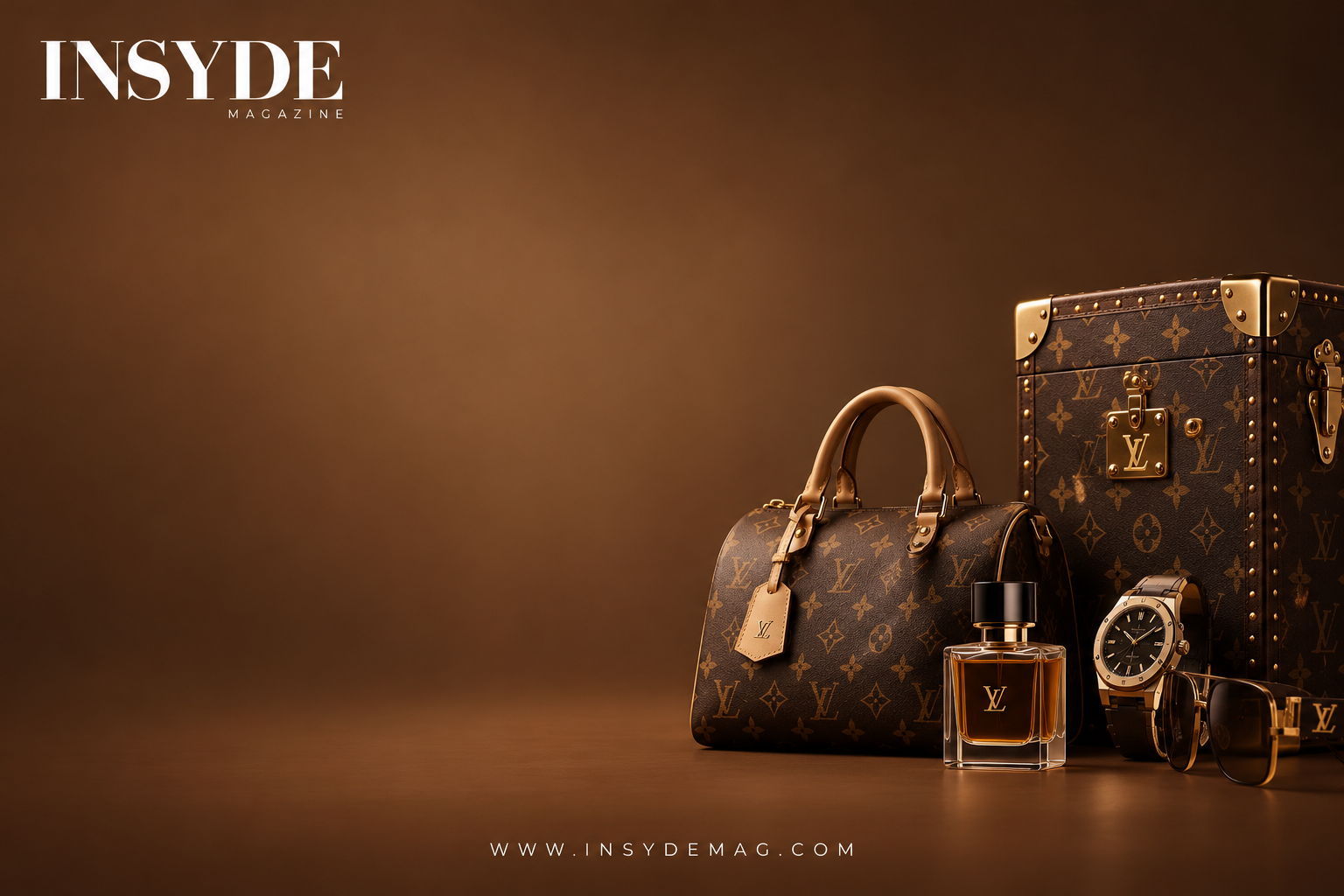
  • THE LUXURY EMPIRE LOSING ITS CHARM?

    THE LUXURY EMPIRE LOSING ITS CHARM?

    Inside the Global Slowdown Reshaping the World’s Most Coveted Brands

    From weakening fashion sales and rising consumer selectivity to the shifting economics of exclusivity, the world’s luxury giants are confronting a difficult question: what happens when the desire to own luxury begins to fade?

    INSYDE Magazine | Luxury & Business |


    Luxury has always sold a fantasy.

    A handbag is never just a handbag. A watch is never simply a mechanism for measuring time. A hotel suite, a couture gown or a piece of fine jewellery promises something beyond its physical form: status, craftsmanship, heritage, belonging and the rare feeling of possessing something exceptional.

    For decades, the world’s most powerful luxury houses have built extraordinary businesses around that promise. Their names became cultural shorthand for success. Their boutiques became destinations. Their products became objects of desire, often commanding prices far removed from the cost of the materials used to make them.

    But in October 2026, the global luxury industry finds itself confronting a less glamorous reality.

    Growth has become harder to secure. Some of the world’s largest fashion businesses are struggling to regain momentum. Consumer behaviour is changing, demand is shifting between regions, and the industry’s most influential companies are facing renewed scrutiny over their ability to justify premium prices.

    The numbers tell a complicated story. This is not the collapse of luxury, nor the disappearance of wealthy consumers. It is a market undergoing a reset — one that is exposing the differences between brands that continue to inspire desire and those finding it increasingly difficult to sustain it.

    At the centre of the debate is a question that goes beyond quarterly earnings.

    Has luxury become so expensive, so ubiquitous and so dependent on its own prestige that parts of the industry are beginning to lose the very charm that made them desirable?

    THE NUMBERS BEHIND THE GLAMOUR

    The global luxury economy remains enormous. Yet its scale can obscure the pressure emerging within individual categories.

    According to Bain & Company and Altagamma’s June 2026 luxury market update, worldwide luxury spending reached approximately €1.443 trillion in 2025. This figure covers a broad range of luxury markets, including personal goods and experiences; it should not be confused with spending on designer fashion and accessories alone.

    The personal luxury goods market — covering categories such as fashion, leather goods, jewellery, watches and beauty — was estimated at approximately €358 billion in 2025. At current exchange rates, that represented a 2% decline from 2024, although the market grew by 1% at constant exchange rates.

    For 2026, Bain and Altagamma’s base-case forecast anticipates growth of 2% to 4%, potentially bringing personal luxury goods spending to between €365 billion and €373 billion.

    That is a forecast, not a confirmed year-end result. It suggests that the market could return to modest growth, but it does not imply that every luxury company will benefit equally.

    The distinction is crucial. An industry can remain worth hundreds of billions of euros while major brands experience falling sales, pressure on profitability and increasingly selective consumers.

    The latest results from LVMH, the luxury group behind Louis Vuitton, Dior, Tiffany & Co., Bulgari and other major names, illustrate the challenge.

    On 12 October 2026, LVMH reported €18.5 billion in third-quarter revenue, with organic revenue growth of just 1% compared with the same period a year earlier. For the first nine months of 2026, group revenue reached €57.1 billion, representing 2% organic growth.

    The more revealing figure came from its core fashion and leather goods division. Organic revenue in that business fell 5% in the third quarter. Across the first nine months of 2026, the division’s reported revenue declined 4% year on year, while organic revenue fell 2%.

    These are not interchangeable measurements: reported revenue reflects factors including currency movements, while organic growth attempts to assess underlying business performance.

    Nevertheless, the direction is clear. One of the world’s most influential luxury groups is finding that its largest fashion businesses cannot rely on the industry’s historic momentum.

    The company’s results also showed that performance differed by region. LVMH described a less buoyant environment in China, while the United States, Europe and Japan recorded growth during the quarter.

    The lesson is not that luxury has stopped selling. It is that the industry can no longer assume that prestige alone will guarantee growth.

    Source: LVMH, third-quarter 2026 results.

    WHEN EXCLUSIVITY BECOMES A PRICE TAG

    Luxury has always depended on pricing power. A product that commands a premium can signal rarity, superior craftsmanship, design excellence and the authority of a recognised house.

    But pricing power is not limitless.

    For years, price increases have been an important part of the commercial strategies pursued across luxury. When demand is strong and customers remain willing to pay, raising prices can support revenue and reinforce a brand’s positioning.

    The difficulty emerges when the price rises faster than the customer’s perception of value.

    A customer purchasing a luxury handbag is not paying only for leather, stitching or hardware. They are paying for the design, the name, the service, the experience and the emotional satisfaction attached to the purchase.

    When prices rise substantially, the brand must continue to justify the entire proposition.

    Is the craftsmanship exceptional? Is the design distinctive? Does the product feel special enough to deserve its price? Will it remain desirable beyond the current season? Does the experience justify the expense?

    For some consumers, the answer remains an emphatic yes. For others, the calculation is becoming more difficult.

    This is particularly relevant for aspirational buyers: consumers who can afford selected luxury products but cannot treat every purchase as financially insignificant.

    For them, a handbag, watch or pair of shoes is a considered decision. When the price increases, they may postpone the purchase, choose a pre-owned alternative or redirect their money towards travel, dining and other experiences.

    Luxury brands therefore face a delicate balancing act. Lowering prices indiscriminately could undermine exclusivity, but continuing to raise them without strengthening perceived value risks making the customer feel that the brand is asking for more while offering less in return.

    The problem is not the existence of high prices. Luxury is supposed to be expensive.

    The problem arises when expensive becomes the most convincing thing a product has to offer.

    THE CUSTOMER LUXURY CANNOT AFFORD TO FORGET

    The wealthiest customers remain important to luxury. They support high jewellery, couture, rare watches, bespoke services and limited-edition creations.

    But the global luxury market was never built exclusively on the spending of billionaires.

    Aspirational consumers have helped turn luxury houses into cultural institutions. They buy fragrances, beauty products, accessories and entry-level leather goods. They follow fashion campaigns, recognise creative directors, discuss collections and introduce brands to new audiences.

    Their individual spending may be lower, but their collective influence is significant.

    That is why the shrinking or weakening of this customer base deserves attention.

    In June 2026, Reuters reported on Bain’s estimate that the luxury industry had lost approximately 70 million consumers since 2022. The figure reflects a reported industry estimate; it should not be interpreted as proof that every one of those consumers has permanently abandoned luxury.

    It does, however, highlight the challenge facing brands that have increasingly concentrated on their highest-spending clients.

    A company can become more exclusive in its advertising while simultaneously reducing the number of people who feel connected to it.

    That strategy may improve the economics of individual transactions in the short term, but it can also narrow the audience that sustains cultural relevance over time.

    Younger consumers, in particular, encounter luxury differently from previous generations. They can compare prices, research craftsmanship, follow independent designers, browse resale platforms and question a brand’s claims before entering a boutique.

    They are not necessarily rejecting luxury. They are becoming more selective about what deserves their money.

    For the industry, the challenge is to preserve exclusivity without allowing it to become indifference.

    CHINA AND THE FRAGILE GEOGRAPHY OF LUXURY

    Luxury is a global business, but its fortunes have long been influenced by a handful of powerful consumer markets.

    China became one of the industry’s most important growth engines, supported by rising wealth, international travel and strong demand for European fashion, jewellery and watches.

    That made the Chinese consumer central to the expansion strategies of many international luxury houses.

    But demand does not move in a straight line.

    LVMH’s October 2026 results pointed to a less buoyant environment in China, helping explain the pressure on its fashion and leather goods division. The company reported growth in the United States, Europe and Japan, but that strength did not remove the overall weakness in its core fashion business.

    The wider significance is that global luxury brands must manage different economic conditions, consumer expectations and cultural dynamics simultaneously.

    When demand weakens in one major region, companies with concentrated exposure can face immediate pressure. When several markets become less predictable at once, the challenge becomes more complicated.

    This is not an argument for abandoning China or replacing it with another single growth engine. It is an argument for a more balanced global strategy.

    The United States can offer opportunities, but it is not a guaranteed substitute for every lost sale elsewhere. Europe remains important, particularly for local consumers and international visitors. Japan has its own demand patterns, while other Asian markets continue to evolve.

    The strongest brands will be those that understand their customers market by market rather than assuming that a global reputation automatically translates into uniform demand.

    In luxury, geography is no longer simply a question of where a brand opens its next boutique. It is a question of where desire is growing, where it is weakening and why.

    NOT EVERY LUXURY EMPIRE IS LOSING ITS CHARM

    A slowdown story becomes misleading when it treats every category as though it were experiencing the same problems.

    Luxury fashion, jewellery, watches, beauty, hospitality and other premium experiences operate with different economics. Their customers buy for different reasons, and their products follow different purchase cycles.

    Richemont provides an important counterexample.

    The Swiss group, whose jewellery maisons include Cartier, Van Cleef & Arpels, Buccellati and Vhernier, reported €6.329 billion in sales for the quarter ended 30 June 2026, an increase of 20% at constant exchange rates and 17% at actual exchange rates.

    Its jewellery maisons recorded a 24% increase at constant exchange rates, while its specialist watchmakers grew by 8%.

    The figures cover Richemont’s first fiscal quarter, which ended in June. They are not directly comparable with LVMH’s July–September third-quarter results because the reporting periods and business portfolios differ.

    Even with that qualification, Richemont’s performance demonstrates an essential point: demand remains strong in parts of luxury, particularly where products continue to attract customers through recognisable design, craftsmanship and enduring desirability.

    Jewellery also serves different purposes from seasonal fashion. It can mark significant life events, function as a gift, become a collectible or be passed between generations. Established jewellery houses have built long histories around signature designs and a distinctive visual language.

    That does not make jewellery immune to economic pressure. Nor does one strong quarter guarantee future growth.

    It does show why the industry should not be described as a single market moving in one direction.

    The more useful question is which brands and categories are sustaining their appeal — and what they are doing differently.

    Source: Richemont, first-quarter results for the period ended 30 June 2026.

    FROM OWNING LUXURY TO EXPERIENCING IT

    A different idea of luxury is gaining ground: one in which the most desirable purchase is not necessarily an object.

    High-end hospitality, fine dining, private travel, wellness retreats and cultural experiences offer something physical products cannot always replicate — a memory, a sense of access, personal attention or time spent outside ordinary life.

    Bain and Altagamma’s June 2026 update identifies experiences as an area of relative strength, with luxury experiences such as hospitality and restaurants, alongside selected high-value assets, expected to grow by around 4%.

    That forecast should be read as an industry outlook, not a final result for every experience-led business.

    Nevertheless, the direction is important.

    A handbag can be photographed and compared. A watch can be researched on the secondary market. But a private journey, an exceptional meal or a carefully designed hospitality experience depends on the quality of its execution, the people involved and the atmosphere created.

    For some consumers, these experiences are becoming a more compelling use of discretionary spending than another recognisable product.

    This does not mean that physical luxury is disappearing. Fashion, jewellery and watches remain central to the industry. Instead, the definition of luxury is expanding, and brands must decide how they fit into a consumer’s wider idea of a desirable life.

    The opportunity extends beyond hotels and restaurants. A fashion house can build a cultural world around its products. A jewellery brand can deepen its connection to craftsmanship and heritage. A luxury retailer can turn a store visit into a personalised experience rather than a simple transaction.

    The brands that understand the emotional value of an experience may discover new ways to sustain the desirability of their products.

    Luxury has always sold more than objects. The market is increasingly asking brands to prove it.

    Source: Bain & Company and Altagamma’s 2026 market update.

    THE SECOND-HAND MARKET IS CHANGING THE CONVERSATION

    The rise of pre-owned luxury has introduced another variable into the industry’s relationship with value.

    The secondary market gives consumers access to established brands at different price points. It also allows collectors to buy, sell and trade products beyond their original retail environment.

    For a buyer considering a new luxury item, the decision is no longer limited to comparing it with other new products. The buyer can examine pre-owned alternatives, investigate resale prices and consider whether the purchase is likely to retain its appeal.

    Bain and Altagamma’s 2026 research found that around half of luxury shoppers consult the second-hand market before buying new, while approximately half already use AI during their purchase journey.

    These findings suggest that technology and resale are no longer peripheral to luxury shopping. They are becoming part of how consumers discover products, compare options and evaluate value.

    For brands, the implications are mixed.

    A strong secondary market can reinforce a product’s reputation for longevity, desirability and collectability. It can also introduce new consumers to a brand who may later purchase directly from the company.

    But resale makes it easier for shoppers to question the relationship between a product’s original price and its perceived value. A consumer may decide that a pre-owned piece from a more prestigious house offers a better proposition than a new product from a less established competitor.

    That places greater importance on quality, durability, authenticity and timeless design.

    Luxury houses cannot control every transaction in the secondary market, but they can influence the qualities that make their products desirable long after the first sale.

    The real test is whether a product remains compelling when the customer has more information, more alternatives and fewer reasons to buy impulsively.

    Source: Bain & Company and Altagamma, 2026 luxury market research.

    INDIA: A PROMISING MARKET WITH REAL CONSTRAINTS

    India presents an important opportunity for global luxury, but it should not be treated as an automatic solution to the industry’s challenges elsewhere.

    The country’s expanding affluent population, entrepreneurial wealth and growing appetite for premium products have attracted international brands. Yet translating that interest into a mature luxury market requires more than consumer aspiration.

    A March 2026 Reuters report on India’s luxury retail-space shortage highlighted a major constraint: the limited availability of high-quality luxury retail destinations.

    The report described a market in which global brands were competing for a relatively small number of suitable locations, while new retail developments would take time to deliver.

    This creates a structural challenge. A growing customer base cannot be fully served without the right stores, trained staff, reliable service, appropriate locations and the broader retail infrastructure that supports a premium shopping experience.

    Import duties and differences in pricing can also influence where affluent Indian consumers choose to shop.

    For international luxury houses, India therefore represents a long-term strategic opportunity rather than an immediate substitute for weaker demand elsewhere.

    The opportunity is also relevant to Indian luxury businesses. Brands that understand local craftsmanship, cultural heritage and changing consumer expectations can develop propositions that are distinctive rather than simply imported.

    But growth will depend on execution. Strong demand must translate into repeat purchases, trusted customer relationships and retail experiences that meet the expectations attached to a premium price.

    India may become a more significant force in the global luxury landscape. Its potential, however, should be assessed through market evidence rather than optimism alone.

    THE NEXT ERA OF LUXURY WILL BE WON ON VALUE

    The industry’s next chapter will not be decided by price increases alone.

    Luxury houses still possess formidable advantages: heritage, craftsmanship, design, distribution, cultural influence and relationships with wealthy customers. The current slowdown does not erase those strengths.

    It does make the quality of their execution more important.

    First, brands must make their prices mean something. A premium must be supported by product quality, distinctive design, materials, service and a credible story. Price alone cannot create enduring desire.

    Second, customer relationships must extend beyond the wealthiest buyers. High-spending clients remain essential, but younger and aspirational consumers represent a potential future audience. Brands must find ways to remain relevant without abandoning the exclusivity that defines them.

    Third, creativity must do more than generate attention. Campaigns, celebrity partnerships and cultural visibility can make a brand famous, but fame does not automatically create loyalty. Products must still be desirable when the campaign ends.

    Fourth, companies must understand the new shopping journey. Consumers increasingly compare products, explore resale platforms and use digital tools before making decisions. A brand’s proposition must remain convincing beyond its own advertising and retail environment.

    Finally, luxury businesses must understand what customers are actually buying. Sometimes it is craftsmanship. Sometimes it is status, rarity, personal expression or access to a particular world. The strongest brands understand these motivations and deliver them consistently.

    The winners will not necessarily be the brands that become the most expensive. They may be the brands that give consumers the clearest reason to believe their products are exceptional.

    THE LAST WORD

    Luxury is not dead. But the old assumption that prestige can sustain growth indefinitely is being tested.

    The global market remains vast, and the latest industry forecasts point towards modest growth in personal luxury goods during 2026. Yet the recovery is uneven. LVMH’s fashion and leather goods division is under pressure, while Richemont’s jewellery maisons have reported strong growth. Experiences and the secondary market are reshaping how consumers think about luxury, and brands are being forced to compete for attention in a more informed and selective marketplace.

    Together, these developments point towards a more demanding luxury economy — one in which recognition alone may not be enough, price increases require stronger justification, and loyalty must be earned rather than assumed.

    For decades, luxury sold the promise of something beyond the ordinary. The next era will depend on whether that promise still feels extraordinary.

    Because the greatest threat to a luxury empire is not simply a weaker quarter or a slower market.

    It is the moment a customer looks at something once considered irresistible — and decides they can live without it.


    INSYDE MAGAZINE

    Luxury. Culture. The People Shaping What Comes Next.
    No.1 Luxury Magazine In Bengaluru
    www.insydemag.com
  • PORSCHE MISSION S: DESIRE, REDEFINED

    PORSCHE MISSION S: DESIRE, REDEFINED

    The future of performance, prestige and exclusivity.

    INSYDE | AUTOMOTIVE | LUXURY

    There is a particular kind of desire that cannot be manufactured through numbers alone. It emerges from the curve of a body, the precision of a detail and the feeling that a machine has been created for something more than transportation.

    For Porsche, that feeling has long been embodied by the 911. Its unmistakable silhouette has endured for more than six decades, evolving through successive generations without abandoning the identity that made it an icon.

    But even an icon must make room for the future.

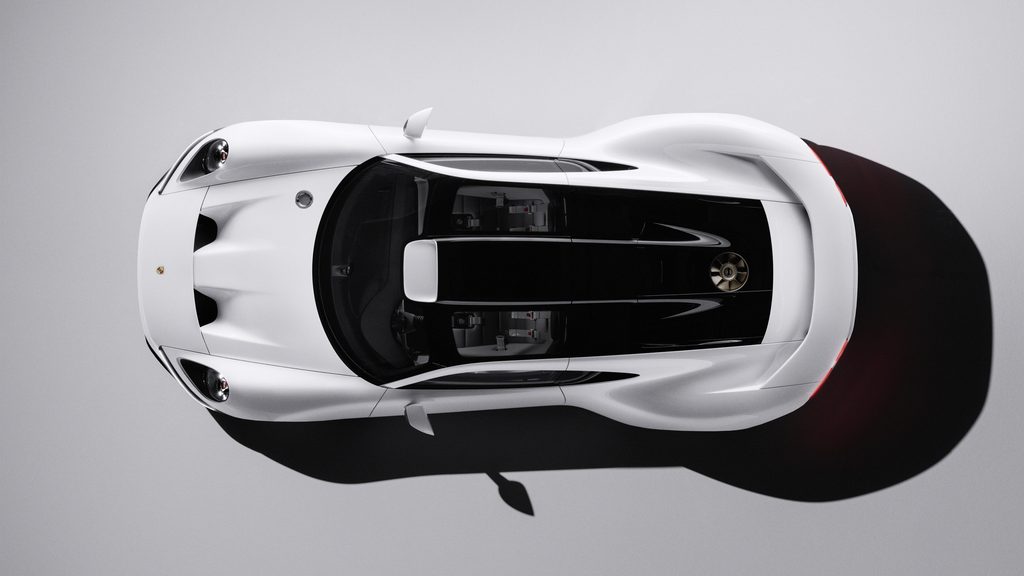
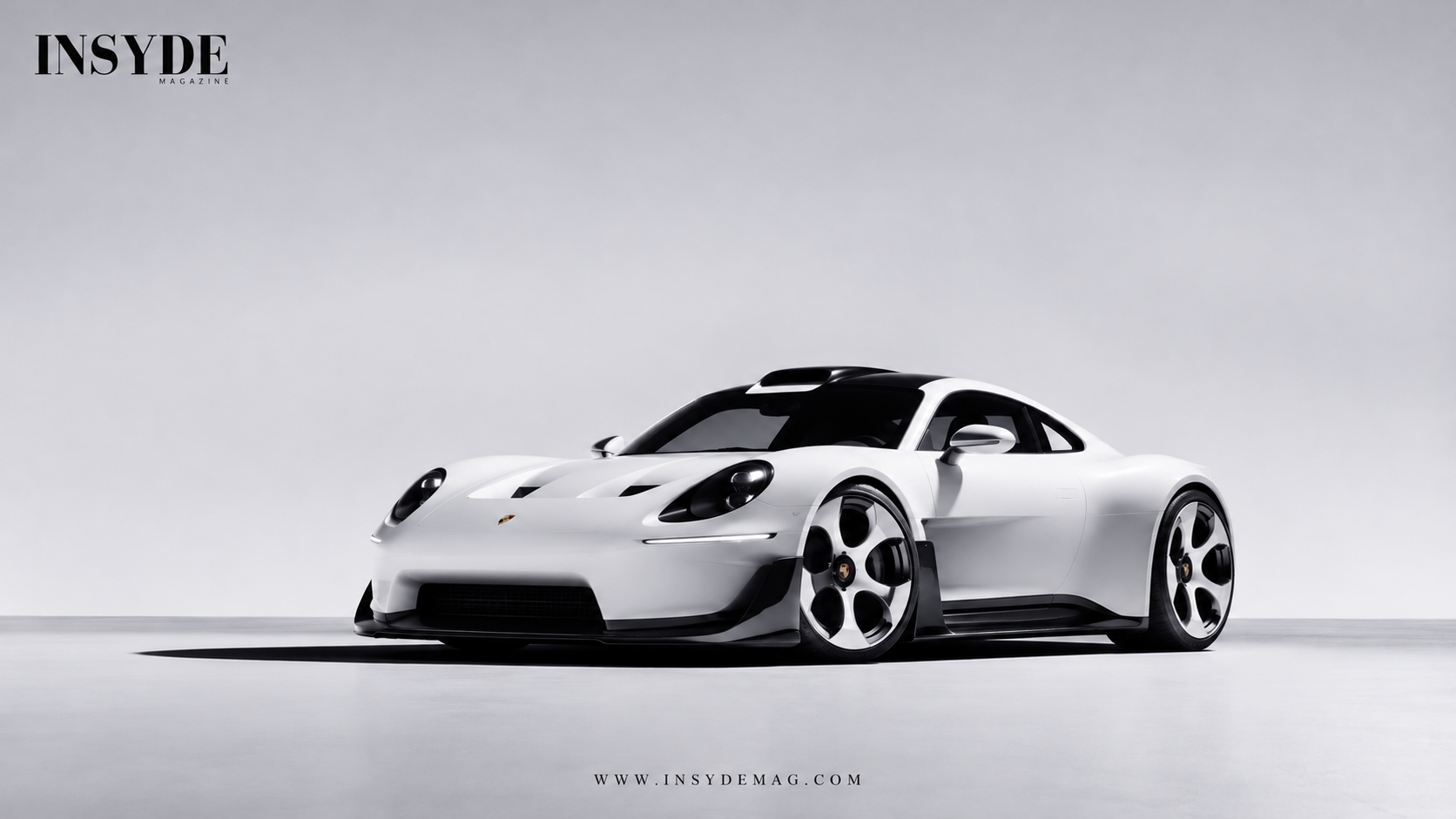
    On 15 October 2026, Porsche unveiled the Mission S, a vision model offering a first look at the next evolution of its design philosophy. With a mid-engined architecture, sculptural proportions and an interior that deliberately balances analogue character with digital functionality, the Mission S presents a different expression of the Porsche sports car.

    It is not simply a styling exercise. Porsche has announced the development of a new mid-engined super-sports-car platform positioned above the 911, intended as a permanent and versatile addition to its customer offering rather than a one-off hypercar.

    The announcement arrives as the company pursues a broader strategic shift towards higher-value products, greater exclusivity and stronger profitability.

    For INSYDE, the Mission S offers two stories in one: the design of a compelling new sports-car vision and the changing business of luxury itself.

    Because the question surrounding Porsche is no longer simply how fast a sports car can go.

    It is how a brand with such an established identity creates something new that people genuinely want.

    01. THE ART OF FIRST IMPRESSIONS

    A Porsche should be recognisable before its badge is visible. That principle sits at the heart of the Mission S, whose exterior reinterprets familiar elements of the brand’s design language through a more dramatic, mid-engined silhouette.

    The front is defined by round headlights and characteristic torpedo-shaped fenders that give the car a powerful, planted appearance. A low nose, pronounced proportions and a distinctive roofline create a visual relationship between the front and rear that feels unmistakably sports-oriented.

    One of the defining elements is the continuous wraparound line connecting the front and rear lighting signatures. Rather than treating each component as an isolated feature, the design brings the car together as a unified form.

    Porsche describes the resulting surfaces as “floating volumes”: flowing sculptural forms that emphasise the relationship between light, shadow and the car’s underlying architecture.

    The details are rooted in the company’s history. The flat front draws inspiration from the Porsche 911 GT1, while the roofline references the 959. The round headlights and front fenders recall the 911, and the rear incorporates a car-in-car design concept derived from the GT1.

    These are not simply nostalgic references. They demonstrate how Porsche is using its heritage as a design vocabulary for a new generation of sports cars.

    The Mission S also introduces a distinctive interpretation of the brand’s familiar Flyline — the flowing profile that has become a defining characteristic of Porsche design. Its mid-engined architecture gives this silhouette a different set of proportions while retaining a strong visual connection to the marque.

    At the rear, the roofline extends towards the wing, creating a more dramatic relationship between the bodywork and aerodynamic elements.

    The result is a car that looks forward without entirely turning away from the past.

    For a brand whose identity depends on continuity, that balance is essential. The Mission S suggests that Porsche’s next design chapter will be less about abandoning its visual heritage and more about discovering how far that heritage can evolve.

    02. FORM FOLLOWS FUNCTION

    The Mission S is not designed around appearance alone. Porsche’s official presentation places engineering and function at the centre of its visual language.

    Its centrally positioned engine defines the architecture of the vision model, allowing Porsche to explore a distinctive body shape and a pronounced relationship between width and height.

    The car’s proportions communicate performance before any technical specification is considered. The low front, sculpted fenders and tightly integrated rear create the impression of a machine organised around its mechanical purpose.

    At the rear, Porsche has incorporated a fully integrated active wing. Its design brings the aerodynamic element into the overall form rather than treating it as an independent addition.

    The cooling solution also references the brand’s motorsport heritage. Porsche identifies the cooling design as reminiscent of the radiator fan of the historic 917, translating a functional engineering element into a contemporary visual feature.

    The wheels offer another connection to the past. Their design takes inspiration from the distinctive dial-style wheels of the Porsche 928, reinterpreted with an emphasis on lightweight construction.

    These details reveal an important part of the Mission S philosophy: function should not be hidden simply because a car is intended to be beautiful.

    Instead, the engineering becomes part of the visual experience.

    It is a familiar principle in performance-car design, but Porsche’s interpretation is particularly relevant to the Mission S. The car is intended to preview the direction of the brand’s future products, so the relationship between mechanical purpose and visual identity is as significant as the individual styling features.

    Porsche has not published a complete technical specification for the Mission S vision model. Its official announcement does not establish horsepower, torque, acceleration, top speed or a production powertrain configuration.

    For now, the strongest conclusion comes from the design itself: the Mission S has been conceived around a mid-engined super-sports-car architecture, with engineering and form developed as parts of the same idea.

    03. INSIDE THE DRIVER’S WORLD

    Step inside the Mission S and the philosophy becomes even more apparent.

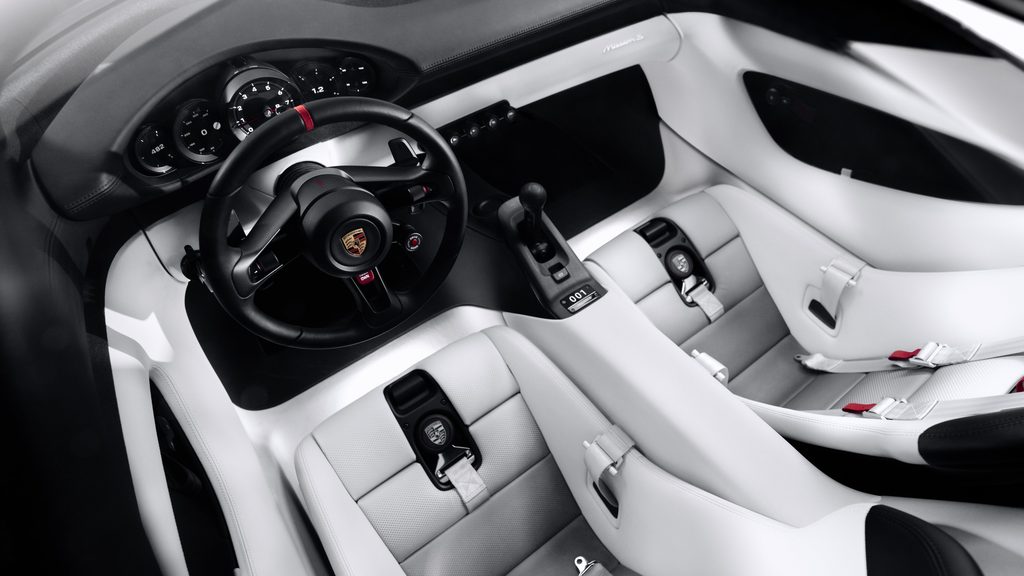
    Porsche has deliberately avoided an interior dominated by permanently integrated screens. Instead, the cockpit combines analogue controls, physical switches and digital displays in a layout designed to keep the driver at the centre of the experience.

    The dashboard and doors are connected by two defining lines that create a feeling of sitting deep within the car. Porsche says this interior architecture draws inspiration from historic sports cars such as the 550 Spyder and the 356.

    The seats continue that approach, combining comfort and functionality with motorsport-inspired details. Among the features highlighted by Porsche are an integrated seatbelt buckle in the centre panel and repositioned electric adjustment controls.

    The result is an interior that looks forward without losing the tactile character traditionally associated with a driver’s car.

    FIVE DIALS, ONE PHILOSOPHY

    The instrument layout is one of the Mission S’s most distinctive features.

    Porsche has reimagined its circular instruments through a combination of analogue character and digital precision. The Sport Chrono element also receives a new interpretation, retaining a recognisable mechanical character while incorporating digital functionality.

    The choice is significant in an era when large touchscreens increasingly dominate automotive interiors.

    Rather than treating digital technology as the visual centrepiece, the Mission S uses it to support a more focused driving environment. Physical controls remain part of the experience, allowing important functions to be accessed directly.

    Porsche has also designed a dedicated holder for its key, positioned to the left of the steering wheel in keeping with the brand’s traditional layout.

    THE SMARTPHONE TAKES A DIFFERENT ROLE

    One of the most unusual decisions concerns the central display.

    The Mission S does not feature a permanently integrated central screen or a fixed passenger display. Instead, Porsche has developed a retractable smartphone system compatible with MagSafe technology.

    When required, the driver’s personal smartphone can serve as a navigation or information display. The My Porsche app provides access to functions and allows users to select digitally rendered, historically inspired designs for the circular instruments.

    This approach gives the cockpit a different relationship with technology. The screen is available when needed, but it does not permanently dominate the dashboard.

    It is a design decision that reflects the wider philosophy of the Mission S: digital convenience should complement the driving experience rather than define the entire environment.

    The interior’s colour palette reinforces the connection to Porsche’s sporting identity. Firn White Metallic, Light Red Metallic, Black Chrome and Special Black reinterpret the company’s familiar motorsport colours through a more contemporary treatment.

    Together, the materials, controls and instruments create an interior that places the driver — rather than the display — at the centre of the experience.

    04. A NEW CHAPTER ABOVE THE 911

    The Mission S is important not only because of its design, but because of the position Porsche intends it to occupy.

    The company has announced a new mid-engined super-sports-car platform positioned above the 911. According to Porsche, the intention is to create a permanent and versatile addition to its customer offering, rather than a limited-run hypercar.

    This is a significant distinction.

    The 911 is one of the defining models in the company’s history. Its rear-engined architecture, familiar proportions and long development history have established a remarkably clear identity. A new flagship must therefore offer something genuinely different without undermining the model that remains central to Porsche’s sports-car heritage.

    The Mission S offers an indication of how that could be achieved.

    Its mid-engined architecture creates a different foundation for the car’s proportions and engineering. Its styling draws on Porsche’s historic racing and road-car designs while exploring a new visual direction. Its interior places renewed emphasis on physical interaction and the driver’s relationship with the machine.

    Porsche has not yet disclosed a complete production specification, final price or customer-delivery schedule for the Mission S. It is therefore too early to assess its eventual performance or commercial positioning in detail.

    What is clear is the company’s intention to establish a more permanent super-sports-car offering above the 911.

    That ambition gives the Mission S significance beyond a conventional concept reveal. It signals an effort to extend Porsche’s identity into a new product category while preserving the qualities that distinguish the brand.

    The challenge will be to create a car that earns its place through substance, not merely through a higher position in the range.

    05. THE MARKET BEHIND THE MACHINE

    The Mission S arrives at a moment when Porsche is reassessing how it creates value.

    On 7 October 2026, the company presented its Sportwagenschmiede ’35 strategy, setting out its medium- and long-term ambitions for the business.

    Its guiding principle is value over volume.

    Porsche intends to sharpen its positioning in sporty luxury and high-end premium segments, expand personalisation and develop more exclusive products. Its strategy also includes streamlining the model range, improving operational efficiency and strengthening profitability.

    The company has set a medium-term target of reducing model variants by approximately 20 per cent and increasing sales volume per model variant by around 30 per cent. These are strategic ambitions, not achieved results.

    The distinction matters because value over volume is not simply a decision to make fewer cars. It is an attempt to create a more focused product portfolio, improve the value generated by each vehicle and direct resources towards products that strengthen the brand.

    For Porsche, the Mission S fits into that ambition as a potential new flagship.

    A sports car positioned above the 911 could broaden the company’s offering at the upper end of the market, while giving established customers another expression of the brand’s engineering and design philosophy.

    But a higher position does not automatically create higher desirability.

    A luxury product must justify its premium through its design, engineering, experience and identity. Restricting availability without offering a compelling reason to want the product can weaken demand rather than strengthen it.

    The Mission S is therefore best understood as part of Porsche’s strategic direction, not proof that its value-over-volume approach will succeed.

    The opportunity lies in creating a product that feels genuinely distinctive — and in building a business model capable of supporting that distinction over time.

    06. WHEN EXCLUSIVITY BECOMES A BUSINESS STRATEGY

    The pursuit of exclusivity is not limited to Porsche. Across the luxury market, established brands are looking for ways to make products more distinctive, strengthen customer relationships and justify premium positioning.

    In automotive luxury, personalisation offers one route.

    A customer who can select distinctive materials, finishes and details is participating in a more individual ownership experience. At the highest end of the market, bespoke commissions can take that idea further, making the process of creating a vehicle part of its appeal.

    Porsche has identified expanded individualisation as a central part of its future strategy. Its official strategic priorities place greater emphasis on elevated positioning, exclusivity and the uniqueness of its cars.

    The Mission S belongs to this wider conversation because it represents an attempt to extend Porsche’s sports-car offering into a new category.

    However, exclusivity should not be confused with artificial scarcity. Porsche has not announced a production limit for the Mission S, and the vision model should not be described as a limited-edition collector car.

    Its relevance lies in the possibility of a more elevated, permanent product within the Porsche range.

    That is a different proposition from manufacturing rarity through restricted numbers. It seeks to establish distinction through the product itself.

    For luxury brands, that distinction is increasingly important. Customers can compare specifications, prices and technology across a global market. What becomes harder to replicate is a coherent identity — the combination of design, engineering, heritage and ownership experience that makes a product feel different from its competitors.

    The Mission S gives Porsche an opportunity to express that identity in a new form.

    Whether customers ultimately respond will depend on the finished product and the value they perceive in it. The strategy can create the conditions for desirability, but the car must still earn it.

    07. PORSCHE’S COMMERCIAL REALITY

    Porsche’s ambitions also need to be understood against its current business performance.

    According to the company’s official nine-month delivery report published on 9 October 2026, Porsche delivered 178,532 vehicles worldwide between January and September 2026, compared with 212,509 during the same period in 2025.

    That represents a decline of approximately 16 per cent year on year.

    Yet the performance of individual models tells a more nuanced story. The 911 remained highly sought after, with deliveries increasing by 12 per cent. The Cayenne was Porsche’s largest model line during the period, with 59,586 deliveries.

    These figures show why the Mission S matters strategically, but they do not guarantee its future success.

    Porsche is trying to strengthen its positioning while navigating a difficult commercial environment. Its plans for more exclusive products and greater individualisation must translate into real customer demand and stronger financial performance.

    There are risks. Higher-value products can address a narrower customer base. Greater personalisation can introduce additional complexity. A new flagship can strengthen a brand’s identity, but it must also justify the resources required to develop and support it.

    The Mission S is one element of Porsche’s response to those challenges. It offers a vision of where the product portfolio could go, while the company’s wider strategy addresses the operational and financial changes required to support that direction.

    The distinction between ambition and outcome is essential. The concept demonstrates intent; only a production programme and its eventual market performance could demonstrate commercial success.

    08. THE FUTURE OF SPORTS-CAR LUXURY

    The Mission S raises a broader question about what the next generation of luxury performance will value.

    For years, automotive competition has been measured through increasingly impressive specifications, new technology and greater performance. Those elements remain important, but they do not fully explain why certain cars become objects of lasting desire.

    Design matters. Engineering matters. Heritage matters. So does the feeling that a product has been developed with a clear purpose rather than assembled around a collection of features.

    The Mission S brings those ideas together through its exterior proportions, driver-focused interior and connection to Porsche’s historic sports cars. It also points towards a new chapter in the company’s product strategy, with a proposed mid-engined platform above the 911.

    Its significance should not be overstated. The Mission S remains a vision model, and Porsche has not disclosed all the details required to judge a future production vehicle.

    But the direction is revealing.

    Porsche wants to strengthen its identity as a sports-car manufacturer, develop a more elevated product offering and increase the value generated by its portfolio. The Mission S provides a visual expression of that ambition.

    If the vision translates successfully into a production car, it could give Porsche a new way to engage customers who want something beyond the 911 while remaining within the brand’s world.

    The opportunity is not simply to create another expensive sports car. It is to create one with a convincing reason to exist.

    DESIRE, REDEFINED

    The Porsche Mission S is not yet a complete production promise. It is something more preliminary, but still significant: a glimpse of the direction in which one of the world’s most recognisable sports-car brands intends to move.

    Its design draws on the past without reproducing it. Its interior places the driver at the centre while incorporating modern digital functionality. Its mid-engined architecture signals a new product category above the 911, and its strategic context reflects Porsche’s pursuit of higher value, greater exclusivity and stronger profitability.

    The questions that remain are just as important as the details already revealed. How will the production vehicle be specified? What will it cost? When might customers be able to buy it? Porsche has not yet answered those questions in its official Mission S announcement.

    For now, the car is best understood as a statement of intent — one that connects design, engineering and business strategy.

    Because the most compelling luxury products do more than perform exceptionally. They create an emotional connection that specifications alone cannot explain.

    The Mission S offers Porsche an opportunity to build on that principle, extending the brand’s sports-car identity while exploring what its next chapter could look like.

    And perhaps that is the most interesting thing about desire: it does not simply ask for more.

    It asks for something different. Something meaningful. Something worth wanting.

    PORSCHE MISSION S: DESIRE, REDEFINED.

    An INSYDE editorial on the machine, the market and the future of automotive luxury.


    INSYDE MAGAZINE

    Luxury. Culture. People. What comes next.

    No. 1 Luxury Magazine in Bengaluru

    WWW.INSYDEMAG.COM

  • BEAUTY. BILLIONS. & INFLUENCE.

    BEAUTY. BILLIONS. & INFLUENCE.

    How celebrity founders turned beauty, fame and influence into commercial power.

    BY INSYDE | BEAUTY & BUSINESS

    There was a time when a celebrity’s relationship with beauty was simple. A famous face appeared in a campaign, a name went on a bottle, and a brand paid for the privilege of borrowing a little of that person’s desirability.

    Today, some celebrities are doing something considerably more ambitious.

    They are building the brands themselves.

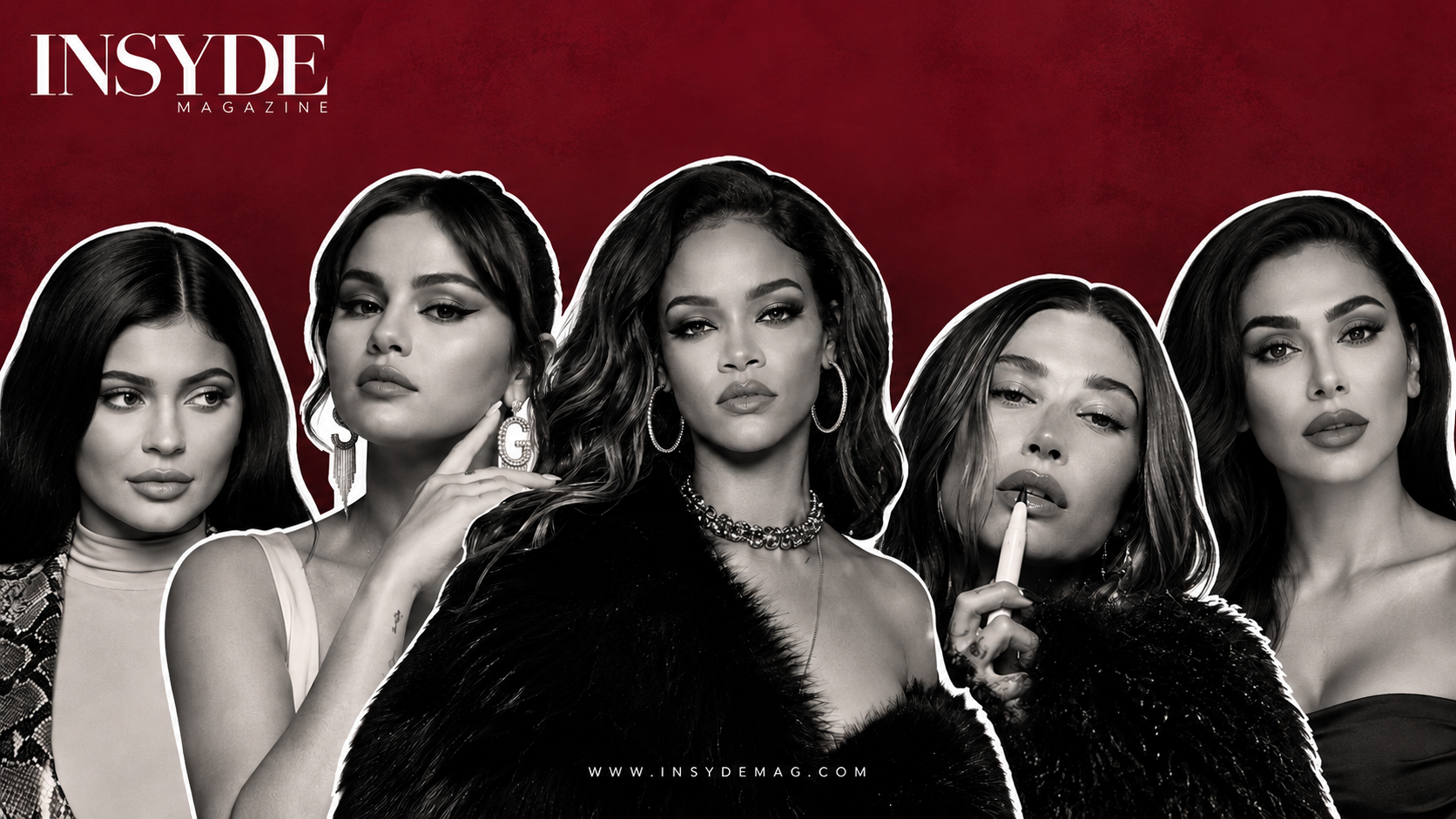
    Rihanna helped turn Fenty Beauty into a global cosmetics business. Selena Gomez built Rare Beauty around a distinctive philosophy of self-expression. Kylie Jenner transformed social-media attention into a cosmetics company. Hailey Bieber developed Rhode into an acquisition target for one of the beauty industry’s major players. Huda Kattan turned beauty expertise and an online audience into an international brand.

    These are not simply celebrity endorsements. They are businesses with products, distribution networks, commercial strategies and, in some cases, billion-dollar valuations or acquisition deals.

    The distinction matters.

    In October 2026, Fortune, reporting on Traackr’s Creator Advantage 2026 research, highlighted how celebrity-founded companies had become powerful participants in the beauty economy. Five of the ten leading US beauty brands ranked by creator-marketing performance in 2025 were celebrity-founded, including Kylie Cosmetics, Rare Beauty, Rhode, R.E.M. Beauty and Huda Beauty.

    That is a measure of marketing performance, not a ranking of revenue or profitability. But it reveals something important about the modern consumer market: influence is no longer merely an advertising tool. In the right hands, it can become a competitive advantage.

    The financial results make the story even more interesting.

    According to Reuters’ reporting on Fenty Beauty, the brand generated approximately $450 million in net sales in 2024. Rhode recorded $212 million in net sales during the twelve months ended March 31, 2025, before its acquisition by e.l.f. Beauty. Rare Beauty has also been associated with a reported valuation estimate of approximately $2.7 billion in 2026.

    These figures measure different things. Sales are not valuations, acquisition prices are not guaranteed cash payouts, and the value of a company is not the same as its founder’s personal fortune.

    But together, they point towards a larger shift.

    Celebrity beauty is no longer simply about putting a famous face on a product. It is about turning identity, cultural relevance, product development and direct access to consumers into businesses with lasting value.

    The question is no longer whether a celebrity can sell a lipstick.

    It is whether that celebrity can build a beauty company that people continue to buy from long after the initial fascination fades.

    01 — FENTY BEAUTY: WHEN INCLUSIVITY BECAME A BUSINESS STRATEGY

    When Rihanna launched Fenty Beauty in September 2017, its initial foundation range of 40 shades made inclusivity a defining part of its identity.

    The significance was not that no beauty brand had previously offered a wide shade range. It was that Fenty brought the conversation into the centre of a highly visible global launch, making the experiences of consumers who struggled to find suitable foundation difficult for the wider industry to ignore.

    Its proposition was clear: more consumers should be able to find products that work for them.

    Rihanna’s cultural reach gave the launch extraordinary visibility, while the brand’s partnership with LVMH’s Kendo division provided the infrastructure of an established beauty business.

    The financial figures demonstrate the scale that followed.

    Reuters reported in October 2025 that Fenty Beauty generated approximately $450 million in net sales in 2024. Sources cited in the same report estimated its valuation at between $1 billion and $2 billion. That valuation was an estimate, not a publicly disclosed transaction price.

    The distinction matters. Sales describe the revenue generated by a business over a period; valuation estimates what that business might be worth.

    Fenty’s wider influence is perhaps more revealing than either number. Its positioning helped make inclusive shade ranges a much more prominent part of the beauty industry’s commercial conversation.

    The business lesson is straightforward. Rihanna’s fame helped Fenty attract attention, but the company needed a product proposition that consumers could understand and purchase.

    THE INSYDE OBSERVATION: Influence becomes more powerful when it is attached to a proposition the market has a reason to believe in.

    02 — RARE BEAUTY: THE POWER OF A POINT OF VIEW

    Selena Gomez launched Rare Beauty in 2020 with an identity that extended beyond the products themselves.

    The brand’s messaging around self-expression and a less perfection-driven understanding of beauty gave it a recognisable position in a crowded market. Its products, communications and social-impact commitments helped establish an identity that consumers could connect with beyond the founder’s celebrity.

    That distinction matters in beauty, where packaging, product formats and trends can be replicated quickly.

    A clear point of view gives a brand something more durable to build around.

    Rare Beauty has become a significant participant in creator-led beauty. Its position among the leading brands in Traackr’s 2026 creator-marketing analysis demonstrates the scale of its digital and cultural relevance.

    Financially, the company has also attracted substantial private-market estimates. Fortune’s October 2026 analysis reported an estimated valuation of approximately $2.7 billion. This should be understood as a reported estimate, not a confirmed transaction price or an independently disclosed current valuation.

    It would be misleading to equate that figure with Gomez’s personal wealth. A company’s value belongs to the business and its shareholders; the founder’s financial position depends on ownership and other assets.

    Rare Beauty’s challenge is to maintain its identity while growing distribution, introducing new products and sustaining customer loyalty.

    The brand’s success suggests that a celebrity-led company can offer more than a famous face. It can create a coherent perspective on beauty that helps consumers understand what makes it different.

    THE INSYDE OBSERVATION: A recognisable philosophy can become a commercial asset when it is supported by products consumers want to use.

    03 — KYLIE COSMETICS: FROM SOCIAL-MEDIA ATTENTION TO CORPORATE SCALE

    Kylie Jenner’s cosmetics business began with one of the most recognisable categories in beauty: lip products.

    Kylie Lip Kits launched in 2015, drawing on Jenner’s public image and the attention surrounding her makeup looks. The products gave an existing audience something tangible to purchase.

    The model was powerful because the launch did not have to build awareness from zero. Jenner already had an audience, a recognisable aesthetic and a direct channel through which to communicate with potential customers.

    The business subsequently expanded beyond lip kits. In 2019, Coty acquired a 51% stake in the company for $600 million, implying an approximate $1.2 billion valuation at the time. This was a historical transaction, not a verified current valuation.

    Coty’s subsequent reporting offers a more recent view of the brand. In March 2025, the company said Kylie Cosmetics had grown 1.5 times over the preceding two years. The brand has continued to operate within Coty’s prestige beauty portfolio.

    Coty does not disclose a comparable standalone current valuation for Kylie Cosmetics in the reporting used for this article. Nor can the company’s valuation or sales be used as a direct measure of Jenner’s personal wealth.

    The corporate partnership changed the nature of the business. Kylie Cosmetics became part of a larger beauty portfolio with access to established distribution, marketing and operational capabilities.

    That brings advantages, but it also means the founder’s role and ownership must be distinguished from the company’s overall performance.

    Kylie Cosmetics demonstrates how a celebrity’s audience can accelerate a product launch. Its longer-term commercial value depends on whether the brand can keep its products relevant after the initial excitement.

    THE INSYDE OBSERVATION: An audience can give a business its first customers. It cannot guarantee its next decade of growth.

    04 — RHODE: THE VALUE OF A CLEAR AESTHETIC

    Hailey Bieber’s Rhode entered the beauty market with a focused skincare proposition, restrained packaging and an immediately recognisable visual identity.

    Rather than launching with an enormous assortment, Rhode concentrated on skin-focused products and an aesthetic that translated naturally into social content. Its presentation made products recognisable in photographs and routines easy to communicate.

    The brand’s commercial trajectory culminated in a major transaction.

    In May 2025, e.l.f. Beauty announced an agreement to acquire Rhode for $800 million at closing, plus up to $200 million in potential earn-out payments. The acquisition closed on August 5, 2025.

    Rhode had generated $212 million in net sales in the twelve months ended March 31, 2025, according to e.l.f. Beauty’s acquisition announcement.

    The maximum announced deal value was therefore $1 billion, not a guaranteed $1 billion cash payment to Bieber. The transaction involved cash, shares and potential performance-linked consideration.

    In its fiscal 2026 annual filing, e.l.f. Beauty recorded total acquisition consideration of approximately $897.5 million, including the estimated value of potential earn-out consideration at that time. The filing also reported that Rhode contributed $293.5 million in net sales to e.l.f.’s consolidated results between the acquisition date and March 31, 2026. This latter figure covers a different reporting period and should not be confused with Rhode’s standalone sales before the acquisition.

    The details can be verified in e.l.f. Beauty’s fiscal 2026 SEC filing.

    The transaction demonstrates why established beauty companies pay attention to fast-growing independent brands. An acquirer can bring distribution, retail relationships and international scale to a company that has already demonstrated consumer demand.

    After an acquisition, the challenge changes. A brand must preserve the qualities that made it distinctive while expanding its reach and operating within a larger corporate structure.

    Rhode’s story is not simply about a celebrity creating a successful skincare line. It is about a relatively young company developing enough commercial value to attract a major strategic buyer.

    THE INSYDE OBSERVATION: A focused product range and coherent aesthetic can be commercially powerful when they are supported by genuine demand and operational execution.

    05 — HUDA BEAUTY: WHEN BEAUTY EXPERTISE BECOMES AN EMPIRE

    Huda Kattan’s path into beauty began with expertise and content rather than a traditional entertainment career.

    Through beauty tutorials and product knowledge, she built an audience interested in makeup itself. Huda Beauty emerged from that relationship, launching with false eyelashes in 2013 before expanding into a wider cosmetics business.

    The distinction is important. Kattan was not simply placing her name on a product. Her existing connection with beauty consumers helped establish the company’s initial credibility.

    But turning an audience into a global brand required more than content. It required product development, manufacturing, distribution, inventory management and the ability to sell consistently across markets.

    Huda Beauty became a significant name in the international cosmetics market. It also appeared among the leading brands in Traackr’s creator-marketing analysis reported by Fortune in October 2026.

    Its financial history, however, requires careful treatment. Historical reports have associated the company with a valuation of around $1 billion in 2017, but that figure should not be presented as a verified current valuation. A sufficiently reliable, comparable standalone 2026 revenue or valuation figure has not been established for this article.

    That limitation should not be filled with an unsupported estimate.

    Huda Beauty remains an important case study because it shows how a founder can move from content creation into a product business with an identity that extends beyond the content that first attracted consumers.

    It also highlights a broader feature of celebrity beauty: not every successful founder begins as a film star or musician. In some cases, beauty expertise and an audience built around a specific category can be the starting point.

    THE INSYDE OBSERVATION: Fame is one route into beauty. Credibility built around the category itself can be another.

    06 — THE NUMBERS BEHIND THE GLOW

    The financial evidence behind these five brands is significant, but the figures describe different things.

    Fenty Beauty — Rihanna

    Approximately $450 million in reported net sales in 2024, alongside a $1–2 billion valuation estimate reported in 2025.

    Rare Beauty — Selena Gomez

    An estimated valuation of approximately $2.7 billion reported in October 2026.

    Kylie Cosmetics — Kylie Jenner

    An implied valuation of approximately $1.2 billion when Coty acquired its 51% stake in 2019.

    Rhode — Hailey Bieber

    $212 million in net sales for the twelve months ended March 31, 2025, followed by acquisition consideration recorded at approximately $897.5 million in e.l.f. Beauty’s fiscal 2026 filing.

    Huda Beauty — Huda Kattan

    Historical valuation reports around $1 billion in 2017, with no comparable verified current standalone valuation established for this article.

    The sources for these figures include Reuters’ Fenty Beauty reporting, Fortune’s 2026 creator-economy analysis, Coty’s corporate reporting and e.l.f. Beauty’s SEC filing.

    These figures come from different dates and sources. They are not a definitive ranking of the five largest celebrity beauty companies. Fenty’s figure is annual sales; Rare Beauty’s is an estimate; Kylie Cosmetics’ figure is historical; Rhode’s is an acquisition consideration figure; and Huda Beauty’s is historical.

    A company’s valuation is not the same as its revenue. Revenue is not profit. And neither is equivalent to the founder’s personal fortune.

    Those distinctions are essential to understanding how celebrity beauty businesses create and retain wealth.

    07 — FAME IS AN ADVANTAGE. IT IS NOT A BUSINESS MODEL.

    Celebrity-founded beauty companies begin with something many new businesses spend years trying to build: attention.

    A famous founder can introduce a product to an established audience. Their personal style can help establish a visual identity, while social platforms provide channels through which customers can discover, discuss and recommend products.

    But the competitive advantage has limits.

    Products can be copied. Trends can move on. Social-media algorithms change. Consumers can lose interest. And a successful launch does not guarantee that customers will purchase again.

    The October 2026 creator-marketing analysis offers a useful perspective. Five celebrity-founded brands appeared in the top ten US beauty brands ranked by creator-marketing performance for 2025. Yet the same market contains companies that have struggled despite high-profile founders.

    Fortune reported that Gwen Stefani’s GXVE Beauty shut down in early 2026, while Drew Barrymore’s Flower Beauty ceased operations in September 2025.

    These cases demonstrate why fame and commercial durability should not be confused. A celebrity can attract attention, but a company still needs products that consumers want, an effective route to market and a reason for customers to return.

    The strongest model combines the founder’s visibility with a recognisable proposition and an organisation capable of operating beyond constant personal promotion.

    Celebrity may open the door. The business must still earn its place.

    08 — WHO REALLY OWNS THE BILLIONS?

    The phrase celebrity beauty billionaire can blur several different ideas.

    A founder may own a majority stake in a private company, a minority stake in a brand operated by a larger group, or an ownership interest that has changed through investment and acquisition. A transaction can involve cash, shares and future payments rather than a single guaranteed payout.

    Rihanna’s personal wealth, for example, cannot be calculated by treating Fenty Beauty’s reported sales as money she personally receives. Coty’s stake in Kylie Cosmetics means the brand’s historical valuation cannot simply be assigned to Jenner. Rhode’s transaction similarly included closing consideration and potential earn-outs.

    The distinction does not diminish what these founders have built. It makes the business story more meaningful.

    The important questions are how much economic value a company creates, how its ownership is structured, how much of that value the founder retains and whether the business can continue to grow.

    For a serious business editorial, those questions matter far more than a celebrity net-worth headline.

    THE INSYDE TAKE

    Beauty has always sold more than cosmetics. It sells identity, aspiration, ritual and the possibility of becoming a slightly different version of oneself.

    Celebrity-founded brands have learned to turn those ideas into businesses.

    Fenty Beauty helped bring inclusivity into the centre of the beauty conversation. Rare Beauty built a recognisable identity around self-expression. Kylie Cosmetics turned social-media attention into a business that entered a major corporate partnership. Rhode attracted an acquisition with consideration approaching the billion-dollar mark. Huda Beauty demonstrated how beauty expertise and an audience could develop into an international product company.

    Their financial stories are different. Some figures are disclosed sales; others are historical valuations, estimates or acquisition values. None should be mistaken for the founder’s personal fortune.

    But the larger lesson is consistent.

    Fame creates visibility. Influence can create demand. A recognisable identity can help a brand stand apart.

    What turns those advantages into a business is the harder work: product development, distribution, customer loyalty, operational execution and the ability to remain relevant after the first wave of attention fades.

    The next generation of celebrity beauty brands will not succeed simply because their founders are famous.

    They will succeed if consumers keep coming back.

    Because in the beauty business, the first sale may come from influence.

    The next one has to be earned.

    BEAUTY. BILLIONS. & INFLUENCE.

    INSYDE — BEAUTY, BUSINESS & CULTURE

    NO.1 LUXURY MAGAZINE IN BENGALURU

  • MESSI’S $10 MILLION YACHT: THE ART OF EXTREME LUXURY

    MESSI’S $10 MILLION YACHT: THE ART OF EXTREME LUXURY

    Beyond football’s greatest stages, Lionel Messi is entering another world of performance, privacy and privilege. His new Sunreef ULTIMA 88 reveals how the business of luxury is evolving — from owning extraordinary objects to creating extraordinary experiences.

    INSYDE | Luxury | People | The Business of Luxury

    There is a particular kind of luxury that does not need an audience.

    It exists in the quiet of an open sea, in the freedom to change destinations without changing rooms, and in the knowledge that the world can continue moving while, for a moment, you are somewhere beyond its reach. No reservations to coordinate. No public spaces to navigate. No fixed view beyond the windows. Just the horizon, the water and the freedom to decide what comes next.

    For Lionel Messi, that world is taking a new shape.

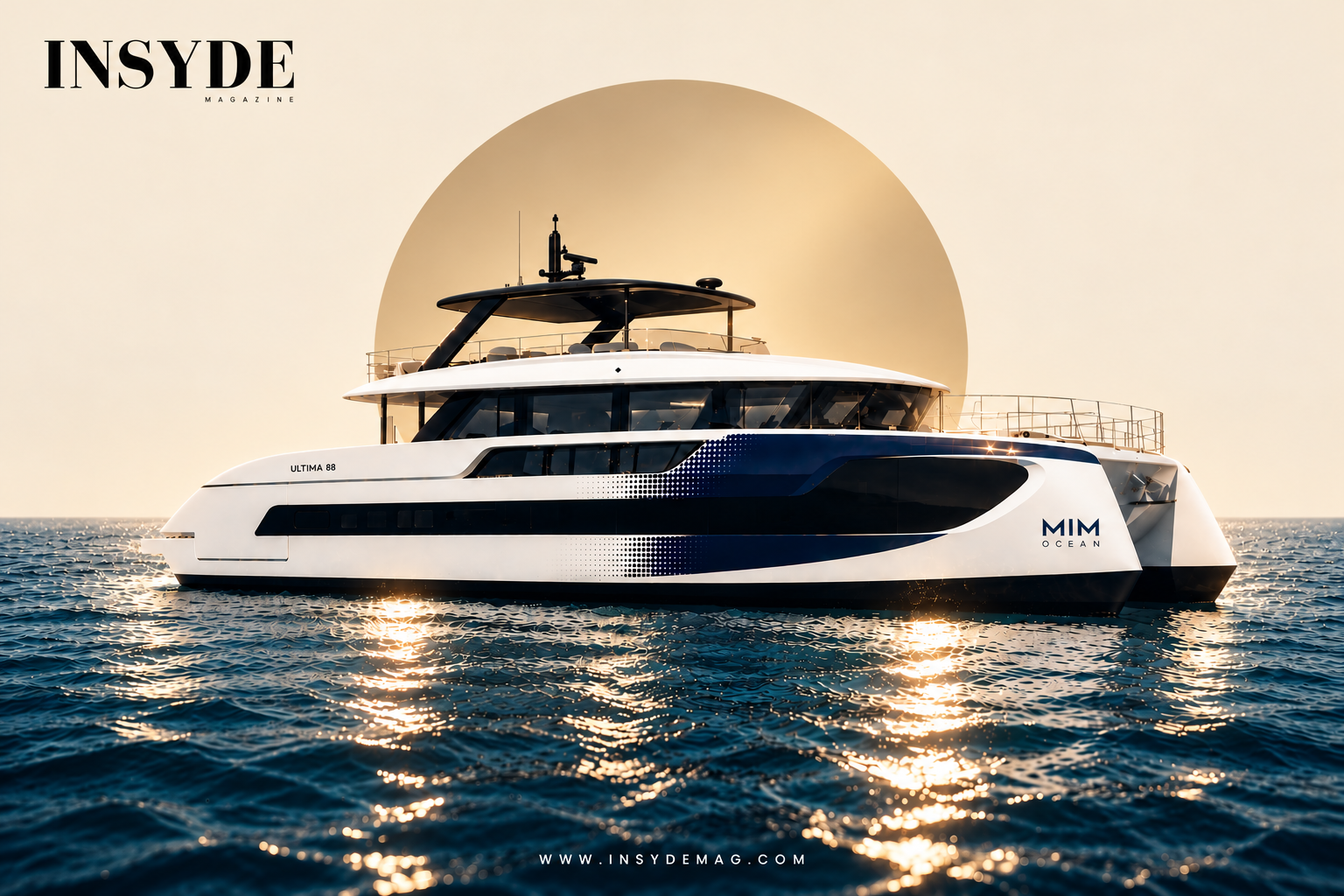
    On 13 October 2026, Polish yacht builder Sunreef Yachts announced that the Argentine football icon had ordered a Sunreef ULTIMA 88, a 28.4-metre luxury power catamaran being built at the company’s shipyard in Ras Al Khaimah, United Arab Emirates. The yacht is intended to join MIM Ocean, the charter venture Messi operates in partnership with Med Cat Yachts.

    The headline figure circulating around the order is approximately €8–9 million, or roughly US$9–10 million depending on exchange rates. The actual contract price has not been publicly disclosed by the builder or Messi, so the valuation remains an estimate rather than a confirmed purchase figure.

    But the money is only the opening chapter.

    The more revealing story is about the architecture of modern luxury: how performance engineering meets private hospitality, how a sporting icon’s commercial interests extend beyond the pitch, and why the most desirable possessions are increasingly judged by the experiences they make possible.

    Messi’s new yacht is not simply another expensive addition to a celebrity’s lifestyle. It offers a compelling case study in the business, psychology and evolving design of extreme luxury.

    THE PRICE OF A PRIVATE HORIZON

    In the public imagination, wealth is often measured through objects. The supercar in the driveway. The watch beneath a tailored cuff. The residence overlooking a coastline that most people experience only on holiday.

    A yacht occupies a different category.

    It is a residence that moves, a transport system that doubles as a social environment, and a private setting that can travel between destinations. Its value is not restricted to the materials from which it is built. It also lies in the control it offers over time, space and access.

    That distinction helps explain why the superyacht remains one of the most powerful symbols of extreme wealth.

    A luxury hotel can provide exceptional service, but its spaces are shared with other guests. A private villa offers seclusion, but it remains tied to one location. A yacht combines elements of both while adding mobility. The owner can move between coastlines, anchor away from crowded marinas and create a highly personalised environment for family, friends or guests.

    For a person whose professional life involves global attention, that degree of control has an obvious appeal. Nevertheless, Messi’s personal motivations for ordering this particular yacht have not been fully disclosed, and the significance of the purchase should not be reduced to speculation about his private life.

    What is clear is the scale of the asset and the wider business context in which it sits.

    At an estimated price approaching US$10 million, the ULTIMA 88 belongs to a world where the initial transaction is only one component of the commitment. Crew, maintenance, insurance, fuel, berthing, technical servicing and eventual refits can all contribute substantially to the cost of ownership.

    Extreme luxury is not simply the ability to acquire an extraordinary object. It is the ability to operate, maintain and personalise it over time.

    That is where the real economics of the superyacht begin.

    INSIDE THE SUNREEF ULTIMA 88

    The Sunreef ULTIMA 88 occupies an interesting position within contemporary yacht design. It seeks to combine the dynamic character of a performance-oriented power yacht with the width, stability and living space associated with a multihull.

    According to Sunreef’s published specifications, the model measures approximately 28.4 metres in length and 9.3 metres across the beam. The shipyard lists approximately 387 square metres of living space, an unusually expansive figure that illustrates the design priorities of the platform.

    The distinction matters because yacht design is not only about how a vessel looks from the water. It is also about how people inhabit it.

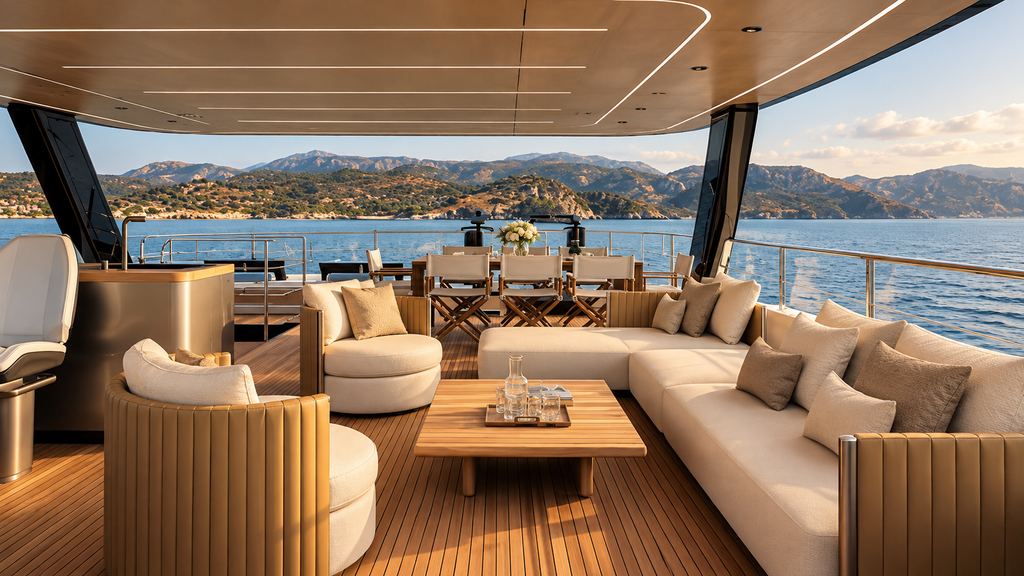
    The ULTIMA 88’s defining feature is its relationship with the sea. Opening side platforms and an aft garage create what Sunreef calls an Ocean Lounge, extending the usable space towards the water when the yacht is at anchor. The layout is intended to make the transition between interior living areas and the surrounding marine environment feel more immediate.

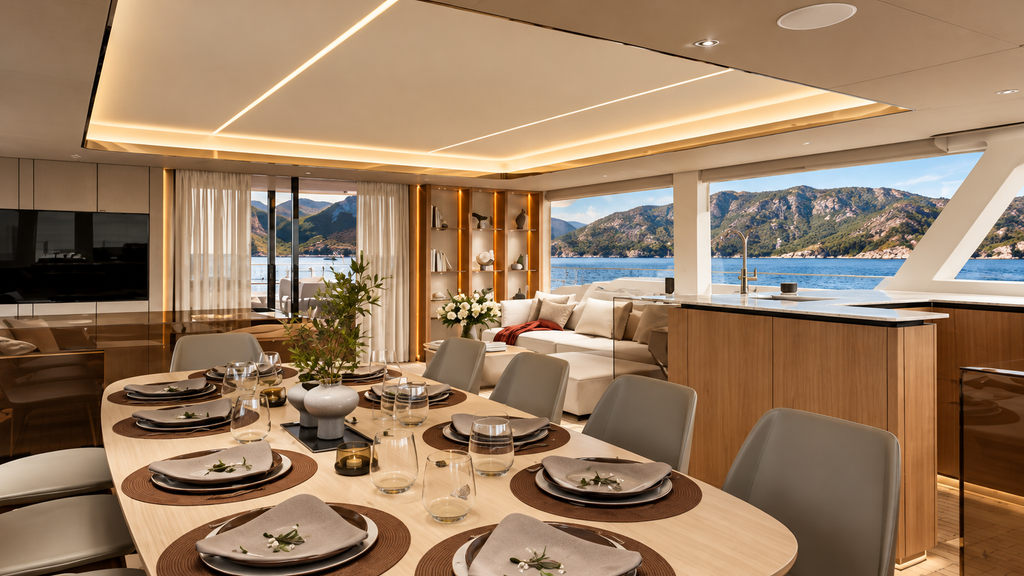
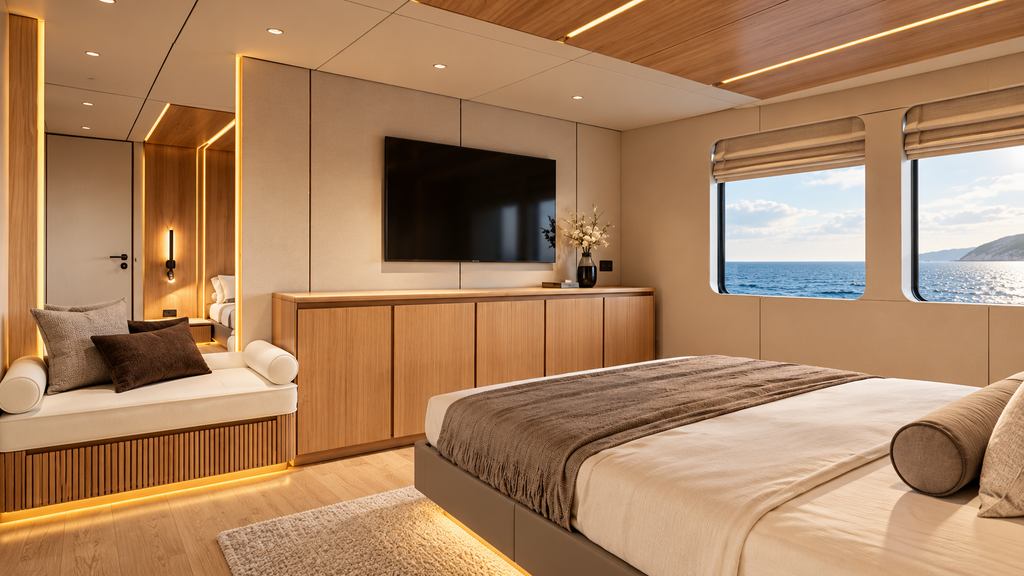
    A full-beam owner’s suite, guest accommodation and open social areas complete the experience.

    Instead of treating the sea as a view beyond the deck, the design brings it into the living environment. The aft area can become a place to relax beside the water, while the interior provides a more sheltered setting for dining, resting and socialising.

    This is an important distinction in the contemporary luxury market. Increasingly, the product is not just the object itself; it is the quality of the interaction between the object, its surroundings and the person using it.

    In a yacht, that interaction is shaped by everything from the arrangement of the decks to the ease with which guests can move between spaces. A spectacular exterior may attract attention, but a successful vessel must work just as well during the ordinary hours spent aboard.

    Sunreef’s published model specifications also include different propulsion configurations. The exact technical specification selected for Messi’s commissioned yacht has not been publicly confirmed, so the model’s advertised features should not automatically be treated as the final specification of his individual vessel.

    That distinction is important. A bespoke yacht is not always identical to a standard model description. Its final configuration can depend on the owner’s requirements and the contract agreed with the shipyard.

    The ULTIMA 88’s appeal lies in its attempt to reconcile performance, generous space and contemporary onboard living within a single design.

    For the modern luxury buyer, that balance may be more persuasive than sheer size alone.

    WHY THE CATAMARAN MATTERS

    For much of the superyacht market’s history, the conventional monohull has defined the familiar image of luxury at sea: a long hull, a prominent profile and a sequence of decks rising above the water.

    A catamaran takes a different approach.

    Its two-hull configuration creates a broad platform that can accommodate substantial interior and exterior space. Depending on the design, it can also offer stability and access to certain shallower anchorages compared with some monohull alternatives.

    The trade-offs matter. A wider vessel can face different marina constraints, and performance, fuel consumption, handling and range depend on the engineering, propulsion system and operating conditions. No single hull configuration is automatically superior in every situation.

    What the catamaran format offers is a different way of organising life aboard.

    On the ULTIMA 88, that additional width supports the emphasis on open living spaces and the Ocean Lounge. The vessel is conceived not merely as a machine for travelling between destinations, but as a place in which people can spend meaningful time once they arrive.

    This becomes especially relevant when considering the yacht’s intended role within a charter operation. Guests are not paying only for the journey from one port to another. They are paying for the environment, the accommodation, the service and the activities that take place during their time aboard.

    The design therefore has implications beyond aesthetics. It influences how the yacht can be used, the type of experience it can deliver and the way it can be positioned within the luxury-hospitality market.

    The ULTIMA 88 is an example of how yacht builders are attempting to compete through the intelligent use of space and the integration of leisure into the vessel’s architecture.

    In this segment, engineering and experience are increasingly inseparable.

    FROM FOOTBALL ICON TO LUXURY HOSPITALITY

    The most commercially interesting aspect of Messi’s new yacht may not be its estimated price. It may be the business it is intended to join.

    MIM Ocean’s official website describes a venture combining Messi’s MIM Hotels experience with the charter expertise of Med Cat Yachts. Its existing offering centres on professionally crewed Bali catamarans, with summer operations in the Balearic Islands and winter-season availability in the Caribbean and Bahamas.

    The proposition is built around private sailing holidays, with accommodation, crew, food and water-based activities forming part of the guest experience.

    The Sunreef order is intended to expand that wider offering.

    This places the yacht within a business model that connects celebrity recognition with hospitality and premium leisure. The association with Messi can attract attention, but the long-term success of a charter operation depends on more practical considerations: service quality, operating costs, pricing, availability, customer satisfaction and the ability to deliver a consistent experience.

    That distinction is essential when discussing celebrity wealth.

    A high-value asset can be used for personal enjoyment, commercial activity or a combination of both. Its financial performance cannot be established simply by knowing who owns it or how much it may cost.

    In Messi’s case, the yacht’s announced destination within MIM Ocean creates a clear connection to an existing commercial venture. It does not, however, establish the vessel’s future revenue, profitability or investment return.

    Those outcomes would depend on information that has not been made public, including the final acquisition price, annual operating expenditure, charter rates, utilisation and the division of costs between private and commercial use.

    The commercially relevant question is therefore not whether the yacht will make money. It is how the vessel will be integrated into a broader hospitality offering and what kind of experience it will enable the business to sell.

    That is a more revealing way to understand the order than treating it solely as a display of celebrity spending.

    Messi’s global profile and the yacht’s design may help differentiate the offering. But the business must ultimately be judged by its operations.

    THE BUSINESS OF EXTREME LUXURY: WHAT THE 2026 MARKET REVEALS

    The timing of the order is particularly interesting because the wider yacht market presents a more complicated picture than the familiar narrative of ever-rising luxury spending.

    According to Northrop & Johnson’s Q3 2026 Superyacht Market Report, 472 pre-owned yachts measuring at least 24 metres were sold globally during the first nine months of 2026, compared with 477 over the same period in 2025.

    That represents a year-on-year decline of approximately 1%.

    The combined value of those transactions fell from US$5.46 billion to US$5.20 billion, a reduction of approximately 4.7%.

    At first glance, those figures suggest a market that remains active but is not expanding uniformly in value. The number of transactions has remained relatively stable, while the aggregate value of completed sales has declined.

    The supply side tells a complementary story. The report records 1,400 new central-agency listings during the first nine months of 2026, up 5.5% from 1,327 in the corresponding period of 2025. Price reductions also increased, rising 7.2% to 1,949.

    For buyers in the brokerage market, that combination can mean greater choice and more scope to negotiate. For sellers, it reinforces the importance of pricing a vessel realistically in relation to competing inventory.

    However, these numbers require careful interpretation. They concern the pre-owned brokerage market for yachts of at least 24 metres, not every segment of marine leisure, and they do not measure demand for Messi’s specific new-build order.

    The report also shows why the market should not be reduced to a single growth or decline narrative.

    During the first nine months of 2026, sales in the 40–50-metre pre-owned segment rose from 49 to 63, an increase of approximately 29%. Elsewhere, demand was more uneven.

    New-build activity was more subdued overall. The same report recorded 216 reported new-build sales of yachts measuring at least 24 metres during the first nine months of 2026, compared with 266 in the corresponding period of 2025. The figures remain provisional because transactions can be reported retrospectively.

    Charter activity, meanwhile, presented a more positive picture. Northrop & Johnson reported an 18.5% increase in charter bookings during the first nine months of 2026, alongside a 17.4% increase in booked days. The number of individual yachts receiving bookings rose by 1.8%, from 1,641 to 1,670.

    These figures suggest that charter activity increased across a broadly similar number of vessels. They do not prove that every yacht or destination performed equally well, but they offer evidence of stronger activity in the reported charter market.

    Taken together, the data illustrates a market with different dynamics across brokerage, new construction and charter operations.

    That distinction is crucial to understanding Messi’s order.

    The new yacht belongs to the new-build market, while its intended place in MIM Ocean connects it to the charter sector. The pre-owned sales figures offer useful context about the broader industry, but they cannot be used as a direct valuation benchmark for the ULTIMA 88.

    The lesson is that extreme luxury is not one unified market. It is a collection of connected businesses, each with its own economics.

    WHY EXPERIENCE HAS BECOME THE REAL LUXURY

    A yacht can be evaluated through its dimensions, propulsion, finish and price. Yet these specifications explain only part of its appeal.

    The rest lies in what ownership makes possible.

    A yacht can turn a holiday into a private itinerary. It can bring accommodation, dining, transport and leisure together in one environment. It can provide a setting in which time is organised around the people aboard rather than around the operating hours of a hotel, resort or public attraction.

    This is where the economics of extreme luxury intersect with its psychology.

    For many affluent consumers, luxury is not simply a question of buying a more expensive version of an ordinary product. It is about reducing friction, increasing choice and gaining control over how time is spent.

    That does not mean privacy and experience have replaced visible status. Both remain important, and their relative significance varies from one buyer to another.

    But the ULTIMA 88 illustrates how a single asset can serve several dimensions of luxury at once. It can be a design object, a private retreat, a means of travel and a platform for hospitality.

    The value lies in the combination.

    For someone whose professional identity is constantly visible, a private environment may offer a different kind of appeal from another highly visible possession. Yet this remains an interpretation of the wider luxury market, not a claim about Messi’s undisclosed personal motivations.

    What can be observed is the design and business proposition itself: a vessel built around performance and living space, intended for a venture that sells private sailing experiences.

    The modern luxury proposition is increasingly about the complete experience rather than the isolated product.

    THE COST OF OWNING A DREAM

    An estimated US$10 million acquisition price may dominate the headlines, but it is not a complete measure of the yacht’s financial commitment.

    Large yachts require ongoing expenditure on crew, servicing, insurance, fuel, berthing, technical support and provisions. The scale of these costs varies with the vessel’s systems, operating schedule, cruising distances and intended use.

    A yacht that spends much of the year in private use may have a different financial profile from one operated commercially. A charter vessel also faces the challenge of balancing customer demand against maintenance periods, seasonal availability and the cost of delivering a premium service.

    There is no reliable basis for assigning Messi’s yacht a specific annual running cost or projected charter income without its final specification and operating arrangements.

    The same caution applies to resale value. A yacht’s future market price will depend on its condition, build quality, specification, maintenance history, market conditions and the availability of comparable vessels.

    Nor should a commissioned yacht automatically be described as an investment. It may be a lifestyle asset, a business asset or a combination of the two. Whether it generates a financial return is a separate question that requires evidence.

    These distinctions are important because luxury reporting often concentrates on the acquisition while overlooking the economics of ownership.

    The price of entry is only one part of the story. Sustaining the experience is another.

    For MIM Ocean, the commercial calculation will ultimately depend on how the vessel is operated and how effectively its offering matches customer demand. For Messi personally, the full balance between private use and commercial use has not been disclosed.

    The responsible conclusion is not to assume profitability or extravagance beyond the evidence. It is to recognise the complexity behind an asset of this scale.

    PERFORMANCE, DESIGN AND THE QUESTION OF SUSTAINABILITY

    Luxury yachting also faces a question that extends beyond comfort and prestige: how can high-performance marine engineering become more efficient?

    Sunreef’s wider ULTIMA and Eco product portfolio highlights areas such as hybrid propulsion, battery systems and solar technology. These are relevant developments in an industry exploring different ways to reduce energy consumption and improve the onboard experience.

    However, a distinction must be made between technology available within a manufacturer’s wider range and the equipment installed on a particular vessel.

    The exact propulsion and energy systems commissioned for Messi’s ULTIMA 88 have not been fully disclosed. It would therefore be inaccurate to describe his yacht as a specific hybrid or solar-powered configuration without confirmation.

    More broadly, hybrid systems and solar generation do not automatically make a yacht emissions-free. Environmental performance depends on factors such as propulsion, energy demand, cruising speed, operating profile and the source of the energy used.

    For the industry, the opportunity is to make efficiency part of the engineering brief rather than treating it as an afterthought. Improvements in energy management, hull design and onboard systems can matter, although their actual benefits must be assessed against the vessel’s full operating requirements.

    For a luxury buyer, sustainability is increasingly a question of engineering and evidence, not merely a marketing label.

    The future of premium yachting will depend partly on how successfully builders combine the expectations of performance and comfort with more responsible use of energy and resources.

    MESSI’S NEW YACHT AND THE FUTURE OF CELEBRITY LUXURY

    The relationship between celebrity and luxury has always been commercially powerful. A recognisable name can bring attention to a product, create cultural relevance and give a business a distinctive public identity.

    But attention alone does not create a successful enterprise.

    Messi’s yacht order brings these elements together. His global sporting profile gives the announcement immediate visibility. Sunreef contributes specialist design and engineering. MIM Ocean provides an existing hospitality context in which the vessel is intended to operate.

    The combination is more interesting than any one element in isolation.

    It shows how a global sporting identity can connect with a premium leisure business, while also demonstrating the importance of execution. The vessel must be built, delivered, operated and maintained. A charter business must attract customers and provide a consistently high-quality experience. The public profile can open the door, but the product and service must justify the proposition.

    This is a useful lesson for the broader luxury sector.

    The strongest luxury businesses do not sell only an object or a name. They build a coherent experience around design, service, access and trust.

    In that sense, the ULTIMA 88 is more than a headline about an expensive yacht. It sits at the intersection of marine engineering, celebrity culture and experience-led hospitality.

    Its commercial significance will become clearer as more information emerges about the final vessel and its operation.

    For now, the order provides a tangible example of how luxury assets can connect private enjoyment with wider commercial ambitions.

    THE ART OF EXTREME LUXURY

    Extreme luxury is often presented through numbers: metres of hull, horsepower, cabin counts and estimated prices.

    Those details are part of the story. They communicate the engineering involved, the space available and the scale of the financial commitment.

    But they do not fully explain the attraction.

    The deeper appeal is the freedom to shape an experience around personal preferences. It is the ability to travel without relying on a fixed location, to spend time in a carefully designed environment and to make decisions about how a day unfolds.

    Messi’s Sunreef ULTIMA 88 captures that idea in a distinctly contemporary form. Its multihull architecture emphasises space and the relationship between the interior and the water. Its intended place in MIM Ocean links the yacht to a commercial hospitality venture. And its arrival comes at a time when the wider yacht industry is navigating uneven brokerage demand alongside stronger reported charter activity.

    The estimated price may be the detail that attracts immediate attention, but it is not the most revealing one.

    The more meaningful story is the convergence of design, privacy, engineering and experience — and the way those elements are being packaged into a modern expression of wealth.

    The yacht is still under construction, its final contract price remains undisclosed, and its eventual commercial performance is yet to be established.

    What is already clear is that luxury at this level is about more than possession.

    It is about the ability to create a world of your own, even if only for a few days at a time.

    At sea, the ultimate symbol of privilege may not be the vessel itself.

    It may be the freedom to decide where the horizon leads next.


    Price note: The approximately US$9–10 million valuation is an estimate reported by media outlets, not a confirmed contract price. The vessel’s final specification, delivery date and operating economics have not been fully disclosed.

    INSYDE MAGAZINE

    Luxury. Culture. People. What comes next.

    BENGALURU’S NO. 1 LUXURY MAGAZINE

  • THE ART OF TEMPTATION

    THE ART OF TEMPTATION

    Inside the seductive world of luxury chocolate, where rare cacao, extraordinary craftsmanship and the pursuit of pleasure turn a familiar indulgence into something far more sophisticated.

    INSYDE MAGAZINE | LUXURY

    Chocolate has always understood the art of seduction. It melts slowly, lingers on the palate and transforms an ordinary moment into something worth savouring. But at the upper end of the market, chocolate is no longer simply a sweet indulgence. It is an expression of taste, craftsmanship, provenance and the increasingly sophisticated business of pleasure.

    Behind an elegant box of bonbons or a carefully wrapped bar of dark chocolate lies a world of cacao varieties, agricultural heritage, technical precision and creative experimentation. Some makers draw on generations of European confectionery tradition. Others look towards distinctive growing regions, unusual flavour profiles or entirely different ways of experiencing chocolate.

    Their products may differ in price, philosophy and presentation. What connects them is an ambition to make chocolate more than an everyday purchase: to turn it into an experience that invites attention, curiosity and desire.

    Yet luxury is not simply a matter of charging more. A beautiful package cannot compensate for an unremarkable product, and an expensive ingredient does not automatically guarantee an exceptional result. The more interesting story lies in the relationship between the cacao, the maker and the experience that ultimately reaches the consumer.

    This is where the art of temptation begins.

    WHEN CHOCOLATE BECOMES LUXURY

    For much of its commercial history, chocolate has been associated with comfort, celebration and accessible indulgence. Luxury chocolate operates through a more layered proposition.

    Here, the conversation extends beyond sweetness to the origin of the cacao, the balance of flavours, the texture of a ganache, the precision of a chocolate shell and the decisions made long before a finished product reaches its packaging.

    Presentation matters, but it is only one part of the equation. A beautifully designed box can create anticipation. It cannot, by itself, create exceptional chocolate.

    The most compelling makers establish a recognisable point of view. Some pursue restraint and purity. Others explore intricate flavour combinations, celebrate particular cacao varieties or develop collections that encourage consumers to taste chocolate with the attention usually reserved for fine wine or specialty coffee.

    This approach reflects a broader commercial opportunity. Grand View Research estimates that the global premium chocolate market was worth approximately US$32.9 billion in 2025 and projects it to reach US$34.1 billion in 2026, before growing to US$47.8 billion by 2033. These figures are market-research estimates rather than audited industry totals, but they indicate the scale of the premium segment and its projected growth.

    The opportunity is not simply to sell a more expensive chocolate bar. It is to offer a more distinctive product, a stronger story and an experience consumers consider worth paying for.

    In this market, luxury can mean rarity, technical expertise, heritage, sensory complexity or the pleasure of discovering something unfamiliar. The strongest brands understand that these qualities are most persuasive when they are supported by the product itself.

    FIVE CHOCOLATE HOUSES, FIVE EXPRESSIONS OF LUXURY

    There is no universally accepted ranking of the world’s most luxurious chocolate brands. The following five houses offer a more useful perspective: each illustrates a different way of building distinction in fine chocolate, from cacao provenance to French craftsmanship and Japanese product innovation.

    01. TO’AK CHOCOLATE

    Ecuador | The allure of rarity

    What if the most interesting thing about chocolate were not the recipe, but the cacao itself?

    Ecuadorian maker To’ak has built its identity around the heritage and distinctive character of cacao, particularly the Nacional variety. Its work draws attention to the relationship between the cacao tree, the growing environment, the people cultivating the crop and the final chocolate.

    The brand’s story centres on Ecuador’s Piedra de Plata valley and the preservation of Nacional cacao. Rather than treating cacao as an interchangeable commodity, To’ak presents its origin and characteristics as essential parts of the finished product.

    This philosophy extends into its approach to tasting. Its official catalogue includes a selection of 18 mini bars made from 100% cacao, weighing 54 grams in total and listed at US$60 on the brand’s website at the time of research. The seasonal selection allows consumers to explore differences in harvest and flavour without additional ingredients obscuring the cacao’s character.

    That is a distinctive proposition in a category where chocolate is often judged by sweetness, percentage or packaging alone.

    To’ak’s approach also raises a larger question about luxury: what happens when the ingredient becomes the main attraction? In this case, the answer lies in provenance, variation between harvests and the effort required to preserve particular cacao traditions.

    Rarity, however, should not be confused with quality by default. The value of a rare variety ultimately depends on its flavour, production and the integrity of the story behind it.

    INSYDE perspective: The most persuasive luxury is rarity with substance. When provenance connects to agricultural heritage and a genuinely distinctive tasting experience, the story becomes more than a marketing device.

    Explore: To’ak Chocolate.

    02. LA MAISON DU CHOCOLAT

    France | The Parisian art of indulgence

    Founded in Paris by Robert Linxe in 1977, La Maison du Chocolat helped establish a distinctive language for French luxury chocolate: refined, technically demanding and attentive to the character of each ingredient.

    Its philosophy rests on a deceptively simple idea. Chocolate deserves to be treated as an art form, with the same attention to balance and execution found in other expressions of fine craftsmanship.

    Consider the ganache. Its texture and flavour depend on the relationship between chocolate, cream and other ingredients, as well as the temperatures and techniques used during production. A subtle adjustment can change the result entirely. Achieving consistency while preserving the intended character of a recipe requires experience, precision and careful tasting.

    La Maison du Chocolat places this craft at the centre of its identity. Its history and production philosophy emphasise the expertise of its chocolatiers, from developing fillings to coating and finishing individual pieces.

    There is also a distinctly Parisian sensibility to its presentation. The visual language is elegant without requiring every creation to become an extravagant spectacle. The product remains central, while packaging and presentation frame the experience.

    This is an important distinction in luxury. When every brand competes to appear more exclusive, restraint can become a form of confidence.

    La Maison du Chocolat demonstrates that sophistication does not always require novelty. Sometimes it means taking a familiar pleasure and executing it with extraordinary care.

    INSYDE perspective: True refinement is not about adding more. It is about understanding exactly what each detail contributes to the final experience.

    Explore: La Maison du Chocolat.

    03. AMEDEI

    Italy | The beauty of the bean

    Amedei approaches chocolate through the character of cacao and the qualities that make a particular variety distinctive.

    One of its notable creations is Porcelana, a 70% dark chocolate made with Criollo cacao associated with Venezuela’s Zulia region, southwest of Lake Maracaibo. Amedei describes its Porcelana cacao as rare and highlights a flavour profile that includes notes of almond, toasted bread and bay leaf.

    The details matter because fine chocolate is not defined by cocoa percentage alone. Two bars containing the same proportion of cacao can taste remarkably different, depending on the beans used, fermentation, roasting, conching and other production choices.

    Amedei’s Porcelana offers an example of how a particular cacao variety can become central to a product’s identity. The origin, flavour profile and production philosophy give the chocolate a story that extends beyond its appearance.

    The product also illustrates an important distinction between luxury positioning and luxury pricing. At the time of research, Amedei listed its 50-gram Porcelana bar at €10.30 on its official website. That is a premium price for a small bar, but the more meaningful point is the product’s emphasis on a specific cacao and its sensory characteristics.

    Rarity deserves scrutiny, too. A rare ingredient is not automatically superior for every palate, and a prestigious origin cannot replace good processing. The ultimate test remains what the consumer experiences when the chocolate is tasted.

    That distinction separates informed appreciation from luxury branding alone.

    INSYDE perspective: Exceptional chocolate does not simply announce its quality. It gives the curious consumer something to discover.

    Explore: Amedei Porcelana.

    04. RICHART

    France | Chocolate as a language of flavour

    Not every luxury chocolate experience begins with a rare cacao variety or a centuries-old recipe. Sometimes, it begins with curiosity.

    French chocolate house RICHART takes an approach inspired by the aromatic language of perfumery. Its collections are organised around seven aromatic families: balsamic, roasted, fruity, citrus, herbal, floral and spicy.

    The concept changes the way chocolate is presented to the consumer. Rather than treating every piece as a variation on sweetness, the brand encourages exploration of aroma, flavour and the relationships between ingredients.

    A fruity chocolate creates a different impression from a roasted or herbal one. Citrus can introduce brightness, while spices can add warmth and complexity. These combinations are not merely decorative descriptions; they give the consumer a framework for comparing and understanding different sensory experiences.

    RICHART also pays attention to the form and presentation of its creations. Its Petits RICHART chocolates, introduced in 1988 according to the brand, are designed as small, carefully composed pieces in which appearance and aromatic character work together.

    The appeal is closer to discovering a collection than simply buying a sweet treat. Each piece becomes part of a broader experience, inviting comparison and encouraging the consumer to slow down.

    This approach reveals another dimension of luxury: not everything needs to be rare to be distinctive. A product can create value through the intelligence of its design and the way it encourages people to experience familiar ingredients differently.

    INSYDE perspective: Sometimes the most seductive luxury is the one that makes you curious enough to take another bite.

    Explore: RICHART.

    05. ROYCE’

    Japan | The art of texture

    Luxury chocolate does not belong exclusively to Europe’s established confectionery traditions.

    Founded in Sapporo, Hokkaido, in July 1983, ROYCE’ has developed a distinct identity through its attention to ingredient quality, originality, texture and presentation. Its Nama Chocolate, in particular, is associated with a soft, delicate texture that differs from the familiar snap of a conventional solid chocolate bar.

    That contrast is central to the experience. Chocolate is often discussed through its cocoa percentage or origin, but texture can be just as influential. The way a piece yields, melts and releases flavour can shape the entire tasting experience.

    ROYCE’ has built its philosophy around quality, originality and surprise, drawing on its Hokkaido roots while developing products for a wider international audience. Its approach demonstrates how a premium identity can emerge from a distinctive product experience rather than from European heritage or elaborate visual codes alone.

    There is a practical dimension to this, too. Products with a softer texture and specific storage requirements demand attention to handling, freshness and distribution. Those considerations form part of the product’s character, not merely the logistics behind it.

    ROYCE’ is also a relevant name for Indian readers. Its India website lists availability in cities including Bengaluru, Mumbai, New Delhi, Gurugram, Kolkata and Pune. Current stock and product ranges should still be checked with the retailer before planning a purchase.

    Its story is a reminder that luxury does not need to look the same everywhere. A recognisable experience, executed consistently, can become a brand’s strongest signature.

    INSYDE perspective: Luxury is not a single aesthetic. It is the ability to create something that feels unmistakably its own.

    Explore: ROYCE’ India.

    THE PRICE OF PLEASURE

    The luxury chocolate conversation becomes more complicated when price enters the picture.

    Rare cacao, specialist production, careful sourcing and labour-intensive finishing can all contribute to the cost of fine chocolate. But price is also influenced by brand positioning, packaging, distribution, taxes, retail location and the format in which a product is sold.

    A tasting collection and a single-origin bar are not necessarily competing on the same terms. Nor can a limited-edition creation be compared fairly with a widely available product simply by looking at the price on the label.

    The broader cacao market adds another layer to the conversation. Cocoa prices are influenced by supply and demand, weather, crop conditions, inventories and developments in producing countries. Those movements can affect manufacturers, but they do not translate directly into the retail price of every finished chocolate.

    The relationship between raw cacao and luxury chocolate is especially complex because specialist makers may prioritise particular varieties, regions or sourcing relationships rather than purchasing ingredients solely on commodity-market terms.

    For consumers, the more useful question is not simply whether a chocolate is expensive. It is what the price represents.

    Is it the quality and provenance of the cacao? The skill required to produce the chocolate? A distinctive flavour experience? A thoughtfully designed gift? Or primarily the prestige attached to the name?

    There is no single answer across the category. Amedei’s Porcelana and To’ak’s tasting selection, for instance, offer different experiences at different price points. Comparing them solely by cost would overlook what each product is designed to deliver.

    The strongest luxury brands make that distinction clear. They give consumers a reason to understand the product beyond its price tag.

    BEYOND THE BOX: WHAT MAKES LUXURY CHOCOLATE MATTER?

    Luxury chocolate sits at the intersection of food, design, gifting and culture. Its appeal comes from more than sweetness: it can communicate affection, mark an occasion, signal discernment or provide a private moment of pleasure.

    That is why presentation occupies such a prominent role. A carefully designed box can turn chocolate into a meaningful gift. A thoughtfully arranged collection can make opening the package part of the experience. But presentation is most convincing when it reflects the care invested in what is inside.

    The same principle applies to heritage and provenance. An origin story can deepen appreciation when it is supported by credible information about the cacao, its production and the people involved. Without that substance, storytelling risks becoming decoration.

    There is also a reason to ask harder questions about the supply chain. Cacao production is shaped by agricultural conditions, farmer livelihoods and environmental pressures. Claims about sustainability or ethical sourcing should therefore be judged on evidence rather than on elegant language alone.

    For luxury brands, responsibility and quality need not be separate conversations. Traceable sourcing, long-term relationships with producers and credible efforts to protect distinctive cacao can contribute to the long-term value of a product. The important distinction is between commitments that can be substantiated and claims that simply sound appealing.

    As the premium chocolate market evolves, its most interesting brands will be those that connect exceptional taste with meaningful provenance, skilled production and a credible account of how their products are made.

    Luxury becomes more convincing when the story survives scrutiny.

    THE INSYDE TAKE

    The most luxurious chocolate is not necessarily the one with the highest price tag, the most elaborate packaging or the rarest-sounding name.

    It is the one in which the details come together: the cacao has a reason to be celebrated, the maker understands the material, the flavour delivers on its promise and the experience feels considered from beginning to end.

    To’ak makes the case for provenance and rarity. La Maison du Chocolat demonstrates the power of refinement. Amedei invites a closer look at cacao character. RICHART turns tasting into exploration. ROYCE’ shows how texture and product identity can create a different kind of indulgence.

    Five distinct approaches, one shared idea: chocolate becomes more interesting when we look beyond the sweetness.

    Perhaps that is the real art of temptation. Not simply making us want another piece, but giving us a reason to pay closer attention to the one already in front of us.

    INSYDE MAGAZINE

    Luxury, Through a Different Lens.

    No.1 luxury Magazine in Bengaluru

  • THE BLOODLINES OF BENGALURU

    THE BLOODLINES OF BENGALURU

    Five Families. Generational Wealth. The Empires Shaping a City.

    From technology fortunes and real-estate empires to a jewellery house spanning six generations, INSYDE explores the family legacies behind Bengaluru’s changing relationship with wealth, ambition and influence.

    Bengaluru has become a city of extraordinary contrasts. Glass towers rise beside century-old neighbourhoods. Technology entrepreneurs build global businesses while property developers reshape the skyline. Luxury residences, commercial districts and established family enterprises coexist with a new generation determined to create fortunes of its own.

    Yet behind the city’s familiar corporate names lies another story: the families whose decisions, businesses and legacies have helped shape its economic identity.

    Some built their fortunes by transforming traditional enterprises into global businesses. Others recognised the value of land, commercial infrastructure or the growing appetite for luxury. A few created something more enduring than a company: an institution that continued to evolve long after its founders established it.

    But family wealth is rarely as straightforward as it appears. A founder’s fortune is not necessarily the same as a family’s collective wealth. A prominent surname does not automatically confer control over a publicly listed company. And a business that has survived for generations must continually prove its relevance to a changing market.

    To understand Bengaluru’s business dynasties, then, we must look beyond net-worth lists. We must examine what these families built, how their businesses operate today and what their stories reveal about the future of wealth in one of India’s most ambitious cities.

    This is not a ranking of Bengaluru’s richest families, nor a claim that five families own the city. It is a closer look at five distinct legacies: technology, real estate, commercial infrastructure, industrial enterprise and luxury craftsmanship.

    01. THE PREMJI FAMILY

    From an established enterprise to a global technology fortune

    Few business legacies illustrate the transformation of Indian industry as clearly as that of Azim Premji and Wipro.

    The company began in 1945 as Western India Vegetable Products, operating in the vegetable-oil business. Under Premji’s leadership, it diversified and eventually developed into one of India’s most recognisable information technology services companies.

    The transformation was significant. Wipro became part of a wider shift that positioned Indian technology professionals as essential participants in the global digital economy. Bengaluru, with its growing concentration of engineering talent and technology businesses, became central to that story.

    But the Premji legacy is not simply a story of an entrepreneur recognising an opportunity. It is also a story of ownership, succession and the distinction between family influence and professional management.

    Wipro’s FY2025–26 corporate disclosures identify Azim Premji as a non-executive director and Rishad Premji as executive chairman. The company’s annual reporting also documents the substantial shareholding associated with Azim Premji and the structures through which some of those shares are held.

    The figures illustrate the scale of the family’s connection to the business. They should not, however, be confused with a complete estimate of the family’s net worth: company shares, private businesses, philanthropic trusts and other assets are different categories of wealth.

    The next chapter is equally important. Rishad Premji joined Wipro in 2007, worked across several roles and became executive chairman in 2019. His progression reflects a model of succession in which a family member develops experience within a large organisation before assuming its most senior leadership responsibilities.

    Beyond business, Azim Premji has become one of India’s most prominent philanthropists through his work in education and social development, including the Azim Premji Foundation.

    That philanthropic dimension complicates the usual image of a business dynasty. Wealth can preserve influence, but it can also be directed towards institutions and causes that extend beyond the original enterprise.

    The legacy: The Premji story is about transforming a traditional business into a global technology enterprise — and about the responsibilities that accompany wealth at that scale.

    Sources: Wipro Integrated Annual Report 2025–26; Wipro’s FY2025–26 filing with the US Securities and Exchange Commission.

    02. THE RAZACK FAMILY

    The business of building aspiration

    In Bengaluru, real estate is more than a market for apartments and office buildings. It is one of the most visible ways in which economic growth becomes physical: a new address, a commercial district, a residential community or a skyline that changes the character of an entire neighbourhood.

    The Razack family, associated with Prestige Group, has played a prominent role in this transformation.

    The company’s growth under Irfan Razack and his brothers, Noaman and Rezwan, reflects the expansion of Indian real estate from a largely residential business into a broader industry encompassing commercial offices, retail, hospitality and other property assets.

    As Bengaluru attracted technology companies and a growing professional workforce, demand for housing and commercial space changed. Developers responded to new expectations around location, design, amenities and lifestyle. Prestige became one of the major businesses operating within that evolution.

    Its continuing family connection is visible in its shareholding structure. The Razack Family Trust held 52.24% of Prestige Estates Projects in the June 2026 shareholding data reported by Value Research. The three brothers were also individually listed among the company’s promoter shareholders.

    That is a more meaningful indicator of family influence than simply attaching a speculative fortune to the family name. It establishes a documented ownership relationship with a publicly listed business.

    The group is also looking beyond the traditional economics of property sales.

    In an interview published by Financial Express in October 2026, Irfan Razack said Prestige was targeting annual rental income of more than ₹4,000 crore by FY2030, compared with approximately ₹860 crore at the time of the interview. He also cited 35 million square feet of commercial space under development.

    These are forward-looking company targets and pipeline figures, not achieved results. Nevertheless, they reveal an important strategic ambition: building a business in which recurring rental income becomes increasingly significant alongside residential sales.

    The distinction matters. Selling an apartment generates revenue from a transaction. Owning and leasing commercial property can create recurring income over a much longer period. The two models involve different capital requirements, risks and measures of success.

    For Bengaluru, this is part of the larger story of how property businesses evolve alongside the city itself.

    The legacy: The Razack family represents the relationship between private enterprise and urban transformation — and the ambition to turn property development into a more enduring portfolio of assets.

    Sources: Prestige Estates Projects shareholding data; Financial Express, October 2026.

    03. THE VIRWANI FAMILY

    The infrastructure behind business power

    The most visible part of Bengaluru’s business economy is often the company occupying a glass office tower. Less visible, but equally important, is the infrastructure that allows the company to operate.

    Commercial real estate sits at that intersection. It connects businesses with physical space, creates long-term property assets and provides the workplaces around which employment districts develop.

    The Virwani family, associated with Embassy Group, offers a perspective on this side of Bengaluru’s growth.

    Under Jitu Virwani’s leadership, Embassy developed a substantial presence in commercial real estate and expanded into other property-related businesses. The group became closely associated with the development of large office campuses and business parks, reflecting the growing demand for organised commercial space as Bengaluru attracted domestic and international companies.

    The family’s next-generation story is also relevant. Embassy’s published leadership information identifies Jitu Virwani as chairman and Aditya Virwani as managing director. Aditya’s executive role demonstrates how leadership responsibilities can pass to a new generation within an established business.

    But the larger story is not simply one of inheritance.

    Commercial property is a capital-intensive business. Its performance depends on factors such as location, construction costs, financing, occupancy, rental agreements, tenant demand and the wider economic cycle. A large office portfolio may generate recurring income, but it is also exposed to changes in how companies use workplaces and how investors value property.

    The rise of real-estate investment trusts has added another dimension to the sector. These structures can allow investors to participate in income-producing property assets through a listed investment vehicle, bringing institutional capital and public-market scrutiny into a business that was historically associated with private ownership.

    That evolution helps explain why commercial real estate has become more than a story about who builds the tallest tower. It is also about who owns the assets, how they are financed and how they generate returns over time.

    For Bengaluru, a city whose growth has been closely linked to technology and professional services, commercial infrastructure remains a crucial part of the economic landscape.

    The legacy: The Virwani family illustrates a less visible form of business influence — creating and managing the physical environments in which other businesses grow.

    Source: Embassy Group — official website and leadership information.

    04. THE KHODAY FAMILY

    An industrial legacy in a changing city

    Bengaluru’s reputation as a technology capital can sometimes overshadow its older business history.

    Long before software companies became central to the city’s identity, Bengaluru had established commercial and industrial enterprises in areas such as textiles, manufacturing and trade. These businesses contributed to the economic foundations on which later generations built.

    The Khoday name is associated with that earlier industrial landscape.

    The group’s history has been linked to silk and other traditional businesses, followed by expansion into distilling and related activities. Khoday India Limited’s own corporate documentation records its incorporation as Khoday Distilleries Private Limited in 1965, its conversion to a public limited company in 1986 and its subsequent renaming in 1992.

    The distinction between the family’s broader history and the legal history of an individual company is important. A business group may contain multiple entities, and its ownership, operations and financial position can change over time. Historical prominence alone cannot establish the current value of a family’s holdings or the extent of its present-day influence.

    That is why the Khoday story is most useful as an exploration of industrial continuity rather than a claim about current wealth.

    Traditional enterprises face a particular challenge when the economy changes around them. They must preserve the strengths that made them successful while adapting to new competition, changing consumer preferences, regulation and evolving business models.

    For a family business, those pressures are compounded by succession. The next generation may inherit a recognised name and established assets, but it must still decide what the enterprise should become.

    In that sense, the Khoday history represents an essential part of Bengaluru’s economic story: the businesses that existed before the city’s technology boom and the continuing question of what it takes for an industrial legacy to survive.

    The legacy: The Khoday story reminds us that a city’s economic identity is built in layers. The newest industries may dominate the headlines, but older enterprises remain part of the history that made the city what it is.

    Source: Khoday India Limited — corporate documentation.

    05. THE C. KRISHNIAH CHETTY FAMILY

    Six generations of luxury craftsmanship

    Not every business dynasty builds its legacy through technology, property or industrial scale. Some build it through something more intimate: trust, craftsmanship and a reputation carried from one generation to the next.

    The C. Krishniah Chetty Group offers a distinctly Bengaluru example.

    The jewellery business traces its origins to 1869, when Cotha Krishniah Chetty began selling coloured beads in Bengaluru. More than 150 years later, the business has passed through six generations, according to a Moneycontrol profile published on 4 October 2026.

    Its longevity places it in a different category from the city’s technology and real-estate businesses. Jewellery is a product, but a luxury jewellery house sells more than materials and design. It also sells workmanship, service, trust and the accumulated reputation of its name.

    Those qualities are especially significant in a category where purchases can carry emotional, cultural and financial importance. A piece of jewellery may mark a wedding, an anniversary, a family milestone or an inheritance. The relationship between the customer and the house can therefore extend well beyond a single transaction.

    Yet heritage alone is not enough to guarantee survival.

    A business that has operated across six generations has had to navigate changes in customers, purchasing behaviour, technology and retail. The challenge is to modernise the experience without losing the qualities that made the business worth returning to in the first place.

    That tension is familiar across luxury. Established houses must remain relevant to younger consumers while preserving the craftsmanship, service and identity that distinguish them from mass-market competitors.

    For INSYDE, the Chetty family adds an important dimension to the idea of wealth. Its story is not primarily about corporate scale or a published billionaire ranking. It is about the endurance of a local luxury business and the work required to keep a family name commercially relevant over generations.

    The legacy: The C. Krishniah Chetty story demonstrates that generational wealth can be built not only by scaling an empire, but also by preserving a specialised craft and a relationship with customers over time.

    Source: Moneycontrol, 4 October 2026 — “From selling coloured beads on a bicycle to serving 21 royal families: How C. Krishniah Chetty survived 155 years”.

    WHAT THESE BLOODLINES REVEAL ABOUT BENGALURU

    Look across these five stories and a broader pattern emerges.

    The Premji family represents the transformation of a traditional enterprise into a global technology business. The Razacks illustrate how real estate can capture and respond to the ambitions of a growing city. The Virwanis show how commercial infrastructure supports the businesses that drive economic activity. The Khoday history connects Bengaluru’s present to its older industrial roots. And the C. Krishniah Chetty family demonstrates how a local luxury house can preserve its identity across generations.

    These are different forms of legacy, built under different circumstances. They should not be treated as interchangeable fortunes or placed on a single scale of wealth.

    A company’s market capitalisation is not the same as a family’s net worth. Promoter shareholding is not the same as complete ownership. A property pipeline is not the same as completed assets, and a revenue target is not an achieved financial result.

    Those distinctions matter because the public image of family wealth often compresses complicated business realities into a single surname and a headline figure.

    The more revealing question is how these enterprises continue to operate.

    Family ownership can offer continuity, long-term thinking and a strong sense of identity. It can also introduce challenges around succession, governance and the separation of family interests from corporate responsibilities. Publicly listed companies must answer to shareholders and regulators; private businesses face their own pressures to professionalise and adapt.

    Nor does inheritance guarantee success. A family may inherit capital, relationships and a recognised name, but maintaining a business requires decisions that respond to changing markets.

    Bengaluru’s next generation of wealth may emerge from industries that look very different from those that built the fortunes of the past. Artificial intelligence, healthcare, advanced manufacturing, climate technology and consumer businesses could all produce new entrepreneurial legacies.

    The city’s business story is therefore unfinished.

    Its established families operate alongside first-generation founders, venture-backed companies, global corporations and independent entrepreneurs. The next influential business name may come from a family with a century of history — or from a founder who has only just begun.

    INSYDE TAKE

    The real luxury is legacy

    Wealth attracts attention. Legacy demands something more.

    A company valuation can rise and fall. A building can change hands. A founder can step away. What remains is the question of whether the enterprise created something that continues to matter: a global business, lasting infrastructure, a durable institution or a craft that survives the generation that established it.

    That is the more compelling story behind Bengaluru’s business families.

    Not a claim that five surnames own a city. Not a list of fortunes stripped of context. But an exploration of the businesses, decisions and relationships that have helped shape Bengaluru’s economic identity.

    In a city that continues to reinvent itself, the meaning of wealth is changing too. The old measures of inheritance and ownership now sit alongside innovation, institutional strength, cultural relevance and the ability to adapt.

    The most successful business families will not necessarily be those that preserve everything exactly as it was. They will be the ones that understand what must endure — and what must change.

    Because the ultimate measure of a dynasty is not simply what one generation accumulates.

    It is what the next generation can build from it.

    And in Bengaluru, the next chapter of wealth is already being written.

    INSYDE MAGAZINE
    The definitive voice of modern luxury.

    Bengaluru’s No. 1 Luxury Magazine.

    www.insydemag.com
  • INSIDE THE WORLD’S MOST LUXURIOUS TRAIN JOURNEYS

    INSIDE THE WORLD’S MOST LUXURIOUS TRAIN JOURNEYS

    From restored Art Deco carriages in Europe to palace-inspired suites in India and grand expeditions across Africa, luxury rail travel is transforming the journey itself into the ultimate indulgence.

    There are faster ways to cross continents. There are more private ways to travel. And there are certainly more direct ways to reach a destination.

    Yet few experiences capture the imagination quite like stepping aboard a beautifully restored railway carriage, settling into a private suite and watching the world unfold through the window. Outside, landscapes shift from mountain passes to historic cities and vast open plains. Inside, the pace changes. Dinner becomes an occasion, the journey becomes the destination, and time itself becomes part of the luxury.

    Luxury rail travel occupies a distinctive place in the world of high-end hospitality. It combines the romance of historic railway journeys with the comforts of contemporary service: beautifully appointed accommodation, considered cuisine, attentive staff and itineraries that connect passengers with places worth experiencing slowly.

    The economics are equally fascinating. Depending on the route, accommodation and duration, a luxury train journey can cost several thousand pounds per person or reach tens of thousands for a single booking. These fares are not directly comparable: a one-night cabin, a multi-night private suite and an expedition with extensive excursions represent very different products.

    What unites them is a philosophy of travel that places the experience itself at the centre.

    That philosophy resonates with the wider luxury travel market. Virtuoso’s 2026 Luxe Report, drawing on insights from more than 2,400 travel advisers across over 50 countries, identifies cultural immersion, authenticity, food and wine, and meaningful travel experiences among the priorities shaping affluent travel. The report also finds that travellers remain willing to spend more when the experience justifies the cost.

    Luxury trains offer a compelling expression of these priorities. They transform the space between destinations into something worth paying for.

    From the legendary carriages of the Venice Simplon-Orient-Express to the palace-inspired suites of India’s Maharajas’ Express, these five journeys demonstrate the many ways luxury can be experienced on the rails.

    01. Venice Simplon-Orient-Express, Europe

    Few names in luxury travel possess the cultural resonance of the Venice Simplon-Orient-Express. Its midnight-blue carriages, polished woodwork, intricate marquetry and Art Deco interiors evoke an era when railway travel was an expression of elegance in its own right.

    Operated by Belmond, the train has built its reputation around the restoration of historic carriages and an experience shaped by craftsmanship, gastronomy and personal service. Its restaurant cars turn dinner into an event, while dedicated stewards and carefully appointed cabins preserve the intimacy of traditional railway travel.

    The celebrated Paris–Istanbul itinerary offers a particularly evocative example. The five-night journey connects Paris with Istanbul through a route that includes Budapest and Bucharest, with excursions and hotel stays forming part of the broader experience. It draws on the mythology of the original Orient Express tradition while operating as a distinct contemporary luxury service.

    The price of admission

    Belmond’s official listings show the five-night Paris–Istanbul journey in 2026 from £19,900 per adult in a Historic Cabin. For comparison, its one-night Paris–Venice journey starts from £4,275 per adult in the same cabin category. These are published starting fares, not guaranteed prices for every departure; availability and cabin selection affect the final cost.

    The distinction matters. The longer itinerary is not simply a more expensive version of the same night aboard. It incorporates a broader journey, additional destinations and a different scale of experience.

    Why it matters

    The Venice Simplon-Orient-Express demonstrates how heritage can become a contemporary luxury asset. In a market where new hotels and experiences appear constantly, its appeal rests partly on the sense of stepping into a world that has deliberately resisted the ordinary rhythms of modern travel.

    Its most valuable feature may not be any single amenity. It is the coherence of the experience: the carriage design, service, dining and route all contribute to the same idea of glamour.

    02. Maharajas’ Express, India

    India’s luxury hospitality industry has long drawn on its palaces, historic residences and traditions of elaborate service. The Maharajas’ Express brings those influences together in a journey designed around the country’s architectural, cultural and royal heritage.

    Its itineraries connect destinations associated with monumental architecture, historic cities and India’s diverse regional identities. The train becomes a travelling base from which guests can explore the country without repeatedly checking into and out of conventional hotels.

    The accommodation ranges from Deluxe Cabins to the Presidential Suite. At the highest level, the proposition extends beyond interior design to include personalised service, guided sightseeing and private vehicles for excursions. The operator’s published inclusions vary by category, making it important to examine the details rather than treating every fare as equivalent.

    The price of admission

    For the 2026–27 season, the official fare table lists the Presidential Suite on the seven-day, six-night Indian Splendour itinerary at ₹26.13 lakh per person, based on twin-sharing occupancy, before an additional 5% GST. The same listed Presidential Suite fare applies to the Heritage of India itinerary. The operator notes that Indian-rupee tariffs are subject to revision every two months, so the published amount should be reconfirmed before booking.

    At this price, the train occupies a distinctive position in India’s premium travel market. Its value proposition is a curated journey combining accommodation, dining, guided excursions and a service model built around the experience of travelling in comfort.

    Why it matters

    The Maharajas’ Express shows how Indian heritage can be translated into a contemporary luxury product for domestic and international audiences. It is not simply a train with lavish interiors; it is an example of destination-led hospitality, where architecture, history and service contribute to the overall value.

    For India, that distinction is significant. Luxury travel need not depend on importing an international aesthetic. It can draw its appeal from the country’s own cultural depth and traditions of hospitality.

    03. Royal Scotsman, Scotland

    In Scotland, luxury often finds expression in historic estates, natural materials, regional cuisine and a close relationship with the landscape. The Royal Scotsman brings these qualities together in a travelling environment that feels closer to an intimate country retreat than conventional transport.

    Its itineraries pass through the Scottish Highlands and other regions of the country, combining scenic rail travel with excursions, cultural experiences and food-led programmes. Selected journeys also explore Scotland’s whisky heritage, giving passengers a deeper connection with the places they visit.

    The accommodation is central to the experience, but the surrounding landscape is equally important. Mountains, lochs, villages and historic sites provide a changing backdrop that no fixed hotel could reproduce in quite the same way.

    The price of admission

    Belmond’s official listings include the five-night Clans, Castles & Isles journey from £73,500 per Grand Suite, quoted per cabin. A separate four-night The Highlands journey is listed from £21,000 per cabin in a Double Cabin. These are different accommodation categories and itineraries, not directly comparable per-person fares.

    The figures illustrate why luxury train prices require careful interpretation. A quoted cabin price is not the same as a per-person rate, and the cost of a journey depends on the selected accommodation, itinerary and booking conditions.

    Why it matters

    The Royal Scotsman represents a quieter form of exclusivity. Rather than relying on spectacle alone, it combines privacy, landscape, food and heritage in a relatively intimate setting.

    Its appeal lies in the feeling of being looked after while remaining connected to the destination. For travellers who value atmosphere over display, that may be precisely the point.

    04. Rovos Rail, Southern Africa

    The appeal of Rovos Rail is rooted in distance. Its journeys offer an alternative to the short flight and quick transfer, inviting passengers to experience southern Africa through the changing landscapes between destinations.

    The Cape Town route provides a compelling example. Covering approximately 1,600 kilometres over three nights, it travels through the Cape Winelands and the Great Karoo, with excursions including the historic village of Matjiesfontein and Kimberley’s Diamond Mine Museum.

    The train’s suites retain the character of classic railway accommodation while providing private bathrooms, seating areas and practical comforts. The Royal Suite, in particular, is designed around a private lounge and an en-suite bathroom with a bath and separate shower.

    The experience is less about reaching a single famous destination than about seeing a vast region unfold over several days.

    The price of admission

    Rovos Rail publishes fares according to itinerary, travel period and suite category. Its official Cape Town journey page provides separate rate tables for 2026, 2027 and 2028, reflecting the importance of checking the correct travel season before quoting a fare.

    The appropriate approach is to consult the operator’s current rate table for the intended departure rather than attach an unverified price to the journey. Rates for an earlier season should not be presented as current 2026–27 prices.

    Why it matters

    Rovos Rail illustrates a different expression of luxury: exploration without sacrificing comfort. Its appeal comes from the combination of long-distance travel, heritage railway design and access to landscapes that reveal themselves gradually.

    In this setting, the journey is not an interruption between experiences. It is the experience.

    05. La Dolce Vita Orient Express, Italy

    If the Venice Simplon-Orient-Express evokes historic European glamour, the La Dolce Vita Orient Express offers a more contemporary interpretation of luxury rail travel.

    Its concept draws on Italian design, regional cuisine and the appeal of exploring the country through carefully planned itineraries. Rather than relying exclusively on nostalgia, it presents the train as a contemporary setting for experiencing Italian culture, food and landscapes.

    The programme includes journeys through Italy as well as a longer Rome–Istanbul itinerary. Its offering spans shorter regional experiences and multi-night international travel, each with a different price and itinerary.

    The price of admission

    The official booking listings show the four-night Rome–Istanbul journey scheduled for 22–27 October 2026 at €20,000, including taxes. The same listings show the one-night Tastes of Tuscan Vineyards experience from €3,060, including taxes, for a November 2026 departure. These are specific published offerings, and availability and prices may change.

    The comparison reveals two distinct interpretations of luxury. One is a short, destination-focused escape; the other is an extended journey across borders. Both use the train as a setting for hospitality and discovery, but their durations and experiences differ considerably.

    Why it matters

    La Dolce Vita Orient Express demonstrates that luxury rail travel is not confined to reproducing the past. It can reinterpret the format through contemporary design and a strong connection with regional culture.

    Its proposition is particularly relevant to travellers who see gastronomy, architecture and a sense of place as essential parts of a premium experience.

    The Economics of Exclusivity

    The published fares make one point clear: luxury rail travel is not a single category of product. It ranges from overnight journeys in historic cabins to multi-night experiences involving premium suites, curated excursions and extended itineraries.

    The following comparison uses published operator listings available in October 2026. It is not a ranking of the five most expensive trains in the world.

    JourneyPublished price referenceWhat the price represents
    Venice Simplon-Orient-ExpressFrom £19,900 per adultFive-night Paris–Istanbul, Historic Cabin, 2026
    Maharajas’ Express₹26.13 lakh per person, plus 5% GSTSix-night Indian Splendour, Presidential Suite, twin-sharing basis, 2026–27
    Royal ScotsmanFrom £73,500 per cabinFive-night Clans, Castles & Isles, Grand Suite
    Rovos RailVaries by journey and seasonCheck the current official rate table for the selected departure
    La Dolce Vita Orient Express€20,000 including taxesFour-night Rome–Istanbul journey listed for October 2026

    These figures should not be compared as if they were equivalent tickets. Some are per person, others per cabin; some include taxes, while the Maharajas’ Express fare explicitly excludes GST. Journey duration and inclusions also differ.

    A fair comparison must consider what is included in each fare: accommodation, meals, beverages, guided excursions, transfers and any hotel stays away from the train. It must also distinguish the advertised starting price from the amount a traveller would pay for a specific departure.

    The broader lesson is that the price of luxury rail is determined by more than distance. Accommodation, service, itinerary design and the overall experience all contribute to the final fare.

    Why the Journey Matters More Than the Destination

    The appeal of luxury rail travel becomes clearer when viewed against the wider direction of affluent tourism. Virtuoso’s 2026 Luxe Report highlights cultural immersion, authenticity, food and wine, and meaningful travel among the interests shaping the market. It also reports that 55% of surveyed advisers expect spending per trip to increase modestly, while 28% anticipate spending to remain stable. These are adviser expectations, not measured growth in train bookings, but they provide useful context for the premium experiences market.

    Luxury trains align with these priorities in several ways.

    They make time part of the experience. A journey lasting several nights encourages passengers to settle into a rhythm rather than treat travel as an inconvenience.

    They combine several forms of hospitality. Accommodation, dining, scenery, excursions and personal service are brought together in a single itinerary.

    They give heritage a contemporary purpose. Historic railway design and regional traditions become part of a modern premium product.

    They create a sense of occasion. The act of boarding, dressing for dinner, watching the landscape change and arriving somewhere new becomes a sequence of experiences in its own right.

    This does not mean luxury trains are replacing private aviation, superyachts or five-star hotels. Each serves a different purpose. A private jet prioritises flexibility and speed; a luxury train asks passengers to value the time spent travelling.

    That distinction is central to understanding the market. The appeal is not that a train can do what an aircraft does, only more slowly. It is that the experience of travelling by rail can offer something an aircraft cannot easily replicate.

    The Future of Luxury on Rails

    Luxury rail travel occupies a distinctive position between transportation and hospitality. Its strongest operators understand that beautiful interiors alone are not enough. The route must be compelling, the service consistent, the excursions worthwhile and the experience coherent from departure to arrival.

    India’s Maharajas’ Express demonstrates how heritage-led hospitality can attract international attention. The Venice Simplon-Orient-Express shows how historic design can retain its cultural and commercial appeal. The Royal Scotsman and Rovos Rail present different interpretations of landscape-led exploration, while La Dolce Vita Orient Express offers a contemporary approach to Italian design and regional culture.

    Their differences matter. There is no single definition of luxury, and the most expensive option is not automatically the most rewarding. For one traveller, it may be a private suite and a formal dinner; for another, it may be the opportunity to cross a remarkable landscape without rushing through it.

    What these journeys share is a belief that travel can be more than the movement between two points.

    In a world increasingly organised around speed and convenience, that belief has become a luxury of its own.

    Perhaps that is the enduring attraction of travelling by rail at its most exceptional. The destination still matters, but it no longer has to justify every moment spent getting there.

    Sometimes, the journey is the privilege.

    INSYDE MAGAZINE – no.1 Luxury Magazine in Bengaluru

  • SAKS’ $2.7 BILLION GAMBLE

    SAKS’ $2.7 BILLION GAMBLE

    How a landmark acquisition, mounting debt and a breakdown in supplier confidence pushed an American luxury retail institution into bankruptcy — and what its restructuring reveals about the future of luxury shopping.

    Luxury has always sold more than a product. It sells access, identity and the feeling that something ordinary has been transformed into something exceptional.

    For generations, Saks Fifth Avenue understood that proposition. Its celebrated New York flagship became a symbol of American luxury shopping, connecting international fashion houses with customers who expected exceptional merchandise, personal service and an experience that extended beyond the transaction.

    Alongside Neiman Marcus and Bergdorf Goodman, Saks occupied a distinctive position in the American retail landscape. These were not simply stores selling expensive clothes. They were institutions built around the idea that how luxury is discovered and purchased matters almost as much as what is purchased.

    In 2024, the company behind Saks made a bet on that legacy.

    A $2.65 billion acquisition of Neiman Marcus Group, widely reported as a $2.7 billion deal, brought Neiman Marcus and Bergdorf Goodman under the same corporate umbrella as Saks Fifth Avenue. The ambition was to create a more powerful luxury retail group — one with greater purchasing scale, broader customer reach and the technology to compete in a rapidly changing market.

    Instead, barely thirteen months after completing the transaction, the enlarged group filed for Chapter 11 bankruptcy protection.

    The company entered bankruptcy on 13 January 2026 with approximately $3.4 billion in funded debt obligations. Supplier-payment problems and inventory shortages had become serious operational concerns. The crisis threatened the commercial relationships on which a luxury department store depends.

    Yet the story did not end with bankruptcy. On 26 June 2026, the restructured company emerged under a new corporate name: Exemplar Luxury Group, with debt reduced by nearly 75%, according to its announcement. Saks Fifth Avenue, Neiman Marcus and Bergdorf Goodman remained part of the portfolio.

    The brands survived. The financial structure that brought them together did not.

    This is the story of a luxury acquisition that promised scale but exposed financial fragility — and of an industry in which heritage, desirable merchandise and wealthy customers cannot compensate indefinitely for a business that struggles to pay its suppliers.

    THE AMBITION: BUILDING A LUXURY POWERHOUSE

    The logic behind the Neiman Marcus acquisition was easy to understand.

    Saks Fifth Avenue brought national recognition and a celebrated flagship. Neiman Marcus had a strong presence in affluent American markets, while Bergdorf Goodman occupied a particularly rarefied position in New York luxury retail. Each brand had its own identity, customer base and place in the market.

    Bringing them together promised a larger platform for selling luxury goods.

    The acquisition was announced at an enterprise value of approximately $2.65 billion in July 2024 and completed in December of that year. The resulting Saks Global combined Saks Fifth Avenue, Neiman Marcus, Bergdorf Goodman and the Saks OFF 5TH off-price business.

    The strategy centred on several potential advantages.

    A larger retailer could negotiate more effectively with suppliers, improve distribution, consolidate back-office operations and invest in technology across a broader customer base. It could also use customer data more effectively, connect online and in-store shopping, and create more opportunities for product discovery.

    The deal attracted high-profile technology partners. Amazon and Salesforce were expected to contribute expertise in areas including fulfilment, supply-chain operations and customer data.

    The ambition was not merely to own more stores. It was to create a more technologically capable luxury retailer.

    But there was a critical distinction between the strategic promise and the financial reality.

    A merger can create opportunities for efficiency. It does not guarantee that those efficiencies will arrive quickly enough, generate enough cash or outweigh the financial obligations incurred to complete the transaction.

    Luxury retail is particularly demanding in this respect. A department store must finance inventory, maintain expensive locations, employ specialist staff, invest in digital operations and settle supplier invoices. It must do all of this while keeping merchandise fresh and the customer experience compelling.

    The acquisition expanded the group’s reach. It also left the combined business needing to demonstrate that its new scale could support its financial commitments.

    That was the gamble at the heart of the deal.

    THE DEBT BEHIND THE DEAL

    The acquisition’s significance becomes clearer when viewed through the company’s balance sheet.

    Saks Global filed for bankruptcy protection in January 2026 with approximately $3.4 billion in funded debt obligations, according to reporting based on its bankruptcy filings.

    The figure matters because debt changes how a retailer can respond to pressure.

    Borrowing is not inherently a mistake. Companies use debt to acquire businesses, invest in infrastructure and finance growth. The risk arises when the cost of servicing that debt leaves insufficient flexibility to manage the operating business.

    For a department store, cash is constantly moving through a demanding cycle. Merchandise must be ordered and paid for; stores and employees must be funded; products must be sold; and the resulting cash must support both future inventory and other financial obligations.

    If too much cash is committed to debt service, the business has less room to absorb weak sales, delays in customer spending, unexpected expenses or slower-than-anticipated integration benefits.

    The problem can become self-reinforcing.

    A retailer under liquidity pressure may struggle to pay suppliers. Reduced supplier confidence can restrict merchandise availability. Less inventory can weaken sales, leaving the business with even less cash to stabilise operations.

    The result is a dangerous mismatch between the capital required to run the business and the cash available to support it.

    This is why the distinction between the acquisition price and the company’s subsequent debt burden matters. The $2.65 billion enterprise value was the reported value of the transaction; the approximately $3.4 billion in funded debt at the bankruptcy filing was a separate measure of the group’s financial obligations.

    They should not be treated as interchangeable figures.

    The broader lesson is that an acquisition’s success cannot be judged by the prestige of the assets acquired or the size of the combined organisation. It must be judged by whether the business can generate enough cash to support the structure created around it.

    In Saks’ case, that structure proved unsustainable in its existing form.

    WHEN A FINANCIAL CRISIS REACHED THE SHELVES

    A luxury department store has a problem when it cannot reliably secure the products that made it desirable in the first place.

    During the period leading up to bankruptcy, Saks Global struggled with supplier payments and merchandise availability. The consequences extended beyond its finance department. They threatened the retailer’s ability to offer customers the assortment they expected.

    For luxury houses, distribution is carefully managed. Brands choose where their products appear, how they are presented and which retail partners represent them. The relationship with a department store involves not only sales, but also positioning, service and the protection of a brand’s image.

    Payment reliability is part of that relationship.

    When a retailer falls behind on invoices, suppliers must decide how much commercial risk they are prepared to accept. They may seek stronger payment terms, limit exposure or pause shipments until outstanding concerns are resolved.

    That creates a particular problem for a multi-brand retailer.

    Its value depends on bringing desirable products together in one place. Customers may visit for a specific designer, collection or new-season item. If that merchandise is unavailable, the customer has alternatives: another department store, a competing retailer or the brand’s own boutique or website.

    The retailer loses more than a potential transaction. It risks losing the customer’s reason to return.

    Court filings reported by Reuters showed the scale of Saks Global’s exposure to luxury suppliers. Chanel was listed among its major unsecured creditors with a claim of approximately $136 million, while Kering, the owner of Gucci, was listed at around $60 million. The top 30 unsecured creditors collectively represented approximately $712 million in claims.

    These figures illustrate the scale of the commercial relationships involved. They do not establish that every listed supplier withdrew merchandise or stopped shipping.

    The broader problem was confidence.

    By March 2026, Reuters reported that more than 500 brands had resumed shipping products to Saks Global and that the company had released nearly $1.3 billion in retail receipts — a measure of merchandise value, not revenue earned. The development suggested that supplier relationships and inventory flows were beginning to recover during the bankruptcy process.

    It also revealed how far the crisis had reached.

    The retailer’s financial difficulties had become an inventory problem, and its inventory problem had become a customer-experience problem.

    For a business built around access to desirable goods, that is a fundamental threat.

    THE DEPARTMENT STORE’S CHANGING PLACE IN LUXURY

    Saks was not operating in the same retail environment that had shaped its historic success.

    Luxury brands have spent years investing in their own boutiques, websites, clienteling systems and direct relationships with customers. These channels allow brands to control presentation, service, customer data and the way their products reach the market.

    Department stores still offer something valuable: curation across multiple designers, the convenience of shopping several brands in one place and the possibility of discovering products a customer might not otherwise encounter.

    But the department-store proposition must justify its role.

    A luxury house may increasingly ask whether a wholesale partner provides enough incremental reach, sales and customer value to justify the commercial terms. A shopper may ask whether visiting a department store offers a better experience than purchasing directly from the brand.

    The department store sits between these two questions.

    It needs brands to provide desirable merchandise, and it needs customers to believe that shopping through the retailer is worthwhile. Its commercial value depends on delivering a strong experience to both sides.

    That model becomes more difficult when financial pressure compromises the very things that make the store attractive.

    A retailer cannot consistently promise exceptional curation without access to the right products. It cannot provide outstanding service indefinitely without investing in staff, technology and physical spaces. And it cannot rebuild its reputation if customers repeatedly encounter gaps in availability.

    The challenge is not that department stores have become irrelevant. It is that their relevance can no longer be assumed.

    They must offer a compelling reason to exist in a market where luxury brands have greater control over distribution and customers have more ways to shop.

    Saks’ difficulties exposed what happens when the financial capacity to deliver that proposition begins to weaken.

    THE WIDER LUXURY MARKET ADDED PRESSURE

    The luxury market has also become more challenging.

    On 6 October 2026, Reuters reported that US luxury spending had declined year over year for a third consecutive month, based on Citi credit-card data. Spending was down 6% in September, following declines of 4% in July and August.

    The data suggested that even affluent consumers were approaching some luxury purchases more cautiously amid economic uncertainty.

    A separate Reuters report on 9 October described additional pressure from China’s tax crackdown on wealthy individuals, alongside weaker US spending and wider market concerns. Chinese consumers have historically been important to global luxury demand, so developments affecting their spending can influence the industry’s outlook well beyond China.

    These figures provide relevant context for Saks’ restructuring. They do not prove that a luxury slowdown caused its bankruptcy.

    The company’s difficulties were rooted in a combination of financial obligations, liquidity pressure and supplier-payment problems. A weaker consumer environment made recovery more challenging, but it was not a sufficient explanation for the crisis on its own.

    This distinction matters.

    Luxury businesses do not all respond to market weakness in the same way. Their performance depends on customer mix, pricing, product categories, distribution strategy, operating costs and financial resilience.

    A retailer already struggling to pay suppliers has less flexibility when sales disappoint. It has fewer resources to replenish inventory, invest in its stores or absorb the cost of rebuilding confidence.

    The market slowdown therefore acted as an additional pressure on an already vulnerable business.

    The mistake would be to interpret Saks’ bankruptcy as evidence that luxury demand had simply disappeared. The more useful conclusion is that difficult market conditions can expose weaknesses that a stronger balance sheet might otherwise have helped a retailer withstand.

    WHY SCALE WAS NOT ENOUGH

    The promise of a merger is usually expressed in future benefits.

    A combined organisation may expect to reduce duplicated costs, improve purchasing power, streamline logistics and make better use of technology. But these benefits must be realised through execution.

    Integration takes time. Systems must be connected, supplier agreements managed, store portfolios reviewed and operating decisions coordinated. Management must also determine which parts of the business should be combined and which should remain distinct.

    Meanwhile, financial obligations continue.

    If debt and operating costs rise faster than the expected benefits of consolidation, a larger organisation can become more fragile rather than more resilient.

    The Saks transaction illustrates this risk.

    The group brought together three recognised luxury retail names and a substantial portfolio of stores. Yet the combined business still had to prove that its scale could translate into reliable cash generation.

    The bankruptcy filing showed that the original structure could not sustain its obligations and operating needs.

    It would be wrong to conclude that the acquisition alone explains every weakness in the business. Saks Global inherited an industry facing structural changes, and its individual retail brands had different histories and operating challenges.

    But the transaction intensified the importance of financial execution. Once the combined group struggled to maintain supplier payments and merchandise availability, the intended benefits of scale became harder to realise.

    The central lesson is not that consolidation never works. It is that consolidation cannot substitute for financial resilience.

    A larger business may have more opportunities. It also has more obligations to manage.

    JANUARY 2026: BANKRUPTCY AS A RESET

    On 13 January 2026, Saks Global filed for Chapter 11 bankruptcy protection in the United States.

    Chapter 11 allows an eligible company to reorganise its finances under court supervision while seeking to continue operating. It does not automatically mean that every store will close or that every brand will disappear.

    For Saks Global, the process created a route to restructure debt, secure new funding, close underperforming locations and work towards restoring supplier confidence.

    The restructuring plan involved significant sacrifices.

    Reuters reported in June that the court-approved plan would eliminate the company’s existing equity and transfer control to its senior lenders. The plan included $1 billion in new funding from senior lenders and a further $500 million commitment after the company emerged from bankruptcy.

    These were not cosmetic changes. They represented a substantial shift in ownership and financial structure.

    The group also reduced its store footprint. The plan approved in June called for a portfolio of 49 luxury retail locations: 33 Neiman Marcus stores, 15 Saks Fifth Avenue stores and the two-store Bergdorf Goodman operation in New York.

    The reduction in Saks Fifth Avenue’s footprint was especially significant, from approximately 33 stores before bankruptcy to 15 under the approved plan.

    A smaller network can reduce fixed costs and concentrate resources on locations with stronger commercial potential. But it also reduces geographic reach and changes the role of the retailer in markets where it no longer has a physical presence.

    The strategy is a trade-off: operate fewer stores, invest more selectively and attempt to improve the performance of the remaining business.

    Whether that strategy succeeds depends on execution, not simply on the number of stores closed.

    JUNE 2026: A NEW NAME, A DIFFERENT BALANCE SHEET

    On 26 June 2026, the company announced that it had completed its restructuring and emerged from Chapter 11 under the name Exemplar Luxury Group.

    The group said its debt had been reduced by nearly 75% and that it had sufficient liquidity to support its operations and invest in its future. It continued to include Saks Fifth Avenue, Neiman Marcus and Bergdorf Goodman.

    The debt reduction was substantial. It gave the restructured business a materially different financial starting point.

    But lower debt should not be confused with a completed recovery.

    A stronger balance sheet can reduce financial pressure and create room for investment. It does not automatically restore every supplier relationship, guarantee profitable trading or persuade customers to return.

    Nor does the completion of bankruptcy prove that the acquisition strategy has been vindicated. The restructuring involved a major reduction in debt, a transfer of control to senior lenders and a smaller store network. Those are significant changes to the original proposition.

    The new group now faces a different test.

    Can it operate the three retail brands with greater financial discipline? Can it maintain reliable merchandise flows? Can it deliver a distinctive experience while controlling costs? And can it generate sustainable profits without recreating the pressures that led to bankruptcy?

    Those questions will determine whether the restructuring becomes a genuine turnaround or simply a temporary reprieve.

    The corporate name has changed. The operating challenge has not disappeared.

    WHAT SAKS REVEALS ABOUT THE FUTURE OF LUXURY RETAIL

    The Saks story offers three important lessons for the wider luxury industry.

    First, prestige cannot replace liquidity.

    A recognised name, a celebrated flagship and access to desirable designers are valuable assets. But a retailer must still pay for inventory, fund its stores, meet its financial obligations and maintain supplier confidence. Brand equity cannot permanently compensate for a business that lacks the cash to operate.

    Second, supplier relationships are strategic assets.

    For a multi-brand retailer, merchandise availability is central to its appeal. A breakdown in supplier confidence can affect the assortment, weaken customer experience and undermine the retailer’s credibility. Restoring those relationships may be as important as reducing debt.

    Third, scale is valuable only when it produces better economics.

    A merger can create opportunities for efficiency and customer growth. It can also increase complexity and financial obligations. If the benefits arrive too slowly, the larger organisation may become less flexible precisely when it needs to be most resilient.

    There is a fourth lesson, too: the future of the department store depends on differentiation.

    A retailer must give customers a reason to choose its environment over a brand’s own boutique or website. That reason might be exceptional curation, personalised service, access to multiple designers, exclusive merchandise or a physical experience that feels genuinely distinctive.

    It must also give brands a reason to maintain the relationship.

    For luxury department stores, success depends on making both sides believe that the intermediary adds value. That is a demanding proposition, but it remains possible.

    The industry does not need fewer places to discover luxury simply because direct-to-consumer retail has grown. It needs multi-brand retailers that are financially disciplined, commercially reliable and relevant to the way customers shop today.

    Saks’ restructuring is a test of whether that model can be rebuilt on a more sustainable foundation.

    THE REAL PRICE OF THE GAMBLE

    The $2.65 billion Neiman Marcus acquisition was designed to create a more powerful force in American luxury retail. It brought together three established names and promised greater scale, technological capability and access to affluent customers.

    Instead, the combined group entered bankruptcy protection barely thirteen months after the deal closed, with approximately $3.4 billion in funded debt obligations and serious problems involving supplier payments and inventory availability.

    The acquisition was a central part of the story, but it was not the only factor. The broader retail environment was changing, luxury brands were strengthening their direct channels, and the business faced operational pressures that the merger’s promised benefits did not resolve quickly enough.

    By June 2026, the company had emerged with a new corporate identity, substantially reduced debt and a smaller store network. The retail names at the heart of the original ambition remained.

    What remains unproven is whether the new structure can deliver durable, profitable growth.

    That will depend on the fundamentals: cash generation, merchandise availability, supplier confidence, customer experience and disciplined investment. It will depend on whether the group can preserve the distinctiveness of its brands while operating them more efficiently.

    Saks’ story is not proof that luxury is finished, or that department stores no longer have a place in the market. It is a warning that prestige and scale cannot protect a retailer indefinitely when its financial structure undermines its ability to deliver what customers and suppliers expect.

    In luxury, a name can open the door.

    It cannot pay the bills.

    And no matter how desirable the merchandise, a retail empire cannot survive for long if it cannot reliably get that merchandise onto the shelves.

    INSYDE Magazine — Where luxury, culture and influence meet.
    NO.1 LUXURY MAGAZINE IN BENGALORE

  • DECODING THE ANTHONY VACCARELLO EXIT

    DECODING THE ANTHONY VACCARELLO EXIT

    Inside the end of his decade at Saint Laurent, the financial pressures reshaping luxury fashion, and the unanswered questions surrounding one of the industry’s most consequential creative departures.

    By INSYDE Magazine | Luxury & Fashion

    There is something almost cinematic about leaving Saint Laurent in gold.

    For Anthony Vaccarello, the final chapter at the French fashion house arrived in a blaze of metallic glamour. Gold dresses, sculptural trench coats and shimmering stilettos transformed the runway into a vision of opulence, staged beneath the Eiffel Tower and recalling the grandeur of Saint Laurent’s own history.

    It was a fitting image for a designer whose decade at the house had been defined by controlled sensuality, sharp silhouettes and a distinctly nocturnal vision of luxury.

    Then came the announcement.

    On 9 October 2026, Kering officially confirmed that Vaccarello was leaving Saint Laurent after ten years as creative director. The group praised his contribution to strengthening the house’s identity and cultural influence, while confirming that new creative leadership would be announced soon. The statement did not disclose a specific reason for his departure.

    Read Kering’s official announcement.

    The timing is significant. Vaccarello is not leaving an obscure label struggling to establish an identity. He is departing one of fashion’s most recognisable houses after helping take its annual sales beyond €3 billion in 2023.

    Yet the years that followed brought a commercial slowdown, against the backdrop of a wider luxury-market correction and a restructuring at Saint Laurent’s parent company.

    So what does his exit actually tell us?

    Is this the natural conclusion of a decade-long creative partnership? A response to the changing economics of luxury? Or a sign that even a successful creative vision must eventually adapt to a new set of commercial expectations?

    The public record does not establish one definitive explanation. But Vaccarello’s legacy, Saint Laurent’s financial trajectory and Kering’s broader strategic reset offer a revealing picture of the pressures facing luxury fashion today.

    A DECADE OF DESIRE

    When Vaccarello took over Saint Laurent in 2016, succeeding Hedi Slimane, he inherited a house whose recent identity had been shaped by a powerful, highly distinctive creative vision. His challenge was to establish his own language without diluting the attitude that made Saint Laurent instantly recognisable.

    He approached the task through consistency rather than reinvention for its own sake.

    Black became a near-constant. Shoulders were sharpened. Legs were elongated. Leather, sheer fabrics, short hemlines and precise tailoring created a wardrobe that moved between eroticism and authority. The result was sensual without being soft, glamorous without being traditionally romantic.

    His Saint Laurent woman did not need to announce her presence. The clothes did it for her.

    But reducing Vaccarello’s tenure to provocative dresses would overlook the scale of his achievement. He built a coherent visual world across runway collections, campaigns, celebrity dressing and monumental Parisian shows. The Eiffel Tower became a recurring backdrop, transforming the city itself into part of the brand’s imagery.

    Saint Laurent was selling more than clothing. It was selling an atmosphere: Paris after dark, unapologetic sexuality, rock-and-roll attitude and a particular form of modern power.

    He also helped extend the house’s cultural reach beyond fashion through Saint Laurent Productions, launched in 2023. Its involvement in cinema, including Emilia Pérez, brought the brand into a broader cultural conversation and demonstrated how a fashion house could use film as an extension of its identity.

    Explore Vogue’s coverage of Vaccarello’s departure and creative legacy.

    Commercially, the results were substantial. According to Reuters, Saint Laurent generated well over €3 billion in annual sales in 2023. Vaccarello had helped establish a strong identity at a scale that few creative directors achieve.

    That is what makes his departure consequential. He was not simply designing the next collection. He had become central to how the house presented itself to the world.

    THE NUMBERS BEHIND THE EXIT

    Luxury is built on desire. But desire must eventually translate into sales.

    Saint Laurent’s financial trajectory provides essential context for understanding why this transition matters. The brand reached more than €3 billion in annual sales in 2023 before losing momentum as the luxury sector faced weaker demand and brands reassessed their growth strategies.

    Reuters reported that Saint Laurent’s gross revenue declined by 9% in 2024 and a further 6% in 2025. Performance had largely stabilised during 2026, according to the same report, although full-year 2026 results were not yet available as of 11 October.

    Saint Laurent: the recent financial picture

    PeriodReported performance
    2023Annual sales exceeded €3 billion
    2024Gross revenue declined 9%
    2025Gross revenue declined a further 6%
    2026Performance described as largely stabilised; full-year results pending

    Source: Reuters, 9 October 2026. Figures refer to reported annual sales and gross-revenue movements; the 2026 assessment is qualitative, not a full-year result.

    The numbers matter, but they require careful interpretation.

    The decline does not prove that Vaccarello’s designs caused the slowdown, nor does it establish that falling sales triggered his departure. Luxury brands have faced a more challenging environment as consumers have become selective, price increases have tested perceptions of value, and demand has weakened across parts of the market.

    Saint Laurent’s parent company, Kering, has also been under pressure. The group reported 2025 revenue of approximately €14.7 billion, reflecting the wider challenges facing its portfolio of luxury houses.

    Read Kering’s official announcement and corporate information and Reuters’ reporting on the departure and financial context.

    This is the broader context in which Vaccarello’s exit should be understood. Kering is working to restore growth and improve performance across a portfolio that includes Saint Laurent, Gucci, Bottega Veneta and Balenciaga.

    The strategic question is no longer simply whether a collection generates attention. It is whether a house can translate creative distinction into sustainable demand, profitable growth and stronger customer relationships.

    That is a much harder equation to solve.

    WHEN THE RUNWAY MEETS THE BALANCE SHEET

    A spectacular runway show can dominate fashion coverage. A celebrity appearance can put a collection in front of millions. A campaign can make a handbag instantly desirable.

    But none of those moments, on its own, guarantees sustained growth.

    Luxury houses also depend on products that customers return to: daywear that works beyond special occasions, leather goods that justify their prices, menswear with a clear identity, and collections that encourage repeat purchases without making the brand feel overexposed.

    Reuters, citing Barclays analysts, identified women’s daywear, menswear and high-end leather goods, alongside less-penetrated markets in China and Asia, as potential areas of focus for Saint Laurent’s next creative chapter.

    These are potential growth opportunities identified by analysts, not a confirmed brief issued by Kering.

    Read Reuters’ full report on Saint Laurent’s leadership change.

    This points to a strategic challenge rather than a simple aesthetic verdict.

    Vaccarello’s vision was disciplined and commercially powerful. Yet the next phase of growth may require Saint Laurent to broaden the ways customers engage with the brand while protecting the desirability that made it successful.

    Expand too aggressively and the house risks diluting the sense of scarcity and attitude that gives its products their appeal. Rely too heavily on a narrow visual signature and it may struggle to create enough new reasons for customers to return.

    The strongest luxury houses make commercial expansion feel like a natural extension of their creative identity. For Saint Laurent, that is the challenge ahead.

    WAS IT A CONTROVERSIAL EXIT?

    The word controversy travels quickly in fashion. A departure becomes a rumour. A rumour becomes a supposed falling-out. A final collection is reinterpreted as a coded message.

    But the evidence available publicly is more limited than the speculation might suggest.

    Kering confirmed Vaccarello’s departure and praised his contribution to the house. It did not publicly identify a dispute, misconduct allegation or specific personal conflict as the reason. Reuters reported that a successor would be announced soon, but did not establish a definitive explanation for the decision.

    There is, therefore, no verified basis for presenting this as a personal scandal or claiming that Vaccarello was fired over a particular disagreement.

    That does not make the departure unimportant. A creative-director transition after ten years can be significant without being scandalous. It can reflect strategic priorities, changing commercial expectations, personal decisions or the natural conclusion of a long creative partnership. Without evidence, assigning one of these explanations to Vaccarello would be speculation.

    The more substantive story is the environment in which the exit occurred.

    Kering has been reshaping creative leadership across its portfolio as it attempts to reverse a prolonged downturn. Saint Laurent’s transition belongs to a larger conversation about how luxury groups balance creative autonomy with commercial accountability.

    The question is not whether a designer can create a memorable collection. It is how long a creative leader remains the right person for a house as its business enters a different phase.

    In an industry where creative directors increasingly become the public face of a brand, the distinction between the designer’s identity and the house’s identity can become complicated. When the designer leaves, the business must prove that the desirability they helped create belongs to the brand itself—not exclusively to the person behind it.

    THE GOLDEN FINALE

    Vaccarello’s final runway provided an arresting image for the end of his tenure.

    Gold dresses, gold outerwear and gold stilettos appeared beneath monumental chandeliers in a presentation that referenced the Salon Impérial at Paris’s Hôtel Inter-Continental, associated with Yves Saint Laurent’s historic couture presentations.

    It was a visual return to the house’s mythology: grandeur, theatricality and the idea of fashion as a carefully controlled spectacle.

    The collection has inevitably invited interpretation. Was the gold a farewell? A statement of triumph? A deliberate message about the designer’s relationship with the house?

    There is no confirmed evidence that it was intended as a coded message about his departure. Treating the collection as proof of a hidden conflict would confuse fashion criticism with reporting.

    Its significance is more compelling when considered on its own terms. Vaccarello spent a decade making Saint Laurent’s codes feel contemporary without making them unrecognisable. His final collection concentrated those codes—sensuality, Parisian grandeur, sharp tailoring and theatrical glamour—into a single visual statement.

    Gold was more than decoration. It was a fitting language for a house that has long sold aspiration through clothing and imagery.

    But a spectacular finale cannot answer the question that follows every creative-director departure: what happens when the person who defined the look is no longer there?

    WHO COMES NEXT?

    At the time of writing, Kering has confirmed that new creative leadership will be announced, but no successor has been officially named.

    Industry speculation has included Chemena Kamali, currently creative director at Chloé and previously associated with Saint Laurent’s design team. That possibility remains unconfirmed and should not be mistaken for an appointment.

    Reuters’ report on the departure and successor speculation.

    Whoever takes the role will inherit a house with considerable advantages: a recognisable identity, global visibility, a strong cultural presence and a decade of consistent creative direction. They will also inherit a commercial challenge.

    The next chapter must preserve what makes Saint Laurent distinctive while giving the business fresh momentum. Developing daywear and menswear, strengthening leather goods and pursuing opportunities in Asian markets are among the areas analysts have identified as potential avenues for growth.

    The creative challenge will be delicate. Too much continuity could make the next era feel derivative. Too sharp a break could alienate customers who associate Saint Laurent with Vaccarello’s particular combination of sensuality and control.

    The successor will not simply be asked to design a successful collection. They will be asked to define what Saint Laurent looks and feels like next—and to make that vision commercially compelling.

    THE NEXT CHAPTER OF LUXURY

    Vaccarello’s departure arrives at a moment when luxury fashion is reconsidering the relationship between creative identity and financial performance.

    For years, the industry benefited from powerful brand equity, global expansion and customers willing to pay increasingly high prices for desirable products. The current environment demands more. Brands must give customers compelling reasons to buy, justify their prices and build identities that can withstand changes in consumer behaviour.

    Saint Laurent’s recent revenue decline is part of that context, but it should not be mistaken for a verdict on one designer. Vaccarello helped take the house beyond €3 billion in annual sales and established a visual language that reached well beyond the runway. The subsequent slowdown occurred amid broader industry pressure, while the precise reason for his departure remains undisclosed.

    The next phase will reveal whether Saint Laurent can turn that legacy into renewed growth without diluting the qualities that made it desirable.

    That is the real story behind the exit: not a proven scandal or a confirmed boardroom battle, but a consequential change at the intersection of fashion, business and cultural influence.

    Anthony Vaccarello leaves behind a decade of sharp silhouettes, exposed skin, precise tailoring and cinematic spectacle. Saint Laurent now faces a different kind of design challenge—one that cannot be solved on a runway alone.

    It must decide what comes after desire.

    And in luxury, the answer is rarely as simple as changing the name on the invitation.

    INSYDE Magazine — Where luxury, culture and influence meet.


    SOURCES & FURTHER READING

    1. Kering — Official announcement of Anthony Vaccarello’s departure, 9 October 2026
    2. Reuters — Saint Laurent ends Vaccarello’s decade-long tenure amid wider Kering revamp, 9 October 2026
    3. Reuters via Investing.com — Financial performance, industry context and successor speculation, 9 October 2026
    4. Vogue — Anthony Vaccarello Bows Out at Saint Laurent, 9 October 2026

    Editorial note: This article reflects publicly available information as of 11 October 2026. Saint Laurent had not publicly disclosed a specific reason for Vaccarello’s departure, and no successor had been officially announced at the time of writing.

  • INVITATION ONLY: WHERE MONEY ISN’T ENOUGH

    INVITATION ONLY: WHERE MONEY ISN’T ENOUGH

    Inside the private luxury stays where an invitation, a relationship or a membership can matter more than the room rate.

    Luxury has always had a price.

    A suite overlooking the Mediterranean.
    A private villa in the Caribbean.
    A penthouse above Manhattan.
    A room with a view that most people will only ever see on Instagram.

    For most luxury hotels, the equation is beautifully simple:

    You want the room. You can afford the room. You book the room.

    But there is another level of hospitality where that equation breaks down.

    There are properties where the room doesn’t have a public nightly rate.

    Places where you cannot simply open a booking platform, enter your dates and hand over a credit card.

    Places where the first question isn’t:

    “How much does it cost?”

    It is:

    “Who invited you?”

    Welcome to the world of invitation-only luxury hospitality.

    Here, money can certainly be useful.

    But it isn’t always enough.


    THE NEW LUXURY IS ACCESS

    Luxury is entering an interesting phase.

    After years of expansion, visibility and increasingly accessible luxury experiences, the industry is becoming more selective about what creates genuine desirability.

    Deloitte’s Global Powers of Luxury 2026 describes the sector as entering a period defined by “stabilization, selectivity and significance.” Its survey of 420 senior luxury executives across ten countries found that customer experience and loyalty were among the strongest growth opportunities, cited by 28.6% of respondents. The report also identified luxury travel as the category with the highest growth potential, cited by 36.2% of executives. Deloitte

    That matters because luxury hospitality is no longer competing purely on the size of the suite.

    It is competing on how difficult the experience is to replicate.

    Privacy.

    Personalisation.

    Cultural access.

    Relationships.

    Community.

    And increasingly, belonging.

    Knight Frank’s 2026 research captures the shift in another way: private members’ clubs are moving beyond cities into countryside and lifestyle destinations, combining hospitality, wellness and community. The firm’s research also found that access to sought-after clubs can influence residential demand, showing that membership itself can become an asset rather than merely an amenity. Global

    The hotel, in other words, is becoming more than a place to sleep.

    For the most exclusive properties, it can become a private world.


    01 — HÔTEL DU MARC

    THE HOUSE YOU CAN’T SIMPLY BOOK

    Reims, France

    There are luxury hotels where the question is how much you are willing to spend.

    Hôtel du Marc asks something more complicated:

    Are you invited?

    The six-room residence in Reims belongs to Veuve Clicquot and operates differently from a conventional luxury hotel. Rather than releasing rooms to the public through ordinary booking channels, it functions as a private hospitality space for guests invited by the Champagne house.

    Its invitation-only character remains relevant in 2026. Emirates Skywards’ 2026 exclusive Moët Hennessy experience, for example, included an overnight stay at Hôtel du Marc and described it as an invitation-only private residence. Eoghan Corry’s TRAVEL Extra

    That is an important distinction.

    Hôtel du Marc isn’t simply selling a luxurious night in Champagne.

    It gives selected guests access to the world behind one of the world’s most recognisable Champagne houses.

    The residence has six bedrooms, each individually conceived around Veuve Clicquot’s international history, making the property feel less like a conventional hotel and more like an extension of the maison itself. Robb Report India

    The guest therefore isn’t merely staying at a luxury property.

    They are being brought inside the brand.

    And that changes the value of the experience.

    The bottle on a restaurant table becomes a house.

    The house becomes a story.

    And the consumer becomes a guest.


    02 — CHÂTEAU DE SARAN

    WHEN THE GUEST LIST BECOMES PART OF THE LUXURY

    Champagne, France

    Some luxury properties sell rooms.

    Château de Saran sells something far harder to purchase:

    access to a world.

    The historic château is part of the Moët & Chandon estate and is presented by LVMH as one of the maison’s distinctive properties. LVMH

    It is not a conventional hotel competing for weekend bookings.

    It operates as a private hospitality setting for carefully selected guests and experiences.

    The evidence is not merely historical.

    In September 2025, LVMH documented a private event at Château de Saran in which ZENITH and Moët Hennessy Private hosted a select circle of clients for an evening centred on craftsmanship and savoir-faire. LVMH

    That tells us something important about the role of the château.

    The property is part of the luxury ecosystem.

    It isn’t simply accommodation.

    It is a stage on which several worlds meet:

    Champagne.

    Watchmaking.

    Craftsmanship.

    Heritage.

    Private clients.

    And access.

    The modern luxury consumer can buy a bottle of Moët & Chandon.

    They cannot simply buy their way onto every guest list surrounding the house.

    That distinction is precisely what makes Château de Saran interesting.

    Because when hospitality becomes invitation-led, the guest list itself becomes part of the experience.


    03 — LA CASONA AT HACIENDA PATRÓN

    THE HOTEL THAT DOESN’T SELL THE ROOM

    Jalisco, Mexico

    Deep inside the world of Patrón tequila is one of the strangest luxury hospitality concepts in the industry.

    La Casona at Hacienda Patrón.

    It looks like a beautiful Mexican hacienda.

    It has elegant guest rooms, dining spaces, a café and a bar.

    But it does not operate like an ordinary hotel.

    Travel + Leisure’s August 2026 review described La Casona as an exclusive, invite-only property, with stays complimentary and paid for by Patrón. Travel + Leisure

    That changes everything.

    There is no traditional transaction in which a traveller simply chooses a room, checks the rate and makes a reservation.

    Instead, the stay is part of a relationship with the brand.

    The people invited can include VIPs, business partners and hospitality professionals.

    The experience becomes a form of brand immersion.

    Guests don’t simply learn about Patrón from a bottle or a cocktail menu.

    They enter the environment behind it.

    They see the estate.

    They experience the hospitality.

    They encounter the craftsmanship and culture surrounding the brand.

    The stay becomes part of the story.

    And this may be one of the most interesting directions in luxury hospitality:

    the hotel is no longer the product.

    The experience around the product is.


    04 — THE CARNEGIE CLUB AT SKIBO CASTLE

    YOU DON’T JUST STAY. YOU BELONG.

    Dornoch, Scotland

    Then there is Skibo.

    A Scottish castle.

    An 8,000-acre estate.

    An 18-hole championship golf course.

    Castle bedrooms.

    Estate lodges.

    Spa and country pursuits.

    And a private members’ club at the centre of it all.

    The Carnegie Club describes Skibo Castle as one of the world’s prestigious private clubs, with membership giving members access to what it calls a residential club experience in the Highlands. Carnegie Club

    The accommodation includes 21 castle rooms and 13 estate lodges, according to the club. Carnegie Club

    But the defining feature isn’t the room inventory.

    It is the membership.

    As of October 2026, the Carnegie Club states that it is fully subscribed and is accepting new applications for its waiting list. Carnegie Club

    That single detail tells us almost everything about the model.

    Skibo isn’t trying to behave like a luxury resort with unlimited availability.

    Its value comes partly from continuity.

    Members return.

    Members bring guests.

    Relationships develop.

    The same people can encounter one another again and again.

    And the club itself says that its appeal isn’t simply the golf, food, facilities or landscape. It identifies the people — its membership and staff — as central to what makes Skibo special. Carnegie Club

    That is a profound shift in the meaning of hospitality.

    The luxury isn’t simply:

    “I stayed in a castle.”

    It becomes:

    “I belong to the world that stays there.”


    05 — SAN VICENTE BUNGALOWS

    HOLLYWOOD’S PRIVATE DOOR

    West Hollywood, California

    Los Angeles has no shortage of luxury hotels.

    But San Vicente Bungalows operates according to a different philosophy.

    It is a private members’ club with accommodation — and privacy is not an additional amenity.

    It is the foundation of the experience.

    Membership requires nomination by an existing member, and nomination does not guarantee acceptance. The club’s rules and membership structure are designed around controlled access and a private community. Time Out Worldwide

    The club is also famously strict about photography and privacy.

    That makes sense in a city where visibility is currency.

    At San Vicente, the appeal is almost the opposite.

    Not being seen.

    The club has expanded beyond its original West Hollywood location, but the underlying proposition remains the same: curated membership, controlled access and a social environment where privacy is part of the luxury. JK HOTEL GROUP

    And in September 2026, the access model became even tighter.

    Robb Report India reported that, from 1 September 2026, the West Hollywood club stopped accepting reservations from non-member guests, closing an avenue that had previously allowed outsiders to stay. Robb Report India

    That is a significant development.

    Because it turns the hotel room into something secondary.

    The real product is the club.

    The room simply lets members stay inside that world a little longer.


    THE ROOM ISN’T THE PRODUCT ANYMORE

    Look at these five properties and the pattern becomes difficult to ignore.

    They aren’t all hotels.

    They aren’t all invitation-only in exactly the same way.

    And they don’t all operate under the same commercial model.

    But they share one defining characteristic:

    ordinary hotel booking is not the route to the experience.

    At Hôtel du Marc, access comes through the Champagne house.

    At Château de Saran, the property functions as part of Moët & Chandon’s private hospitality ecosystem.

    At La Casona, the stay is invitation-led and complimentary.

    At Skibo, membership is the gateway.

    At San Vicente, membership and nomination govern access.

    The common currency is therefore not simply money.

    It is relationship.


    WHEN MONEY STOPS BEING ENOUGH

    Luxury has traditionally been very good at creating price barriers.

    Want the better suite?

    Pay more.

    Want the private villa?

    Pay more.

    Want the yacht?

    Pay more.

    Want the rare watch?

    Pay more.

    But invitation-only hospitality introduces a different kind of scarcity.

    You cannot simply pay more to guarantee entry.

    The scarcity is controlled access.

    That is a more complicated and, in some ways, more powerful form of luxury.

    Because the question changes from:

    “Can I afford it?”

    to:

    “Do I have access to it?”

    And access is harder to manufacture.


    THE VALUE OF A CLOSED DOOR

    There is a reason luxury has always been fascinated with closed doors.

    A closed door creates curiosity.

    Curiosity creates desire.

    And desire creates value.

    In an age when almost everything can be photographed, reviewed, geotagged and uploaded within seconds, privacy itself is becoming increasingly valuable.

    WATG’s 2026 hospitality research identifies the expansion of luxury towards ultra-high-net-worth travellers as one of the defining forces shaping the sector, while noting that today’s ultra-wealthy are increasingly deliberate about protecting privacy and that status is being measured through experience and purpose rather than simply scale and spectacle. WATG

    That is precisely where invitation-only hospitality fits.

    It doesn’t need to shout.

    It doesn’t need the biggest lobby.

    It doesn’t need hundreds of rooms.

    It needs something far more difficult:

    a reason to keep the door closed.


    THE NEW LUXURY EQUATION

    The old luxury equation was simple:

    PRICE + SCARCITY = DESIRE

    The new equation is more complicated:

    ACCESS + PRIVACY + PERSONALISATION + BELONGING = DESIRE

    Deloitte’s 2026 research supports this broader shift. Luxury executives increasingly identify customer experience, loyalty and relationship-driven value as critical growth areas, while the industry moves toward more curated experiences and deeper emotional connections with clients. Deloitte

    Deloitte’s separate 2026 luxury-marketing research describes this movement in terms of predictive intimacy, participatory scarcity, privacy and hospitality as a frontier for luxury brands. Deloitte

    That is exactly what these properties demonstrate in physical form.

    They don’t simply restrict access for the sake of being difficult.

    The restriction itself becomes part of the value proposition.


    THE RISE OF THE PRIVATE WORLD

    The hotel industry is also moving closer to the private-club model.

    Knight Frank’s 2026 research describes a new generation of private members’ clubs moving into countryside destinations, combining hospitality, wellness and community. It notes that private clubs are increasingly influencing demand for homes and lifestyle destinations around them. Global

    And Knight Frank has identified another emerging model: membership-led hospitality designed specifically for affluent travellers seeking small-scale properties that feel location-specific, difficult to access and intellectually engaging rather than interchangeable five-star resorts. Global

    This is important.

    Because the future of luxury hospitality may not be about building the world’s biggest hotel.

    It may be about building the world’s most compelling private environment.

    A place where the guest doesn’t feel like a customer.

    They feel like an insider.


    WHY THIS MATTERS TO LUXURY BRANDS

    The most fascinating thing about Hôtel du Marc, Château de Saran and La Casona isn’t the fact that they’re difficult to book.

    It’s why they exist.

    A luxury brand traditionally communicates through:

    campaigns,

    boutiques,

    products,

    runways,

    events,

    advertising.

    But hospitality offers something different.

    Time.

    Attention.

    Immersion.

    A guest can spend an entire day inside the brand’s world.

    They can meet its people.

    Understand its craftsmanship.

    Eat its food.

    See where its products come from.

    Experience its history.

    And leave with something advertising cannot easily create:

    a memory.

    That is why luxury brands are increasingly treating hospitality and service as strategic extensions of their brand universes rather than simply as amenities.

    The hotel becomes a physical expression of the brand.

    The guest becomes part of the story.


    THE LUXURY OF NOT BEING EVERYWHERE

    Luxury has spent decades expanding.

    More markets.

    More stores.

    More products.

    More collaborations.

    More consumers.

    More visibility.

    That expansion created extraordinary growth.

    But it created a paradox.

    When luxury becomes too visible, visibility itself becomes less luxurious.

    The answer isn’t necessarily to become inaccessible everywhere.

    It is to create certain experiences that remain genuinely difficult to access.

    A private residence.

    A members’ club.

    A guesthouse hidden inside a distillery.

    A castle with a waiting list.

    A hotel room behind a private social club.

    These places create something the internet cannot easily reproduce:

    a feeling that you have entered somewhere not everyone can enter.


    PRIVACY IS BECOMING A STATUS SYMBOL

    There was a time when luxury meant being seen.

    The car had to be recognisable.

    The hotel had to be spectacular.

    The restaurant had to be impossible to get into.

    The logo had to be visible.

    But today’s luxury environment is more complicated.

    For an increasingly connected and photographed generation of wealthy consumers, privacy itself can become a form of status.

    No photographs.

    No crowds.

    No public booking calendar.

    No anonymous tourists.

    No obligation to perform the experience online.

    Just a room.

    A table.

    A conversation.

    A landscape.

    And the knowledge that the people around you are there for the same reason:

    they were invited.


    THE STRANGEST THING ABOUT EXCLUSIVITY

    There is one beautiful contradiction at the centre of all this.

    The harder these places are to access, the more people want to know about them.

    That is why invitation-only hospitality is so powerful as a cultural idea.

    Most of us may never sleep at Hôtel du Marc.

    Most of us will never receive an invitation to Château de Saran.

    Most of us will never become Carnegie Club members.

    Most of us will never walk through San Vicente Bungalows as members.

    And yet we want to know what is behind the door.

    That curiosity is precisely what exclusivity is designed to create.

    Desire begins where access ends.


    THE FUTURE ISN’T BIGGER. IT’S MORE PRIVATE.

    The next era of luxury hospitality may be less interested in scale and more interested in intimacy.

    Smaller properties.

    Fewer rooms.

    More personalised service.

    Private memberships.

    Curated communities.

    Brand residences.

    Wellness.

    Culture.

    Craftsmanship.

    And experiences that cannot simply be purchased by anyone who happens to have enough money.

    The most interesting new luxury hospitality concepts are increasingly selling something beyond accommodation:

    belonging.

    And belonging is different from booking.

    A booking ends at checkout.

    A relationship can last for years.


    SO, WHAT IS THE MOST EXPENSIVE THING HERE?

    It isn’t the room.

    It isn’t the château.

    It isn’t the Scottish estate.

    It isn’t the private club.

    It isn’t even the service.

    It is the invitation.

    Because a room has a price.

    An invitation has a relationship behind it.

    You cannot add it to a shopping cart.

    You cannot guarantee it with a larger credit limit.

    You cannot simply pay for express delivery.

    Someone has to want you there.

    And that makes the invitation itself a luxury object.


    THE LUXURY OF BEING CHOSEN

    Perhaps this is where luxury hospitality is heading.

    Away from the simple idea of:

    “I can afford to stay here.”

    And toward something more elusive:

    “They wanted me here.”

    The distinction is subtle.

    But it changes everything.

    Because the ultimate privilege isn’t always having access to everything.

    Sometimes it is having access to something most people cannot buy.

    A private house in Champagne.

    A château behind a luxury maison.

    A guesthouse inside a tequila estate.

    A Scottish castle reserved for a private club.

    A Hollywood sanctuary where privacy is part of the price of belonging.

    These places aren’t necessarily the world’s most expensive hotels.

    They are something more interesting.

    They are controlled worlds.

    And in an age when almost everything is available to everyone, controlled access may be one of luxury’s most powerful remaining currencies.


    INSYDE TAKE

    Luxury used to ask:

    How much can you spend?

    Then it asked:

    How rare is what you own?

    Now, increasingly, it is asking something else:

    Who has access?

    The answer isn’t always money.

    Sometimes it’s a relationship.

    Sometimes it’s membership.

    Sometimes it’s an introduction.

    Sometimes it’s an invitation.

    And perhaps that is the most seductive evolution of luxury hospitality.

    Because anyone can build an expensive room.

    Anyone can create a spectacular view.

    Anyone can put a five-star rating beside a hotel name.

    But creating a world that not everyone can enter is something else entirely.

    The ultimate luxury may no longer be the suite with the highest price.

    It may be the room with no price at all.

    Because when the booking button disappears, one question remains:

    Who invited you?


    INSYDE MAGAZINE
    Luxury, Through a Different Lens.
    Leading Voice Of Luxury