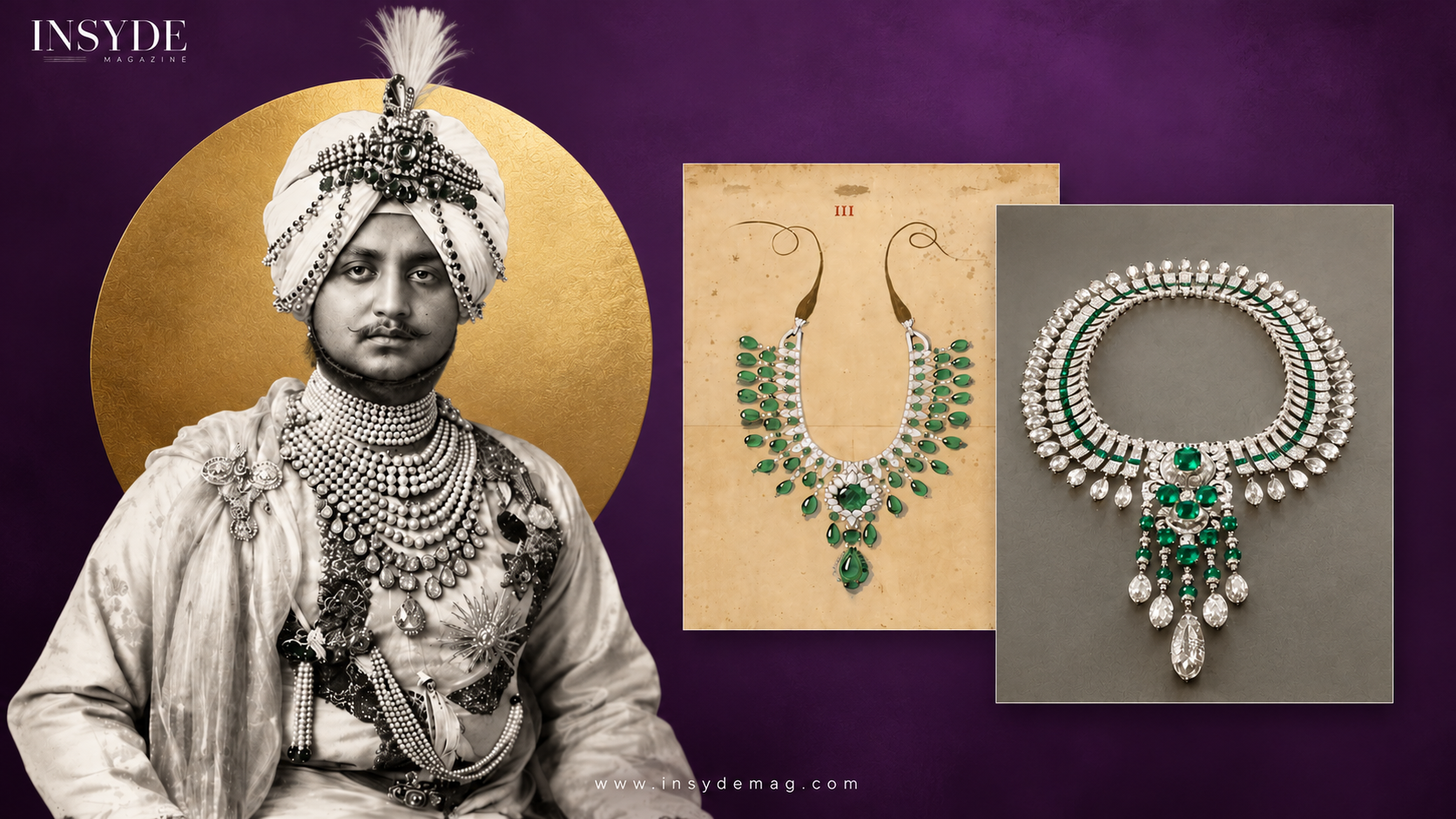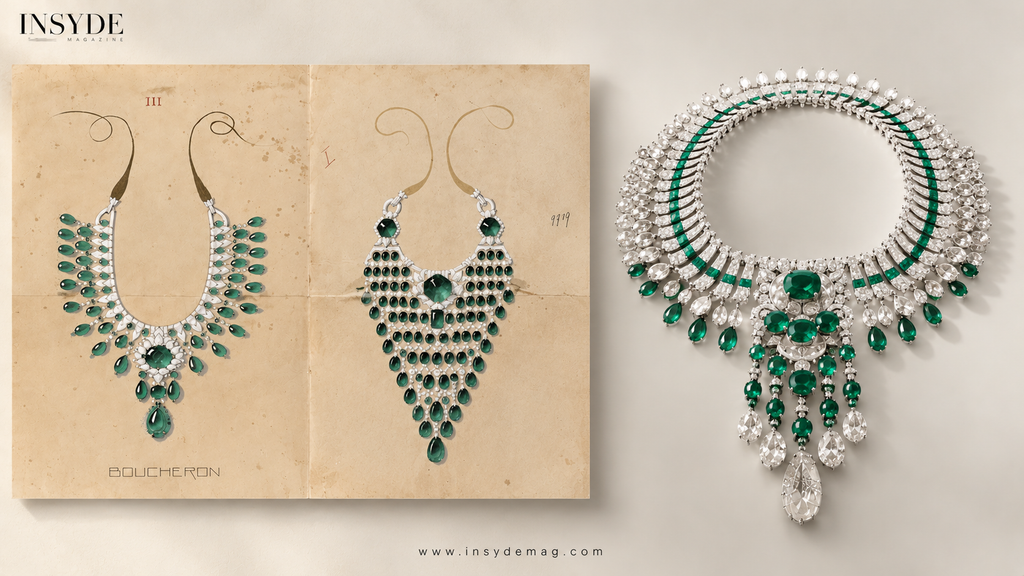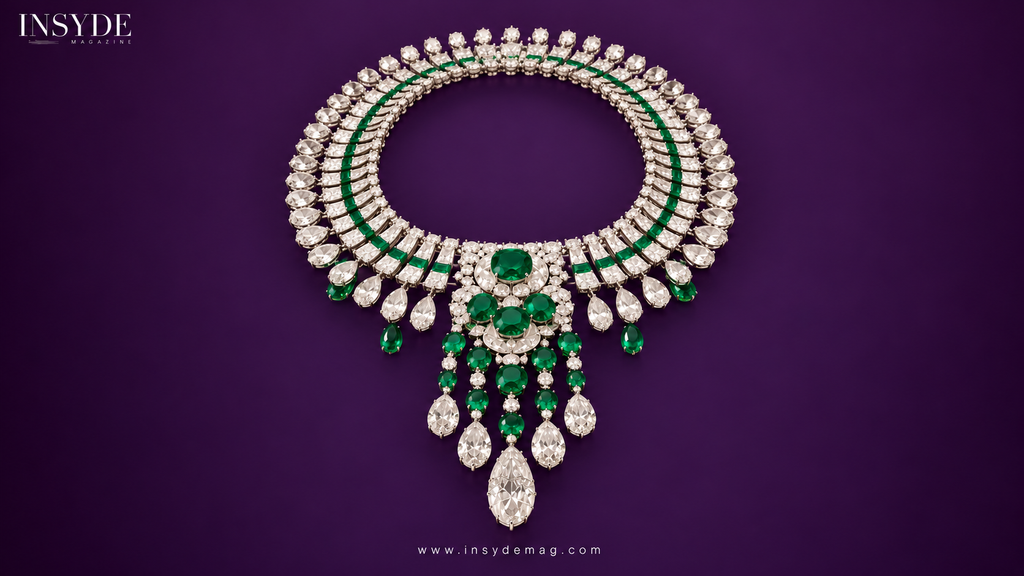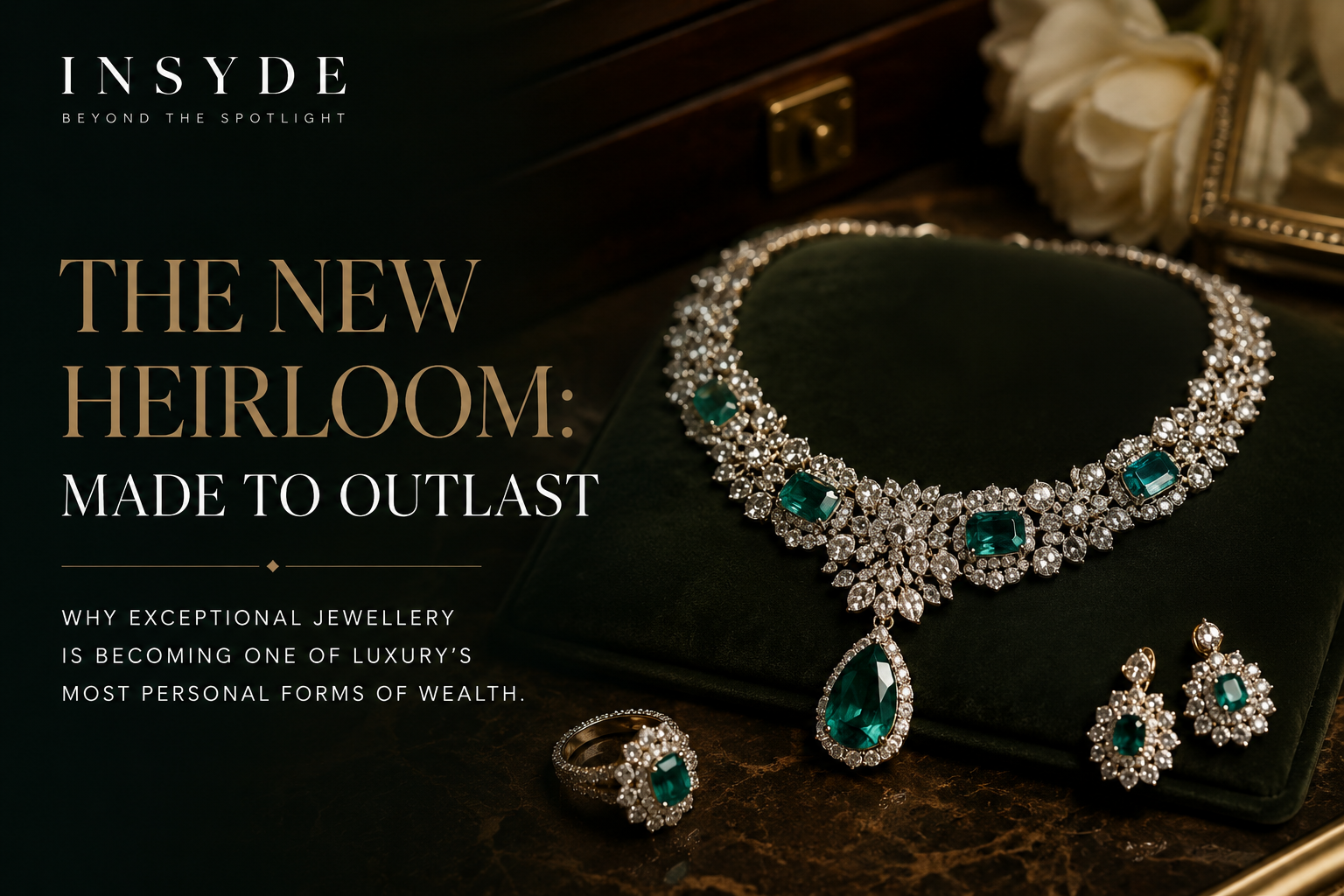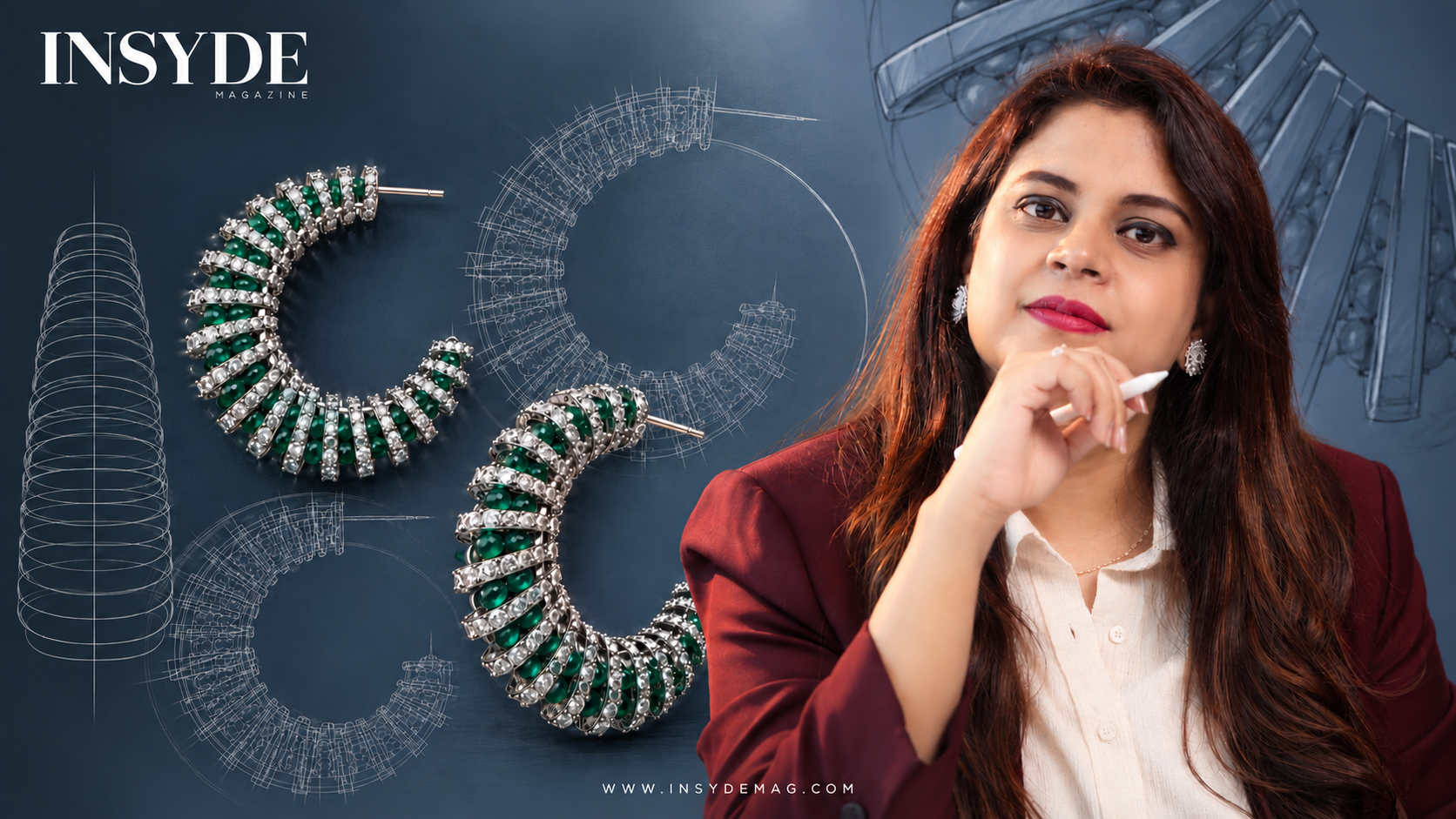
From the first sketch to the finished piece, jewellery designer Isha Deb explores the intuition, imagination and technical precision behind jewellery that is as personal as it is beautiful.
Artificial intelligence can generate intricate jewellery concepts in seconds. Digital tools can explore silhouettes, experiment with proportions and turn an abstract idea into a compelling visual long before a gemstone is set or a piece reaches the workbench. For an industry built around precision, aesthetics and material expertise, these capabilities present exciting possibilities.
But a convincing image is not the same as a finished piece of jewellery. Between the first idea and the object a person eventually wears lies a series of decisions that demand creative judgement, technical understanding and an awareness of how design meets the human body.
It is within this space between possibility and execution that jewellery designer Isha Deb sees the continuing importance of the designer.
“I use them myself, but for me, they remain a medium through which I express a design. My own thought process and judgement still guide the work,” she says of artificial intelligence and digital tools.
For Deb, technology is neither something to resist nor a substitute for creative authorship. It is an extension of the design process, capable of making certain tasks faster and expanding the range of ideas a designer can explore. What it cannot automatically supply is the personal perspective that determines which ideas are worth pursuing.
As AI becomes increasingly capable of producing sophisticated visual concepts, that distinction raises a question extending beyond jewellery: when the image becomes easier to generate, what gives the final object its identity?
THE HUMAN ELEMENT BEHIND THE IMAGE
A jewellery designer’s point of view develops over time. It is shaped by experiences, observations, travel, culture and the details that hold an individual’s attention. These influences may find their way into a design consciously or emerge through instinct, informing everything from the selection of a gemstone to the decision to pursue a sharp architectural line or a softer, more fluid form.
For Deb, this accumulated experience is central to creative identity.
“AI can produce a beautiful image, but I don’t believe a designer’s soul can be cloned, at least not yet.”
Her distinction is between generating possibilities and giving those possibilities direction. AI can offer a starting point, but a designer must still assess the result, question its relevance and determine whether it reflects a considered creative intention.
That judgement is particularly significant in jewellery, where visual appeal is only one part of the equation. A design must also account for materials, construction, proportion and wearability. A form that looks impressive on a screen may require substantial refinement before it becomes a viable object.
The challenge, therefore, is not simply to use the most advanced tools available. It is to retain the ability to make independent creative decisions while using those tools.
WHY SKETCHING STILL MATTERS
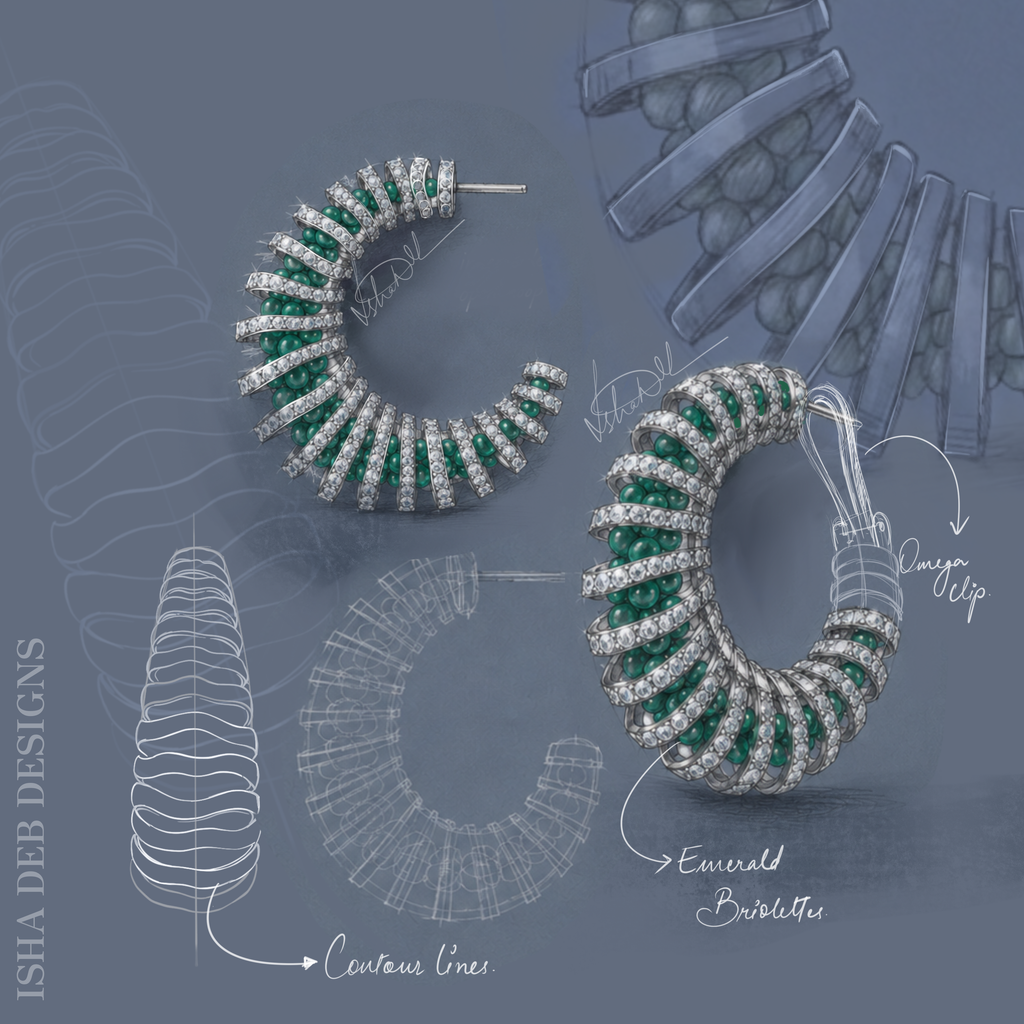
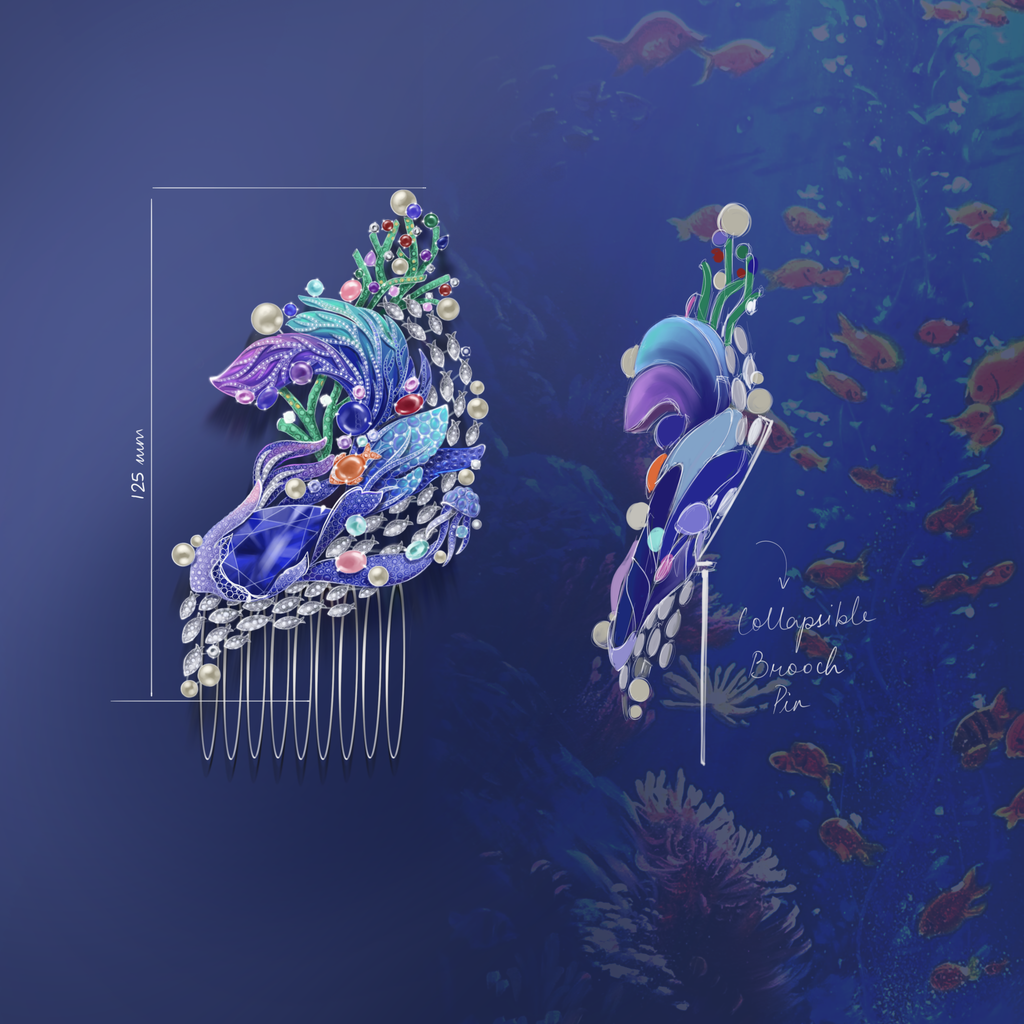
For Deb, the creative process often begins with drawing. A sketch is not merely a record of an idea that has already been resolved; it can be the means through which the idea becomes clear in the first place.
“Often, an idea only starts to become clear when you begin drawing it,” she explains.
A rough line on paper, a quick doodle or an unfinished drawing can help a designer discover proportions, test a form and recognise possibilities that were not immediately apparent. The act of drawing becomes part of the thinking itself.
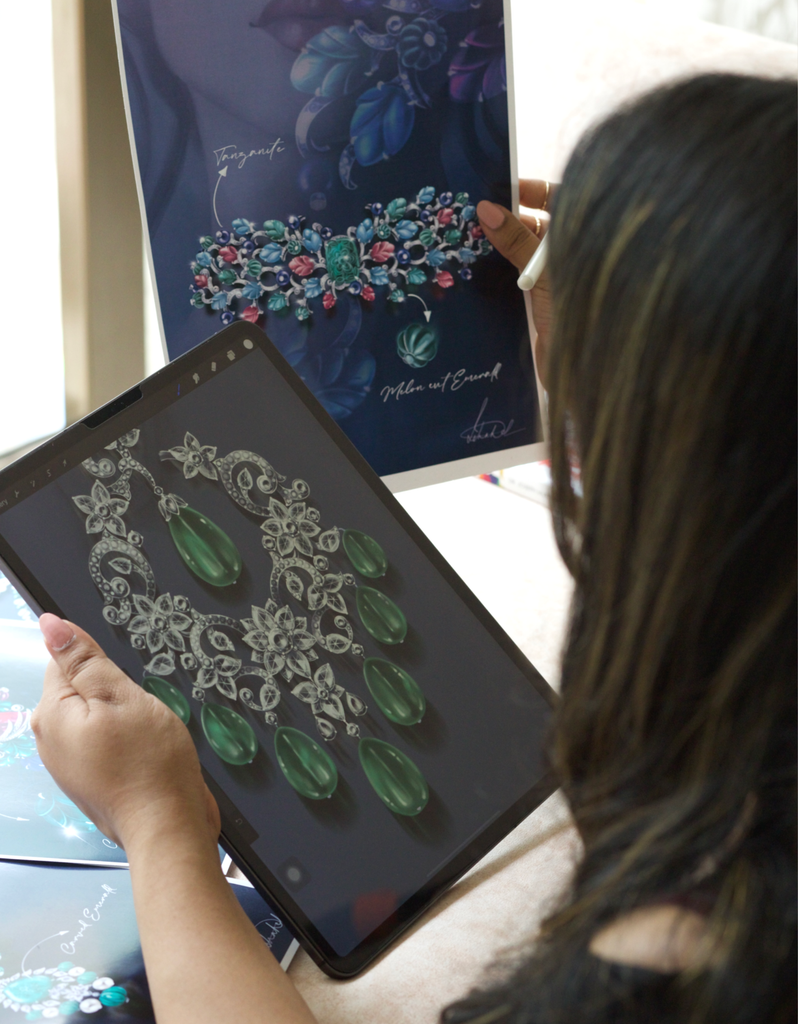
Digital devices have made this process more flexible. Deb carries an iPad, allowing her to sketch when an idea occurs rather than waiting until she is at her workspace. The medium has evolved, but she sees the underlying relationship between thought and drawing as largely unchanged.
“I still work through rough lines, make changes and let the idea evolve as I draw. For me, it is simply an upgraded tool.”
This distinction matters in a conversation often framed as a choice between traditional methods and digital innovation. In practice, the two can coexist. A designer can begin with a spontaneous sketch, develop it digitally, refine it through three-dimensional modelling and ultimately translate it into a physical object.
What matters is the continuity of thought throughout that process. The tools may change, but the designer remains responsible for deciding what the design should become.
WHEN TECHNOLOGY BECOMES A CREATIVE RISK
The risk of generic design does not begin and end with artificial intelligence. Jewellery designers have long navigated the tension between personal expression and commercial realities.
Budgets, customer preferences, material costs and the need to build a sustainable business can influence the final form of a piece. A detail may need to be simplified, a design adjusted or the choice of diamonds and gemstones reconsidered to meet a particular price point.
Deb acknowledges that these pressures are part of the profession. She believes the greater challenge is recognising which compromises are necessary without losing the qualities that distinguish a designer’s work.
“I think technology works well as a creative tool as long as a designer’s own expression and style remain intact. It should help us develop an idea without making it feel more generic.”
AI may make it easier to generate alternatives, but a greater number of options does not necessarily produce a more original outcome. If designers accept convenient results without questioning whether they reflect their own aesthetic, the process risks becoming an exercise in selecting images rather than developing ideas.
For Deb, the responsibility lies in knowing when to adapt and when to preserve the character of a design. Commercial viability is essential, but it need not come at the expense of every distinctive detail.
The question is not whether a designer should compromise. It is whether the compromise serves the design or gradually erodes its identity.
FROM DIGITAL CONCEPT TO PHYSICAL REALITY
The difference between an attractive visual and a workable piece becomes especially apparent during computer-aided design, or CAD.
While a sketch establishes the initial direction, CAD translates the idea into a three-dimensional structure that can be manufactured and worn. This stage requires the designer to preserve the character of the original concept while resolving the technical demands of construction.
For Deb, getting the CAD right is one of the most challenging parts of the process.
Consider a necklace. Its links must provide sufficient flexibility to sit comfortably around the neck, while the height and angles of its elements influence how it rests against the body. An earring presents a different set of demands: its weight, balance and support must work together so that it sits correctly on the ear.
These details may not be immediately apparent in a rendering, yet they can determine whether a piece succeeds in practice. The designer must understand how a form behaves in three dimensions, how its components interact and how its construction affects the wearer.
“Getting the CAD right means preserving the character of the design while resolving all the practical details that make it work as jewellery.”
The process also depends on technical knowledge and collaboration with manufacturers. A design must move beyond visual intention without losing what made it compelling in the first place.
This is where the debate around AI becomes more nuanced. Digital tools already play an important role in jewellery development, and AI may help streamline aspects of the process further. But generating a concept and resolving the details required to manufacture it are different tasks.
A finished jewel must function as an object, not merely as an image.
DESIGNING FOR CONNECTION, NOT JUST APPEARANCE
The value of jewellery has traditionally been associated with materials, rarity, craftsmanship and monetary worth. These remain important considerations, but Deb believes the contemporary luxury customer is also looking for a more personal relationship with what they buy.
“I believe today’s luxury customer is looking for a more personal connection with what they buy.”
For her, individuality can emerge from a distinctive design, an unusual gemstone colour, a rare diamond cut or a stone with a compelling history. The appeal extends beyond the material’s price to the character that makes a particular piece feel different.
She also sees wearability as an increasingly important consideration. Customers may value exceptional jewellery that can be enjoyed across different occasions, rather than pieces that remain reserved for a single event. A distinctive design does not necessarily need to be elaborate to make a statement.
This places a different emphasis on the relationship between design and ownership. Jewellery can be an expression of personal style, but it can also become part of everyday life—something selected because it feels relevant to the wearer rather than simply because it signals status.
For a designer, creating that connection requires more than visual impact. It means considering how a piece will feel, how it will be worn and whether its character will continue to resonate beyond the moment of purchase.
HERITAGE AS A STARTING POINT
Indian jewellery offers a vast vocabulary of craftsmanship, ornamentation, architectural references and cultural forms. For contemporary designers, the challenge is to engage with this heritage without simply reproducing familiar aesthetics.
Deb approaches inspiration by looking beyond the obvious form. She considers the structure, rhythm or detail that attracts her, then explores how it might be reinterpreted through changes in proportion, pattern, shape or the use of gemstones.
The original reference remains part of the creative process, but it does not have to dictate the final result.
“I feel working with heritage and cultural references is more about understanding it deeply enough to express it in a fresh and more personalised way.”
This approach places interpretation at the centre of design. A historical or cultural reference can be a starting point for exploration rather than a template to reproduce. Through drawing, experimentation and the considered use of materials, a familiar form can develop a new identity.
The same principle applies to technology. Whether an idea begins with a cultural reference, a hand-drawn sketch or a digital concept, its originality depends on the decisions that shape its development.
Innovation does not necessarily require abandoning the past. It can emerge from understanding a reference deeply enough to discover what else it might become.
WHAT THE NEXT GENERATION OF JEWELLERY MIGHT LOOK LIKE
Deb expects jewellery design to continue responding to changing lifestyles, customer preferences and the practical realities of materials and pricing.
She sees wearability and versatility as important considerations, alongside the enduring appeal of classic pieces and exceptional one-of-a-kind high jewellery. With gold becoming more expensive, she believes lighter designs are becoming more attractive to some customers. Layering necklaces and combining different pieces can also offer more personal ways of wearing jewellery.
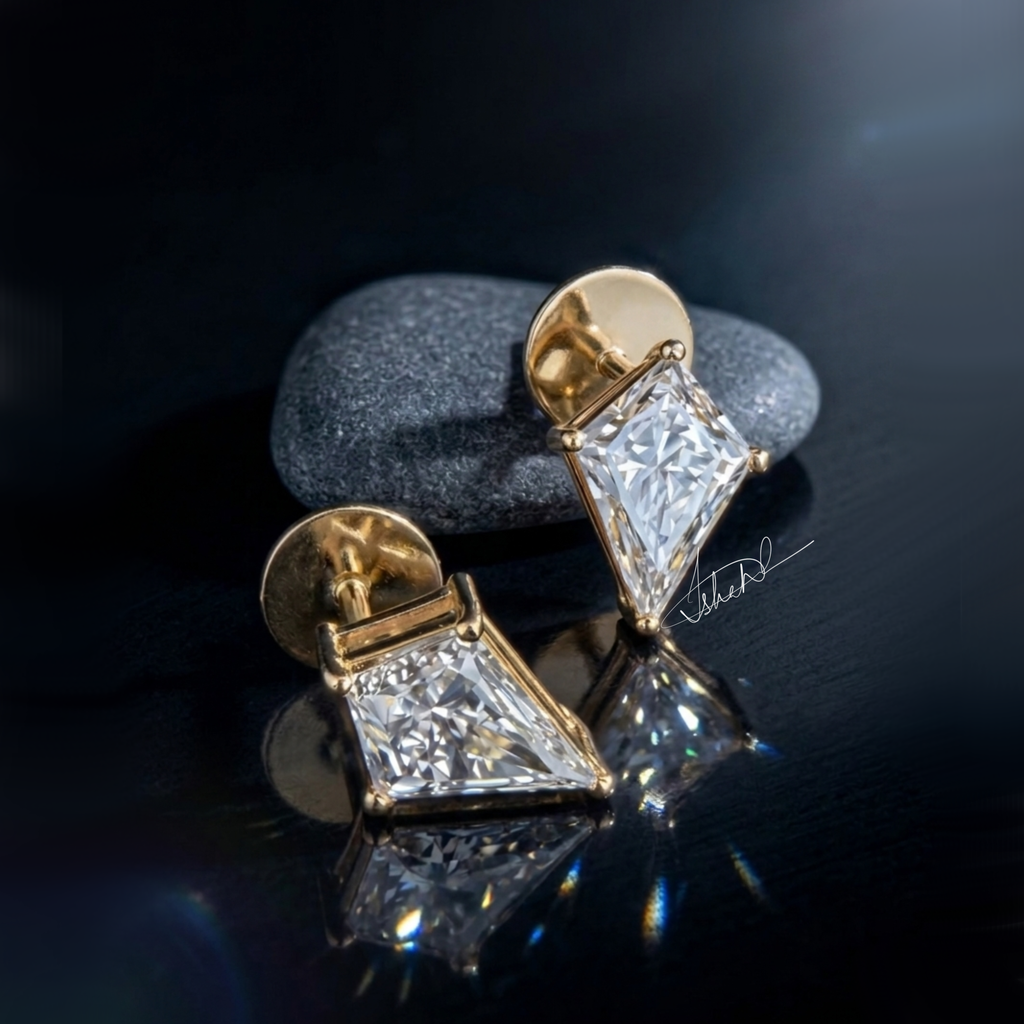
She points to lab-grown diamonds as making solitaire jewellery more accessible and identifies materials such as titanium as offering possibilities for colour, volume and playful designs that remain comfortable to wear.
These observations reflect her perspective on the direction of the market rather than a universal shift in consumer behaviour. Jewellery continues to serve different preferences, from everyday fine jewellery to highly individualised and exceptional pieces.
For designers, the challenge is to respond to these changes without allowing every new preference or technology to dictate the direction of their work.
Deb sees considerable potential in AI and other digital tools to improve visualisation, streamline aspects of CAD development and support manufacturing processes. By allowing designers and customers to explore ideas earlier, such tools may also help identify changes before significant time and resources are committed to production.
But she draws a clear distinction between technological capability and creative originality.
“Having the ability to generate more options does not necessarily mean those options carry an original thought.”
The designer’s role will continue to involve understanding the customer, exploring materials and deciding which ideas deserve to be developed. The tools may expand the possibilities, but the creative direction must still come from somewhere.
WHEN A BEAUTIFUL OBJECT BECOMES GOOD DESIGN
For Deb, a design’s success is not complete when the piece has been manufactured. Its meaning is ultimately tested through the experience of the person who chooses to wear it.
“I will be honest- according to me, the success of a design is not complete when the piece is made. It is when someone chooses to buy it, wears it and loves it.”
The statement brings the discussion back to the physical realities of jewellery. A piece must balance its creative idea with comfort, construction, price and value. It should move as required, sit properly on the body and allow its wearer to enjoy it without constant adjustment or discomfort.
Commercial success also matters. A designer must understand the intended customer and work within practical limits without losing the character or quality of the design. When those elements come together, the result becomes more than a visually appealing object.
It becomes a piece of jewellery that someone wants to make part of their life.
Artificial intelligence will continue to change how designers imagine, visualise and develop their work. It may reduce the time required for certain tasks, open up new technical possibilities and make experimentation more accessible. Its influence on jewellery design is likely to grow as the tools evolve.
But the central questions remain grounded in the object itself. Does the design work? Does the gemstone belong? Has the original idea survived the process of making? Does the finished piece offer something meaningful to the person who wears it?
For Isha Deb, the future is not about choosing between human creativity and technological progress. It is about understanding what each can contribute—and ensuring that efficiency never becomes a substitute for judgement.
A machine may help generate the image. The designer must still decide what is worth bringing into the world.
INSYDE EXCLUSIVE
Isha Deb on AI, creative authorship and the future of jewellery design.
INSYDE Magazine | Luxury. Culture. Perspective.
No.1 Luxury Magazine In Bengaluru