Category: Craft

The people, techniques and traditions keeping craftsmanship alive and relevant today.

  • Atelier Emine: Where Craft Becomes Luxury

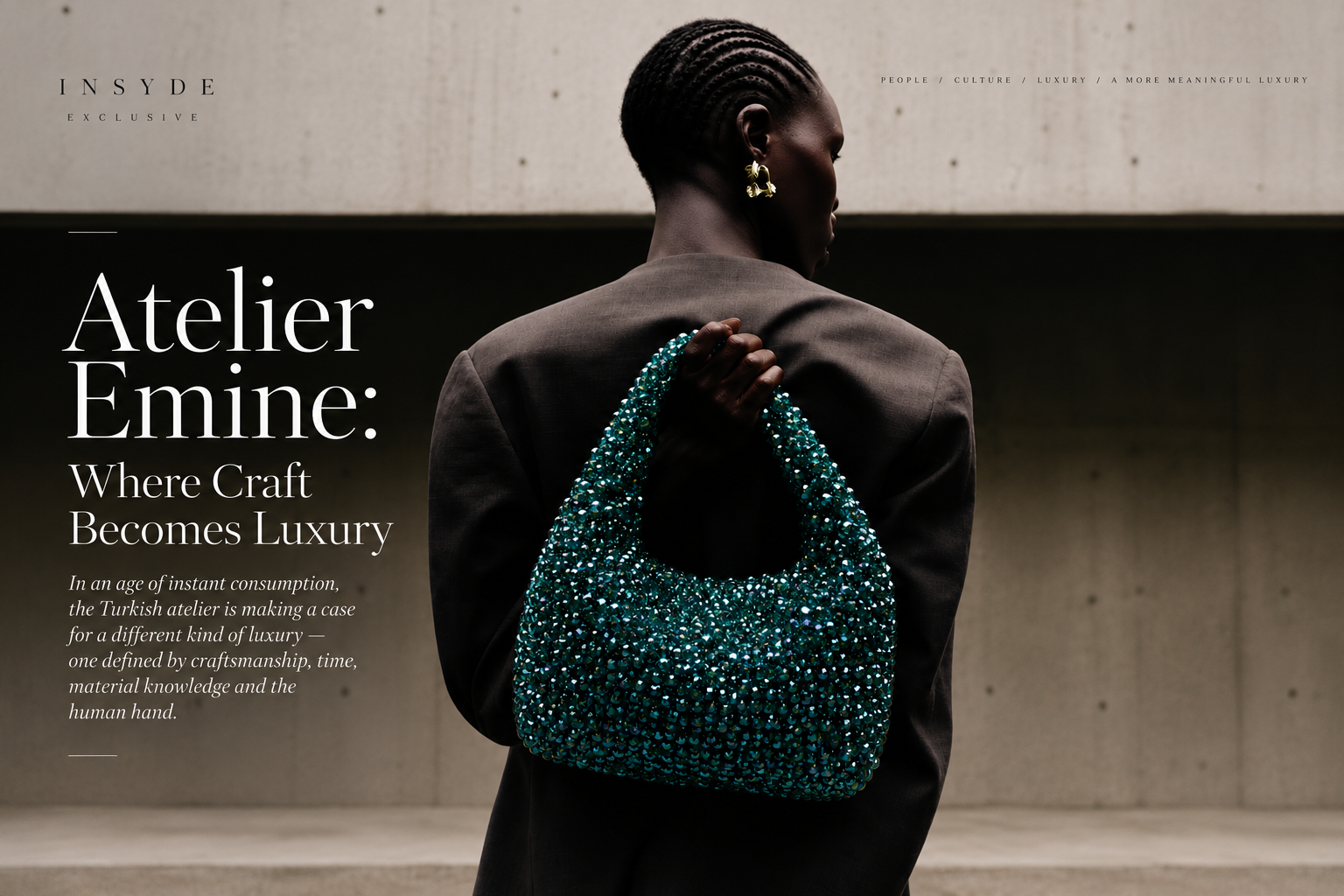
    Atelier Emine: Where Craft Becomes Luxury

    In an age of instant consumption, the Turkish atelier is making a case for a different kind of luxury — one defined by craftsmanship, time, material knowledge and the human hand.

    Luxury has always had its codes.

    Precious materials. Recognisable silhouettes. Objects whose value is often understood before they are even touched.

    But there is another way to think about luxury — one that is less concerned with what an object announces and more interested in what it contains.

    The time behind it. The technique. The knowledge required to make it. The hands that shaped it.

    This is where Atelier Emine becomes particularly intriguing.

    The Türkiye-based atelier creates handcrafted handbags using an unconventional combination of materials including crystal, mother-of-pearl, pearls, wood and velvet. At the foundation of these pieces is monofilament, worked together with the materials through specialised weaving and knotting techniques.

    The result is visually striking, but the most interesting part of the construction is not necessarily the part the eye notices first.

    The monofilament remains visually subtle, allowing the materials themselves to become the language of each piece. Yet beneath those surfaces is a method of making that is central to the identity of the object.

    For Atelier Emine, the construction is not simply functional. It is part of the design.

    And that opens up a larger question: what exactly makes a luxury object luxurious?

    When Craftsmanship Creates Rarity
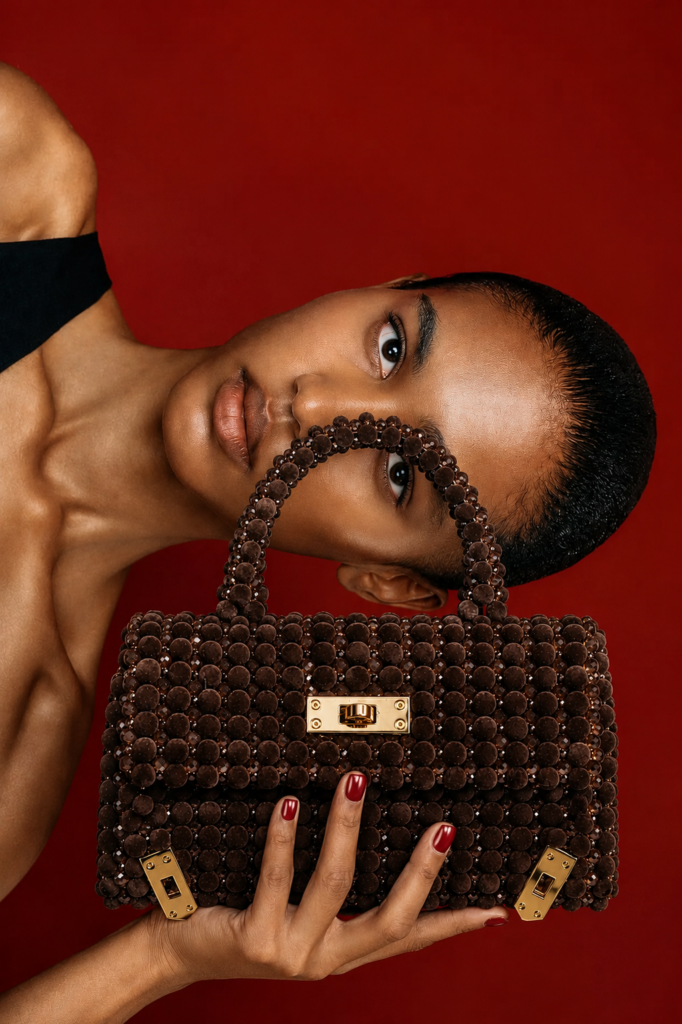
    A study in material and craftsmanship, where individually worked elements become part of the bag’s visual language. Images Courtesy: Atelier Emine

    Luxury has traditionally placed considerable emphasis on the value of materials.

    Gold, precious stones, fine leather and rare textiles have long served as shorthand for exclusivity.

    Atelier Emine approaches rarity from another direction.

    “We believe craftsmanship itself can create rarity,” the atelier tells INSYDE.

    Its pieces are produced in limited quantities and handmade in a private workshop in Türkiye, where individual materials are carefully worked and brought together through specialised techniques.

    The distinction is important.

    A material can possess inherent value, but craftsmanship can transform that material into something far more personal. The technique, the time involved and the knowledge required to execute it become part of the finished object’s value.

    The handbag is no longer simply the result of a production process.

    The process becomes part of the luxury.

    It is an idea that feels increasingly relevant at a time when so many objects can be reproduced with remarkable speed and consistency.

    Where Material Meets Form

    Behind the finished object: meticulous handwork and specialised weaving techniques shape every Atelier Emine piece. Images Courtesy: Atelier Emine

    There is no fixed starting point when Atelier Emine develops a piece.

    Material, form and idea are allowed to influence one another.

    Crystal, velvet, mother-of-pearl, wood and pearls each possess different textures, weights and visual qualities. Rather than treating these materials as decorative elements added after the design is established, Atelier Emine allows them to participate in the construction itself.

    “The material influences what the form can become, while the intended form also influences how we work with the material,”

    – the atelier explains.

    That relationship gives the making process a certain fluidity.

    The material is not simply being asked to conform to a predetermined shape. The shape evolves alongside the material and the technique.

    It is a subtle shift, but an important one.

    Craftsmanship here is not merely about executing a design perfectly. It becomes part of the creative thinking behind the design.

    The Beauty of Imperfection
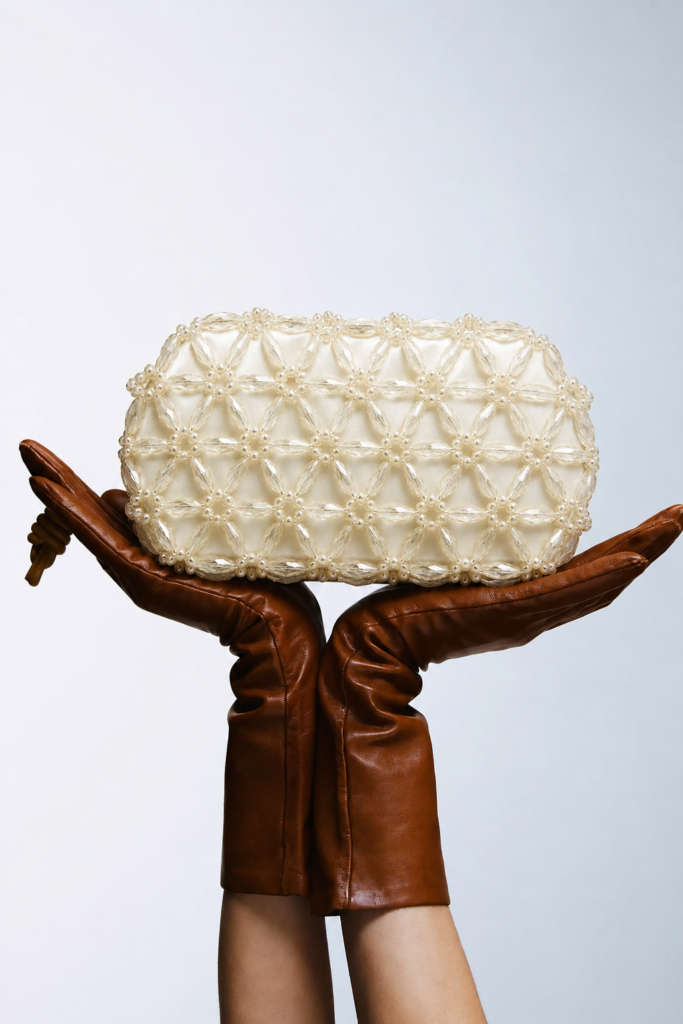
    Delicate materials, intricate construction and the precision of handmade work meet in Atelier Emine’s contemporary designs. Images Courtesy: Atelier Emine

    Handmade luxury carries an inherent contradiction.

    The human hand is part of its appeal, yet luxury also demands precision.

    Atelier Emine sees no need to choose between the two.

    Its pieces are entirely handmade, but production is accompanied by careful quality control. Slight variations in tone, texture, form or the arrangement of materials can naturally occur during the process.

    Rather than automatically treating these differences as flaws, the atelier sees them as part of the individual character of a handmade piece.

    That does not mean precision is abandoned.

    Construction, finishing and quality remain essential.

    The balance lies in allowing the object to retain its human character without compromising the discipline expected of a luxury piece.

    Perhaps that is one of the most compelling qualities of handmade objects today.

    In a world increasingly capable of producing perfect uniformity, individuality can become its own form of rarity.

    Heritage Without Nostalgia

    Designed to exist beyond the display case, Atelier Emine’s pieces bring handcrafted detail into contemporary dressing. Images Courtesy: Atelier Emine

    Behind Atelier Emine’s contemporary aesthetic lies a 65-year craft heritage passed down through generations.

    But the atelier does not believe heritage needs to look historical.

    Instead, it sees heritage in the practices that have survived: specialised techniques, patience, handwork and attention to detail.

    “We do not see heritage as something that has to be reproduced as a historical aesthetic,We see it more fundamentally through the practice of craftsmanship.”

    – the atelier explains

    That distinction allows tradition to move forward.

    Heritage can easily become a visual formula — familiar motifs reproduced season after season, or the past transformed into a marketable aesthetic.

    Atelier Emine approaches it differently.

    The heritage remains in how the object is made, allowing the object itself to remain contemporary.

    “Contemporary design is not a departure from craftsmanship,” the atelier says. “It is a way of carrying craftsmanship forward.”

    It is a particularly relevant idea in contemporary luxury, where the challenge is no longer simply preserving tradition but finding ways for traditional knowledge to remain meaningful in the present.

    The Luxury of Waiting

    Luxury at a slower pace — a reminder that some of the most meaningful objects are made to be experienced, not rushed. Images Courtesy: Atelier Emine

    There is another element of luxury that has become increasingly rare: time.

    The culture surrounding fashion and consumer goods has become faster than ever. Trends appear and disappear almost instantly. Digital platforms have made discovery and purchasing almost frictionless.

    Handmade objects exist according to another rhythm.

    Atelier Emine’s pieces are made to order, with individual models requiring time to complete. The waiting is not positioned as an inconvenience. It is part of the nature of the object.

    And perhaps that is where patience begins to take on a new meaning.

    When an object takes time to make, that time does not simply disappear once the piece is finished. It becomes part of its story.

    The willingness to wait for something carefully made can itself become meaningful in a culture increasingly built around immediacy.

    Luxury, in this sense, is not simply about possessing something rare.

    It can also be about allowing something to take its time.

    Beyond the Traditional Codes of Luxury
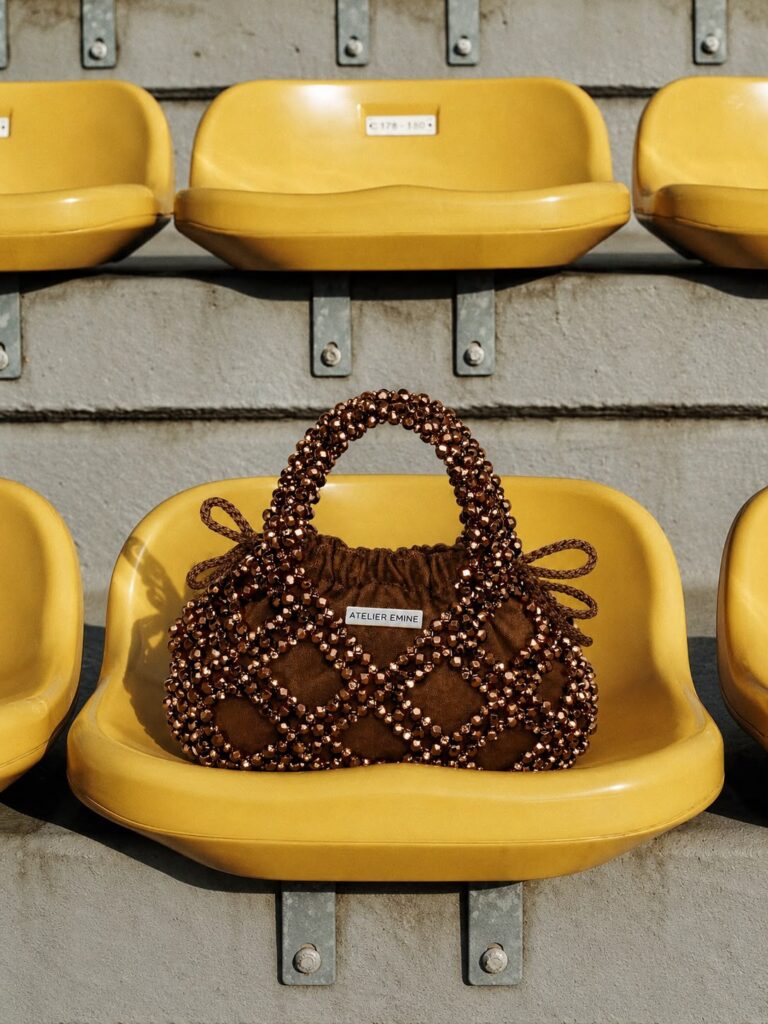
    A distinctive expression of Atelier Emine’s material language, balancing sculptural design with artisanal craftsmanship. Images Courtesy: Atelier Emine

    Atelier Emine ultimately challenges a familiar assumption: that luxury has to look a certain way.

    Its approach does not reject precious materials or established luxury entirely. Instead, it suggests that they are not the only things capable of creating value.

    Craftsmanship can create rarity.

    Technique can create distinction.

    Limited production can create individuality.

    Time can become part of an object’s worth.

    And unconventional materials can acquire an entirely different significance when transformed through knowledge and handwork.

    Look closely at an Atelier Emine piece and the first thing that may capture the eye is the surface — the crystals, colour, texture or form.

    Look closer, and another story begins to appear.

    The monofilament.

    The weaving.

    The knotting.

    The arrangement of materials.

    The subtle variations created by the human hand.

    The time.

    And the people behind it.

    That is perhaps the most compelling idea at the heart of Atelier Emine’s philosophy.

    The value of a luxury object does not always have to announce itself.

    Sometimes, it asks you to look closer.

    Because when everything around us is becoming faster, louder and more immediately recognisable, there is something powerful about an object whose value reveals itself slowly.

    Atelier Emine is not simply creating handbags.

    It is offering a different way of understanding what luxury can be — one where the material is only the beginning, and where craftsmanship, patience and human knowledge become part of the object itself.

    Perhaps the future of luxury is not necessarily about objects that demand attention.

    Perhaps it is about objects that reward it.

    Made by Hand, Made to Be Remembered.
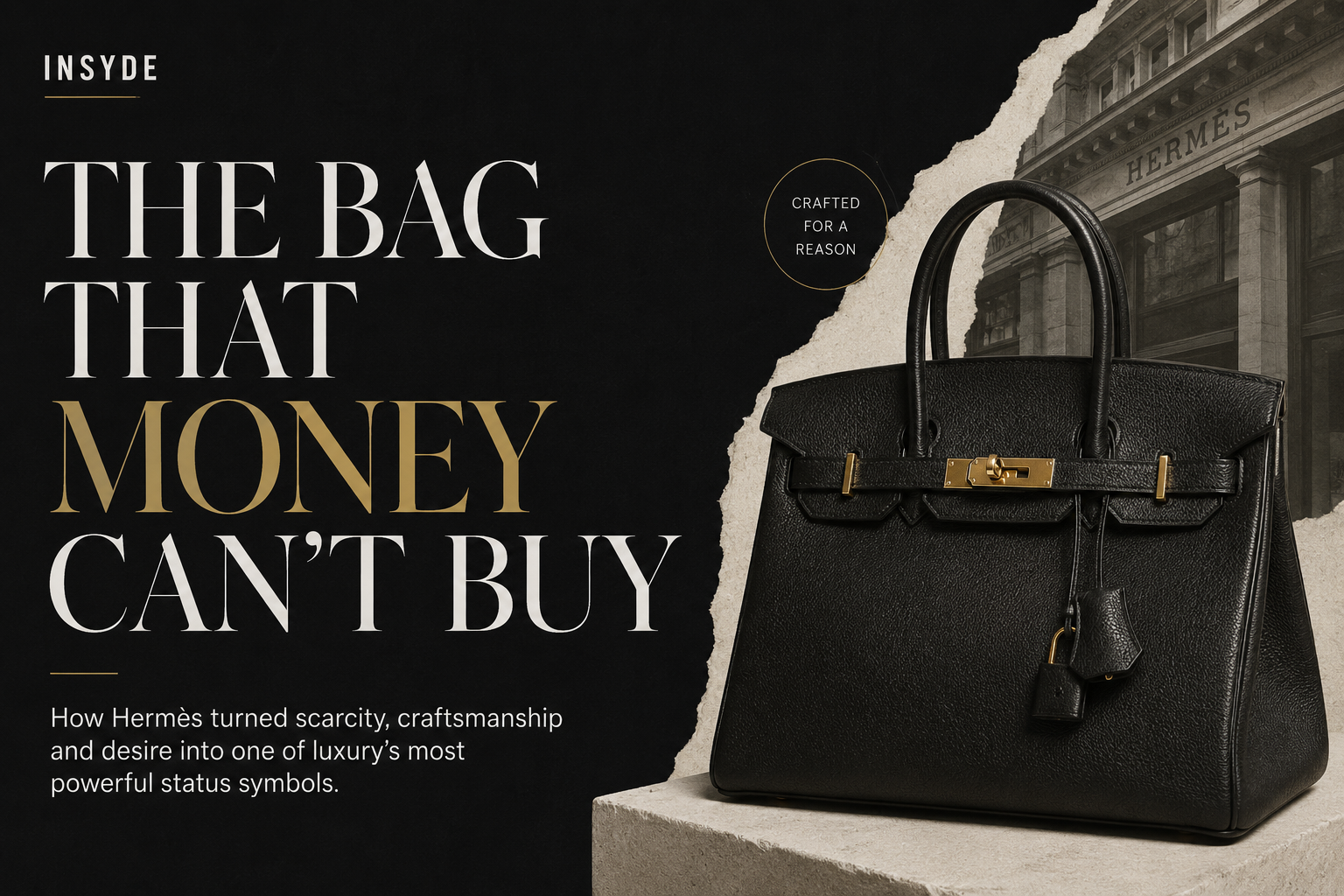
  • THE BAG THAT MONEY CAN’T BUY

    THE BAG THAT MONEY CAN’T BUY

    How Hermès turned scarcity, craftsmanship and desire into one of luxury’s most powerful status symbols.

    There are handbags that cost hundreds.

    There are handbags that cost thousands.

    And then there is the Hermès Birkin — a handbag so deeply embedded in the language of luxury that its price is no longer the most interesting thing about it.

    The real question is much simpler:

    What happens when having the money still doesn’t guarantee that you can have the thing you want?

    That is where Hermès becomes fascinating.

    Because luxury has traditionally followed a straightforward formula:

    More money. Better things.

    Hermès built something more complicated:

    More money gives you access to luxury. But it doesn’t necessarily give you access to everything.

    And that distinction transformed a handbag into something far bigger than a fashion accessory.

    The Birkin became a symbol of wealth, yes.

    But also of taste.

    Scarcity.

    Craftsmanship.

    Access.

    And, perhaps most importantly, desire.

    Because when something is difficult to obtain, the price is only the beginning of the story.


    THE BAG WAS NEVER DESIGNED TO BECOME A STATUS SYMBOL

    The origin of the Birkin is almost too ordinary for the mythology that eventually surrounded it.

    In 1984, British actress and singer Jane Birkin found herself seated next to Jean-Louis Dumas, then chairman and chief executive of Hermès, on a flight from Paris to London.

    Birkin explained that she couldn’t find a leather bag that worked for her as an everyday carryall.

    Dumas listened.

    The idea evolved into a new handbag.

    The Birkin was born.

    There was no grand plan to create one of the world’s most recognisable symbols of extreme wealth.

    It began with functionality.

    Make it practical.

    Make it beautiful.

    Make it exceptionally well.

    The mythology came later.

    And that may be one of the most important details in the entire story.

    Because Hermès didn’t begin by manufacturing status.

    It manufactured quality.

    Status followed.


    HERMÈS WAS BUILDING LUXURY LONG BEFORE THE BIRKIN

    To understand why the Birkin became so powerful, you have to go back much further.

    Hermès was founded in Paris in 1837 by Thierry Hermès, originally as a workshop producing harnesses and other equestrian equipment.

    Its early clientele included members of Europe’s wealthy and aristocratic society.

    As transportation changed, Hermès changed with it.

    The company moved into bags, luggage, silk, fashion, jewellery and other categories while maintaining a central commitment to craftsmanship.

    That history matters.

    Because the Birkin didn’t create Hermès’ luxury reputation.

    Hermès’ reputation created the environment in which the Birkin could become legendary.

    The bag arrived with decades of credibility already behind the name.


    THE REAL LUXURY IS IN THE MAKING

    A Birkin is not valuable simply because it carries the Hermès name.

    The construction itself is part of the story.

    Hermès leather goods are made by highly trained artisans, with the house emphasising manual craftsmanship and individual attention throughout the production process. The company says leather artisans undergo extensive training before becoming fully qualified.

    The leather is selected carefully.

    Pieces are cut and prepared.

    Edges are finished.

    Hardware is fitted.

    Stitching is performed by hand.

    And the artisan’s work becomes part of the character of the finished bag.

    This is important because modern luxury often creates the illusion of infinite choice.

    Hermès does something different.

    It reminds the customer that human time is finite.

    A skilled artisan can only make so many pieces.

    A particular material can only exist in a certain quantity.

    A particular finish requires a certain amount of attention.

    And suddenly, scarcity isn’t just a marketing strategy.

    It is built into the production process.


    THE DIFFERENCE BETWEEN EXPENSIVE AND EXCLUSIVE

    This is where the Birkin story becomes particularly interesting.

    An expensive product asks:

    Can you afford it?

    An exclusive product asks:

    Can you get it?

    Those are completely different questions.

    A wealthy customer can have the financial means to purchase a Birkin and still not be able to walk into a boutique and simply select any model, colour or leather they want.

    Availability varies.

    Relationships matter.

    Specific pieces are limited.

    And the exact bag someone wants may not be waiting behind the counter.

    That creates a psychological effect that money cannot completely eliminate:

    anticipation.

    You want it.

    You search for it.

    You wait.

    And the longer the desire survives, the more emotionally valuable the eventual acquisition can become.


    WHEN “NO” BECOMES PART OF THE LUXURY

    Modern commerce has been built around convenience.

    See it.

    Click it.

    Buy it.

    Tomorrow, it’s at your door.

    Luxury operates differently.

    At its highest level, friction can become part of the experience.

    The wait.

    The discovery.

    The relationship.

    The invitation.

    The moment when the right piece finally appears.

    That is a radical idea in a world obsessed with instant gratification.

    Hermès doesn’t need to make the Birkin feel like something everyone can have immediately.

    In fact, the opposite can make the product more desirable.

    The less ordinary the acquisition feels, the less ordinary the object can feel.

    The purchase becomes an event.


    THE BOUTIQUE ISN’T JUST A STORE

    This is another important distinction.

    For most consumer products, the store exists to facilitate the transaction.

    In luxury, the environment is part of the product.

    The boutique.

    The service.

    The packaging.

    The conversation.

    The anticipation.

    The feeling of discovering something rather than simply ordering it.

    These details matter because luxury is fundamentally emotional.

    A customer isn’t only purchasing leather and hardware.

    They’re purchasing an experience around the object.

    And Hermès has spent generations protecting that experience.


    THEN THE BIRKIN BECAME A CULTURAL SYMBOL

    The bag’s transformation accelerated as it became associated with celebrities, socialites, entrepreneurs and some of the world’s wealthiest consumers.

    Its shape became recognisable.

    Its hardware became recognisable.

    Its name became recognisable.

    The Birkin became something you could identify without seeing the logo.

    That is powerful branding.

    Hermès didn’t need to cover the bag in enormous symbols.

    The silhouette did much of the work.

    And this created an interesting form of status:

    the people who knew, knew.

    The bag could be visible without being loud.

    It could communicate wealth without announcing a price.

    It could sit quietly on an arm while carrying an enormous amount of cultural meaning.


    WHY THE BIRKIN DOESN’T NEED A GIANT LOGO

    Modern luxury has spent decades teaching consumers to recognise logos.

    Hermès took a different route.

    The Birkin’s identity comes from its proportions, construction, hardware, craftsmanship and association with the house.

    That makes the bag part of a more sophisticated form of luxury communication.

    A large logo says:

    Look at the brand.

    A recognisable object can say:

    If you know, you know.

    And that distinction has become increasingly relevant as luxury consumers become more interested in subtlety, provenance and craftsmanship.

    The most sophisticated status signal isn’t necessarily the loudest one.

    Sometimes it is the thing only a certain audience recognises.


    THEN THE SECONDARY MARKET CHANGED THE GAME

    The Birkin became even more fascinating when it entered the world of resale and collecting.

    Certain colours.

    Certain leathers.

    Certain sizes.

    Certain years.

    Exceptional condition.

    Rare examples.

    All can influence desirability in the secondary market.

    Some Birkins have sold for extraordinary sums at auction, particularly rare or historically significant examples.

    But there is an important distinction:

    A Birkin is not automatically an investment.

    The resale market is influenced by condition, provenance, rarity, demand and market conditions.

    The existence of a strong secondary market doesn’t guarantee appreciation.

    But it does demonstrate something important.

    The Birkin can exist simultaneously as:

    a handbag,

    a collectible,

    a status symbol,

    and a cultural asset.

    That is an extraordinary amount of meaning for an object originally designed to carry personal belongings.


    THE PSYCHOLOGY OF SCARCITY

    Why does scarcity work?

    Because humans don’t always value things according to their practical usefulness.

    When something is limited, difficult to obtain or perceived as disappearing, its psychological value can increase.

    Luxury brands have understood this for generations.

    But scarcity only works when the underlying product deserves desire.

    Make something rare without making it desirable and you have nothing.

    Hermès combined the two.

    Exceptional craftsmanship created the desire.

    Limited availability intensified it.

    And the result became a self-reinforcing cycle.

    Desire creates demand.

    Demand reinforces scarcity.

    Scarcity increases desirability.

    And the cycle continues.


    THE MOST POWERFUL WORD IN LUXURY

    No.

    No mass-market production.

    No constant discounting.

    No desperate promotions.

    No need to make every product available to everyone immediately.

    That ability to say no is one of the most powerful tools a luxury brand can possess.

    Because the moment a luxury product becomes permanently available at a discount, something changes.

    The consumer stops asking:

    “Can I get it?”

    and starts asking:

    “Should I buy it?”

    Hermès has spent decades making the first question more important.

    And that is incredibly powerful.


    WHEN THE BAG BECAME CULTURAL CURRENCY

    Eventually, owning a Birkin stopped being solely about owning an exceptional handbag.

    It became a form of cultural knowledge.

    You could recognise the bag.

    Understand the leather.

    Understand the construction.

    Understand why one version might attract more attention than another.

    Understand why rarity matters.

    That knowledge becomes part of the luxury experience.

    And suddenly, the Birkin communicates something beyond financial capability.

    It can communicate:

    I know this world.

    That’s cultural capital.

    And cultural capital is one of the most powerful currencies in luxury.


    HERMÈS DOESN’T NEED TO CHASE THE MOMENT

    Fashion is built around change.

    New season.

    New collection.

    New trend.

    New colour.

    New obsession.

    Luxury operates on a different clock.

    Hermès has the advantage of being able to build on heritage rather than constantly replacing it.

    The Birkin doesn’t need to become radically different every season.

    Its enduring appeal comes partly from consistency.

    The design can evolve.

    Materials can vary.

    Colours can change.

    But the underlying identity remains recognisable.

    That gives the brand something most fashion businesses desperately want:

    timelessness.


    THE BAG MONEY ALONE CAN’T GUARANTEE

    This is where the title becomes meaningful.

    The Bag That Money Can’t Buy.

    Of course money matters.

    A Birkin is a luxury purchase, and financial ability is an obvious part of accessing the category.

    But money isn’t the entire equation.

    There is availability.

    There is demand.

    There is craftsmanship.

    There is scarcity.

    There is knowledge.

    There is patience.

    There is the relationship with the house.

    And there is something even more important:

    desire.

    Because a luxury brand’s greatest achievement isn’t convincing you that you need its product.

    It’s convincing you that you want this particular product.

    Even when you could buy something else.


    WHEN THE WAIT BECOMES PART OF THE PRODUCT

    Think about the psychology.

    If something arrives tomorrow, you enjoy it tomorrow.

    If you’ve spent months wanting something, searching for it and imagining owning it, the moment you finally receive it carries something else:

    a story.

    The acquisition has emotional history.

    You remember the search.

    You remember the anticipation.

    You remember finally finding it.

    And that story becomes part of the object.

    This is one of luxury’s greatest tricks:

    the journey can become part of the value.


    THE BIRKIN ISN’T REALLY ABOUT THE BAG

    This is the point where the story becomes bigger than Hermès.

    The Birkin reveals something fundamental about modern luxury.

    People don’t simply buy objects.

    They buy:

    identity.

    belonging.

    recognition.

    craftsmanship.

    scarcity.

    emotion.

    And sometimes, they buy the feeling of possessing something that most people cannot simply obtain.

    That is why luxury cannot be measured purely by material cost.

    A handbag doesn’t become extraordinary because leather suddenly became priceless.

    It becomes extraordinary because people collectively decided that it means something.

    Hermès understood that better than most.


    WHAT HERMÈS REALLY SELLS

    It would be easy to say Hermès sells handbags.

    It doesn’t.

    Not entirely.

    Hermès sells craftsmanship.

    It sells heritage.

    It sells patience.

    It sells scarcity.

    It sells access.

    And, above everything else, it sells desire.

    The Birkin is simply one of the most successful containers for all of those ideas.

    And that’s why copying the shape isn’t enough.

    Another company can make a beautiful leather bag.

    Another company can use expensive hardware.

    Another company can create limited editions.

    But it cannot instantly manufacture decades of heritage.

    It cannot manufacture the artisans.

    It cannot manufacture the cultural mythology.

    And it cannot simply manufacture desire.

    That has to be earned.


    THE BAG THAT MONEY CAN’T BUY

    The Birkin became one of the world’s most powerful luxury symbols because Hermès understood a principle that many brands eventually forget:

    Luxury isn’t created by making something expensive.

    It’s created by making something desirable, distinctive and difficult to replace.

    The craftsmanship matters.

    The leather matters.

    The history matters.

    The scarcity matters.

    But the real magic happens when all of those things meet.

    Then a handbag becomes something else.

    A statement.

    A collectible.

    A cultural signal.

    A piece of personal identity.

    And perhaps that is the ultimate lesson of the Birkin.

    In a world where almost anything can be bought instantly, luxury has discovered a new form of power:

    making you wait for what you already have the money to buy.

    Because when money stops being the only barrier between you and the thing you want—

    desire becomes the real currency.

    And Hermès has spent generations becoming one of the world’s greatest masters of it.

    INSYDE — Beyond the Spotlight.

  • THE RICH BUY ROLEX. THE POWERFUL BUY PATEK.

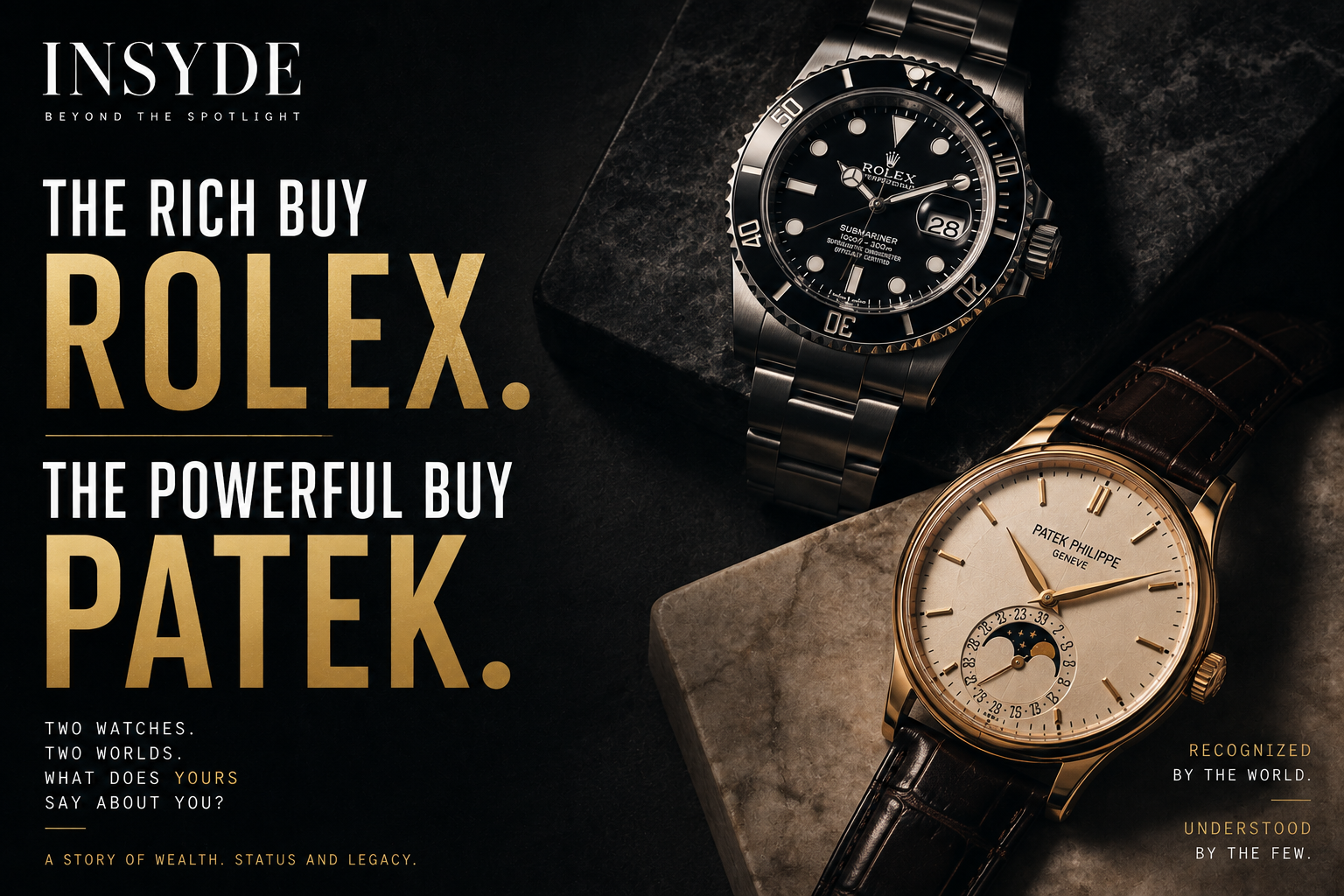
    THE RICH BUY ROLEX. THE POWERFUL BUY PATEK.

    Two watches. Two worlds. And a question luxury has been asking for generations: what does the watch on your wrist say about you?

    There is a saying in the world of luxury watches:

    The rich buy Rolex. The powerful buy Patek.

    It is provocative. It is memorable. And, taken literally, it is wrong.

    There are billionaires who wear Rolex. Collectors who own both. Watch enthusiasts who choose neither. And a Patek Philippe on a wrist does not make its wearer powerful any more than a Rolex makes someone rich.

    But the saying survives because it captures something far more interesting than a simple comparison.

    It captures the psychology of luxury.

    Because at a certain level of wealth, a watch stops being about telling time.

    It becomes about what you want the world to know — and what you no longer need it to know.

    Rolex and Patek Philippe sit at the summit of Swiss watchmaking, yet they communicate remarkably different ideas of success.

    One mastered global recognition.

    The other mastered the power of discretion.

    One became a symbol of achievement.

    The other became a symbol of legacy.

    And somewhere between the two lies a fascinating question:

    When you can afford almost anything, why does the thing you choose to wear still matter so much?


    ROLEX: THE SYMBOL OF ARRIVAL

    Few luxury brands are as instantly recognisable as Rolex.

    You don’t have to be a watch collector to know the crown.

    You don’t need to understand mechanical movements.

    You don’t need to know the reference number.

    You simply see it.

    And you understand.

    That is one of the greatest achievements in luxury branding.

    Rolex began with Hans Wilsdorf, who believed the wristwatch could become both technically dependable and commercially desirable. The company’s history was built around precision, water resistance, reliability and performance in demanding environments.

    But Rolex eventually became much more than a technical watchmaker.

    It became a cultural symbol.

    Explorers wore it.

    Athletes wore it.

    Leaders wore it.

    Entrepreneurs wore it.

    Actors wore it.

    People who had achieved something wore it.

    Over generations, the association became almost automatic.

    Rolex became a shorthand for having made it.


    THE POWER OF BEING RECOGNISED

    This is where Rolex is extraordinary.

    Patek Philippe may be revered by serious collectors, but Rolex possesses something almost impossible to manufacture:

    mass cultural recognition without losing luxury status.

    A Rolex can be appreciated by a lifelong horologist and recognised by someone who has never opened a watch case.

    That duality is extraordinarily powerful.

    It means the watch can operate on two levels simultaneously.

    For the enthusiast, it can be about engineering, history and design.

    For the wider world, it can simply mean:

    success.

    That is not superficial.

    It is branding at its highest level.

    Rolex didn’t merely create watches people wanted.

    It created a symbol people wanted to be associated with.


    THEN THERE IS PATEK PHILIPPE

    If Rolex is the language of recognition, Patek Philippe is closer to the language of connoisseurship.

    Founded in Geneva in 1839, Patek Philippe has spent generations developing complicated mechanical watches and preserving an unusually independent identity. The Stern family acquired the company in 1932, and Patek Philippe remains family-owned today.

    That independence is significant.

    Patek Philippe does not need to become everything to everyone.

    Its appeal has always been rooted in high watchmaking, craftsmanship, technical expertise and continuity.

    Its watches can be extraordinarily complicated.

    Its production remains deliberately limited.

    And the company itself emphasises the rarity and time involved in creating its pieces.

    This creates a different kind of desirability.

    You don’t necessarily buy Patek Philippe so everyone notices.

    You buy it because you understand what you’re looking at.


    WHEN STATUS BECOMES A SECRET LANGUAGE

    Imagine two people entering the same room.

    One is wearing a Rolex.

    Almost everyone recognises it.

    Another is wearing a complicated Patek Philippe.

    Most people don’t notice.

    Then someone across the room looks at the wrist.

    They pause.

    They understand.

    That tiny moment captures one of the most fascinating changes in modern luxury.

    Status doesn’t always become more powerful by becoming more visible.

    Sometimes it becomes more powerful by becoming selective.

    The person wearing the watch isn’t necessarily asking:

    Do you know how much this costs?

    They may be asking something much quieter:

    Do you know what this is?

    And if the answer is yes, nothing else needs to be said.


    TWO BRANDS. TWO DEFINITIONS OF SUCCESS.

    This is where the famous saying begins to make sense.

    Not literally.

    Culturally.

    Rolex has become associated with achievement.

    Patek Philippe has become associated with legacy.

    Rolex can communicate:

    I made it.

    Patek Philippe can communicate:

    I understand why this matters.

    The difference is subtle.

    But in luxury, subtlety is often where the interesting stories begin.


    THE OWNERSHIP STORY IS EVEN MORE INTERESTING

    There is another reason these two brands deserve attention.

    Neither is simply another luxury label sitting inside a massive publicly traded conglomerate.

    Rolex is owned by the Hans Wilsdorf Foundation, established by its founder. The structure allows Rolex to remain independently controlled.

    Patek Philippe remains controlled by the Stern family, which has owned the company since 1932.

    Think about that.

    Two of the world’s most powerful names in luxury watchmaking have retained extraordinary independence while building global influence.

    In an industry where brands can become pieces of enormous luxury portfolios, that independence is part of the story.

    They aren’t simply selling products.

    They are protecting legacies.


    THE BUSINESS OF SAYING NO

    Luxury has always depended on an interesting contradiction.

    A brand needs people to want its products.

    But if everyone can have them immediately, desire changes.

    Too much availability weakens scarcity.

    Too much visibility can weaken mystery.

    Too much production can weaken exclusivity.

    Rolex and Patek Philippe approach this challenge differently, but both understand the fundamental principle:

    Desire needs distance.

    Rolex has achieved enormous global recognition while maintaining a powerful perception of exclusivity.

    Patek Philippe operates at a different scale, with a stronger emphasis on complicated watchmaking, limited production and craftsmanship.

    Neither needs to convince consumers that the product is luxurious.

    The reputation arrived long before the customer.


    PATEK AND THE IDEA OF TIME BEYOND YOURSELF

    Perhaps the most powerful distinction comes from Patek Philippe’s philosophy.

    The brand’s famous campaign tells the owner:

    “You never actually own a Patek Philippe. You merely look after it for the next generation.”

    It is one of the most effective ideas in luxury advertising because it changes the meaning of ownership.

    You are not the final owner.

    You are a temporary custodian.

    The watch existed before you.

    Someone may inherit it after you.

    Suddenly, the product isn’t simply about wealth.

    It is about continuity.

    That is an extraordinarily sophisticated proposition.


    BUT ROLEX HAS ITS OWN KIND OF POWER

    It would be easy — and wrong — to turn this into a story where Patek Philippe is the sophisticated choice and Rolex is simply the more recognisable one.

    Rolex’s achievement may actually be more difficult.

    How do you become one of the world’s most recognised luxury brands without becoming ordinary?

    How do you reach millions of people while preserving the perception of exclusivity?

    How do you become recognisable across continents, generations and cultures?

    Rolex answered those questions better than almost anyone.

    Its strength is not secrecy.

    Its strength is universal recognition.

    That is a different form of power.

    And it is enormous.


    THE WATCH IS NO LONGER ABOUT TIME

    This is where luxury becomes fascinating.

    A watch costing thousands, tens of thousands or hundreds of thousands of dollars does not provide proportionally more accurate time.

    That isn’t why people buy it.

    They buy craftsmanship.

    History.

    Design.

    Scarcity.

    Identity.

    Emotion.

    And sometimes, status.

    The watch becomes a piece of personal storytelling.

    A Rolex might tell the story of ambition.

    A Patek might tell the story of appreciation.

    A vintage piece might tell the story of heritage.

    A rare complication might tell the story of obsession.

    The object becomes a reflection of the person.

    Time is merely the mechanism.


    SO, WHICH ONE IS FOR THE POWERFUL?

    Perhaps the question itself is flawed.

    Power isn’t measured by the logo on someone’s wrist.

    And wealth certainly isn’t.

    The real distinction is what the wearer wants from the object.

    If recognition matters, Rolex possesses extraordinary power.

    If craftsmanship, rarity and horological depth matter, Patek Philippe occupies a remarkable position.

    If legacy matters, Patek’s philosophy becomes particularly compelling.

    If achievement matters, Rolex’s cultural history speaks loudly.

    And if none of those things matter?

    Then perhaps the most luxurious choice is simply wearing what you genuinely love.


    WHEN YOU NO LONGER NEED TO PROVE IT

    There is a point in the journey of luxury where the conversation changes.

    At first, luxury can be about being seen.

    Then it can become about being recognised.

    Eventually, it can become about being understood.

    That is where Patek Philippe’s world becomes especially fascinating.

    Not because Patek is inherently “better” than Rolex.

    But because it represents a different relationship with status.

    A Rolex can enter a room and announce achievement.

    A Patek can sit beneath a cuff and wait.

    Someone who understands will notice.

    Everyone else doesn’t need to.

    That is perhaps the purest form of discreet luxury.


    THE RICH BUY ROLEX. THE POWERFUL BUY PATEK.

    So, is the statement true?

    Not literally.

    It is far too simple for a world as complicated as luxury.

    But as a cultural observation, it reveals something important.

    Rolex mastered recognition.

    Patek Philippe mastered discretion.

    Rolex became one of the world’s most powerful symbols of achievement.

    Patek Philippe became one of the world’s most powerful symbols of horological legacy.

    One tells the world:

    I made it.

    The other can quietly suggest:

    I don’t need to explain it.

    And perhaps the difference between the two isn’t actually about wealth.

    It is about what you want your wealth to say.

    Because at the highest level of luxury, the most expensive thing you can own isn’t necessarily the object.

    It is the confidence to let the object speak for itself.

    INSYDE — Beyond the Spotlight.

  • The Director Effect

    The Director Effect

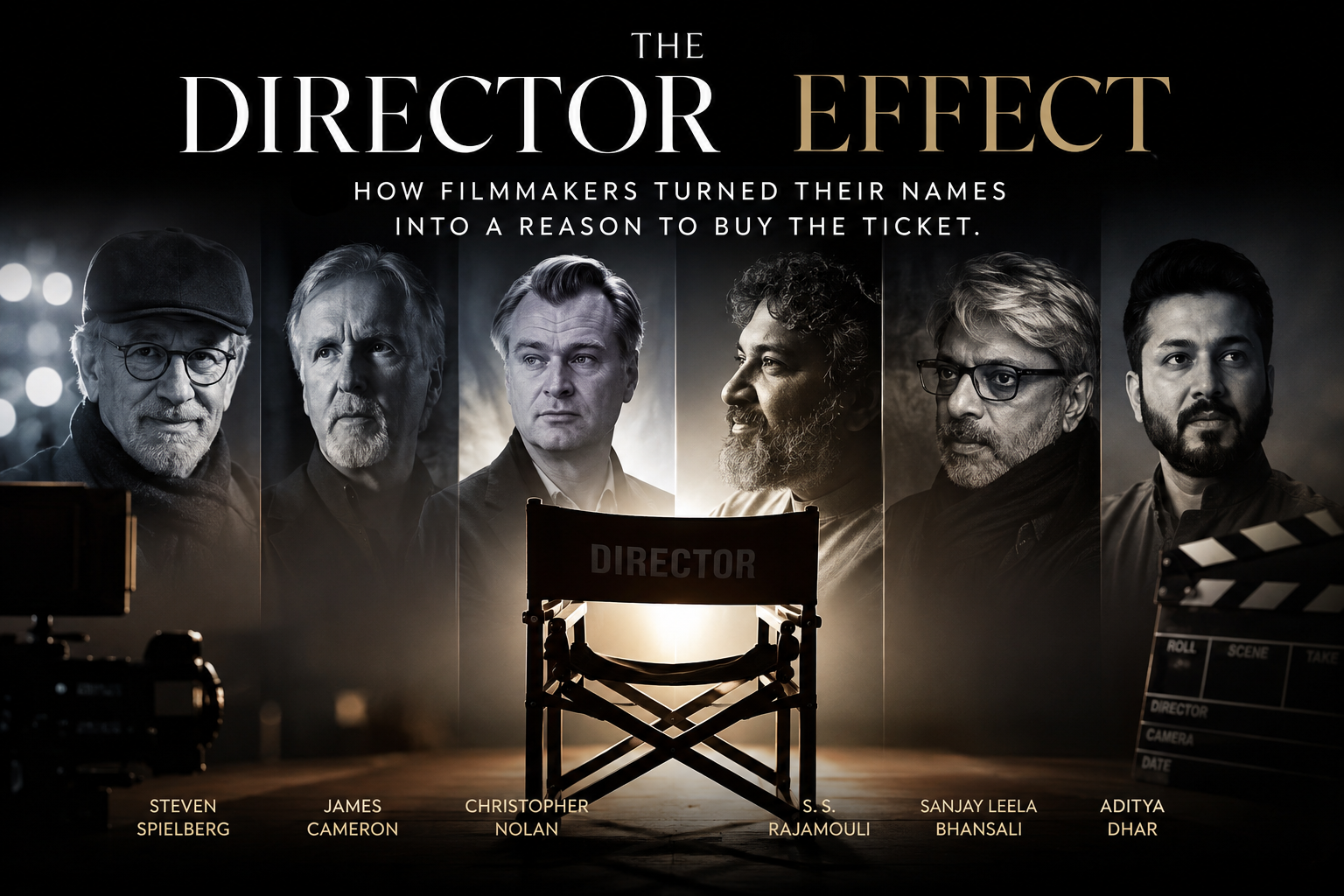
    How cinema’s most successful filmmakers turned their names into a reason to buy the ticket.

    There was a time when the name above a film’s title usually belonged to the star.

    The actor was the attraction. The face was the campaign. The opening weekend belonged to the celebrity whose name appeared largest on the poster.

    The director was often the person behind the curtain.

    That relationship has changed.

    Today, a select group of filmmakers have developed something remarkably powerful: a name that carries its own promise.

    A Nolan film suggests one kind of experience. A Spielberg film another. A Cameron film another. In India, Rajamouli, Bhansali and, increasingly, Aditya Dhar have begun building similarly recognisable creative identities.

    The audience may not know every detail of the story.

    They may not even need to.

    The filmmaker’s name already tells them something about what they are about to experience.

    Scale.

    Craftsmanship.

    Aesthetic.

    Ambition.

    Emotion.

    Spectacle.

    That is when a director stops being simply the person who made the film.

    The director becomes part of the reason to see it.


    When the Name Becomes the Attraction

    The interesting shift isn’t that directors have become famous.

    Great directors have always been famous.

    The shift is that their names increasingly influence the audience’s decision to watch the film itself.

    Christopher Nolan offers perhaps the clearest contemporary example.

    The Odyssey arrived in 2026 with an extraordinary cast including Matt Damon, Tom Holland, Anne Hathaway, Lupita Nyong’o and Zendaya. Yet the conversation surrounding the film was never simply about its cast.

    It was about a Christopher Nolan film.

    The film opened to $264.1 million worldwide and went on to cross $1.4 billion globally, demonstrating the extraordinary theatrical power that can now surround a filmmaker’s name.

    The significance goes beyond the numbers.

    Nolan has reached a point where audiences can recognise the experience before they know the story.

    That is brand recognition.


    Christopher Nolan — The Event Maker

    Nolan’s greatest achievement may not be any individual film.

    It may be that he has transformed the act of going to the cinema into part of his identity as a filmmaker.

    IMAX.

    Large-format film.

    Practical effects.

    Immersive sound.

    Complex narratives.

    Scale.

    Mystery.

    His films arrive with a sense of occasion.

    His relationship with IMAX has become particularly important to that identity. The Odyssey generated an extraordinary opening for the format, reinforcing the idea that Nolan’s films are designed not merely to be watched but to be experienced theatrically.

    Nolan therefore sells something more than a story.

    He sells the experience of cinema itself.

    That is why audiences can become interested in a Nolan film before they know exactly what happens in it.

    The name tells them enough.


    Steven Spielberg — The Pioneer

    Long before directors were discussed as personal brands, Steven Spielberg had already established the model.

    Jaws didn’t simply become a hit.

    It helped define the modern blockbuster.

    Spielberg’s name eventually came to represent something unusually broad:

    Adventure.

    Emotion.

    Spectacle.

    Humanity.

    Family.

    History.

    Science fiction.

    The remarkable part is the range.

    A Spielberg film doesn’t have to belong to one genre to feel like a Spielberg film.

    That is one of the defining characteristics of a mature creative brand.

    The identity survives the category.

    His name became associated with a particular standard of mainstream cinematic storytelling, helping establish the idea that the filmmaker could become part of the commercial identity of a movie.

    Decades later, the name still carries that accumulated trust.

    And that is perhaps the purest form of brand equity:

    recognition built over time.


    James Cameron — The Spectacle

    If Spielberg helped build the modern blockbuster, James Cameron pushed the idea of spectacle into technological territory.

    Titanic, Avatar and Avatar: The Way of Water place Cameron in an extraordinarily rare commercial category.

    But the more interesting part isn’t simply their box-office performance.

    It is the way Cameron approaches technology.

    He doesn’t merely use new tools.

    He frequently pushes the industry to develop them.

    For Avatar, his production team developed new approaches to performance capture, virtual environments and 3D filmmaking to realise the world he had imagined.

    The technology became part of the storytelling.

    That has become part of the Cameron promise.

    When a Cameron film arrives, audiences expect something that stretches the boundaries of what cinema can physically display.

    The technology becomes part of the spectacle.

    And the director becomes the guarantee.


    India’s Director-Brand Era

    The phenomenon isn’t uniquely American.

    In fact, some of the most interesting examples are emerging from India.

    Indian cinema has always had powerful stars, but a new generation of filmmakers has demonstrated that a director’s name can carry an increasingly independent form of commercial and cultural value.

    The difference is subtle.

    The audience isn’t simply asking who is acting in the film.

    It is beginning to ask:

    Who is creating this world?


    S. S. Rajamouli — The Global Phenomenon

    S. S. Rajamouli may be the clearest contemporary example of an Indian filmmaker whose name has become associated with a global theatrical proposition.

    Baahubali established the scale.

    RRR expanded the international audience.

    His cinema carries a recognisable promise:

    Mythology.

    Emotion.

    Heroism.

    Music.

    Large-scale action.

    World-building.

    Spectacle.

    But Rajamouli’s influence has increasingly travelled beyond the traditional boundaries of Indian cinema.

    His international reception and the global ambitions surrounding his upcoming projects demonstrate how far that directorial identity has travelled.

    The important shift is that Rajamouli is no longer simply exporting individual films.

    He is exporting a cinematic language.

    Audiences increasingly understand what a Rajamouli experience promises before the opening frame.

    That is a powerful form of authorship.


    Sanjay Leela Bhansali — The Aesthetic

    If Rajamouli’s name promises spectacle, Sanjay Leela Bhansali’s promises something more intimate:

    a world.

    Mention Bhansali and an audience can almost imagine the frame before seeing it.

    Architecture.

    Jewellery.

    Textiles.

    Music.

    Choreography.

    Romance.

    Colour.

    Light.

    Grandeur.

    His films have developed such a distinctive visual vocabulary that the director’s name itself functions almost like an aesthetic category.

    That is a particularly sophisticated form of brand recognition.

    A luxury house can communicate through a silhouette.

    An architect can communicate through proportion.

    A watchmaker can communicate through a movement.

    Bhansali communicates through the frame.

    His films feel authored down to the smallest detail.

    The sets, costumes, musical sequences and compositions all belong to the same universe.

    And that consistency creates expectation.

    The audience knows what kind of world it is entering.

    The question isn’t whether it will be beautiful.

    The question is how Bhansali will make beauty feel this time.


    Aditya Dhar — The New Force

    Aditya Dhar represents a different stage of director-brand power.

    His career is considerably younger than those of Spielberg, Cameron, Nolan, Rajamouli or Bhansali, but that is precisely what makes his rise interesting.

    Uri: The Surgical Strike established his directorial identity through political tension, action and a grounded sense of scale.

    The Dhurandhar films expanded that identity dramatically.

    The commercial response has demonstrated that Dhar is increasingly associated with a particular cinematic proposition: political narratives, high-stakes action, technical ambition and large-scale world-building.

    That matters because a director does not necessarily need decades to build a recognisable identity anymore.

    In an environment where audiences are exposed to more content than ever, a distinctive creative voice can become recognisable remarkably quickly.

    Dhar represents the newer model of the director as a commercial force.

    His story is still being written.

    But the audience is beginning to recognise the promise.


    The Director as a Luxury Brand

    This is where cinema begins to resemble luxury.

    A luxury house doesn’t simply sell an object.

    It sells an expectation.

    You don’t choose a watch only because it tells time.

    You choose its history, craftsmanship, design language and reputation.

    You don’t choose a fashion house merely because it produces clothing.

    You choose its interpretation of clothing.

    The same principle increasingly applies to filmmakers.

    A Nolan film promises one kind of experience.

    A Cameron film another.

    A Rajamouli film another.

    A Bhansali film another.

    The audience is not simply purchasing a ticket.

    It is purchasing an expectation of authorship.

    That is the real shift.


    From Star Power to Auteur Power

    For decades, cinema was built around the star system.

    The actor was the brand.

    The actor’s face sold the poster.

    The actor’s name drove the opening.

    That power hasn’t disappeared.

    But audiences now have another way of choosing.

    Franchises have multiplied.

    Streaming has expanded the amount of content available.

    The number of films competing for attention has become enormous.

    In that environment, a recognisable creative voice becomes valuable.

    A filmmaker with a distinct identity provides something a new concept otherwise lacks:

    trust.

    The audience may not know the entire story.

    But they know the person telling it.

    And sometimes that is enough.


    The New Currency Is Expectation

    Perhaps the most valuable thing a filmmaker can build is not fame.

    It is expectation.

    When a director reaches that level, a new project becomes news before the trailer arrives.

    A new Nolan project becomes an event.

    A new Cameron project becomes an event.

    A new Rajamouli project becomes an event.

    A new Bhansali project becomes an event.

    The filmmaker’s previous work has already performed part of the marketing.

    The reputation precedes the film.

    That is exactly how powerful luxury brands operate.

    The name creates anticipation before the object is experienced.


    The Risk of Becoming a Brand

    There is, however, a paradox.

    A brand creates expectations.

    And expectations can become a prison.

    The more recognisable a filmmaker becomes, the more audiences expect the next film to resemble the last.

    Nolan must remain Nolan.

    Bhansali must remain Bhansali.

    Rajamouli must remain Rajamouli.

    But if a signature becomes too predictable, it can become formula.

    The strongest creative brands therefore face the same challenge as the strongest luxury houses:

    How do you remain recognisable without becoming predictable?

    The answer is evolution.

    Preserve the philosophy.

    Change the expression.

    A signature should be a foundation, not a cage.


    The Future Belongs to the Signature

    The future of theatrical cinema will not belong entirely to actors.

    Nor will it belong exclusively to franchises.

    Both will remain powerful.

    But as audiences become more selective about which films deserve their time, money and attention, authorship becomes increasingly valuable.

    A filmmaker with a recognisable voice offers something a generic production cannot.

    A reason to anticipate.

    A reason to care.

    A reason to believe the experience will be different.

    That may explain why the modern director is becoming something more than the person who makes the film.

    The director is becoming part of the reason the film exists in the audience’s imagination before it arrives.


    The Director Is the Brand

    The most interesting evolution in cinema may therefore be happening above the title.

    Not in the cast list.

    Not in the franchise logo.

    But in the name of the person who imagined the world.

    Spielberg built the modern blockbuster.

    Cameron turned technology into spectacle.

    Nolan turned theatrical cinema into an event.

    Rajamouli transformed scale into a global Indian cinematic language.

    Bhansali turned visual beauty into authorship.

    Dhar is demonstrating how quickly a contemporary filmmaker can build a commercial identity around a distinct worldview.

    Six directors.

    Six different forms of influence.

    But one underlying shift.

    The audience isn’t always asking:

    “What is this film about?”

    Increasingly, it is asking:

    “Who made it?”

    And when the answer itself is enough to make someone buy a ticket, the filmmaker has crossed an important line.

    They are no longer simply making the brand.

    They have become the brand.

    INSYDE — Beyond the Spotlight.