
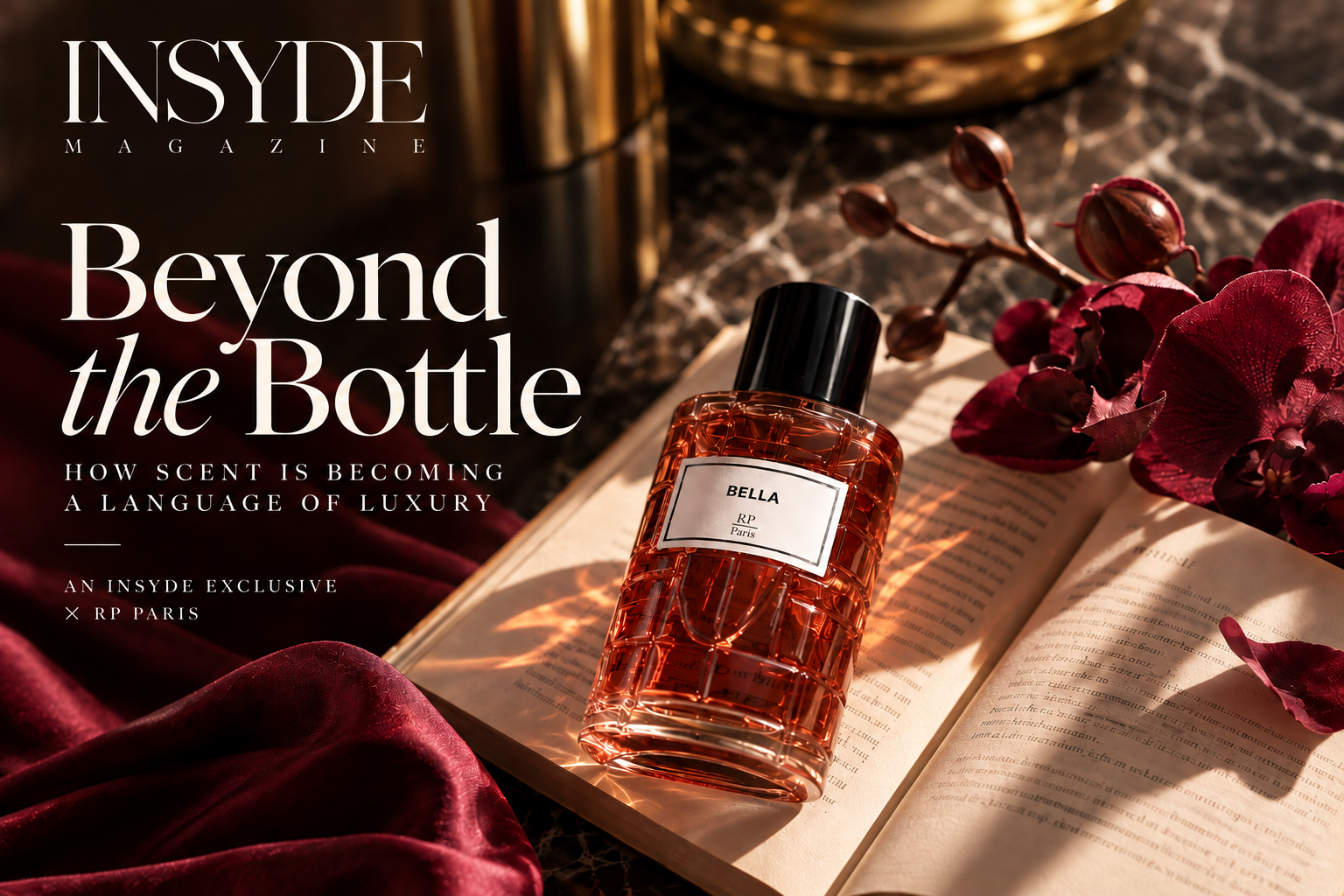
From signature fragrances to scented interiors, textiles and everyday rituals, scent is moving beyond the body — becoming an increasingly intimate way to shape identity, atmosphere and experience.
Luxury has traditionally been something we can see.
It is found in the cut of a garment, the construction of a watch, the setting of a jewel or the architecture of a carefully considered space. Even the quietest forms of luxury tend to reveal themselves through material, proportion, finish or craftsmanship.
Scent asks us to experience luxury differently.
It cannot be held in the same way as an object. It has no permanent form, no fixed visual language and no single interpretation. Yet it can alter the character of a room, transform an ordinary ritual or bring an entire memory back with remarkable precision.
That invisible quality is becoming increasingly relevant to the way contemporary luxury is experienced.
Fragrance was once largely defined by the bottle and the person wearing it. Today, its territory is expanding into homes, textiles, cars, hospitality and the rituals of everyday life. Scent is becoming less confined to a moment of application and more closely connected to the environments we create around ourselves.
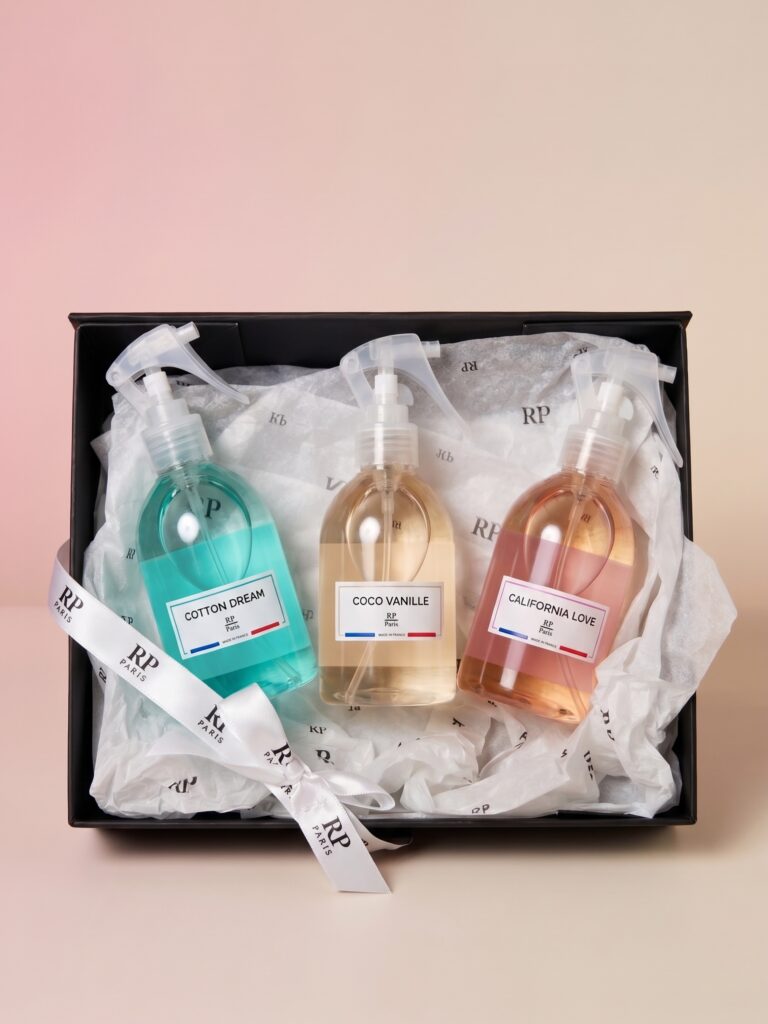
For RP Paris, a French perfume house founded in 2015, that evolution reflects a broader change in how people understand fragrance and personal expression. The house describes its creative universe through emotion and has developed an offering that extends from perfumes and mists to textile sprays, home diffusers, car fragrances and other scent-led products.
The shift raises a more interesting question than simply where fragrance is being used next.
What happens when luxury becomes something we experience rather than something we see?
Beyond the Signature Scent
For generations, the idea of a signature scent carried a particular kind of intimacy.
One fragrance could become synonymous with a person — something recognisable, personal and almost invisible to everyone except those who encountered it.
But the idea of one scent defining an entire identity is becoming less rigid.
RP Paris sees consumers becoming more comfortable with different fragrances for different parts of their lives. The scent chosen for the skin does not necessarily have to be the scent chosen for a bedroom, a textile or a car.
The comparison with fashion is revealing.
We don’t dress the same way for every occasion. Our wardrobes change with our mood, surroundings and intentions. Why should our relationship with scent be any different?
A fragrance can accompany getting ready in the morning. Another can create a calmer atmosphere at night. A familiar scent can become associated with travelling, returning home or simply making an ordinary moment feel more considered.
The result is a more fluid understanding of olfactory identity.
Rather than asking which single fragrance represents us, we can begin to ask which scent belongs to this particular moment.
For RP Paris –
“the expansion of fragrance is therefore not simply about creating more products or more occasions for application. It reflects a desire to make more parts of everyday life feel personal.”
That distinction matters.
The modern luxury consumer is increasingly interested in experiences that feel individual rather than prescribed.
And scent, perhaps more than any other luxury category, allows for that freedom.
The Luxury You Cannot See
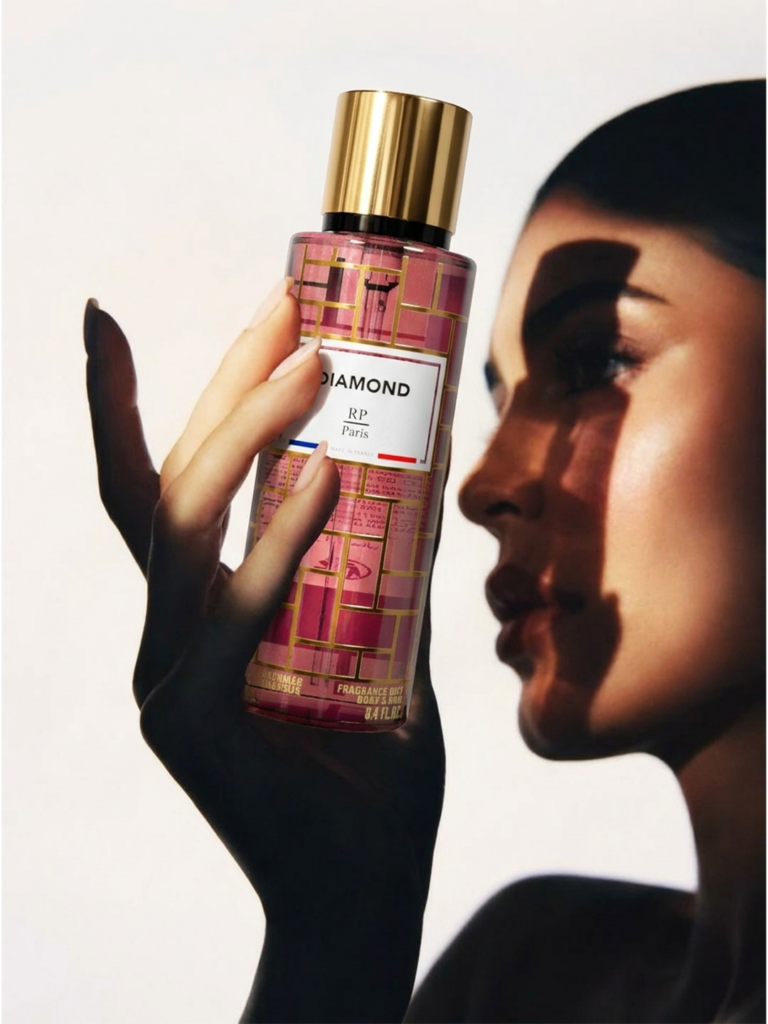
There is a particular intimacy in something that does not need to announce itself.
A watch can reveal its craftsmanship through its movement. A jewel communicates through metal and stone. A garment speaks through cut, construction and material.
Scent operates on a different level.
“With scent, there is nothing to look at. You have to experience it.” — RP Paris
That experience is inherently subjective.
The same fragrance can evoke confidence in one person, comfort in another and a completely different memory in someone else. A scent may remind someone of a particular place or period of their life without that association ever having been part of the creator’s original intention.
This makes fragrance particularly interesting within today’s luxury landscape.
Luxury has increasingly moved away from the need to demonstrate status through visibility. Experiences, personal rituals and emotional associations have become just as significant as the objects themselves.
Scent fits naturally into that evolution.
It does not need to be seen by anyone else to have value.
In fact, its most meaningful effect may happen when nobody else notices it at all.
When a Space Has an Identity
The most significant change in fragrance may be taking place beyond the body.
Think about the way a room is designed.
Lighting, furniture, colour, texture and materials are selected not only for their individual qualities but for the atmosphere they create together. Scent can increasingly become part of that same conversation.
A bedroom can have a different olfactory character from a living room. A boutique can develop an atmosphere that complements its visual identity. A hotel can create an association that remains with its guests long after they have left.
RP Paris describes scent as:
“the invisible finishing layer of a space.”
It is a compelling way of thinking about fragrance because it moves scent from the category of accessory into the language of design.
We already talk about the visual identity of a space.
Increasingly, we may begin talking about its olfactory identity.
For hospitality, retail and residential interiors, that possibility is particularly intriguing. A recognisable scent can become part of how a place is remembered, just as much as its architecture, materials or visual details.
And this does not necessarily require extravagance.
Sometimes luxury is simply the ability to shape an environment so precisely that it feels unmistakably yours.
From Owning Luxury to Curating Experience
The broader luxury industry has been moving steadily toward experience.
A hotel is no longer judged only by the room itself. A boutique is increasingly designed as an environment rather than simply a place to transact. Residential design has become as concerned with atmosphere and wellbeing as it is with materials and objects.
Scent belongs naturally within this shift.
It can change how an environment is perceived without changing its physical structure.
A room does not need to be redesigned.
A car does not need to be transformed.
A home does not need another object.
The sensory experience can change through something almost invisible.
For RP Paris –
this is where contemporary indulgence becomes particularly interesting: in the ability to take an ordinary moment and make it feel more deliberate.
The fragrance in a room before guests arrive. The scent of textiles at the end of the day. A familiar atmosphere inside a car. A particular fragrance associated with coming home.
These are small details, but they can create lasting associations.
Luxury, in this context, becomes less about accumulating things and more about curating how life is experienced.
The Challenge of a Visual World
Fragrance exists in an unusual position within contemporary culture.
We live through images. Fashion is photographed. Jewellery is displayed. Interiors are captured and shared. Luxury brands construct elaborate visual worlds around their products.
But scent itself cannot be photographed.
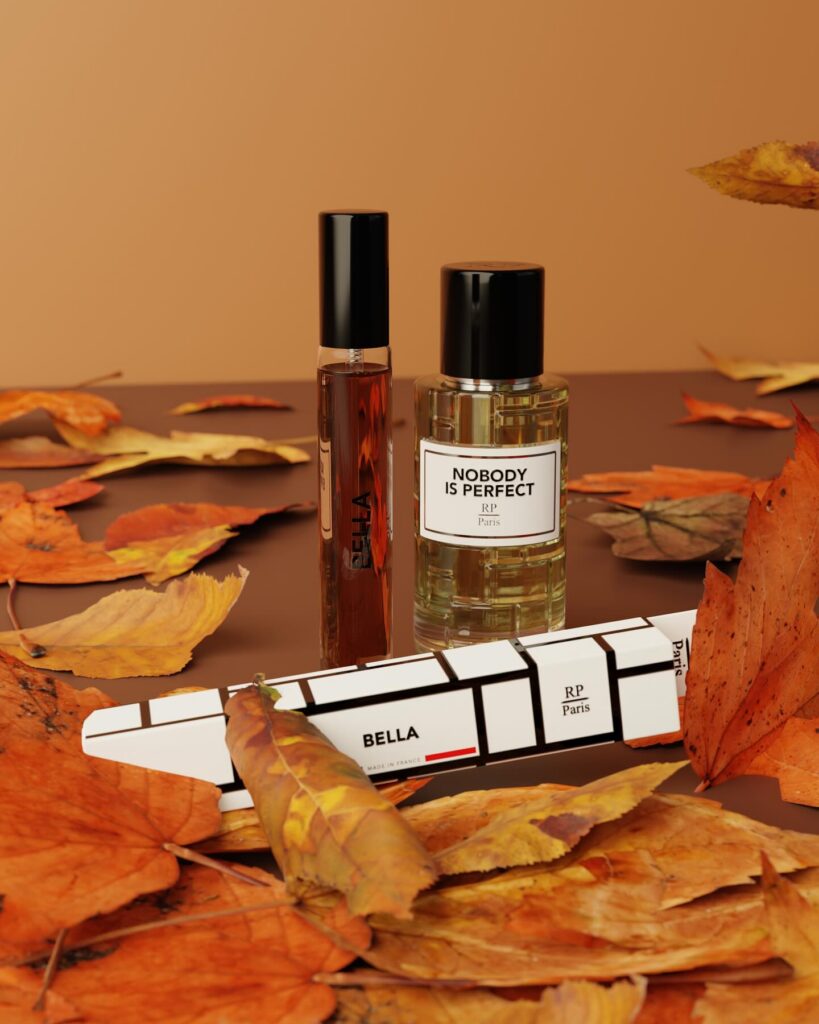
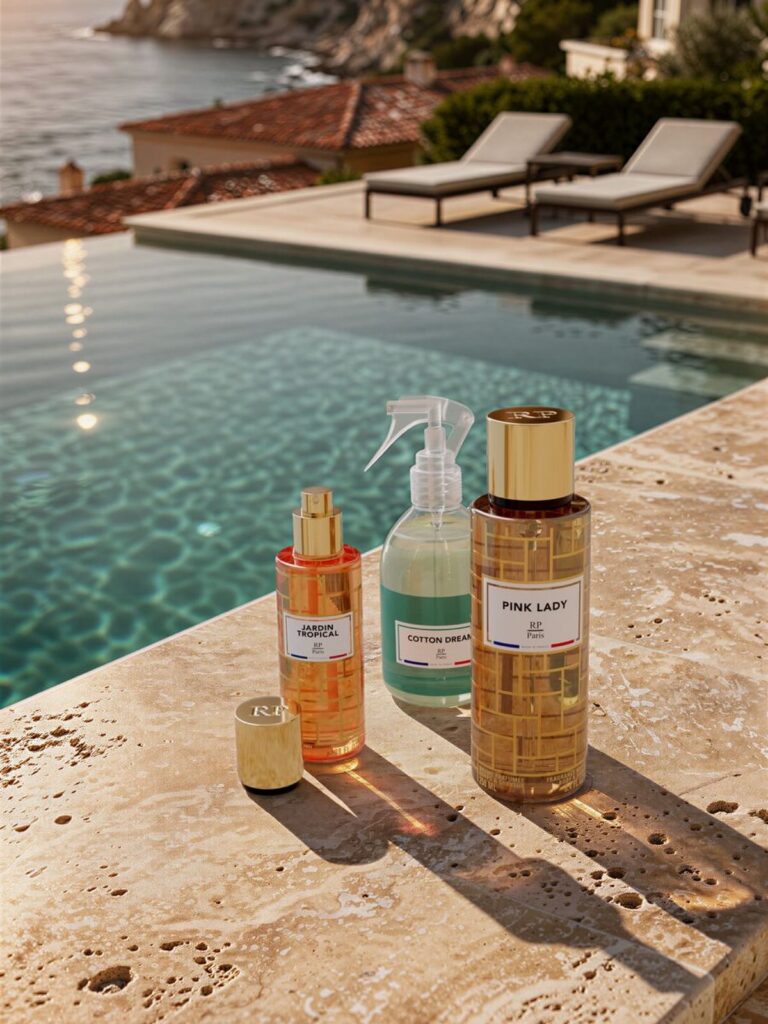
A bottle can be beautiful. Packaging can establish a visual identity. A campaign can suggest a particular mood. None of them, however, can reproduce the fragrance itself.
Eventually, the consumer has to experience it.
For RP Paris, this makes storytelling essential — but it also means leaving room for interpretation.
“The visual identity creates the first invitation, but the scent creates the real connection.” — RP Paris
That relationship between image and experience is increasingly important.
The visual world can invite someone in, but it cannot dictate what the fragrance will mean to them.
A scent may become associated with a childhood memory, a city, a relationship or an entirely unexpected moment.
In that sense, the consumer completes the story.
And perhaps that is one of fragrance’s greatest strengths in an age where almost everything is immediately visible and explainable.
There is still something left to discover.
French Tradition, Without Standing Still
The expansion of fragrance does not mean abandoning the traditions from which the category emerged.
RP Paris positions French perfumery as a foundation of its identity while also looking toward changing tastes, contemporary lifestyles and new ways of experiencing scent. The house describes its approach through collaboration, technical expertise, craftsmanship and innovation, while its product universe continues to expand beyond conventional personal fragrance.
But the relationship between heritage and modernity is not presented as a choice between two opposing directions.
RP Paris puts it simply:
“French perfumery is a starting point, not a boundary.”
That distinction becomes increasingly relevant as the category evolves.
Tradition has value because of the knowledge and craftsmanship it carries. But for that knowledge to remain relevant, it must be capable of responding to the way people live now.
Consumers discover fragrance differently. They experiment more. They move between beauty, fashion, interiors and lifestyle with fewer rigid boundaries.
For a contemporary perfume house, the challenge is therefore to preserve the character and quality associated with its foundations while allowing the experience of fragrance to evolve.
Heritage does not have to remain still in order to remain meaningful.
A Sensory Wardrobe
Perhaps the easiest way to understand the future of fragrance is to think of it as a wardrobe.
Not one scent, but several.
Different moods. Different spaces. Different occasions.
The same person can want something expressive on the skin, something softer in a bedroom, something fresh in a car or something entirely different during travel.
This mirrors the way personal style has already evolved.
We no longer expect a single outfit to represent every version of ourselves. Our wardrobes accommodate different identities and circumstances.
Fragrance can do the same.
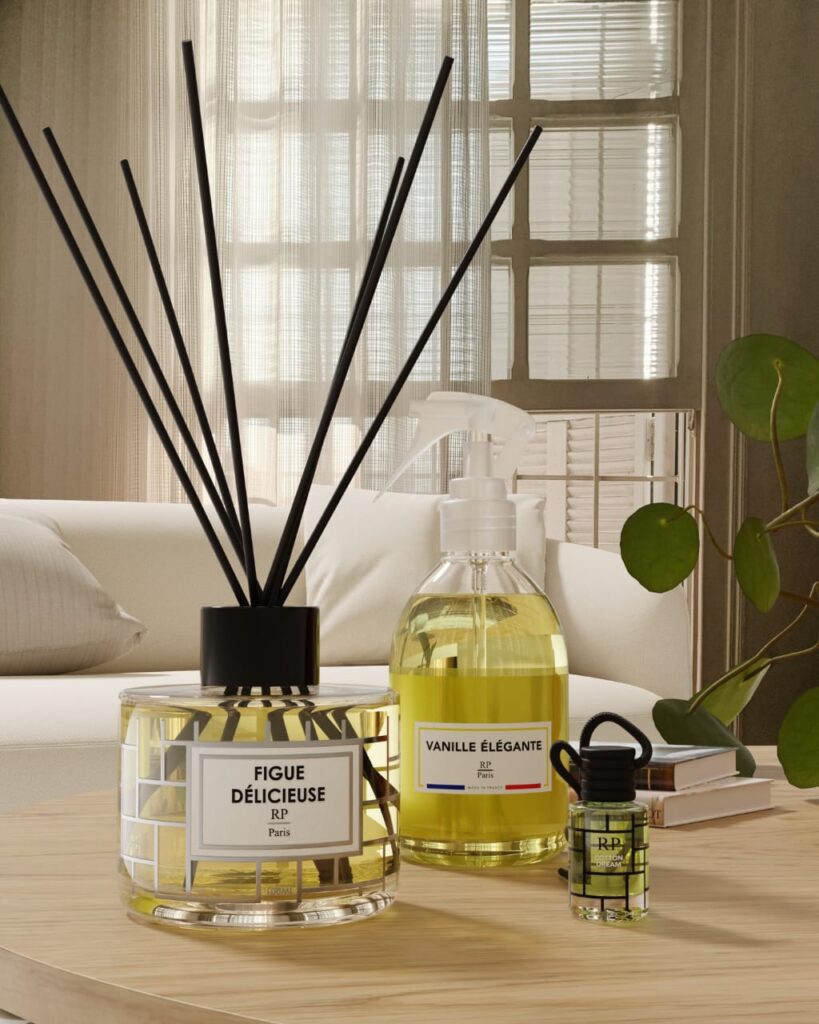
This is why the expansion into textile sprays, home fragrance and car scent feels more significant than a simple multiplication of product categories. It reflects a broader shift in where scent belongs.
It belongs wherever experience happens.
Beauty.
Fashion.
Interiors.
Travel.
Hospitality.
Home.
The boundaries between these worlds are increasingly fluid, and fragrance is uniquely capable of moving between them.
Designing the Invisible
The next stage of fragrance may therefore have less to do with where another perfume product can be placed and more to do with recognising scent as a form of design.
Imagine a home where fragrance is considered alongside lighting, fabrics and materials.
A hotel where the olfactory character of the space is developed as deliberately as its architecture.
A boutique whose scent becomes as recognisable as its visual identity.
A car where fragrance completes the experience of its interior.
These possibilities are already beginning to emerge, but their significance lies in what they suggest about the future of design.
RP Paris believes designers and brands may increasingly think about scent earlier in the creative process rather than treating it as an element added at the end.
That would represent a subtle but meaningful shift.
Scent would no longer simply finish an environment.
It would help define it.
And once that happens, the idea of an “olfactory identity” may become as natural as talking about a visual one.
What Comes After the Bottle?
The future of fragrance may not require us to leave the bottle behind.
It may simply require us to understand that the bottle was never the entire experience.
What follows is more interesting.
A memory.
A mood.
A room.
A journey.
A ritual.
The feeling of arriving somewhere, or returning home.
RP Paris expects personalisation to remain central to the evolution of fragrance, with consumers increasingly choosing scents according to different moods, spaces and occasions while continuing to value quality, craftsmanship and authenticity.
That balance may define the category’s next chapter.
Because as scent becomes more integrated into everyday life, its value may lie less in its ability to signal status and more in its ability to create meaning.
It can make a familiar space feel different.
It can turn a routine into a ritual.
It can connect a present moment with a memory that may have been forgotten.
And it can do all of this without demanding to be seen.
“Scent becoming less of a single product and more of an everyday sensory language.” — RP Paris
That may ultimately be the most interesting evolution of all.
Luxury has spent centuries perfecting the art of what can be seen, touched and owned.
Scent suggests another possibility:
luxury as something felt.
And beyond the bottle, fragrance may be becoming one of the most intimate ways we shape the world around us.
RP Paris
French perfumery, contemporary olfactory experiences.
An INSYDE Exclusive editorial conversation with RP Paris.