Category: Insyde Exclusive

INSYDE Exclusive is where we go beyond the headline. Original conversations, first-person perspectives and intimate access to the people, creators and houses shaping fashion, luxury, culture and contemporary life.

  • UBSOUND: AN ARCHITECTURE OF SOUND

    UBSOUND: AN ARCHITECTURE OF SOUND

    Where acoustic precision meets Italian design and the aesthetics of modern living.

    INSYDE EXCLUSIVE

    In contemporary luxury, the objects that occupy our homes are increasingly expected to do more than serve a function. They are considered through the language of material, proportion, craftsmanship and personal expression. Sound, once largely the domain of technical specifications and dedicated listening rooms, is becoming part of this wider conversation about how we design and experience the spaces in which we live.

    For Italian high-end audio house UBSOUND, this intersection is central to its approach. Founded in Milan in 2011, the company has developed a philosophy around two connected ambitions: the pursuit of natural sound reproduction and the creation of loudspeakers treated with the care of an artisanal object.

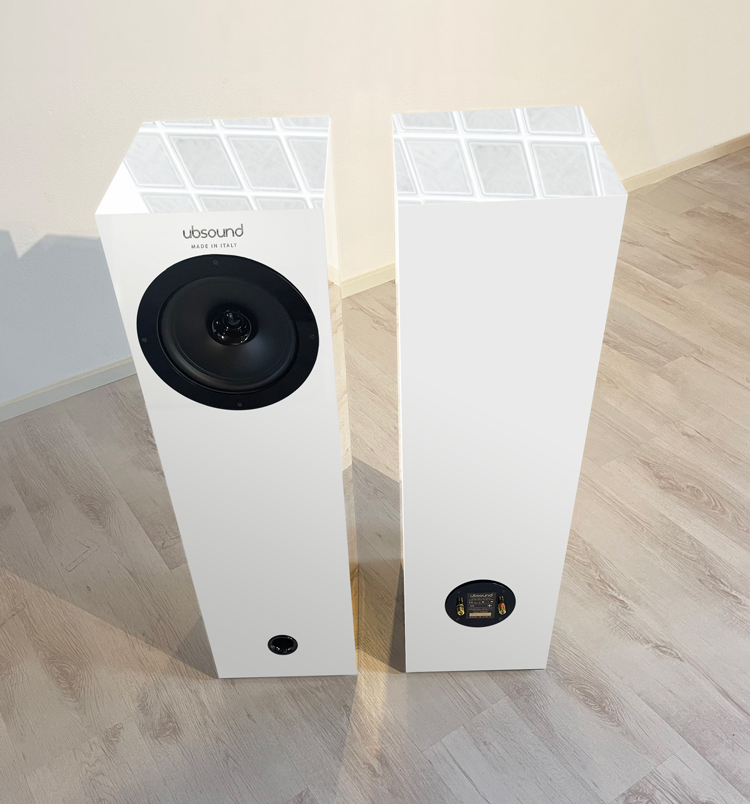
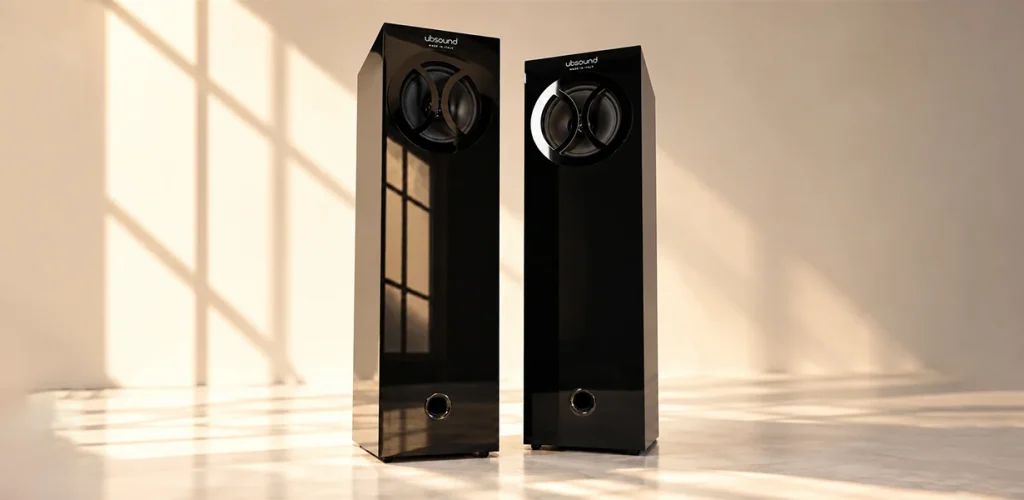
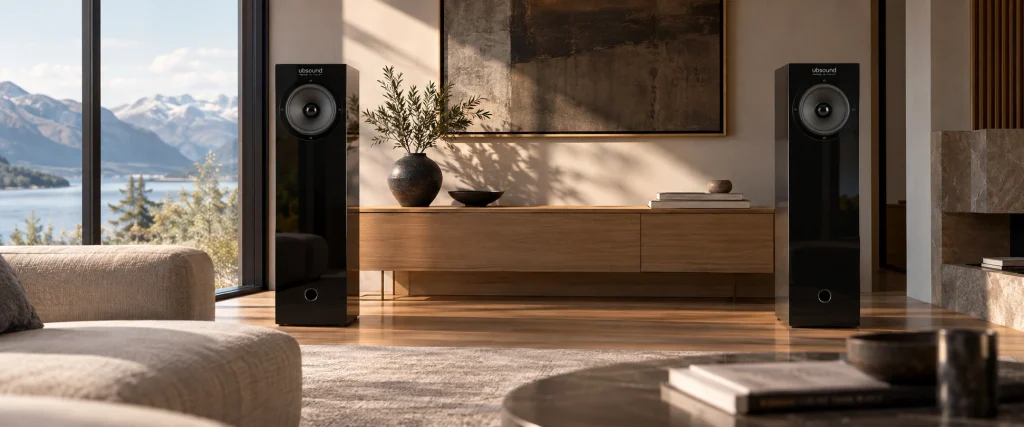
    Its F85 floorstanding loudspeaker brings those ambitions into focus. Built around a single full-range driver, supported by the company’s proprietary HDNSS technology and presented in a carefully finished cabinet, the F85 is conceived not only as an audio component but also as an object with a considered architectural presence.

    Yet the more interesting story lies beyond the product itself. Through the perspectives of UBSOUND CEO Marzio Gasparro and Italian architect Flora Profeta, the F85 becomes a study in how sound, engineering and interior design can be approached as parts of the same experience.
    THE PURSUIT OF A MORE NATURAL SOUND

    At the heart of UBSOUND’s philosophy is a particular idea of fidelity: music should be reproduced without unnecessary intervention, preserving the character of the original recording rather than imposing an artificial signature upon it.

    For Marzio Gasparro, the company’s founder and CEO, this pursuit has always been accompanied by a commitment to craftsmanship. He describes the original philosophy as resting on two principles: creating a loudspeaker capable of delivering authentic, natural sound, and producing it with the dedication associated with an artisanal musical instrument.

    “The first is a constant pursuit of creating a loudspeaker capable of delivering an authentic and truly natural sound, free from filtering or unnecessary emphasis on specific sound frequencies,” Gasparro explains.

    The second principle is equally important. UBSOUND’s approach, he says, is centred on crafting a product that is “entirely handmade with the same passion one would dedicate to creating an artisanal music instrument.”

    It is a position that places the listening experience ahead of spectacle. Rather than treating sound as an opportunity for exaggerated bass, heightened treble or a deliberately coloured presentation, the company’s stated objective is to preserve tonal coherence and the emotional character of music.

    That philosophy informs the F85’s central acoustic architecture.

    A DIFFERENT APPROACH TO LOUDSPEAKER DESIGN

    The F85 uses a single, independent 21-centimetre full-range dynamic driver, operating without a crossover or filter between the loudspeaker and the amplifier. In conventional multi-driver loudspeaker designs, crossovers divide the audio signal into frequency ranges and direct them to different drivers. UBSOUND has chosen a different route, placing the emphasis on a single driver reproducing the full frequency range.

    For Gasparro, this architecture is fundamental to the company’s pursuit of natural reproduction.

    “It took more than 3 years of engineering design and many prototypes to create the F85s,” he says, describing the development process behind the loudspeaker.

    The design is paired with UBSOUND’s proprietary HDNSS — High Definition Natural Sound Signature technology, integrated within the wooden cabinet. According to the company, the system is designed to manage internal resonances, control passive sound waves and absorb unwanted vibrations through its engineering approach.

    The intention is to support a coherent soundstage while reducing unwanted cabinet-related interference. These are UBSOUND’s stated design objectives rather than independently verified performance conclusions, but they help explain the thinking behind the product’s construction.

    The F85’s published specifications include a frequency response of 26 Hz–22 kHz, sensitivity of 90 dB and nominal impedance of 8 ohms. Together, these figures provide a technical starting point for understanding the loudspeaker’s operating range and amplifier compatibility. As with any high-end audio system, however, real-world performance also depends on the amplifier, room acoustics, speaker placement and listening environment.

    For UBSOUND, arriving at the intended sound was not a matter of a single engineering breakthrough. It required a prolonged process of development and listening.

    Gasparro reports that the F85 underwent more than 600 listening sessions across anechoic, semi-anechoic and domestic environments. Dozens of prototypes were modified throughout the process, with the company refining the design until it reached the tonal character it had set out to achieve.

    The number is significant not simply for its scale, but for what it suggests about the development philosophy: a loudspeaker is not finished when its technical architecture is established. It must also be evaluated in the conditions in which people will actually listen to it.
    THE FINISHING TOUCH: ITALIAN CRAFT AND AUTOMOTIVE INFLUENCE

    A loudspeaker’s acoustic architecture may determine how it performs, but its physical presence determines how it lives within a room. UBSOUND’s treatment of the F85 cabinet reflects an awareness that, in considered residential environments, finish and material are not incidental details.

    Gasparro draws a connection between the company’s approach to surface finishing and Italy’s relationship with luxury automotive design. The influence is visible in the production process, which uses techniques associated with professional automotive painting.

    According to Gasparro, each cabinet receives two coats of primer, followed by five coats of paint applied in a professional automotive spray oven. Two coats of high-gloss clear finish are then applied before the surface is manually polished.

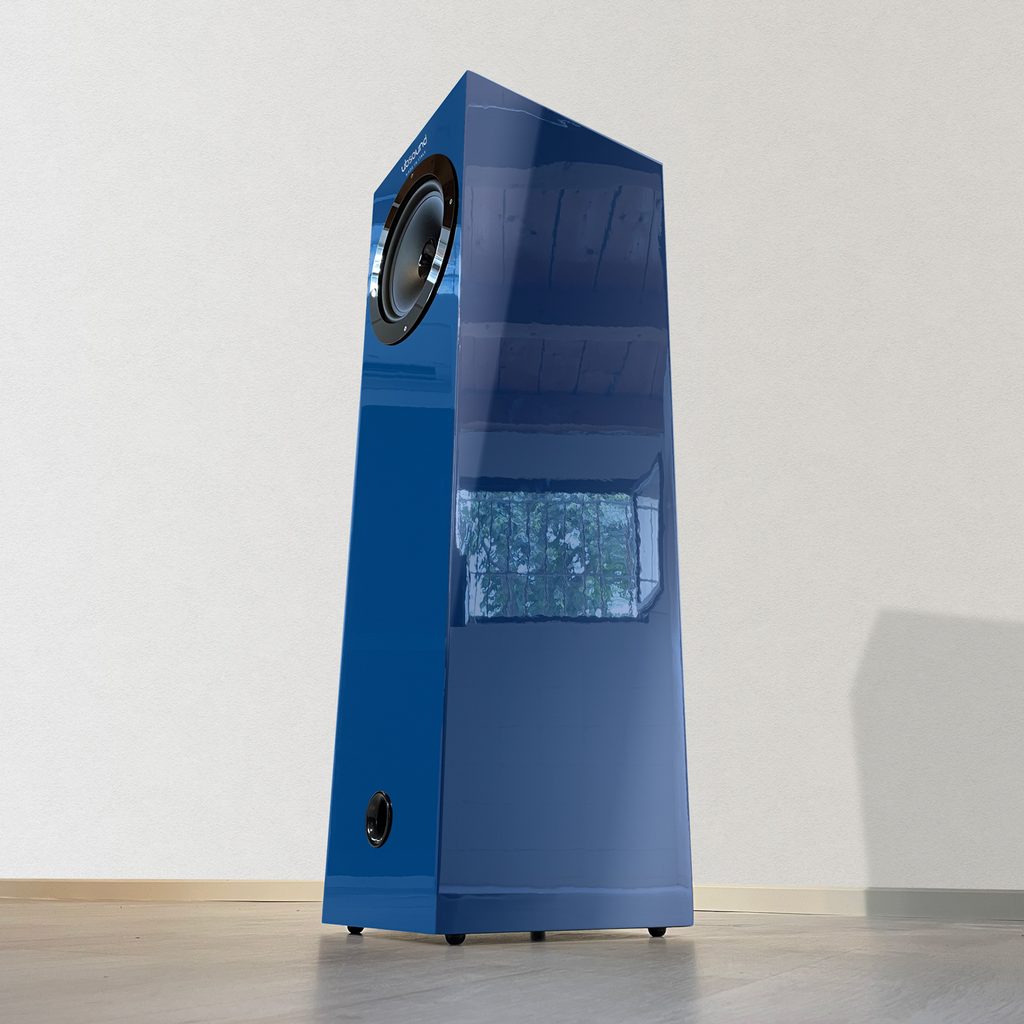
    The process is intended to create a refined, durable finish while allowing a high degree of personalisation. Alongside glossy black and white, UBSOUND offers the possibility of bespoke colours selected through automotive paint codes. A client can therefore choose a shade that relates to a particular vehicle, material palette or interior scheme.

    “By finishing our loudspeaker cabinets using an automotive painting process, we offer the consumers the freedom to choose any color they desire,” Gasparro says.

    It is a detail that moves customisation beyond a conventional choice between a small number of standard finishes. Colour becomes part of the relationship between the object and its surroundings.

    The same attention extends to the F85’s supporting details. A front bass-reflex port, anti-vibration feet, removable magnetic grille and dedicated protective covers form part of the overall design. Gasparro views these components as elements of the ownership experience rather than accessories to be considered separately.

    “When creating a loudspeaker — viewing it also as a piece of luxury interior decor — every single detail, from design to materials, makes a huge difference in the final result,” he explains.

    The distinction matters. In a product intended to occupy a prominent position in a living space, the quality of the finish, the usability of its components and the coherence of its design all contribute to how it is experienced over time.

    WHEN A LOUDSPEAKER BECOMES AN ARCHITECTURAL OBJECT

    The F85’s visual identity is perhaps best understood through the perspective of Flora Profeta, the Italian architect whose contribution brings a spatial and compositional dimension to the story.

    Where Gasparro approaches the loudspeaker through sound reproduction and engineering, Profeta considers its relationship with the room. Her perspective begins with a broader shift in residential design: technology is no longer necessarily something to conceal. It can become an integral part of the architectural composition, provided its form, dimensions, materials and placement are considered carefully.

    “In recent years, technology has increasingly become an integral part of residential interior design, rather than something to be concealed,” Profeta observes.

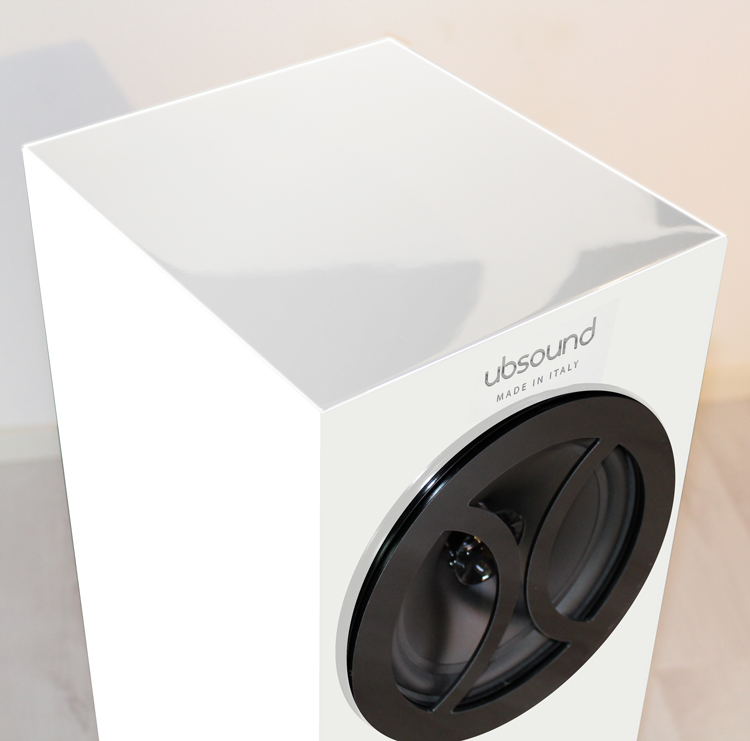
    For her, the F85 is interesting because of its geometry. Its form is built around a relationship between two simple visual elements: a strong vertical line and a circle.

    The cabinet establishes the vertical axis, drawing the eye upwards and giving the object a sense of height. The circular driver creates a focal point within that composition. Their relationship, Profeta explains, gives the loudspeaker a visual identity that is clear without depending on decorative complexity.

    Rather than treating the F85 as a technical object placed into an already completed interior, she sees it as an element capable of contributing to the room’s overall character.

    Its finish plays an important role in that relationship. A bespoke colour can make the loudspeaker a deliberate visual feature, or allow it to sit more quietly alongside the furniture, materials and surrounding palette. The object’s presence is therefore not fixed; it can be shaped by the architectural environment in which it is placed.

    This is where the title of the story finds its meaning. Architecture is not simply an aesthetic reference for the F85. It is a way of thinking about the relationship between an object, its proportions and the space around it.
    THE ROOM IS PART OF THE SOUND

    There is, however, a distinction between designing a loudspeaker that looks at home in an interior and designing an interior that supports the loudspeaker’s performance.

    Profeta is clear that the latter cannot be treated as an afterthought. A room is an active part of the listening experience. Furniture, surfaces and materials can influence sound reflections and reverberation, affecting how audio is perceived.

    For architects and interior designers, this means that the position of a loudspeaker is only one part of a much larger consideration. The materials surrounding it, the arrangement of furniture and the acoustic character of the room all deserve attention.

    “Acoustic considerations should never be treated as secondary to the architectural design,” she says.

    Her argument is that sound and spatial planning should develop together, rather than being addressed in separate stages. A listening environment should be considered as a complete composition in which acoustic performance, functionality and visual harmony are given equal importance.

    This perspective also helps explain why UBSOUND collaborates with architecture studios on residential projects and hospitality environments. Gasparro says the company’s work extends to luxury homes, hotel suites and yacht interiors — settings where audio equipment must satisfy both performance expectations and the demands of a carefully considered design scheme.

    The relationship is increasingly relevant to contemporary homes, where clients have access to a wider range of architectural references and design ideas than ever before. Profeta believes this exposure has made homeowners more informed and selective, with greater attention paid to an object’s quality, functionality and suitability for its environment.

    The result is a more integrated understanding of luxury living. Technology is expected to perform, but it is also expected to belong.

    THE PEOPLE BEHIND THE PHILOSOPHY

    The perspectives behind the F85 come from two different professional backgrounds, brought together by a shared interest in the relationship between performance and design.

    Marzio Gasparro — Founder and CEO, UBSOUND

    Born in 1974, Marzio Gasparro brings more than 25 years of experience in sales, marketing and business management across advertising, consumer electronics and audio. Before founding UBSOUND in Milan in 2011, he held senior management positions in international companies, including serving as Country Manager and Managing Director of Parrot Italy, a technology company specialising in wireless communication and drone systems.

    Driven by a longstanding interest in music and high-fidelity audio, he established UBSOUND with the ambition of developing loudspeakers focused on natural sound reproduction, acoustic coherence and Italian craftsmanship. Today, he leads the strategic development of the UBSOUND Group and the evolution of its HDNSS technology and international presence.

    Flora Profeta — Italian Architect

    Flora Profeta is an Italian architect and graduate of Politecnico di Milano. She holds a bachelor’s degree in Architectural Sciences and a master’s degree in Architectural Design, specialising in Interior Architecture, which she completed with honours. A licensed architect, her work focuses on the relationship between architectural composition, materials, proportions and the integration of design elements within residential spaces.

    Her approach emphasises visual harmony and the consideration of individual objects as part of a coherent architectural environment. In the context of the F85, this perspective offers a design-led reading of how high-end audio can contribute to the character of a contemporary interior.

    UBSOUND AND THE INDIAN MARKET

    UBSOUND’s next chapter includes a more direct presence in India, a market the company identifies as important to its international ambitions.

    Through its partnership with IIT – Innovative Information Technology Pvt. Ltd., the F85 is expected to become available in India around February 2027. The company has indicated an expected retail price of ₹30 lakh–₹35 lakh, depending on the selected colour finish.

    The loudspeakers are expected to be offered through IIT’s distribution network, including showrooms in Mumbai and Bengaluru, alongside specialist Hi-Fi retailers. Availability, pricing and listening-session arrangements should be confirmed directly with the distributor as the launch approaches.

    For Gasparro, India represents more than another distribution destination. He describes the market as being of fundamental importance to UBSOUND and says the company is laying the groundwork to develop greater brand awareness. He also points towards further projects in the pipeline, with future innovation expected across both sound and design.

    For a brand whose identity is built around the relationship between engineering and aesthetics, the Indian market offers an opportunity to engage not only with audio enthusiasts but also with architects, interior designers and clients interested in the role technology plays within contemporary living spaces.

    A MORE CONSIDERED WAY TO LISTEN

    The F85 is an expression of a particular ambition: to bring acoustic engineering and design sensibility into a single object. Its full-range driver and HDNSS technology reflect UBSOUND’s pursuit of natural sound, while its automotive-inspired finishes and geometric form position it within a broader conversation about the design of contemporary interiors.

    Whether that ambition is ultimately realised in a listening room is something that can only be judged through an actual listening experience, in the context of a carefully matched system and environment. But the thinking behind the product offers a compelling perspective on how high-end audio is being approached by a new generation of design-conscious homeowners and specialists.

    For Gasparro, the loudspeaker remains an instrument dedicated to music. For Profeta, it is also an architectural element, defined by proportion, material and its relationship with space.

    Between those perspectives sits the idea that gives the F85 its identity: sound need not be separated from the environment in which it is experienced. It can be engineered, shaped and considered as part of the architecture of living.

    And perhaps that is where the next conversation about luxury audio begins — not only with what we hear, but with how thoughtfully the experience is designed.


    UBSOUND F85 — AT A GLANCE

    • Brand: UBSOUND
    • Founded: 2011, Milan, Italy
    • Product: F85 high-end full-range floorstanding loudspeaker
    • Driver architecture: Single 21 cm full-range dynamic driver, without a crossover
    • Technology: HDNSS — High Definition Natural Sound Signature
    • Frequency response: 26 Hz–22 kHz
    • Sensitivity: 90 dB
    • Nominal impedance: 8 ohms
    • Finishes: Glossy black and white, with bespoke colour options
    • India availability: Expected around February 2027
    • Indicative India retail price: ₹30 lakh–₹35 lakh, depending on finish
    • Indian distribution: IIT – Innovative Information Technology Pvt. Ltd.
    • Official website: www.ubsound.com
    • India distributor: www.iitav.com

    Product specifications, development figures, technology descriptions and India market information in this feature are based on information supplied by UBSOUND. The F85’s performance claims have not been independently tested by INSYDE. India pricing and availability are indicative and subject to confirmation by the distributor.

    INSYDE EXCLUSIVE

    An original conversation with Marzio Gasparro, Founder and CEO of UBSOUND, and Flora Profeta, Italian Architect.

    Editorial and photography materials supplied by UBSOUND.

    INSYDE MAGAZINE – The Leading Luxury Magazine In Bengaluru
  • BEYOND BEAUTY: HOW CAPUCINE HUGUET TURNS SCIENCE INTO JEWELLERY

    BEYOND BEAUTY: HOW CAPUCINE HUGUET TURNS SCIENCE INTO JEWELLERY

    From Arctic glaciers to microscopic marine life, the Paris-based jewellery artist transforms scientific discovery into sculptural creations that challenge conventional ideas of beauty, craftsmanship and the meaning of luxury.

    INSYDE EXCLUSIVE | PEOPLE · LUXURY · DESIGN

    By INSYDE Magazine


    A jewel can mark a moment, express an identity or become an heirloom that carries a family’s history across generations. Yet for Paris-based jewellery artist Capucine Huguet, its possibilities extend beyond personal adornment. A jewel can also communicate an idea, reveal an overlooked natural phenomenon and invite its wearer to see the world differently.

    Her work begins with questions rather than gemstones. What makes a natural structure extraordinary? How can a scientific discovery be translated into a form that can be worn? And what happens when the language of fine jewellery meets the complexity of the natural world?

    These questions shape a practice that brings scientific research into conversation with sculptural design and traditional craftsmanship. From the vast landscapes of the Arctic to the intricate structures of microscopic marine life, Huguet investigates subjects that are often difficult to comprehend through observation alone, translating their essential qualities into jewellery with a distinct visual and conceptual language.

    Her approach is deliberately considered. Scientific literature, conversations with specialists and, at times, first-hand experiences in natural environments inform the earliest stages of a collection. Sketches and prototypes follow only after a sustained period of research and reflection.

    The finished pieces may be precious objects, but their value lies in more than the materials from which they are made. Each begins with a subject Huguet wants to understand and a story she wants to communicate.

    For her, beauty is not the end of the conversation. It is the means through which the conversation begins.

    A Childhood Curiosity, A Creative Language

    Huguet’s interest in science predates her professional practice. She recalls being fascinated by the ways scientific knowledge explains phenomena that can otherwise appear almost magical: rainbows, lightning, snowflakes and magnetism.

    At the same time, she knew from an early age that she wanted to become a jewellery designer. What she sought was a way to combine that ambition with a broader purpose.

    “I wanted my work to go beyond aesthetics and convey ideas that matter to me,” she explains.

    Science and the natural world offered that possibility. They allowed her to bring together her interest in jewellery and her curiosity about how the world works, giving her designs a narrative foundation beyond their immediate visual appeal.

    This distinction is important in a discipline where nature has long served as a source of inspiration. Floral motifs, animal forms and references to the sea are familiar elements of jewellery design. Huguet’s approach, however, begins with understanding the subject rather than simply reproducing its appearance.

    She wants to identify what makes a phenomenon significant, which characteristics deserve attention and what an interpretation of it might communicate.

    Research is therefore the starting point for every new collection. She studies books, scientific papers, articles and documentaries before narrowing her focus and contacting specialists who can deepen her understanding. Depending on the subject, these conversations may involve biologists, glaciologists or other scientists.

    For some projects, reading and consultation are not enough. Huguet seeks direct encounters with the environments she is studying, allowing observation to become part of the creative process.

    Her practice reflects a belief that meaningful design begins with curiosity—and that the more thoroughly a subject is understood, the more possibilities emerge for interpreting it.

    The Value of Going Beyond the Studio

    Huguet’s research has taken her to Svalbard in the Arctic, where she observed melting glaciers and met glaciologists, and to Costa Rica, where she volunteered in a nature reserve in the rainforest to explore its biodiversity.

    These experiences offered a different relationship with her subjects. A landscape encountered in person carries dimensions that photographs and written descriptions cannot fully convey: its sounds, its scale, its atmosphere and the physical sensation of being present.

    “There is an enormous difference between studying these subjects through books and images and experiencing them firsthand,” she says.

    The experiences become part of an accumulating body of impressions and memories. Huguet takes time to analyse what she has encountered before beginning to develop visual references and sketches. The process can take months.

    This extended period of observation gives her work a particular rhythm. Rather than beginning with a predetermined aesthetic and searching for a reference to justify it, she allows the subject to shape the direction of the design.

    It is an approach that places research at the centre of creative production. The environment is not simply a backdrop or a source of attractive forms; it is something to investigate, interpret and understand.

    The distinction becomes especially clear when an unexpected encounter changes the course of a project.

    Serendipity as a Design Principle

    For Huguet, research is not a process of confirming what she already expects to find. It is an opportunity to discover something she had not considered.

    “I strongly believe in serendipity,” she says.

    Before entering a field or immersing herself in a subject, she rarely knows which detail will ultimately capture her attention. Sometimes she is drawn to a phenomenon because of its significance or because she believes it deserves greater attention. At other times, the inspiration is more personal: a moment of fascination, an emotional response or an encounter that stays with her.

    Her experience in Costa Rica offers an example. Among the rainforest’s extraordinary biodiversity, leafcutter ants became an unexpected source of inspiration. She was fascinated by the thousands of ants moving through the environment, carrying pieces of leaves and creating extensive trails across the forest.

    Their organisation and collective movement captured her imagination. It was not a subject she had planned to explore before encountering it directly.

    That discovery became an opportunity to translate a natural system into a new visual language.

    The significance of serendipity in Huguet’s practice is not that research becomes less rigorous, but that it remains open-ended. Observation provides the foundation; curiosity determines where it leads.

    In this sense, her jewellery emerges from a dialogue between knowledge and instinct. Scientific understanding gives her a framework, while personal encounters help determine which aspects of a subject are worth transforming into form.

    From Natural Phenomenon to Wearable Sculpture

    Translating a complex natural structure into jewellery requires more than technical precision. It demands interpretation.

    A scientific reference may be intricate, irregular or difficult to reproduce at the scale of a wearable object. The designer must decide what to preserve, what to simplify and what to transform so that the finished piece remains connected to its source without becoming a literal copy.

    Huguet begins by identifying the characteristics and associations that make a subject compelling. These become keywords that guide the exploration of shapes and forms.

    She approaches jewellery as a form of miniature sculpture, paying close attention to its three-dimensional qualities. Each angle should reveal something interesting; the piece should not depend entirely on a single viewpoint.

    Texture is equally important. Surfaces can communicate a subject’s character while introducing a tactile dimension to the experience of wearing a jewel. The object becomes something to examine from different angles and, where appropriate, to discover through touch as well as sight.

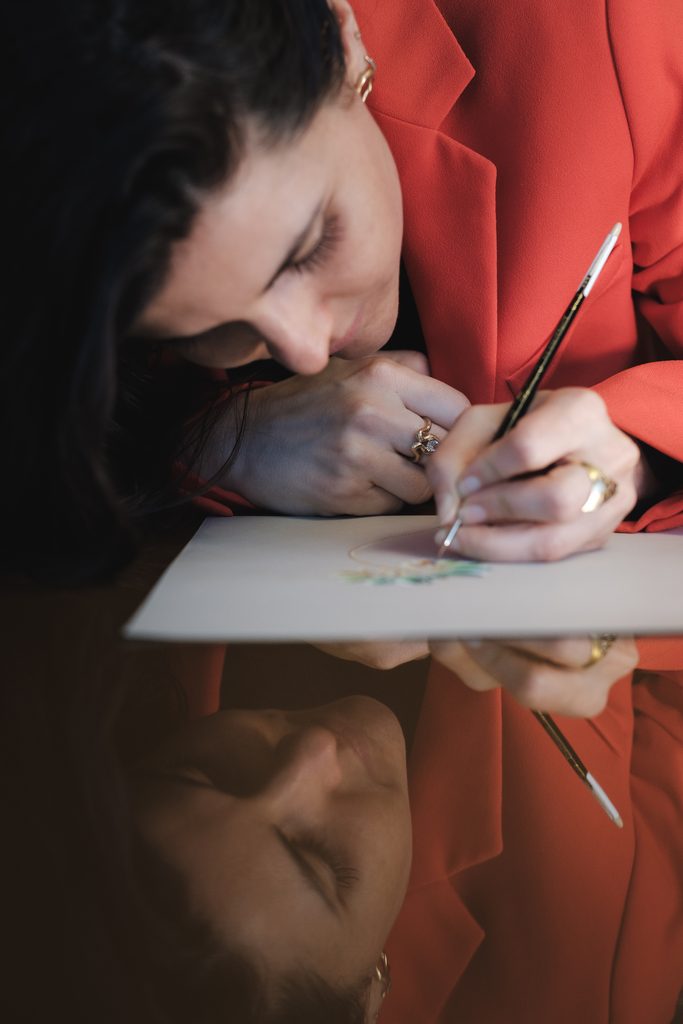
    Her own technical knowledge plays an important role in bringing these ideas to life. Huguet develops her prototypes personally, using wax carving or computer-aided design (CAD) to translate imagined volumes, curves and structures into tangible forms.

    The prototype provides a foundation for discussion with the artisans who help realise the final piece. It makes the intended design more precise and creates a shared point of reference for addressing technical challenges.

    Huguet describes herself as fortunate to have learned almost every aspect of jewellery-making. This allows her to collaborate with craftspeople as a peer, sharing a technical vocabulary and an understanding of the difficulties involved in producing complex forms.

    She also values the small scale of her team, which allows different perspectives to come together before work begins. Anticipating challenges and finding solutions collaboratively can help preserve the original concept without ignoring the realities of making.

    The result is a practice in which the artistic idea and the production process are closely connected. Craftsmanship is not merely the final stage of the work; it is part of the means through which the idea becomes possible.

    The Cristellaria Echinata Brooch: Making the Invisible Visible

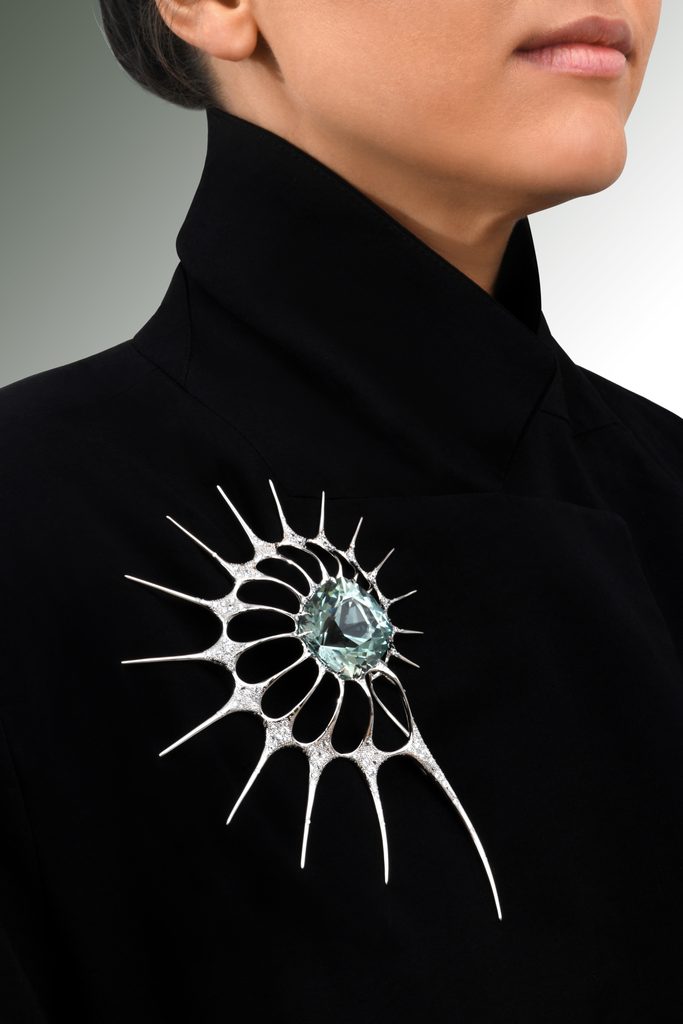
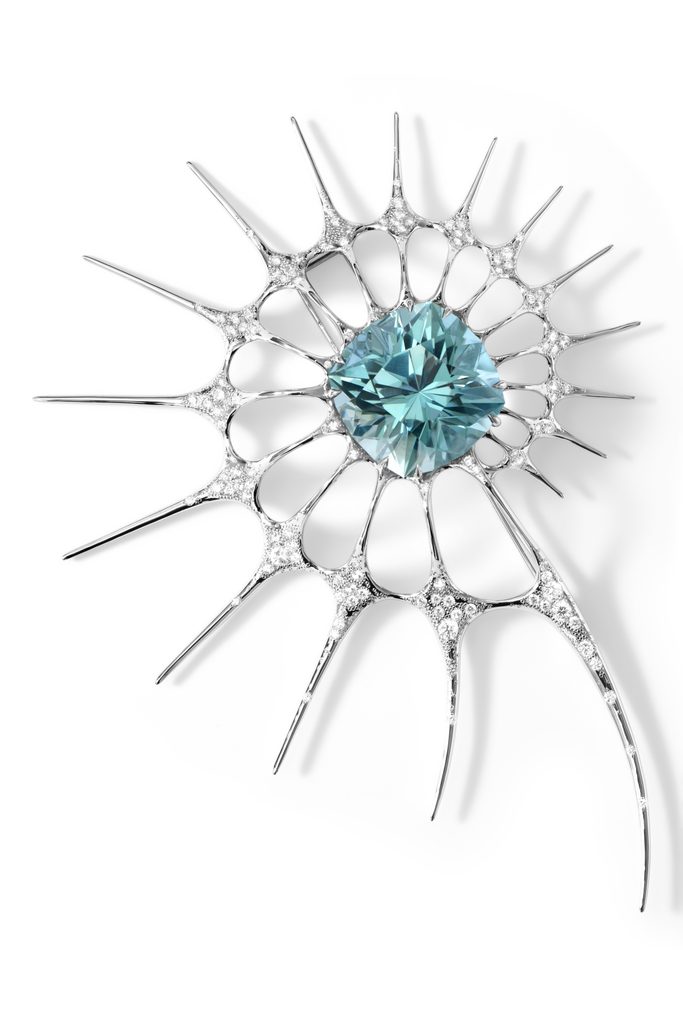
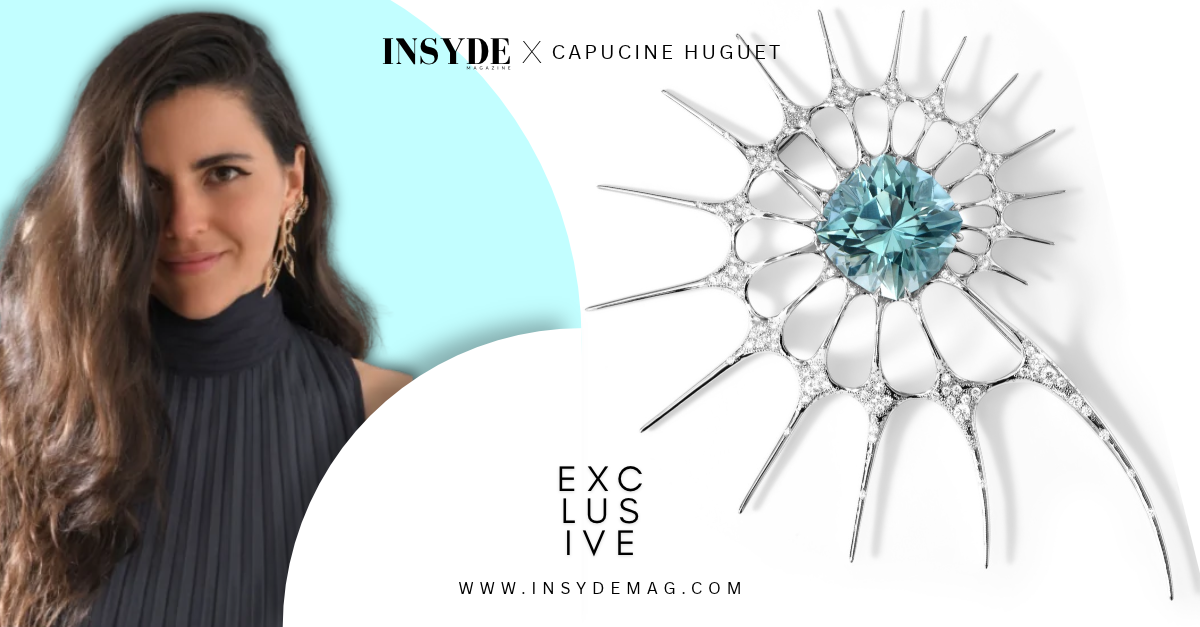
    One of the most revealing examples of Huguet’s approach is the Cristellaria Echinata brooch from her Téthys collection, which explores phytoplankton.

    These microscopic organisms occupy a significant place in marine ecosystems. Through photosynthesis, phytoplankton contributes to the production of oxygen and the absorption of carbon dioxide. Despite its scale, it plays a role in the larger environmental systems on which life depends.

    Huguet wanted to create a piece that would communicate the importance of this often-overlooked marine life.

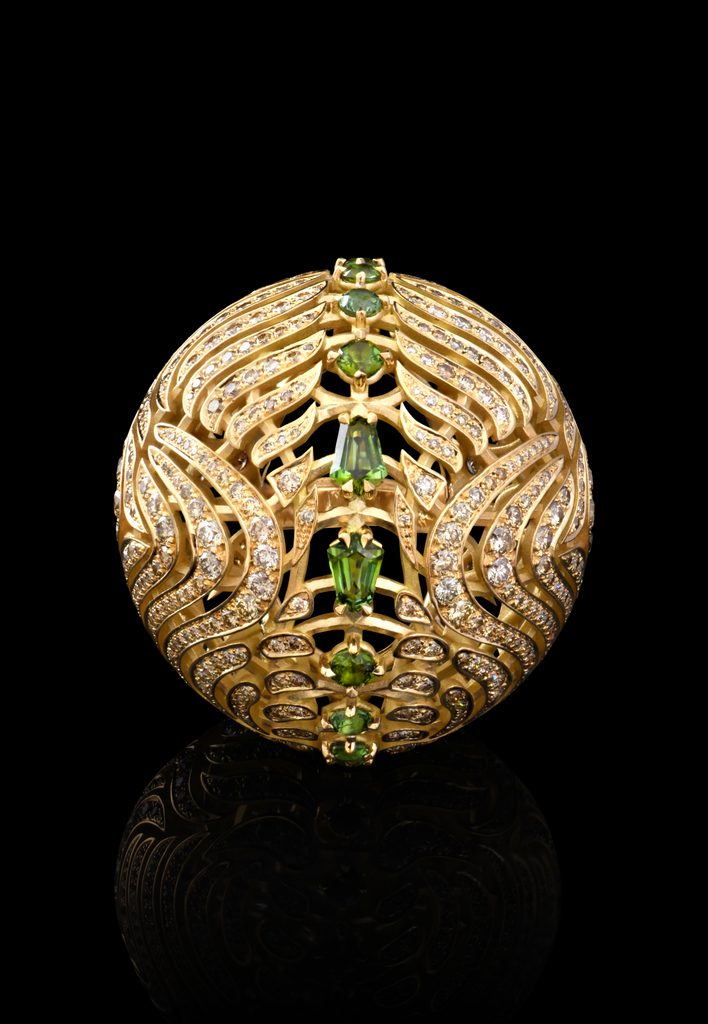
    The brooch draws inspiration from the shell of Cristellaria Echinata, a form that also recalls the spiral structure of a nautilus shell. Her interpretation is delicate and intricately constructed, with an airy framework intended to evoke the movement of plankton through the ocean.

    At its centre sits a 100-carat topaz in a glacial-blue hue. The pavé setting introduces further complexity, with the structure and setting designed to evoke photosynthesis and the ecological significance of phytoplankton.

    The contrast is striking: a substantial precious stone sits within a form inspired by microscopic life. The result is an object with visual presence that also carries a story extending beyond its materials.

    For Huguet, the piece is compelling precisely because it combines these dimensions. It is bold and immediately eye-catching, yet its underlying subject asks the viewer to consider a natural system that is usually invisible.

    The making process presented its own challenges. Huguet hand-carved the entire structure in wax, creating a form that was exceptionally fragile. Achieving a successful casting required considerable experimentation and perseverance in collaboration with the caster.

    The technical challenge was to preserve the delicacy of the design while producing a finished jewel capable of holding its form.

    The brooch demonstrates how scientific research, sculptural thinking and specialist craftsmanship can converge in a single object. It also illustrates a broader ambition within Huguet’s work: to use the attraction of jewellery as a way of directing attention towards subjects that might otherwise remain outside the viewer’s awareness.

    The story behind the piece is as integral to its identity as its silhouette, stone and setting.

    Materials That Carry Meaning

    In Huguet’s practice, materials are not simply selected to complete a design. They help communicate its story.

    Colour, she explains, can fundamentally change how a piece is perceived. Yellow gold may evoke warmth, generosity and sunlight, while white gold can suggest cooler, glacial atmospheres, architecture or the stillness of night. Gemstones carry their own visual associations, and a particular design may feel incomplete if its colours do not support the intended idea.

    Texture also shapes perception. A mirror-polished surface, a brushed finish and an intricately engraved one each create a different visual impression and tactile experience.

    These decisions influence the direction of a design as it develops. Material choice is therefore neither a purely technical consideration nor an afterthought; it is part of the narrative itself.

    That principle extends to sourcing. Huguet states that she works exclusively with recycled 18-carat gold or recycled platinum. She uses recycled diamonds whenever possible, alongside vintage or responsibly sourced gemstones, including stones from Moyo Gems.

    Finding trustworthy gemstone dealers requires research, time and collaboration with reliable partners. For Huguet, these choices are integral to the way she wants to develop her practice rather than optional additions to a finished product.

    Her production model reflects a similar preference for considered making. All her pieces are made in Paris, and most are produced to order. This allows her to avoid unnecessary overproduction and focus on the quality of individual objects.

    She is also realistic about the challenges of maintaining these standards as a business grows. Scaling production, reaching a broader market or focusing more heavily on retail can make sourcing constraints, production capacity and cost management increasingly difficult to balance.

    Independence brings its own limitations, but it also creates room to make different decisions. Huguet sees the ability to prioritise quality, traceability and the integrity of the creative process over volume as a meaningful advantage.

    It is a position that places responsibility within the actual decisions involved in making jewellery—from the selection of materials to the relationships that sustain production.

    Between Fine Jewellery and High Jewellery

    Jewellery occupies a distinctive space between an artwork and an object intended to be worn. It can be conceived as sculpture, yet it must also respond to the physical realities of everyday life.

    Huguet approaches fine jewellery and high jewellery differently.

    With fine jewellery, she considers how a piece will evolve through regular wear. Comfort, durability and the way the owner makes the jewel their own are central to the design.

    There is something personal about imagining an object accompanying someone for years, becoming part of their life and accumulating memories along the way.

    High jewellery allows a different degree of conceptual freedom. When a piece is approached as an artwork in its own right, Huguet can push further in terms of scale, weight, technique and mechanisms. She can explore more ambitious forms, provided they retain the sculptural and conceptual qualities that define her work.

    The distinction is not simply a question of size or extravagance. It concerns the intended relationship between the object and the person encountering it.

    A jewel intended for everyday wear must function comfortably within its owner’s life. A more ambitious high-jewellery creation can challenge conventional expectations of wearability and explore the possibilities of jewellery as a sculptural medium.

    Both approaches, however, depend on a clear relationship between concept, material and execution.

    A Different Measure of Luxury

    For Huguet, luxury is not defined by the value of precious materials alone. It lies in creating something distinctive and meaningful, realised through exceptional craftsmanship and carrying a significance that resonates with its owner.

    Her clients are often looking for jewellery that reflects who they are, expresses something personal or represents a story they want to preserve. The desire is not simply to own a valuable object, but to possess something that feels individual.

    This is particularly evident in bespoke commissions. Huguet maintains a close relationship with clients throughout the process, meeting them several times to discuss ideas and refine the design.

    The collaboration becomes part of the experience, giving the finished jewel a context that extends beyond its physical characteristics.

    It is a view of luxury rooted in personal connection and continuity. A piece may become associated with love, faith, family, a memorable journey or a personal belief. Over time, it can carry memories that extend beyond the person who originally commissioned or created it.

    For Huguet, jewellery has an extraordinary ability to hold these meanings and pass them forward.

    The idea of an heirloom, in this context, is not simply about an object surviving physically. It is about the story attached to it remaining relevant as it moves between people and generations.

    This also clarifies why craftsmanship matters so deeply to her. Technical excellence gives an object its form and durability, but meaning gives it a reason to be kept.

    Luxury becomes less about the immediate impression an object creates and more about the relationship that develops around it: the thought invested in its creation, the experience of acquiring it and the significance it eventually comes to hold.

    What Comes Next

    Huguet has a long list of subjects she hopes to explore, although she prefers to keep the details of future projects private until they develop further. For now, she is particularly interested in physics and curious about where that interest might lead her work.

    The direction remains open, but her underlying ambition is consistent. She wants people to recognise jewellery as more than a beautiful adornment: a small work of art that can carry meaning for both its maker and its owner.

    Design, in her view, is a way of communicating ideas and telling stories. A jewel can represent love, faith, family, a journey or a personal conviction. Through her own practice, she chooses to tell stories about science and the natural world, encouraging people to look at familiar subjects from a different perspective.

    She also hopes that this engagement can foster a greater appreciation of the natural world and its fragility. Understanding something, she believes, can be the first step towards wanting to protect it.

    There is a compelling relationship between the precision of her process and the openness of its outcomes. Research provides structure, craftsmanship provides discipline, and curiosity leaves room for discovery. The finished piece brings these elements together without reducing the original subject to a simple visual motif.

    In a luxury landscape where objects are often judged by recognisability, rarity and immediate appeal, Huguet offers another way of thinking about what makes a jewel valuable. Her work asks the viewer to consider not only what an object is made of, but what it communicates, what it reveals and what it might mean over time.

    The result is jewellery that rewards attention. Its forms invite a closer look; its stories encourage further thought.

    Ultimately, Huguet’s practice suggests that the most meaningful objects do more than decorate the world around us. They change the way we engage with it.

    A jewel, in her hands, becomes a meeting point between the natural world and human imagination—an object through which scientific discovery can be felt, craftsmanship can be experienced and beauty can become a way of seeing differently.


    Explore more: Capucine H — Official Website · The Designer · Téthys Collection Journal · Commitment to Craft and Responsible Sourcing

    INSYDE MAGAZINE – No.1 Luxury Magazine in Bengaluru
    Luxury, Through a Different Lens.
    www.insydemag.com

  • ISHA DEB: THE ART OF JEWELLERY, THE INSTINCT OF AN ARTIST

    ISHA DEB: THE ART OF JEWELLERY, THE INSTINCT OF AN ARTIST

    INSYDE EXCLUSIVE | ISHA DEB

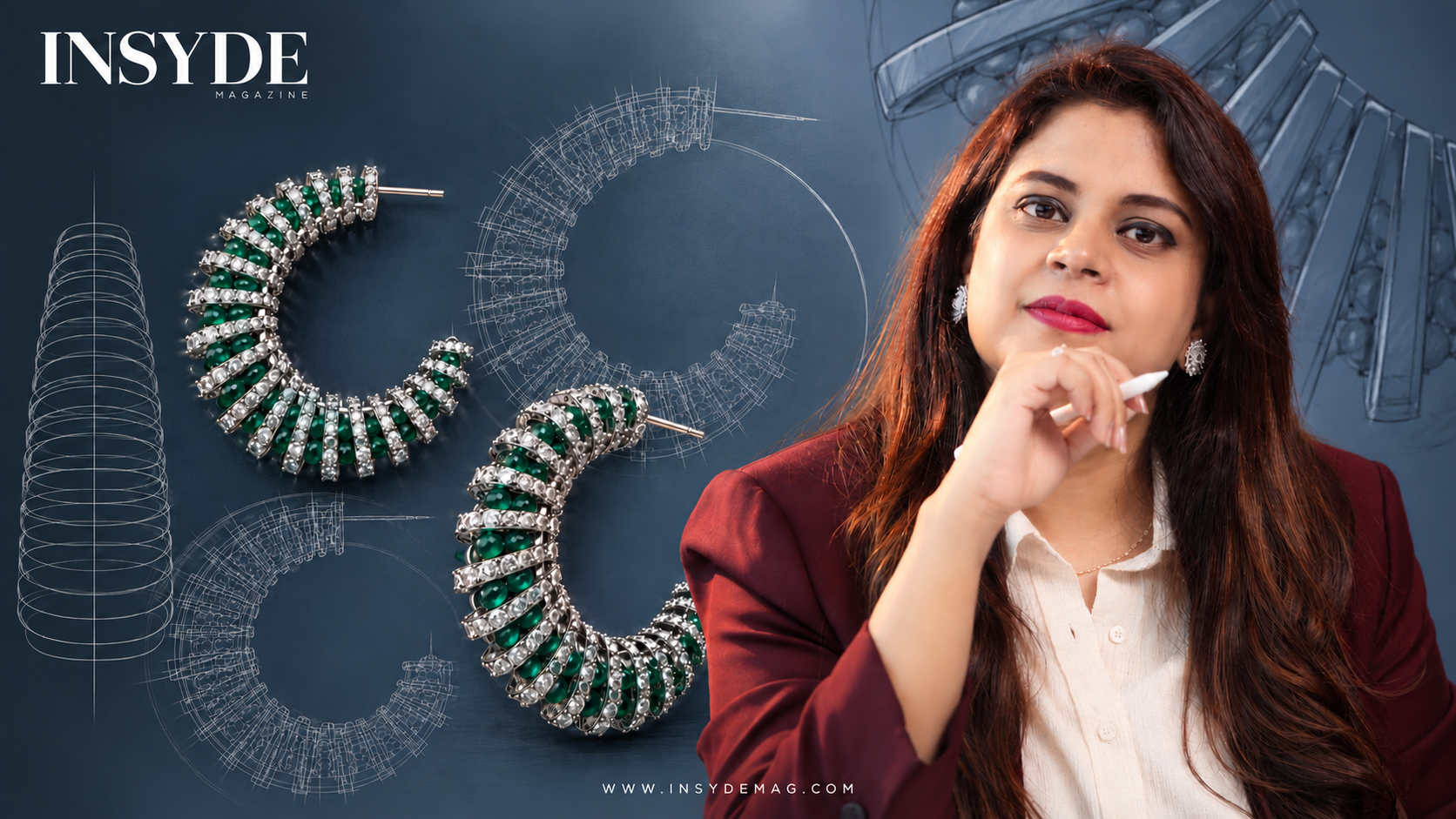
    From the first sketch to the finished piece, jewellery designer Isha Deb explores the intuition, imagination and technical precision behind jewellery that is as personal as it is beautiful.

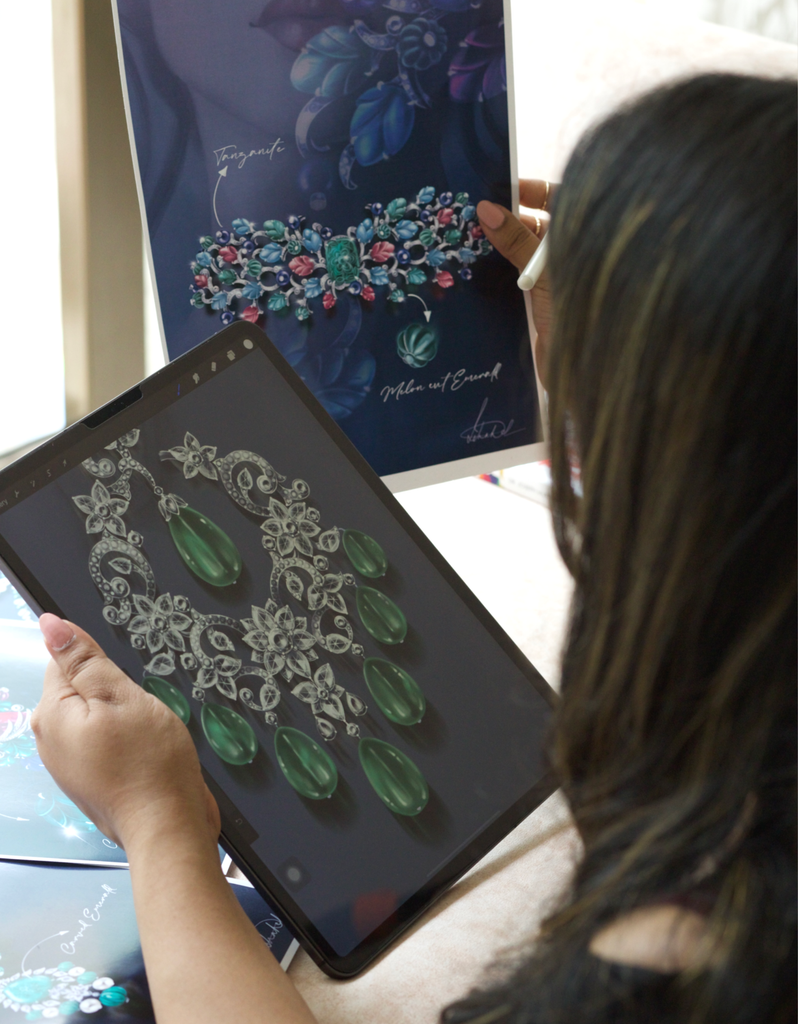
    Artificial intelligence can generate intricate jewellery concepts in seconds. Digital tools can explore silhouettes, experiment with proportions and turn an abstract idea into a compelling visual long before a gemstone is set or a piece reaches the workbench. For an industry built around precision, aesthetics and material expertise, these capabilities present exciting possibilities.

    But a convincing image is not the same as a finished piece of jewellery. Between the first idea and the object a person eventually wears lies a series of decisions that demand creative judgement, technical understanding and an awareness of how design meets the human body.

    It is within this space between possibility and execution that jewellery designer Isha Deb sees the continuing importance of the designer.

    “I use them myself, but for me, they remain a medium through which I express a design. My own thought process and judgement still guide the work,” she says of artificial intelligence and digital tools.

    For Deb, technology is neither something to resist nor a substitute for creative authorship. It is an extension of the design process, capable of making certain tasks faster and expanding the range of ideas a designer can explore. What it cannot automatically supply is the personal perspective that determines which ideas are worth pursuing.

    As AI becomes increasingly capable of producing sophisticated visual concepts, that distinction raises a question extending beyond jewellery: when the image becomes easier to generate, what gives the final object its identity?

    THE HUMAN ELEMENT BEHIND THE IMAGE

    A jewellery designer’s point of view develops over time. It is shaped by experiences, observations, travel, culture and the details that hold an individual’s attention. These influences may find their way into a design consciously or emerge through instinct, informing everything from the selection of a gemstone to the decision to pursue a sharp architectural line or a softer, more fluid form.

    For Deb, this accumulated experience is central to creative identity.

    “AI can produce a beautiful image, but I don’t believe a designer’s soul can be cloned, at least not yet.”

    Her distinction is between generating possibilities and giving those possibilities direction. AI can offer a starting point, but a designer must still assess the result, question its relevance and determine whether it reflects a considered creative intention.

    That judgement is particularly significant in jewellery, where visual appeal is only one part of the equation. A design must also account for materials, construction, proportion and wearability. A form that looks impressive on a screen may require substantial refinement before it becomes a viable object.

    The challenge, therefore, is not simply to use the most advanced tools available. It is to retain the ability to make independent creative decisions while using those tools.

    WHY SKETCHING STILL MATTERS

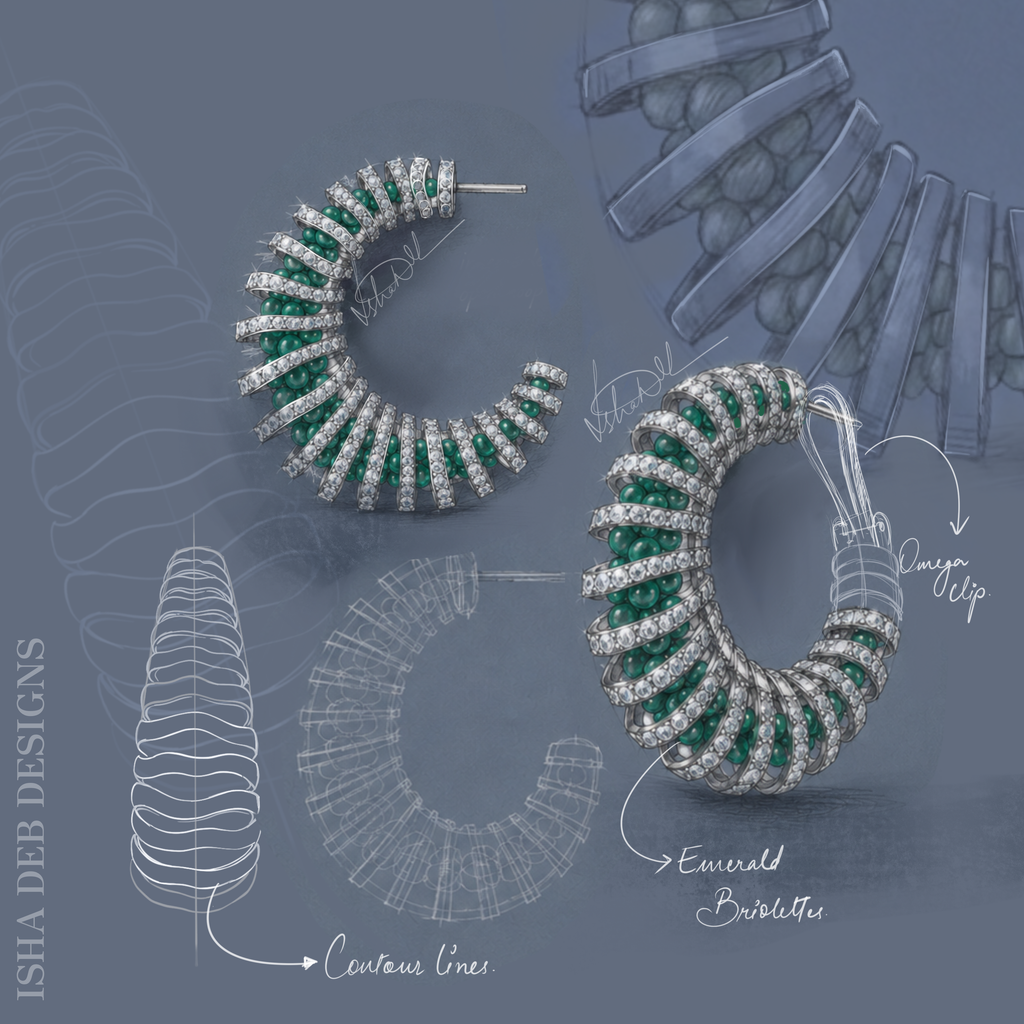
    For Deb, the creative process often begins with drawing. A sketch is not merely a record of an idea that has already been resolved; it can be the means through which the idea becomes clear in the first place.

    “Often, an idea only starts to become clear when you begin drawing it,” she explains.

    A rough line on paper, a quick doodle or an unfinished drawing can help a designer discover proportions, test a form and recognise possibilities that were not immediately apparent. The act of drawing becomes part of the thinking itself.

    Digital devices have made this process more flexible. Deb carries an iPad, allowing her to sketch when an idea occurs rather than waiting until she is at her workspace. The medium has evolved, but she sees the underlying relationship between thought and drawing as largely unchanged.

    “I still work through rough lines, make changes and let the idea evolve as I draw. For me, it is simply an upgraded tool.”

    This distinction matters in a conversation often framed as a choice between traditional methods and digital innovation. In practice, the two can coexist. A designer can begin with a spontaneous sketch, develop it digitally, refine it through three-dimensional modelling and ultimately translate it into a physical object.

    What matters is the continuity of thought throughout that process. The tools may change, but the designer remains responsible for deciding what the design should become.

    WHEN TECHNOLOGY BECOMES A CREATIVE RISK

    The risk of generic design does not begin and end with artificial intelligence. Jewellery designers have long navigated the tension between personal expression and commercial realities.

    Budgets, customer preferences, material costs and the need to build a sustainable business can influence the final form of a piece. A detail may need to be simplified, a design adjusted or the choice of diamonds and gemstones reconsidered to meet a particular price point.

    Deb acknowledges that these pressures are part of the profession. She believes the greater challenge is recognising which compromises are necessary without losing the qualities that distinguish a designer’s work.

    “I think technology works well as a creative tool as long as a designer’s own expression and style remain intact. It should help us develop an idea without making it feel more generic.”

    AI may make it easier to generate alternatives, but a greater number of options does not necessarily produce a more original outcome. If designers accept convenient results without questioning whether they reflect their own aesthetic, the process risks becoming an exercise in selecting images rather than developing ideas.

    For Deb, the responsibility lies in knowing when to adapt and when to preserve the character of a design. Commercial viability is essential, but it need not come at the expense of every distinctive detail.

    The question is not whether a designer should compromise. It is whether the compromise serves the design or gradually erodes its identity.

    FROM DIGITAL CONCEPT TO PHYSICAL REALITY

    The difference between an attractive visual and a workable piece becomes especially apparent during computer-aided design, or CAD.

    While a sketch establishes the initial direction, CAD translates the idea into a three-dimensional structure that can be manufactured and worn. This stage requires the designer to preserve the character of the original concept while resolving the technical demands of construction.

    For Deb, getting the CAD right is one of the most challenging parts of the process.

    Consider a necklace. Its links must provide sufficient flexibility to sit comfortably around the neck, while the height and angles of its elements influence how it rests against the body. An earring presents a different set of demands: its weight, balance and support must work together so that it sits correctly on the ear.

    These details may not be immediately apparent in a rendering, yet they can determine whether a piece succeeds in practice. The designer must understand how a form behaves in three dimensions, how its components interact and how its construction affects the wearer.

    “Getting the CAD right means preserving the character of the design while resolving all the practical details that make it work as jewellery.”

    The process also depends on technical knowledge and collaboration with manufacturers. A design must move beyond visual intention without losing what made it compelling in the first place.

    This is where the debate around AI becomes more nuanced. Digital tools already play an important role in jewellery development, and AI may help streamline aspects of the process further. But generating a concept and resolving the details required to manufacture it are different tasks.

    A finished jewel must function as an object, not merely as an image.

    DESIGNING FOR CONNECTION, NOT JUST APPEARANCE

    The value of jewellery has traditionally been associated with materials, rarity, craftsmanship and monetary worth. These remain important considerations, but Deb believes the contemporary luxury customer is also looking for a more personal relationship with what they buy.

    “I believe today’s luxury customer is looking for a more personal connection with what they buy.”

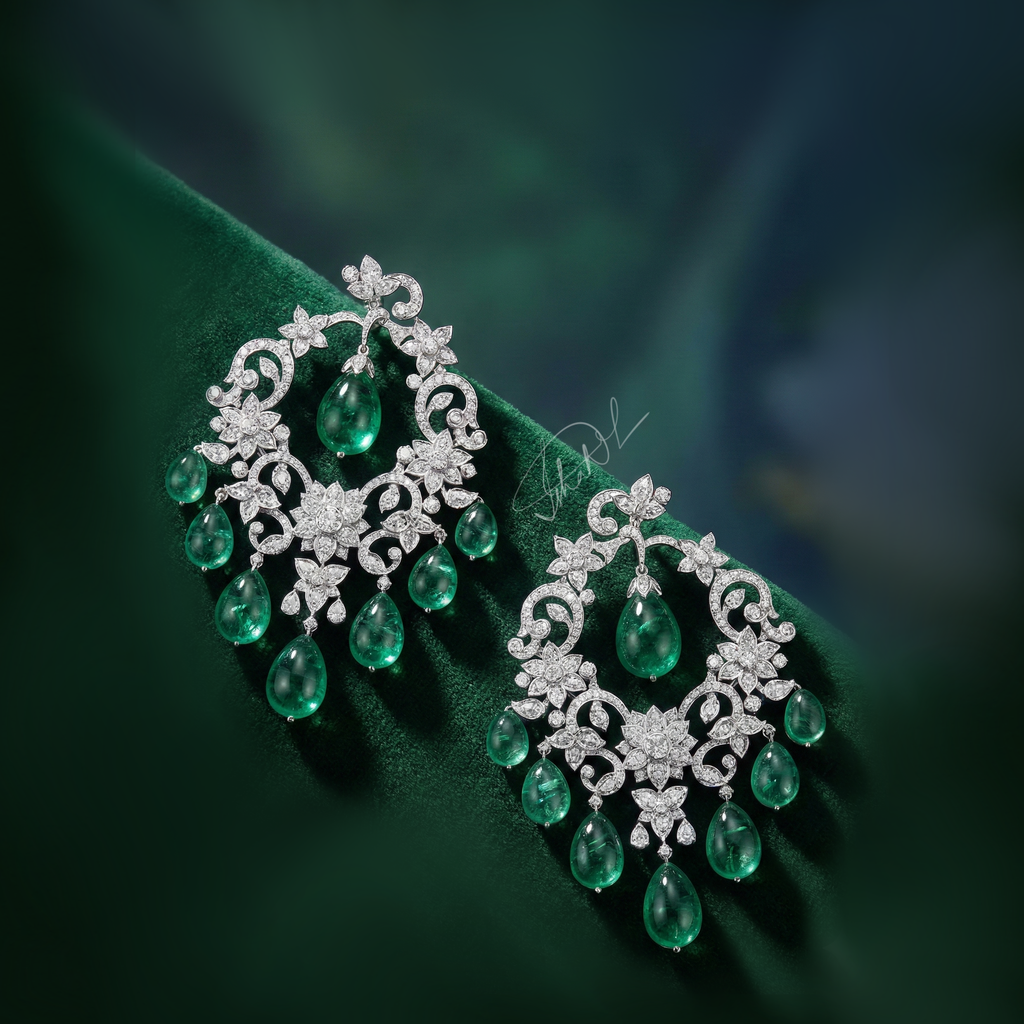
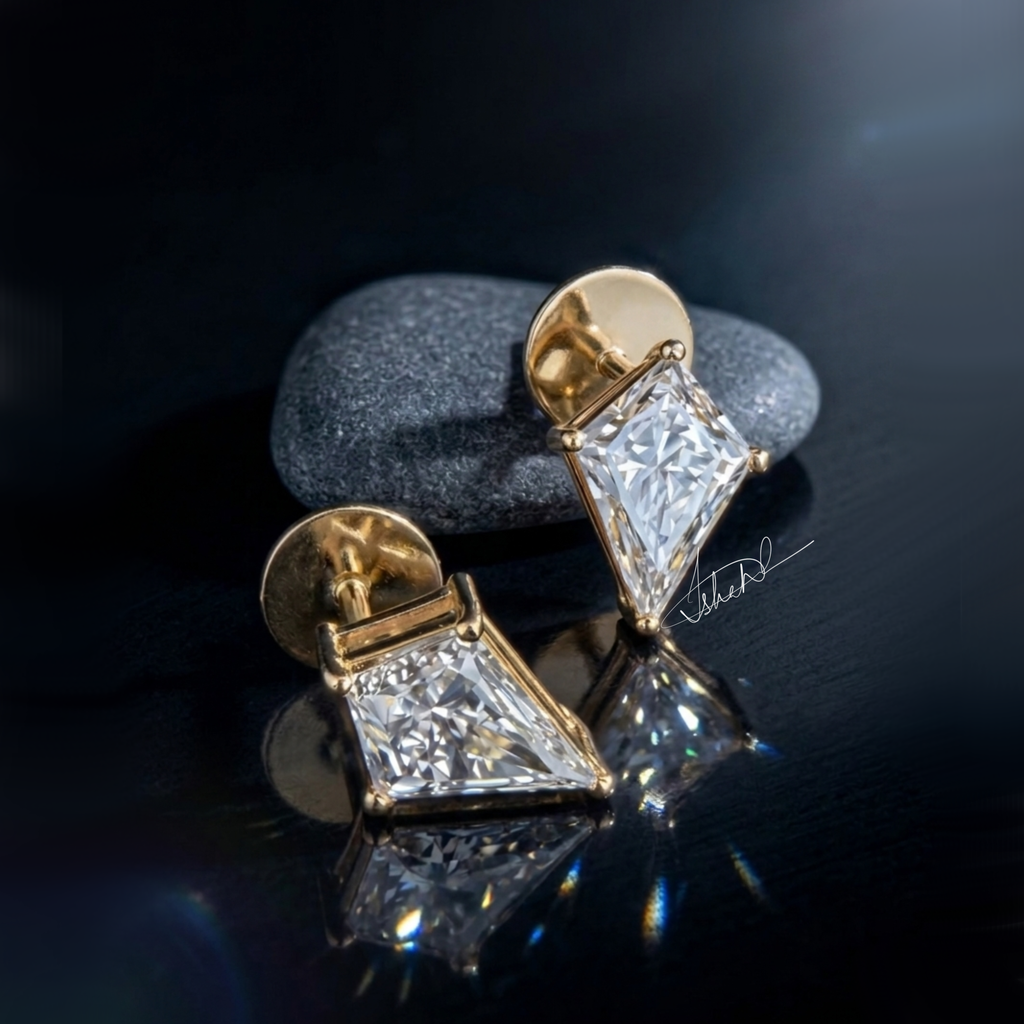
    For her, individuality can emerge from a distinctive design, an unusual gemstone colour, a rare diamond cut or a stone with a compelling history. The appeal extends beyond the material’s price to the character that makes a particular piece feel different.

    She also sees wearability as an increasingly important consideration. Customers may value exceptional jewellery that can be enjoyed across different occasions, rather than pieces that remain reserved for a single event. A distinctive design does not necessarily need to be elaborate to make a statement.

    This places a different emphasis on the relationship between design and ownership. Jewellery can be an expression of personal style, but it can also become part of everyday life—something selected because it feels relevant to the wearer rather than simply because it signals status.

    For a designer, creating that connection requires more than visual impact. It means considering how a piece will feel, how it will be worn and whether its character will continue to resonate beyond the moment of purchase.

    HERITAGE AS A STARTING POINT

    Indian jewellery offers a vast vocabulary of craftsmanship, ornamentation, architectural references and cultural forms. For contemporary designers, the challenge is to engage with this heritage without simply reproducing familiar aesthetics.

    Deb approaches inspiration by looking beyond the obvious form. She considers the structure, rhythm or detail that attracts her, then explores how it might be reinterpreted through changes in proportion, pattern, shape or the use of gemstones.

    The original reference remains part of the creative process, but it does not have to dictate the final result.

    “I feel working with heritage and cultural references is more about understanding it deeply enough to express it in a fresh and more personalised way.”

    This approach places interpretation at the centre of design. A historical or cultural reference can be a starting point for exploration rather than a template to reproduce. Through drawing, experimentation and the considered use of materials, a familiar form can develop a new identity.

    The same principle applies to technology. Whether an idea begins with a cultural reference, a hand-drawn sketch or a digital concept, its originality depends on the decisions that shape its development.

    Innovation does not necessarily require abandoning the past. It can emerge from understanding a reference deeply enough to discover what else it might become.

    WHAT THE NEXT GENERATION OF JEWELLERY MIGHT LOOK LIKE

    Deb expects jewellery design to continue responding to changing lifestyles, customer preferences and the practical realities of materials and pricing.

    She sees wearability and versatility as important considerations, alongside the enduring appeal of classic pieces and exceptional one-of-a-kind high jewellery. With gold becoming more expensive, she believes lighter designs are becoming more attractive to some customers. Layering necklaces and combining different pieces can also offer more personal ways of wearing jewellery.

    She points to lab-grown diamonds as making solitaire jewellery more accessible and identifies materials such as titanium as offering possibilities for colour, volume and playful designs that remain comfortable to wear.

    These observations reflect her perspective on the direction of the market rather than a universal shift in consumer behaviour. Jewellery continues to serve different preferences, from everyday fine jewellery to highly individualised and exceptional pieces.

    For designers, the challenge is to respond to these changes without allowing every new preference or technology to dictate the direction of their work.

    Deb sees considerable potential in AI and other digital tools to improve visualisation, streamline aspects of CAD development and support manufacturing processes. By allowing designers and customers to explore ideas earlier, such tools may also help identify changes before significant time and resources are committed to production.

    But she draws a clear distinction between technological capability and creative originality.

    “Having the ability to generate more options does not necessarily mean those options carry an original thought.”

    The designer’s role will continue to involve understanding the customer, exploring materials and deciding which ideas deserve to be developed. The tools may expand the possibilities, but the creative direction must still come from somewhere.

    WHEN A BEAUTIFUL OBJECT BECOMES GOOD DESIGN

    For Deb, a design’s success is not complete when the piece has been manufactured. Its meaning is ultimately tested through the experience of the person who chooses to wear it.

    “I will be honest- according to me, the success of a design is not complete when the piece is made. It is when someone chooses to buy it, wears it and loves it.”

    The statement brings the discussion back to the physical realities of jewellery. A piece must balance its creative idea with comfort, construction, price and value. It should move as required, sit properly on the body and allow its wearer to enjoy it without constant adjustment or discomfort.

    Commercial success also matters. A designer must understand the intended customer and work within practical limits without losing the character or quality of the design. When those elements come together, the result becomes more than a visually appealing object.

    It becomes a piece of jewellery that someone wants to make part of their life.

    Artificial intelligence will continue to change how designers imagine, visualise and develop their work. It may reduce the time required for certain tasks, open up new technical possibilities and make experimentation more accessible. Its influence on jewellery design is likely to grow as the tools evolve.

    But the central questions remain grounded in the object itself. Does the design work? Does the gemstone belong? Has the original idea survived the process of making? Does the finished piece offer something meaningful to the person who wears it?

    For Isha Deb, the future is not about choosing between human creativity and technological progress. It is about understanding what each can contribute—and ensuring that efficiency never becomes a substitute for judgement.

    A machine may help generate the image. The designer must still decide what is worth bringing into the world.


    INSYDE EXCLUSIVE
    Isha Deb on AI, creative authorship and the future of jewellery design.

    INSYDE Magazine | Luxury. Culture. Perspective.

    No.1 Luxury Magazine In Bengaluru
  • MADE TO BE DESIRED

    MADE TO BE DESIRED

    Where craftsmanship, identity and ambition come together to redefine the modern luxury object.

    Luxury has always been good at creating desire. It gives us objects to recognise, names to remember and symbols that can carry meaning long after their practical purpose has disappeared.

    But the geography of that desire is changing.

    For decades, the global luxury conversation has revolved around a familiar set of cities—Paris, Milan, London and New York. Their influence remains undeniable, but the creative landscape surrounding luxury has become far more expansive. New houses are emerging from different cultural and creative centres, bringing new approaches to design, craftsmanship and the meaning of value.

    Maison Motema is building within that shift.

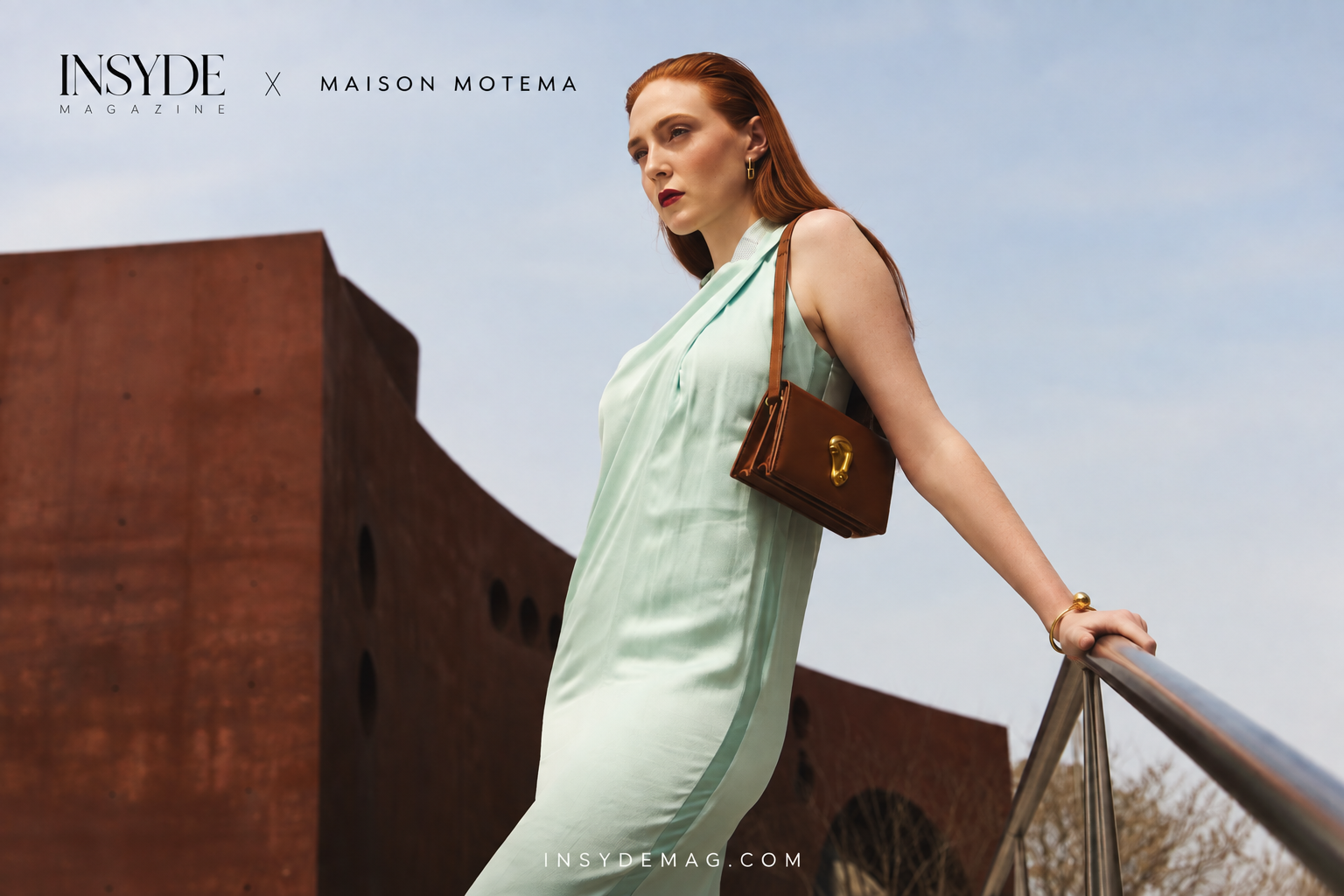
    Working between New York and Dakar, the independent leather-goods house founded by Verlaine-Diane Soobroydoo is developing a design language around craftsmanship, technical knowledge and a belief that the object itself must earn its place in the luxury conversation.

    That distinction matters.

    In an industry increasingly fluent in storytelling, Maison Motema is interested in something harder to manufacture: desire created through design, material, proportion and making.

    THE OBJECT COMES FIRST

    For many years, Soobroydoo worked in spaces where economic empowerment was discussed through policy, systems, frameworks and development goals.

    Building Maison Motema brought those conversations into the physical world.

    An object has to be conceived. Its form has to be understood. A pattern has to work. A handle has to sit at precisely the right point. Leather has to be cut, shaped, assembled and finished. And eventually, someone has to desire the object enough to own it.

    That process creates economic value, but it also creates something less visible: knowledge.

    At Maison Motema, that knowledge is being developed within the atelier itself, where design and making exist in conversation rather than as separate stages.

    “The product has to deserve to exist first,” Soobroydoo says.

    It is a deceptively simple statement, but an important one.

    Maison Motema is not positioning itself as a development project disguised as a fashion company. The wider economic and cultural implications of its work matter, but they cannot substitute for the product.

    Beauty matters.

    Desire matters.

    The object has to stand on its own.

    ONE HOUSE, TWO RHYTHMS

    Maison Motema exists between New York and Dakar, but neither city is simply a backdrop.

    New York has shaped Soobroydoo’s eye. Its architecture, energy and pragmatism have influenced the way she thinks about objects that need to live within contemporary life—a bag that has to move with a woman through her day.

    Dakar offers something different: proximity to the making.

    An idea can move quickly from a drawing or conversation into leather. A proportion can be changed by a few millimetres. A handle can be repositioned. Construction can be reconsidered. Something can be made, examined and tried again.

    That immediacy changes the relationship between design and craftsmanship.

    “The atelier isn’t at the end of our creative process. It is inside it.”

    For Maison Motema, the atelier is therefore not simply where a finished design is produced. It is part of the process through which the design becomes what it ultimately is.

    Soobroydoo describes the relationship simply:

    “One house, two rhythms.”

    New York provides one rhythm. Dakar provides another. Maison Motema is being shaped in the space between them.

    A contemporary expression of Maison Motema’s design language

    A DIFFERENT MAP OF LUXURY

    Luxury has historically been concentrated around a relatively narrow geography.

    Paris. Milan. London. New York.

    These cities remain important, but creativity has never belonged exclusively to them.

    What is changing is the willingness to recognise sophisticated design ecosystems elsewhere—and to judge them by the same standards applied to established luxury centres.

    For Soobroydoo, this distinction is particularly important.

    She is proud that Maison Motema is anchored in Africa, but she does not want the house reduced to a category called “African luxury.”

    “Africa is not a design language.”

    The statement is direct because the reality is complex. Across the continent are enormous differences in aesthetic traditions, materials, technical knowledge, histories and contemporary cultures.

    There is also a danger in allowing origin to become the first thing discussed about the object.

    A designer working in Dakar can become “an African designer” before anyone has considered proportion, silhouette, material, construction or hardware.

    For Maison Motema, the ambition is different.

    “A beautiful bag made in Dakar shouldn’t require an explanation before it can participate in the global luxury conversation.”

    Geography can enrich the story.

    It should not have to justify the object.

    WHEN CRAFT BECOMES DESIGN

    There is a familiar assumption within fashion that design happens first and craftsmanship follows.

    A designer creates the drawing. Production begins. The artisan executes the idea.

    Maison Motema’s process is more fluid.

    Leather behaves differently once it is cut. A proportion that looks right on paper may feel wrong in the hand. Reinforcement changes structure. Thickness changes the way a fold behaves. Moving a handle slightly can change the balance of an entire bag.

    These are not merely production considerations.

    They are design decisions.

    That is why the atelier becomes part of Maison Motema’s creative language.

    Its chef d’atelier is not simply receiving instructions about what to manufacture. His knowledge of leather and construction influences what the object ultimately becomes.

    The exchange between idea and technical knowledge is continuous.

    For Soobroydoo, that is the essence of savoir-faire:

    “Knowledge accumulated through making.”

    It is knowledge developed through experience, repetition and attention to material.

    And it cannot be separated from the object itself.

    Luxury becomes personal when an object begins to carry a sense of identity.

    THE VALUE OF TAKING TIME

    The luxury industry increasingly speaks about slowing down.

    But slowness, by itself, is not a virtue.

    For Maison Motema, the value of limited production lies in the freedom it creates to understand an object more deeply.

    The house can adjust a proportion, improve a construction detail, change the way a bag sits against the body and observe how clients actually use it.

    “‘Slow’ shouldn’t mean inefficient. It should mean considered.”

    That distinction is important.

    In a world where almost anything can be reproduced immediately and at scale, time can become valuable when it creates space for knowledge and refinement.

    The objective is not to make fewer objects simply to create scarcity.

    It is to understand the objects being made deeply enough that their identity survives as the house develops.

    For an emerging luxury house, that patience can become a competitive advantage.

    FROM SYSTEMS TO SOMETHING TANGIBLE

    Soobroydoo’s previous career also shapes the way she thinks about Maison Motema.

    Her work in international institutions involved conversations around women’s economic empowerment, sustainable development and the structures that determine who participates in an economy and where value accumulates.

    Maison Motema has made those questions practical.

    How do you price an object?

    How do you invest in technical knowledge?

    How do you create continuity of work?

    How do you build a company capable of competing internationally while retaining the intelligence of its production?

    Those questions now exist inside the making of the house itself.

    But fashion has also given Soobroydoo another lesson.

    “Good intentions do not make a great product.”

    It is perhaps one of the most important distinctions in the Maison Motema story.

    Purpose can create context.

    Craftsmanship can create depth.

    Geography can create provenance.

    But none of them can replace exceptional design.

    The object still has to make someone want it.

    BEYOND THE LABEL

    The modern luxury consumer is increasingly sophisticated about narratives.

    They recognise purpose-driven campaigns. They question provenance. They understand the language of heritage, sustainability and craftsmanship.

    That makes genuine desire harder to manufacture.

    For Maison Motema, the answer is not to make its story louder.

    It is to make the object stronger.

    Soobroydoo wants someone to encounter a Maison Motema bag and first ask:

    “What is that?”

    Then look closer.

    Notice the shape.

    The leather.

    The balance.

    The construction.

    And only afterwards discover where it was made and the people and places behind it.

    That sequence matters.

    The object creates the curiosity.

    The story deepens it.

    Craftsmanship, translated into a modern silhouette.

    WHEN A HOUSE BECOMES RECOGNISABLE

    Soobroydoo’s ambition is not to spend the next decade arguing that exceptional leather goods can be made in Dakar.

    She would rather make exceptional leather goods in Dakar.

    Again and again.

    Until the existence of the house becomes the argument.

    The goal is for someone to see an object without seeing the logo and still recognise its identity.

    “That’s a Motema.”

    That is the moment a label begins to become a house.

    Not simply when its name becomes known, but when its visual and technical language becomes distinctive enough to be recognised independently of it.

    A particular proportion.

    A relationship between material and form.

    A distinctive construction.

    A consistent point of view.

    A sensibility that belongs unmistakably to the house.

    That kind of recognition cannot be created overnight.

    It has to be built through product development, technical excellence, discipline and consistency.

    THE FUTURE DOESN’T NEED PERMISSION

    Maison Motema is still building.

    And perhaps that is what makes its proposition so compelling.

    It is not asking the world to redefine luxury simply because the house is working between New York and Dakar.

    It is not asking for recognition because of geography.

    It is building objects that it believes can earn recognition on their own terms.

    That requires time.

    It requires technical excellence.

    It requires discipline.

    And it requires the confidence to let the product speak.

    Between New York and Dakar, design and craftsmanship are becoming part of one creative system.

    The atelier is part of the design.

    The geography is part of the story, but not the entire story.

    Purpose informs the business, but does not replace the product.

    Craftsmanship is not simply what happens after the creative work is finished.

    It is part of the creative work itself.

    That may ultimately be Maison Motema’s most compelling proposition.

    The future of luxury does not necessarily require a new definition of what luxury is.

    It may simply require a broader understanding of where exceptional objects can come from—and a willingness to judge them by what has actually been made.

    Because luxury can be explained.

    Heritage can be explained.

    Provenance can be explained.

    Desire cannot.

    It has to be earned.

    And Maison Motema is building for that moment—when the object speaks first, the story follows, and recognition comes without permission.

    Made to be desired.

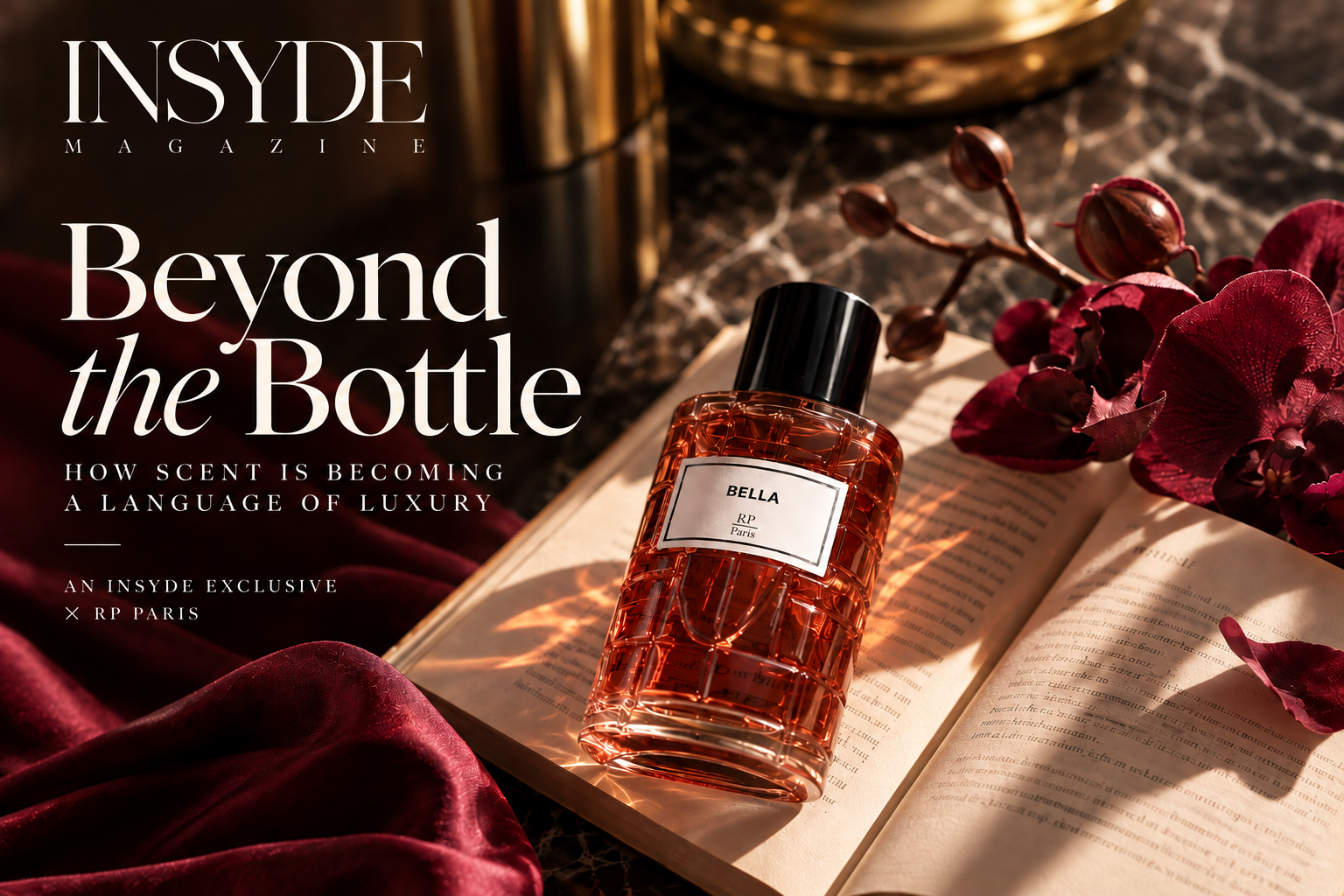
  • Beyond the Bottle: How Scent Is Becoming a Language of Luxury

    Beyond the Bottle: How Scent Is Becoming a Language of Luxury

    From signature fragrances to scented interiors, textiles and everyday rituals, scent is moving beyond the body — becoming an increasingly intimate way to shape identity, atmosphere and experience.

    Luxury has traditionally been something we can see.

    It is found in the cut of a garment, the construction of a watch, the setting of a jewel or the architecture of a carefully considered space. Even the quietest forms of luxury tend to reveal themselves through material, proportion, finish or craftsmanship.

    Scent asks us to experience luxury differently.

    It cannot be held in the same way as an object. It has no permanent form, no fixed visual language and no single interpretation. Yet it can alter the character of a room, transform an ordinary ritual or bring an entire memory back with remarkable precision.

    That invisible quality is becoming increasingly relevant to the way contemporary luxury is experienced.

    Fragrance was once largely defined by the bottle and the person wearing it. Today, its territory is expanding into homes, textiles, cars, hospitality and the rituals of everyday life. Scent is becoming less confined to a moment of application and more closely connected to the environments we create around ourselves.

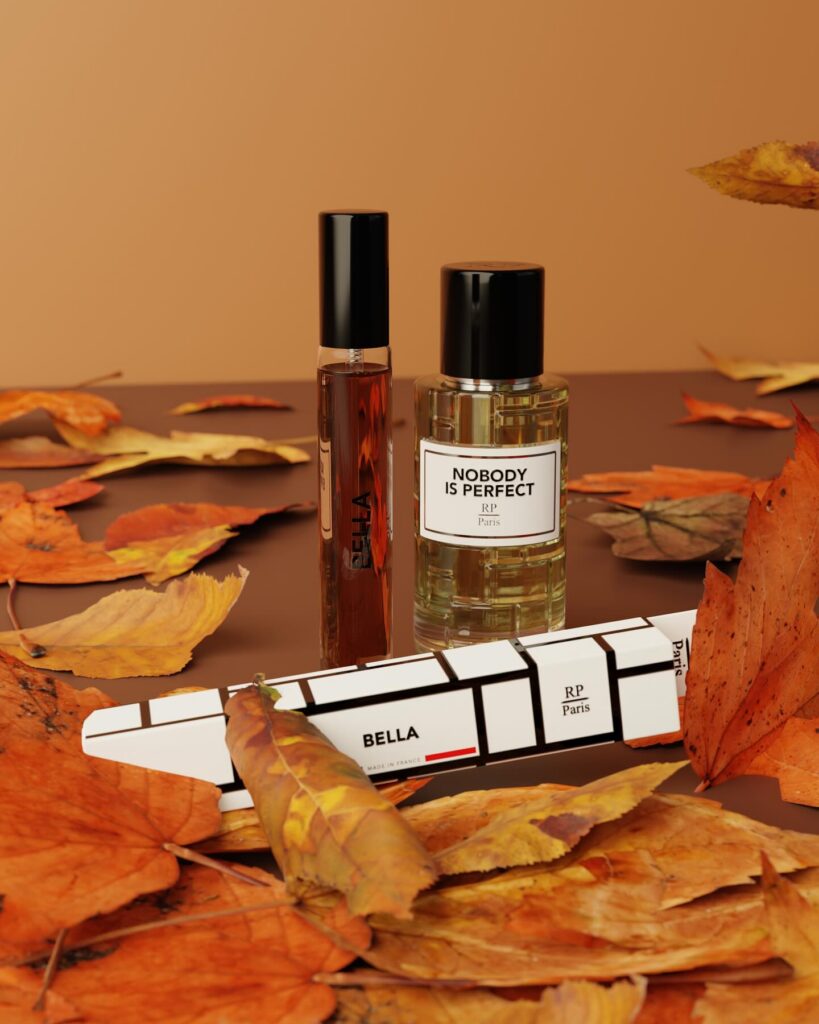
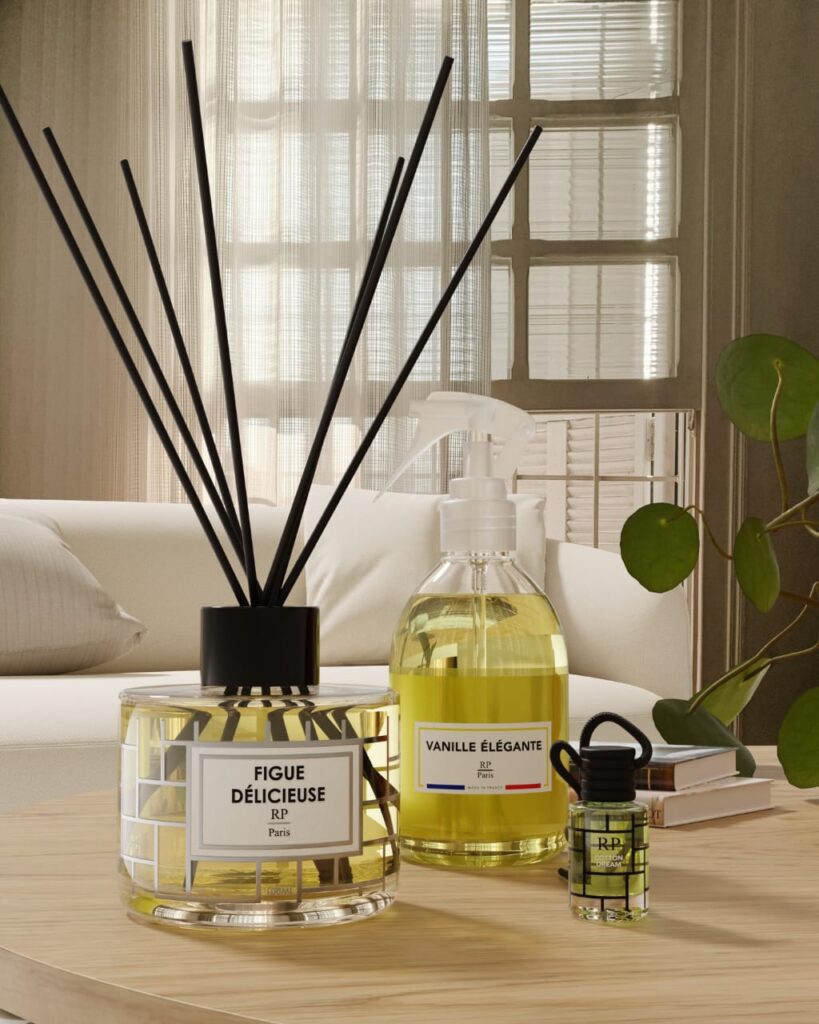
    For RP Paris, a French perfume house founded in 2015, that evolution reflects a broader change in how people understand fragrance and personal expression. The house describes its creative universe through emotion and has developed an offering that extends from perfumes and mists to textile sprays, home diffusers, car fragrances and other scent-led products.

    The shift raises a more interesting question than simply where fragrance is being used next.

    What happens when luxury becomes something we experience rather than something we see?


    Beyond the Signature Scent

    For generations, the idea of a signature scent carried a particular kind of intimacy.

    One fragrance could become synonymous with a person — something recognisable, personal and almost invisible to everyone except those who encountered it.

    But the idea of one scent defining an entire identity is becoming less rigid.

    RP Paris sees consumers becoming more comfortable with different fragrances for different parts of their lives. The scent chosen for the skin does not necessarily have to be the scent chosen for a bedroom, a textile or a car.

    The comparison with fashion is revealing.

    We don’t dress the same way for every occasion. Our wardrobes change with our mood, surroundings and intentions. Why should our relationship with scent be any different?

    A fragrance can accompany getting ready in the morning. Another can create a calmer atmosphere at night. A familiar scent can become associated with travelling, returning home or simply making an ordinary moment feel more considered.

    The result is a more fluid understanding of olfactory identity.

    Rather than asking which single fragrance represents us, we can begin to ask which scent belongs to this particular moment.

    For RP Paris –

    “the expansion of fragrance is therefore not simply about creating more products or more occasions for application. It reflects a desire to make more parts of everyday life feel personal.”

    That distinction matters.

    The modern luxury consumer is increasingly interested in experiences that feel individual rather than prescribed.

    And scent, perhaps more than any other luxury category, allows for that freedom.


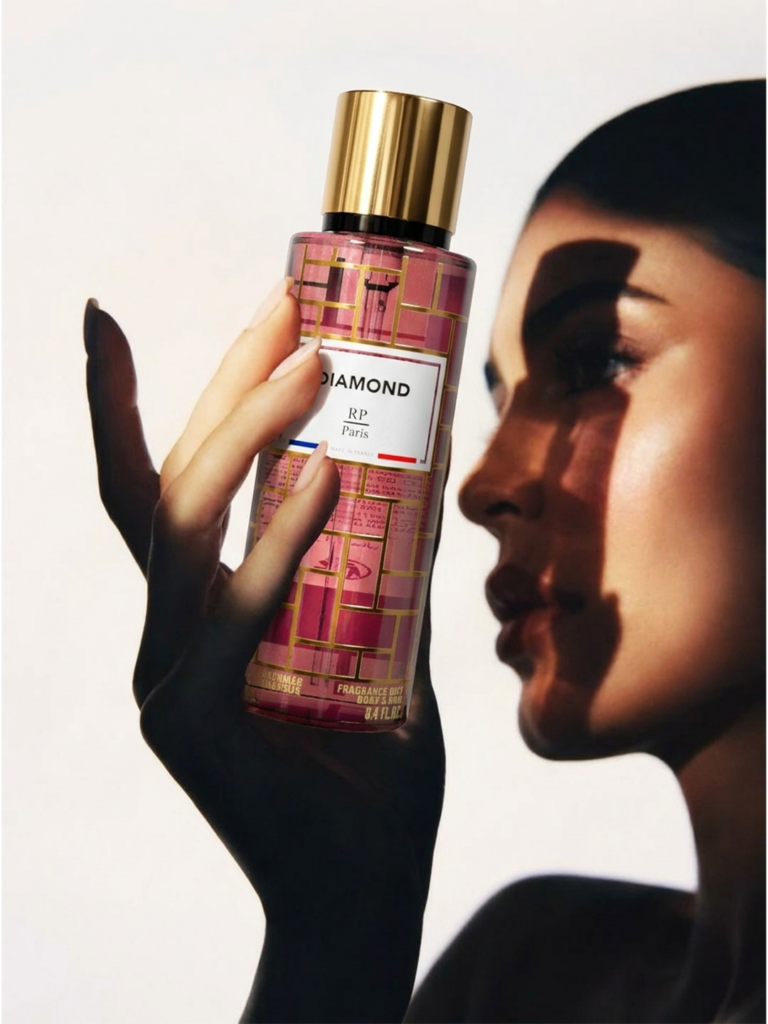
    Image Courtesy: RP Paris

    The Luxury You Cannot See

    There is a particular intimacy in something that does not need to announce itself.

    A watch can reveal its craftsmanship through its movement. A jewel communicates through metal and stone. A garment speaks through cut, construction and material.

    Scent operates on a different level.

    “With scent, there is nothing to look at. You have to experience it.” — RP Paris

    That experience is inherently subjective.

    The same fragrance can evoke confidence in one person, comfort in another and a completely different memory in someone else. A scent may remind someone of a particular place or period of their life without that association ever having been part of the creator’s original intention.

    This makes fragrance particularly interesting within today’s luxury landscape.

    Luxury has increasingly moved away from the need to demonstrate status through visibility. Experiences, personal rituals and emotional associations have become just as significant as the objects themselves.

    Scent fits naturally into that evolution.

    It does not need to be seen by anyone else to have value.

    In fact, its most meaningful effect may happen when nobody else notices it at all.


    Image Courtesy: RP Paris

    When a Space Has an Identity

    The most significant change in fragrance may be taking place beyond the body.

    Think about the way a room is designed.

    Lighting, furniture, colour, texture and materials are selected not only for their individual qualities but for the atmosphere they create together. Scent can increasingly become part of that same conversation.

    A bedroom can have a different olfactory character from a living room. A boutique can develop an atmosphere that complements its visual identity. A hotel can create an association that remains with its guests long after they have left.

    RP Paris describes scent as:

    “the invisible finishing layer of a space.”

    It is a compelling way of thinking about fragrance because it moves scent from the category of accessory into the language of design.

    We already talk about the visual identity of a space.

    Increasingly, we may begin talking about its olfactory identity.

    For hospitality, retail and residential interiors, that possibility is particularly intriguing. A recognisable scent can become part of how a place is remembered, just as much as its architecture, materials or visual details.

    And this does not necessarily require extravagance.

    Sometimes luxury is simply the ability to shape an environment so precisely that it feels unmistakably yours.


    Image Courtesy: RP Paris

    From Owning Luxury to Curating Experience

    The broader luxury industry has been moving steadily toward experience.

    A hotel is no longer judged only by the room itself. A boutique is increasingly designed as an environment rather than simply a place to transact. Residential design has become as concerned with atmosphere and wellbeing as it is with materials and objects.

    Scent belongs naturally within this shift.

    It can change how an environment is perceived without changing its physical structure.

    A room does not need to be redesigned.

    A car does not need to be transformed.

    A home does not need another object.

    The sensory experience can change through something almost invisible.

    For RP Paris –

    this is where contemporary indulgence becomes particularly interesting: in the ability to take an ordinary moment and make it feel more deliberate.

    The fragrance in a room before guests arrive. The scent of textiles at the end of the day. A familiar atmosphere inside a car. A particular fragrance associated with coming home.

    These are small details, but they can create lasting associations.

    Luxury, in this context, becomes less about accumulating things and more about curating how life is experienced.


    Image Courtesy: RP Paris

    The Challenge of a Visual World

    Fragrance exists in an unusual position within contemporary culture.

    We live through images. Fashion is photographed. Jewellery is displayed. Interiors are captured and shared. Luxury brands construct elaborate visual worlds around their products.

    But scent itself cannot be photographed.

    A bottle can be beautiful. Packaging can establish a visual identity. A campaign can suggest a particular mood. None of them, however, can reproduce the fragrance itself.

    Eventually, the consumer has to experience it.

    For RP Paris, this makes storytelling essential — but it also means leaving room for interpretation.

    “The visual identity creates the first invitation, but the scent creates the real connection.” — RP Paris

    That relationship between image and experience is increasingly important.

    The visual world can invite someone in, but it cannot dictate what the fragrance will mean to them.

    A scent may become associated with a childhood memory, a city, a relationship or an entirely unexpected moment.

    In that sense, the consumer completes the story.

    And perhaps that is one of fragrance’s greatest strengths in an age where almost everything is immediately visible and explainable.

    There is still something left to discover.


    French Tradition, Without Standing Still

    The expansion of fragrance does not mean abandoning the traditions from which the category emerged.

    RP Paris positions French perfumery as a foundation of its identity while also looking toward changing tastes, contemporary lifestyles and new ways of experiencing scent. The house describes its approach through collaboration, technical expertise, craftsmanship and innovation, while its product universe continues to expand beyond conventional personal fragrance.

    But the relationship between heritage and modernity is not presented as a choice between two opposing directions.

    RP Paris puts it simply:

    “French perfumery is a starting point, not a boundary.”

    That distinction becomes increasingly relevant as the category evolves.

    Tradition has value because of the knowledge and craftsmanship it carries. But for that knowledge to remain relevant, it must be capable of responding to the way people live now.

    Consumers discover fragrance differently. They experiment more. They move between beauty, fashion, interiors and lifestyle with fewer rigid boundaries.

    For a contemporary perfume house, the challenge is therefore to preserve the character and quality associated with its foundations while allowing the experience of fragrance to evolve.

    Heritage does not have to remain still in order to remain meaningful.


    A Sensory Wardrobe

    Perhaps the easiest way to understand the future of fragrance is to think of it as a wardrobe.

    Not one scent, but several.

    Different moods. Different spaces. Different occasions.

    The same person can want something expressive on the skin, something softer in a bedroom, something fresh in a car or something entirely different during travel.

    This mirrors the way personal style has already evolved.

    We no longer expect a single outfit to represent every version of ourselves. Our wardrobes accommodate different identities and circumstances.

    Fragrance can do the same.

    This is why the expansion into textile sprays, home fragrance and car scent feels more significant than a simple multiplication of product categories. It reflects a broader shift in where scent belongs.

    It belongs wherever experience happens.

    Beauty.

    Fashion.

    Interiors.

    Travel.

    Hospitality.

    Home.

    The boundaries between these worlds are increasingly fluid, and fragrance is uniquely capable of moving between them.


    Image Courtesy: RP Paris

    Designing the Invisible

    The next stage of fragrance may therefore have less to do with where another perfume product can be placed and more to do with recognising scent as a form of design.

    Imagine a home where fragrance is considered alongside lighting, fabrics and materials.

    A hotel where the olfactory character of the space is developed as deliberately as its architecture.

    A boutique whose scent becomes as recognisable as its visual identity.

    A car where fragrance completes the experience of its interior.

    These possibilities are already beginning to emerge, but their significance lies in what they suggest about the future of design.

    RP Paris believes designers and brands may increasingly think about scent earlier in the creative process rather than treating it as an element added at the end.

    That would represent a subtle but meaningful shift.

    Scent would no longer simply finish an environment.

    It would help define it.

    And once that happens, the idea of an “olfactory identity” may become as natural as talking about a visual one.


    What Comes After the Bottle?

    The future of fragrance may not require us to leave the bottle behind.

    It may simply require us to understand that the bottle was never the entire experience.

    What follows is more interesting.

    A memory.

    A mood.

    A room.

    A journey.

    A ritual.

    The feeling of arriving somewhere, or returning home.

    RP Paris expects personalisation to remain central to the evolution of fragrance, with consumers increasingly choosing scents according to different moods, spaces and occasions while continuing to value quality, craftsmanship and authenticity.

    That balance may define the category’s next chapter.

    Because as scent becomes more integrated into everyday life, its value may lie less in its ability to signal status and more in its ability to create meaning.

    It can make a familiar space feel different.

    It can turn a routine into a ritual.

    It can connect a present moment with a memory that may have been forgotten.

    And it can do all of this without demanding to be seen.

    “Scent becoming less of a single product and more of an everyday sensory language.” — RP Paris

    That may ultimately be the most interesting evolution of all.

    Luxury has spent centuries perfecting the art of what can be seen, touched and owned.

    Scent suggests another possibility:

    luxury as something felt.

    And beyond the bottle, fragrance may be becoming one of the most intimate ways we shape the world around us.


    RP Paris

    French perfumery, contemporary olfactory experiences.

    An INSYDE Exclusive editorial conversation with RP Paris.

  • Jaya Misra: The Making of a  Modern Indian Fashion Language

    Jaya Misra: The Making of a Modern Indian Fashion Language

    Jaya Misra at the Cannes Film Festival,

    As Jaya Misra marks 20 years in fashion, the designer reflects on Indian identity, global ambition, craftsmanship, personal style and why the future of fashion may depend on knowing when to say less.

    Indian fashion is having a global moment.

    But the conversation around it is changing.

    For decades, international perceptions of Indian fashion were often reduced to a familiar vocabulary: elaborate embroidery, vivid colour, weddings, traditional silhouettes and the extraordinary work of its artisans.

    Those elements remain important. But they were never the whole story.

    India possesses one of the world’s richest design languages — shaped by textiles, regional craftsmanship, architecture, jewellery, history and generations of accumulated knowledge. Increasingly, Indian designers are taking those foundations into contemporary territory, creating work that can speak to an international audience without surrendering its identity.

    For Jaya Misra, that distinction is fundamental.

    “I have always believed that we do not need to become Western to be international. We can take something deeply Indian and give it a modern expression.”

    It is an idea that has accompanied her through two decades in fashion.

    In 2026, Jaya Misra India marks 20 years since its establishment. A graduate of NIFT, Jaya founded the house in 2006 and has since presented her work across national and international fashion platforms, with showcases spanning cities including Milan, New York, London, Dubai, Tokyo, Toronto and Vancouver. Her career has also included serving as an official designer for Femina Miss India and working across multiple international couture and fashion showcases.

    But after twenty years, the more interesting question is not simply where Indian fashion has travelled.

    It is what Indian fashion is becoming.

    Indian, Without Explanation

    For a long time, Indian fashion was introduced to the world through its most recognisable elements.

    Colour. Embroidery. Weddings. Ornamentation.

    Jaya believes that perception is becoming more nuanced.

    “Indian fashion is so much more than that,” she says, pointing to the country’s textiles, craftsmanship and techniques passed down through generations.

    The shift, she believes, is happening as designers begin presenting those traditions through a contemporary language that feels relevant around the world.

    There is still a tendency, she acknowledges, to measure luxury against Western standards. But that is gradually changing as Indian fashion becomes more confident in defining its own value.

    That distinction matters.

    Global relevance does not have to mean cultural translation.

    Indian fashion does not need to become Western in order to become international.

    Its challenge may instead be to become more confident about what is already uniquely its own — and to find new ways of expressing it.

    The goal is not simply to make Indian fashion visible.

    It is to make it understood on its own terms.

    When Heritage Is Allowed to Move

    Fashion has always had a complicated relationship with tradition.

    Preserve it too rigidly and it can become something admired rather than lived. Change it too completely and the knowledge behind it can disappear.

    For Jaya, evolution is part of preservation.

    “For me, preservation does not mean freezing something in time.”

    A traditional craft, she believes, needs room to move.

    A historic weave can become a contemporary jacket, corset or gown. An established technique can enter an unexpected silhouette without losing the heritage from which it came.

    The form can change.

    The essence should remain.

    But there is one boundary she considers essential: respect for the maker.

    “Evolution should never erase the artisan or the story behind the craft.”

    That places craftsmanship somewhere beyond decoration. The artisan is not simply part of a production process; the knowledge, patience and human skill behind the technique are part of the value of the final piece.

    For Indian fashion, keeping craft alive may therefore depend not on protecting it from change, but on giving it enough relevance to continue being worn, interpreted and desired.

    Tradition survives not only when it is preserved.

    Sometimes, it survives because it is allowed to evolve.

    The Luxury of Time

    Luxury has accumulated plenty of definitions.

    Price. Exclusivity. Rarity. Status.

    Jaya’s understanding is quieter.

    “For me, luxury is not defined by a price tag.”

    Instead, she associates it with time, craftsmanship, individuality and intention.

    That perspective feels particularly relevant in an industry increasingly shaped by immediacy.

    Fashion moves quickly. Trends appear and disappear almost overnight. Digital platforms encourage constant consumption, constant visibility and constant newness.

    Against that speed, something made slowly begins to feel almost radical.

    “Something handmade, created especially for you or marked by the subtle imperfections of the human hand has a unique soul.”

    But there is another form of luxury that cannot be measured through material value.

    Memory.

    “If a garment makes you feel powerful, beautiful or connected to a memory, its value goes far beyond its price,” she says.

    A couture garment can therefore become more than an object of consumption. It can become part of an experience, a milestone or a personal history.

    Perhaps that is why craftsmanship continues to matter.

    It gives an object something mass production struggles to replicate:

    a sense of having been made for a person rather than simply made for a market.

    The Problem With Seeing Everything

    Social media has changed fashion more radically than almost any runway could.

    A designer can now be discovered by someone thousands of kilometres away without passing through the traditional gatekeepers of the industry. Emerging talent can build an audience independently, while consumers have access to more fashion than ever before.

    Jaya sees that democratisation as a positive development.

    But accessibility has created its own contradiction.

    When everyone is looking at the same images, references can begin to converge.

    “The same silhouette, styling and trend can appear everywhere almost overnight.”

    The result is an industry with more access but, sometimes, less distinction.

    In that environment, personal style becomes less about knowing what is trending and more about knowing what feels authentic.

    “Personal style begins when you stop asking, ‘What is everyone wearing?’ and start asking, ‘What feels authentic to me?’”

    It is a question that extends beyond clothing.

    When algorithms can constantly tell us what to see, buy and desire, individuality requires a degree of resistance.

    Fashion can inspire you.

    It should not have to define you.

    Indian by Instinct

    Should an Indian designer have a responsibility to represent Indian culture?

    Jaya does not believe creativity should come with a compulsory assignment.

    An Indian designer should be free to create something minimal, futuristic, Western, traditional or experimental.

    “Creativity needs freedom.”

    Yet freedom from obligation does not mean freedom from influence.

    India’s textiles, embroideries, colours, architecture, jewellery, history and crafts inevitably form part of the visual memory of someone who grows up within that environment.

    “So even when I create something highly international, my Indian sensibility often comes through,” she says.

    “I do not have to force it; it is already an intrinsic part of who I am.”

    There is something significant in that idea.

    Identity does not always need to be announced to be present.

    For a designer working between Indian heritage and contemporary global silhouettes, being Indian does not necessarily mean reproducing recognisable symbols of India.

    Sometimes it is simply part of the way one sees.

    The Case for Editing

    Indian fashion has never struggled to make an entrance.

    Drama, colour, surface, craftsmanship and occasion are among its natural strengths. On a red carpet or international platform, that visual confidence can be extraordinarily powerful.

    But Jaya believes the next stage of India’s global fashion story may require a different skill.

    Editing.

    “Sometimes, we assume that showcasing craftsmanship means showing everything at once.”

    Her counterargument is particularly relevant to contemporary luxury: restraint can communicate just as much as abundance.

    “A single extraordinary detail can sometimes say more than twenty.”

    It is a deceptively simple observation in an industry where more is often mistaken for more luxurious.

    India already possesses extraordinary craftsmanship. The challenge now is not proving that it exists.

    The challenge is how it is presented.

    Jaya argues that Indian fashion needs stronger global business structures, presentation, communication and consistency.

    “Talent is not our challenge; we have an abundance of it.”

    That may be one of the most important questions facing Indian fashion today.

    The next chapter may be less about proving what India can create and more about deciding how that creativity is edited, positioned and communicated to the world.

    Jaya Misra at the House of Lords, London

    Dream First. Then Find the Woman.

    Every designer eventually confronts the tension between creativity and commercial reality.

    Focus too heavily on commerce and creative identity can disappear. Create only for yourself and the relationship with the person wearing the garment can become distant.

    Jaya sees the two as a dialogue.

    “I like to create a dream first. Then I ask myself: how can a real woman enter that dream?”

    The runway can remain dramatic and imaginative while its essence is translated into something that can exist beyond the show — a jacket, saree, dress or another silhouette.

    The idea begins as fantasy.

    The wearer gives it a life.

    That balance is particularly important in couture, where the distance between spectacle and reality can be enormous.

    The most successful design does not necessarily force the customer into the designer’s imagination.

    It gives the customer a way into it.

    A Generation in a Hurry

    Looking toward the future, Jaya is optimistic about the fearlessness of younger designers.

    Today’s generation has access to global references almost instantly. They experiment with gender, technology, sustainability, textiles, silhouettes and storytelling, while rediscovering Indian crafts through increasingly unconventional approaches.

    But that access also comes with pressure.

    Everything is expected to happen faster.

    Collections. Trends. Content. Recognition.

    “There can be enormous pressure to succeed before you have had the chance to discover who you are as a designer.”

    For Jaya, identity cannot be rushed.

    “A strong identity takes time.”

    After two decades in fashion, she says she is still learning, evolving and discovering new possibilities.

    That process, she believes, never really ends.

    Perhaps that is the most revealing lesson in her twenty years of fashion.

    Longevity is not simply about remaining relevant.

    It is about continuing to evolve without losing the thread that makes the work recognisably yours.

    Her advice to the next generation is therefore less about visibility than substance:

    “Do not be so eager to be seen that you forget to develop something worth remembering.”

    It is a thought that feels particularly relevant in an industry where visibility can arrive instantly and disappear just as quickly.

    Because ultimately, Jaya’s understanding of fashion is not about creating a moment.

    It is about creating a language.

    An identity.

    A body of work.

    Something that can travel across borders without losing its origin, evolve without abandoning its memory, and remain unmistakably its own.

    For Jaya Misra, Global Vision and Indian Couture are not opposing ideas.

    They are part of the same conversation.

    And after twenty years, that conversation is still evolving.


    JAYA MISRA INDIA

    Jaya Misra — Founder & Creative Director

    20 Years of Fashion Excellence · 2006–2026

    Design Signature: Modern Indian Couture · Heritage Textiles & Indian Craftsmanship · Contemporary Draping & Global Silhouettes · Luxury with Individuality · Tradition Reimagined for the Modern Woman

    Brand Philosophy: Global Vision. Indian Couture.

    INSYDE Exclusive

  • Atelier Emine: Where Craft Becomes Luxury

    Atelier Emine: Where Craft Becomes Luxury

    In an age of instant consumption, the Turkish atelier is making a case for a different kind of luxury — one defined by craftsmanship, time, material knowledge and the human hand.

    Luxury has always had its codes.

    Precious materials. Recognisable silhouettes. Objects whose value is often understood before they are even touched.

    But there is another way to think about luxury — one that is less concerned with what an object announces and more interested in what it contains.

    The time behind it. The technique. The knowledge required to make it. The hands that shaped it.

    This is where Atelier Emine becomes particularly intriguing.

    The Türkiye-based atelier creates handcrafted handbags using an unconventional combination of materials including crystal, mother-of-pearl, pearls, wood and velvet. At the foundation of these pieces is monofilament, worked together with the materials through specialised weaving and knotting techniques.

    The result is visually striking, but the most interesting part of the construction is not necessarily the part the eye notices first.

    The monofilament remains visually subtle, allowing the materials themselves to become the language of each piece. Yet beneath those surfaces is a method of making that is central to the identity of the object.

    For Atelier Emine, the construction is not simply functional. It is part of the design.

    And that opens up a larger question: what exactly makes a luxury object luxurious?

    When Craftsmanship Creates Rarity

    A study in material and craftsmanship, where individually worked elements become part of the bag’s visual language. Images Courtesy: Atelier Emine

    Luxury has traditionally placed considerable emphasis on the value of materials.

    Gold, precious stones, fine leather and rare textiles have long served as shorthand for exclusivity.

    Atelier Emine approaches rarity from another direction.

    “We believe craftsmanship itself can create rarity,” the atelier tells INSYDE.

    Its pieces are produced in limited quantities and handmade in a private workshop in Türkiye, where individual materials are carefully worked and brought together through specialised techniques.

    The distinction is important.

    A material can possess inherent value, but craftsmanship can transform that material into something far more personal. The technique, the time involved and the knowledge required to execute it become part of the finished object’s value.

    The handbag is no longer simply the result of a production process.

    The process becomes part of the luxury.

    It is an idea that feels increasingly relevant at a time when so many objects can be reproduced with remarkable speed and consistency.

    Where Material Meets Form

    Behind the finished object: meticulous handwork and specialised weaving techniques shape every Atelier Emine piece. Images Courtesy: Atelier Emine

    There is no fixed starting point when Atelier Emine develops a piece.

    Material, form and idea are allowed to influence one another.

    Crystal, velvet, mother-of-pearl, wood and pearls each possess different textures, weights and visual qualities. Rather than treating these materials as decorative elements added after the design is established, Atelier Emine allows them to participate in the construction itself.

    “The material influences what the form can become, while the intended form also influences how we work with the material,”

    – the atelier explains.

    That relationship gives the making process a certain fluidity.

    The material is not simply being asked to conform to a predetermined shape. The shape evolves alongside the material and the technique.

    It is a subtle shift, but an important one.

    Craftsmanship here is not merely about executing a design perfectly. It becomes part of the creative thinking behind the design.

    The Beauty of Imperfection

    Delicate materials, intricate construction and the precision of handmade work meet in Atelier Emine’s contemporary designs. Images Courtesy: Atelier Emine

    Handmade luxury carries an inherent contradiction.

    The human hand is part of its appeal, yet luxury also demands precision.

    Atelier Emine sees no need to choose between the two.

    Its pieces are entirely handmade, but production is accompanied by careful quality control. Slight variations in tone, texture, form or the arrangement of materials can naturally occur during the process.

    Rather than automatically treating these differences as flaws, the atelier sees them as part of the individual character of a handmade piece.

    That does not mean precision is abandoned.

    Construction, finishing and quality remain essential.

    The balance lies in allowing the object to retain its human character without compromising the discipline expected of a luxury piece.

    Perhaps that is one of the most compelling qualities of handmade objects today.

    In a world increasingly capable of producing perfect uniformity, individuality can become its own form of rarity.

    Heritage Without Nostalgia

    Designed to exist beyond the display case, Atelier Emine’s pieces bring handcrafted detail into contemporary dressing. Images Courtesy: Atelier Emine

    Behind Atelier Emine’s contemporary aesthetic lies a 65-year craft heritage passed down through generations.

    But the atelier does not believe heritage needs to look historical.

    Instead, it sees heritage in the practices that have survived: specialised techniques, patience, handwork and attention to detail.

    “We do not see heritage as something that has to be reproduced as a historical aesthetic,We see it more fundamentally through the practice of craftsmanship.”

    – the atelier explains

    That distinction allows tradition to move forward.

    Heritage can easily become a visual formula — familiar motifs reproduced season after season, or the past transformed into a marketable aesthetic.

    Atelier Emine approaches it differently.

    The heritage remains in how the object is made, allowing the object itself to remain contemporary.

    “Contemporary design is not a departure from craftsmanship,” the atelier says. “It is a way of carrying craftsmanship forward.”

    It is a particularly relevant idea in contemporary luxury, where the challenge is no longer simply preserving tradition but finding ways for traditional knowledge to remain meaningful in the present.

    The Luxury of Waiting

    Luxury at a slower pace — a reminder that some of the most meaningful objects are made to be experienced, not rushed. Images Courtesy: Atelier Emine

    There is another element of luxury that has become increasingly rare: time.

    The culture surrounding fashion and consumer goods has become faster than ever. Trends appear and disappear almost instantly. Digital platforms have made discovery and purchasing almost frictionless.

    Handmade objects exist according to another rhythm.

    Atelier Emine’s pieces are made to order, with individual models requiring time to complete. The waiting is not positioned as an inconvenience. It is part of the nature of the object.

    And perhaps that is where patience begins to take on a new meaning.

    When an object takes time to make, that time does not simply disappear once the piece is finished. It becomes part of its story.

    The willingness to wait for something carefully made can itself become meaningful in a culture increasingly built around immediacy.

    Luxury, in this sense, is not simply about possessing something rare.

    It can also be about allowing something to take its time.

    Beyond the Traditional Codes of Luxury

    A distinctive expression of Atelier Emine’s material language, balancing sculptural design with artisanal craftsmanship. Images Courtesy: Atelier Emine

    Atelier Emine ultimately challenges a familiar assumption: that luxury has to look a certain way.

    Its approach does not reject precious materials or established luxury entirely. Instead, it suggests that they are not the only things capable of creating value.

    Craftsmanship can create rarity.

    Technique can create distinction.

    Limited production can create individuality.

    Time can become part of an object’s worth.

    And unconventional materials can acquire an entirely different significance when transformed through knowledge and handwork.

    Look closely at an Atelier Emine piece and the first thing that may capture the eye is the surface — the crystals, colour, texture or form.

    Look closer, and another story begins to appear.

    The monofilament.

    The weaving.

    The knotting.

    The arrangement of materials.

    The subtle variations created by the human hand.

    The time.

    And the people behind it.

    That is perhaps the most compelling idea at the heart of Atelier Emine’s philosophy.

    The value of a luxury object does not always have to announce itself.

    Sometimes, it asks you to look closer.

    Because when everything around us is becoming faster, louder and more immediately recognisable, there is something powerful about an object whose value reveals itself slowly.

    Atelier Emine is not simply creating handbags.

    It is offering a different way of understanding what luxury can be — one where the material is only the beginning, and where craftsmanship, patience and human knowledge become part of the object itself.

    Perhaps the future of luxury is not necessarily about objects that demand attention.

    Perhaps it is about objects that reward it.

    Made by Hand, Made to Be Remembered.