Category: Art

Artists, exhibitions and movements shaping contemporary Indian and global art.

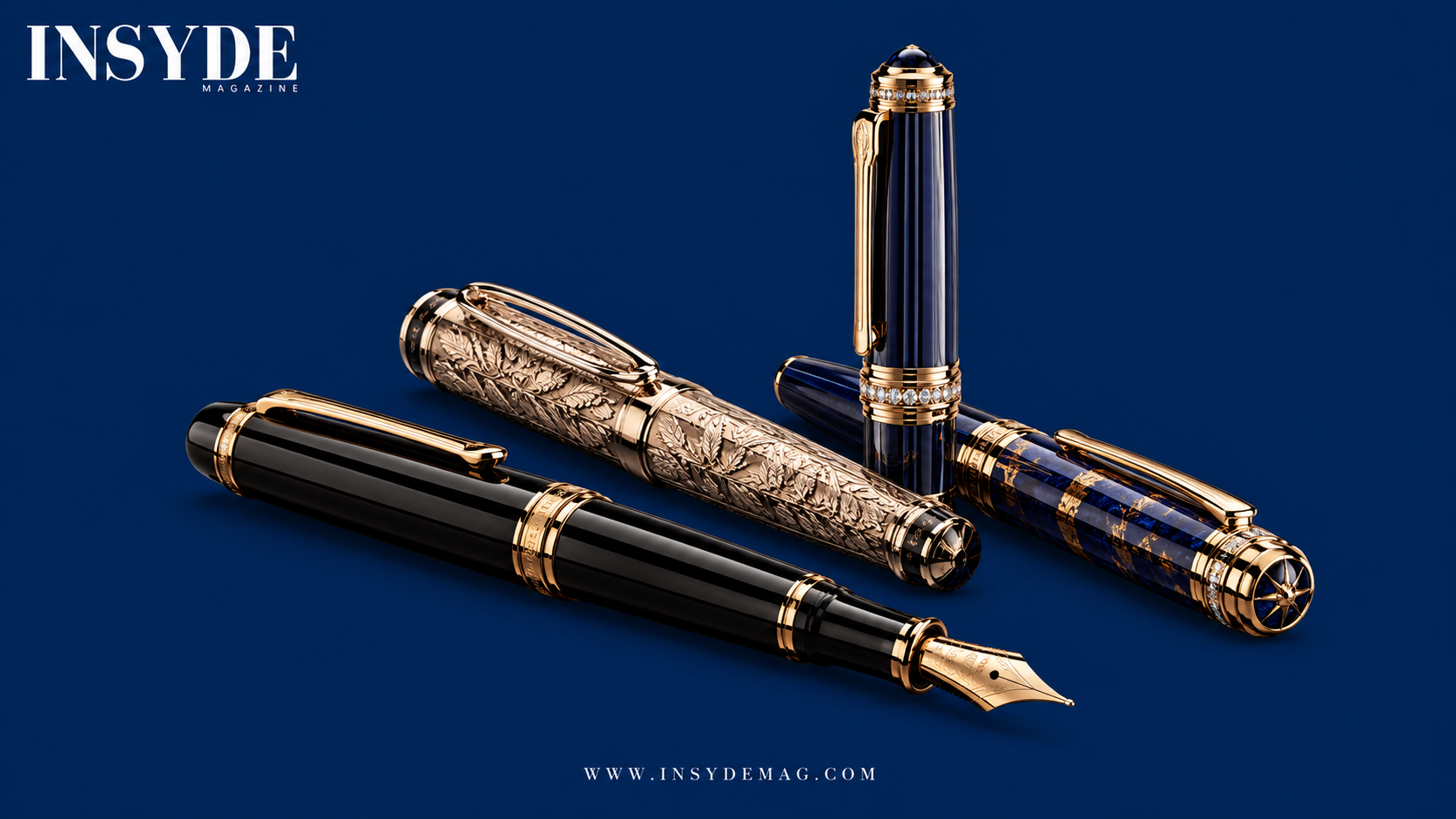
  • PEN BRANDS OF THE ULTRA-RICH

    PEN BRANDS OF THE ULTRA-RICH

    Five luxury pen houses where heritage, artistry and precision turn an everyday object into a statement of taste.

    A signature can close a billion-dollar deal. It can authenticate a masterpiece, formalize an acquisition or mark the beginning of a legacy. Yet the object behind that signature is often overlooked.

    In an age when messages disappear into screens and contracts are completed with a click, the luxury pen occupies a different kind of space. It is tactile, personal and deliberately old-fashioned. It asks you to slow down.

    For the discerning collector, a pen can be far more than a writing instrument. It can represent a century of craftsmanship, a rare artistic tradition or a fascination with the smallest details. And at the highest end of the market, the difference between an ordinary pen and an extraordinary one can be measured in hours of handwork, intricate finishing and the scarcity of a particular edition.

    The appeal is not simply about spending more. It is about knowing what you are paying for.

    A BILLION-DOLLAR MARKET, BUILT ON THE DETAILS

    The luxury pen industry is larger than its niche reputation might suggest. According to Grand View Research’s August 2026 market report, the global luxury-pen market was valued at an estimated US$3.6 billion in 2025. The firm projects it will reach US$3.7 billion in 2026 and US$5 billion by 2033, representing a forecast compound annual growth rate of 4.4% between 2026 and 2033.

    The report estimates that fountain pens accounted for 41.5% of market revenue in 2025, making them the largest product segment. The mid-luxury category represented 45.2%, while offline retail accounted for 72.4% of sales. Europe held the largest regional share, at 32.6%.

    These figures are commercial research estimates, not audited industry-wide sales disclosures. They nevertheless point to an important distinction: luxury writing instruments are not sustained by ultra-expensive collector pieces alone. The market also depends on everyday premium products, personalization, gifting and the experience of examining an instrument before buying it.

    The most interesting end of the market, however, is where a pen becomes something closer to an object of art.

    01. MONTBLANC — THE POWER OF AN ICON

    Few writing-instrument names have achieved the cultural recognition of Montblanc.

    The German luxury house introduced its Meisterstück in 1924. Over the following century, its distinctive silhouette and enduring design helped turn it into one of the most recognizable names in fine writing. The collection marked its centenary in 2024.

    Montblanc’s strength is the balance between familiarity and aspiration. Its writing instruments are associated with professional achievement, milestone gifting and the rituals of business, but the brand’s collectible editions offer a different proposition.

    The Great Characters collection draws inspiration from influential figures and cultural icons. Its Homage to The Great Gatsby Limited Edition 1925 fountain pen, for example, is listed at US$5,300 on Montblanc’s US website. The edition connects the writing instrument to the visual language of the Jazz Age and F. Scott Fitzgerald’s celebrated novel.

    That price is for a specific limited edition, not a representative price for all Montblanc pens. The brand’s wider collection spans considerably different price points.

    What makes Montblanc compelling is its ability to turn a recognisable design into a personal object. For one owner, it may be a daily writing companion. For another, a particular edition may represent a favourite author, an important achievement or a carefully chosen collectible.

    The luxury proposition: An enduring design icon with a bridge between professional life, cultural references and collecting.
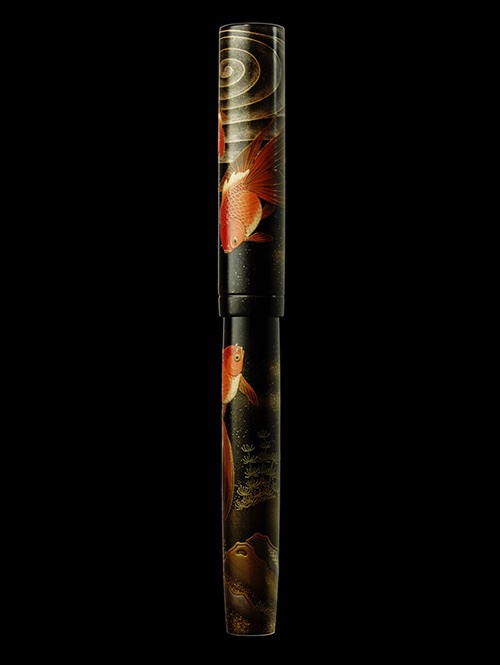
    02. NAMIKI — THE ART OF JAPANESE LACQUER

    Some luxury objects announce their value immediately. Others reward a closer look.

    Namiki belongs firmly in the second category.

    The Japanese brand’s history of maki-e fountain pens dates to 1925. Maki-e is a traditional decorative technique that involves building intricate designs through layers of lacquer and the application of materials such as metallic powders. The process demands specialist knowledge, patience and careful execution.

    According to Namiki’s official history, the company explored lacquer as a durable and beautiful material for fountain-pen bodies before developing decorated designs that brought Japanese artistic traditions to writing instruments.

    The result is a different expression of luxury. Rather than relying solely on a familiar logo or precious-metal finish, Namiki places the decorative work at the centre of the object. Nature, mythology and traditional Japanese motifs can become elaborate compositions across a pen’s surface.

    The craftsmanship is not incidental decoration. It is the reason the object exists in that particular form.

    For collectors, this creates a more intimate relationship with ownership. The attraction may lie in the visual complexity of a design, the skill required to produce it or the connection to a tradition passed between generations of artisans.

    Namiki also challenges the assumption that luxury must always be loud. A pen can be extraordinary without relying on conspicuous branding. Its value can be found in the work that only becomes apparent when someone takes the time to look.

    The luxury proposition: Traditional Japanese artistry, intricate lacquerwork and craftsmanship that transforms a writing instrument into a miniature canvas.

    03. S.T. DUPONT — FRENCH REFINEMENT IN EVERY DETAIL

    S.T. Dupont approaches luxury through precision, finish and the relationship between an object and its owner.

    The French house’s Classique pen has an origin story that captures this philosophy. According to S.T. Dupont’s official account, Jacqueline Kennedy Onassis requested a writing instrument to match her S.T. Dupont lighter. The company, which had not previously manufactured pens, took on the challenge and adapted the lighter’s design language to create its first writing instrument.

    The resulting Classique design drew on the lighter’s metalwork and vertical guilloché detailing. It was an exercise in translating the character of one luxury object into another.

    That attention to detail remains central to the appeal of the house’s writing instruments. Surface patterns, lacquer, polished metal and the proportions of the body all contribute to the experience. The pen is not merely a vessel for ink; it is an object designed to feel considered in the hand and distinctive on a desk.

    There is a certain intimacy to this kind of luxury. A writing instrument is handled repeatedly, often during moments that matter: a personal letter, a formal agreement, a handwritten note or a significant gift. The quality of its design becomes part of the ritual.

    S.T. Dupont’s appeal is therefore less about size or spectacle than about refinement. The details are the point.

    The luxury proposition: French design heritage, refined metalwork and an understated approach to personal luxury.

    04. CARAN D’ACHE — SWISS PRECISION AT ITS MOST EXTRAVAGANT

    Caran d’Ache brings Switzerland’s tradition of precision and technical design into the world of writing instruments.

    Founded in Geneva in 1915, the company produces its writing and drawing instruments in Switzerland. Its range extends from accessible premium stationery to limited editions that explore elaborate materials, intricate finishing and ambitious design concepts.

    One example is the 1010 Timekeeper Fountain Pen Limited Edition. On its US website, Caran d’Ache lists the model at US$14,325.

    The design draws inspiration from the world of fine watchmaking, including the visual language of watch dials and crowns. The company highlights techniques including guilloché, engraving, manual polishing, lacquering and PVD treatment.

    This is where the relationship between watches and pens becomes particularly interesting. Both objects combine engineering with personal taste. Both can be judged on their practical performance, yet their most collectible versions are often appreciated for the design decisions and technical work that go into them.

    The price of the 1010 Timekeeper is a useful illustration of how far a luxury writing instrument can extend beyond everyday utility. It is not a typical Caran d’Ache price, nor should it be taken as representative of the brand’s broader collection. It is a specific limited edition at the upper end of its range.

    At this level, the appeal lies in the convergence of design, specialist finishing and scarcity.

    The luxury proposition: Swiss manufacturing and technical precision, expressed through highly elaborate limited editions.

    05. MONTEGRAPPA — ITALIAN CHARACTER, COLLECTOR APPEAL

    Montegrappa offers a more expressive interpretation of luxury writing.

    Its history began in 1912, when a group of industrialists established Italy’s first nib factory in Bassano Veneto, now Bassano del Grappa. The company subsequently developed its own fountain pens and built a reputation around Italian manufacturing and design.

    The house’s official history describes a tradition shaped by the artisanal culture of the Veneto region. That heritage continues to inform its identity, alongside an appetite for distinctive designs and themed collections.

    Montegrappa is particularly interesting for collectors who want an object to communicate something about their interests. Its writing instruments have explored subjects from cultural figures and literature to entertainment and history. This can make the choice of pen feel more personal than simply selecting a familiar luxury name.

    A collector might be drawn to a particular edition because of its visual language, the story behind it or the subject it commemorates. Another buyer may prefer a more restrained design from the brand’s wider range.

    That breadth is important. Luxury collecting is not a single aesthetic, and a high price does not automatically make an object desirable. For many enthusiasts, the strongest connection comes from finding a design that feels individual.

    Montegrappa’s character-driven approach gives it a distinct place among established writing houses: it treats the pen as a canvas for identity as well as a tool for writing.

    The luxury proposition: Italian heritage, expressive design and collectible instruments that appeal to personal interests.

    WHAT ACTUALLY MAKES A LUXURY PEN EXPENSIVE?

    The price of a luxury pen is rarely explained by a single material or manufacturing decision. Several factors can combine to create a substantial premium.

    Craftsmanship and finishing. Specialist nib work, engraving, lacquer application, polishing and assembly can require considerable skill. Techniques such as Namiki’s maki-e are particularly labour-intensive because the decorative surface is built through a series of carefully controlled processes.

    Materials and construction. Precious metals, specialist finishes and complex components can affect manufacturing costs. Their influence varies by model, and a premium material alone does not establish a pen’s overall quality.

    Design and heritage. Established houses carry histories, recognisable design languages and reputations built over decades. For some buyers, that continuity is part of the appeal.

    Limited production. A restricted edition can attract interest when it combines a distinctive concept, desirable execution and genuine collector demand. However, limited availability does not guarantee that a pen will appreciate in value.

    Personalisation and meaning. Engraving, bespoke details and the circumstances in which a pen is purchased can make it deeply personal. A writing instrument given to mark a career milestone may be valued for reasons that have little to do with its resale price.

    It is also worth separating luxury from investment. Some pens become sought-after collectibles, but future value is uncertain. Condition, authenticity, provenance, rarity and market demand all matter. A buyer should not assume that an expensive pen will generate a financial return.

    WHY THE PEN STILL MATTERS IN A DIGITAL WORLD

    The continued appeal of fine writing instruments is not simply a nostalgic rejection of technology. It is a reminder that convenience and experience are not always the same thing.

    Digital tools are faster for most routine communication. A luxury pen offers something different: the physical sensation of writing, the rhythm of forming words by hand and the pleasure of using an object made with care.

    That distinction is relevant to the wider luxury market. Consumers can buy functional objects at almost every price point. The products that inspire deeper attachment often offer something beyond basic utility: a story, a craft tradition, an individual aesthetic or a connection to a meaningful moment.

    Fine writing instruments sit comfortably within that world. They can be used every day, displayed as part of a collection or kept for occasions when the act of writing deserves attention.

    They also occupy an unusual position between personal luxury and gifting. A pen can be chosen for its design, presented to mark an achievement or retained as a reminder of a relationship. Unlike a digital signature, the physical object can remain long after the moment has passed.

    THE FINAL WORD

    Montblanc represents the power of an icon. Namiki turns traditional Japanese craftsmanship into a form of wearable-scale art. S.T. Dupont brings French refinement to the smallest details. Caran d’Ache explores the possibilities of Swiss precision, while Montegrappa gives collectors a more expressive design language.

    These five houses demonstrate that luxury writing is not defined by one price bracket or a single idea of status. Their collections span different budgets, and not every instrument is intended for the wealthiest buyer.

    What connects them is the belief that an everyday object can become something worth keeping.

    The finest luxury pens do more than put ink on paper. They bring together design, craft, heritage and personal meaning in a form that can be held in the hand.

    In a world that rarely asks us to slow down, perhaps that is the ultimate luxury: not simply owning something expensive, but owning something worth taking the time to appreciate.

    INSYDE MAGAZINE– NO.1 LUXURY MAGAZINE IN BENGALURU
  • The New Heirloom: The Luxury of Legacy

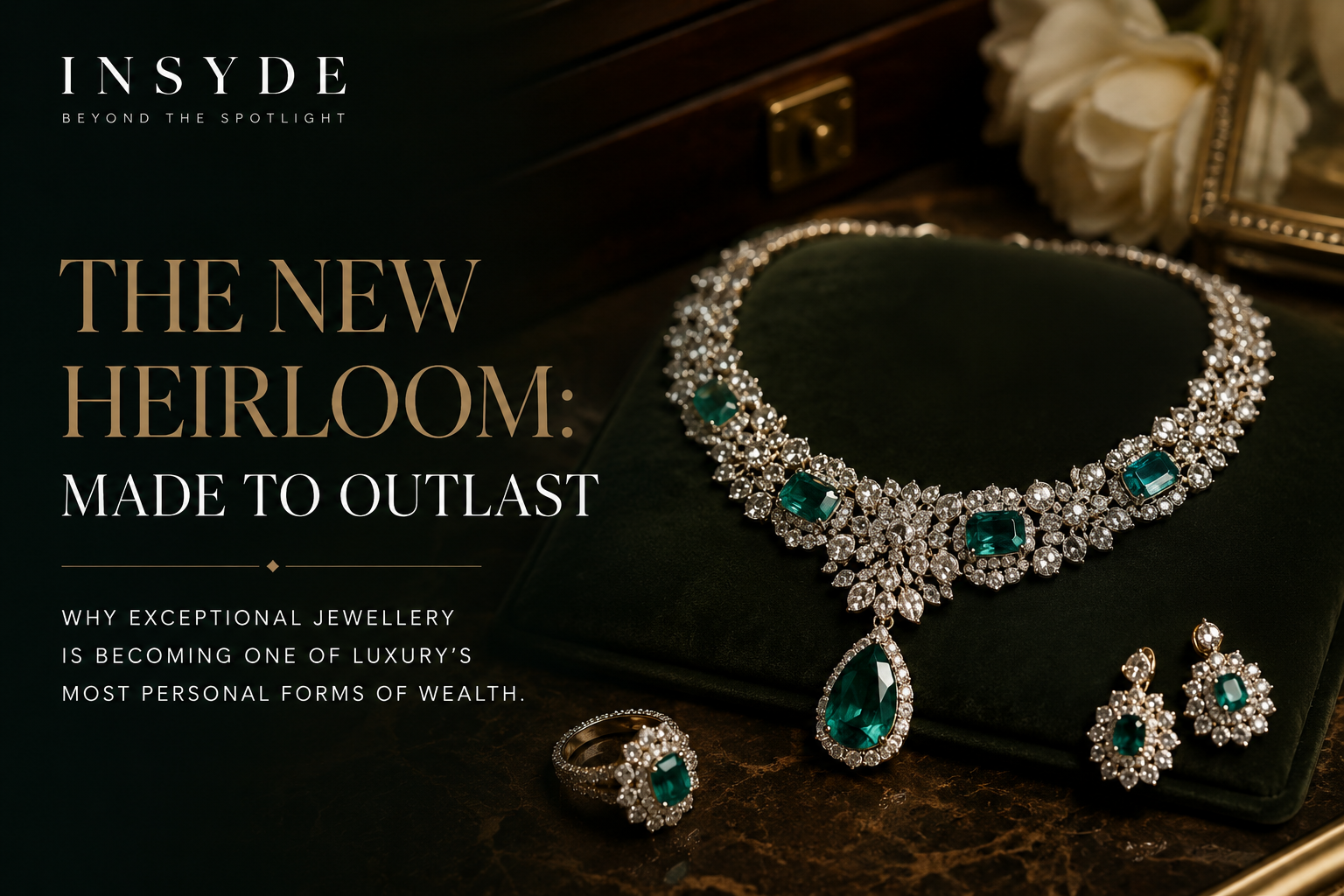
    The New Heirloom: The Luxury of Legacy

    Why exceptional jewellery is becoming one of luxury’s most personal forms of wealth.

    There is a difference between owning something valuable and owning something that matters.

    The distinction becomes clearer at the highest levels of luxury.

    When access is no longer the challenge, another question begins to matter: what is actually worth keeping?

    A remarkable piece of jewellery can answer that question rather elegantly.

    It does not need to occupy a room.

    It does not need a chauffeur.

    It does not need a marina or a private hangar.

    It can sit quietly in a private collection, emerge for one evening, and carry more meaning than an object ten times its size.

    That is the peculiar power of exceptional jewellery.

    It is wealth made intimate.

    Not necessarily wealth designed to be seen by everyone, but wealth expressed through rarity, provenance, craftsmanship and personal significance.

    And increasingly, that is where luxury is heading.

    When Price Stops Being the Point

    For a certain kind of buyer, price is an important consideration.

    For the truly affluent, it is often a secondary one.

    The question is no longer whether something is expensive enough to justify its place in a collection.

    It is whether it is exceptional enough to deserve one.

    That distinction changes the entire conversation.

    A rare Colombian emerald.

    An extraordinary Burmese ruby with compelling provenance.

    A historic diamond.

    A one-of-one commission.

    A piece created by an exceptional atelier.

    A jewel whose craftsmanship reveals itself only when examined closely.

    These are not interchangeable luxury goods.

    They are objects with characteristics that cannot simply be reproduced by increasing a budget.

    That is where jewellery becomes particularly interesting.

    Money can secure access. It cannot manufacture rarity.

    The Value of Knowing What You Are Looking At

    There is a sophistication to jewellery that rewards knowledge.

    Two stones can appear similar to an untrained eye and possess radically different histories, qualities and desirability.

    Two pieces can carry similar materials and have completely different levels of craftsmanship.

    The difference may be in the cut.

    The setting.

    The proportions.

    The origin.

    The stone selection.

    The construction.

    The hand behind it.

    Or simply the judgement of the person who commissioned it.

    This is why the most sophisticated jewellery culture is not necessarily loud.

    It is informed.

    A collector does not need a room to recognise a remarkable stone.

    Sometimes a glance across a dinner table is enough.

    That is a very different kind of status.

    Recognition becomes selective.

    Jewellery Is Wealth You Can Wear

    A residence remains at its address.

    A yacht remains at sea.

    A private aircraft moves according to a flight plan.

    Jewellery has a different kind of freedom.

    It travels with its owner.

    A necklace can move between continents.

    A ring can pass from a boardroom to a private dinner.

    A pair of earrings can become part of an evening’s entire visual language.

    The object is not simply stored wealth.

    It becomes portable identity.

    And because it is worn directly against the body, jewellery occupies an unusually intimate position within a luxury collection.

    You don’t simply own it.

    You live with it.

    The Quiet Power of Exceptional Craftsmanship

    At the top end of jewellery, craftsmanship is rarely there for spectacle.

    It is there for perfection.

    The setting has to hold the stone without overpowering it.

    The proportions have to feel inevitable.

    The metal has to respond to light correctly.

    The construction has to survive years of wear without losing its character.

    The smallest detail can determine whether a piece feels merely expensive or genuinely exceptional.

    This is where the great ateliers distinguish themselves.

    The finished piece may appear effortless.

    That is precisely the point.

    Exceptional craftsmanship hides its own difficulty.

    The more refined the object, the less it needs to explain itself.

    The Stone Is Only the Beginning

    A remarkable gemstone carries its own identity.

    Its colour.

    Its character.

    Its origin.

    Its rarity.

    Its history.

    Its imperfections can sometimes become part of what makes it desirable.

    The sophisticated collector therefore isn’t necessarily searching for the largest stone.

    They may be searching for the stone that cannot easily be replaced.

    That distinction matters.

    Size can be measured.

    Rarity has to be understood.

    And in the highest echelons of collecting, uniqueness tends to outlast spectacle.

    India’s Jewellery Legacy Is an Extraordinary Advantage

    India enters this conversation with something many emerging luxury markets would struggle to create from scratch:

    centuries of jewellery culture.

    Kundan.

    Jadau.

    Polki.

    Meenakari.

    Temple jewellery.

    Goldsmithing traditions.

    Gem-setting techniques.

    Regional craftsmanship passed between generations.

    These aren’t simply decorative traditions.

    They are sophisticated systems of making.

    The opportunity for contemporary Indian luxury is therefore not to reproduce the European model of jewellery.

    It is to take India’s enormous craft heritage and give it a new vocabulary.

    The most compelling future Indian jewellery may not look traditionally Indian at first glance.

    It may be architectural.

    Minimal.

    Sculptural.

    Unexpected.

    But the intelligence of the craft can remain underneath.

    That is where heritage becomes contemporary.

    The Indian Jewel of Tomorrow

    Imagine a contemporary necklace constructed using a centuries-old technique.

    A sculptural ring inspired by Indian architecture.

    A modern interpretation of Jadau without ceremonial excess.

    A rare gemstone framed with the restraint of contemporary design.

    A private commission that combines an inherited stone with a completely new setting.

    That is far more interesting than simply placing an Indian motif on a luxury product.

    The real opportunity is reinvention without losing provenance.

    If Indian jewellery houses can achieve that balance, the result could become globally significant.

    Not because it is Indian.

    But because it is exceptional.

    When Jewellery Becomes a Private Language

    There is a particular pleasure in owning something that does not need to announce itself.

    A necklace without a visible logo.

    A ring whose significance is understood only by a handful of collectors.

    A stone selected because of its provenance rather than its recognisability.

    A private commission that exists nowhere else.

    This is where jewellery enters the territory of discreet luxury.

    The object does not ask for attention.

    It rewards attention.

    And that distinction is increasingly important.

    The old luxury language often said:

    Look at what I own.

    The newer language can say:

    Look closely.

    The Heirloom Is Changing

    Historically, an heirloom was something that survived long enough to be inherited.

    Today, the most thoughtful collectors can design for inheritance from the beginning.

    A piece commissioned for a milestone.

    A gemstone selected with a future daughter or son in mind.

    An existing family jewel redesigned without losing its original stone.

    A new piece created specifically to become part of a family’s visual history.

    The object becomes more than an acquisition.

    It becomes a decision about the future.

    And that may be one of the most sophisticated reasons to buy exceptional jewellery.

    You are not necessarily buying for yourself alone.

    You are deciding what deserves to survive you.

    From Jewellery to Family Archive

    This is where jewellery becomes almost impossible to price.

    A necklace can carry the memory of a wedding.

    A ring can carry the history of a marriage.

    A stone can be reset across generations.

    A brooch can return decades later at another family celebration.

    The financial value may remain measurable.

    The emotional value does not.

    And over time, the two can become inseparable.

    A remarkable jewel is therefore capable of becoming something unusual:

    a physical archive of a family.

    That is a form of wealth no balance sheet can properly capture.

    The Collector’s Eye

    Serious collecting is rarely about accumulation for its own sake.

    The most interesting private collections tend to have a point of view.

    They may focus on exceptional stones.

    A particular period.

    A house.

    A designer.

    A technique.

    A geographical tradition.

    Or simply pieces that tell compelling stories.

    The collector begins to develop an eye.

    They notice things.

    The quality of a setting.

    The way a stone is cut.

    The originality of a design.

    The difference between an important piece and merely an expensive one.

    At that point, buying becomes less about consumption and more about curation.

    And curation is one of the defining characteristics of sophisticated luxury.

    When a Jewel Becomes Art

    There is a moment when jewellery stops functioning as an accessory.

    It becomes an artwork.

    A one-of-one commission.

    An extraordinary stone.

    An experimental setting.

    A collaboration between an artist and a master jeweller.

    A piece whose proportions are so deliberate that it could belong in a gallery as naturally as it belongs on the body.

    At that level, the question is no longer whether the piece matches an outfit.

    It is whether the object itself deserves to exist.

    That is a much higher standard.

    And it is where jewellery enters the world of collecting.

    The Investment Question Is Almost the Wrong Question

    Luxury jewellery is frequently discussed as an investment.

    That conversation has its place.

    Certain exceptional pieces can command significant prices in the secondary market, particularly when rarity, provenance, craftsmanship and collector demand converge.

    But reducing exceptional jewellery to financial performance misses its more enduring value.

    The serious collector isn’t necessarily asking whether a jewel will outperform an investment portfolio.

    They are asking whether it possesses lasting desirability.

    Will the stone still be remarkable?

    Will the craftsmanship still be respected?

    Will the design still feel relevant?

    Will the provenance still matter?

    Will someone want it decades from now?

    That is a different definition of value.

    Financial value can fluctuate. Cultural value can compound.

    The New Luxury Is Personal

    The next generation of high jewellery is unlikely to be defined simply by larger stones or heavier pieces.

    It will be defined by individuality.

    Private commissions.

    Unusual gemstones.

    Exceptional provenance.

    Artist collaborations.

    Heritage techniques.

    Contemporary Indian craftsmanship.

    One-of-one designs.

    And pieces that could never have been created for anyone else.

    This is where luxury becomes most interesting.

    The object is no longer simply selected.

    It is authored.

    The collector becomes part of the creative process.

    The final piece carries something of both sides: the skill of the maker and the identity of the person who commissioned it.

    That is difficult to mass-produce.

    And therefore, increasingly valuable.

    Beyond the Logo

    The future of jewellery may belong to pieces that do not immediately reveal their price, their house or even their significance.

    A rare stone.

    An exceptional setting.

    A technique recognised by a specialist.

    A piece with a story known only to the owner and a small circle of people who understand its importance.

    This is not the disappearance of the luxury brand.

    It is the evolution of luxury beyond the brand.

    The logo tells you who made something.

    The craftsmanship tells you why it matters.

    The provenance tells you where it has been.

    But the story tells you why it should be kept.

    The Things We Choose to Keep

    Perhaps that is why jewellery has survived every change in fashion.

    Trends disappear.

    Designers change.

    Houses rise and fall.

    But a remarkable jewel can remain.

    It can cross generations.

    It can carry a story long after its original owner is gone.

    It can be worn again decades later and somehow feel completely right.

    Because the most valuable thing about jewellery has never been simply what it is made from.

    It is what it remembers.

    And perhaps that is the ultimate luxury.

    Not owning the largest stone.

    Not wearing the most recognisable name.

    Not proving how much something cost.

    But possessing something rare enough, beautiful enough and meaningful enough to become part of someone else’s future.

    The finest jewellery doesn’t simply belong to a person.

    For a while, a person becomes part of its story.

    INSYDE — Beyond the Spotlight.

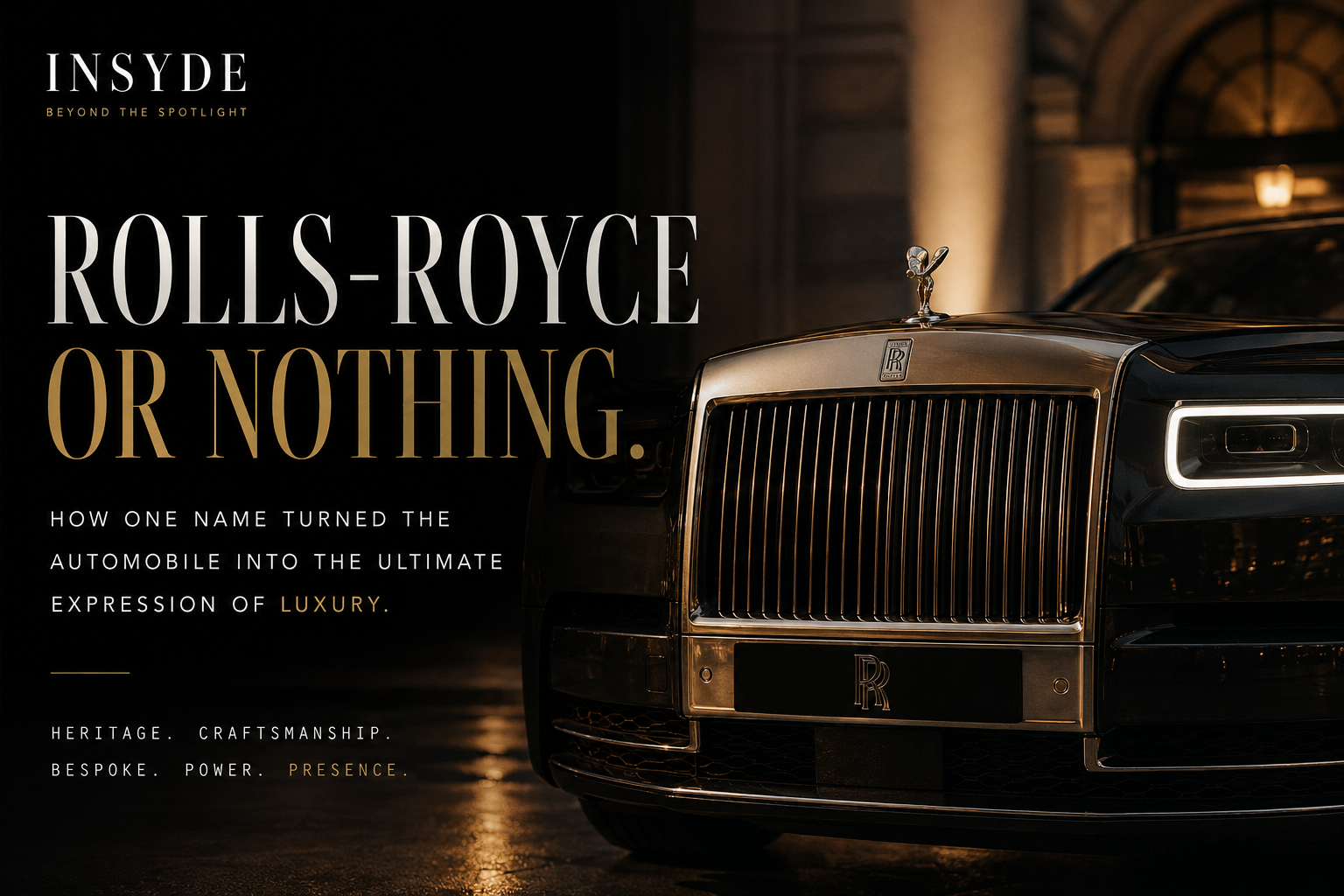
  • ROLLS-ROYCE OR NOTHING ?

    ROLLS-ROYCE OR NOTHING ?

    How one name turned the automobile into the ultimate expression of luxury.

    There are expensive cars.

    There are performance cars.

    There are luxury cars.

    And then there is Rolls-Royce.

    For more than a century, the name has occupied a peculiar position at the very top of the automotive world. Not because it makes the fastest cars. Not because it produces the most cars. And certainly not because everyone needs one.

    Rolls-Royce represents something far more difficult to manufacture:

    the feeling that nothing else will do.

    A Ferrari is about the thrill of driving.

    A Bentley is about grand touring and craftsmanship.

    A Mercedes-Benz can deliver extraordinary technology and comfort.

    Rolls-Royce plays a different game.

    It asks a much more luxurious question:

    What if the journey itself became the destination?

    That question sits at the heart of the marque.

    Because the closer you look at Rolls-Royce, the less it resembles a conventional car company.

    It begins to look like something else entirely:

    a luxury house that happens to build automobiles.


    THE IDEA THAT STARTED IT ALL

    The story began in 1904.

    Charles Rolls and Henry Royce met in Manchester and discovered a partnership built on two very different strengths: Rolls brought entrepreneurial ambition and a passion for motoring, while Royce brought an obsessive engineering mind and an uncompromising pursuit of quality.

    Their ambition was audacious:

    to build the best car they could.

    The result would eventually become one of the most powerful names in luxury.

    But the important part wasn’t simply engineering excellence.

    It was the philosophy behind it.

    Rolls-Royce was never interested in making an ordinary automobile and decorating it with expensive materials.

    The ambition was to make the entire experience feel exceptional.

    That distinction has survived for more than 120 years.

    Technology changed.

    Design changed.

    Customers changed.

    The world changed.

    But the central idea remained:

    nothing ordinary.


    WHEN A CAR STOPPED BEING JUST A CAR

    The earliest Rolls-Royce automobiles reveal something important about the company’s DNA.

    Until 1949, Rolls-Royce supplied its cars as rolling chassis, with specialist coachbuilders creating the bodywork according to the customer’s wishes. In other words, the customer’s vision was part of the product from the beginning.

    That tradition matters enormously when understanding modern Rolls-Royce.

    Because today’s obsession with Bespoke isn’t some fashionable marketing invention.

    It is a continuation of the brand’s original philosophy.

    The idea was never simply:

    “Here is our car.”

    It was closer to:

    “Here is the foundation. What would you like us to create?”

    That is a very different relationship between manufacturer and customer.

    And it is one of the reasons Rolls-Royce has always occupied such unusual territory.


    LUXURY ISN’T THE PRICE

    Anyone can make something expensive.

    Luxury is harder.

    A car can have beautiful leather, exotic wood, a powerful engine and an enormous price tag and still feel like an expensive product.

    True luxury requires something more elusive:

    intentionality.

    Every surface needs to feel considered.

    Every movement needs to feel effortless.

    Every detail needs to feel like it belongs.

    And most importantly, the experience needs to feel different from what came before.

    That is where Rolls-Royce has built its reputation.

    At Goodwood, where Rolls-Royce Motor Cars has made its home since the beginning of the modern era, craftsmanship and personalisation sit at the centre of the production philosophy. The company describes its motor cars as meticulously crafted and its Bespoke operation as a way for clients to realise highly individual visions.

    The result is not simply a luxury specification.

    It is a personal object.


    THE ART OF BESPOKE

    There is a moment when customisation becomes something more.

    You choose a colour.

    Then a material.

    Then a finish.

    Then an interior.

    Then a detail nobody else has.

    Eventually, you stop selecting options from a catalogue.

    You start commissioning an idea.

    That is the world Rolls-Royce has built around Bespoke.

    Clients can work with designers, engineers and craftspeople to develop cars around highly personal ideas, from materials and colours to intricate artistic details.

    And at the very top sits Coachbuild.

    Rolls-Royce describes Coachbuild as the pinnacle of its Bespoke offering and the automotive equivalent of haute couture. It is an invitation-only process in which clients collaborate with designers, engineers and craftspeople to create entirely original motor cars.

    The process can take years.

    That is the point.

    Luxury isn’t always about getting something quickly.

    Sometimes luxury is having the freedom to say:

    “Take your time. Make it mine.”


    WHEN THE CUSTOMER BECOMES THE DESIGNER

    This is where Rolls-Royce separates itself from the traditional idea of a luxury car.

    Most manufacturers sell you a finished product.

    Rolls-Royce increasingly sells you the opportunity to participate in its creation.

    The client can bring a memory.

    A place.

    A piece of art.

    A passion.

    A family story.

    An obsession.

    The designers translate it.

    The craftspeople execute it.

    And eventually, something exists that did not exist before.

    That changes the psychology of ownership.

    You are no longer simply buying something rare.

    You are helping create something rare.

    And there is a profound difference.

    Anyone can own an expensive object.

    Far fewer people can say:

    “This was made because I imagined it.”


    THE SPIRIT OF ECSTASY

    Then there is the figure above the grille.

    The Spirit of Ecstasy.

    Since 1911, Charles Sykes’ creation has served as one of the world’s most recognisable automotive emblems. Rolls-Royce describes the figure as a continuing symbol of ambition, achievement, excellence and freedom from conformity.

    But her importance goes beyond recognition.

    She gives the marque a visual philosophy.

    She leans forward.

    She moves into the wind.

    She isn’t looking backward.

    And for more than a century, she has become the tiny figure that tells the world exactly what is approaching.

    There is something almost theatrical about that.

    A Rolls-Royce doesn’t need to shout.

    The emblem already speaks.


    THE PHANTOM EFFECT

    Few names in luxury carry the weight of Phantom.

    The first Phantom arrived in 1925.

    A century later, the name remains the pinnacle of the Rolls-Royce range. The company marked Phantom’s centenary in 2025 by reflecting on how generations of owners used Bespoke details to make their cars expressions of their own tastes, values and eras.

    That history reveals something fascinating.

    Phantom wasn’t merely a luxury car that survived for 100 years.

    It became a canvas.

    Different generations changed the way they wanted luxury to look.

    Phantom changed with them.

    But the underlying promise remained remarkably stable:

    make it extraordinary, then make it personal.


    SILENCE IS A LUXURY

    There is another quality that defines the Rolls-Royce experience.

    Silence.

    Not the silence of emptiness.

    The silence of distance from the outside world.

    Traffic is still there.

    The city is still moving.

    People are still rushing.

    But inside the cabin, the urgency feels further away.

    And that represents something increasingly valuable in modern luxury.

    For centuries, wealth was often expressed through accumulation:

    More land.

    More houses.

    More possessions.

    More staff.

    More visibility.

    Modern luxury can mean something very different.

    More control.

    Control over your surroundings.

    Control over your time.

    Control over your privacy.

    Control over the experience.

    A Rolls-Royce turns the cabin into something approaching a private room that happens to move.

    And that may be more luxurious than another 100 horsepower ever could be.


    THE CAR YOU DON’T HAVE TO DRIVE

    There is a beautiful contradiction at the heart of Rolls-Royce.

    The automobile was born from the desire for personal mobility.

    Rolls-Royce perfected a version of luxury where the owner doesn’t necessarily need to care about driving at all.

    The rear cabin becomes the destination.

    The road becomes background.

    The driver handles the journey.

    The passenger gets the experience.

    That is not an accident.

    It is a different interpretation of automotive luxury.

    Sports cars celebrate the person behind the wheel.

    Rolls-Royce celebrates the person who has somewhere to be — and doesn’t need to concern themselves with how they get there.

    Power isn’t always about controlling everything yourself.

    Sometimes it is about having the freedom not to.


    WHEN HERITAGE LEARNED TO BECOME REBELLIOUS

    For decades, Rolls-Royce carried a very traditional image of wealth.

    Formal.

    Elegant.

    Aristocratic.

    Almost untouchable.

    But the modern luxury customer changed.

    A new generation wanted individuality.

    More attitude.

    More performance.

    Less ceremony.

    Rolls-Royce responded with Black Badge.

    Introduced in 2016, Black Badge became a darker, more assertive expression of the marque’s character. Rolls-Royce itself describes it as a more rebellious and uncompromising interpretation of its products.

    This was strategically important.

    Because heritage is only valuable if you can make it feel relevant.

    Rolls-Royce didn’t abandon its past.

    It found another way to express it.


    THE MOST EXCLUSIVE ROLLS-ROYCE MAY NOT EXIST YET

    This is the idea that makes Coachbuild so fascinating.

    The most extraordinary Rolls-Royce isn’t necessarily the one with the longest list of options.

    It could be the one that didn’t exist until its owner imagined it.

    Rolls-Royce’s modern Coachbuild commissions — including creations such as Boat Tail and Droptail — demonstrate just how far the brand can move beyond conventional automotive design when a client commissions something truly individual.

    At that point, calling it a “car” begins to feel almost inadequate.

    It becomes closer to a commissioned work of art.

    And the customer becomes something closer to a patron.

    That is an old idea.

    But Rolls-Royce has managed to make it feel remarkably modern.


    ROLLS-ROYCE DOESN’T PLAY THE SAME GAME

    This may be the most important thing to understand about the brand.

    Rolls-Royce isn’t simply trying to build a better luxury car than its competitors.

    It isn’t defined by being faster than a Ferrari.

    It isn’t defined by being sportier than a Bentley.

    It isn’t defined by having more technology than a Mercedes-Benz.

    Its competition is different.

    Its competition is the customer’s imagination.

    Once a buyer can ask for something that has never existed before, a specification sheet becomes almost irrelevant.

    The question changes from:

    “Which car has more?”

    to:

    “How far can we take this?”

    That is where Rolls-Royce has created one of the strongest positions in luxury.

    It doesn’t simply sell exclusivity.

    It sells individuality at scale.

    And that is an extraordinarily difficult thing to replicate.


    THE NEW DEFINITION OF WEALTH

    There was a time when luxury was easy to recognise.

    The bigger house.

    The faster car.

    The larger yacht.

    The more obvious diamond.

    More expensive meant more luxurious.

    But today’s most sophisticated luxury is increasingly about something else:

    choice.

    Choice over your time.

    Choice over your environment.

    Choice over your privacy.

    Choice over your possessions.

    And ultimately, choice over how those possessions are created.

    That is the deeper appeal of Rolls-Royce.

    Its greatest luxury isn’t the leather.

    It isn’t the wood.

    It isn’t the engine.

    It isn’t even the badge.

    It is the ability to make the object feel like yours.


    ROLLS-ROYCE OR NOTHING.

    So why does someone who can afford almost any car choose a Rolls-Royce?

    Because eventually, the question stops being:

    “What is the best car?”

    It becomes:

    “What represents me?”

    A Rolls-Royce answers with craftsmanship.

    With history.

    With presence.

    With privacy.

    With individuality.

    And with the extraordinary possibility of creating something that nobody else owns in quite the same way.

    That is why the marque has survived changing technologies, generations and definitions of wealth.

    It never needed to become the car for everyone.

    It needed to remain the car for someone who had decided that ordinary was no longer enough.


    THE ULTIMATE LUXURY ISN’T ATTENTION

    Perhaps this is the most important lesson hidden inside the Rolls-Royce story.

    Luxury can begin with attention.

    Then it becomes recognition.

    But at its highest level, luxury can become something much quieter:

    indifference to recognition.

    The colour nobody else has.

    The material chosen for a reason only you understand.

    The detail inspired by a private memory.

    The rear seat where the outside world disappears.

    The silence.

    The time.

    The privacy.

    The freedom.

    And suddenly, the most luxurious thing about a Rolls-Royce isn’t that everyone knows what it is.

    It is that you don’t need everyone to understand why you chose it.


    ROLLS-ROYCE OR NOTHING.

    Rolls-Royce began with two men who wanted to build something exceptional.

    More than a century later, the company has turned that ambition into something far larger than an automobile.

    It has built a philosophy of luxury around a deceptively simple idea:

    the world should not dictate what luxury means to you.

    You decide.

    The designers interpret it.

    The craftspeople build it.

    And the finished object becomes something personal enough to outlive the moment in which it was created.

    That is why Rolls-Royce remains different.

    Not because it is simply expensive.

    Not because it is simply prestigious.

    But because, at its most extraordinary, it refuses to feel mass-produced in a world built around mass production.

    And perhaps that is the real meaning behind:

    Rolls-Royce or nothing.

    Not nothing else is expensive enough.

    Not nothing else is impressive enough.

    Something more interesting:

    Nothing else feels quite like mine.

    INSYDE — Beyond the Spotlight.

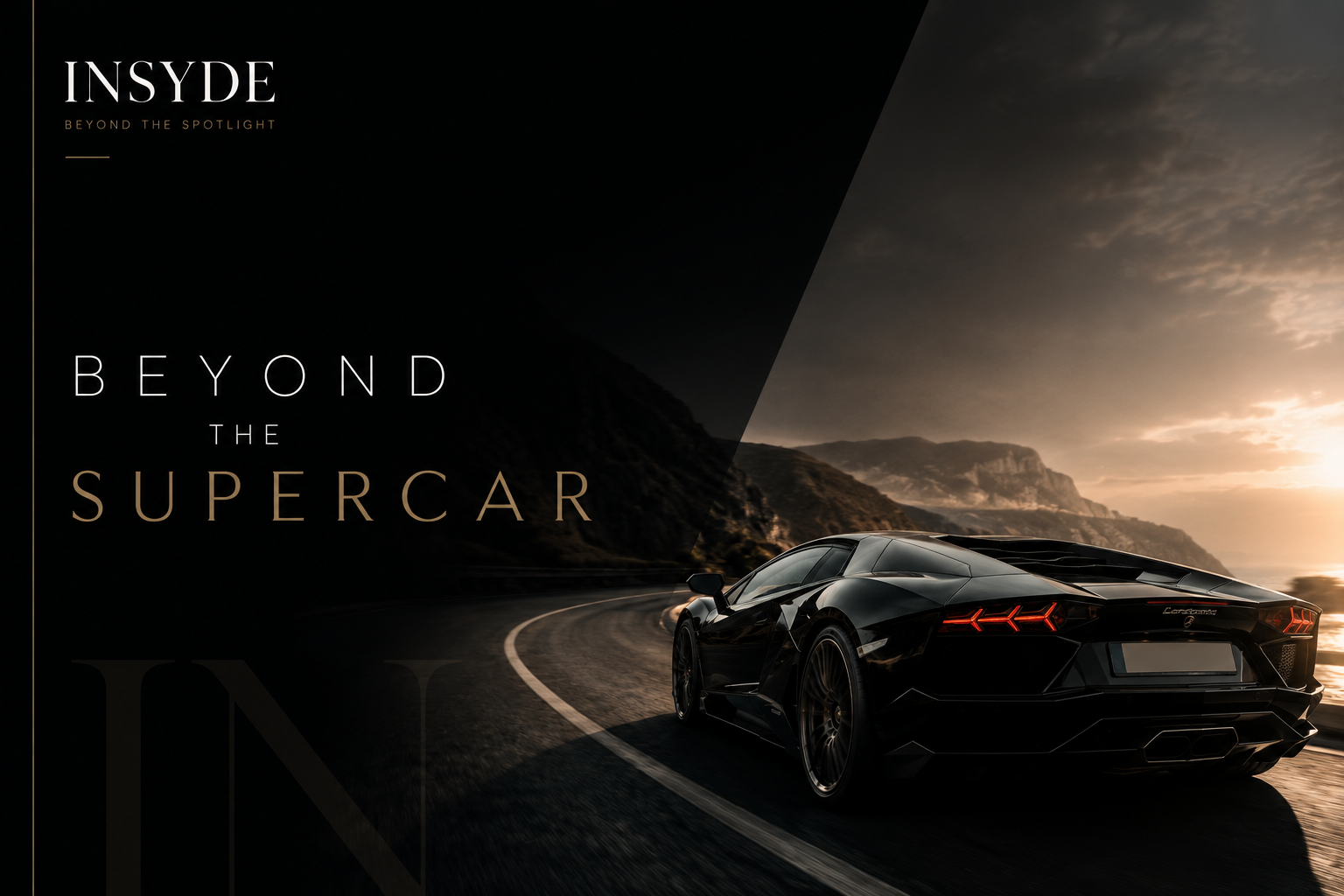
  • Beyond the Supercar

    Beyond the Supercar

    The new language of automotive luxury — where performance gives way to design, rarity, craftsmanship and identity.

    There was a time when the most desirable car was simply the fastest one in the room.

    More horsepower.
    More cylinders.
    A lower 0–100 time.
    A higher top speed.

    The numbers were easy to understand and even easier to compare.

    But automotive luxury has become more sophisticated.

    At the highest end of the market, speed is no longer the entire conversation. When extraordinary performance has become almost expected, the question changes.

    What makes one extraordinary machine more desirable than another?

    The answer increasingly lies beyond the stopwatch.

    Design.

    Provenance.

    Craftsmanship.

    Rarity.

    Engineering.

    Personalisation.

    And, perhaps most importantly, the feeling that the car could not have been made for anyone else.

    This is the territory beyond the supercar.

    When Speed Stops Being Enough

    The supercar was built around a beautifully simple proposition:

    Go faster.

    For decades, that proposition defined automotive desire.

    Ferrari, Lamborghini, Porsche, McLaren, Aston Martin and others built their reputations around increasingly sophisticated interpretations of performance. Horsepower became mythology. Acceleration became conversation. Top speed became status.

    But performance eventually reaches a curious point.

    When a road car already produces astonishing power and acceleration, another fraction of a second becomes less meaningful to the person who actually owns it.

    The conversation begins to move elsewhere.

    Who designed it?

    How was it engineered?

    How rare is it?

    What is its history?

    What makes this particular example different?

    Can it be made personal?

    Those are collector’s questions.

    And collector’s questions lead somewhere beyond performance.

    The Automobile as a Cultural Object

    The most desirable cars have never been valuable simply because they move quickly.

    They represent something.

    An era.

    A designer.

    A technological breakthrough.

    A racing legacy.

    A particular interpretation of beauty.

    The cars that remain culturally important decades after their introduction are rarely remembered for horsepower alone.

    They are remembered for proportion, engineering, character and story.

    A great automobile can become a cultural object in the same way a great watch, piece of furniture or work of art can.

    It becomes something to preserve.

    To study.

    To discuss.

    To pass down.

    Eventually, perhaps, to inherit.

    That is when a car stops being merely a vehicle.

    It becomes part of a collection of ideas.

    The Collector’s Eye

    The serious collector sees an automobile differently from the casual buyer.

    The casual buyer asks whether a car is impressive.

    The collector asks why it matters.

    How many were made?

    Who designed it?

    What engine does it carry?

    Where was it built?

    Who owned it?

    What competition history does it have?

    Has it been preserved?

    Has it been altered?

    What makes this example different from the next?

    These questions turn an automobile into an object of provenance.

    And provenance is one of the most sophisticated currencies in luxury collecting.

    A car with a meaningful history can become more desirable than a newer machine with superior technical specifications.

    Because technology changes.

    Story endures.

    Bespoke Is the New Luxury

    Perhaps the clearest sign of where automotive luxury is heading is the rise of personalisation.

    At the ordinary end of the market, choosing a car means selecting from a catalogue.

    At the highest end, the catalogue becomes a starting point.

    Paint can be developed.

    Materials can be selected.

    Interiors can be commissioned.

    Details can be altered.

    The owner can become part of the design process itself.

    This is automotive luxury approaching the philosophy of haute couture.

    The objective is no longer simply to own something expensive.

    It is to own something specific.

    Something that reflects an individual taste rather than a market consensus.

    That distinction is important.

    A beautifully configured luxury car is impressive.

    A bespoke automobile carries something more intimate:

    authorship.

    When the Garage Becomes a Gallery

    As collections become more sophisticated, the garage itself changes.

    It stops being somewhere cars are parked.

    It becomes part of the architecture.

    Private garages can be designed around lighting, proportions, materials, display and even the relationship between individual cars.

    The automobile becomes an object within the room.

    The room becomes part of the collection.

    For a serious collector, this is not excessive.

    It is logical.

    If a car is appreciated as an object of design, why shouldn’t the space around it be designed with the same level of consideration?

    The private garage becomes a gallery where the exhibits happen to have engines.

    The New Obsession With Rarity

    Scarcity has always been central to luxury.

    But the most sophisticated form of rarity is not simply producing fewer examples.

    It is creating something with a reason to be rare.

    A limited production run means one thing.

    A historically significant automobile means another.

    A coachbuilt commission created around an individual owner means something else entirely.

    The difference is between numerical scarcity and cultural significance.

    The first can be manufactured.

    The second has to be earned.

    And that is why serious collectors often become less interested in price as their knowledge increases.

    The more they understand, the more they look beyond the badge.

    The Hypercar Changes the Conversation

    The hypercar pushed the automobile into another territory.

    These machines are not simply faster versions of supercars.

    They bring together advanced materials, aerodynamics, computational engineering, motorsport technology and extraordinary design.

    At their most ambitious, they begin to resemble engineering laboratories that happen to be road legal.

    But even here, speed is only part of the fascination.

    The engineering itself becomes desirable.

    Carbon fibre.

    Aerodynamic surfaces.

    Powertrain architecture.

    Weight reduction.

    Thermal management.

    The relationship between form and function.

    For the sophisticated observer, understanding how a machine achieves what it does can be as fascinating as its performance.

    The car becomes an engineering object.

    The Beauty of the Machine

    There is also something deeply emotional about automotive design.

    A great car can communicate before its engine is started.

    A silhouette.

    A stance.

    A proportion.

    The relationship between its wheels and body.

    A particular curve across a fender.

    A cabin that feels more like a private room than a cockpit.

    Design speaks first.

    This is why certain cars remain desirable long after their performance figures become obsolete.

    Technology has a release date.

    Good design doesn’t.

    A beautifully resolved automobile can outlive the technology that created it.

    That is why some classics remain objects of fascination decades after their production ended.

    The Electric Question

    The automobile is now entering another defining transition.

    Electrification is changing the relationship between driver and machine.

    Instant torque can make acceleration effortless.

    Power delivery can become almost silent.

    Mechanical complexity can change dramatically.

    But another question emerges.

    What happens to the emotional theatre of the automobile?

    For generations, part of driving’s appeal has been mechanical sensation.

    Engine noise.

    Gear changes.

    Vibration.

    Heat.

    The feeling of machinery working beneath you.

    As technology evolves, manufacturers face a difficult challenge:

    How do you preserve emotion when the machine itself is changing?

    The answer may increasingly come through design, materials, interaction and personalisation.

    If the powertrain becomes quieter, the cabin can become more immersive.

    If performance becomes easier to access, character becomes more important.

    If mechanical theatre diminishes, craftsmanship and design may have to carry more of the emotional weight.

    The future of automotive luxury may therefore depend less on making cars louder or faster and more on making them meaningful.

    The Return of the Coachbuilder

    One of the most fascinating developments at the highest end of automotive culture is the renewed appreciation for coachbuilding and ultra-low-volume commissions.

    The concept is wonderfully old-fashioned.

    Instead of choosing an automobile from a catalogue, an owner works with designers and craftsmen to create something highly individual.

    It is the automotive equivalent of commissioning a bespoke suit, a piece of jewellery or a work of art.

    And it represents something modern luxury increasingly values:

    time.

    A bespoke automobile requires consultation.

    Design.

    Materials.

    Engineering.

    Craftsmanship.

    Iteration.

    The process becomes part of the value.

    The waiting becomes part of the experience.

    And when the finished automobile finally arrives, it carries a story that belongs to its owner.

    Beyond the Badge

    Luxury cars have always carried powerful badges.

    The horse.

    The bull.

    The shield.

    The wing.

    The names alone can communicate status.

    But sophisticated automotive culture increasingly goes beyond the emblem.

    Two cars from the same manufacturer can have completely different cultural significance.

    One may simply be expensive.

    Another may be historically important.

    One may be fashionable.

    Another may be genuinely rare.

    One may be extremely fast.

    Another may represent a defining moment in automotive design.

    This is why serious collectors become more knowledgeable over time.

    The more they learn, the less impressed they become by price alone.

    Value becomes more interesting than cost.

    The Car as Personal Language

    At a certain point, an automobile becomes a form of personal language.

    A restrained grand tourer communicates something different from an aggressive track-focused machine.

    A collector of historic European sports cars communicates something different from someone commissioning a futuristic hypercar.

    Neither is inherently superior.

    The choice simply reveals something.

    That is one of the oldest relationships between luxury and identity.

    The object becomes a reflection of its owner.

    Not because it is expensive.

    Because it is chosen.

    The New Definition of Automotive Luxury

    Perhaps the biggest change is that automotive luxury is becoming less about what the car can do and more about what the car means.

    Performance still matters.

    Engineering still matters.

    Speed still matters.

    But they are no longer sufficient.

    The modern luxury automobile increasingly needs something harder to quantify.

    Character.

    Rarity.

    Craftsmanship.

    History.

    Beauty.

    Personal meaning.

    A sense of occasion.

    And ideally, a story.

    Because at the highest level, the question is no longer:

    “How much does it cost?”

    It becomes:

    “Why does this particular car matter?”

    That is a much harder question.

    And a much more interesting one.

    The Future Is Personal

    The future of automotive luxury may not belong exclusively to the fastest machines.

    It may belong to the most personal ones.

    Cars commissioned around individual owners.

    Collections built around particular eras.

    Restorations that preserve history while introducing modern engineering.

    Electric automobiles redefining what performance feels like.

    Coachbuilt machines created almost as works of art.

    Vehicles designed not simply to transport their owners, but to express them.

    The industry will continue to chase numbers.

    It will continue to pursue performance.

    It will continue to find new ways to make cars faster, lighter and more technologically sophisticated.

    But beyond those numbers lies another pursuit.

    Meaning.

    Beyond the Supercar

    The supercar changed the automobile by making extraordinary performance desirable.

    The hypercar pushed engineering further.

    But what comes next may be less about going faster and more about going deeper.

    Deeper into design.

    Deeper into craftsmanship.

    Deeper into history.

    Deeper into personalisation.

    Deeper into the relationship between an owner and a machine.

    Because when speed becomes increasingly accessible, technology increasingly sophisticated and performance increasingly difficult to distinguish, the things that remain genuinely difficult to reproduce become more valuable.

    A story.

    A feeling.

    A design.

    A relationship with the machine.

    A car made for one person rather than thousands.

    That is the territory beyond the supercar.

    Not simply the pursuit of more performance — but the pursuit of something worth remembering.

    And perhaps that is where the automobile becomes something more than a machine.

    It becomes a statement of taste.

    INSYDE — Beyond the Spotlight.

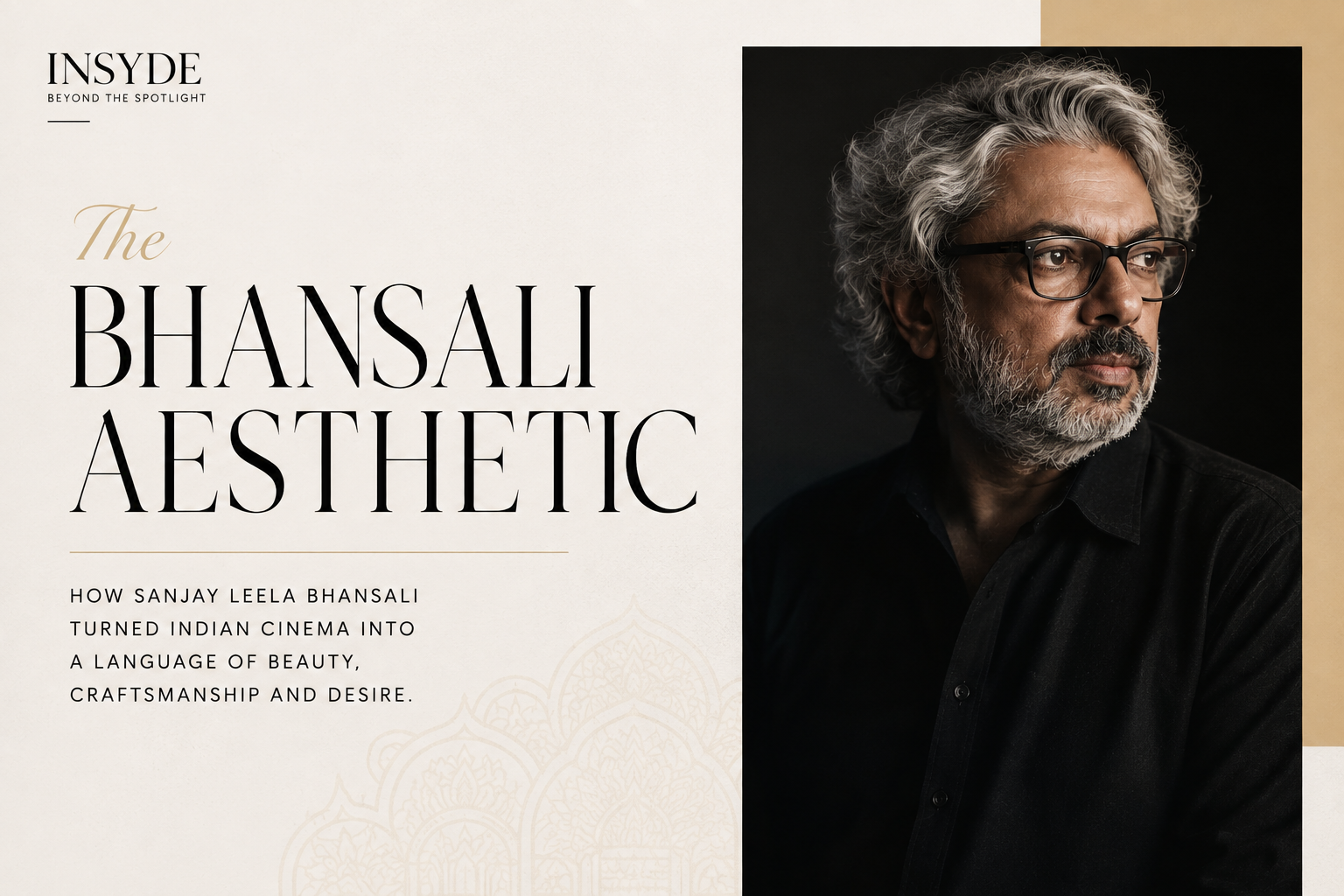
  • The Bhansali Aesthetic

    The Bhansali Aesthetic

    How Sanjay Leela Bhansali turned Indian cinema into a language of beauty, craftsmanship and desire.

    Some filmmakers tell stories.

    Sanjay Leela Bhansali builds worlds.

    Before a character speaks, there may already be a chandelier glowing above her, silk moving through the frame, jewellery catching the light, music rising somewhere beyond the room.

    In his cinema, beauty is rarely background.

    Beauty is part of the narrative.

    That is what makes Bhansali particularly interesting to INSYDE.

    His work sits at an intersection of cinema, fashion, architecture, music, craftsmanship and desire — a place where visual richness becomes storytelling and detail becomes identity.

    Over more than three decades, he has developed an aesthetic so recognisable that a frame can sometimes feel like a Bhansali frame before the audience consciously understands why.

    And perhaps that is the real achievement.

    He didn’t simply create films with a distinctive look. He created a visual language.

    When Cinema Becomes a World

    There is a difference between designing a beautiful frame and constructing an entire universe.

    Bhansali has consistently pursued the latter.

    His films are populated by elaborate interiors, dramatic architecture, intricate costumes, jewellery, carefully choreographed movement and compositions in which even the smallest visual element can feel deliberate.

    Those details do not exist independently.

    They speak to one another.

    Architecture establishes scale.

    Costume establishes character.

    Lighting establishes mood.

    Music establishes emotion.

    Movement establishes rhythm.

    Together, they create something closer to an immersive environment than a conventional film set.

    That precision has become part of the Bhansali method. On Heeramandi, Architectural Digest India documented his insistence on repeatedly adjusting elements of the set — from furniture and wall textures to seemingly minor decorative details — and quoted Bhansali explaining that architecture plays an important role in how he constructs a frame. (Architectural Digest)

    The point is not simply to make a set look expensive.

    The environment has to belong to the story.

    The Luxury of Detail

    Luxury has always depended on detail.

    The difference between something expensive and something exceptional is often invisible from a distance.

    A stitch.

    A setting.

    A finish.

    A proportion.

    A material chosen because of how it responds to light.

    Bhansali approaches cinema with a similar sensitivity.

    A costume isn’t simply clothing.

    A room isn’t simply a set.

    A chandelier isn’t simply decoration.

    A colour isn’t simply a colour.

    Everything contributes to the emotional architecture of the scene.

    The result is a cinema that can feel almost tactile.

    You sense the weight of the fabric.

    The warmth of the light.

    The scale of the room.

    The movement of jewellery.

    The silence before the music begins.

    The effect is extravagant, but the underlying principle is surprisingly disciplined:

    nothing is there without intention.

    Where the Obsession With Beauty Began

    The grandeur of Bhansali’s cinema has a deeply personal origin.

    He has spoken about growing up in a chawl in Mumbai and about the lack of space and visual beauty around him during his childhood. His mother, a dancer, performed in a small space, while Bhansali imagined larger, more ordered environments. He has connected those experiences directly to the expansive sets, central framing and visual symmetry that later became signatures of his filmmaking. (Indian Express)

    It is an important detail because it changes the way his aesthetic can be understood.

    The grandeur is not simply extravagance for its own sake.

    It is a response to limitation.

    Small spaces became expansive ones.

    Plain walls became elaborate environments.

    Disorder became symmetry.

    Limited movement became choreography.

    The absence of beauty became an obsession with creating it.

    And perhaps that is why his sets rarely feel merely expensive.

    They feel imagined.

    The Architecture of Desire

    Bhansali understands something that luxury brands have understood for generations:

    objects become more powerful when placed inside a world.

    A necklace is one thing.

    A necklace worn with a particular fabric, under a particular light, inside a particular room, accompanied by music and movement, becomes something else.

    The object acquires context.

    That is one of the reasons his cinema has such a strong relationship with fashion and jewellery.

    The visual elements do not sit around the characters.

    They help construct them.

    Jewellery as Storytelling

    There may be no better example than jewellery.

    In Bhansali’s worlds, jewellery rarely feels incidental.

    It can establish hierarchy.

    It can indicate wealth.

    It can communicate tradition.

    It can transform the silhouette of a character.

    And, importantly, it interacts with light.

    A necklace catching the light during a close-up is doing more than displaying craftsmanship.

    It is participating in the image.

    This is where Bhansali’s cinema naturally intersects with the language of luxury.

    The finest luxury objects are designed to reward attention.

    So are his frames.

    The closer you look, the more there is to discover.

    Fashion Without the Fashion Show

    Bhansali’s relationship with fashion is more sophisticated than simply dressing actors beautifully.

    His costumes establish an entire visual vocabulary.

    Silhouette, fabric, colour, ornamentation and movement work together.

    The clothes have to survive choreography.

    They have to respond to lighting.

    They have to communicate period and cultural context.

    And they have to remain emotionally connected to the character.

    That requires something closer to design than conventional styling.

    The result is fashion that belongs to the world of the film rather than being placed on top of it.

    The costume doesn’t interrupt the story. It becomes part of the story.

    The Women at the Centre

    Bhansali’s cinema has repeatedly placed women at the centre of its visual and emotional worlds.

    From Devdas and Black to Ram-Leela, Bajirao Mastani, Padmaavat, Gangubai Kathiawadi and Heeramandi, his women are rarely treated as background figures.

    Their clothes, jewellery, movement and environments often become extensions of their emotional and social position.

    The scale of the world around them can communicate power.

    A crowded room can become a stage.

    A palace can become a prison.

    A costume can become armour.

    A jewel can become status.

    A dance can become defiance.

    That visual treatment has become one of the recognisable elements of his cinema. Actors from Heeramandi have also described his approach to presenting women as central to his filmmaking language. (Indian Express)

    The important point is not simply that Bhansali makes beautiful images of women.

    It is that he uses beauty as part of the language through which their stories are told.

    Music Is Architecture

    There is another defining element of the Bhansali aesthetic: music.

    For Bhansali, music has long been central to the construction of his films rather than something added after the visual world is complete.

    A song can become a room.

    A room can become choreography.

    Choreography can become emotion.

    Emotion becomes narrative.

    This is why some of his most memorable sequences can communicate enormous amounts without conventional dialogue.

    The music carries the architecture of the scene.

    The performers move through it.

    The camera becomes part of the choreography.

    The result is closer to a fully composed theatrical experience than a conventional musical interlude.

    The Discipline Beneath the Spectacle

    The word “grand” is often used to describe Bhansali.

    It is accurate, but incomplete.

    What is more interesting is the discipline underneath it.

    He has spoken about his fascination with central framing and the desire to create order from the disorder he experienced growing up. (Indian Express)

    Architectural Digest India has similarly documented his attention to the smallest details of his sets, including furniture placement, textures, colours and architectural elements. (Architectural Digest)

    That reveals the secret beneath the spectacle.

    The image may be extravagant.

    The composition is controlled.

    That is why his frames can feel so immediately recognisable.

    Grandeur With a Purpose

    Bhansali’s films are often described using words such as lavish, opulent and larger-than-life.

    But spectacle alone would not explain their longevity.

    The real fascination lies in what the grandeur communicates.

    A palace can represent power.

    A crowded courtyard can represent society.

    A vast stage can make an individual appear small.

    An empty room can make an emotion feel enormous.

    A chandelier can suggest wealth, desire or decay.

    A costume can tell you where a character belongs before the dialogue does.

    The visual scale is therefore not simply decoration.

    It is emotional scale.

    India Through a More Cinematic Lens

    There is also something distinctly Indian about Bhansali’s understanding of grandeur.

    India has never treated beauty as purely architectural.

    It exists in textiles.

    Jewellery.

    Music.

    Dance.

    Wedding traditions.

    Craftsmanship.

    Palaces.

    Festivals.

    Theatre.

    Ceremony.

    Bhansali understands that instinctively.

    His cinema draws from a cultural memory in which colour, ornamentation, music and movement can coexist without apology.

    The result is not simply an expensive-looking version of Indian cinema.

    It is an attempt to transform elements of Indian visual culture into a cinematic language of their own.

    And that distinction matters.

    He doesn’t simply decorate Indian stories. He builds worlds around them.

    From Cinema to a Wider Cultural Language

    With Heeramandi: The Diamond Bazaar, Bhansali extended this visual vocabulary into streaming.

    The series brought together his familiar concerns — music, performance, elaborate environments, costumes, historical atmosphere and female characters — for a global streaming audience. Netflix describes the series as a story of love, power, betrayal and freedom centred on the courtesans of pre-independence Lahore. (Indian Express)

    The significance goes beyond the move from cinema to television.

    It demonstrated that the Bhansali aesthetic could exist as a broader cultural world.

    The sets became part of the conversation.

    The costumes became part of the conversation.

    The jewellery became part of the conversation.

    The music became part of the conversation.

    The visual identity became almost as recognisable as the title itself.

    That is a powerful position for any filmmaker to reach.

    The Influence of the Past

    Bhansali’s visual references are not limited to cinema.

    Architectural Digest India has documented how his reference library has drawn from places and objects he encountered growing up, as well as artists, photographers and musicians including S. H. Raza, V. S. Gaitonde, Raghu Rai and Kishori Amonkar. (Architectural Digest)

    That is revealing.

    His aesthetic isn’t built from one source.

    It is accumulated.

    Painting.

    Photography.

    Music.

    Architecture.

    Theatre.

    Textiles.

    Indian history.

    Street life.

    Memory.

    The resulting world may look fantastical, but its ingredients are deeply rooted in observation.

    When Excess Becomes Restraint

    There is an irony in Bhansali’s work.

    The images can be enormous.

    The sets can be enormous.

    The costumes can be elaborate.

    The music can be overwhelming.

    Yet the composition is often highly controlled.

    Symmetry.

    Central framing.

    Colour relationships.

    Movement.

    Light.

    Negative space.

    Everything is competing for attention, yet everything is carefully placed.

    That tension is part of what makes the aesthetic work.

    The spectacle is large. The intention is precise.

    A Filmmaker With a Signature

    The ultimate achievement for an auteur is recognisability.

    Not fame.

    Not scale.

    Not even box-office success.

    A signature.

    Something that makes an audience recognise the creator before seeing the name.

    Bhansali has achieved that.

    The grand interiors.

    The controlled colour.

    The elaborate costumes.

    The music.

    The choreography.

    The central compositions.

    The emotional intensity.

    The women framed against enormous spaces.

    The sense that every object has been placed with intention.

    Together, they form a vocabulary.

    And once a filmmaker develops a vocabulary of that strength, individual films become chapters inside a much larger artistic language.

    What Comes Next

    Bhansali’s next chapter is already taking shape.

    His much-anticipated Love & War, starring Ranbir Kapoor, Alia Bhatt and Vicky Kaushal, is nearing completion, with reports now pointing toward his next major project, a Madhubala biopic. (The Times of India)

    For a filmmaker whose aesthetic is already so established, the interesting question is not whether the next project will be visually ambitious.

    We know the answer.

    The more compelling question is:

    What will he do with that language next?

    Can grandeur evolve without becoming repetition?

    Can spectacle remain emotionally intimate?

    Can a recognisable aesthetic continue to surprise?

    Those are the questions that matter when an artist has spent decades refining a signature.

    The Bhansali Aesthetic

    Perhaps the easiest way to misunderstand Sanjay Leela Bhansali is to think his cinema is simply about luxury.

    It isn’t.

    Luxury is the surface.

    The deeper obsession is craft.

    The craft of composition.

    The craft of music.

    The craft of costume.

    The craft of movement.

    The craft of light.

    The craft of architecture.

    The craft of creating an environment that feels larger than reality.

    That is why his images remain so persistent.

    Long after a film’s plot has been discussed, individual frames remain.

    A room.

    A colour.

    A piece of jewellery.

    A costume.

    A song.

    A gesture beneath a chandelier.

    A character standing alone in an enormous space.

    These are not simply beautiful moments.

    They are fragments of a language.

    And perhaps that is Bhansali’s most enduring contribution to Indian cinema.

    He has shown that grandeur, when treated with enough discipline and imagination, can become more than spectacle.

    It can become storytelling.

    In a culture increasingly consumed through fleeting images, there is something almost radical about a filmmaker who still believes a frame deserves to be constructed, considered and remembered.

    That may be the real Bhansali aesthetic.

    Not simply the luxury of seeing more — but the discipline of making every detail matter.

    INSYDE — Beyond the Spotlight.

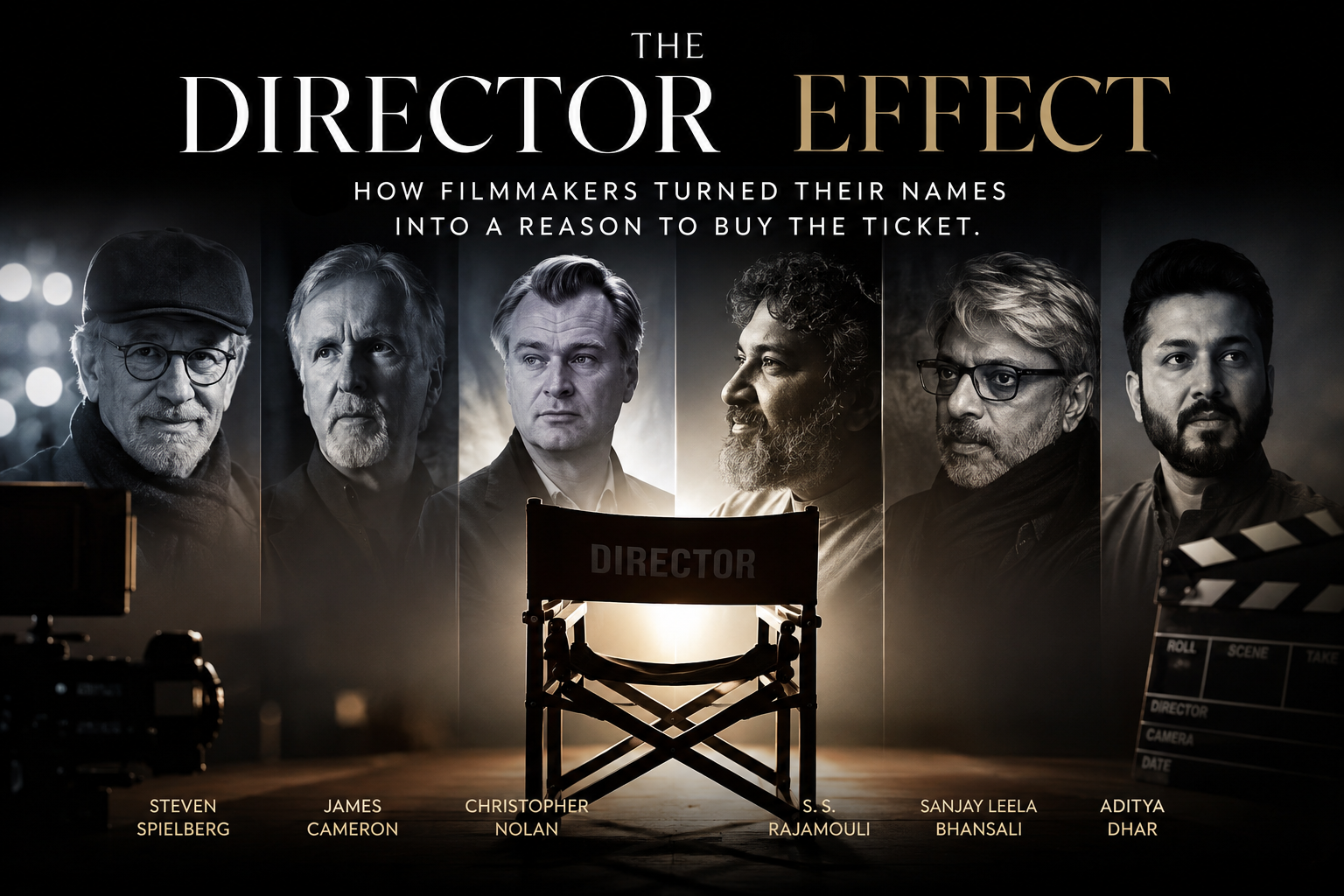
  • The Director Effect

    The Director Effect

    How cinema’s most successful filmmakers turned their names into a reason to buy the ticket.

    There was a time when the name above a film’s title usually belonged to the star.

    The actor was the attraction. The face was the campaign. The opening weekend belonged to the celebrity whose name appeared largest on the poster.

    The director was often the person behind the curtain.

    That relationship has changed.

    Today, a select group of filmmakers have developed something remarkably powerful: a name that carries its own promise.

    A Nolan film suggests one kind of experience. A Spielberg film another. A Cameron film another. In India, Rajamouli, Bhansali and, increasingly, Aditya Dhar have begun building similarly recognisable creative identities.

    The audience may not know every detail of the story.

    They may not even need to.

    The filmmaker’s name already tells them something about what they are about to experience.

    Scale.

    Craftsmanship.

    Aesthetic.

    Ambition.

    Emotion.

    Spectacle.

    That is when a director stops being simply the person who made the film.

    The director becomes part of the reason to see it.


    When the Name Becomes the Attraction

    The interesting shift isn’t that directors have become famous.

    Great directors have always been famous.

    The shift is that their names increasingly influence the audience’s decision to watch the film itself.

    Christopher Nolan offers perhaps the clearest contemporary example.

    The Odyssey arrived in 2026 with an extraordinary cast including Matt Damon, Tom Holland, Anne Hathaway, Lupita Nyong’o and Zendaya. Yet the conversation surrounding the film was never simply about its cast.

    It was about a Christopher Nolan film.

    The film opened to $264.1 million worldwide and went on to cross $1.4 billion globally, demonstrating the extraordinary theatrical power that can now surround a filmmaker’s name.

    The significance goes beyond the numbers.

    Nolan has reached a point where audiences can recognise the experience before they know the story.

    That is brand recognition.


    Christopher Nolan — The Event Maker

    Nolan’s greatest achievement may not be any individual film.

    It may be that he has transformed the act of going to the cinema into part of his identity as a filmmaker.

    IMAX.

    Large-format film.

    Practical effects.

    Immersive sound.

    Complex narratives.

    Scale.

    Mystery.

    His films arrive with a sense of occasion.

    His relationship with IMAX has become particularly important to that identity. The Odyssey generated an extraordinary opening for the format, reinforcing the idea that Nolan’s films are designed not merely to be watched but to be experienced theatrically.

    Nolan therefore sells something more than a story.

    He sells the experience of cinema itself.

    That is why audiences can become interested in a Nolan film before they know exactly what happens in it.

    The name tells them enough.


    Steven Spielberg — The Pioneer

    Long before directors were discussed as personal brands, Steven Spielberg had already established the model.

    Jaws didn’t simply become a hit.

    It helped define the modern blockbuster.

    Spielberg’s name eventually came to represent something unusually broad:

    Adventure.

    Emotion.

    Spectacle.

    Humanity.

    Family.

    History.

    Science fiction.

    The remarkable part is the range.

    A Spielberg film doesn’t have to belong to one genre to feel like a Spielberg film.

    That is one of the defining characteristics of a mature creative brand.

    The identity survives the category.

    His name became associated with a particular standard of mainstream cinematic storytelling, helping establish the idea that the filmmaker could become part of the commercial identity of a movie.

    Decades later, the name still carries that accumulated trust.

    And that is perhaps the purest form of brand equity:

    recognition built over time.


    James Cameron — The Spectacle

    If Spielberg helped build the modern blockbuster, James Cameron pushed the idea of spectacle into technological territory.

    Titanic, Avatar and Avatar: The Way of Water place Cameron in an extraordinarily rare commercial category.

    But the more interesting part isn’t simply their box-office performance.

    It is the way Cameron approaches technology.

    He doesn’t merely use new tools.

    He frequently pushes the industry to develop them.

    For Avatar, his production team developed new approaches to performance capture, virtual environments and 3D filmmaking to realise the world he had imagined.

    The technology became part of the storytelling.

    That has become part of the Cameron promise.

    When a Cameron film arrives, audiences expect something that stretches the boundaries of what cinema can physically display.

    The technology becomes part of the spectacle.

    And the director becomes the guarantee.


    India’s Director-Brand Era

    The phenomenon isn’t uniquely American.

    In fact, some of the most interesting examples are emerging from India.

    Indian cinema has always had powerful stars, but a new generation of filmmakers has demonstrated that a director’s name can carry an increasingly independent form of commercial and cultural value.

    The difference is subtle.

    The audience isn’t simply asking who is acting in the film.

    It is beginning to ask:

    Who is creating this world?


    S. S. Rajamouli — The Global Phenomenon

    S. S. Rajamouli may be the clearest contemporary example of an Indian filmmaker whose name has become associated with a global theatrical proposition.

    Baahubali established the scale.

    RRR expanded the international audience.

    His cinema carries a recognisable promise:

    Mythology.

    Emotion.

    Heroism.

    Music.

    Large-scale action.

    World-building.

    Spectacle.

    But Rajamouli’s influence has increasingly travelled beyond the traditional boundaries of Indian cinema.

    His international reception and the global ambitions surrounding his upcoming projects demonstrate how far that directorial identity has travelled.

    The important shift is that Rajamouli is no longer simply exporting individual films.

    He is exporting a cinematic language.

    Audiences increasingly understand what a Rajamouli experience promises before the opening frame.

    That is a powerful form of authorship.


    Sanjay Leela Bhansali — The Aesthetic

    If Rajamouli’s name promises spectacle, Sanjay Leela Bhansali’s promises something more intimate:

    a world.

    Mention Bhansali and an audience can almost imagine the frame before seeing it.

    Architecture.

    Jewellery.

    Textiles.

    Music.

    Choreography.

    Romance.

    Colour.

    Light.

    Grandeur.

    His films have developed such a distinctive visual vocabulary that the director’s name itself functions almost like an aesthetic category.

    That is a particularly sophisticated form of brand recognition.

    A luxury house can communicate through a silhouette.

    An architect can communicate through proportion.

    A watchmaker can communicate through a movement.

    Bhansali communicates through the frame.

    His films feel authored down to the smallest detail.

    The sets, costumes, musical sequences and compositions all belong to the same universe.

    And that consistency creates expectation.

    The audience knows what kind of world it is entering.

    The question isn’t whether it will be beautiful.

    The question is how Bhansali will make beauty feel this time.


    Aditya Dhar — The New Force

    Aditya Dhar represents a different stage of director-brand power.

    His career is considerably younger than those of Spielberg, Cameron, Nolan, Rajamouli or Bhansali, but that is precisely what makes his rise interesting.

    Uri: The Surgical Strike established his directorial identity through political tension, action and a grounded sense of scale.

    The Dhurandhar films expanded that identity dramatically.

    The commercial response has demonstrated that Dhar is increasingly associated with a particular cinematic proposition: political narratives, high-stakes action, technical ambition and large-scale world-building.

    That matters because a director does not necessarily need decades to build a recognisable identity anymore.

    In an environment where audiences are exposed to more content than ever, a distinctive creative voice can become recognisable remarkably quickly.

    Dhar represents the newer model of the director as a commercial force.

    His story is still being written.

    But the audience is beginning to recognise the promise.


    The Director as a Luxury Brand

    This is where cinema begins to resemble luxury.

    A luxury house doesn’t simply sell an object.

    It sells an expectation.

    You don’t choose a watch only because it tells time.

    You choose its history, craftsmanship, design language and reputation.

    You don’t choose a fashion house merely because it produces clothing.

    You choose its interpretation of clothing.

    The same principle increasingly applies to filmmakers.

    A Nolan film promises one kind of experience.

    A Cameron film another.

    A Rajamouli film another.

    A Bhansali film another.

    The audience is not simply purchasing a ticket.

    It is purchasing an expectation of authorship.

    That is the real shift.


    From Star Power to Auteur Power

    For decades, cinema was built around the star system.

    The actor was the brand.

    The actor’s face sold the poster.

    The actor’s name drove the opening.

    That power hasn’t disappeared.

    But audiences now have another way of choosing.

    Franchises have multiplied.

    Streaming has expanded the amount of content available.

    The number of films competing for attention has become enormous.

    In that environment, a recognisable creative voice becomes valuable.

    A filmmaker with a distinct identity provides something a new concept otherwise lacks:

    trust.

    The audience may not know the entire story.

    But they know the person telling it.

    And sometimes that is enough.


    The New Currency Is Expectation

    Perhaps the most valuable thing a filmmaker can build is not fame.

    It is expectation.

    When a director reaches that level, a new project becomes news before the trailer arrives.

    A new Nolan project becomes an event.

    A new Cameron project becomes an event.

    A new Rajamouli project becomes an event.

    A new Bhansali project becomes an event.

    The filmmaker’s previous work has already performed part of the marketing.

    The reputation precedes the film.

    That is exactly how powerful luxury brands operate.

    The name creates anticipation before the object is experienced.


    The Risk of Becoming a Brand

    There is, however, a paradox.

    A brand creates expectations.

    And expectations can become a prison.

    The more recognisable a filmmaker becomes, the more audiences expect the next film to resemble the last.

    Nolan must remain Nolan.

    Bhansali must remain Bhansali.

    Rajamouli must remain Rajamouli.

    But if a signature becomes too predictable, it can become formula.

    The strongest creative brands therefore face the same challenge as the strongest luxury houses:

    How do you remain recognisable without becoming predictable?

    The answer is evolution.

    Preserve the philosophy.

    Change the expression.

    A signature should be a foundation, not a cage.


    The Future Belongs to the Signature

    The future of theatrical cinema will not belong entirely to actors.

    Nor will it belong exclusively to franchises.

    Both will remain powerful.

    But as audiences become more selective about which films deserve their time, money and attention, authorship becomes increasingly valuable.

    A filmmaker with a recognisable voice offers something a generic production cannot.

    A reason to anticipate.

    A reason to care.

    A reason to believe the experience will be different.

    That may explain why the modern director is becoming something more than the person who makes the film.

    The director is becoming part of the reason the film exists in the audience’s imagination before it arrives.


    The Director Is the Brand

    The most interesting evolution in cinema may therefore be happening above the title.

    Not in the cast list.

    Not in the franchise logo.

    But in the name of the person who imagined the world.

    Spielberg built the modern blockbuster.

    Cameron turned technology into spectacle.

    Nolan turned theatrical cinema into an event.

    Rajamouli transformed scale into a global Indian cinematic language.

    Bhansali turned visual beauty into authorship.

    Dhar is demonstrating how quickly a contemporary filmmaker can build a commercial identity around a distinct worldview.

    Six directors.

    Six different forms of influence.

    But one underlying shift.

    The audience isn’t always asking:

    “What is this film about?”

    Increasingly, it is asking:

    “Who made it?”

    And when the answer itself is enough to make someone buy a ticket, the filmmaker has crossed an important line.

    They are no longer simply making the brand.

    They have become the brand.

    INSYDE — Beyond the Spotlight.