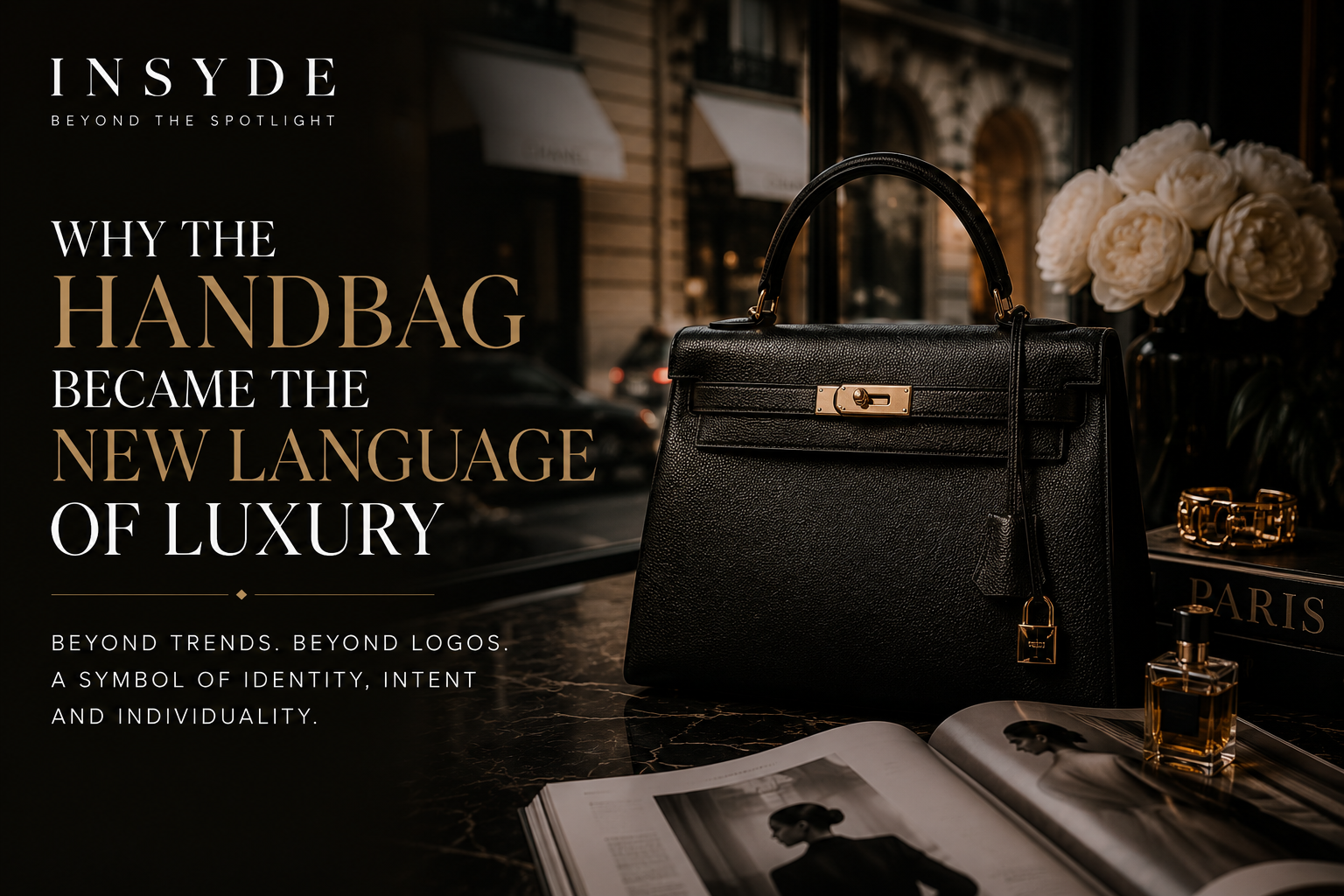
How craftsmanship, scarcity, status and personal taste transformed fashion’s smallest object into one of luxury’s most powerful statements.
There is something fascinating about a luxury handbag.
It is small enough to carry in one hand.
Yet some can command prices that rival a car.
They can have limited availability, dedicated collectors, highly developed resale markets and a level of cultural recognition that extends far beyond fashion.
And despite their size, certain handbags have become some of the most powerful objects in luxury.
Why?
Because the handbag has evolved.
It is no longer simply something you carry.
It has become something you communicate with.
A handbag can speak about taste without a word, signal status without a logo, reveal knowledge without explanation and, at its highest level, become an expression of identity.
That transformation is what makes the luxury handbag one of fashion’s most fascinating objects.
When a Handbag Became a Status Language
Fashion has always been a form of communication.
A suit can communicate authority.
A watch can communicate precision.
A car can communicate performance.
Jewellery can communicate heritage.
The handbag occupies an unusually powerful position because it sits directly between fashion and identity.
It is visible.
It moves with you.
It becomes part of your silhouette.
And when the object is recognisable, it can communicate something without requiring an explanation.
For decades, luxury often relied on visibility.
Large logos.
Recognisable monograms.
Distinctive patterns.
The unmistakable symbols of a successful purchase.
But the language of luxury is becoming more sophisticated.
Craftsmanship can matter more than branding.
Material can matter more than a monogram.
Proportion can matter more than decoration.
And recognition can increasingly belong to the people who understand the object rather than everyone who sees it.
Luxury is becoming a language with fewer people fluent in it.
Why Would Anyone Spend That Much?
This is the question that makes luxury handbags so interesting.
At a certain level of wealth, the basic function of a handbag becomes almost irrelevant.
You do not need a handbag that costs tens of thousands of dollars to carry your phone, keys and wallet.
The functional argument ends very quickly.
Something else begins.
The buyer is paying for the object as a whole.
The design.
The materials.
The construction.
The history.
The reputation.
The experience of acquiring it.
The feeling of owning something difficult to replicate.
And sometimes, simply the pleasure of knowing that an extraordinary amount of skill went into something that appears deceptively simple.
This is the strange genius of luxury.
It takes something ordinary and makes the extraordinary visible through detail.
A handbag can be technically small while being culturally enormous.
Craftsmanship Is the Beginning
The strongest luxury handbags are not extraordinary simply because a famous name is printed on them.
Behind the most respected houses is an enormous investment in technique.
Leather selection.
Cutting.
Construction.
Stitching.
Edge finishing.
Hardware.
Lining.
Proportion.
Quality control.
And years of accumulated knowledge.
Hermès, for example, describes its leather goods as being made by hand according to demanding standards, with artisans requiring years to master the techniques involved. Its saddle-stitching tradition remains one of the defining elements of its leather craftsmanship.
The result is something interesting.
The craftsmanship becomes almost invisible.
A beautifully constructed handbag doesn’t necessarily look complicated.
It may look simple.
That simplicity is the achievement.
The more sophisticated the object becomes, the less it needs to show you how difficult it was to make.
The Birkin Effect
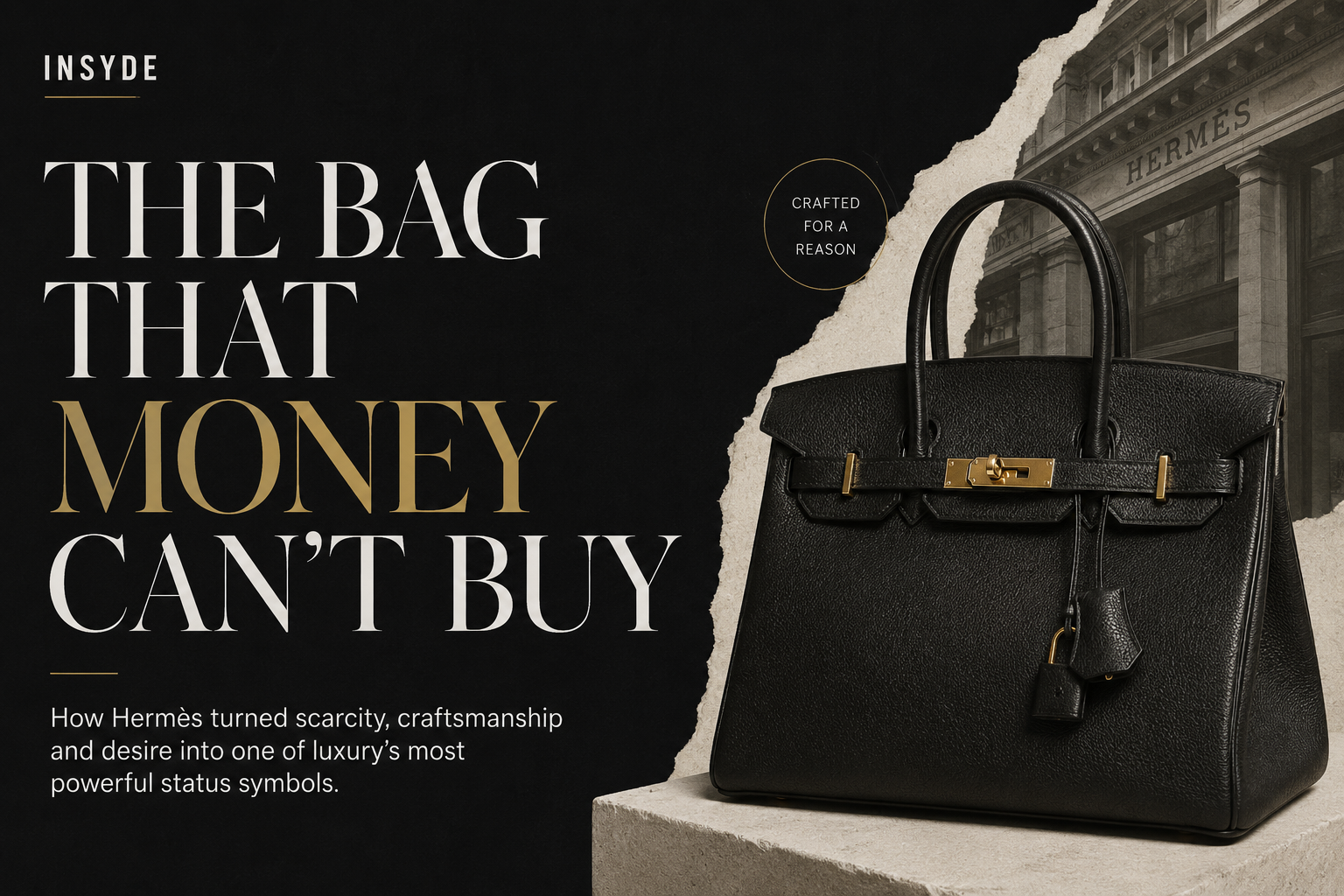
Few handbags demonstrate the power of luxury better than the Hermès Birkin.
Its story sounds almost too perfectly designed for fashion mythology.
According to Hermès, the bag originated from a conversation between Jane Birkin and Jean-Louis Dumas during a flight from Paris to London in 1984. Dumas sketched a spacious bag designed around Birkin’s needs, including room for baby bottles.
What began as a practical problem became one of the most recognisable luxury objects in the world.
That transformation is important.
The Birkin isn’t powerful simply because it is expensive.
Its cultural power comes from the combination of design, heritage, craftsmanship, scarcity and recognition.
Hermès says its Birkin and Kelly handbags are sold through its stores, while availability can be limited because each piece is handmade and production requires significant time and specialised craftsmanship.
The result is a peculiar form of luxury.
Having the money does not automatically make the object available.
And that changes the psychology completely.
Scarcity Changes Desire
Luxury has always relied on rarity.
But modern luxury has become increasingly sophisticated about how rarity works.
A product can be expensive because it uses exceptional materials.
It can be expensive because it requires extraordinary craftsmanship.
But it becomes culturally powerful when people want it and cannot simply obtain it whenever they choose.
That is where scarcity becomes part of the experience.
Limited editions.
Rare materials.
Special colours.
Exceptional pieces.
Private access.
Boutique relationships.
Vintage examples.
Collector editions.
Scarcity, however, is not magic.
If nobody wants an object, making it rare does not automatically make it desirable.
Scarcity amplifies desire; it does not create desire from nothing.
The real luxury lies in the combination of rarity and desirability.
The Wealthiest Buyer Isn’t Always Looking for the Loudest Bag
There is a persistent stereotype about wealthy consumers.
More diamonds.
More logos.
More recognisable names.
More obvious signs of money.
But luxury culture is becoming more complicated.
Some sophisticated consumers are increasingly interested in objects whose value is visible primarily to people who understand them.
A person deeply familiar with fashion may recognise leather, construction, silhouette, hardware, archive references or a particular designer without needing a logo to tell them what they are looking at.
That creates another level of status.
The object doesn’t have to announce itself to everyone.
It only needs to be understood by the right people.
The most sophisticated luxury can become almost conversational.
A bag enters the room.
Someone notices.
Someone else understands.
No explanation is necessary.
From Logo to Knowledge
This may be one of the most important changes in luxury.
The old model of status depended heavily on visibility.
The emerging model can depend on knowledge.
That doesn’t mean logos are disappearing.
They aren’t.
But they increasingly share the stage with craftsmanship, provenance, design and cultural literacy.
The question is shifting from:
“Does everyone know this brand?”
to:
“Do the people whose opinions matter to me understand what this is?”
That is a much more selective form of luxury.
And it changes how brands have to create desire.
They can’t simply become famous.
They have to become meaningful.
The Handbag as Fashion Architecture
A great handbag is also a design object.
Look at its proportions.
The way it holds its shape.
The relationship between its handle and body.
The scale of its hardware.
The texture of its leather.
The way it sits against clothing.
These aren’t random decisions.
They are design.
And when a handbag becomes iconic, its silhouette can become almost as recognisable as a logo.
That is why the most important handbags often survive fashion cycles.
Trends come and go.
An iconic proportion can remain.
The object becomes part of fashion history.
This is where handbags become particularly fascinating.
They exist somewhere between fashion, craftsmanship, industrial design and cultural memory.
When the Handbag Becomes a Cultural Object
Some handbags eventually stop being fashion products and become cultural objects.
They appear in films.
They become associated with celebrities.
They are photographed repeatedly.
They become part of a particular decade.
They are referenced by designers.
They appear in exhibitions.
They become instantly associated with particular personalities and moments in popular culture.
At that point, the handbag has escaped its original function.
It is no longer simply something from a fashion collection.
It has become part of the visual language of an era.
And that is extraordinarily difficult for a luxury house to manufacture.
A brand can design a handbag.
It can produce it.
It can market it.
But it cannot guarantee that culture will decide to remember it.
Why India Matters
India is becoming an increasingly interesting part of this story.
The country’s affluent population is expanding, global luxury houses are looking toward Indian consumers, and the appetite for international luxury is becoming more sophisticated.
But India’s relationship with handbags isn’t simply about adopting European luxury.
India already has a deep cultural relationship with objects that communicate craftsmanship.
Textiles.
Jewellery.
Embroidery.
Leatherwork.
Couture.
Artisan techniques.
The handbag fits naturally into that ecosystem.
It can be worn alongside couture.
It can be paired with jewellery.
It can become part of an occasion.
And increasingly, Indian designers have an opportunity to build handbags with an identity of their own.
That could become one of the most interesting developments in Indian luxury.
Can India create the next globally recognised luxury handbag?
Not simply an expensive bag.
An icon.
The Rise of the Indian Luxury Handbag
India doesn’t need to imitate European luxury houses to create desirable handbags.
It has something else:
craft.
Imagine contemporary handbags incorporating Indian embroidery without becoming costume.
Traditional techniques translated into modern silhouettes.
Regional materials interpreted through contemporary design.
Jewellery craftsmanship influencing hardware.
Artists collaborating with fashion houses.
Indian stories becoming a global design language.
That could create something much more valuable than another logo.
It could create a new category of luxury identity.
The opportunity is not to make an “Indian version” of an existing icon.
It is to create something the world has not seen before.
Can a Handbag Really Be an Investment?
This is where the conversation needs some discipline.
Certain luxury handbags have developed meaningful resale markets, and some iconic pieces have demonstrated strong value retention.
But that does not mean every expensive handbag is an investment.
Far from it.
A handbag’s resale value can depend on brand, model, condition, material, rarity, colour, provenance, market sentiment and timing.
The resale market itself changes constantly. Established houses can retain strong demand while newer or returning designs can experience sudden increases in interest.
So the smarter question isn’t:
“Will this make me money?”
It is:
“Will this remain desirable?”
That is a much more interesting question.
Financial value can disappear.
Cultural value can last much longer.
The Rise of the Collectible
Once a handbag enters the world of collecting, the rules change.
Collectors aren’t necessarily looking for something practical.
They are looking for rarity.
Story.
Condition.
Provenance.
Historical importance.
Exceptional craftsmanship.
Sometimes even eccentricity.
This is why the future of handbags may extend far beyond the traditional “classic versus trend” conversation.
A collectible handbag can become closer to a piece of design history.
And the most serious collectors don’t necessarily need to justify why they own it.
They understand why it matters.
The Next Luxury Handbag May Be Stranger
Luxury has traditionally tried to make objects beautiful.
But another movement is emerging.
Objects can be strange.
Playful.
Unexpected.
Conceptual.
Even deliberately impractical.
For the ultra-wealthy consumer who has access to almost every conventional luxury object, individuality itself can become the attraction.
That could have enormous implications for handbags.
The next iconic bag may not look like a traditional handbag at all.
It could be sculptural.
Artistic.
Technological.
Unexpectedly shaped.
Produced in tiny quantities.
Created with an artist.
Or designed around a completely new way of carrying personal objects.
Luxury doesn’t necessarily have to become quieter.
It can become stranger.
The important thing is that it becomes distinctive.
The End of the “It-Bag”?
Perhaps the most interesting possibility is that the age of the universal “it-bag” may be weakening.
The idea of everyone wanting the same handbag is fundamentally different from the idea of luxury as individuality.
If everyone has it, recognition increases.
But exclusivity decreases.
The next generation of luxury may therefore be more fragmented.
One person wants a heritage icon.
Another wants an obscure archive piece.
Someone else wants a completely unbranded masterpiece.
Another wants a limited collaboration that almost nobody has seen.
Instead of one bag dominating culture, there may be hundreds of smaller worlds of desirability.
That is not the death of luxury.
It may be its evolution.
What the Ultra-Wealthy Are Really Buying
So, what is someone really buying when they spend an extraordinary amount on a handbag?
Not leather alone.
Not a logo.
Not even craftsmanship alone.
They are buying a combination of things that are difficult to reproduce:
Time.
Skill.
History.
Rarity.
Recognition.
Access.
Identity.
And sometimes, the feeling of possessing something that exists outside ordinary consumption.
That’s the real power of luxury.
The object doesn’t need to be rational.
It needs to be meaningful.
What Comes Next
The next chapter of luxury handbags will probably not be defined simply by making bags more expensive.
Price alone has limits.
The future will be about desirability.
Better craftsmanship.
More distinctive design.
Greater personalisation.
Stronger stories.
More interesting collaborations.
Limited production.
Heritage.
New materials.
New forms.
And perhaps most importantly, a deeper understanding of the person carrying the object.
The handbag may become less about showing everyone what you own and more about expressing something only you fully understand.
A quiet piece of craftsmanship.
An unusual colour.
A vintage discovery.
A personal commission.
A bag created by an emerging designer.
Something that doesn’t need an audience.
The Smallest Object With the Biggest Meaning
The power of the luxury handbag has never really been about its size.
It is about how much meaning can be placed inside something so small.
Wealth.
Taste.
Craftsmanship.
History.
Identity.
Access.
Ambition.
And increasingly, discretion.
In a world where almost everything can be reproduced, photographed, shared and made instantly visible, the rarest luxury may be something that still feels difficult to obtain — and even harder to imitate.
That is why the handbag continues to matter.
Not because people need another place to carry their belongings.
But because fashion has transformed the object into something much more powerful.
A handbag can be an accessory.
It can be a status symbol.
It can be a collectible.
It can be a piece of design.
It can be a cultural statement.
And at its highest level, it can become something even more elusive:
a signature of taste that doesn’t need to explain itself.
The handbag isn’t disappearing.
It is becoming more sophisticated.
And the next chapter of luxury may not belong to the bag everyone recognises.
It may belong to the one only a few people know how to recognise.
INSYDE — Beyond the Spotlight.