Category: Fashion

The people, ideas and movements shaping Indian and global fashion, from couture and bridalwear to contemporary style and the business of fashion.

  • london fasion week 2026

    london fasion week 2026

    How London Fashion Week rebuilt its creative energy — and why British fashion suddenly feels relevant again.

    By INSYDE Magazine
    Fashion | Culture | Luxury

    London has never needed to be the most polished fashion capital in the world.

    Its influence has always come from something harder to manufacture: the collision of fashion with music, art, youth culture, tailoring, subculture and the city’s appetite for reinvention.

    That has made London Fashion Week difficult to define — but also difficult to ignore.

    The September 2026 season offered a particularly convincing reminder of why.

    McQueen returned to the official London Fashion Week schedule for the first time since 2001. Christopher Kane presented his first collection for Mulberry. Burberry continued to occupy its place at the centre of British luxury. Marks & Spencer made its London Fashion Week debut. And a new generation of designers continued to push the boundaries of what a fashion week can be.

    The numbers suggested that the international fashion industry was paying attention again.

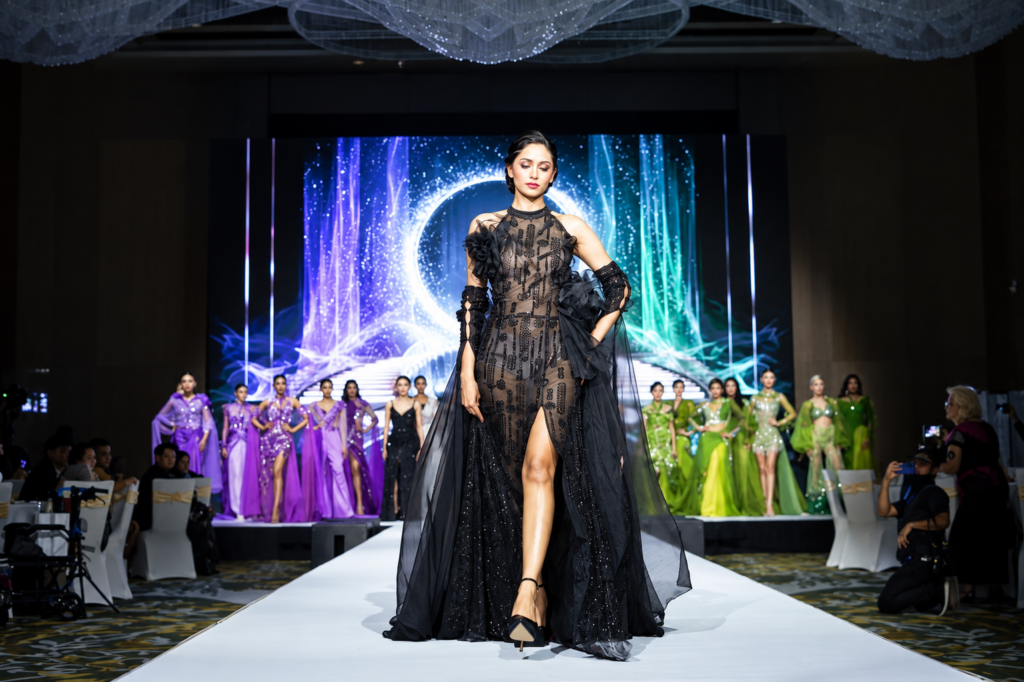
    According to the British Fashion Council, accredited buyer attendance increased 19% year-on-year, while accredited international buyer attendance rose 41%. Across five days, London hosted 47 catwalk shows, 23 presentations, 10 digital activations and 53 evening events. (British Fashion Council)

    But the more interesting story isn’t simply that London had a successful fashion week.

    It is why London suddenly feels important again.
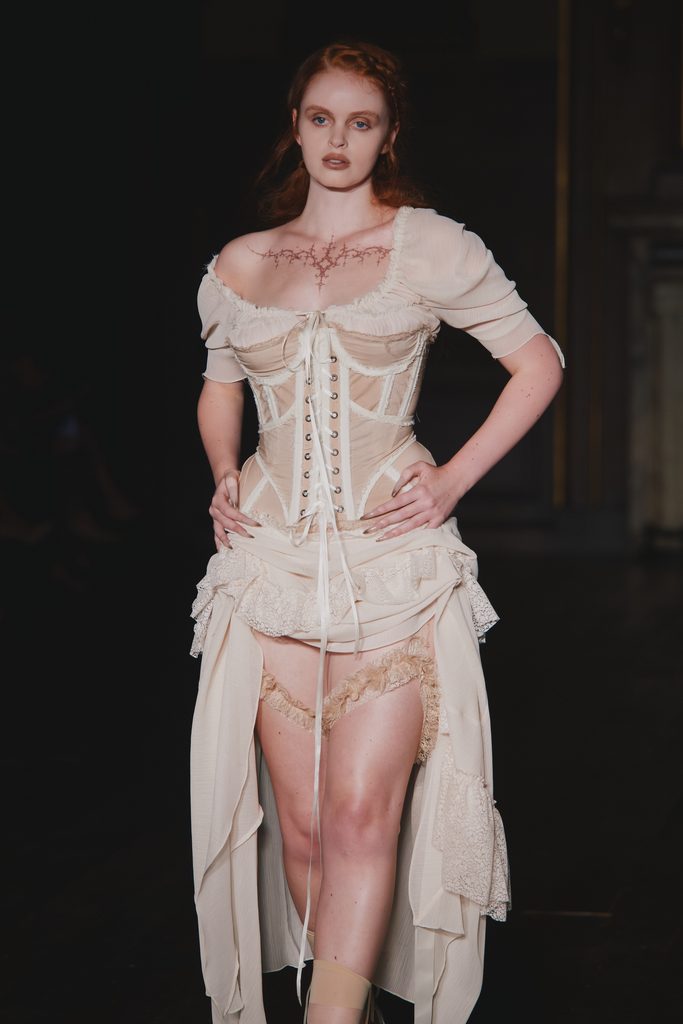

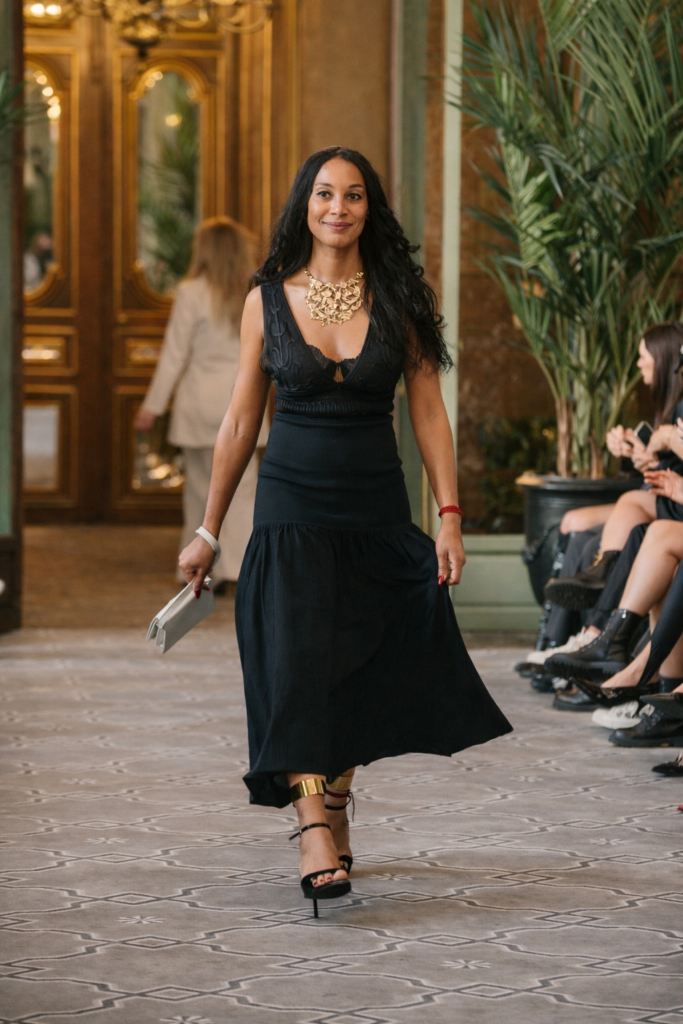
    photo credit @britishfashioncoun

    THE CITY THAT REFUSED TO BECOME PARIS

    London’s fashion identity has never been built around perfection.

    It was built around contradiction.

    Punk beside tailoring.
    Aristocratic tradition beside underground culture.
    Luxury houses beside independent studios.
    Craftsmanship beside experimentation.

    That tension has always been part of the city’s creative power.

    The British Fashion Council describes London Fashion Week as a creative laboratory — a platform where ideas are developed, emerging talent is supported, collaborations are created and global influence is redefined. (British Fashion Council)

    That description feels particularly relevant now.

    Because London’s strength isn’t simply that it produces clothes.

    It produces possibilities.

    And at a moment when fashion is searching for new creative identities, new consumers and new ways to make people care, possibility is becoming increasingly valuable.


    THEN McQUEEN CAME HOME

    Some fashion moments carry more weight than a collection.

    McQueen’s return to London was one of them.

    The house returned to the official LFW schedule for the first time since 2001 under creative director Seán McGirr, bringing one of Britain’s most internationally recognised fashion names back to the city that remains central to its history and identity. (British Fashion Council)

    For McGirr, London isn’t simply a location.

    It is part of the creative vocabulary.

    His relationship with the city stretches back to his arrival from Ireland at 17 and his education at Central Saint Martins. Speaking ahead of the show, he described London as a place of freedom, energy and playful contradiction — a place where people mix things in ways that aren’t necessarily supposed to work. (Vogue)

    That idea is important to McQueen.

    The house was founded on the tension between beauty and discomfort, tailoring and rebellion, craftsmanship and provocation.

    Returning to London therefore raises a larger question:

    Can a global luxury house preserve the disruptive spirit that made it important in the first place?

    The answer cannot simply be found in archival references.

    History only remains valuable when someone finds a way to make it feel alive.


    THE NEW MULBERRY

    If McQueen represented a return to its roots, Mulberry represented something different:

    reinvention through a new creative voice.

    Christopher Kane presented his first collection for Mulberry during London Fashion Week, marking a new chapter for both the designer and the British leather house.

    The collection, titled “City Town Country,” established a deliberately modern visual language while drawing directly from Mulberry’s existing codes. Kane reworked elements of the iconic Bayswater bag’s flap and closure across clothing and accessories, turning a recognisable house detail into a broader design vocabulary. (Vogue)

    It was an intelligent approach to heritage.

    Because heritage doesn’t necessarily have to be protected behind glass.

    It can be reinterpreted.

    That distinction matters enormously in modern luxury.

    The danger of heritage is nostalgia.

    The opportunity is to treat heritage as raw material.

    Mulberry’s next chapter will therefore be judged not simply by how well it remembers its past, but by whether that past can create desire in the present.
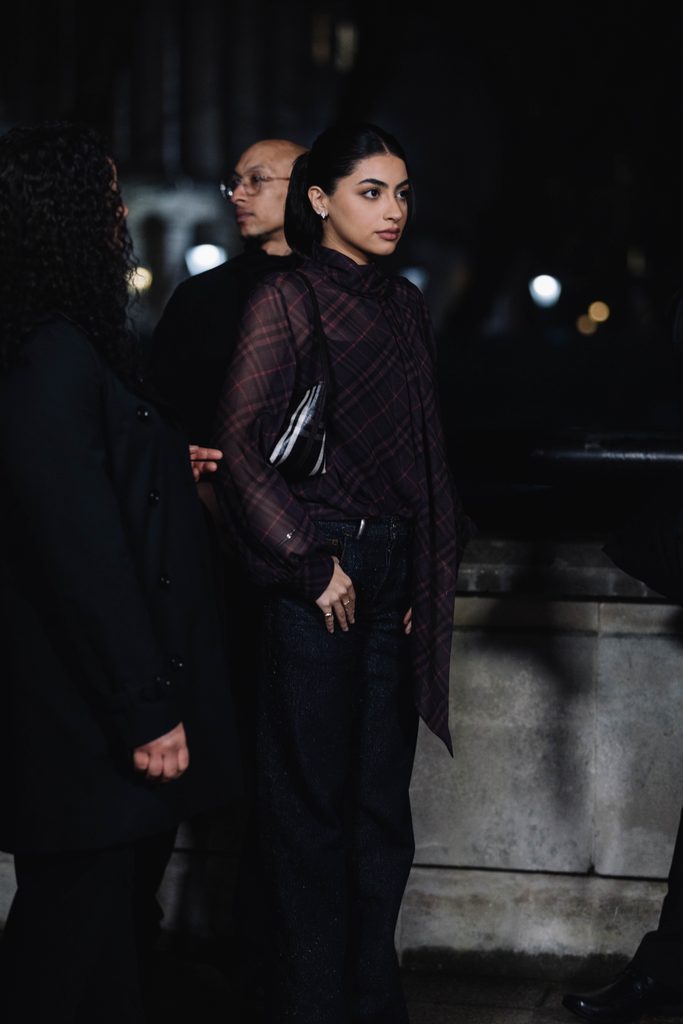

    BURBERRY’S BRITISH QUESTION

    Burberry has a different problem.

    It doesn’t need to convince the world that it exists.

    It needs to convince the world that it still matters.

    That is a much harder challenge.

    As one of Britain’s most recognisable luxury houses, Burberry carries an enormous amount of cultural history: the trench coat, the check, British weather, British tailoring and a visual language that has travelled far beyond Britain itself.

    The question for a modern Burberry is therefore not whether it should be British.

    It is:

    What does Britishness look like now?

    That question continues to shape Daniel Lee’s work.

    For Spring/Summer 2027, the collection drew on the work of British textile designer Celia Birtwell, incorporating florals, stripes, gingham and other familiar British references. Rapper Central Cee’s appearance on the runway added another contemporary cultural layer. (Vogue)

    The result speaks to one of luxury’s biggest challenges.

    A global house cannot simply sell its heritage.

    It has to continually reinterpret it for the next generation.

    Britishness cannot remain a costume.

    It has to remain a living culture.
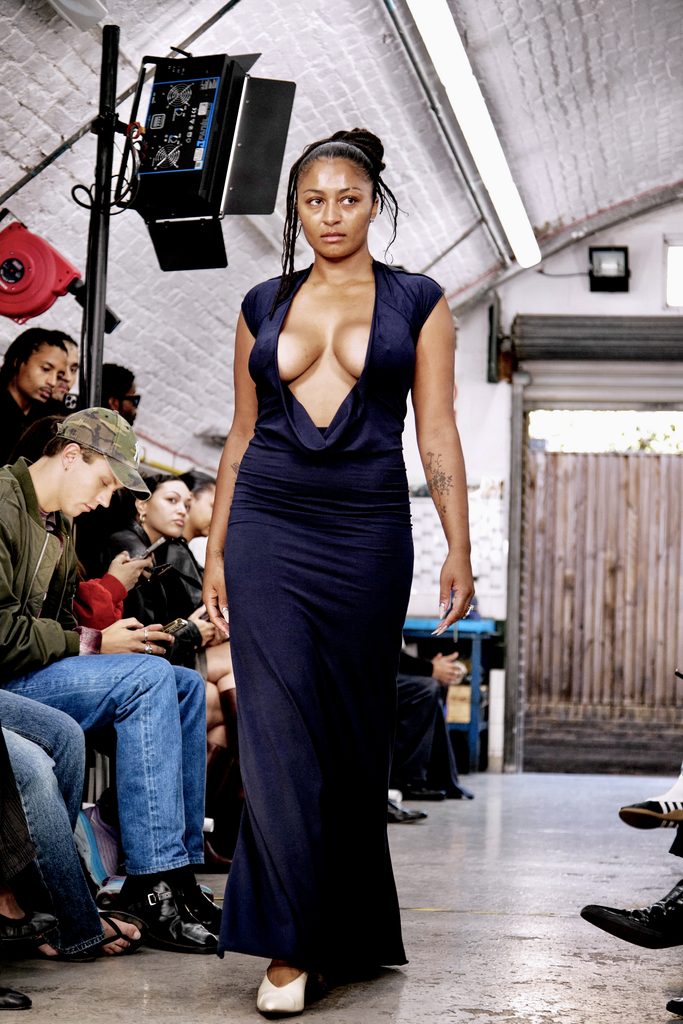

    WHEN FASHION WEEK BECAME MORE THAN A RUNWAY

    Perhaps the most important change in London wasn’t visible in a single collection.

    It was visible in the structure of the week itself.

    The September programme included catwalk shows, presentations, digital activations, immersive experiences, exhibitions, retail collaborations and cultural events. The BFC also expanded Fashion Britain into a nationwide programme of more than 1,000 events across the UK. (British Fashion Council)

    That tells us something about fashion’s changing business model.

    The runway is no longer the entire product.

    The experience around the runway is becoming part of the product.

    H&M worked with photographer and filmmaker Nick Knight and SHOWstudio to rethink the traditional fashion-show format. eBay returned with its Endless Runway, bringing resale and circular fashion into the official conversation. Selfridges created an in-store edit of London Fashion Week designers. (British Fashion Council)

    Fashion houses are increasingly asking consumers to do more than look.

    They want them to enter the world of the brand.

    Watch the show.

    Visit the store.

    Attend the event.

    Share the experience.

    Buy the product.

    Discover the designer.

    Become part of the culture.

    In an industry where traditional advertising is increasingly easy to ignore, experience has become one of luxury’s most powerful forms of communication.


    THE M&S QUESTION

    Then there was Marks & Spencer.

    The retailer made its London Fashion Week debut with its first dedicated catwalk show during its centenary year, using a see-now-buy-now model that connected the runway directly to customers. (British Fashion Council)

    On the surface, the pairing seems unusual.

    London Fashion Week is traditionally associated with designer houses, independent labels and luxury fashion.

    M&S operates at an entirely different scale.

    But that difference is precisely why its presence matters.

    Fashion week is becoming less like a closed industry meeting and more like a cultural platform.

    Luxury houses want attention.

    Retailers want credibility.

    Designers want customers.

    Consumers want immediacy.

    Social platforms want spectacle.

    The old fashion calendar was designed primarily around the needs of the industry.

    The new one increasingly has to work for the audience.
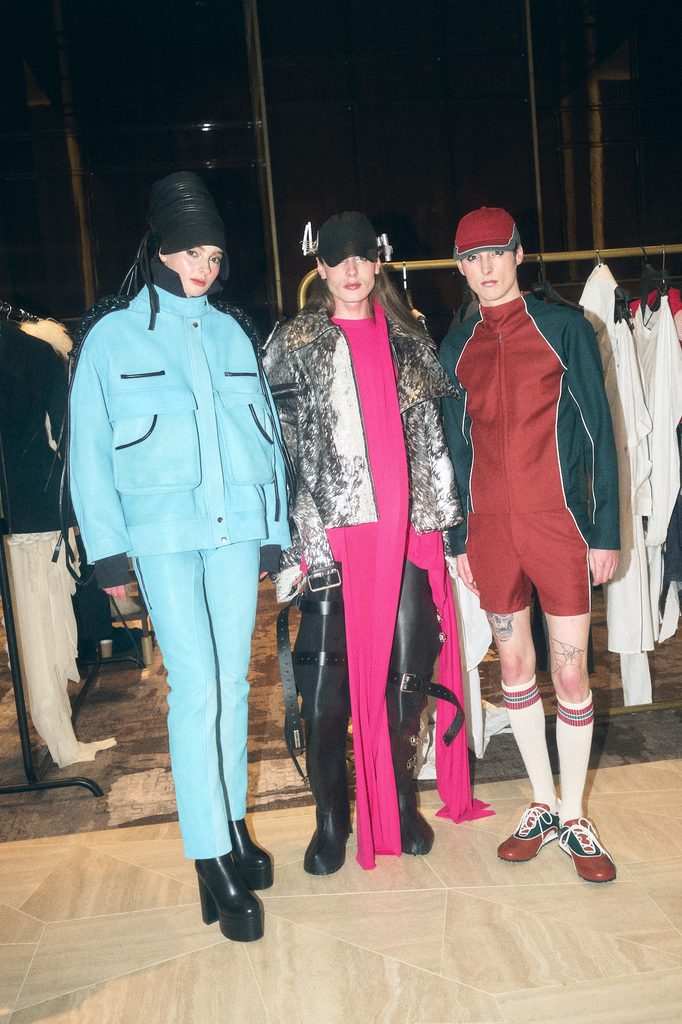

    LONDON’S NEXT GENERATION

    Yet London’s most valuable asset may still be the designers whose names haven’t become household names.

    The September schedule brought established houses together with BFC NEWGEN and Fashion East talent, reinforcing London’s role as an ecosystem rather than simply a collection of major brands. (British Fashion Council)

    Francesca Lake, Gui Rosa and Petra Fagerström made their LFW debuts through BFC NEWGEN, while Fashion East returned to the official schedule with GOYAGOMA, Jacek Gleba and Mé Mé. Indian label LOVE BIRDS also joined the official schedule for the first time. (British Fashion Council)

    This is where London’s fashion system becomes particularly interesting.

    A fashion capital doesn’t remain relevant by protecting the designers it already knows.

    It remains relevant by continually creating the designers the world hasn’t met yet.

    That is London’s real competitive advantage.

    Not one house.

    Not one creative director.

    Not one season.

    The possibility of the next one.


    THE INDIAN CONNECTION

    For INSYDE, the appearance of Indian label LOVE BIRDS on the official London Fashion Week schedule deserves particular attention.

    It is another indication of how increasingly interconnected fashion’s creative ecosystem has become.

    Indian designers no longer have to be discussed solely through the lens of traditional Indian fashion.

    The more interesting question is how Indian creative voices participate in the broader international fashion conversation.

    London provides a particularly relevant environment for that conversation because its fashion culture has historically absorbed influences from across the world.

    The presence of LOVE BIRDS within the official schedule places an Indian label inside that ecosystem — alongside established British houses, emerging designers and international creative talent. (British Fashion Council)

    For Indian fashion, the opportunity is larger than simply being seen abroad.

    It is about becoming part of the global fashion vocabulary without losing the identity that made the work worth noticing in the first place.

    That distinction will matter increasingly as Indian luxury becomes more internationally ambitious.


    THE BUSINESS OF BEING CREATIVE

    There is another reason this season matters.

    Creativity alone is no longer enough.

    Fashion businesses need to demonstrate that creative relevance can translate into commercial momentum.

    The British Fashion Council’s post-season figures provide one indication of that renewed engagement: international accredited buyer attendance increased 41% year-on-year, while overall accredited buyer attendance rose 19%. (British Fashion Council)

    That does not mean every British fashion business is suddenly thriving.

    It doesn’t.

    But it does demonstrate that London remains capable of attracting the international buyers and industry attention necessary to turn creative ideas into global opportunities.

    That distinction is crucial.

    For years, London could rely on being exciting.

    The next phase requires it to be exciting and commercially sustainable.

    Creative credibility without business infrastructure eventually becomes fragile.

    Commercial success without creative identity becomes forgettable.

    London needs both.


    THE NEW LONDON MODEL

    Perhaps that is what made September 2026 feel different.

    It wasn’t one comeback.

    It was several different parts of the ecosystem moving simultaneously.

    McQueen brought a major British house home.

    Christopher Kane opened a new chapter at Mulberry.

    Burberry continued translating British identity for a global audience.

    Marks & Spencer challenged the traditional boundaries of fashion week.

    Emerging designers supplied the experimentation that keeps London’s fashion culture moving forward.

    And around all of them, London Fashion Week itself continued to expand beyond the runway into retail, technology, entertainment, resale and cultural programming.

    That combination is difficult to manufacture.

    Because London’s fashion identity has always been built on the tension between heritage and experimentation.


    LONDON DOESN’T WANT TO BE PARIS

    And perhaps that is the point.

    London’s fashion future doesn’t depend on becoming more like another fashion capital.

    Its value lies in being unmistakably itself.

    A city where a heritage luxury house can stand beside an unknown designer.

    Where tailoring can exist alongside street culture.

    Where a global fashion brand can share a calendar with a mass retailer.

    Where a runway can become a film, an exhibition, a livestream, a party or a cultural event.

    Where the next important designer might still be working in a studio nobody knows about.

    That unpredictability isn’t a weakness.

    It is London’s competitive advantage.


    THE REAL COMEBACK

    Calling London Fashion Week “back” is tempting.

    The numbers certainly give the phrase substance. International buyer attendance increased 41%, major British houses returned to the official schedule, and emerging designers continued to receive a significant platform. (British Fashion Council)

    But a comeback isn’t really about one successful week.

    It is about what happens afterwards.

    Can the new creative energy translate into stronger businesses?

    Can emerging designers scale without losing what made them interesting?

    Can established houses continue to reinvent themselves without becoming trapped by their own histories?

    Can London maintain the cultural unpredictability that made it important in the first place?

    Those are the questions that matter now.

    Because fashion capitals aren’t defined simply by how many shows they host.

    They’re defined by what the world wants to see next.

    And after September 2026, London has given the industry a reason to look again.


    INSYDE TAKE

    London’s greatest luxury has never been perfection.

    It is possibility.

    The city remains at its most powerful when fashion, music, art, commerce and subculture collide — when established names return without becoming museums, and emerging designers are given enough space to challenge what already exists.

    Milan has its language of Italian craftsmanship.

    Paris has its institutional mythology.

    London has something harder to manufacture:

    the feeling that something could happen here that hasn’t happened anywhere else yet.

    And in an industry increasingly searching for its next idea, that may be London’s most valuable asset of all.

    INSYDE MAGAZINE
    Luxury, Through a Different Lens.
    Beyond the Spotlight.
  • Why the Handbag Became the New Language of Luxury

    Why the Handbag Became the New Language of Luxury

    How craftsmanship, scarcity, status and personal taste transformed fashion’s smallest object into one of luxury’s most powerful statements.

    There is something fascinating about a luxury handbag.

    It is small enough to carry in one hand.

    Yet some can command prices that rival a car.

    They can have limited availability, dedicated collectors, highly developed resale markets and a level of cultural recognition that extends far beyond fashion.

    And despite their size, certain handbags have become some of the most powerful objects in luxury.

    Why?

    Because the handbag has evolved.

    It is no longer simply something you carry.

    It has become something you communicate with.

    A handbag can speak about taste without a word, signal status without a logo, reveal knowledge without explanation and, at its highest level, become an expression of identity.

    That transformation is what makes the luxury handbag one of fashion’s most fascinating objects.

    When a Handbag Became a Status Language

    Fashion has always been a form of communication.

    A suit can communicate authority.

    A watch can communicate precision.

    A car can communicate performance.

    Jewellery can communicate heritage.

    The handbag occupies an unusually powerful position because it sits directly between fashion and identity.

    It is visible.

    It moves with you.

    It becomes part of your silhouette.

    And when the object is recognisable, it can communicate something without requiring an explanation.

    For decades, luxury often relied on visibility.

    Large logos.

    Recognisable monograms.

    Distinctive patterns.

    The unmistakable symbols of a successful purchase.

    But the language of luxury is becoming more sophisticated.

    Craftsmanship can matter more than branding.

    Material can matter more than a monogram.

    Proportion can matter more than decoration.

    And recognition can increasingly belong to the people who understand the object rather than everyone who sees it.

    Luxury is becoming a language with fewer people fluent in it.

    Why Would Anyone Spend That Much?

    This is the question that makes luxury handbags so interesting.

    At a certain level of wealth, the basic function of a handbag becomes almost irrelevant.

    You do not need a handbag that costs tens of thousands of dollars to carry your phone, keys and wallet.

    The functional argument ends very quickly.

    Something else begins.

    The buyer is paying for the object as a whole.

    The design.

    The materials.

    The construction.

    The history.

    The reputation.

    The experience of acquiring it.

    The feeling of owning something difficult to replicate.

    And sometimes, simply the pleasure of knowing that an extraordinary amount of skill went into something that appears deceptively simple.

    This is the strange genius of luxury.

    It takes something ordinary and makes the extraordinary visible through detail.

    A handbag can be technically small while being culturally enormous.

    Craftsmanship Is the Beginning

    The strongest luxury handbags are not extraordinary simply because a famous name is printed on them.

    Behind the most respected houses is an enormous investment in technique.

    Leather selection.

    Cutting.

    Construction.

    Stitching.

    Edge finishing.

    Hardware.

    Lining.

    Proportion.

    Quality control.

    And years of accumulated knowledge.

    Hermès, for example, describes its leather goods as being made by hand according to demanding standards, with artisans requiring years to master the techniques involved. Its saddle-stitching tradition remains one of the defining elements of its leather craftsmanship.

    The result is something interesting.

    The craftsmanship becomes almost invisible.

    A beautifully constructed handbag doesn’t necessarily look complicated.

    It may look simple.

    That simplicity is the achievement.

    The more sophisticated the object becomes, the less it needs to show you how difficult it was to make.

    The Birkin Effect

    Few handbags demonstrate the power of luxury better than the Hermès Birkin.

    Its story sounds almost too perfectly designed for fashion mythology.

    According to Hermès, the bag originated from a conversation between Jane Birkin and Jean-Louis Dumas during a flight from Paris to London in 1984. Dumas sketched a spacious bag designed around Birkin’s needs, including room for baby bottles.

    What began as a practical problem became one of the most recognisable luxury objects in the world.

    That transformation is important.

    The Birkin isn’t powerful simply because it is expensive.

    Its cultural power comes from the combination of design, heritage, craftsmanship, scarcity and recognition.

    Hermès says its Birkin and Kelly handbags are sold through its stores, while availability can be limited because each piece is handmade and production requires significant time and specialised craftsmanship.

    The result is a peculiar form of luxury.

    Having the money does not automatically make the object available.

    And that changes the psychology completely.

    Scarcity Changes Desire

    Luxury has always relied on rarity.

    But modern luxury has become increasingly sophisticated about how rarity works.

    A product can be expensive because it uses exceptional materials.

    It can be expensive because it requires extraordinary craftsmanship.

    But it becomes culturally powerful when people want it and cannot simply obtain it whenever they choose.

    That is where scarcity becomes part of the experience.

    Limited editions.

    Rare materials.

    Special colours.

    Exceptional pieces.

    Private access.

    Boutique relationships.

    Vintage examples.

    Collector editions.

    Scarcity, however, is not magic.

    If nobody wants an object, making it rare does not automatically make it desirable.

    Scarcity amplifies desire; it does not create desire from nothing.

    The real luxury lies in the combination of rarity and desirability.

    The Wealthiest Buyer Isn’t Always Looking for the Loudest Bag

    There is a persistent stereotype about wealthy consumers.

    More diamonds.

    More logos.

    More recognisable names.

    More obvious signs of money.

    But luxury culture is becoming more complicated.

    Some sophisticated consumers are increasingly interested in objects whose value is visible primarily to people who understand them.

    A person deeply familiar with fashion may recognise leather, construction, silhouette, hardware, archive references or a particular designer without needing a logo to tell them what they are looking at.

    That creates another level of status.

    The object doesn’t have to announce itself to everyone.

    It only needs to be understood by the right people.

    The most sophisticated luxury can become almost conversational.

    A bag enters the room.

    Someone notices.

    Someone else understands.

    No explanation is necessary.

    From Logo to Knowledge

    This may be one of the most important changes in luxury.

    The old model of status depended heavily on visibility.

    The emerging model can depend on knowledge.

    That doesn’t mean logos are disappearing.

    They aren’t.

    But they increasingly share the stage with craftsmanship, provenance, design and cultural literacy.

    The question is shifting from:

    “Does everyone know this brand?”

    to:

    “Do the people whose opinions matter to me understand what this is?”

    That is a much more selective form of luxury.

    And it changes how brands have to create desire.

    They can’t simply become famous.

    They have to become meaningful.

    The Handbag as Fashion Architecture

    A great handbag is also a design object.

    Look at its proportions.

    The way it holds its shape.

    The relationship between its handle and body.

    The scale of its hardware.

    The texture of its leather.

    The way it sits against clothing.

    These aren’t random decisions.

    They are design.

    And when a handbag becomes iconic, its silhouette can become almost as recognisable as a logo.

    That is why the most important handbags often survive fashion cycles.

    Trends come and go.

    An iconic proportion can remain.

    The object becomes part of fashion history.

    This is where handbags become particularly fascinating.

    They exist somewhere between fashion, craftsmanship, industrial design and cultural memory.

    When the Handbag Becomes a Cultural Object

    Some handbags eventually stop being fashion products and become cultural objects.

    They appear in films.

    They become associated with celebrities.

    They are photographed repeatedly.

    They become part of a particular decade.

    They are referenced by designers.

    They appear in exhibitions.

    They become instantly associated with particular personalities and moments in popular culture.

    At that point, the handbag has escaped its original function.

    It is no longer simply something from a fashion collection.

    It has become part of the visual language of an era.

    And that is extraordinarily difficult for a luxury house to manufacture.

    A brand can design a handbag.

    It can produce it.

    It can market it.

    But it cannot guarantee that culture will decide to remember it.

    Why India Matters

    India is becoming an increasingly interesting part of this story.

    The country’s affluent population is expanding, global luxury houses are looking toward Indian consumers, and the appetite for international luxury is becoming more sophisticated.

    But India’s relationship with handbags isn’t simply about adopting European luxury.

    India already has a deep cultural relationship with objects that communicate craftsmanship.

    Textiles.

    Jewellery.

    Embroidery.

    Leatherwork.

    Couture.

    Artisan techniques.

    The handbag fits naturally into that ecosystem.

    It can be worn alongside couture.

    It can be paired with jewellery.

    It can become part of an occasion.

    And increasingly, Indian designers have an opportunity to build handbags with an identity of their own.

    That could become one of the most interesting developments in Indian luxury.

    Can India create the next globally recognised luxury handbag?

    Not simply an expensive bag.

    An icon.

    The Rise of the Indian Luxury Handbag

    India doesn’t need to imitate European luxury houses to create desirable handbags.

    It has something else:

    craft.

    Imagine contemporary handbags incorporating Indian embroidery without becoming costume.

    Traditional techniques translated into modern silhouettes.

    Regional materials interpreted through contemporary design.

    Jewellery craftsmanship influencing hardware.

    Artists collaborating with fashion houses.

    Indian stories becoming a global design language.

    That could create something much more valuable than another logo.

    It could create a new category of luxury identity.

    The opportunity is not to make an “Indian version” of an existing icon.

    It is to create something the world has not seen before.

    Can a Handbag Really Be an Investment?

    This is where the conversation needs some discipline.

    Certain luxury handbags have developed meaningful resale markets, and some iconic pieces have demonstrated strong value retention.

    But that does not mean every expensive handbag is an investment.

    Far from it.

    A handbag’s resale value can depend on brand, model, condition, material, rarity, colour, provenance, market sentiment and timing.

    The resale market itself changes constantly. Established houses can retain strong demand while newer or returning designs can experience sudden increases in interest.

    So the smarter question isn’t:

    “Will this make me money?”

    It is:

    “Will this remain desirable?”

    That is a much more interesting question.

    Financial value can disappear.

    Cultural value can last much longer.

    The Rise of the Collectible

    Once a handbag enters the world of collecting, the rules change.

    Collectors aren’t necessarily looking for something practical.

    They are looking for rarity.

    Story.

    Condition.

    Provenance.

    Historical importance.

    Exceptional craftsmanship.

    Sometimes even eccentricity.

    This is why the future of handbags may extend far beyond the traditional “classic versus trend” conversation.

    A collectible handbag can become closer to a piece of design history.

    And the most serious collectors don’t necessarily need to justify why they own it.

    They understand why it matters.

    The Next Luxury Handbag May Be Stranger

    Luxury has traditionally tried to make objects beautiful.

    But another movement is emerging.

    Objects can be strange.

    Playful.

    Unexpected.

    Conceptual.

    Even deliberately impractical.

    For the ultra-wealthy consumer who has access to almost every conventional luxury object, individuality itself can become the attraction.

    That could have enormous implications for handbags.

    The next iconic bag may not look like a traditional handbag at all.

    It could be sculptural.

    Artistic.

    Technological.

    Unexpectedly shaped.

    Produced in tiny quantities.

    Created with an artist.

    Or designed around a completely new way of carrying personal objects.

    Luxury doesn’t necessarily have to become quieter.

    It can become stranger.

    The important thing is that it becomes distinctive.

    The End of the “It-Bag”?

    Perhaps the most interesting possibility is that the age of the universal “it-bag” may be weakening.

    The idea of everyone wanting the same handbag is fundamentally different from the idea of luxury as individuality.

    If everyone has it, recognition increases.

    But exclusivity decreases.

    The next generation of luxury may therefore be more fragmented.

    One person wants a heritage icon.

    Another wants an obscure archive piece.

    Someone else wants a completely unbranded masterpiece.

    Another wants a limited collaboration that almost nobody has seen.

    Instead of one bag dominating culture, there may be hundreds of smaller worlds of desirability.

    That is not the death of luxury.

    It may be its evolution.

    What the Ultra-Wealthy Are Really Buying

    So, what is someone really buying when they spend an extraordinary amount on a handbag?

    Not leather alone.

    Not a logo.

    Not even craftsmanship alone.

    They are buying a combination of things that are difficult to reproduce:

    Time.

    Skill.

    History.

    Rarity.

    Recognition.

    Access.

    Identity.

    And sometimes, the feeling of possessing something that exists outside ordinary consumption.

    That’s the real power of luxury.

    The object doesn’t need to be rational.

    It needs to be meaningful.

    What Comes Next

    The next chapter of luxury handbags will probably not be defined simply by making bags more expensive.

    Price alone has limits.

    The future will be about desirability.

    Better craftsmanship.

    More distinctive design.

    Greater personalisation.

    Stronger stories.

    More interesting collaborations.

    Limited production.

    Heritage.

    New materials.

    New forms.

    And perhaps most importantly, a deeper understanding of the person carrying the object.

    The handbag may become less about showing everyone what you own and more about expressing something only you fully understand.

    A quiet piece of craftsmanship.

    An unusual colour.

    A vintage discovery.

    A personal commission.

    A bag created by an emerging designer.

    Something that doesn’t need an audience.

    The Smallest Object With the Biggest Meaning

    The power of the luxury handbag has never really been about its size.

    It is about how much meaning can be placed inside something so small.

    Wealth.

    Taste.

    Craftsmanship.

    History.

    Identity.

    Access.

    Ambition.

    And increasingly, discretion.

    In a world where almost everything can be reproduced, photographed, shared and made instantly visible, the rarest luxury may be something that still feels difficult to obtain — and even harder to imitate.

    That is why the handbag continues to matter.

    Not because people need another place to carry their belongings.

    But because fashion has transformed the object into something much more powerful.

    A handbag can be an accessory.

    It can be a status symbol.

    It can be a collectible.

    It can be a piece of design.

    It can be a cultural statement.

    And at its highest level, it can become something even more elusive:

    a signature of taste that doesn’t need to explain itself.

    The handbag isn’t disappearing.

    It is becoming more sophisticated.

    And the next chapter of luxury may not belong to the bag everyone recognises.

    It may belong to the one only a few people know how to recognise.

    INSYDE — Beyond the Spotlight.

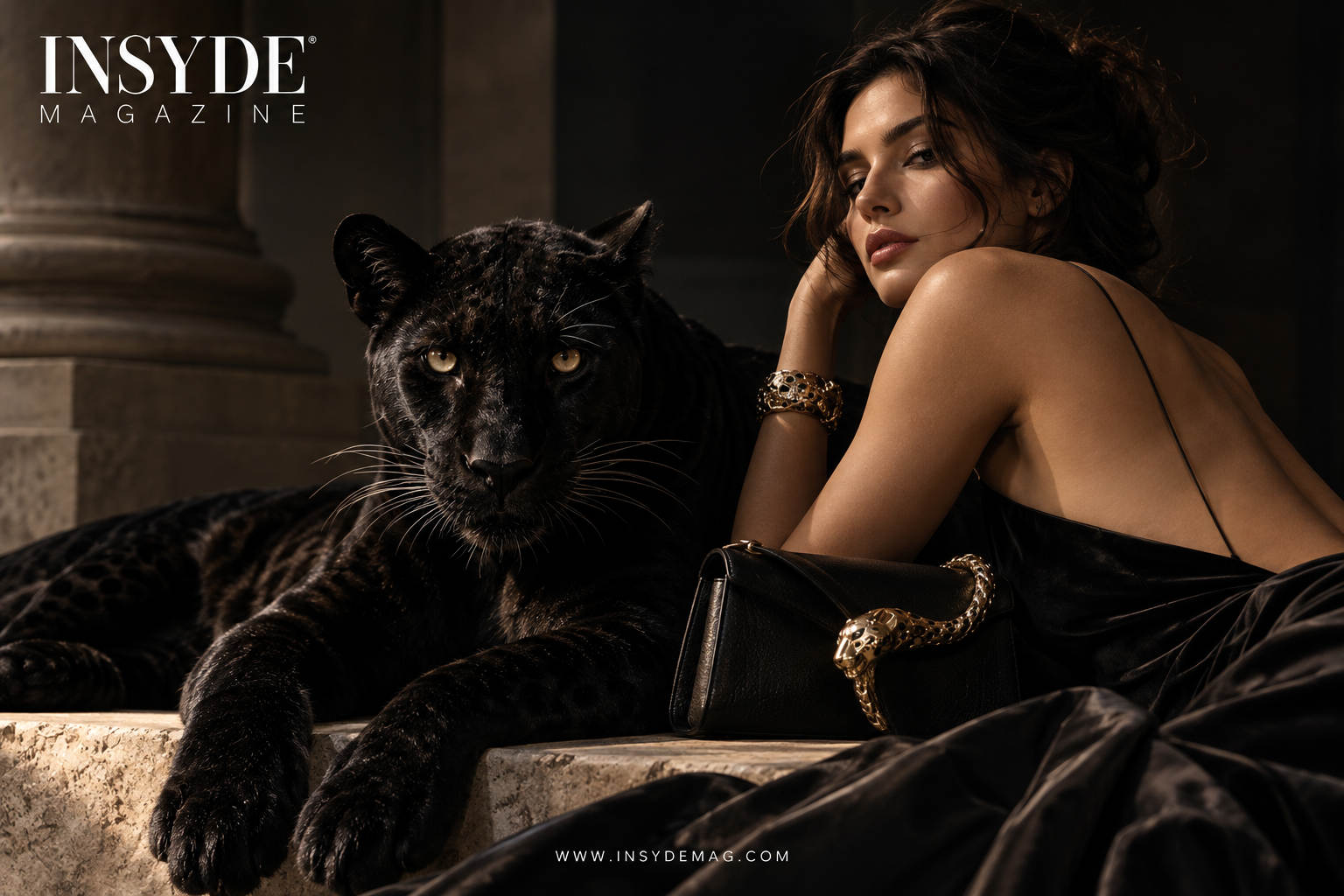
  • THE BEAST YOU WEAR

    THE BEAST YOU WEAR

    Why the world’s most desirable luxury houses keep turning to the animal kingdom.

    By INSYDE

    You don’t always need to read the name.

    A crocodile can be enough.

    A panther can be enough.

    A horse and rider can be enough.

    Before the word Cartier, Lacoste or Burberry has fully registered, the symbol has already done its work. It has been recognised, interpreted and, in some cases, desired.

    That is the peculiar power of the luxury logo.

    And perhaps no category of symbol has proved more enduring than the animal.

    From Cartier’s panther to Lacoste’s crocodile, from Burberry’s equestrian knight to the many creatures that have appeared throughout fashion and jewellery, luxury has repeatedly looked to the animal kingdom to create some of its most recognisable identities.

    But why?

    Why does a crocodile become elegance? Why does a panther become jewellery? Why can a horse and rider suggest heritage, aspiration and privilege without a single word?

    The answer goes deeper than aesthetics.

    Luxury doesn’t simply sell objects. It sells associations.

    And animals come with those associations already built in.


    THE SYMBOL BEFORE THE BRAND

    Long before luxury houses turned animals into brand codes, humans were using them to communicate power, protection, status and identity.

    The animal is an unusually efficient symbol because it requires very little explanation.

    A lion can suggest strength.

    A panther can suggest mystery and power.

    A horse can suggest movement, nobility or freedom.

    These associations aren’t universal or fixed. They change across cultures and contexts. But that flexibility is precisely what makes animals so useful to luxury.

    A brand can take an existing cultural image and give it a new meaning.

    Over time, that meaning becomes attached not to the animal itself, but to the house.

    The symbol stops being merely a picture.

    It becomes part of the brand’s mythology.


    THE CROCODILE THAT WAS NEVER MEANT TO BE A LOGO

    Perhaps one of the most fascinating examples is Lacoste.

    The crocodile wasn’t originally conceived as a branding exercise.

    In 1923, tennis player René Lacoste became associated with the nickname “the crocodile” after an American journalist connected his tenacity on court to a bet involving a crocodile-skin suitcase. Lacoste embraced the nickname, and in 1927 his friend Robert George created the crocodile illustration that Lacoste had embroidered onto his jackets.

    A few years later, the crocodile appeared on Lacoste’s polo shirt.

    The result was remarkable for its time: a recognisable symbol placed visibly on the garment itself. Lacoste identifies itself as the first brand to feature a logo on clothing.

    But the important detail isn’t simply that the crocodile became famous.

    It’s why it worked.

    The animal was already connected to René Lacoste’s character: determination, tenacity and competitive spirit.

    The logo therefore wasn’t an arbitrary image attached to a company.

    It began as a story about a person.

    The brand simply made the story wearable.


    THEN CAME THE PANTHER

    If Lacoste’s crocodile was born from personality, Cartier’s panther became something closer to mythology.

    The panther first appeared in Cartier’s collections in 1914. Cartier identifies it as the Maison’s symbolic animal, with Louis Cartier introducing the motif and Jeanne Toussaint subsequently turning it into one of the house’s defining signatures.

    What makes the Cartier panther fascinating is that it was never confined to one interpretation.

    It could be fierce.

    It could be playful.

    It could be elegant.

    It could be almost abstract.

    Across jewellery and other creations, Cartier has repeatedly reimagined the creature while preserving its recognisable identity.

    That is where the relationship between animal and luxury becomes particularly interesting.

    Cartier didn’t simply reproduce a panther.

    It built a world around one.

    The animal became more than an emblem. It became a visual language — one capable of carrying the personality of an entire Maison.


    WHEN AN ANIMAL BECOMES A HOUSE CODE

    This is perhaps where luxury differs from ordinary branding.

    A logo identifies.

    A house code evokes.

    The distinction is subtle, but enormously important.

    Luxury houses spend decades building recognisable visual languages: colours, silhouettes, patterns, materials, motifs and symbols.

    Burberry’s Equestrian Knight Design is a revealing example.

    Created around 1901 following a public competition to develop a new logo, the emblem brought together a knight, shield, lance and the Latin word Prorsum, meaning “Forward.” Burberry associates the knight with honour, the shield with protection and the lance with reform.

    The horse is therefore not simply present because horses look aristocratic.

    It exists within a larger narrative.

    Movement. Protection. Progress.

    The symbol has since been transformed and reinterpreted, while remaining one of Burberry’s enduring brand codes.

    The animal survives because the story around it can evolve.


    WHY THE ANIMAL IS SO POWERFUL

    There is another reason these symbols endure.

    An animal gives a brand something a word often cannot:

    personality.

    Consider the difference between saying:

    “We are powerful.”

    and showing a panther.

    One is a claim.

    The other is an image.

    The best luxury branding often works through implication. It doesn’t need to announce exclusivity, confidence or sensuality every time. Instead, it allows the consumer to make the connection.

    That creates something more valuable than recognition.

    It creates interpretation.

    And interpretation is central to desire.


    THE PSYCHOLOGY OF THE CREATURE

    There is a reason the animal kingdom is so useful to fashion.

    Animals already carry archetypes.

    A horse is not simply a horse.

    A bird is not simply a bird.

    A snake is not simply a snake.

    Centuries of mythology, art, folklore and storytelling have accumulated around these creatures.

    Luxury brands can therefore tap into an enormous cultural vocabulary without explaining every reference.

    Research into animal motifs in fashion branding has similarly found relationships between animal archetypes, brand personality and the way consumers perceive fashion brands. A study examining 27 established fashion logos found that animal motifs could communicate distinct personality traits and symbolic associations.

    But the meaning isn’t fixed.

    And that is precisely the point.

    Luxury can select the interpretation it wants to amplify.


    FROM LOGO TO DESIRE

    Something else happens when these symbols become successful.

    The consumer begins to participate in the mythology.

    You don’t simply own a Cartier creation.

    You wear the panther.

    You don’t simply wear a Lacoste polo.

    You wear the crocodile.

    The object becomes a vehicle for the symbol, and the symbol becomes shorthand for belonging to a particular cultural world.

    This is one of luxury’s most sophisticated mechanisms.

    The brand gives the object a story.

    The consumer gives the story a life.


    BUT THERE IS A DANGER

    The animal symbol is powerful precisely because it is familiar.

    And familiarity can become overexposure.

    Once a symbol becomes too visible, it can lose some of the mystery that made it desirable in the first place.

    That tension sits at the heart of luxury today.

    The industry has spent decades making logos instantly recognisable. Yet increasingly, luxury also relies on things that require a closer look: craftsmanship, provenance, materials, construction, heritage and personal meaning.

    The question for luxury is therefore no longer simply:

    Can we make our symbol recognisable?

    It is:

    Can we make it meaningful?


    THE BEAST BECOMES THE BRAND

    Perhaps that is why the most successful animal symbols don’t remain logos for very long.

    They evolve.

    Lacoste’s crocodile began with a tennis player and became a global house code.

    Cartier’s panther moved from a motif in the Maison’s collections into a sculptural and highly recognisable language across its creations.

    Burberry’s Equestrian Knight has survived more than a century of changing aesthetics while continuing to be reinterpreted across products, stores and brand activations.

    The creatures remain recognisable.

    But their meanings keep moving.

    And perhaps that is the secret.

    A great luxury symbol doesn’t merely represent a brand.

    It becomes a character in the brand’s mythology.

    Something with a personality.

    Something with history.

    Something that can be inherited, reinvented and desired by people who may never know the original story behind it.


    SO, WHY DO LUXURY BRANDS LOVE ANIMALS?

    Because animals give luxury something money alone cannot manufacture:

    myth.

    They bring instinct to an industry built on craftsmanship.

    They bring emotion to objects.

    They transform identity into imagery.

    And, perhaps most importantly, they allow a brand to say something without saying anything at all.

    The next time you see a crocodile embroidered over a heart, a panther wrapped around a wrist or a knight charging across a label, look a little closer.

    You’re not just looking at a logo.

    You’re looking at a story that has been carefully turned into a symbol.

    And eventually, into something people want to wear.

    The beast isn’t beside the luxury.

    The beast is part of it.

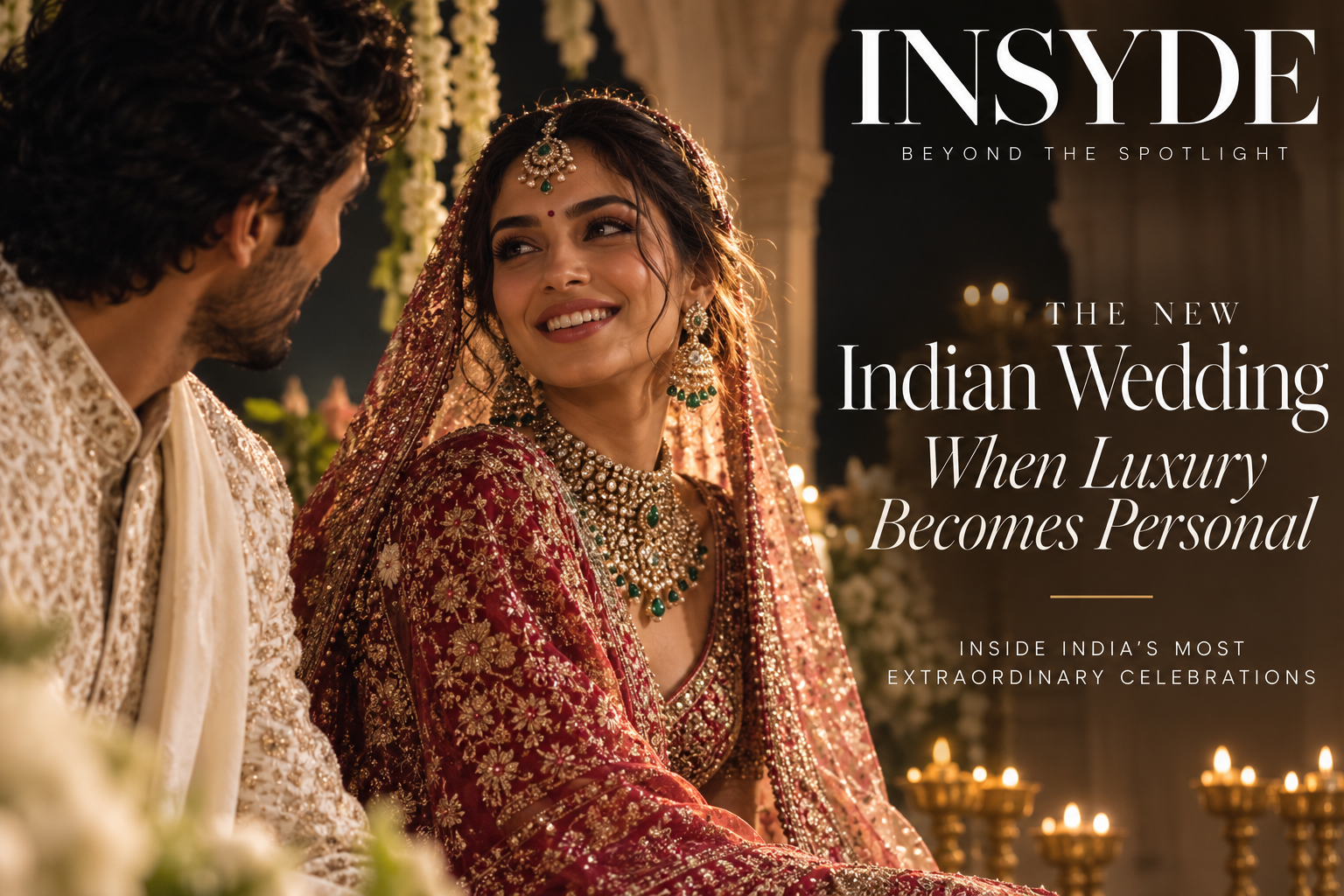
  • The New Indian Wedding: When Luxury Becomes Personal

    The New Indian Wedding: When Luxury Becomes Personal

    India has never been short of spectacular weddings. But a new generation is changing what makes a celebration truly luxurious — moving beyond scale and spectacle towards personalisation, experience, craftsmanship and the art of making people feel part of something extraordinary.

    A luxury Indian wedding is no longer simply a celebration.

    For a few days, it can become an entire world.

    A palace becomes a private residence. A garden becomes a dining room. A designer creates clothing that exists for one person. A chef builds a menu around a family’s memories. An artist transforms a space overnight. Guests arrive not simply for a ceremony, but for an experience designed to stay with them long after the final event.

    India has always known how to celebrate.

    What is changing is what the celebration is trying to say.

    For generations, wedding luxury was often measured through scale: larger venues, longer guest lists, bigger décor and increasingly elaborate entertainment.

    Those things still have their place.

    But the most interesting luxury weddings are beginning to ask a different question:

    Does this wedding feel like us?

    That question is changing the Indian wedding — and turning it into one of the country’s most fascinating expressions of modern luxury.

    From Grand to Personal

    The idea that luxury has to mean more is beginning to feel outdated.

    More flowers.

    More guests.

    More entertainment.

    More spectacle.

    More everything.

    But a wedding can be extraordinarily expensive and still feel strangely impersonal.

    The new luxury is increasingly found in the details that could not have been copied from another celebration.

    A menu built around a couple’s favourite dishes.

    A wedding wardrobe designed around a personal story.

    A handwritten note waiting in every guest’s room.

    A piece of jewellery incorporating a family heirloom.

    A song that means something to the couple rather than simply being popular.

    A ceremony designed around heritage without becoming theatrical.

    Recent industry reporting reflects this shift, with Indian wedding professionals describing personalisation, experience and emotional relevance as increasingly important to younger couples. (Eventfaqs)

    The difference is subtle, but important.

    Luxury is becoming less about how much is added and more about how much thought goes into what is chosen.

    The Destination Becomes Part of the Story

    The venue used to be the backdrop.

    Now, increasingly, it is part of the experience.

    A destination wedding can turn a single ceremony into several days of shared life.

    Guests arrive early.

    They stay together.

    They eat together.

    They explore the destination.

    They attend smaller celebrations.

    They have time to actually talk.

    That helps explain the continuing appeal of India’s palaces, heritage properties, resorts and quieter destinations. Recent reporting suggests that couples are increasingly looking beyond conventional wedding destinations for locations that offer privacy, atmosphere and a more distinctive experience. (The Economic Times)

    The venue is no longer simply where the wedding happens.

    The venue becomes part of the story.

    A palace communicates history.

    A coastal property creates a different rhythm.

    A private villa creates intimacy.

    A heritage estate creates a connection to place.

    A quieter destination can give a celebration something increasingly valuable: space.

    And the location can influence everything that follows — from the wardrobe and flowers to the food, photography and guest experience.

    The Wedding Becomes a Multi-Day World

    The modern luxury wedding is increasingly less like a single event and more like an editorial unfolding over several days.

    Welcome dinner.

    Mehendi.

    Haldi.

    Sangeet.

    Cocktail evening.

    Wedding ceremony.

    Reception.

    After-party.

    But the interesting change isn’t simply the number of events.

    It is how differently each event can feel.

    A daytime ceremony might be quiet and architectural.

    An evening celebration might become theatrical.

    A private dinner might feel intimate and almost residential.

    A final brunch might be deliberately relaxed.

    Each moment becomes its own chapter.

    The result is less of a wedding programme and more of a curated journey.

    That distinction matters.

    Luxury is increasingly being measured by the quality of the experience between the major moments, not simply by what happens on the main stage. Business Standard recently reported that Indian couples are increasingly trimming guest lists while investing more in destinations and multi-day experiences that allow families and friends to stay, explore and create memories together. (Business Standard)

    When Fashion Shapes the Entire Wedding

    Few things reveal the changing Indian wedding better than fashion.

    The wedding wardrobe has always been important.

    But today, couture can influence the entire visual language of the celebration.

    A bridal lehenga can inspire the colour palette.

    A groom’s sherwani can influence the décor.

    Jewellery can influence the lighting.

    Textiles can influence table settings.

    The invitation can become an extension of the couture.

    Fashion moves beyond the wardrobe.

    It becomes architecture.

    This is particularly interesting in India because the country already possesses an extraordinary vocabulary of textile and craft traditions.

    Embroidery.

    Weaving.

    Zardozi.

    Hand-painted textiles.

    Metalwork.

    Jewellery.

    Regional techniques passed between generations.

    The modern luxury wedding can give those traditions a new stage.

    The objective doesn’t have to be recreating the past.

    It can be reinterpretation.

    A traditional technique can become contemporary.

    A historic motif can become graphic.

    An old textile can be paired with modern tailoring.

    Heritage can become something that moves forward rather than something preserved behind glass.

    Craftsmanship Becomes Part of the Celebration

    The most memorable luxury is often the kind that takes time.

    A hand-embroidered garment.

    A custom piece of jewellery.

    A hand-painted invitation.

    A specially commissioned installation.

    A table setting created by craftspeople.

    A menu developed around regional ingredients.

    These things have something in common.

    They cannot be produced instantly.

    And that makes them valuable in a culture increasingly dominated by speed.

    The Indian wedding has always been a major platform for craftsmanship.

    But the opportunity now is to move beyond simply using craft as decoration.

    Craft can become the story itself.

    Imagine a wedding where guests are introduced to the artisans who created the textiles.

    Where the menu explains the origins of ingredients.

    Where the jewellery tells the story of a family.

    Where the architecture of the venue becomes part of the celebration.

    Suddenly, luxury becomes educational as well as beautiful.

    The Guest Is No Longer Just a Guest

    This may be one of the biggest changes in modern luxury weddings.

    The guest experience has become part of the design.

    A wedding can have the most beautiful stage in the country and still fail if the people attending it feel forgotten.

    Luxury hospitality works differently.

    Guests know where they are staying.

    They know what is happening.

    They have thoughtful welcome experiences.

    They receive things that feel selected rather than generic.

    They are given time to enjoy the destination.

    They are introduced to the culture of the place.

    They are not simply spectators.

    They become participants.

    That is why hospitality is becoming one of the most important dimensions of luxury weddings.

    The question isn’t only:

    How impressive can the wedding look?

    It is:

    How does everyone feel while they are there?

    That is a much harder question to answer.

    And perhaps a much more meaningful one.

    Food Becomes Storytelling

    Indian weddings have always taken food seriously.

    The modern luxury wedding is taking it further.

    Private dining.

    Regional menus.

    Chef collaborations.

    Curated tasting experiences.

    Family recipes.

    Local ingredients.

    Fine-dining techniques.

    Food can become another way of telling the couple’s story.

    A dish from the bride’s childhood.

    A recipe from the groom’s family.

    A regional ingredient from a place that matters to them.

    A menu inspired by their first trip together.

    The most luxurious meal may not be the one with the greatest number of dishes.

    It may be the one where every dish has a reason for being there.

    From Spectacle to Storytelling

    This doesn’t mean Indian weddings are becoming minimal.

    That would be too simple.

    Grand celebrations are not disappearing.

    Instead, grandeur is becoming more intentional.

    A spectacular performance can still be extraordinary.

    A dramatic floral installation can still be beautiful.

    Fireworks can still create a moment.

    A palace can still be magnificent.

    The difference is that spectacle increasingly works best when it belongs to a larger story.

    The question becomes:

    Why this?

    Why this location?

    Why this music?

    Why this designer?

    Why this colour?

    Why this performance?

    Why this particular piece of jewellery?

    When every element has an answer, extravagance begins to feel like curation rather than excess.

    India’s Heritage Meets a Global Outlook

    Indian weddings have always been deeply rooted in tradition.

    But today’s couples are also growing up in a global cultural environment.

    They travel.

    They study abroad.

    They consume international fashion.

    They follow global design.

    They discover restaurants, hotels and artists from around the world.

    That creates an interesting tension.

    The modern Indian wedding doesn’t necessarily have to choose between Indian and international.

    It can be both.

    A traditional ceremony can take place inside contemporary architecture.

    Indian textiles can be styled with modern silhouettes.

    A regional menu can be presented with contemporary fine-dining techniques.

    A palace wedding can have a distinctly modern visual identity.

    A destination wedding abroad can still remain deeply Indian.

    The future of Indian wedding luxury may therefore be less about choosing between heritage and modernity.

    It may be about making the two belong together.

    The Ultimate Luxury May Be Privacy

    There is another shift worth watching.

    For years, luxury weddings were designed to be seen.

    The bigger the spectacle, the more photographs.

    The more famous the guests, the more attention.

    The more elaborate the production, the more social media content.

    But for some of today’s most high-profile celebrations, the direction is changing.

    Privacy itself is becoming desirable.

    Smaller guest lists.

    Private properties.

    Controlled access.

    Discreet photography.

    Personalised hospitality.

    Carefully managed guest information.

    In July 2026, industry coverage of several high-profile Indian weddings highlighted privacy, intimate guest lists and personalised hospitality as increasingly important markers of luxury. (Eventfaqs)

    This doesn’t necessarily mean spending less.

    In fact, a smaller celebration can allow couples to spend considerably more on the people and details that matter.

    The wedding stops being a performance for everyone.

    It becomes an experience for the people who are actually there.

    And perhaps that is a more sophisticated form of luxury.

    The ability to decide who gets to see it.

    Technology Has a Place — But It Isn’t the Luxury

    Technology is now woven into almost every part of wedding planning and production.

    Digital invitations.

    Online RSVPs.

    Virtual venue tours.

    AI-assisted planning.

    Drone photography.

    Live streaming.

    Immersive installations.

    Technology can make a wedding more efficient and, sometimes, more spectacular.

    But technology itself isn’t necessarily what makes the experience luxurious.

    The best use of technology is often the use you barely notice.

    It removes friction.

    It makes the experience smoother.

    It helps personalise the celebration.

    The luxury remains human.

    A thoughtful welcome.

    A beautifully prepared room.

    A meal that arrives at exactly the right moment.

    A piece of clothing made specifically for you.

    A conversation that lasts longer than expected.

    Technology can support those moments.

    It cannot replace them.

    The Wedding as a Luxury Ecosystem

    Perhaps this is why weddings are becoming so important to the wider luxury industry.

    A single celebration can bring together fashion, jewellery, hospitality, travel, automobiles, beauty, food, art, architecture and entertainment.

    A wedding doesn’t exist inside one luxury category.

    It connects them all.

    A bride may work with a couture house, a jewellery designer, a beauty team and a photographer.

    The family may book a heritage property, private transport, a chef and a production company.

    Guests may travel internationally, stay at luxury hotels and shop for new wardrobes.

    The wedding becomes an ecosystem of luxury.

    But the commercial value is only one part of the story.

    The more interesting question is cultural:

    Why has the Indian wedding become such a powerful expression of aspiration?

    Because it combines almost everything India values about celebration — family, identity, tradition, craftsmanship, food, fashion, hospitality and storytelling — into one extraordinary moment.

    What Will the Next Indian Luxury Wedding Look Like?

    It may still be enormous.

    Or it may have 80 guests.

    It may take place in a palace.

    Or on a private beach.

    It may involve couture from Paris.

    Or a young Indian designer nobody outside the fashion world has discovered yet.

    It may feature a famous performer.

    Or simply a musician who means something to the family.

    There is no single formula.

    And that is precisely the point.

    The future of luxury weddings is not one aesthetic.

    It is personalisation at scale.

    The ability to create an experience that feels extraordinarily considered, even when the production itself is enormous.

    That requires more than money.

    It requires taste.

    It requires restraint.

    It requires storytelling.

    And above all, it requires knowing what matters.

    The Most Luxurious Wedding May Be the Most Personal One

    India doesn’t need to make its weddings less spectacular.

    It simply has the opportunity to make them more meaningful.

    The most memorable celebration may not be the one with the largest guest list or the tallest floral installation.

    It may be the one where every detail feels connected.

    The clothes.

    The jewellery.

    The food.

    The architecture.

    The music.

    The destination.

    The people.

    The memories.

    The things that could only have belonged to that particular couple.

    Because the ultimate luxury may not be having the wedding everyone remembers.

    It may be creating the wedding that could belong to no one else.

    And perhaps that is where the new Indian wedding begins.

    INSYDE — Inside modern luxury.

  • MADE TO BE DESIRED

    MADE TO BE DESIRED

    Where craftsmanship, identity and ambition come together to redefine the modern luxury object.

    Luxury has always been good at creating desire. It gives us objects to recognise, names to remember and symbols that can carry meaning long after their practical purpose has disappeared.

    But the geography of that desire is changing.

    For decades, the global luxury conversation has revolved around a familiar set of cities—Paris, Milan, London and New York. Their influence remains undeniable, but the creative landscape surrounding luxury has become far more expansive. New houses are emerging from different cultural and creative centres, bringing new approaches to design, craftsmanship and the meaning of value.

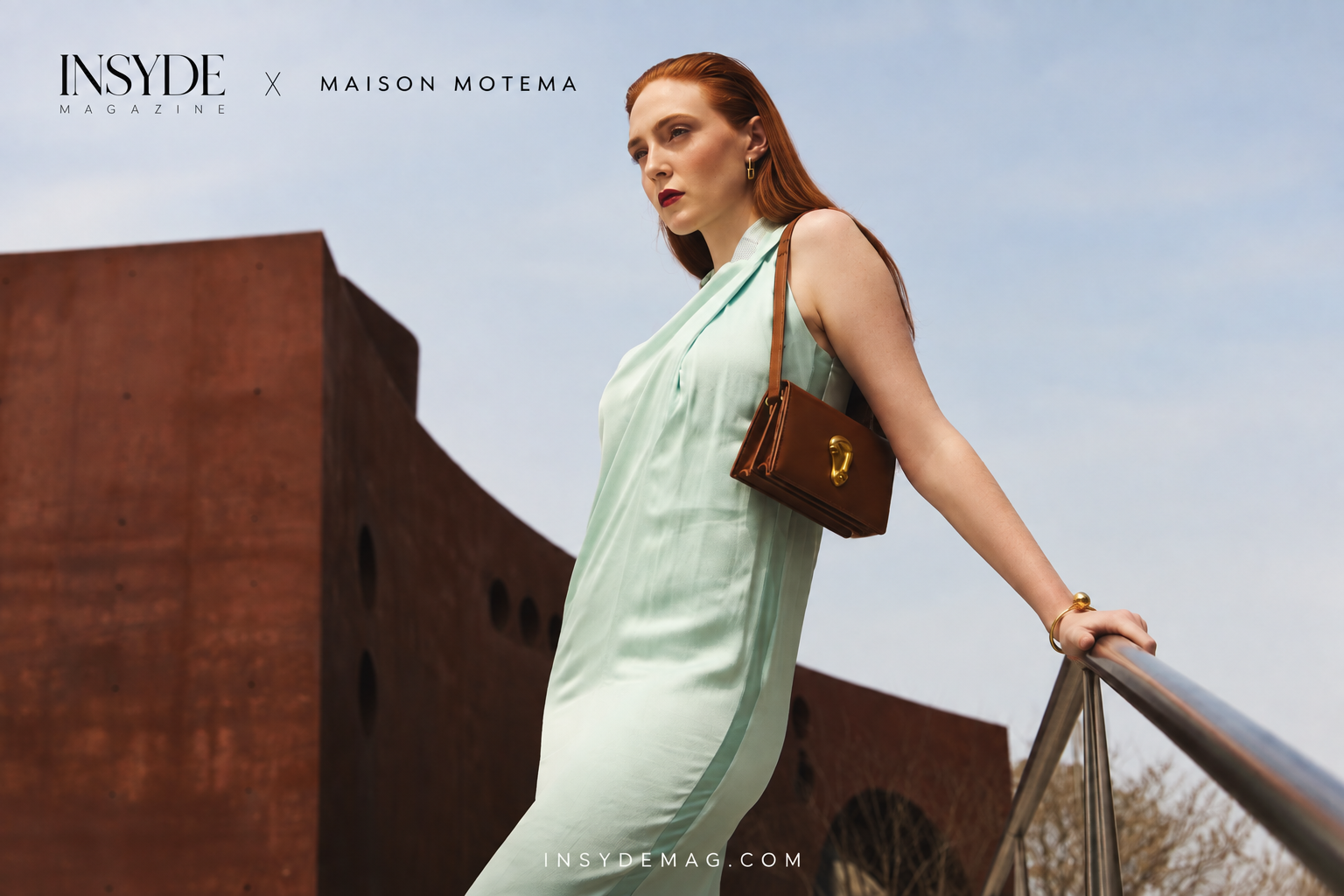
    Maison Motema is building within that shift.

    Working between New York and Dakar, the independent leather-goods house founded by Verlaine-Diane Soobroydoo is developing a design language around craftsmanship, technical knowledge and a belief that the object itself must earn its place in the luxury conversation.

    That distinction matters.

    In an industry increasingly fluent in storytelling, Maison Motema is interested in something harder to manufacture: desire created through design, material, proportion and making.

    THE OBJECT COMES FIRST

    For many years, Soobroydoo worked in spaces where economic empowerment was discussed through policy, systems, frameworks and development goals.

    Building Maison Motema brought those conversations into the physical world.

    An object has to be conceived. Its form has to be understood. A pattern has to work. A handle has to sit at precisely the right point. Leather has to be cut, shaped, assembled and finished. And eventually, someone has to desire the object enough to own it.

    That process creates economic value, but it also creates something less visible: knowledge.

    At Maison Motema, that knowledge is being developed within the atelier itself, where design and making exist in conversation rather than as separate stages.

    “The product has to deserve to exist first,” Soobroydoo says.

    It is a deceptively simple statement, but an important one.

    Maison Motema is not positioning itself as a development project disguised as a fashion company. The wider economic and cultural implications of its work matter, but they cannot substitute for the product.

    Beauty matters.

    Desire matters.

    The object has to stand on its own.

    ONE HOUSE, TWO RHYTHMS

    Maison Motema exists between New York and Dakar, but neither city is simply a backdrop.

    New York has shaped Soobroydoo’s eye. Its architecture, energy and pragmatism have influenced the way she thinks about objects that need to live within contemporary life—a bag that has to move with a woman through her day.

    Dakar offers something different: proximity to the making.

    An idea can move quickly from a drawing or conversation into leather. A proportion can be changed by a few millimetres. A handle can be repositioned. Construction can be reconsidered. Something can be made, examined and tried again.

    That immediacy changes the relationship between design and craftsmanship.

    “The atelier isn’t at the end of our creative process. It is inside it.”

    For Maison Motema, the atelier is therefore not simply where a finished design is produced. It is part of the process through which the design becomes what it ultimately is.

    Soobroydoo describes the relationship simply:

    “One house, two rhythms.”

    New York provides one rhythm. Dakar provides another. Maison Motema is being shaped in the space between them.

    A contemporary expression of Maison Motema’s design language

    A DIFFERENT MAP OF LUXURY

    Luxury has historically been concentrated around a relatively narrow geography.

    Paris. Milan. London. New York.

    These cities remain important, but creativity has never belonged exclusively to them.

    What is changing is the willingness to recognise sophisticated design ecosystems elsewhere—and to judge them by the same standards applied to established luxury centres.

    For Soobroydoo, this distinction is particularly important.

    She is proud that Maison Motema is anchored in Africa, but she does not want the house reduced to a category called “African luxury.”

    “Africa is not a design language.”

    The statement is direct because the reality is complex. Across the continent are enormous differences in aesthetic traditions, materials, technical knowledge, histories and contemporary cultures.

    There is also a danger in allowing origin to become the first thing discussed about the object.

    A designer working in Dakar can become “an African designer” before anyone has considered proportion, silhouette, material, construction or hardware.

    For Maison Motema, the ambition is different.

    “A beautiful bag made in Dakar shouldn’t require an explanation before it can participate in the global luxury conversation.”

    Geography can enrich the story.

    It should not have to justify the object.

    WHEN CRAFT BECOMES DESIGN

    There is a familiar assumption within fashion that design happens first and craftsmanship follows.

    A designer creates the drawing. Production begins. The artisan executes the idea.

    Maison Motema’s process is more fluid.

    Leather behaves differently once it is cut. A proportion that looks right on paper may feel wrong in the hand. Reinforcement changes structure. Thickness changes the way a fold behaves. Moving a handle slightly can change the balance of an entire bag.

    These are not merely production considerations.

    They are design decisions.

    That is why the atelier becomes part of Maison Motema’s creative language.

    Its chef d’atelier is not simply receiving instructions about what to manufacture. His knowledge of leather and construction influences what the object ultimately becomes.

    The exchange between idea and technical knowledge is continuous.

    For Soobroydoo, that is the essence of savoir-faire:

    “Knowledge accumulated through making.”

    It is knowledge developed through experience, repetition and attention to material.

    And it cannot be separated from the object itself.

    Luxury becomes personal when an object begins to carry a sense of identity.

    THE VALUE OF TAKING TIME

    The luxury industry increasingly speaks about slowing down.

    But slowness, by itself, is not a virtue.

    For Maison Motema, the value of limited production lies in the freedom it creates to understand an object more deeply.

    The house can adjust a proportion, improve a construction detail, change the way a bag sits against the body and observe how clients actually use it.

    “‘Slow’ shouldn’t mean inefficient. It should mean considered.”

    That distinction is important.

    In a world where almost anything can be reproduced immediately and at scale, time can become valuable when it creates space for knowledge and refinement.

    The objective is not to make fewer objects simply to create scarcity.

    It is to understand the objects being made deeply enough that their identity survives as the house develops.

    For an emerging luxury house, that patience can become a competitive advantage.

    FROM SYSTEMS TO SOMETHING TANGIBLE

    Soobroydoo’s previous career also shapes the way she thinks about Maison Motema.

    Her work in international institutions involved conversations around women’s economic empowerment, sustainable development and the structures that determine who participates in an economy and where value accumulates.

    Maison Motema has made those questions practical.

    How do you price an object?

    How do you invest in technical knowledge?

    How do you create continuity of work?

    How do you build a company capable of competing internationally while retaining the intelligence of its production?

    Those questions now exist inside the making of the house itself.

    But fashion has also given Soobroydoo another lesson.

    “Good intentions do not make a great product.”

    It is perhaps one of the most important distinctions in the Maison Motema story.

    Purpose can create context.

    Craftsmanship can create depth.

    Geography can create provenance.

    But none of them can replace exceptional design.

    The object still has to make someone want it.

    BEYOND THE LABEL

    The modern luxury consumer is increasingly sophisticated about narratives.

    They recognise purpose-driven campaigns. They question provenance. They understand the language of heritage, sustainability and craftsmanship.

    That makes genuine desire harder to manufacture.

    For Maison Motema, the answer is not to make its story louder.

    It is to make the object stronger.

    Soobroydoo wants someone to encounter a Maison Motema bag and first ask:

    “What is that?”

    Then look closer.

    Notice the shape.

    The leather.

    The balance.

    The construction.

    And only afterwards discover where it was made and the people and places behind it.

    That sequence matters.

    The object creates the curiosity.

    The story deepens it.

    Craftsmanship, translated into a modern silhouette.

    WHEN A HOUSE BECOMES RECOGNISABLE

    Soobroydoo’s ambition is not to spend the next decade arguing that exceptional leather goods can be made in Dakar.

    She would rather make exceptional leather goods in Dakar.

    Again and again.

    Until the existence of the house becomes the argument.

    The goal is for someone to see an object without seeing the logo and still recognise its identity.

    “That’s a Motema.”

    That is the moment a label begins to become a house.

    Not simply when its name becomes known, but when its visual and technical language becomes distinctive enough to be recognised independently of it.

    A particular proportion.

    A relationship between material and form.

    A distinctive construction.

    A consistent point of view.

    A sensibility that belongs unmistakably to the house.

    That kind of recognition cannot be created overnight.

    It has to be built through product development, technical excellence, discipline and consistency.

    THE FUTURE DOESN’T NEED PERMISSION

    Maison Motema is still building.

    And perhaps that is what makes its proposition so compelling.

    It is not asking the world to redefine luxury simply because the house is working between New York and Dakar.

    It is not asking for recognition because of geography.

    It is building objects that it believes can earn recognition on their own terms.

    That requires time.

    It requires technical excellence.

    It requires discipline.

    And it requires the confidence to let the product speak.

    Between New York and Dakar, design and craftsmanship are becoming part of one creative system.

    The atelier is part of the design.

    The geography is part of the story, but not the entire story.

    Purpose informs the business, but does not replace the product.

    Craftsmanship is not simply what happens after the creative work is finished.

    It is part of the creative work itself.

    That may ultimately be Maison Motema’s most compelling proposition.

    The future of luxury does not necessarily require a new definition of what luxury is.

    It may simply require a broader understanding of where exceptional objects can come from—and a willingness to judge them by what has actually been made.

    Because luxury can be explained.

    Heritage can be explained.

    Provenance can be explained.

    Desire cannot.

    It has to be earned.

    And Maison Motema is building for that moment—when the object speaks first, the story follows, and recognition comes without permission.

    Made to be desired.

  • THE $4 BILLION BEAUTY OBSESSION

    THE $4 BILLION BEAUTY OBSESSION

    India is falling for luxury beauty. But as global houses chase the country’s next generation of consumers, the real question is whether they know what India actually wants.

    India can now discover a Dior lipstick almost as quickly as Paris.

    A new foundation can appear on an Indian beauty feed within hours of its global launch. A celebrity can turn a shade into a sell-out before the product has even reached every store. A consumer in Bengaluru can compare formulas, finishes and undertones with someone in London without ever leaving her phone.

    Luxury beauty has never been this accessible in India.

    But access is no longer the interesting part.

    The more seductive question is whether luxury beauty actually understands the person buying it.

    Because India’s beauty consumer is changing faster than the industry built to serve them.

    And somewhere between the luxury counter, the Instagram Reel, the quick-commerce delivery and the bathroom mirror, a new beauty market is taking shape.


    INDIA IS NO LONGER WAITING FOR LUXURY

    For years, India’s luxury beauty story was fundamentally about availability.

    Could you find the brand?

    Could you find the right shade?

    Could you buy it without travelling abroad?

    Could you get the latest global launch before the next one arrived?

    Those questions are becoming less important.

    India’s luxury beauty market was already around $800 million in 2023, according to Reuters’ reporting on research from Kearney and LUXASIA, and the Kearney-LUXASIA study projects the market to reach $4 billion by 2035.

    But there is an important distinction.

    That $4 billion figure refers to luxury beauty as a whole, not makeup alone.

    Within the category, color cosmetics represented 28% of luxury beauty in 2023 and are projected to reach 32% by 2028, with color cosmetics forecast to grow at a 24% CAGR between 2023 and 2028.

    That makes makeup particularly interesting.

    Because India isn’t simply buying more beauty.

    It is becoming more deliberate about what beauty means.

    And makeup sits directly at the intersection of beauty, fashion, identity and desire.


    THE BEAUTY OF BEING SEEN

    Luxury used to tell consumers what was desirable.

    Today, consumers increasingly tell brands what matters.

    The shift is particularly visible among younger Indian shoppers.

    According to Ipsos’ Luxury Reimagined research, 70% of new e-luxury shoppers in India are under 35, while 76% of Indian Gen Z consumers are open to trying new brands, even in luxury.

    That is a very different consumer from the traditional luxury buyer.

    For younger shoppers, luxury makeup is not necessarily about possessing a status symbol.

    It can be about identity.

    A lipstick can complete an outfit.

    A fragrance can become associated with a relationship.

    A blush can define the look of an entire generation on Instagram.

    A compact can become an object of desire before anyone has even used it.

    Beauty is no longer sitting neatly inside the beauty category.

    It is crossing into fashion, entertainment, culture and self-expression.

    And that is exactly why India is becoming such an important luxury market.


    BUT INDIA IS NOT ONE SHADE

    Here is where the fantasy of a single global luxury consumer begins to fall apart.

    India is not one complexion.

    Not one undertone.

    Not one climate.

    Not one beauty ritual.

    Not even one definition of what a beautiful finish looks like.

    A foundation developed around one market’s expectations can behave differently in India’s humidity. A complexion range created without enough brown, neutral or warm undertones can leave consumers searching for a match that simply isn’t there.

    The Kearney-LUXASIA research identifies India’s geographical and ethnic diversity as a significant consideration for beauty brands, recommending region- and city-specific strategies and greater adaptation to India’s complexions, climate and consumer preferences.

    That is the difference between selling in India and designing for India.

    The first requires distribution.

    The second requires understanding.

    And luxury has always claimed that understanding the customer is part of the experience.


    THE INDIAN FACE HAS BECOME A GLOBAL IMAGE

    There is another shift happening quietly.

    Indian beauty is no longer simply consuming global aesthetics.

    It is increasingly influencing them.

    Indian celebrities, creators, makeup artists and fashion personalities are appearing inside global campaigns and conversations. Indian weddings generate enormous beauty demand. Indian skin tones are becoming more visible in global beauty imagery. And social platforms have removed much of the distance between an international launch and an Indian consumer.

    But representation is only the beginning.

    There is a temptation for global brands to treat localisation as casting.

    Put an Indian model in the campaign.

    Launch the same product.

    Change the creative.

    Call it local.

    Consumers are becoming sophisticated enough to see through that.

    Representation can make a brand visible in India. Relevance makes it stay.


    THE STRANGEST NUMBER IN INDIAN LUXURY BEAUTY

    Perhaps the most revealing statistic isn’t the size of the opportunity.

    It is who currently owns it.

    Kearney-LUXASIA estimates that international brands account for roughly 93% of India’s luxury beauty market, leaving local brands with approximately 7%. The same research contrasts this with mature Asian markets such as Japan and South Korea, where local brands can represent a significantly larger share of luxury beauty.

    That raises a much more interesting question than How big can India’s luxury beauty market become?

    Why hasn’t India built more global luxury beauty brands of its own?

    India has centuries of beauty rituals.

    Ayurveda.

    Fragrance.

    Natural ingredients.

    Jewellery.

    Colour.

    Craft.

    Ceremony.

    And an extraordinary cultural relationship with appearance.

    Yet when consumers think of luxury makeup, the most recognisable names are still largely European or American.

    That isn’t necessarily a failure.

    It could be the biggest opportunity sitting inside the market.


    THE NEXT LUXURY BEAUTY HOUSE COULD COME FROM INDIA

    Imagine an Indian beauty house that doesn’t attempt to make itself look European.

    A brand that understands Indian skin without turning “Indian skin” into a marketing gimmick.

    A house built around India’s relationship with colour.

    Its climates.

    Its rituals.

    Its weddings.

    Its nightlife.

    Its cinema.

    Its jewellery.

    Its architecture.

    Its contradictions.

    A brand that could sell a product in Mumbai and Paris without having to explain why it came from India.

    That would be a different kind of luxury.

    Not Indian luxury for Indians.

    Indian luxury for the world.

    And that distinction matters.

    Because the greatest luxury brands don’t simply sell products from their home countries.

    They export a worldview.


    THE METRO IS NO LONGER THE WHOLE STORY

    The next consumer isn’t necessarily standing in a luxury mall in Mumbai.

    India’s beauty growth is spreading outward.

    The Nykaa Beauty Trends Report 2024 found that approximately 55% of sales from the top nine prestige beauty brands on Nykaa came from non-metro markets.

    That changes the geography of luxury.

    The consumer in Jaipur doesn’t necessarily need to become a consumer in Mumbai.

    The consumer in Chandigarh doesn’t need to behave like someone in Delhi.

    The consumer in Kochi doesn’t need to have the same beauty routine as someone in Bengaluru.

    Digital access is allowing these markets to develop their own relationship with beauty.

    And luxury brands will have to learn how to listen to them individually.


    THE COUNTER IS DEAD. LONG LIVE THE COUNTER.

    Not literally.

    But the role of the luxury beauty counter is changing.

    For decades, the counter was where discovery happened.

    Today discovery can happen anywhere.

    Instagram.

    YouTube.

    TikTok.

    A creator’s GRWM.

    A celebrity interview.

    A beauty community.

    A search bar.

    A friend sending a screenshot.

    The physical store now has to offer something digital cannot.

    Confidence.

    The ability to touch the product.

    Test the shade.

    Understand the texture.

    Ask someone who actually knows the difference.

    Experience the fragrance.

    Feel the weight of the packaging.

    And perhaps most importantly, feel that the brand has made an effort to understand you.

    Kearney-LUXASIA estimates that approximately 70% of India’s luxury beauty market remains offline, with online accounting for around 30%. E-commerce, however, is projected to be one of the category’s fastest-growing channels.

    The future therefore isn’t online versus offline.

    It is online into offline and back again.

    A Reel creates desire.

    A store creates confidence.

    A purchase creates data.

    The next Reel creates another desire.

    Luxury beauty is becoming an ecosystem.


    AND THEN INDIA MADE LUXURY FAST

    There is something almost contradictory about luxury beauty in India right now.

    Luxury traditionally asks you to wait.

    India increasingly expects everything immediately.

    Quick commerce has trained consumers to think in minutes rather than days. Premium beauty is increasingly participating in that ecosystem.

    That doesn’t necessarily make luxury less luxurious.

    It may actually reveal something important about what modern luxury means.

    Luxury used to mean having more.

    Now it increasingly means having control.

    Control over your time.

    Your access.

    Your experience.

    Your choices.

    If a consumer discovers a product at 10:00 a.m. and wants it at 10:30, the ability to fulfil that desire can itself become part of the luxury proposition.

    The contradiction is beautiful:

    The future of luxury beauty may be both slower and faster.

    Slower in the experience.

    Faster in the access.


    WHAT BRANDS STILL GET WRONG

    The biggest mistake would be to look at India’s growth numbers and assume the job is done.

    It isn’t.

    A bigger market does not automatically create a stronger luxury proposition.

    The brands that want to win here will have to think beyond campaigns.

    They will need better shade architecture.

    Better climate understanding.

    Better inventory planning.

    Better replenishment.

    Better beauty advisors.

    Better city-specific strategies.

    Better digital discovery.

    And perhaps most importantly, better cultural intelligence.

    The Kearney-LUXASIA report identifies product, marketing, and partnership/distribution as three central pillars for brands seeking to unlock India’s luxury beauty opportunity.

    But beneath all three is the same requirement:

    Listen before you localise.


    INDIA DOESN’T NEED ANOTHER LUXURY LOGO

    This is perhaps the most exciting part of the story.

    India’s luxury beauty opportunity isn’t interesting because another European beauty house is opening another counter.

    It is interesting because the entire relationship between luxury and the Indian consumer is being rewritten.

    The consumer is younger.

    The access is wider.

    The discovery is digital.

    The cities are multiplying.

    The appetite is growing.

    And the definition of luxury itself is becoming more personal.

    The question is no longer:

    Will Indians buy luxury beauty?

    They already are.

    The question is:

    What will they demand from it next?

    Perhaps better representation.

    Perhaps better products.

    Perhaps more meaningful experiences.

    Perhaps brands that understand the difference between adapting to India and simply entering India.

    And perhaps, eventually, an Indian beauty house capable of making the rest of the world look East for its next idea.

    Because India’s luxury beauty story is no longer about catching up with Paris, Milan, London or New York.

    It may be about giving the world something those cities don’t have.

    A different way of seeing beauty.

    A different way of experiencing luxury.

    A different face of desire.

    And that face is increasingly Indian.


    INSYDE TAKE

    The first phase of India’s luxury beauty boom was about access.

    The second is about relevance.

    The third could be about creation.

    Global beauty houses are arriving because the opportunity is impossible to ignore. But the real winners won’t be defined by how quickly they can put a luxury logo in front of an Indian consumer.

    They will be defined by how deeply they understand the person behind the purchase.

    And somewhere in that gap between global luxury and Indian identity, there is room for an entirely new beauty story.

    The next great luxury beauty house might not be discovering India.

    It might be coming from it.

    Beyond the Spotlight.
  • Jaya Misra: The Making of a  Modern Indian Fashion Language

    Jaya Misra: The Making of a Modern Indian Fashion Language

    Jaya Misra at the Cannes Film Festival,

    As Jaya Misra marks 20 years in fashion, the designer reflects on Indian identity, global ambition, craftsmanship, personal style and why the future of fashion may depend on knowing when to say less.

    Indian fashion is having a global moment.

    But the conversation around it is changing.

    For decades, international perceptions of Indian fashion were often reduced to a familiar vocabulary: elaborate embroidery, vivid colour, weddings, traditional silhouettes and the extraordinary work of its artisans.

    Those elements remain important. But they were never the whole story.

    India possesses one of the world’s richest design languages — shaped by textiles, regional craftsmanship, architecture, jewellery, history and generations of accumulated knowledge. Increasingly, Indian designers are taking those foundations into contemporary territory, creating work that can speak to an international audience without surrendering its identity.

    For Jaya Misra, that distinction is fundamental.

    “I have always believed that we do not need to become Western to be international. We can take something deeply Indian and give it a modern expression.”

    It is an idea that has accompanied her through two decades in fashion.

    In 2026, Jaya Misra India marks 20 years since its establishment. A graduate of NIFT, Jaya founded the house in 2006 and has since presented her work across national and international fashion platforms, with showcases spanning cities including Milan, New York, London, Dubai, Tokyo, Toronto and Vancouver. Her career has also included serving as an official designer for Femina Miss India and working across multiple international couture and fashion showcases.

    But after twenty years, the more interesting question is not simply where Indian fashion has travelled.

    It is what Indian fashion is becoming.

    Indian, Without Explanation

    For a long time, Indian fashion was introduced to the world through its most recognisable elements.

    Colour. Embroidery. Weddings. Ornamentation.

    Jaya believes that perception is becoming more nuanced.

    “Indian fashion is so much more than that,” she says, pointing to the country’s textiles, craftsmanship and techniques passed down through generations.

    The shift, she believes, is happening as designers begin presenting those traditions through a contemporary language that feels relevant around the world.

    There is still a tendency, she acknowledges, to measure luxury against Western standards. But that is gradually changing as Indian fashion becomes more confident in defining its own value.

    That distinction matters.

    Global relevance does not have to mean cultural translation.

    Indian fashion does not need to become Western in order to become international.

    Its challenge may instead be to become more confident about what is already uniquely its own — and to find new ways of expressing it.

    The goal is not simply to make Indian fashion visible.

    It is to make it understood on its own terms.

    When Heritage Is Allowed to Move

    Fashion has always had a complicated relationship with tradition.

    Preserve it too rigidly and it can become something admired rather than lived. Change it too completely and the knowledge behind it can disappear.

    For Jaya, evolution is part of preservation.

    “For me, preservation does not mean freezing something in time.”

    A traditional craft, she believes, needs room to move.

    A historic weave can become a contemporary jacket, corset or gown. An established technique can enter an unexpected silhouette without losing the heritage from which it came.

    The form can change.

    The essence should remain.

    But there is one boundary she considers essential: respect for the maker.

    “Evolution should never erase the artisan or the story behind the craft.”

    That places craftsmanship somewhere beyond decoration. The artisan is not simply part of a production process; the knowledge, patience and human skill behind the technique are part of the value of the final piece.

    For Indian fashion, keeping craft alive may therefore depend not on protecting it from change, but on giving it enough relevance to continue being worn, interpreted and desired.

    Tradition survives not only when it is preserved.

    Sometimes, it survives because it is allowed to evolve.

    The Luxury of Time

    Luxury has accumulated plenty of definitions.

    Price. Exclusivity. Rarity. Status.

    Jaya’s understanding is quieter.

    “For me, luxury is not defined by a price tag.”

    Instead, she associates it with time, craftsmanship, individuality and intention.

    That perspective feels particularly relevant in an industry increasingly shaped by immediacy.

    Fashion moves quickly. Trends appear and disappear almost overnight. Digital platforms encourage constant consumption, constant visibility and constant newness.

    Against that speed, something made slowly begins to feel almost radical.

    “Something handmade, created especially for you or marked by the subtle imperfections of the human hand has a unique soul.”

    But there is another form of luxury that cannot be measured through material value.

    Memory.

    “If a garment makes you feel powerful, beautiful or connected to a memory, its value goes far beyond its price,” she says.

    A couture garment can therefore become more than an object of consumption. It can become part of an experience, a milestone or a personal history.

    Perhaps that is why craftsmanship continues to matter.

    It gives an object something mass production struggles to replicate:

    a sense of having been made for a person rather than simply made for a market.

    The Problem With Seeing Everything

    Social media has changed fashion more radically than almost any runway could.

    A designer can now be discovered by someone thousands of kilometres away without passing through the traditional gatekeepers of the industry. Emerging talent can build an audience independently, while consumers have access to more fashion than ever before.

    Jaya sees that democratisation as a positive development.

    But accessibility has created its own contradiction.

    When everyone is looking at the same images, references can begin to converge.

    “The same silhouette, styling and trend can appear everywhere almost overnight.”

    The result is an industry with more access but, sometimes, less distinction.

    In that environment, personal style becomes less about knowing what is trending and more about knowing what feels authentic.

    “Personal style begins when you stop asking, ‘What is everyone wearing?’ and start asking, ‘What feels authentic to me?’”

    It is a question that extends beyond clothing.

    When algorithms can constantly tell us what to see, buy and desire, individuality requires a degree of resistance.

    Fashion can inspire you.

    It should not have to define you.

    Indian by Instinct

    Should an Indian designer have a responsibility to represent Indian culture?

    Jaya does not believe creativity should come with a compulsory assignment.

    An Indian designer should be free to create something minimal, futuristic, Western, traditional or experimental.

    “Creativity needs freedom.”

    Yet freedom from obligation does not mean freedom from influence.

    India’s textiles, embroideries, colours, architecture, jewellery, history and crafts inevitably form part of the visual memory of someone who grows up within that environment.

    “So even when I create something highly international, my Indian sensibility often comes through,” she says.

    “I do not have to force it; it is already an intrinsic part of who I am.”

    There is something significant in that idea.

    Identity does not always need to be announced to be present.

    For a designer working between Indian heritage and contemporary global silhouettes, being Indian does not necessarily mean reproducing recognisable symbols of India.

    Sometimes it is simply part of the way one sees.

    The Case for Editing

    Indian fashion has never struggled to make an entrance.

    Drama, colour, surface, craftsmanship and occasion are among its natural strengths. On a red carpet or international platform, that visual confidence can be extraordinarily powerful.

    But Jaya believes the next stage of India’s global fashion story may require a different skill.

    Editing.

    “Sometimes, we assume that showcasing craftsmanship means showing everything at once.”

    Her counterargument is particularly relevant to contemporary luxury: restraint can communicate just as much as abundance.

    “A single extraordinary detail can sometimes say more than twenty.”

    It is a deceptively simple observation in an industry where more is often mistaken for more luxurious.

    India already possesses extraordinary craftsmanship. The challenge now is not proving that it exists.

    The challenge is how it is presented.

    Jaya argues that Indian fashion needs stronger global business structures, presentation, communication and consistency.

    “Talent is not our challenge; we have an abundance of it.”

    That may be one of the most important questions facing Indian fashion today.

    The next chapter may be less about proving what India can create and more about deciding how that creativity is edited, positioned and communicated to the world.

    Jaya Misra at the House of Lords, London

    Dream First. Then Find the Woman.

    Every designer eventually confronts the tension between creativity and commercial reality.

    Focus too heavily on commerce and creative identity can disappear. Create only for yourself and the relationship with the person wearing the garment can become distant.

    Jaya sees the two as a dialogue.

    “I like to create a dream first. Then I ask myself: how can a real woman enter that dream?”

    The runway can remain dramatic and imaginative while its essence is translated into something that can exist beyond the show — a jacket, saree, dress or another silhouette.

    The idea begins as fantasy.

    The wearer gives it a life.

    That balance is particularly important in couture, where the distance between spectacle and reality can be enormous.

    The most successful design does not necessarily force the customer into the designer’s imagination.

    It gives the customer a way into it.

    A Generation in a Hurry

    Looking toward the future, Jaya is optimistic about the fearlessness of younger designers.

    Today’s generation has access to global references almost instantly. They experiment with gender, technology, sustainability, textiles, silhouettes and storytelling, while rediscovering Indian crafts through increasingly unconventional approaches.

    But that access also comes with pressure.

    Everything is expected to happen faster.

    Collections. Trends. Content. Recognition.

    “There can be enormous pressure to succeed before you have had the chance to discover who you are as a designer.”

    For Jaya, identity cannot be rushed.

    “A strong identity takes time.”

    After two decades in fashion, she says she is still learning, evolving and discovering new possibilities.

    That process, she believes, never really ends.

    Perhaps that is the most revealing lesson in her twenty years of fashion.

    Longevity is not simply about remaining relevant.

    It is about continuing to evolve without losing the thread that makes the work recognisably yours.

    Her advice to the next generation is therefore less about visibility than substance:

    “Do not be so eager to be seen that you forget to develop something worth remembering.”

    It is a thought that feels particularly relevant in an industry where visibility can arrive instantly and disappear just as quickly.

    Because ultimately, Jaya’s understanding of fashion is not about creating a moment.

    It is about creating a language.

    An identity.

    A body of work.

    Something that can travel across borders without losing its origin, evolve without abandoning its memory, and remain unmistakably its own.

    For Jaya Misra, Global Vision and Indian Couture are not opposing ideas.

    They are part of the same conversation.

    And after twenty years, that conversation is still evolving.


    JAYA MISRA INDIA

    Jaya Misra — Founder & Creative Director

    20 Years of Fashion Excellence · 2006–2026

    Design Signature: Modern Indian Couture · Heritage Textiles & Indian Craftsmanship · Contemporary Draping & Global Silhouettes · Luxury with Individuality · Tradition Reimagined for the Modern Woman

    Brand Philosophy: Global Vision. Indian Couture.

    INSYDE Exclusive

  • Insyde the Manish Malhotra Empire: How Bollywood Glamour Became Indian Luxury

    Insyde the Manish Malhotra Empire: How Bollywood Glamour Became Indian Luxury

    What began with costumes for Bollywood became something much larger: a luxury house built around celebrity, craftsmanship, aspiration and the idea that Indian fashion can belong on the world’s biggest stages.

    Luxury has always been about more than what you wear.

    It is about what a name makes you feel.

    For some houses, that feeling has been built through centuries of European heritage. For others, it comes from a particular designer, a particular silhouette or a particular way of seeing the world.

    In India, few names have created that feeling as consistently as Manish Malhotra.

    For decades, his name has been attached to Bollywood glamour: sequins under studio lights, elaborate wedding lehengas, celebrities on red carpets and couture that seems designed for moments larger than everyday life.

    But there is another Manish Malhotra story hiding underneath the glamour.

    It is a business story.

    The story of how a costume designer became a fashion label, how a label became a luxury house, and how that house is now trying to move from being India’s most recognisable designer name to becoming a global Indian luxury brand.

    That distinction matters.

    Because designing beautiful clothes is one thing.

    Building a luxury house is something else entirely.

    The House Behind the Name

    The House of Manish Malhotra was founded in 2005, after the designer had already spent more than a decade transforming costume design in Indian cinema. Today, the House spans couture, bridal, menswear, ready-to-wear, high jewellery, beauty and film production.

    That expansion didn’t happen because fashion suddenly became a business opportunity.

    It happened because Malhotra had already built something extraordinarily valuable before the fashion house fully existed:

    recognition.

    People knew the name.

    They knew the aesthetic.

    They knew the celebrities.

    They knew the glamour.

    And they knew what it meant when a star stepped out in Manish Malhotra.

    That kind of cultural recognition cannot simply be bought.

    It has to be accumulated.

    Year after year.

    Film after film.

    Collection after collection.

    Wedding after wedding.

    The House was therefore not starting from zero.

    It was turning cultural influence into commercial architecture.

    Bollywood Was the Original Luxury Engine

    Before social media, before influencer marketing, before celebrity collaborations became standard fashion strategy, Bollywood was already doing something remarkably powerful.

    It was selling aspiration.

    Millions of people watched actors on screen and wanted pieces of that world: the clothes, the jewellery, the homes, the parties, the romance, the glamour.

    Malhotra understood this unusually well because he was working inside the machine creating those images.

    His costume designs didn’t simply dress characters.

    They helped define them.

    That gave him an advantage that a conventional fashion label could never easily replicate.

    He understood how clothes behave on camera.

    How colour works under lighting.

    How a silhouette changes the perception of a character.

    How one outfit can become associated with an entire film.

    And eventually, how a designer’s name can become part of the fantasy.

    That is one reason his move into fashion was so powerful.

    He wasn’t introducing a new name to Bollywood.

    He was taking a name Bollywood had already helped make famous and turning it into a brand.

    When Visibility Became Value

    Luxury traditionally depends on scarcity.

    But Malhotra built his brand through something that might appear contradictory:

    visibility.

    His clothes were everywhere.

    On movie stars.

    At weddings.

    At award ceremonies.

    In magazines.

    On runways.

    On social media.

    That visibility did not necessarily make the brand less luxurious.

    Instead, it created desire.

    The public could see the world.

    But only a small number of people could actually enter it.

    That is the basic psychology of aspiration.

    And Malhotra understood it long before the language of personal branding and influencer culture became part of fashion strategy.

    The celebrity was not simply wearing the product.

    The celebrity was helping create the product’s meaning.

    A Manish Malhotra lehenga became more than fabric and embroidery.

    It became a piece of the world associated with the people wearing it.

    The Power of the Indian Wedding

    There may be no better environment for luxury than an Indian wedding.

    Weddings are emotional.

    They are highly visual.

    They involve multiple generations.

    They bring together fashion, jewellery, beauty, photography, music and ceremony.

    And they often represent one of the largest discretionary fashion purchases a family will make.

    Malhotra’s aesthetic fits naturally into this world.

    His couture is dramatic enough for the occasion, detailed enough to reward close attention and recognisable enough to photograph beautifully.

    But there is something deeper happening here.

    A wedding outfit is not simply a fashion purchase.

    It becomes part of memory.

    The lehenga becomes the photograph.

    The photograph becomes the family archive.

    The garment becomes part of the story.

    For a luxury house, that emotional connection is enormously valuable.

    It means the brand isn’t simply selling clothing.

    It is participating in people’s most important moments.

    Craftsmanship as the Luxury Proposition

    There is another foundation underneath the glamour:

    craft.

    The House describes Indian craftsmanship as central to its identity, with embroidery, weaving and handcraft traditions continuously reinterpreted through a contemporary luxury vocabulary.

    This is important because Indian craftsmanship has historically occupied an unusual position in global fashion.

    The world has wanted the embroidery.

    It has wanted the textiles.

    It has wanted the handwork.

    But the names of the designers and houses presenting that craft have often mattered more than the names of the artisans producing it.

    The luxury conversation is beginning to change.

    Indian designers are increasingly presenting craftsmanship as part of an authored luxury proposition rather than simply as a source of decorative technique.

    Malhotra’s model is built around that idea.

    The embroidery isn’t background.

    It is part of the identity.

    The handwork isn’t simply an embellishment.

    It is part of the value.

    The Indian-ness isn’t something to hide.

    It is part of the luxury proposition.

    From Couture to an Ecosystem

    A fashion label can survive on clothing.

    A luxury house needs more.

    The Manish Malhotra universe has steadily expanded into categories that allow the customer to interact with the brand in different ways.

    Beauty arrived in 2018.

    High jewellery expanded from 2019 and formally launched as Manish Malhotra High Jewellery in 2023.

    Ready-to-wear launched in 2025.

    The House has also moved into film production through Stage5 Productions.

    This is not random diversification.

    It follows a familiar luxury-house logic.

    If the customer loves the aesthetic, give them more ways to live inside it.

    Couture creates the fantasy.

    Ready-to-wear makes it more accessible.

    Jewellery adds permanence.

    Beauty extends the identity to everyday life.

    Film creates another storytelling platform.

    The products change.

    The world remains recognisable.

    That is how a designer becomes a brand ecosystem.

    The Reliance Chapter

    Then came a significant change in the business story.

    In 2021, Reliance Brands acquired a 40% stake in Manish Malhotra’s brand company, MM Styles. The partnership was positioned around expanding the brand in India and internationally, including retail and digital growth.

    This matters because scale is one of the hardest problems facing Indian luxury.

    A designer can have extraordinary creative talent and enormous cultural influence.

    But global luxury requires infrastructure.

    Retail.

    Capital.

    Technology.

    Supply chains.

    International distribution.

    Marketing.

    And the ability to build a consistent customer experience across markets.

    Strategic corporate backing can provide some of that infrastructure.

    Malhotra himself has been open about the ambition.

    In a 2025 interview with The Week, he said he wanted the business to reach ₹1,000 crore, adding that he did not believe the company was very far from that goal. He also said the business had grown by 35% over the previous two years.

    That changes the way we should look at the House.

    This isn’t simply a designer protecting a creative legacy.

    It is a company trying to scale.

    The Global Customer

    The international opportunity is not theoretical.

    Malhotra opened his first international flagship in Dubai in 2004 — before opening his first Indian flagship in Mumbai in 2006. His relationship with Dubai has continued to deepen, including the opening of a large Dubai Mall boutique in 2023.

    And the potential customer isn’t necessarily Indian.

    In his 2025 interview with The Week, Malhotra described his Dubai clientele as including NRIs alongside Arab, Russian and Chinese customers.

    That is an important distinction.

    An Indian luxury brand becomes genuinely global when people who do not need to buy Indian fashion begin wanting it.

    The diaspora can be the bridge.

    But it cannot be the entire destination.

    The bigger ambition is to make Indian luxury desirable because it is Indian, not merely because Indians abroad want a connection to home.

    That is a much harder challenge.

    And a much bigger opportunity.

    Why Paris Matters

    In July 2026, the House reached one of the most important stages in its history.

    Manish Malhotra presented his Fall/Winter 2026 couture collection in Paris as a guest house on the official Haute Couture Week schedule, becoming the fourth Indian designer to appear on the official calendar.

    It would be easy to treat that as a glamorous milestone.

    But Paris means more than a runway.

    It is a signal.

    For years, Indian craftsmanship has quietly supported global luxury. Vogue noted in 2026 that Indian artisans have long produced embroidery, embellishment and handwoven textiles used by major international fashion houses. The growing presence of Indian designers on the Paris couture calendar represents a shift in who gets to tell that story.

    Malhotra’s arrival therefore carries a larger question:

    Can an Indian house move from supplying craftsmanship and inspiration to owning the global luxury narrative?

    That is the real significance of Paris.

    The House Has Something Europe Cannot Manufacture

    There is an interesting advantage to the Manish Malhotra proposition.

    European luxury houses have heritage.

    Malhotra has something different.

    He has cultural immediacy.

    He has Bollywood.

    He has Indian weddings.

    He has celebrity relationships.

    He has contemporary Indian glamour.

    He has access to an enormous cultural ecosystem that already understands the emotional language of his clothes.

    That is difficult for a new luxury brand to manufacture.

    You cannot launch a campaign and suddenly create thirty years of cultural memory.

    Malhotra already has it.

    The challenge is translating that memory for someone who didn’t grow up watching Bollywood.

    That is where the next stage of the brand becomes interesting.

    Can the glamour travel without losing its meaning?

    Can the craftsmanship feel contemporary rather than simply traditional?

    Can the name become aspirational in Paris, Dubai, London or New York for someone who has no personal connection to Hindi cinema?

    Those are the questions that will define the next chapter.

    The Risk of Being Too Much Manish Malhotra

    Every powerful designer brand eventually faces the same problem.

    The designer becomes the brand.

    That creates enormous recognition.

    But it can also create dependence.

    When people hear Manish Malhotra, they immediately know what kind of world they are entering.

    That is an asset.

    But a global luxury house has to become bigger than the person who created it.

    It needs institutional identity.

    It needs younger customers.

    It needs new categories.

    It needs designers, artisans and creative teams who can evolve the language without destroying it.

    The House’s expansion into ready-to-wear, beauty, jewellery and film suggests that this process is already underway.

    The question is whether the brand can evolve while remaining unmistakably Manish Malhotra.

    That is the difficult part of building a maison.

    You have to change without looking like you changed.

    The Indian Luxury Moment

    There is a broader story here too.

    India’s luxury market is entering a different phase.

    For a long time, Indian consumers who wanted global luxury looked outward.

    European fashion houses represented prestige.

    International logos represented status.

    Indian designers were often associated with weddings, occasionwear and celebrity culture.

    That hierarchy is becoming less simple.

    Indian designers are building stronger businesses.

    Indian craftsmanship is receiving greater attention.

    Indian consumers are becoming more confident in local luxury.

    And global audiences are increasingly interested in the culture and aesthetics emerging from India.

    Malhotra sits directly inside that transition.

    He represents an older India that discovered glamour through cinema.

    But he is also building for a newer India that wants to participate in global luxury on its own terms.

    That tension is part of what makes the House interesting.

    Beyond the Logo

    The most valuable thing Manish Malhotra has built may not be a logo.

    It is recognition.

    You can often identify the world before you identify the garment.

    The shimmer.

    The embroidery.

    The colour.

    The drama.

    The collision of contemporary silhouettes with Indian craft.

    That consistency is one of the foundations of luxury.

    A great house creates a visual language that customers recognise almost instinctively.

    Malhotra has been refining that language for decades.

    The business is simply giving it more places to exist.

    So, Can Manish Malhotra Become a Global Luxury House?

    The answer is more complicated than yes or no.

    The ingredients are already there.

    A recognisable creative identity.

    Decades of cultural relevance.

    A strong celebrity network.

    Deep relationships with Indian craftsmanship.

    A growing multi-category business.

    International retail.

    Corporate backing.

    And now, an official Paris couture presence.

    The harder part is what comes next.

    Global luxury cannot be built entirely on celebrity.

    It cannot depend only on Indian weddings.

    It cannot survive on nostalgia.

    And it cannot simply export the same product to every market.

    It has to evolve.

    It has to create desire beyond its original audience.

    It has to become culturally relevant without losing its origin.

    That is the real test.

    From Bollywood Glamour to Indian Luxury

    Manish Malhotra’s greatest achievement may not be that he became India’s most famous fashion designer.

    It may be that he understood how to turn attention into aspiration, aspiration into desire, and desire into a business.

    The movies gave him visibility.

    Celebrity gave him cultural power.

    Couture gave him authority.

    Craftsmanship gave him depth.

    Business partnerships gave him scale.

    And Paris has given the House a new stage.

    But the story isn’t finished.

    If the next decade goes the way Malhotra hopes, the question may eventually stop being:

    “Can an Indian designer build a global luxury house?”

    It may become:

    “Why did we ever assume Indian luxury had to look anywhere else for permission?”

    That is the opportunity sitting in front of Manish Malhotra.

    Not simply to take Indian glamour to the world.

    But to convince the world that Indian glamour was already luxury.

    The next chapter isn’t about becoming global.

    It is about deciding what Indian luxury looks like when the world is watching.

  • The Bhansali Aesthetic

    The Bhansali Aesthetic

    How Sanjay Leela Bhansali turned Indian cinema into a language of beauty, craftsmanship and desire.

    Some filmmakers tell stories.

    Sanjay Leela Bhansali builds worlds.

    Before a character speaks, there may already be a chandelier glowing above her, silk moving through the frame, jewellery catching the light, music rising somewhere beyond the room.

    In his cinema, beauty is rarely background.

    Beauty is part of the narrative.

    That is what makes Bhansali particularly interesting to INSYDE.

    His work sits at an intersection of cinema, fashion, architecture, music, craftsmanship and desire — a place where visual richness becomes storytelling and detail becomes identity.

    Over more than three decades, he has developed an aesthetic so recognisable that a frame can sometimes feel like a Bhansali frame before the audience consciously understands why.

    And perhaps that is the real achievement.

    He didn’t simply create films with a distinctive look. He created a visual language.

    When Cinema Becomes a World

    There is a difference between designing a beautiful frame and constructing an entire universe.

    Bhansali has consistently pursued the latter.

    His films are populated by elaborate interiors, dramatic architecture, intricate costumes, jewellery, carefully choreographed movement and compositions in which even the smallest visual element can feel deliberate.

    Those details do not exist independently.

    They speak to one another.

    Architecture establishes scale.

    Costume establishes character.

    Lighting establishes mood.

    Music establishes emotion.

    Movement establishes rhythm.

    Together, they create something closer to an immersive environment than a conventional film set.

    That precision has become part of the Bhansali method. On Heeramandi, Architectural Digest India documented his insistence on repeatedly adjusting elements of the set — from furniture and wall textures to seemingly minor decorative details — and quoted Bhansali explaining that architecture plays an important role in how he constructs a frame. (Architectural Digest)

    The point is not simply to make a set look expensive.

    The environment has to belong to the story.

    The Luxury of Detail

    Luxury has always depended on detail.

    The difference between something expensive and something exceptional is often invisible from a distance.

    A stitch.

    A setting.

    A finish.

    A proportion.

    A material chosen because of how it responds to light.

    Bhansali approaches cinema with a similar sensitivity.

    A costume isn’t simply clothing.

    A room isn’t simply a set.

    A chandelier isn’t simply decoration.

    A colour isn’t simply a colour.

    Everything contributes to the emotional architecture of the scene.

    The result is a cinema that can feel almost tactile.

    You sense the weight of the fabric.

    The warmth of the light.

    The scale of the room.

    The movement of jewellery.

    The silence before the music begins.

    The effect is extravagant, but the underlying principle is surprisingly disciplined:

    nothing is there without intention.

    Where the Obsession With Beauty Began

    The grandeur of Bhansali’s cinema has a deeply personal origin.

    He has spoken about growing up in a chawl in Mumbai and about the lack of space and visual beauty around him during his childhood. His mother, a dancer, performed in a small space, while Bhansali imagined larger, more ordered environments. He has connected those experiences directly to the expansive sets, central framing and visual symmetry that later became signatures of his filmmaking. (Indian Express)

    It is an important detail because it changes the way his aesthetic can be understood.

    The grandeur is not simply extravagance for its own sake.

    It is a response to limitation.

    Small spaces became expansive ones.

    Plain walls became elaborate environments.

    Disorder became symmetry.

    Limited movement became choreography.

    The absence of beauty became an obsession with creating it.

    And perhaps that is why his sets rarely feel merely expensive.

    They feel imagined.

    The Architecture of Desire

    Bhansali understands something that luxury brands have understood for generations:

    objects become more powerful when placed inside a world.

    A necklace is one thing.

    A necklace worn with a particular fabric, under a particular light, inside a particular room, accompanied by music and movement, becomes something else.

    The object acquires context.

    That is one of the reasons his cinema has such a strong relationship with fashion and jewellery.

    The visual elements do not sit around the characters.

    They help construct them.

    Jewellery as Storytelling

    There may be no better example than jewellery.

    In Bhansali’s worlds, jewellery rarely feels incidental.

    It can establish hierarchy.

    It can indicate wealth.

    It can communicate tradition.

    It can transform the silhouette of a character.

    And, importantly, it interacts with light.

    A necklace catching the light during a close-up is doing more than displaying craftsmanship.

    It is participating in the image.

    This is where Bhansali’s cinema naturally intersects with the language of luxury.

    The finest luxury objects are designed to reward attention.

    So are his frames.

    The closer you look, the more there is to discover.

    Fashion Without the Fashion Show

    Bhansali’s relationship with fashion is more sophisticated than simply dressing actors beautifully.

    His costumes establish an entire visual vocabulary.

    Silhouette, fabric, colour, ornamentation and movement work together.

    The clothes have to survive choreography.

    They have to respond to lighting.

    They have to communicate period and cultural context.

    And they have to remain emotionally connected to the character.

    That requires something closer to design than conventional styling.

    The result is fashion that belongs to the world of the film rather than being placed on top of it.

    The costume doesn’t interrupt the story. It becomes part of the story.

    The Women at the Centre

    Bhansali’s cinema has repeatedly placed women at the centre of its visual and emotional worlds.

    From Devdas and Black to Ram-Leela, Bajirao Mastani, Padmaavat, Gangubai Kathiawadi and Heeramandi, his women are rarely treated as background figures.

    Their clothes, jewellery, movement and environments often become extensions of their emotional and social position.

    The scale of the world around them can communicate power.

    A crowded room can become a stage.

    A palace can become a prison.

    A costume can become armour.

    A jewel can become status.

    A dance can become defiance.

    That visual treatment has become one of the recognisable elements of his cinema. Actors from Heeramandi have also described his approach to presenting women as central to his filmmaking language. (Indian Express)

    The important point is not simply that Bhansali makes beautiful images of women.

    It is that he uses beauty as part of the language through which their stories are told.

    Music Is Architecture

    There is another defining element of the Bhansali aesthetic: music.

    For Bhansali, music has long been central to the construction of his films rather than something added after the visual world is complete.

    A song can become a room.

    A room can become choreography.

    Choreography can become emotion.

    Emotion becomes narrative.

    This is why some of his most memorable sequences can communicate enormous amounts without conventional dialogue.

    The music carries the architecture of the scene.

    The performers move through it.

    The camera becomes part of the choreography.

    The result is closer to a fully composed theatrical experience than a conventional musical interlude.

    The Discipline Beneath the Spectacle

    The word “grand” is often used to describe Bhansali.

    It is accurate, but incomplete.

    What is more interesting is the discipline underneath it.

    He has spoken about his fascination with central framing and the desire to create order from the disorder he experienced growing up. (Indian Express)

    Architectural Digest India has similarly documented his attention to the smallest details of his sets, including furniture placement, textures, colours and architectural elements. (Architectural Digest)

    That reveals the secret beneath the spectacle.

    The image may be extravagant.

    The composition is controlled.

    That is why his frames can feel so immediately recognisable.

    Grandeur With a Purpose

    Bhansali’s films are often described using words such as lavish, opulent and larger-than-life.

    But spectacle alone would not explain their longevity.

    The real fascination lies in what the grandeur communicates.

    A palace can represent power.

    A crowded courtyard can represent society.

    A vast stage can make an individual appear small.

    An empty room can make an emotion feel enormous.

    A chandelier can suggest wealth, desire or decay.

    A costume can tell you where a character belongs before the dialogue does.

    The visual scale is therefore not simply decoration.

    It is emotional scale.

    India Through a More Cinematic Lens

    There is also something distinctly Indian about Bhansali’s understanding of grandeur.

    India has never treated beauty as purely architectural.

    It exists in textiles.

    Jewellery.

    Music.

    Dance.

    Wedding traditions.

    Craftsmanship.

    Palaces.

    Festivals.

    Theatre.

    Ceremony.

    Bhansali understands that instinctively.

    His cinema draws from a cultural memory in which colour, ornamentation, music and movement can coexist without apology.

    The result is not simply an expensive-looking version of Indian cinema.

    It is an attempt to transform elements of Indian visual culture into a cinematic language of their own.

    And that distinction matters.

    He doesn’t simply decorate Indian stories. He builds worlds around them.

    From Cinema to a Wider Cultural Language

    With Heeramandi: The Diamond Bazaar, Bhansali extended this visual vocabulary into streaming.

    The series brought together his familiar concerns — music, performance, elaborate environments, costumes, historical atmosphere and female characters — for a global streaming audience. Netflix describes the series as a story of love, power, betrayal and freedom centred on the courtesans of pre-independence Lahore. (Indian Express)

    The significance goes beyond the move from cinema to television.

    It demonstrated that the Bhansali aesthetic could exist as a broader cultural world.

    The sets became part of the conversation.

    The costumes became part of the conversation.

    The jewellery became part of the conversation.

    The music became part of the conversation.

    The visual identity became almost as recognisable as the title itself.

    That is a powerful position for any filmmaker to reach.

    The Influence of the Past

    Bhansali’s visual references are not limited to cinema.

    Architectural Digest India has documented how his reference library has drawn from places and objects he encountered growing up, as well as artists, photographers and musicians including S. H. Raza, V. S. Gaitonde, Raghu Rai and Kishori Amonkar. (Architectural Digest)

    That is revealing.

    His aesthetic isn’t built from one source.

    It is accumulated.

    Painting.

    Photography.

    Music.

    Architecture.

    Theatre.

    Textiles.

    Indian history.

    Street life.

    Memory.

    The resulting world may look fantastical, but its ingredients are deeply rooted in observation.

    When Excess Becomes Restraint

    There is an irony in Bhansali’s work.

    The images can be enormous.

    The sets can be enormous.

    The costumes can be elaborate.

    The music can be overwhelming.

    Yet the composition is often highly controlled.

    Symmetry.

    Central framing.

    Colour relationships.

    Movement.

    Light.

    Negative space.

    Everything is competing for attention, yet everything is carefully placed.

    That tension is part of what makes the aesthetic work.

    The spectacle is large. The intention is precise.

    A Filmmaker With a Signature

    The ultimate achievement for an auteur is recognisability.

    Not fame.

    Not scale.

    Not even box-office success.

    A signature.

    Something that makes an audience recognise the creator before seeing the name.

    Bhansali has achieved that.

    The grand interiors.

    The controlled colour.

    The elaborate costumes.

    The music.

    The choreography.

    The central compositions.

    The emotional intensity.

    The women framed against enormous spaces.

    The sense that every object has been placed with intention.

    Together, they form a vocabulary.

    And once a filmmaker develops a vocabulary of that strength, individual films become chapters inside a much larger artistic language.

    What Comes Next

    Bhansali’s next chapter is already taking shape.

    His much-anticipated Love & War, starring Ranbir Kapoor, Alia Bhatt and Vicky Kaushal, is nearing completion, with reports now pointing toward his next major project, a Madhubala biopic. (The Times of India)

    For a filmmaker whose aesthetic is already so established, the interesting question is not whether the next project will be visually ambitious.

    We know the answer.

    The more compelling question is:

    What will he do with that language next?

    Can grandeur evolve without becoming repetition?

    Can spectacle remain emotionally intimate?

    Can a recognisable aesthetic continue to surprise?

    Those are the questions that matter when an artist has spent decades refining a signature.

    The Bhansali Aesthetic

    Perhaps the easiest way to misunderstand Sanjay Leela Bhansali is to think his cinema is simply about luxury.

    It isn’t.

    Luxury is the surface.

    The deeper obsession is craft.

    The craft of composition.

    The craft of music.

    The craft of costume.

    The craft of movement.

    The craft of light.

    The craft of architecture.

    The craft of creating an environment that feels larger than reality.

    That is why his images remain so persistent.

    Long after a film’s plot has been discussed, individual frames remain.

    A room.

    A colour.

    A piece of jewellery.

    A costume.

    A song.

    A gesture beneath a chandelier.

    A character standing alone in an enormous space.

    These are not simply beautiful moments.

    They are fragments of a language.

    And perhaps that is Bhansali’s most enduring contribution to Indian cinema.

    He has shown that grandeur, when treated with enough discipline and imagination, can become more than spectacle.

    It can become storytelling.

    In a culture increasingly consumed through fleeting images, there is something almost radical about a filmmaker who still believes a frame deserves to be constructed, considered and remembered.

    That may be the real Bhansali aesthetic.

    Not simply the luxury of seeing more — but the discipline of making every detail matter.

    INSYDE — Beyond the Spotlight.
  • How Manish Malhotra Turned Bollywood Glamour Into a Global Luxury House

    How Manish Malhotra Turned Bollywood Glamour Into a Global Luxury House

    From costume design in Bollywood to couture in Paris, Manish Malhotra has spent more than three decades turning fashion into storytelling — and storytelling into one of India’s most recognisable luxury worlds.

    There are designers whose clothes are admired.

    And then there are designers whose clothes become part of memory.

    A lehenga from a wedding. A saree from a film. A heroine walking through a song sequence. A particular shade of shimmer beneath the lights. Clothes that become so closely associated with a character, a celebrity or a moment that it becomes difficult to remember one without the other.

    Manish Malhotra belongs to that second category.

    For more than three decades, he has operated at the intersection of fashion, cinema, celebrity and Indian culture. He began not with a luxury boutique or a couture atelier, but inside the world of films, where clothes had to do something more than look beautiful.

    They had to tell a story.

    And that may be the most important thread running through his career.

    Before Manish Malhotra became a fashion house, he became a storyteller.

    Before the Name Became the Brand

    Malhotra’s entry into fashion was unconventional.

    He began his career as a model before moving into costume design, eventually making his cinematic debut in 1990 with Swarg. By 1993, his work on Gumrah was already establishing a different approach to costume design — one in which the complete look of a character could become part of the storytelling.

    Then came Rangeela.

    In 1995, his work on the film earned him the first-ever Filmfare Award for Best Costume Design. It was more than a career milestone. It was an indication that the way Indian cinema dressed its characters was changing.

    Malhotra understood something that would become central to his career:

    People don’t simply watch films.

    They absorb them.

    They remember the characters, the colours, the music — and increasingly, the clothes.

    Fashion could influence how an audience understood a character before that character had even spoken.

    That idea would become one of his greatest strengths.

    When Bollywood Became a Fashion Classroom

    Malhotra’s relationship with cinema gave him an education that could not be contained inside a traditional fashion curriculum.

    He learned through actors.

    Through scripts.

    Through movement.

    Through lighting.

    Through the personalities of the people wearing his clothes.

    And most importantly, through the audience.

    His costumes helped make the wardrobe of a film star feel aspirational in a new way. The clothes weren’t simply part of the production design. They could become part of the cultural conversation surrounding the film.

    That was particularly powerful in the Bollywood of the 1990s and early 2000s.

    Cinema was becoming increasingly fashion-conscious, and Malhotra was one of the designers helping define what that looked like.

    His work became associated with the visual language of contemporary Bollywood: glamour, colour, romance, youth and spectacle.

    By 2002, his work on Kuch Kuch Hota Hai had earned seven costume-design awards, according to the House’s official timeline.

    The numbers matter.

    But the cultural effect matters more.

    A generation began looking at film stars differently.

    And, in turn, began looking at fashion differently.

    The Moment the Costume Designer Became a Designer

    There comes a point in many creative careers when influence has to become something more permanent.

    For Malhotra, that transition happened through fashion itself.

    In 1999, he presented his first runway show in Mumbai. In 2004, the Manish Malhotra label launched and his first international flagship boutique opened in Dubai. A year later, he founded the House of Manish Malhotra.

    The distinction is important.

    He was no longer simply designing clothes for someone else’s story.

    He was building his own.

    That is a much harder proposition.

    Cinema had given Malhotra an enormous platform, but a fashion house requires something different: an identity that can survive beyond any single film, actor or season.

    The House had to become the story.

    And slowly, it did.

    Building a World, Not Just a Label

    Today, the House of Manish Malhotra describes itself as a multidisciplinary luxury house spanning couture, bridal, menswear, ready-to-wear, high jewellery, beauty and film production.

    That expansion says something about how Malhotra understood luxury.

    Luxury is rarely just the object.

    It is the world surrounding the object.

    The setting.

    The craftsmanship.

    The celebrity.

    The experience.

    The sense that the customer isn’t simply buying a garment but entering a particular visual universe.

    Malhotra’s universe has always been recognisable.

    It is dramatic without being anonymous.

    Indian without being trapped in nostalgia.

    Luxurious without pretending that Indian craftsmanship needs to be disguised as something European.

    That balance has become one of the defining characteristics of the brand.

    The Business Behind the Glamour

    It is easy to look at Manish Malhotra through photographs.

    A celebrity wearing couture.

    A bride walking down an aisle.

    A red carpet.

    A runway.

    A glittering lehenga.

    But behind those images sits a much larger operation.

    Vogue reported around his 2026 Paris debut that the Mumbai-based business had grown into an empire spanning fashion, Bollywood, hospitality, beauty, fragrance and high jewellery, with a 40,000-square-foot atelier and headquarters and around 300 in-house embroiderers. The fashion business also has backing from Reliance Brands Limited.

    That scale changes the conversation.

    Because a designer can create beautiful clothes.

    A luxury house has to create beautiful clothes repeatedly, consistently and at scale, while maintaining the identity that made people desire them in the first place.

    That requires artisans.

    Operations.

    Retail.

    Marketing.

    Celebrity relationships.

    Client management.

    Digital storytelling.

    And, above all, a clear point of view.

    The glamour may be what people see.

    The system underneath it is what makes the glamour possible.

    The Indian Craftsmanship at the Centre

    Malhotra’s international story is also an Indian craftsmanship story.

    The House says its work is built around embroidery, weaving and handcraft traditions passed down through generations, reinterpreted through a contemporary luxury lens.

    That matters because Indian craftsmanship has long played a significant role in global luxury.

    For decades, the techniques and handwork associated with Indian artisans have appeared within international fashion while the people and traditions behind them have often remained invisible to the final consumer.

    The conversation is changing.

    Vogue noted in 2026 that more Indian designers are appearing on the official Paris couture calendar, reflecting a broader movement in which Indian craftsmanship is increasingly being presented not simply as a source of embellishment, but as part of a wider luxury and design conversation.

    Malhotra’s approach fits into that shift.

    His objective isn’t to make Indian craft look less Indian.

    It is to make the world look at Indian craft differently.

    The embroidery becomes architecture.

    The textile becomes emotion.

    The sari becomes memory.

    The lehenga becomes spectacle.

    Craft becomes luxury.

    The Celebrity Effect

    Then there is Bollywood.

    It would be impossible to tell the Manish Malhotra story without acknowledging how closely the designer and celebrity cultures have grown together.

    But this relationship is more interesting than simple endorsement.

    The designer needs the star.

    The star needs the designer.

    One creates the image.

    The other amplifies it.

    That relationship helped Malhotra develop something that many luxury houses spend decades trying to manufacture: cultural visibility.

    A Manish Malhotra outfit could appear on a runway, then on a film star, then in a magazine, then at a wedding.

    The garment travelled.

    And with it, the brand travelled.

    This is where his cinema background became a business advantage.

    He already understood how people fall in love with an image.

    He simply transferred that understanding from the screen to the fashion house.

    Why Bridalwear Became So Powerful

    For millions of Indians, the name Manish Malhotra is almost inseparable from weddings.

    The reason isn’t difficult to understand.

    Indian weddings are already theatrical.

    There is music.

    There is colour.

    There is ceremony.

    There is photography.

    There is family.

    There is performance.

    Malhotra’s aesthetic naturally belongs in that environment.

    But bridalwear also gave the brand something else: a powerful emotional purchase.

    A wedding outfit isn’t simply clothing.

    It becomes part of a memory.

    That is precisely the kind of emotional relationship luxury brands want to create.

    The House’s expansion into bridal, jewellery, beauty and other categories has allowed that relationship to grow beyond the original garment.

    A client can enter the Manish Malhotra world through a bridal lehenga.

    Another through jewellery.

    Another through beauty.

    Another through menswear.

    Another through couture.

    Different products.

    One universe.

    The House Keeps Expanding

    The evolution has continued.

    The House launched Manish Malhotra Beauty in 2018, expanded further into high jewellery, introduced Ready-to-Wear in 2025 and has continued developing international showcases and retail presence. Its official timeline also records the launch of Stage5 Productions and other extensions beyond traditional fashion.

    This is no longer simply the story of a designer selling clothes.

    It is the story of a creative brand expanding its cultural territory.

    Fashion becomes jewellery.

    Jewellery becomes beauty.

    Beauty becomes lifestyle.

    Cinema becomes production.

    And the designer becomes the centre of a much larger ecosystem.

    That is the difference between a successful designer and a modern luxury house.

    Paris Changes the Scale

    For years, Paris represented one of fashion’s ultimate stages.

    In July 2026, Manish Malhotra entered it.

    He presented his Fall/Winter 2026 couture collection in Paris as a guest house on the official Haute Couture Week schedule, becoming the fourth Indian designer to appear on that official calendar.

    But the significance of the moment wasn’t simply that an Indian designer had reached Paris.

    It was what he carried with him.

    The collection was called “Maa.”

    It was dedicated to his mother, Sudarshan Malhotra, who died earlier in 2026.

    The show opened with a deep red runway, red lighting and the sound of a heartbeat. The collection explored memories of motherhood and childhood through sculptural silhouettes, intricate embroidery and references to his mother’s jewellery and saris.

    One of the most striking ideas was the transformation of her bangles into the circular structure of a gown.

    It was fashion, but it was also memory.

    After decades spent dressing other people’s characters, Malhotra arrived in Paris telling a story that belonged entirely to him.

    That gave the debut an emotional weight that a simple international expansion could never have carried.

    A New Kind of Indian Luxury

    The Paris debut also arrives at an interesting moment for Indian fashion.

    For years, the world understood India largely through its craftsmanship.

    The embroidery.

    The textiles.

    The artisans.

    The colour.

    But craftsmanship alone does not create a global luxury house.

    A house also needs authorship.

    A point of view.

    A recognisable identity.

    A business capable of sustaining that identity.

    And a story people around the world can understand.

    Indian designers are increasingly bringing those elements together.

    Malhotra’s Paris debut is part of that larger movement. Vogue described the growing presence of Indian designers on the official couture calendar as evidence of a shift in how Indian fashion is participating in the global luxury conversation.

    The conversation is no longer simply:

    “Look at the craftsmanship India can provide.”

    It is becoming:

    “Look at the luxury worlds Indian designers can create.”

    That is a much bigger proposition.

    The Manish Malhotra Formula

    There is no single formula behind Manish Malhotra’s career.

    But there is a pattern.

    He observes culture.

    He understands aspiration.

    He understands celebrity.

    He understands spectacle.

    And he understands that people don’t simply buy clothes.

    They buy the feeling surrounding them.

    That may be the real lesson of his career.

    The clothes matter.

    The craftsmanship matters.

    The business matters.

    But the story connecting everything together matters just as much.

    He has spent more than three decades building that story.

    First through cinema.

    Then through couture.

    Then through celebrity.

    Then through weddings.

    Then through jewellery and beauty.

    And now, increasingly, through the global language of luxury.

    From Mumbai to Paris

    The distance between Mumbai and Paris is measured in thousands of kilometres.

    But creatively, Manish Malhotra’s journey between them has been built one image at a time.

    A character in a film.

    A costume that people remember.

    A celebrity who becomes an icon.

    A runway.

    A boutique.

    A bride.

    A jewellery collection.

    A beauty line.

    A luxury house.

    And finally, Paris.

    The interesting thing is that he did not arrive there overnight.

    Paris was simply the newest stage for a story that had been developing for more than three decades.

    That is what makes Manish Malhotra’s career worth looking at beyond fashion.

    It is a story about reinvention.

    About understanding what people desire — and then building a world around that desire.

    It is about taking an opportunity that was never supposed to be the final destination and turning it into something larger.

    Manish Malhotra didn’t just dress Bollywood.

    He helped change the way Bollywood imagined glamour.

    And in doing so, he discovered something even bigger:

    that the person designing the clothes could eventually build the entire world around them.

    From cinema to couture, from Mumbai to Paris, Manish Malhotra’s story is ultimately a story about scale — and the ambition to keep building.