
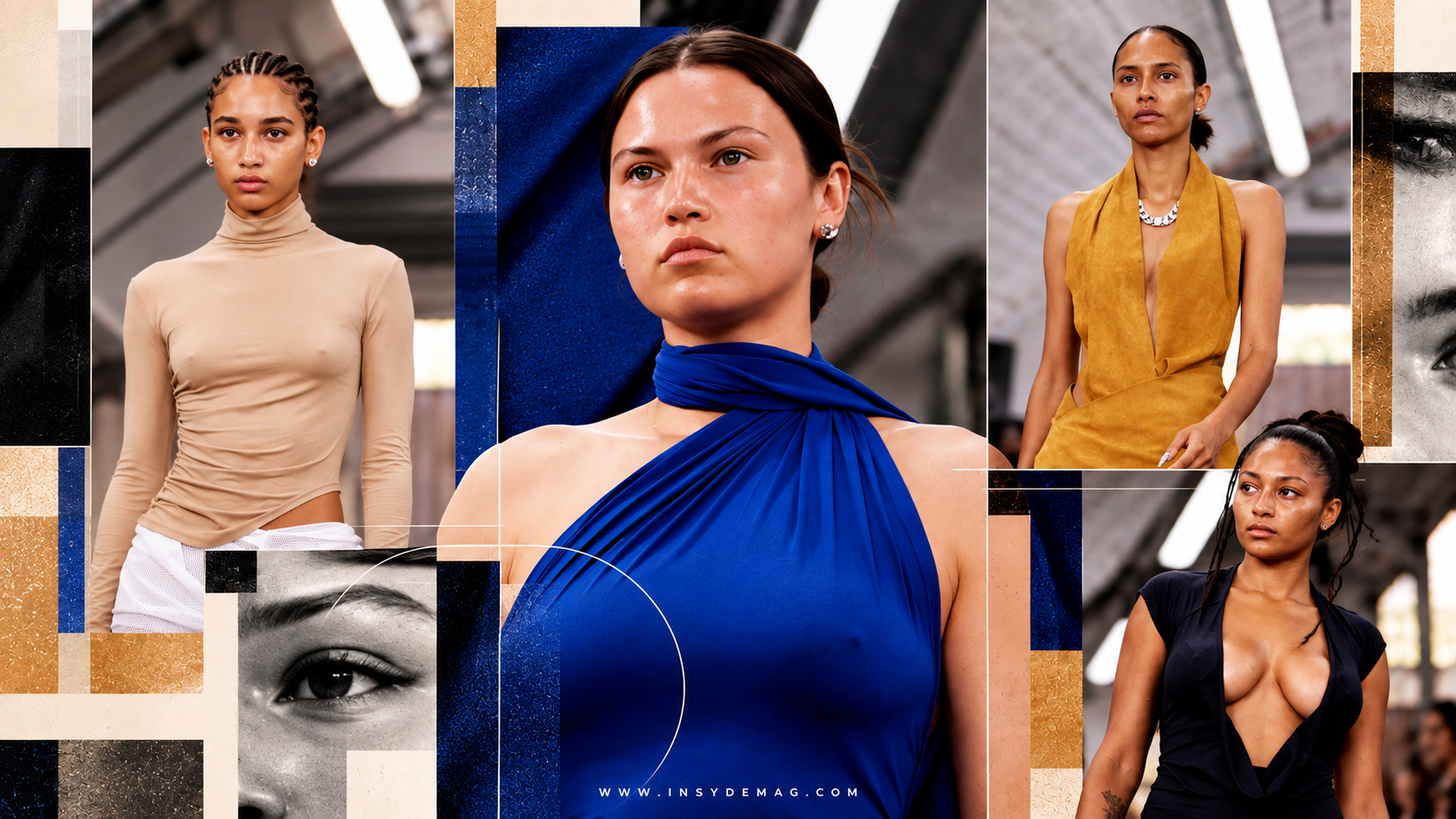
How London Fashion Week rebuilt its creative energy — and why British fashion suddenly feels relevant again.
By INSYDE Magazine
Fashion | Culture | Luxury
London has never needed to be the most polished fashion capital in the world.
Its influence has always come from something harder to manufacture: the collision of fashion with music, art, youth culture, tailoring, subculture and the city’s appetite for reinvention.
That has made London Fashion Week difficult to define — but also difficult to ignore.
The September 2026 season offered a particularly convincing reminder of why.
McQueen returned to the official London Fashion Week schedule for the first time since 2001. Christopher Kane presented his first collection for Mulberry. Burberry continued to occupy its place at the centre of British luxury. Marks & Spencer made its London Fashion Week debut. And a new generation of designers continued to push the boundaries of what a fashion week can be.
The numbers suggested that the international fashion industry was paying attention again.
According to the British Fashion Council, accredited buyer attendance increased 19% year-on-year, while accredited international buyer attendance rose 41%. Across five days, London hosted 47 catwalk shows, 23 presentations, 10 digital activations and 53 evening events. (British Fashion Council)
But the more interesting story isn’t simply that London had a successful fashion week.
It is why London suddenly feels important again.
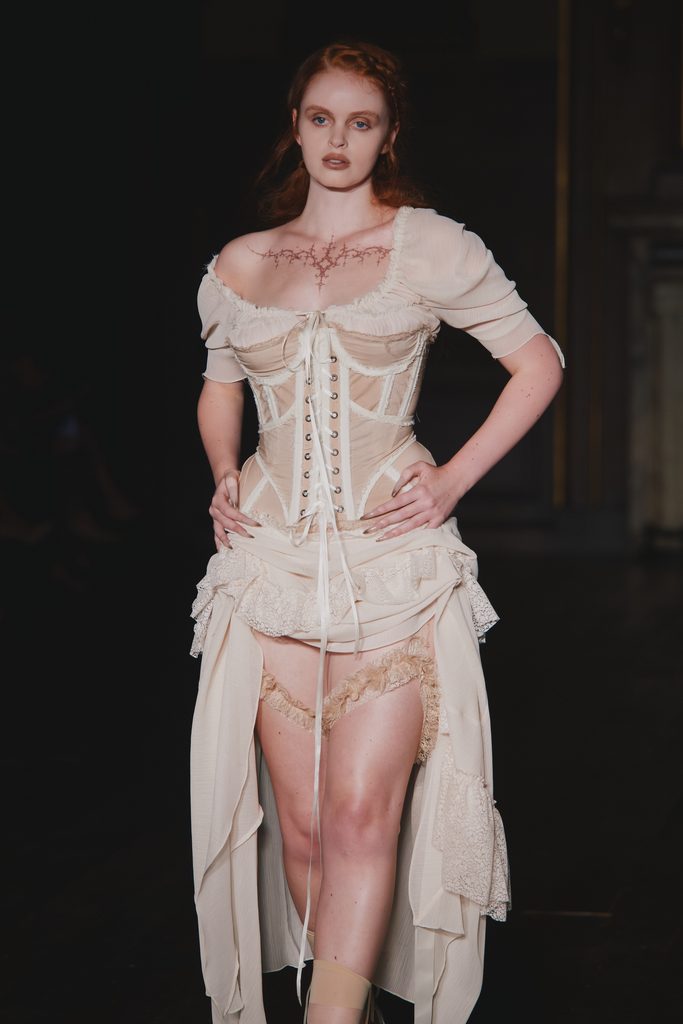
THE CITY THAT REFUSED TO BECOME PARIS
London’s fashion identity has never been built around perfection.
It was built around contradiction.
Punk beside tailoring.
Aristocratic tradition beside underground culture.
Luxury houses beside independent studios.
Craftsmanship beside experimentation.
That tension has always been part of the city’s creative power.
The British Fashion Council describes London Fashion Week as a creative laboratory — a platform where ideas are developed, emerging talent is supported, collaborations are created and global influence is redefined. (British Fashion Council)
That description feels particularly relevant now.
Because London’s strength isn’t simply that it produces clothes.
It produces possibilities.
And at a moment when fashion is searching for new creative identities, new consumers and new ways to make people care, possibility is becoming increasingly valuable.
THEN McQUEEN CAME HOME
Some fashion moments carry more weight than a collection.
McQueen’s return to London was one of them.
The house returned to the official LFW schedule for the first time since 2001 under creative director Seán McGirr, bringing one of Britain’s most internationally recognised fashion names back to the city that remains central to its history and identity. (British Fashion Council)
For McGirr, London isn’t simply a location.
It is part of the creative vocabulary.
His relationship with the city stretches back to his arrival from Ireland at 17 and his education at Central Saint Martins. Speaking ahead of the show, he described London as a place of freedom, energy and playful contradiction — a place where people mix things in ways that aren’t necessarily supposed to work. (Vogue)
That idea is important to McQueen.
The house was founded on the tension between beauty and discomfort, tailoring and rebellion, craftsmanship and provocation.
Returning to London therefore raises a larger question:
Can a global luxury house preserve the disruptive spirit that made it important in the first place?
The answer cannot simply be found in archival references.
History only remains valuable when someone finds a way to make it feel alive.
THE NEW MULBERRY
If McQueen represented a return to its roots, Mulberry represented something different:
reinvention through a new creative voice.
Christopher Kane presented his first collection for Mulberry during London Fashion Week, marking a new chapter for both the designer and the British leather house.
The collection, titled “City Town Country,” established a deliberately modern visual language while drawing directly from Mulberry’s existing codes. Kane reworked elements of the iconic Bayswater bag’s flap and closure across clothing and accessories, turning a recognisable house detail into a broader design vocabulary. (Vogue)
It was an intelligent approach to heritage.
Because heritage doesn’t necessarily have to be protected behind glass.
It can be reinterpreted.
That distinction matters enormously in modern luxury.
The danger of heritage is nostalgia.
The opportunity is to treat heritage as raw material.
Mulberry’s next chapter will therefore be judged not simply by how well it remembers its past, but by whether that past can create desire in the present.
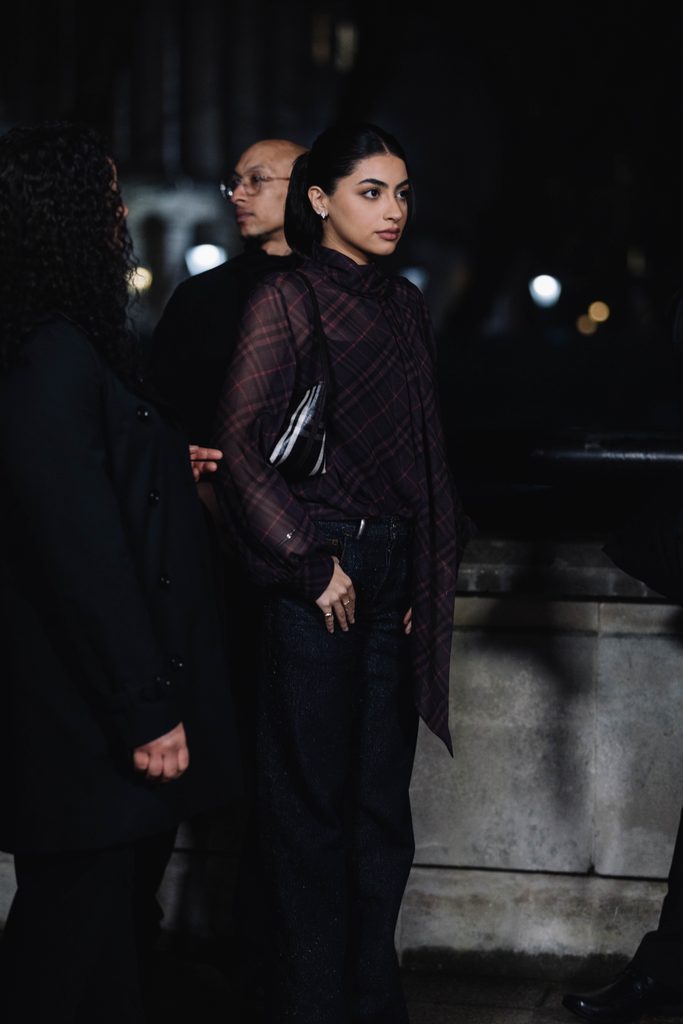
BURBERRY’S BRITISH QUESTION
Burberry has a different problem.
It doesn’t need to convince the world that it exists.
It needs to convince the world that it still matters.
That is a much harder challenge.
As one of Britain’s most recognisable luxury houses, Burberry carries an enormous amount of cultural history: the trench coat, the check, British weather, British tailoring and a visual language that has travelled far beyond Britain itself.
The question for a modern Burberry is therefore not whether it should be British.
It is:
What does Britishness look like now?
That question continues to shape Daniel Lee’s work.
For Spring/Summer 2027, the collection drew on the work of British textile designer Celia Birtwell, incorporating florals, stripes, gingham and other familiar British references. Rapper Central Cee’s appearance on the runway added another contemporary cultural layer. (Vogue)
The result speaks to one of luxury’s biggest challenges.
A global house cannot simply sell its heritage.
It has to continually reinterpret it for the next generation.
Britishness cannot remain a costume.
It has to remain a living culture.
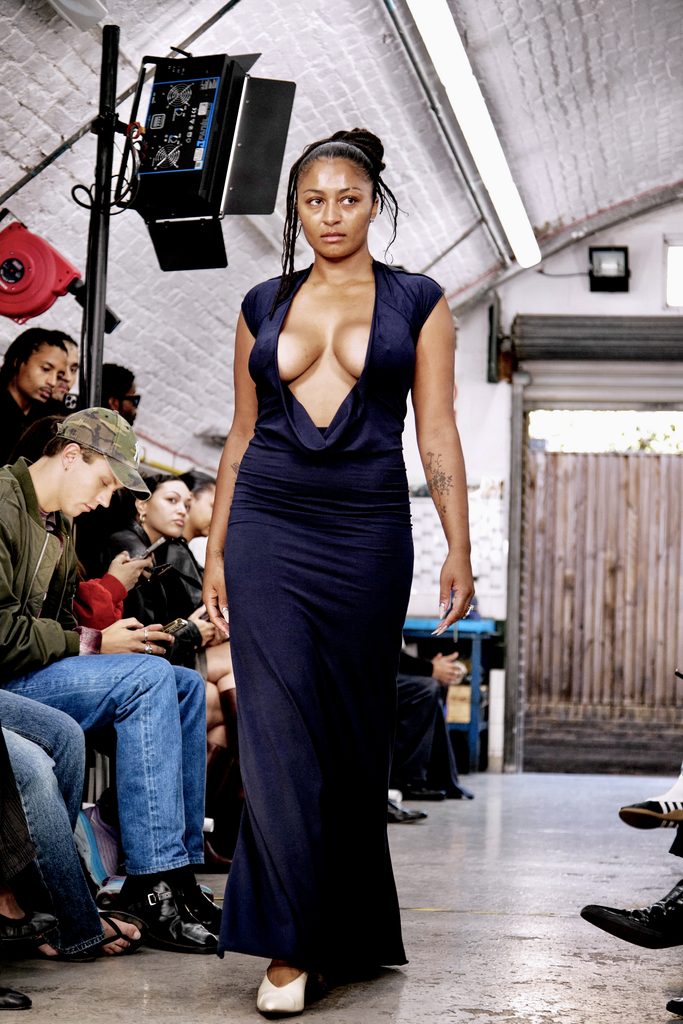
WHEN FASHION WEEK BECAME MORE THAN A RUNWAY
Perhaps the most important change in London wasn’t visible in a single collection.
It was visible in the structure of the week itself.
The September programme included catwalk shows, presentations, digital activations, immersive experiences, exhibitions, retail collaborations and cultural events. The BFC also expanded Fashion Britain into a nationwide programme of more than 1,000 events across the UK. (British Fashion Council)
That tells us something about fashion’s changing business model.
The runway is no longer the entire product.
The experience around the runway is becoming part of the product.
H&M worked with photographer and filmmaker Nick Knight and SHOWstudio to rethink the traditional fashion-show format. eBay returned with its Endless Runway, bringing resale and circular fashion into the official conversation. Selfridges created an in-store edit of London Fashion Week designers. (British Fashion Council)
Fashion houses are increasingly asking consumers to do more than look.
They want them to enter the world of the brand.
Watch the show.
Visit the store.
Attend the event.
Share the experience.
Buy the product.
Discover the designer.
Become part of the culture.
In an industry where traditional advertising is increasingly easy to ignore, experience has become one of luxury’s most powerful forms of communication.
THE M&S QUESTION
Then there was Marks & Spencer.
The retailer made its London Fashion Week debut with its first dedicated catwalk show during its centenary year, using a see-now-buy-now model that connected the runway directly to customers. (British Fashion Council)
On the surface, the pairing seems unusual.
London Fashion Week is traditionally associated with designer houses, independent labels and luxury fashion.
M&S operates at an entirely different scale.
But that difference is precisely why its presence matters.
Fashion week is becoming less like a closed industry meeting and more like a cultural platform.
Luxury houses want attention.
Retailers want credibility.
Designers want customers.
Consumers want immediacy.
Social platforms want spectacle.
The old fashion calendar was designed primarily around the needs of the industry.
The new one increasingly has to work for the audience.
LONDON’S NEXT GENERATION
Yet London’s most valuable asset may still be the designers whose names haven’t become household names.
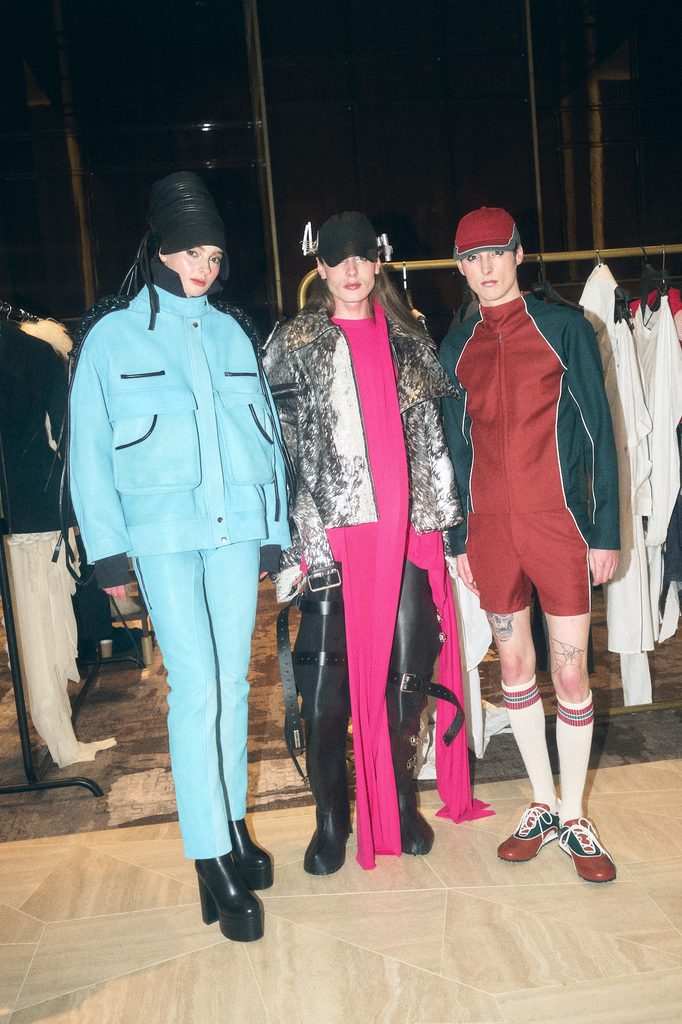
The September schedule brought established houses together with BFC NEWGEN and Fashion East talent, reinforcing London’s role as an ecosystem rather than simply a collection of major brands. (British Fashion Council)
Francesca Lake, Gui Rosa and Petra Fagerström made their LFW debuts through BFC NEWGEN, while Fashion East returned to the official schedule with GOYAGOMA, Jacek Gleba and Mé Mé. Indian label LOVE BIRDS also joined the official schedule for the first time. (British Fashion Council)
This is where London’s fashion system becomes particularly interesting.
A fashion capital doesn’t remain relevant by protecting the designers it already knows.
It remains relevant by continually creating the designers the world hasn’t met yet.
That is London’s real competitive advantage.
Not one house.
Not one creative director.
Not one season.
The possibility of the next one.
THE INDIAN CONNECTION
For INSYDE, the appearance of Indian label LOVE BIRDS on the official London Fashion Week schedule deserves particular attention.
It is another indication of how increasingly interconnected fashion’s creative ecosystem has become.
Indian designers no longer have to be discussed solely through the lens of traditional Indian fashion.
The more interesting question is how Indian creative voices participate in the broader international fashion conversation.
London provides a particularly relevant environment for that conversation because its fashion culture has historically absorbed influences from across the world.
The presence of LOVE BIRDS within the official schedule places an Indian label inside that ecosystem — alongside established British houses, emerging designers and international creative talent. (British Fashion Council)
For Indian fashion, the opportunity is larger than simply being seen abroad.
It is about becoming part of the global fashion vocabulary without losing the identity that made the work worth noticing in the first place.
That distinction will matter increasingly as Indian luxury becomes more internationally ambitious.
THE BUSINESS OF BEING CREATIVE
There is another reason this season matters.
Creativity alone is no longer enough.
Fashion businesses need to demonstrate that creative relevance can translate into commercial momentum.
The British Fashion Council’s post-season figures provide one indication of that renewed engagement: international accredited buyer attendance increased 41% year-on-year, while overall accredited buyer attendance rose 19%. (British Fashion Council)
That does not mean every British fashion business is suddenly thriving.
It doesn’t.
But it does demonstrate that London remains capable of attracting the international buyers and industry attention necessary to turn creative ideas into global opportunities.
That distinction is crucial.
For years, London could rely on being exciting.
The next phase requires it to be exciting and commercially sustainable.
Creative credibility without business infrastructure eventually becomes fragile.
Commercial success without creative identity becomes forgettable.
London needs both.
THE NEW LONDON MODEL
Perhaps that is what made September 2026 feel different.
It wasn’t one comeback.
It was several different parts of the ecosystem moving simultaneously.
McQueen brought a major British house home.
Christopher Kane opened a new chapter at Mulberry.
Burberry continued translating British identity for a global audience.
Marks & Spencer challenged the traditional boundaries of fashion week.
Emerging designers supplied the experimentation that keeps London’s fashion culture moving forward.
And around all of them, London Fashion Week itself continued to expand beyond the runway into retail, technology, entertainment, resale and cultural programming.
That combination is difficult to manufacture.
Because London’s fashion identity has always been built on the tension between heritage and experimentation.
LONDON DOESN’T WANT TO BE PARIS
And perhaps that is the point.
London’s fashion future doesn’t depend on becoming more like another fashion capital.
Its value lies in being unmistakably itself.
A city where a heritage luxury house can stand beside an unknown designer.
Where tailoring can exist alongside street culture.
Where a global fashion brand can share a calendar with a mass retailer.
Where a runway can become a film, an exhibition, a livestream, a party or a cultural event.
Where the next important designer might still be working in a studio nobody knows about.
That unpredictability isn’t a weakness.
It is London’s competitive advantage.
THE REAL COMEBACK
Calling London Fashion Week “back” is tempting.
The numbers certainly give the phrase substance. International buyer attendance increased 41%, major British houses returned to the official schedule, and emerging designers continued to receive a significant platform. (British Fashion Council)
But a comeback isn’t really about one successful week.
It is about what happens afterwards.
Can the new creative energy translate into stronger businesses?
Can emerging designers scale without losing what made them interesting?
Can established houses continue to reinvent themselves without becoming trapped by their own histories?
Can London maintain the cultural unpredictability that made it important in the first place?
Those are the questions that matter now.
Because fashion capitals aren’t defined simply by how many shows they host.
They’re defined by what the world wants to see next.
And after September 2026, London has given the industry a reason to look again.
INSYDE TAKE
London’s greatest luxury has never been perfection.
It is possibility.
The city remains at its most powerful when fashion, music, art, commerce and subculture collide — when established names return without becoming museums, and emerging designers are given enough space to challenge what already exists.
Milan has its language of Italian craftsmanship.
Paris has its institutional mythology.
London has something harder to manufacture:
the feeling that something could happen here that hasn’t happened anywhere else yet.
And in an industry increasingly searching for its next idea, that may be London’s most valuable asset of all.
INSYDE MAGAZINE
Luxury, Through a Different Lens.
Beyond the Spotlight.