
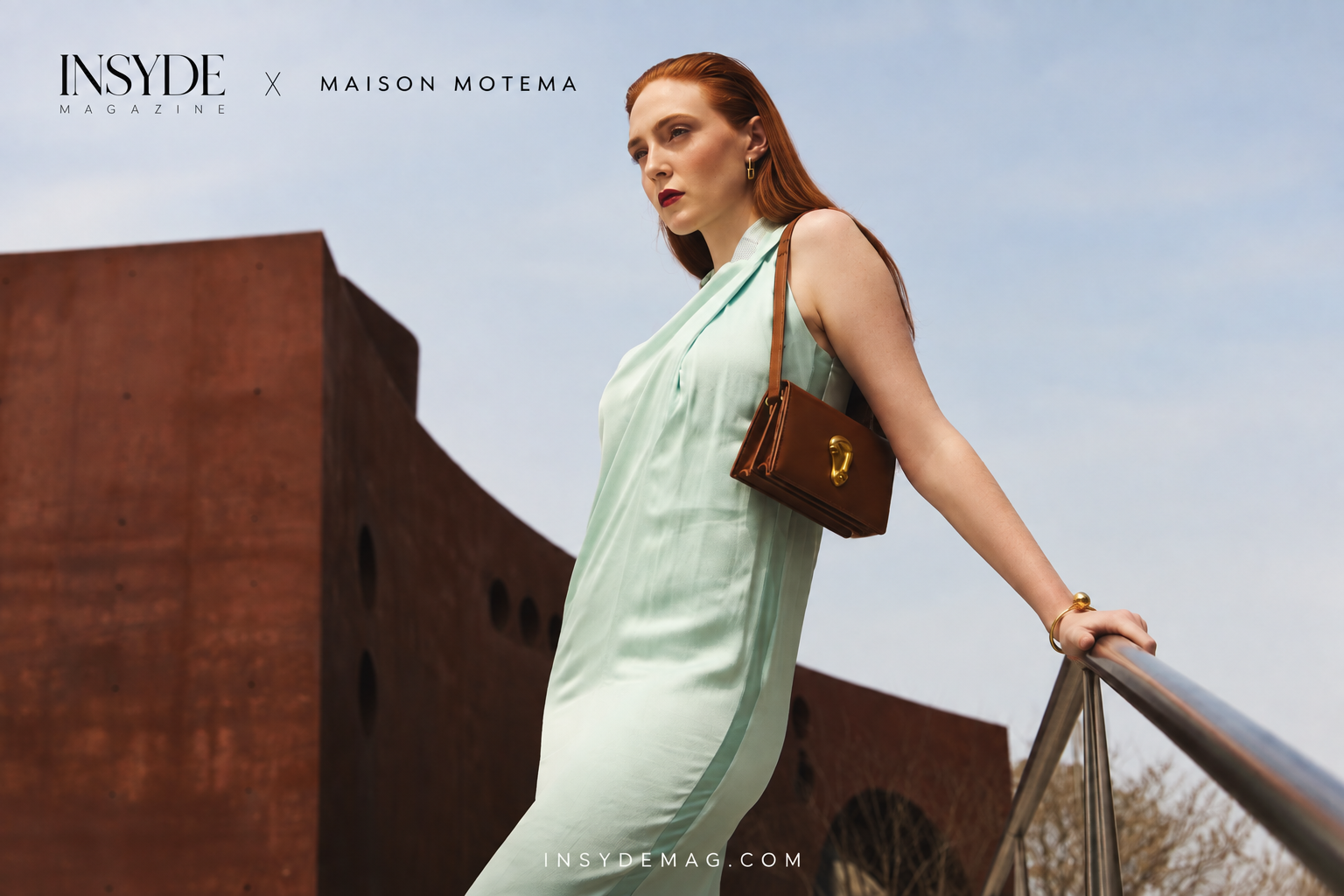
Where craftsmanship, identity and ambition come together to redefine the modern luxury object.
Luxury has always been good at creating desire. It gives us objects to recognise, names to remember and symbols that can carry meaning long after their practical purpose has disappeared.
But the geography of that desire is changing.
For decades, the global luxury conversation has revolved around a familiar set of cities—Paris, Milan, London and New York. Their influence remains undeniable, but the creative landscape surrounding luxury has become far more expansive. New houses are emerging from different cultural and creative centres, bringing new approaches to design, craftsmanship and the meaning of value.
Maison Motema is building within that shift.
Working between New York and Dakar, the independent leather-goods house founded by Verlaine-Diane Soobroydoo is developing a design language around craftsmanship, technical knowledge and a belief that the object itself must earn its place in the luxury conversation.
That distinction matters.
In an industry increasingly fluent in storytelling, Maison Motema is interested in something harder to manufacture: desire created through design, material, proportion and making.
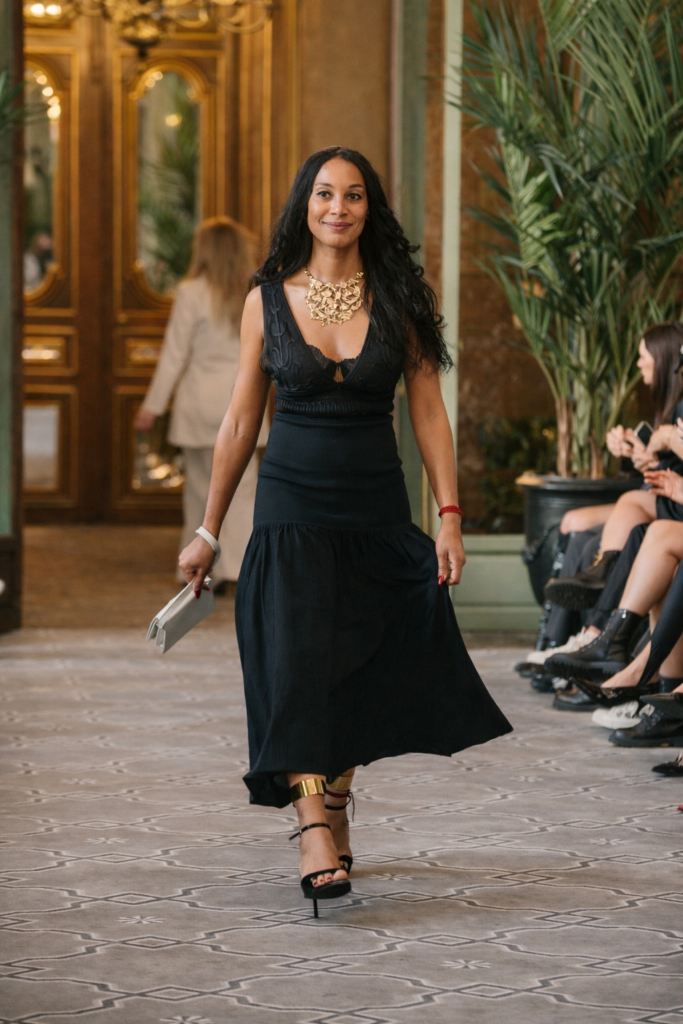
THE OBJECT COMES FIRST
For many years, Soobroydoo worked in spaces where economic empowerment was discussed through policy, systems, frameworks and development goals.
Building Maison Motema brought those conversations into the physical world.
An object has to be conceived. Its form has to be understood. A pattern has to work. A handle has to sit at precisely the right point. Leather has to be cut, shaped, assembled and finished. And eventually, someone has to desire the object enough to own it.
That process creates economic value, but it also creates something less visible: knowledge.
At Maison Motema, that knowledge is being developed within the atelier itself, where design and making exist in conversation rather than as separate stages.
“The product has to deserve to exist first,” Soobroydoo says.
It is a deceptively simple statement, but an important one.
Maison Motema is not positioning itself as a development project disguised as a fashion company. The wider economic and cultural implications of its work matter, but they cannot substitute for the product.
Beauty matters.
Desire matters.
The object has to stand on its own.
ONE HOUSE, TWO RHYTHMS
Maison Motema exists between New York and Dakar, but neither city is simply a backdrop.
New York has shaped Soobroydoo’s eye. Its architecture, energy and pragmatism have influenced the way she thinks about objects that need to live within contemporary life—a bag that has to move with a woman through her day.
Dakar offers something different: proximity to the making.
An idea can move quickly from a drawing or conversation into leather. A proportion can be changed by a few millimetres. A handle can be repositioned. Construction can be reconsidered. Something can be made, examined and tried again.
That immediacy changes the relationship between design and craftsmanship.
“The atelier isn’t at the end of our creative process. It is inside it.”
For Maison Motema, the atelier is therefore not simply where a finished design is produced. It is part of the process through which the design becomes what it ultimately is.
Soobroydoo describes the relationship simply:
“One house, two rhythms.”
New York provides one rhythm. Dakar provides another. Maison Motema is being shaped in the space between them.
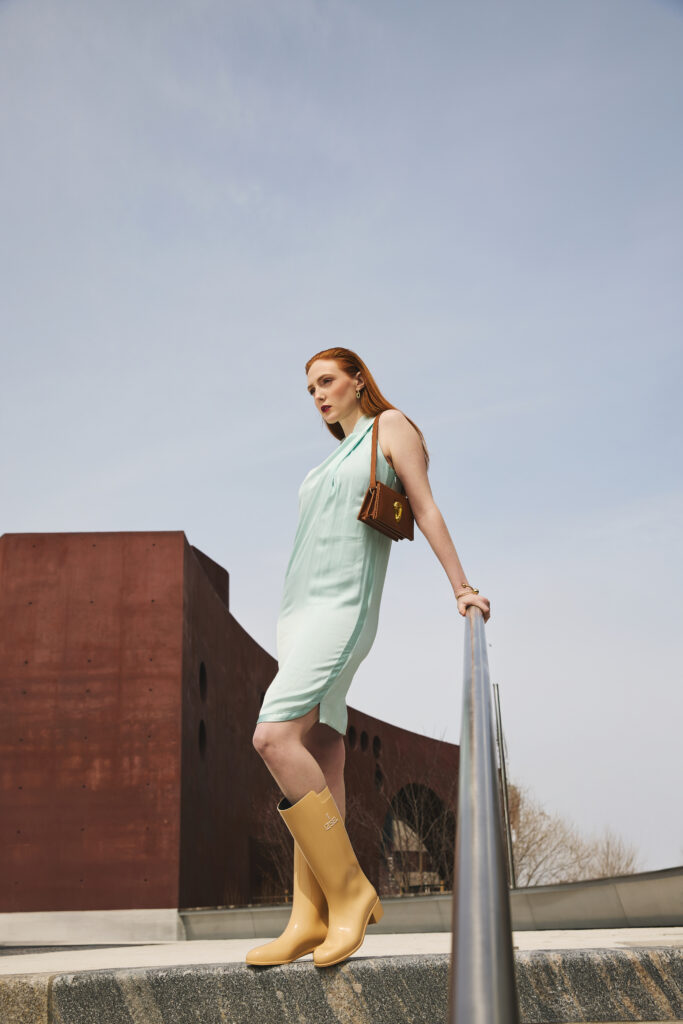
A DIFFERENT MAP OF LUXURY
Luxury has historically been concentrated around a relatively narrow geography.
Paris. Milan. London. New York.
These cities remain important, but creativity has never belonged exclusively to them.
What is changing is the willingness to recognise sophisticated design ecosystems elsewhere—and to judge them by the same standards applied to established luxury centres.
For Soobroydoo, this distinction is particularly important.
She is proud that Maison Motema is anchored in Africa, but she does not want the house reduced to a category called “African luxury.”
“Africa is not a design language.”
The statement is direct because the reality is complex. Across the continent are enormous differences in aesthetic traditions, materials, technical knowledge, histories and contemporary cultures.
There is also a danger in allowing origin to become the first thing discussed about the object.
A designer working in Dakar can become “an African designer” before anyone has considered proportion, silhouette, material, construction or hardware.
For Maison Motema, the ambition is different.
“A beautiful bag made in Dakar shouldn’t require an explanation before it can participate in the global luxury conversation.”
Geography can enrich the story.
It should not have to justify the object.
WHEN CRAFT BECOMES DESIGN
There is a familiar assumption within fashion that design happens first and craftsmanship follows.
A designer creates the drawing. Production begins. The artisan executes the idea.
Maison Motema’s process is more fluid.
Leather behaves differently once it is cut. A proportion that looks right on paper may feel wrong in the hand. Reinforcement changes structure. Thickness changes the way a fold behaves. Moving a handle slightly can change the balance of an entire bag.
These are not merely production considerations.
They are design decisions.
That is why the atelier becomes part of Maison Motema’s creative language.
Its chef d’atelier is not simply receiving instructions about what to manufacture. His knowledge of leather and construction influences what the object ultimately becomes.
The exchange between idea and technical knowledge is continuous.
For Soobroydoo, that is the essence of savoir-faire:
“Knowledge accumulated through making.”
It is knowledge developed through experience, repetition and attention to material.
And it cannot be separated from the object itself.

THE VALUE OF TAKING TIME
The luxury industry increasingly speaks about slowing down.
But slowness, by itself, is not a virtue.
For Maison Motema, the value of limited production lies in the freedom it creates to understand an object more deeply.
The house can adjust a proportion, improve a construction detail, change the way a bag sits against the body and observe how clients actually use it.
“‘Slow’ shouldn’t mean inefficient. It should mean considered.”
That distinction is important.
In a world where almost anything can be reproduced immediately and at scale, time can become valuable when it creates space for knowledge and refinement.
The objective is not to make fewer objects simply to create scarcity.
It is to understand the objects being made deeply enough that their identity survives as the house develops.
For an emerging luxury house, that patience can become a competitive advantage.
FROM SYSTEMS TO SOMETHING TANGIBLE
Soobroydoo’s previous career also shapes the way she thinks about Maison Motema.
Her work in international institutions involved conversations around women’s economic empowerment, sustainable development and the structures that determine who participates in an economy and where value accumulates.
Maison Motema has made those questions practical.
How do you price an object?
How do you invest in technical knowledge?
How do you create continuity of work?
How do you build a company capable of competing internationally while retaining the intelligence of its production?
Those questions now exist inside the making of the house itself.
But fashion has also given Soobroydoo another lesson.
“Good intentions do not make a great product.”
It is perhaps one of the most important distinctions in the Maison Motema story.
Purpose can create context.
Craftsmanship can create depth.
Geography can create provenance.
But none of them can replace exceptional design.
The object still has to make someone want it.
BEYOND THE LABEL
The modern luxury consumer is increasingly sophisticated about narratives.
They recognise purpose-driven campaigns. They question provenance. They understand the language of heritage, sustainability and craftsmanship.
That makes genuine desire harder to manufacture.
For Maison Motema, the answer is not to make its story louder.
It is to make the object stronger.
Soobroydoo wants someone to encounter a Maison Motema bag and first ask:
“What is that?”
Then look closer.
Notice the shape.
The leather.
The balance.
The construction.
And only afterwards discover where it was made and the people and places behind it.
That sequence matters.
The object creates the curiosity.
The story deepens it.

WHEN A HOUSE BECOMES RECOGNISABLE
Soobroydoo’s ambition is not to spend the next decade arguing that exceptional leather goods can be made in Dakar.
She would rather make exceptional leather goods in Dakar.
Again and again.
Until the existence of the house becomes the argument.
The goal is for someone to see an object without seeing the logo and still recognise its identity.
“That’s a Motema.”
That is the moment a label begins to become a house.
Not simply when its name becomes known, but when its visual and technical language becomes distinctive enough to be recognised independently of it.
A particular proportion.
A relationship between material and form.
A distinctive construction.
A consistent point of view.
A sensibility that belongs unmistakably to the house.
That kind of recognition cannot be created overnight.
It has to be built through product development, technical excellence, discipline and consistency.
THE FUTURE DOESN’T NEED PERMISSION
Maison Motema is still building.
And perhaps that is what makes its proposition so compelling.
It is not asking the world to redefine luxury simply because the house is working between New York and Dakar.
It is not asking for recognition because of geography.
It is building objects that it believes can earn recognition on their own terms.
That requires time.
It requires technical excellence.
It requires discipline.
And it requires the confidence to let the product speak.
Between New York and Dakar, design and craftsmanship are becoming part of one creative system.
The atelier is part of the design.
The geography is part of the story, but not the entire story.
Purpose informs the business, but does not replace the product.
Craftsmanship is not simply what happens after the creative work is finished.
It is part of the creative work itself.
That may ultimately be Maison Motema’s most compelling proposition.
The future of luxury does not necessarily require a new definition of what luxury is.
It may simply require a broader understanding of where exceptional objects can come from—and a willingness to judge them by what has actually been made.
Because luxury can be explained.
Heritage can be explained.
Provenance can be explained.
Desire cannot.
It has to be earned.
And Maison Motema is building for that moment—when the object speaks first, the story follows, and recognition comes without permission.
Made to be desired.