
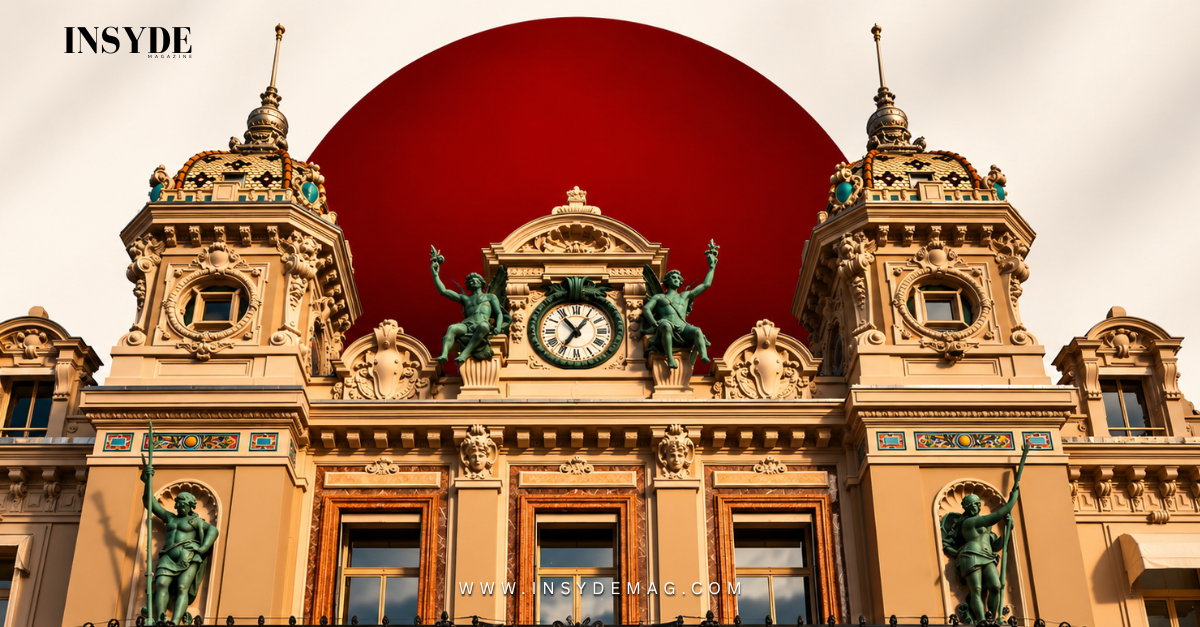
Beyond the glamour of Port Hercule, Monaco has built an extraordinary position at the intersection of superyacht ownership, international capital, luxury hospitality and the global maritime economy. What makes the Principality such an enduring point of attraction for the world’s wealthiest yacht owners?
By INSYDE Magazine | Luxury
There are destinations that offer a beautiful coastline. There are ports that offer sophisticated maritime infrastructure. And then there is Monaco: a place where the world’s most extraordinary yachts arrive within sight of some of the most valuable real estate on the planet.
At Port Hercule, the arrival of a 60-metre superyacht is rarely an isolated spectacle. It is part of a much larger environment in which private wealth, international business, luxury hospitality and the global yachting industry intersect. The harbour is both a working maritime facility and a highly visible expression of Monaco’s position in the international luxury economy.
For the individuals who own these vessels, the attraction is not necessarily a question of finding the most beautiful place to drop anchor. It is about finding a destination that delivers several forms of value simultaneously: access, infrastructure, discretion, connectivity, reputation and proximity to an established network of influential people.
Monaco has spent decades cultivating precisely that combination.
Its appeal cannot be reduced to a favourable tax environment or a prestigious address. It is the result of a carefully developed ecosystem in which a relatively small territory occupies an unusually influential position in the world of superyachting.
This is the Monaco effect.
A PRINCIPALITY WITH AN OUTSIZED MARITIME PRESENCE
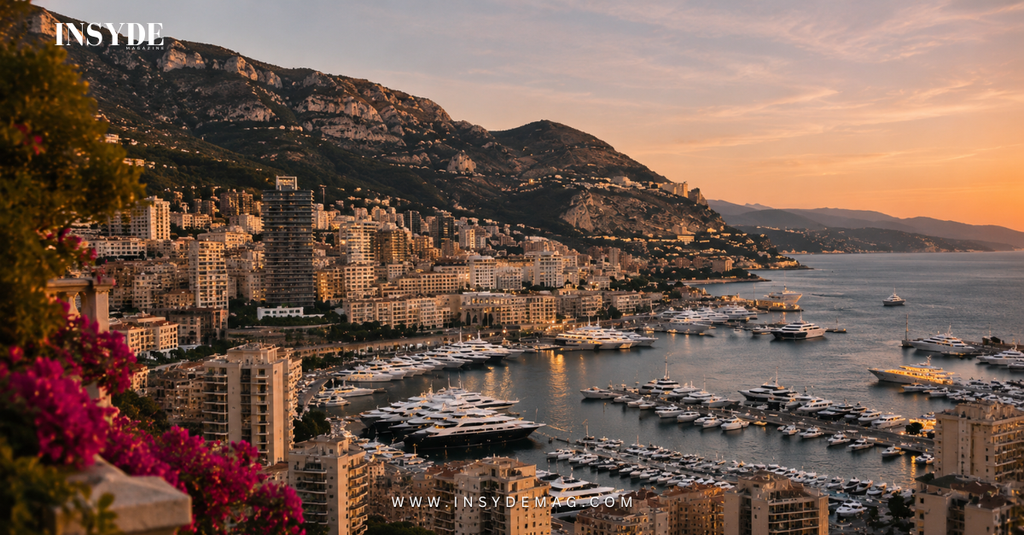
Monaco’s relationship with the sea is fundamental to its identity. Positioned along the French Riviera, between France and Italy, the Principality occupies one of the Mediterranean’s most recognisable stretches of coastline.
Its principal harbour, Port Hercule, is more than an attractive setting for some of the world’s largest private vessels. It is a functioning maritime facility designed to accommodate an international yachting clientele.
According to the Société d’Exploitation des Ports de Monaco, Port Hercule has 760 berths, with depths ranging from 2.5 metres to 55 metres within its basins. The port also provides round-the-clock monitoring, freshwater, electricity, fuel facilities and access to specialist maritime services. Two shipyards and private careening areas operate within the port environment.
For a superyacht owner, these details matter.
A vessel of considerable length and displacement cannot be accommodated by every marina. Draft, manoeuvring space, berthing configuration, shore-side utilities, technical support and security all influence where a yacht can operate comfortably.
The operational requirements become more demanding as vessels grow in size and complexity. A yacht is not simply a floating residence; it is a sophisticated asset requiring continuous technical oversight, crew management, maintenance, provisioning and regulatory compliance.
Port Hercule’s facilities give Monaco a practical foundation for its reputation. The Principality is not relying on visual prestige alone. It has an established maritime infrastructure within one of the Mediterranean’s most recognised luxury destinations.
Yet infrastructure explains only part of the attraction. Monaco’s real distinction lies in what surrounds the harbour.
THE BUSINESS OF BEING IN MONACO
Every September, Port Hercule becomes the centre of the international superyacht industry.
The Monaco Yacht Show has evolved into one of the industry’s defining annual gatherings, bringing together shipyards, designers, naval architects, brokers, equipment manufacturers, yacht managers and prospective buyers.
The 35th edition, held from 23 to 26 September 2026, welcomed 30,678 visitors and 560 exhibitors, according to the show’s official 2026 results. Across the harbour, 118 superyachts were presented, with an estimated combined value of €4.5 billion. Fifty of those vessels had been delivered during 2026, and the average length of the displayed fleet was 47.5 metres.
These figures are significant not simply because of the value of the yachts on display, but because of the concentration of the industry they represent.
A prospective owner considering a new commission may need to engage with a shipyard, naval architect, interior designer, technical consultant, broker, legal adviser and management company. The process can involve years of planning, substantial capital commitments and a network of international specialists.
The Monaco Yacht Show brings many of these participants into one environment. It allows prospective buyers to compare vessels, meet the people behind their construction and explore the services required to operate them.
For established owners, it offers an opportunity to reconnect with an industry network. For shipyards and brokers, it provides direct access to a highly qualified international audience. For Monaco, it reinforces the Principality’s position as a meeting point for the business of extreme luxury.
The importance of this ecosystem is reflected in the wider economics of the sector. A 2026 study commissioned by the Superyacht Builders Association and the Superyacht Life Foundation estimates that the global superyacht industry generated €54 billion in total economic output. The research is based on 2022 economic data and covers yachts exceeding 30 metres, including construction, refit, operations, brokerage, charter and associated tourism.
The study estimates €22 billion in direct expenditure and a further €32 billion in indirect economic activity. Fleet operations and tourism accounted for the largest share of the total impact, at approximately €27.1 billion.
The figures are global, not Monaco-specific. But they illustrate why a destination that attracts owners, vessels and industry professionals can be commercially important well beyond the marina itself.
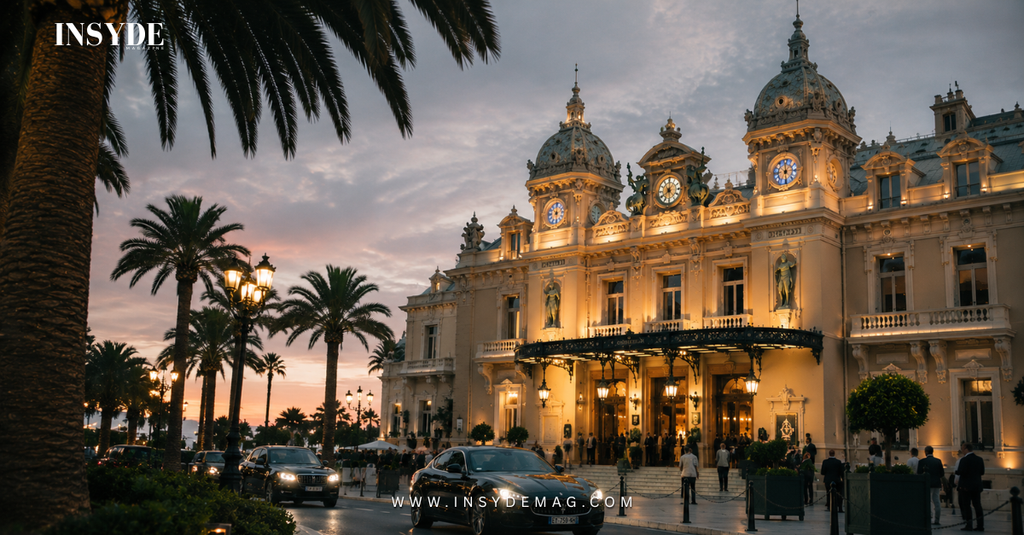
THE NEW ECONOMICS OF EXTREME YACHT OWNERSHIP
The superyacht market is often described through extraordinary purchase prices. But the economics of ownership extend much further.
A yacht represents a substantial capital commitment, followed by recurring expenditure on crew, insurance, fuel, maintenance, technical upgrades, refits, management and berthing. The financial profile changes considerably with vessel size, age, usage, specification and operational arrangements.
The market itself is also more nuanced than the popular image of an uninterrupted luxury boom.
According to BOAT International’s Global Order Book 2026, 1,093 yachts of 24 metres and above were on order or under construction worldwide at the beginning of the year, representing approximately 44,637 metres of combined yacht length. Italy remained the leading construction country by project volume, with 568 yachts in the order book.
The number of projects was lower than the previous year’s total, suggesting a market that has moved away from the extraordinary post-pandemic ordering surge. At the same time, the average size of yachts in the order book continued to increase.
This distinction matters. A smaller number of projects does not necessarily mean that the industry is becoming less ambitious. The market is increasingly characterised by a focus on larger vessels, sophisticated specifications and more selective purchasing decisions.
The latest brokerage figures offer another perspective.
In its third-quarter 2026 market review, International Yacht Company reported that 675 yachts were sold between January and September, with a combined value of $7.3 billion. The report described a market in which buyers remained active but increasingly selective, with pre-owned vessels supporting transaction activity as the new-build segment softened.
Separately, Northrop & Johnson’s Q3 2026 market report recorded 472 pre-owned yacht sales of 24 metres and above during the first nine months of 2026, with a combined transaction value of approximately $5.2 billion. That represented a 1 per cent decrease in transaction volume and a 4.7 per cent decline in total sales value compared with the same period in 2025.
These reports use different market coverage and methodologies, so their figures should not be combined. Together, however, they point towards a more considered purchasing environment.
For ultra-high-net-worth buyers, the question is increasingly about the right vessel, the right specification, the right ownership structure and the long-term cost of operation—not simply acquiring the largest yacht available.
Monaco’s relevance is strengthened by this complexity. Its international network of brokers, designers, advisers, service providers and industry events places owners within reach of the expertise required to navigate an increasingly sophisticated market.
ACCESS, NETWORKS AND THE VALUE OF PROXIMITY
For the wealthiest individuals, access can be as valuable as ownership.
A superyacht offers a degree of independence that conventional luxury hospitality cannot always replicate. It can function as a private residence, a setting for entertaining, a platform for travel and an environment in which business and personal life can coexist.
But the yacht is only one part of the experience.
The people who operate at the highest levels of international business, finance, fashion, entertainment and private investment often move through a relatively concentrated calendar of global destinations and events. Monaco occupies a prominent position within that circuit.
The Principality’s international profile is reinforced by the Monaco Grand Prix, the Monaco Yacht Show, high-profile sporting events and a luxury hospitality sector that attracts an international clientele.
The Automobile Club de Monaco and the Yacht Club de Monaco are part of this wider identity. The latter, in particular, reflects the Principality’s commitment to positioning yachting as more than a recreational pursuit: it is also a professional, cultural and international community.
For yacht owners, the advantage is proximity to a network that extends beyond the vessel itself.
A visit to Monaco can combine time aboard a yacht with meetings, private hospitality, industry events and access to the wider Riviera. The destination offers a setting in which professional relationships and leisure can occupy the same geographical space.
This is not a benefit exclusive to Monaco. Other international centres offer their own networks and advantages. But few destinations combine this level of global recognition with such a concentrated luxury environment.
THE TAX ADVANTAGE — AND THE REALITY BEHIND IT
Monaco’s fiscal reputation is one of the most frequently cited reasons for its appeal among internationally mobile wealthy individuals.
As a general rule, Monaco does not levy personal income tax on individuals who are genuinely resident in the Principality. This position is subject to important exceptions, most notably the provisions governing certain French nationals under the France–Monaco tax convention.
The French government’s official tax guidance explains the treatment of individuals residing in Monaco under the 1963 France–Monaco tax convention. Certain French nationals who establish residence in Monaco remain liable to French income tax under the convention’s provisions.
For internationally mobile individuals, however, the wider question is more complicated than the headline tax rate.
Tax residence depends on the facts of an individual’s circumstances, including the location of their principal home, personal and economic interests, time spent in different jurisdictions and applicable bilateral agreements. Nationality, corporate structures, the source of income and existing tax obligations may also be relevant.
Yacht ownership introduces another layer of complexity. The vessel’s flag, place of registration, ownership structure, operational arrangements, VAT position, customs status and cruising activity can all have implications.
Owning a yacht in Monaco or keeping one at Port Hercule does not automatically establish personal tax residence in the Principality.
For this reason, Monaco’s fiscal environment should be understood as one element of a broader international residency and wealth-planning decision, rather than a universal advantage available simply through yacht ownership.
The more enduring appeal is the combination of a recognised international jurisdiction, a sophisticated private-services environment and a lifestyle that has attracted wealthy residents and visitors for generations.
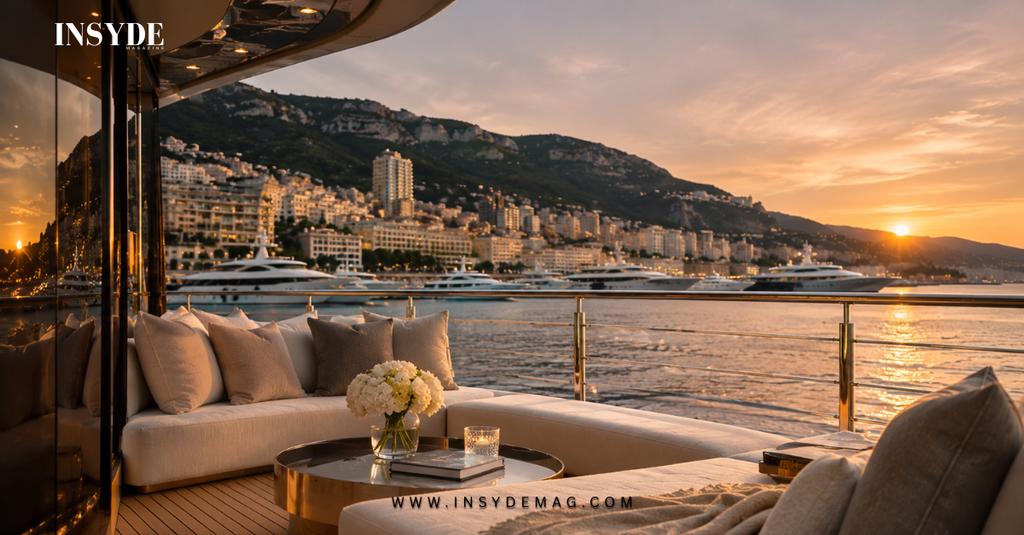
THE MEDITERRANEAN, WITH MONACO AT ITS CENTRE
Geography remains one of the Principality’s most persuasive advantages.
Monaco sits within reach of some of the Mediterranean’s most established cruising destinations. The French Riviera offers Nice, Antibes, Cannes and Saint-Tropez. Further east, the Italian coastline leads towards Sanremo and Portofino, with longer itineraries extending towards Corsica and Sardinia.
For an owner, this creates flexibility. Monaco can be a seasonal base, a stop within a wider itinerary or a destination for a few days between coastal passages.
The Principality is not, however, the only serious maritime centre in the region.
Antibes has a long-established role in yacht services, maintenance and refit. Palma de Mallorca is an important Mediterranean sailing, service and refit destination. Ports along the Italian Riviera offer access to their own cruising grounds and hospitality networks.
The choice between these locations depends on the owner’s priorities. Technical support, berth availability, vessel dimensions, seasonal requirements, operating costs and preferred cruising routes can all influence the decision.
Monaco’s advantage is the combination of its Riviera location with its international identity and social infrastructure. It is not necessarily the most practical base for every vessel or every itinerary. It is, however, one of the most recognisable places in which to participate in the Mediterranean’s luxury and yachting culture.
THE COST OF A COVETED ADDRESS
Prestige has a price, and Monaco is no exception.
The Principality’s limited geographical footprint places natural constraints on both its real-estate market and its maritime infrastructure. Berths at a recognised harbour are finite, while demand can vary considerably according to vessel size, season and location within the port.
The official Ports of Monaco tariff information publishes separate rates for Port Hercule, Port de Fontvieille and Cala del Forte. The applicable charges depend on the port, vessel dimensions, period of stay and berth arrangements. Larger vessels may require individual arrangements rather than a simple standard berth calculation.
For a superyacht owner, the berth is only one part of the annual financial commitment.
Crew salaries, insurance, fuel, maintenance, repairs, provisioning, technical upgrades and refit work all contribute to the cost of keeping a vessel operational. The larger and more complex the yacht, the more substantial its support requirements can become.
The global economic study commissioned by SYBAss and the Superyacht Life Foundation provides a useful indication of the scale involved. It estimates average daily operational expenditure of approximately €14,000 for yachts measuring 30–40 metres, rising to approximately €77,000 for vessels exceeding 60 metres. These are modelled industry averages based on the study’s 2022 data, not quotations or guaranteed current costs for individual vessels.
This is a crucial distinction. The financial reality of ownership depends on how a yacht is used, where it operates, its technical specification and the level of service expected by its owner.
For some, Monaco’s premium is justified by its location, reputation and access to the international luxury network. For others, a different port may offer better operational or financial value.
The most sophisticated owners understand that prestige and practicality are not always the same thing.
THE NEXT CHAPTER: SUSTAINABILITY, TECHNOLOGY AND LONG-TERM VALUE
The future of superyachting will be shaped by more than size and design.
Environmental performance, fuel efficiency, alternative propulsion systems, emissions management and the availability of sustainable operating solutions are becoming increasingly important considerations for the industry.
The Monaco Yacht Show has begun to reflect this shift through its Blue Wake programme, which highlights sustainable solutions and technologies relevant to the yachting sector.
The significance of this development extends beyond environmental positioning. Technology and efficiency can influence operating expenditure, regulatory compliance, maintenance requirements and the long-term attractiveness of a vessel in the resale market.
The Water Revolution Foundation is among the organisations working with the superyacht industry on environmental performance and more sustainable practices. Its work reflects a broader recognition that the future value of a yacht may increasingly depend on how responsibly and efficiently it is designed and operated.
For owners commissioning a vessel expected to remain relevant for decades, these questions are becoming part of the design and investment conversation from the beginning.
Monaco’s ability to bring together shipyards, designers, technology providers and owners places it in a position to remain part of that conversation.
WHY MONACO STILL MATTERS
There are larger marinas. There are quieter anchorages. There are destinations that may be better suited to a particular vessel’s maintenance requirements or cruising itinerary.
But Monaco offers something that is more difficult to reproduce: a concentrated relationship between maritime infrastructure, international wealth, luxury hospitality, global events and an established community of influential people.
Its harbour is the physical expression of that relationship. The Monaco Yacht Show gives it an annual commercial stage. Its location connects owners to the Mediterranean. Its hospitality and private-services ecosystem reinforces its position as a destination for an international luxury clientele.
The Principality’s influence is therefore not measured simply by the number of yachts in its waters or the value of the vessels displayed during a single week in September.
It is measured by the network that gathers around them.
For the world’s wealthiest yacht owners, Monaco is rarely just a place to moor a vessel. It can be a place to meet, to do business, to entertain, to access the Riviera and to participate in a global culture built around the pursuit of exceptional experiences.
The yacht may be the most visible symbol of that world. But the real attraction is everything that exists around it.
In Monaco, the harbour is only the beginning.
INSYDE examines the people, businesses, culture and experiences shaping the world of luxury. This article is intended as editorial analysis, not personal investment, legal, tax or yacht-ownership advice.
INSYDE MAGAZINE – No.1 Luxury Magazine in Bangalore
Leave a Reply