
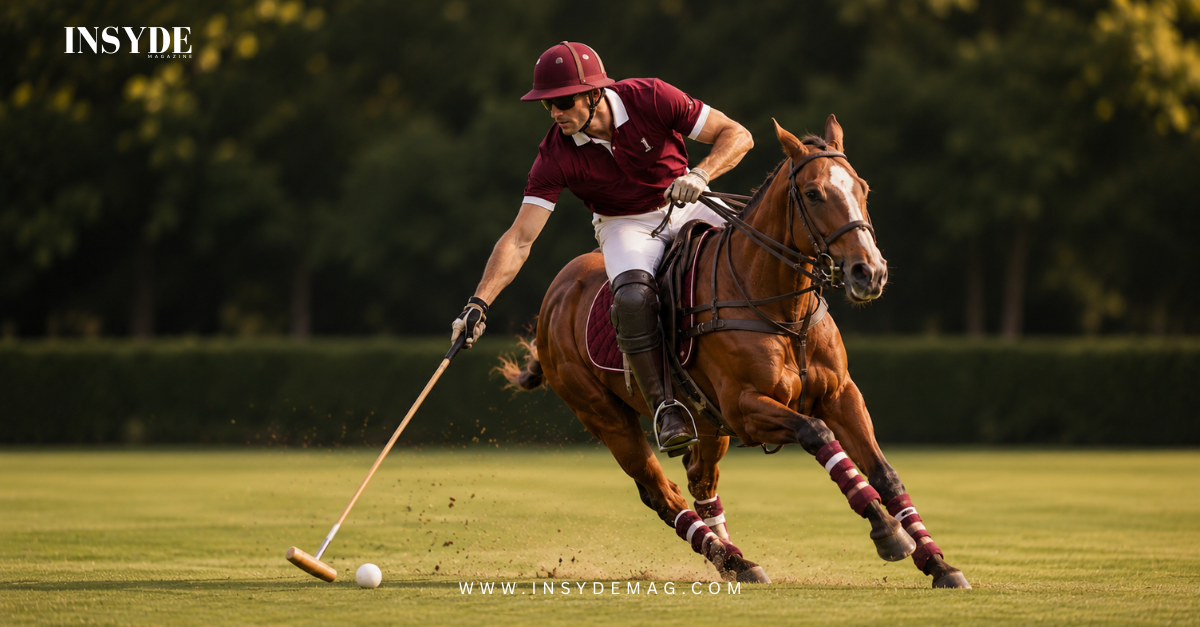
Inside the Business of Polo, Wealth and the World’s Most Exclusive Sporting Circle
Polo has long been associated with royalty, aristocracy and extraordinary wealth. But behind its manicured fields and international tournaments lies a sophisticated business of equine assets, private patronage, elite club memberships and luxury hospitality. For the ultra-wealthy, polo represents something more than a sport: it is an investment in access, heritage, relationships and a particular way of life.
There are few sporting environments where the distinction between competition and privilege is quite as visible as polo.
A field stretches across an immaculate landscape. Horses accelerate beneath riders dressed in traditional whites, mallets raised as they pursue a small ball at extraordinary speed. Around the boundary, the atmosphere is considerably more composed. Private hospitality, tailored clothing, champagne receptions and conversations between business leaders, patrons and established families form part of the occasion.
It is a sport in which the horse is an athlete, the player is a specialist, the patron is often the financier and the club is an institution.
For centuries, polo has carried the reputation of the Game of Kings. Its history connects Persian royal courts, Indian kingdoms, British aristocracy and the international sporting circles of modern wealth.
But its contemporary significance goes beyond heritage.
Polo operates within a distinctive luxury economy. Its financial structure brings together horse ownership, breeding, training, private club memberships, tournament patronage, sponsorship, hospitality and international equestrian services. Unlike mainstream professional sports, its value is not concentrated in broadcast contracts or mass-market ticket sales. Much of it exists within private transactions and relationships that are rarely visible to the public.
For the ultra-high-net-worth individual, this is precisely what makes polo interesting.
It offers an opportunity to participate in a world where financial resources alone are not the entire proposition. Knowledge of horses, access to established institutions, sporting ability and relationships with patrons and players all carry their own value.
The question is not simply why polo is expensive.
It is why some of the world’s wealthiest individuals continue to spend substantial amounts of money to be part of it.
THE ORIGINS OF A ROYAL SPORT
Polo’s history stretches back centuries, long before the modern sporting institutions that govern it today.
Early forms of mounted ball games developed across Persia and Central Asia. These games tested horsemanship, coordination and military skill, eventually becoming associated with royal courts and aristocratic culture.
The sport subsequently travelled across regions, developing different traditions and local identities.
India occupies a particularly important position in this history.
In Manipur, the traditional game is known as Sagol Kangjei. The Mughal world also embraced mounted polo, referring to it as Chaugan. These traditions existed long before British officers encountered the game in the nineteenth century.
The development of modern international polo was significantly influenced by the Indian experience. British officers and tea planters encountered the Manipuri version and helped introduce organised clubs and formal rules.
The Calcutta Polo Club traces its establishment to 1862 and is recognised as one of the world’s oldest surviving polo clubs. Its historic Ezra Cup, first played in 1880, remains part of the sport’s heritage.
The Indian Polo Association, established in 1892, became an important institution in the organisation of the game in India.
From the subcontinent, modern polo spread into the British sporting world and subsequently developed strong traditions in Argentina, the United States and other international markets.
Its association with royalty and aristocracy gave polo its identity. Its continued existence, however, has depended on a network of private patrons, clubs, breeders and sporting institutions.
The title Game of Kings is therefore not simply a reference to expensive horses or exclusive membership. It reflects a history in which power, patronage and horsemanship have been closely connected.
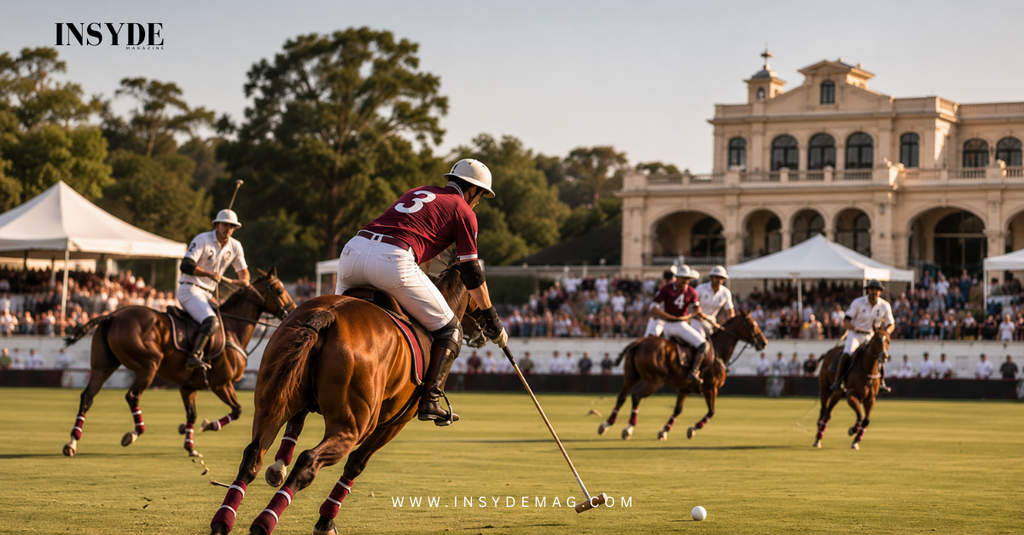
THE ECONOMICS OF A HORSE
To understand the financial structure of polo, begin with its most important asset: the horse.
In many sports, the athlete’s physical ability is the primary competitive investment. In polo, the relationship between rider and horse is fundamental to performance.
A polo pony must possess speed, agility, responsiveness, balance and the temperament to perform in a physically demanding environment. Its training and suitability can influence a player’s performance as much as the player’s own technical ability.
A competitive player also needs access to multiple horses. Matches are divided into periods known as chukkas, and horses are rotated to manage fatigue and maintain performance.
This creates an unusual financial commitment.
Owning a polo pony is not a one-time purchase. It involves feeding, veterinary treatment, farriery, grooming, conditioning, training, transport, stabling and insurance. For serious players, these costs multiply across an entire string of horses.
What does a polo pony cost?
There is no universal international price index for polo horses. Their value depends on breeding, age, training, temperament, competition history and performance.
However, figures published by Business Standard in November 2025, citing the honorary secretary of the Indian Polo Association, provide a useful India-specific reference.
The reported estimates were:
| Type of horse | Indicative price in India |
|---|---|
| Beginner-level pony | Approximately ₹1 lakh |
| Trained polo pony | ₹10–20 lakh |
| High-performance imported pony | ₹25 lakh and above |
A separate market-cost breakdown in the same report placed the purchase price of a trained polo pony at approximately ₹8–50 lakh and above, depending on its quality and training.
These are reported market estimates, not fixed prices or an official valuation schedule. The difference between the ranges reflects the variation in the quality and competitive ability of individual horses.
The financial commitment extends considerably further.
According to the same Business Standard report on polo’s Indian luxury economy, the indicative costs include:
| Expense | Reported Indian market range |
|---|---|
| Polo lessons | ₹5,000–₹15,000 per session |
| Monthly riding membership | ₹40,000–₹1.2 lakh |
| Horse lease | ₹80,000–₹3 lakh per month |
| Polo mallet | ₹15,000–₹60,000 |
| Riding boots and equipment | ₹50,000–₹2 lakh+ |
| Tournament fees and stabling | ₹2–15 lakh per season |
The figures are not universal tariffs and should be treated as reported market estimates. Actual costs depend on the club, horse, playing level and competition arrangements.
For an affluent individual, the difference between buying a horse and maintaining a competitive string is significant.
A single trained pony may cost tens of lakhs. A serious playing operation requires multiple horses, professional care and ongoing expenditure.
The purchase is only the beginning. The real financial commitment is ownership over time.

THE PRIVATE ECONOMY OF HORSE OWNERSHIP
At the highest levels of polo, horse ownership becomes a specialised form of asset management.
The best horses are valued for their performance, training and competitive suitability. Their prices are not determined by a standard commodity market. Two horses of similar age may command very different prices depending on breeding, ability, temperament and playing history.
Argentina has become particularly influential in this economy.
Its reputation for breeding and training competitive polo horses has helped establish the country as one of the world’s most important equestrian centres.
The country’s government reported that Argentina exported 2,905 live horses worth US$20.7 million between January and November 2025, representing a 4% increase in the number of horses exported and a 9% increase in export value compared with the same period in 2024.
The exports reached 38 international destinations. The United States, United Kingdom and United Arab Emirates accounted for more than 57% of the export value.
These figures cover the wider equine industry, including polo, racing and other equestrian activities. They should not be interpreted as polo-only exports.
Nevertheless, the data illustrates the international commercial importance of Argentina’s horse-breeding and equestrian ecosystem.
The Argentine government’s January 2026 export report also makes an important distinction: live horses are not traded like ordinary commodities. Their value depends on individual genetics, sporting history, training and intended use.
For wealthy polo patrons, this is a different kind of ownership.
A horse is not simply a luxury possession. It is a living sporting asset requiring expertise, capital and continuous management.
The financial relationship also extends beyond the owner. Breeders, trainers, veterinarians, farriers, grooms, transport companies and specialist equestrian suppliers all participate in the value chain.
The horse may be the visible star of the sport, but an entire professional economy exists behind it.
WHAT DOES IT COST TO ENTER THE WORLD OF POLO?
Polo’s reputation for exclusivity is often discussed without distinguishing between learning the sport, becoming a club member and competing at an international level.
These are very different financial propositions.
Published club tariffs offer a more concrete understanding of the range of access available.
Calcutta Polo Club: Access in India
The Calcutta Polo Club’s published membership schedule provides several examples of the financial structure of a historic Indian polo institution.
Its published programmes include:
| Membership category | Published entrance fee | Validity |
|---|---|---|
| Corporate membership | ₹1,50,000 | One year |
| Life membership | ₹5,00,000 | Lifetime |
| Pullu membership | ₹10,00,000 | Lifetime |
The corporate membership permits the organisation to nominate up to ten employees on a month-to-month basis, subject to the club’s terms.
Life membership is listed with no monthly subscription, while Pullu membership carries a monthly subscription of ₹450.
These are the club’s published figures and are subject to its membership conditions. They are not representative of every polo club in India, nor do they include the complete cost of competitive participation.
Nevertheless, they illustrate how membership can provide a route into the sport’s institutional environment without requiring immediate ownership of an expensive horse.
Guards Polo Club: Access to Britain’s elite circuit
At the international end of the spectrum, Guards Polo Club, located in Windsor Great Park, offers a different picture of polo membership.
Its published playing-membership schedule lists:
| Membership category | Published joining fee |
|---|---|
| Patron | £46,800 |
| Home Elected Player | £13,000 |
| Overseas Home Elected Player | £8,925 |
The Home Elected Player category provides eligibility to participate in domestic tournaments, club matches and chukkas, subject to the club’s rules and membership conditions.
Prospective playing members must be recommended by an existing playing member and interviewed by the Director of Polo and Chairman.
The club hosts more than 600 matches during a season and offers access to several grounds, stabling, grooms’ accommodation, training opportunities and hospitality facilities.
This is an important distinction between ordinary membership and participation in a prestigious international polo institution.
The financial commitment is not simply an entrance fee. It is access to a sporting network, competitive opportunities and facilities that have been developed over decades.
For the ultra-wealthy, the appeal is not necessarily the price itself. It is the combination of sporting access, institutional heritage and relationships that membership can facilitate.
THE PATRON: WHERE WEALTH MEETS THE SPORT
Polo has a financial structure unlike that of most mainstream professional sports.
In football, commercial revenues are increasingly generated through broadcasting, ticketing, merchandise, sponsorship and club ownership.
Polo has historically depended more heavily on private patrons.
A patron may finance a team, provide horses, support player arrangements and cover the operational requirements of competing in tournaments.
This makes the patron a particularly important figure in the sport’s business model.
In some cases, team participation represents a significant personal sporting commitment. In others, it can become an expression of family identity, business association or personal prestige.
For an ultra-high-net-worth individual, supporting a polo team can offer several forms of value:
- Sporting participation: The opportunity to compete or support a team in a demanding international sport.
- Personal identity: A connection to a particular club, team or sporting tradition.
- Relationships: Opportunities to interact with patrons, players, club members and business leaders.
- Hospitality: A platform for entertaining family, friends, clients and business associates.
- Legacy: An opportunity to support the sport, its institutions and the next generation of players.
It is important not to confuse these benefits with a guaranteed financial return.
There is no standard published return on investment for polo-team patronage. The costs and arrangements differ between teams and competitions, and many transactions are private.
For most patrons, the proposition is not conventional investment. It is an expenditure on sporting participation, experience, relationships and identity.
That distinction is essential to understanding why the sport continues to attract wealthy individuals.
THE LUXURY VALUE OF A POLO CLUB
A prestigious polo club is more than a sporting address.
It is a carefully maintained environment built around land, equine infrastructure, competition, membership and hospitality.
The playing fields require maintenance. The stables require specialist staff. The horses require care. The competition calendar requires organisation.
But the club’s value also extends into the social environment it creates.
At Guards Polo Club, membership includes access to multiple grounds, regular chukkas, club tournaments, stabling and opportunities for family and guest hospitality.
The club’s playing-membership information describes more than 600 matches in a season, access to its grounds and opportunities to play at prestigious polo clubs internationally.
For a wealthy member, this can represent a valuable combination of sporting and social access.
The club becomes a place where people meet repeatedly, share a sporting interest and develop relationships over time.
This is an important part of the economics of exclusivity.
Luxury is often associated with products that can be purchased. Polo offers access to an environment that cannot be replicated simply by buying a watch, car or piece of clothing.
The institution, its history, its membership and its sporting culture are part of the experience.
WHY LUXURY BRANDS WANT TO BE SEEN AT POLO
Polo has developed a natural relationship with luxury companies.
The sport’s identity is already associated with craftsmanship, heritage, performance and exclusivity. Those qualities align with the positioning of many premium brands.
Luxury watchmakers, fashion houses, automotive companies, hotels and lifestyle businesses can use polo as a platform for more than conventional advertising.
They can create private hospitality programmes, invite clients to tournaments, introduce products in an exclusive environment and associate their names with a recognised sporting tradition.
Cartier and the power of long-term association
The Cartier Queen’s Cup at Guards Polo Club is a strong example.
In 2026, Cartier celebrated its 14th year of sponsorship of the high-goal tournament.
That longevity is commercially significant. It demonstrates how a luxury house can maintain a relationship with a sporting institution whose values and audience complement its own.
The official 2026 Cartier Queen’s Cup tournament page describes the competition as one of the club’s leading tournaments, bringing together top players and significant equine talent.
For Cartier, the relationship is not simply about advertising around a match. It is an association with an established sporting culture.
India’s luxury polo partnerships
India is developing its own commercial relationships around the sport.
The Jaipur Polo Team’s partnership with Johnnie Walker Luxe during the 2025–26 season connected the brand with tournament experiences and the Indian polo environment.
The Leela has also associated its luxury hospitality positioning with Jaipur polo through its relationship with the Maharaja Sawai Man Singh Polo Cup.
These partnerships show how polo can create value across several commercial categories:
- Luxury hospitality and private client experiences.
- Premium brand activations.
- Corporate entertaining and relationship-building.
- Fashion, tailoring and equestrian lifestyle partnerships.
- Destination marketing and hotel experiences.
- Exclusive events and private networking.
For brands targeting affluent consumers, the advantage is not necessarily the size of the audience.
It is the relevance of the audience and the quality of the experience.
THE INTERNATIONAL BUSINESS OF POLO
Polo’s international ecosystem is spread across several established centres.
Argentina is influential in high-goal competition and equine breeding. England remains closely associated with historic clubs and prestigious summer tournaments. The United States has developed a major professional circuit, particularly around Wellington, Florida. The UAE has combined polo with luxury hospitality, destination experiences and international sporting events.
The Federation of International Polo currently lists 86 national association members.
That figure demonstrates the sport’s international institutional network. It should not be interpreted as 86 equally developed professional polo markets, since the Federation classifies associations according to different levels of development and membership status.
At the elite level, tournaments are important commercial platforms.
The 2026 U.S. Open Polo Championship brought together 11 teams as part of the Gauntlet of Polo series. Its final, played on 26 April 2026, featured international players and received broadcast exposure through ESPN platforms and international distribution.
The United States Polo Association’s official tournament report highlighted the event’s record crowd and international broadcast reach.
This demonstrates the opportunity to develop polo beyond its traditional private-club audience while retaining its premium positioning.
The tournament is the sporting centrepiece. Around it exists a wider experience involving sponsors, hospitality, spectators, players and destination businesses.
INDIA: A HERITAGE THAT CAN BECOME A BUSINESS ADVANTAGE
India’s relationship with polo gives the country a particularly strong position within the sport’s global story.
It is not simply a market importing an aristocratic pastime. India is part of the historical development of modern polo itself.
The Indian Polo Association continues to organise the sport nationally and publishes seasonal prospectuses and competition information.
Its 2026 updates include a Bengaluru Polo Season prospectus published on 10 July 2026, alongside activity in Delhi and Jaipur.
This is particularly relevant to Bengaluru.
The city has an established business community, an international population and a growing market for premium hospitality and lifestyle experiences. Polo offers a distinctive way to connect sporting culture with that audience.
The opportunity is not necessarily to transform Bengaluru into an international high-goal destination overnight.
It is to create a stronger local sporting ecosystem through participation, hospitality, corporate partnerships and greater visibility.
Jaipur, Delhi and Jodhpur remain important parts of India’s polo landscape, while Bengaluru offers an opportunity to develop a different commercial identity around the sport.
For India, the long-term opportunity is to connect its historical relationship with polo to a modern luxury economy.
WHY THE ULTRA-WEALTHY CAN AFFORD POLO
The cost of polo is often presented as a simple consequence of expensive horses and private clubs.
The reality is more structural.
For a high-net-worth individual, the sport requires access to a network of resources: capital, time, facilities, professional support and specialist knowledge.
A serious player may need multiple horses. Those horses require continuous care. The player needs coaching, training and access to suitable competition. A patron may need to finance a team and its operations.
These commitments create a barrier that goes beyond the price of a single purchase.
But the ultra-wealthy are often better positioned to absorb these costs because they can access the infrastructure and professional support required to participate.
They may own equestrian properties, maintain private stables, employ specialist staff, travel internationally and support teams across multiple seasons.
In some cases, they can build a long-term sporting relationship around their family, business or personal interests.
This does not mean that every wealthy individual plays polo, or that every polo patron is a billionaire. Nor does it mean that polo ownership is necessarily a profitable financial investment.
It means that the sport’s economic structure is particularly suited to people with substantial disposable capital and access to specialist resources.
For this audience, polo can offer a combination of sporting challenge, private leisure, social relationships and heritage.
The horse is expensive. The infrastructure is demanding. The experience is difficult to reproduce.
That is the real source of its exclusivity.
EXCLUSIVITY AS AN ECONOMIC MODEL
Polo’s commercial identity raises an interesting question: is exclusivity itself the product?
Not entirely. The sport must still deliver quality competition, skilled players, well-trained horses and credible institutions.
But exclusivity influences how the experience is packaged and valued.
A prestigious club can offer access that is limited by membership. A tournament can create private hospitality environments. A patron can support a team and develop a relationship with the sport that extends across seasons and international destinations.
For luxury brands, this environment offers a more focused alternative to mass-market advertising.
For clubs, it creates opportunities to generate revenue from membership, hospitality, facilities and events.
For patrons, it offers participation in a sporting culture that is defined as much by relationships and tradition as by the result of a match.
The commercial challenge is to preserve the qualities that make polo distinctive while ensuring the sport remains sustainable.
That includes responsible horse management, professional veterinary oversight, the development of younger players and opportunities for broader participation.
The future of polo cannot depend on heritage alone. It must continue to justify the resources required to sustain it.
THE NEXT GENERATION OF THE GAME
Polo’s future will be shaped by its ability to attract a new generation of players, patrons and spectators.
The sport has opportunities to expand through junior programmes, women’s participation, riding academies, digital coverage, international partnerships and more developed spectator experiences.
The challenge is to make polo more accessible without diluting the sporting standards and equine expertise that define it.
India has a particularly interesting role to play.
Its historical relationship with the game, established institutions and modern luxury markets provide a foundation for greater commercial development.
Bengaluru, Jaipur and Delhi can each contribute to a different part of that story — from new participation and corporate engagement to established tournaments and heritage-led hospitality.
For the global luxury industry, polo will likely remain attractive because it offers something that is increasingly difficult to manufacture: authenticity.
Its heritage is real. Its demands are substantial. Its relationship with the horse is fundamental.
And its appeal cannot be reduced to a sponsorship logo or a fashionable afternoon.
THE FINAL CHUKKA
The Game of Kings is not simply a sport for people who can afford expensive horses.
It is a world built around the resources, institutions and relationships required to sustain a demanding equestrian competition.
A trained polo pony may cost tens of lakhs. A horse lease can run into lakhs every month. Membership at an established international club can require a substantial financial commitment. Team patronage can involve an entirely different level of private expenditure.
But these figures explain only the financial barrier.
The deeper attraction lies in what polo offers beyond the field: sporting participation, heritage, access, international relationships and a social environment shaped over generations.
For the ultra-high-net-worth individual, the appeal is not necessarily the opportunity to display wealth. It is the ability to participate in a world where wealth can provide access to experiences, institutions and relationships that are not widely available.
That is why polo continues to occupy a distinctive place in the luxury landscape.
The kings may have given the sport its name. The patrons sustain its competition. The horses give it its character. And the institutions preserve its heritage.
In the world of polo, wealth may buy the opportunity to enter the field. But understanding the game is what earns a place within its world.
INSYDE MAGAZINE – No.1 Luxury Magazine In Bengaluru
BEYOND THE SPOTLIGHT
Bengaluru’s premium destination for luxury, culture, business and the people shaping what comes next.
Leave a Reply