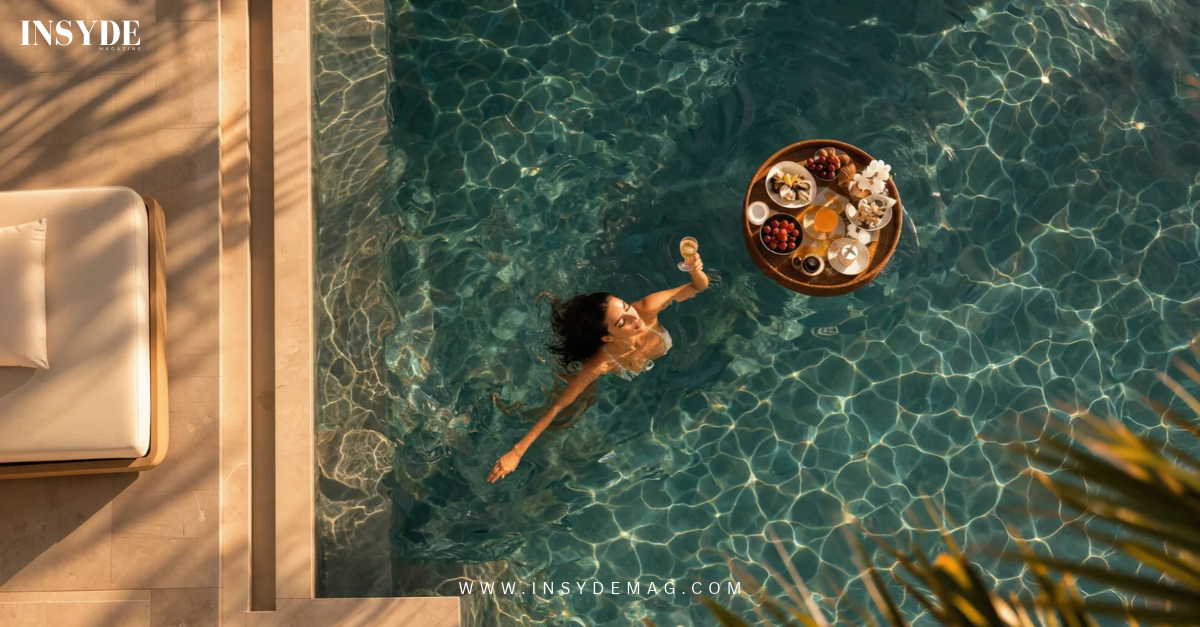
Category: Luxury Hospitality

Hotels, restaurants, clubs and spaces redefining luxury experiences.

  • WHEN LUXURY BRANDS OWN THE STAY

    WHEN LUXURY BRANDS OWN THE STAY

    How fashion houses, jewellery maisons and hospitality empires are turning their names into destinations

    Luxury used to be something you wore, carried or collected. Now, it can be the hotel you check into, the residence you call home and the experience that surrounds you. As luxury brands expand into hospitality and branded real estate, the business of selling a lifestyle is entering an entirely new dimension.

    INSYDE Magazine | Luxury, Business & Real Estate


    The New Address of Luxury

    Imagine checking into a hotel where the interiors reflect the aesthetic of a jewellery maison, the furniture carries the signature of a fashion house and every detail—from the lighting to the service—is designed to make the experience feel unmistakably exclusive.

    Now imagine owning a residence within that same world.

    This is the new frontier of luxury. The world’s most recognisable names are extending their identities beyond products and into the places where affluent consumers travel, live, dine and spend their time.

    From Bulgari’s jewellery-inspired hotels to Armani’s design-led hospitality and the ultra-luxury residences emerging under fashion, automotive and lifestyle names, the boundaries between luxury branding, real estate and hospitality are becoming increasingly fluid.

    The commercial opportunity is substantial.

    According to Savills’ Branded Residences Report 2025–2026, the number of branded residential developments worldwide was expected to reach 910 by the end of 2025, compared with 764 in December 2024—a projected annual increase of 19 per cent.

    More recent research points to an even broader development pipeline. Knight Frank’s Global Branded Residence Survey 2026, published in September, assessed more than 200 brands across 90 countries and covered nearly 1,800 existing and planned schemes.

    The significance extends beyond property. These developments represent a growing market in which a brand’s identity, reputation and service standards can influence the experience of a home or hotel.

    The question is no longer whether luxury belongs in hospitality. It is how far a luxury brand can extend its world—and whether the experience can justify the premium attached to its name.

    From the Boutique to the Bedroom

    For decades, luxury houses built their reputations through fashion, jewellery, watches, leather goods and craftsmanship. Their products offered customers a way to express identity, taste and status.

    Hospitality offers something different: an opportunity to inhabit that identity.

    A handbag is an object. A hotel is an environment. It combines architecture, materials, lighting, food, fragrance, service and location into a continuous experience.

    For a brand, this creates an opportunity to express its design philosophy across an entire destination. For a guest, it offers the possibility of entering a recognisable world rather than simply purchasing another product.

    But the business models are not interchangeable.

    Some luxury groups own or operate dedicated hospitality businesses. Some fashion houses collaborate with established hotel operators and property developers. Others license their names, design expertise or creative direction to projects owned by separate companies.

    That distinction is fundamental. A hotel carrying a designer’s name is not necessarily owned by that designer or fashion house.

    The most interesting question is therefore not simply which brands have entered hospitality. It is how each partnership works, what the brand contributes and where the commercial value is created.

    Bulgari: When Jewellery Becomes a Destination

    Few examples illustrate the connection between luxury products and hospitality as clearly as Bulgari Hotels & Resorts.

    Founded in Rome as a jewellery house, Bulgari has extended its design identity into hotels and resorts that combine contemporary Italian aesthetics with a strong sense of place.

    Its hospitality portfolio spans destinations including Rome, Milan, Paris, London, Dubai, Bali, Tokyo, Beijing and Shanghai. The properties bring together architecture, interiors, dining, wellness and service under a consistent brand philosophy.

    The connection to jewellery is not necessarily expressed through conspicuous branding. Instead, it appears in the attention paid to materials, proportions, finishes and detail.

    That is an important distinction in luxury hospitality. A property must communicate the identity of its brand without feeling like a retail showroom.

    Bulgari’s approach demonstrates how a maison can translate the qualities associated with its original business into an entirely different category. Craftsmanship becomes interior design. A focus on materials becomes architecture. The idea of exclusivity becomes a more intimate form of hospitality.

    The guest is no longer simply buying into the brand at a boutique. They are spending time inside its interpretation of luxury.

    For Bulgari, hospitality provides another setting in which the brand can be experienced. For the guest, it offers a more immersive expression of the world the maison represents.

    Armani: The Fashion House as a Living Space

    If Bulgari brings the sensibility of a jewellery house into hospitality, Armani offers a different proposition: the translation of fashion and interior design into an environment.

    The Armani Hotel Dubai, located within Burj Khalifa, is a prominent example of the partnership between Giorgio Armani and Emaar.

    According to the hotel’s official account, the project combines Armani’s design vision with Emaar’s development and hospitality expertise.

    This is more than a fashion name placed on a building. It is a collaboration between a creative brand and a property and hospitality business, each bringing a different capability to the project.

    The hotel’s design language is restrained, with clean lines, carefully considered materials and an emphasis on understated sophistication. Rather than relying on visual excess, the experience is intended to express luxury through coherence.

    That can be a powerful commercial advantage. In a crowded hospitality market, a distinctive design philosophy can help a property stand apart from competitors that offer similar facilities and service categories.

    The brand gives the hotel a recognisable point of view. The operator and development partner must then translate that promise into a consistently excellent guest experience.

    Armani illustrates how fashion can influence hospitality without requiring the hotel to replicate the experience of a boutique. The product is no longer clothing. It is the space itself.

    Cheval Blanc: The Hospitality Maison Within a Luxury Empire

    Not every luxury hotel brand begins as a fashion house or jewellery label. Some are developed within larger luxury groups that already operate across multiple categories.

    Cheval Blanc, part of LVMH’s portfolio, represents this approach.

    Rather than treating hospitality as an extension of a single fashion collection, Cheval Blanc has developed a distinct identity around craftsmanship, privacy, distinctive architecture and highly personalised service.

    Its properties are designed to reflect their locations while maintaining a consistent philosophy of hospitality. Cheval Blanc Paris, for example, occupies a landmark position overlooking the Seine and combines contemporary design with references to Parisian Art Deco heritage.

    The maison’s official profile describes an approach centred on detail, exclusivity, creativity and the art of receiving guests.

    The distinction matters because hospitality is a different operating discipline from fashion or jewellery. A hotel requires staff, infrastructure, food and beverage operations, maintenance, guest services and continuous management. Its reputation is built through thousands of interactions rather than a single purchase.

    A luxury group with a dedicated hospitality business can develop those capabilities while drawing on its broader understanding of craftsmanship, design and customer expectations.

    Cheval Blanc demonstrates how a hospitality brand can sit within a wider luxury ecosystem while maintaining its own identity.

    The Business Behind the Beautiful Lobby

    The economics of luxury hospitality are more complex than a famous name and an impressive building.

    A hotel project can involve a property owner, a developer, a hotel operator, a brand licensor, architects, designers, investors and financing partners. One company may own the land and building, another may manage daily operations, while another supplies the brand identity and design direction.

    The allocation of responsibility determines who carries the financial risk, who controls operations, how the brand is compensated and who is accountable for maintaining the promised standard.

    A hotel brand may operate a property directly, manage it under contract or license its name to a development partner. Fashion and jewellery houses may collaborate with established hospitality operators rather than build an entire hotel-management business themselves.

    These structures can allow brands to expand into new markets without taking on every aspect of property ownership and hotel operations. But they also require clear agreements about quality, design, service and brand protection.

    For developers, a recognised brand can help distinguish a project in a competitive market. For the brand, a successful partnership can extend its reach into a new category.

    Neither side is guaranteed a successful outcome.

    A prestigious name cannot indefinitely compensate for poor service, weak execution, an unsuitable location or a property that fails to deliver on its promise.

    In hospitality, the brand attracts attention. The experience determines whether the guest believes in it.

    Branded Residences: The Billionaire’s Version of Home

    The expansion becomes even more interesting when the customer is no longer booking a room, but buying a home.

    Branded residences are private homes developed in association with a hospitality, fashion, automotive, design or lifestyle brand. Depending on the project, residents may have access to concierge services, housekeeping, dining, wellness facilities and other hotel-style amenities.

    For buyers, the proposition combines a residential asset with a particular identity and service model. For developers, a brand can provide differentiation and help position a project within the luxury market. For the brand partner, residences offer a way to build a longer relationship with affluent customers.

    According to Knight Frank’s Global Branded Residence Survey 2025, the number of branded-residence schemes had reached 611, compared with 169 in 2011. The report projected that the total could reach 1,019 by 2030.

    Knight Frank’s subsequent 2026 survey examined nearly 1,800 existing and pipeline schemes across 90 countries, reflecting how the market has broadened beyond its earlier hotel-led model.

    Hotel brands remain central to the category, but non-hotel names—including those associated with fashion, automotive and design—are increasingly visible.

    The appeal is not necessarily that a branded property will always outperform a conventional home. It is that the brand may offer a recognisable design language, established service standards and a particular lifestyle proposition.

    For buyers, however, a branded residence remains a major real estate purchase. Property title, developer credibility, management agreements, service charges, maintenance and resale prospects deserve as much attention as the name on the building.

    A prestigious brand does not guarantee investment returns.

    India: The Branded-Living Market Is Growing Up

    India is becoming one of the most important markets to watch in this sector.

    The latest CRE Matrix and NOESIS report on India’s luxury branded residences, published in October 2026, puts cumulative supply across the ten markets it tracks at 10,452 units in 2026 year to date. It reports that buyers had absorbed 68 per cent of cumulative supply, while transaction value between 2018 and the 2026 year-to-date period reached ₹47,278 crore.

    The report also estimates India’s branded-residence market value at approximately US$9.7 billion, making it the largest market in Asia Pacific by value in its comparison, despite ranking fourth by supply.

    The numbers suggest that branded living is moving beyond a niche offering aimed at a handful of ultra-wealthy buyers. Developers are increasingly using hospitality, fashion and design identities to differentiate residential projects, while buyers are showing interest in homes that combine private ownership with managed services.

    There is a significant caveat: these figures describe the markets and project types covered by CRE Matrix and NOESIS, not every luxury residential development in India. The report’s estimates and classifications should be read within that scope.

    Even so, the data offers a useful snapshot of the sector’s direction.

    The Premium—and What It Actually Means

    CRE Matrix and NOESIS report that branded residences in India command premiums of approximately 25 to 44 per cent over comparable projects in their respective catchments, depending on the city.

    Pune recorded the highest reported premium at 44 per cent, followed by Kolkata at 42 per cent and Bengaluru at 32 per cent. Hyderabad recorded 25 per cent, while Mumbai, Noida and Gurugram fell between 26 and 29 per cent.

    These are reported comparisons from the study, not a guarantee that every branded home sells at a premium or that the premium will persist over time.

    The difference can reflect more than the name alone. Location, developer quality, unit sizes, amenities, service agreements, supply and local demand all influence pricing.

    The findings nevertheless indicate that some buyers are willing to pay more for a combined proposition: a recognised brand, a particular design identity and the promise of professionally managed services.

    For developers, the commercial challenge is to ensure that the premium corresponds to a real and durable difference in the product.

    For buyers, the question is whether the additional cost delivers value over the life of the property.

    Why India Is Different

    One of the most revealing findings in the CRE Matrix and NOESIS 2026 research is the mix of brands represented in India’s market.

    The report estimates that non-hospitality brands account for approximately 73 per cent of branded-residence units covered by its study. This contrasts with the global market, where hotel brands dominate the category.

    Fashion, design and lifestyle names therefore have a particularly visible presence in India’s branded-living market.

    The distinction offers an opportunity for hospitality groups. As the sector expands, established hotel operators can compete on the strength of service, management and operational experience, while non-hotel brands can bring design recognition and lifestyle positioning.

    The next phase may see more projects in which those capabilities converge: a property with a distinctive design identity, a credible developer and an operator capable of delivering hotel-style services consistently.

    That combination is more meaningful than branding alone.

    Asia Pacific: The Next Chapter of Branded Luxury

    The regional picture is evolving quickly.

    In its Asia Pacific Branded Residences Report 2026, published in September 2026, Savills identifies growing domestic wealth and local buyer demand as important forces shaping the region’s next phase of development.

    Vietnam leads Savills’ regional ranking by number of branded-residence projects, ahead of established markets such as Thailand, India and China. The report forecasts that Vietnam’s supply will grow by 152 per cent by 2032.

    This is a forecast, not a completed-project count. It illustrates the scale of the pipeline rather than a guarantee that every planned development will be delivered.

    For luxury brands, the regional opportunity is no longer confined to a few established international destinations. New projects are being considered across markets with different buyer profiles, levels of wealth and hospitality infrastructure.

    The strategy requires local understanding. A branded residence in a resort destination may depend on privacy, leisure facilities and seasonal travel demand. An urban project may rely more heavily on convenience, service, security and access to business districts.

    The brand must adapt to the location without losing the qualities that make it recognisable.

    Why Luxury Brands Want More Than a Customer

    Hospitality offers something that traditional retail cannot easily replicate: a sustained relationship with the customer.

    A guest may spend several days inside a hotel, use its spa, dine at its restaurants and return to the same brand in another destination. A resident may interact with the brand’s service environment for years.

    That creates opportunities to build familiarity, loyalty and a deeper emotional connection.

    For luxury houses, the strategic value lies in extending the brand into more moments of a customer’s life. For hospitality groups, branded residences can create a bridge between travel and everyday living. For developers, a credible brand can help establish a differentiated position in a competitive property market.

    But the economics must be assessed carefully. Individual hotel and residence projects do not always disclose their financial performance separately, and the existence of a branded property does not prove that the partnership is more profitable than an unbranded alternative.

    The strongest case for expansion rests on a clear match between the brand, the location, the customer and the quality of the experience.

    When that match works, the brand becomes more than a logo. It becomes part of the reason a customer chooses the property.

    The Risk of Selling a Name Instead of an Experience

    As the market expands, the difference between meaningful branding and superficial name recognition will become more important.

    A recognisable name can attract attention, but it cannot replace construction quality, thoughtful architecture, operational competence or consistent service. In residential projects, the long-term performance of the building and its management arrangements matters just as much as the launch campaign.

    There is also a risk that too many branded projects could dilute the exclusivity they are designed to create. If every new development promises a rare lifestyle, the promise itself becomes less distinctive.

    Brands must therefore choose partners carefully and protect the standards associated with their names. Developers must ensure that the project is financially viable and that the services promised to buyers can be sustained.

    For customers, the most important question is not simply whether a property carries a luxury name. It is what that name actually delivers.

    Does the design justify the premium? Are the services properly managed? Is the operator credible? Will the property remain desirable once the launch publicity fades?

    These questions will increasingly separate strong branded projects from those relying primarily on marketing.

    When Luxury Becomes a Place

    The expansion of luxury into hospitality and real estate reflects a broader shift in how the category is experienced.

    A watch can communicate precision. Jewellery can express craftsmanship. Fashion can signal identity. A hotel or residence can take those ideas further by placing them inside the customer’s daily life.

    From Bulgari’s jewellery-inspired hospitality to Armani’s design-led hotel experience and Cheval Blanc’s focus on personalised service, the model demonstrates how a luxury identity can be translated into a destination.

    The growth of branded residences takes that idea a step further. The customer is no longer simply visiting a brand’s world for a weekend. They may choose to live inside it.

    India’s latest market data and the global development pipeline suggest that the opportunity is expanding, although the long-term success of individual projects will depend on much more than brand recognition.

    The strongest developments will be those where the name, the location, the property and the service model reinforce one another.

    Because in the world of luxury, the ultimate status symbol may no longer be something you own.

    It may be somewhere you belong.


    INSYDE Take

    Luxury brands are competing for more than a place in the wardrobe. Through hotels, resorts and branded residences, they are entering the spaces where people travel, relax, entertain and live.

    The market is growing, and India is becoming an increasingly important part of the story. But the distinction between branding, ownership and operations matters. Some luxury houses run dedicated hospitality businesses; others work with property developers, hotel operators or licensing partners.

    Ultimately, a prestigious name can open the door. Only a genuinely excellent experience can justify the price—and make the guest want to return.

    INSYDE MAGAZINE
    Bengaluru’s number one leading Luxury Magazine
    Luxury, Through a Different Lens
    www.insydemag.com


    Sources & Further Reading

    Reporting note: Market figures reflect the dates, definitions and coverage of the cited research providers. Branded-residence pipeline figures include planned developments and should not be treated as completed inventory. Reported premiums are market-study comparisons, not guaranteed investment returns. A brand affiliation does not necessarily mean that the brand owns the underlying property.
  • INSIDE DUBAI’S WORLD OF ULTRA-LUXURY HOSPITALITY

    INSIDE DUBAI’S WORLD OF ULTRA-LUXURY HOSPITALITY

    Five extraordinary hotels redefining exclusivity, design and the art of being hosted.

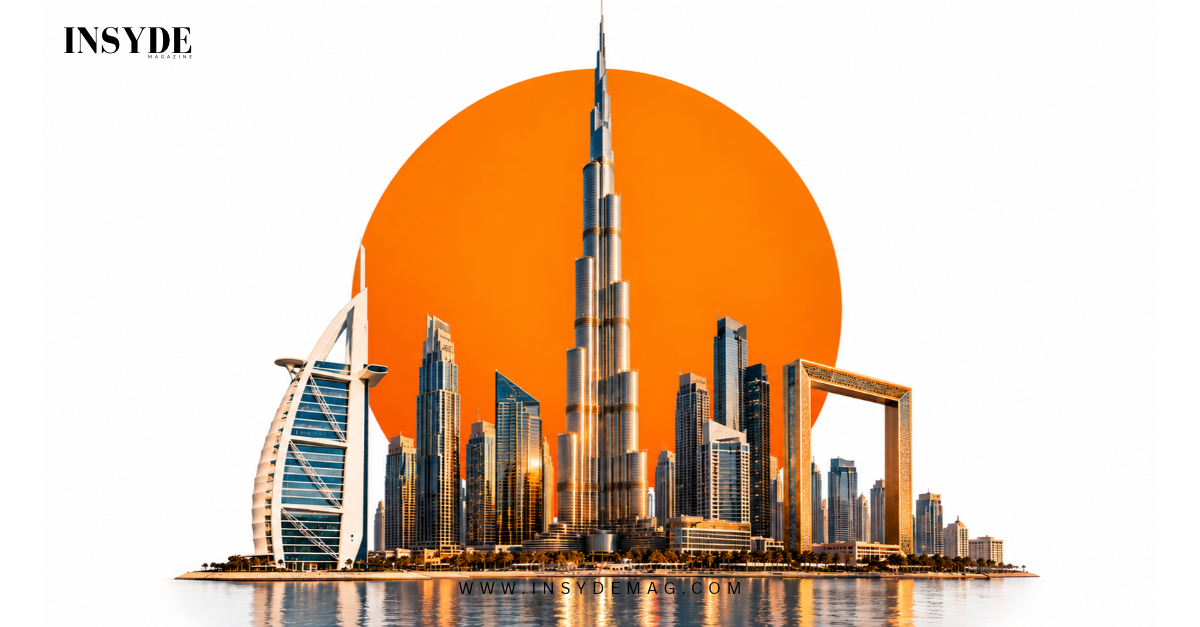
    Dubai has mastered the art of making an impression. Its skyline projects ambition, its culinary scene attracts internationally recognised names, and its hospitality industry continues to redefine what a luxury stay can look like. From extraordinary architecture and private-pool villas to destination dining and highly personalised service, the city has transformed the hotel experience into a statement of its own.

    But luxury hospitality is about more than spectacular buildings and lavish interiors. At its highest level, it is an exercise in precision: the atmosphere of a room, the intuitiveness of the service, the quality of the dining and the feeling that every detail has been considered. The strongest hotels do not simply accommodate their guests. They create a world around them.

    Dubai’s tourism performance provides a compelling backdrop to this evolution. According to the Dubai Department of Economy and Tourism, the emirate welcomed 19.59 million international overnight visitors in 2025, marking its third consecutive record-breaking year. Hotel occupancy reached 80.7 per cent, while the average daily room rate rose by 8 per cent to AED 579. Revenue per available room increased by 11 per cent to AED 467.

    The momentum has continued alongside a more complicated operating environment. The latest official tourism report, covering January to August 2026, recorded 6.97 million international overnight visitors. Hotel occupancy had recovered to 66 per cent in August, up from 36 per cent in March, demonstrating a recovery in demand after a difficult period for the travel sector. These figures reflect Dubai’s wider hotel market, rather than luxury properties alone, but they reveal the scale and resilience of the hospitality ecosystem in which its premium hotels compete. (Dubai Tourism Performance Report, January–August 2026)

    As the city’s hotel landscape becomes increasingly competitive, the distinction between luxury and genuine differentiation matters more than ever. A striking address may attract attention, but a memorable experience is what gives a property lasting appeal.

    From a globally recognised resort on Palm Jumeirah to a secluded retreat in the Arabian desert, these five hotels illustrate different expressions of modern luxury in Dubai.

    1. Atlantis The Royal: Where Luxury Becomes Spectacle

    On Palm Jumeirah, Atlantis The Royal represents Dubai’s appetite for hospitality on an extraordinary scale. Its sculptural architecture, expansive terraces, elevated swimming pools and beachfront setting create a resort designed to command attention.

    The property brings together accommodation, wellness, entertainment and an ambitious culinary programme. Its collection of restaurants includes internationally recognised names and chef-led concepts, while its elevated pools, including Cloud 22, make the resort experience part of the visual identity. Suites and signature penthouses extend the sense of exclusivity, with select accommodations offering private pools and sweeping views.

    Dining is central to the proposition. Guests can explore different cuisines and atmospheres without leaving the property, turning the resort into a destination in its own right rather than simply a base from which to discover Dubai. Wellness facilities and extensive leisure experiences further strengthen that all-encompassing approach.

    Its international standing is equally notable. The World’s 50 Best Hotels 2026 placed Atlantis The Royal at No. 4 globally, naming it both the Best Hotel in the Middle East and the Best Beach Hotel for 2026.

    The ranking reinforces the resort’s international profile, but its larger significance lies in how it approaches the guest experience. Atlantis The Royal does not pursue understatement. It embraces scale, energy and spectacle, delivering a version of luxury in which the setting itself becomes part of the entertainment.

    In a city where hotels increasingly compete to become destinations in their own right, Atlantis The Royal demonstrates the power of a fully realised hospitality concept.

    The defining appeal: Architectural spectacle, destination dining, elevated pool experiences and large-scale resort luxury.

    2. Burj Al Arab Jumeirah: The Enduring Power of an Icon

    Few hotels are as closely associated with a destination as Burj Al Arab Jumeirah. Rising from its own island off the Dubai coastline, its sail-inspired silhouette has become one of the most recognisable images in international hospitality.

    The hotel’s significance extends beyond its architecture. It helped establish Dubai’s luxury identity on the global stage, becoming a symbol of the city’s ambition and its willingness to challenge established ideas about what a hotel could represent.

    Inside, the experience centres on suite-led accommodation, highly personalised service and an elaborate approach to hospitality. Dedicated butler service, tailored guest arrangements and carefully choreographed arrival rituals place individual attention at the heart of the stay. The hotel’s dining, wellness and private leisure offerings complete a proposition built around a distinctive sense of occasion.

    Yet the real value of Burj Al Arab lies in its ability to remain relevant after becoming an icon. In an industry where new properties regularly arrive with dramatic architecture and ambitious promises, recognition alone is not enough. A lasting reputation must be supported by service, consistency and an experience that continues to meet contemporary expectations.

    That is what makes the property an important part of Dubai’s luxury story. Its identity is instantly recognisable, but its enduring challenge is to ensure that the experience inside remains as compelling as the image outside.

    Burj Al Arab represents a form of luxury built on legacy: the power of a hotel to become shorthand for an entire destination.

    The defining appeal: Iconic architecture, personalised butler service and a legacy that helped shape Dubai’s global image.

    3. The Lana, Dorchester Collection: A More Considered Expression of Luxury

    Not every luxury experience needs to announce itself through sheer scale. At The Lana, Dorchester Collection, the emphasis shifts towards architecture, design, art and a more measured sense of refinement.

    Located on Marasi Bay Marina in Business Bay, the hotel looks towards the Burj Khalifa and the surrounding cityscape. Its architecture was designed by Foster + Partners, while the interiors were created by the Parisian design studio Gilles & Boissier. The result is a contemporary property shaped by clean lines, carefully selected materials and a curated collection of artworks.

    The Lana features 225 rooms and suites, a rooftop infinity pool, multiple dining concepts and Dior Spa The Lana, which introduced Dior’s spa concept to the UAE. Its restaurants and bars give the hotel a wider social presence, attracting guests who may arrive for dining, wellness or a special occasion as much as for an overnight stay.

    This approach reflects a broader evolution in luxury hospitality. The experience is no longer defined exclusively by the room or the amenities available inside it. Architecture, atmosphere, gastronomy and wellness increasingly work together to shape the identity of a property.

    For travellers who value design and thoughtful curation, the quality of these individual elements can be more meaningful than extravagance for its own sake. A considered interior, attentive service and a distinctive dining experience can create a lasting impression without overwhelming the guest.

    The Lana’s proposition is therefore one of contemporary elegance: a hotel that positions itself as part of Dubai’s cultural and lifestyle landscape while retaining the service traditions associated with Dorchester Collection.

    The defining appeal: Design-led hospitality, curated art, destination dining and contemporary wellness.

    4. One&Only One Za’abeel: A New Perspective on Urban Luxury

    Dubai’s architecture has long served as an expression of its ambition. One&Only One Za’abeel takes that idea into the world of hospitality, creating an urban resort within one of the city’s most striking contemporary developments.

    The hotel occupies the twin-tower One Za’abeel complex, connected by The Link, a 230-metre sky concourse suspended approximately 100 metres above ground. According to the development’s official website, the structure holds the Guinness World Records title for the world’s longest cantilevered building. It also houses restaurants, bars and an elevated infinity pool, making the architecture an integral part of the guest experience. (Explore The Link)

    The resort combines contemporary accommodation with high-profile dining and wellness experiences. Restaurants within The Link include concepts associated with internationally recognised chefs, while the elevated setting gives the dining experience a distinctive relationship with the city below.

    This combination reflects the changing expectations of the luxury traveller. Guests increasingly seek the convenience of a central address without giving up the privacy, comfort and sense of escape associated with a resort. Dining, wellness, architecture and accommodation are brought together in a single destination.

    One&Only One Za’abeel also illustrates how luxury hotels are becoming more integrated into the urban environment. The building is not merely a container for guest rooms; it is a destination with its own identity, drawing attention through engineering, design and experiences that extend beyond the traditional hotel stay.

    Its approach is distinctly contemporary. Rather than relying on heritage or seclusion, the property positions urban energy and architectural ambition at the centre of its appeal.

    The defining appeal: Contemporary architecture, elevated dining, skyline views and an integrated urban-resort experience.

    5. Al Maha, a Luxury Collection Desert Resort & Spa: The Luxury of Disconnection

    Dubai’s luxury identity is often associated with towers, beaches and high-energy city living. Al Maha, a Luxury Collection Desert Resort & Spa, offers a different perspective.

    Set within the Dubai Desert Conservation Reserve, the resort places the Arabian landscape at the centre of the experience. Golden dunes, native wildlife and open desert views replace the density of the city, creating a stay defined by privacy, space and a slower pace.

    The property comprises 42 private villas inspired by Arabian heritage, each featuring its own pool. Interiors incorporate traditional furnishings, handcrafted details and regional artefacts, while the wider experience includes dining, spa facilities and activities such as wildlife drives, camel trekking, falconry and nature walks. The resort’s official property information outlines its location, accommodation and desert experiences.

    Here, luxury is measured differently. It is not about being surrounded by constant activity, but about having the freedom to step away from it. A private villa, an uninterrupted desert view and an experience shaped by the surrounding landscape can offer a form of exclusivity that a city hotel cannot replicate.

    Al Maha also demonstrates why a strong sense of place remains valuable in a globalised hospitality market. International service standards and sophisticated amenities are available in destinations around the world. A meaningful connection to the local environment, however, gives a property a more distinctive identity.

    For travellers seeking a retreat from Dubai’s urban intensity, Al Maha offers a different kind of indulgence — one rooted in nature, privacy and a closer relationship with the desert.

    The defining appeal: Private-pool villas, desert immersion, wildlife experiences and secluded luxury.

    What These Five Hotels Reveal About Dubai’s Luxury-Hospitality Market

    Together, these properties illustrate why Dubai’s luxury-hospitality industry cannot be defined by a single aesthetic or experience.

    Atlantis The Royal builds its identity around spectacle and destination experiences. Burj Al Arab draws on the enduring power of an icon. The Lana emphasises design and curation, while One&Only One Za’abeel brings architecture, dining and wellness into a contemporary urban setting. Al Maha offers a contrasting experience shaped by landscape and seclusion.

    These differences matter because luxury travellers are not a single audience. Some seek recognition, energy and theatrical experiences. Others prioritise privacy, design, gastronomy or a stronger connection to place. The most compelling hotel brands understand the desires they serve and create a coherent experience around them.

    The market data reinforces the importance of differentiation. Dubai welcomed 19.59 million international overnight visitors in 2025, while its hotel inventory reached 154,264 rooms across 827 establishments by the end of that year, according to the Dubai Department of Economy and Tourism. That scale creates opportunities, but it also intensifies competition for attention, bookings and repeat visits.

    The latest available 2026 data adds another dimension. Although hotel occupancy fell sharply during March, it had recovered to 66 per cent by August, while Dubai welcomed 6.97 million international overnight visitors in the first eight months of the year. These figures suggest a recovering market, but they also underline the sensitivity of travel demand to regional and international conditions. (Official January–August 2026 tourism report)

    For luxury properties, the challenge extends beyond attracting a first booking. Striking architecture can generate attention, but repeat business depends on the quality of the experience. A celebrated restaurant can introduce new audiences to a hotel, but service and consistency help sustain its reputation. A private pool or panoramic view may be memorable, but the details surrounding the stay determine whether the experience feels genuinely exceptional.

    Dubai’s advantage is the breadth of its offer. Within one destination, travellers can choose between beachfront spectacle, an internationally recognised icon, contemporary design, an elevated urban resort and a secluded desert retreat.

    The next chapter of the city’s luxury-hospitality story will depend not only on how extraordinary its hotels look, but on how effectively they translate their individual identities into experiences that guests value.

    The Final Word: Luxury Beyond the Address

    The future of luxury hospitality is not simply about building bigger hotels or adding increasingly extravagant amenities. It is about creating experiences with a clear identity — places that know what they stand for and deliver it with consistency.

    Dubai’s standout hotels demonstrate that there is no single formula. Luxury can be theatrical, architectural, personal or profoundly quiet. It can unfold above the skyline, beside the sea or among the dunes.

    The strongest properties do more than provide a room for the night. They create a distinct sense of place, turn service into an art and give travellers a reason to remember the experience long after checkout.

    In a city built on ambition, that may be the most valuable luxury of all.

    INSYDE — Building Bengaluru’s Number One Luxury Magazine

    At INSYDE, we look beyond the obvious to explore the people, places, ideas and experiences shaping the world of luxury. From exceptional hospitality and international destinations to fashion, culture, influential personalities and emerging talent, our editorial lens is guided by curiosity, considered storytelling and a distinctly contemporary perspective.

    Founded with Bengaluru as its starting point and a global outlook at its core, INSYDE is building towards an ambitious vision: to become Bengaluru’s number one luxury magazine, connecting discerning readers with the people, brands and experiences defining what comes next.

    Discover more stories on luxury, culture, people and lifestyle at www.insydemag.com.

  • INSIDE THE WORLD’S MOST LUXURIOUS TRAIN JOURNEYS

    INSIDE THE WORLD’S MOST LUXURIOUS TRAIN JOURNEYS

    From restored Art Deco carriages in Europe to palace-inspired suites in India and grand expeditions across Africa, luxury rail travel is transforming the journey itself into the ultimate indulgence.

    There are faster ways to cross continents. There are more private ways to travel. And there are certainly more direct ways to reach a destination.

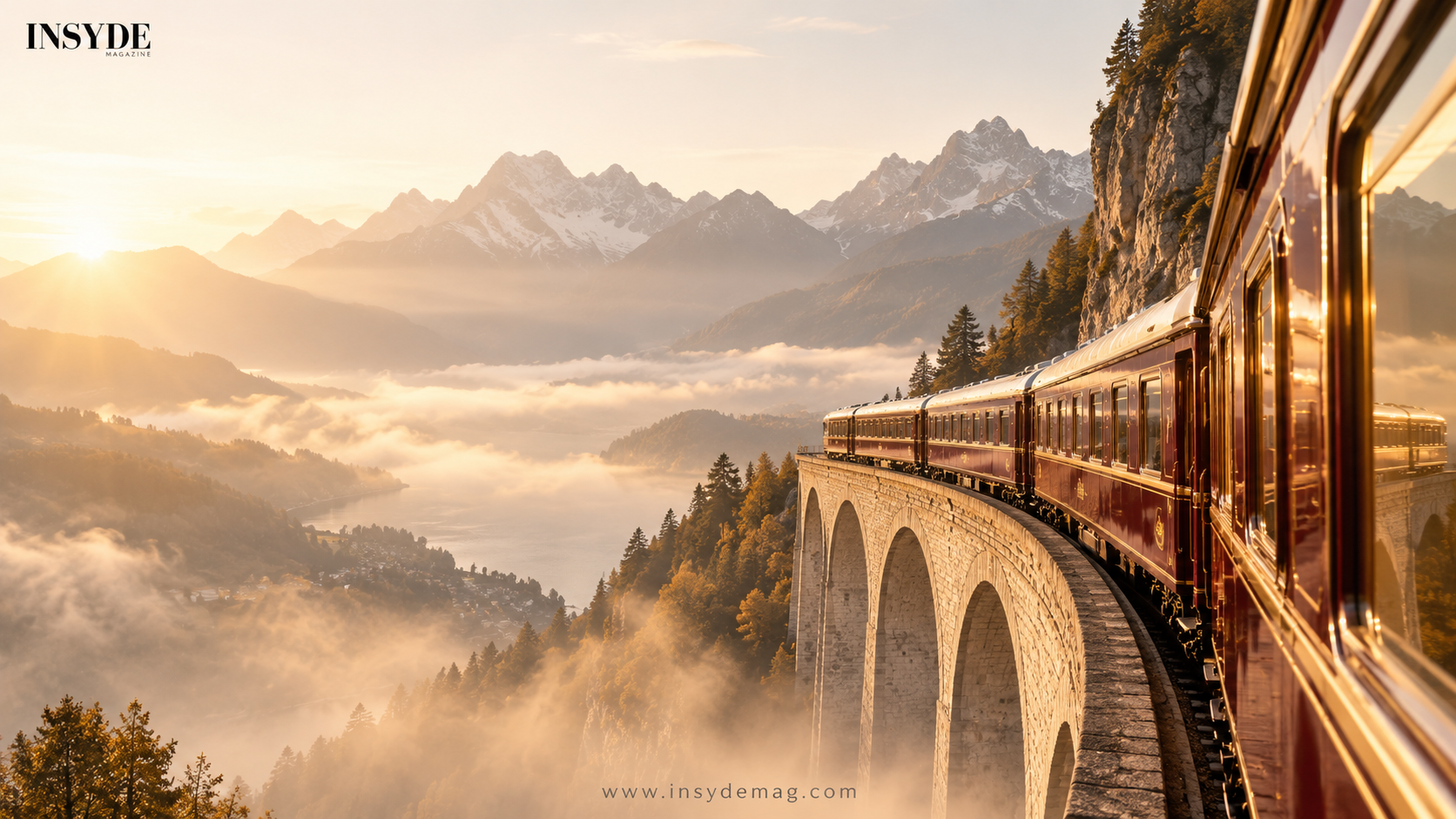
    Yet few experiences capture the imagination quite like stepping aboard a beautifully restored railway carriage, settling into a private suite and watching the world unfold through the window. Outside, landscapes shift from mountain passes to historic cities and vast open plains. Inside, the pace changes. Dinner becomes an occasion, the journey becomes the destination, and time itself becomes part of the luxury.

    Luxury rail travel occupies a distinctive place in the world of high-end hospitality. It combines the romance of historic railway journeys with the comforts of contemporary service: beautifully appointed accommodation, considered cuisine, attentive staff and itineraries that connect passengers with places worth experiencing slowly.

    The economics are equally fascinating. Depending on the route, accommodation and duration, a luxury train journey can cost several thousand pounds per person or reach tens of thousands for a single booking. These fares are not directly comparable: a one-night cabin, a multi-night private suite and an expedition with extensive excursions represent very different products.

    What unites them is a philosophy of travel that places the experience itself at the centre.

    That philosophy resonates with the wider luxury travel market. Virtuoso’s 2026 Luxe Report, drawing on insights from more than 2,400 travel advisers across over 50 countries, identifies cultural immersion, authenticity, food and wine, and meaningful travel experiences among the priorities shaping affluent travel. The report also finds that travellers remain willing to spend more when the experience justifies the cost.

    Luxury trains offer a compelling expression of these priorities. They transform the space between destinations into something worth paying for.

    From the legendary carriages of the Venice Simplon-Orient-Express to the palace-inspired suites of India’s Maharajas’ Express, these five journeys demonstrate the many ways luxury can be experienced on the rails.

    01. Venice Simplon-Orient-Express, Europe

    Few names in luxury travel possess the cultural resonance of the Venice Simplon-Orient-Express. Its midnight-blue carriages, polished woodwork, intricate marquetry and Art Deco interiors evoke an era when railway travel was an expression of elegance in its own right.

    Operated by Belmond, the train has built its reputation around the restoration of historic carriages and an experience shaped by craftsmanship, gastronomy and personal service. Its restaurant cars turn dinner into an event, while dedicated stewards and carefully appointed cabins preserve the intimacy of traditional railway travel.

    The celebrated Paris–Istanbul itinerary offers a particularly evocative example. The five-night journey connects Paris with Istanbul through a route that includes Budapest and Bucharest, with excursions and hotel stays forming part of the broader experience. It draws on the mythology of the original Orient Express tradition while operating as a distinct contemporary luxury service.

    The price of admission

    Belmond’s official listings show the five-night Paris–Istanbul journey in 2026 from £19,900 per adult in a Historic Cabin. For comparison, its one-night Paris–Venice journey starts from £4,275 per adult in the same cabin category. These are published starting fares, not guaranteed prices for every departure; availability and cabin selection affect the final cost.

    The distinction matters. The longer itinerary is not simply a more expensive version of the same night aboard. It incorporates a broader journey, additional destinations and a different scale of experience.

    Why it matters

    The Venice Simplon-Orient-Express demonstrates how heritage can become a contemporary luxury asset. In a market where new hotels and experiences appear constantly, its appeal rests partly on the sense of stepping into a world that has deliberately resisted the ordinary rhythms of modern travel.

    Its most valuable feature may not be any single amenity. It is the coherence of the experience: the carriage design, service, dining and route all contribute to the same idea of glamour.

    02. Maharajas’ Express, India

    India’s luxury hospitality industry has long drawn on its palaces, historic residences and traditions of elaborate service. The Maharajas’ Express brings those influences together in a journey designed around the country’s architectural, cultural and royal heritage.

    Its itineraries connect destinations associated with monumental architecture, historic cities and India’s diverse regional identities. The train becomes a travelling base from which guests can explore the country without repeatedly checking into and out of conventional hotels.

    The accommodation ranges from Deluxe Cabins to the Presidential Suite. At the highest level, the proposition extends beyond interior design to include personalised service, guided sightseeing and private vehicles for excursions. The operator’s published inclusions vary by category, making it important to examine the details rather than treating every fare as equivalent.

    The price of admission

    For the 2026–27 season, the official fare table lists the Presidential Suite on the seven-day, six-night Indian Splendour itinerary at ₹26.13 lakh per person, based on twin-sharing occupancy, before an additional 5% GST. The same listed Presidential Suite fare applies to the Heritage of India itinerary. The operator notes that Indian-rupee tariffs are subject to revision every two months, so the published amount should be reconfirmed before booking.

    At this price, the train occupies a distinctive position in India’s premium travel market. Its value proposition is a curated journey combining accommodation, dining, guided excursions and a service model built around the experience of travelling in comfort.

    Why it matters

    The Maharajas’ Express shows how Indian heritage can be translated into a contemporary luxury product for domestic and international audiences. It is not simply a train with lavish interiors; it is an example of destination-led hospitality, where architecture, history and service contribute to the overall value.

    For India, that distinction is significant. Luxury travel need not depend on importing an international aesthetic. It can draw its appeal from the country’s own cultural depth and traditions of hospitality.

    03. Royal Scotsman, Scotland

    In Scotland, luxury often finds expression in historic estates, natural materials, regional cuisine and a close relationship with the landscape. The Royal Scotsman brings these qualities together in a travelling environment that feels closer to an intimate country retreat than conventional transport.

    Its itineraries pass through the Scottish Highlands and other regions of the country, combining scenic rail travel with excursions, cultural experiences and food-led programmes. Selected journeys also explore Scotland’s whisky heritage, giving passengers a deeper connection with the places they visit.

    The accommodation is central to the experience, but the surrounding landscape is equally important. Mountains, lochs, villages and historic sites provide a changing backdrop that no fixed hotel could reproduce in quite the same way.

    The price of admission

    Belmond’s official listings include the five-night Clans, Castles & Isles journey from £73,500 per Grand Suite, quoted per cabin. A separate four-night The Highlands journey is listed from £21,000 per cabin in a Double Cabin. These are different accommodation categories and itineraries, not directly comparable per-person fares.

    The figures illustrate why luxury train prices require careful interpretation. A quoted cabin price is not the same as a per-person rate, and the cost of a journey depends on the selected accommodation, itinerary and booking conditions.

    Why it matters

    The Royal Scotsman represents a quieter form of exclusivity. Rather than relying on spectacle alone, it combines privacy, landscape, food and heritage in a relatively intimate setting.

    Its appeal lies in the feeling of being looked after while remaining connected to the destination. For travellers who value atmosphere over display, that may be precisely the point.

    04. Rovos Rail, Southern Africa

    The appeal of Rovos Rail is rooted in distance. Its journeys offer an alternative to the short flight and quick transfer, inviting passengers to experience southern Africa through the changing landscapes between destinations.

    The Cape Town route provides a compelling example. Covering approximately 1,600 kilometres over three nights, it travels through the Cape Winelands and the Great Karoo, with excursions including the historic village of Matjiesfontein and Kimberley’s Diamond Mine Museum.

    The train’s suites retain the character of classic railway accommodation while providing private bathrooms, seating areas and practical comforts. The Royal Suite, in particular, is designed around a private lounge and an en-suite bathroom with a bath and separate shower.

    The experience is less about reaching a single famous destination than about seeing a vast region unfold over several days.

    The price of admission

    Rovos Rail publishes fares according to itinerary, travel period and suite category. Its official Cape Town journey page provides separate rate tables for 2026, 2027 and 2028, reflecting the importance of checking the correct travel season before quoting a fare.

    The appropriate approach is to consult the operator’s current rate table for the intended departure rather than attach an unverified price to the journey. Rates for an earlier season should not be presented as current 2026–27 prices.

    Why it matters

    Rovos Rail illustrates a different expression of luxury: exploration without sacrificing comfort. Its appeal comes from the combination of long-distance travel, heritage railway design and access to landscapes that reveal themselves gradually.

    In this setting, the journey is not an interruption between experiences. It is the experience.

    05. La Dolce Vita Orient Express, Italy

    If the Venice Simplon-Orient-Express evokes historic European glamour, the La Dolce Vita Orient Express offers a more contemporary interpretation of luxury rail travel.

    Its concept draws on Italian design, regional cuisine and the appeal of exploring the country through carefully planned itineraries. Rather than relying exclusively on nostalgia, it presents the train as a contemporary setting for experiencing Italian culture, food and landscapes.

    The programme includes journeys through Italy as well as a longer Rome–Istanbul itinerary. Its offering spans shorter regional experiences and multi-night international travel, each with a different price and itinerary.

    The price of admission

    The official booking listings show the four-night Rome–Istanbul journey scheduled for 22–27 October 2026 at €20,000, including taxes. The same listings show the one-night Tastes of Tuscan Vineyards experience from €3,060, including taxes, for a November 2026 departure. These are specific published offerings, and availability and prices may change.

    The comparison reveals two distinct interpretations of luxury. One is a short, destination-focused escape; the other is an extended journey across borders. Both use the train as a setting for hospitality and discovery, but their durations and experiences differ considerably.

    Why it matters

    La Dolce Vita Orient Express demonstrates that luxury rail travel is not confined to reproducing the past. It can reinterpret the format through contemporary design and a strong connection with regional culture.

    Its proposition is particularly relevant to travellers who see gastronomy, architecture and a sense of place as essential parts of a premium experience.

    The Economics of Exclusivity

    The published fares make one point clear: luxury rail travel is not a single category of product. It ranges from overnight journeys in historic cabins to multi-night experiences involving premium suites, curated excursions and extended itineraries.

    The following comparison uses published operator listings available in October 2026. It is not a ranking of the five most expensive trains in the world.

    JourneyPublished price referenceWhat the price represents
    Venice Simplon-Orient-ExpressFrom £19,900 per adultFive-night Paris–Istanbul, Historic Cabin, 2026
    Maharajas’ Express₹26.13 lakh per person, plus 5% GSTSix-night Indian Splendour, Presidential Suite, twin-sharing basis, 2026–27
    Royal ScotsmanFrom £73,500 per cabinFive-night Clans, Castles & Isles, Grand Suite
    Rovos RailVaries by journey and seasonCheck the current official rate table for the selected departure
    La Dolce Vita Orient Express€20,000 including taxesFour-night Rome–Istanbul journey listed for October 2026

    These figures should not be compared as if they were equivalent tickets. Some are per person, others per cabin; some include taxes, while the Maharajas’ Express fare explicitly excludes GST. Journey duration and inclusions also differ.

    A fair comparison must consider what is included in each fare: accommodation, meals, beverages, guided excursions, transfers and any hotel stays away from the train. It must also distinguish the advertised starting price from the amount a traveller would pay for a specific departure.

    The broader lesson is that the price of luxury rail is determined by more than distance. Accommodation, service, itinerary design and the overall experience all contribute to the final fare.

    Why the Journey Matters More Than the Destination

    The appeal of luxury rail travel becomes clearer when viewed against the wider direction of affluent tourism. Virtuoso’s 2026 Luxe Report highlights cultural immersion, authenticity, food and wine, and meaningful travel among the interests shaping the market. It also reports that 55% of surveyed advisers expect spending per trip to increase modestly, while 28% anticipate spending to remain stable. These are adviser expectations, not measured growth in train bookings, but they provide useful context for the premium experiences market.

    Luxury trains align with these priorities in several ways.

    They make time part of the experience. A journey lasting several nights encourages passengers to settle into a rhythm rather than treat travel as an inconvenience.

    They combine several forms of hospitality. Accommodation, dining, scenery, excursions and personal service are brought together in a single itinerary.

    They give heritage a contemporary purpose. Historic railway design and regional traditions become part of a modern premium product.

    They create a sense of occasion. The act of boarding, dressing for dinner, watching the landscape change and arriving somewhere new becomes a sequence of experiences in its own right.

    This does not mean luxury trains are replacing private aviation, superyachts or five-star hotels. Each serves a different purpose. A private jet prioritises flexibility and speed; a luxury train asks passengers to value the time spent travelling.

    That distinction is central to understanding the market. The appeal is not that a train can do what an aircraft does, only more slowly. It is that the experience of travelling by rail can offer something an aircraft cannot easily replicate.

    The Future of Luxury on Rails

    Luxury rail travel occupies a distinctive position between transportation and hospitality. Its strongest operators understand that beautiful interiors alone are not enough. The route must be compelling, the service consistent, the excursions worthwhile and the experience coherent from departure to arrival.

    India’s Maharajas’ Express demonstrates how heritage-led hospitality can attract international attention. The Venice Simplon-Orient-Express shows how historic design can retain its cultural and commercial appeal. The Royal Scotsman and Rovos Rail present different interpretations of landscape-led exploration, while La Dolce Vita Orient Express offers a contemporary approach to Italian design and regional culture.

    Their differences matter. There is no single definition of luxury, and the most expensive option is not automatically the most rewarding. For one traveller, it may be a private suite and a formal dinner; for another, it may be the opportunity to cross a remarkable landscape without rushing through it.

    What these journeys share is a belief that travel can be more than the movement between two points.

    In a world increasingly organised around speed and convenience, that belief has become a luxury of its own.

    Perhaps that is the enduring attraction of travelling by rail at its most exceptional. The destination still matters, but it no longer has to justify every moment spent getting there.

    Sometimes, the journey is the privilege.

    INSYDE MAGAZINE – no.1 Luxury Magazine in Bengaluru

  • INVITATION ONLY: WHERE MONEY ISN’T ENOUGH

    INVITATION ONLY: WHERE MONEY ISN’T ENOUGH

    Inside the private luxury stays where an invitation, a relationship or a membership can matter more than the room rate.

    Luxury has always had a price.

    A suite overlooking the Mediterranean.
    A private villa in the Caribbean.
    A penthouse above Manhattan.
    A room with a view that most people will only ever see on Instagram.

    For most luxury hotels, the equation is beautifully simple:

    You want the room. You can afford the room. You book the room.

    But there is another level of hospitality where that equation breaks down.

    There are properties where the room doesn’t have a public nightly rate.

    Places where you cannot simply open a booking platform, enter your dates and hand over a credit card.

    Places where the first question isn’t:

    “How much does it cost?”

    It is:

    “Who invited you?”

    Welcome to the world of invitation-only luxury hospitality.

    Here, money can certainly be useful.

    But it isn’t always enough.


    THE NEW LUXURY IS ACCESS

    Luxury is entering an interesting phase.

    After years of expansion, visibility and increasingly accessible luxury experiences, the industry is becoming more selective about what creates genuine desirability.

    Deloitte’s Global Powers of Luxury 2026 describes the sector as entering a period defined by “stabilization, selectivity and significance.” Its survey of 420 senior luxury executives across ten countries found that customer experience and loyalty were among the strongest growth opportunities, cited by 28.6% of respondents. The report also identified luxury travel as the category with the highest growth potential, cited by 36.2% of executives. Deloitte

    That matters because luxury hospitality is no longer competing purely on the size of the suite.

    It is competing on how difficult the experience is to replicate.

    Privacy.

    Personalisation.

    Cultural access.

    Relationships.

    Community.

    And increasingly, belonging.

    Knight Frank’s 2026 research captures the shift in another way: private members’ clubs are moving beyond cities into countryside and lifestyle destinations, combining hospitality, wellness and community. The firm’s research also found that access to sought-after clubs can influence residential demand, showing that membership itself can become an asset rather than merely an amenity. Global

    The hotel, in other words, is becoming more than a place to sleep.

    For the most exclusive properties, it can become a private world.


    01 — HÔTEL DU MARC

    THE HOUSE YOU CAN’T SIMPLY BOOK

    Reims, France

    There are luxury hotels where the question is how much you are willing to spend.

    Hôtel du Marc asks something more complicated:

    Are you invited?

    The six-room residence in Reims belongs to Veuve Clicquot and operates differently from a conventional luxury hotel. Rather than releasing rooms to the public through ordinary booking channels, it functions as a private hospitality space for guests invited by the Champagne house.

    Its invitation-only character remains relevant in 2026. Emirates Skywards’ 2026 exclusive Moët Hennessy experience, for example, included an overnight stay at Hôtel du Marc and described it as an invitation-only private residence. Eoghan Corry’s TRAVEL Extra

    That is an important distinction.

    Hôtel du Marc isn’t simply selling a luxurious night in Champagne.

    It gives selected guests access to the world behind one of the world’s most recognisable Champagne houses.

    The residence has six bedrooms, each individually conceived around Veuve Clicquot’s international history, making the property feel less like a conventional hotel and more like an extension of the maison itself. Robb Report India

    The guest therefore isn’t merely staying at a luxury property.

    They are being brought inside the brand.

    And that changes the value of the experience.

    The bottle on a restaurant table becomes a house.

    The house becomes a story.

    And the consumer becomes a guest.


    02 — CHÂTEAU DE SARAN

    WHEN THE GUEST LIST BECOMES PART OF THE LUXURY

    Champagne, France

    Some luxury properties sell rooms.

    Château de Saran sells something far harder to purchase:

    access to a world.

    The historic château is part of the Moët & Chandon estate and is presented by LVMH as one of the maison’s distinctive properties. LVMH

    It is not a conventional hotel competing for weekend bookings.

    It operates as a private hospitality setting for carefully selected guests and experiences.

    The evidence is not merely historical.

    In September 2025, LVMH documented a private event at Château de Saran in which ZENITH and Moët Hennessy Private hosted a select circle of clients for an evening centred on craftsmanship and savoir-faire. LVMH

    That tells us something important about the role of the château.

    The property is part of the luxury ecosystem.

    It isn’t simply accommodation.

    It is a stage on which several worlds meet:

    Champagne.

    Watchmaking.

    Craftsmanship.

    Heritage.

    Private clients.

    And access.

    The modern luxury consumer can buy a bottle of Moët & Chandon.

    They cannot simply buy their way onto every guest list surrounding the house.

    That distinction is precisely what makes Château de Saran interesting.

    Because when hospitality becomes invitation-led, the guest list itself becomes part of the experience.


    03 — LA CASONA AT HACIENDA PATRÓN

    THE HOTEL THAT DOESN’T SELL THE ROOM

    Jalisco, Mexico

    Deep inside the world of Patrón tequila is one of the strangest luxury hospitality concepts in the industry.

    La Casona at Hacienda Patrón.

    It looks like a beautiful Mexican hacienda.

    It has elegant guest rooms, dining spaces, a café and a bar.

    But it does not operate like an ordinary hotel.

    Travel + Leisure’s August 2026 review described La Casona as an exclusive, invite-only property, with stays complimentary and paid for by Patrón. Travel + Leisure

    That changes everything.

    There is no traditional transaction in which a traveller simply chooses a room, checks the rate and makes a reservation.

    Instead, the stay is part of a relationship with the brand.

    The people invited can include VIPs, business partners and hospitality professionals.

    The experience becomes a form of brand immersion.

    Guests don’t simply learn about Patrón from a bottle or a cocktail menu.

    They enter the environment behind it.

    They see the estate.

    They experience the hospitality.

    They encounter the craftsmanship and culture surrounding the brand.

    The stay becomes part of the story.

    And this may be one of the most interesting directions in luxury hospitality:

    the hotel is no longer the product.

    The experience around the product is.


    04 — THE CARNEGIE CLUB AT SKIBO CASTLE

    YOU DON’T JUST STAY. YOU BELONG.

    Dornoch, Scotland

    Then there is Skibo.

    A Scottish castle.

    An 8,000-acre estate.

    An 18-hole championship golf course.

    Castle bedrooms.

    Estate lodges.

    Spa and country pursuits.

    And a private members’ club at the centre of it all.

    The Carnegie Club describes Skibo Castle as one of the world’s prestigious private clubs, with membership giving members access to what it calls a residential club experience in the Highlands. Carnegie Club

    The accommodation includes 21 castle rooms and 13 estate lodges, according to the club. Carnegie Club

    But the defining feature isn’t the room inventory.

    It is the membership.

    As of October 2026, the Carnegie Club states that it is fully subscribed and is accepting new applications for its waiting list. Carnegie Club

    That single detail tells us almost everything about the model.

    Skibo isn’t trying to behave like a luxury resort with unlimited availability.

    Its value comes partly from continuity.

    Members return.

    Members bring guests.

    Relationships develop.

    The same people can encounter one another again and again.

    And the club itself says that its appeal isn’t simply the golf, food, facilities or landscape. It identifies the people — its membership and staff — as central to what makes Skibo special. Carnegie Club

    That is a profound shift in the meaning of hospitality.

    The luxury isn’t simply:

    “I stayed in a castle.”

    It becomes:

    “I belong to the world that stays there.”


    05 — SAN VICENTE BUNGALOWS

    HOLLYWOOD’S PRIVATE DOOR

    West Hollywood, California

    Los Angeles has no shortage of luxury hotels.

    But San Vicente Bungalows operates according to a different philosophy.

    It is a private members’ club with accommodation — and privacy is not an additional amenity.

    It is the foundation of the experience.

    Membership requires nomination by an existing member, and nomination does not guarantee acceptance. The club’s rules and membership structure are designed around controlled access and a private community. Time Out Worldwide

    The club is also famously strict about photography and privacy.

    That makes sense in a city where visibility is currency.

    At San Vicente, the appeal is almost the opposite.

    Not being seen.

    The club has expanded beyond its original West Hollywood location, but the underlying proposition remains the same: curated membership, controlled access and a social environment where privacy is part of the luxury. JK HOTEL GROUP

    And in September 2026, the access model became even tighter.

    Robb Report India reported that, from 1 September 2026, the West Hollywood club stopped accepting reservations from non-member guests, closing an avenue that had previously allowed outsiders to stay. Robb Report India

    That is a significant development.

    Because it turns the hotel room into something secondary.

    The real product is the club.

    The room simply lets members stay inside that world a little longer.


    THE ROOM ISN’T THE PRODUCT ANYMORE

    Look at these five properties and the pattern becomes difficult to ignore.

    They aren’t all hotels.

    They aren’t all invitation-only in exactly the same way.

    And they don’t all operate under the same commercial model.

    But they share one defining characteristic:

    ordinary hotel booking is not the route to the experience.

    At Hôtel du Marc, access comes through the Champagne house.

    At Château de Saran, the property functions as part of Moët & Chandon’s private hospitality ecosystem.

    At La Casona, the stay is invitation-led and complimentary.

    At Skibo, membership is the gateway.

    At San Vicente, membership and nomination govern access.

    The common currency is therefore not simply money.

    It is relationship.


    WHEN MONEY STOPS BEING ENOUGH

    Luxury has traditionally been very good at creating price barriers.

    Want the better suite?

    Pay more.

    Want the private villa?

    Pay more.

    Want the yacht?

    Pay more.

    Want the rare watch?

    Pay more.

    But invitation-only hospitality introduces a different kind of scarcity.

    You cannot simply pay more to guarantee entry.

    The scarcity is controlled access.

    That is a more complicated and, in some ways, more powerful form of luxury.

    Because the question changes from:

    “Can I afford it?”

    to:

    “Do I have access to it?”

    And access is harder to manufacture.


    THE VALUE OF A CLOSED DOOR

    There is a reason luxury has always been fascinated with closed doors.

    A closed door creates curiosity.

    Curiosity creates desire.

    And desire creates value.

    In an age when almost everything can be photographed, reviewed, geotagged and uploaded within seconds, privacy itself is becoming increasingly valuable.

    WATG’s 2026 hospitality research identifies the expansion of luxury towards ultra-high-net-worth travellers as one of the defining forces shaping the sector, while noting that today’s ultra-wealthy are increasingly deliberate about protecting privacy and that status is being measured through experience and purpose rather than simply scale and spectacle. WATG

    That is precisely where invitation-only hospitality fits.

    It doesn’t need to shout.

    It doesn’t need the biggest lobby.

    It doesn’t need hundreds of rooms.

    It needs something far more difficult:

    a reason to keep the door closed.


    THE NEW LUXURY EQUATION

    The old luxury equation was simple:

    PRICE + SCARCITY = DESIRE

    The new equation is more complicated:

    ACCESS + PRIVACY + PERSONALISATION + BELONGING = DESIRE

    Deloitte’s 2026 research supports this broader shift. Luxury executives increasingly identify customer experience, loyalty and relationship-driven value as critical growth areas, while the industry moves toward more curated experiences and deeper emotional connections with clients. Deloitte

    Deloitte’s separate 2026 luxury-marketing research describes this movement in terms of predictive intimacy, participatory scarcity, privacy and hospitality as a frontier for luxury brands. Deloitte

    That is exactly what these properties demonstrate in physical form.

    They don’t simply restrict access for the sake of being difficult.

    The restriction itself becomes part of the value proposition.


    THE RISE OF THE PRIVATE WORLD

    The hotel industry is also moving closer to the private-club model.

    Knight Frank’s 2026 research describes a new generation of private members’ clubs moving into countryside destinations, combining hospitality, wellness and community. It notes that private clubs are increasingly influencing demand for homes and lifestyle destinations around them. Global

    And Knight Frank has identified another emerging model: membership-led hospitality designed specifically for affluent travellers seeking small-scale properties that feel location-specific, difficult to access and intellectually engaging rather than interchangeable five-star resorts. Global

    This is important.

    Because the future of luxury hospitality may not be about building the world’s biggest hotel.

    It may be about building the world’s most compelling private environment.

    A place where the guest doesn’t feel like a customer.

    They feel like an insider.


    WHY THIS MATTERS TO LUXURY BRANDS

    The most fascinating thing about Hôtel du Marc, Château de Saran and La Casona isn’t the fact that they’re difficult to book.

    It’s why they exist.

    A luxury brand traditionally communicates through:

    campaigns,

    boutiques,

    products,

    runways,

    events,

    advertising.

    But hospitality offers something different.

    Time.

    Attention.

    Immersion.

    A guest can spend an entire day inside the brand’s world.

    They can meet its people.

    Understand its craftsmanship.

    Eat its food.

    See where its products come from.

    Experience its history.

    And leave with something advertising cannot easily create:

    a memory.

    That is why luxury brands are increasingly treating hospitality and service as strategic extensions of their brand universes rather than simply as amenities.

    The hotel becomes a physical expression of the brand.

    The guest becomes part of the story.


    THE LUXURY OF NOT BEING EVERYWHERE

    Luxury has spent decades expanding.

    More markets.

    More stores.

    More products.

    More collaborations.

    More consumers.

    More visibility.

    That expansion created extraordinary growth.

    But it created a paradox.

    When luxury becomes too visible, visibility itself becomes less luxurious.

    The answer isn’t necessarily to become inaccessible everywhere.

    It is to create certain experiences that remain genuinely difficult to access.

    A private residence.

    A members’ club.

    A guesthouse hidden inside a distillery.

    A castle with a waiting list.

    A hotel room behind a private social club.

    These places create something the internet cannot easily reproduce:

    a feeling that you have entered somewhere not everyone can enter.


    PRIVACY IS BECOMING A STATUS SYMBOL

    There was a time when luxury meant being seen.

    The car had to be recognisable.

    The hotel had to be spectacular.

    The restaurant had to be impossible to get into.

    The logo had to be visible.

    But today’s luxury environment is more complicated.

    For an increasingly connected and photographed generation of wealthy consumers, privacy itself can become a form of status.

    No photographs.

    No crowds.

    No public booking calendar.

    No anonymous tourists.

    No obligation to perform the experience online.

    Just a room.

    A table.

    A conversation.

    A landscape.

    And the knowledge that the people around you are there for the same reason:

    they were invited.


    THE STRANGEST THING ABOUT EXCLUSIVITY

    There is one beautiful contradiction at the centre of all this.

    The harder these places are to access, the more people want to know about them.

    That is why invitation-only hospitality is so powerful as a cultural idea.

    Most of us may never sleep at Hôtel du Marc.

    Most of us will never receive an invitation to Château de Saran.

    Most of us will never become Carnegie Club members.

    Most of us will never walk through San Vicente Bungalows as members.

    And yet we want to know what is behind the door.

    That curiosity is precisely what exclusivity is designed to create.

    Desire begins where access ends.


    THE FUTURE ISN’T BIGGER. IT’S MORE PRIVATE.

    The next era of luxury hospitality may be less interested in scale and more interested in intimacy.

    Smaller properties.

    Fewer rooms.

    More personalised service.

    Private memberships.

    Curated communities.

    Brand residences.

    Wellness.

    Culture.

    Craftsmanship.

    And experiences that cannot simply be purchased by anyone who happens to have enough money.

    The most interesting new luxury hospitality concepts are increasingly selling something beyond accommodation:

    belonging.

    And belonging is different from booking.

    A booking ends at checkout.

    A relationship can last for years.


    SO, WHAT IS THE MOST EXPENSIVE THING HERE?

    It isn’t the room.

    It isn’t the château.

    It isn’t the Scottish estate.

    It isn’t the private club.

    It isn’t even the service.

    It is the invitation.

    Because a room has a price.

    An invitation has a relationship behind it.

    You cannot add it to a shopping cart.

    You cannot guarantee it with a larger credit limit.

    You cannot simply pay for express delivery.

    Someone has to want you there.

    And that makes the invitation itself a luxury object.


    THE LUXURY OF BEING CHOSEN

    Perhaps this is where luxury hospitality is heading.

    Away from the simple idea of:

    “I can afford to stay here.”

    And toward something more elusive:

    “They wanted me here.”

    The distinction is subtle.

    But it changes everything.

    Because the ultimate privilege isn’t always having access to everything.

    Sometimes it is having access to something most people cannot buy.

    A private house in Champagne.

    A château behind a luxury maison.

    A guesthouse inside a tequila estate.

    A Scottish castle reserved for a private club.

    A Hollywood sanctuary where privacy is part of the price of belonging.

    These places aren’t necessarily the world’s most expensive hotels.

    They are something more interesting.

    They are controlled worlds.

    And in an age when almost everything is available to everyone, controlled access may be one of luxury’s most powerful remaining currencies.


    INSYDE TAKE

    Luxury used to ask:

    How much can you spend?

    Then it asked:

    How rare is what you own?

    Now, increasingly, it is asking something else:

    Who has access?

    The answer isn’t always money.

    Sometimes it’s a relationship.

    Sometimes it’s membership.

    Sometimes it’s an introduction.

    Sometimes it’s an invitation.

    And perhaps that is the most seductive evolution of luxury hospitality.

    Because anyone can build an expensive room.

    Anyone can create a spectacular view.

    Anyone can put a five-star rating beside a hotel name.

    But creating a world that not everyone can enter is something else entirely.

    The ultimate luxury may no longer be the suite with the highest price.

    It may be the room with no price at all.

    Because when the booking button disappears, one question remains:

    Who invited you?


    INSYDE MAGAZINE
    Luxury, Through a Different Lens.
    Leading Voice Of Luxury

  • The Places Money Can’t Find

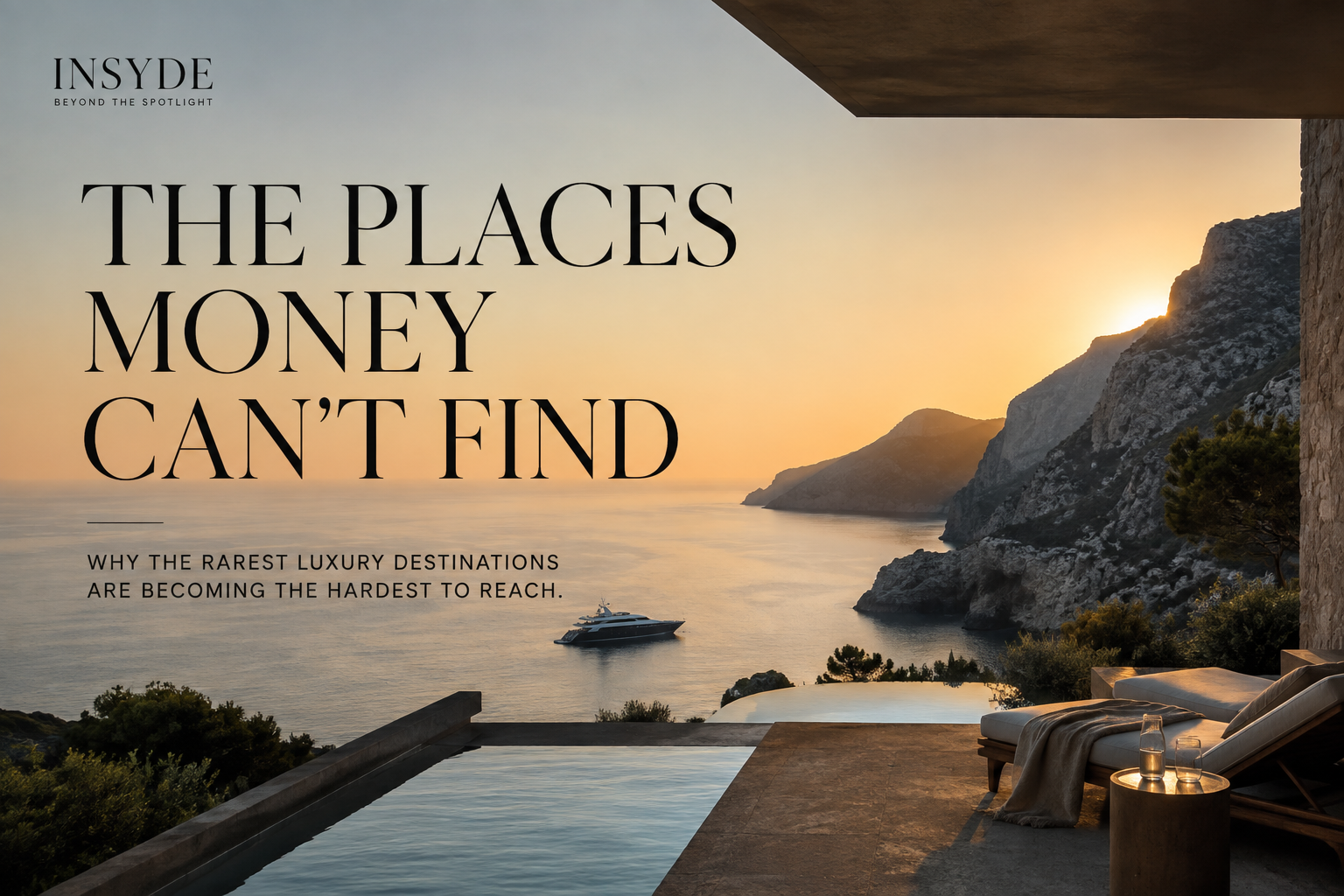
    The Places Money Can’t Find

    Why the rarest luxury destinations are becoming the hardest to reach.

    There was a time when luxury travel was about knowing where to go.

    Then it became about knowing where to stay.

    The right hotel. The right suite. The right table. The right beach.

    But for the traveller who has already experienced the familiar vocabulary of luxury, the more interesting question is beginning to emerge:

    Where can you go that still feels discovered?

    Not necessarily unknown.

    Not necessarily untouched.

    But difficult to reach, difficult to replicate and impossible to experience in quite the same way twice.

    That distinction is becoming increasingly important.

    Because when almost any destination can be researched, photographed, reviewed and booked within minutes, exclusivity can no longer depend entirely on a room number or a five-star rating.

    The new language of luxury travel is increasingly about access, privacy, time and discovery.

    And sometimes, the greatest luxury is simply being somewhere that doesn’t feel designed for everyone.

    When Luxury Becomes Too Accessible

    The luxury travel industry has become exceptionally good at creating beautiful places.

    There are extraordinary resorts on private islands, architectural villas overlooking the sea, mountain retreats surrounded by wilderness and hotels where every detail has been considered.

    And there is nothing wrong with any of it.

    But familiarity changes perception.

    Once a destination becomes part of the established luxury circuit, its exclusivity begins to evolve.

    The property may remain exceptional.

    The service may remain impeccable.

    The view may still be extraordinary.

    But the feeling of discovery becomes harder to preserve.

    For the sophisticated traveller, that can create a different desire.

    Not necessarily for something more expensive.

    For something less obvious.

    The New Luxury Is Distance

    Distance has become a luxury of its own.

    Not because travelling farther is inherently better, but because distance creates natural scarcity.

    A remote island cannot accommodate everyone.

    A private estate cannot simply add another thousand rooms.

    An expedition vessel cannot reproduce the infrastructure of a major resort.

    A destination requiring a yacht, private aircraft, helicopter or long overland journey naturally limits who can reach it.

    That limitation changes the experience.

    The journey itself becomes part of the privilege.

    The destination is no longer simply where you arrive.

    It is what you had to leave behind to get there.

    Privacy Is the New Amenity

    A private pool is beautiful.

    A private beach is better.

    But privacy itself may be becoming the more valuable amenity.

    For people whose lives involve constant communication, visibility and tightly managed schedules, the ability to disappear for several days without interruption can be worth more than another spectacular suite.

    No lobby.

    No crowds.

    No unnecessary meetings.

    No expectation to be anywhere.

    Just time.

    This is one reason private villas, secluded estates, yacht-based journeys and remote retreats have become such compelling forms of luxury.

    They don’t simply offer comfort.

    They create distance from everything else.

    Beyond the Suite

    The luxury industry spent years refining the hotel room.

    Better beds.

    Better bathrooms.

    Better views.

    Larger terraces.

    Private pools.

    Personal service.

    But the next evolution of luxury travel may be less concerned with what happens inside the room.

    The more interesting question is:

    What can the destination allow you to experience?

    A private cultural visit before the crowds arrive.

    A remote dive site reached by boat.

    Dinner prepared in a place where no restaurant exists.

    A conservation experience guided by specialists.

    A private estate normally closed to the public.

    A journey planned around a particular interest rather than a standard itinerary.

    These experiences are valuable because they are not simply amenities.

    They are access.

    And access is becoming one of the most sophisticated currencies in modern luxury.

    When the Journey Becomes the Experience

    The traditional idea of travel separates the journey from the destination.

    You fly there.

    Then the holiday begins.

    Luxury increasingly removes that boundary.

    A private aircraft can make the departure itself part of the experience.

    A yacht can turn the route into the destination.

    An expedition vessel can make the journey through remote waters the reason for travelling.

    A helicopter can transform a difficult landscape into an accessible one.

    The affluent traveller is therefore increasingly choosing not simply a destination, but a sequence of moments that could not easily be reproduced.

    The journey becomes part of the story.

    And the story becomes part of the luxury.

    The End of the Checklist

    There is another change taking place quietly.

    Luxury travel is moving away from the checklist.

    The old formula was familiar:

    See the landmark.

    Visit the famous restaurant.

    Stay at the iconic hotel.

    Take the photograph.

    Move to the next destination.

    But for someone who has travelled extensively, another itinerary can begin to feel strangely repetitive.

    The more interesting journey may have no checklist at all.

    It might revolve around a particular passion.

    Architecture.

    Wine.

    Art.

    Marine life.

    History.

    Photography.

    Cuisine.

    Wellness.

    Wildlife.

    Or simply the desire to spend a week somewhere extraordinarily quiet.

    This is where personalisation becomes more important than extravagance.

    The best itinerary may be the one that could not have been designed for anyone else.

    The Rise of Private Discovery

    There is a difference between exclusivity and discovery.

    Exclusivity says:

    Not everyone can enter.

    Discovery says:

    Not everyone knows to look.

    The second is more powerful.

    A private guide who has spent decades studying a region.

    A conservationist who can take you somewhere visitors rarely see.

    A local family opening a place that has never been part of mainstream tourism.

    A chef preparing a meal around ingredients sourced from a particular landscape.

    An architect introducing you to buildings unavailable through conventional tours.

    These experiences don’t necessarily require extraordinary spectacle.

    Their value comes from knowledge and access.

    And knowledge is one of the few luxuries that cannot simply be purchased by the hour.

    The Luxury of Knowing Someone

    At the highest level of travel, the concierge is no longer simply arranging a reservation.

    They are connecting you to a world.

    The difference is enormous.

    A reservation can be made online.

    A relationship cannot.

    The most sophisticated travel experiences often depend on people who know the region intimately — who understand which door to knock on, who to call, when to arrive and, just as importantly, when not to.

    That invisible network can transform an ordinary destination into an extraordinary one.

    The traveller may never know how difficult the arrangement was.

    They simply experience the result.

    Again, the finest luxury often works quietly.

    The Destination Without the Audience

    There is something increasingly attractive about experiencing a beautiful place without immediately turning it into content.

    No photograph required.

    No location tag.

    No audience.

    No obligation to document the moment.

    Just the experience itself.

    That may sound almost old-fashioned in a world where travel is constantly photographed and shared.

    But perhaps that is precisely why it feels luxurious.

    When every extraordinary moment can become public within seconds, keeping one private can become its own form of exclusivity.

    Not everything beautiful needs to be witnessed.

    Some experiences become more valuable precisely because they belong only to the people who were there.

    Beyond the Familiar

    This does not mean the world’s great luxury destinations are becoming irrelevant.

    Paris will remain Paris.

    The Mediterranean will remain the Mediterranean.

    The world’s great cities, hotels and resorts will continue to attract sophisticated travellers.

    But the definition of luxury is expanding.

    The experienced traveller may stay at the celebrated hotel.

    And then leave it.

    They may charter a yacht instead of spending the entire week at the resort.

    They may fly somewhere remote for three days.

    They may spend part of the journey in a private villa and part of it in an expedition camp.

    The point is not to reject conventional luxury.

    It is to move beyond it.

    The New Status Symbol Is the Story

    Luxury has always had a relationship with status.

    But status is changing.

    A recognisable hotel once communicated that you had arrived.

    A recognisable destination communicated taste.

    A recognisable experience communicated access.

    Today, the most interesting status may be more personal.

    It is the story you can tell because you were there.

    Not:

    “I stayed at the most expensive resort.”

    But:

    “We were taken somewhere almost nobody visits.”

    Not:

    “We went to the famous restaurant.”

    But:

    “We had dinner somewhere that doesn’t normally serve the public.”

    Not:

    “We visited the destination.”

    But:

    “We saw a side of it that most people never encounter.”

    The difference is subtle.

    But it represents a profound change in how sophisticated luxury is experienced.

    When Money Stops Being Enough

    There is a misconception that enough money can buy anything.

    In travel, that isn’t always true.

    Money can buy a private aircraft.

    It can buy a suite.

    It can charter a yacht.

    It can secure extraordinary service.

    But it cannot automatically create authenticity.

    It cannot manufacture a genuine relationship with a place.

    It cannot reproduce a moment that happened only because the circumstances aligned.

    And it cannot guarantee discovery.

    Some experiences depend on weather.

    Some on season.

    Some on local relationships.

    Some on conservation restrictions.

    Some on simply being in the right place at the right moment.

    That uncertainty is part of what makes them valuable.

    The rarest luxury is not always what money can buy.

    Sometimes it is what money can only help you reach.

    What the Next Luxury Traveller Wants

    The next generation of luxury travel is likely to be increasingly personal.

    Less concerned with showing where you have been.

    More interested in how deeply you experienced it.

    Less focused on excess.

    More focused on access.

    Less interested in a standard itinerary.

    More interested in something designed around an individual.

    The priorities become remarkably simple:

    Privacy.

    Time.

    Access.

    Discovery.

    Personalisation.

    Meaning.

    And perhaps most importantly:

    the feeling that the experience could not have been copied and given to someone else.

    The Places Money Can’t Find

    Perhaps that is where luxury travel is heading.

    Not necessarily toward the most expensive destination.

    Not toward the biggest suite.

    Not toward the most photographed beach.

    But toward places where luxury becomes almost invisible.

    A remote coastline.

    A private estate.

    A quiet island.

    A journey without an itinerary.

    A table prepared somewhere it shouldn’t be.

    A landscape seen before anyone else arrives.

    A place that doesn’t need a name everyone recognises.

    Because when almost anywhere can be discovered online, reviewed instantly and booked with a few clicks, the rarest destinations are no longer necessarily the ones nobody knows about.

    They are the ones that cannot be reduced to a booking.

    The ones that require a relationship.

    A journey.

    A little patience.

    A certain amount of luck.

    And the willingness to go further.

    Perhaps that is the real evolution of luxury travel.

    The world is not running out of beautiful places.

    It is simply becoming harder to experience them privately, personally and unexpectedly.

    And for the traveller who has already seen much of what the world has to offer, that may be the ultimate luxury.

    Not going somewhere everyone dreams of visiting.

    Going somewhere that still feels like you discovered it yourself.

    INSYDE — Beyond the Spotlight.

  • The Luxury of Disappearing

    The Luxury of Disappearing

    Why the world’s most private escapes are moving further offshore.

    There is a particular moment when a yacht leaves the harbour.

    The shoreline begins to disappear.

    The marina becomes smaller.

    The noise fades.

    And eventually, there is almost nothing left but open water.

    No lobby.

    No check-in desk.

    No crowded beach.

    No neighbouring suite.

    No one asking where you are going next.

    Just the horizon.

    For most people, that sounds like an extraordinary holiday.

    For someone who has access to almost everything, it represents something considerably rarer:

    privacy.

    That may be the most interesting thing happening in modern yachting.

    The superyacht has long been associated with excess — spectacular interiors, enormous decks, swimming pools, tenders, toys and seemingly limitless space.

    But the meaning of the yacht is changing.

    At the highest end of luxury, the conversation is becoming less about having more and more about having control over time, space and access.

    The yacht is no longer simply a symbol of wealth.

    It is becoming something more personal.

    A private world.

    One that happens to move.

    When Everything Is Available

    Luxury has traditionally been about access.

    A better hotel.

    A better table.

    A better seat.

    A better destination.

    A private car waiting outside.

    A flight that leaves when you want it to.

    But wealth changes the meaning of access.

    When almost everything is available, access itself becomes less rare.

    The more valuable commodities become time, privacy and control.

    That shift is increasingly visible across the luxury world. Knight Frank’s 2026 Wealth Report describes a broader movement toward more intentional, experience-led luxury, while its reporting on superyachts highlights continued demand among wealthy individuals for mobility and multi-location lifestyles.

    The yacht fits naturally into that world.

    It doesn’t simply take you somewhere.

    It allows you to decide where your world exists.

    The Yacht Isn’t the Luxury

    This is the distinction that matters.

    The yacht itself is not necessarily the luxury.

    The luxury is what it makes possible.

    You decide where to wake up.

    You decide who joins you.

    You decide when you leave.

    You decide where dinner happens.

    You decide how long you stay.

    You decide when the world disappears.

    A hotel can give you an extraordinary room.

    A private villa can give you privacy.

    A private jet can give you speed.

    But a yacht can combine all three while giving you something neither a hotel nor a jet can completely provide:

    the ability to take your private world with you.

    That is a fundamentally different proposition.

    The vessel becomes the architecture of freedom.

    The New Currency Is Privacy

    There was a time when luxury was most powerful when it was visible.

    The car needed to be recognisable.

    The watch needed to be distinctive.

    The hotel needed to be famous.

    The destination needed to be photographed.

    But the more visible the world becomes, the more valuable invisibility can become.

    For people whose lives are already highly exposed — through business, wealth, public profile or simply constant digital connectivity — privacy can become more valuable than spectacle.

    That is helping reshape luxury travel.

    Burgess reported in July 2026 that yacht-charter demand had risen sharply, with privacy, flexibility, personalised itineraries and experiential travel among the factors driving demand.

    The implication is subtle but important.

    The ultimate luxury may no longer be being seen in the right place.

    It may be being somewhere nobody else can reach.

    From Status Symbol to Private World

    A yacht has always carried symbolism.

    It says something about its owner.

    But symbolism is only the beginning.

    At the highest level, the yacht becomes something closer to a private residence.

    A dining room becomes a restaurant without another table in sight.

    A bedroom becomes a hotel suite with the horizon as its view.

    A pool becomes a private beach.

    A cinema becomes a room for a handful of people rather than hundreds.

    A deck becomes an office, a dining room, a gym, a lounge or simply somewhere to sit in silence.

    Modern yacht design is increasingly moving in this direction. Recent 2026 launches and deliveries show owners placing greater emphasis on natural materials, residential interiors, outdoor living, integrated wellness and spaces designed around individual lifestyles.

    The yacht is becoming less like a trophy.

    It is becoming a private ecosystem.

    A Home Without an Address

    There is something deeply appealing about a home that refuses to stay in one place.

    A traditional luxury residence is defined by its location.

    A yacht is defined by its ability to leave.

    One week, it can be anchored off the Mediterranean.

    Another, it can be crossing an ocean.

    And for owners interested in exploration, the destination doesn’t have to be the familiar circuit of luxury marinas.

    Explorer yachts are increasingly being designed around longer-range cruising, autonomy and access to remote destinations. Current yacht projects show owners prioritising expedition capability alongside comfort, wellness and highly personalised interiors.

    This represents a subtle change in the meaning of luxury.

    Luxury once meant reaching the world’s best-known places.

    Increasingly, it can mean reaching somewhere almost nobody else has.

    The Yacht Built Around You

    There is no single definition of the perfect yacht.

    That is precisely the point.

    One owner might want a floating family residence.

    Another might want an extraordinary platform for entertaining.

    Another may want a wellness retreat.

    Another may want a serious expedition vessel.

    Another may care about art.

    Another may care about diving, sailing, fishing or exploration.

    The yacht can be designed around the owner’s life rather than forcing the owner to adapt to the vessel.

    That is perhaps the purest expression of modern luxury.

    The product changes around you.

    Recent custom-yacht projects demonstrate just how far this philosophy can go, with owners influencing layouts, accommodation, beach clubs, technical spaces and operational capabilities throughout the construction process.

    The best luxury no longer asks:

    Which option do you want?

    It asks:

    What do you want to create?

    The Invisible Luxury of Service

    There is another reason exceptional yachts feel different.

    The people behind them.

    The captain.

    The chef.

    The engineers.

    The hospitality team.

    The specialists.

    The people who understand how the owner likes to live.

    The yacht appears effortless because an enormous amount of expertise exists behind the scenes.

    The guest sees the sunset.

    Someone else has already handled everything else.

    That is one of the great paradoxes of luxury.

    The more sophisticated the service, the less visible the machinery behind it.

    The experience should never feel like an operation.

    It should feel natural.

    Almost inevitable.

    When the Yacht Becomes Architecture

    The most compelling yachts increasingly deserve to be discussed alongside contemporary homes.

    Materials matter.

    Light matters.

    Proportion matters.

    Silence matters.

    The relationship between indoor and outdoor space matters.

    Natural materials, restrained palettes and residential interiors are becoming increasingly prominent across contemporary yacht design, replacing some of the decorative excess historically associated with superyachts.

    That doesn’t mean luxury has become less impressive.

    It has simply become more considered.

    A marble staircase can be beautiful.

    But so can a quiet room lined in natural wood with nothing competing for attention.

    The new question is not:

    How much can you put inside the yacht?

    It is:

    How does the space make you feel?

    Wellness at Sea

    Luxury is increasingly being measured by how you feel rather than simply what you possess.

    That idea is now moving deeper into yacht design.

    Wellness is no longer an afterthought.

    Recent 2026 yacht deliveries show dedicated spas, hydrotherapy, fitness areas, outdoor exercise spaces and wellness facilities being integrated into the architecture from the beginning rather than added as secondary amenities.

    The possibilities are becoming more sophisticated:

    A spa at sea level.

    A gym opening directly onto the water.

    A cold plunge after a morning swim.

    A private treatment room.

    A quiet space for meditation.

    A kitchen designed around a particular nutritional philosophy.

    Or simply enough room to slow down.

    The direction is revealing.

    Luxury is moving from stimulation to restoration.

    From entertainment to wellbeing.

    From having more to feeling better.

    The Quiet Yacht

    Perhaps the most interesting luxury trend of all is one that is almost invisible.

    Silence.

    Modern propulsion systems and engineering are giving designers more opportunities to reduce noise and vibration, while hybrid technologies are being incorporated into increasingly sophisticated vessels.

    But the goal isn’t simply to add more technology.

    It is to make technology disappear.

    The climate should be comfortable without demanding attention.

    The connectivity should work without dominating the interior.

    The lighting should feel natural.

    The propulsion should feel effortless.

    Automation should remove friction rather than announce itself.

    The ideal experience is one where you stop thinking about the machinery entirely.

    You simply experience the calm.

    And that may be one of the defining characteristics of modern luxury:

    the sophistication of what you don’t notice.

    Bigger Is Not Always Better

    The traditional yacht arms race is easy to understand.

    More length.

    More decks.

    More rooms.

    More toys.

    More spectacle.

    And there will always be owners who want exactly that.

    But another idea is emerging.

    The most desirable yacht may not necessarily be the largest one in the harbour.

    It may be the one that travels further.

    The one that feels more private.

    The one designed around a particular family.

    The one capable of reaching places others cannot.

    The one whose interior feels like a home rather than a showroom.

    The one that reflects its owner’s interests so precisely that another person’s version would make no sense.

    The next generation of yacht luxury may be measured less by scale and more by specificity.

    The Explorer Mentality

    This is why explorer yachts are so fascinating.

    They represent a different philosophy of wealth.

    Not:

    How impressive is the object?

    But:

    What can the object allow me to experience?

    Remote islands.

    Longer voyages.

    Less familiar coastlines.

    Polar waters.

    Places beyond the conventional luxury circuit.

    Explorer yachts are gaining attention because they offer something that established luxury destinations increasingly struggle to provide:

    discovery.

    And discovery is difficult to commoditise.

    A five-star hotel can be replicated.

    A private beach can be booked.

    A famous restaurant can become crowded.

    But reaching somewhere almost nobody else has experienced is a different kind of privilege.

    The Yacht as Freedom

    This may ultimately be why people choose yachts.

    Not because they need another luxury asset.

    Not because the world needs another floating palace.

    But because ownership — or even the most private forms of charter — creates a type of freedom that is difficult to reproduce elsewhere.

    Freedom from schedules.

    Freedom from crowded spaces.

    Freedom from other people’s itineraries.

    Freedom to stay longer.

    Freedom to leave earlier.

    Freedom to change your mind.

    And for someone who has spent years building a life around decisions, that last one may be particularly valuable.

    The ability to decide differently.

    What Comes Next

    The future of yachting will not simply be about making vessels larger.

    It will be about making them more personal, more capable and more intelligently designed.

    The direction is already visible:

    exploration

    wellness

    privacy

    personalisation

    quiet technology

    alternative propulsion

    natural materials

    long-range capability

    and deeper connections with the sea itself.

    Recent 2026 yacht developments point toward exactly this combination, with owner-led design, wellness, explorer capability and lower-impact propulsion becoming increasingly important parts of the conversation.

    The yacht of the future may therefore be less interested in proving how much its owner can afford.

    It may be more interested in proving how completely it can serve the owner’s way of living.

    That is a very different kind of luxury.

    The Luxury of Disappearing

    Perhaps the greatest misconception about the yacht is that it is a symbol of wealth.

    At the highest level, wealth doesn’t need another symbol.

    It needs somewhere to go.

    Somewhere private.

    Somewhere quiet.

    Somewhere the calendar can disappear and the horizon can take over.

    Because when almost everything in the world is available, the rarest luxury is no longer simply access.

    It is escape.

    The yacht offers something a hotel cannot.

    Something a private jet cannot.

    Something even the most extraordinary residence cannot completely provide.

    The ability to take your world with you — and leave the rest behind.

    Perhaps that is what the modern yacht has really become.

    Not a vessel for showing the world what you own.

    But a private world of your own.

    And perhaps, in an age where almost everything can be seen, shared and documented, the greatest luxury is not being seen at all.

    It is disappearing — on your own terms.

    INSYDE — Beyond the Spotlight.

  • THE £20,000 POUR

    THE £20,000 POUR

    Inside the rare bottles, private collections and new drinking culture redefining luxury in 2026.

    A drink can cost more than a luxury watch.

    A bottle can be rarer than a piece of jewellery.

    A whisky can be made for one person.

    And a cognac can arrive with its own temperature-controlled cellar.

    In September 2026, LOUIS XIII unveiled Black Pearl: Tribute to Le Grollet, a new expression limited to just 398 decanters worldwide. The reported price is £21,000 per decanter, with the experience built around a temperature-controlled ritual inspired by the historic Le Grollet cellar in Cognac.

    At first glance, the obvious question is:

    Why?

    Why spend £21,000 on something that eventually disappears?

    But that question misses what luxury alcohol has become.

    Because at the highest end, the wealthy consumer isn’t simply buying what’s inside the bottle anymore.

    They’re buying rarity.

    Provenance.

    Craftsmanship.

    Access.

    Knowledge.

    And increasingly, the story surrounding the pour.

    At the same time, a younger generation is entering the category with an entirely different set of expectations. Gen Z isn’t simply abandoning alcohol. The latest IWSR research shows participation among legal-drinking-age Gen Z consumers has stabilised at 74% across 15 key markets, while drinking occasions and quantities are becoming more selective. In India’s high-income urban population, participation among Gen Z adults over 21 reached 80% in 2026, up from 60% three years earlier.

    The result is a strange contradiction.

    The luxury consumer is going deeper.

    The younger consumer is becoming more selective.

    And somewhere between the private cellar and the late-night cocktail bar, the definition of luxury is changing.

    Welcome to the new luxury pour.


    THE EXPENSIVE BOTTLE ISN’T ENOUGH ANYMORE

    For decades, luxury alcohol had a relatively simple formula.

    Make it old.

    Make it rare.

    Put a famous name on it.

    Put it inside an extraordinary bottle.

    Charge more.

    The higher the price, the stronger the signal.

    But 2026 is making that formula increasingly complicated.

    IWSR’s latest research argues that premiumisation is undergoing a reset. Since 2022, global beverage-alcohol price-per-litre growth has consistently lagged overall inflation, while consumers have become more selective about trading up. The question is increasingly whether an expensive product delivers something meaningful in return.

    That distinction matters.

    Because there is a difference between:

    expensive

    and

    luxurious.

    A bottle can be expensive because it carries a high price.

    Luxury needs a reason.

    Maybe the spirit comes from an unusually rare cask.

    Maybe only a few hundred bottles exist.

    Maybe the liquid took decades to mature.

    Maybe the bottle itself is an extraordinary piece of craftsmanship.

    Maybe the buyer gets access to something most consumers will never see.

    Or perhaps the bottle tells a story that cannot simply be reproduced.

    The price becomes a consequence of the story.

    Not the story itself.


    WHEN A BOTTLE BECOMES A COLLECTION

    There is a moment when alcohol stops behaving like a consumable and starts behaving like an object.

    Collectors understand this instinctively.

    A rare bottle can become an object of design, a piece of history, a conversation piece, a gift, a family possession — or simply something kept because finding another one would be almost impossible.

    The most interesting examples aren’t necessarily the bottles with the biggest numbers printed on their price tags.

    They are the ones where scarcity has meaning.

    LOUIS XIII’s Black Pearl is a particularly striking example.

    Its 398-decanter production is only part of the proposition. The expression draws on an exceptional eau-de-vie selected from the house’s historic collection and connected to Le Grollet, while the tasting ritual is designed to evolve as the cognac warms from cellar temperature toward ambient temperature.

    The bottle is therefore only one part of the object.

    The cellar.

    The temperature.

    The ritual.

    The provenance.

    The liquid.

    The story.

    All become part of the experience.

    And that is the point.

    Luxury alcohol is increasingly being designed as an experience rather than simply packaged as a product.


    THE RICHEST BOTTLE MAY BE THE ONE THAT IS YOURS

    Perhaps the most fascinating development in luxury spirits isn’t the rare bottle.

    It’s the personal bottle.

    India is already experimenting with this idea.

    Diageo India’s India Rare Spirits programme offers a personalised cask experience in which consumers can explore a library of aged malts, select a cask and create an expression tailored to individual tastes and occasions. The resulting bottles can carry personalised labels and commissioned artwork for milestones including weddings, corporate celebrations and anniversaries.

    The distinction is subtle but important.

    A limited edition says:

    Only a few people can own this.

    A bespoke expression says:

    This was made for you.

    Luxury has always understood the power of personalisation.

    Fashion does it.

    Cars do it.

    Jewellery does it.

    Watches do it.

    Now spirits are moving deeper into the same territory.

    The bottle becomes less like a product and more like a portrait of its owner.


    INDIA IS TRADING UP

    India is becoming one of the world’s most interesting growth stories in beverage alcohol.

    IWSR says India’s total beverage-alcohol volumes grew at a 3% CAGR between 2019 and 2024, including a 6% increase in 2024, with another 4% increase projected for 2025. Over 2024–2034, IWSR forecasts approximately 3% annual volume growth. Imported spirits have been gaining particularly quickly, growing at a 16% CAGR between 2019 and 2024.

    But the more interesting story isn’t simply that Indians are buying more alcohol.

    It is what they expect from it.

    The country’s premium alcohol landscape is expanding across single malts, Scotch, tequila, wine, craft spirits and increasingly personalised experiences. Indian producers and international houses are competing for consumers who have more choice, more information and greater exposure to global drinking culture.

    This is the beginning of a broader cultural shift.

    The Indian luxury consumer is no longer necessarily asking:

    “Is this imported?”

    Increasingly, the more interesting question is:

    “Is this interesting?”

    That is a significant change.


    THE INDIAN LUXURY CONSUMER IS GETTING MORE SELECTIVE

    India’s opportunity isn’t simply about having more wealthy consumers.

    It is about having consumers with more choices.

    More brands.

    More categories.

    More international exposure.

    More travel.

    More sophisticated bars.

    More information.

    More ways to discover something new.

    And more reasons to question whether a premium price actually means premium value.

    IWSR describes India as a major growth engine for beverage alcohol, but also emphasises the country’s complexity: state-level regulation, taxation, distribution structures and a consumer base that remains highly value-conscious.

    That creates an unusual environment for luxury.

    A global brand cannot simply arrive with a beautiful bottle and assume the story is finished.

    It has to earn its place.

    Through the liquid.

    Through the experience.

    Through the culture surrounding it.


    THE BAR IS NO LONGER JUST A BAR

    There was a time when a bar’s job was simple.

    Serve the drink.

    Today, some of the most interesting luxury drinking experiences are built around everything before the drink reaches the glass.

    The room.

    The bartender.

    The music.

    The food.

    The glassware.

    The story.

    The people.

    The location.

    The ritual.

    India’s on-premise market is becoming increasingly important to this equation.

    NIQ’s 2026 India research found that nearly seven in ten Indian consumers visit restaurants, cafés or bars at least once a quarter, while its research highlights the role of the on-premise environment in creating occasions, justifying premium choices and building brand preference. Bartenders and venue staff can also exert an outsized influence over consumer choice.

    The bar becomes a showroom.

    But not a showroom for bottles.

    A showroom for taste.

    The bartender becomes a curator.

    The menu becomes an editorial.

    The experience becomes part of the product.

    And suddenly, ordering a drink isn’t simply consumption.

    It becomes participation.


    THE NEW LUXURY CLUB

    At the highest end, this becomes even more exclusive.

    Luxury alcohol increasingly intersects with:

    private clubs

    members’ spaces

    collector communities

    private tastings

    hotel experiences

    chef collaborations

    distillery visits

    invitation-only events

    This shift can already be seen in the way spirits companies are building destinations around their brands.

    Diageo India’s The Good Craft Co. Flavour Market in Ponda, Goa, for example, is being developed as an ecosystem combining an experience centre, distillery tour, rare-spirits vault, craft bar, tasting room, chef and mixologist collaborations, workshops and a bespoke craft-spirit retail destination.

    The luxury alcohol ecosystem is therefore moving from:

    Bottle → Consumer

    towards:

    Brand → Experience → Community → Consumer

    Luxury is becoming social again.

    But selectively social.


    THEN GEN Z WALKED IN

    And just when the luxury industry thought it understood the next drinker, Gen Z complicated everything.

    The old narrative suggested Gen Z was simply going to abandon alcohol.

    The data is more nuanced.

    IWSR’s July 2026 research found that 74% of legal-drinking-age Gen Z consumers across 15 key markets participated in beverage alcohol, up from 66% three years earlier. In India’s high-income urban population, participation among Gen Z adults over 21 reached 80% in 2026, compared with 60% three years earlier.

    But participation doesn’t mean indiscriminate consumption.

    IWSR’s research also shows that younger drinkers are becoming more selective. Across its 15-market study, the average number of beverage-alcohol categories consumed per occasion by Gen Z fell from 2.8 to 1.8 over two years. The change was particularly visible among Gen Z consumers in India and several other markets.

    That’s where the story gets interesting.

    Gen Z isn’t necessarily saying:

    “I don’t want alcohol.”

    It is increasingly asking:

    “Why this drink?”

    “Why this place?”

    “Why this occasion?”

    And perhaps most importantly:

    “Is it worth it?”


    GEN Z DOESN’T WANT YOUR FATHER’S WHISKY

    Previous generations often understood premium alcohol through a familiar vocabulary:

    Age statement.

    Heritage.

    Status.

    Prestige.

    Scarcity.

    Gen Z is adding another word:

    Discovery.

    IWSR’s research shows younger legal-drinking-age consumers remain engaged with alcohol while becoming more selective about category choice and occasion.

    That changes how luxury works.

    A younger consumer may not automatically care that a brand has existed for centuries.

    But they may care that:

    a bartender recommended it,

    a chef built a menu around it,

    a designer collaborated on it,

    the distillery has an unusual story,

    the ingredients come from somewhere unexpected,

    or only a small community knows about it.

    The new luxury consumer doesn’t necessarily want to inherit taste.

    They want to discover it.


    THE COCKTAIL GENERATION

    There is another clue hiding in the changing drinking culture.

    Cocktails transform alcohol into something more than a bottle.

    A cocktail can be:

    a flavour experience,

    a piece of design,

    a performance,

    a social object,

    a signature of a particular venue,

    or the centre of an entire evening.

    The bottle becomes the raw material.

    The experience becomes the luxury.

    And this helps explain why sophisticated bars matter so much to younger consumers.

    They aren’t simply places to drink.

    They are places to discover culture.


    DRINK LESS. CHOOSE BETTER.

    There is another paradox here.

    The future of luxury alcohol may not involve drinking more.

    It may involve drinking less, but with greater intention.

    IWSR’s 2026 research found that the average number of drinks consumed per occasion across its key markets fell to 3.9, from 4.4 in 2024 and 2025. The organisation describes moderation as increasingly structural rather than simply cyclical, with lifestyle and health becoming more important influences.

    This does not mean premium alcohol disappears.

    Quite the opposite.

    IWSR’s latest premiumisation research suggests that consumers in developing markets such as India continue to trade up, but increasingly want genuine justification for the higher price. Across 16 major developing markets, IWSR forecasts premium-plus servings to expand by 13% between 2025 and 2035.

    That creates an unusual luxury equation.

    The consumer may have access to hundreds of bottles.

    But chooses one.

    One exceptional whisky.

    One extraordinary cognac.

    One beautifully made cocktail.

    One bottle opened for an important evening.

    Luxury becomes less about abundance.

    And more about selection.


    THE EXPERIENCE IS THE LUXURY

    This may be the biggest transformation taking place.

    The liquid still matters.

    But what happens around it increasingly matters too.

    The right restaurant.

    The right table.

    The right glass.

    The right bartender.

    The right person sitting across from you.

    The right story.

    The right moment.

    IWSR’s research into the on-trade describes a shift toward more “edited” occasions, with consumers drinking fewer serves and fewer categories while seeking meaningful experiences and better justification for what they spend.

    This is a profound shift.

    Because luxury has always been about controlling the experience.

    A luxury hotel doesn’t sell a bed.

    A private jet doesn’t sell a seat.

    A luxury watch doesn’t simply sell time.

    And a £20,000 cognac isn’t simply selling liquid.

    It is selling a moment that very few people can reproduce.


    THE NEW STATUS SYMBOL IS TASTE

    Perhaps this is where luxury alcohol becomes most interesting.

    For a long time, status was largely about ownership.

    The car.

    The watch.

    The bottle.

    The address.

    But as luxury becomes increasingly visible through social media, simply recognising a logo becomes less impressive.

    Knowing why something matters becomes more valuable.

    Knowing the producer.

    Knowing the vintage.

    Knowing the cask.

    Knowing the difference between two expressions.

    Knowing which bar has the rare bottle.

    Knowing which release is genuinely scarce.

    Knowing when a “limited edition” is actually meaningful.

    Knowing when to order something — and when not to.

    That is taste as cultural capital.

    And cultural capital is difficult to counterfeit.


    INDIA’S NEW DRINKING ELITE

    This is where the Indian story becomes especially compelling.

    India is developing not simply a larger alcohol market, but a more diverse luxury ecosystem around it.

    International spirits houses are expanding premium portfolios.

    Indian producers are moving into higher-value categories.

    Bars are becoming more sophisticated.

    Collectors are becoming more informed.

    And younger affluent consumers are increasingly participating in the category.

    IWSR’s 2026 data found beverage-alcohol participation among high-income urban Indians at 77%, while participation among Gen Z adults over 21 in the same demographic reached 80%, up from 60% three years earlier.

    And Indian brands are increasingly using scarcity, craftsmanship and storytelling to position themselves at the luxury end.

    Take Godawan 173.

    Released in 2025 as a collector’s edition, the expression was limited to 173 bottles, each priced at ₹5 lakh. Its name referenced the reported recovery of the Great Indian Bustard population from 100 to 173, while the whisky used a three-stage maturation journey involving ex-bourbon, Oloroso and PX sherry, and Asha liqueur casks. Each bottle was inspired by Jaipur Blue Pottery.

    The point isn’t that every affluent drinker will buy a ₹5 lakh bottle.

    They won’t.

    The point is that Indian spirits are increasingly learning how to construct luxury narratives of their own.

    And that changes the conversation.


    THE BATTLE FOR THE TOP SHELF

    This is why India’s luxury alcohol landscape is becoming increasingly interesting.

    International houses bring:

    heritage

    global recognition

    distribution

    iconic names

    deep reserves

    Indian producers bring:

    local knowledge

    climate

    experimentation

    craft

    cultural identity

    speed

    And consumers are standing in the middle with more choices than ever.

    The question is no longer simply whether Indian consumers will buy luxury alcohol.

    They already are.

    The bigger question is:

    Who will define what luxury drinking in India looks like next?

    Will European heritage continue to dominate?

    Will Indian spirits become global luxury objects?

    Will tequila and agave reshape the premium conversation?

    Will private clubs become more important to affluent nightlife?

    Will the cocktail become more important than the bottle?

    Will moderation redefine indulgence?

    Or will the next great luxury-drinks brand come from somewhere nobody is looking yet?


    WHAT ACTUALLY MAKES A DRINK LUXURIOUS?

    Perhaps the answer isn’t age.

    It isn’t price.

    It isn’t even rarity.

    Not by itself.

    Luxury emerges when several things collide:

    Scarcity.

    Craftsmanship.

    Provenance.

    Authenticity.

    Personalisation.

    Experience.

    Access.

    Knowledge.

    And increasingly:

    meaning.

    That’s why a £21,000 cognac can exist alongside a personalised Indian cask, a ₹5 lakh collector’s whisky, a perfectly executed cocktail and even a sophisticated alcohol-free serve.

    They occupy completely different price points.

    But they can participate in the same cultural conversation.

    Because luxury is no longer simply about what something costs.

    It’s about why someone cares.


    THE £20,000 POUR

    The £20,000 bottle is therefore not really the story.

    It’s the doorway.

    Behind it is a much larger transformation.

    The wealthy are becoming more selective.

    Collectors are becoming more sophisticated.

    Brands are moving from bottles to experiences.

    Indian spirits are building narratives of their own.

    Bars are becoming cultural spaces.

    And Gen Z is entering the conversation with a completely different understanding of indulgence.

    The future of luxury alcohol may not belong to the brand with the oldest distillery.

    Or the highest price.

    Or the biggest bottle.

    It may belong to whoever can create something people genuinely want to remember.

    Because when money stops being the obstacle, meaning becomes the luxury.

    And perhaps the most luxurious drink isn’t the one that costs £20,000.

    It’s the one you know exactly why you wanted.


    INSYDE TAKE

    Luxury alcohol is entering a strange new era.

    The bottle still matters.

    The heritage still matters.

    The craftsmanship absolutely matters.

    But the hierarchy is changing.

    Price gets attention.

    Scarcity creates desire.

    Craft earns respect.

    Experience creates memory.

    And taste creates status.

    For the wealthy, the next great luxury may not be another trophy bottle.

    For Gen Z, it may not always be alcohol at all.

    And for India, the most interesting possibility is that the next definition of luxury drinking won’t simply be imported.

    It could be made here.

    INSYDE

    Luxury, Through a Different Lens.

    Beyond the Spotlight.

  • Why the New Billionaire Wants His Own Jet

    Why the New Billionaire Wants His Own Jet

    As AI, technology and new fortunes create a younger class of ultra-wealthy travellers, the private jet is evolving from a symbol of status into something more useful: a private office, sanctuary and shortcut through time.

    There was a time when the private jet was the ultimate symbol of arrival.

    The aircraft itself was the statement.

    The size.

    The speed.

    The name painted on the tail.

    The ability to leave the car and step directly onto an aircraft while everyone else waited inside the terminal.

    But private aviation is becoming more interesting than that.

    A new generation of wealthy travellers is changing what the private jet is actually for.

    The question is no longer simply:

    Can you afford to fly privately?

    It is becoming:

    What could you do with the time you get back?

    That distinction matters.

    Because for a billionaire, founder or entrepreneur whose life moves between continents, time isn’t simply something that passes.

    It is something that can be controlled.

    And increasingly, the private jet is becoming one of the ultimate tools for doing exactly that.

    A Different Kind of Jet Set

    The image of the private-jet owner has traditionally been associated with established wealth.

    Oil.

    Finance.

    Entertainment.

    Real estate.

    Old industrial fortunes.

    The aircraft was often the physical expression of a fortune that had already been built.

    But a different kind of wealth is now entering private aviation.

    AI founders.

    Technology entrepreneurs.

    Investors.

    Executives.

    People whose fortunes have been created remarkably quickly.

    Reuters reported in July 2026 that wealth generated by AI startups and SpaceX was helping drive a new wave of private-jet demand, with private-jet owner flights rising 13.4% in early 2026 and shared-ownership flights increasing 11.8%. The report also noted a growing number of younger, newly wealthy customers entering the market.

    The Financial Times has reported a similar shift, with private-aviation companies seeing younger customers arrive as wealth from AI and cryptocurrency expands. Some operators have reported their average customer age falling significantly as newly wealthy technology entrepreneurs enter the market.

    The significance isn’t simply that younger people are buying jets.

    It is that they are bringing a different idea of luxury with them.

    The Most Valuable Luxury Is Time

    Imagine two people travelling from San Francisco to London.

    One spends hours getting to the airport.

    Then comes security.

    Then the terminal.

    Then boarding.

    Then the flight.

    Then immigration.

    Then baggage.

    Then another journey into the city.

    The other arrives at a private terminal, boards an aircraft designed around their schedule and lands closer to the moment their actual journey begins.

    The difference isn’t simply comfort.

    It is time.

    And time becomes increasingly valuable as the rest of life becomes more complicated.

    For an entrepreneur, those hours might become a meeting.

    For an executive, they might become uninterrupted work.

    For a founder, they might become sleep.

    For a family, they might simply become time together.

    The private jet doesn’t create more hours in the day.

    It removes some of the friction between them.

    That may be the most powerful luxury it offers.

    The Jet as a Private Office

    The traditional office has already changed.

    People work from homes.

    Hotels.

    Cafés.

    Cars.

    Lounges.

    And now, increasingly, aircraft.

    Modern business jets are designed around this reality.

    Gulfstream’s G700, for example, can be configured with up to five living areas and accommodate up to 19 passengers, with sleeping arrangements for as many as 13. Its cabin is designed around different modes of work, rest and living rather than a conventional seating arrangement.

    A private jet can contain a dining area.

    A meeting table.

    A lounge.

    A bedroom.

    A shower.

    A workspace.

    A place to disconnect.

    The aircraft becomes less like a vehicle and more like a private interior in motion.

    That is a very different proposition from simply flying first class.

    When the Cabin Becomes Architecture

    Luxury has always been connected to architecture.

    The house.

    The hotel.

    The restaurant.

    The yacht.

    The private club.

    But the private jet introduces a peculiar challenge.

    How do you create a beautiful interior inside something travelling hundreds of kilometres per hour through the atmosphere?

    Every decision matters.

    The weight of the materials.

    The lighting.

    The proportions.

    The storage.

    The acoustics.

    The seating.

    The movement between spaces.

    The relationship between the windows and the interior.

    It is architecture under pressure.

    And the best private-jet interiors don’t necessarily look extravagant.

    They look considered.

    That is an important distinction.

    The End of the Loud Billionaire Jet

    For decades, the visual language of extreme wealth was obvious.

    Glossy wood.

    Gold.

    Oversized seats.

    Crystal.

    Champagne.

    Anything that made the price visible.

    That world still exists.

    But another aesthetic is emerging.

    Quieter.

    More restrained.

    More personal.

    The Financial Times has reported that newer technology-driven luxury consumers are increasingly interested in efficiency, health, exclusivity and personalisation rather than traditional displays of wealth. In private aviation, that shift is appearing through more functional cabins, wellness-oriented services and less ostentatious design.

    This is the same cultural shift being seen across luxury more broadly.

    The buyer who has spent enough time around expensive things doesn’t necessarily want the object to look expensive.

    They want it to feel right.

    That could mean natural materials.

    Soft lighting.

    A quieter cabin.

    A better bed.

    Faster connectivity.

    A healthier meal.

    Or simply a space where nobody else can interrupt them.

    Luxury is becoming less about showing the price.

    It is becoming more about controlling the experience.

    The Aircraft Becomes Personal

    A private jet doesn’t have to look like anyone else’s.

    That is one of its greatest luxuries.

    A business founder might want a serious meeting environment.

    A family might want a cabin designed around children.

    A frequent long-haul traveller might prioritise a bedroom.

    Another owner might want a wellness-focused environment.

    Someone else might want a dining room capable of hosting guests.

    The aircraft can become an extension of its owner.

    And that is where private aviation begins to resemble other forms of bespoke luxury.

    A bespoke suit is made around one person.

    A custom home is designed around one family.

    A commissioned automobile is built around one collector.

    A private jet can be designed around one life.

    Ownership Is No Longer the Only Luxury

    There is another change happening beneath the surface.

    Not everyone who wants private aviation necessarily wants to own an entire aircraft.

    The market has expanded into different forms of access.

    Charter.

    Jet cards.

    Fractional ownership.

    Shared aircraft.

    Full ownership.

    Each model answers a different question.

    How often do you fly?

    Where do you travel?

    How much control do you need?

    How much responsibility do you want?

    That matters because modern luxury is increasingly moving away from a simple equation:

    ownership = status

    Instead, it is becoming:

    access = freedom

    You don’t necessarily need to own every luxury you use.

    You need the ability to access it when it matters.

    That is a much more contemporary idea of wealth.

    India’s Private Aviation Moment

    This transformation is not limited to Silicon Valley, London or the Gulf.

    India is entering its own private-aviation moment.

    A 2025 industry prospectus filed with SEBI estimated India’s private-jet market at approximately $274 million in FY2024, up from $187 million in FY2019. The report attributed the growth to rising numbers of high-net-worth individuals, expanding business activity, demand for faster travel and growing interest in personalised transportation.

    The significance goes beyond the number.

    India is producing a new generation of founders, entrepreneurs, investors and business families whose professional lives are increasingly international.

    Mumbai to Dubai.

    Bengaluru to Singapore.

    Delhi to London.

    Hyderabad to New York.

    When business becomes global, time spent travelling becomes a business consideration.

    And that makes private aviation more than an indulgence.

    It becomes infrastructure for a certain kind of life.

    The Private Jet as a Second Home

    The yacht has already shown us what happens when luxury transportation becomes architecture.

    A superyacht can be a home.

    An office.

    A hotel.

    A restaurant.

    A private club.

    The private jet is beginning to move in a similar direction.

    The difference is speed.

    The yacht gives you a place that moves slowly.

    The jet gives you a place that moves quickly.

    But both are ultimately selling the same idea:

    control over your environment.

    The cabin becomes your room.

    The route becomes your decision.

    The schedule becomes yours.

    And for a few hours, the world outside becomes irrelevant.

    The Architecture of Privacy

    Privacy has become one of the most valuable commodities in modern luxury.

    Not because people necessarily want to disappear forever.

    Because they increasingly want the ability to decide when they are visible.

    The private jet creates an unusually controlled environment.

    No crowded terminal.

    No shared cabin.

    No stranger sitting beside you.

    No public conversation.

    No need to perform for anyone.

    The door closes.

    The cabin becomes private.

    The world continues outside.

    That makes the aircraft more than a transportation device.

    It becomes a private room that happens to be moving through the sky.

    And that is an extraordinarily powerful form of luxury.

    The New Billionaire Doesn’t Necessarily Want More

    This may be the most interesting part of the story.

    The new billionaire isn’t necessarily looking for more objects.

    They may already have the house.

    The car.

    The watch.

    The yacht.

    The investments.

    The art.

    The businesses.

    What becomes valuable after accumulation is something harder to buy.

    Freedom.

    Freedom to leave when you want.

    Freedom to work where you want.

    Freedom to sleep during a journey.

    Freedom to change plans.

    Freedom to choose who enters your environment.

    Freedom to protect your time.

    The private jet becomes a physical expression of that freedom.

    Luxury Without the Logo

    Perhaps the future of private aviation will look less like a billionaire’s showroom and more like a beautifully designed home.

    There may be fewer obvious symbols.

    More natural materials.

    Better technology.

    More thoughtful spaces.

    Greater emphasis on health and comfort.

    More personalised interiors.

    Less interest in proving how much something cost.

    That is not the disappearance of luxury.

    It is its evolution.

    Because once you can afford almost anything, the difficult question becomes:

    What is actually worth having?

    And the answer is rarely “more.”

    It is usually something more specific.

    Better.

    Quieter.

    More personal.

    More useful.

    More meaningful.

    What the Private Jet Is Really Selling

    A private jet sells many things.

    Speed.

    Comfort.

    Privacy.

    Convenience.

    Exclusivity.

    But beneath all of them is something much simpler.

    Control.

    Control over where you leave from.

    Control over when you leave.

    Control over who travels with you.

    Control over the environment.

    Control over the hours between one destination and another.

    And that is why the private jet has survived as one of the ultimate symbols of luxury.

    Not because flying privately is inherently glamorous.

    But because time, once you have enough money, becomes one of the few things you still cannot buy more of.

    You can only waste less of it.

    The New Altitude of Luxury

    The luxury industry has spent decades teaching us to look at objects.

    The watch.

    The car.

    The house.

    The yacht.

    But the next generation of luxury is increasingly about something less tangible.

    Time.

    Privacy.

    Freedom.

    Access.

    Experience.

    The private jet brings all five together.

    It doesn’t simply take you somewhere faster.

    It changes your relationship with the journey itself.

    And perhaps that is the real reason the new billionaire wants a private jet.

    Not to fly above everyone else.

    But to reclaim something far more valuable.

    The ability to decide what happens with their time.

    At 40,000 feet, that may be the most luxurious thing of all.

    INSYDE — Inside modern luxury.

  • The New Bengaluru Status Symbol Is Access

    The New Bengaluru Status Symbol Is Access

    In a city built on networks, wealth is beginning to buy something more elusive than ownership: entry. Private clubs, curated communities, exclusive dining and invitation-only experiences are redefining what luxury means in Bengaluru.

    For a long time, luxury had a fairly recognisable vocabulary.

    A larger home. A more expensive car. A watch that could be recognised across a room. A restaurant reservation that was difficult to secure.

    The symbols were visible.

    But Bengaluru is developing a different relationship with status.

    Increasingly, some of the city’s most desirable experiences are defined not by what they cost, but by who can enter.

    A private room. A members-only club. A dining experience with limited seats. A wellness space built around a carefully selected community. An invitation that does not arrive simply because you can afford it.

    The product is no longer only the place.

    It is access to the people, atmosphere and experience inside it.

    And in Bengaluru—a city whose modern economy has been built on networks, founders, investors and professional connections—that distinction is becoming particularly significant.

    From Ownership to Access

    Luxury has always involved scarcity.

    What is difficult to obtain tends to become more desirable.

    But modern luxury is increasingly moving beyond physical scarcity towards social scarcity.

    There may be thousands of luxury apartments in a city. There may be hundreds of premium restaurants. But there are far fewer rooms where entry is controlled, the community is curated and the experience changes depending on who is sitting around the table.

    That is the appeal of the modern members’ club.

    The idea itself is not new. Bengaluru has long had established clubs with histories, traditions and membership structures of their own. What is changing is the proposition being built for a newer generation.

    The new club is less likely to be defined solely by sport or tradition and more likely to combine hospitality, dining, wellness, work, culture and social life.

    In other words, it is selling a way of belonging.

    The Room Is the Product

    This is where the economics of access become interesting.

    A beautiful building can be replicated.

    A restaurant can be copied.

    A spa can be recreated.

    But a community is considerably harder to reproduce.

    That is why the most sophisticated membership concepts increasingly place the member at the centre of the proposition.

    Bengaluru has begun to see luxury hospitality groups and independent operators experiment with members-only environments that combine dining, meetings, social occasions, wellness and curated experiences.

    The distinction is subtle but important.

    The club is no longer simply the building.

    The room is the product.

    The people in it determine its energy.

    The conversations determine its value.

    The relationships determine whether members return.

    And the exclusivity determines whether the experience remains desirable.

    Why Bengaluru?

    Bengaluru may be uniquely suited to this model.

    The city has produced an enormous amount of first-generation wealth through technology, entrepreneurship, venture capital and the startup ecosystem.

    But wealth does not automatically create community.

    A founder can build a company from a laptop.

    An executive can work with teams across five time zones.

    An investor can conduct an entire business relationship without leaving a screen.

    The more digitally connected professional life becomes, the more valuable physical spaces for meaningful interaction can become.

    This is one reason the new generation of private clubs is less interested in simply offering a place to sit.

    It wants to create a reason to stay.

    To meet.

    To return.

    To know the people around you.

    To become part of something that exists beyond the transaction.

    The Evolution of the Private Club

    Traditional clubs were often built around institutions: golf, sport, professional associations, family connections and long-established social networks.

    The newer generation is being built around interests and identity.

    Entrepreneurship.

    Design.

    Food.

    Wellness.

    Art.

    Technology.

    Culture.

    Or simply a particular understanding of how people want to spend their time.

    That distinction matters in Bengaluru.

    The city is full of people who arrived without inherited networks and built their own.

    Now, a new generation of businesses is attempting to build physical spaces around those networks.

    The result is a different kind of exclusivity.

    Less about lineage.

    More about relevance.

    Luxury Without the Logo

    The rise of access-based luxury also reflects a broader change in how affluent consumers think about status.

    A logo can demonstrate what you own.

    Access demonstrates where you belong.

    That difference matters.

    The most interesting luxury experiences increasingly do not need to announce themselves.

    A discreet entrance.

    A familiar face at reception.

    A reservation that never appears on a public booking platform.

    A room where the atmosphere depends as much on the people inside it as the interiors around them.

    This is luxury stripped of some of its traditional theatre.

    It is quieter.

    More personal.

    And often considerably more difficult to replicate.

    When Going Out Becomes an Experience

    The same logic extends beyond private clubs.

    Bengaluru’s premium hospitality scene is increasingly built around experiences rather than simple consumption.

    Consider the growing appeal of chef-led dinners, limited-seat culinary events, private tastings and highly curated hospitality experiences. The meal remains important, but it is no longer the entire proposition.

    The chef matters.

    The room matters.

    The guest list matters.

    The rarity matters.

    The memory matters.

    Luxury dining is increasingly operating in the same territory as fashion, entertainment and culture: people are paying for participation in a moment.

    That moment might last two hours.

    Its perceived value can last much longer.

    Wellness Becomes Social

    Perhaps the most revealing evolution is happening in wellness.

    Traditionally, wellness was private.

    A gym membership. A spa appointment. A personal trainer.

    The newer model turns wellness into a social environment.

    Across Bengaluru, emerging premium wellness concepts are beginning to combine health, recovery, social interaction and curated membership rather than treating wellness as a purely individual pursuit.

    The proposition is telling.

    Wellness is no longer being sold only as something you do for yourself.

    It is becoming something you belong to.

    That is a distinctly modern version of luxury.

    Access as a Business Model

    For businesses, this shift is significant.

    Membership creates something ordinary hospitality often struggles to build: a recurring relationship.

    A restaurant has a customer.

    A hotel has a guest.

    A club has a member.

    That difference changes the economics.

    A member can generate recurring revenue, attend events, dine repeatedly, bring guests, participate in programming and become part of the community that attracts the next member.

    The physical space becomes the stage.

    The membership becomes the business.

    And the community becomes the moat.

    That is why the most valuable question for a new private club may not be:

    How beautiful is the building?

    It may be:

    Who will be in the room?

    The New Currency of Bengaluru

    There is an irony to all of this.

    Bengaluru built its modern economy around connectivity.

    Now, some of its most premium experiences are being designed around controlled connectivity.

    Not everyone.

    Not everywhere.

    Not all the time.

    Just the right people, in the right room, at the right moment.

    That is the new appeal of exclusivity.

    And perhaps that is why access is becoming more valuable than another object sitting on a shelf.

    You can buy a watch.

    You can buy a house.

    You can buy a car.

    But you cannot simply buy a community with chemistry.

    You have to be admitted into one.

    Beyond Ownership

    Bengaluru’s luxury story is entering another chapter.

    The first was about accumulation.

    Then came the desire for better design, better homes and better experiences.

    Now comes something more intangible.

    Belonging.

    The next generation of luxury businesses will not necessarily compete by offering more.

    They will compete by offering something fewer people can have.

    A room.

    A relationship.

    A conversation.

    A moment.

    An invitation.

    Because in a city where almost everything is connected, the ultimate luxury may be deciding who gets access.

    — INSYDE Editorial

  • THE BILLIONAIRES BEHIND THE WORLD’S MOST LUXURIOUS HOTELS

    THE BILLIONAIRES BEHIND THE WORLD’S MOST LUXURIOUS HOTELS

    You know the hotel. You know the name. But do you know who actually owns the world behind it?

    Walk into one of the world’s great luxury hotels and you see the same things.

    Marble.

    Chandeliers.

    Immaculate suites.

    Private entrances.

    Restaurants where reservations can feel harder to secure than flights.

    Service so polished that almost everything appears effortless.

    But behind that effortless experience is a business most guests never think about.

    Who owns it?

    The answer is rarely as simple as the name above the entrance.

    A billionaire might own the hotel company.

    A family office might own the building.

    An investment fund might own the land.

    Another company might operate the property.

    And a global luxury group might own the brand and manage the experience.

    That complexity is not a technical footnote.

    It is the story.

    Because in 2026, some of the world’s most powerful fortunes are increasingly connected to the business of luxury hospitality.

    And the money involved is enormous.

    A $10 billion valuation for Four Seasons.

    A $3.2 billion enterprise-value acquisition of Belmond by LVMH.

    A $500 million new investment vehicle targeting Aman and Janu hotels, residences and mixed-use developments.

    A $230 million acquisition of Rosewood that helped turn it into a global luxury-hospitality group.

    These aren’t simply hotel deals.

    They are bets on the future of luxury itself.


    THE HOTEL YOU SEE IS ONLY THE FRONT END

    The first thing to understand about luxury hotels is that the brand and the building are not necessarily the same business.

    This is where the industry becomes fascinating.

    A hotel group can create the brand, design the service standards and manage the property without owning the real estate.

    A property company can own the building and hire a hotel company to operate it.

    An investment group can finance the development.

    And a billionaire can ultimately control the company sitting somewhere above all of them.

    So when someone says a billionaire “owns a hotel”, that can mean several different things.

    They may own:

    The hotel brand.

    The operating company.

    The property.

    The development company.

    Or simply a controlling stake in the company that controls the brand.

    At the top end of hospitality, understanding that distinction is essential.

    Because sometimes the most valuable thing in the building isn’t the building at all.

    It’s the name.


    AMAN: THE BILLIONAIRE WHO TURNED PRIVACY INTO AN EMPIRE

    Few names represent ultra-luxury quite like Aman.

    The brand began in 1988 with Amanpuri in Phuket and built its reputation around something that was almost the opposite of conventional luxury-hotel expansion:

    scarcity.

    Then came Vlad Doronin.

    The billionaire real-estate entrepreneur acquired Aman in 2014, after having been a long-time Aman guest himself. Since then, he has expanded the brand from secluded resorts into city hotels, residences, private clubs, interiors and new forms of travel.

    Aman has now grown into a global portfolio of hotels and resorts, while its ecosystem has expanded far beyond traditional hospitality.

    And then came the number that reveals where Aman is really heading.

    In July 2026, Doronin’s OKO Group announced a $500 million joint venture with Shinsegae Property to develop Aman and Janu hotels, branded residences and mixed-use properties.

    But the most striking part may be the residential business.

    Doronin told Bloomberg that Aman had sold close to $9 billion in branded residences over the previous four years, according to Forbes.

    Suddenly, Aman looks very different.

    It isn’t simply a company selling extraordinarily expensive hotel rooms.

    It is building a world where the same customer can stay at Aman, live at Aman, join Aman and eventually travel with Aman.

    The hotel becomes the entry point.

    The brand becomes the real asset.


    FOUR SEASONS: THE $10 BILLION BET

    If Aman represents scarcity, Four Seasons represents something else:

    global scale without abandoning luxury.

    Four Seasons is backed by Cascade Investment, associated with Bill Gates, alongside Kingdom Holding Company and founder Isadore Sharp.

    In 2021, Cascade agreed to acquire an additional 23.75% stake for $2.21 billion, taking its ownership to 71.25% and valuing Four Seasons at approximately $10 billion in enterprise value.

    That wasn’t a bet on one hotel.

    It was a bet on a global luxury machine.

    Four Seasons has continued expanding and says it has 135 hotels and resorts and 61 residential properties across 47 countries.

    And this is what makes the Four Seasons strategy so interesting.

    Aman tells the customer:

    You are entering a world very few people can access.

    Four Seasons tells the customer:

    You can expect an extraordinary standard wherever in the world you go.

    Two completely different interpretations of luxury.

    Both extraordinarily valuable.


    ROSEWOOD: THE $230 MILLION ACQUISITION

    Rosewood’s story demonstrates another way fortunes enter luxury.

    In 2011, Chow Tai Fook Enterprises, the Hong Kong company behind the Cheng family’s business empire, acquired Rosewood for roughly $230 million.

    The interesting part isn’t simply what they paid.

    It is what happened afterwards.

    Rosewood Hotel Group has expanded into a global hospitality platform, with 60 properties across 26 countries and territories and more than 30 additional properties in development.

    The group also operates other hospitality and lifestyle businesses.

    That makes Rosewood an important example of a larger trend:

    wealthy owners aren’t necessarily buying hotels to collect hotels.

    They’re buying brands that can be expanded across multiple categories.

    Hotels.

    Residences.

    Wellness.

    Private clubs.

    Experiences.

    And eventually, entire lifestyles.


    THE PENINSULA: WHEN LUXURY BECOMES A FAMILY LEGACY

    Then there is The Peninsula.

    Its story feels almost completely different.

    The Peninsula Hotels are part of Hongkong and Shanghai Hotels, a business with roots going back to 1866 and long associated with the Kadoorie family.

    Its chairman, Sir Michael Kadoorie, represents a very different model of luxury ownership: generational wealth.

    The Peninsula portfolio remains deliberately selective, with properties across major cities and destinations including Hong Kong, Shanghai, Tokyo, New York, London and Paris.

    This is not the story of a billionaire buying a trendy hospitality brand and rapidly multiplying its properties.

    It is something much older:

    generational ownership.

    That distinction matters.

    Because luxury isn’t always built through growth.

    Sometimes it is built through continuity.

    The Peninsula doesn’t need to be everywhere.

    Its power comes partly from the fact that it isn’t.


    OETKER: THE FAMILY BUSINESS BEHIND EUROPEAN HOTEL ROYALTY

    If there is one group that demonstrates the relationship between family wealth and luxury heritage, it is Oetker.

    Oetker Collection sits within the family-owned Oetker business, whose interests extend well beyond hotels.

    The group identifies Dr. Alfred Oetker and Ferdinand Oetker among its shareholders, while the wider family business spans multiple industries, including real estate and luxury hospitality.

    Its hotel portfolio includes names such as Le Bristol Paris and Hotel du Cap-Eden-Roc.

    And this is where luxury hospitality becomes different from almost every other industry.

    You can spend billions building a new hotel.

    But you cannot spend billions and instantly purchase a century of history.

    A historic address has something money alone cannot manufacture:

    memory.

    That is why heritage itself has become a luxury asset.

    You can construct a spectacular hotel in three years.

    You cannot manufacture decades of mythology.


    LVMH: WHEN THE LUXURY CONGLOMERATE ENTERS THE HOTEL BUSINESS

    Then there is the world’s ultimate luxury conglomerate.

    LVMH.

    The group already controlled brands across fashion, jewellery, watches, beauty and wine and spirits.

    Then it went deeper into hospitality.

    In 2018, LVMH agreed to acquire Belmond for $2.6 billion in equity value and $3.2 billion in enterprise value. The transaction was completed in 2019.

    Belmond brought with it hotels, restaurants, luxury trains and river cruises.

    That acquisition was important because it revealed a larger strategy.

    Luxury doesn’t have to mean selling a handbag.

    It can mean selling the entire journey surrounding the customer.

    A hotel.

    A train.

    A yacht.

    A destination.

    A restaurant.

    A fashion house.

    A piece of jewellery.

    Different products.

    One customer.

    One ecosystem.

    And in 2026, that strategy is becoming even more relevant as luxury groups push further into travel and experiential hospitality.


    THE BILLIONAIRE DOESN’T ALWAYS OWN THE HOTEL

    This is perhaps the most important part of the entire story.

    Imagine a luxury hotel carrying one of the world’s most famous names.

    The guest assumes the company behind that name owns everything.

    Not necessarily.

    The brand could belong to one company.

    The real estate could belong to another.

    The hotel operator could be a third.

    The financing could come from a fourth.

    And the ultimate investor could sit several layers above them.

    That structure is extremely common in modern hospitality.

    It allows hotel companies to expand without buying every building themselves.

    And it allows property investors to use powerful luxury brands to make their real estate more valuable.

    Which leads to perhaps the biggest transformation happening in luxury right now.


    THE REAL GOLDMINE: BRANDED RESIDENCES

    The hotel room is no longer necessarily the biggest prize.

    The residence might be.

    Luxury hotel brands are increasingly attaching their names to private residences.

    Why?

    Because selling a hotel room generates revenue from a stay.

    Selling a branded residence can create an enormous property transaction — while allowing the hotel company to earn branding, management and service fees without necessarily owning the entire building.

    Aman is one of the clearest examples.

    According to Forbes’ 2026 reporting, Aman has sold close to $9 billion in branded residences in four years, while Savills data cited in the same report indicated that buyers globally were willing to pay an average 33% premium for branded residences over comparable unbranded homes.

    That is a staggering proposition.

    Imagine buying an apartment.

    Now put a globally recognised luxury hotel brand on the front.

    Add hotel-level service.

    Concierge.

    Housekeeping.

    Wellness.

    Restaurants.

    Private clubs.

    Then charge a premium for the privilege.

    Suddenly the hotel brand is no longer just selling hospitality.

    It is selling real estate at a premium.


    WHY BILLIONAIRES WANT INTO HOSPITALITY

    So why would someone who already has billions want to own hotels?

    The obvious answer is money.

    But it isn’t the only answer.

    Luxury hospitality sits at an unusual intersection of industries.

    Real estate.

    Travel.

    Food.

    Fashion.

    Entertainment.

    Culture.

    Private wealth.

    A luxury hotel can become a meeting place for CEOs.

    A destination for celebrities.

    A home-away-from-home for billionaires.

    A platform for restaurants and chefs.

    A gateway into a city.

    A launchpad for branded residences.

    A private club.

    And a physical expression of a luxury brand.

    That makes the hotel much more powerful than a simple accommodation business.

    It becomes a social and commercial ecosystem.


    FROM ROOMS TO WORLDS

    This is where the luxury-hospitality business is ultimately heading.

    A hotel room was once the product.

    Then came the suite.

    Then the villa.

    Then the residence.

    Then the private club.

    Then the yacht.

    Then the private travel experience.

    The customer doesn’t necessarily want to buy one thing anymore.

    They want an entire world that feels consistent with their lifestyle.

    Aman understands this.

    Four Seasons understands this.

    LVMH understands this.

    Rosewood understands this.

    And the investors behind these companies understand something even more important:

    The luxury customer doesn’t stop being a luxury customer when they leave the hotel.

    So why should the brand stop selling to them?


    THE NEW LUXURY POWER PLAY

    This changes the economics of luxury.

    The most valuable hospitality brands aren’t necessarily the ones with the most rooms.

    They may be the ones that can convince customers to spend across the greatest number of categories.

    Stay at the hotel.

    Buy the residence.

    Join the club.

    Book the experience.

    Take the yacht.

    Return to another property.

    Bring the same brand into your lifestyle.

    That is a much bigger business than hotel occupancy.

    And it explains why billionaires, family fortunes and luxury conglomerates continue to look at hospitality as more than a place to park capital.

    They are buying access to a customer.


    SO, WHO REALLY OWNS LUXURY?

    There is no single answer.

    Vlad Doronin controls Aman.

    Cascade Investment is the controlling shareholder behind Four Seasons.

    The Cheng family’s Chow Tai Fook Enterprises controls Rosewood.

    The Kadoorie family sits behind The Peninsula’s long-running ownership structure.

    The Oetker family controls its luxury hospitality and wider family business.

    LVMH controls Belmond and has built a growing luxury-hospitality ecosystem around it.

    Different fortunes.

    Different generations.

    Different strategies.

    But they are all betting on the same fundamental idea:

    Luxury is becoming less about a product and more about an ecosystem.


    THE PEOPLE YOU NEVER SEE

    The guests are visible.

    The hotel is visible.

    The logo is visible.

    The billionaire behind the business usually isn’t.

    You won’t see them standing in the lobby.

    You probably won’t know which investment vehicle owns the building.

    You may never know which company controls the brand.

    And you certainly won’t see the spreadsheets behind the marble.

    But those decisions determine where the next hotel opens.

    Which neighbourhood becomes fashionable.

    Which destination receives billions in development.

    Which brands remain exclusive.

    Which become global.

    And which luxury experiences become available only to those who can afford them.

    That is the hidden side of hospitality.

    Not the room.

    Not the restaurant.

    Not the view.

    The ownership.

    Because the next time you walk into one of the world’s most luxurious hotels, look beyond the chandelier.

    Ask who owns the building.

    Who owns the brand.

    Who operates it.

    Who financed it.

    And who stands to benefit when the world’s wealthiest people decide they want to stay there.

    Because sometimes, the most interesting person in the hotel…

    is the one you never see.

    INSYDE — Beyond the Spotlight.