
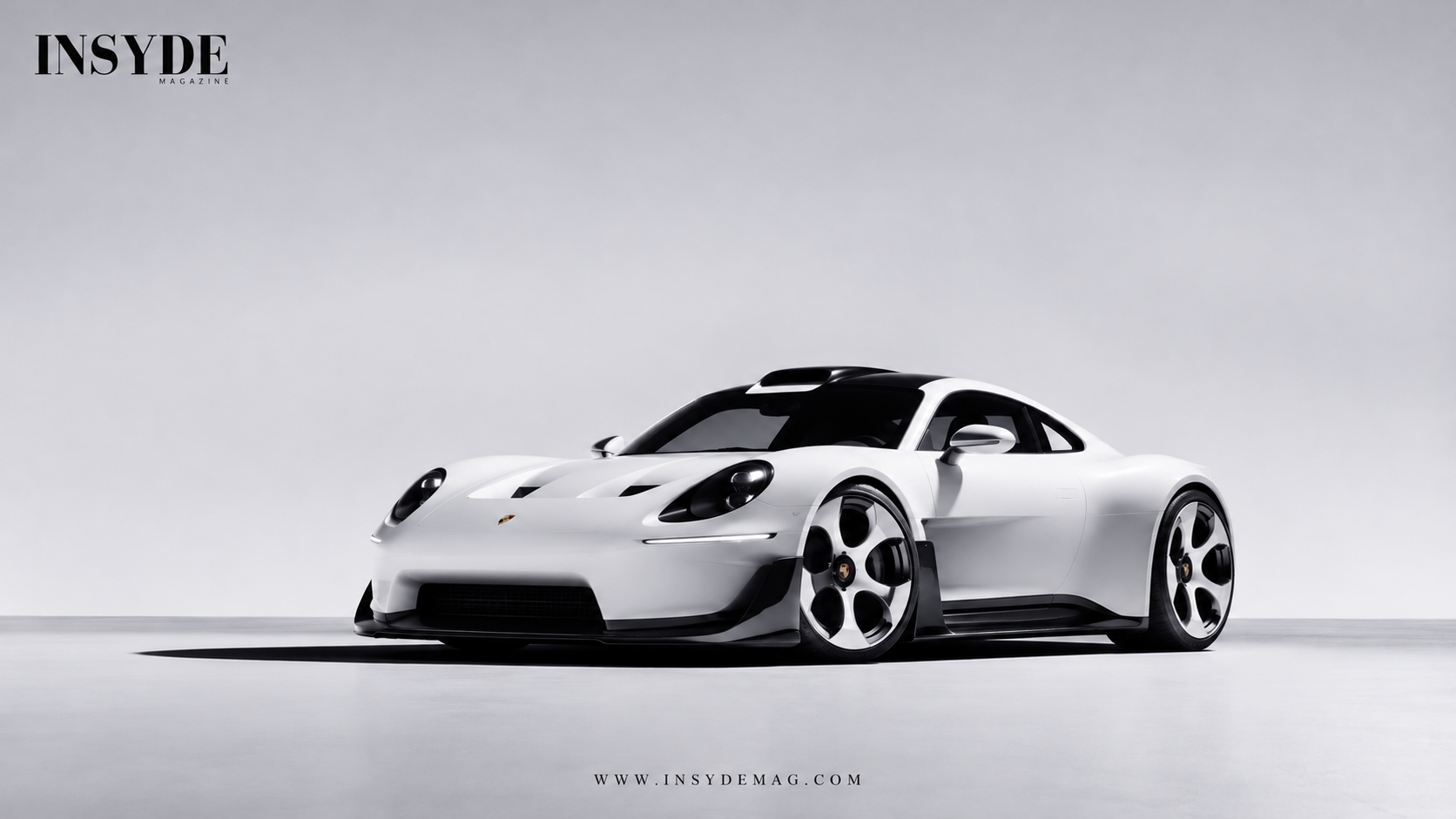
The future of performance, prestige and exclusivity.
There is a particular kind of desire that cannot be manufactured through numbers alone. It emerges from the curve of a body, the precision of a detail and the feeling that a machine has been created for something more than transportation.
For Porsche, that feeling has long been embodied by the 911. Its unmistakable silhouette has endured for more than six decades, evolving through successive generations without abandoning the identity that made it an icon.
But even an icon must make room for the future.
On 15 October 2026, Porsche unveiled the Mission S, a vision model offering a first look at the next evolution of its design philosophy. With a mid-engined architecture, sculptural proportions and an interior that deliberately balances analogue character with digital functionality, the Mission S presents a different expression of the Porsche sports car.
It is not simply a styling exercise. Porsche has announced the development of a new mid-engined super-sports-car platform positioned above the 911, intended as a permanent and versatile addition to its customer offering rather than a one-off hypercar.
The announcement arrives as the company pursues a broader strategic shift towards higher-value products, greater exclusivity and stronger profitability.
For INSYDE, the Mission S offers two stories in one: the design of a compelling new sports-car vision and the changing business of luxury itself.
Because the question surrounding Porsche is no longer simply how fast a sports car can go.
It is how a brand with such an established identity creates something new that people genuinely want.
01. THE ART OF FIRST IMPRESSIONS
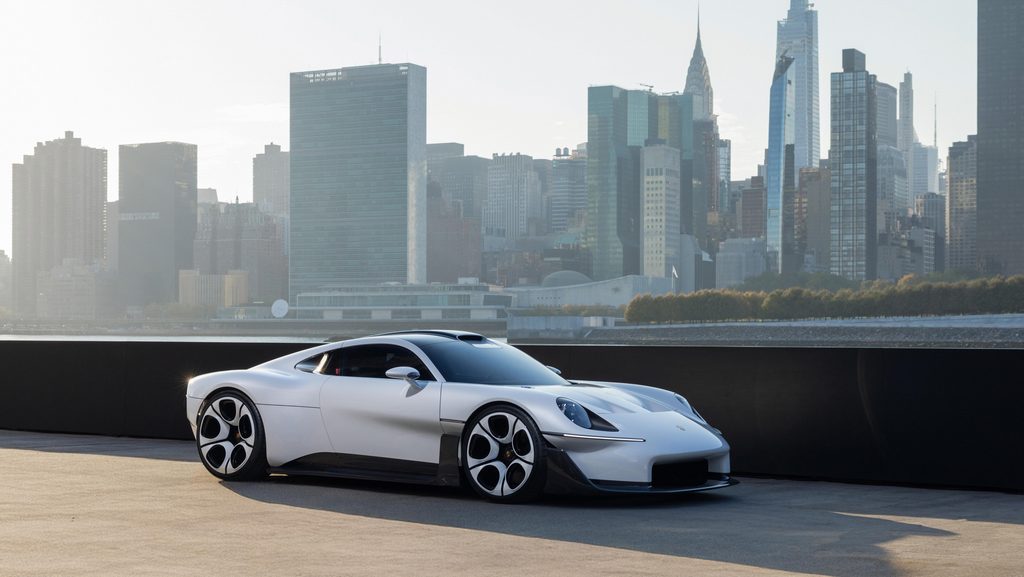
A Porsche should be recognisable before its badge is visible. That principle sits at the heart of the Mission S, whose exterior reinterprets familiar elements of the brand’s design language through a more dramatic, mid-engined silhouette.
The front is defined by round headlights and characteristic torpedo-shaped fenders that give the car a powerful, planted appearance. A low nose, pronounced proportions and a distinctive roofline create a visual relationship between the front and rear that feels unmistakably sports-oriented.
One of the defining elements is the continuous wraparound line connecting the front and rear lighting signatures. Rather than treating each component as an isolated feature, the design brings the car together as a unified form.
Porsche describes the resulting surfaces as “floating volumes”: flowing sculptural forms that emphasise the relationship between light, shadow and the car’s underlying architecture.
The details are rooted in the company’s history. The flat front draws inspiration from the Porsche 911 GT1, while the roofline references the 959. The round headlights and front fenders recall the 911, and the rear incorporates a car-in-car design concept derived from the GT1.
These are not simply nostalgic references. They demonstrate how Porsche is using its heritage as a design vocabulary for a new generation of sports cars.
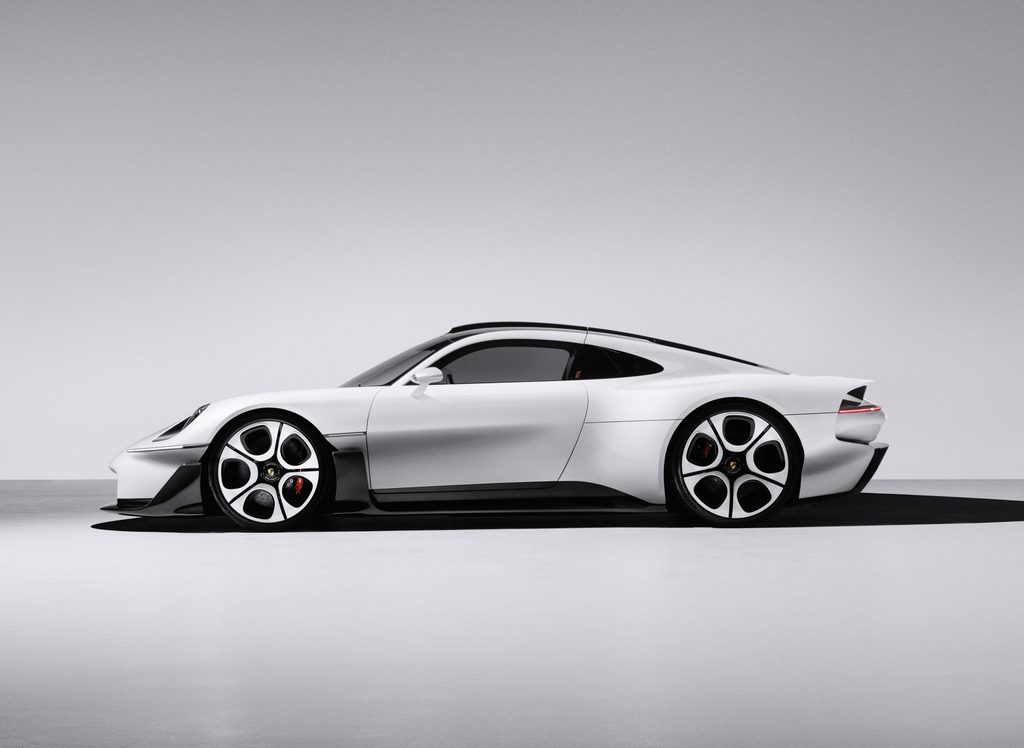
The Mission S also introduces a distinctive interpretation of the brand’s familiar Flyline — the flowing profile that has become a defining characteristic of Porsche design. Its mid-engined architecture gives this silhouette a different set of proportions while retaining a strong visual connection to the marque.
At the rear, the roofline extends towards the wing, creating a more dramatic relationship between the bodywork and aerodynamic elements.
The result is a car that looks forward without entirely turning away from the past.
For a brand whose identity depends on continuity, that balance is essential. The Mission S suggests that Porsche’s next design chapter will be less about abandoning its visual heritage and more about discovering how far that heritage can evolve.
02. FORM FOLLOWS FUNCTION
The Mission S is not designed around appearance alone. Porsche’s official presentation places engineering and function at the centre of its visual language.
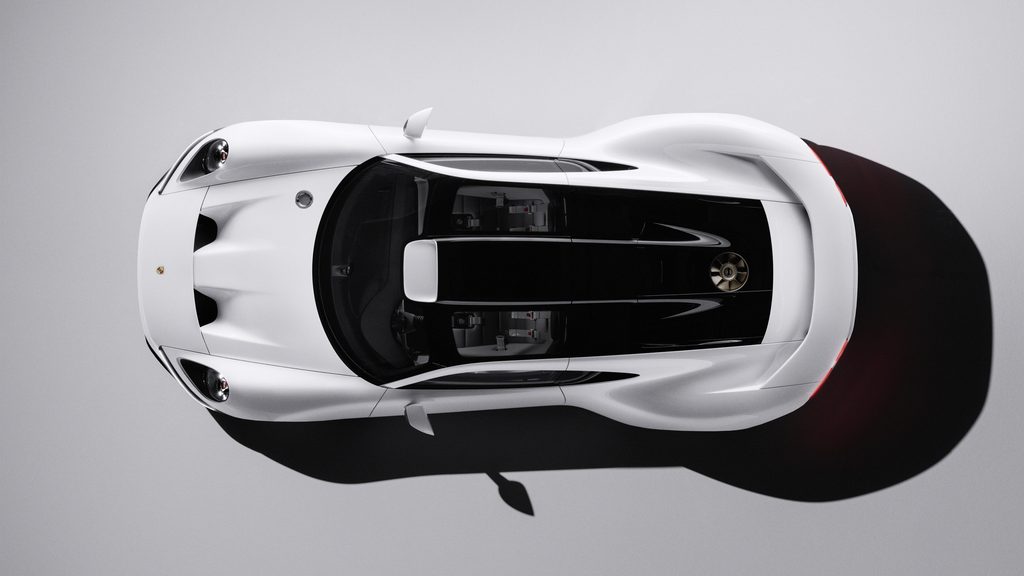
Its centrally positioned engine defines the architecture of the vision model, allowing Porsche to explore a distinctive body shape and a pronounced relationship between width and height.
The car’s proportions communicate performance before any technical specification is considered. The low front, sculpted fenders and tightly integrated rear create the impression of a machine organised around its mechanical purpose.
At the rear, Porsche has incorporated a fully integrated active wing. Its design brings the aerodynamic element into the overall form rather than treating it as an independent addition.
The cooling solution also references the brand’s motorsport heritage. Porsche identifies the cooling design as reminiscent of the radiator fan of the historic 917, translating a functional engineering element into a contemporary visual feature.
The wheels offer another connection to the past. Their design takes inspiration from the distinctive dial-style wheels of the Porsche 928, reinterpreted with an emphasis on lightweight construction.
These details reveal an important part of the Mission S philosophy: function should not be hidden simply because a car is intended to be beautiful.
Instead, the engineering becomes part of the visual experience.
It is a familiar principle in performance-car design, but Porsche’s interpretation is particularly relevant to the Mission S. The car is intended to preview the direction of the brand’s future products, so the relationship between mechanical purpose and visual identity is as significant as the individual styling features.
Porsche has not published a complete technical specification for the Mission S vision model. Its official announcement does not establish horsepower, torque, acceleration, top speed or a production powertrain configuration.
For now, the strongest conclusion comes from the design itself: the Mission S has been conceived around a mid-engined super-sports-car architecture, with engineering and form developed as parts of the same idea.
03. INSIDE THE DRIVER’S WORLD
Step inside the Mission S and the philosophy becomes even more apparent.
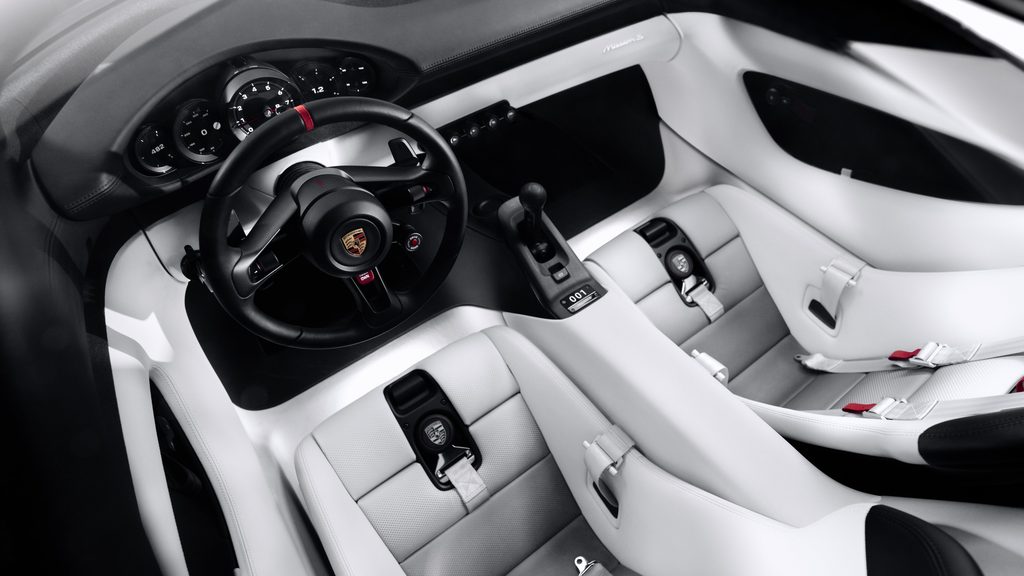
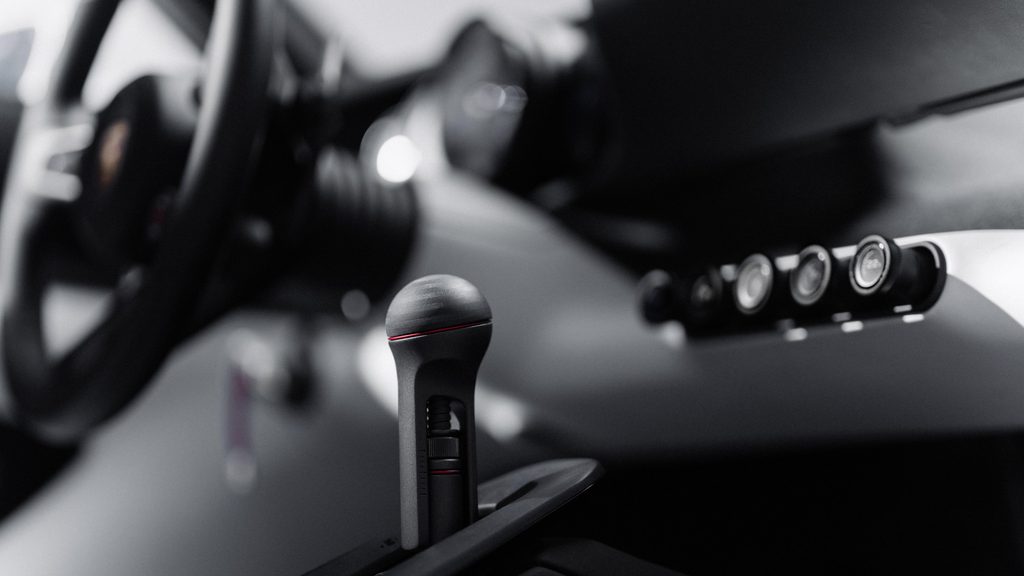
Porsche has deliberately avoided an interior dominated by permanently integrated screens. Instead, the cockpit combines analogue controls, physical switches and digital displays in a layout designed to keep the driver at the centre of the experience.
The dashboard and doors are connected by two defining lines that create a feeling of sitting deep within the car. Porsche says this interior architecture draws inspiration from historic sports cars such as the 550 Spyder and the 356.
The seats continue that approach, combining comfort and functionality with motorsport-inspired details. Among the features highlighted by Porsche are an integrated seatbelt buckle in the centre panel and repositioned electric adjustment controls.
The result is an interior that looks forward without losing the tactile character traditionally associated with a driver’s car.
FIVE DIALS, ONE PHILOSOPHY
The instrument layout is one of the Mission S’s most distinctive features.
Porsche has reimagined its circular instruments through a combination of analogue character and digital precision. The Sport Chrono element also receives a new interpretation, retaining a recognisable mechanical character while incorporating digital functionality.
The choice is significant in an era when large touchscreens increasingly dominate automotive interiors.
Rather than treating digital technology as the visual centrepiece, the Mission S uses it to support a more focused driving environment. Physical controls remain part of the experience, allowing important functions to be accessed directly.
Porsche has also designed a dedicated holder for its key, positioned to the left of the steering wheel in keeping with the brand’s traditional layout.
THE SMARTPHONE TAKES A DIFFERENT ROLE
One of the most unusual decisions concerns the central display.
The Mission S does not feature a permanently integrated central screen or a fixed passenger display. Instead, Porsche has developed a retractable smartphone system compatible with MagSafe technology.
When required, the driver’s personal smartphone can serve as a navigation or information display. The My Porsche app provides access to functions and allows users to select digitally rendered, historically inspired designs for the circular instruments.
This approach gives the cockpit a different relationship with technology. The screen is available when needed, but it does not permanently dominate the dashboard.
It is a design decision that reflects the wider philosophy of the Mission S: digital convenience should complement the driving experience rather than define the entire environment.
The interior’s colour palette reinforces the connection to Porsche’s sporting identity. Firn White Metallic, Light Red Metallic, Black Chrome and Special Black reinterpret the company’s familiar motorsport colours through a more contemporary treatment.
Together, the materials, controls and instruments create an interior that places the driver — rather than the display — at the centre of the experience.
04. A NEW CHAPTER ABOVE THE 911
The Mission S is important not only because of its design, but because of the position Porsche intends it to occupy.
The company has announced a new mid-engined super-sports-car platform positioned above the 911. According to Porsche, the intention is to create a permanent and versatile addition to its customer offering, rather than a limited-run hypercar.
This is a significant distinction.
The 911 is one of the defining models in the company’s history. Its rear-engined architecture, familiar proportions and long development history have established a remarkably clear identity. A new flagship must therefore offer something genuinely different without undermining the model that remains central to Porsche’s sports-car heritage.
The Mission S offers an indication of how that could be achieved.
Its mid-engined architecture creates a different foundation for the car’s proportions and engineering. Its styling draws on Porsche’s historic racing and road-car designs while exploring a new visual direction. Its interior places renewed emphasis on physical interaction and the driver’s relationship with the machine.
Porsche has not yet disclosed a complete production specification, final price or customer-delivery schedule for the Mission S. It is therefore too early to assess its eventual performance or commercial positioning in detail.
What is clear is the company’s intention to establish a more permanent super-sports-car offering above the 911.
That ambition gives the Mission S significance beyond a conventional concept reveal. It signals an effort to extend Porsche’s identity into a new product category while preserving the qualities that distinguish the brand.
The challenge will be to create a car that earns its place through substance, not merely through a higher position in the range.
05. THE MARKET BEHIND THE MACHINE
The Mission S arrives at a moment when Porsche is reassessing how it creates value.
On 7 October 2026, the company presented its Sportwagenschmiede ’35 strategy, setting out its medium- and long-term ambitions for the business.
Its guiding principle is value over volume.
Porsche intends to sharpen its positioning in sporty luxury and high-end premium segments, expand personalisation and develop more exclusive products. Its strategy also includes streamlining the model range, improving operational efficiency and strengthening profitability.
The company has set a medium-term target of reducing model variants by approximately 20 per cent and increasing sales volume per model variant by around 30 per cent. These are strategic ambitions, not achieved results.
The distinction matters because value over volume is not simply a decision to make fewer cars. It is an attempt to create a more focused product portfolio, improve the value generated by each vehicle and direct resources towards products that strengthen the brand.
For Porsche, the Mission S fits into that ambition as a potential new flagship.
A sports car positioned above the 911 could broaden the company’s offering at the upper end of the market, while giving established customers another expression of the brand’s engineering and design philosophy.
But a higher position does not automatically create higher desirability.
A luxury product must justify its premium through its design, engineering, experience and identity. Restricting availability without offering a compelling reason to want the product can weaken demand rather than strengthen it.
The Mission S is therefore best understood as part of Porsche’s strategic direction, not proof that its value-over-volume approach will succeed.
The opportunity lies in creating a product that feels genuinely distinctive — and in building a business model capable of supporting that distinction over time.
06. WHEN EXCLUSIVITY BECOMES A BUSINESS STRATEGY
The pursuit of exclusivity is not limited to Porsche. Across the luxury market, established brands are looking for ways to make products more distinctive, strengthen customer relationships and justify premium positioning.
In automotive luxury, personalisation offers one route.
A customer who can select distinctive materials, finishes and details is participating in a more individual ownership experience. At the highest end of the market, bespoke commissions can take that idea further, making the process of creating a vehicle part of its appeal.
Porsche has identified expanded individualisation as a central part of its future strategy. Its official strategic priorities place greater emphasis on elevated positioning, exclusivity and the uniqueness of its cars.
The Mission S belongs to this wider conversation because it represents an attempt to extend Porsche’s sports-car offering into a new category.
However, exclusivity should not be confused with artificial scarcity. Porsche has not announced a production limit for the Mission S, and the vision model should not be described as a limited-edition collector car.
Its relevance lies in the possibility of a more elevated, permanent product within the Porsche range.
That is a different proposition from manufacturing rarity through restricted numbers. It seeks to establish distinction through the product itself.
For luxury brands, that distinction is increasingly important. Customers can compare specifications, prices and technology across a global market. What becomes harder to replicate is a coherent identity — the combination of design, engineering, heritage and ownership experience that makes a product feel different from its competitors.
The Mission S gives Porsche an opportunity to express that identity in a new form.
Whether customers ultimately respond will depend on the finished product and the value they perceive in it. The strategy can create the conditions for desirability, but the car must still earn it.
07. PORSCHE’S COMMERCIAL REALITY
Porsche’s ambitions also need to be understood against its current business performance.
According to the company’s official nine-month delivery report published on 9 October 2026, Porsche delivered 178,532 vehicles worldwide between January and September 2026, compared with 212,509 during the same period in 2025.
That represents a decline of approximately 16 per cent year on year.
Yet the performance of individual models tells a more nuanced story. The 911 remained highly sought after, with deliveries increasing by 12 per cent. The Cayenne was Porsche’s largest model line during the period, with 59,586 deliveries.
These figures show why the Mission S matters strategically, but they do not guarantee its future success.
Porsche is trying to strengthen its positioning while navigating a difficult commercial environment. Its plans for more exclusive products and greater individualisation must translate into real customer demand and stronger financial performance.
There are risks. Higher-value products can address a narrower customer base. Greater personalisation can introduce additional complexity. A new flagship can strengthen a brand’s identity, but it must also justify the resources required to develop and support it.
The Mission S is one element of Porsche’s response to those challenges. It offers a vision of where the product portfolio could go, while the company’s wider strategy addresses the operational and financial changes required to support that direction.
The distinction between ambition and outcome is essential. The concept demonstrates intent; only a production programme and its eventual market performance could demonstrate commercial success.
08. THE FUTURE OF SPORTS-CAR LUXURY
The Mission S raises a broader question about what the next generation of luxury performance will value.
For years, automotive competition has been measured through increasingly impressive specifications, new technology and greater performance. Those elements remain important, but they do not fully explain why certain cars become objects of lasting desire.
Design matters. Engineering matters. Heritage matters. So does the feeling that a product has been developed with a clear purpose rather than assembled around a collection of features.
The Mission S brings those ideas together through its exterior proportions, driver-focused interior and connection to Porsche’s historic sports cars. It also points towards a new chapter in the company’s product strategy, with a proposed mid-engined platform above the 911.
Its significance should not be overstated. The Mission S remains a vision model, and Porsche has not disclosed all the details required to judge a future production vehicle.
But the direction is revealing.
Porsche wants to strengthen its identity as a sports-car manufacturer, develop a more elevated product offering and increase the value generated by its portfolio. The Mission S provides a visual expression of that ambition.
If the vision translates successfully into a production car, it could give Porsche a new way to engage customers who want something beyond the 911 while remaining within the brand’s world.
The opportunity is not simply to create another expensive sports car. It is to create one with a convincing reason to exist.
DESIRE, REDEFINED
The Porsche Mission S is not yet a complete production promise. It is something more preliminary, but still significant: a glimpse of the direction in which one of the world’s most recognisable sports-car brands intends to move.
Its design draws on the past without reproducing it. Its interior places the driver at the centre while incorporating modern digital functionality. Its mid-engined architecture signals a new product category above the 911, and its strategic context reflects Porsche’s pursuit of higher value, greater exclusivity and stronger profitability.
The questions that remain are just as important as the details already revealed. How will the production vehicle be specified? What will it cost? When might customers be able to buy it? Porsche has not yet answered those questions in its official Mission S announcement.
For now, the car is best understood as a statement of intent — one that connects design, engineering and business strategy.
Because the most compelling luxury products do more than perform exceptionally. They create an emotional connection that specifications alone cannot explain.
The Mission S offers Porsche an opportunity to build on that principle, extending the brand’s sports-car identity while exploring what its next chapter could look like.
And perhaps that is the most interesting thing about desire: it does not simply ask for more.
It asks for something different. Something meaningful. Something worth wanting.
PORSCHE MISSION S: DESIRE, REDEFINED.
An INSYDE editorial on the machine, the market and the future of automotive luxury.
INSYDE MAGAZINE
Luxury. Culture. People. What comes next.
No. 1 Luxury Magazine in Bengaluru