
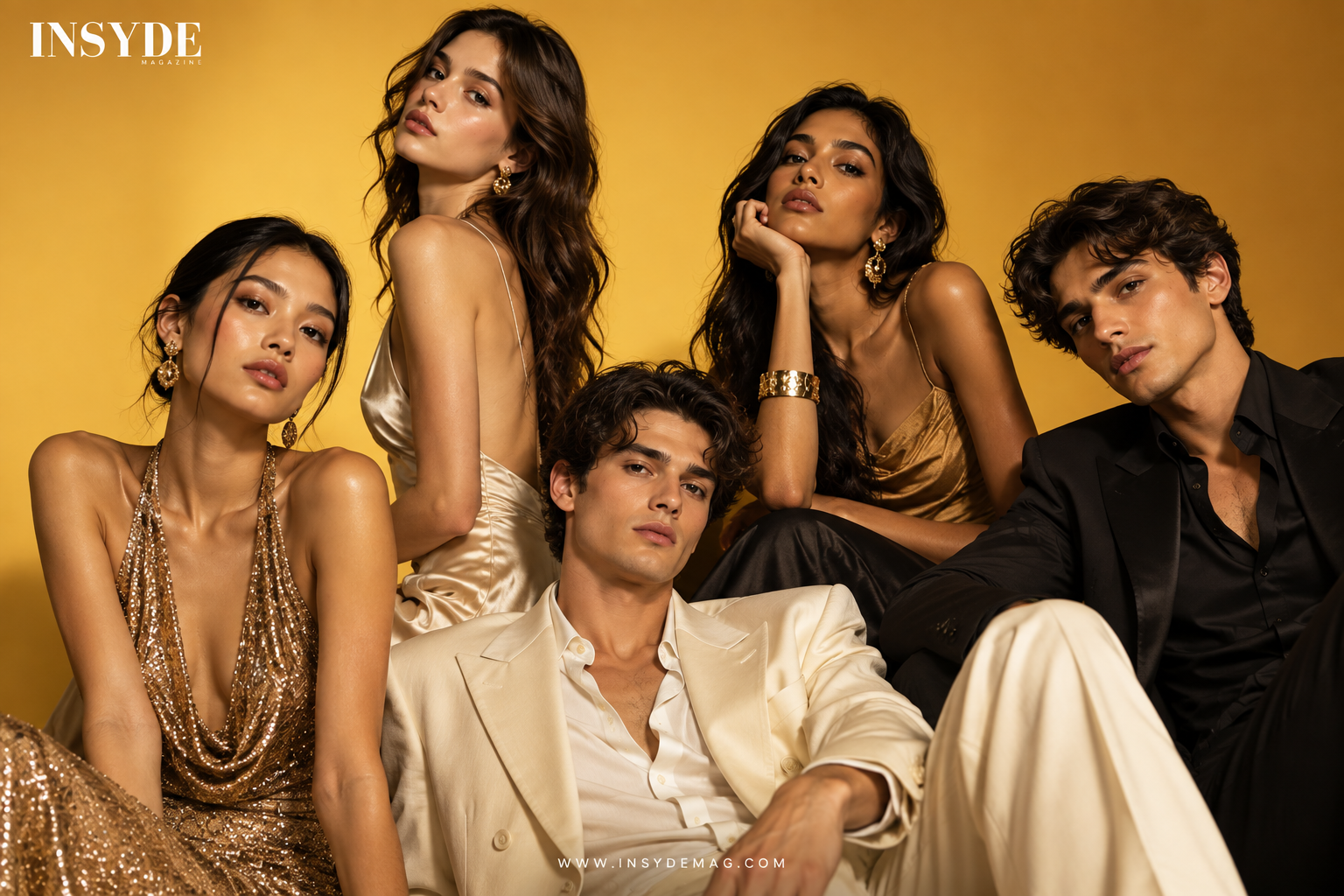
They want luxury. They just don’t want to want it the way previous generations did.
Luxury has always been built on desire.
Not simply the desire to own something expensive, but the desire to believe that something is worth wanting.
For decades, the formula was relatively clear: heritage, craftsmanship, scarcity, a famous name and a price high enough to create distance.
Then came Gen Z.
They grew up with luxury everywhere.
The campaign appears on Instagram before the collection reaches a boutique. A celebrity can make a new bag culturally relevant overnight. The history of a watch can be researched in minutes. A vintage piece can be found online. A resale price can be checked before the original box is even opened.
Luxury has never been more visible.
And that may be precisely why being desirable has become harder.
Because the question this generation asks is not simply:
“How much does it cost?”
It is:
“Why is it worth it?”
That question may become one of the defining forces of luxury’s next decade.
THE GENERATION LUXURY CAN’T IGNORE
The numbers make one thing clear: Gen Z is not standing outside luxury looking in.
It is already becoming one of the industry’s most important consumer groups.
In India, Ipsos reports that 70% of new e-luxury shoppers are under 35, while 76% of Indian Gen Z consumers are open to trying new brands, including luxury brands. Ipsos also describes younger Indian luxury consumers as more value-conscious yet indulgent, with purchases increasingly expected to feel personal and “story-worthy.” Ipsos
That changes the conversation.
Gen Z isn’t asking whether luxury belongs in its world.
It is deciding what kind of luxury deserves a place in it.
Globally, the trajectory is equally significant. BCG’s True-Luxury research estimates that Gen Z represented around 12% of total luxury spending in 2024, with that share projected to reach 25% by 2030. BCG Web Assets
McKinsey goes further: Gen Z spending is growing roughly twice as fast as that of previous generations and is expected to surpass Baby Boomer spending by 2029, helped by the long-term transfer of wealth from older generations to younger ones. McKinsey & Company
The implication is difficult for luxury brands to ignore.
The next generation isn’t approaching the luxury market. It is becoming the luxury market.

THEY DON’T HATE EXPENSIVE THINGS
There is an easy story about Gen Z that the luxury industry should probably stop telling itself.
That young consumers are rejecting expensive products.
The reality is considerably more complicated.
Gen Z can be highly value-conscious and highly indulgent at the same time.
They can buy secondhand and still dream about a new watch.
They can care about sustainability and still desire exceptional craftsmanship.
They can search for a more affordable alternative and still spend heavily on something that feels deeply personal.
That isn’t necessarily contradiction.
It is selectivity.
McKinsey’s State of Fashion 2026 research found that Gen Z and Millennials place greater emphasis on luxury as a marker of identity and status than older cohorts, while being less likely to connect luxury primarily with wealth. McKinsey & Company
That distinction matters.
The older luxury equation could be:
I can afford this, therefore it says something about me.
The emerging equation is closer to:
This says something about me, therefore I’m willing to pay for it.
The object hasn’t necessarily become less valuable.
The reason for buying it has changed.
THE LOGO IS NO LONGER THE WHOLE STORY
For much of modern luxury, the logo did enormous cultural work.
It told people what you owned.
It told people where it came from.
It could communicate wealth without requiring conversation.
But Gen Z grew up surrounded by logos.
Luxury became part of the visual background of the internet.
That changes its power.
McKinsey’s research shows that younger consumers increasingly associate luxury with personal status and identity, while also placing strong emphasis on quality, craftsmanship, uniqueness and exclusivity. The same research finds that Gen Z and Millennials cite exclusivity as a driver of increased luxury spending 11 percentage points above the average. McKinsey & Company
But exclusivity itself is changing.
The product doesn’t necessarily need to be impossible to buy.
It needs to feel meaningful enough to choose.
A young consumer may care less about whether everyone recognises an object and more about whether they understand why it matters.
The movement inside a watch.
The atelier behind a garment.
The provenance of a stone.
The technique behind a piece of furniture.
The designer nobody has discovered yet.
The archival handbag that requires knowledge to identify.
Suddenly, knowledge becomes a form of luxury.
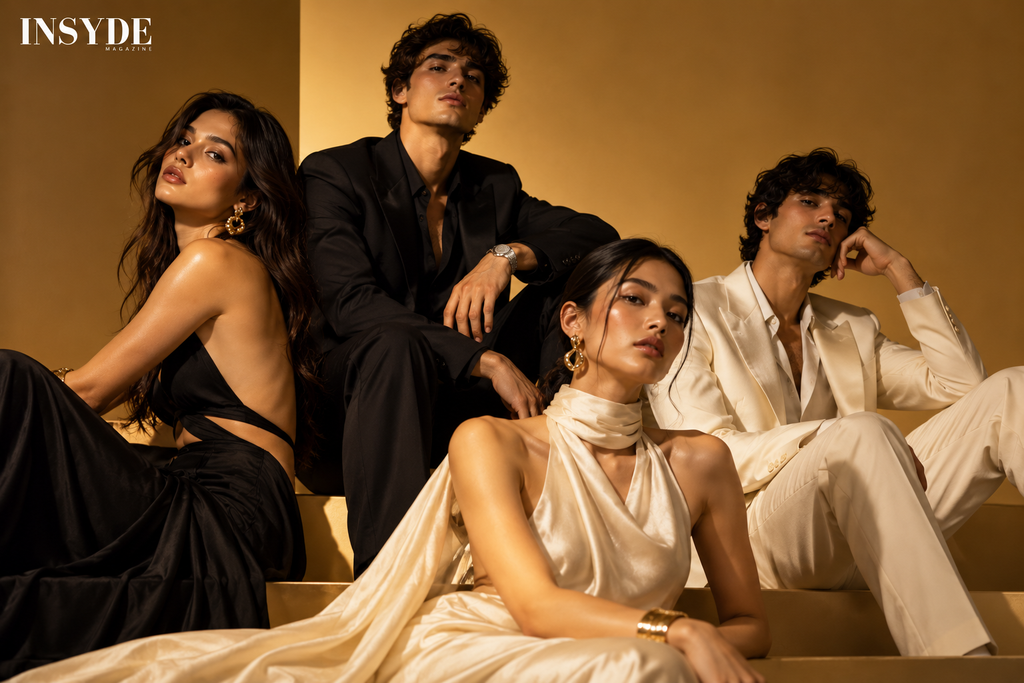
EXCLUSIVITY DIDN’T DIE. IT GOT SMARTER.
Gen Z did not kill exclusivity.
In many ways, it made exclusivity more interesting.
For the traditional luxury model, exclusivity often meant:
Not everyone can buy this.
For the new consumer, it can also mean:
Not everyone knows about this.
That is a significant shift.
An invitation-only event.
An emerging designer.
A limited archival release.
A watch with an unusual complication.
A small atelier.
A piece discovered before it becomes culturally obvious.
A restaurant known more through relationships than advertising.
Luxury becomes less about simply being expensive and more about being specific.
And specificity is difficult to mass-produce.
WHY VINTAGE MATTERS
Perhaps nowhere is this transformation more visible than in resale.
At first glance, secondhand luxury appears contradictory.
Luxury traditionally sells the dream of the new.
Resale sells something that has already lived a life.
But for younger consumers, that history can increase desirability.
BCG and Vestiaire Collective’s 2025 research found that secondhand fashion and luxury were growing about three times faster than the firsthand market, with the global resale market estimated at $210–$220 billion at the time and projected to reach as much as $360 billion by 2030. BCG Global
Gen Z is particularly important.
BCG found that secondhand pieces can account for up to 32% of Gen Z wardrobes, rising to 45% for handbags and 36% for clothing among the surveyed population. Affordability was the leading motivation at 74%, but discovery, experimentation and personal style also mattered. Around 80% of Gen Z respondents said they had bought or discovered a new brand through secondhand, compared with 66% overall. BCG Global
That changes the meaning of resale.
It isn’t simply a cheaper entrance into luxury.
It can be a discovery engine.
It creates access to archives.
It encourages experimentation.
It gives consumers a way to develop taste outside the current-season marketing cycle.
The luxury consumer no longer has to ask:
“What is the brand selling me this season?”
They can ask:
“What has this brand made that I want to find?”
That is a much more powerful position for the consumer.
THE SECONDHAND PARADOX
There is another reason resale matters.
It can actually make luxury more exclusive, not less.
A current-season handbag may be everywhere.
An obscure piece from fifteen years ago may be almost impossible to find.
The second object could carry less obvious status and more cultural capital.
And that distinction matters in an era when luxury brands are wrestling with overexposure.
The industry itself is adapting.
Deloitte’s 2026 Global Powers of Luxury research found that 68.3% of surveyed luxury companies offer repair or refurbishment, 53.8% operate certified pre-owned or trade-in programmes, and 44.5% partner with resale platforms. Deloitte United Kingdom
Luxury is beginning to understand something important:
A product’s life does not have to end when the first owner stops wearing it.
Its story can continue.
And that may become increasingly valuable to a generation that thinks about products in terms of longevity, identity and discovery.
INDIA MAKES THE PARADOX EVEN MORE INTERESTING
India may be one of the most revealing markets in which to watch this transformation.
The Indian luxury consumer is not simply importing a European definition of luxury.
Global brands now meet a consumer shaped simultaneously by Indian culture, global fashion, social media, digital commerce, traditional craftsmanship and a rapidly expanding luxury ecosystem.
Ipsos identifies India’s younger luxury consumers as particularly open to new brands, while highlighting the growing importance of cultural fit and unique experiences alongside traditional status signals. Ipsos
And there is another important point.
India’s Gen Z is not a small niche waiting for luxury to arrive.
Ipsos identifies Gen Z as India’s largest generational cohort and reports that it contributes 43% of overall consumer spending. Ipsos
That gives India a unique position.
The next generation of Indian luxury consumers can want a Swiss watch and Indian jewellery.
A global fashion house and an independent Indian designer.
A European supercar and a locally created luxury experience.
Heritage and experimentation.
Global and deeply Indian.
The boundaries are becoming less rigid.
THE INDIAN GEN Z CONSUMER DOESN’T WANT TO BE SOLD A DREAM
Not in the traditional sense.
They have already seen the dream.
They have watched the campaigns.
They have followed the celebrities.
They know the boutiques.
They know the language.
What they increasingly want is a reason to believe.
Show me the craftsmanship.
Show me the story.
Show me what makes it different.
Show me why the price makes sense.
Show me something I haven’t already seen everywhere.
That is a much harder brief for a luxury brand.
But it may also be a better one.
Because it forces luxury back toward the thing that made it powerful in the first place:
meaning.
THE CELEBRITY ISN’T ENOUGH ANYMORE
Celebrity still matters.
Of course it does.
A major campaign can create enormous attention overnight.
But attention and desire are not the same thing.
Gen Z lives inside an economy of constant cultural visibility.
Actors, musicians, athletes, creators, designers and influencers are all competing for attention at the same time.
A famous face can introduce a product.
It cannot automatically make the product meaningful.
The more interesting luxury campaigns increasingly understand this.
The person becomes a doorway into a larger story about identity, culture or creativity.
The product has to survive after the celebrity leaves the frame.
Because the next generation doesn’t simply want to know:
“Who is wearing it?”
It increasingly wants to know:
“Why should I care?”
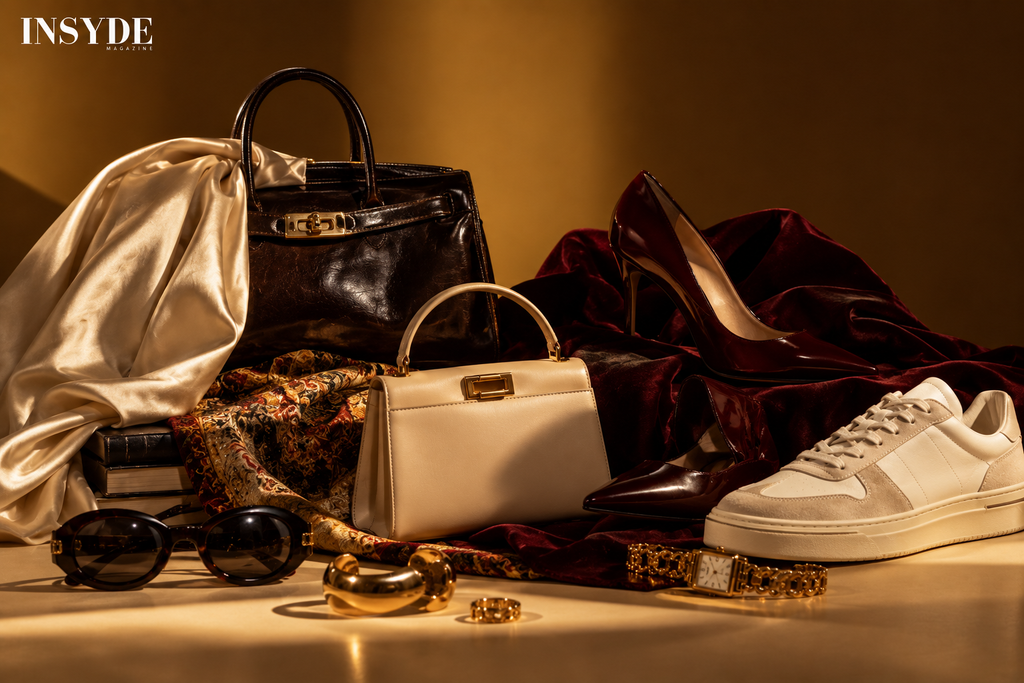
THE BIGGEST PROBLEM FOR LUXURY ISN’T GEN Z
It may be overexposure.
Luxury spent decades expanding.
More stores.
More categories.
More products.
More consumers.
More collaborations.
More visibility.
That expansion created enormous commercial opportunity.
But it also created a contradiction.
The more visible luxury becomes, the harder it can be to make it feel genuinely rare.
McKinsey’s recent luxury research has highlighted the pressure created by rising prices and the weakening of exclusivity and desirability when brands become overexposed. McKinsey & Company
The answer isn’t necessarily to make everything more expensive.
It may be to make fewer things more meaningful.
That distinction is crucial.
Because Gen Z isn’t necessarily asking luxury to become cheaper.
It may be asking luxury to become better at proving its value.
LUXURY’S STRANGEST NEW COMPETITOR
The biggest competitor to a luxury product may not be another luxury product.
It may be an alternative.
A vintage piece.
A young designer.
A secondhand watch.
A niche fragrance.
A beautifully made Indian brand.
A product discovered through social media.
Something that costs less but feels culturally more interesting.
Ipsos’ finding that 76% of Indian Gen Z consumers are open to trying new brands, including luxury, is therefore more than a positive statistic for emerging labels. It is a warning to established houses. Ipsos
Heritage is valuable.
But heritage is not immunity.
A famous name can earn the first look.
It cannot assume it gets the next purchase.
BUT GEN Z STILL WANTS THE DREAM
And this is where the paradox becomes interesting.
For all the conversation around resale, value, sustainability and authenticity, Gen Z has not stopped dreaming.
It still wants the extraordinary.
The watch.
The car.
The handbag.
The jewellery.
The couture.
The hotel.
The journey.
The impossible object.
What is changing is the relationship between the consumer and the dream.
Luxury is becoming more personal.
And the industry is beginning to respond.
Deloitte’s 2026 research identifies customer experience and loyalty as the strongest growth opportunity cited by luxury executives, while its findings show luxury companies investing more heavily in repair, pre-owned programmes, resale partnerships, technology and relationship-driven experiences. Deloitte United Kingdom
The message from the industry is increasingly clear:
The relationship matters.
THE NEW LUXURY EQUATION
Perhaps the old equation looked like this:
PRICE + HERITAGE + SCARCITY = DESIRE
The emerging equation is closer to:
CRAFT + IDENTITY + CULTURE + EXPERIENCE + DISCOVERY = DESIRE
Price hasn’t disappeared.
Scarcity hasn’t disappeared.
Heritage certainly hasn’t disappeared.
But they no longer work alone.
A luxury brand now has to give the consumer something to believe in.
Something to discover.
Something to identify with.
Something worth talking about.
Something worth keeping.
And increasingly, something worth passing on.
SO, DOES GEN Z LOVE LUXURY?
Yes.
Just not necessarily luxury for luxury’s sake.
They want the object when the object means something.
They want the brand when the brand has a point of view.
They want exclusivity when exclusivity feels earned.
They want heritage when heritage is alive rather than simply repeated.
They want craftsmanship when craftsmanship can be felt.
They want experiences that cannot be reduced to a product page.
And they are willing to look somewhere else when luxury stops giving them a reason to care.
That isn’t the death of luxury.
It may actually be luxury becoming more interesting.
THE FUTURE OF LUXURY ISN’T ABOUT BEING RICHER
It is about being more discerning.
The next generation of luxury consumers will not necessarily be the people with the biggest wardrobes.
They may be the people who know exactly why one thing deserves a place in theirs.
That changes the role of the luxury brand.
It is no longer enough to say:
“This is expensive.”
The better question is:
“Is this worth wanting?”
And that question will shape everything from fashion and watches to beauty, cars, jewellery, hospitality and design.
Gen Z hasn’t killed luxury.
It has made luxury work harder.
Harder to impress.
Harder to convince.
Harder to imitate.
Harder to make culturally relevant.
But perhaps also harder to forget.
INSYDE TAKE
Luxury has spent decades teaching consumers what to desire.
Gen Z is becoming the generation that asks why.
That doesn’t make them the enemy of luxury.
It makes them one of its most important tests.
The brands that win the next era won’t necessarily be the loudest, oldest or most visible.
They will be the ones capable of making a young consumer stop scrolling, look closer and think:
I understand why this matters.
And perhaps that is the most valuable luxury of all.
Not being told what is desirable.
Discovering it for yourself.
INSYDE MAGAZINE
Luxury, Through a Different Lens.
Beyond the Spotlight.