Category: Entertainment

The people, stories and cultural forces shaping Indian entertainment, from cinema and music to celebrity culture, events and nightlife.

  • DULQUER SALMAAN’S LOVE AFFAIR WITH CARS

    DULQUER SALMAAN’S LOVE AFFAIR WITH CARS

    From a childhood fascination with automobiles to an enviable collection of performance machines and modern classics, Dulquer Salmaan’s relationship with cars goes far beyond luxury. For the actor, it is a world of engineering, nostalgia, restoration and the enduring pleasure of driving.


    There is a difference between owning an extraordinary automobile and understanding what makes it extraordinary. For some, a luxury car is an expression of status. For others, it is an object of design, engineering and emotion — a machine whose character cannot be measured by its price tag alone.

    Dulquer Salmaan belongs to the latter category.

    One of Indian cinema’s most recognisable contemporary actors, Dulquer has built a reputation across Malayalam, Tamil, Telugu and Hindi films. Away from the screen, however, he has cultivated another identity: that of a passionate automobile enthusiast. His interest extends across generations of automotive engineering, from sought-after performance classics to contemporary supercars, with a particular appreciation for originality, mechanical character and the experience behind the wheel.

    His collection has attracted considerable attention over the years, with vehicles such as the BMW M3 E46, Mercedes-Benz SLS AMG, Porsche 911 GT3, Ferrari 296 GTB and Toyota Supra MK4 frequently appearing in media coverage. Yet, the more interesting story is not simply what occupies his garage. It is the relationship he has developed with these machines — one shaped by childhood memories, the thrill of driving and an instinct for collecting cars with character.

    In a 2023 conversation with Top Gear India, Dulquer offered an unusually personal look into that world. The interview revealed an enthusiast whose fascination with automobiles began long before his acting career, and whose appreciation for cars has little to do with simply acquiring the newest or most expensive model.

    A PASSION THAT STARTED IN CHILDHOOD

    For Dulquer, the attraction to automobiles was present from an early age. Growing up around cars and influenced by his father, Mammootty, and his maternal uncle, he developed an interest that gradually became an enduring passion.

    Speaking to Top Gear India in April 2023, he recalled the influence of his family and his uncle’s artistic interests, which included sketching cars and aircraft.

    “I think from the time I was born, my dad and my mama (my mom’s brother) were both strong influences upon me.”

    He also remembered how naturally he gravitated towards automobiles as a child. His mother would place him inside a car when he was unsettled, knowing that the experience would make him happy.

    His earliest driving memories are considerably more modest than the performance machines associated with him today. The first car he remembers driving was a Maruti 800. He recalled wanting to learn at around eight or nine years old, initially steering while sitting on his father’s lap before gradually learning how the gears and pedals worked.

    “The first car I probably drove was a Maruti 800.”

    The memory offers an interesting contrast to the exotic vehicles that would eventually become part of his automotive world. His fascination did not begin with a supercar or a luxury badge. It began with curiosity about the machine itself.

    Read the full conversation: Top Gear India — In Conversation with Dulquer Salmaan.

    THE MACHINES THAT DEFINE HIS AUTOMOTIVE WORLD

    Dulquer has never publicly confirmed a complete, up-to-date inventory of his collection. However, his own social-media posts and interviews, alongside reporting from publications including The Economic Times, NDTV and The Indian Express, have offered glimpses of several vehicles associated with him.

    Among the most recognisable are a 2002 BMW M3 E46, a 2011 Mercedes-Benz SLS AMG, a Porsche 911 GT3, a Ferrari 296 GTB and a Toyota Supra MK4.

    Each represents a different chapter in automotive design and engineering. Together, they offer a glimpse into the breadth of his interests.

    A DRIVING MACHINE FOR AGES.
    Image By BMW official

    BMW M3 E46: THE CROWN JEWEL

    Few cars are as closely associated with Dulquer’s public automotive identity as the 2002 BMW M3 E46.

    When introducing the car through a video shared with fellow enthusiasts, Dulquer described the E46 as his idea of peak BMW design. The model has become one of the most admired modern performance classics, celebrated for its naturally aspirated 3.2-litre inline-six engine, balanced chassis and engaging driving character.

    The E46 belongs to an era when performance engineering placed a particular emphasis on the relationship between the driver and the machine. Its proportions, mechanical character and understated aggression have helped it retain a devoted following among enthusiasts.

    For Dulquer, however, its importance is deeply personal.

    Speaking about his attachment to the car, he admitted:

    “I am really protective of this car. I am afraid to scratch it.”

    He went on to reveal that he had experienced genuine nightmares about the vehicle being stolen or vandalised. It is a striking admission from someone associated with a collection of highly desirable automobiles. The value of the E46, in this case, appears to extend well beyond its market price.

    In his original social-media post, he described it as one of the special cars he had managed to collect over the years, calling the E46 the peak of BMW.

    For collectors, certain automobiles become more than possessions. They represent a particular era, a personal memory or an experience that cannot easily be replicated. The M3 E46 appears to occupy precisely that position for Dulquer.

    Read The Indian Express report on Dulquer introducing his BMW M3 E46.

    The principle point of reference for this new two-seater was the original 300SL, the iconic Gullwing of the 1950s, and those signature doors are present and correct

    MERCEDES-BENZ SLS AMG: THE ART OF THE GULLWING

    Few modern Mercedes-Benz models make an entrance quite like the SLS AMG.

    With its dramatic gullwing doors, long bonnet and naturally aspirated 6.2-litre V8, the SLS AMG is a modern interpretation of the marque’s celebrated grand touring heritage. Its design draws inspiration from the legendary Mercedes-Benz 300 SL, while its AMG-developed engine gives it a distinctive identity of its own.

    Dulquer introduced his 2011 SLS AMG to enthusiasts through another of his social-media videos. Reflecting on the significance of the car, he described it as something he had once never imagined owning.

    He wrote:

    “This was something I never even dreamed of owning someday.”

    He also referred to the car as a future classic and described owning it as a privilege.

    “What an absolute privilege it is to be custodian of a Gullwing irrespective of which generation.”

    The word custodian is particularly revealing. It suggests an appreciation that goes beyond ownership — an understanding that certain automobiles carry a design and engineering legacy worth preserving.

    Read The News Minute’s report on Dulquer’s car collection and SLS AMG.

    Front and side view of a Porsche 911 GT3 in White.
    Image By Porsche official

    PORSCHE 911 GT3: BUILT FOR THE DRIVER

    If the BMW M3 E46 represents his appreciation for modern classics, the Porsche 911 GT3 reveals his interest in performance engineering at its most focused.

    The GT3 occupies a special position within the Porsche 911 family. Developed with a strong connection to motorsport engineering, it is designed around precision, driver feedback and performance rather than luxury alone.

    In his Top Gear India interview, Dulquer spoke particularly enthusiastically about the experience of driving his GT3, highlighting its manual transmission and naturally aspirated flat-six engine.

    “I love driving my GT3, because I mean I feel like it’s manual and it’s a high revving naturally aspirated flat six, it just feels like nothing else.”

    It is one of the most revealing comments in the conversation. Rather than focusing on acceleration figures or top speed, Dulquer describes the qualities that make a performance car engaging: the gearbox, the engine’s character and the connection between driver and machine.

    The naturally aspirated flat-six has become one of the defining characteristics of the GT3 experience. Its high-revving nature and distinctive sound offer something increasingly uncommon in an automotive landscape moving towards turbocharging and electrification.

    For an enthusiast who appreciates mechanical character, it is easy to understand the appeal.

    Ferrari 296 GTB - Dynamics
    Image By Ferrari Official

    FERRARI 296 GTB: A NEW GENERATION OF PERFORMANCE

    The Ferrari 296 GTB represents a different direction in the evolution of high-performance automobiles.

    Reported as one of the cars associated with Dulquer’s collection, the 296 GTB combines a 3.0-litre twin-turbocharged V6 engine with an electric motor, producing a combined output of approximately 830 cv.

    The model represents an important moment in Ferrari’s transition towards electrified performance. Rather than abandoning the performance philosophy for which the marque is known, the 296 GTB uses hybrid technology to enhance responsiveness, power delivery and overall performance.

    Its mid-engined configuration, sculpted proportions and advanced powertrain place it among the defining contemporary sports cars from Maranello.

    In the context of Dulquer’s reported automotive interests, the 296 GTB introduces an interesting contrast: a modern hybrid performance machine alongside older cars whose appeal lies in naturally aspirated engines and traditional mechanical engagement.

    Supra
    Image By Toyota Supra Official

    TOYOTA SUPRA MK4: THE JAPANESE PERFORMANCE ICON

    The Toyota Supra MK4 occupies an entirely different place in automotive culture.

    Produced during the 1990s, the fourth-generation Supra became internationally recognised for its design and engineering, particularly the legendary 2JZ engine family. The twin-turbocharged 2JZ-GTE variant developed an extraordinary reputation for strength, reliability and tuning potential.

    Its influence grew through motorsport, performance modifications and popular entertainment, turning the Supra into one of the most recognisable Japanese performance cars of its generation.

    Today, well-preserved examples are highly sought after by collectors, with originality and documented history playing an important role in their desirability.

    Its reported association with Dulquer’s collection is another indication that his automotive interests extend beyond European luxury marques. The Supra’s appeal is rooted in a different kind of enthusiast culture — one built around engineering potential, Japanese performance heritage and the legacy of an era.

    Vehicle selection and collection references are based on Dulquer’s public posts and published media reports. This is not a verified inventory of his current ownership.

    MORE THAN AN EXOTIC COLLECTION

    Perhaps the most revealing part of Dulquer’s automotive philosophy is his approach to collecting.

    In his Top Gear India conversation, he made it clear that his garage is not simply a collection of exotic automobiles. He explained that he enjoys finding used cars and restoring them, suggesting an interest in vehicles that might otherwise be overlooked.

    “It’s not only an exotic collection. I have a lot of used cars, I also restore cars.”

    The statement offers a more nuanced understanding of his passion. Collecting, for him, appears to involve the process of finding a particular automobile, understanding its history and bringing it back to a condition worth preserving.

    He also spoke about why he finds it difficult to sell cars. Finding a rare vehicle can take considerable effort, and there is no guarantee that the opportunity to acquire another example will come along.

    This is a familiar instinct among serious collectors. The value of a car is not always determined by its original price or current market valuation. Sometimes, its significance lies in the story of how it was found and the experience of owning it.

    His preference for retaining cars close to their original specifications further reinforces this philosophy.

    “I don’t like to tune my cars so much because my thinking is so long term that I keep them as close to stock as they age better.”

    It is a perspective that places preservation above excessive modification. In a culture where personalisation can often become an exercise in visual excess, maintaining a car’s original character is itself a statement of appreciation.

    For classic and performance-car enthusiasts, originality can contribute to historical significance, collectability and long-term desirability. More importantly, it preserves the engineering vision of the people who designed the automobile in the first place.

    THE THRILL OF THE DRIVE

    A collection can reveal what someone owns. The way they speak about driving reveals why they own it.

    In the same Top Gear India conversation, Dulquer discussed his preference for controlled drifting and the experience of taking a car sideways.

    “I love going sideways, I can drift, I find that more exciting than going at very high speeds.”

    He described the experience as an art, recalling how an early exposure to a handbrake turn had stayed with him.

    It is an interesting distinction. While the performance-car industry often celebrates top speed and acceleration figures, enthusiasts frequently find greater satisfaction in the balance and responsiveness of a vehicle.

    Dulquer also spoke about his appreciation for engine character, singling out the sound of a V10 as particularly memorable.

    “V10 I think! That’s the most amazing sounding engine.”

    The comment reflects a wider appreciation for the mechanical qualities that distinguish one automobile from another. An engine is not simply a source of power; its sound, response and character can become central to the driving experience.

    His enthusiasm for the Porsche GT3’s naturally aspirated flat-six reinforces that idea. For him, the appeal of a performance car is not restricted to what it can achieve on paper. It is about how it feels from behind the wheel.

    THE ROAD LESS TRAVELLED

    For an automobile enthusiast, the experience is not always about driving at the limit. Sometimes, the road itself becomes the destination.

    During his interview, Dulquer spoke about the Pacific Coast Highway in California, describing it as one of his favourite driving experiences. The coastal route, particularly the stretch between San Francisco and Los Angeles, offers a combination of dramatic landscapes, winding roads and the kind of scenery that makes a long drive memorable.

    He also recalled the sight of car clubs gathering along the route, adding another dimension to the experience.

    It is a reminder that automotive culture is as much about community and shared enthusiasm as it is about the machines themselves.

    From organised drives and classic-car gatherings to restoration communities and motorsport events, the world of automobiles brings together people who appreciate the same details: design, engineering, sound and the pleasure of driving.

    For someone whose interest began in childhood, those experiences are perhaps as important as the cars themselves.

    A COLLECTION WITHOUT A NUMBER

    How many cars does Dulquer Salmaan own?

    It is a question that has repeatedly followed the actor, partly because of the size and variety of the collection associated with him.

    In 2025, The Indian Express reported that actor Prithviraj Sukumaran had previously estimated Dulquer’s collection at around 50 to 60 cars. The estimate was attributed to Prithviraj and should not be treated as a verified inventory or a number confirmed by Dulquer himself.

    In his 2023 conversation with Top Gear India, Dulquer declined to reveal an exact figure.

    When asked about the size of his collection, he explained that it was not limited to exotic cars and spoke about the used vehicles he owns and restores. He eventually joked that revealing the number might get him into trouble.

    “This might get me into trouble.”

    The remark has since become one of the more memorable lines associated with his automotive collection.

    But perhaps an exact number would tell us very little. A collection built around rare finds, older vehicles and restoration projects is not necessarily static. Cars can be acquired, sold, rebuilt or kept away from public view.

    For Dulquer, the more meaningful part appears to be the experience of collecting rather than the number of vehicles that can be counted.

    Read The Indian Express report on Prithviraj’s estimate of Dulquer’s collection.

    THE VALUE OF A CAR’S HISTORY

    In the world of automobile collecting, rarity and performance are only part of the equation. Every exceptional machine carries a history, and understanding that history is just as important as appreciating what lies beneath its bonnet.

    For collectors entering the world of luxury automobiles, provenance deserves particular attention. Ownership records, registration documents, import clearances, service histories and verified transaction records form an essential part of a vehicle’s identity. They offer clarity about where a car has been, how it has been maintained and whether its ownership history stands up to scrutiny.

    As desirable automobiles increasingly move across international markets and private collections, the importance of careful verification has only grown. A rare model may capture attention through its design or engineering, but its documentation ultimately establishes confidence in its ownership.

    For those building a collection, the advice is straightforward: look beyond the badge, the specification and the asking price. Understand the car’s journey before making it part of your own.

    After all, collecting exceptional automobiles is not simply about acquiring something rare. It is about becoming a responsible custodian of its history.THE ROAD AHEAD

    Dulquer Salmaan’s relationship with automobiles offers a different perspective on celebrity luxury.

    His interest spans generations of automotive engineering, from the analogue character of a BMW M3 E46 to the modern hybrid performance of a Ferrari 296 GTB. He has spoken about restoring used vehicles, preserving original specifications, enjoying manual gearboxes and appreciating the sound and character of an engine.

    These details reveal an enthusiast whose interest is not limited to acquiring the newest or most expensive models. It is rooted in the experience of discovering a car, understanding what makes it special and enjoying the process of owning it.

    There is a certain romance in that approach. In an age increasingly defined by digital interfaces, electrification and automated driving technologies, the emotional connection between a driver and a machine remains an important part of automotive culture.

    For Dulquer, the appeal seems to lie in that connection — the feel of a manual gearbox, the sound of a naturally aspirated engine, the shape of a classic coupe and the satisfaction of preserving something worth keeping.

    The cars may be extraordinary, but the passion behind them is remarkably familiar to enthusiasts everywhere.

    Because, ultimately, a love affair with automobiles is rarely about how much a car costs. It is about how it makes you feel when you turn the key, engage the gears and find an open road.

    And for Dulquer Salmaan, that love affair appears to have started long before the spotlight — with no intention of slowing down.


    EDITORIAL SOURCES & FURTHER READING

    Editorial note: Vehicle ownership references reflect Dulquer Salmaan’s public statements, social-media posts and published reporting. They do not constitute a verified, complete or current inventory. Direct quotations are attributed to their original interviews or public statements.


  • THE BILLION-DOLLAR HOUSE

    THE BILLION-DOLLAR HOUSE

    How Casinos Turn Gambling, Luxury and Entertainment Into Billions

    Behind the glamour of private gaming rooms, extravagant resorts and million-dollar bets lies a sophisticated business built on mathematics, customer behaviour and the economics of entertainment. From Las Vegas to Macau, discover how the world’s largest casino operators generate billions — and why the business is far more complex than simply winning at the tables.

    A roulette wheel spins. A baccarat dealer turns over the cards. Across the room, a guest places another bet while a waiter delivers a drink to a private gaming salon. Beyond the casino floor, luxury suites are occupied, restaurants are serving dinner and a headline performance is drawing thousands of visitors.

    The spectacle is designed to feel effortless. The business behind it is anything but.

    Casinos have evolved into some of the world’s most sophisticated entertainment and hospitality operations. Their commercial model combines probability, customer acquisition, premium accommodation, dining, retail, nightlife, entertainment and carefully managed experiences for customers who may spend extraordinary sums in a single visit.

    The money is not generated by one roulette table or one lucky night. It comes from an interconnected system in which gaming creates demand, hospitality extends the customer experience and the scale of the operation allows companies to monetise multiple forms of spending.

    The numbers reveal the industry’s scale. According to the American Gaming Association’s State of the States 2026 report, the US commercial gaming industry generated US$78.62 billion in revenue during 2025, an increase of 9.1% over the previous year. The industry also generated approximately US$17.86 billion in direct gaming tax revenue for state and local governments.

    The US figure includes traditional casino gaming, sports betting and internet gaming. It is therefore a measure of the broader commercial gaming industry, not land-based casino revenue alone.

    The American Gaming Association’s 2026 State of the States report offers a detailed picture of an industry that has grown into a major economic force.

    Yet the latest figures also reveal a more complicated picture. Growth is uneven, operating costs remain substantial, and the largest casino companies do not automatically convert billions in revenue into equally impressive profits.

    To understand the business of casinos, it is necessary to look beyond the gaming floor.

    1. THE MATHEMATICS BEHIND THE HOUSE

    The most important advantage in a casino is not its architecture, service or ability to attract wealthy customers. It is mathematics.

    Most casino games are designed with a built-in statistical advantage for the operator, commonly known as the house edge.

    The house edge represents the casino’s theoretical long-term advantage over players, expressed as a percentage of the amount wagered. It does not mean the casino wins every individual bet, every session or every day. Players can win substantial amounts, and operators can experience periods when actual results fall below expectations.

    Over a sufficiently large volume of wagers, however, games with a mathematical house advantage are designed to generate a positive expected return for the operator.

    Consider roulette. A standard European roulette wheel contains 37 pockets: numbers 1 to 36 and a single zero. A straight-up bet on one number pays 35 to 1, although the probability of winning is 1 in 37. That difference creates a theoretical house edge of approximately 2.70%.

    American roulette includes an additional double-zero pocket, increasing the theoretical house edge on standard bets to approximately 5.26%.

    The difference may appear small, but the economics change considerably when thousands of wagers are placed over long operating hours.

    Baccarat, blackjack and other table games operate under different mathematical structures, rules and betting conditions. Their theoretical returns vary depending on the game and, in some cases, the player’s decisions.

    The critical distinction is between money wagered and gaming revenue.

    A casino may accept billions in total bets over a period, but that does not mean it earns billions. Much of the money is returned to players as winnings and can be wagered again. The more meaningful industry measure is generally gross gaming revenue (GGR): the amount retained from wagers after winnings paid to customers are deducted, before operating expenses and other costs.

    This is the foundation of the casino business. The operator does not need every customer to lose every time. It needs sufficient volume of play, managed across games and customers, for the statistical economics to work over time.

    The house edge is not a guarantee of short-term profit. It is a mathematical advantage that operates over a large number of wagers.

    2. THE CASINO IS NO LONGER JUST A CASINO

    The modern casino has expanded far beyond the gaming floor.

    The most successful operators increasingly resemble integrated resort companies. Their properties combine hotels, restaurants, shopping, nightlife, convention facilities, entertainment venues and gaming under one commercial ecosystem.

    The strategy is straightforward: attract visitors for multiple reasons, extend their stay and create more opportunities for spending.

    A guest may arrive for a concert, stay in a luxury suite, dine at a premium restaurant, visit designer boutiques and spend time at the gaming tables. Another may arrive for a business conference and never enter the casino at all.

    Both can contribute to the property’s revenue.

    This distinction matters because gaming revenue and total resort revenue are not the same thing. A company operating a major casino resort may generate substantial income from accommodation, food and beverage, entertainment and retail in addition to gambling.

    Las Vegas demonstrates this evolution particularly well. Its appeal is no longer limited to the casino floor. It is also a destination for major sporting events, international entertainment, conventions, luxury hospitality and nightlife.

    The casino has become the anchor of a much larger entertainment economy.

    For operators, this creates opportunities to diversify revenue and attract customers who may not be traditional gamblers. It also requires enormous investment in property development, staffing, maintenance, marketing and the constant renewal of the guest experience.

    The modern casino is therefore not simply selling a chance to win. It is selling an entire destination.

    The latest American Gaming Association figures illustrate the importance of understanding these different businesses separately. In 2025, traditional commercial casino gaming in the United States generated approximately US$51.06 billion, while commercial sports betting generated US$16.89 billion and internet gaming generated US$10.73 billion.

    These are distinct gaming categories within the wider commercial market, not interchangeable measures of land-based casino revenue.

    Explore the AGA’s commercial gaming revenue data.

    3. THE COMPANIES BEHIND THE BILLIONS

    A relatively small group of international operators controls some of the world’s most recognisable casino and integrated resort businesses. Their financial statements reveal how different strategies can generate enormous revenue — and why high sales do not automatically translate into equally high profits.

    Las Vegas Sands: The integrated resort empire

    Las Vegas Sands has built its business around large-scale integrated resorts, particularly in Macao and Singapore. Its portfolio includes Marina Bay Sands in Singapore and major properties in Macao.

    For the third quarter of 2026, ended 30 September, the company reported:

    • US$3.216 billion in net revenue.
    • US$352 million in net income.
    • US$1.12 billion in consolidated adjusted property EBITDA.

    Revenue declined by approximately 3.5% compared with the same quarter in 2025, when the company reported US$3.331 billion.

    The results demonstrate both the scale and complexity of the integrated resort model. Revenue is generated across gaming and non-gaming operations, while adjusted property EBITDA provides an indication of property-level operating performance before certain expenses.

    The company also reported US$950 million in share repurchases during the quarter.

    Read Las Vegas Sands’ third-quarter 2026 financial results.

    MGM Resorts: The business of entertainment and hospitality

    MGM Resorts International operates some of the most recognisable casino properties in Las Vegas and other markets, with businesses spanning gaming, hotels, entertainment and regional operations.

    For the third quarter of 2026, MGM reported consolidated revenue of approximately US$4.2 billion, a decrease of 1% compared with the previous year’s quarter.

    Its consolidated adjusted EBITDA was US$403 million. The company reported a net loss attributable to MGM Resorts of approximately US$17 million, substantially narrower than the US$285 million loss reported in the corresponding quarter of 2025.

    Its Las Vegas Strip resorts generated US$2 billion in revenue, while the company’s regional operations and international businesses contributed to the wider portfolio.

    The results are a reminder that a casino operator can generate billions in revenue without necessarily producing a profit in every reporting period.

    Operating costs, property expenses, depreciation, financing, taxes and changes in gaming performance all influence the final result.

    Read MGM Resorts’ third-quarter 2026 financial results.

    Wynn Resorts: The economics of premium gaming

    Wynn Resorts occupies a distinctive position in the market, with properties in Las Vegas, Macao and other locations. Its strategy places significant emphasis on premium hospitality, luxury accommodation, dining and high-end gaming.

    For the third quarter of 2026, Wynn reported operating revenue of US$1.69 billion, compared with US$1.83 billion in the same period a year earlier.

    Net income attributable to the company was US$17.3 million, down from US$88.3 million in the third quarter of 2025. Adjusted property EBITDAR was US$464.2 million, compared with US$570.1 million a year earlier.

    The company’s results also showed how casino revenue can fluctuate. Lower gaming volumes across its properties contributed to the decline in operating revenue.

    Read Wynn Resorts’ third-quarter 2026 financial results.

    Together, these businesses illustrate three important features of the industry: scale, diversification and volatility. A casino operator may generate substantial revenue, but its financial performance remains exposed to customer spending, gaming outcomes, operating costs and the economic conditions of the markets in which it operates.

    4. THE HIGH-ROLLER ECONOMY

    There is a particular category of customer closely associated with the luxury casino experience: the high roller.

    These are customers who wager significantly larger amounts than the average visitor. In the industry’s language, they are often referred to as VIP players or premium gaming customers.

    For casino operators, attracting these customers can be commercially valuable. A single high-value customer may generate considerable gaming turnover, while also spending on accommodation, dining, transport and other premium services.

    Casinos compete for this business through personalised hospitality and carefully managed VIP programmes. Depending on the operator and market, these can include private gaming salons, dedicated hosts, luxury suites, dining arrangements, transfers and tailored experiences.

    Some incentives may be complimentary, while others are conditional on a customer’s gaming activity and commercial value to the property.

    The objective is to make the experience seamless. A high-value guest may have a dedicated contact who coordinates accommodation, restaurant reservations, transport and gaming arrangements. The service is designed to reduce friction and make the property an attractive destination for repeat visits.

    But the high-roller economy is more complicated than the image of wealthy individuals casually placing million-dollar bets.

    Operators assess customers according to their expected value, wagering activity, profitability and risk. High betting volume does not necessarily mean high profitability. Actual gaming outcomes can vary, and generous incentives carry costs.

    The economics of VIP customers have also changed in important markets. In Macao, for example, the traditional junket-driven VIP model has faced tighter regulation and a structural shift towards mass-market gaming.

    The era in which casino growth could be explained primarily through a small number of wealthy international gamblers has given way to a more diversified customer base.

    5. MACAO AND THE CHANGING ECONOMICS OF GAMING

    Macao remains one of the most important casino markets in the world. Its gaming industry has undergone a significant transformation since the pandemic and subsequent regulatory reforms.

    The International Monetary Fund’s 2026 assessment of the Macao Special Administrative Region reported that gross gaming revenue increased by 9.1% in 2025, reaching approximately 85% of its 2019 level.

    More importantly, the composition of that revenue has changed.

    According to the IMF, mass-market gaming accounted for 73% of total gross gaming revenue in 2025. In the first half of 2026, overall GGR expanded by a further 6.9% year on year.

    The VIP segment showed some signs of recovery, but its share remained comparatively low following changes to the regulatory framework governing junket operators.

    Read the IMF’s 2026 assessment of Macao’s gaming-sector transformation.

    This is a significant development for the global casino business.

    Mass-market gaming refers broadly to customers outside the traditional VIP segment. Individually, their wagers may be smaller, but collectively they can represent a substantial and more diversified source of revenue.

    For operators, this can reduce dependence on a narrow group of high-value customers. It also changes how resorts approach marketing, hospitality, gaming capacity and customer experience.

    The shift is not simply about attracting more visitors. It is about building a more resilient revenue base across different types of customers.

    Macao’s evolution suggests that the future of casino economics may not be built exclusively around the biggest bets. It may increasingly depend on attracting a broader base of visitors who combine gaming with hotels, shopping, dining and entertainment.

    6. WHY CASINOS INVEST SO MUCH IN THE CUSTOMER EXPERIENCE

    The casino floor is only one part of the business. The experience surrounding it is an important commercial instrument.

    Luxury suites, premium restaurants, personalised service, live entertainment and exclusive access can all influence where customers choose to spend their time.

    In a highly competitive market, the quality of the resort can become a differentiator. Two casinos may offer similar games, but their hospitality, location, service standards and entertainment programmes can make their overall propositions very different.

    This is particularly relevant to customers who have the financial means to choose between destinations.

    A premium guest may value privacy, convenience, service and access as much as the gaming itself. For these customers, the resort is not simply a place to gamble. It is a destination where multiple aspects of leisure and luxury are brought together.

    The economics extend beyond the individual guest. A successful entertainment event can bring visitors into a city, increase hotel occupancy, generate restaurant demand and support wider tourism activity.

    The relationship between casinos and luxury hospitality is therefore mutually reinforcing. Gaming can attract visitors, while hospitality and entertainment can make a destination attractive to people who might otherwise have little interest in gambling.

    The latest operating figures from MGM provide a useful illustration of this interconnected model. In the third quarter of 2026, its Las Vegas Strip resorts generated US$2 billion in revenue, with casino revenue of US$488 million and room revenue of US$622 million. The property portfolio therefore earns money through several different parts of the visitor experience.

    See MGM’s published third-quarter operating figures.

    7. THE RISKS BEHIND THE GLAMOUR

    For all its commercial sophistication, the casino business is exposed to risks that are not always visible from the gaming floor.

    Gaming revenue is volatile. A casino’s actual winnings can differ from its theoretical expectations over a particular period. A run of unusually favourable results for customers can affect a property’s reported performance, even when the underlying volume of play remains healthy.

    The industry is also heavily regulated. Operators must comply with licensing requirements, customer identification procedures, anti-money-laundering rules, financial reporting obligations and responsible-gambling standards.

    These requirements are essential to maintaining the integrity of the sector. Casinos handle substantial financial flows and must manage risks involving fraud, financial crime and the misuse of gaming facilities.

    There is also a significant human cost that cannot be separated from the business.

    Gambling can be a form of entertainment for some customers, but it can also cause serious financial and psychological harm. Problem gambling can affect individuals, families and communities, particularly when customers lose control over their spending or attempt to recover losses through further betting.

    The industry therefore faces a difficult balance: it must attract customers and encourage engagement while operating within responsible-gambling safeguards and legal requirements.

    The glamour of the casino environment should not obscure the risks associated with the activity that takes place inside it.

    8. THE FUTURE OF THE BILLION-DOLLAR HOUSE

    The next phase of the casino industry is likely to be shaped by diversification, technology, regulation and the changing expectations of customers.

    Integrated resorts will continue to compete through hospitality, entertainment, retail and premium experiences. Gaming will remain central to the business, but the ability to attract a wider audience may become increasingly important.

    Technology is also changing how operators understand their customers. Digital loyalty systems, customer analytics, payment infrastructure and data-driven marketing can help companies personalise services and manage operations more efficiently, subject to applicable privacy and regulatory requirements.

    At the same time, operators must navigate changing rules around online gaming, financial transactions, customer protection and the movement of money across borders.

    The industry is also becoming more conscious of the risks associated with depending too heavily on a small number of VIP customers. Macao’s shift towards mass-market gaming offers an important example of how regulatory changes and market conditions can reshape the economics of an entire destination.

    The future casino may look increasingly like a luxury entertainment resort with gaming at its centre — rather than a traditional gambling hall with a hotel attached.

    But the underlying principle will remain the same: the operator must create an experience that attracts customers, manages risk and generates sustainable returns.

    THE HOUSE IS A BUSINESS, NOT A GAME

    The casino industry has built an extraordinary commercial model around one of the oldest human impulses: the willingness to take a risk for the possibility of a reward.

    Its success, however, cannot be explained by gambling alone.

    The largest operators combine mathematics with hospitality, customer data with personalised service, and gaming floors with some of the world’s most ambitious entertainment destinations. They understand that a visitor can generate value in more ways than one — through a hotel stay, a restaurant reservation, a retail purchase, an event or a wager.

    The financial results of Las Vegas Sands, MGM Resorts and Wynn demonstrate both the scale and complexity of the business. Their revenues run into billions, but profitability remains dependent on operating performance, market conditions and the unpredictable nature of gaming outcomes.

    Meanwhile, Macao’s shift towards mass-market gaming suggests that the industry’s future may be less dependent on a small circle of high rollers than its glamorous reputation would suggest.

    Casinos have mastered the art of turning probability into a business, but their most important asset may be something less obvious: the ability to create an experience that brings people through the doors and gives them reasons to return.

    Because the biggest business in a casino is not necessarily the game being played. It is the entire world built around the decision to play.

    INSYDE Magazine — No.1 Luxury Magazine In Bengaluru

    Luxury. Culture. The People Shaping What Comes Next.

  • hybe’s WEVERSE CON FESTIVAL IS COMING TO INDIA

    hybe’s WEVERSE CON FESTIVAL IS COMING TO INDIA

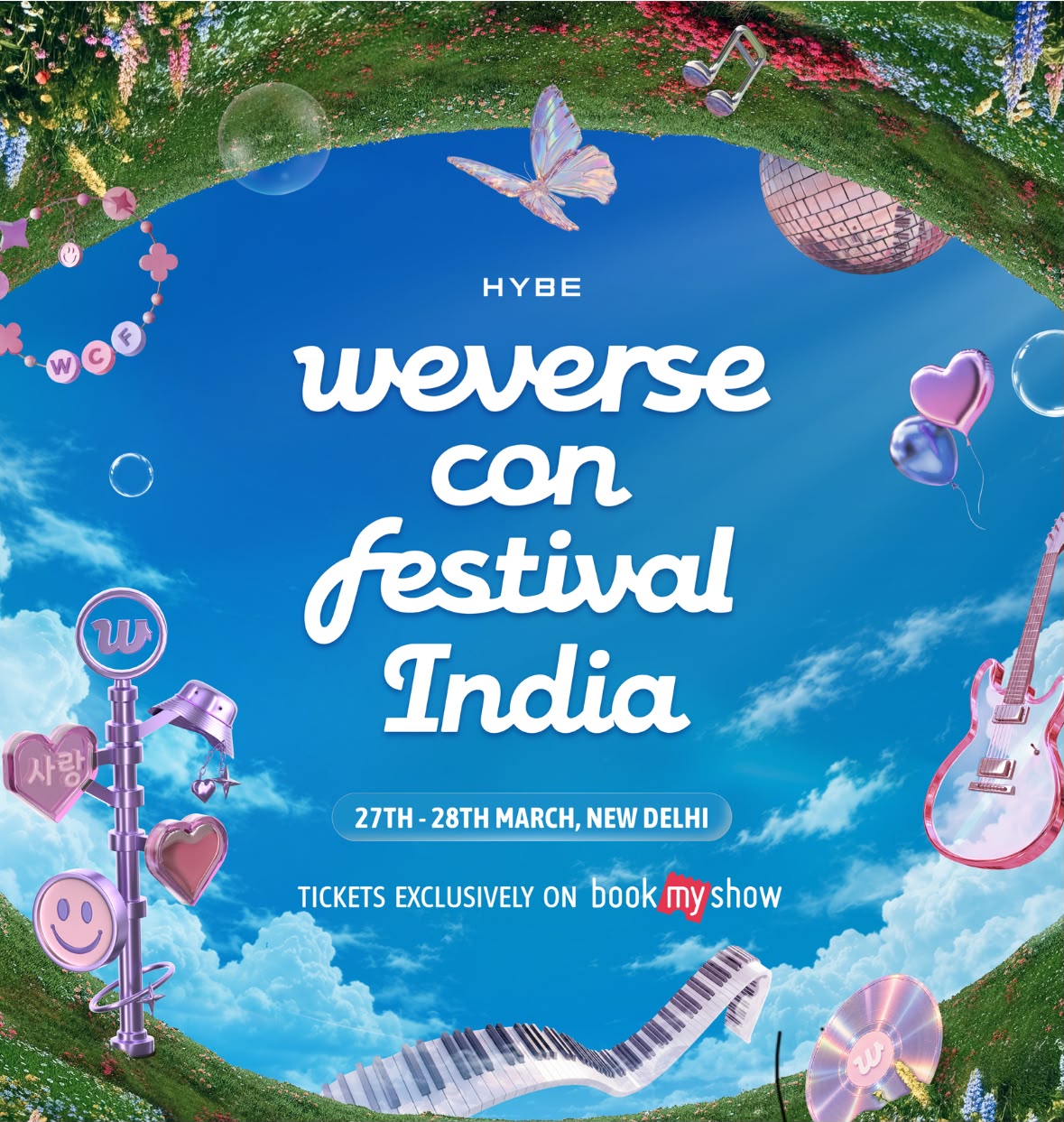
    HYBE is bringing its flagship global music festival to New Delhi for the first time outside Korea, bringing K-pop, Indian music, fandom and immersive experiences together.

    For the first time since its launch, Weverse Con Festival is leaving Korea.

    HYBE has announced that its flagship global music festival will take place in New Delhi on March 27–28, 2027, marking the festival’s first edition outside Korea. The two-day event will bring together Indian and global artists, live performances, special collaboration stages and a broader programme built around fan culture and immersive experiences. Press Release-Weverse Con Festi…

    But the arrival of Weverse Con Festival in India is about more than bringing another international music event to the country.

    The festival is being designed as a meeting point between artists and their communities, combining live music with interactive fan engagement, brand activations and cultural experiences. In other words, the stage is only one part of the experience. Press Release-Weverse Con Festi…

    A NEW HOME FOR WEVERSE CON

    Since its launch, Weverse Con Festival has been associated with HYBE’s global music ecosystem. Its move to New Delhi marks the first time the festival will be presented outside Korea.

    The India edition will run across two days, bringing together artists from India’s diverse music scene and influential K-pop artists. Special collaboration stages will also form part of the programme, creating opportunities for Indian and global artists to share the same platform. Press Release-Weverse Con Festi…

    For HYBE, the format is intended to extend beyond conventional live performance.

    The company describes the festival as an experience inspired by the fan communities fostered through Weverse, bringing music, interactive engagement, brand activations and cultural experiences together in a single physical setting. Press Release-Weverse Con Festi…

    That emphasis on the fan is central to what makes the India edition significant.

    WHEN FANDOM MOVES OFF THE SCREEN

    Weverse has grown as a platform built around the relationship between artists and fans, providing content, communication and services designed around fan activity. The festival takes that relationship into the physical world. Press Release-Weverse Con Festi…

    For the audience, that means the experience is not limited to watching an artist perform.

    HYBE says fans will be able to engage with artists and fellow fans throughout the festival, while the event itself will bring together performances, interactive experiences and cultural programming. Press Release-Weverse Con Festi…

    It reflects a broader philosophy within HYBE’s entertainment ecosystem, which combines artists, content, platforms and services around the fan experience. Press Release-Weverse Con Festi…

    The result is a festival conceived as an environment rather than simply a concert schedule.

    HYBE’S INDIA MOMENT

    The decision to bring Weverse Con Festival to India also sits within HYBE’s broader strategy for the country.

    HYBE CEO Jason Jaesang Lee described the India edition as a new chapter in the company’s “multi-home, multi-genre” strategy, while identifying India as a key market in HYBE’s global growth plans. The company says its aim is to combine its global capabilities with India’s creativity and develop experiences that resonate with local audiences. Press Release-Weverse Con Festi…

    That ambition extends beyond the festival.

    HYBE INDIA, the company’s strategic global office in India, has been conducting nationwide auditions to discover and develop local talent, produce content and expand intellectual property. The office is also focused on developing locally resonant and globally scalable content while fostering cultural exchange. Press Release-Weverse Con Festi…

    Seen in that context, Weverse Con Festival is part of a larger effort to connect HYBE’s global entertainment ecosystem with India’s creative landscape.

    INDIA MEETS THE GLOBAL STAGE

    The India edition will place Indian and global music cultures alongside one another.

    The festival will feature K-pop artists as well as artists from India’s diverse music scene, with collaboration stages intended to create new connections between artists and cultures. Press Release-Weverse Con Festi…

    That element gives the New Delhi edition its own identity.

    Rather than simply reproducing the Korean festival in another market, the announcement frames the India edition around the meeting of global and Indian music cultures. It is an approach that fits directly into HYBE’s stated ambition of combining global capabilities with local creativity. Press Release-Weverse Con Festi…

    THE EXPERIENCE AROUND THE MUSIC

    Weverse Con Festival India is being co-produced and promoted by BookMyShow Live, the live entertainment division of BookMyShow.

    BookMyShow Live will bring its production expertise and audience reach to the festival, with tickets set to be available exclusively through BookMyShow. Press Release-Weverse Con Festi…

    The event will also feature a group of commercial and brand partners. Kia India, Mastercard, Project B and Samsung are listed as presenting partners, while NONGSHIM joins as an Associate Partner. Mastercard will serve as the festival’s banking partner, with cardholders receiving exclusive access to pre-sale tickets. Press Release-Weverse Con Festi…

    Together, these elements contribute to the wider environment that HYBE is building around the festival — one where music, fandom, brands and cultural experiences meet.

    THE FIRST EDITION OUTSIDE KOREA

    For Weverse Con Festival, India represents a first.

    For HYBE, it represents another step in its stated expansion and cultural ambitions in the country.

    And for fans, it brings the Weverse Con experience into a new physical setting — one built around live music, artist interaction, fandom and cultural exchange.

    On March 27–28, 2027, New Delhi will host the first Weverse Con Festival outside Korea.

    It is not simply a festival arriving in a new country.

    It is Weverse Con entering a new chapter — in India.

  • WHY IS INDIA LOSING IN THE GLOBAL MUSIC RACE?

    WHY IS INDIA LOSING IN THE GLOBAL MUSIC RACE?

    India has one of the world’s largest music audiences, billions of streams and a rapidly growing generation of artists reaching listeners beyond its borders. Yet its recorded-music economy remains far behind the world’s leading markets. The question is no longer whether India can make music the world wants to hear. It is whether India can build the business to match it.

    Music has never been difficult to find in India.

    It is everywhere.

    It lives inside films, weddings, clubs, festivals, cars, headphones, Instagram Reels and late-night playlists. It crosses languages, generations and social classes. A song can travel from a bedroom studio in Chandigarh to a million phones in London, from Chennai to Toronto, or from Kerala to New York without ever needing a passport.

    India has no shortage of listeners.

    No shortage of artists.

    No shortage of songs.

    And increasingly, no shortage of global attention.

    Yet there is a strange contradiction at the centre of India’s music economy.

    India is one of the world’s great music-consuming nations. But it is not yet one of the world’s great music markets.

    The latest FICCI-EY data puts India’s music sector at approximately ₹59 billion in 2025, up 10% from the previous year. The sector is estimated at ₹64 billion for 2026 and projected to reach ₹75 billion by 2028. (EY)

    The global recorded-music industry, meanwhile, reached US$31.7 billion in 2025, growing 6.4% and marking its eleventh consecutive year of growth. Paid streaming alone generated more than half of global recorded-music revenue. (IFPI)

    India is growing.

    But the global race is moving too.

    And that raises the uncomfortable question:

    Why has India’s enormous cultural influence not yet translated into equivalent music-industry power?


    THE GREAT INDIAN MUSIC PARADOX

    The numbers are almost difficult to reconcile.

    According to the 2026 EY–Indian Music Industry study, 96% of Indian smartphone users listen to music, and 80% spend more than an hour a day doing so. Yet India had only around 14 million paid music subscriptions in 2025, compared with more than 200 million paid video subscriptions. (EY)

    That is the paradox.

    India has built a massive listening economy without yet building an equally large payment economy.

    And that distinction is crucial.

    Because music-market rankings are ultimately about revenue—not how many people love music, how many songs are played at weddings, or how many reels use an Indian track.

    The global recorded-music business rewards the markets that successfully turn listening into subscriptions, royalties, licensing, physical sales and other forms of monetisation.

    India has mastered the first half.

    The second is still being built.


    THE WORLD’S MUSIC BUSINESS HAS ALREADY MOVED ON

    The global music industry is no longer the business it was a decade ago.

    Streaming has transformed the economics of music.

    In 2025, global recorded-music revenue reached US$31.7 billion. Streaming revenue surpassed US$22 billion, while paid subscription streaming revenue grew 8.8% and accounted for 52.4% of global recorded-music revenue. There were approximately 837 million paid streaming subscription accounts worldwide. (IFPI)

    And the global market is becoming increasingly international.

    Language is no longer the barrier it once was.

    In 2025, Rosé and Bruno Mars’ “APT.” became the first song featuring non-English lyrics to top IFPI’s Global Single Chart. IFPI described the result as evidence of the increasingly global nature of recorded music and the growing ability of artists to cross language and market boundaries. (IFPI)

    That matters enormously for India.

    Because India possesses something few countries can match:

    dozens of musical cultures, hundreds of millions of potential listeners and a vast global diaspora.

    The question is why that advantage has not yet produced a music economy of comparable scale.

    A conceptual INSYDE Magazine visual representing the gap between India's vast music audience and the revenue generated by music consumption.

    1. INDIA HAS A MONETISATION PROBLEM

    This is perhaps the biggest weakness in the Indian music business.

    The EY–IMI study surveyed 15,373 smartphone users across India in March and April 2026.

    The findings are striking.

    While 86% of respondents had paid for video OTT services at some point, only 38% had ever paid for a music streaming service, including bundled services. (EY)

    The problem, therefore, isn’t that Indians refuse to pay for digital entertainment.

    They already do.

    They pay for films.

    They pay for sports.

    They pay for streaming television.

    They pay for premium experiences.

    But music has historically been treated differently.

    Why pay for a song when the song can be found somewhere else for free?

    That question has shaped the Indian music economy for years.

    EY identifies the availability of free alternatives and limited perceived differentiation between free and premium music services as major barriers to subscription growth. (EY)

    There is, however, an intriguing opportunity hidden inside the problem.

    61% of respondents said they would be willing to pay if free alternatives disappeared and the price was reasonable. (EY)

    So the issue may not be a lack of love for music.

    It may be a lack of perceived value.


    2. INDIA HAS BILLIONS OF STREAMS. BUT STREAMS ARE NOT THE SAME AS MONEY.

    This is where the conversation needs to move beyond vanity metrics.

    A billion streams sounds enormous.

    But a stream is not a universal unit of economic value.

    The revenue generated by listening depends on the market, the platform, subscription mix, advertising, rights arrangements and other commercial factors.

    That means a country can generate extraordinary volumes of listening while still producing a relatively modest music market by global revenue standards.

    India has essentially built a gigantic attention economy around music.

    The next challenge is building a much stronger value economy around it.

    The distinction is simple:

    Attention asks: How many people are listening?

    Value asks: How much economic activity does that listening create?

    India is exceptional at the first.

    It is still developing the second.


    3. INDIA’S FREE-MUSIC CULTURE IS BOTH ITS SUPERPOWER AND ITS PROBLEM

    The digital revolution made music incredibly accessible.

    YouTube.

    Short-form video.

    Ad-supported streaming.

    Social platforms.

    Film soundtracks.

    User-generated content.

    Music discovery has never been easier.

    But abundance changes consumer behaviour.

    When a listener can access an enormous amount of music without paying a conventional subscription, convincing that listener to upgrade becomes much harder.

    The industry therefore faces a delicate problem.

    Restrict free access too aggressively and platforms risk losing reach.

    Leave free access too generous and consumers may never develop the habit of paying.

    India’s streaming industry is still trying to find that balance.

    And this is why the next stage of growth will probably depend less on simply acquiring listeners and more on making premium music experiences feel worth paying for.

    Ad-free listening, offline access, better audio quality, personalisation, exclusive content, fan experiences and live-event integration are all becoming increasingly important to that proposition. (EY)


    4. INDIA DOESN’T HAVE ONE MUSIC INDUSTRY

    This may be one of India’s greatest cultural strengths.

    And one of its biggest commercial complications.

    India has:

    Hindi.

    Punjabi.

    Tamil.

    Telugu.

    Malayalam.

    Kannada.

    Bengali.

    Marathi.

    Haryanvi.

    Bhojpuri.

    And many more.

    For decades, Bollywood acted as the international shorthand for Indian popular music.

    But streaming is breaking that model apart.

    According to FICCI-EY analysis using IPRS data, Hindi accounted for 59% of music consumption in 2025, followed by Punjabi at 9%, Tamil at 7%, Telugu at 6%, Bhojpuri at 4%, Kannada at 3%, and several other regional languages. (EY)

    That fragmentation can look like a weakness when compared with countries exporting a more unified musical identity.

    But it may ultimately become India’s greatest competitive advantage.

    Because India doesn’t need to export one sound.

    It can export many.

    An INSYDE Magazine editorial visual representing the growing international reach of Indian artists and music across global audiences.

    5. THE MOST IMPORTANT CHANGE: INDIAN MUSIC IS LEAVING INDIA

    This is where the story becomes much more optimistic.

    Spotify’s 2026 India Loud & Clear report found that royalties generated by Indian artists on Spotify grew 29% in 2025.

    The number of artists generating more than ₹1 crore annually grew 21%, while the number generating more than ₹5 crore doubled compared with 2023. (Spotify)

    But the more interesting number is geographical.

    More than 40% of royalties earned by Indian artists on Spotify in 2025 came from listeners outside India. (Spotify)

    That changes the argument.

    Indian music isn’t simply popular at home.

    It is becoming an export.

    Spotify says listeners streamed Indian artists nearly 335 billion times in 2025, equivalent to more than 20 billion hours of music. Listeners also played an Indian artist they had never previously heard approximately 12.8 billion times during the year. (Spotify)

    The audience is crossing borders.

    And it isn’t happening only through Bollywood.


    FROM BOLLYWOOD MUSIC TO INDIAN MUSIC

    For generations, India’s global musical identity was heavily connected to cinema.

    A song became internationally recognised because a film became internationally recognised.

    But streaming has begun to separate the artist from the film.

    Spotify’s latest data shows that half of its Top 10 India tracks in 2025 came from I-Pop—music outside Bollywood film soundtracks. Eleven of the 15 most-exported Indian songs on Spotify’s 2025 Global Impact List came directly from artists rather than film soundtracks. (Spotify)

    That is a significant structural shift.

    The Indian music industry is slowly moving from:

    Bollywood music

    to:

    Indian music.

    The distinction matters.

    An independent artist can build an audience without waiting for a film.

    They can release internationally.

    They can collaborate across borders.

    They can tour.

    They can sell merchandise.

    They can work with brands.

    They can own and develop a catalogue.

    They can build a business around their identity.

    That is how a music market becomes bigger than the soundtrack business.

    Minimal INSYDE Magazine graphic exploring India's global musical talent and the infrastructure required to turn artists into sustainable international businesses.

    6. INDIA HAS TALENT. WHAT IT NEEDS IS INFRASTRUCTURE.

    India’s problem has never been a lack of talented musicians.

    The country produces extraordinary singers, rappers, composers, producers and songwriters.

    But a global music economy requires far more than artists.

    It requires:

    A&R.

    Artist management.

    Publishing.

    Music lawyers.

    International PR.

    Global distribution.

    Touring infrastructure.

    Sync licensing.

    Catalogue investment.

    Songwriting networks.

    Festival relationships.

    Merchandising.

    Data and rights management.

    India has many of these pieces.

    What it is still developing is the scale and integration of the system.

    A great song can come from Bengaluru, Mumbai, Chennai, Delhi or Chandigarh.

    But getting that song systematically into global markets requires an ecosystem around the artist.

    The world’s most powerful music industries have spent decades building that machinery.

    India is building it now.


    7. THE RIGHTS BUSINESS IS FINALLY BECOMING BIGGER

    There is another part of the music economy that rarely gets the attention it deserves.

    Rights.

    A song isn’t one asset.

    It can generate value through recordings, publishing, performance, synchronisation, digital platforms, broadcasts, live performances and licensing.

    Globally, music creator royalties collected through collective management organisations reached €12.59 billion in 2024, up 7.2%. Digital music collections reached more than €5 billion for the first time. (CISAC)

    India is moving rapidly toward a digital rights economy.

    CISAC’s 2025 Global Collections Report shows digital income accounted for 82.7% of creator-rights collections in India in 2024, while India’s digital collections grew dramatically over the previous decade from a low base. (CISAC)

    That is a sign of an industry becoming more sophisticated.

    The music business is no longer simply about releasing songs.

    It is about owning, managing, licensing and monetising intellectual property.

    And India is increasingly learning that language.


    8. THEN THERE IS THE LIVE MUSIC BOOM

    If streaming is one side of India’s music future, live entertainment could be the other.

    India’s organised live-events segment grew 44% in 2025, according to FICCI-EY. The growth was driven by ticketed concerts and other large-scale live experiences. (EY)

    This matters because the economics of a concert are fundamentally different from those of a stream.

    A concert creates revenue through:

    tickets.

    VIP experiences.

    sponsorships.

    merchandise.

    hospitality.

    brand partnerships.

    tourism.

    content.

    The artist therefore becomes more than a recording act.

    They become an experience brand.

    That shift is already visible in India’s growing concert economy and in the increasing ability of Indian artists to build audiences beyond their home cities.

    The next great Indian music company may therefore look less like a traditional record label and more like a combination of:

    label + management company + live-entertainment business + media company + brand studio.


    9. INDIA’S REGIONAL DIVERSITY COULD BECOME ITS GLOBAL ADVANTAGE

    For years, India’s linguistic fragmentation was often treated as a commercial obstacle.

    The global streaming era changes that calculation.

    Spotify’s 2026 data shows Indian music gaining traction across multiple languages and genres. Royalties for Indian artists rose across major language markets, while Spotify has expanded artist-development initiatives into regional-language ecosystems including Malayalam, following earlier programmes in Punjabi and Tamil. (Spotify)

    This matters because the world no longer needs to understand every lyric to discover a song.

    Algorithms can recommend it.

    Short-form video can amplify it.

    Fans can translate it.

    Diaspora communities can carry it.

    Collaborations can cross language barriers.

    And global audiences are increasingly comfortable consuming music they don’t completely understand.

    India doesn’t need to make its music less Indian to make it global.

    It may simply need to make it easier to discover.


    10. INDIA SHOULDN’T TRY TO BECOME THE NEXT AMERICA

    There is a temptation to compare India with the United States, South Korea or the UK and ask why India hasn’t replicated their music industries.

    But perhaps that is the wrong question.

    South Korea built a highly integrated cultural-export model around music, television, fashion, beauty and fandom.

    The United States benefited from the global reach of English and decades of music-industry infrastructure.

    India has a different starting point.

    It has something neither model possesses in quite the same combination:

    multiple languages, massive domestic scale, a global diaspora, a powerful film industry, enormous digital consumption and a deep regional music culture.

    India’s opportunity may therefore be to build the world’s most powerful multilingual music ecosystem rather than trying to create a second American or Korean model.

    Imagine the commercial possibilities:

    Punjabi music travelling through the diaspora.

    Tamil music reaching Southeast Asia.

    Hindi music expanding across the Middle East and beyond.

    Telugu and Malayalam music finding new international audiences.

    Independent Indian hip-hop crossing borders.

    Electronic producers collaborating globally.

    Classical and contemporary Indian sounds entering new markets.

    The future of Indian music may not have one sound.

    It may have thousands.


    THE NUMBERS SAY INDIA ISN’T DYING

    This is where the headline becomes deliberately provocative.

    India’s music market is not dying.

    In fact, the latest data says the opposite.

    The Indian music sector grew approximately 10% in 2025. Paid music subscriptions increased 37% to 14.4 million. Music labels also saw their other income streams grow, supported by events, branded content and talent management. (EY)

    Spotify reported a 29% increase in royalties generated by Indian artists in 2025. (Spotify)

    The global recorded-music industry itself grew 6.4% in 2025. (IFPI)

    So the more accurate diagnosis isn’t:

    India’s music industry is dying.

    It is:

    India’s music industry is under-monetised relative to the size of its audience and cultural influence.

    And that is a very different problem.


    THE REAL GAP IS BETWEEN ATTENTION AND VALUE

    This may ultimately be India’s biggest opportunity.

    The country has already solved the hardest part of entertainment:

    people care.

    They listen.

    They share.

    They discover.

    They dance.

    They sing.

    They attend concerts.

    They follow artists.

    They create trends around songs.

    They export culture through the diaspora.

    What remains is converting more of that attention into sustainable economic value.

    That means:

    more paid subscribers.

    stronger publishing.

    better rights management.

    larger international tours.

    more global collaborations.

    better artist development.

    stronger management companies.

    premium fan experiences.

    merchandise.

    sync licensing.

    catalogue ownership.

    international marketing.

    And, perhaps most importantly, a culture in which paying for music is understood as supporting the people who make it.


    THE RACE INDIA ACTUALLY NEEDS TO WIN

    The question isn’t whether India can produce another global hit.

    It already can.

    The question isn’t whether Indian artists can find international audiences.

    They already are.

    The question is whether India can build the infrastructure to make those successes repeatable, scalable and economically meaningful.

    That is the real global music race.

    Because a hit is not an industry.

    One artist is not an industry.

    One viral song is not an industry.

    A truly powerful music economy is the ecosystem that allows thousands of artists to build sustainable careers, while labels, publishers, platforms, promoters, managers and rights organisations capture and reinvest value throughout the system.

    India is moving in that direction.

    But it is still early.


    SO, WHY IS INDIA NOWHERE IN THE GLOBAL MUSIC RACE?

    Perhaps the premise needs one final adjustment.

    India isn’t nowhere.

    It is actually moving in several important directions at once.

    Its artists are travelling.

    Its regional languages are travelling.

    Its streaming economy is growing.

    Its concert economy is expanding.

    Its rights infrastructure is becoming more sophisticated.

    Its international audience is getting larger.

    Its independent music scene is becoming more important.

    And global platforms are increasingly investing in discovering Indian talent.

    The problem is that India’s cultural influence is still ahead of its commercial infrastructure.

    The country has built the audience before fully building the business.

    And now comes the difficult part.

    Turning:

    listeners into customers.

    songs into intellectual property.

    artists into global brands.

    fans into communities.

    concerts into experiences.

    regional sounds into international exports.

    And cultural influence into economic power.

    India doesn’t need another billion people to listen.

    It needs to make the people already listening worth more to the ecosystem—and make the ecosystem worth more to them.

    The next Indian music revolution may therefore not be about producing more music.

    It may be about finally learning how to build an industry around it.

    And when India figures that out, the global music map may have to be redrawn.

    Because the country with the audience has already arrived.

    Now it needs the music economy to match.


    SOURCES & METHODOLOGY

    This editorial uses the latest full-year market data available as of October 2026. Global recorded-music figures are from IFPI’s Global Music Report 2026, covering calendar year 2025. Indian music-industry figures are primarily from the 2026 FICCI-EY Stories, Scale and Impact: Unlocking India’s Media and Entertainment Economy report and the EY–Indian Music Industry How India Listens, Streams and Pays for Music study, which surveyed 15,373 smartphone users in March–April 2026. Spotify figures come from its India Loud & Clear report published in September 2026. Rights-market figures are from CISAC’s Global Collections Report 2025, covering 2024 collections. (Global Music Report)

    Important: “Music market” can mean different things. IFPI’s global ranking measures recorded-music revenue, while FICCI-EY measures India’s music-sector revenue and CISAC measures creator-rights collections. These datasets are complementary but are not directly interchangeable. This distinction is important when comparing India’s position with other countries.

  • THE FILMS INDIA CAN’T AFFORD TO FAIL

    THE FILMS INDIA CAN’T AFFORD TO FAIL

    Inside the films pushing Indian cinema into a new era of scale, technology and global ambition

    By INSYDE Editorial Desk
    Data & Research: INSYDE Editorial Desk | Ormax Media
    Research updated: 29 September 2026

    Indian cinema has entered a different kind of arms race.

    The biggest films are no longer competing only on star power, opening-day collections or the number of languages in which they release. They are competing on scale — the size of their worlds, the sophistication of their visual effects, the reach of their international campaigns and, increasingly, the amount of capital required to put them on screen.

    A new generation of Indian productions is now being mounted at extraordinary financial scale.

    Ramayana has been associated with a ₹4,000-crore project figure. Varanasi has been reported at approximately ₹1,300–1,400 crore. Raaka has been reported at more than ₹1,000 crore, while Kalki 2898 AD: Part 2 and Fauzi are being discussed in the ₹600–700-crore range.

    But there is an important distinction.

    These numbers are not directly comparable production budgets.

    Some are industry estimates. Some include marketing and release expenditure. Ramayana’s ₹4,000-crore figure covers two films rather than one. Several producers have not publicly disclosed audited production costs.

    So the more useful question is not simply which movie costs the most?

    It is:

    Why is Indian cinema willing to spend at this scale — and what does that tell us about the future of the business?


    THE FIVE MEGA-PRODUCTIONS TO WATCH

    FilmReported / Estimated ScaleCurrent StatusExpected Release
    Ramayana: Part 1 & Part 2~₹4,000 Cr*Part 1 completed / global rollout underwayPart 1: 6 Nov 2026; Part 2: 2027
    Varanasi~₹1,300–1,400 Cr**In production7 Apr 2027
    Raaka₹1,000 Cr+**In production2027
    Kalki 2898 AD: Part 2~₹700 Cr***Regular shoot begins Oct 2026TBA
    Fauzi~₹600–700 Cr**In production / postponedTBA

    * The ₹4,000-crore figure covers both Ramayana films, including release and promotional costs, according to Yash. (India Today)

    ** Reported industry estimate; not an audited producer-disclosed budget. (NDTV)

    *** Reported estimate rather than an officially confirmed production budget. (DPIFF)


    01 — RAMAYANA

    The ₹4,000-Crore Global Project

    Few Indian films have generated as much conversation about scale as Ramayana.

    Directed by Nitesh Tiwari and led by Ranbir Kapoor as Rama, Sai Pallavi as Sita and Yash as Ravana, the two-part epic is being developed as an international-scale cinematic adaptation of one of India’s most enduring stories.

    The headline number, however, needs context.

    The much-discussed ₹4,000 crore is not the production cost of Part One alone. In August 2026, Yash, who is also a co-producer, clarified that the figure covers both films along with release and promotional expenditure. (India Today)

    That makes Ramayana less useful as a conventional single-film budget comparison and more interesting as a large-scale entertainment project.

    Part One is scheduled to release internationally on 6 November 2026, ahead of the Diwali weekend, with the second instalment planned for 2027. (India Today)

    The production also has an unusually international creative infrastructure. Its official promotional material identifies DNEG as the VFX partner, with the film being designed for IMAX presentation and featuring music by Hans Zimmer and A.R. Rahman. (YouTube)

    THE BUSINESS OF MYTHOLOGY

    The commercial proposition behind Ramayana is bigger than a familiar story.

    It is the attempt to turn Indian mythology into globally marketable cinematic intellectual property.

    The source material already possesses enormous cultural recognition. The investment is therefore being directed toward translating that recognition into a modern theatrical spectacle — one that can travel beyond India’s linguistic and geographical markets.

    That requires world-building, visual effects, international distribution, marketing and premium theatrical presentation.

    In other words, the investment is not simply in actors.

    It is in building an entertainment property at global scale.


    02 — VARANASI

    Rajamouli’s Global Gamble

    S. S. Rajamouli has spent the past decade demonstrating that the commercial ceiling of Indian cinema can be much higher than its traditional regional boundaries.

    Varanasi may be his most ambitious experiment yet.

    Starring Mahesh Babu, Priyanka Chopra Jonas and Prithviraj Sukumaran, the action-adventure is being mounted on a reported budget of approximately ₹1,300–1,400 crore. Different reports have cited figures in this range, and the exact audited production cost has not been publicly established. (Bollywood Hungama)

    The film has an officially announced theatrical release date of 7 April 2027. (India Today)

    Its production ambitions extend well beyond conventional Indian locations. Reporting around the film has highlighted international locations including Africa and Antarctica, while the project is being designed around large-scale action and IMAX presentation. (NDTV)

    THE PAN-INDIA MODEL HAS EVOLVED

    The first generation of pan-India cinema was largely about taking a successful regional film into other Indian markets.

    The next generation is being designed differently.

    The film itself is being conceived for multiple markets from the beginning.

    That means:

    Indian theatrical markets
    International Indian audiences
    Premium formats
    Overseas distribution
    Streaming
    Global publicity

    Varanasi therefore represents a bigger commercial experiment than simply making an expensive Telugu film.

    It asks whether an Indian director can build a blockbuster whose production language and commercial ambition are genuinely global.


    03 — RAAKA

    Allu Arjun’s ₹1,000-Crore Franchise Bet

    Raaka may offer the clearest example of Indian cinema moving toward the franchise economy.

    Directed by Atlee and starring Allu Arjun, the project has been reported by India Today as being mounted at more than ₹1,000 crore and planned as a two-part franchise. (India Today)

    The reported narrative spans two worlds and timelines, including a Puranic/Vedic-era setting and a contemporary world.

    That structure is significant.

    Instead of investing heavily in one contained story, the production is reportedly building a larger mythology capable of supporting multiple films.

    And the project is still evolving. As of September 2026, Allu Arjun has acknowledged that production is taking time, while current reporting places the film in the 2027 release window without a firmly announced date. (Hindustan Times)

    The film has also recently attracted attention for its use of large-scale motion-capture technology, underlining how much of the production’s ambition lies beyond conventional live-action filmmaking. (The Indian Express)

    FROM MOVIE TO UNIVERSE

    The economics of a franchise are fundamentally different from those of a standalone film.

    A successful movie can create:

    Characters → audience loyalty → sequels → merchandise → streaming value → music → licensing → future theatrical events

    That is the model global entertainment companies have spent decades developing.

    Indian cinema is increasingly moving in the same direction.

    And Raaka is particularly interesting because its reported budget is being paired with a multi-part structure and multiple cinematic worlds.

    The investment is therefore not only in making one movie.

    It is in creating something that could potentially become an entertainment universe.


    04 — KALKI 2898 AD: PART 2

    When the Franchise Becomes the Product

    Kalki 2898 AD demonstrated that Indian cinema could combine mythology, science fiction and large-scale visual effects into a commercially ambitious theatrical property.

    Now, the sequel is preparing to expand that universe.

    Industry estimates have placed Kalki 2898 AD: Part 2 at around ₹700 crore, although the figure has not been officially confirmed by the producers. (DPIFF)

    Director Nag Ashwin has now confirmed that regular filming is scheduled to begin in October 2026, with the team hoping to complete the shoot by the middle of 2027 before moving into post-production. He has also indicated that the film could arrive in 2028, although no final release date has been announced. (The Times of India)

    Prabhas, Amitabh Bachchan and Kamal Haasan remain central to the project.

    But the most valuable asset may not be the cast.

    It is the Kalki world itself.

    The first film established the mythology, characters, visual language and futuristic environment. The sequel therefore doesn’t have to spend its entire narrative introducing audiences to a new universe.

    It can expand it.

    THE VALUE OF EXISTING IP

    This is one of the most important economic shifts in contemporary Indian cinema.

    A successful franchise can reduce one of the most difficult problems facing expensive films:

    building audience familiarity from zero.

    The audience already knows the world.

    That gives the sequel a foundation on which to build bigger action, deeper mythology and more ambitious visual effects.

    But it also raises the stakes.

    A ₹700-crore film cannot simply look expensive.

    It has to feel like an event.


    05 — FAUZI

    The ₹600–700-Crore Historical Bet

    Not every mega-budget Indian film is built around mythology or futuristic worlds.

    Fauzi is taking the historical route.

    Directed by Hanu Raghavapudi and starring Prabhas, the period action drama is set against the backdrop of pre-Independence India and has been reported at an estimated ₹600–700 crore. (@theweek)

    The film was originally scheduled for 3 December 2026, but producer Y. Ravi Shankar confirmed in September that the release has been postponed. A new date has not yet been announced, with the film now expected to move into 2027. (India Today)

    The delay itself illustrates the economics of large-scale filmmaking.

    Period films require extensive physical reconstruction:

    Sets.
    Costumes.
    Vehicles.
    Crowds.
    Weapons.
    Locations.
    Action choreography.
    Visual effects.

    And when the production is designed as a pan-India theatrical event, the post-production burden grows further.

    SCALE AS IMMERSION

    The objective of a historical epic is not simply to show the past.

    It is to reconstruct it convincingly enough for an audience to enter it.

    That makes production design and post-production central to the business.

    And Fauzi demonstrates an important reality of mega-budget cinema:

    sometimes the most expensive part of a film is not what the camera captures — but everything required to make the world outside the camera believable.


    THE ₹1,000-CRORE QUESTION

    The real story behind these films isn’t simply that Indian cinema is spending more.

    It is that the market underneath those investments is changing.

    India’s domestic box office reached a record ₹13,395 crore in 2025, making it the first year to cross the ₹13,000-crore mark. But the same year also saw theatrical footfalls decline 6% to 83.2 crore, while average ticket price rose 20%, from ₹134 to ₹161. (Ormax Media Pvt. Ltd.)

    That combination is revealing.

    The theatrical market is generating more money without requiring proportionally more admissions.

    In other words, premiumisation matters.

    Higher ticket prices, premium formats and event-driven releases are becoming increasingly important to the economics of theatrical cinema.

    And 2026 has continued that momentum.

    By the end of August, Indian domestic box office collections for films released during the year had reached ₹9,868 crore, 18% higher than the corresponding period in 2025. August alone generated ₹1,768 crore, making it the strongest month of 2026 so far and the third-highest-grossing month ever recorded in India’s domestic market. (Ormax Media Pvt. Ltd.)

    The market is therefore providing a stronger foundation for large theatrical events.

    But a stronger market does not make a ₹1,000-crore production automatically safe.


    THE NEW BLOCKBUSTER ECONOMY

    A film’s production budget and its box-office gross are not the same thing.

    This distinction becomes critical at the top end of the market.

    A major Indian film can generate revenue from multiple sources:

    Theatrical rights
    Overseas distribution
    Streaming rights
    Satellite rights
    Music rights
    Brand partnerships
    Merchandising and licensing

    At the same time, costs can extend far beyond principal photography:

    Production
    Star remuneration
    Sets and locations
    Visual effects
    Post-production
    Marketing
    Distribution and release

    This is why a ₹700-crore budget does not mean a film simply needs to collect ₹700 crore at the box office to recover its investment.

    Theatrical gross is distributed across the exhibition and distribution ecosystem, while non-theatrical rights can contribute substantially to the overall financial model.

    For mega-budget cinema, the question is therefore not:

    “How much did the movie collect?”

    It is:

    “How much value did the entire property generate across its life cycle?”

    That is a much more sophisticated way of looking at the modern Indian film business.


    WHY INDIAN CINEMA IS GOING BIGGER

    01 — PAN-INDIA IS NOW AN ECONOMIC STRATEGY

    The success of films travelling across language markets has fundamentally changed the way major productions are conceived.

    A large-scale film can now be designed for Hindi, Telugu, Tamil, Kannada and Malayalam audiences from the outset, rather than being created for one market and expanded later.

    The addressable audience becomes larger.

    So does the investment required to reach it.


    02 — THE GLOBAL INDIAN AUDIENCE MATTERS

    Indian cinema’s commercial opportunity is no longer restricted to India.

    Large diaspora markets across North America, the Gulf, the UK, Australia and elsewhere provide additional theatrical and streaming audiences.

    For a production carrying hundreds of crores in costs, international distribution can therefore become part of the core business strategy rather than an afterthought.

    Ramayana is perhaps the clearest current example of this approach, with its makers explicitly framing the project around a global audience and global release and promotional economics. (India Today)


    03 — VFX IS NO LONGER A FINISHING TOUCH

    Visual effects have moved from being a supporting element to becoming a fundamental part of Indian blockbuster production.

    In films such as Ramayana, Varanasi and Kalki, entire environments, creatures, action sequences and worlds depend on digital production.

    That requires:

    Longer post-production schedules.
    Specialised international teams.
    Advanced motion capture.
    Virtual environments.
    Digital set extensions.
    High-end compositing.

    The technology makes bigger films possible.

    It also makes them considerably more expensive.


    04 — THE STAR HAS BECOME A GLOBAL ASSET

    Ranbir Kapoor.

    Yash.

    Mahesh Babu.

    Allu Arjun.

    Prabhas.

    These names represent more than casting.

    For a mega-budget production, a major star can influence:

    Opening demand.
    Language-market penetration.
    Overseas awareness.
    Brand partnerships.
    Distribution leverage.

    The Indian superstar is increasingly becoming part of the film’s international commercial architecture.


    05 — CINEMA NEEDS TO FEEL LIKE AN EVENT

    Streaming has made entertainment more accessible than ever.

    That creates a difficult question for theatrical cinema:

    Why should audiences leave home?

    The answer increasingly appears to be spectacle.

    IMAX.

    Premium screens.

    Large-format sound.

    Massive action sequences.

    Mythology.

    Science fiction.

    Historical worlds.

    International locations.

    Major stars.

    The modern blockbuster is being designed to offer something that a phone, laptop or ordinary television cannot easily replicate.

    An experience.


    THE RISK OF SCALE

    There is another side to the mega-budget revolution.

    Scale increases both opportunity and exposure.

    A ₹200-crore film and a ₹1,000-crore project do not carry the same financial risk.

    The larger the investment, the more sensitive the production becomes to:

    • release timing
    • production delays
    • visual-effects delivery
    • marketing efficiency
    • distribution
    • audience demand
    • premium-screen availability
    • international performance

    A delay can increase costs.

    A crowded release calendar can affect screen availability.

    A production overrun can materially change the financial equation.

    And if audiences decide that a spectacle is not worth the price of admission, the size of the investment can become its greatest vulnerability.

    This is why India’s mega-budget era should not simply be described as Indian cinema becoming richer.

    It is more accurately understood as the industry moving toward higher-stakes entertainment assets.


    THE NEW POWER MAP OF INDIAN CINEMA

    There is another story hiding inside these five productions.

    A significant share of India’s current mega-budget pipeline is connected to the Telugu film industry and its wider production ecosystem.

    Varanasi.
    Raaka.
    Kalki 2898 AD: Part 2.
    Fauzi.

    This reflects a broader transformation in Indian cinema.

    Over the past decade, Telugu filmmaking has developed a commercially powerful model combining:

    large-scale spectacle + star power + multilingual distribution + visual effects + international ambition.

    Rajamouli’s Baahubali and RRR were important milestones in that evolution.

    The current generation is taking the model further.

    At the same time, Ramayana demonstrates that the Hindi industry is also moving toward the same global-scale production philosophy.

    The old Bollywood-versus-South framework is becoming increasingly inadequate at the highest end of the market.

    The next generation of Indian blockbusters may be better understood as Indian entertainment properties, rather than films belonging neatly to one regional industry.


    THE FINAL FRAME

    India’s next generation of blockbuster films is not simply getting more expensive.

    It is becoming more global, more technological and more franchise-driven.

    Ramayana is attempting to transform mythology into a global cinematic property.

    Varanasi is pushing Rajamouli’s spectacle into an increasingly international production model.

    Raaka is being built around the economics of multiple worlds and a potential franchise.

    Kalki 2898 AD: Part 2 is expanding an established science-fiction universe.

    Fauzi is investing hundreds of crores in historical spectacle and theatrical immersion.

    Together, these films represent something larger than a list of expensive productions.

    They represent a fundamental question for the next phase of Indian cinema:

    CAN INDIA BUILD BLOCKBUSTERS AT GLOBAL SCALE — AND BUILD A BUSINESS THAT CAN SUSTAIN THE COST?

    The answer will not be found in budget announcements alone.

    It will be measured across theatrical admissions, ticket prices, premium formats, overseas markets, streaming rights, distribution deals and the long-term value of the intellectual properties these films create.

    Because the next era of Indian cinema may not be defined by who can make the most expensive film.

    It may be defined by who can turn extraordinary production scale into an extraordinary entertainment business.

    And that is where the real ₹1,000-crore story begins.


    EDITORIAL RESEARCH NOTE

    Budget figures in this feature are presented as reported or estimated figures, not as uniformly audited production budgets. The figures are particularly difficult to compare because they can include different combinations of production, visual effects, marketing, release and multi-film expenditure.

    The ₹4,000-crore Ramayana figure specifically covers both parts of the project along with release and promotional expenditure, as clarified by co-producer Yash. (India Today)

    Varanasi‘s reported budget ranges around ₹1,300–1,400 crore, while Raaka has been reported at ₹1,000 crore-plus. Kalki 2898 AD: Part 2 has been widely estimated at around ₹700 crore, and Fauzi at approximately ₹600–700 crore. These latter figures remain estimates rather than producer-confirmed audited budgets. (NDTV)

    Toxic has deliberately not been included in this upcoming-film list because it released theatrically on 26 August 2026. (India Today)

    Primary market-data source: Ormax Media, The Ormax Box Office Report 2025 and The India Box Office Report: August 2026. (Ormax Media Pvt. Ltd.)

    INSYDE | PEOPLE · CULTURE · STYLE · EXPERIENCES

  • INDIA’S 5 BIGGEST FILM INDUSTRIES

    INDIA’S 5 BIGGEST FILM INDUSTRIES

    The ₹13,395 Crore Business of Indian Cinema

    India’s film economy is no longer a one-industry story. Hindi cinema has reclaimed the top spot at record scale, while Telugu, Tamil, Malayalam and Kannada cinema continue to build powerful theatrical markets of their own.

    For decades, the global shorthand for Indian cinema was simple: Bollywood.

    But the economics of the country’s theatrical market tell a far more complex story.

    India is home to several large film industries, each with its own stars, studios, audiences, distribution networks and cultural identity. Hindi cinema remains the country’s largest theatrical language market, but Telugu and Tamil cinema operate at enormous commercial scale, Malayalam cinema has established itself as a major force, and Kannada cinema delivered one of the market’s sharpest recoveries in 2025.

    The numbers underline just how large the business has become.

    In 2025, India’s domestic theatrical box office reached ₹13,395 crore — the highest annual gross in the history of the Indian market and the first time the country crossed the ₹13,000 crore mark. The previous record was ₹12,226 crore in 2023.

    But the headline number comes with an important qualification.

    India recorded 83.2 crore theatrical footfalls in 2025, down 6% from 2024, while the average ticket price rose 20%, from ₹134 to ₹161. The record box office was therefore driven not simply by larger audiences, but also by audiences paying more for cinema.

    And within that record market, five Indian language industries stood out.

    THE FIVE BIGGEST

    RankIndustry2025 Gross Box OfficeShare of India
    01Hindi₹5,504 Cr41%
    02Telugu₹2,377 Cr18%
    03Tamil₹1,805 Cr13%
    04Malayalam₹1,164 Cr9%
    05Kannada₹528 Cr4%

    Source: Ormax Media, The Ormax Box Office Report 2025. Figures represent domestic gross box office and are rounded.

    Together, these five language markets generated approximately ₹11,378 crore, or about 85% of India’s total 2025 theatrical box office.

    But the real story isn’t simply who collected the most.

    It is how each industry is evolving.


    01 — HINDI CINEMA

    ₹5,504 CRORE

    The giant returns to record territory.

    Hindi cinema remained India’s largest theatrical market in 2025 — and reached a new high.

    The Hindi-language market generated ₹5,504 crore in domestic gross box office, making 2025 its best year ever. Hindi accounted for approximately 41% of India’s total theatrical market.

    But the more revealing statistic lies beneath the headline.

    93% of Hindi cinema’s 2025 box office came from original Hindi-language films.

    That represents a significant change from 2024, when dubbed South Indian films accounted for approximately 31% of Hindi cinema’s collections. In 2025, that dependence fell to just 7%.

    The market was therefore not merely growing; its composition was changing.

    At the centre of that resurgence was Dhurandhar, which generated approximately ₹950 crore in India and became the highest-grossing Hindi-language film in Ormax’s 2025 data, surpassing Stree 2 at ₹698 crore.

    Chhaava was another major contributor, while Saiyaara became one of the year’s other major Hindi successes.

    Across the entire Indian market, only three films crossed the ₹500 crore mark in 2025: Dhurandhar, Kantara: A Legend – Chapter 1 and Chhaava.

    Hindi cinema’s 2025 performance therefore represented more than a single blockbuster year.

    It demonstrated the continued commercial power of original Hindi-language theatrical content.

    THE NUMBER TO KNOW

    ₹5,504 Cr — Hindi cinema’s 2025 domestic gross.

    WHAT IT TELLS US

    Hindi cinema remains the single largest theatrical language market in India, but its 2025 resurgence was increasingly powered by original Hindi films rather than dubbed South Indian releases.


    02 — TELUGU CINEMA

    ₹2,377 CRORE

    A ₹2,000-crore market with staying power.

    Telugu cinema finished 2025 as India’s second-largest language market, with ₹2,377 crore in domestic gross box office.

    The significance of Telugu cinema lies not only in the size of the number, but in its consistency.

    The industry has remained above the ₹2,000 crore mark for multiple consecutive years, establishing a scale that few other regional markets have matched.

    The Telugu market has also become an important part of India’s wider pan-Indian theatrical ecosystem.

    Films originating in Telugu increasingly travel beyond Andhra Pradesh and Telangana, while stars, directors and production houses have become recognisable across India.

    That cross-market ambition has been one of the defining characteristics of the modern Telugu film business.

    Yet the industry’s commercial strength does not mean every year produces a new record.

    In 2025, Telugu cinema’s overall box office remained broadly stable compared with the previous year. That stability itself is notable: the industry maintained a ₹2,000-crore-plus market even without depending on one year’s singular mega-blockbuster to redefine its scale.

    The first half of 2026 reinforced Telugu cinema’s importance. During January 2026, Telugu releases accounted for 39% of that month’s box office alongside Hindi releases, with the Sankranthi period alone producing more than ₹500 crore from five major Telugu releases.

    THE NUMBER TO KNOW

    ₹2,377 Cr — Telugu cinema’s 2025 domestic gross.

    WHAT IT TELLS US

    Telugu cinema has evolved from a strong regional industry into one of India’s most commercially significant theatrical ecosystems, with the ability to generate large-scale business both within its home markets and beyond them.


    03 — TAMIL CINEMA

    ₹1,805 CRORE

    A heavyweight in a quieter year.

    Tamil cinema generated ₹1,805 crore in domestic gross box office in 2025, placing it third among India’s major language markets.

    The number is substantial, but 2025 was not a peak year for the industry.

    Tamil cinema’s share of India’s annual box office was approximately 13%, and its theatrical performance was softer than in some recent record years.

    That is an important distinction when looking at industry rankings.

    A market can remain enormous while experiencing a weaker cycle of releases.

    Tamil cinema has one of India’s deepest filmmaking ecosystems, with a large domestic audience, an established star system, major production houses and a long history of films travelling internationally.

    The industry’s influence also extends far beyond the size of its annual domestic gross.

    However, theatrical markets are ultimately measured by what audiences spend at the box office — and 2025 demonstrated how much annual rankings can be affected by the presence or absence of a handful of event films.

    The 2026 numbers show that volatility continuing. In the first half of 2026, Tamil cinema’s share of India’s box office fell from 17% in H1 2025 to 12% in H1 2026.

    That should not be interpreted as a permanent change in the industry’s position. It is a snapshot of a particular release cycle.

    THE NUMBER TO KNOW

    ₹1,805 Cr — Tamil cinema’s 2025 domestic gross.

    WHAT IT TELLS US

    Tamil cinema remains one of India’s largest film markets, but its annual box-office performance can move considerably depending on the strength and timing of major releases.


    04 — MALAYALAM CINEMA

    ₹1,164 CRORE

    From regional strength to national relevance.

    If one Indian film industry has dramatically changed its commercial profile in recent years, it is Malayalam cinema.

    In 2025, Malayalam films generated ₹1,164 crore in domestic gross box office, keeping the industry above the ₹1,000-crore threshold for a second consecutive year.

    That achievement is particularly notable because Malayalam cinema had already undergone a dramatic expansion in 2024.

    In 2024, its box office more than doubled and crossed ₹1,000 crore for the first time, rising from ₹572 crore in 2023 to ₹1,165 crore.

    Maintaining almost exactly that level in 2025 makes the development more significant.

    It suggests that the ₹1,000-crore year was not simply an isolated spike.

    Malayalam cinema has increasingly demonstrated that commercially successful films do not necessarily require the scale traditionally associated with the largest Indian industries.

    Its ecosystem has been built around a combination of strong storytelling, distinctive filmmakers, established actors, genre experimentation and an audience willing to support a wide variety of films.

    That model has also helped Malayalam films travel.

    Streaming has expanded their national visibility, while successful theatrical titles increasingly attract audiences outside Kerala through dubbed versions and cross-language releases.

    The commercial result is a market that now sits comfortably among India’s five largest theatrical language industries.

    THE NUMBER TO KNOW

    ₹1,164 Cr — Malayalam cinema’s 2025 domestic gross.

    WHAT IT TELLS US

    Malayalam cinema’s rise is not simply about one successful year. Its ability to sustain a ₹1,000-crore-plus theatrical market has made it one of the most significant developments in India’s modern film economy.


    05 — KANNADA CINEMA

    ₹528 CRORE

    The comeback market.

    Kannada cinema enters the top five with ₹528 crore in 2025 domestic gross box office.

    But the number that makes the industry stand out is not ₹528 crore.

    It is 73%.

    Kannada cinema recorded approximately 73% growth over 2024, making it the only one of the four major South Indian language markets highlighted by Ormax to show significant growth in 2025.

    The recovery was driven heavily by Kantara: A Legend – Chapter 1, which became one of the year’s biggest Indian films.

    The film was one of only three releases to cross ₹500 crore across India in 2025, alongside Dhurandhar and Chhaava.

    That puts Kannada cinema’s year into perspective.

    Its overall market remains considerably smaller than Hindi, Telugu, Tamil or Malayalam cinema. But its 2025 performance demonstrated the ability of a major Kannada-language event film to operate at national scale.

    The challenge now is sustainability.

    A single blockbuster can dramatically change an industry’s annual numbers. Building a deeper pipeline of commercially successful films is what ultimately determines whether a recovery becomes a lasting expansion.

    For Kannada cinema, 2025 was therefore both a commercial achievement and a reminder of the power of event filmmaking.

    THE NUMBER TO KNOW

    ₹528 Cr — Kannada cinema’s 2025 domestic gross.

    WHAT IT TELLS US

    Kannada cinema’s 2025 performance showed how quickly a smaller theatrical market can expand when a major homegrown film becomes a national event.


    THE ₹13,395-CRORE QUESTION

    What is really driving India’s box office?

    The most interesting part of India’s record 2025 box office is that audience volume did not grow alongside revenue.

    India recorded 83.2 crore theatrical footfalls, a 6% decline from 2024.

    At the same time, the average ticket price increased by 20%, from ₹134 to ₹161.

    This tells us something important about the modern theatrical business.

    The industry’s growth is increasingly influenced by:

    Higher ticket prices.

    Premium formats.

    Event films.

    Large-scale releases.

    Audience concentration around films perceived as theatrical experiences.

    The market is not simply selling more tickets.

    It is extracting more value from the audiences who do go.

    That distinction will matter enormously as the Indian theatrical industry competes with streaming platforms for consumers’ time and entertainment spending.


    THE BLOCKBUSTER ECONOMY

    Another major change appeared in the number of films crossing the ₹100-crore threshold.

    In 2025, 37 films crossed ₹100 crore at the Indian box office, compared with 22 films in 2024.

    At the very top of the market, six films crossed ₹300 crore, while three crossed ₹500 crore.

    That tells us two things simultaneously.

    First, India’s theatrical market has developed a much larger pool of films capable of generating significant revenue.

    Second, the blockbuster remains enormously important.

    This became even more visible in the first half of 2026.

    From January to June 2026, the Indian box office generated ₹6,398 crore, approximately 10% higher than the same period in 2025. Footfalls also increased by 5%, reaching 37.8 crore.

    But box-office concentration increased.

    Six films crossed ₹200 crore in the first half of 2026, while the top 15 films accounted for 58% of total box office, compared with 49% during the comparable 2025 period. Dhurandhar: The Revenge alone contributed nearly 20% of the first-half total.

    The message is clear:

    India’s theatrical market can be broad, but its biggest numbers are still increasingly concentrated around event films.


    THE LANGUAGE SHIFT

    Perhaps the most important change in Indian cinema is not occurring inside any individual industry.

    It is happening between them.

    The old model treated Hindi cinema and regional cinema as separate commercial worlds.

    That distinction is increasingly difficult to maintain.

    Actors cross industries.

    Directors work across languages.

    Films release simultaneously in multiple markets.

    Stories are dubbed and remade.

    Audiences move between languages.

    And theatrical success can now travel far beyond the market in which a film was originally produced.

    At the same time, the 2025 numbers show that this does not mean every industry is growing at the same rate.

    Hindi cinema’s share reached 41% of India’s 2025 box office, while the combined share of Telugu, Tamil, Malayalam and Kannada cinema fell from 48% in 2024 to 44% in 2025.

    That change was driven in part by Hindi cinema’s strong recovery and the increased contribution of international films.

    It is therefore better understood as a shift in annual market share, rather than evidence that India’s regional industries are becoming commercially irrelevant.

    In fact, the opposite may be happening.

    India is becoming a market in which multiple film industries can achieve national-scale success.


    2026: THE MARKET IS STILL MOVING

    The story did not stop with 2025.

    The first six months of 2026 generated ₹6,398 crore, the strongest first half of any post-pandemic year. Footfalls rose 5% year-on-year, reversing a three-year period of decline and stagnation.

    Hindi cinema strengthened its position, accounting for 44% of the first-half 2026 box office, compared with 39% in the corresponding period of 2025. Tamil cinema’s share moved in the opposite direction, falling from 17% to 12%.

    And the market continued to produce exceptionally strong monthly results.

    By August 2026, the Indian box office had already recorded its strongest month of the year, with ₹1,768 crore in gross collections during August.

    The annual picture will ultimately depend on the performance of the remaining 2026 releases, but the mid-year data confirms one thing:

    India’s theatrical economy is still expanding — and the balance between its major language markets continues to shift.


    THE NEW POWER MAP OF INDIAN CINEMA

    The idea of Indian cinema as simply “Bollywood” no longer captures the economics of the market.

    Hindi cinema is still the largest.

    Telugu cinema has established a ₹2,000-crore-plus theatrical scale.

    Tamil cinema remains one of India’s deepest and most established film ecosystems.

    Malayalam cinema has transformed itself into a ₹1,000-crore-plus market.

    Kannada cinema has shown how quickly a regional industry can rebound when a film becomes a national cultural event.

    And beyond these five, industries such as Marathi, Gujarati, Bengali and others continue to contribute to India’s increasingly diverse theatrical economy.

    The result is a film market that is becoming simultaneously larger, more multilingual and more interconnected.

    For audiences, that means more films crossing traditional language boundaries.

    For studios, it means the potential audience for a successful film is no longer limited to the language in which it was produced.

    For stars, it means regional fame can increasingly become national recognition.

    And for the business itself, it means the next blockbuster could come from almost anywhere.


    THE FINAL FRAME

    India’s film industry did not become a ₹13,395-crore business because one industry suddenly conquered the others.

    It happened because several powerful film ecosystems are operating simultaneously — sometimes competing, sometimes collaborating and increasingly sharing audiences.

    The five largest language markets accounted for roughly 85% of India’s 2025 theatrical gross, but their individual stories could hardly be more different.

    One returned to record territory.

    One maintained a ₹2,000-crore-plus scale.

    One navigated a softer release cycle.

    One consolidated a remarkable breakthrough.

    And one delivered a dramatic comeback.

    That may be the most important story in Indian cinema today.

    The future of Indian film is not necessarily about one industry replacing another.

    It is about more industries becoming big enough to matter.

    And in a market this large, the next major cinematic phenomenon could come from Mumbai, Hyderabad, Chennai, Kochi, Bengaluru — or somewhere audiences haven’t started looking yet.

    **India’s box office is no longer one story. It is an ecosystem.**

    By INSYDE Editorial Desk
    Research & Data: Ormax Media
    Additional 2026 market data: Ormax Media — Jan–Jun 2026

  • HOW RICH DO YOU HAVE TO BE TO GET IN?

    HOW RICH DO YOU HAVE TO BE TO GET IN?

    Inside Bengaluru’s most exclusive clubs — what membership costs, who gets access, and why the city’s most valuable luxury may be the people behind the door.

    There is a version of Bengaluru that most people know.

    The restaurants. The rooftop bars. The five-star hotels. The luxury apartments. The supercars moving through the city after dark.

    And then there is another Bengaluru.

    It has older doors.

    Quieter rooms.

    Greener lawns.

    Longer waiting lists.

    And, sometimes, a membership card that matters more than the money in your bank account.

    These are the city’s private clubs — institutions where access can depend on fees, eligibility, applications, introductions, family connections, interviews, or simply time.

    So the obvious question is:

    How rich do you actually have to be to get in?

    The answer is surprisingly complicated.

    Because in Bengaluru’s private-club culture, money can get you close to the door. It doesn’t always decide who walks through it.


    BENGALURU HAS A NEW RELATIONSHIP WITH WEALTH

    Bengaluru has never been short of money.

    What has changed is the kind of money the city produces — and the speed at which it has arrived.

    The city’s established business families now share its economic landscape with technology founders, startup executives, investors, CXOs, entrepreneurs and professionals whose wealth has been created through India’s technology and services economy.

    The city’s luxury housing market offers a useful glimpse into this transformation.

    According to the Southern India High-End Luxury Housing Report FY26 by CRE Matrix and India Sotheby’s International Realty, Bengaluru recorded ₹1,957 crore in sales of homes priced at ₹10 crore and above across 128 units in FY2026. The number of luxury units sold increased 52% year on year, making Bengaluru the fastest-growing of the three southern markets studied. (Crematrix)

    A year earlier, Bengaluru’s ₹10 crore-plus residential market had crossed the ₹1,000 crore mark for the first time. CRE Matrix and India Sotheby’s International Realty noted that buyers in this segment included CXOs, startup founders, promoters and entrepreneurs, with privacy, space and lifestyle increasingly influencing purchasing decisions. (Crematrix)

    The important part isn’t simply that Bengaluru has more wealthy residents.

    It’s that wealth is becoming part of the city’s everyday infrastructure.

    And once a city accumulates enough wealth, people start looking beyond what they can buy.

    They start looking at where they belong.

    Inside Bengaluru’s most exclusive clubs — what membership costs, who gets access, and why the city’s most valuable luxury may be the people behind the door.

    THE CLUB ISN’T REALLY ABOUT THE CLUB

    At first glance, a private club doesn’t sound particularly revolutionary.

    There might be a restaurant.

    A bar.

    A swimming pool.

    Tennis courts.

    A gym.

    A golf course.

    A lawn.

    A ballroom.

    But none of these things are especially difficult to find anymore.

    Bengaluru has no shortage of luxury hospitality.

    What is difficult to reproduce is the membership.

    That is the real product.

    A private club sells controlled access to a physical space — but also to a community, a set of relationships and a particular social environment.

    And that distinction is important.

    Because luxury has gradually moved beyond simply owning expensive things.

    Today, some of its most valuable forms are difficult to photograph.

    Time. Privacy. Access. Convenience. Belonging.

    The private club puts all five into one room.


    BENGALURU’S ORIGINAL LUXURY NETWORK

    Few institutions demonstrate the idea better than the Bangalore Club.

    Established in 1868 as the Bangalore United Services Club, the institution is among India’s oldest clubs. Its official history describes more than 150 years of association with generations of Bangalore families and members who became leaders in public affairs, industry and commerce. The club occupies a 15-acre property in the heart of the city and offers sports, dining, banqueting and accommodation. (Bangalore Club)

    Its history is almost a condensed version of Bengaluru itself.

    The club began as an institution for officers of the British Empire. Over time, it evolved into a civilian club and opened into a very different social landscape after Independence.

    The institution survived because its value was never only the building.

    It was the network inside it.

    That is what makes old private clubs so difficult to replicate.

    A new luxury development can copy the architecture.

    It can copy the bar.

    It can copy the restaurant.

    It can even copy the golf course.

    It cannot instantly manufacture 150 years of relationships.


    Inside Bengaluru’s most exclusive clubs — what membership costs, who gets access, and why the city’s most valuable luxury may be the people behind the door.

    THEN THERE’S CENTURY CLUB

    Located beside Cubbon Park, Century Club has an equally fascinating history.

    Its name comes from its original ambition: the club was intended to begin with just 100 members.

    Today, the club says its membership has grown to more than 6,600. It describes itself as one of the oldest and most distinguished clubs in South India, with facilities including restaurants, bars, a library, swimming pool, health club, sports facilities, party halls and other member amenities. (Century Club)

    But the interesting part isn’t the number.

    It is the structure.

    Century Club’s current membership rules state that applicants must be over 25 for the various membership categories. Permanent membership applications are considered chronologically, while children of qualifying long-standing members can be admitted through a separate category. There are also institutional, honorary, temporary and service memberships. (Century Club)

    Which tells us something important:

    Private-club exclusivity isn’t always a simple wealth test.

    There can be a hierarchy of access.


    SO, WHAT DOES MONEY ACTUALLY BUY?

    For a very different example, look at the Karnataka Golf Association.

    Its current published membership structure gives us some unusually clear numbers.

    A Permanent Membership carries an enrolment fee of ₹5 lakh plus ₹90,000 GST — ₹5.9 lakh in total.

    A Permanent Associate category is ₹25 lakh plus GST — ₹29.5 lakh.

    A Life Member category is ₹50 lakh plus GST — ₹59 lakh.

    The association also lists corporate membership at ₹59 lakh including GST, alongside lower-cost service, student, temporary and other categories. (Karnataka Golf Association)

    These numbers are striking.

    But they don’t tell the whole story.

    The KGA’s current notices also show interview lists for membership and associateship and pending applications, demonstrating that access involves an application process rather than simply purchasing a membership online. (Karnataka Golf Association)

    That is where the economics of exclusivity become interesting.

    The price gets you into the process.

    It doesn’t necessarily make the process disappear.


    THE RICHEST THING IN THE ROOM MAY BE ACCESS

    This is where the traditional idea of luxury starts to feel outdated.

    For decades, luxury was about possession.

    A larger house.

    A more expensive watch.

    A faster car.

    A rarer bottle.

    A recognisable logo.

    But the wealthiest consumers increasingly have access to all of those things.

    So scarcity has to move somewhere else.

    And one of the most powerful forms of scarcity is:

    Who else is allowed in?

    A private club creates scarcity by controlling the room.

    Not necessarily through enormous prices.

    Sometimes through eligibility.

    Sometimes through history.

    Sometimes through applications.

    Sometimes through relationships.

    Sometimes through waiting.

    And sometimes through a combination of all of them.

    That makes membership fundamentally different from buying a luxury product.

    You aren’t simply buying an object.

    You’re buying a place in an ecosystem.


    THE NETWORK IS THE REAL AMENITY

    Imagine two restaurants.

    One has better food.

    The other has 200 people you would genuinely want to know.

    Which one becomes more valuable to a founder?

    The answer may not be obvious.

    Private clubs have always operated partly on this principle.

    A dinner can become a meeting.

    A golf round can become a business conversation.

    A casual introduction can become a partnership.

    A family connection can continue across generations.

    None of this is guaranteed.

    And it would be simplistic to suggest that every private-club member is there to conduct business.

    But the possibility itself has value.

    In a city where technology, finance, entrepreneurship, real estate, entertainment and design increasingly overlap, social proximity becomes a form of capital.

    The club provides the room.

    The members create the value.


    THE OLD BENGALURU MEETS THE NEW BENGALURU

    This may be the most fascinating story hiding behind the city’s clubs.

    Bengaluru’s traditional private institutions were built in a different era.

    Their cultures were shaped around civic institutions, business families, professionals, sporting communities and generations of members.

    But today’s Bengaluru has produced an entirely different kind of elite.

    The startup founder.

    The technology executive.

    The venture investor.

    The global entrepreneur.

    The second-generation business leader who operates internationally.

    The creative entrepreneur building a company from Bengaluru for the world.

    Their understanding of luxury is not necessarily inherited.

    It is often self-made.

    And that creates a fascinating question:

    Can an old club become the social home of a new elite?

    Or will Bengaluru eventually create a new generation of private spaces built specifically around this emerging class?


    THE NEW CLUB MAY NOT LOOK LIKE A CLUB

    There is another shift worth watching.

    The next generation of private membership businesses is likely to be less dependent on the traditional idea of a gentlemen’s club.

    The contemporary luxury member increasingly expects several worlds to exist under one roof:

    Dining.
    Wellness.
    Sport.
    Travel.
    Culture.
    Events.
    Networking.
    Privacy.

    The club becomes less like a building and more like a lifestyle platform.

    KGA itself reflects this broader model. Alongside golf, it highlights events, food and beverage, a spa, swimming pool, gym, affiliated clubs and other member experiences. (Karnataka Golf Association)

    The implication is significant.

    The modern club isn’t simply asking:

    “What facilities do you want?”

    It is asking:

    “What kind of life do you want access to?”


    THE YOUNGER ELITE WANTS SOMETHING DIFFERENT

    The next generation of wealthy consumers may not necessarily be impressed by the same symbols that impressed previous generations.

    A younger founder may care about a private dinner more than a formal ballroom.

    A creative executive may value cultural programming more than tradition.

    A global professional may care about reciprocal access in another city.

    And a digitally native luxury consumer may prefer a place that feels discreet rather than ostentatious.

    This is important because luxury itself is becoming less about announcing wealth.

    It is increasingly about removing friction from life.

    You don’t need to explain yourself.

    You don’t need to search for somewhere to go.

    You don’t need to build every relationship from zero.

    You already have a room.

    And someone already knows your name.


    PRIVACY HAS BECOME A LUXURY

    Bengaluru is an intensely connected city.

    Everyone is reachable.

    Everyone is online.

    Everyone is documenting something.

    For a generation that grew up with constant visibility, privacy becomes increasingly valuable.

    A private club can create a controlled social environment — a place where access is restricted and the crowd is more predictable than the city outside.

    That doesn’t make it automatically better.

    It makes it different.

    And that difference is exactly what luxury has historically sold.

    A luxury hotel gives you a different level of service.

    A luxury residence gives you a different level of privacy.

    A private club gives you a different level of access.

    The modern luxury consumer doesn’t necessarily want to be seen everywhere.

    Sometimes they want somewhere they don’t have to be seen at all.


    BUT IS IT REALLY “RICH ONLY”?

    Not exactly.

    And that distinction matters.

    Calling Bengaluru’s private clubs “rich-only” makes for a good headline — but the reality is considerably more nuanced.

    Membership structures vary dramatically.

    Some categories have published fees.

    Some have age requirements.

    Some are connected to family membership.

    Some involve institutional eligibility.

    Some have interviews.

    Some allow temporary membership.

    Some have service categories.

    And historic institutions can have rules and cultures that cannot be reduced to a single financial threshold. (Century Club)

    Even Century Club, whose name itself comes from an original 100-member concept, now has thousands of members across numerous categories. (Century Club)

    So the real barrier isn’t always:

    “Are you rich enough?”

    Sometimes it’s:

    “Are you eligible?”

    And sometimes:

    “Are you willing to wait?”

    That distinction makes private clubs far more interesting than a simple list of expensive memberships.


    THE WAITING LIST IS PART OF THE LUXURY

    Think about what a waiting list does psychologically.

    It tells you that the product is scarce.

    It tells you that demand exists.

    And, most importantly, it tells you that the institution doesn’t desperately need your money.

    That last part is powerful.

    Luxury has always operated around controlled availability.

    The rare watch.

    The limited handbag.

    The invitation-only event.

    The private viewing.

    The members-only room.

    The logic is identical:

    If everyone can have it immediately, it becomes less exclusive.

    The private club simply applies that principle to social access.


    WHAT ARE YOU REALLY PAYING FOR?

    Not the chair.

    Not the golf course.

    Not the swimming pool.

    Not even the restaurant.

    You are paying for the possibility that comes with membership.

    The possibility of entering a room that isn’t open to everyone.

    The possibility of meeting someone you wouldn’t otherwise meet.

    The possibility of building relationships over years rather than transactions.

    The possibility of having a place that feels familiar in an increasingly anonymous city.

    And, perhaps most importantly, the possibility of belonging to something that existed before you arrived — and may continue after you leave.

    That is difficult to put on a price list.


    BENGALURU’S NEXT LUXURY BATTLE

    The city’s luxury market is expanding rapidly.

    The ₹10 crore-plus residential segment is growing.

    New wealth is being created.

    Luxury hospitality is expanding.

    And the definition of premium living is becoming more sophisticated.

    The next battle may therefore not be over who can build the most expensive property.

    It may be over who can build the most desirable community.

    That is a very different business.

    A building can be constructed.

    A restaurant can be opened.

    A swimming pool can be installed.

    But a community cannot simply be purchased into existence.

    It has to accumulate.

    Year after year.

    Member after member.

    Relationship after relationship.

    That is why the oldest clubs still matter.

    And why the next generation of clubs has such a difficult act to follow.


    THE FUTURE OF EXCLUSIVITY

    Bengaluru’s private-club culture is likely to become more diverse rather than disappear.

    The traditional institutions will continue to draw value from heritage, location and accumulated social capital.

    Golf and sporting clubs will continue to offer membership around lifestyle and community.

    Newer private spaces may increasingly focus on wellness, dining, business, culture and global connectivity.

    The audience will also become younger.

    And perhaps the most important change will be psychological.

    The next generation of luxury consumers may care less about being recognised as wealthy and more about being recognised as insiders.

    Because when almost anything can be bought online, access becomes more valuable.

    When everyone can follow the same people, relationships become more valuable.

    When everyone can visit the same hotel, privacy becomes more valuable.

    And when everyone can afford to look luxurious, belonging becomes harder to fake.


    SO, HOW RICH DO YOU HAVE TO BE TO GET IN?

    There is no universal number.

    For some Bengaluru clubs, membership can cost several lakhs.

    For certain categories, it can reach tens of lakhs.

    For others, the financial requirement is only one part of the equation.

    There may be eligibility.

    There may be interviews.

    There may be family connections.

    There may be institutional rules.

    There may be waiting.

    And there may be something even more difficult to quantify:

    social capital.

    That’s why the most interesting thing about Bengaluru’s private clubs isn’t actually how much they cost.

    It’s what they reveal about the city.

    A Bengaluru that once measured success through houses, cars and companies is increasingly developing another vocabulary of wealth.

    Access.
    Privacy.
    Network.
    Time.
    Belonging.

    The luxury isn’t necessarily sitting at the most expensive table.

    It is knowing which table you’re supposed to be sitting at.


    INSYDE TAKE

    Bengaluru’s private clubs are not simply playgrounds for the wealthy.

    They are social architecture.

    Some are built on more than a century of history.

    Some are built around sport.

    Some around family.

    Some around business.

    And the next generation may be built around culture, wellness, dining and global connectivity.

    But underneath all of them is the same powerful idea:

    Not everyone gets access.

    And perhaps that is why the private club remains one of luxury’s most enduring institutions.

    Because the ultimate status symbol was never really the room.

    It was the fact that the door opened for you.

    INSYDE

    Luxury, Through a Different Lens.

    Beyond the Spotlight.

  • DOES LUXURY WHISKY STILL NEED SCOTLAND?

    DOES LUXURY WHISKY STILL NEED SCOTLAND?

    Scotland built the world’s most powerful whisky identity. But as India, Japan, England and other emerging whisky regions redefine what premium can mean, the luxury category is becoming harder to place on a map.

    By INSYDE

    For generations, the geography of luxury whisky seemed almost predetermined.

    Scotland.

    Its distilleries. Its warehouses. Its peat. Its oak. Its single malts. Its centuries of accumulated knowledge.

    Scotland did more than make whisky. It turned whisky into a language of heritage, craftsmanship and prestige.

    Then the rest of the world started speaking it.

    Japan developed a whisky culture built around precision and restraint. India began producing single malts with increasingly global ambition. Taiwan proved that a relatively young whisky industry could attract serious international attention. England is now establishing a protected identity of its own.

    The result is not the disappearance of Scotch.

    It is something more interesting.

    The luxury whisky world is becoming less geographically exclusive.

    So the question is no longer whether Scotland makes the world’s most recognisable whisky.

    It does.

    The question is:

    Does luxury whisky still need Scotland?


    01 — SCOTLAND BUILT THE BLUEPRINT

    Scotland’s relationship with whisky is not simply historical. It is structural.

    Scotch is a legally protected category, defined by where and how it is produced. The whisky must be produced and matured in Scotland under specific requirements, with a minimum maturation period of three years.

    That geographical connection is fundamental to what Scotch is.

    And the industry’s scale remains enormous.

    In 2025, Scotch whisky exports were worth approximately £5.3 billion, with the equivalent of 1.34 billion 70cl bottles exported to more than 160 markets worldwide—roughly 43 bottles every second.

    Scotland has therefore achieved something few luxury categories ever manage.

    It transformed a regional product into a global cultural symbol.

    The bottle became inseparable from the place.

    A whisky could carry the name of a distillery, a region, a cask, a vintage, a warehouse—and eventually an entire mythology.

    That mythology became part of the luxury.


    02 — THEN THE WORLD LEARNED THE FORMULA

    For a long time, the prestige conversation was relatively straightforward.

    Scotland was at its centre.

    But whisky became increasingly global as consumers became more knowledgeable, collectors became more adventurous and premium spirits began competing not only on taste, but on provenance, scarcity, design and cultural relevance.

    The category began behaving more like other luxury industries.

    Consider watches.

    Swiss watchmaking remains deeply influential, but luxury horology is no longer understood solely through geography. Independent makers and alternative traditions have expanded the conversation around craftsmanship.

    Whisky is experiencing a similar shift.

    The modern luxury consumer is not only asking:

    Where is it from?

    They are also asking:

    Who made it?

    How was it made?

    Why is it rare?

    What makes this release different?

    And perhaps most importantly:

    Why is it worth my attention?

    That is a much more sophisticated definition of luxury than simply putting a high price on a bottle.


    03 — INDIA IS CHANGING THE CONVERSATION

    Few markets illustrate this transformation more clearly than India.

    India has long been one of the world’s most important whisky markets. Its relationship with Scotch is particularly significant: in 2025, India was Scotch’s largest export market by volume, receiving the equivalent of 220 million 70cl bottles, while Scotch exports to the country have grown by more than 200% over the past decade.

    But there is another number worth paying attention to.

    According to the Scotch Whisky Association, Scotch accounts for only around 3% of India’s whisky market.

    That tells us something important.

    India is not simply a market waiting to be introduced to whisky.

    It already has one of the world’s largest whisky cultures.

    And now, increasingly, it is creating premium whisky of its own.

    IWSR’s 2026 analysis reports that Indian single malt has overtaken Scotch single malt in India in both volume and value.

    That does not mean Scotch is becoming irrelevant.

    It means something more consequential is happening.

    Indian consumers are becoming comfortable holding multiple definitions of luxury at the same time.

    A Scotch can represent heritage.

    An Indian single malt can represent discovery.

    And for a new generation of luxury consumers, discovery can be every bit as compelling as heritage.


    04 — WHEN LOCAL BECOMES LUXURY

    There is a larger cultural shift underneath India’s whisky story.

    Luxury is becoming more local.

    For decades, consumers in emerging luxury markets often looked outward for the strongest symbols of prestige.

    Swiss watches.

    French fashion.

    Italian leather.

    Scottish whisky.

    But today’s luxury consumer increasingly wants something more nuanced:

    global standards with local identity.

    That distinction matters.

    An Indian single malt does not have to imitate Scotch to be taken seriously.

    Its strongest proposition may be precisely that it is Indian.

    Its climate.

    Its maturation environment.

    Its production philosophy.

    Its design.

    Its sense of place.

    Its cultural context.

    These are not limitations.

    They can be assets.

    The question is therefore changing from:

    “Can India make whisky like Scotland?”

    to:

    “What can India make whisky mean?”

    That is a much more interesting question.


    05 — JAPAN CHANGED THE RULES

    India is not the first market to challenge the assumption that exceptional whisky must come from Scotland.

    Japan has already demonstrated what happens when a country builds its own whisky language.

    Japanese whisky became globally desirable not simply because of production quality, but because it became part of a broader cultural aesthetic.

    Precision.

    Restraint.

    Detail.

    Patience.

    Presentation.

    The whisky began to communicate something about Japan itself.

    And consumers responded.

    According to IWSR’s latest global travel-retail analysis, Japanese whisky recorded 37% volume growth and 44% value growth in 2025, making it the standout whisky category in the channel.

    That is significant.

    The consumer did not need Scotland to understand the idea of luxury whisky.

    Japan created its own version of it.


    06 — ENGLAND IS WRITING A NEW CHAPTER

    The whisky map is becoming even more interesting.

    In September 2026, English Whisky received protected Geographical Indication status, with the name scheduled to enter the UK’s register on 1 October following the required notice period. The designation formally recognises English Whisky as a distinct protected category.

    It is more than a regulatory footnote.

    Geography is one of luxury’s most powerful currencies.

    Champagne.

    Cognac.

    Scotch.

    Burgundy.

    These names communicate more than what is inside a bottle.

    They communicate place.

    English whisky is now building that same architecture of place around its own emerging category.

    And importantly, it does not need to become Scotch.

    Its opportunity lies in becoming English.

    That distinction may ultimately be the more valuable one.

    Because the future of luxury is rarely about copying an established tradition.

    It is about creating a tradition of your own.


    07 — AGE IS NO LONGER THE WHOLE STORY

    For generations, age was one of whisky’s clearest luxury signals.

    Twelve years.

    Eighteen years.

    Twenty-five.

    Thirty.

    The number became shorthand for time, scarcity and prestige.

    Age still matters.

    But it is no longer the entire story.

    The modern collector market demonstrates how much broader whisky’s definition of value has become.

    Auction houses such as Sotheby’s regularly bring together rare whisky from Scotland, Japan, the United States and other origins, with value shaped by factors including rarity, provenance, distillery history, scarcity and collector interest.

    The important point is not simply that some bottles command extraordinary prices.

    It is why they do.

    Luxury whisky can derive value from:

    Provenance.

    Craftsmanship.

    Rarity.

    Cask history.

    Limited production.

    Distillery heritage.

    Packaging and design.

    Cultural significance.

    Collector demand.

    Age is one variable.

    It is not the entire equation.


    08 — THE NEW LUXURY BOTTLE IS A STORY

    This may be the most important transformation taking place.

    Luxury has always been about storytelling.

    A watch is mechanics wrapped in heritage.

    A handbag is craftsmanship wrapped in cultural meaning.

    A car is engineering wrapped in identity.

    Whisky is liquid.

    But luxury whisky increasingly sells something beyond the liquid.

    It sells context.

    Where was it made?

    What shaped its character?

    What kind of cask was used?

    Why was that cask selected?

    How many bottles exist?

    Who created the release?

    What makes this particular expression worth remembering?

    The more sophisticated the consumer becomes, the less powerful generic claims of “premium” become.

    Specificity is the new currency.

    A bottle cannot simply look rare.

    It needs genuine scarcity.

    It cannot simply look handcrafted.

    There needs to be craftsmanship behind it.

    And it cannot simply have a beautiful story.

    The story has to mean something.


    09 — SCOTLAND’S GREATEST STRENGTH IS ITS HERITAGE

    There is an interesting tension at the centre of Scotland’s position.

    Its greatest competitive advantage is also something it cannot manufacture overnight:

    heritage.

    Scotland has centuries of accumulated knowledge, established distilleries, global recognition and an enormous international distribution network.

    But the wider whisky market is changing.

    Scotch exports fell 1.8% in value and 4.3% in volume in 2025, according to the Scotch Whisky Association. Single malt exports declined 6% in value, while bottled blends remained the largest Scotch export category by value.

    Those numbers should not be mistaken for the collapse of Scotch.

    A £5.3 billion export industry remains one of the world’s most significant spirits businesses.

    Instead, the figures illustrate a broader reality:

    Luxury consumers are becoming more selective.

    They may still want expensive whisky.

    But price alone is increasingly insufficient.

    The bottle needs a reason to exist.


    10 — INDIA AND SCOTLAND: A NEW KIND OF RELATIONSHIP

    The relationship between India and Scotch is entering another important phase.

    The UK-India trade agreement has reduced the tariff on UK whisky entering India from 150% to 75%, with the rate scheduled to fall progressively to 40% by the tenth year of the agreement.

    That could reshape the economics of imported Scotch in one of the world’s most important whisky markets.

    But there is a fascinating paradox.

    The same market becoming more accessible to Scotch is simultaneously becoming more confident in Indian whisky.

    That creates an ecosystem rather than a simple contest.

    Scotland brings centuries of accumulated whisky expertise and global recognition.

    India brings enormous market scale, a rapidly evolving premium consumer, distinctive production environments and a growing domestic luxury whisky culture.

    The future does not necessarily require one to replace the other.

    It may be more interesting if they influence each other.


    11 — THE LUXURY WHISKY WORLD IS BECOMING MULTIPOLAR

    And this brings us back to the original question.

    Does luxury whisky still need Scotland?

    If the question is:

    Does Scotch need Scotland?

    Of course.

    Scotch is defined by Scotland.

    But if the question is:

    Does luxury whisky need Scotland?

    The answer becomes considerably more complicated.

    Luxury whisky can now emerge from multiple cultural centres.

    Scotland.

    Japan.

    India.

    Taiwan.

    The United States.

    England.

    What connects these places is not geography.

    It is ambition.

    Each is attempting to turn its own combination of ingredients, climate, craftsmanship, technology, tradition and cultural identity into something the world considers exceptional.

    That is what luxury ultimately demands.

    Not simply a prestigious address.

    A point of view.


    12 — THE NEW WHISKY CONSUMER IS BUYING MEANING

    The next generation of luxury consumers has grown up with access to more information than any previous generation.

    They can research a distillery in minutes.

    Compare bottles across markets.

    Follow master distillers.

    Watch production processes.

    Discover emerging brands through social media.

    And encounter a Japanese whisky, an Indian single malt and a Scottish classic within the same evening.

    The old barriers of discovery have largely disappeared.

    That makes authenticity more important.

    A bottle cannot simply look rare.

    It needs genuine scarcity.

    It cannot simply look handcrafted.

    There needs to be craft behind it.

    And it cannot simply borrow the language of luxury.

    There needs to be substance beneath it.

    The consumer is moving from one question to another.

    From:

    “How expensive is it?”

    to:

    “Why is it worth it?”

    That is a far more difficult question for the industry.

    And a far more interesting one.


    13 — SO, DOES LUXURY WHISKY STILL NEED SCOTLAND?

    Scotland does not need to lose for the rest of the world to matter.

    That is the distinction.

    Scotland remains the defining home of Scotch whisky.

    Its heritage is real.

    Its expertise is real.

    Its cultural influence is enormous.

    But luxury has never been static.

    The very qualities that made Scottish whisky extraordinary—time, craftsmanship, provenance and storytelling—are now being interpreted through different cultures around the world.

    Japan has developed its own language.

    India is developing its own.

    England is establishing one.

    Taiwan has demonstrated what a younger whisky industry can accomplish.

    The United States continues to expand the possibilities of American whiskey.

    The category is becoming more interesting precisely because excellence no longer has a single accent.

    The future is not necessarily:

    SCOTLAND VS. THE WORLD.

    It is:

    SCOTLAND AND THE WORLD.


    THE NEW WHISKY EQUATION

    The old luxury equation was relatively simple:

    HERITAGE + AGE + SCOTLAND = PRESTIGE

    The emerging equation is more complicated:

    PROVENANCE + CRAFT + RARITY + CULTURAL RELEVANCE + STORY = LUXURY

    Scotland can still deliver every part of it.

    It simply no longer has exclusive ownership of the formula.

    And that changes the category.


    THE INSYDE TAKE

    For centuries, Scotland taught the world what whisky could mean.

    Now the world is expanding the definition.

    A bottle from Scotland can carry centuries of memory.

    A bottle from Japan can embody precision and restraint.

    A bottle from India can represent a new expression of place, ambition and modern luxury.

    A bottle from England can represent a tradition still being written.

    And somewhere between all of them lies the next chapter of premium whisky.

    The question is no longer simply:

    “Is it Scotch?”

    It is:

    “What makes it exceptional?”

    Perhaps that is the real evolution of luxury whisky.

    It is no longer defined only by where it comes from.

    It is increasingly defined by why the world wants it.


    INSYDE | LUXURY

    SCOTLAND STILL OWNS SCOTCH.
    IT JUST DOESN’T OWN LUXURY WHISKY ANYMORE.

  • Why the New Billionaire Wants His Own Jet

    Why the New Billionaire Wants His Own Jet

    As AI, technology and new fortunes create a younger class of ultra-wealthy travellers, the private jet is evolving from a symbol of status into something more useful: a private office, sanctuary and shortcut through time.

    There was a time when the private jet was the ultimate symbol of arrival.

    The aircraft itself was the statement.

    The size.

    The speed.

    The name painted on the tail.

    The ability to leave the car and step directly onto an aircraft while everyone else waited inside the terminal.

    But private aviation is becoming more interesting than that.

    A new generation of wealthy travellers is changing what the private jet is actually for.

    The question is no longer simply:

    Can you afford to fly privately?

    It is becoming:

    What could you do with the time you get back?

    That distinction matters.

    Because for a billionaire, founder or entrepreneur whose life moves between continents, time isn’t simply something that passes.

    It is something that can be controlled.

    And increasingly, the private jet is becoming one of the ultimate tools for doing exactly that.

    A Different Kind of Jet Set

    The image of the private-jet owner has traditionally been associated with established wealth.

    Oil.

    Finance.

    Entertainment.

    Real estate.

    Old industrial fortunes.

    The aircraft was often the physical expression of a fortune that had already been built.

    But a different kind of wealth is now entering private aviation.

    AI founders.

    Technology entrepreneurs.

    Investors.

    Executives.

    People whose fortunes have been created remarkably quickly.

    Reuters reported in July 2026 that wealth generated by AI startups and SpaceX was helping drive a new wave of private-jet demand, with private-jet owner flights rising 13.4% in early 2026 and shared-ownership flights increasing 11.8%. The report also noted a growing number of younger, newly wealthy customers entering the market.

    The Financial Times has reported a similar shift, with private-aviation companies seeing younger customers arrive as wealth from AI and cryptocurrency expands. Some operators have reported their average customer age falling significantly as newly wealthy technology entrepreneurs enter the market.

    The significance isn’t simply that younger people are buying jets.

    It is that they are bringing a different idea of luxury with them.

    The Most Valuable Luxury Is Time

    Imagine two people travelling from San Francisco to London.

    One spends hours getting to the airport.

    Then comes security.

    Then the terminal.

    Then boarding.

    Then the flight.

    Then immigration.

    Then baggage.

    Then another journey into the city.

    The other arrives at a private terminal, boards an aircraft designed around their schedule and lands closer to the moment their actual journey begins.

    The difference isn’t simply comfort.

    It is time.

    And time becomes increasingly valuable as the rest of life becomes more complicated.

    For an entrepreneur, those hours might become a meeting.

    For an executive, they might become uninterrupted work.

    For a founder, they might become sleep.

    For a family, they might simply become time together.

    The private jet doesn’t create more hours in the day.

    It removes some of the friction between them.

    That may be the most powerful luxury it offers.

    The Jet as a Private Office

    The traditional office has already changed.

    People work from homes.

    Hotels.

    Cafés.

    Cars.

    Lounges.

    And now, increasingly, aircraft.

    Modern business jets are designed around this reality.

    Gulfstream’s G700, for example, can be configured with up to five living areas and accommodate up to 19 passengers, with sleeping arrangements for as many as 13. Its cabin is designed around different modes of work, rest and living rather than a conventional seating arrangement.

    A private jet can contain a dining area.

    A meeting table.

    A lounge.

    A bedroom.

    A shower.

    A workspace.

    A place to disconnect.

    The aircraft becomes less like a vehicle and more like a private interior in motion.

    That is a very different proposition from simply flying first class.

    When the Cabin Becomes Architecture

    Luxury has always been connected to architecture.

    The house.

    The hotel.

    The restaurant.

    The yacht.

    The private club.

    But the private jet introduces a peculiar challenge.

    How do you create a beautiful interior inside something travelling hundreds of kilometres per hour through the atmosphere?

    Every decision matters.

    The weight of the materials.

    The lighting.

    The proportions.

    The storage.

    The acoustics.

    The seating.

    The movement between spaces.

    The relationship between the windows and the interior.

    It is architecture under pressure.

    And the best private-jet interiors don’t necessarily look extravagant.

    They look considered.

    That is an important distinction.

    The End of the Loud Billionaire Jet

    For decades, the visual language of extreme wealth was obvious.

    Glossy wood.

    Gold.

    Oversized seats.

    Crystal.

    Champagne.

    Anything that made the price visible.

    That world still exists.

    But another aesthetic is emerging.

    Quieter.

    More restrained.

    More personal.

    The Financial Times has reported that newer technology-driven luxury consumers are increasingly interested in efficiency, health, exclusivity and personalisation rather than traditional displays of wealth. In private aviation, that shift is appearing through more functional cabins, wellness-oriented services and less ostentatious design.

    This is the same cultural shift being seen across luxury more broadly.

    The buyer who has spent enough time around expensive things doesn’t necessarily want the object to look expensive.

    They want it to feel right.

    That could mean natural materials.

    Soft lighting.

    A quieter cabin.

    A better bed.

    Faster connectivity.

    A healthier meal.

    Or simply a space where nobody else can interrupt them.

    Luxury is becoming less about showing the price.

    It is becoming more about controlling the experience.

    The Aircraft Becomes Personal

    A private jet doesn’t have to look like anyone else’s.

    That is one of its greatest luxuries.

    A business founder might want a serious meeting environment.

    A family might want a cabin designed around children.

    A frequent long-haul traveller might prioritise a bedroom.

    Another owner might want a wellness-focused environment.

    Someone else might want a dining room capable of hosting guests.

    The aircraft can become an extension of its owner.

    And that is where private aviation begins to resemble other forms of bespoke luxury.

    A bespoke suit is made around one person.

    A custom home is designed around one family.

    A commissioned automobile is built around one collector.

    A private jet can be designed around one life.

    Ownership Is No Longer the Only Luxury

    There is another change happening beneath the surface.

    Not everyone who wants private aviation necessarily wants to own an entire aircraft.

    The market has expanded into different forms of access.

    Charter.

    Jet cards.

    Fractional ownership.

    Shared aircraft.

    Full ownership.

    Each model answers a different question.

    How often do you fly?

    Where do you travel?

    How much control do you need?

    How much responsibility do you want?

    That matters because modern luxury is increasingly moving away from a simple equation:

    ownership = status

    Instead, it is becoming:

    access = freedom

    You don’t necessarily need to own every luxury you use.

    You need the ability to access it when it matters.

    That is a much more contemporary idea of wealth.

    India’s Private Aviation Moment

    This transformation is not limited to Silicon Valley, London or the Gulf.

    India is entering its own private-aviation moment.

    A 2025 industry prospectus filed with SEBI estimated India’s private-jet market at approximately $274 million in FY2024, up from $187 million in FY2019. The report attributed the growth to rising numbers of high-net-worth individuals, expanding business activity, demand for faster travel and growing interest in personalised transportation.

    The significance goes beyond the number.

    India is producing a new generation of founders, entrepreneurs, investors and business families whose professional lives are increasingly international.

    Mumbai to Dubai.

    Bengaluru to Singapore.

    Delhi to London.

    Hyderabad to New York.

    When business becomes global, time spent travelling becomes a business consideration.

    And that makes private aviation more than an indulgence.

    It becomes infrastructure for a certain kind of life.

    The Private Jet as a Second Home

    The yacht has already shown us what happens when luxury transportation becomes architecture.

    A superyacht can be a home.

    An office.

    A hotel.

    A restaurant.

    A private club.

    The private jet is beginning to move in a similar direction.

    The difference is speed.

    The yacht gives you a place that moves slowly.

    The jet gives you a place that moves quickly.

    But both are ultimately selling the same idea:

    control over your environment.

    The cabin becomes your room.

    The route becomes your decision.

    The schedule becomes yours.

    And for a few hours, the world outside becomes irrelevant.

    The Architecture of Privacy

    Privacy has become one of the most valuable commodities in modern luxury.

    Not because people necessarily want to disappear forever.

    Because they increasingly want the ability to decide when they are visible.

    The private jet creates an unusually controlled environment.

    No crowded terminal.

    No shared cabin.

    No stranger sitting beside you.

    No public conversation.

    No need to perform for anyone.

    The door closes.

    The cabin becomes private.

    The world continues outside.

    That makes the aircraft more than a transportation device.

    It becomes a private room that happens to be moving through the sky.

    And that is an extraordinarily powerful form of luxury.

    The New Billionaire Doesn’t Necessarily Want More

    This may be the most interesting part of the story.

    The new billionaire isn’t necessarily looking for more objects.

    They may already have the house.

    The car.

    The watch.

    The yacht.

    The investments.

    The art.

    The businesses.

    What becomes valuable after accumulation is something harder to buy.

    Freedom.

    Freedom to leave when you want.

    Freedom to work where you want.

    Freedom to sleep during a journey.

    Freedom to change plans.

    Freedom to choose who enters your environment.

    Freedom to protect your time.

    The private jet becomes a physical expression of that freedom.

    Luxury Without the Logo

    Perhaps the future of private aviation will look less like a billionaire’s showroom and more like a beautifully designed home.

    There may be fewer obvious symbols.

    More natural materials.

    Better technology.

    More thoughtful spaces.

    Greater emphasis on health and comfort.

    More personalised interiors.

    Less interest in proving how much something cost.

    That is not the disappearance of luxury.

    It is its evolution.

    Because once you can afford almost anything, the difficult question becomes:

    What is actually worth having?

    And the answer is rarely “more.”

    It is usually something more specific.

    Better.

    Quieter.

    More personal.

    More useful.

    More meaningful.

    What the Private Jet Is Really Selling

    A private jet sells many things.

    Speed.

    Comfort.

    Privacy.

    Convenience.

    Exclusivity.

    But beneath all of them is something much simpler.

    Control.

    Control over where you leave from.

    Control over when you leave.

    Control over who travels with you.

    Control over the environment.

    Control over the hours between one destination and another.

    And that is why the private jet has survived as one of the ultimate symbols of luxury.

    Not because flying privately is inherently glamorous.

    But because time, once you have enough money, becomes one of the few things you still cannot buy more of.

    You can only waste less of it.

    The New Altitude of Luxury

    The luxury industry has spent decades teaching us to look at objects.

    The watch.

    The car.

    The house.

    The yacht.

    But the next generation of luxury is increasingly about something less tangible.

    Time.

    Privacy.

    Freedom.

    Access.

    Experience.

    The private jet brings all five together.

    It doesn’t simply take you somewhere faster.

    It changes your relationship with the journey itself.

    And perhaps that is the real reason the new billionaire wants a private jet.

    Not to fly above everyone else.

    But to reclaim something far more valuable.

    The ability to decide what happens with their time.

    At 40,000 feet, that may be the most luxurious thing of all.

    INSYDE — Inside modern luxury.

  • Insyde the Manish Malhotra Empire: How Bollywood Glamour Became Indian Luxury

    Insyde the Manish Malhotra Empire: How Bollywood Glamour Became Indian Luxury

    What began with costumes for Bollywood became something much larger: a luxury house built around celebrity, craftsmanship, aspiration and the idea that Indian fashion can belong on the world’s biggest stages.

    Luxury has always been about more than what you wear.

    It is about what a name makes you feel.

    For some houses, that feeling has been built through centuries of European heritage. For others, it comes from a particular designer, a particular silhouette or a particular way of seeing the world.

    In India, few names have created that feeling as consistently as Manish Malhotra.

    For decades, his name has been attached to Bollywood glamour: sequins under studio lights, elaborate wedding lehengas, celebrities on red carpets and couture that seems designed for moments larger than everyday life.

    But there is another Manish Malhotra story hiding underneath the glamour.

    It is a business story.

    The story of how a costume designer became a fashion label, how a label became a luxury house, and how that house is now trying to move from being India’s most recognisable designer name to becoming a global Indian luxury brand.

    That distinction matters.

    Because designing beautiful clothes is one thing.

    Building a luxury house is something else entirely.

    The House Behind the Name

    The House of Manish Malhotra was founded in 2005, after the designer had already spent more than a decade transforming costume design in Indian cinema. Today, the House spans couture, bridal, menswear, ready-to-wear, high jewellery, beauty and film production.

    That expansion didn’t happen because fashion suddenly became a business opportunity.

    It happened because Malhotra had already built something extraordinarily valuable before the fashion house fully existed:

    recognition.

    People knew the name.

    They knew the aesthetic.

    They knew the celebrities.

    They knew the glamour.

    And they knew what it meant when a star stepped out in Manish Malhotra.

    That kind of cultural recognition cannot simply be bought.

    It has to be accumulated.

    Year after year.

    Film after film.

    Collection after collection.

    Wedding after wedding.

    The House was therefore not starting from zero.

    It was turning cultural influence into commercial architecture.

    Bollywood Was the Original Luxury Engine

    Before social media, before influencer marketing, before celebrity collaborations became standard fashion strategy, Bollywood was already doing something remarkably powerful.

    It was selling aspiration.

    Millions of people watched actors on screen and wanted pieces of that world: the clothes, the jewellery, the homes, the parties, the romance, the glamour.

    Malhotra understood this unusually well because he was working inside the machine creating those images.

    His costume designs didn’t simply dress characters.

    They helped define them.

    That gave him an advantage that a conventional fashion label could never easily replicate.

    He understood how clothes behave on camera.

    How colour works under lighting.

    How a silhouette changes the perception of a character.

    How one outfit can become associated with an entire film.

    And eventually, how a designer’s name can become part of the fantasy.

    That is one reason his move into fashion was so powerful.

    He wasn’t introducing a new name to Bollywood.

    He was taking a name Bollywood had already helped make famous and turning it into a brand.

    When Visibility Became Value

    Luxury traditionally depends on scarcity.

    But Malhotra built his brand through something that might appear contradictory:

    visibility.

    His clothes were everywhere.

    On movie stars.

    At weddings.

    At award ceremonies.

    In magazines.

    On runways.

    On social media.

    That visibility did not necessarily make the brand less luxurious.

    Instead, it created desire.

    The public could see the world.

    But only a small number of people could actually enter it.

    That is the basic psychology of aspiration.

    And Malhotra understood it long before the language of personal branding and influencer culture became part of fashion strategy.

    The celebrity was not simply wearing the product.

    The celebrity was helping create the product’s meaning.

    A Manish Malhotra lehenga became more than fabric and embroidery.

    It became a piece of the world associated with the people wearing it.

    The Power of the Indian Wedding

    There may be no better environment for luxury than an Indian wedding.

    Weddings are emotional.

    They are highly visual.

    They involve multiple generations.

    They bring together fashion, jewellery, beauty, photography, music and ceremony.

    And they often represent one of the largest discretionary fashion purchases a family will make.

    Malhotra’s aesthetic fits naturally into this world.

    His couture is dramatic enough for the occasion, detailed enough to reward close attention and recognisable enough to photograph beautifully.

    But there is something deeper happening here.

    A wedding outfit is not simply a fashion purchase.

    It becomes part of memory.

    The lehenga becomes the photograph.

    The photograph becomes the family archive.

    The garment becomes part of the story.

    For a luxury house, that emotional connection is enormously valuable.

    It means the brand isn’t simply selling clothing.

    It is participating in people’s most important moments.

    Craftsmanship as the Luxury Proposition

    There is another foundation underneath the glamour:

    craft.

    The House describes Indian craftsmanship as central to its identity, with embroidery, weaving and handcraft traditions continuously reinterpreted through a contemporary luxury vocabulary.

    This is important because Indian craftsmanship has historically occupied an unusual position in global fashion.

    The world has wanted the embroidery.

    It has wanted the textiles.

    It has wanted the handwork.

    But the names of the designers and houses presenting that craft have often mattered more than the names of the artisans producing it.

    The luxury conversation is beginning to change.

    Indian designers are increasingly presenting craftsmanship as part of an authored luxury proposition rather than simply as a source of decorative technique.

    Malhotra’s model is built around that idea.

    The embroidery isn’t background.

    It is part of the identity.

    The handwork isn’t simply an embellishment.

    It is part of the value.

    The Indian-ness isn’t something to hide.

    It is part of the luxury proposition.

    From Couture to an Ecosystem

    A fashion label can survive on clothing.

    A luxury house needs more.

    The Manish Malhotra universe has steadily expanded into categories that allow the customer to interact with the brand in different ways.

    Beauty arrived in 2018.

    High jewellery expanded from 2019 and formally launched as Manish Malhotra High Jewellery in 2023.

    Ready-to-wear launched in 2025.

    The House has also moved into film production through Stage5 Productions.

    This is not random diversification.

    It follows a familiar luxury-house logic.

    If the customer loves the aesthetic, give them more ways to live inside it.

    Couture creates the fantasy.

    Ready-to-wear makes it more accessible.

    Jewellery adds permanence.

    Beauty extends the identity to everyday life.

    Film creates another storytelling platform.

    The products change.

    The world remains recognisable.

    That is how a designer becomes a brand ecosystem.

    The Reliance Chapter

    Then came a significant change in the business story.

    In 2021, Reliance Brands acquired a 40% stake in Manish Malhotra’s brand company, MM Styles. The partnership was positioned around expanding the brand in India and internationally, including retail and digital growth.

    This matters because scale is one of the hardest problems facing Indian luxury.

    A designer can have extraordinary creative talent and enormous cultural influence.

    But global luxury requires infrastructure.

    Retail.

    Capital.

    Technology.

    Supply chains.

    International distribution.

    Marketing.

    And the ability to build a consistent customer experience across markets.

    Strategic corporate backing can provide some of that infrastructure.

    Malhotra himself has been open about the ambition.

    In a 2025 interview with The Week, he said he wanted the business to reach ₹1,000 crore, adding that he did not believe the company was very far from that goal. He also said the business had grown by 35% over the previous two years.

    That changes the way we should look at the House.

    This isn’t simply a designer protecting a creative legacy.

    It is a company trying to scale.

    The Global Customer

    The international opportunity is not theoretical.

    Malhotra opened his first international flagship in Dubai in 2004 — before opening his first Indian flagship in Mumbai in 2006. His relationship with Dubai has continued to deepen, including the opening of a large Dubai Mall boutique in 2023.

    And the potential customer isn’t necessarily Indian.

    In his 2025 interview with The Week, Malhotra described his Dubai clientele as including NRIs alongside Arab, Russian and Chinese customers.

    That is an important distinction.

    An Indian luxury brand becomes genuinely global when people who do not need to buy Indian fashion begin wanting it.

    The diaspora can be the bridge.

    But it cannot be the entire destination.

    The bigger ambition is to make Indian luxury desirable because it is Indian, not merely because Indians abroad want a connection to home.

    That is a much harder challenge.

    And a much bigger opportunity.

    Why Paris Matters

    In July 2026, the House reached one of the most important stages in its history.

    Manish Malhotra presented his Fall/Winter 2026 couture collection in Paris as a guest house on the official Haute Couture Week schedule, becoming the fourth Indian designer to appear on the official calendar.

    It would be easy to treat that as a glamorous milestone.

    But Paris means more than a runway.

    It is a signal.

    For years, Indian craftsmanship has quietly supported global luxury. Vogue noted in 2026 that Indian artisans have long produced embroidery, embellishment and handwoven textiles used by major international fashion houses. The growing presence of Indian designers on the Paris couture calendar represents a shift in who gets to tell that story.

    Malhotra’s arrival therefore carries a larger question:

    Can an Indian house move from supplying craftsmanship and inspiration to owning the global luxury narrative?

    That is the real significance of Paris.

    The House Has Something Europe Cannot Manufacture

    There is an interesting advantage to the Manish Malhotra proposition.

    European luxury houses have heritage.

    Malhotra has something different.

    He has cultural immediacy.

    He has Bollywood.

    He has Indian weddings.

    He has celebrity relationships.

    He has contemporary Indian glamour.

    He has access to an enormous cultural ecosystem that already understands the emotional language of his clothes.

    That is difficult for a new luxury brand to manufacture.

    You cannot launch a campaign and suddenly create thirty years of cultural memory.

    Malhotra already has it.

    The challenge is translating that memory for someone who didn’t grow up watching Bollywood.

    That is where the next stage of the brand becomes interesting.

    Can the glamour travel without losing its meaning?

    Can the craftsmanship feel contemporary rather than simply traditional?

    Can the name become aspirational in Paris, Dubai, London or New York for someone who has no personal connection to Hindi cinema?

    Those are the questions that will define the next chapter.

    The Risk of Being Too Much Manish Malhotra

    Every powerful designer brand eventually faces the same problem.

    The designer becomes the brand.

    That creates enormous recognition.

    But it can also create dependence.

    When people hear Manish Malhotra, they immediately know what kind of world they are entering.

    That is an asset.

    But a global luxury house has to become bigger than the person who created it.

    It needs institutional identity.

    It needs younger customers.

    It needs new categories.

    It needs designers, artisans and creative teams who can evolve the language without destroying it.

    The House’s expansion into ready-to-wear, beauty, jewellery and film suggests that this process is already underway.

    The question is whether the brand can evolve while remaining unmistakably Manish Malhotra.

    That is the difficult part of building a maison.

    You have to change without looking like you changed.

    The Indian Luxury Moment

    There is a broader story here too.

    India’s luxury market is entering a different phase.

    For a long time, Indian consumers who wanted global luxury looked outward.

    European fashion houses represented prestige.

    International logos represented status.

    Indian designers were often associated with weddings, occasionwear and celebrity culture.

    That hierarchy is becoming less simple.

    Indian designers are building stronger businesses.

    Indian craftsmanship is receiving greater attention.

    Indian consumers are becoming more confident in local luxury.

    And global audiences are increasingly interested in the culture and aesthetics emerging from India.

    Malhotra sits directly inside that transition.

    He represents an older India that discovered glamour through cinema.

    But he is also building for a newer India that wants to participate in global luxury on its own terms.

    That tension is part of what makes the House interesting.

    Beyond the Logo

    The most valuable thing Manish Malhotra has built may not be a logo.

    It is recognition.

    You can often identify the world before you identify the garment.

    The shimmer.

    The embroidery.

    The colour.

    The drama.

    The collision of contemporary silhouettes with Indian craft.

    That consistency is one of the foundations of luxury.

    A great house creates a visual language that customers recognise almost instinctively.

    Malhotra has been refining that language for decades.

    The business is simply giving it more places to exist.

    So, Can Manish Malhotra Become a Global Luxury House?

    The answer is more complicated than yes or no.

    The ingredients are already there.

    A recognisable creative identity.

    Decades of cultural relevance.

    A strong celebrity network.

    Deep relationships with Indian craftsmanship.

    A growing multi-category business.

    International retail.

    Corporate backing.

    And now, an official Paris couture presence.

    The harder part is what comes next.

    Global luxury cannot be built entirely on celebrity.

    It cannot depend only on Indian weddings.

    It cannot survive on nostalgia.

    And it cannot simply export the same product to every market.

    It has to evolve.

    It has to create desire beyond its original audience.

    It has to become culturally relevant without losing its origin.

    That is the real test.

    From Bollywood Glamour to Indian Luxury

    Manish Malhotra’s greatest achievement may not be that he became India’s most famous fashion designer.

    It may be that he understood how to turn attention into aspiration, aspiration into desire, and desire into a business.

    The movies gave him visibility.

    Celebrity gave him cultural power.

    Couture gave him authority.

    Craftsmanship gave him depth.

    Business partnerships gave him scale.

    And Paris has given the House a new stage.

    But the story isn’t finished.

    If the next decade goes the way Malhotra hopes, the question may eventually stop being:

    “Can an Indian designer build a global luxury house?”

    It may become:

    “Why did we ever assume Indian luxury had to look anywhere else for permission?”

    That is the opportunity sitting in front of Manish Malhotra.

    Not simply to take Indian glamour to the world.

    But to convince the world that Indian glamour was already luxury.

    The next chapter isn’t about becoming global.

    It is about deciding what Indian luxury looks like when the world is watching.