
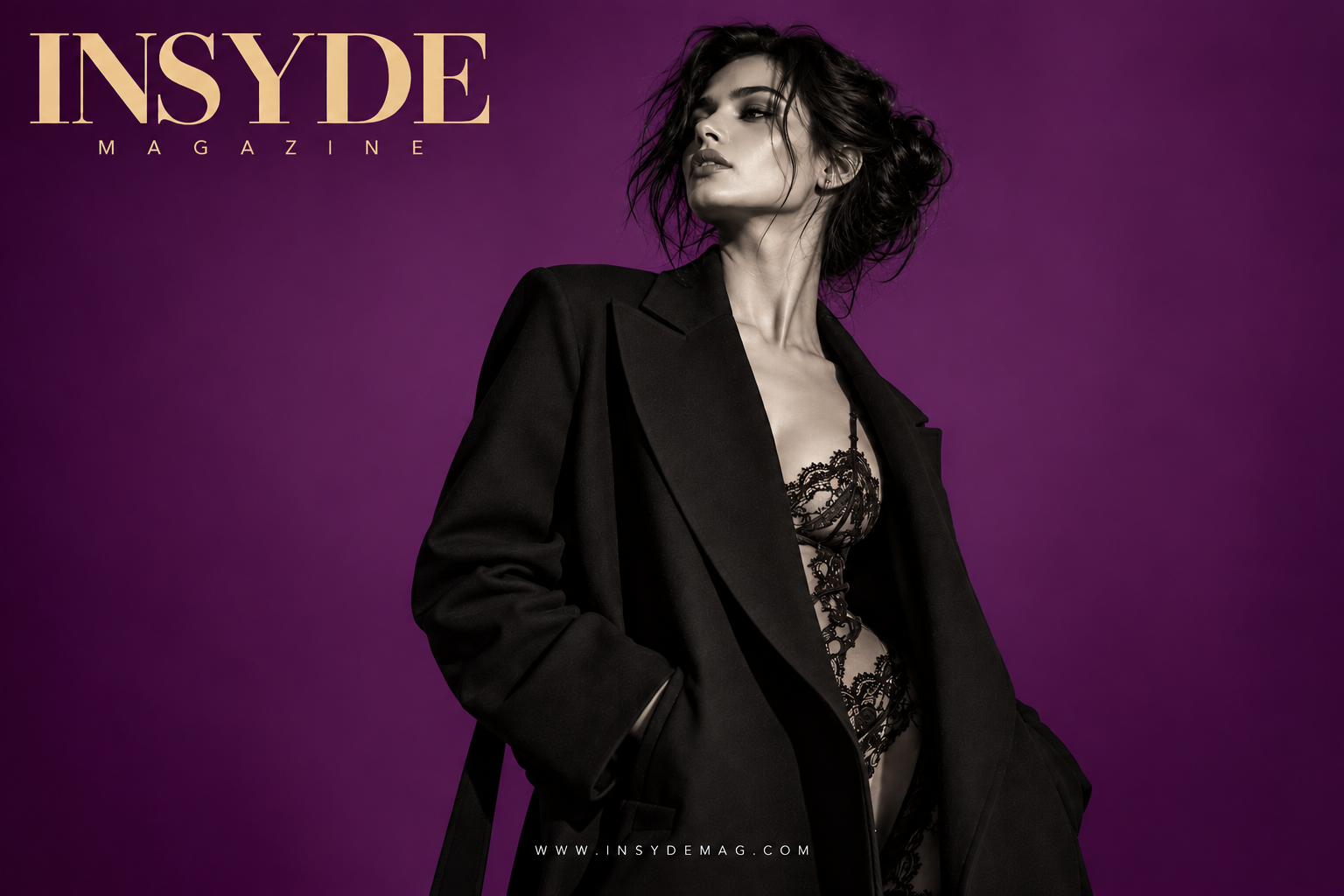
8 Luxury Lingerie Houses Defining Modern Intimacy in 2026
From historic Italian ateliers to experimental London studios and fashion-first New York labels, luxury lingerie is becoming less about what is hidden beneath clothing and more about craftsmanship, identity, design and the art of dressing.
For decades, lingerie occupied a strange position in fashion.
It was essential, but rarely treated as the main event. It shaped the silhouette, supported the body and completed the wardrobe — yet remained deliberately hidden beneath it.
That relationship is changing.
In 2026, lingerie has become increasingly visible in fashion, increasingly sophisticated in construction and increasingly connected to the wider luxury conversation. Lace, corsetry, structured bras, bodysuits and lingerie-inspired silhouettes are moving between the bedroom, the wardrobe and the runway.
At Paris Fashion Week in September 2026, Chloé’s Spring/Summer 2027 collection incorporated lingerie-inspired harnesses and metallic bust straps alongside lace, tailoring and romantic silhouettes. Dior’s Spring 2027 presentation also played with exposed bras and intimate-wear references. (AP News)
The message is difficult to miss.
Lingerie is no longer simply underneath fashion. It is becoming part of fashion’s language.
And behind that shift is a luxury industry with serious commercial momentum.
One 2026 industry estimate values the global luxury lingerie market at approximately US$16.2 billion, forecasting it to reach US$34.1 billion by 2035. Another research firm estimates the 2026 market at approximately US$15.1 billion. Because these reports use different definitions and methodologies, the individual figures should not be treated as a single definitive market size. What they consistently indicate, however, is a category growing at roughly high-single-digit rates. (Business Research Insights)
The wider lingerie market is considerably larger. IMARC estimates the global lingerie market at US$95.2 billion in 2025, with Asia-Pacific accounting for more than 40% of the market, and projects the global market to reach US$154.1 billion by 2034. (IMARC Group)
India is part of that story.
The country’s premium lingerie market was estimated at US$1.9 billion in 2025, according to IMARC, with a projected value of US$4.3 billion by 2034 and a forecast CAGR of 9.5% between 2026 and 2034. The report points to rising disposable incomes, increasing fashion consciousness, e-commerce, DTC brands, premium materials, customization and changing consumer preferences as important growth drivers. (IMARC Group)
For a new generation of luxury consumers, therefore, lingerie is becoming much more than a functional purchase.
It is becoming a fashion decision.
And these eight houses demonstrate the different ways luxury can be built around the body.
01 — LA PERLA
The Italian Legacy
Few names carry the historical weight of luxury lingerie quite like La Perla.
The story began in 1954, when Ada Masotti established a corsetry atelier in Bologna, a city with a long tradition of textile and silk production. Her early work treated corsetry as an Italian craft rather than simply an item of underwear. (La Perla Atelier)
That distinction became important.
Over the decades, La Perla helped push lingerie beyond functionality and toward fashion, introducing colour, silk, more relaxed silhouettes and increasingly sophisticated forms of presentation.
By the 1990s, the house was explicitly exploring the relationship between lingerie and outerwear, styling intimate pieces alongside shoes, jewellery and jackets. La Perla’s own historical account describes this period as one in which the boundary between public and private began to blur. (La Perla Atelier)
That evolution is particularly relevant today.
Luxury lingerie is no longer defined simply by whether a garment is expensive. Its value is increasingly connected to heritage, construction, material and the cultural history behind it.
La Perla represents one of the earliest versions of that equation.
INSYDE VIEW:
Luxury lingerie begins with craftsmanship — and La Perla helped make that craftsmanship visible.
02 — AGENT PROVOCATEUR
Luxury With an Attitude
La Perla built luxury around Italian craftsmanship.
Agent Provocateur built it around attitude.
Founded in London’s Soho in 1994, the house deliberately challenged the restrained conventions surrounding lingerie. The brand describes its origins as a moment when it sought to subvert established ideas around intimate apparel through provocative design, colourful collections and irreverent storytelling. (Agent Provocateur)
That philosophy remains central to the house.
Agent Provocateur combines elaborate construction with exclusive fabrics, embellishment and distinctive motifs, while its boutiques and storytelling position lingerie somewhere between fashion, fantasy and performance. (Agent Provocateur)
British Vogue’s 2026 lingerie guide continues to place the house firmly within the luxury end of the category, highlighting its corsetry, garters, balconette bras and elaborate lace designs. (British Vogue)
The important part is not simply that Agent Provocateur is provocative.
It is that the brand made provocation itself part of the luxury proposition.
In a market where many brands compete on minimalism, comfort or technical innovation, Agent Provocateur continues to operate through personality.
INSYDE VIEW:
Some luxury brands sell discretion. Agent Provocateur sells presence.
03 — BORDELLE
When Lingerie Becomes Architecture
Bordelle takes a very different approach.
Founded in London in 2009, the brand developed an aesthetic built around structure, geometry and adjustable construction. Its signature pieces combine customized satin elastic, luxury fabrics and 24-karat-gold-plated hardware. (Bordelle)
The result is instantly recognizable.
Rather than simply decorating the body, Bordelle creates a framework around it.
The brand’s designs are developed in London and handmade by teams in London and at its production facility in Cluj, Romania. It works with European suppliers for specialist materials including embroidered tulle, bespoke elastics and gold-plated hardware. (Bordelle)
Bordelle also occupies an unusual position within retail.
The brand says it is stocked alongside ready-to-wear labels at selected department stores, concept stores and specialist boutiques in more than 25 countries. (Bordelle)
That matters because it reflects one of the biggest developments in contemporary lingerie:
the category is increasingly being treated as fashion.
A Bordelle piece doesn’t necessarily need to disappear beneath a dress.
It can become the dress.
It can become the silhouette.
It can become the statement.
INSYDE VIEW:
Bordelle turns the architecture of the body into the architecture of the garment.
04 — FLEUR DU MAL
New York’s Fashion-First Revolution
Luxury lingerie doesn’t have to come from a century-old European atelier.
Fleur du Mal represents the new generation.
Founded by Jennifer Zuccarini in 2012, the New York label was built around the idea that lingerie should operate as fashion rather than remain confined to the bedroom. The brand describes its philosophy through three ideas: fashion first, designed to be seen, and delicate with edge. (Fleur du Mal)
That positioning is important.
Fleur du Mal works across lingerie, bodysuits, slip dresses, ready-to-wear and lingerie-inspired pieces. Its materials include silk, organic cotton and Leavers lace, while its designs are deliberately intended to move between private and public dressing. (Fleur du Mal)
British Vogue’s 2026 lingerie guide similarly highlights Fleur du Mal for its contemporary luxury bras and use of French Leavers lace. (British Vogue)
The brand represents a broader shift in consumer behaviour.
Today’s luxury customer does not necessarily divide a wardrobe into rigid categories.
A bodysuit can be lingerie.
A bodysuit can also be eveningwear.
A slip can be sleepwear.
A lace bra can sit beneath a tailored jacket.
The boundaries are becoming deliberately blurred.
INSYDE VIEW:
The modern luxury wardrobe doesn’t always distinguish between what is worn underneath and what is meant to be seen.
05 — CARINE GILSON
Where Lingerie Meets Couture
Some houses make lingerie.
Carine Gilson makes couture lingerie.
The designer’s story began in the 1990s after she discovered a Brussels atelier specializing in fine underslips. She subsequently established her own couture lingerie line, building the house around craftsmanship and handwork. (Carine Gilson)
The atelier is the heart of the brand.
Carine Gilson states that processes including cutting, pleating, bias work and the inlaying of Chantilly lace are performed by hand. The house deliberately manufactures limited quantities because of the specialist nature of the work. (Carine Gilson)
This is where the word luxury becomes meaningful.
Luxury is not simply a higher price.
It can be the time required to produce something.
The skill required to produce it.
The rarity of the technique.
The quality of the material.
And the number of hands involved before a finished garment reaches its owner.
Carine Gilson embodies that philosophy almost literally.
The result is lingerie that sits closer to the world of couture than conventional intimate apparel.
INSYDE VIEW:
When the hand of the artisan becomes visible in the garment, lingerie enters the territory of couture.
06 — I.D. SARRIERI
The Couture Lingerie Proposition
Romania has developed a distinctive place within Europe’s luxury lingerie landscape, and I.D. Sarrieri represents one of its most recognizable luxury propositions.
Established at the beginning of the 21st century, the house built its identity around glamour, craftsmanship and a deliberate return to highly feminine design. (I.D. Sarrieri)
Chantilly lace is central to its aesthetic, while collections incorporate details such as embroidery, crystals and elaborate bustier construction. (I.D. Sarrieri)
But the most interesting aspect of I.D. Sarrieri is its approach to visibility.
The house explicitly designs pieces intended to be seen — lace under a crisp white shirt, a chemise styled for evening or a corset-inspired bodice paired with tailoring. (I.D. Sarrieri)
Its current collections also demonstrate the price architecture of the luxury category. Selected bustiers on the brand’s US site are listed at roughly US$400–US$1,000, illustrating how couture-inspired construction can move intimate apparel firmly into luxury-fashion pricing. (I.D. Sarrieri)
The proposition is straightforward:
Lingerie does not have to wait for the clothes to come off.
It can be part of the clothes.
INSYDE VIEW:
The future of lingerie may not be about hiding it better — but styling it better.
07 — FLEUR OF ENGLAND
The Luxury of Materials
Fleur of England represents a quieter interpretation of luxury.
There is less emphasis on shock.
More emphasis on touch.
The British house uses French lace, silk and gold-plated hardware across its collections, with production carried out in Europe. Current pieces include French lace paired with silk satin and 24-karat-gold-plated hardware. (Fleur of England)
The distinction is subtle but important.
Two garments can both be called lace lingerie.
They can still be completely different objects.
The provenance of the lace, the weave, the softness, the finishing, the way it is cut and how it interacts with the body all affect the final garment.
Fleur of England places those details at the centre of its proposition.
It is luxury designed to be felt before it is noticed.
INSYDE VIEW:
Sometimes the most luxurious detail is the one you feel before you see it.
08 — KIKI DE MONTPARNASSE
When Intimacy Becomes Luxury
Kiki de Montparnasse approaches luxury lingerie from a different direction altogether.
Rather than treating lingerie purely as fashion, the brand has built a broader world around intimacy, sensuality and personal experience.
Its proposition extends beyond lingerie into ready-to-wear, accessories and sexual wellness, turning the brand into a lifestyle universe rather than simply an intimate-apparel label.
That matters because luxury is increasingly becoming experiential.
A handbag can represent status.
A watch can represent heritage.
A private club can represent access.
Lingerie can represent something more personal:
the experience of oneself.
That creates an unusual luxury proposition.
Most luxury products are designed to be seen.
Lingerie can be valuable precisely because it does not have to be.
It can exist entirely for the person wearing it.
In a culture where almost everything is photographed, posted and displayed, that privacy becomes increasingly interesting.
INSYDE VIEW:
The ultimate luxury may be the thing nobody else knows you’re wearing.
THE NEW LUXURY OF INTIMACY
Why the Category Is Growing
The rise of luxury lingerie is part of a larger transformation in the luxury consumer.
For years, luxury was heavily associated with visible symbols of wealth: handbags, watches, automobiles, jewellery and logos.
That definition is expanding.
Luxury today can mean craftsmanship.
It can mean personalization.
It can mean scarcity.
It can mean sustainability.
It can mean an exceptional experience.
And sometimes, it can mean buying something beautiful that nobody else will ever see.
That is particularly relevant to younger consumers.
British Vogue’s 2026 lingerie coverage reflects a market that now spans functional underwear, everyday essentials, sustainable labels and luxury houses — demonstrating how fragmented the modern lingerie landscape has become. (British Vogue)
The premium customer is no longer necessarily buying lingerie for one reason.
Comfort matters.
Fit matters.
Design matters.
Materials matter.
Identity matters.
And increasingly, the distinction between lingerie and fashion matters less.
THE BUSINESS OF THE PRIVATE WARDROBE
The numbers suggest that this is not merely a fashion moment.
It is a business opportunity.
Global estimates for the luxury lingerie market vary by research methodology, but current 2026 studies consistently place the category in the mid-teens of billions of US dollars, with projected growth toward roughly US$27–34 billion by the early-to-mid 2030s. (Business Research Insights)
The wider lingerie industry is substantially larger, with IMARC estimating the global market at US$95.2 billion in 2025 and projecting US$154.1 billion by 2034. Asia-Pacific represented more than 40% of the global market in 2025. (IMARC Group)
That Asian concentration matters for brands looking beyond Europe and North America.
India is particularly interesting.
The country’s overall lingerie market was estimated at US$6.4 billion in 2026, according to IMARC, with a forecast of US$12 billion by 2034. The economy segment remains dominant, accounting for 69% of the market in 2025, but IMARC identifies premiumization as an important emerging trend as consumers increasingly seek better materials, branded products, comfort and design differentiation. (IMARC Group)
That creates an important distinction.
The future of Indian luxury lingerie is unlikely to be about replacing the mass market.
It is about creating a premium layer above it.
As India’s urban consumer becomes more exposed to international fashion, global luxury and DTC commerce, the intimate wardrobe is becoming another space in which consumers can express taste.
For global lingerie houses, that makes India more than simply another emerging retail market.
It is a developing luxury audience.
WHAT ACTUALLY MAKES LINGERIE LUXURY?
A high price does not automatically make a garment luxurious.
The strongest luxury lingerie houses tend to build their proposition around several elements.
MATERIAL
Fine silk, specialist lace, embroidered tulle and high-quality technical fabrics can dramatically change the experience of a garment.
CRAFTSMANSHIP
Hand-cut lace, hand finishing, specialist construction and atelier production introduce skills and time that cannot easily be replicated through mass manufacturing.
FIT
Lingerie sits directly against the body.
That makes precision particularly important.
A beautiful garment that doesn’t fit properly is not a successful luxury product.
DESIGN LANGUAGE
The strongest houses are recognizable without necessarily relying on logos.
La Perla has its Italian heritage.
Agent Provocateur has provocation.
Bordelle has architecture.
Fleur du Mal has fashion crossover.
Carine Gilson has couture craftsmanship.
I.D. Sarrieri has glamour and elaborate lacework.
The identity becomes part of the product.
SCARCITY
Limited production can make craftsmanship economically viable while also creating exclusivity.
EXPERIENCE
Packaging, boutiques, private appointments, fitting services and storytelling all contribute to the modern luxury proposition.
CULTURAL RELEVANCE
Perhaps the most important element is meaning.
A garment can be expensive.
But without a point of view, it is simply expensive underwear.
FROM BEDROOM TO RUNWAY
The most significant change may ultimately be cultural rather than commercial.
Lingerie is escaping the private wardrobe.
It is being layered beneath tailoring.
Worn beneath sheer fabrics.
Built into bodysuits.
Transformed into corsetry.
Reinterpreted through metallic structures.
And increasingly incorporated directly into ready-to-wear.
Chloé’s Spring/Summer 2027 collection is one recent example. Designer Chemena Kamali incorporated romantic harnesses and metallic bust straps into a collection that otherwise balanced lace, tailoring and substantial outerwear. (AP News)
Dior’s Spring 2027 show similarly brought exposed bras and intimate-wear references into its runway vocabulary. (AP News)
This is not necessarily the death of traditional lingerie.
It is something more interesting.
The category is expanding.
The garment that was once hidden can now be styled.
The garment that was once private can become fashion.
And the garment that was once purely functional can become an object of design.
THE NEXT ERA OF LUXURY LINGERIE
The future of luxury lingerie will probably not belong to one aesthetic.
There will be heritage houses protecting traditional techniques.
Independent ateliers producing extremely limited quantities.
Fashion-led labels turning intimate pieces into ready-to-wear.
Experimental designers building new forms around the body.
Digitally native brands creating communities around fit and identity.
And established luxury houses continuing to borrow lingerie codes for the runway.
The category is becoming more diverse because the meaning of luxury itself is becoming more diverse.
For one consumer, luxury may mean an Italian silk corset.
For another, it may be an architectural Bordelle harness.
For another, a hand-finished Carine Gilson slip.
For someone else, it may simply be a perfectly fitted garment made from exceptional fabric.
There is no single definition.
And perhaps that is exactly the point.
THE INSYDE TAKE
Luxury lingerie is entering a new era.
The old definition was straightforward:
Beautiful underwear for private moments.
The new definition is considerably broader.
It is craftsmanship against the skin.
It is fashion that can be hidden or revealed.
It is heritage, material, design and identity compressed into a garment that may occupy only a fraction of the wardrobe.
And as luxury moves beyond visible status toward more personal forms of expression, lingerie has the potential to become one of fashion’s most intimate luxury categories.
Because the most interesting luxury isn’t always the loudest.
Sometimes it isn’t displayed.
Sometimes it isn’t photographed.
Sometimes nobody else even knows it exists.
Sometimes luxury is simply knowing what you’re wearing.
INSYDE EDITORIAL NOTE
This editorial is intentionally not a ranking. The eight houses represent different interpretations of luxury lingerie — heritage, provocation, architecture, fashion crossover, couture craftsmanship, glamour, material excellence and intimacy.
Research and market data reviewed: 1 October 2026.