Category: The Future

Ideas and questions about where fashion, luxury, culture, technology and society are heading

  • THE BAG THAT MONEY CAN’T BUY

    THE BAG THAT MONEY CAN’T BUY

    How Hermès turned scarcity, craftsmanship and desire into one of luxury’s most powerful status symbols.

    There are handbags that cost hundreds.

    There are handbags that cost thousands.

    And then there is the Hermès Birkin — a handbag so deeply embedded in the language of luxury that its price is no longer the most interesting thing about it.

    The real question is much simpler:

    What happens when having the money still doesn’t guarantee that you can have the thing you want?

    That is where Hermès becomes fascinating.

    Because luxury has traditionally followed a straightforward formula:

    More money. Better things.

    Hermès built something more complicated:

    More money gives you access to luxury. But it doesn’t necessarily give you access to everything.

    And that distinction transformed a handbag into something far bigger than a fashion accessory.

    The Birkin became a symbol of wealth, yes.

    But also of taste.

    Scarcity.

    Craftsmanship.

    Access.

    And, perhaps most importantly, desire.

    Because when something is difficult to obtain, the price is only the beginning of the story.


    THE BAG WAS NEVER DESIGNED TO BECOME A STATUS SYMBOL

    The origin of the Birkin is almost too ordinary for the mythology that eventually surrounded it.

    In 1984, British actress and singer Jane Birkin found herself seated next to Jean-Louis Dumas, then chairman and chief executive of Hermès, on a flight from Paris to London.

    Birkin explained that she couldn’t find a leather bag that worked for her as an everyday carryall.

    Dumas listened.

    The idea evolved into a new handbag.

    The Birkin was born.

    There was no grand plan to create one of the world’s most recognisable symbols of extreme wealth.

    It began with functionality.

    Make it practical.

    Make it beautiful.

    Make it exceptionally well.

    The mythology came later.

    And that may be one of the most important details in the entire story.

    Because Hermès didn’t begin by manufacturing status.

    It manufactured quality.

    Status followed.


    HERMÈS WAS BUILDING LUXURY LONG BEFORE THE BIRKIN

    To understand why the Birkin became so powerful, you have to go back much further.

    Hermès was founded in Paris in 1837 by Thierry Hermès, originally as a workshop producing harnesses and other equestrian equipment.

    Its early clientele included members of Europe’s wealthy and aristocratic society.

    As transportation changed, Hermès changed with it.

    The company moved into bags, luggage, silk, fashion, jewellery and other categories while maintaining a central commitment to craftsmanship.

    That history matters.

    Because the Birkin didn’t create Hermès’ luxury reputation.

    Hermès’ reputation created the environment in which the Birkin could become legendary.

    The bag arrived with decades of credibility already behind the name.


    THE REAL LUXURY IS IN THE MAKING

    A Birkin is not valuable simply because it carries the Hermès name.

    The construction itself is part of the story.

    Hermès leather goods are made by highly trained artisans, with the house emphasising manual craftsmanship and individual attention throughout the production process. The company says leather artisans undergo extensive training before becoming fully qualified.

    The leather is selected carefully.

    Pieces are cut and prepared.

    Edges are finished.

    Hardware is fitted.

    Stitching is performed by hand.

    And the artisan’s work becomes part of the character of the finished bag.

    This is important because modern luxury often creates the illusion of infinite choice.

    Hermès does something different.

    It reminds the customer that human time is finite.

    A skilled artisan can only make so many pieces.

    A particular material can only exist in a certain quantity.

    A particular finish requires a certain amount of attention.

    And suddenly, scarcity isn’t just a marketing strategy.

    It is built into the production process.


    THE DIFFERENCE BETWEEN EXPENSIVE AND EXCLUSIVE

    This is where the Birkin story becomes particularly interesting.

    An expensive product asks:

    Can you afford it?

    An exclusive product asks:

    Can you get it?

    Those are completely different questions.

    A wealthy customer can have the financial means to purchase a Birkin and still not be able to walk into a boutique and simply select any model, colour or leather they want.

    Availability varies.

    Relationships matter.

    Specific pieces are limited.

    And the exact bag someone wants may not be waiting behind the counter.

    That creates a psychological effect that money cannot completely eliminate:

    anticipation.

    You want it.

    You search for it.

    You wait.

    And the longer the desire survives, the more emotionally valuable the eventual acquisition can become.


    WHEN “NO” BECOMES PART OF THE LUXURY

    Modern commerce has been built around convenience.

    See it.

    Click it.

    Buy it.

    Tomorrow, it’s at your door.

    Luxury operates differently.

    At its highest level, friction can become part of the experience.

    The wait.

    The discovery.

    The relationship.

    The invitation.

    The moment when the right piece finally appears.

    That is a radical idea in a world obsessed with instant gratification.

    Hermès doesn’t need to make the Birkin feel like something everyone can have immediately.

    In fact, the opposite can make the product more desirable.

    The less ordinary the acquisition feels, the less ordinary the object can feel.

    The purchase becomes an event.


    THE BOUTIQUE ISN’T JUST A STORE

    This is another important distinction.

    For most consumer products, the store exists to facilitate the transaction.

    In luxury, the environment is part of the product.

    The boutique.

    The service.

    The packaging.

    The conversation.

    The anticipation.

    The feeling of discovering something rather than simply ordering it.

    These details matter because luxury is fundamentally emotional.

    A customer isn’t only purchasing leather and hardware.

    They’re purchasing an experience around the object.

    And Hermès has spent generations protecting that experience.


    THEN THE BIRKIN BECAME A CULTURAL SYMBOL

    The bag’s transformation accelerated as it became associated with celebrities, socialites, entrepreneurs and some of the world’s wealthiest consumers.

    Its shape became recognisable.

    Its hardware became recognisable.

    Its name became recognisable.

    The Birkin became something you could identify without seeing the logo.

    That is powerful branding.

    Hermès didn’t need to cover the bag in enormous symbols.

    The silhouette did much of the work.

    And this created an interesting form of status:

    the people who knew, knew.

    The bag could be visible without being loud.

    It could communicate wealth without announcing a price.

    It could sit quietly on an arm while carrying an enormous amount of cultural meaning.


    WHY THE BIRKIN DOESN’T NEED A GIANT LOGO

    Modern luxury has spent decades teaching consumers to recognise logos.

    Hermès took a different route.

    The Birkin’s identity comes from its proportions, construction, hardware, craftsmanship and association with the house.

    That makes the bag part of a more sophisticated form of luxury communication.

    A large logo says:

    Look at the brand.

    A recognisable object can say:

    If you know, you know.

    And that distinction has become increasingly relevant as luxury consumers become more interested in subtlety, provenance and craftsmanship.

    The most sophisticated status signal isn’t necessarily the loudest one.

    Sometimes it is the thing only a certain audience recognises.


    THEN THE SECONDARY MARKET CHANGED THE GAME

    The Birkin became even more fascinating when it entered the world of resale and collecting.

    Certain colours.

    Certain leathers.

    Certain sizes.

    Certain years.

    Exceptional condition.

    Rare examples.

    All can influence desirability in the secondary market.

    Some Birkins have sold for extraordinary sums at auction, particularly rare or historically significant examples.

    But there is an important distinction:

    A Birkin is not automatically an investment.

    The resale market is influenced by condition, provenance, rarity, demand and market conditions.

    The existence of a strong secondary market doesn’t guarantee appreciation.

    But it does demonstrate something important.

    The Birkin can exist simultaneously as:

    a handbag,

    a collectible,

    a status symbol,

    and a cultural asset.

    That is an extraordinary amount of meaning for an object originally designed to carry personal belongings.


    THE PSYCHOLOGY OF SCARCITY

    Why does scarcity work?

    Because humans don’t always value things according to their practical usefulness.

    When something is limited, difficult to obtain or perceived as disappearing, its psychological value can increase.

    Luxury brands have understood this for generations.

    But scarcity only works when the underlying product deserves desire.

    Make something rare without making it desirable and you have nothing.

    Hermès combined the two.

    Exceptional craftsmanship created the desire.

    Limited availability intensified it.

    And the result became a self-reinforcing cycle.

    Desire creates demand.

    Demand reinforces scarcity.

    Scarcity increases desirability.

    And the cycle continues.


    THE MOST POWERFUL WORD IN LUXURY

    No.

    No mass-market production.

    No constant discounting.

    No desperate promotions.

    No need to make every product available to everyone immediately.

    That ability to say no is one of the most powerful tools a luxury brand can possess.

    Because the moment a luxury product becomes permanently available at a discount, something changes.

    The consumer stops asking:

    “Can I get it?”

    and starts asking:

    “Should I buy it?”

    Hermès has spent decades making the first question more important.

    And that is incredibly powerful.


    WHEN THE BAG BECAME CULTURAL CURRENCY

    Eventually, owning a Birkin stopped being solely about owning an exceptional handbag.

    It became a form of cultural knowledge.

    You could recognise the bag.

    Understand the leather.

    Understand the construction.

    Understand why one version might attract more attention than another.

    Understand why rarity matters.

    That knowledge becomes part of the luxury experience.

    And suddenly, the Birkin communicates something beyond financial capability.

    It can communicate:

    I know this world.

    That’s cultural capital.

    And cultural capital is one of the most powerful currencies in luxury.


    HERMÈS DOESN’T NEED TO CHASE THE MOMENT

    Fashion is built around change.

    New season.

    New collection.

    New trend.

    New colour.

    New obsession.

    Luxury operates on a different clock.

    Hermès has the advantage of being able to build on heritage rather than constantly replacing it.

    The Birkin doesn’t need to become radically different every season.

    Its enduring appeal comes partly from consistency.

    The design can evolve.

    Materials can vary.

    Colours can change.

    But the underlying identity remains recognisable.

    That gives the brand something most fashion businesses desperately want:

    timelessness.


    THE BAG MONEY ALONE CAN’T GUARANTEE

    This is where the title becomes meaningful.

    The Bag That Money Can’t Buy.

    Of course money matters.

    A Birkin is a luxury purchase, and financial ability is an obvious part of accessing the category.

    But money isn’t the entire equation.

    There is availability.

    There is demand.

    There is craftsmanship.

    There is scarcity.

    There is knowledge.

    There is patience.

    There is the relationship with the house.

    And there is something even more important:

    desire.

    Because a luxury brand’s greatest achievement isn’t convincing you that you need its product.

    It’s convincing you that you want this particular product.

    Even when you could buy something else.


    WHEN THE WAIT BECOMES PART OF THE PRODUCT

    Think about the psychology.

    If something arrives tomorrow, you enjoy it tomorrow.

    If you’ve spent months wanting something, searching for it and imagining owning it, the moment you finally receive it carries something else:

    a story.

    The acquisition has emotional history.

    You remember the search.

    You remember the anticipation.

    You remember finally finding it.

    And that story becomes part of the object.

    This is one of luxury’s greatest tricks:

    the journey can become part of the value.


    THE BIRKIN ISN’T REALLY ABOUT THE BAG

    This is the point where the story becomes bigger than Hermès.

    The Birkin reveals something fundamental about modern luxury.

    People don’t simply buy objects.

    They buy:

    identity.

    belonging.

    recognition.

    craftsmanship.

    scarcity.

    emotion.

    And sometimes, they buy the feeling of possessing something that most people cannot simply obtain.

    That is why luxury cannot be measured purely by material cost.

    A handbag doesn’t become extraordinary because leather suddenly became priceless.

    It becomes extraordinary because people collectively decided that it means something.

    Hermès understood that better than most.


    WHAT HERMÈS REALLY SELLS

    It would be easy to say Hermès sells handbags.

    It doesn’t.

    Not entirely.

    Hermès sells craftsmanship.

    It sells heritage.

    It sells patience.

    It sells scarcity.

    It sells access.

    And, above everything else, it sells desire.

    The Birkin is simply one of the most successful containers for all of those ideas.

    And that’s why copying the shape isn’t enough.

    Another company can make a beautiful leather bag.

    Another company can use expensive hardware.

    Another company can create limited editions.

    But it cannot instantly manufacture decades of heritage.

    It cannot manufacture the artisans.

    It cannot manufacture the cultural mythology.

    And it cannot simply manufacture desire.

    That has to be earned.


    THE BAG THAT MONEY CAN’T BUY

    The Birkin became one of the world’s most powerful luxury symbols because Hermès understood a principle that many brands eventually forget:

    Luxury isn’t created by making something expensive.

    It’s created by making something desirable, distinctive and difficult to replace.

    The craftsmanship matters.

    The leather matters.

    The history matters.

    The scarcity matters.

    But the real magic happens when all of those things meet.

    Then a handbag becomes something else.

    A statement.

    A collectible.

    A cultural signal.

    A piece of personal identity.

    And perhaps that is the ultimate lesson of the Birkin.

    In a world where almost anything can be bought instantly, luxury has discovered a new form of power:

    making you wait for what you already have the money to buy.

    Because when money stops being the only barrier between you and the thing you want—

    desire becomes the real currency.

    And Hermès has spent generations becoming one of the world’s greatest masters of it.

    INSYDE — Beyond the Spotlight.
  • FROM KGF TO TOXIC

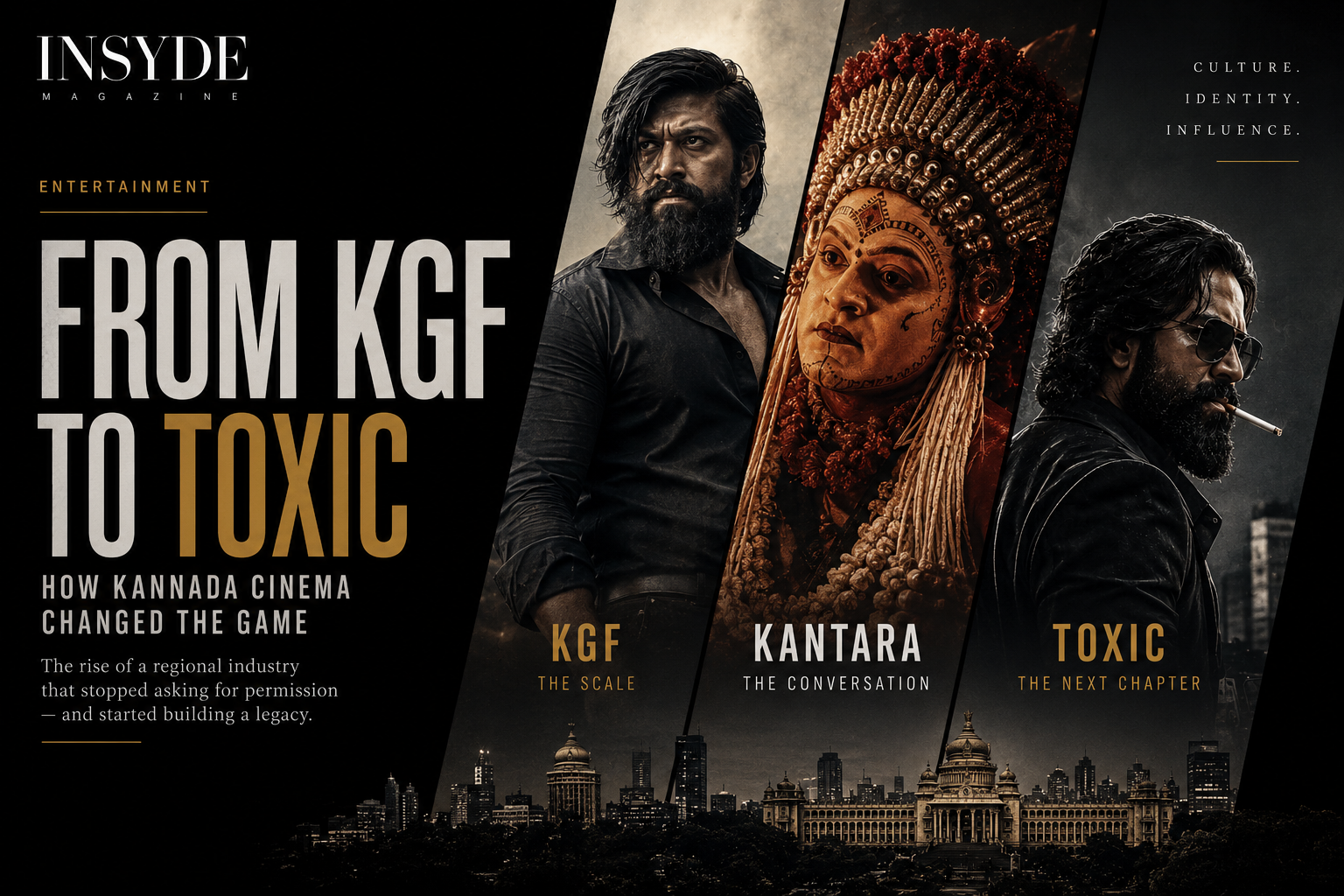
    FROM KGF TO TOXIC

    HOW KANNADA CINEMA CHANGED THE GAME

    The story of how Karnataka’s film industry stopped asking for a national audience — and started building one.

    For years, Indian cinema had an unspoken hierarchy.

    There was Bollywood.

    There were the major South Indian industries.

    And then there was Kannada cinema — an industry with its own stars, filmmakers, audiences and extraordinary creative history, but one that rarely received the same national attention.

    Then something changed.

    Not overnight.

    Not because one film suddenly transformed an entire industry.

    But because a generation of Kannada filmmakers began asking a different question:

    What if Kannada cinema didn’t have to look like anyone else’s cinema to be seen by everyone else?

    What if the language stayed?

    What if the stories stayed rooted?

    What if Karnataka itself became part of the spectacle?

    And what if the rest of India came to watch?

    That question helped create a new chapter.

    KGF changed the scale.

    Kantara changed the conversation.

    And now, with Toxic: A Fairy Tale for Grown-Ups, Kannada cinema is entering another fascinating phase — one where the ambition is no longer simply to make a successful Kannada film, but to create films capable of travelling across languages, markets and cultures.

    But the real story isn’t Toxic.

    It is the industry that made a film like Toxic possible.


    BEFORE THE PAN-INDIA ERA

    Kannada cinema did not suddenly arrive when KGF did.

    Long before Rocky entered the Kolar Gold Fields, Karnataka had a film culture with its own stars, writers, musicians, filmmakers and fiercely loyal audiences.

    The problem wasn’t a lack of cinema.

    It was the scale of visibility.

    A successful Kannada film could dominate Karnataka without necessarily becoming a national cultural event.

    That distinction matters.

    An industry can be commercially healthy within its home market and still remain relatively invisible outside it.

    For years, Kannada cinema operated within that contradiction.

    It had the talent.

    It had the audience.

    It had the stories.

    But the national conversation was often happening somewhere else.

    Then the economics of Indian cinema began changing.

    Streaming made regional films easier to discover.

    Social media allowed films and stars to travel before audiences ever entered theatres.

    Digital distribution reduced some of the barriers created by language.

    And filmmakers began realising that the word “regional” did not necessarily have to mean “limited.”


    THEN CAME KGF

    When KGF: Chapter 1 arrived in 2018, it did not feel like a conventional regional release.

    It felt bigger.

    Darker.

    More aggressive.

    More theatrical.

    More deliberately designed as an event.

    Yash wasn’t presented merely as another Kannada star.

    He was introduced to a much wider audience as a larger-than-life cinematic figure.

    The filmmaking was unapologetically grand.

    The world was stylised.

    The music was designed to travel.

    And the marketing understood something crucial:

    People don’t need to understand every cultural reference to understand ambition.

    KGF demonstrated that a Kannada-language production could be conceived, marketed and distributed as a major Indian theatrical product without abandoning its regional identity.

    Its sequel expanded that commercial scale dramatically.

    But the most important number wasn’t the box office.

    It was the number of people who suddenly began looking at Kannada cinema differently.

    The industry had demonstrated that its commercial ceiling did not necessarily end at Karnataka’s borders.

    And that changed expectations.

    For producers.

    For distributors.

    For actors.

    For filmmakers.

    And, perhaps most importantly, for audiences.


    THE REAL CHANGE WASN’T LANGUAGE

    This is where the phrase “pan-India” can become misleading.

    A film doesn’t become pan-India simply because it is dubbed into several languages.

    Distribution can put a movie in front of millions of people.

    It cannot make those people care.

    That requires something else.

    A character they connect with.

    A world they want to enter.

    A story that feels emotionally accessible.

    A visual language powerful enough to cross linguistic boundaries.

    That distinction has become particularly relevant to Kannada cinema’s current conversation.

    The industry’s own filmmakers and actors have increasingly emphasised that simply labelling a film “pan-India” isn’t enough. Connection, relatability and strong storytelling matter more than the label itself.

    That may be one of the most important lessons from Kannada cinema’s recent rise.

    Pan-India isn’t a language strategy.

    It’s a connection strategy.


    THEN KANTARA CHANGED THE CONVERSATION

    If KGF demonstrated that Kannada cinema could compete at scale, Kantara demonstrated something even more interesting.

    You didn’t necessarily have to make Karnataka less visible to make a film nationally successful.

    You could make the story more local.

    More rooted.

    More specific.

    And somehow, that specificity could make it more universal.

    That is an important shift in the psychology of Indian cinema.

    For years, there was an assumption that a film seeking national attention needed to become more accessible by becoming more generic.

    Kantara offered another possibility:

    What if authenticity itself was the attraction?

    Rishab Shetty’s film drew deeply from the cultural landscape of coastal Karnataka and turned local traditions, folklore and questions of land and identity into a cinematic language that travelled far beyond the state.

    The lesson wasn’t simply that regional stories could succeed.

    It was more powerful:

    Regional identity could become a competitive advantage.


    KARNATAKA STOPPED BEING THE BACKGROUND

    And this is where the transformation becomes bigger than movies.

    Look at what successful Kannada cinema has begun exporting.

    Not only actors.

    Not only films.

    But Karnataka itself.

    Its landscapes.

    Its mythology.

    Its music.

    Its language.

    Its architecture.

    Its visual identity.

    Its people.

    Cinema is one of the world’s most powerful cultural export machines because audiences don’t simply watch stories.

    They absorb worlds.

    A successful film can make someone curious about a place they’ve never visited.

    It can make an unfamiliar language sound interesting.

    It can turn an actor into a national face.

    It can make a local aesthetic aspirational.

    And that is where entertainment begins becoming culture.


    THE RISE OF THE KANNADA STAR

    The new generation of Kannada stars is operating in a very different environment.

    An actor is no longer defined only by the films they make.

    Their identity exists across:

    Cinema.

    Social media.

    Fashion.

    Brand partnerships.

    Interviews.

    Premieres.

    Music.

    Advertising.

    Fan communities.

    The star is now a media ecosystem.

    Yash is perhaps the clearest example of this transformation.

    After KGF, his identity expanded beyond Karnataka’s traditional star system.

    He became one of the faces through which audiences outside the state encountered Kannada cinema.

    And Toxic represents an interesting next step because its ambition is visibly larger in scale while remaining rooted in a Kannada production ecosystem.

    Its multilingual release and national marketing demonstrate how dramatically the commercial ambitions surrounding major Kannada productions have expanded.

    That would have been much harder to imagine in the same way a generation ago.


    BUT BIGGER DOESN’T ALWAYS MEAN BETTER

    This is where the conversation gets uncomfortable.

    The moment a regional industry becomes successful nationally, a new pressure appears.

    Scale.

    Bigger stars.

    Bigger budgets.

    Bigger sets.

    More languages.

    More screens.

    More expectations.

    More comparisons.

    Suddenly, every film risks being judged against the biggest success that came before it.

    And that can become dangerous.

    Because one of the things that made Kannada cinema interesting was its willingness to tell stories that didn’t feel manufactured for everyone.

    The industry now has to balance two competing ambitions:

    How do you become bigger without becoming less yourself?

    That may be Kannada cinema’s most important question over the next decade.


    TOXIC IS THE NEXT TEST

    Toxic arrives at exactly that intersection.

    It follows Yash’s KGF era and comes from director Geetu Mohandas, with an ensemble that includes major names from different parts of Indian cinema.

    Its scale, multilingual release strategy and expectations around Yash make it an important moment for the industry’s evolving business model.

    But its importance goes beyond whether it becomes a blockbuster.

    It represents a question.

    Can Kannada cinema continue expanding its ambition without losing the creative identity that made the industry worth watching in the first place?

    That is a much harder challenge than simply making a bigger movie.


    THE BUSINESS OF GOING PAN-INDIA

    There is another side to this transformation that audiences rarely see.

    Making a film for multiple markets changes the economics.

    Distribution becomes more complicated.

    Marketing becomes more expensive.

    Dubbing and localisation matter.

    Release strategies become more sophisticated.

    Star power becomes a financial asset.

    And suddenly, a film is no longer being designed only for the audience sitting in Bengaluru on Friday night.

    It is being designed for multiple markets simultaneously.

    That changes risk.

    It also changes opportunity.

    A successful Kannada film can potentially earn from audiences far beyond Karnataka.

    But a film designed for a much larger market also carries much larger expectations.

    Recent industry discussions have highlighted this tension: the success of KGF and Kantara has encouraged bigger pan-India ambitions, but there are also concerns that chasing the scale of past blockbusters can lead to excessive budgets and formulaic filmmaking.

    Pan-India is not just an artistic ambition.

    It’s a business model.

    And Kannada cinema is still learning how to operate inside it.


    THE FASHION OF A NEW INDUSTRY

    There is another element of this transformation that is easy to overlook:

    fashion.

    As Kannada stars become nationally visible, their public image becomes increasingly important.

    Film promotions aren’t simply about posters anymore.

    They are fashion moments.

    Red carpets become editorial moments.

    Press tours become visual campaigns.

    Celebrity styling becomes part of the marketing.

    And the actor’s appearance becomes another way of selling the world around the film.

    This matters because entertainment and luxury increasingly overlap.

    A successful film can create demand for a look.

    A celebrity can influence fashion.

    A designer can become part of a film’s cultural conversation.

    A star can become a brand ambassador.

    The movie becomes content.

    The actor becomes a personality.

    And the personality becomes a commercial ecosystem.

    That is modern entertainment.


    FROM BENGALURU TO THE WORLD

    There is something particularly fascinating about Karnataka’s cultural transformation.

    For decades, Bengaluru’s global identity was dominated by technology.

    Software.

    Startups.

    Engineering.

    Global companies.

    Innovation.

    Now another part of Karnataka is travelling with it:

    culture.

    And the two ecosystems are not necessarily as separate as they appear.

    A city that produces global technology companies also produces audiences with global cultural exposure.

    It produces entrepreneurs.

    Designers.

    Musicians.

    Creators.

    Filmmakers.

    And a new generation of consumers who move comfortably between international culture and local identity.

    That creates an unusually interesting environment for entertainment.

    The technology capital and the film industry are increasingly part of the same broader cultural economy.


    THE INDUSTRY IS GETTING BIGGER. BUT WHAT WILL IT BECOME?

    This is where the story stops being about KGF.

    And Kantara.

    And Toxic.

    Because individual films come and go.

    The bigger question is what kind of industry Kannada cinema wants to build.

    Does it want to compete purely on scale?

    Does it want to become another large commercial film industry?

    Does it want to preserve a stronger regional identity?

    Can it do both?

    Can a Kannada film become global without becoming culturally diluted?

    Can a filmmaker make an intensely local story and still find an audience in Tokyo, London, Dubai or Los Angeles?

    And perhaps most importantly:

    Can Kannada cinema build a global reputation that belongs to the industry itself, rather than being dependent on a handful of superstar films?

    That is the next frontier.


    KANNADA CINEMA DOESN’T NEED TO BECOME BOLLYWOOD

    This may be the biggest lesson of the last decade.

    Kannada cinema doesn’t need to imitate Bollywood.

    It doesn’t need to imitate Tamil cinema.

    It doesn’t need to imitate Telugu cinema.

    And it certainly doesn’t need to imitate Hollywood.

    Its greatest opportunity may be to become more unmistakably Kannada.

    Because the global audience doesn’t need another version of something it already knows.

    It needs something it hasn’t seen.

    That is the advantage of cultural specificity.

    The more confident an industry becomes in its own identity, the more interesting it can become to everyone else.


    FROM REGIONAL INDUSTRY TO CULTURAL EXPORT

    The transformation can now be seen in a simple sequence.

    KGF changed the scale.

    Kantara changed the conversation.

    A new generation of actors changed the faces.

    Streaming changed discovery.

    Social media changed fandom.

    Pan-India distribution changed the business.

    And now films like Toxic are testing the next stage.

    Not:

    Can Kannada cinema become successful outside Karnataka?

    That question has already been answered.

    The new question is:

    How far can it go without losing itself?

    Because the most exciting thing about Kannada cinema right now isn’t simply that the rest of India has started watching.

    It’s that Karnataka has started to understand the power of what it has been creating all along.

    Stories.

    Stars.

    Music.

    Style.

    Identity.

    Culture.

    And eventually, influence.


    KARNATAKA’S NEXT EXPORT

    For years, when the world thought about Karnataka, it often thought about technology.

    The code.

    The companies.

    The startups.

    The engineers.

    Now another export is gaining momentum.

    Culture.

    Kannada cinema doesn’t need permission to enter the national conversation anymore.

    It has already entered.

    The challenge now is far more ambitious.

    To build a cinematic identity strong enough that audiences don’t simply recognise a successful Kannada film when they see one.

    They recognise where it came from.

    They recognise the language.

    The visual language.

    The people.

    The stories.

    The feeling.

    And perhaps that is the real change.

    KGF didn’t just make Kannada cinema bigger.

    Kantara didn’t just make Karnataka visible.

    And Toxic isn’t simply another attempt to go bigger.

    Together, they represent an industry learning how to turn regional identity into cultural power.

    For years, Karnataka’s greatest global export may have been technology.

    But cinema is beginning to export something technology cannot:

    a way of seeing the world.

    And the next chapter of Kannada cinema may not be about proving that Karnataka belongs on the global stage.

    It may be about deciding what Karnataka wants the world to see when it gets there.

    INSYDE — Beyond the Spotlight.

  • Bengaluru’s New Luxury: How the City Learned to Spend Differently

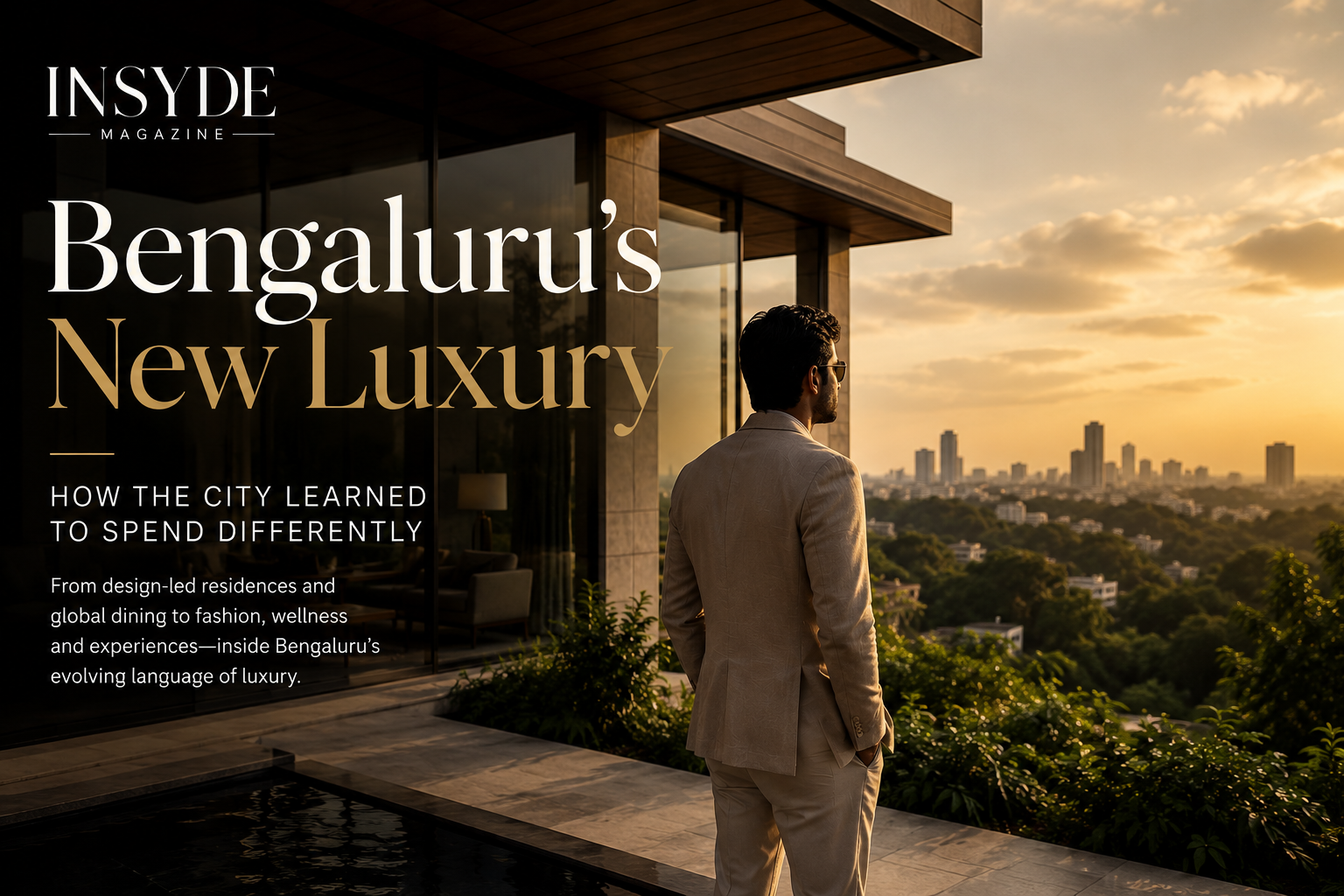
    Bengaluru’s New Luxury: How the City Learned to Spend Differently

    The city’s relationship with luxury is changing. Beyond logos and excess, Bengaluru is building a more considered culture of premium living—shaped by design, privacy, experience and a new generation of affluent consumers.

    There was a time when Bengaluru’s idea of success was relatively straightforward.

    A good career. A successful company. A home in a desirable neighbourhood. Perhaps a luxury car parked outside it.

    But the city has become wealthier, more global and considerably more sophisticated—and its relationship with luxury is evolving with it.

    Today, luxury in Bengaluru is increasingly less about simply owning something expensive and more about how one lives.

    A beautifully designed residence. A restaurant where the experience matters as much as the plate. A private club. A watch chosen for its craftsmanship rather than its recognisability. A fashion label that feels personal rather than obvious.

    It is a subtle shift, but an important one.

    Bengaluru is developing its own language of luxury.

    From Technology Wealth to Lifestyle Wealth

    For years, Bengaluru’s economic identity was dominated by technology.

    The city became synonymous with startups, software, multinational corporations and a generation of entrepreneurs who accumulated wealth differently from the traditional industrial and business families of older Indian metros.

    That wealth is now influencing the city’s consumption patterns.

    Bengaluru’s luxury market is no longer restricted to a small group of established families. Startup founders, CXOs, entrepreneurs, global Indians and high-net-worth professionals are becoming an increasingly visible part of the premium consumer landscape.

    The transformation is particularly clear in real estate.

    In FY2025, Bengaluru’s market for homes priced at ₹10 crore and above crossed ₹1,000 crore in annual sales for the first time. According to data from India Sotheby’s International Realty and CRE Matrix, 78 such homes were sold during the year, compared with 51 the previous year, while 42% of the city’s ₹10 crore-plus sales over the preceding four years occurred in FY2025 alone.

    The numbers are significant. But what matters more is what they reveal about the consumer behind them.

    The purchase of a luxury home is increasingly being framed around more than an address or an investment. Space, privacy, design, amenities and quality of life are becoming part of the proposition.

    Bengaluru is, in other words, becoming a city where wealth increasingly seeks quality of life.

    The New Luxury Is More Private

    Luxury has traditionally relied on visibility.

    The logo. The statement piece. The grand entrance.

    But contemporary luxury is moving in another direction.

    For an increasingly sophisticated consumer, exclusivity can mean something much quieter: an address with limited access, architecture that does not need to announce itself, personalised service, rare materials, thoughtful interiors or simply the freedom to enjoy something without an audience.

    This shift is particularly visible in Bengaluru’s premium residential market.

    The city’s high-end housing segment has seen strong price appreciation, while newer developments are increasingly competing through specifications, amenities, sustainability and future-ready design. In H1 2025, under-construction premium homes in Bengaluru recorded capital-value growth of roughly 32–35% year-on-year, according to Fortune India’s reporting on market data.

    The implication is clear.

    Luxury is becoming less about bigger and more about better.

    A City Learning to Buy Experiences

    The same shift extends beyond property.

    Luxury hospitality, fine dining, premium retail, wellness and entertainment are increasingly competing for the same consumer: someone willing to pay more when the experience feels distinctive.

    This matters because modern luxury is rarely confined to a product.

    A luxury restaurant is selling atmosphere, service, design and memory alongside food.

    A premium fashion boutique is selling curation and personal attention alongside clothing.

    A high-end residence is selling privacy, architecture, convenience and community alongside square footage.

    And a luxury hotel is selling a temporary version of a lifestyle.

    The wider Indian luxury market is moving in the same direction. Industry research has identified experiential categories—including fine dining, travel, hospitality and wellness—as increasingly important to affluent consumers, while luxury brands continue expanding their physical presence across India’s major cities.

    Bengaluru is particularly well placed for this evolution.

    It has the wealth, international exposure and young professional population to support it—and a consumer base increasingly comfortable moving between global and Indian ideas of luxury.

    The Bengaluru Consumer Doesn’t Need Everything to Look Expensive

    Perhaps the most interesting part of Bengaluru’s luxury story is that it does not necessarily resemble the traditional image of Indian affluence.

    Mumbai has its unmistakable glamour.

    Delhi has its grander, more visibly opulent side.

    Bengaluru has historically been more understated.

    The city’s relationship with fashion reflects this personality. A consumer might move between a technology office, a contemporary restaurant, an art space and a luxury retail environment in the same week.

    That creates a consumer who is not necessarily looking for one fixed definition of status.

    Instead, there is a growing appetite for curated luxury.

    A well-made garment.

    A beautifully designed home.

    A rare watch.

    A destination dinner.

    A thoughtfully planned weekend.

    A piece of art.

    A car that reflects taste rather than simply price.

    The common thread is discernment.

    And discernment is increasingly becoming one of luxury’s most valuable currencies.

    Bengaluru’s Luxury Map Is Expanding

    The geography of premium Bengaluru is changing too.

    Central Bengaluru remains synonymous with some of the city’s most established luxury addresses, while newer premium developments are expanding the map into emerging and well-connected micro-markets.

    That expansion is visible in the residential market. Bengaluru’s ₹10 crore-plus housing demand is no longer confined to a handful of traditional luxury neighbourhoods; the FY2025 data highlighted markets including Hebbal, Domlur, Sudhamnagar and Bommanahalli, with Hebbal accounting for 22% of luxury sales value among the high-end markets tracked in the report.

    This creates an interesting tension.

    Bengaluru’s old luxury is rooted in location, heritage and scarcity.

    Its new luxury is increasingly built around design, technology, convenience and experience.

    The future will likely be defined by the meeting point between the two.

    The Business of Becoming Luxury

    For brands, this shift matters.

    A growing luxury consumer base creates opportunities well beyond residential real estate. Fashion, jewellery, watches, automobiles, hospitality, restaurants, wellness, interiors and premium entertainment all compete for a consumer whose expectations are becoming more sophisticated.

    India’s luxury retail market is already expanding rapidly. Luxury and bridge-to-luxury brands accounted for a significant increase in retail leasing activity in 2025, reflecting an aggressive push by brands to capture India’s growing affluent consumer base.

    Bengaluru is part of that story—and increasingly, it is becoming an important market within it.

    The city’s retail environment is also evolving. In 2024, Bengaluru led retail space absorption among India’s top eight cities, while the wider retail landscape increasingly shifted towards destinations combining shopping, dining and entertainment.

    That convergence is important.

    The future of luxury may not be a store, a restaurant, a hotel or a residence in isolation.

    It may be the ecosystem around them.

    A neighbourhood where fashion, food, art, hospitality and design exist within the same cultural orbit.

    A place where consumers do not simply purchase products—they participate in a lifestyle.

    What Comes Next

    The most interesting question is no longer whether Bengaluru will become a luxury city.

    It already is.

    The more important question is what kind of luxury city it will become.

    Bengaluru has the economic foundation, entrepreneurial wealth and increasingly sophisticated consumer base to become one of India’s defining premium markets.

    But its opportunity lies in doing luxury differently.

    Not louder.

    Not necessarily bigger.

    Better.

    More personal. More experiential. More design-conscious. More connected to the way people actually want to live.

    For a city built on innovation, perhaps that is the most natural evolution of all.

    Bengaluru’s new luxury is not simply about having more.

    It is about having better—and knowing why it matters.

    — INSYDE Editorial

  • The Director Effect

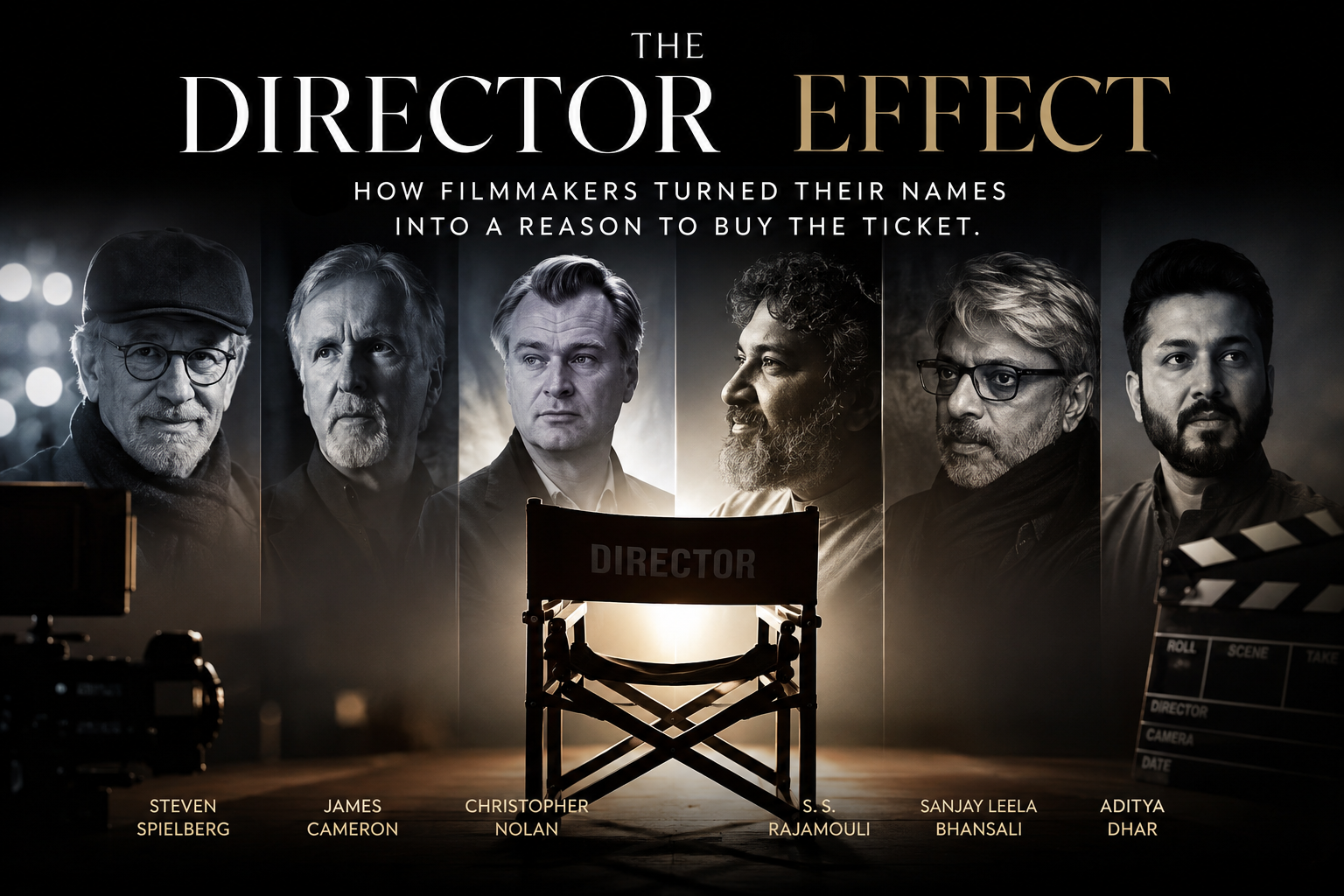
    The Director Effect

    How cinema’s most successful filmmakers turned their names into a reason to buy the ticket.

    There was a time when the name above a film’s title usually belonged to the star.

    The actor was the attraction. The face was the campaign. The opening weekend belonged to the celebrity whose name appeared largest on the poster.

    The director was often the person behind the curtain.

    That relationship has changed.

    Today, a select group of filmmakers have developed something remarkably powerful: a name that carries its own promise.

    A Nolan film suggests one kind of experience. A Spielberg film another. A Cameron film another. In India, Rajamouli, Bhansali and, increasingly, Aditya Dhar have begun building similarly recognisable creative identities.

    The audience may not know every detail of the story.

    They may not even need to.

    The filmmaker’s name already tells them something about what they are about to experience.

    Scale.

    Craftsmanship.

    Aesthetic.

    Ambition.

    Emotion.

    Spectacle.

    That is when a director stops being simply the person who made the film.

    The director becomes part of the reason to see it.


    When the Name Becomes the Attraction

    The interesting shift isn’t that directors have become famous.

    Great directors have always been famous.

    The shift is that their names increasingly influence the audience’s decision to watch the film itself.

    Christopher Nolan offers perhaps the clearest contemporary example.

    The Odyssey arrived in 2026 with an extraordinary cast including Matt Damon, Tom Holland, Anne Hathaway, Lupita Nyong’o and Zendaya. Yet the conversation surrounding the film was never simply about its cast.

    It was about a Christopher Nolan film.

    The film opened to $264.1 million worldwide and went on to cross $1.4 billion globally, demonstrating the extraordinary theatrical power that can now surround a filmmaker’s name.

    The significance goes beyond the numbers.

    Nolan has reached a point where audiences can recognise the experience before they know the story.

    That is brand recognition.


    Christopher Nolan — The Event Maker

    Nolan’s greatest achievement may not be any individual film.

    It may be that he has transformed the act of going to the cinema into part of his identity as a filmmaker.

    IMAX.

    Large-format film.

    Practical effects.

    Immersive sound.

    Complex narratives.

    Scale.

    Mystery.

    His films arrive with a sense of occasion.

    His relationship with IMAX has become particularly important to that identity. The Odyssey generated an extraordinary opening for the format, reinforcing the idea that Nolan’s films are designed not merely to be watched but to be experienced theatrically.

    Nolan therefore sells something more than a story.

    He sells the experience of cinema itself.

    That is why audiences can become interested in a Nolan film before they know exactly what happens in it.

    The name tells them enough.


    Steven Spielberg — The Pioneer

    Long before directors were discussed as personal brands, Steven Spielberg had already established the model.

    Jaws didn’t simply become a hit.

    It helped define the modern blockbuster.

    Spielberg’s name eventually came to represent something unusually broad:

    Adventure.

    Emotion.

    Spectacle.

    Humanity.

    Family.

    History.

    Science fiction.

    The remarkable part is the range.

    A Spielberg film doesn’t have to belong to one genre to feel like a Spielberg film.

    That is one of the defining characteristics of a mature creative brand.

    The identity survives the category.

    His name became associated with a particular standard of mainstream cinematic storytelling, helping establish the idea that the filmmaker could become part of the commercial identity of a movie.

    Decades later, the name still carries that accumulated trust.

    And that is perhaps the purest form of brand equity:

    recognition built over time.


    James Cameron — The Spectacle

    If Spielberg helped build the modern blockbuster, James Cameron pushed the idea of spectacle into technological territory.

    Titanic, Avatar and Avatar: The Way of Water place Cameron in an extraordinarily rare commercial category.

    But the more interesting part isn’t simply their box-office performance.

    It is the way Cameron approaches technology.

    He doesn’t merely use new tools.

    He frequently pushes the industry to develop them.

    For Avatar, his production team developed new approaches to performance capture, virtual environments and 3D filmmaking to realise the world he had imagined.

    The technology became part of the storytelling.

    That has become part of the Cameron promise.

    When a Cameron film arrives, audiences expect something that stretches the boundaries of what cinema can physically display.

    The technology becomes part of the spectacle.

    And the director becomes the guarantee.


    India’s Director-Brand Era

    The phenomenon isn’t uniquely American.

    In fact, some of the most interesting examples are emerging from India.

    Indian cinema has always had powerful stars, but a new generation of filmmakers has demonstrated that a director’s name can carry an increasingly independent form of commercial and cultural value.

    The difference is subtle.

    The audience isn’t simply asking who is acting in the film.

    It is beginning to ask:

    Who is creating this world?


    S. S. Rajamouli — The Global Phenomenon

    S. S. Rajamouli may be the clearest contemporary example of an Indian filmmaker whose name has become associated with a global theatrical proposition.

    Baahubali established the scale.

    RRR expanded the international audience.

    His cinema carries a recognisable promise:

    Mythology.

    Emotion.

    Heroism.

    Music.

    Large-scale action.

    World-building.

    Spectacle.

    But Rajamouli’s influence has increasingly travelled beyond the traditional boundaries of Indian cinema.

    His international reception and the global ambitions surrounding his upcoming projects demonstrate how far that directorial identity has travelled.

    The important shift is that Rajamouli is no longer simply exporting individual films.

    He is exporting a cinematic language.

    Audiences increasingly understand what a Rajamouli experience promises before the opening frame.

    That is a powerful form of authorship.


    Sanjay Leela Bhansali — The Aesthetic

    If Rajamouli’s name promises spectacle, Sanjay Leela Bhansali’s promises something more intimate:

    a world.

    Mention Bhansali and an audience can almost imagine the frame before seeing it.

    Architecture.

    Jewellery.

    Textiles.

    Music.

    Choreography.

    Romance.

    Colour.

    Light.

    Grandeur.

    His films have developed such a distinctive visual vocabulary that the director’s name itself functions almost like an aesthetic category.

    That is a particularly sophisticated form of brand recognition.

    A luxury house can communicate through a silhouette.

    An architect can communicate through proportion.

    A watchmaker can communicate through a movement.

    Bhansali communicates through the frame.

    His films feel authored down to the smallest detail.

    The sets, costumes, musical sequences and compositions all belong to the same universe.

    And that consistency creates expectation.

    The audience knows what kind of world it is entering.

    The question isn’t whether it will be beautiful.

    The question is how Bhansali will make beauty feel this time.


    Aditya Dhar — The New Force

    Aditya Dhar represents a different stage of director-brand power.

    His career is considerably younger than those of Spielberg, Cameron, Nolan, Rajamouli or Bhansali, but that is precisely what makes his rise interesting.

    Uri: The Surgical Strike established his directorial identity through political tension, action and a grounded sense of scale.

    The Dhurandhar films expanded that identity dramatically.

    The commercial response has demonstrated that Dhar is increasingly associated with a particular cinematic proposition: political narratives, high-stakes action, technical ambition and large-scale world-building.

    That matters because a director does not necessarily need decades to build a recognisable identity anymore.

    In an environment where audiences are exposed to more content than ever, a distinctive creative voice can become recognisable remarkably quickly.

    Dhar represents the newer model of the director as a commercial force.

    His story is still being written.

    But the audience is beginning to recognise the promise.


    The Director as a Luxury Brand

    This is where cinema begins to resemble luxury.

    A luxury house doesn’t simply sell an object.

    It sells an expectation.

    You don’t choose a watch only because it tells time.

    You choose its history, craftsmanship, design language and reputation.

    You don’t choose a fashion house merely because it produces clothing.

    You choose its interpretation of clothing.

    The same principle increasingly applies to filmmakers.

    A Nolan film promises one kind of experience.

    A Cameron film another.

    A Rajamouli film another.

    A Bhansali film another.

    The audience is not simply purchasing a ticket.

    It is purchasing an expectation of authorship.

    That is the real shift.


    From Star Power to Auteur Power

    For decades, cinema was built around the star system.

    The actor was the brand.

    The actor’s face sold the poster.

    The actor’s name drove the opening.

    That power hasn’t disappeared.

    But audiences now have another way of choosing.

    Franchises have multiplied.

    Streaming has expanded the amount of content available.

    The number of films competing for attention has become enormous.

    In that environment, a recognisable creative voice becomes valuable.

    A filmmaker with a distinct identity provides something a new concept otherwise lacks:

    trust.

    The audience may not know the entire story.

    But they know the person telling it.

    And sometimes that is enough.


    The New Currency Is Expectation

    Perhaps the most valuable thing a filmmaker can build is not fame.

    It is expectation.

    When a director reaches that level, a new project becomes news before the trailer arrives.

    A new Nolan project becomes an event.

    A new Cameron project becomes an event.

    A new Rajamouli project becomes an event.

    A new Bhansali project becomes an event.

    The filmmaker’s previous work has already performed part of the marketing.

    The reputation precedes the film.

    That is exactly how powerful luxury brands operate.

    The name creates anticipation before the object is experienced.


    The Risk of Becoming a Brand

    There is, however, a paradox.

    A brand creates expectations.

    And expectations can become a prison.

    The more recognisable a filmmaker becomes, the more audiences expect the next film to resemble the last.

    Nolan must remain Nolan.

    Bhansali must remain Bhansali.

    Rajamouli must remain Rajamouli.

    But if a signature becomes too predictable, it can become formula.

    The strongest creative brands therefore face the same challenge as the strongest luxury houses:

    How do you remain recognisable without becoming predictable?

    The answer is evolution.

    Preserve the philosophy.

    Change the expression.

    A signature should be a foundation, not a cage.


    The Future Belongs to the Signature

    The future of theatrical cinema will not belong entirely to actors.

    Nor will it belong exclusively to franchises.

    Both will remain powerful.

    But as audiences become more selective about which films deserve their time, money and attention, authorship becomes increasingly valuable.

    A filmmaker with a recognisable voice offers something a generic production cannot.

    A reason to anticipate.

    A reason to care.

    A reason to believe the experience will be different.

    That may explain why the modern director is becoming something more than the person who makes the film.

    The director is becoming part of the reason the film exists in the audience’s imagination before it arrives.


    The Director Is the Brand

    The most interesting evolution in cinema may therefore be happening above the title.

    Not in the cast list.

    Not in the franchise logo.

    But in the name of the person who imagined the world.

    Spielberg built the modern blockbuster.

    Cameron turned technology into spectacle.

    Nolan turned theatrical cinema into an event.

    Rajamouli transformed scale into a global Indian cinematic language.

    Bhansali turned visual beauty into authorship.

    Dhar is demonstrating how quickly a contemporary filmmaker can build a commercial identity around a distinct worldview.

    Six directors.

    Six different forms of influence.

    But one underlying shift.

    The audience isn’t always asking:

    “What is this film about?”

    Increasingly, it is asking:

    “Who made it?”

    And when the answer itself is enough to make someone buy a ticket, the filmmaker has crossed an important line.

    They are no longer simply making the brand.

    They have become the brand.

    INSYDE — Beyond the Spotlight.