Category: Indian Fashion

Designers, traditions and contemporary movements shaping the identity of Indian fashion.

  • The New Indian Wedding: When Luxury Becomes Personal

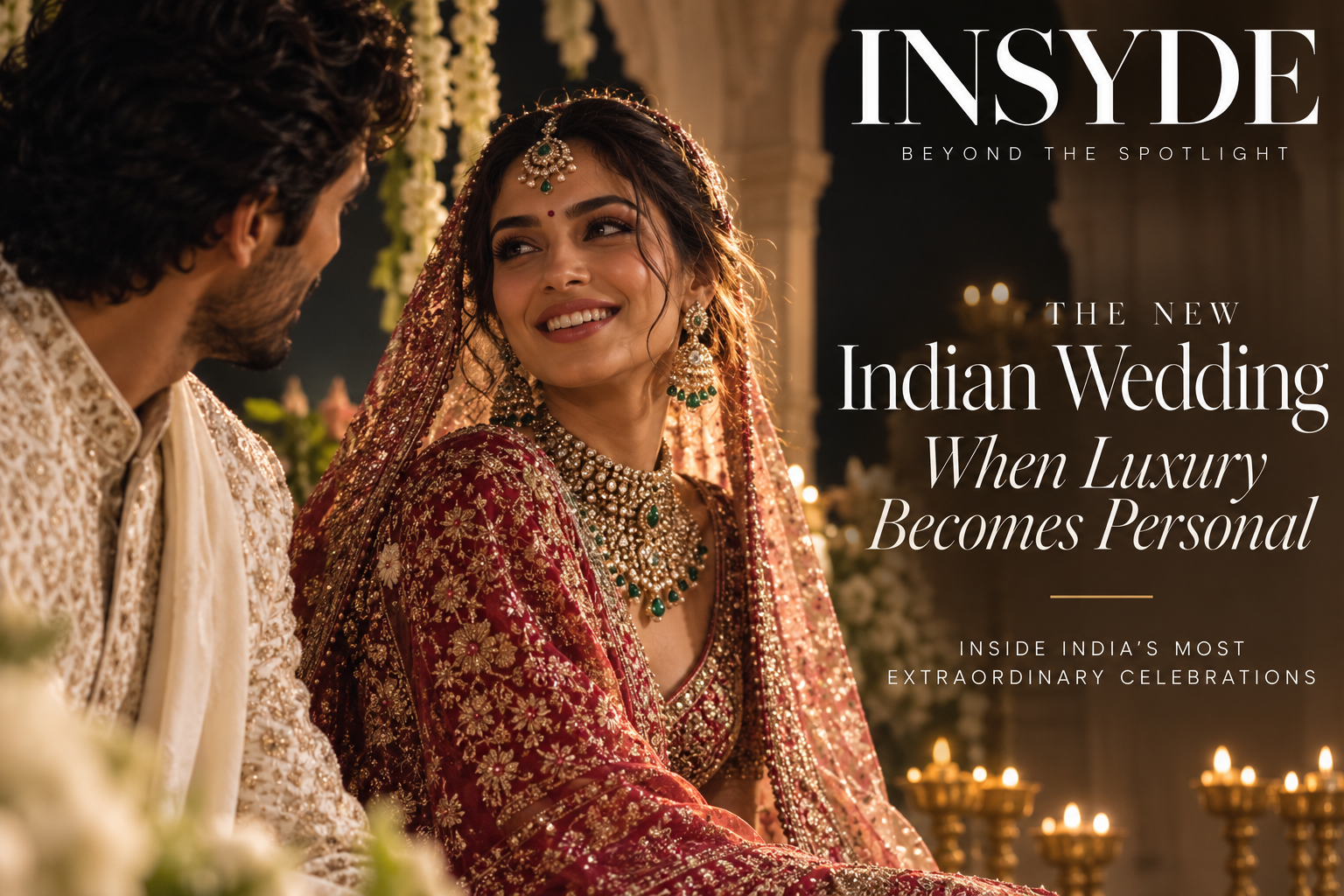
    The New Indian Wedding: When Luxury Becomes Personal

    India has never been short of spectacular weddings. But a new generation is changing what makes a celebration truly luxurious — moving beyond scale and spectacle towards personalisation, experience, craftsmanship and the art of making people feel part of something extraordinary.

    A luxury Indian wedding is no longer simply a celebration.

    For a few days, it can become an entire world.

    A palace becomes a private residence. A garden becomes a dining room. A designer creates clothing that exists for one person. A chef builds a menu around a family’s memories. An artist transforms a space overnight. Guests arrive not simply for a ceremony, but for an experience designed to stay with them long after the final event.

    India has always known how to celebrate.

    What is changing is what the celebration is trying to say.

    For generations, wedding luxury was often measured through scale: larger venues, longer guest lists, bigger décor and increasingly elaborate entertainment.

    Those things still have their place.

    But the most interesting luxury weddings are beginning to ask a different question:

    Does this wedding feel like us?

    That question is changing the Indian wedding — and turning it into one of the country’s most fascinating expressions of modern luxury.

    From Grand to Personal

    The idea that luxury has to mean more is beginning to feel outdated.

    More flowers.

    More guests.

    More entertainment.

    More spectacle.

    More everything.

    But a wedding can be extraordinarily expensive and still feel strangely impersonal.

    The new luxury is increasingly found in the details that could not have been copied from another celebration.

    A menu built around a couple’s favourite dishes.

    A wedding wardrobe designed around a personal story.

    A handwritten note waiting in every guest’s room.

    A piece of jewellery incorporating a family heirloom.

    A song that means something to the couple rather than simply being popular.

    A ceremony designed around heritage without becoming theatrical.

    Recent industry reporting reflects this shift, with Indian wedding professionals describing personalisation, experience and emotional relevance as increasingly important to younger couples. (Eventfaqs)

    The difference is subtle, but important.

    Luxury is becoming less about how much is added and more about how much thought goes into what is chosen.

    The Destination Becomes Part of the Story

    The venue used to be the backdrop.

    Now, increasingly, it is part of the experience.

    A destination wedding can turn a single ceremony into several days of shared life.

    Guests arrive early.

    They stay together.

    They eat together.

    They explore the destination.

    They attend smaller celebrations.

    They have time to actually talk.

    That helps explain the continuing appeal of India’s palaces, heritage properties, resorts and quieter destinations. Recent reporting suggests that couples are increasingly looking beyond conventional wedding destinations for locations that offer privacy, atmosphere and a more distinctive experience. (The Economic Times)

    The venue is no longer simply where the wedding happens.

    The venue becomes part of the story.

    A palace communicates history.

    A coastal property creates a different rhythm.

    A private villa creates intimacy.

    A heritage estate creates a connection to place.

    A quieter destination can give a celebration something increasingly valuable: space.

    And the location can influence everything that follows — from the wardrobe and flowers to the food, photography and guest experience.

    The Wedding Becomes a Multi-Day World

    The modern luxury wedding is increasingly less like a single event and more like an editorial unfolding over several days.

    Welcome dinner.

    Mehendi.

    Haldi.

    Sangeet.

    Cocktail evening.

    Wedding ceremony.

    Reception.

    After-party.

    But the interesting change isn’t simply the number of events.

    It is how differently each event can feel.

    A daytime ceremony might be quiet and architectural.

    An evening celebration might become theatrical.

    A private dinner might feel intimate and almost residential.

    A final brunch might be deliberately relaxed.

    Each moment becomes its own chapter.

    The result is less of a wedding programme and more of a curated journey.

    That distinction matters.

    Luxury is increasingly being measured by the quality of the experience between the major moments, not simply by what happens on the main stage. Business Standard recently reported that Indian couples are increasingly trimming guest lists while investing more in destinations and multi-day experiences that allow families and friends to stay, explore and create memories together. (Business Standard)

    When Fashion Shapes the Entire Wedding

    Few things reveal the changing Indian wedding better than fashion.

    The wedding wardrobe has always been important.

    But today, couture can influence the entire visual language of the celebration.

    A bridal lehenga can inspire the colour palette.

    A groom’s sherwani can influence the décor.

    Jewellery can influence the lighting.

    Textiles can influence table settings.

    The invitation can become an extension of the couture.

    Fashion moves beyond the wardrobe.

    It becomes architecture.

    This is particularly interesting in India because the country already possesses an extraordinary vocabulary of textile and craft traditions.

    Embroidery.

    Weaving.

    Zardozi.

    Hand-painted textiles.

    Metalwork.

    Jewellery.

    Regional techniques passed between generations.

    The modern luxury wedding can give those traditions a new stage.

    The objective doesn’t have to be recreating the past.

    It can be reinterpretation.

    A traditional technique can become contemporary.

    A historic motif can become graphic.

    An old textile can be paired with modern tailoring.

    Heritage can become something that moves forward rather than something preserved behind glass.

    Craftsmanship Becomes Part of the Celebration

    The most memorable luxury is often the kind that takes time.

    A hand-embroidered garment.

    A custom piece of jewellery.

    A hand-painted invitation.

    A specially commissioned installation.

    A table setting created by craftspeople.

    A menu developed around regional ingredients.

    These things have something in common.

    They cannot be produced instantly.

    And that makes them valuable in a culture increasingly dominated by speed.

    The Indian wedding has always been a major platform for craftsmanship.

    But the opportunity now is to move beyond simply using craft as decoration.

    Craft can become the story itself.

    Imagine a wedding where guests are introduced to the artisans who created the textiles.

    Where the menu explains the origins of ingredients.

    Where the jewellery tells the story of a family.

    Where the architecture of the venue becomes part of the celebration.

    Suddenly, luxury becomes educational as well as beautiful.

    The Guest Is No Longer Just a Guest

    This may be one of the biggest changes in modern luxury weddings.

    The guest experience has become part of the design.

    A wedding can have the most beautiful stage in the country and still fail if the people attending it feel forgotten.

    Luxury hospitality works differently.

    Guests know where they are staying.

    They know what is happening.

    They have thoughtful welcome experiences.

    They receive things that feel selected rather than generic.

    They are given time to enjoy the destination.

    They are introduced to the culture of the place.

    They are not simply spectators.

    They become participants.

    That is why hospitality is becoming one of the most important dimensions of luxury weddings.

    The question isn’t only:

    How impressive can the wedding look?

    It is:

    How does everyone feel while they are there?

    That is a much harder question to answer.

    And perhaps a much more meaningful one.

    Food Becomes Storytelling

    Indian weddings have always taken food seriously.

    The modern luxury wedding is taking it further.

    Private dining.

    Regional menus.

    Chef collaborations.

    Curated tasting experiences.

    Family recipes.

    Local ingredients.

    Fine-dining techniques.

    Food can become another way of telling the couple’s story.

    A dish from the bride’s childhood.

    A recipe from the groom’s family.

    A regional ingredient from a place that matters to them.

    A menu inspired by their first trip together.

    The most luxurious meal may not be the one with the greatest number of dishes.

    It may be the one where every dish has a reason for being there.

    From Spectacle to Storytelling

    This doesn’t mean Indian weddings are becoming minimal.

    That would be too simple.

    Grand celebrations are not disappearing.

    Instead, grandeur is becoming more intentional.

    A spectacular performance can still be extraordinary.

    A dramatic floral installation can still be beautiful.

    Fireworks can still create a moment.

    A palace can still be magnificent.

    The difference is that spectacle increasingly works best when it belongs to a larger story.

    The question becomes:

    Why this?

    Why this location?

    Why this music?

    Why this designer?

    Why this colour?

    Why this performance?

    Why this particular piece of jewellery?

    When every element has an answer, extravagance begins to feel like curation rather than excess.

    India’s Heritage Meets a Global Outlook

    Indian weddings have always been deeply rooted in tradition.

    But today’s couples are also growing up in a global cultural environment.

    They travel.

    They study abroad.

    They consume international fashion.

    They follow global design.

    They discover restaurants, hotels and artists from around the world.

    That creates an interesting tension.

    The modern Indian wedding doesn’t necessarily have to choose between Indian and international.

    It can be both.

    A traditional ceremony can take place inside contemporary architecture.

    Indian textiles can be styled with modern silhouettes.

    A regional menu can be presented with contemporary fine-dining techniques.

    A palace wedding can have a distinctly modern visual identity.

    A destination wedding abroad can still remain deeply Indian.

    The future of Indian wedding luxury may therefore be less about choosing between heritage and modernity.

    It may be about making the two belong together.

    The Ultimate Luxury May Be Privacy

    There is another shift worth watching.

    For years, luxury weddings were designed to be seen.

    The bigger the spectacle, the more photographs.

    The more famous the guests, the more attention.

    The more elaborate the production, the more social media content.

    But for some of today’s most high-profile celebrations, the direction is changing.

    Privacy itself is becoming desirable.

    Smaller guest lists.

    Private properties.

    Controlled access.

    Discreet photography.

    Personalised hospitality.

    Carefully managed guest information.

    In July 2026, industry coverage of several high-profile Indian weddings highlighted privacy, intimate guest lists and personalised hospitality as increasingly important markers of luxury. (Eventfaqs)

    This doesn’t necessarily mean spending less.

    In fact, a smaller celebration can allow couples to spend considerably more on the people and details that matter.

    The wedding stops being a performance for everyone.

    It becomes an experience for the people who are actually there.

    And perhaps that is a more sophisticated form of luxury.

    The ability to decide who gets to see it.

    Technology Has a Place — But It Isn’t the Luxury

    Technology is now woven into almost every part of wedding planning and production.

    Digital invitations.

    Online RSVPs.

    Virtual venue tours.

    AI-assisted planning.

    Drone photography.

    Live streaming.

    Immersive installations.

    Technology can make a wedding more efficient and, sometimes, more spectacular.

    But technology itself isn’t necessarily what makes the experience luxurious.

    The best use of technology is often the use you barely notice.

    It removes friction.

    It makes the experience smoother.

    It helps personalise the celebration.

    The luxury remains human.

    A thoughtful welcome.

    A beautifully prepared room.

    A meal that arrives at exactly the right moment.

    A piece of clothing made specifically for you.

    A conversation that lasts longer than expected.

    Technology can support those moments.

    It cannot replace them.

    The Wedding as a Luxury Ecosystem

    Perhaps this is why weddings are becoming so important to the wider luxury industry.

    A single celebration can bring together fashion, jewellery, hospitality, travel, automobiles, beauty, food, art, architecture and entertainment.

    A wedding doesn’t exist inside one luxury category.

    It connects them all.

    A bride may work with a couture house, a jewellery designer, a beauty team and a photographer.

    The family may book a heritage property, private transport, a chef and a production company.

    Guests may travel internationally, stay at luxury hotels and shop for new wardrobes.

    The wedding becomes an ecosystem of luxury.

    But the commercial value is only one part of the story.

    The more interesting question is cultural:

    Why has the Indian wedding become such a powerful expression of aspiration?

    Because it combines almost everything India values about celebration — family, identity, tradition, craftsmanship, food, fashion, hospitality and storytelling — into one extraordinary moment.

    What Will the Next Indian Luxury Wedding Look Like?

    It may still be enormous.

    Or it may have 80 guests.

    It may take place in a palace.

    Or on a private beach.

    It may involve couture from Paris.

    Or a young Indian designer nobody outside the fashion world has discovered yet.

    It may feature a famous performer.

    Or simply a musician who means something to the family.

    There is no single formula.

    And that is precisely the point.

    The future of luxury weddings is not one aesthetic.

    It is personalisation at scale.

    The ability to create an experience that feels extraordinarily considered, even when the production itself is enormous.

    That requires more than money.

    It requires taste.

    It requires restraint.

    It requires storytelling.

    And above all, it requires knowing what matters.

    The Most Luxurious Wedding May Be the Most Personal One

    India doesn’t need to make its weddings less spectacular.

    It simply has the opportunity to make them more meaningful.

    The most memorable celebration may not be the one with the largest guest list or the tallest floral installation.

    It may be the one where every detail feels connected.

    The clothes.

    The jewellery.

    The food.

    The architecture.

    The music.

    The destination.

    The people.

    The memories.

    The things that could only have belonged to that particular couple.

    Because the ultimate luxury may not be having the wedding everyone remembers.

    It may be creating the wedding that could belong to no one else.

    And perhaps that is where the new Indian wedding begins.

    INSYDE — Inside modern luxury.
  • Jaya Misra: The Making of a  Modern Indian Fashion Language

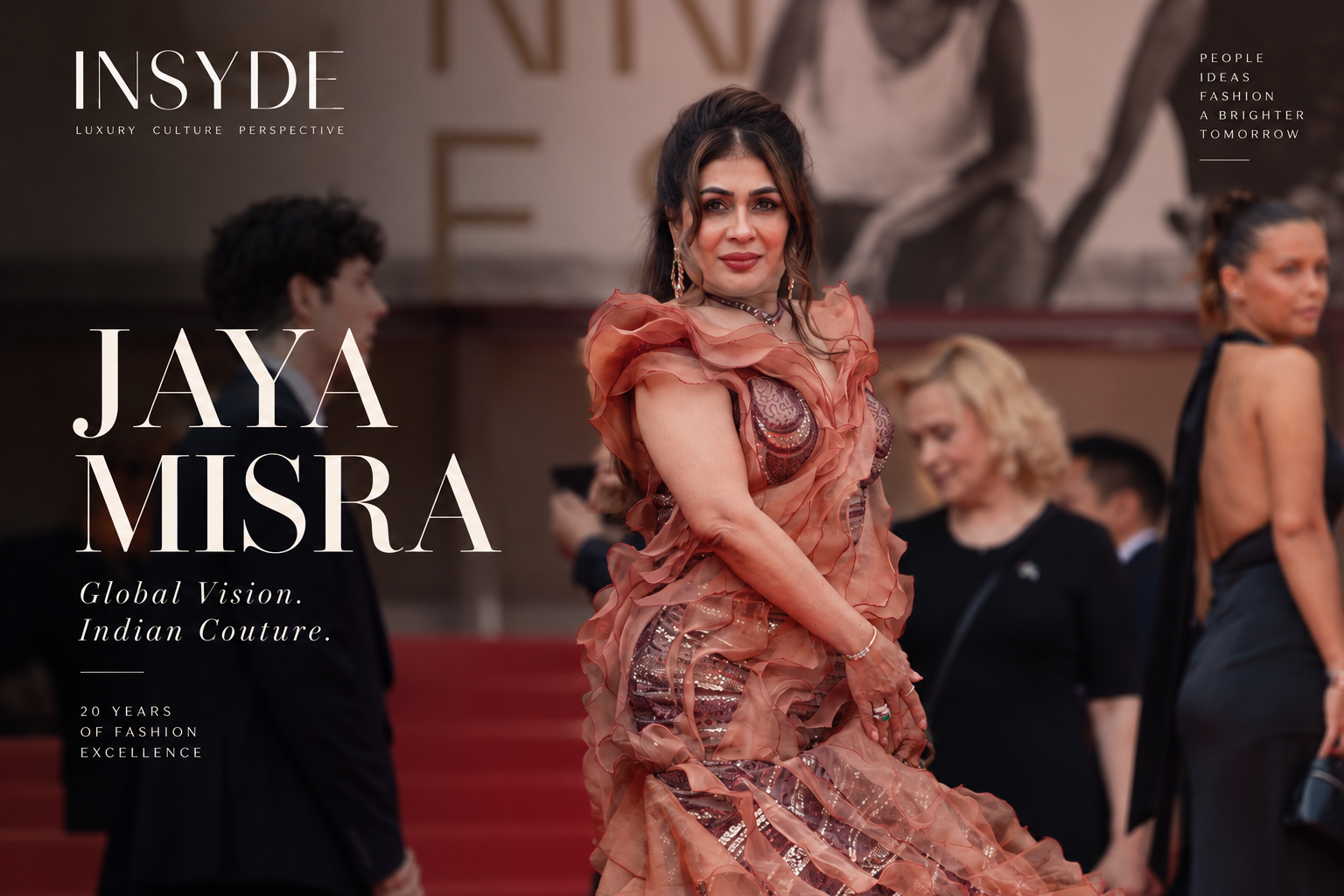
    Jaya Misra: The Making of a Modern Indian Fashion Language

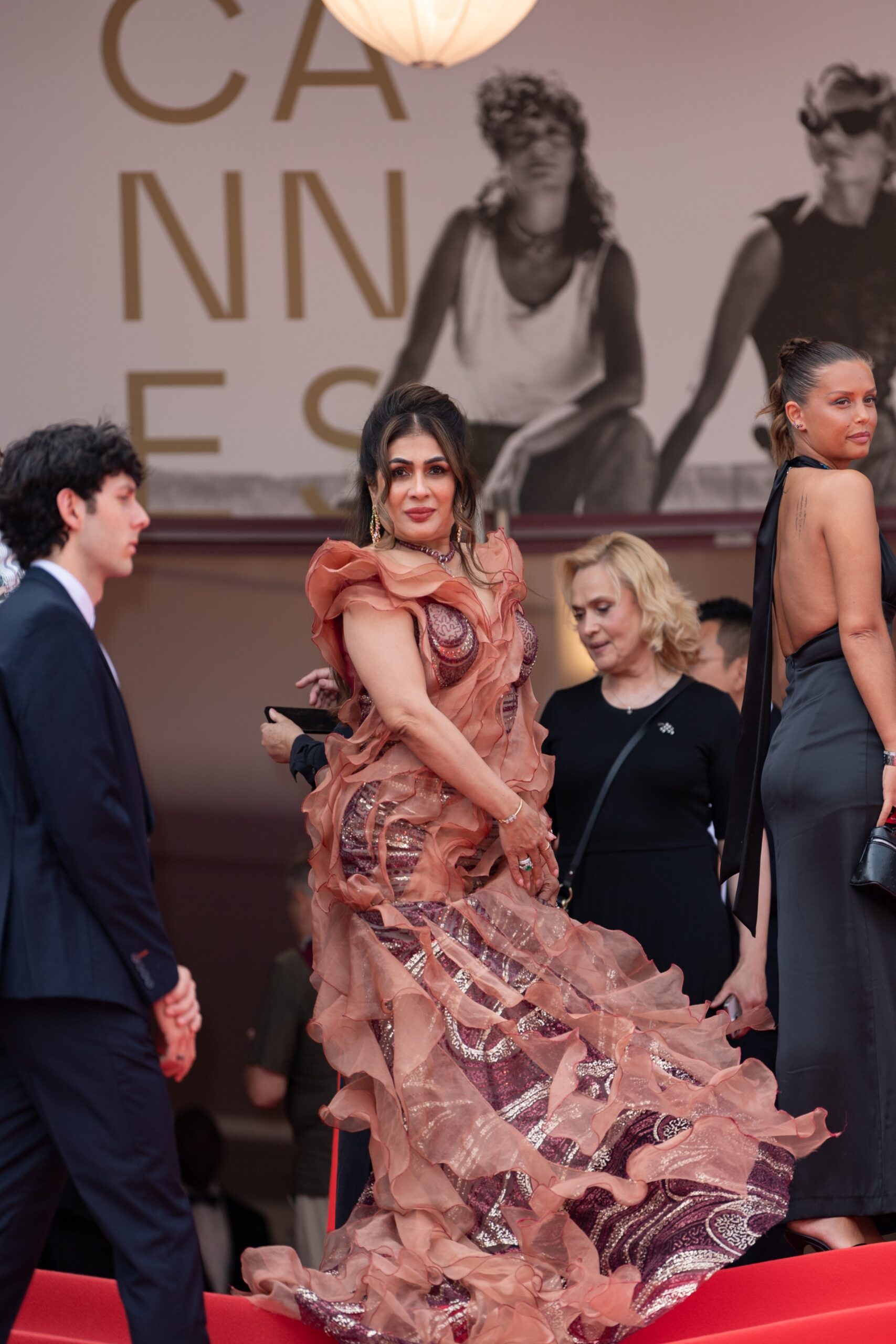
    Jaya Misra at the Cannes Film Festival,

    As Jaya Misra marks 20 years in fashion, the designer reflects on Indian identity, global ambition, craftsmanship, personal style and why the future of fashion may depend on knowing when to say less.

    Indian fashion is having a global moment.

    But the conversation around it is changing.

    For decades, international perceptions of Indian fashion were often reduced to a familiar vocabulary: elaborate embroidery, vivid colour, weddings, traditional silhouettes and the extraordinary work of its artisans.

    Those elements remain important. But they were never the whole story.

    India possesses one of the world’s richest design languages — shaped by textiles, regional craftsmanship, architecture, jewellery, history and generations of accumulated knowledge. Increasingly, Indian designers are taking those foundations into contemporary territory, creating work that can speak to an international audience without surrendering its identity.

    For Jaya Misra, that distinction is fundamental.

    “I have always believed that we do not need to become Western to be international. We can take something deeply Indian and give it a modern expression.”

    It is an idea that has accompanied her through two decades in fashion.

    In 2026, Jaya Misra India marks 20 years since its establishment. A graduate of NIFT, Jaya founded the house in 2006 and has since presented her work across national and international fashion platforms, with showcases spanning cities including Milan, New York, London, Dubai, Tokyo, Toronto and Vancouver. Her career has also included serving as an official designer for Femina Miss India and working across multiple international couture and fashion showcases.

    But after twenty years, the more interesting question is not simply where Indian fashion has travelled.

    It is what Indian fashion is becoming.

    Indian, Without Explanation

    For a long time, Indian fashion was introduced to the world through its most recognisable elements.

    Colour. Embroidery. Weddings. Ornamentation.

    Jaya believes that perception is becoming more nuanced.

    “Indian fashion is so much more than that,” she says, pointing to the country’s textiles, craftsmanship and techniques passed down through generations.

    The shift, she believes, is happening as designers begin presenting those traditions through a contemporary language that feels relevant around the world.

    There is still a tendency, she acknowledges, to measure luxury against Western standards. But that is gradually changing as Indian fashion becomes more confident in defining its own value.

    That distinction matters.

    Global relevance does not have to mean cultural translation.

    Indian fashion does not need to become Western in order to become international.

    Its challenge may instead be to become more confident about what is already uniquely its own — and to find new ways of expressing it.

    The goal is not simply to make Indian fashion visible.

    It is to make it understood on its own terms.

    When Heritage Is Allowed to Move

    Fashion has always had a complicated relationship with tradition.

    Preserve it too rigidly and it can become something admired rather than lived. Change it too completely and the knowledge behind it can disappear.

    For Jaya, evolution is part of preservation.

    “For me, preservation does not mean freezing something in time.”

    A traditional craft, she believes, needs room to move.

    A historic weave can become a contemporary jacket, corset or gown. An established technique can enter an unexpected silhouette without losing the heritage from which it came.

    The form can change.

    The essence should remain.

    But there is one boundary she considers essential: respect for the maker.

    “Evolution should never erase the artisan or the story behind the craft.”

    That places craftsmanship somewhere beyond decoration. The artisan is not simply part of a production process; the knowledge, patience and human skill behind the technique are part of the value of the final piece.

    For Indian fashion, keeping craft alive may therefore depend not on protecting it from change, but on giving it enough relevance to continue being worn, interpreted and desired.

    Tradition survives not only when it is preserved.

    Sometimes, it survives because it is allowed to evolve.

    The Luxury of Time

    Luxury has accumulated plenty of definitions.

    Price. Exclusivity. Rarity. Status.

    Jaya’s understanding is quieter.

    “For me, luxury is not defined by a price tag.”

    Instead, she associates it with time, craftsmanship, individuality and intention.

    That perspective feels particularly relevant in an industry increasingly shaped by immediacy.

    Fashion moves quickly. Trends appear and disappear almost overnight. Digital platforms encourage constant consumption, constant visibility and constant newness.

    Against that speed, something made slowly begins to feel almost radical.

    “Something handmade, created especially for you or marked by the subtle imperfections of the human hand has a unique soul.”

    But there is another form of luxury that cannot be measured through material value.

    Memory.

    “If a garment makes you feel powerful, beautiful or connected to a memory, its value goes far beyond its price,” she says.

    A couture garment can therefore become more than an object of consumption. It can become part of an experience, a milestone or a personal history.

    Perhaps that is why craftsmanship continues to matter.

    It gives an object something mass production struggles to replicate:

    a sense of having been made for a person rather than simply made for a market.

    The Problem With Seeing Everything

    Social media has changed fashion more radically than almost any runway could.

    A designer can now be discovered by someone thousands of kilometres away without passing through the traditional gatekeepers of the industry. Emerging talent can build an audience independently, while consumers have access to more fashion than ever before.

    Jaya sees that democratisation as a positive development.

    But accessibility has created its own contradiction.

    When everyone is looking at the same images, references can begin to converge.

    “The same silhouette, styling and trend can appear everywhere almost overnight.”

    The result is an industry with more access but, sometimes, less distinction.

    In that environment, personal style becomes less about knowing what is trending and more about knowing what feels authentic.

    “Personal style begins when you stop asking, ‘What is everyone wearing?’ and start asking, ‘What feels authentic to me?’”

    It is a question that extends beyond clothing.

    When algorithms can constantly tell us what to see, buy and desire, individuality requires a degree of resistance.

    Fashion can inspire you.

    It should not have to define you.

    Indian by Instinct

    Should an Indian designer have a responsibility to represent Indian culture?

    Jaya does not believe creativity should come with a compulsory assignment.

    An Indian designer should be free to create something minimal, futuristic, Western, traditional or experimental.

    “Creativity needs freedom.”

    Yet freedom from obligation does not mean freedom from influence.

    India’s textiles, embroideries, colours, architecture, jewellery, history and crafts inevitably form part of the visual memory of someone who grows up within that environment.

    “So even when I create something highly international, my Indian sensibility often comes through,” she says.

    “I do not have to force it; it is already an intrinsic part of who I am.”

    There is something significant in that idea.

    Identity does not always need to be announced to be present.

    For a designer working between Indian heritage and contemporary global silhouettes, being Indian does not necessarily mean reproducing recognisable symbols of India.

    Sometimes it is simply part of the way one sees.

    The Case for Editing

    Indian fashion has never struggled to make an entrance.

    Drama, colour, surface, craftsmanship and occasion are among its natural strengths. On a red carpet or international platform, that visual confidence can be extraordinarily powerful.

    But Jaya believes the next stage of India’s global fashion story may require a different skill.

    Editing.

    “Sometimes, we assume that showcasing craftsmanship means showing everything at once.”

    Her counterargument is particularly relevant to contemporary luxury: restraint can communicate just as much as abundance.

    “A single extraordinary detail can sometimes say more than twenty.”

    It is a deceptively simple observation in an industry where more is often mistaken for more luxurious.

    India already possesses extraordinary craftsmanship. The challenge now is not proving that it exists.

    The challenge is how it is presented.

    Jaya argues that Indian fashion needs stronger global business structures, presentation, communication and consistency.

    “Talent is not our challenge; we have an abundance of it.”

    That may be one of the most important questions facing Indian fashion today.

    The next chapter may be less about proving what India can create and more about deciding how that creativity is edited, positioned and communicated to the world.

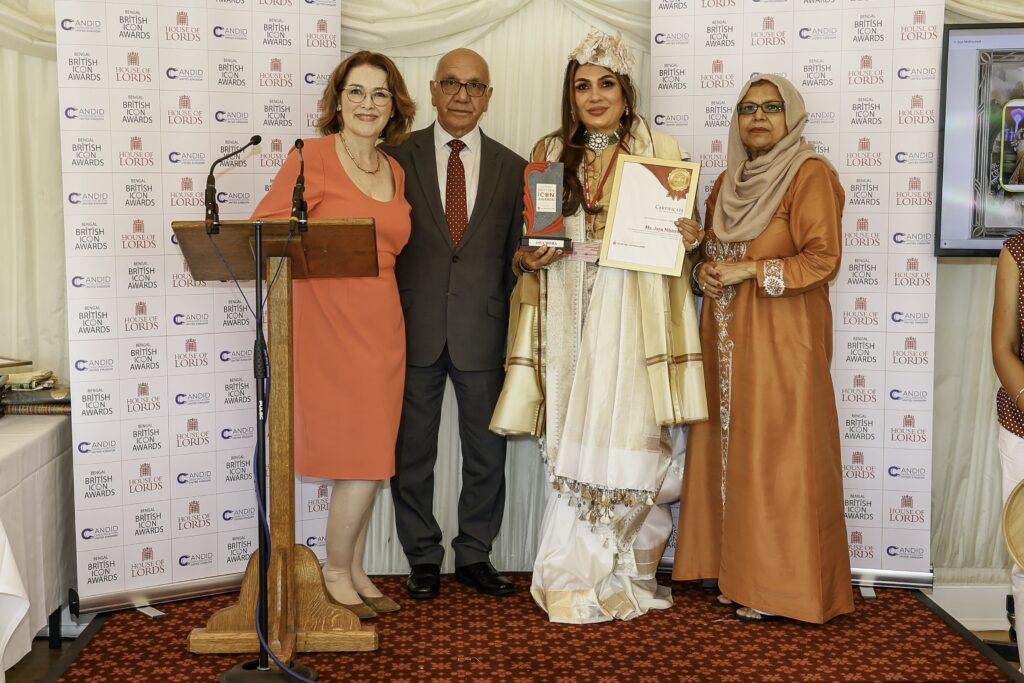
    Jaya Misra at the House of Lords, London

    Dream First. Then Find the Woman.

    Every designer eventually confronts the tension between creativity and commercial reality.

    Focus too heavily on commerce and creative identity can disappear. Create only for yourself and the relationship with the person wearing the garment can become distant.

    Jaya sees the two as a dialogue.

    “I like to create a dream first. Then I ask myself: how can a real woman enter that dream?”

    The runway can remain dramatic and imaginative while its essence is translated into something that can exist beyond the show — a jacket, saree, dress or another silhouette.

    The idea begins as fantasy.

    The wearer gives it a life.

    That balance is particularly important in couture, where the distance between spectacle and reality can be enormous.

    The most successful design does not necessarily force the customer into the designer’s imagination.

    It gives the customer a way into it.

    A Generation in a Hurry

    Looking toward the future, Jaya is optimistic about the fearlessness of younger designers.

    Today’s generation has access to global references almost instantly. They experiment with gender, technology, sustainability, textiles, silhouettes and storytelling, while rediscovering Indian crafts through increasingly unconventional approaches.

    But that access also comes with pressure.

    Everything is expected to happen faster.

    Collections. Trends. Content. Recognition.

    “There can be enormous pressure to succeed before you have had the chance to discover who you are as a designer.”

    For Jaya, identity cannot be rushed.

    “A strong identity takes time.”

    After two decades in fashion, she says she is still learning, evolving and discovering new possibilities.

    That process, she believes, never really ends.

    Perhaps that is the most revealing lesson in her twenty years of fashion.

    Longevity is not simply about remaining relevant.

    It is about continuing to evolve without losing the thread that makes the work recognisably yours.

    Her advice to the next generation is therefore less about visibility than substance:

    “Do not be so eager to be seen that you forget to develop something worth remembering.”

    It is a thought that feels particularly relevant in an industry where visibility can arrive instantly and disappear just as quickly.

    Because ultimately, Jaya’s understanding of fashion is not about creating a moment.

    It is about creating a language.

    An identity.

    A body of work.

    Something that can travel across borders without losing its origin, evolve without abandoning its memory, and remain unmistakably its own.

    For Jaya Misra, Global Vision and Indian Couture are not opposing ideas.

    They are part of the same conversation.

    And after twenty years, that conversation is still evolving.


    JAYA MISRA INDIA

    Jaya Misra — Founder & Creative Director

    20 Years of Fashion Excellence · 2006–2026

    Design Signature: Modern Indian Couture · Heritage Textiles & Indian Craftsmanship · Contemporary Draping & Global Silhouettes · Luxury with Individuality · Tradition Reimagined for the Modern Woman

    Brand Philosophy: Global Vision. Indian Couture.

    INSYDE Exclusive

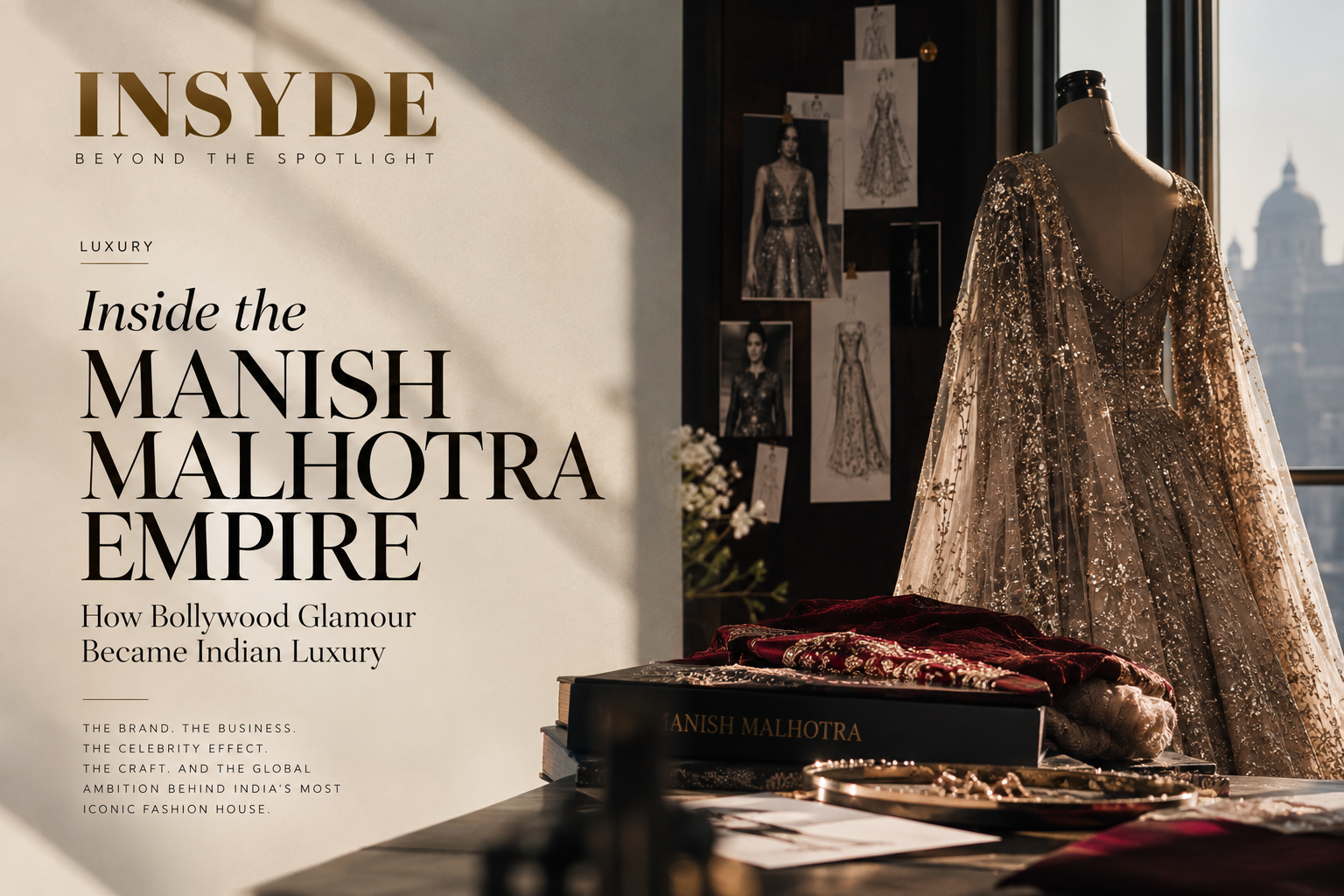
  • Insyde the Manish Malhotra Empire: How Bollywood Glamour Became Indian Luxury

    Insyde the Manish Malhotra Empire: How Bollywood Glamour Became Indian Luxury

    What began with costumes for Bollywood became something much larger: a luxury house built around celebrity, craftsmanship, aspiration and the idea that Indian fashion can belong on the world’s biggest stages.

    Luxury has always been about more than what you wear.

    It is about what a name makes you feel.

    For some houses, that feeling has been built through centuries of European heritage. For others, it comes from a particular designer, a particular silhouette or a particular way of seeing the world.

    In India, few names have created that feeling as consistently as Manish Malhotra.

    For decades, his name has been attached to Bollywood glamour: sequins under studio lights, elaborate wedding lehengas, celebrities on red carpets and couture that seems designed for moments larger than everyday life.

    But there is another Manish Malhotra story hiding underneath the glamour.

    It is a business story.

    The story of how a costume designer became a fashion label, how a label became a luxury house, and how that house is now trying to move from being India’s most recognisable designer name to becoming a global Indian luxury brand.

    That distinction matters.

    Because designing beautiful clothes is one thing.

    Building a luxury house is something else entirely.

    The House Behind the Name

    The House of Manish Malhotra was founded in 2005, after the designer had already spent more than a decade transforming costume design in Indian cinema. Today, the House spans couture, bridal, menswear, ready-to-wear, high jewellery, beauty and film production.

    That expansion didn’t happen because fashion suddenly became a business opportunity.

    It happened because Malhotra had already built something extraordinarily valuable before the fashion house fully existed:

    recognition.

    People knew the name.

    They knew the aesthetic.

    They knew the celebrities.

    They knew the glamour.

    And they knew what it meant when a star stepped out in Manish Malhotra.

    That kind of cultural recognition cannot simply be bought.

    It has to be accumulated.

    Year after year.

    Film after film.

    Collection after collection.

    Wedding after wedding.

    The House was therefore not starting from zero.

    It was turning cultural influence into commercial architecture.

    Bollywood Was the Original Luxury Engine

    Before social media, before influencer marketing, before celebrity collaborations became standard fashion strategy, Bollywood was already doing something remarkably powerful.

    It was selling aspiration.

    Millions of people watched actors on screen and wanted pieces of that world: the clothes, the jewellery, the homes, the parties, the romance, the glamour.

    Malhotra understood this unusually well because he was working inside the machine creating those images.

    His costume designs didn’t simply dress characters.

    They helped define them.

    That gave him an advantage that a conventional fashion label could never easily replicate.

    He understood how clothes behave on camera.

    How colour works under lighting.

    How a silhouette changes the perception of a character.

    How one outfit can become associated with an entire film.

    And eventually, how a designer’s name can become part of the fantasy.

    That is one reason his move into fashion was so powerful.

    He wasn’t introducing a new name to Bollywood.

    He was taking a name Bollywood had already helped make famous and turning it into a brand.

    When Visibility Became Value

    Luxury traditionally depends on scarcity.

    But Malhotra built his brand through something that might appear contradictory:

    visibility.

    His clothes were everywhere.

    On movie stars.

    At weddings.

    At award ceremonies.

    In magazines.

    On runways.

    On social media.

    That visibility did not necessarily make the brand less luxurious.

    Instead, it created desire.

    The public could see the world.

    But only a small number of people could actually enter it.

    That is the basic psychology of aspiration.

    And Malhotra understood it long before the language of personal branding and influencer culture became part of fashion strategy.

    The celebrity was not simply wearing the product.

    The celebrity was helping create the product’s meaning.

    A Manish Malhotra lehenga became more than fabric and embroidery.

    It became a piece of the world associated with the people wearing it.

    The Power of the Indian Wedding

    There may be no better environment for luxury than an Indian wedding.

    Weddings are emotional.

    They are highly visual.

    They involve multiple generations.

    They bring together fashion, jewellery, beauty, photography, music and ceremony.

    And they often represent one of the largest discretionary fashion purchases a family will make.

    Malhotra’s aesthetic fits naturally into this world.

    His couture is dramatic enough for the occasion, detailed enough to reward close attention and recognisable enough to photograph beautifully.

    But there is something deeper happening here.

    A wedding outfit is not simply a fashion purchase.

    It becomes part of memory.

    The lehenga becomes the photograph.

    The photograph becomes the family archive.

    The garment becomes part of the story.

    For a luxury house, that emotional connection is enormously valuable.

    It means the brand isn’t simply selling clothing.

    It is participating in people’s most important moments.

    Craftsmanship as the Luxury Proposition

    There is another foundation underneath the glamour:

    craft.

    The House describes Indian craftsmanship as central to its identity, with embroidery, weaving and handcraft traditions continuously reinterpreted through a contemporary luxury vocabulary.

    This is important because Indian craftsmanship has historically occupied an unusual position in global fashion.

    The world has wanted the embroidery.

    It has wanted the textiles.

    It has wanted the handwork.

    But the names of the designers and houses presenting that craft have often mattered more than the names of the artisans producing it.

    The luxury conversation is beginning to change.

    Indian designers are increasingly presenting craftsmanship as part of an authored luxury proposition rather than simply as a source of decorative technique.

    Malhotra’s model is built around that idea.

    The embroidery isn’t background.

    It is part of the identity.

    The handwork isn’t simply an embellishment.

    It is part of the value.

    The Indian-ness isn’t something to hide.

    It is part of the luxury proposition.

    From Couture to an Ecosystem

    A fashion label can survive on clothing.

    A luxury house needs more.

    The Manish Malhotra universe has steadily expanded into categories that allow the customer to interact with the brand in different ways.

    Beauty arrived in 2018.

    High jewellery expanded from 2019 and formally launched as Manish Malhotra High Jewellery in 2023.

    Ready-to-wear launched in 2025.

    The House has also moved into film production through Stage5 Productions.

    This is not random diversification.

    It follows a familiar luxury-house logic.

    If the customer loves the aesthetic, give them more ways to live inside it.

    Couture creates the fantasy.

    Ready-to-wear makes it more accessible.

    Jewellery adds permanence.

    Beauty extends the identity to everyday life.

    Film creates another storytelling platform.

    The products change.

    The world remains recognisable.

    That is how a designer becomes a brand ecosystem.

    The Reliance Chapter

    Then came a significant change in the business story.

    In 2021, Reliance Brands acquired a 40% stake in Manish Malhotra’s brand company, MM Styles. The partnership was positioned around expanding the brand in India and internationally, including retail and digital growth.

    This matters because scale is one of the hardest problems facing Indian luxury.

    A designer can have extraordinary creative talent and enormous cultural influence.

    But global luxury requires infrastructure.

    Retail.

    Capital.

    Technology.

    Supply chains.

    International distribution.

    Marketing.

    And the ability to build a consistent customer experience across markets.

    Strategic corporate backing can provide some of that infrastructure.

    Malhotra himself has been open about the ambition.

    In a 2025 interview with The Week, he said he wanted the business to reach ₹1,000 crore, adding that he did not believe the company was very far from that goal. He also said the business had grown by 35% over the previous two years.

    That changes the way we should look at the House.

    This isn’t simply a designer protecting a creative legacy.

    It is a company trying to scale.

    The Global Customer

    The international opportunity is not theoretical.

    Malhotra opened his first international flagship in Dubai in 2004 — before opening his first Indian flagship in Mumbai in 2006. His relationship with Dubai has continued to deepen, including the opening of a large Dubai Mall boutique in 2023.

    And the potential customer isn’t necessarily Indian.

    In his 2025 interview with The Week, Malhotra described his Dubai clientele as including NRIs alongside Arab, Russian and Chinese customers.

    That is an important distinction.

    An Indian luxury brand becomes genuinely global when people who do not need to buy Indian fashion begin wanting it.

    The diaspora can be the bridge.

    But it cannot be the entire destination.

    The bigger ambition is to make Indian luxury desirable because it is Indian, not merely because Indians abroad want a connection to home.

    That is a much harder challenge.

    And a much bigger opportunity.

    Why Paris Matters

    In July 2026, the House reached one of the most important stages in its history.

    Manish Malhotra presented his Fall/Winter 2026 couture collection in Paris as a guest house on the official Haute Couture Week schedule, becoming the fourth Indian designer to appear on the official calendar.

    It would be easy to treat that as a glamorous milestone.

    But Paris means more than a runway.

    It is a signal.

    For years, Indian craftsmanship has quietly supported global luxury. Vogue noted in 2026 that Indian artisans have long produced embroidery, embellishment and handwoven textiles used by major international fashion houses. The growing presence of Indian designers on the Paris couture calendar represents a shift in who gets to tell that story.

    Malhotra’s arrival therefore carries a larger question:

    Can an Indian house move from supplying craftsmanship and inspiration to owning the global luxury narrative?

    That is the real significance of Paris.

    The House Has Something Europe Cannot Manufacture

    There is an interesting advantage to the Manish Malhotra proposition.

    European luxury houses have heritage.

    Malhotra has something different.

    He has cultural immediacy.

    He has Bollywood.

    He has Indian weddings.

    He has celebrity relationships.

    He has contemporary Indian glamour.

    He has access to an enormous cultural ecosystem that already understands the emotional language of his clothes.

    That is difficult for a new luxury brand to manufacture.

    You cannot launch a campaign and suddenly create thirty years of cultural memory.

    Malhotra already has it.

    The challenge is translating that memory for someone who didn’t grow up watching Bollywood.

    That is where the next stage of the brand becomes interesting.

    Can the glamour travel without losing its meaning?

    Can the craftsmanship feel contemporary rather than simply traditional?

    Can the name become aspirational in Paris, Dubai, London or New York for someone who has no personal connection to Hindi cinema?

    Those are the questions that will define the next chapter.

    The Risk of Being Too Much Manish Malhotra

    Every powerful designer brand eventually faces the same problem.

    The designer becomes the brand.

    That creates enormous recognition.

    But it can also create dependence.

    When people hear Manish Malhotra, they immediately know what kind of world they are entering.

    That is an asset.

    But a global luxury house has to become bigger than the person who created it.

    It needs institutional identity.

    It needs younger customers.

    It needs new categories.

    It needs designers, artisans and creative teams who can evolve the language without destroying it.

    The House’s expansion into ready-to-wear, beauty, jewellery and film suggests that this process is already underway.

    The question is whether the brand can evolve while remaining unmistakably Manish Malhotra.

    That is the difficult part of building a maison.

    You have to change without looking like you changed.

    The Indian Luxury Moment

    There is a broader story here too.

    India’s luxury market is entering a different phase.

    For a long time, Indian consumers who wanted global luxury looked outward.

    European fashion houses represented prestige.

    International logos represented status.

    Indian designers were often associated with weddings, occasionwear and celebrity culture.

    That hierarchy is becoming less simple.

    Indian designers are building stronger businesses.

    Indian craftsmanship is receiving greater attention.

    Indian consumers are becoming more confident in local luxury.

    And global audiences are increasingly interested in the culture and aesthetics emerging from India.

    Malhotra sits directly inside that transition.

    He represents an older India that discovered glamour through cinema.

    But he is also building for a newer India that wants to participate in global luxury on its own terms.

    That tension is part of what makes the House interesting.

    Beyond the Logo

    The most valuable thing Manish Malhotra has built may not be a logo.

    It is recognition.

    You can often identify the world before you identify the garment.

    The shimmer.

    The embroidery.

    The colour.

    The drama.

    The collision of contemporary silhouettes with Indian craft.

    That consistency is one of the foundations of luxury.

    A great house creates a visual language that customers recognise almost instinctively.

    Malhotra has been refining that language for decades.

    The business is simply giving it more places to exist.

    So, Can Manish Malhotra Become a Global Luxury House?

    The answer is more complicated than yes or no.

    The ingredients are already there.

    A recognisable creative identity.

    Decades of cultural relevance.

    A strong celebrity network.

    Deep relationships with Indian craftsmanship.

    A growing multi-category business.

    International retail.

    Corporate backing.

    And now, an official Paris couture presence.

    The harder part is what comes next.

    Global luxury cannot be built entirely on celebrity.

    It cannot depend only on Indian weddings.

    It cannot survive on nostalgia.

    And it cannot simply export the same product to every market.

    It has to evolve.

    It has to create desire beyond its original audience.

    It has to become culturally relevant without losing its origin.

    That is the real test.

    From Bollywood Glamour to Indian Luxury

    Manish Malhotra’s greatest achievement may not be that he became India’s most famous fashion designer.

    It may be that he understood how to turn attention into aspiration, aspiration into desire, and desire into a business.

    The movies gave him visibility.

    Celebrity gave him cultural power.

    Couture gave him authority.

    Craftsmanship gave him depth.

    Business partnerships gave him scale.

    And Paris has given the House a new stage.

    But the story isn’t finished.

    If the next decade goes the way Malhotra hopes, the question may eventually stop being:

    “Can an Indian designer build a global luxury house?”

    It may become:

    “Why did we ever assume Indian luxury had to look anywhere else for permission?”

    That is the opportunity sitting in front of Manish Malhotra.

    Not simply to take Indian glamour to the world.

    But to convince the world that Indian glamour was already luxury.

    The next chapter isn’t about becoming global.

    It is about deciding what Indian luxury looks like when the world is watching.

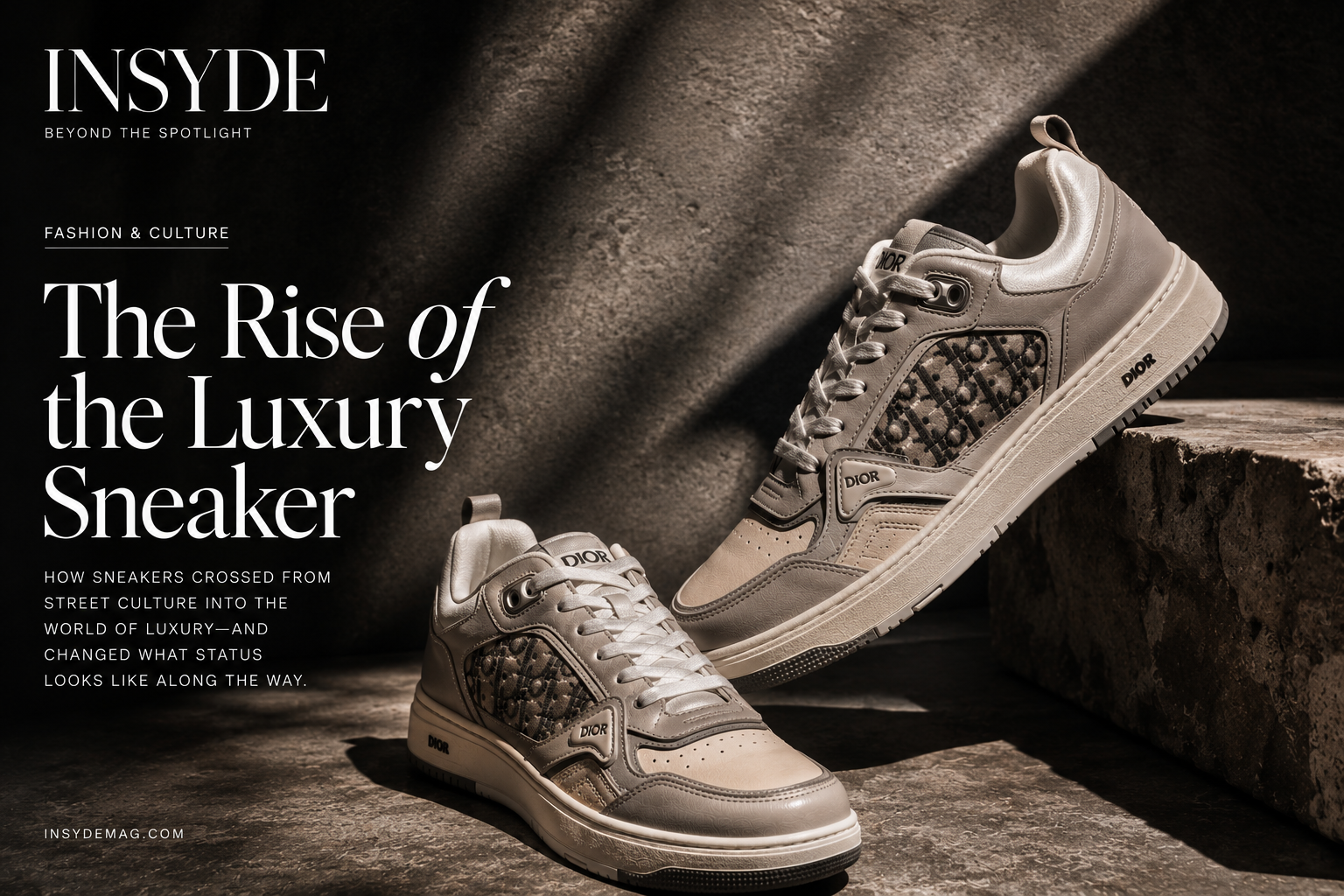
  • The Rise of the Luxury Sneaker

    The Rise of the Luxury Sneaker

    How sneakers crossed from street culture into the world of luxury — and changed what status looks like along the way.

    There was a time when luxury had a dress code.

    A tailored jacket. A fine watch. Polished leather. A recognisable handbag. Objects whose value was understood almost immediately.

    Then came the sneaker.

    Casual. Familiar. Democratic. Designed for movement rather than ceremony.

    And somehow, it became one of fashion’s most powerful expressions of status.

    That transformation is more interesting than the sneaker’s price tag.

    Because the luxury sneaker did not become important simply because fashion houses decided to make expensive shoes. It became important because culture changed what people wanted luxury to mean.

    The sneaker brought together sport, music, youth culture, fashion and design. Luxury gave it craftsmanship, scarcity and prestige.

    The result was something neither world could have created alone.

    A new language of luxury.


    The Object That Wasn’t Supposed to Be Luxury

    The sneaker was never designed to communicate wealth.

    Its original purpose was practical: movement, comfort and performance.

    But practicality gave it something luxury could not manufacture.

    Cultural credibility.

    Sneakers were worn on basketball courts, running tracks, city streets and stages. They became intertwined with music, particularly hip-hop, and with the rise of streetwear.

    The sneaker began appearing everywhere culture was being created.

    And that changed its meaning.

    It was no longer simply footwear.

    A particular pair could communicate what music you listened to, which athletes you admired, what subculture you belonged to or how closely you followed fashion.

    The sneaker became an identity marker.

    Luxury eventually noticed.


    When the Street Met the Maison

    For decades, high fashion and street culture occupied very different territories.

    One represented heritage, craftsmanship and exclusivity.

    The other represented youth, rebellion and cultural immediacy.

    Then the boundary began to disappear.

    Luxury houses started incorporating sneakers into their collections, while streetwear gained increasing influence over the wider fashion industry.

    The meeting was inevitable.

    But it wasn’t simply luxury moving downward.

    It was luxury learning from the street.

    The sneaker offered fashion something extremely valuable: relevance.

    It was already connected to communities, music, sport and youth culture.

    Luxury could provide materials and craftsmanship.

    The street provided cultural energy.

    Together, they created a new category.


    The Collaboration Changed the Rules

    Few developments accelerated the sneaker’s transformation more than the collaboration.

    When a sneaker became the meeting point between an athlete, musician, artist, designer or fashion house, it became more than a product.

    It became a cultural event.

    Suddenly, the story surrounding the shoe could matter as much as the shoe itself.

    Who designed it?

    Who wore it?

    Why was it created?

    How many were produced?

    When was it released?

    And, perhaps most importantly:

    Could everyone get one?

    Scarcity introduced a new kind of desire.

    The sneaker began behaving less like ordinary footwear and more like a collectible.

    That was a significant moment.

    Because luxury has always understood that desire grows when access becomes selective.


    Scarcity Became a Status Symbol

    Luxury has never been purely about price.

    It is about access.

    The rare watch.

    The difficult-to-book restaurant.

    The limited edition automobile.

    The handbag that isn’t simply waiting on a shelf.

    Sneakers adopted the same psychology.

    Limited releases created urgency.

    Exclusive collaborations created communities.

    Rare editions developed their own markets.

    But there is an important distinction.

    Scarcity alone does not create value.

    There must be a reason to care.

    The most desirable sneakers usually combine rarity with cultural significance.

    They represent an athlete.

    A designer.

    A collaboration.

    A particular era.

    A moment that mattered.

    The shoe becomes valuable because it carries a story.


    When the Sneaker Became Collectible

    This is where sneaker culture began moving closer to traditional luxury collecting.

    Collectors stopped looking only at whether a shoe looked good.

    They began considering provenance.

    Condition.

    Originality.

    Production history.

    Collaboration.

    Cultural relevance.

    A rare sneaker can become interesting in much the same way as a vintage watch or classic automobile.

    Not because it is necessary.

    Precisely because it isn’t.

    The object exists beyond function.

    It becomes something to preserve, study and appreciate.

    That is one of luxury’s oldest ideas.

    And sneakers have adopted it remarkably well.


    The Luxury of Craft

    There is another reason luxury sneakers command attention: craftsmanship.

    Once high fashion began taking the category seriously, the sneaker became a canvas for experimentation.

    Leather.

    Suede.

    Technical textiles.

    Metal hardware.

    Specialised construction.

    Unexpected proportions.

    Complex soles.

    Hand-finishing.

    Details that might once have been invisible became part of the conversation.

    The sneaker could now be examined rather than simply worn.

    And that changed the perception of the object.

    It didn’t have to stop being comfortable to become luxurious.

    It could be both.

    Function and craftsmanship could coexist.

    That combination is central to modern luxury.


    The End of the Formal Luxury Uniform

    Perhaps the sneaker’s greatest cultural victory is that it helped make luxury less formal.

    The modern luxury wardrobe doesn’t necessarily require a polished leather shoe.

    A tailored trouser can meet a minimalist sneaker.

    A fine watch can sit above a relaxed silhouette.

    A luxury jacket can be paired with something deliberately casual.

    The contrast isn’t accidental.

    It is part of the language.

    Today’s sophisticated consumer often has less interest in proving that something is expensive.

    They are more interested in demonstrating that they know what works.

    That is a profound change.

    Luxury becomes less about dressing according to a rulebook and more about knowing when to break one.


    The New Status Symbol Doesn’t Always Shout

    For decades, luxury was designed to be recognised.

    Logos were visible.

    Signatures were obvious.

    The product announced itself.

    The sneaker introduced another possibility.

    Recognition could become selective.

    Someone who doesn’t follow fashion might see an ordinary pair of shoes.

    Someone who does might immediately recognise the silhouette, collaboration or material.

    That creates a subtle form of status.

    Not:

    “Everyone should know what I’m wearing.”

    But:

    “The people who understand it will know.”

    That distinction has become increasingly important in contemporary luxury.

    The audience for the signal has become smaller.

    The meaning of the signal has become deeper.


    From Logo to Language

    The most interesting luxury sneakers aren’t necessarily the loudest.

    They can be minimal.

    Almost anonymous.

    Their luxury might exist in the leather, construction, proportion or silhouette rather than a giant logo.

    That reflects a broader evolution in fashion.

    The conversation is moving from visibility to discernment.

    The question isn’t simply whether something looks expensive.

    It is whether it looks considered.

    A sneaker can now communicate taste without demanding attention.

    And that may be one of the reasons the category has become so powerful.

    It fits the psychology of a consumer who already knows what luxury looks like.

    They don’t need to announce it.


    The New Luxury Consumer

    The rise of the luxury sneaker also reflects a generational change.

    Younger consumers have never experienced fashion as a series of isolated categories.

    Music influences fashion.

    Sport influences fashion.

    Streetwear influences luxury.

    Luxury influences streetwear.

    Film, gaming, art and social media all participate in the same cultural conversation.

    For this audience, a sneaker does not need permission to belong in a luxury wardrobe.

    It already belongs.

    The old hierarchy has weakened.

    A rare sneaker can sit beside a mechanical watch.

    A vintage piece can sit beside a new luxury garment.

    A streetwear collaboration can become as culturally significant as a traditional fashion collection.

    Luxury is no longer a closed room.

    It has become a conversation.


    What Makes a Sneaker Luxury?

    The obvious answer is price.

    But price is only one ingredient.

    True luxury requires something more difficult to manufacture.

    Desire.

    A sneaker becomes luxurious when people want it for reasons beyond its practical purpose.

    Craftsmanship can create desire.

    Scarcity can create desire.

    Design can create desire.

    History can create desire.

    Cultural relevance can create desire.

    And the strongest products combine several of them.

    That is why a very expensive sneaker can feel completely unremarkable, while a much simpler pair can become iconic.

    Luxury is not the number on the receipt.

    It is the meaning attached to the object.


    The Sneaker and the Collector’s Mind

    The luxury world has always been fascinated by objects that don’t need to exist.

    Collectors buy watches even when their phones tell time more accurately.

    They collect automobiles they cannot drive every day.

    They acquire art they may rarely display.

    The value lies somewhere beyond utility.

    Sneakers now occupy that same territory.

    A collector can own dozens of pairs without needing another pair of shoes.

    The purchase is no longer about necessity.

    It is about appreciation.

    Memory.

    Identity.

    Curation.

    The collection becomes a portrait of the collector.

    And perhaps that is the final transformation of the sneaker:

    from something you wear to something that represents what you value.


    The Luxury Sneaker Is Here to Stay

    The sneaker’s rise tells us something larger about luxury.

    The definition of status has changed.

    For one generation, luxury meant formality.

    For another, it meant recognisable logos.

    Today, luxury increasingly means choice.

    Knowing what to buy.

    Knowing what not to buy.

    Understanding craftsmanship.

    Recognising cultural significance.

    Being able to move between worlds without looking as though you’re trying too hard.

    The sneaker fits perfectly into that new definition.

    It can be casual without being careless.

    Expensive without being obvious.

    Rare without being theatrical.

    Cultural without losing craftsmanship.

    That is an extraordinary amount of territory for one object to occupy.


    The Rise of the Luxury Sneaker

    The sneaker didn’t become luxurious simply because luxury fashion decided to put its name on it.

    Its transformation happened much earlier.

    Culture made it desirable.

    Sport made it iconic.

    Music gave it attitude.

    Streetwear gave it identity.

    Fashion gave it craftsmanship.

    Scarcity gave it collectability.

    And consumers gave it something even more powerful:

    meaning.

    That is why the luxury sneaker represents more than another category for fashion houses.

    It represents the changing definition of status itself.

    The old luxury question was:

    “How much does it cost?”

    The newer question is:

    “Why does it matter?”

    And perhaps that is the most modern luxury of all.

    To own something not because everyone wants it—

    but because you understand why you do.

    INSYDE — Beyond the Spotlight.