
Category: Design

The ideas, people and spaces shaping contemporary design across India.

  • Jaya Misra: The Making of a  Modern Indian Fashion Language

    Jaya Misra: The Making of a Modern Indian Fashion Language

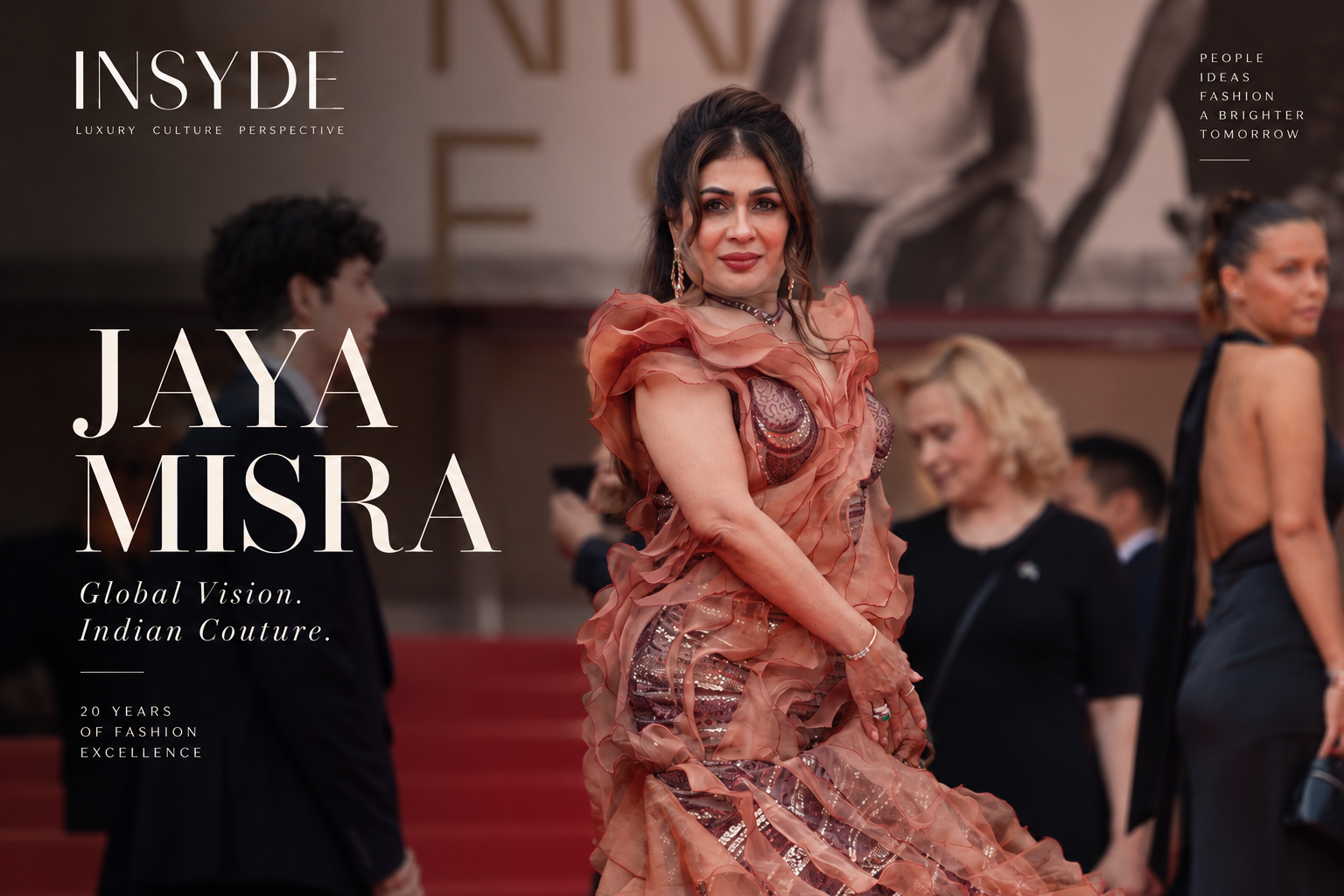
    Jaya Misra at the Cannes Film Festival,

    As Jaya Misra marks 20 years in fashion, the designer reflects on Indian identity, global ambition, craftsmanship, personal style and why the future of fashion may depend on knowing when to say less.

    Indian fashion is having a global moment.

    But the conversation around it is changing.

    For decades, international perceptions of Indian fashion were often reduced to a familiar vocabulary: elaborate embroidery, vivid colour, weddings, traditional silhouettes and the extraordinary work of its artisans.

    Those elements remain important. But they were never the whole story.

    India possesses one of the world’s richest design languages — shaped by textiles, regional craftsmanship, architecture, jewellery, history and generations of accumulated knowledge. Increasingly, Indian designers are taking those foundations into contemporary territory, creating work that can speak to an international audience without surrendering its identity.

    For Jaya Misra, that distinction is fundamental.

    “I have always believed that we do not need to become Western to be international. We can take something deeply Indian and give it a modern expression.”

    It is an idea that has accompanied her through two decades in fashion.

    In 2026, Jaya Misra India marks 20 years since its establishment. A graduate of NIFT, Jaya founded the house in 2006 and has since presented her work across national and international fashion platforms, with showcases spanning cities including Milan, New York, London, Dubai, Tokyo, Toronto and Vancouver. Her career has also included serving as an official designer for Femina Miss India and working across multiple international couture and fashion showcases.

    But after twenty years, the more interesting question is not simply where Indian fashion has travelled.

    It is what Indian fashion is becoming.

    Indian, Without Explanation

    For a long time, Indian fashion was introduced to the world through its most recognisable elements.

    Colour. Embroidery. Weddings. Ornamentation.

    Jaya believes that perception is becoming more nuanced.

    “Indian fashion is so much more than that,” she says, pointing to the country’s textiles, craftsmanship and techniques passed down through generations.

    The shift, she believes, is happening as designers begin presenting those traditions through a contemporary language that feels relevant around the world.

    There is still a tendency, she acknowledges, to measure luxury against Western standards. But that is gradually changing as Indian fashion becomes more confident in defining its own value.

    That distinction matters.

    Global relevance does not have to mean cultural translation.

    Indian fashion does not need to become Western in order to become international.

    Its challenge may instead be to become more confident about what is already uniquely its own — and to find new ways of expressing it.

    The goal is not simply to make Indian fashion visible.

    It is to make it understood on its own terms.
    When Heritage Is Allowed to Move

    Fashion has always had a complicated relationship with tradition.

    Preserve it too rigidly and it can become something admired rather than lived. Change it too completely and the knowledge behind it can disappear.

    For Jaya, evolution is part of preservation.

    “For me, preservation does not mean freezing something in time.”

    A traditional craft, she believes, needs room to move.

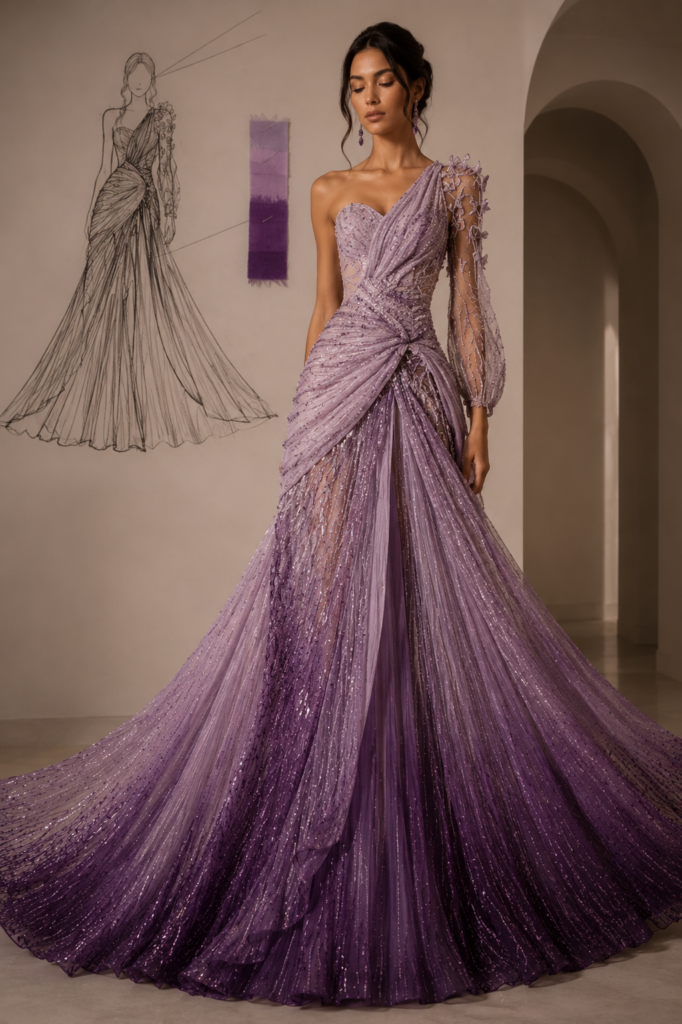
    A historic weave can become a contemporary jacket, corset or gown. An established technique can enter an unexpected silhouette without losing the heritage from which it came.

    The form can change.

    The essence should remain.

    But there is one boundary she considers essential: respect for the maker.

    “Evolution should never erase the artisan or the story behind the craft.”

    That places craftsmanship somewhere beyond decoration. The artisan is not simply part of a production process; the knowledge, patience and human skill behind the technique are part of the value of the final piece.

    For Indian fashion, keeping craft alive may therefore depend not on protecting it from change, but on giving it enough relevance to continue being worn, interpreted and desired.

    Tradition survives not only when it is preserved.

    Sometimes, it survives because it is allowed to evolve.

    The Luxury of Time

    Luxury has accumulated plenty of definitions.

    Price. Exclusivity. Rarity. Status.

    Jaya’s understanding is quieter.

    “For me, luxury is not defined by a price tag.”

    Instead, she associates it with time, craftsmanship, individuality and intention.

    That perspective feels particularly relevant in an industry increasingly shaped by immediacy.

    Fashion moves quickly. Trends appear and disappear almost overnight. Digital platforms encourage constant consumption, constant visibility and constant newness.

    Against that speed, something made slowly begins to feel almost radical.

    “Something handmade, created especially for you or marked by the subtle imperfections of the human hand has a unique soul.”

    But there is another form of luxury that cannot be measured through material value.

    Memory.

    “If a garment makes you feel powerful, beautiful or connected to a memory, its value goes far beyond its price,” she says.

    A couture garment can therefore become more than an object of consumption. It can become part of an experience, a milestone or a personal history.

    Perhaps that is why craftsmanship continues to matter.

    It gives an object something mass production struggles to replicate:

    a sense of having been made for a person rather than simply made for a market.

    The Problem With Seeing Everything

    Social media has changed fashion more radically than almost any runway could.

    A designer can now be discovered by someone thousands of kilometres away without passing through the traditional gatekeepers of the industry. Emerging talent can build an audience independently, while consumers have access to more fashion than ever before.

    Jaya sees that democratisation as a positive development.

    But accessibility has created its own contradiction.

    When everyone is looking at the same images, references can begin to converge.

    “The same silhouette, styling and trend can appear everywhere almost overnight.”

    The result is an industry with more access but, sometimes, less distinction.

    In that environment, personal style becomes less about knowing what is trending and more about knowing what feels authentic.

    “Personal style begins when you stop asking, ‘What is everyone wearing?’ and start asking, ‘What feels authentic to me?’”

    It is a question that extends beyond clothing.

    When algorithms can constantly tell us what to see, buy and desire, individuality requires a degree of resistance.

    Fashion can inspire you.

    It should not have to define you.
    Indian by Instinct

    Should an Indian designer have a responsibility to represent Indian culture?

    Jaya does not believe creativity should come with a compulsory assignment.

    An Indian designer should be free to create something minimal, futuristic, Western, traditional or experimental.

    “Creativity needs freedom.”

    Yet freedom from obligation does not mean freedom from influence.

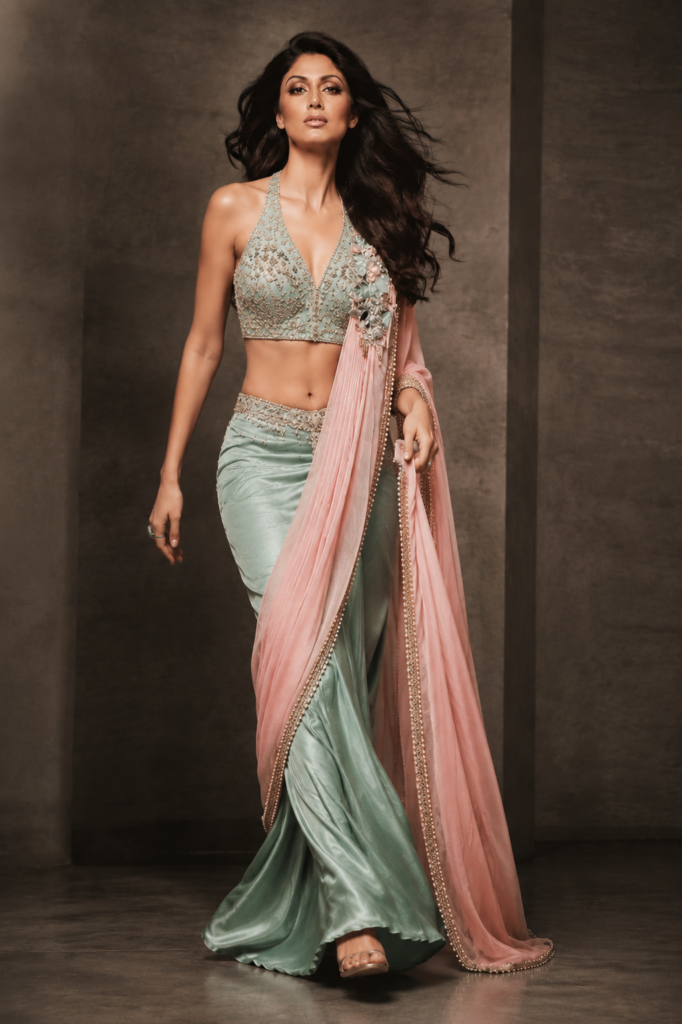
    India’s textiles, embroideries, colours, architecture, jewellery, history and crafts inevitably form part of the visual memory of someone who grows up within that environment.

    “So even when I create something highly international, my Indian sensibility often comes through,” she says.

    “I do not have to force it; it is already an intrinsic part of who I am.”

    There is something significant in that idea.

    Identity does not always need to be announced to be present.

    For a designer working between Indian heritage and contemporary global silhouettes, being Indian does not necessarily mean reproducing recognisable symbols of India.

    Sometimes it is simply part of the way one sees.

    The Case for Editing

    Indian fashion has never struggled to make an entrance.

    Drama, colour, surface, craftsmanship and occasion are among its natural strengths. On a red carpet or international platform, that visual confidence can be extraordinarily powerful.

    But Jaya believes the next stage of India’s global fashion story may require a different skill.

    Editing.

    “Sometimes, we assume that showcasing craftsmanship means showing everything at once.”

    Her counterargument is particularly relevant to contemporary luxury: restraint can communicate just as much as abundance.

    “A single extraordinary detail can sometimes say more than twenty.”

    It is a deceptively simple observation in an industry where more is often mistaken for more luxurious.

    India already possesses extraordinary craftsmanship. The challenge now is not proving that it exists.

    The challenge is how it is presented.

    Jaya argues that Indian fashion needs stronger global business structures, presentation, communication and consistency.

    “Talent is not our challenge; we have an abundance of it.”

    That may be one of the most important questions facing Indian fashion today.

    The next chapter may be less about proving what India can create and more about deciding how that creativity is edited, positioned and communicated to the world.

    Jaya Misra at the House of Lords, London

    Dream First. Then Find the Woman.

    Every designer eventually confronts the tension between creativity and commercial reality.

    Focus too heavily on commerce and creative identity can disappear. Create only for yourself and the relationship with the person wearing the garment can become distant.

    Jaya sees the two as a dialogue.

    “I like to create a dream first. Then I ask myself: how can a real woman enter that dream?”

    The runway can remain dramatic and imaginative while its essence is translated into something that can exist beyond the show — a jacket, saree, dress or another silhouette.

    The idea begins as fantasy.

    The wearer gives it a life.

    That balance is particularly important in couture, where the distance between spectacle and reality can be enormous.

    The most successful design does not necessarily force the customer into the designer’s imagination.

    It gives the customer a way into it.

    A Generation in a Hurry

    Looking toward the future, Jaya is optimistic about the fearlessness of younger designers.

    Today’s generation has access to global references almost instantly. They experiment with gender, technology, sustainability, textiles, silhouettes and storytelling, while rediscovering Indian crafts through increasingly unconventional approaches.

    But that access also comes with pressure.

    Everything is expected to happen faster.

    Collections. Trends. Content. Recognition.

    “There can be enormous pressure to succeed before you have had the chance to discover who you are as a designer.”

    For Jaya, identity cannot be rushed.

    “A strong identity takes time.”

    After two decades in fashion, she says she is still learning, evolving and discovering new possibilities.

    That process, she believes, never really ends.

    Perhaps that is the most revealing lesson in her twenty years of fashion.

    Longevity is not simply about remaining relevant.

    It is about continuing to evolve without losing the thread that makes the work recognisably yours.

    Her advice to the next generation is therefore less about visibility than substance:

    “Do not be so eager to be seen that you forget to develop something worth remembering.”

    It is a thought that feels particularly relevant in an industry where visibility can arrive instantly and disappear just as quickly.

    Because ultimately, Jaya’s understanding of fashion is not about creating a moment.

    It is about creating a language.

    An identity.

    A body of work.

    Something that can travel across borders without losing its origin, evolve without abandoning its memory, and remain unmistakably its own.

    For Jaya Misra, Global Vision and Indian Couture are not opposing ideas.

    They are part of the same conversation.

    And after twenty years, that conversation is still evolving.


    JAYA MISRA INDIA

    Jaya Misra — Founder & Creative Director

    20 Years of Fashion Excellence · 2006–2026

    Design Signature: Modern Indian Couture · Heritage Textiles & Indian Craftsmanship · Contemporary Draping & Global Silhouettes · Luxury with Individuality · Tradition Reimagined for the Modern Woman

    Brand Philosophy: Global Vision. Indian Couture.

    INSYDE Exclusive
  • The Sabyasachi Effect: How Nostalgia Became Indian Luxury |INSYDE

    The Sabyasachi Effect: How Nostalgia Became Indian Luxury |INSYDE

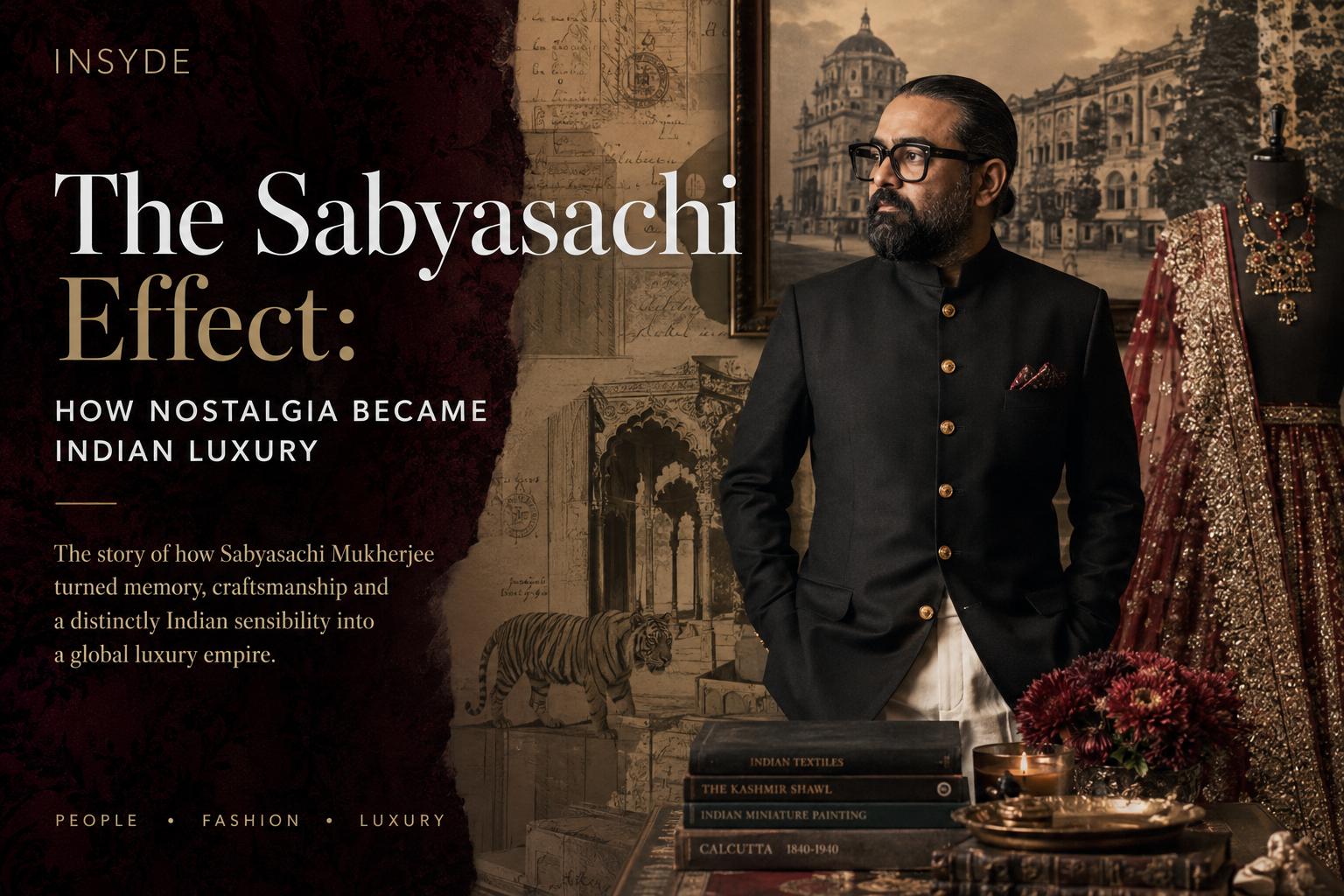
    The story of Sabyasachi is not simply about a designer who made Indian fashion famous. It is about how memory, craft and a very particular idea of India became the foundation of a modern luxury business.

    Walk into a Sabyasachi store and the first thing you notice may not be the clothes.

    There are the clothes, of course. The jewellery. The handbags. The shoes. But around them is something else: old-world architecture, art, furniture, objects, colour, photographs and an atmosphere that feels deliberately removed from the speed of contemporary retail.

    It doesn’t quite feel like a shop.

    It feels like a memory.

    That may be the most useful way to understand Sabyasachi Mukherjee.

    Because the designer’s greatest achievement may not be that he made Indian fashion recognisable around the world. It may be that he made a particular version of India’s past feel desirable in the present.

    That distinction is important.

    Luxury has always sold more than products. It sells provenance, scarcity, craftsmanship, identity and belonging. Sabyasachi understood that early—and built a house around them.

    The business of remembering

    The Sabyasachi aesthetic is immediately recognisable.

    Deep colours. Old photographs. Heavy embroidery. Vintage references. Jewellery that looks inherited rather than newly bought. Bengal. Tigers. Colonial-era architecture. Textiles that carry the evidence of the hand.

    Even when the clothes are contemporary, they often seem to have arrived from somewhere else.

    That is not accidental.

    The brand’s own language repeatedly returns to heritage, indigenous craftsmanship and the idea of making the past relevant to the present. Its current collections continue to draw on Calcutta, Bengal, textiles, jewellery and archival references.

    Sabyasachi has effectively made nostalgia into a design system.

    And then he did something much harder:

    he made that nostalgia expensive.

    Before the empire, there were three tailors

    The numbers make the early story almost sound implausible.

    Sabyasachi graduated from NIFT in 1999 and launched his eponymous label soon afterwards. FDCI records that he won three major awards at graduation and, in early 2001, received the Femina British Council award that took him to London for an internship with Georgina von Etzdorf.

    The designer’s own history gives the more personal version: he borrowed ₹20,000 from his family and began with a team of three.

    The important part isn’t the ₹20,000.

    It is what he decided to do with the opportunity.

    At a time when Indian fashion was increasingly looking outward for validation, Sabyasachi’s instincts were unusually inward.

    His early work was interested in India not as a costume, but as a source of references.

    He wasn’t asking:

    How can Indian fashion look international?

    He was asking something closer to:

    What if India itself became the reference?

    The strange power of the hand

    FDCI describes Sabyasachi’s design philosophy through the phrase “personalized imperfection of the human hand.” It is a useful phrase because it gets to the heart of his business.

    In an industry obsessed with speed, scale and perfect replication, the hand offers the opposite.

    It takes time.

    It varies.

    It leaves evidence.

    And Sabyasachi built luxury around that evidence.

    The house says it currently employs, directly or indirectly, more than 3,900 artisans, including master weavers, dyers and printers, and works with textile clusters across numerous Indian states.

    That makes craftsmanship more than a decorative detail in the Sabyasachi story.

    It is infrastructure.

    A sari is not valuable simply because it is a sari. Its value can come from the material, the technique, the person who made it, the time it required and the story attached to it.

    This is where Sabyasachi’s version of luxury becomes particularly Indian.

    The house didn’t need to invent heritage.

    It needed to reframe its value.

    Then came the bride

    If the Sabyasachi aesthetic gave Indian fashion a visual language, the bride gave it a mass cultural stage.

    His bridal work became one of the defining parts of the house, and over time the “Sabyasachi bride” became a recognisable idea in itself: rich textiles, dramatic jewellery, detailed embroidery, saturated colour and a sense of ceremony that felt simultaneously contemporary and inherited.

    Sabyasachi himself later described the house as having created a significant shift in the way people dressed in India, particularly around bridalwear.

    That shift is worth looking at carefully.

    The designer didn’t make Indian weddings less traditional.

    In many ways, he made them more consciously traditional.

    The bride wasn’t trying to escape heritage.

    She was paying a premium to own it.

    And that is a very different proposition from selling fashion.

    Bollywood understood the picture

    Sabyasachi’s relationship with cinema helped the aesthetic travel beyond the runway.

    His work for Black earned him the National Award for Best Costume Design, and his later association with Bollywood and celebrity culture helped establish his clothes as part of a larger visual language.

    This matters because celebrity dressing can do something a runway cannot.

    It gives people a character to imagine themselves becoming.

    The Sabyasachi bride wasn’t simply a consumer wearing a designer lehenga.

    She could see herself in the same visual universe as actors, weddings, films and photographs that circulated far beyond fashion publications.

    The clothes became aspirational because the world around the clothes became aspirational.

    That distinction is one of the reasons the brand has travelled so well.

    The store became part of the product

    Sabyasachi eventually understood that the brand could not live only inside garments.

    The Mumbai flagship was conceived as a “living museum,” bringing together fashion, jewellery, objects, art and interiors. The New York flagship followed in 2022, giving the house a permanent presence in one of the world’s most important luxury markets.

    This is where Sabyasachi starts looking less like a designer and more like the founder of a luxury universe.

    The product is the sari.

    But the experience is the house.

    The furniture, the architecture, the tiger, the packaging, the jewellery, the books, the visual merchandising—all of it reinforces the same idea.

    You don’t just buy Sabyasachi.

    You enter Sabyasachi.

    That is a much more powerful business model.

    From clothes to a house

    The expansion has followed the logic of the universe.

    Jewellery.

    Accessories.

    Fine jewellery.

    Menswear.

    Beauty.

    Collaborations.

    The brand has partnered with names including Christian Louboutin, H&M, Pottery Barn, Starbucks and Estée Lauder.

    The Estée Lauder collaboration is particularly revealing.

    In 2024, the two houses created a global collection of 10 lipsticks. The collaboration translated Sabyasachi’s visual vocabulary—textiles, gemstones, colour and the tiger motif—into beauty packaging and product.

    That is what a mature luxury house does.

    It doesn’t simply put its logo on another product.

    It asks:

    What does our world look like when it enters another category?

    Sabyasachi had an answer.

    It still looked like Sabyasachi.

    The corporate reality behind the romance

    There is, however, a less romantic part of the story.

    Luxury houses need capital.

    In 2021, Aditya Birla Fashion and Retail completed its acquisition of a 51% stake in Sabyasachi Calcutta LLP. ABFRL’s announcement put the transaction into the context of building its position in the fashion and luxury market.

    This matters because the Sabyasachi story isn’t simply one of artistic success.

    It is also a story about what happens when a distinctive creative identity becomes valuable enough to support institutional investment.

    The challenge then changes.

    It is no longer:

    Can I build a brand?

    It becomes:

    Can this brand grow without losing the thing that made it desirable?

    So far, the strategy has been unusually disciplined.

    The house continues to build around a small number of recognisable codes rather than abandoning them every season.

    Twenty-five years of looking backwards

    The 25th-anniversary show in Mumbai in January 2025 made the philosophy almost impossible to miss.

    The runway was designed as an imagined Calcutta, complete with weathered houses, vintage carpets, verandas, clotheslines and a fountain inspired by the Victoria Memorial. The show featured more than 150 looks, with Deepika Padukone and Christy Turlington among those walking.

    It could have been a retrospective.

    Instead, it became something more interesting.

    A reminder that the past was still the brand’s most useful creative material.

    The clothes themselves mixed Japanese cotton, pashmina, zardozi, gotta-patti, velvet, sequins, tailoring and references ranging from Frida Kahlo to Madonna. Vogue described the show as a homecoming to an identity that had been present since the beginning.

    In other words, Sabyasachi wasn’t presenting heritage as a fixed museum exhibit.

    He was treating it as a working archive.

    That may be the secret.

    The world is watching now

    The international story has become increasingly visible.

    Alia Bhatt’s 2024 Met Gala appearance in Sabyasachi marked another major global fashion moment for the house, while Shah Rukh Khan wore Sabyasachi at the 2025 Met Gala in a look built around the theme of Black dandyism, Indian tailoring and jewellery.

    And now comes another significant step.

    The Council of Fashion Designers of America lists Sabyasachi by Sabyasachi Mukherjee on the official September 2026 New York Fashion Week schedule, with the season running from September 10 to 15.

    For a designer who began in Kolkata with three tailors, that return carries a certain irony.

    New York is no longer the destination.

    It is one of the places where the house now tells its story.

    So what did Sabyasachi actually build?

    Not just a fashion label.

    Not just a bridal business.

    Not even simply an Indian luxury brand.

    He built a point of view.

    And then he spent more than two decades convincing people that the point of view had value.

    That is harder than designing a beautiful collection.

    The genius of the Sabyasachi model is that the individual pieces rarely have to explain the entire brand. The house has already done that work.

    A tiger means something.

    A sari means something.

    A vintage photograph means something.

    A Bengal textile means something.

    A piece of jewellery that looks as though it belonged to someone’s grandmother means something.

    Together, they create a world.

    And in luxury, worlds are what people pay to enter.

    The Sabyasachi Effect

    There is a temptation to describe Sabyasachi’s success as the story of Indian heritage going global.

    That is true, but incomplete.

    The more interesting story is what happened before the global part.

    Heritage became aspiration.

    A craft technique became a luxury technique.

    The sari became a status object.

    The wedding became a fashion platform.

    The store became a cultural space.

    The designer became a house.

    And nostalgia became something that could be packaged, scaled and sold without entirely losing its emotional power.

    That is the Sabyasachi effect.

    He didn’t convince the world that India had a past.

    Everyone already knew that.

    He helped convince a new generation that India’s past could be the future of luxury.

    And as Sabyasachi returns to New York in 2026, that idea is about to be tested on one of fashion’s biggest stages.

    The question now isn’t whether the world will notice Sabyasachi.

    It already has.

    The more interesting question is:

    How much of India’s luxury future will look like the world he built?

    — INSYDE